Thursday, April 9, 2026
Home Blog Page 43

US stormed cargo ship travelling from China to Iran: Wall Street Journal

Unnamed officials told the newspaper that US military personnel boarded the ship several hundred miles from Sri Lanka, according to the report on Friday. It was the first time in several years US forces had intercepted cargo travelling from China to Iran, according to the daily.

The operation took place in November, weeks before US forces seized an oil tanker off the coast of Venezuela earlier this week, citing sanctions violations. It was another action Washington has not taken in years.

An official told the paper that they seized material “potentially useful for Iran’s conventional weapons”. However, the official noted the seized items were dual-use, and could have both military and civilian applications.

Officials say the ship was allowed to proceed following the interdiction, which involved special operation forces.

Iran remains under heavy US sanctions. Neither Iran nor China immediately responded to the report, although Beijing, a key trading partner with Tehran, has regularly called the US sanctions illegal.

Earlier in the day, Chinese Foreign Ministry spokesperson Guo Jiakun condemned the seizure of the oil tanker off the coast of Venezuela, which was brought to a port in Texas on Friday.

The action came amid a wider military pressure campaign against Venezuela, which Caracas has charged is aimed at toppling the government of leader Nicolas Maduro.

Beijing “opposes unilateral illicit sanctions and long-arm jurisdiction that have no basis in international law or authorisation of the UN Security Council, and the abuse of sanctions”, Guo stated.

White House spokesperson Karoline Leavitt told reporters on Thursday the Trump administration would not rule out future seizures of vessels near Venezuela.


Trump’s envoy to meet Zelensky, European leaders over US peace plan: WSJ

The latest round of discussions comes amid growing U.S. pressure to advance negotiations and fresh accusations from Trump that Zelensky is the one refusing to agree to the American plan.

U.S. officials told WSJ that French President Emmanuel Macron, U.K. Prime Minister Keir Starmer, and German Chancellor Friedrich Merz will attend talks with Witkoff scheduled for Dec. 14-15.

The next round of discussions was initially expected to take place on Dec. 13, however the date for a meeting involving Zelensky was not immediately clear. The Kyiv Independent has reached out to the White House for confirmation.

The reported meeting involving Zelensky follows news that Kyiv and its European partners handed Washington their revisions to the U.S.-proposed peace framework, with territorial concessions dominating tensions between the parties.

Moscow has demanded that Ukraine leave the eastern Donbas region, including parts of Donetsk and Luhansk oblasts Russia has failed to seize over more than a decade of war.

Zelensky has said Ukraine’s withdrawal from unoccupied parts of Donbas, the scope of security guarantees, and the status of the Zaporizhzhia Nuclear Power Plant remain the most sensitive elements under negotiation.

He added that any territorial decisions must be made by Ukrainians themselves, either through elections or a referendum.

In its search for consensus on its territorial sovereignty, Kyiv has pushed to involve European partners in negotiations after the continent found itself completely shut out of a process that directly affects its security.

The WSJ reported that European leaders had initially hoped to arrange a meeting with Trump in Europe this weekend after a tense phone call between the European leaders and Trump on Dec. 10 — in which Trump reportedly pressured European leaders to press Zelensky to accept the U.S. peace plan.

The White House has previously signaled impatience with the diplomatic process with Press Secretary Karoline Leavitt telling reporters that Trump is “sick of meetings just for the sake of meeting.”

US withheld intelligence from Israel during Biden era: Reuters

In the second half of 2024, Washington cut off a live video feed from a US drone over Gaza which was being used by Tel Aviv in its hunt for hostages and Hamas fighters. The suspension lasted for at least a few days, five of the sources told Reuters news agency.

The US also restricted how Israel could use certain intelligence in its pursuit of high-value military targets in Gaza, said two of the sources, who declined to specify when this decision was taken.

All of the sources spoke on the condition of anonymity to discuss U.S. intelligence.
The decision came as worries intensified in the US intelligence community about the number of civilians killed in Israel’s military operations in the besieged enclave. Officials were also concerned that Shin Bet was mistreating Palestinian prisoners, the sources added.

Officials were concerned that Israel had not provided sufficient assurances that it would abide by the law of war when using American information, according to three of the sources.

Under US law, intelligence agencies must receive such assurances before sharing information with a foreign party.

While the Biden administration maintained a policy of continuous support of Israel with both intelligence and weapons sharing, the decision inside the intelligence agencies to withhold information was limited and tactical, said two of the sources. The officials sought to ensure that Israel was using American intelligence in accordance with the law of war, added the sources.

One person familiar with the matter stated that intelligence officials have latitude to make some intelligence-sharing decisions in real time without an order from the White House. Another person familiar with the matter noted any requests by Israel to change how it uses US intelligence required new assurances about how it would use the information.

The intelligence sharing resumed after Israel provided assurances that it would follow US rules.

The Biden administration’s concerns about Israel’s actions in Gaza have been widely reported, but less is known about how the US intelligence community handled relations with its Israeli counterparts.

Following the October 7 attack, Biden signed a memorandum directing his national security agencies to expand intelligence sharing with Israel, said two of the sources.

In the days that followed, the US established a team of intelligence officials and analysts led by the Pentagon and Central Intelligence Agency that flew MQ-9 Reaper drones over Gaza and provided a live feed to Israel to help locate Hamas fighters, according to three of the people familiar with the matter. The drone feed also helped with hostage recovery bids.

Toward the end of 2024, however, American intelligence officials received information that raised questions about Israel’s treatment of Palestinian prisoners, stated four of the sources.

Rights groups have reported grave abuses of Palestinians in Israeli detention during the war.

In the final weeks of the administration – months after the intelligence was shut off and restored – senior national security officials met at the White House for a National Security Council meeting, chaired by President Biden, according to two people familiar with the matter.

At the meeting, intelligence officials proposed that the US more formally cut off some intelligence that had been provided to Israel following the October 7 attack.

The intelligence sharing partnership was set to expire and intelligence officials stated that their concerns had deepened that Israel had committed war crimes in Gaza, said the two sources. Just weeks earlier, the US gathered intelligence that Israel’s military lawyers warned there was evidence that could support war crimes charges against Israel for its military campaign in the coastal enclave.

Biden chose not to cut off the intelligence, however, stating the Donald Trump administration would likely renew the partnership and that the administration’s lawyers had determined Israel had not violated international law, according to the two sources.

Israel’s war in Gaza has killed more than 70,000 Palestinians, most of them civilians, according to Gaza health authorities.

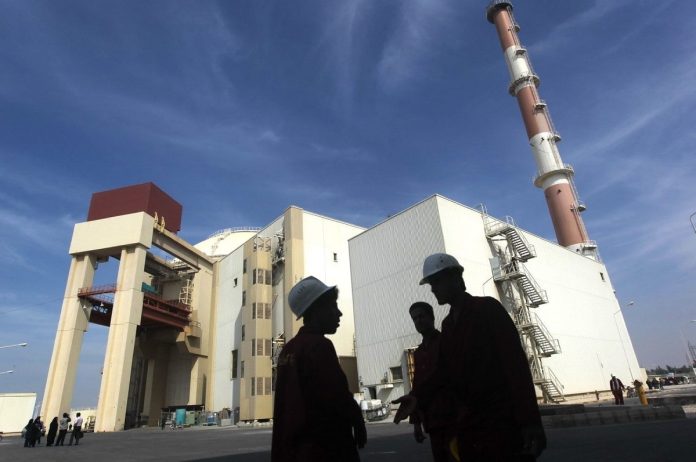
Bushehr Nuclear Power Plant produces more than 72bn kWh of electricity: Iranian official

Iran's Bushehr nuclear plant

Mohammad Eslami, referring to electricity generation at the Bushehr Nuclear Power Plant and Iran’s nuclear industry as a symbol of the peaceful use of nuclear energy, said that Unit One is now in its eleventh year of operation with a power generation capacity of 1,000 megawatts.

Noting that the Bushehr nuclear facility has produced 72 billion kilowatt-hours of electricity to date, Eslami said the unit remains fully operational and, based on rankings and assessments by the World Association of Nuclear Operators (WANO), has been recognized as one of the world’s outstanding nuclear power plants.

The AEOI chief added that other nuclear power plants are under construction as part of a plan to generate 20,000 megawatts of nuclear electricity for the country.

Responding to a question about the presence of International Atomic Energy Agency (IAEA) inspectors in Iran, Eslami said inspectors would be present in the country whenever necessary.

Iran says seized foreign tanker carrying 6mn liters of smuggled diesel in Oman Sea

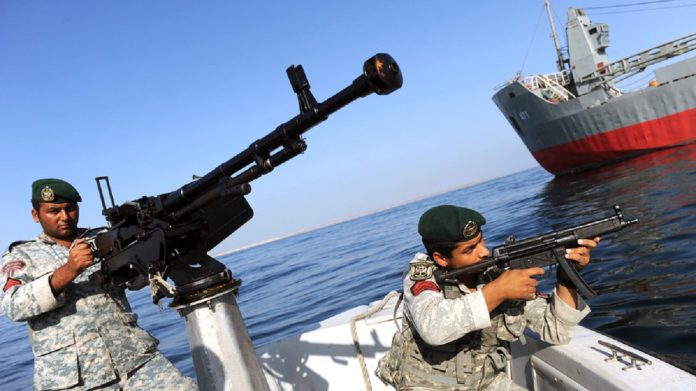
IRGC Boat Persian Gulf

Mojtaba Ghahremani, Chief Justice of Hormozgan, said the foreign vessel was detained near Jask in the Oman Sea, within Iran’s sovereign waters, as part of efforts to combat fuel smuggling ringleaders and traffickers.

He added that the tanker lacked valid maritime documents related to its voyage and had no bill of lading for the fuel cargo.

Ghahremani further noted that the vessel had switched off all its navigation and navigational aid systems.

According to the Hormozgan Chief Justice, the tanker has 18 crew members, all nationals of India, Sri Lanka, and Bangladesh.

EU indefinitely freezes Russian funds, moves closer to financial lifeline for Ukraine

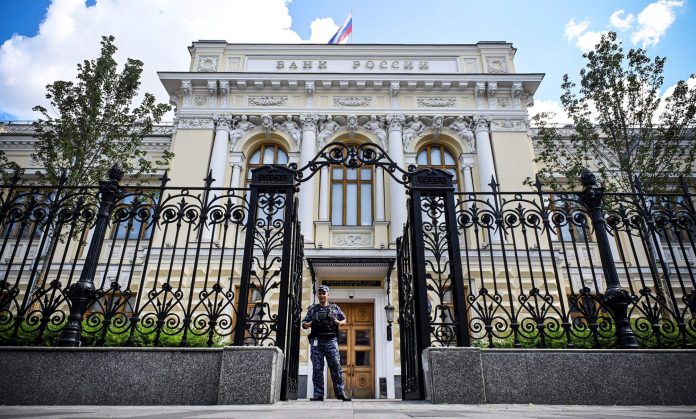
Russian Central Bank

“I welcome the decision of the council on our proposal to continue the immobilization of Russian Sovereign Assets,” President of the European Commission Ursula von der Leyen wrote on Twitter.

The move means that roughly 210 billion euros ($245 billion) in Russian assets will now remain blocked in the EU until at least 15 countries representing over 55% of the EU’s population vote to lift the freeze.

Previously, the continued immobilization of the assets had to be agreed upon by all 27 member states every six months — leaving them vulnerable to a veto by Hungary or Slovakia, who had repeatedly threatened to vote against renewing the sanctions.

With that risk gone, the decision marks a step towards a so-called “reparations loan,” which would lend 90 billion euros ($105 billion) to Ukraine over the next two years, backed by the frozen assets.

The announcement comes just ahead of a European Council summit on Dec. 18–19 where EU leaders could unlock billions of euros in Russian assets to get critical financing to Kyiv for its war effort.

Von der Leyen proposed the plan on Dec. 3, which would cover two-thirds of Ukraine’s needs over the next two years. Without extra financing, Kyiv will run out of cash by mid-2026.

In what appeared as a response to reports of indefinite immobilization, the Russian Central Bank said in a press release that it had sued Euroclear, the Belgian financial institution holding the vast majority of Europe’s frozen assets, in a Moscow court on Dec. 12.

It also called the EU’s reparations loan “illegal” and “contrary to international law” in a different press release, also published on Dec. 12.

Most scholars agree that the reparations loan is a well-crafted policy response to Ukraine’s financing needs and Russia’s continued aggression in Ukraine.

The Bank of Russia also said that it will proceed with “all available legal and other mechanisms” to challenge the reparations loan.

A legal memo from the prominent multinational law firm Covington & Burling, seen by the Kyiv Independent, states that litigation risk from the reparations loan is “minimal.”

“In reality, it would be well-nigh impossible for Russia to persuade an international court or tribunal to find and exercise jurisdiction over such a claim,” the document stated in reference to the proposed reparations loan.

The European Council’s decision addresses one of Belgium’s key concerns, which has expressed staunch opposition to the reparations loan initiative.

Belgian Prime Minister Bart de Wever has worried that, should the EU go forward with the reparations loan initiative and the sanctions not be extended due to a veto, then Belgium would be on the hook to repay the Russian central bank for a third of its GDP.

De Wever has repeatedly called for other countries to share the risk of any fallout from the proposal. The official proposal for a reparations loan, presented by Ursula von der Leyen on Dec. 3, included assurances that countries would provide guarantees for the loan proportional to their gross national income.

Italy, Malta, and Bulgaria on Dec. 12 also reportedly joined Belgium in opposing the reparations loan, drafting a document that called on the European Commission to explore other options to getting Ukraine financing.

The vote to indefinitely immobilize sanctions with a majority of countries — rather than unanimity — was done using an emergency clause in the EU lawbooks, known as article 122, a move reportedly seen as controversial.

UN General Assembly adopts resolution asking Israel to allow aid into Gaza Strip

Gaza War

The vote on Friday followed October’s advisory opinion from the International Court of Justice (ICJ), which outlined Israel’s responsibilities under both the UN Charter and humanitarian law.

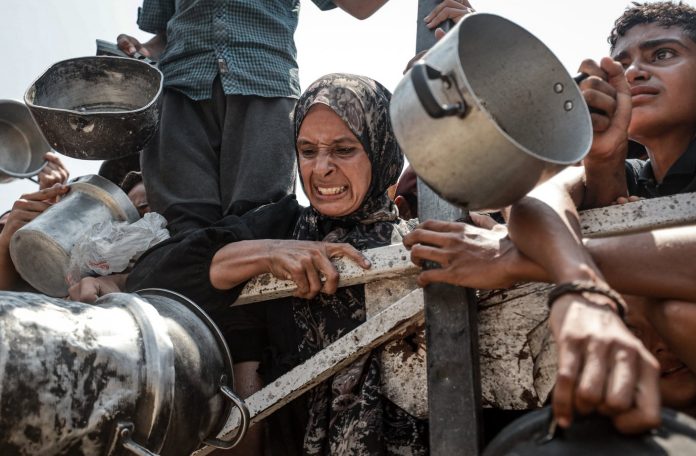
Israel has only allowed into Gaza a fraction of the humanitarian aid deliveries agreed to as part of the United States-brokered ceasefire that came into effect in October.

The UN resolution, tabled by Norway alongside more than a dozen other states, secured support from 139 countries.

Only 12 voted against, including Israel and the US, while 19 abstained.

Introducing the draft, Norway’s Permanent Representative Merete Fjeld Brattested warned that “2024 was among the most violent years in three decades, 2025 has followed suit,” adding that the situation in the occupied Palestinian territory remained “a particular point in mind”.

“Civilians are paying the highest price. Respect for humanitarian principles is eroding. The most fundamental tenets of humanitarian law are under pressure,” she said, emphasising that the ICJ’s advisory proceedings were crucial for clarifying state obligations.

Brattested noted that member states had sought legal clarity “on fundamental issues pertaining to the provision of life-saving humanitarian assistance to the civilian population in Palestine”.

She pointed to recent attacks that underscored the urgency of the Court’s findings, including UN chief Antonio Guterres’s condemnation of Israel’s “unauthorised entry” into UNRWA’s Sheikh Jarrah compound.

“As stated by the secretary-general, this is in clear violation of Israel’s obligations to respect the inviolability of United Nations premises,” she continued.

Speaking before the vote, US envoy Jeff Bartos rejected the resolution, claiming it “exemplifies how even following President [Donald] Trump’s landmark peace agreement and the historic passage of Security Council resolution 2803, the General Assembly continues its decades-long pattern of unfairly targeting Israel.”

Philippe Lazzarini, the commissioner-general of the UN Agency for Palestinian refugees, UNRWA, meanwhile, welcomed the outcome, saying it offered “a strong endorsement” of the ICJ’s finding that allegations of Hamas infiltration inside the agency “are not substantiated”, nor are claims that UNRWA lacks neutrality.

“This vote is an important sign of support for UNRWA from the overwhelming majority of the international community,” he added.

Palestinian National Council Speaker Rouhi Fattouh also praised the adoption, stating the wide margin reflected “a firm international position supporting UNRWA and renewing recognition of its legal mandate and its key role in protecting Palestinian refugees”.

He warned of “a dangerous escalation and increase in the level of occupation crimes and ethnic cleansing, and a worsening of the humanitarian situation inside the occupied Palestinian territory.”

Covid-19 vaccines linked to heart damage: Report

The paper, authored by Stanford University researchers and published in the Science Translational Medicine journal, examined why some patients developed myocarditis or pericarditis after receiving mRNA jabs such as those produced by Pfizer and Moderna.

Researchers found that immune cells can, in some cases, recognize the foreign RNA delivered by the vaccines and mount a strong response. In rare instances, this response has led to the release of large amounts of cytokines – immune-signaling proteins that can damage heart cells.

Vaccine-associated myocarditis has occurred in about one in 140,000 people after a first dose and around one in 32,000 after a second dose, according to figures cited by The Telegraph, with incidence peaking among males aged 30 or younger.

Symptoms have included chest pain, shortness of breath, fever and palpitations, typically appearing within days of vaccination. Most patients have recovered quickly, although hospitalization and deaths have been reported in rare cases.

The findings come as the US Food and Drug Administration reportedly intends to place a “black box” warning, the agency’s most serious safety label, on Covid-19 vaccines, according to CNN. The warning would alert consumers to risks such as myocarditis and pericarditis, although the plan has not been finalized.

Covid-19 vaccines were developed and authorized rapidly after the World Health Organization declared a coronavirus pandemic in March 2020 and were later mandated in many countries. The rollout proved controversial, with critics claiming the jabs were poorly tested and that side effects posed greater risks than the virus itself.

However, scientists and regulators have maintained that Covid-19 infection carries a greater overall risk of serious illness and long-term complications than vaccination, and have stressed that the benefits of immunization outweigh the short-term risks of rare heart-related side effects.


Turkish-owned vessels damaged in Russian attack on Ukrainian ports

Friday’s attacks by Russian forces targeted Chornomorsk and Odesa ports in Ukraine’s southwestern Odesa region on the Black Sea. A Ukrainian navy spokesperson told the Reuters news agency that three Turkish-owned vessels were damaged in total, but did not provide additional details.

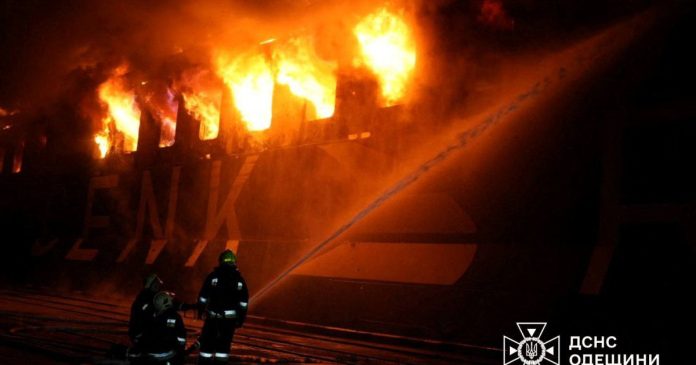
Posting video footage on social media of firefighters tackling a blaze on board what he described as a “civilian vessel” in Chornomorsk, Ukrainian President Volodymyr Zelensky said the Russian attacks “had no … military purpose whatsoever”.

“This proves once again that Russians not only fail to take the current opportunity for diplomacy seriously enough, but also continue the war precisely to destroy normal life in Ukraine,” Zelensky stated.

“It is crucial that … the world maintains the proper moral compass: who is dragging out this war and who is working to end it with peace, who is using ballistic missiles against civilian life, and who is striking the targets that influence the functioning of Russia’s war machine,” he added.

Zelensky did not name the vessel, but it was identified as the Panama-flagged and Turkish-owned Cenk T by Reuters, which matched cranes and buildings to satellite imagery of Chornomorsk port.

The ship’s owners, Cenk Shipping, confirmed it was attacked at about 4pm local time (14:00 GMT). There were no casualties among the crew, and damage to the ship was limited, it added.

An employee of a private company was also injured in a separate attack on Odesa port, where a cargo loader was also damaged, Ukraine’s Deputy Prime Minister Oleksii Kuleba confirmed.

He added that Russia had used drones and ballistic missiles in the port strikes, which were “aimed at civilian logistics and commercial shipping”.

Ukraine’s three large Black Sea ports in the Odesa region are a key economic artery for Kyiv.

Late on Friday, Turkiye’s Ministry of Foreign Affairs confirmed the vessel had been attacked in Chornomorsk port. It added that there were no reports of injured Turkish citizens.

The ministry said in a statement that the attack “validates our previously stated concerns regarding the spread of the ongoing war in the region to the Black Sea, and its impact on maritime security and freedom of navigation”.

“We reiterate the need for an arrangement whereby, in order to prevent escalation in the Black Sea, attacks targeting navigational safety as well as the parties’ energy and port infrastructure are suspended,” it added.

Hours earlier, in talks with Russian President Vladimir Putin in Turkmenistan’s capital of Ashgabat, Turkish President Recep Tayyip Erdogan called for calm in the Black Sea and suggested that a limited ceasefire for energy facilities and ports could be beneficial for regional security.

Turkiye, which has the longest Black Sea coastline at approximately 1,329km (826 miles), has grown increasingly alarmed at the escalating attacks in its back yard and has offered to mediate between Kyiv and Moscow.

The attacks come just days after Putin promised retaliation and threatened to cut “Ukraine off from the sea” for Kyiv’s maritime drone attacks on Moscow’s “shadow fleet” – unmarked tankers thought to be used to circumvent oil sanctions – in the Black Sea.

Kyiv says the tankers are Moscow’s main source of funding for its almost four-year-old war. It has also tried to squeeze Russian revenues by expanding attacks to the Caspian Sea, where it struck a major oil rig this week.


European states step up opposition to seizing Russian funds: Politico

The European Commission hopes to pressure individual member states into approving the plan ahead of the European Council meeting on December 18-19.

However, some members, including Belgium, which holds the bulk of Russia’s frozen assets, have warned that seizing them could undermine trust in the EU’s financial system, trigger capital flight, and expose member states to legal risks.

According to Politico, the four countries announced that they “invite the Commission and the Council to continue exploring and discussing alternative options in line with EU and international law, with predictable parameters, presenting significantly fewer risks, to address Ukraine’s financial needs, based on an EU loan facility or bridge solutions.”

On Friday, the EU invoked its rarely used emergency powers to circumvent potential vetoes from Hungary and Slovakia and made the asset freeze indefinite.

Although Italy, Belgium, Bulgaria, and Malta supported the measure, they reportedly stressed that the “vote does not pre-empt in any circumstances the decision on the possible use of Russian immobilized assets, which needs to be taken at leaders’ level.”

Hungarian Prime Minister Viktor Orban called Friday’s vote unlawful and accused the commission of “systematically raping European law.”

Slovak Prime Minister Robert Fico also condemned the move, arguing that “providing tens of billions of euros for military spending is prolonging the war” between Ukraine and Russia.

Russia has stressed that seizing the assets would be tantamount to theft and vowed to retaliate. On Friday, the Russian central bank initiated legal proceedings against Belgian clearinghouse Euroclear, which holds the bulk of Russia’s foreign assets in Europe.