Saturday, December 27, 2025
Home Blog Page 4170

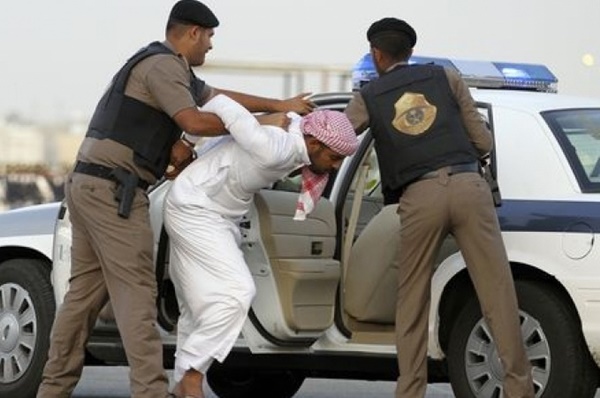
Saudi Arabia Keeps on Oppressing Political Activists

Saudi-Arabia

According to a Farsi report by IRNA, the London-based Saudi National Centre for Human Rights announced that Essam Koshak, a human rights activist, was summoned to police of Mecca for interrogation before being arrested. Saudi security officials refused to free him on bail.

Ahmed al- Mshikhs is another activist who was arrested in al-Qatif, eastern Saudi Arabia. He has been very active in cyberspace by continuously publishing reports on complicated political and economic conditions of Saudi Arabia.

During last years, the Saudi regime has punished several people for expressing their ideas. Ayatollah Nimr al-Nimr, the leader of Saudi Shiites, was an example; he was executed besides 40 other men for false accusations last year.

Since the empowerment of King Salman, the Amnesty International has repeatedly released statements to protest against the violation of human rights in this country and urged Saudi authorities to free political prisoners.

By publishing a report on deplorable conditions of human rights in Bahrain and Saudi Arabia, the Human Rights Watch has also slammed them for contravention of basic human rights. It stressed that threatening, arresting and torturing opposition forces have always been a major part of the policies adopted by these southern Persian Gulf Arab countries, whose security forces keep oppressing political activists.

Iran Ready to Resume Gas Exports to Iraq

dc66829a-025e-4279-984c-020440a8e269

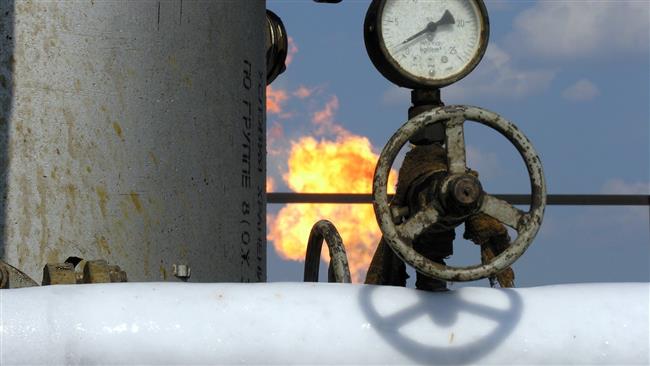
Iran’s Deputy Petroleum Minister for International Affairs and Trading Amir-Hossein Zamaniniya was quoted by the domestic media as saying that a pipeline that has been established between Iran and Iraq was already filled with natural gas.

“Iran is ready to start the export of gas to Iraq and Iraq is also ready to receive the gas,” Zamaniniya told Shana news agency of Iran’s Ministry of Petroleum.

“However, the related letter of credit (L/C) for the project is yet to be opened,” he said adding that Iran would turn on the taps once the payment was made by Baghdad.

This, the official further emphasized, could take place during an upcoming visit to Tehran by an Iraqi delegation.

Iran had announced last summer that it was ready to export gas to Iraq. However, the project had been suspended over security risks as a result of insecurity in Iraq.

The two countries signed a basic agreement for the export of natural gas from Iran’s South Pars gas field to Iraq back in 2013.

Based on the agreement, Iran would start exporting 25 million cubic meters (mcm) a day of gas to Sadr, Baghdad and al-Mansuriya power plants through the 270-kilometer pipeline. The amount would increase to as high as 35 mcm/d during summer.

The project is estimated to earn Iran $3.7 billion a year in revenues.

Iran Denounces Terrorist Attacks in Afghanistan

In a statement late on Tuesday, Qassemi offered his condolences to the Afghan people and government as well as the bereaved families of victims over the “tragic incidents”.

The Islamic Republic always decries any resort to violence and terror acts in any form or with any goal, the spokesman noted.

He further called for closer cooperation and stronger unity among regional nations and goverments to fight against terrorism.

A suicide bomber blew himself up near Parliament offices in the Afghan capital on Tuesday, an attack that was followed immediately by a car bomber in an apparently coordinated operation, officials said.

Scores of people were killed and injured in the blasts in the Darul Aman area of Kabul near the new Indian-financed parliament building.

Later, the Afghan Taliban claimed responsibility for the twin blasts.

The attack targeted a minibus carrying staff from the NDS, Afghanistan’s main intelligence agency, and as many as 70 people were killed or wounded, according to a statement by Taliban.

There was no immediate confirmation of casualty numbers from the police.

The attack, which ended a period of relative calm in the Afghan capital, occurred in a crowded area during the afternoon rush hour as workers were returning home.

JCPOA Joint Commission Wraps Up 6th Meeting with Press Release

139401141334331315034924

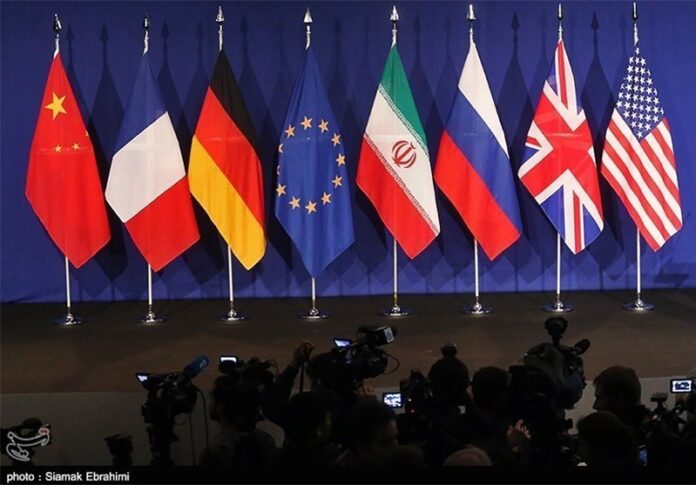
Representatives from Iran, the Group 5+1 (Russia, China, the US, Britain, France and Germany) and the European Union gathered in Vienna’s Palais Coburg hotel on Tuesday to address Iran’s complaint about a US congressional bill extending Iran Sanctions Act (ISA) for ten years.

In mid-December 2016, Iran’s Foreign Minister Mohammad Javad Zarif sent a letter to EU High Representative for Foreign Affairs and Security Policy Federica Mogherini, who is also the coordinator of the JCPOA joint commission, calling for a session of the commission on the US controversial move.

In December 2016, the US Senate voted 99-0 to extend the ISA for another decade. The bill was passed by the House of Representatives nearly unanimously in November. The renewal of ISA took effect on December 15 with a procedural protest from President Barack Obama, who decided to let the legislation become law without his signature.

The parties in the Vienna meeting on Tuesday released a press document at the end of the meeting, which is a follows:

A meeting of the Joint Commission of the Joint Comprehensive Plan of Action (JCPOA) took place on 10 January 2017 in Vienna, marking the first year of implementation of the JCPOA.

The Joint Commission, composed of the E3/EU+3 and Iran, was chaired, on behalf of EU High Representative Mogherini, by EEAS Secretary General Helga Schmid and was attended at the level of Deputy Foreign Ministers/Political Directors.

The Joint Commission meeting was specifically convened in response to the concerns raised in the letter Iranian Foreign Minister Zarif addressed to High Representative Mogherini, as coordinator of the Joint Commission, on 16 December 2016. Upon Iran’s request, the Joint Commission meeting was preceded by a Sanctions Working Group meeting which was attended at the level of experts.

All sides reaffirmed their strong commitment to continued full and effective implementation of the JCPOA. The Joint Commission underscored the sanctions lifting commitments contained in the JCPOA, in particular as they relate to the Iran Sanctions Act, and recognized the United States’ assurance that extension of the Iran Sanctions Act does not affect in any way the sanctions lifting Iran receives under the deal or the ability of companies to do business in Iran consistent with the JCPOA. The Joint Commission also reiterated the commitments by the participants to the continued lifting of sanctions, in particular under paragraph 21 of the JCPOA.

The Joint Commission meeting also offered an opportunity to review the implementation of the JCPOA as far as nuclear related issues are concerned.

Iranian President Hassan Rouhani had already warned that implementation of ISA will constitute a “clear and flagrant violation of the JCPOA” and draw a “very harsh reaction” from Tehran.

Iraq’s Top Cleric Offers Condolences over Demise of Iran’s Rafsanjani

Sistani

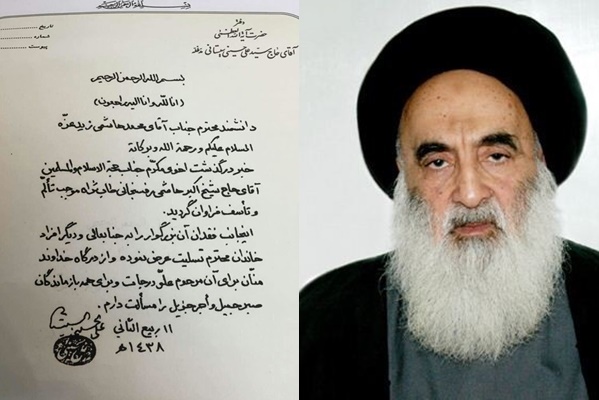
In a message, Ayatollah Sistani condoled with the family of the deceased and prayed to God to grant his soul blessing and mercy.

Ayatollah Rafsanjani died at a hospital in northern Tehran on Sunday at the age of 82 due to a heart condition, IQNA reported.

His funeral was held on Tuesday at Tehran and Leader of the Islamic Revolution Ayatollah Seyyed Ali Khamenei led the funeral prayers at Tehran University.

Afghanistan’s Chief Executive in Tehran for Ex-President’s Memorial Service

abdollah abdollah afghanistan

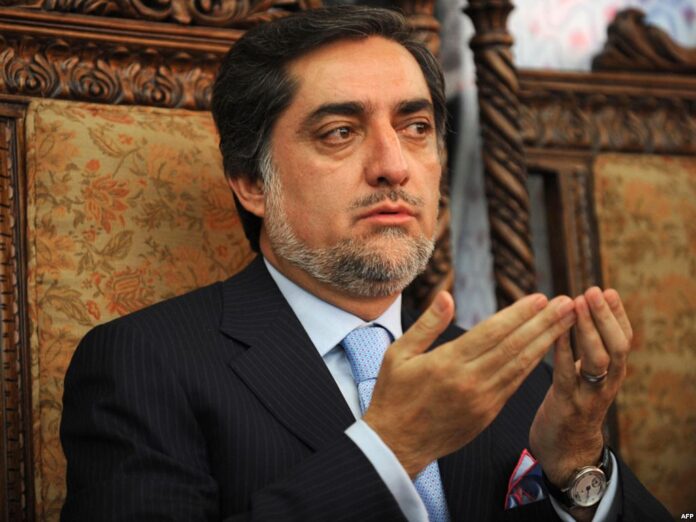
According to a report by IFP, the memorial service for ex-president Hashemi Rafsanjani is hosted by Ayatollah Seyyed Ali Khamenei and is underway in Imam Khomeini Hussainia in central Tehran with almost all high-ranking Iranian officials and many foreign ambassadors in attendance.

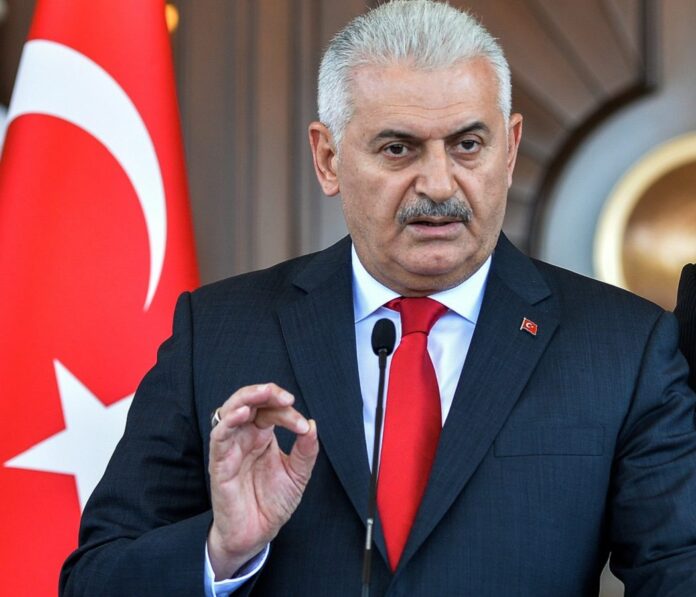
Turkish PM: Europe’s Security Starts with Turkey

Binali Yildirim

“Turkey has to conduct a multi-dimensional combat against terror as it is under an asymmetric attack. … Turkey makes significant efforts toward the establishment of stability in the region,” Yıldırım noted, as reported by Daily Sabah.

“European countries speak freely but they must stop the talk and join us [on the ground], taking some weight off of our shoulders. Terrorist threats should not be shouldered solely by Turkey. Europe’s security starts with Turkey. If Turkey is not secure, then Europe would not be safe at all.”

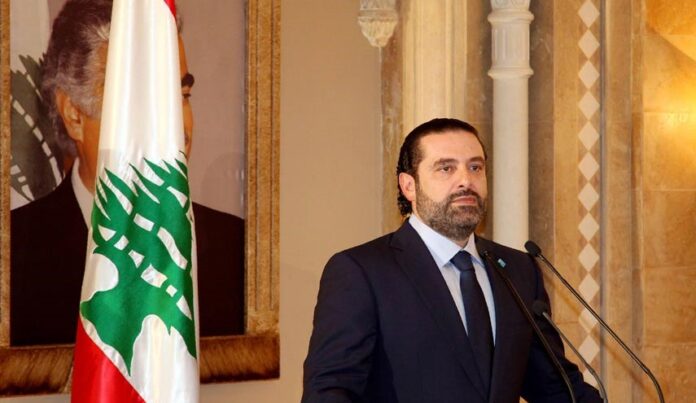
Lebanese PM Condoles Iran on Ex-President’s Demise

Saad Hariri

According to a Farsi report by Khabar Online, Hariri said that Iran lost a man who was among founders of the Islamic Republic of Iran and was an outstanding figure known for his moderate style.

He used to forge interaction with countries on the basis of friendly relations, he added.

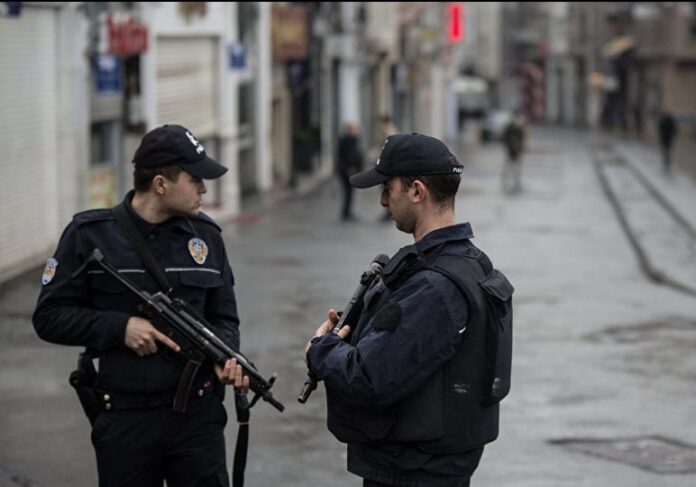
Increased Security Measures in Turkey amid Constitutional Reform

Ankara Police

According to Turkish media reports, the Governorship of Ankara, Turkey’s capital city, has banned all demonstrations, protests and other similar activities in public places in Ankara for 30 days due to information related to terrorism.

“According to the information our Governorship has received, we have found that illegal terrorist organizations were in search of terrorist actions and made preparations for that purpose. It is estimated that they want to take action especially in meetings, demonstrations and similar activities held in open and close places where people gather in masses.”

The governorship has announced that all demonstrations, presentations, plays and other shows, press statements and opening stands were banned in all public spaces in Ankara for 30 days in accordance with Article 11 of the State of Emergency Law No. 2935.

The measures are increases as the Turkish parliament voted on Tuesday to press on with debate about a constitutional reform package that would expand the powers of President Tayyip Erdogan, taking another step on the path towards an executive presidency.

Erdogan and his supporters argue that Turkey needs the strong leadership of an executive presidency to prevent a return to the fragile coalition governments of the past, but opponents fear the reform will fuel authoritarianism.

The initial vote, an early indicator of support for the bill, was passed with 338 votes, indicating that some deputies from the ruling AK Party and the nationalist opposition MHP, which backs the reform, had not voted in favour.

The bill needs the support of at least 330 deputies in the 550-seat assembly to go to a referendum, expected in the spring. The AKP has 316 deputies eligible to vote and the MHP 39.

Under the reform, Erdogan will be able to appoint and dismiss government ministers, take back the leadership of the ruling party, and govern until 2029, Reuters reported.

Debate on the individual articles is set to begin on Tuesday and the AKP plans to complete debate of the package by Jan. 24.

Green Protest at Forest Destruction in Northwestern Iran

Environment

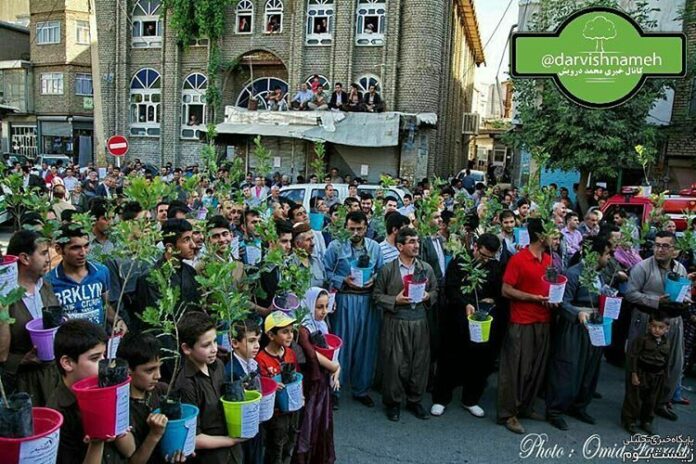
According to a Farsi report by the Iranian Department of Environment (DoE), while demonstrations are reminder of blood and fire just some kilometres away from Sardasht, people in this Kurdish-majority border town chose a peaceful way to show their protest.

They held flower pots in their hands to protest against the destruction of oak habitats in Zagros Mountains, which has led to the death of more than 18 million trees.

Mohammad Darwish, the DoE’s Director of Education and Public Participation, appreciated this refined move, describing it as “the greenest protest at the destruction of green fields”.

“This is an example for all Iranian environmental activists,” he wrote in his Telegram channel.

“Light a lamp instead of cursing the darkness. I praise my Kurd compatriots who teach us magnanimity, morality and the real love of environment through their actions.”

Darwish criticized Iranian media for not covering such activities inside Iran.

“This face of Iran has been rarely shown to the world. But we don’t pay enough attention to them inside Iran, neither, among all the depressing news. Even the biggest Iranian news agencies said nothing about this environmental activity.”

Sardasht is a mountainous town near Iran’s frontier with Iraq. It was attacked by chemical weapons during Iran-Iraq war, and some of its inhabitants still suffer from the grave effects of mustard gas.