Sunday, April 12, 2026
Home Blog Page 4152

Iranian Administration Urged to Give US Citizens On-Arrival Visa

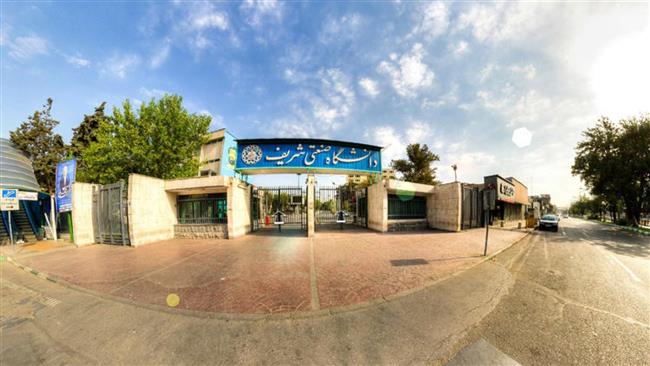
Sharif University

In a letter to President Hassan Rouhani and Foreign Minister Mohammad Javad Zarif, 72 professors from Iran’s prestigious Sharif University of Technology warned against the ramifications of the “discriminatory” travel ban on Iranian citizens by the administration of US President Donald Trump.

“Apart from the problems that the order has caused for the routine lives of our fellow countrymen in Iran and America, the propaganda aimed at justifying the measure will harm our cultural, religious and historical image as well as our national interests and it can bring about extremely detrimental impacts,” the letter read.

The top scholars called on the Iranian administration to “exercise restraint” and adopt a “proper and innovative” policy in an attempt to “nullify the harmful impacts” of Trump’s order.

The academics suggested that the Iranian administration issue two-week tourist visas for US citizens upon arrival at airports over the next 90 days, allowing them to “travel to Iran and closely experience the hospitality of the peace-seeking Iranians and Muslims.”

Such an initiative will highlight Iran’s “ethics-oriented policy” in the global arena and revive international support for the country, the letter pointed out.

Iranian Administration Urged to Give US Citizens On-Arrival Visa
People stage a protest rally against US President Donald Trump’s new travel ban on the citizens of seven Muslim-majority countries at Regan National Airport in Arlington, Virginia, on February 1, 2017 (Photo by AFP)

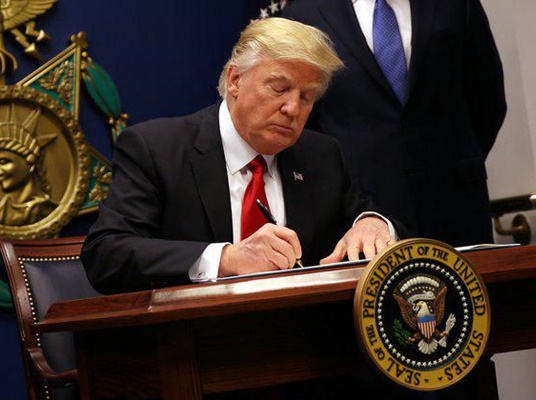
In a move which sparked widespread censure, the new US president signed a sweeping executive order on January 27 to suspend refugee arrivals and ban citizens of Iran, Iraq, Libya, Somalia, Sudan, Syria and Yemen from traveling to the US.

On Sunday, the Iranian Foreign Ministry summoned the Swiss ambassador to Tehran, Giulio Haas, who represents the US interests in Tehran, to protest against the US president’s discriminatory decision.

The director general for the Americas at Iran’s Foreign Ministry, Mohammad Keshavarz-Zadeh, told the Swiss envoy that Trump’s executive order was issued under “fictitious, discriminatory and unacceptable” pretexts and ran counter to human rights conventions and a legal and consular treaty signed between Tehran and Washington in August 15, 1955.

Putin’s Envoy to Discuss Syrian Crisis with Iranian Officials in Tehran

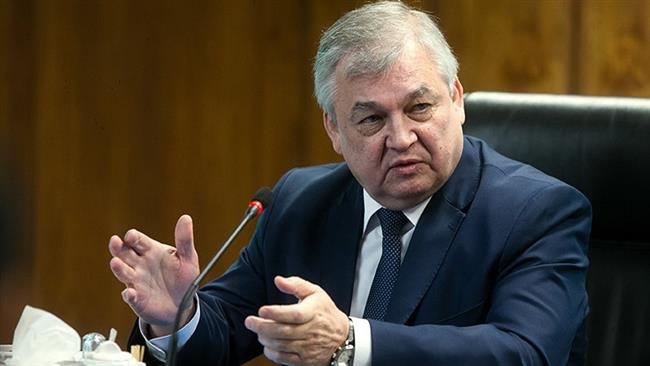
Alexander Lavrentiev

Lavrentiev, who will arrive in Tehran on Sunday, is to sit down with Secretary of Iran’s Supreme National Security Council (SNSC) Ali Shamkhani.

The Russian envoy will discuss ways to hold more negotiations on the promotion of political and security initiatives after the recent Syrian peace talks in the Kazakh capital of Astana.

He is scheduled to inform the SNSC secretary about Russian President Vladimir Putin’s stance on the ongoing regional issues and the need for bolstering multilateral cooperation in the fight against terrorism to put an end to the Syrian crisis.

Last month, Astana hosted the latest round of Syria peace talks, organized by Iran, Russia and Turkey.

The two-day intra-Syrian talks between Damascus and opposition groups concluded on January 24, with Tehran, Moscow and Ankara agreeing on the establishment of a trilateral mechanism to support the ceasefire in Syria and monitor possible violations.

The three countries also played intermediary roles at the talks, where the United Nations envoy for Syria, Staffan de Mistura, was also present.

Syria has been fighting foreign-sponsored militancy over the past six years.

De Mistura estimated in August last year that more than 400,000 people had been killed in the Syrian crisis until then. The UN has stopped its official casualty count in Syria, citing its inability to verify the figures it receives from various sources.

21 Countries to Attend Tehran Int’l Tourism Exhibition

tourisme Expo

Speaking at a press conference on Saturday, Farhad Aminian said Malaysia, Thailand, Turkey, China, Brazil, Russia, Spain, Switzerland, France, Greece, South Korea, Vietnam, Cyprus, India, Germany, Georgia, Cambodia, Maldives, Macedonia, Kazakhstan and Yemen are going to take part in the international event.

He said 65 companies from those countries will showcase their potentials in the tourism industry.

According to Aminian, the number of participating countries in last year’s edition of the exhibition was 12.

He said 381 domestic companies will also be present at the exhibit this year.

Aminian went on to say that a number of programs, including workshops, forums and seminars on different aspects of tourism will be held on the sidelines of the expo.

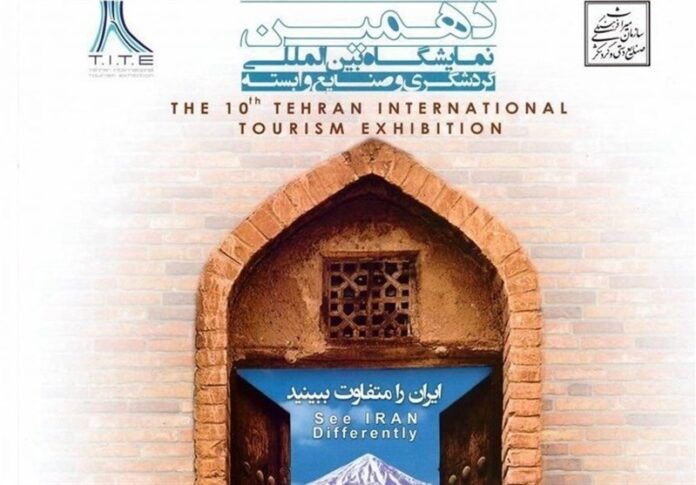
The Tehran International Permanent Fairground is scheduled to host the 10th Tehran International Tourism Exhibition on February 6-9.

The motto of the exhibit is “See Iran Differently”.

Iran has hammered out an investment package worth $25 billion to revitalize its tourism industry.

With a large number of attractive natural and historical sites, Iran is one of the most touristic countries in the world.

Visitor numbers have soared since Tehran and the Group 5+1 (Russia, China, the US, Britain, France and Germany), reached a nuclear deal, known as the Joint Comprehensive Plan of Action (JCPOA), on July 14, 2015 and started implementing it on January 16, 2016.

Back in October, Masoud Soltanifar, the then head of Iran’s Cultural Heritage, Handicrafts and Tourism Organization (ICHHTO), said foreign tourist arrivals in the country has been more than double that of the global average since the implementation of the JCPOA.

New US Sanctions against Iran Violate Nuclear Deal: Iranian MPs

trump

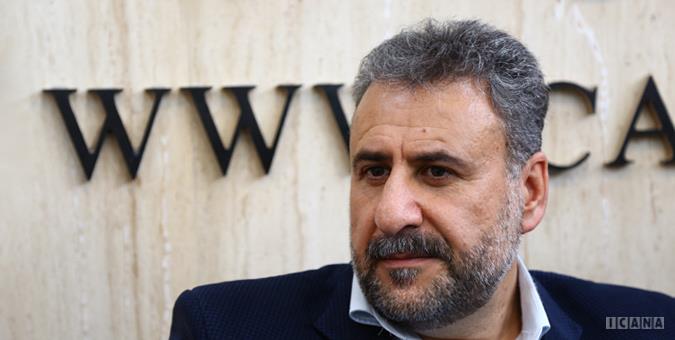
Falahat pishehHeshmatollah Falahatpisheh, a member of Iranian Parliament’s National Security and Foreign Policy Commission, stressed that the US administration’s move is definitely a breach of nuclear deal.

“Based on the nuclear deal, imposing sanctions on Iran violates the deal,” he noted, referring to sanctions imposed on 25 Iranian individuals and entities by US President Donald Trump’s administration on Friday.

“Violation of JCPOA was started in Obama’s administration, and Trump is also continuing the same path under different pretexts,” he went on to say, according to a Farsi report by ICANA.

He further urged the Iranian Foreign Ministry to pursue the issue, and said, “Trump will definitely regret such moves in the future, and until that time, Iran should behave in a way that does not turn to a target for US radicalism.”

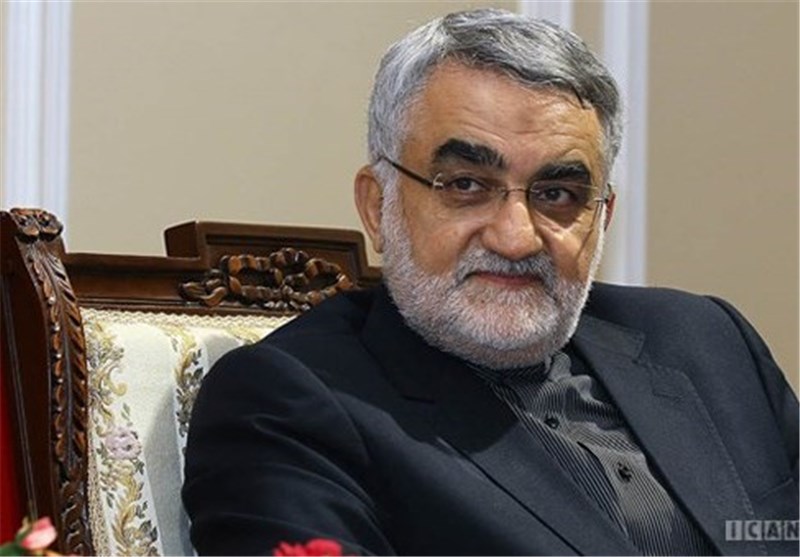
Alaeddin BoroujerdiAlaeddin Boroujerdi, the chairman of the Iranian parliament’s National Security and Foreign Policy Commission, also said on Saturday that the US move is a breach of the Joint Comprehensive Plan of Action (JCPOA).

It has its roots in Washington’s anger over the defeats of terrorists that it supports in the Middle East region, the Iranian parliamentarian said.

The recent important developments in Syria and the historical defeat inflicted on terrorists in Aleppo, on the one hand, and the defeat of ISIS in Iraq’s Mosul, on the other hand, created a situation for the US that led to imposition of the new sanctions, Boroujerdi went on to say, as reported by Tasnim.

Washington added more Iranian individuals and entities to its anti-Iran sanction list on Friday. The US Treasury Department said it has published a list of 13 Iranian figures and 12 entities facing new sanctions.

Iran’s Foreign Ministry condemned the measure and vowed to take reciprocal action against American individuals and companies with a role in creating and supporting extremist groups in the region.

“In response to the new measure by the United States and as a reciprocal action, the Islamic Republic of Iran will impose legal restrictions on a number of American individuals and companies which have had a role in creating and supporting extremist terrorist groups in the region or assist in the killing and suppression of defenseless people in the region,” the Foreign Ministry said in a statement on Friday evening.

Iran’s Foreign Ministry said the list of the targeted American figures and companies will be released later.

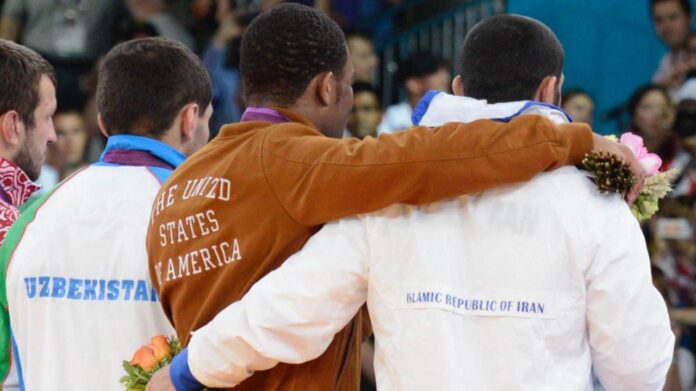
Iran to Grant Visa to US Wrestling Team for Upcoming World Cup

wrestling

“Following the court ruling suspending Muslim Ban and [based on] the requests from Iranian Wrestling Federation and FILA, US Wrestlers’ visa will be granted,” Foreign Minister Mohammad Javad Zarif said in a post in his Twitter account.

Iranian Foreign Ministry Spokesman Bahram Qassemi also said that the decision [to give the Americans Iran’s visa] was taken after the “biased” restrictions on Iranian citizens’ entry to the US were lifted.

Iran on Friday barred the US wrestling team from the Freestyle World Cup competition in retaliation for an executive order by US President Donald Trump banning visas for Iranians.

The Freestyle World Cup, one of the sport’s most prestigious events, is scheduled for Feb. 16-17 and USA Wrestling had previously said it would send a team to the competition in the western Iranian city of Kermanshah.

USA Wrestling had said in a statement that “USA Wrestling is extremely disappointed about this, which we believe would be an unacceptable situation. Wrestling is about competition and goodwill through sport, and is no place for politics.”

Olympic champion Jordan Burroughs also felt disappointed when he found out he is not allowed to travel to Iran to compete at the Freestyle World Cup.

“These decisions, these executive decisions, are always so far beyond your reach,” Burroughs told the Associated Press. “You always feel like, `Well, the presidency or these strict laws or these Muslim bans or whatever you like to call them, they’ll never affect me.’ This is one of the few times where something so personal has occurred. Almost like it (was) handed down from the president to us. It’s a bummer.”

Burroughs hasn’t wrestled competitively since August, when the defending gold medalist and top-ranked wrestler in his class lost consecutive matches and failed to reach the podium.

“There is such a common respect for wrestlers in Iran,” Burroughs said. “They love wrestling. They’re huge fans of mine. I’m bummed about that. I really wanted to be part of something great in what I consider a great country. Obviously, my views and our country’s views are different.”

The freestyle World Cup in Iran was supposed to mark his return to competition. Instead, that will seemingly have to wait.

“I love Iran. I love their people, and I don’t get into politics,” Burroughs added. “I wasn’t going to make a political stance. I was going to compete.”

Indian Ambassador Invites Tourists to Visit Iran

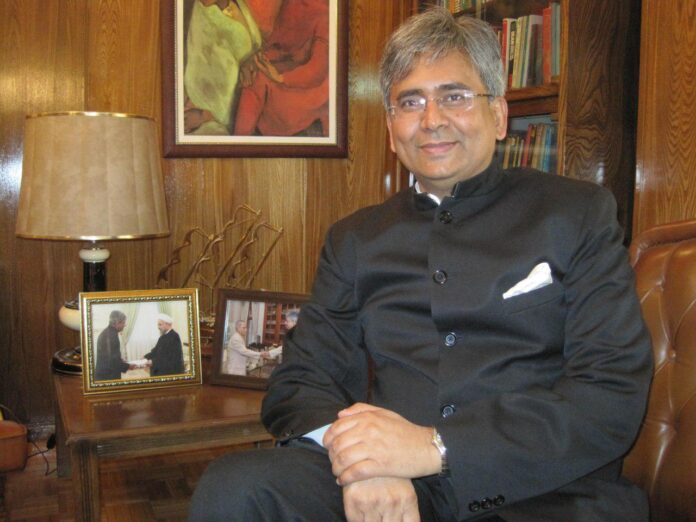
Indian Ambassador to Iran Saurabh Kumar

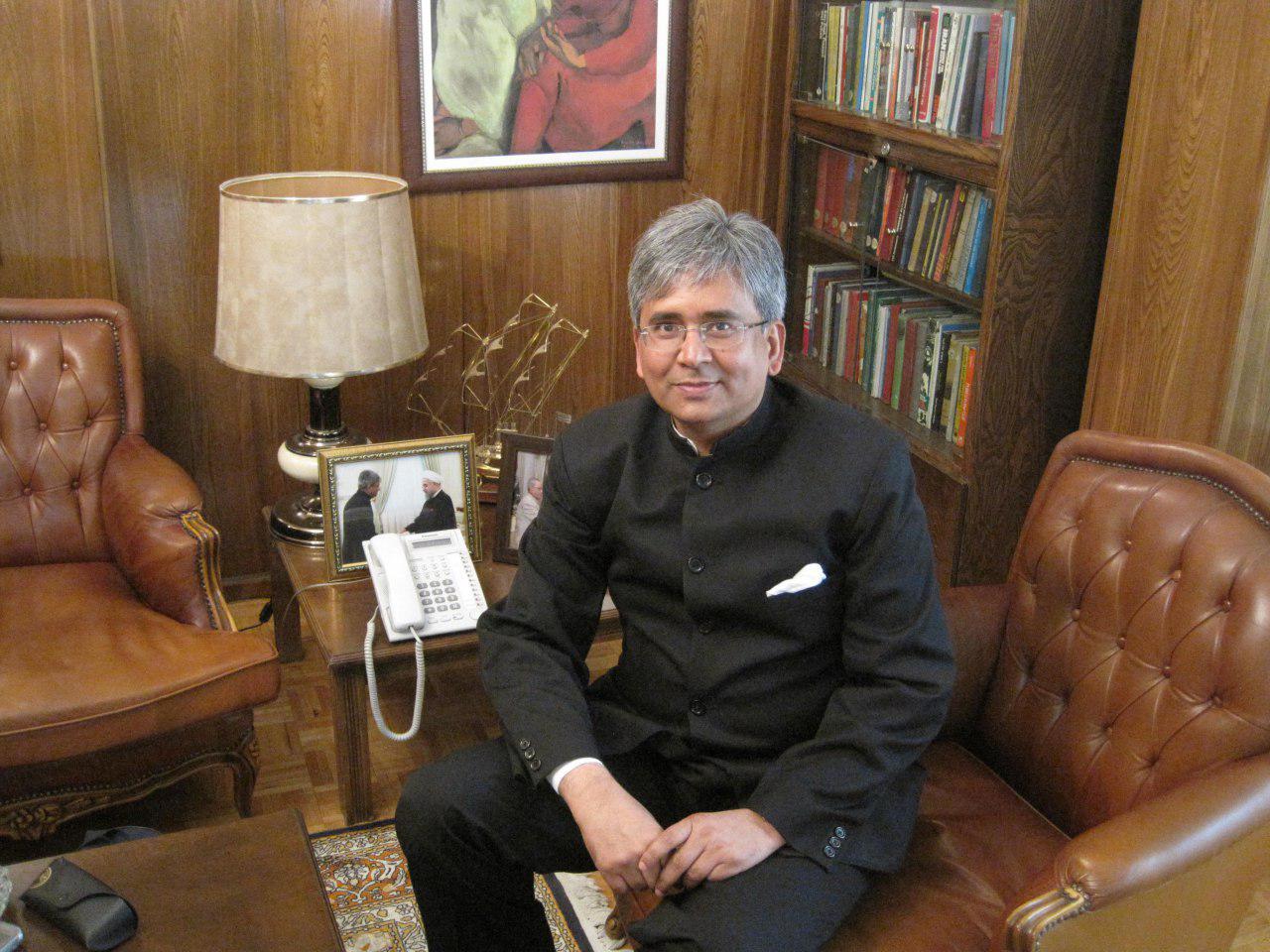
Indian Ambassador to Iran Saurabh Kumar recently commented on the level of cultural cooperation between Iran and India as well as the two sides’ tourist exchanges, joint historical background and cinema.

He made the remarks in an exclusive interview with IFP on the sidelines of a ceremony to celebrate the 67th anniversary of the ‘Republic Day of India’ in the Iranian capital of Tehran last week.

The excerpts of the interview follow:


Q: How do you evaluate the level of cultural cooperation between the two countries? Are there any joint cultural plans underway by the two sides?

A: I have put a great deal of emphasis on expanding cultural collaboration between the two sides. Inviting cultural troupes from India is an example of efforts to this end. When Indian Prime Minister Narendra Modi was in Iran in May 2016, I invited the Indian top flutist, Hariprasad Chaurasia, who is considered a real maestro, to come to Iran and perform in Tehran’s most prestigious cultural venue Vahdat Hall. We also held a function in the same hall in which separate performances were staged. In 2016, the Indian Embassy organized two other performances in Vahdat Hall as well.
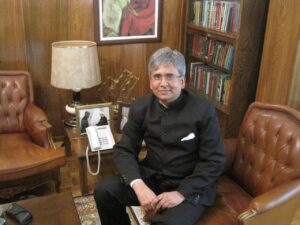
Indian Ambassador to Iran Saurabh Kumar

The Iranian Embassy in New Delhi is also doing a great deal in terms of exposing the Iranian culture to Indians. Some time ago, Iran held a cultural week in New Delhi. Iran and India are also holding seminars on their cultural heritage and the civilizational contacts they have had in each other’s countries.

Earlier this year, 2017, a major conference was organized in New Delhi which was attended by a number of Iranian visiting senior officials. The confab was inaugurated by Indian Vice-President Mohammad Hamid Ansari. We keep holding such cultural events and look forward to the increase of these interactions.


Q: Do Indian universities offer Persian language courses? Are they popular among Indian students?

A: Persian language courses are very popular in India. A lot of Indian universities have Persian departments. I am told that we have a very rich collection of Persian books in India. Some say that the collection is even larger than what you have in Iran, but I am not very sure about that.

In addition, the first Farsi newspaper was published in India, Kolkata. There is also a very rich collection of Farsi manuscripts in India. We released a manuscript of ‘Kelileh-o Demneh’ (or Panchatantra) — an ancient collection of interrelated animal fables in verse and prose, arranged within a frame story — during the Indian prime minister’s visit to Iran. Languages are great binding factors. And a lot of Indian historical as well as cultural texts have been translated into Farsi.


Q: Nader Shah (1698–1747), one of the most powerful Iranian rulers, invaded the Mughal Empire, an empire in the Indian subcontinent, and defeated their army in less than three hours at the huge Battle of Karnal on February 13, 1739. He later, ordered his soldiers to plunder and sack Delhi. Does the incident still incite hatred among Indians against Iranians?

A: It is an interesting question. Once, on a trip to Mashhad, Khorasan Razavi Province, I was visiting the tomb of Nader Shah. During the visit, I noticed that the person who was showing me around was feeling a bit apologetic. First I was surprised but later I found out that he was feeling sorry for what Nader Shah had done.

History is history. We, Iran and India, look forward to our future relationship and talk of our present ties. Nader Shah was an incident. The two countries have had a very long history of civilizational contacts. Both sides’ leaders, including Jawaharlal Nehru, the first prime minister of India, have made very positive and flattering statements about the relationship between the two states and their people.

People in both countries feel the same about each other. Indians look upon Iranians as well as their culture, history and language in a very positive way. Iranians also have the same positive attitude towards India and its features.

On January 25, an Indian cultural troupe performed a violin concert in Tehran. During the performance, the hall was packed with the sentiment coming out from the musicians and the audience. In addition, the way the audience was responding carried a message in itself: How closely we [Iranians and Indians] feel for each other.

We teach about Nader Shah’s invasion in our history books, for it is a historical fact. But we also teach about the relationship and people-to-people contacts that the two countries have had through the ages. We talk about your princess marrying the Mughal rulers and all other historical facts. Farsi was the official language of India for several centuries. We talk about that too.


Q: Are Indian tourists interested in visiting Iran?

I am sure they would be. Indian tourists do travel to Iran although their number is currently small due to problems mostly pertaining to tour operators, the making of payments and direct flight connectivity.

Iran and India have the potential to have a more improved flight connectivity. I am very upbeat that in the future, a lot more Indian tourists would visit Iran. Iran has a very rich history with which the Indians can connect very well. Those Indian tourists who have visited your country have gone back highly rewarded by the sites they have seen.


Q: Do they feel any security concerns over visiting Iran?

A: Iran is such a safe place. I, personally, live here and know how safe it is.


Q: Have you watched the film, jointly produced by Iran and India, titled ‘Salaam Mumbai’ (Hello Mumbai)? Did you like it?

I look upon it as another positive step in the area of cultural cooperation between the two countries. Film industry is very important and big in India. We produce almost three movies a day. I have seen a number of wonderful Iranian movies too.

I very much liked the scenario of ‘Salaam Mumbai’. It was very pleasing to me to see Iranian and Indian artists have cooperated with each other to produce such a great movie on the very sweet theme of love. The film depicts improved people-to-people relations between India and Iran, what we, as the two sides’ officials, keep talking about and aiming for. The film also included several other realities pertaining to a lot of Iranians going to India for education purposes.

I think the production of the film was a very good initiative. I have been told that it has been very well received by the audience in Iran. I am sure it would also do well in India. I hope such initiatives would bring the countries closer.

Iran to Fire Its ‘Roaring Missiles’ If Enemy Makes Any Mistake

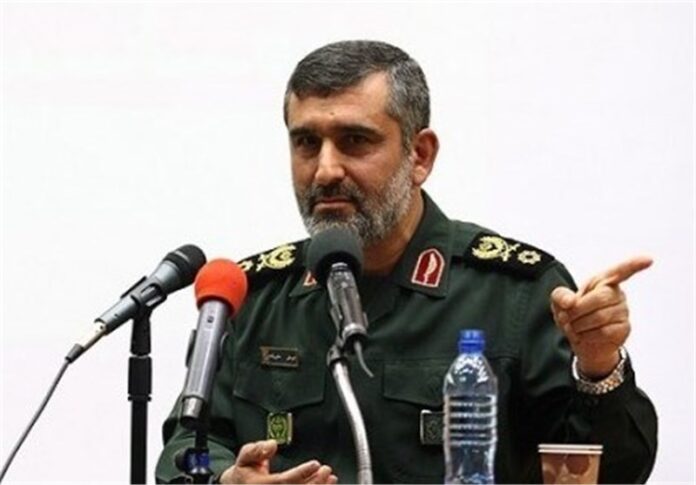
General Amir Ali Hajizadeh

In comments on the sidelines of a massive air defense drill on Saturday, Commander of the Islamic Revolution Guards Corps Aerospace Force Brigadier General Amir Ali Hajizadeh derided anti-Iran threats by US officials as nonsense.

“With the knowledge I have about the capabilities of the (Iranian) Armed Forces and about ourselves, I’d say with confidence that foreign threats against the Islamic Establishment (of Iran) are futile,” the general underlined.

Denouncing the US hue and cry about Iran’s missile tests as a mere pretext for expressing hostility toward Iran, General Hajizadeh said the country will not waste a moment to safeguard its security.

“Should the enemy make a mistake, our roaring missiles will rain down on them.”

As regards the significant features of an ongoing air defense drill by the IRGC Aerospace Force in the province of Semnan, the commander noted that tracking “bombs dropped by planes and ground-to-ground missiles” was successfully done by the radar systems used in the war game.

The IRGC has employed a range of domestically-made radar and missile systems in the air defense drill, codenamed Defenders of Velayat Sanctum, whose main stage began on Saturday morning after five days of preparatory work.

The drill covers an area of 35,000 square kilometers in the desert, according to General Hajizadeh.

The war game comes at a time of renewed US threats and sanctions against Iran.

On Friday, the US added 13 Iranian figures and 12 entities to its anti-Iran sanction list. Meanwhile, US National Security Advisor Michael Flynn threatened that new US President Donald Trump’s administration will no longer tolerate what he described as “Iran’s provocations that threaten our interests.”

While the US rhetoric of military action against Iran has been stepped up since Trump took office in January, Leader of the Islamic Revolution Ayatollah Seyed Ali Khamenei has already cautioned the adversaries that Iran’s reaction to any assault will not be confined to defense alone, but aggressors will have to face a crushing response.

“The enemy should realize that it will receive a heavy blow in case of launching an attack, and that our defense will entail response as well,” Ayatollah Khamenei said in August 2016.

Imam Khamenei added that the country’s military preparedness should reach such a high level that the enemies would not dare to even think about taking action against Iran.

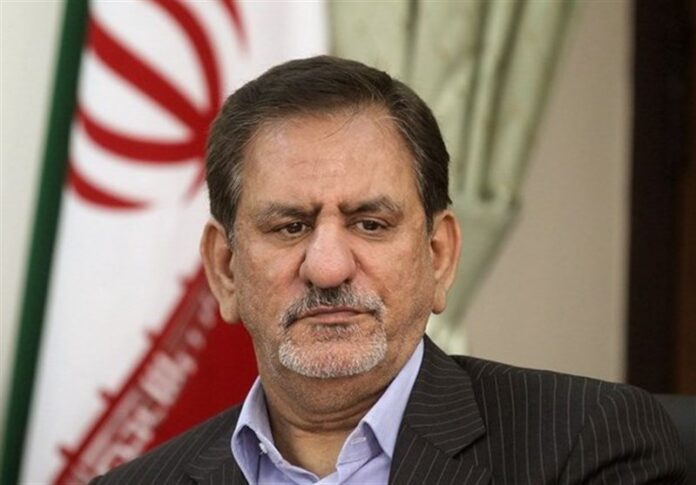
Trump’s Anti-Iran Threats Aimed at Scaring Away Investors: First VP

US Push for Economic Collapse of Iran Has Gone Nowhere: VP

The administration of US President Donald Trump has recently ratcheted up its rhetoric against Iran. Trump himself, Defense Secretary James Mattis, and White House national security adviser Michael Flynn have all recently made anti-Iran comments. Mattis on Saturday called Iran “the single biggest state sponsor of terrorism in the world.”

Reacting on the same day, Is’haq Jahangiri, the Iranian first vice president, said accusations that Iran supports terrorism have gone threadbare.

“The Iranian nation and authorities do not attach the least value to these remarks,” he said.

Had it not been for Iran, Jahangiri said, Syria would have today fallen to the Daesh terrorist group, “Arab countries would have been encircled by Daesh, and no one would have known what al-Qaeda would be doing in Afghanistan.”

He said Iran was present wherever it was necessary to help restore stability.

“Over the recent years, wherever they planted terrorism to disrupt the region, the country that was present on the battlefield against terror was the Islamic Republic of Iran,” he said.

Iran has most recently been lending advisory military support to the Syrian and Iraqi militaries against terrorism.

Pointing to the anti-Iran rhetoric by the US officials, Jahangiri said, “These accusations against Iran have become [mere] rehashes, and even the accuser is ashamed of making the claim that Iran is a state sponsor of terrorism.”

The senior Iranian official said the accusations are meant to slow down Iran’s progress by dissuading domestic and foreign investors.

On Friday, the US administration also imposed new sanctions against Iran over a recent missile test by the Islamic Republic and its “continued support for terrorism.”

Jahangiri said the parties imposing the sanctions on Iran have witnessed the difference between when they impose bans and when they engage in interaction with the Islamic Republic.

“If a language of respect is used to talk to the Iranian nation and if issues are resolved through dialog and negotiation, then, as stated by President [Hassan Rouhani], the outcome could be a win for all.”

Iran’s Sponge Iron Output Rises despite Drop in Global Production

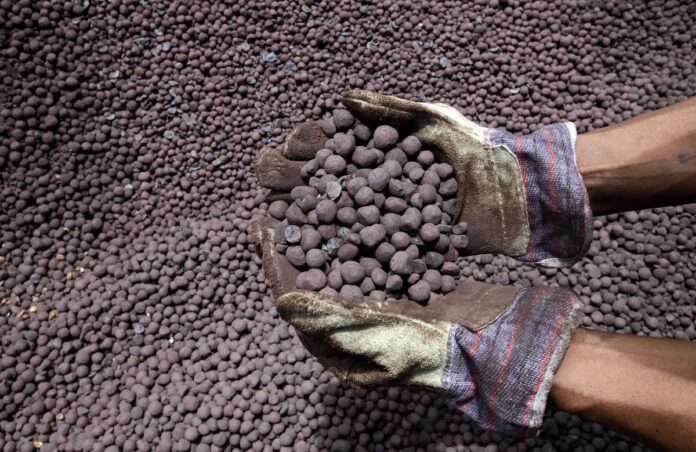
iron

The production of direct-reduced iron (DRI), also known as sponge iron, in Iran went up by 10 percent last year while global production dropped by eight percent, ISNA quoted the World Steel Association as saying in a Farsi report.

Iran produced well over 16 million tonnes of DRI in 2016, making it the biggest producer of sponge iron last year.

The rise came as global output of the product stood at around 54 million tonnes in 2016, down from 58 million tonnes the previous year.

Iran’s sponge iron production will further increase given the inauguration of new projects as well as plans to augment national steel production capacity, the association has predicted.

India was the second biggest DRI producer in 2016 with an output of more than 14 million tonnes. Still, the figure showed a 12-percent decline year on year.

Sponge iron production in other countries such as Saudi Arabia, Mexico and Qatar also dropped in 2016.

Iran’s raw steel output stood at nearly 18 million tonnes in 2016, up from 16 million tonnes the previous year, according to the World Steel Association.

Iran was the world’s fourteenth biggest steel producer in 2015 and 2016.

Germany, Top Customer of Iran’s Barberry

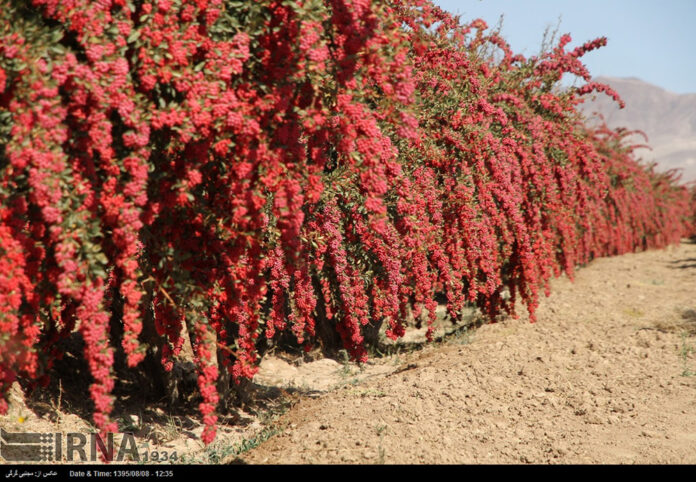
Barberry Harvest

According to a Farsi report by Mizan, Iranian Customs Organization announced that Iran has exported more than 248 tons of fresh barberry to different countries of the world during the last nine months of 2016.

The barberry exports brought $1.58 million in revenues into Iran. Germany was the first customer of Iranian fresh barberry, which is also sold to countries such as Austria, Australia, the United Arab Emirates, Britain, the US, Belgium, Chile, Canada, New Zealand, and the Netherlands.

“Despite a high level of barberry production, Iran has a little share in its exportation, as many people ignore the fruit’s useful qualities,” said Mohsen Ehtesham, an Iranian businessman.

“So the demand for barberry, and the level of its exports, are low.”

He went on to say that if the barberry market is boosted by informing the people about its qualities, the export of this product can be economically very profitable for Iran.

Given the suitable climate of Iran for barberry cultivation, the country can become the top barberry exporter in the world.