Saturday, December 27, 2025
Home Blog Page 414

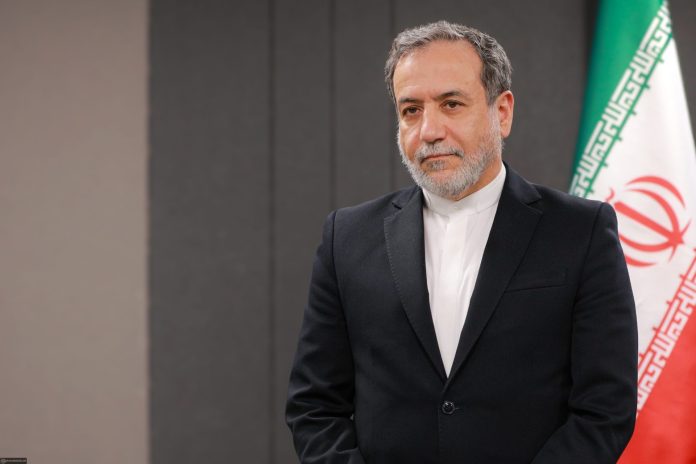
Iran FM says Israel’s wishes in Oman negotiations not to be fulfilled, rejects preconditions

Referring to statements by Benjamin Netanyahu, the Prime Minister of the Zionist regime, about “negotiations similar to Libya,” Araqchi said: “Everyone may have their own speculations or wishes. What the Zionist regime’s officials have said or might say represents their desires, which will never be realized.”

On Monday evening, Israel’s Prime Minister, in a conversation with the US President, stated that an agreement with Iran would be good only if it were conducted like the agreement with Libya.

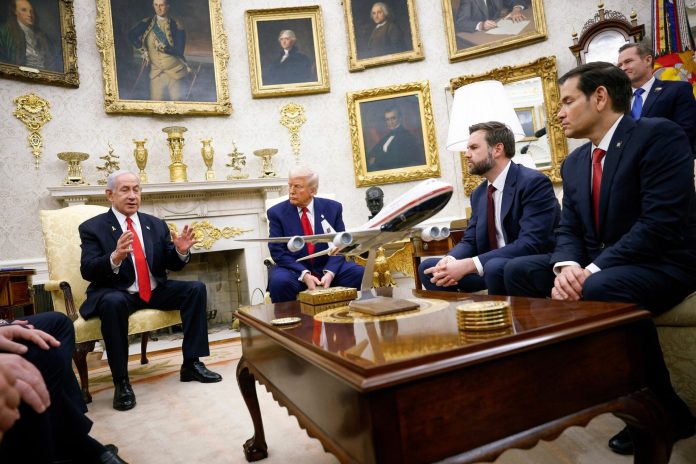
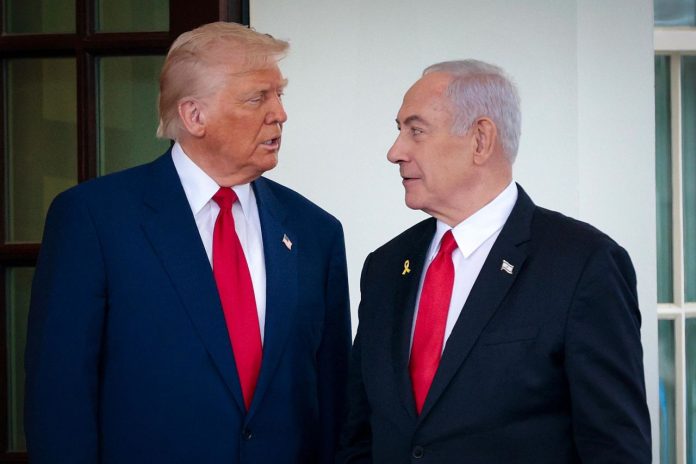
During a meeting with US President Donald Trump at the White House, Netanyahu said: “We are both united in the goal that Iran must not acquire nuclear weapons. Whatever happens, we must ensure that Iran does not possess nuclear weapons.”

Iran’s Foreign Minister asserted: “We are pursuing the interests of the Iranian people. Our nuclear program is entirely peaceful and legitimate. Right now, United Nations Security Council Resolution 2231 fully validates the legitimacy of Iran’s program. Therefore, internationally, there is no doubt about this program.”

In response to the question of whether any preconditions have been set for the negotiations, the Iranian Foreign Minister said: “From our perspective, no preconditions are acceptable, nor do they exist.”

He also stated that it is natural for sanctions, which have been unjustly imposed on Iran due to allegations, to be lifted. “Our primary goal in the negotiations is to secure the rights of the Iranian people and lift the sanctions,” he said.

Araqchi added: “If the other side demonstrates real willingness, from our perspective, an agreement is achievable. ‘The ball is in America’s court,’ and if they come to Oman with genuine intent, we will certainly reach a result.”

Araqchi further noted: “Negotiations in which they seek to impose their will through pressure and threats are not negotiations; they are, in fact, dictation. We absolutely do not believe in this approach.”

US considering withdrawing 10k forces from Eastern Europe: NBC

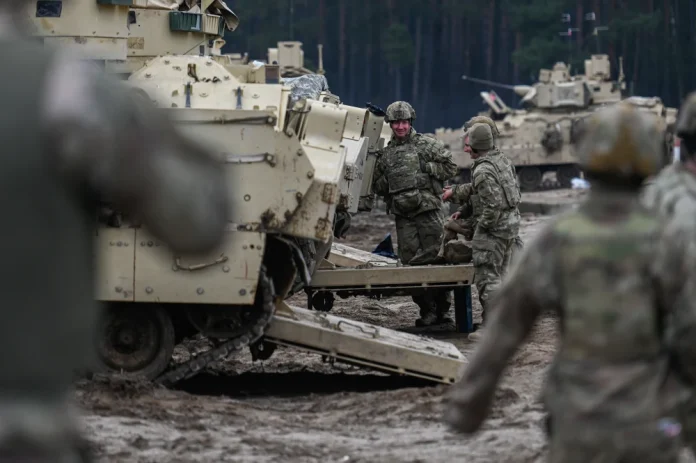
The move would scale back the temporary surge of 20,000 U.S. troops deployed in 2022 to bolster NATO’s eastern flank following Russia’s full-scale invasion of Ukraine.

U.S. forces are currently stationed across Poland, Romania, and the Baltic states to deter further Russian aggression and reassure allies bordering in the region.

The potential drawdown comes amid renewed pressure from U.S. President Donald Trump and Defense Secretary Pete Hegseth for NATO allies to increase their defense spending and assume more responsibility for Europe’s security.

According to NBC, the numbers remain under discussion, but the current proposal would remove as many as half of the additional troops sent after February 2022.

NATO Secretary-General Mark Rutte said earlier that any reduction would be done in close coordination with European allies.

During U.S.-Russia talks in Saudi Arabia, Moscow allegedly demanded a full NATO withdrawal from Eastern Europe as a condition for normalizing relations, the Financial Times reported.

Russia has long accused NATO of threatening its security, citing the alliance’s expansion and Ukraine’s potential membership as pretexts for its war. President Vladimir Putin has claimed that NATO’s presence near Russian borders justifies continued military action.

The debate over U.S. military commitments in Europe comes as NATO faces pressure to raise defense spending targets. Trump has called for increasing the benchmark from 2% to 5% of GDP, far above what most allies currently spend.

Finland’s Defense Minister Antti Hakkanen told the Financial Times that European nations must establish a clear plan, in coordination with Washington, to gradually take over more of the continent’s defense burden.

However, concerns persist that U.S. support may decline faster than Europe can ramp up its own capabilities.

U.S. Secretary of State Marco Rubio said Trump still supports NATO but expects allies to deliver “a realistic pathway” to reduce reliance on American taxpayers.

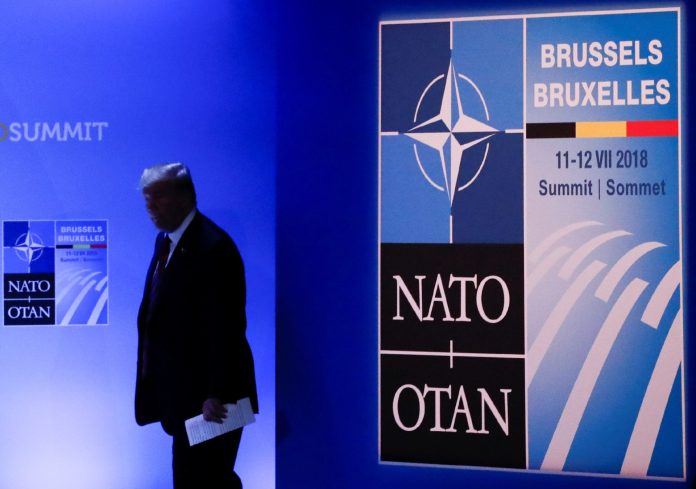
Trump fires US admiral at NATO

Donald Trump NATO

The information was not immediately confirmed by the Pentagon. However, the sources told Reuters that allies had been notified that Chatfield had been removed from her job.

Chatfield, the U.S. military representative to the NATO Military Committee, is one of only a handful of female Navy three-star officers and was the first woman to lead the Naval War College, a job she held until 2023.

The firing, which was first reported by Reuters, is the latest to rock the Pentagon after Thursday’s removal of General Timothy Haugh, the head of the National Security Agency and U.S. Cyber Command. For the Navy, it follows the firing of its top officer, Admiral Lisa Franchetti, the first woman to become Chief of Naval Operations.

President Trump’s administration has taken a cool view of NATO, as well as European allies, since taking office in January.

Defense Secretary Pete Hegseth used his first trip to NATO headquarters in February to warn Europe, opens new tab against treating the United States like a “sucker” by making it responsible for its defense.

It was unclear if any official reason was given for Chatfield’s dismissal, or if it was related to any U.S. policy direction on the North Atlantic Treaty Organization.

Jack Reed, the top Democrat on the Senate Armed Services Committee, said the “unjustified dismissal of Vice Admiral Chatfield is disgraceful” and criticized Republicans for not speaking out against the firing of senior military officials without explanation.

“The silence from my Republican colleagues is deeply troubling… I cannot fathom how anyone could stand silently by while the President causes great harm to our military and our nation,” Reed announced in a statement.

One source stated the motive for Chatfield’s removal may have been related to the Pentagon’s crackdown on diversity, equity and inclusion initiatives.

In a recent Harvard Magazine interview, Chatfield sounded eager for a time when the qualifications of women in the military would not be held in suspicion.

The article cited one example when Chatfield, herself a helicopter pilot, led an MH-60S Sea Hawk expeditionary helicopter squadron in 2005-2006.

“A mid-grade sailor … asked, ‘Ma’am, can you fly one of those helicopters?’ And I chuckled and said, ‘Yes, actually it’s a prerequisite for this job!'” she was quoted as saying, adding that at the time she had been wearing her wings that showed she was a naval aviator.

Hegseth has made the elimination of DEI initiatives a priority, arguing they are divisive.

He has also ended observances of events such as Black History Month and Women’s History Month, issuing guidance to the U.S. military that “efforts to divide the force – to put one group ahead of another – erode camaraderie and threaten mission execution.”

In recent weeks, the chairman of the Joint Chiefs of Staff, General C.Q. Brown, as well as other admirals, generals and security staff have also been dismissed.

Many current and former government officials have said they worry that any national security official could be suspected of disloyalty by Trump’s inner circle because of perceived links to those who have fallen out of favor or for having served key roles in the Biden administration.

Uniformed military officials are supposed to be loyal to the U.S. Constitution and independent of any party or political movement.

Microsoft workers say they were fired after anniversary protest over Israel contract

Microsoft accused one of the workers in a termination letter Monday of misconduct “designed to gain notoriety and cause maximum disruption to this highly anticipated event.”

Microsoft said the other worker had already announced her resignation, but on Monday it ordered her to leave five days early.

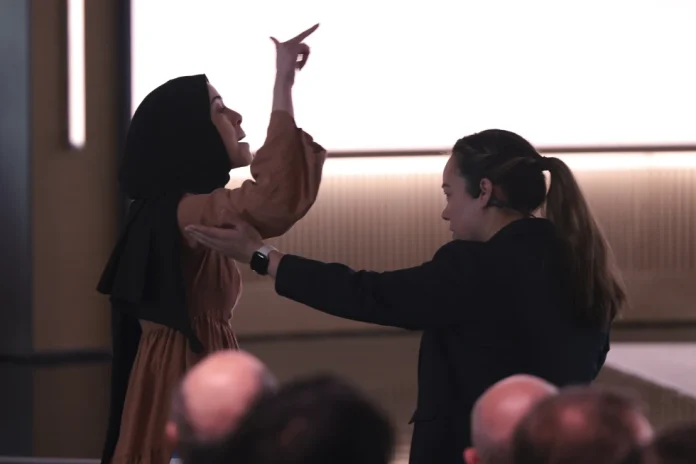
The protests began Friday when Microsoft software engineer Ibtihal Aboussad walked up toward a stage where an executive was announcing new product features and a long-term vision for Microsoft’s AI ambitions.

“You claim that you care about using AI for good but Microsoft sells AI weapons to the Israeli military,” Aboussad shouted at Microsoft AI CEO Mustafa Suleyman.

“Fifty-thousand people have died and Microsoft powers this genocide in our region.”

The protest forced Suleyman to pause his talk while it was being livestreamed from Microsoft’s campus in Redmond, Washington. Among the participants at the 50th anniversary of Microsoft’s founding were co-founder Bill Gates and former CEO Steve Ballmer.

Microsoft added Suleyman calmly tried to de-escalate the situation.

“Thank you for your protest, I hear you,” he stated.

Aboussad continued, shouting that Suleyman and “all of Microsoft” had blood on their hands. She also threw onto the stage a keffiyeh scarf, which has become a symbol of support for Palestinian people, before being escorted out of the event.

A second protester, Microsoft employee Vaniya Agrawal, interrupted a later part of the event.

Aboussad, based at Microsoft’s Canadian headquarters in Toronto, was invited on Monday to a call with a human resources representative at which she was told she was being fired immediately, according to the advocacy group No Azure for Apartheid, which has protested the sale of Microsoft’s Azure cloud computing platform to Israel.

An investigation by The Associated Press revealed earlier this year that AI models from Microsoft and OpenAI had been used as part of an Israeli military program to select bombing targets during the recent wars in Gaza and Lebanon. The story also contained details of an errant Israeli airstrike in 2023 that struck a vehicle carrying members of a Lebanese family, killing three young girls and their grandmother.

In its termination letter, Microsoft told Aboussad she could have raised her concerns confidentially to a manager. Instead, it said she made “hostile, unprovoked, and highly inappropriate accusations” against Suleyman and the company and that her “conduct was so aggressive and disruptive that you had to be escorted out of the room by security.”

Agrawal had already given her two weeks notice and was preparing to leave the company on April 11, but on Monday a manager emailed that Microsoft “has decided to make your resignation immediately effective today.”

It was the most public but not the first protest over Microsoft’s work with Israel. In February, five Microsoft employees were ejected from a meeting with CEO Satya Nadella for protesting the contracts.

“We provide many avenues for all voices to be heard,” said a statement from the company Friday.

“Importantly, we ask that this be done in a way that does not cause a business disruption. If that happens, we ask participants to relocate. We are committed to ensuring our business practices uphold the highest standards,” it added.

Microsoft had declined to say Friday whether it was taking further action, but Aboussad and Agrawal expected it was coming after both lost access to their work accounts shortly after the protest.

Dozens of Google workers were fired last year after internal protests over a contract it also has with the Israeli government. Employee sit-ins at Google offices in New York and Sunnyvale, California targeted a $1.2 billion deal known as Project Nimbus providing AI technology to the Israeli government.

The Google workers later filed a complaint with the National Labor Relations Board in an attempt to get their jobs back.

Germany to prepare children for crisis, war: Handelsblatt

German Army

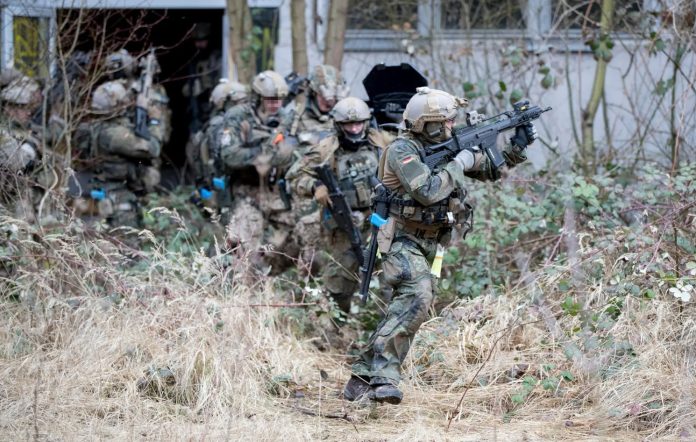
A raft of calls for “civic readiness” have been made by Western European governments since US president Donald Trump took office and the beginning of US-brokered Ukraine peace talks, described by German Foreign Minister Annalena Baerbock as “deadlocked.”.

“Given the recent developments in the security situation, a greater focus should be placed on civil defense, including in school education,” an interior ministry spokesperson told Handelsblatt.

According to the outlet, a Russian attack on NATO territory “in four to seven years” is considered “a realistic scenario” by German military, the Bundeswehr.

Schoolchildren should be “prepared for the worst,” crisis response training should be introduced into school curricula, and emergency supplies should be stored in every home, the German ministry spokesperson reportedly proposed.

Moscow has repeatedly rubbished the claim it could attack a NATO country, since the escalation of the Ukraine conflict three years ago. However such “civic readiness’ calls have been made across the EU and in the UK in the last week.

The European Commission has recently recommended that EU citizens stockpile essential supplies, including food and water, to sustain themselves for at least three days in case of emergencies.

Poland and Norway have reinstated Cold-War-era measures such as bomb shelters and bunkers and mass military training. Sweden and Finland already have guides available to citizens on how to respond if they come under attack.

UN expresses concern over deteriorating relations between US, Iran, hopes for talks

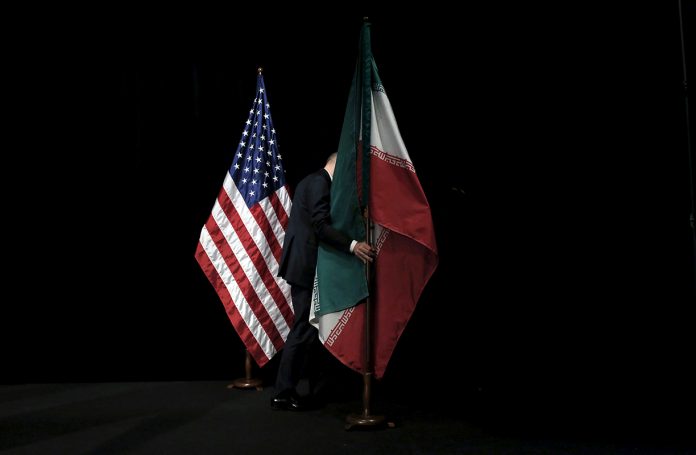
Iran US Flags

“We are obviously concerned by the growing tensions in the Gulf, the growing tensions between the US and Iran,” he said.

We also, I think, positively. We reacted positively to the news that there was the possibility of indirect talks through a third party. We hope that the opportunity of using another country as an intermediary would be used as a way to lower tensions,” he added.

Iranian Foreign Minister Abbas Araghchi has stated that Tehran and Washington will hold “indirect high-level talks” in Oman on Saturday.

“Iran and the United States will meet in Oman on Saturday for indirect high-level talks,” Araghchi posted on X on Tuesday morning.

“It is as much an opportunity as it is a test. The ball is in America’s court,” he stated.

Araghchi’s statement came after US President Donald Trump announced that the US and Iran are holding “direct talks” on Saturday, after meeting with Israeli Prime Minister Benjamin Netanyahu in Washington.

The US president said discussions between Washington and Tehran will be at a “very high level.”

In the Oval Office of the White House, Trump also said, “We have a very big meeting on Saturday [with Iran], and we’re dealing with them directly… And maybe a deal is going to be made, that would be great.”

But he also went on to say that it would be a “very bad day for Iran” if no agreement was reached.

Trump did not provide further details about the talks, including how progressed they are or which officials have been involved.

USAID cancels all remaining Afghanistan humanitarian aid contracts: CNN

The terminations were among of dozens sent by USAID this weekend as the Donald Trump administration moves to abolish the agency by July.

USAID also canceled its remaining humanitarian aid work contracts for Yemen, the official said.

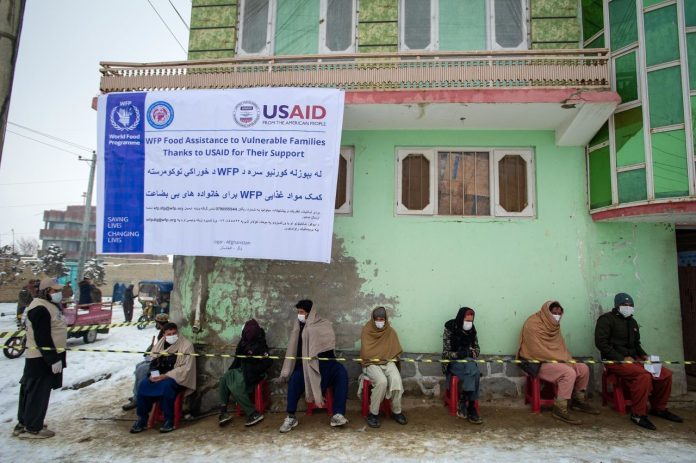
The canceled contracts were used for food assistance, safe drinking water, hygiene items, medical services — including treatment of women and children — and shelter support, according to the USAID official.

Secretary of State Marco Rubio had signed off extensions for some of the foreign aid awards last week, only for them to be cancelled this weekend, the official added.

CNN reported this weekend that the administration canceled other contracts for work that had previously been cleared to continue, including in Syria, Gaza, and Lebanon.

Terminations for the canceled programs said they were deemed to be “inconsistent with the administration’s priorities.”

A State Department spokesperson told CNN this weekend that “just because contracts are terminated, doesn’t mean that they can’t be reinstated as needed.”

FM Araghchi confirms to hold indirect talks with US special envoy for Middle East in Oman

Abbas Araghchi

Araghchi informed Tasnim News Agency on Tuesday that the indirect negotiations will be held in Oman on Saturday

Reports suggest that the talks will focus on outstanding issues between the two countries, including Iran’s nuclear program.

In an earlier speculation, former Iranian diplomat Hossein Mousavian noted that the talks will initially be held indirectly, “with the possibility of shifting to direct discussions if progress is made.”

He stated that a similar approach was taken during the Obama administration, where talks began indirectly before transitioning to face-to-face negotiations.

While US officials have referred to the talks as “direct and high-level,” Araghchi described them as “indirect and high-level.”

Mousavian clarified that there is no contradiction, as the format may evolve during the discussions.

Analysts suggest that both sides are adopting a pragmatic approach, raising hopes for a potential agreement. The choice of Oman as a neutral venue and the experience of the negotiators are seen as positive indicators.

The talks come amid heightened tensions, with observers ranging from being cautiously optimistic about the outcome to warning of the possibility of a military confrontation in case the talks fail.

Netanyahu says Israel working on new Gaza hostage deal

Trump Netanyahu

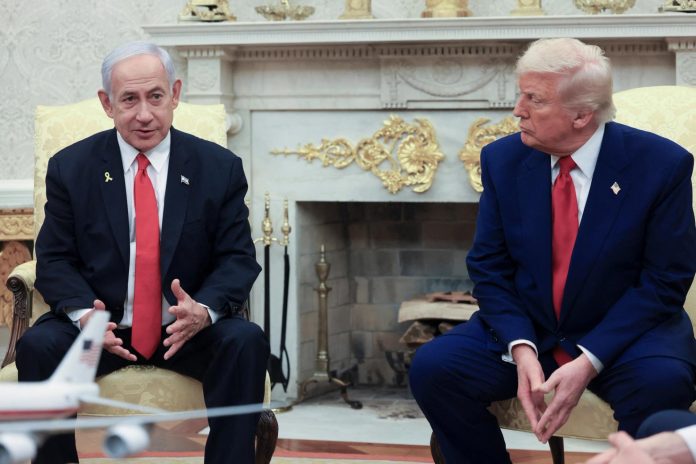
Speaking next to Netanyahu, who has been issued an arrest warrant by the International Criminal Court (ICC) for alleged war crimes in Gaza, Trump suggested that the war in Gaza could soon come to an end.

“I’d like to see the war stop, and I think the war will stop at some point that won’t be in the too-distant future,” Trump told reporters in the Oval Office. However, he did not provide specifics on how or when a ceasefire might be reached.

Trump once again reiterated his desire for US control of Gaza, calling the Palestinian enclave “an incredible piece of important real estate.”

Netanyahu, for his part, claimed that Israel was working on a new agreement following January’s temporary ceasefire, which he broke unilaterally in March before unleashing more bombing on Gaza and killing hundreds more Palestinians.

“We’re committed to getting all the hostages out, but also eliminating the evil tyranny of Hamas in Gaza and enabling the people of Gaza to freely make a choice to go wherever they want,” he added.

The Israeli leader also said he had discussed with Trump what he called the US president’s “bold vision” for Gaza, referring to a controversial proposal for US control over the enclave.

The plan, widely condemned as a blueprint for ethnic cleansing, has drawn sharp criticism internationally.

Turning to Syria, Trump positioned himself as a potential mediator between Israel and Turkiye, despite tensions between Netanyahu and Turkish President Recep Tayyip Erdogan.

“Any problem that you have with Turkey, I think we can solve, as long as you are reasonable,” Trump told Netanyahu.

“I have a very, very good relationship with Turkey and with their leader, and I think we’ll be able to work it out. So I hope that’s not going to be a problem. I don’t think it will be a problem,” added Trump.

Trump, who described Erdogan as “very smart”, praised Turkiye’s role in Syria, referring to the overthrow of leader Bashar al-Assad’s government in December.

“Nobody has done in 2,000 years what Turkey has done in Syria.”

Israel, which has carried out extensive air strikes against Syrian military targets, remains wary of Turkiye’s growing influence in Syria.

Israeli officials fear that a permanent Turkish military presence in Syria could limit their operational freedom to attack Syria.

Trump claims US held direct negotiations with Iran

“We’re having direct talks with Iran, and they’ve started. It’ll go on Saturday. We have a very big meeting, and we’ll see what can happen,” Trump told reporters at the White House on Monday, alongside Israeli Prime Minister Benjamin Netanyahu.

“And I think everybody agrees that doing a deal would be preferable,” he added, without providing further details.

Trump also warned that Iran would be in “great danger” if diplomatic efforts to curb its nuclear ambitions failed, adding that Tehran “can’t have nuclear weapons”.

Over the weekend Iranian Minister of Foreign Affairs Seyyed Abbas Araghchi described the prospect of direct negotiations with the US on Tehran’s nuclear programme as “meaningless”.

Araghchi’s remarks came after Trump stated last month in a letter to Iran’s Supreme Leader Ayatollah Seyyed Ali Khamenei that he hoped there would be a negotiation between the countries.

Tehran, which maintains that it is not seeking a nuclear weapon, has so far rejected Washington’s overtures, but has said it is open to indirect diplomacy.