Saturday, December 27, 2025
Home Blog Page 413

China calls on US to show ‘sincerity’ on Iranian nuclear issue

Iran nuclear program

“As the country that unilaterally withdrew from the Joint Comprehensive Plan of Action (JCPOA) and contributed to the current situation, the US should show political sincerity, uphold the spirit of mutual respect, engage in dialogue and consultation and stop the wrongdoing of threatening and exerting maximum pressure,” Foreign Ministry spokesman Lin Jian told reporters in Beijing.

The statement from Beijing came after US President Donald Trump said Monday that Washington would engage in direct “very high-level” talks with Iran about Tehran’s nuclear program, adding that the talks are “in Iran’s best interests.”

But Iranian Foreign Minister Abbas Araghchi insisted that the talks would be though a mediator.

“Iran and the United States will meet in Oman on Saturday for indirect high-level talks,” he wrote on X.

“It is as much an opportunity as it is a test. The ball is in America’s court.”

Russia, China and Iran held a two-day talk in Moscow on Iran’s nuclear program. Beijing hosted similar talks at the level of vice foreign ministerial level last month.

Beijing also encouraged a solution through political and diplomatic ways, “under the current situation, parties of the Iranian nuclear issue should make joint efforts, enhance dialogue and communication and avoid escalation,” said Lin.

“China will continue to maintain communication with relevant parties, promote peace talks and work for a diplomatic settlement that accommodates parties’ legitimate concerns so as to uphold the international non-proliferation regime and to keep the Middle East peaceful and stable,” he added.

Trump has threatened military action against Iran if a deal cannot be reached and repeated Monday that Tehran “is going to be in great danger” if the talks fail.

Russia welcomes US-Iran negotiations on nuclear program

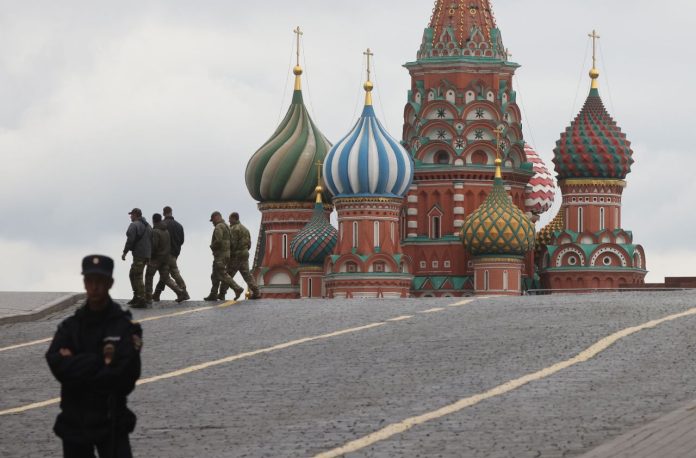
Kremlin

Speaking at a press briefing in Moscow, Peskov said Moscow views the developments positively.

“We are aware that certain contacts, both direct and indirect, are planned in Oman. Naturally, this is something we can only welcome, as it may help de-escalate tensions surrounding Iran,” he added.

On Monday, US President Donald Trump announced upcoming direct talks with Iran, saying a meeting “almost at the highest level” was scheduled for Saturday. He expressed cautious optimism about reaching an agreement, adding that “no one wants the opposite.”

But Iranian Foreign Minister Abbas Araghchi has stated that Tehran and Washington will hold “indirect high-level talks” in Oman on Saturday.

“Iran and the United States will meet in Oman on Saturday for indirect high-level talks,” Araghchi posted on X on Tuesday morning.

“It is as much an opportunity as it is a test. The ball is in America’s court,” he stated.

US says Saturday talks with Iran will be ‘direct’

“First of all, when it comes to Saturday, I won’t get ahead of the president. He has said there will be direct talks with Iran on Saturday,” spokeswoman Karoline Leavitt told reporters.

Leavitt said she would not share any additional details “for obvious reasons, security reasons.”

Her remarks came one day after Iranian Foreign Minister Abbas Araghchi said both sides will meet for “indirect” high-level talks.

“It is as much an opportunity as it is a test. The ball is in America’s court,” Araghchi wrote on X.

Leavitt stated Trump has re-imposed “crippling sanctions” on Iran.

“He’s made it very clear to Iran, they have a choice to make. … If they don’t choose to move forward with diplomacy in a deal which is the direction we do see them headed in, there will be grave consequences,” she added.

Trump said Monday that negotiations are “in Iran’s best interests.”

The US president has threatened military action if the talks fail, warning that Tehran “is going to be in great danger” without an agreement.

Steve Witkoff, Trump’s special envoy, will lead the US delegation for talks with Iran, Axios reported Tuesday, citing two sources familiar with the plan.

Deputy FM: Iran, Russia, China talks on nuclear issue, sanctions “constructive”

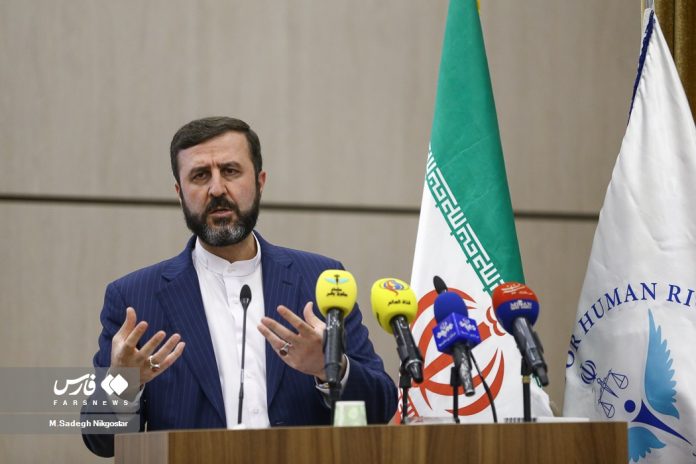
Kazem Gharibabadi

In a statement posted Tuesday on his X account, Gharibabadi said the meeting was convened following prior agreements made by deputy foreign ministers in Beijing. The technical and expert-level session focused on the nuclear file, sanctions relief, and the implementation of UN Security Council Resolution 2231.

During the meeting, expert delegations from the three countries shared views and proposals regarding the future path forward and emphasized their continued commitment to close coordination on these issues.

Gharibabadi reiterated that Iran, consistent with its principled commitment to diplomacy, will continue its consultations with all relevant parties.

Zelensky claims Ukraine captured 2 Chinese nationals fighting for Russia

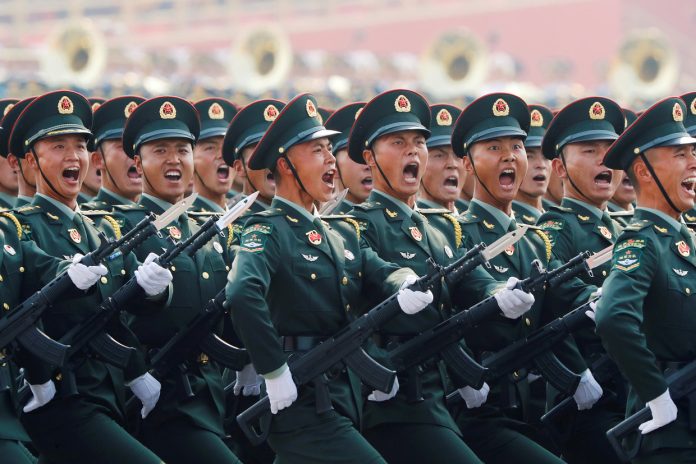
China Army

“We have information that there are much more than two such Chinese citizens in the occupier’s units,” Zelensky said.

“We have the documents of these prisoners, bank cards, personal data,” he added.

Ukrainian troops clashed with six Chinese soldiers near the villages of Tarasivka and Bilohorivka in Donetsk Oblast, according to the president.

The two captured are being held by Ukraine’s Security Service, according to Zelensky.

He instructed Foreign Minister Andrii Sybiha to urgently contact Beijing to determine how Chinese officials will respond.

Sybiha said that Ukraine had summoned China’s charge d’affaires to express condemnation and demand an explanation regarding the matter.

“Chinese citizens fighting as part of Russia’s invasion army in Ukraine puts into question China’s declared stance for peace and undermines Beijing’s credibility as a responsible permanent member of the UN Security Council,” the minister posted on X.

Zelensky emphasized the apparent recruitment of Chinese nationals — whether direct or indirect — highlights the Kremlin’s commitment to continuing its aggression.

“We definitely need a reaction to this. A reaction from the United States, Europe and everyone in the world who wants peace,” he stated.

Zelensky added that China is another country, along with Iran and North Korea, that supports Russia in its war against Ukraine.

“But there is a difference: the North Koreans fought against us in the Kursk direction, the Chinese are fighting on the territory of Ukraine,” the president said at a press conference with Belgian Prime Minister Bart de Wever.

Our military has captured two Chinese citizens who were fighting as part of the Russian army. This happened on Ukrainian territory—in the Donetsk region. Identification documents, bank cards, and personal data were found in their possession.

China has been a key strategic partner to Russia since the start of the full-scale invasion, expanding trade and becoming Moscow’s top supplier of dual-use goods used in weapons production.

Zelensky’s statement follows the earlier deployment of up to 12,000 North Korean troops to Kursk Oblast last fall to support Russian forces in repelling a Ukrainian cross-border incursion.

Ukrainian troops initially captured around 1,300 square kilometers before being pushed back in a counteroffensive reinforced by North Korean units. The town of Sudzha was among the territories retaken.

According to Zelensky, North Korean units fighting for Russia have suffered around 4,000 casualties, two-thirds of them killed.

In response, Pyongyang reportedly transferred an additional 3,000 soldiers to Russia in January and February to replenish losses, AP reported in late March.

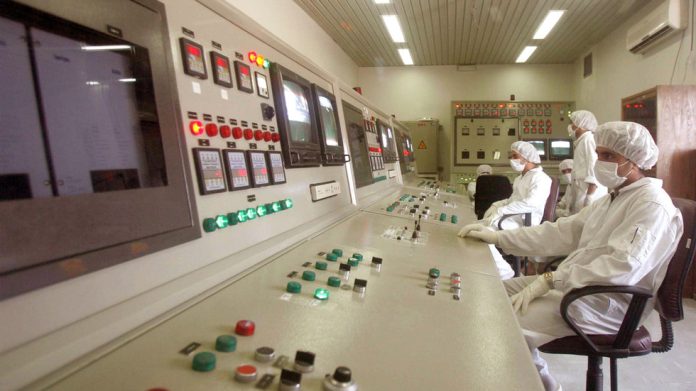
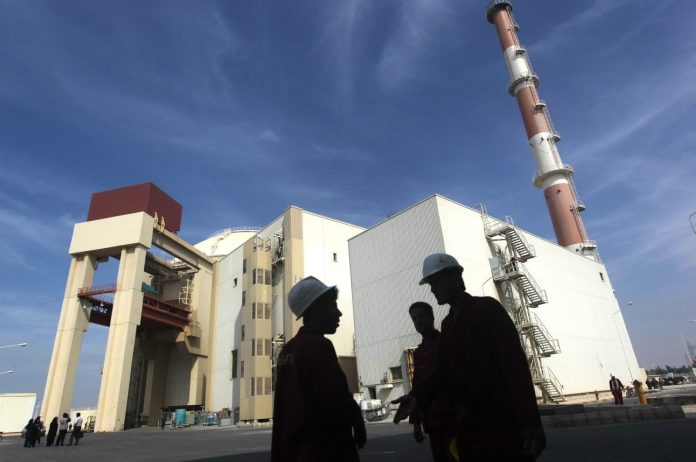
Iran’s Bushehr nuclear power plant temporarily shut down for scheduled maintenance

Iran's Bushehr nuclear plant

Banazadeh explained that annual maintenance is a routine part of operations designed to inspect, service, and extend the lifespan of critical components. These measures are carried out to uphold safety standards and ensure uninterrupted power generation in the long term.

The plant was officially disconnected from the national grid on March 14, 2025, following coordination with Iran’s national electricity network. The current maintenance cycle is expected to last three months, with the plant anticipated to return to operation in early July, he added.

This year’s maintenance work includes major technical inspections and essential overhauls of core equipment, as part of the plant’s standard upkeep procedures.

The Bushehr Nuclear Power Plant, located in southern Iran, which is the country’s sole nuclear power plant, has a capacity of 1,020 megawatts, accounting for 1.1% of Iran’s total installed power generation capacity.

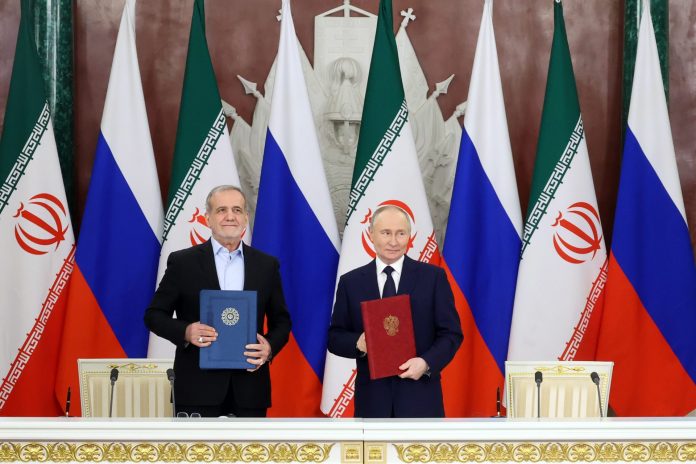
Russia’s State Duma ratifies Treaty on Strategic Partnership with Iran

Pezeshkian and Putin

Russian President Vladimir Putin submitted the document to the State Duma in March. The treaty was signed during Iranian President Masoud Pezeshkian’s visit to Moscow in January.

The document provides the legal framework for the long-term development of relations between Moscow and Tehran.

It designates Russia and Iran as strategic partners, and covers all areas, including defense, the fight against terrorism, the energy sector, finances, transportation, industries, agriculture, culture, science and technology.

State Duma Chairman Vyacheslav Volodin pointed out earlier that the treaty would strengthen relations between the two countries both in terms of bilateral cooperation and coordination on international issues.

He also pointed out that the document paid special attention to boosting interparliamentary ties, including within international parliamentary organizations and through the commission on cooperation between the State Duma and Iran’s Islamic Consultative Assembly.

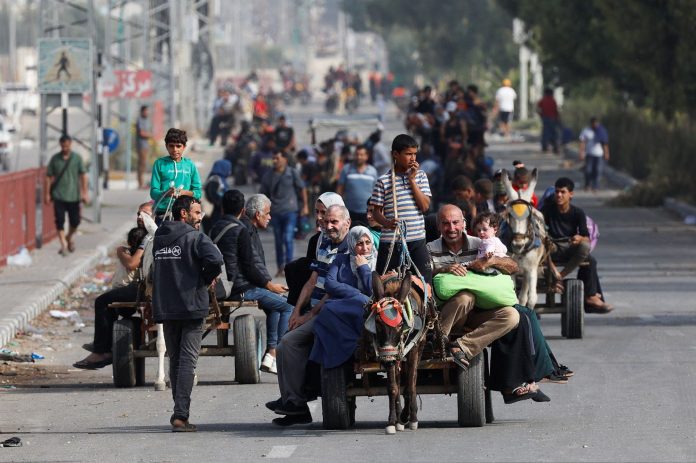
Nearly 400,000 displaced after Gaza ceasefire collapse: UN

Gaza

“Our humanitarian colleagues tell us that across Gaza, Israeli attacks continue unabated, causing systematic, large scale civilian casualties,” UN spokesperson Stephane Dujarric said at a news conference.

The people in Gaza “including many children, are being killed, injured and maimed for life,” Dujarric stated.

“Survivors across Gaza are being displaced repeatedly and forced into an ever shrinking space where their basic needs just cannot be met,” he added.

“Overall, we estimate that nearly 400,000 people have been displaced yet again since the breakdown of the ceasefire. That’s 18% of all Palestinians in Gaza.”

Dujarric also emphasized that “no arrangements to secure their safety and survival have been made — a responsibility that falls on Israel as the occupying power.”

He warned that humanitarian aid efforts are at a breaking point and said: “We cannot sustain this for much longer unless the crossings are reopened immediately for humanitarian goods and equipment that will be essential to the survival of people in Gaza.”

Citing the UN Office for the Coordination of Humanitarian Affairs (OCHA), Dujarric reported that “all attempts to pick up commodities have been brought in and dropped at the crossings have been denied,” and that “most attempts to coordinate these movements result in access being denied.”

On Israel’s killing of paramedics caught on video, Dujarric noted that UN Secretary-General Antonio Guterres is “very much aware of the video and I think, like anyone who has seen it, is just shocked by those images.”

He reiterated the UN’s call for an “independent, transparent and effective investigation to what happened.”

Regarding polio vaccines, Dujarric added: “There’s been no vaccine, no food, no fuel, no supplies have gone in at all for over a month, so and I’m not aware of any exception for polio vaccines.”

The Israeli army renewed a deadly assault on Gaza on March 18 and has since killed nearly 1,400 people, injured over 3,400 others, and shattered a January ceasefire and prisoner exchange agreement in the enclave.

Last week, Israeli Prime Minister Benjamin Netanyahu vowed to escalate attacks on Gaza as efforts are underway to implement US President Donald Trump’s plan to displace Palestinians from the enclave.

More than 50,700 Palestinians have been killed in Gaza in a brutal Israeli onslaught since October 2023, most of them women and children.

The International Criminal Court issued arrest warrants last November for Netanyahu and his former Defense Minister Yoav Gallant for war crimes and crimes against humanity in Gaza.

Israel also faces a genocide case at the International Court of Justice for its war on the enclave.

Palestine Red Crescent demands international investigation into Israel killing of Gaza medics

In a statement on Monday, the group said the March 23 attack in Gaza’s southern city of Rafah “constitutes a full-fledged war crime, and it reflects a dangerous pattern of repeated violation of international humanitarian law”.

PRCS President Younis al-Khatib stated an independent commission is needed “to establish the facts and hold those responsible accountable”.

Israeli forces opened fire at the medics, who were driving in ambulances to assist wounded people at the site of an earlier Israeli attack.

A video recently recovered from the mobile phone of one of the medics showed their final moments. The medics were wearing highly reflective uniforms and were inside clearly identifiable rescue vehicles before they were shot by Israeli forces in Rafah’s Tal as-Sultan neighbourhood.

According to the PRCS, the convoy came under heavy gunfire for about five minutes. It said communication between the team and the central dispatch centre “confirms that the gunfire continued for no less than two hours” with continuous shooting heard until contact was completely lost with one of the medics.

This has also been confirmed by one survivor, who said the ambulances came under direct fire with no warning, according to al-Khatib. The survivor also said he was used by Israeli officers as a “human shield” before being able to escape.

“It is no longer sufficient to speak of respecting the international law and Geneva Convention,” al-Khatib told reporters from el-Bireh in the occupied West Bank.

“It is now required from the international community and the UN Security Council to implement the necessary punishment against all who are responsible.”

Al-Khatib also called on the international community to safeguard aid workers and prevent the targeting of hospitals, medical centres and ambulances.

He also requested that Israel disclose the whereabouts of the PRCS staff who are still missing.

The PRCS lost eight of its workers in the attack. Six members of the Palestinian Civil Defence agency and an employee of the United Nations agency for Palestinian refugees, UNRWA, were also killed.

The Israeli military had claimed its soldiers “did not randomly attack” any ambulances, insisting they fired on “terrorists” approaching them in “suspicious vehicles”.

“Several uncoordinated vehicles were identified advancing suspiciously toward [Israeli army] troops without headlights or emergency signals,” it added.

But al-Khatib refuted this claim, saying the ambulances had emergency lights on.

“We at PRCS have been accustomed to Israel’s false allegations and fabricated stories with regards to what goes on in the Gaza Strip,” al-Khatib stated.

“We believe that the whole world, including media representatives, has now come to realise who is telling the truth,” he continued.

In its statement, the PRCS announced the area was not classified as a “red zone” at the time of the emergency response, which means no prior coordination was required to access the site.

It added for several days after that, Israeli troops prevented rescue teams from accessing the area under the pretext that it was a “red zone”.

Then only limited access was granted, during which PRCS teams recovered the body of a Civil Defence member before Israeli forces forced the rescue team to withdraw, it said.

On March 30, the bodies of 14 others were discovered in a “mass grave in a brutal and degrading manner that violates human dignity”, the PRCS added.

The attack was decried by the Civil Defence, Gaza’s Government Media Office, Hamas and UN High Commissioner for Human Rights Volker Turk, who said the incident raises concern over possible “war crimes” by the Israeli military.

Meanwhile, Tom Fletcher, head of the UN Office for the Coordination of Humanitarian Affairs, said that since Israel broke the ceasefire in Gaza on March 18 and resumed its war on the enclave, Israeli air attacks have hit “densely populated areas” with “patients killed in their hospital beds, ambulances shot at, first responders killed”.

According to UNRWA, at least 408 aid workers, including more than 280 UNRWA staff members, have been killed by Israeli forces in Gaza since the war began on October 7, 2023.

Gaza’s Ministry of Health said that since March 18, at least 921 people have been killed in the territory, adding to the more than 50,000 killed since the war began – most of them children and women.

The violence pushed the heads of six UN agencies to call on Monday for an immediate renewal of the ceasefire that Israel unilaterally broke and the re-entry of humanitarian aid into Gaza.

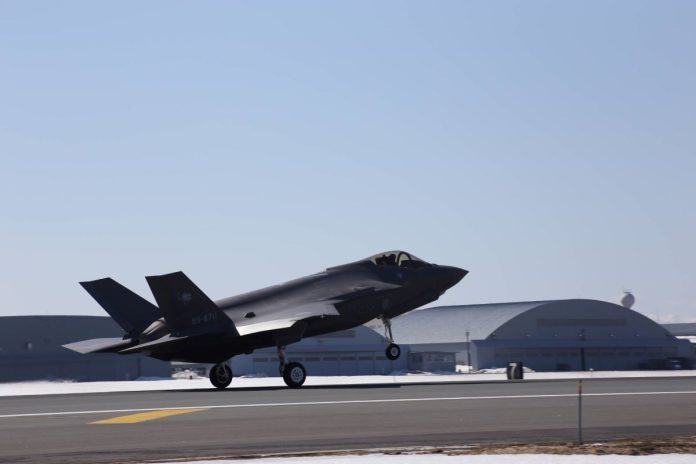
Israel lobbying US against F-35 sale to Turkey: MEE

F35

Netanyahu raised the F-35 issue during multiple calls with Rubio in March and April, the two western officials said. A third source familiar with the matter confirmed that Netanyahu had pressed Rubio on the arms sale.

Netanyahu has privately stated he will push President Donald Trump against the F-35 sale.

It comes as Israel and Turkey’s rivalry is heating up in Syria.

Last week, Israel bombed three military bases in the country – including Syria’s Tiyas air base, also known as T4. The strikes came as Israel saw a limited window of opportunity to attack the bases before Turkey moved its military assets in.

MEE revealed previously that Turkey is deploying a Hisar-type air defence system to the T4 base.

Turkey’s control of the bases is part of a pending defence pact that Ankara and Damascus have been negotiating since December. The agreement would see Turkey provide air cover and military protection for Syria’s new government, which currently lacks a functioning military.

Netanyahu and his advisors see Rubio as a strong ally in trying to stop Turkey from acquiring F-35s, the western officials told MEE.

Rubio is one of the top Turkey hawks in Trump’s cabinet. He was one of the few American officials to express concern over the arrest on 19 March of Istanbul’s mayor, Ekrem Imamoglu. The imprisonment of Imamoglu, Turkish President Recep Tayyip Erdogan’s top rival, sparked mass protests in Turkey.

Amid fallout over the arrest, Trump’s Middle East envoy, Steve Witkoff, said Trump held a “really transformational” phone call with Erdogan, saying there was “just a lot of good positive news coming out of Turkey right now”.

The sources told MEE that Netanyahu has raised the F-35 issue with Rubio several times, including on a call that took place before Rubio hosted his Turkish counterpart, Hakan Fidan, in Washington DC on 25 March.

A readout of that meeting provided by the State Department said the two discussed “close cooperation to support a stable, unified, peaceful Syria”.

Rubio and Fidan also had a warm embrace on the sidelines of a NATO summit in Brussels in April.

When he was a Republican Senator, Rubio took a particularly strong interest in the Eastern Mediterranean. He passed legislation to advance security and energy cooperation between Greece, Cyprus and Israel.

Rubio co-authored the 2019 Eastern Mediterranean Security and Energy Partnership Act, which authorised foreign military financing for Greece and lifted a prohibition on arms sales to the Republic of Cyprus.

Greece is Turkey’s historic foe in the region. Turkey invaded northern Cyprus in 1974 after a failed coup attempt to unite it with Greece. Turkey maintains more than 35,000 troops in the Turkish Republic of Northern Cyprus, a country recognised by no UN member state except for Turkey.

Cyprus, Greece and Israel have been alarmed by Turkey’s growing influence in the region after rebels overthrew Bashar al-Assad’s government last year in Syria.

With Ankara’s allies ensconced in Damascus, Greece and Cyprus are concerned that Turkey could replicate a maritime deal that it struck with Libya’s Tripoli-based government.

Greece and Israel have been deepening their military ties for a decade with US backing, partly in response to that maritime deal with Libya.

That partnership has accelerated in response to Turkey’s growing sway in Syria. Greek Prime Minister Kyriakos Mitsotakis visited Israel on 30 March, and Greece is in talks with Israel to purchase its Barak medium-range air defence systems.

A source familiar with Ankara’s thinking stated that while aware of Netanyahu’s lobbying, they do not believe he can do much.

A senior Turkish official told MEE that the Trump administration hasn’t expressed any change on the F-35 file.

“Netanyahu could only demand Trump to sell more F-35s to Israel, maybe doubling the amount Turkey might buy,” the source familiar with the matter noted, adding, “You cannot tell Trump not to make that sale.”

While Trump often touts his good relationship with Erdogan, he has often been critical of Turkey.

Trump said in December that Erdogan orchestrated an “unfriendly takeover” of Syria after Hay’at Tahrir al-Sham (HTS) toppled Assad’s government. He expressed concern about Turkish expansionism, saying, “They’ve wanted it [Syria] for thousands of years, and he got it”.

Steve Bannon, a former Trump advisor whose podcast War Room has become required listening to those seeking a peek behind Trump’s world view, said recently that Erdogan was “one of the most dangerous leaders” in the world and wants to “re-establish the Ottoman Empire”.

Outside influencers have growing sway in Trump’s White House, as was underscored by right-wing conspiracy theorist Laura Loomer’s takedown of several national security officials.

The tussle between Turkey and the US over F-35s goes back to 2019 when Ankara purchased Russia’s S-400 missile system and was ejected from the co-production of the warplane. The following year, the Trump administration slapped sanctions on Turkey.

MEE revealed that Ankara is considering the temporary deployment of S-400 air defence systems to T4 or Palmyra in Syria to secure the airspace during the reconstruction of the bases. However, no final decision has been made and Russia would need to give its approval.

Under US law, Turkey must relinquish possession of the S-400 system to be readmitted into the F-35 programme. But deploying the S-400 to Syria would likely alarm Israel.

Israel has long enjoyed a veto on US arms sales to other Middle Eastern states to ensure it maintains a qualitative military edge in the region.