Wednesday, December 24, 2025
Home Blog Page 4123

President Rouhani Calls for Promotion of Ties with Brazil and Kyrgyzstan

Rouhani

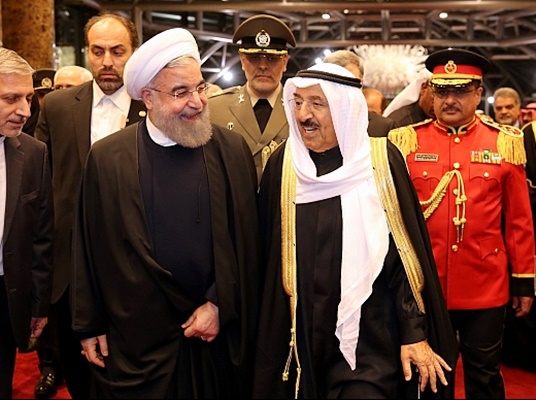
According to a report by IFP, Rouhani on Sunday separately met the new ambassadors of Brazil and Kyrgyzstan to Iran, and received their credentials.

During these meetings, the Iranian president underlined Tehran’s resolve to enhance its cooperation with these countries, particularly in economic sector.

Closer Banking Ties with Brazil

In his meeting with new Brazilian Ambassador to Iran Rodrigo de Azeredo Santos, Rouhani stressed the need for Tehran and Brasilia to facilitate banking relations in a bid to boost trade exchanges between the two sides.

“Iran attaches significance to its cooperation with Brazil, as a big country with a considerable economy in South America, and is willing to promote the level of cooperation,” he said.

The president further highlighted the importance of efforts to facilitate banking relations between the two countries and expressed the hope that the ties would gain serious momentum in various fields, economy in particular.

The Brazilian diplomat, for his part, emphasized that his government considers Iran as a reliable partner and is seeking to establish strategic economic ties with the Islamic Republic.

Rohani2

Enhanced Cooperation of Iran’s Private Sector with Kyrgyzstan

During the meeting with Kyrgyzstan’s new ambassador to Tehran Avazbek Abdurazakov, Rouhani highlighted the ample grounds for cooperation between the private sectors of Iran and Kyrgyzstan.

“Iranian companies are ready to expand cooperation with Kyrgyzstan in the fields of road construction, energy, technical and engineering services, medicine, and pharmacy,” President Rouhani said, as reported by Tasnim.

The president also stressed that enhanced economic and political relations between Tehran and Bishkek will serve not only the interests of the two nations, but also those of the region.

The new envoy, for his part, said Kyrgyzstan is pursuing plans for closer ties with Iran.

Kyrgyzstan welcomes stronger presence of Iranian companies in the country, Abdurazakov underlined, hoping that facilitation of consular issues as well as direct flights between the two countries would accelerate bilateral economic cooperation.

Certain Regional Countries Worried about Terrorists, Not Syrian People: Iranian Official

shamkhani

Speaking in a meeting with Russia’s special envoy on Syria, Alexander Lavrentiev, in Tehran on Sunday, Shamkhani said some regional countries have expressed concern over the political initiatives of Iran, Russia and Turkey in Syria and do not have any sympathy for people in war-ravaged countries, but are worried that the terrorist groups they have been supporting have been losing ground and are on the decline.

“Undoubtedly, if these countries [that support terrorists] do not change their conduct, they will not be able to play a constructive role in the political process for determining the future of the region,” the SNSC secretary pointed out, according to a report by Press TV.

He further noted that the Islamic Republic of Iran is committed to seeking a political solution to solve the nearly six-year crisis in Syria.

“The Islamic Republic of Iran remains committed to pursuing a political solution to put an end to the Syria crisis and believes that a military solution will work only in dealing with groups that refrain from laying down their weapons,” he said.

He added that the Syria conflict cannot be resolved through political approaches as long as terrorist groups, including ISIS and Jabhat Fateh al-Sham, an affiliate of al-Qaeda formerly known as al-Nusra Front, are operating in the Arab state and supported by certain regional countries.

Iran, Russia, Syria to Continue Anti-Terror Campaign

The Russian envoy, for his part, said his country would continue its cooperation with Iran and Syria in the fight against terrorists and the groups refusing to commit to a political solution to the Syrian crisis.

Lavrentiev added that political negotiations among Iran, Russia, and Syria would have no effect on their battle against terrorist groups.

He reaffirmed Moscow’s support for Tehran’s constructive role in the campaign for the establishment of peace in Syria.

The Russian diplomat assessed the successful Syrian peace talks held in the Kazakh capital of Astana as a considerable achievement helping the continuation of Iran-Russia-Turkey political initiatives.

Last month, Astana hosted the latest round of Syria peace talks sponsored by Iran, Russia and Turkey.

The two-day intra-Syrian talks between Damascus and opposition groups concluded on January 24, with Tehran, Moscow and Ankara agreeing on the establishment of a trilateral mechanism to support the ceasefire in Syria.

The three countries also played intermediary roles at the talks, where the United Nations envoy for Syria, Staffan de Mistura, was also present.

MP Calls for Revision of Iran’s Contraband Laws

smuggle

Iranian Minister of Economic Affairs Ali Tayyebnia recently noted that more than 70% of goods smuggled to Iran have unofficial origins.

In reaction to his comments, Mohammad-Esmaeil Saeidi, an Iranian lawmaker, said official sources definitely collaborate in smuggling these goods.

“20 to 27 billion dollars of smuggled goods arrive in Iran every year, and such a large amount is impossible to have only unofficial origins.”

“How much goods can those living near the borders and contraband carriers smuggle,” he asked, saying the Economy Minister’s remarks are not logical.

“This is not the reality,” he noted, according to a Farsi report by ICANA.

“While smuggling has caused extensive damages to Iranian production and economy, no serious measure is taken to stop it: some groups formulate plans to smuggle the goods into Iran in cooperation with official sources.”

“Some systematic problems and a lack of careful supervision over the official sources makes them able to easily smuggle large amounts of goods into the country.”

He then emphasized the need to remove the deficiencies, seriously penalize the professionals who plan the massive smugglings, and revise the penal laws so that the Iranian economy isn’t damaged by this issue anymore.

That said, the banking system must be more controlled in order to clarify the source of huge sums of money put into some bank accounts.

“The current laws and penalties are not deterrent. A detailed, effective mechanism should be set up to stop such actions and the resulted illegal incomes.”

Zionist Lobby behind Washington’s Plot to Attack Iran: MP

United-States-Congress1

According to a Farsi report by ICANA, Jalil Rahimi Jahan-Abadi, an Iranian parliamentarian, says the US Congress’ plan to authorize US President Donald Trump to carry out a military attack on Iran has been devised by the Zionist lobby.

Commenting on the plan giving Trump full authority to launch a military invasion of Iran in case of perceiving the country’s nuclear energy program as a threat to his country, he noted that the Zionist lobby is behind this plot which is aimed at spreading and promoting Iranophobia across the world.

Referring to the fact that currently governments view nuclear weapons as a deterrent factor, Rahimi said the US is still being criticized by the international community for the atomic bombings of the Japanese cities of Hiroshima and Nagasaki — on August 6 and 9, 1945, respectively — and is answering questions in this regard.

“The country has accumulated enough wisdom not to obey the Zionist regime’s decision against Iran imprudently. In addition, the international law, public opinion and the US structural condition do not permit the Trump administration to go ahead with this plan.”

He said the US Congress knows very well that in case Trump has absolute authority to declare war on a country or take military actions without specific congressional authorization, he will certainly, in some cases, lose his control and make irrational decisions.

Rahimi concluded that even the US Congress would not favour such a decision lest the Zionist regime should take full control of the country.

US Puts Chinese Firm on Sanctions List for Selling Fire Hydrants to Iran!

139403041916136675370194

US on Friday imposed sanctions on 25 individuals and entities. Those affected under the sanctions cannot access the US financial system or deal with US companies and are subject to secondary sanctions, meaning foreign companies and individuals are prohibited from dealing with them or risk being blacklisted by the United States.

The list includes two Chinese companies and three Chinese people, only one of whom the US Treasury Department explicitly said was a Chinese citizen.

Richard Yue, who is on the list, told Reuters he was also Chinese and that he thought the decision was unfair. His bank account had been frozen, meaning he couldn’t work, he said.

“I export to lots of countries, and Iran is a customer too. That’s totally normal,” Yue said.

“How is this fair? Why should others pay attention to what Americans say? What’s wrong with my daily use goods?”

Yue added he did not know what he would do, or whether he would try and seek help from the Chinese government.

He did not elaborate on what products his company exported to Iran. But the company’s website shows it is involved in trading everything from furnaces to treadmills and false eyelashes.

The business-to-business website of other Chinese company on the list show imports of fire hydrants and inner tubes for motorcycle tyres.

An export manager at the company told Reuters they made “normal” exports to Iran, though he would not say of what.

“There’s nothing we can do. Let them put us on the sanctions list,” he added, according to a report covered by Fars News Agency in Persian.

The official Xinhua news agency, in a commentary on Sunday, said while the new sanctions would have a limited effect on Iran, they opened a new chapter in the stand-off between Washington and Tehran.

Opening Ceremony of OIC Youth Capital Held in Iran’s Shiraz

n3400301-5643814

During the ceremony held on Saturday, the upcoming events of Shiraz-OIC Youth Capital, along with Putrajaya (Malaysia), was presented to distinguished guests and youth Representatives of OIC Member States.

The ceremony started with presentation of “Key to Shiraz” to youth and concluded with the signing of the roadmap of the Shiraz – OIC Youth Capital between Shiraz Authorities and ICYF-DC.

Here are IRNA’s photos of the ceremony, which was attended by Iran’s Minister of Youth Massoud Soltanifar and Deputy Foreign Minister Hassan Qashqavi:


Iranian MP Warns against Syria’s Disintegration

Syria

“During the last five years, the Syrian resistance front didn’t allow the Takfiris [extremists] and their allies to reach their goals,” said Mohammad-Javad Abtahi, an Iranian lawmaker, according to a Farsi report by ICANA.

“While the plotters of Syrian war imagined that Damascus would fall soon, the Syrian people defended their legal administration, not letting this malicious objective to be achieved.”

He then referred to the Syrian new Constitution draft, prepared by Russia, and said, “Syria’s integrity must be regarded as an inviolable principle.”

“This principle has apparently been stressed in the Constitution proposal. Deep down, however, the draft paves the way for Syria’s disintegration by giving Kurds and some other ethnic groups cultural autonomy.”

“In no circumstances should Syria become the subject of other powers’ ninetieth century-like political deals,” he emphasized.

“The disintegration is the strategy the US pursues in the Syrian war,” Abtahi noted. “We are worried about its effects on the Middle East.”

“Iraq and Turkey’s disintegration will follow Syria’s; it finally leads to the repetition of disastrous conflicts such as Yugoslav wars.”

He went on to say that Tehran has always supported Syria’s integrity.

“We are holding on to our boundaries while they are shaping their own future.”

New York Museum Protests Trump’s Visa Ban by Displaying Iranian Artists’ Works

New York Museum

In one of the strongest protests yet by a major cultural institution against US President Trump’s executive order on immigration, seven works by artists such as the Los Angeles-based Iranian video artist Tala Madani, the Sudanese painter Ibrahim el-Salahi, and the Iraqi-born architect Zaha Hadid were installed Thursday night in MoMA’s fifth-floor galleries, replacing seven works by Picasso, Matisse and Picabia, among other Western artists.

According to a report by New York Times covered by Honar Online in Farsi, alongside each work is a wall text that plainly states the museum’s intentions: “This work is by an artist from a nation whose citizens are being denied entry into the United States, according to a presidential executive order issued on Jan. 27, 20. This is one of several such artworks from the Museum’s collection installed throughout the fifth-floor galleries to affirm the ideals of welcome and freedom as vital to this Museum as they are to the United States.”

Except for Hadid and el-Salahi, the other artists are all Iranian by birth or heritage. They are Ms. Madani; the sculptor Parviz Tanavoli; the draftsman Charles Hossein Zenderoudi; the photographer Shirana Shahbazi; and the painter Marcos Grigorian. In addition, a large sculpture of aluminium and steel by Siah Armajani, an American artist born in Iran, was placed in the glass-walled lobby courtyard overlooking the garden.

The Museum of Modern Art has also scheduled four screenings later this month of films by directors subject to the travel ban. They include “Al-Yazerli” (1974), an experimental feature by the Iraqi-born German director Kais al-Zubaidi, and “Stars in Broad Daylight” (1988), by Oussama Mohammad, a Syrian filmmaker exiled in Paris.

Iran Launches First Oceanographic Survey Ship

ship

The first Iranian hydrographic and oceanographic survey ship, which has been designed and built by the Iranian Defence Ministry’s Marine Industries Organization, was officially put into the water during a ceremony in Bandar Abbas.

Addressing the delivery ceremony, Head of Marine Industries Organization Rastegari referred to distinguished characteristics of the newly-built vessel, and said, “Persian Gulf Explorer enjoys an operating range of three thousand sea miles, lasting 40 days at sea and a maximum speed of 15 knots with excellent manoeuvrability, power, satellite communications systems, advanced CCP propulsion systems, a data transfer system, and the DP system for dynamic stabilization of the ship.”

“The vessel is also equipped with three laboratories and two freezers,” highlighted the official, adding, “The ship has received approval from reputable domestic and foreign institutions and offers numerous applications in the field of physical oceanography, marine chemistry, marine biology, geology, sea geophysics, professional climatology including atmospheric and meteorology in addition to sea mapping,” Mehr quoted him as saying.

Rastegari went on to say that 85 mechanical, mobility, propulsion, electrical and electronics, navigation and telecommunication systems were embedded in the vessel; “a total of 150 industrial, research, academic and knowledge-based centres as well as various industry organizations of the Defence Department spent more than 300 thousand hours and carried out about 12 thousand administrative activities in order to construct the ship.

He deemed the project as a symbol of Resistance Economy, adding that “sanctions imposed by enemies led to this national achievement.”

Here are IRNA’s photos of the ceremony:

Iranian Athlete Dedicates Medal to Deceased Firefighters

Mojtaba Abedini

Abedini, the Iranian sabre fencer who won the silver of Men’s Sabre World Cup Padova 2017 in Italy, dedicated the medal to firemen killed in the Plasco building collapse in Tehran, January 19.

He also wore a flag with the emblem of Iran Fire Department while being awarded his medal.