Sunday, December 21, 2025
Home Blog Page 4076

Political ‘Hostage-Holding’ by North Korea, Malaysia

north korea

North Korea’s foreign ministry was the first to issue a ban. It says the temporary block on Malaysians leaving the Democratic People’s Republic of Korea (DPRK) is to ensure the safety of its own diplomats and citizens in Malaysia.

“All Malaysian citizens in the DPRK will be temporarily prohibited from leaving the country until the incident that happened in Malaysia is properly solved,” the state-run KCNA news agency reported, quoting the foreign ministry.

According to a Malaysian foreign ministry official, there are currently 11 of its citizens in the DPRK: three embassy staff; six family members; and two others.

Kuala Lumpur branded the ban ‘hostage-holding’ and responded by barring all North Koreans from leaving the country.

“This abhorrent act, effectively holding our citizens hostage, is in total disregard of all international law and diplomatic norms,” Malaysian Prime Minister Najib Razak said in a statement.

The killing of the North Korean leader’s estranged half-brother has outraged Malaysia and seen diplomatic ties disintegrate.

Prior to Kim’s death, Malaysia was one of North Korea’s few allies outside China, Euronews reported.

Two women from Indonesia and Vietnam have been charged and eight North Koreans are wanted in connection with Kim’s death.

The assassins used VX nerve agent to kill Kim at Kuala Lumpur International Airport. The chemical is so toxic it is on the UN list of weapons of mass destruction.

“Riyadh Knows Should Adapt Itself to Regional Developments”

jaberi-ansari

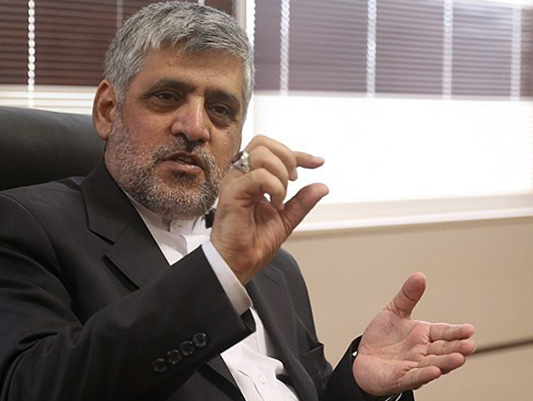
In an interview with the Etemad daily newapaper, Iran’s Deputy Foreign Minister for Arab and African Affairs Hossein Jaberi Ansari offered his take on the situation in the region and Saudi Arabia’s role in regional developments.

Here are excerpts from his remarks in the Farsi interview.


Riyadh’s Policy on Iraq

Saudi Arabia did not favour the situation that emerged in Iraq following the overthrow of the former Iraqi regime back in 2003 and the beginning of new arrangements as well as the formation of a completely different system in the country. Riyadh used all means and resources available in its foreign policy arena to destabilise the new situation in Iraq. However, the recent visit to Baghdad by the Saudi foreign minister is a clear indication that Riyadh has recognized the new situation in Iraq. Of course, there are other dimensions to that visit as well.


Riyadh Adapting Itself to Regional Developments

The trip does not necessarily mean that Saudi Arabia has changed its policy on Iraq; rather, it means Saudi Arabia is getting itself acclimated to regional developments. The whole raft of regional developments together with political achievements in Iraq and Syria have brought about a new situation for the governments of both countries as well as their regional allies. Changes which have taken place following the election of Donald Trump as US president and developments in other countries such as Yemen have led Saudi Arabia to understand that it cannot continue with its previous mandate and needs to align itself with the developments in the Middle East. Riyadh has realised that it should pursue its interests and policies within new frameworks.


Two Views on Saudi Policies

There are two pessimistic and optimistic viewpoints in this regard. The sceptical view holds that Saudi Arabia is following the same old policies with a new face and, by engaging with Iraq at high levels of government, seeks to achieve a balance of power with Iran. Balance of power in the region has been tipped in favour of Iran dramatically over the past few years. In fact, Riyadh’s policy is to build closer interaction with Iraq in a bid to separate Baghdad and Tehran. The optimistic view suggests that Saudi authorities have, based on the regional and international trends, arrived at the conclusion that they cannot continue with their old policies. They have realised that they should make some changes to their approach, and that they can do this through Iraq.


Both Strategies on Saudi Agenda

The realistic view would be a combination of the two abovementioned viewpoints. We can say Saudi Arabia has put an amalgamation of these two viewpoints on its agenda. Pursuing this approach will have one of the following results for Riyadh: Either Iraq will become a channel through which to ameliorate ties with Iran, which will be an accomplishment for Saudi Arabia, or Riyadh will, by building closer interaction with Iraq, reinforce its instruments of power to square off against Iran if there is no chance of reaching an agreement. Either way, Saudi Arabia will have a new experience.


Will Iraq Distance Itself from Iran?

If we look at the trend of developments as well as the political, social and structural realities associated with Iraq coupled with regional developments, we can see the theory of separating Baghdad from Tehran is an unachievable goal. Iraq, for its part, prefers reduced levels of confrontation and conflict outside its borders between regional players or regional and international players. If Saudi Arabia has just put a new face on its past policies vis-à-vis Iraq and merely seeks to achieve its previous objectives, it should know that this approach is doomed to fail. The realities in the region, including Iran’s influence, as well the new situation in Iraq plus its structural, political and social realities are all an inevitable fact and show the Al Saud rulers cannot continue their previous policies.


Divisions within Al Saud Regime

What has caused differences within the Saudi government to go unnoticed is the Yemen war, not to mention Saudi Arabia’s political structure. When a country directly gets engaged in a war, it will cover up many of the existing differences.  Maybe one of the unfortunate developments for Yemeni people, who are paying the highest price for the lingering war, is that Saudi Arabia needs to perpetuate the war in order to use it as a smokescreen for its internal conflicts and rows. If the war continues, it will be possible to keep a lid on internecine divisions and conflicts within the Saudi government.

In Saudi Arabia, we are witnessing a kind of battle between Mohammad bin Salman and Muhammad bin Nayef. They have differences of opinion on domestic and regional issues. But it is Mohammad bin Salman’s stances that have set the base for Riyadh’s official policy over the past few years. He has been the number-one player in the Saudi political arena since King Abdullah’s death. He does not accept the changes which have taken place in the region. Bin Salman is trying to reverse the course of developments and equations and turn them back to the situation a decade ago, and even resorts to direct war to make it happen.


Saudi Arabia Defying New Developments

Riyadh’s policy is one of not accepting new developments and trying to revive past equations and relations. That is why Riyadh calls itself the key guardian of the past situation in the Arab world. The only exception to Saudi Arabia’s general policy in the Arab world is the issue of Syria. Over the past few decades, Syria has been trying to play a role amid different fronts and ensure its interests. So, after the victory of Iran’s 1979 Islamic Revolution, Syria never got on board with other Arab states to confront Iran. Syria tried not to get itself into a situation in which it had to make a choice. But whenever it had to make a choice at some point, it would choose Iran.

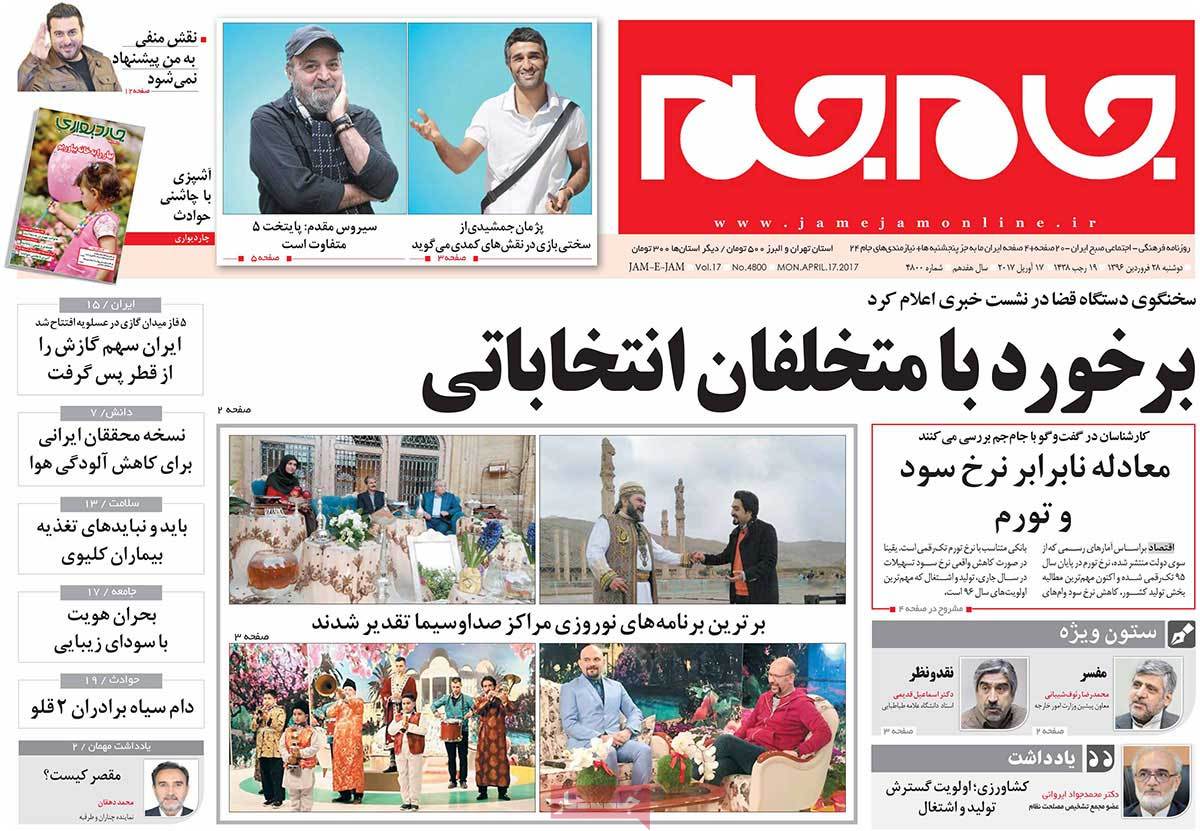
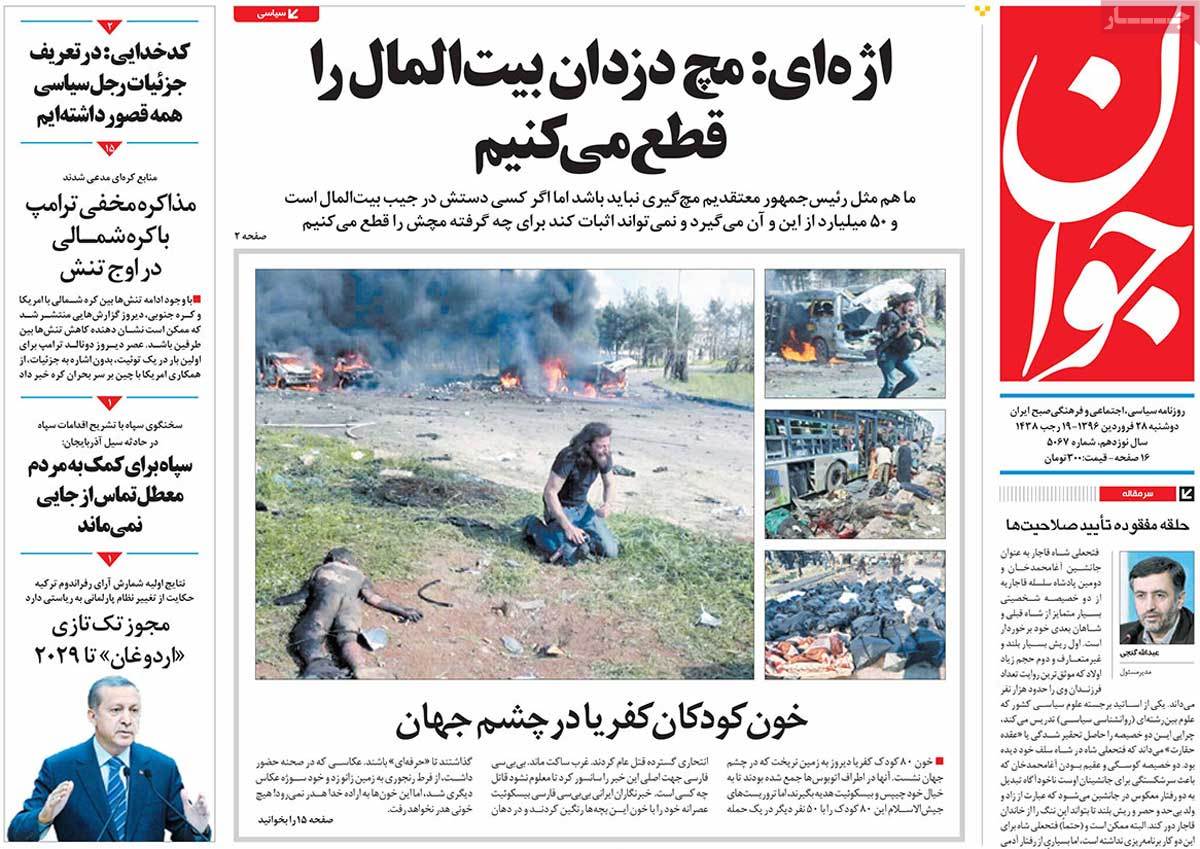
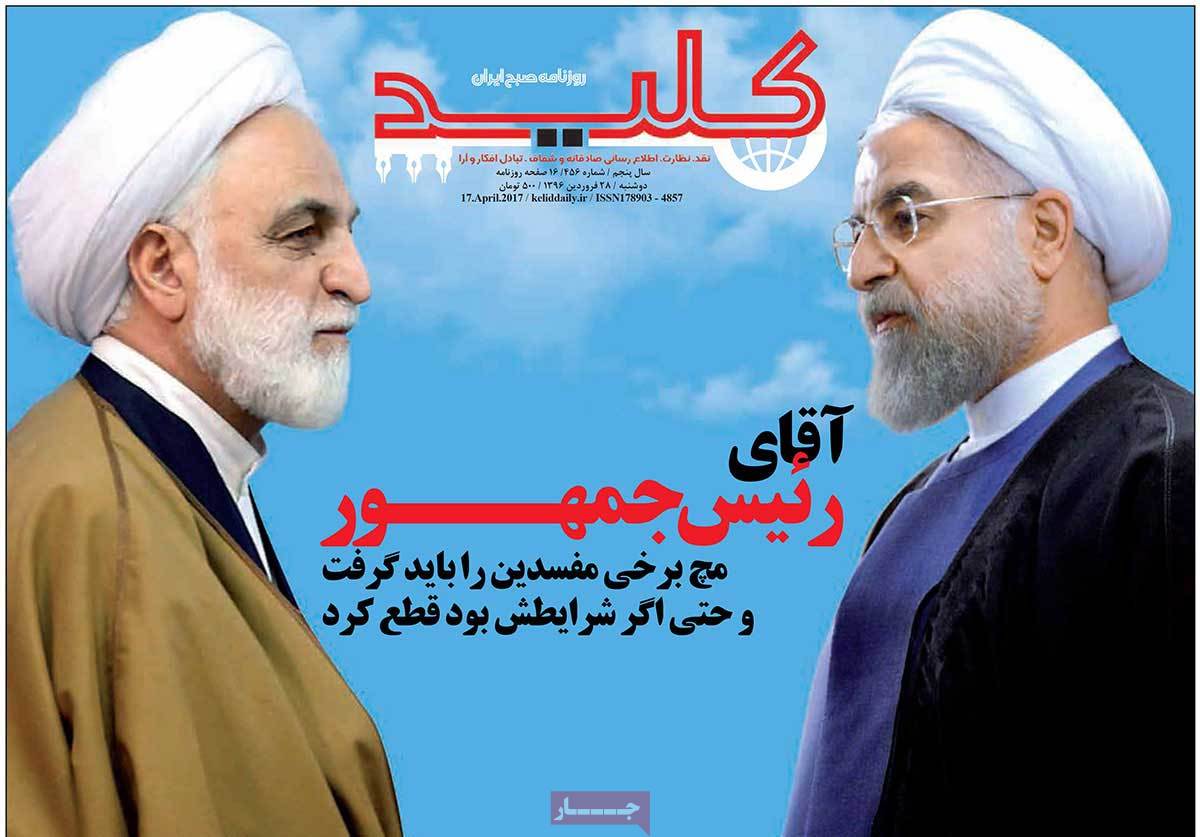
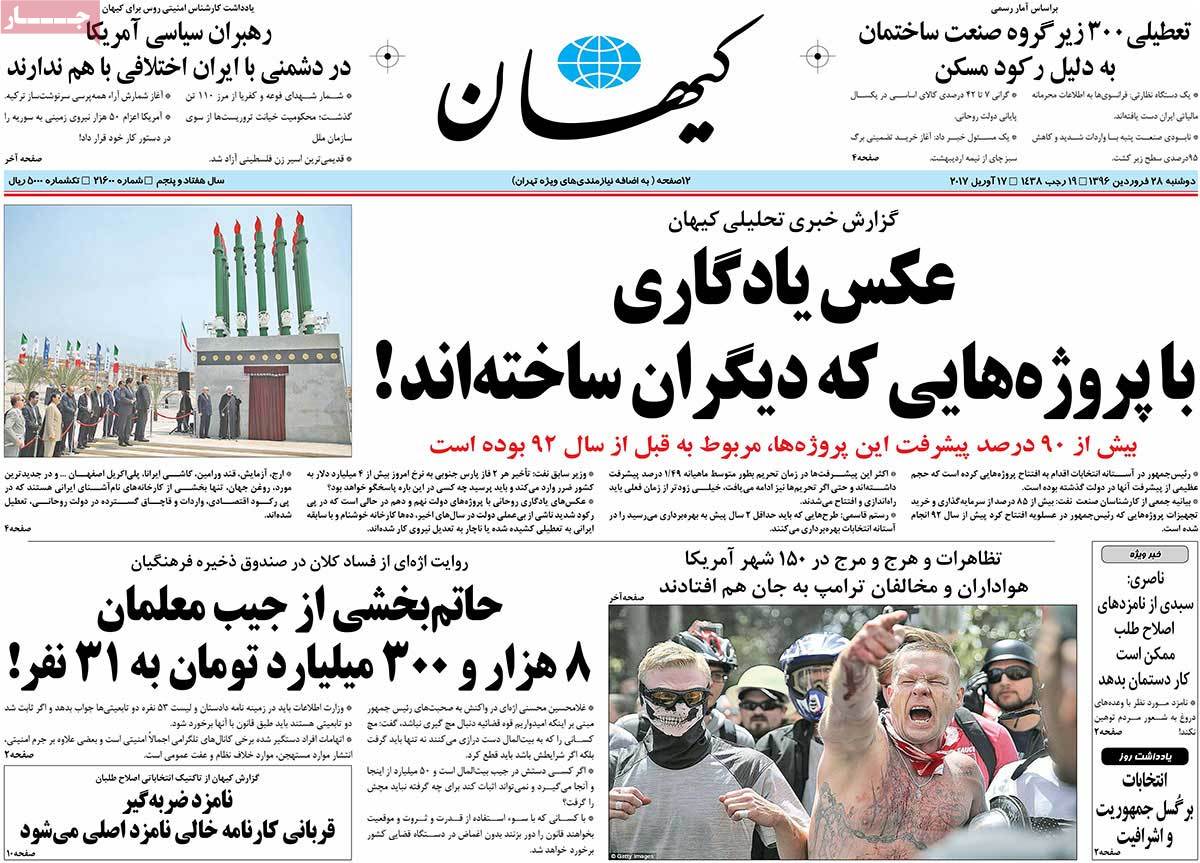
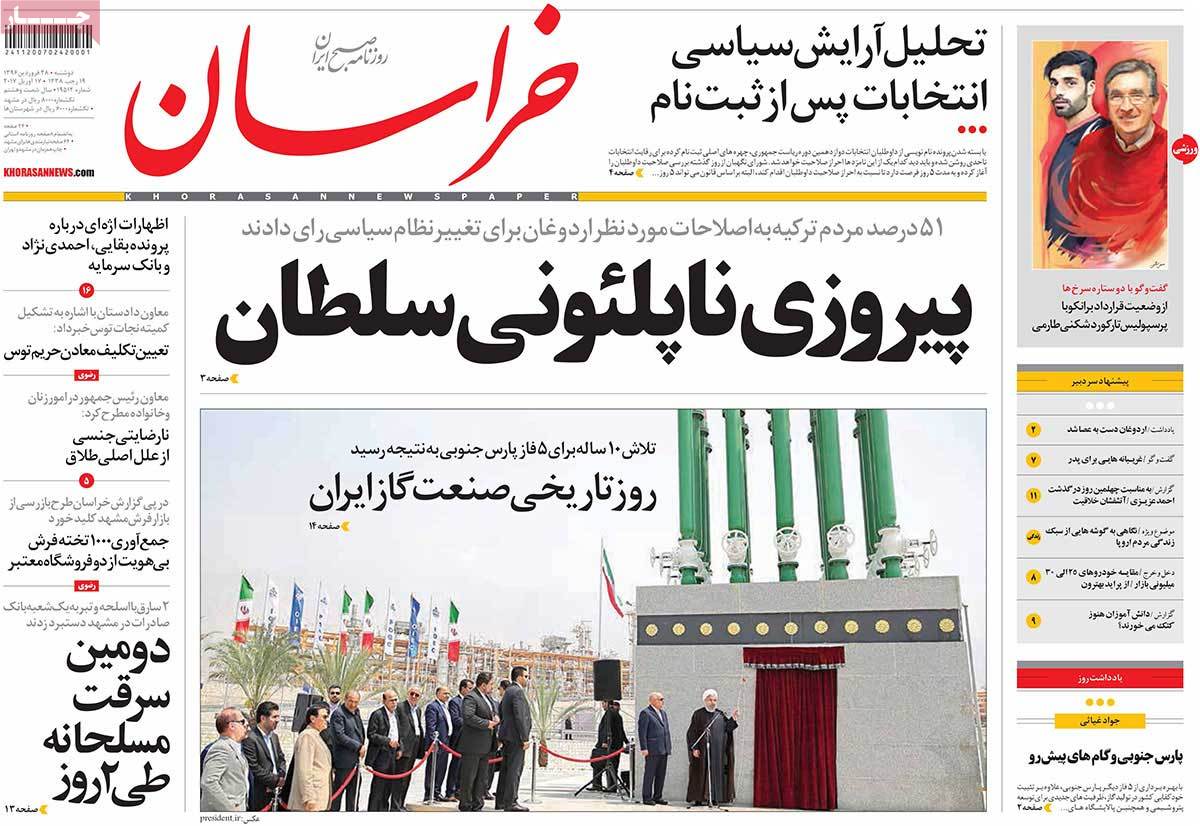
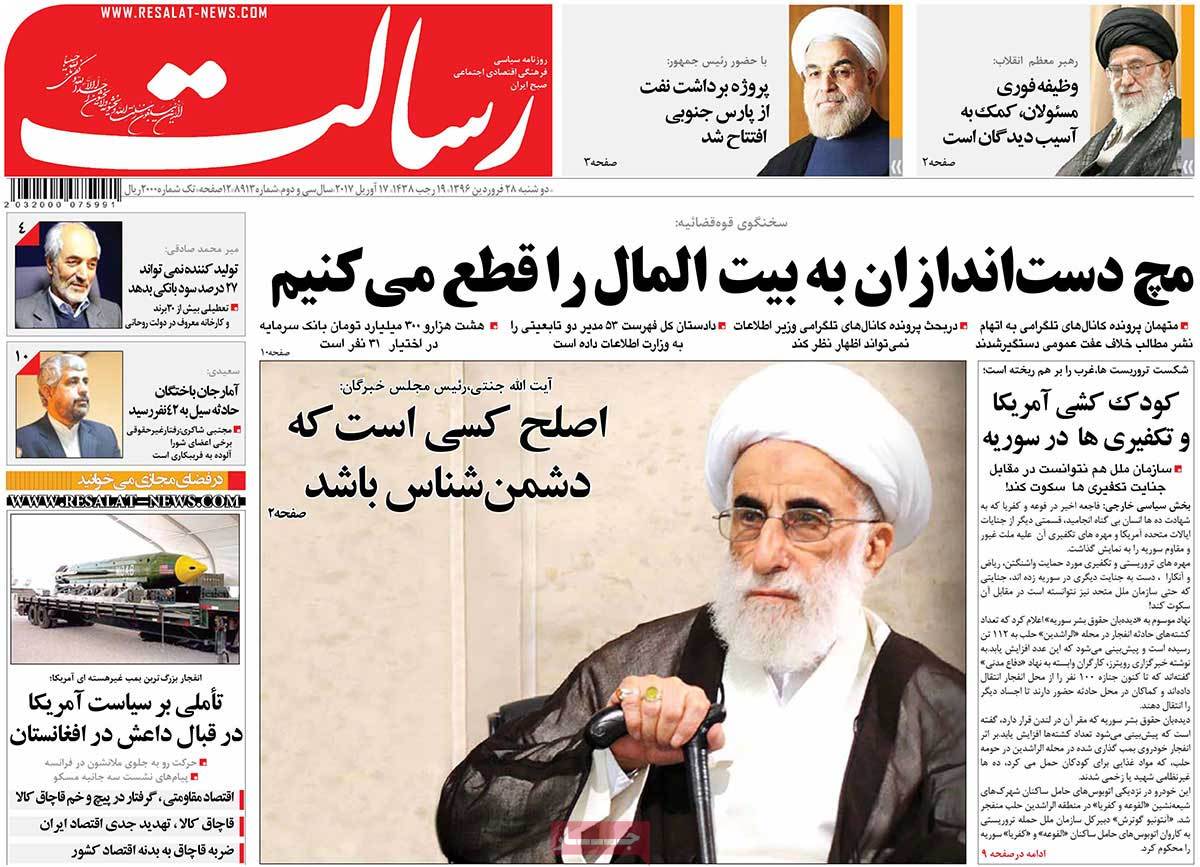
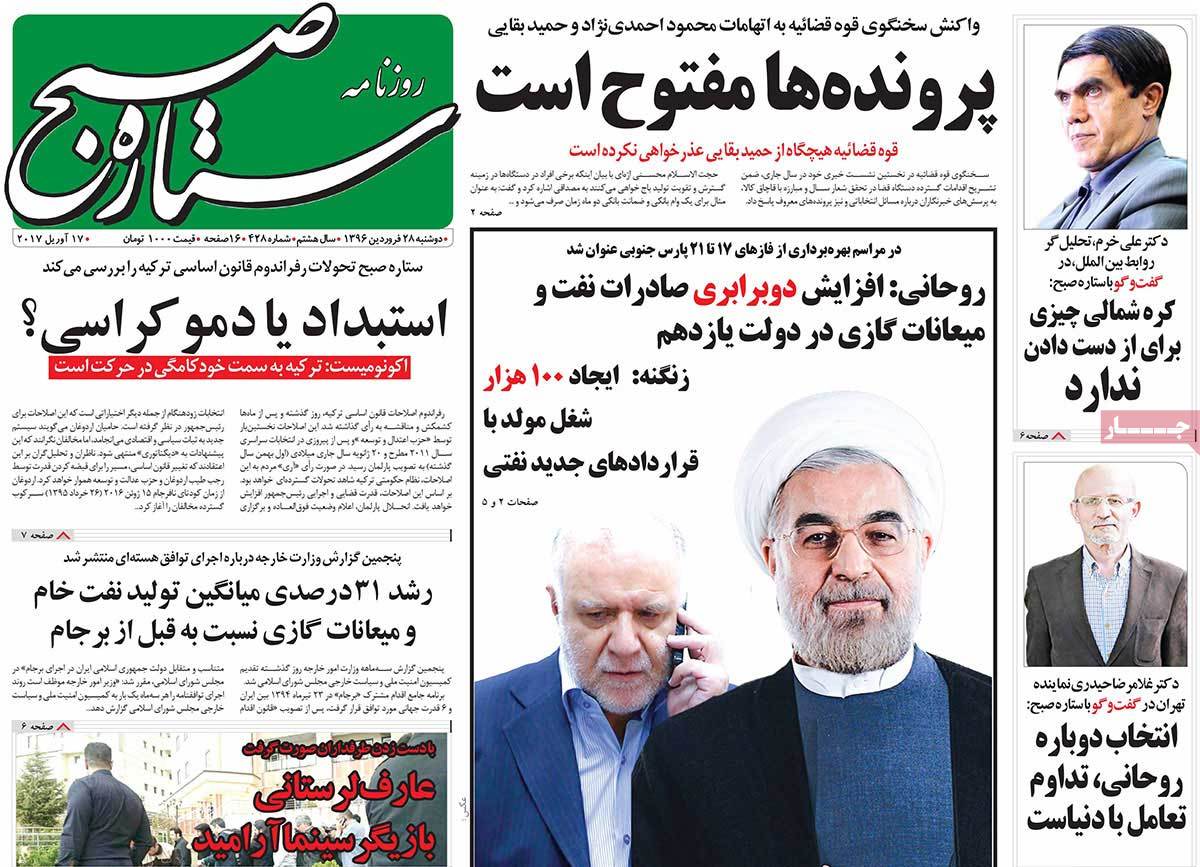
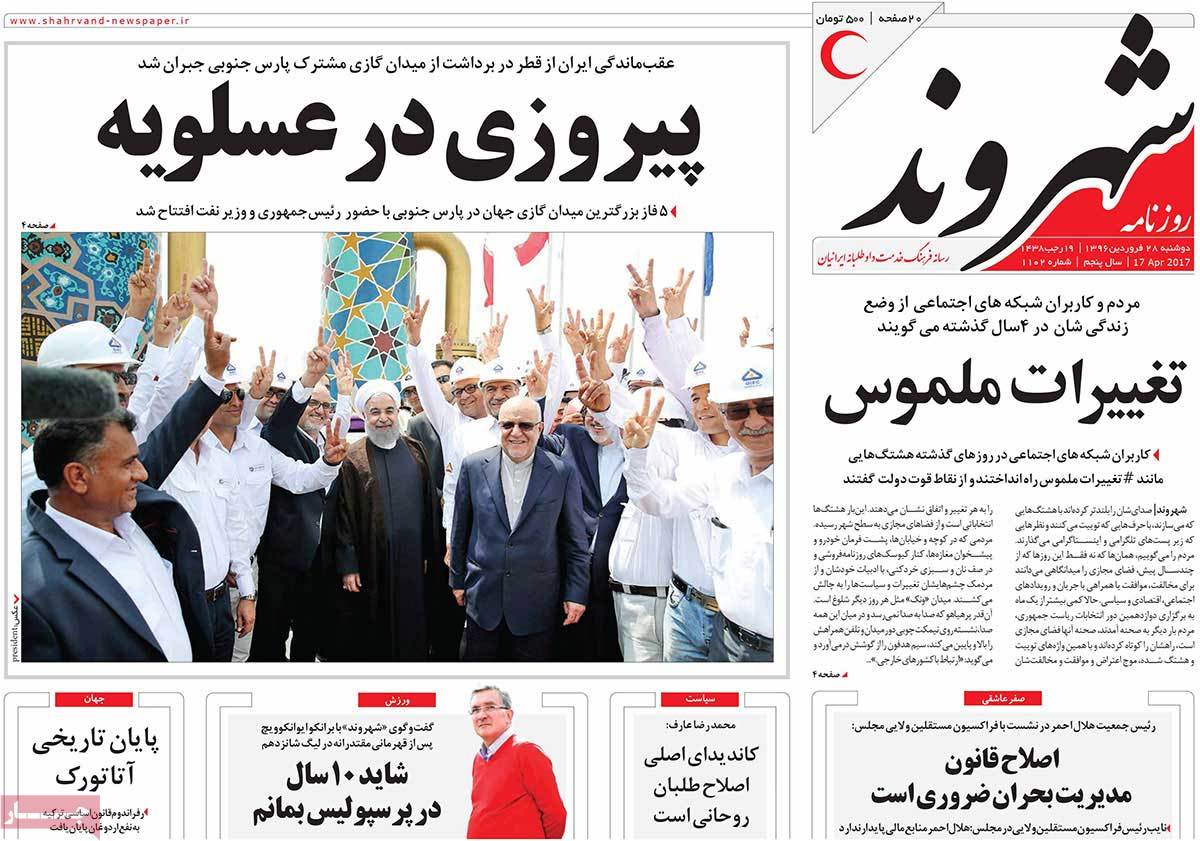
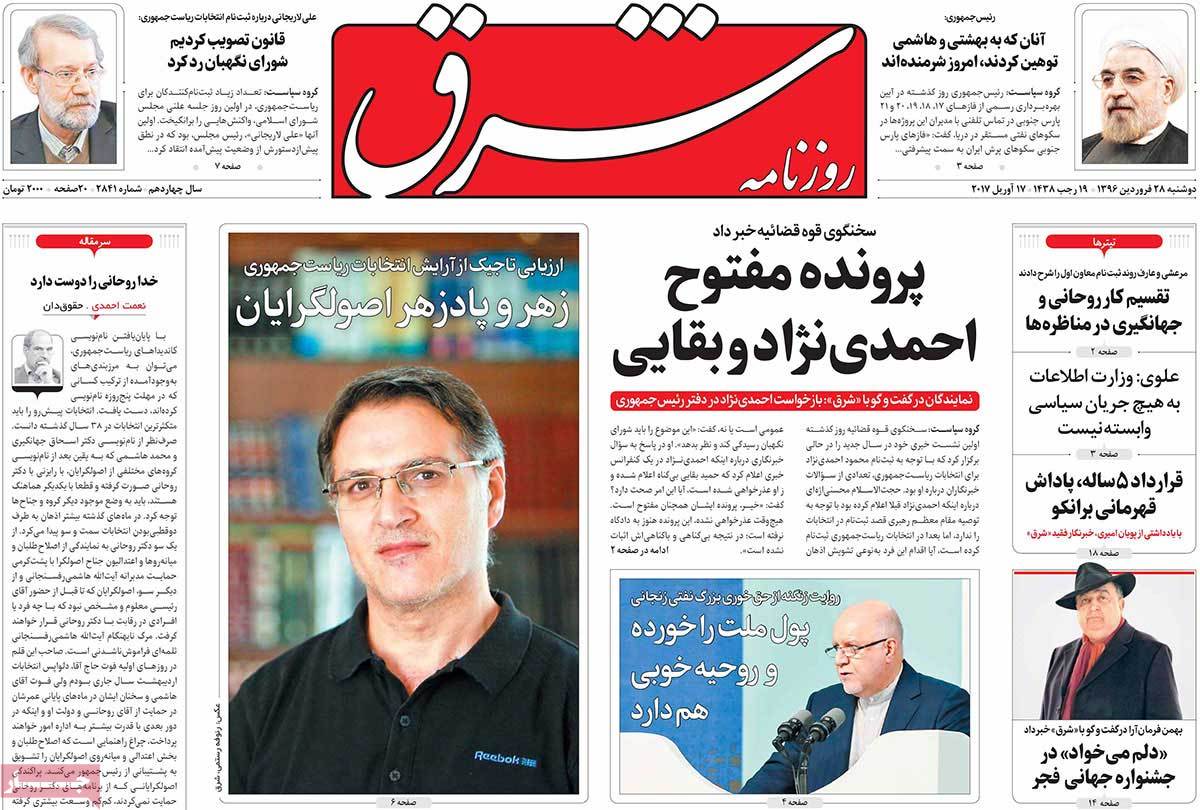
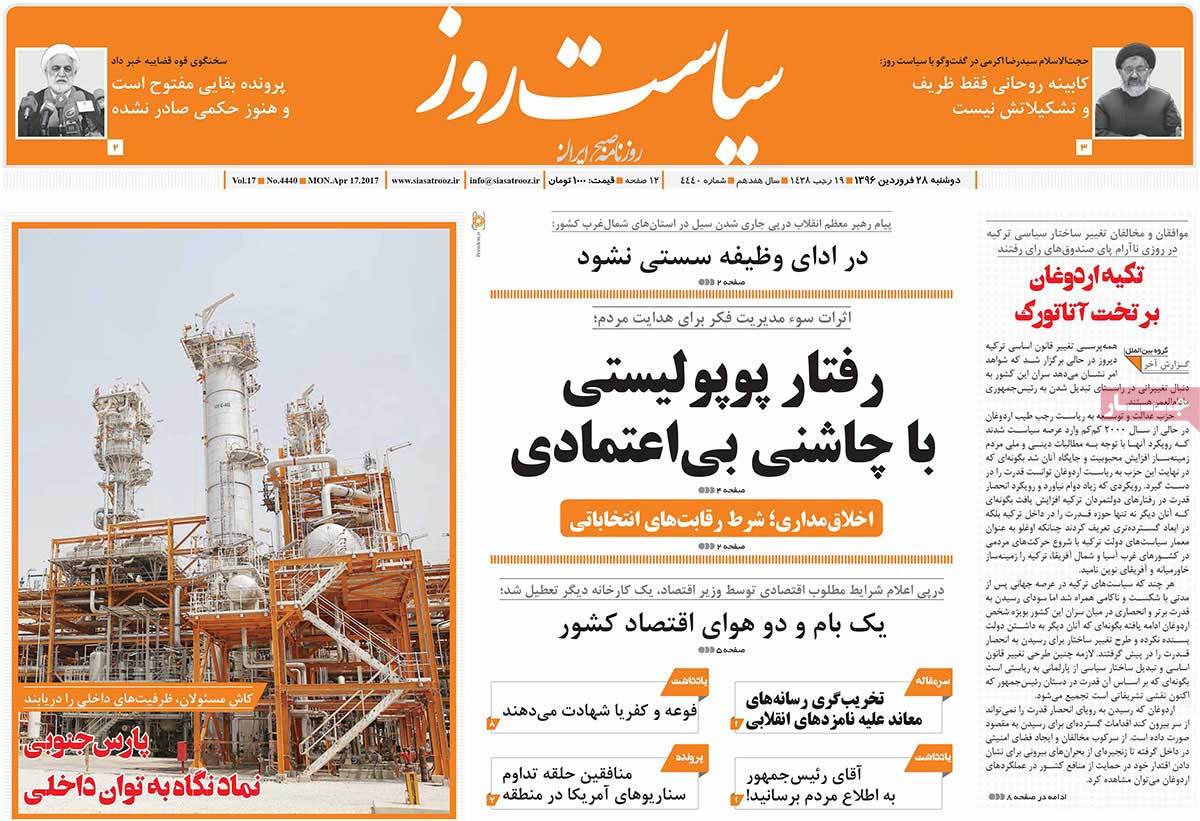
A Look at Iranian Newspaper Front Pages on March 7

The top story today was the remarks made by Ayatollah Seyyed Ali Khamenei, the Leader of Iran’s Islamic Revolution, about showing weakness to enemies and its impacts on pressures against the country.

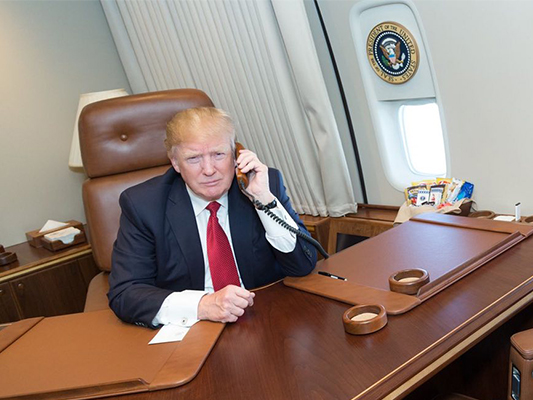
The new version of the executive order signed by US President Donald Trump also received great coverage. The new travel ban has excluded Iraq, but Iran is still on the blacklist.

The above issues, as well as many more, are highlighted in the following headlines and top stories:


19 Dey:

1- Iran’s Leader: Cultural Plots More Dangerous than Military Threats

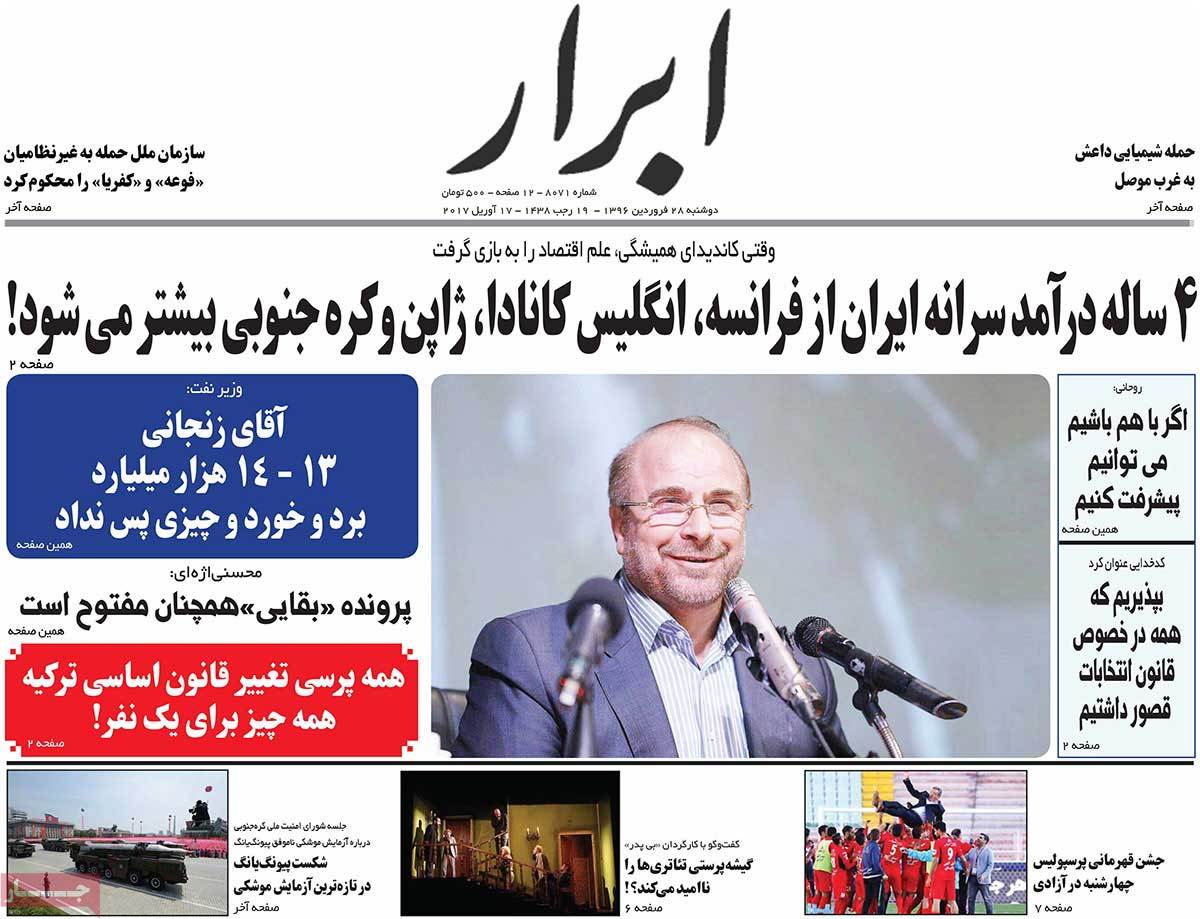
A Look at Iranian Newspaper Front Pages on March 7


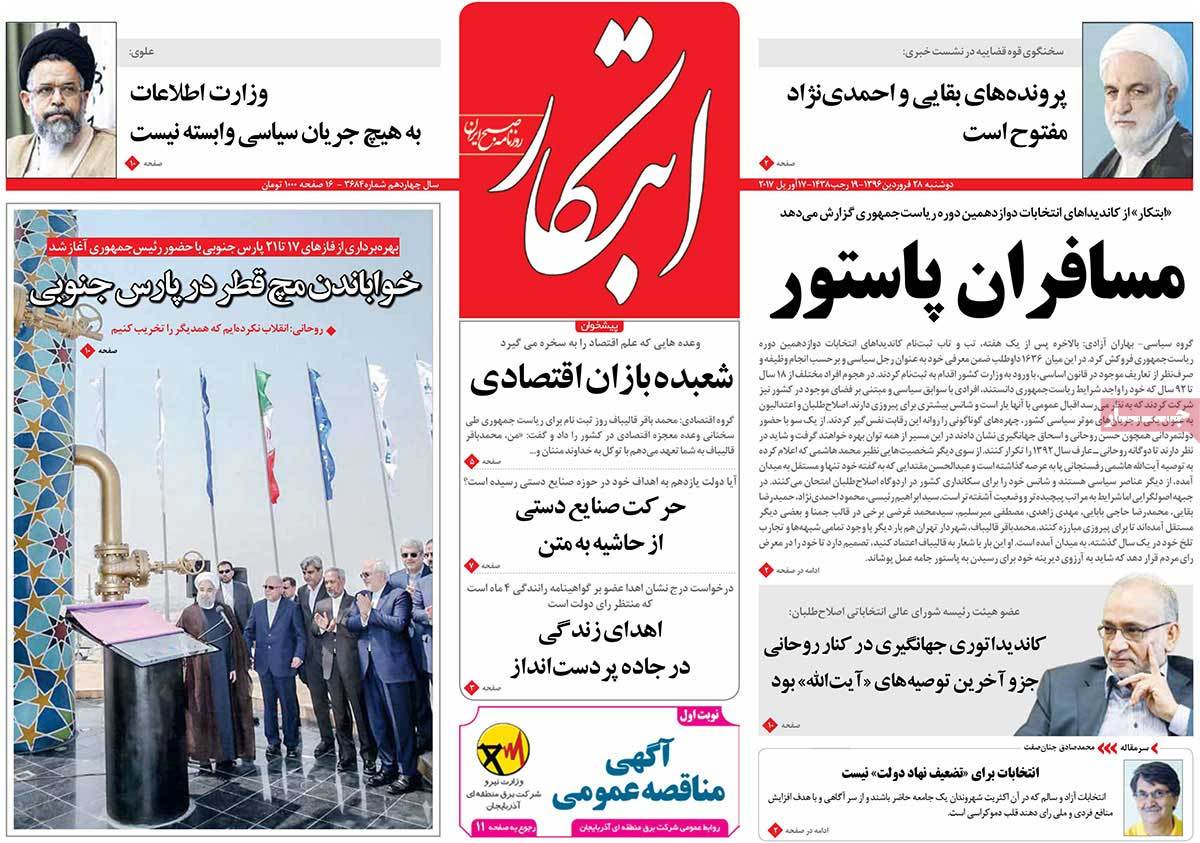
Abrar:

1- Iran’s Leader: Display Your Power to Dissuade Enemies from Military Action

2- Spokesman: Foreign Ministry Has No Responsibility in Hajj Talks

3- US Democrats: Trump Is in Trouble

4- Iraqi Border Guards Clash with ISIS near Jordan Borders

A Look at Iranian Newspaper Front Pages on March 7


Abrar-e Eqtesadi:

1- Americans Can Now Open Bank Accounts in Iran

2- Iran, Russia, Europe to Discuss Establishment of Second OPEC

3- Iran Breaks Its Petchem Production Record by Producing 50m Tonnes

4- Iran, Iraq Agree to Settle Disputes over Joint Oilfields

5- Iran, France to Enhance Industrial Cooperation

A Look at Iranian Newspaper Front Pages on March 7


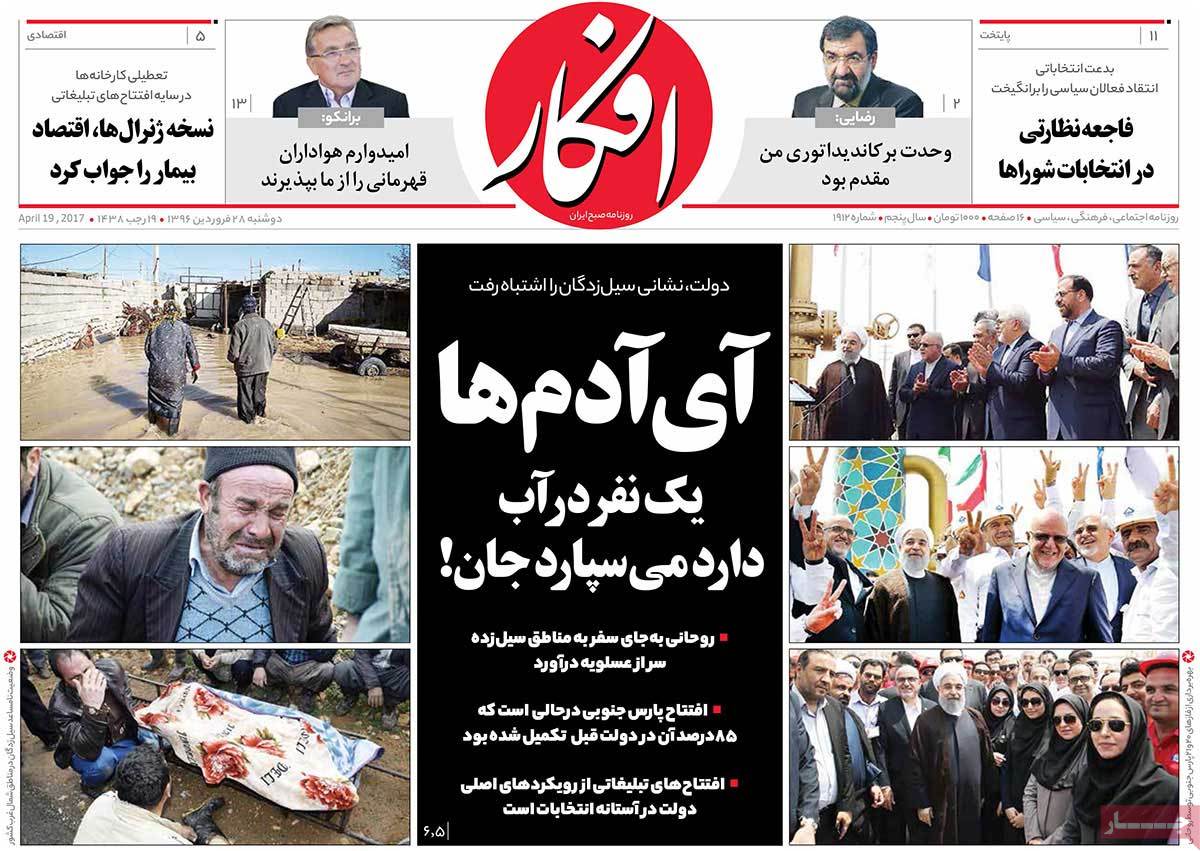
Afkar:

1- IAEA Secretary General Confirms Iran’s Commitment to JCPOA

A Look at Iranian Newspaper Front Pages on March 7


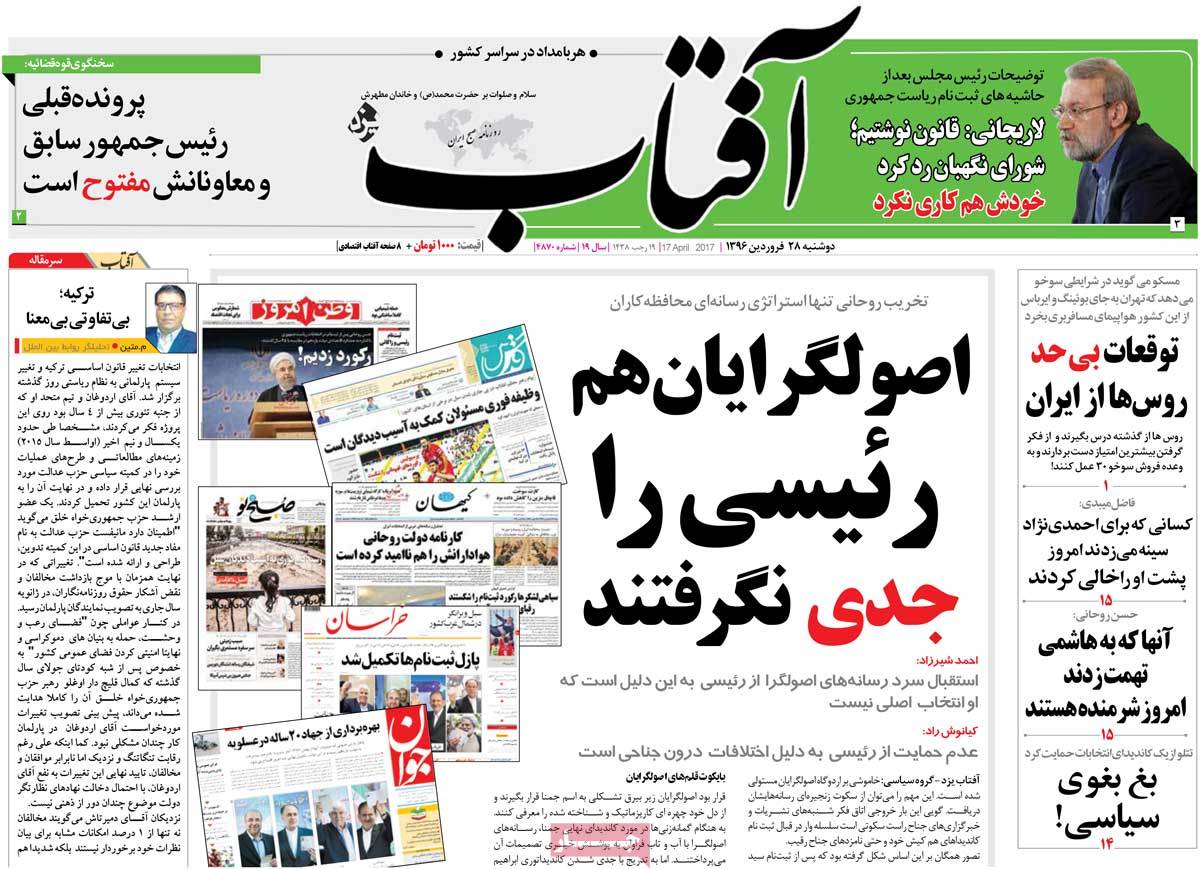
Aftab-e Yazd:

1- Iran’s Leader: Don’t Show Weakness to Enemies

2- Details of Trump’s New Executive Order: Iraq Removed, Iran Remains

3- Erdogan, Shifting Focus from Middle East to Europe [Editorial]

A Look at Iranian Newspaper Front Pages on March 7


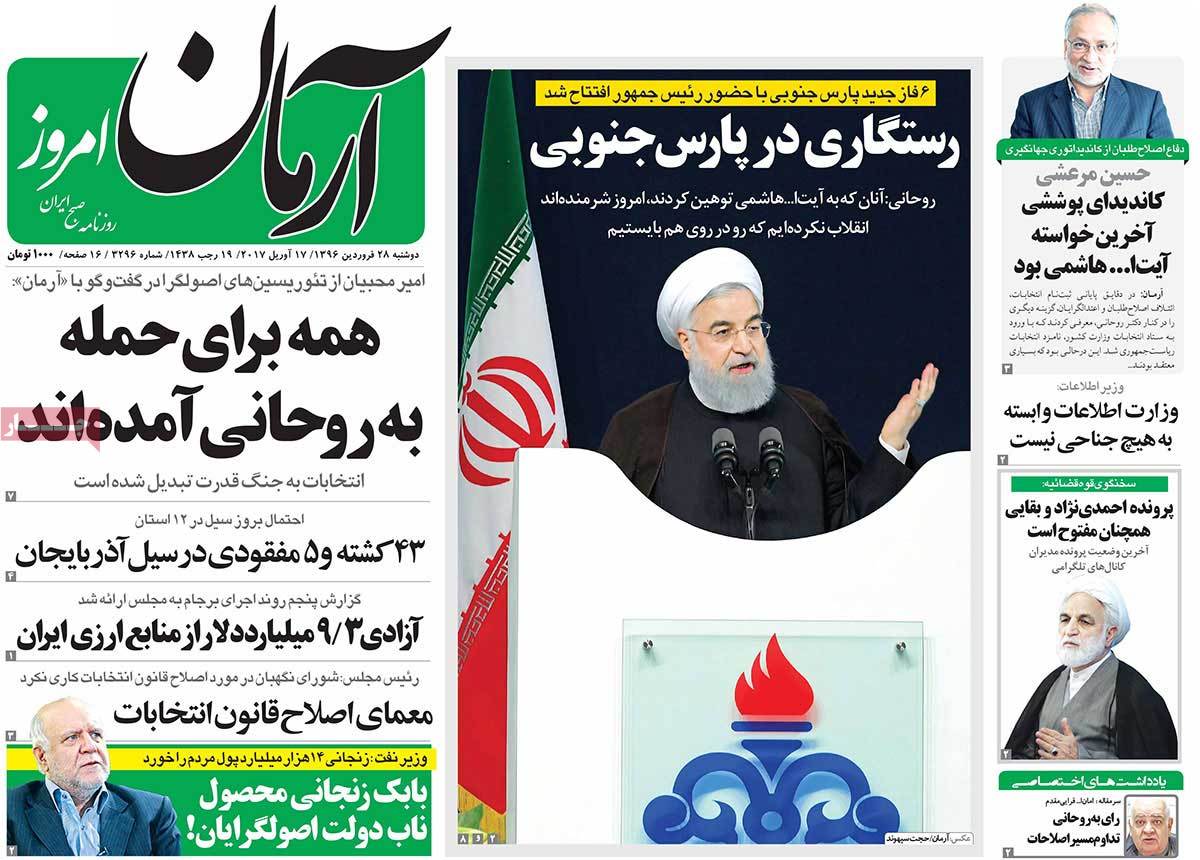
Arman-e Emrooz:

1- Hezbollah’s Silence towards Iran’s May Election

2- Two Babies Addicted to Drug Born in Tehran Every Day: Official

A Look at Iranian Newspaper Front Pages on March 7


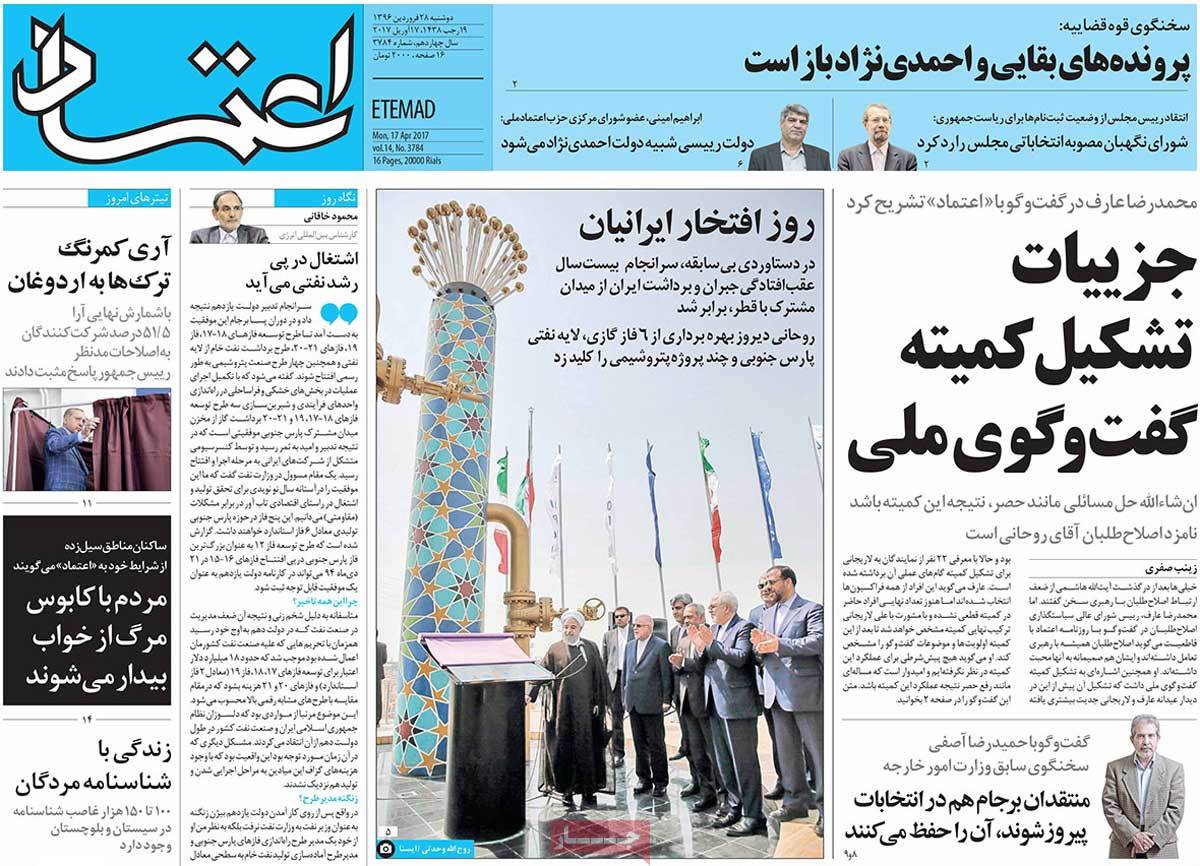
Etemad:

1- Iran’s Leader: We’ll Overcome Enemy If We Resist

2- Civil Management in Iran Is a Failure: Urban Development Minister

3- Iran Remains on Trump’s List, Iraq Removed from Executive Order

A Look at Iranian Newspaper Front Pages on March 7


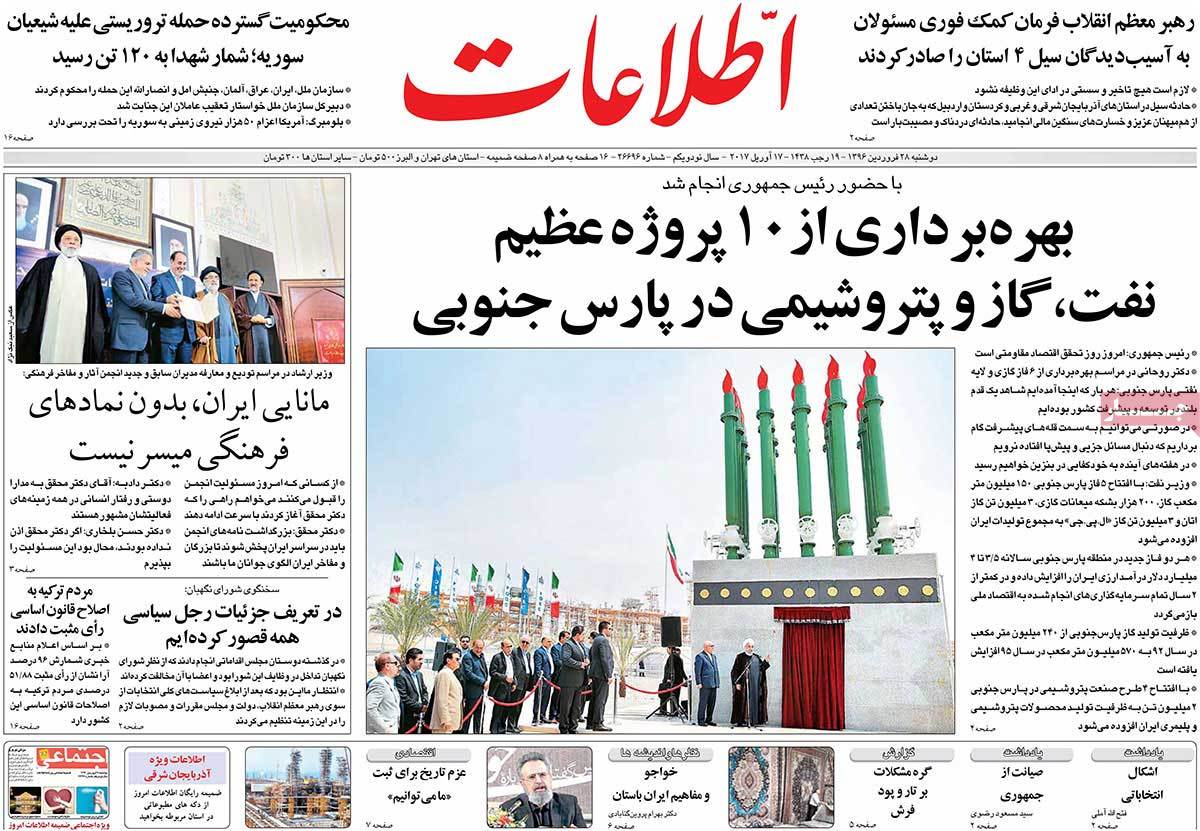
Ettela’at:

1- Ayatollah Khamenei Calls for Use of Iraq War Experiences

2- Saudi King’s Visit to Lebanon Cancelled over Aoun’s Support for Hezbollah

A Look at Iranian Newspaper Front Pages on March 7


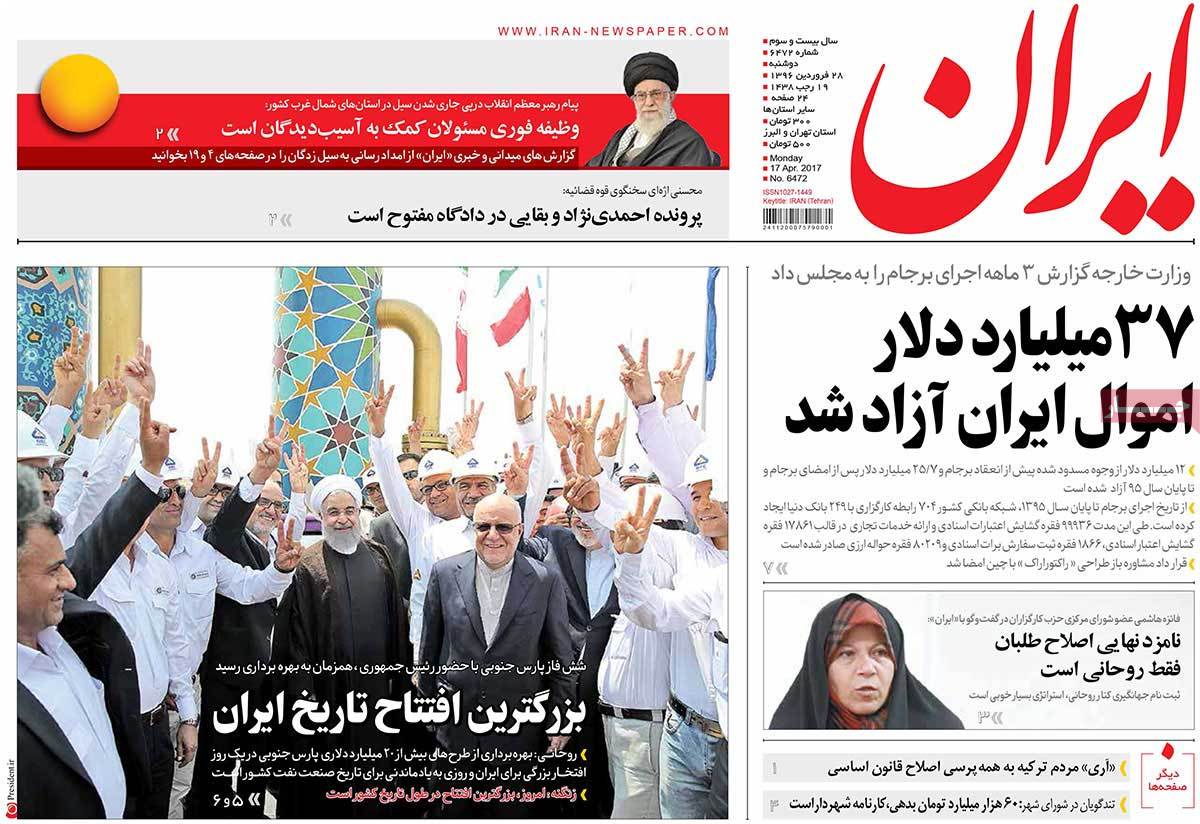
Iran:

1- Larijani: I Don’t Know about Conservatives’ Plans for Election

2- Tehran Mayor: Let’s Avoid Politicizing Issue of Dust and Air Pollution

A Look at Iranian Newspaper Front Pages on March 7


Javan:

1- Iran’s Leader: Showing Weakness Emboldens Enemies to Attack

2- White House’s Moderated Racism: Trump Signs New Travel Ban

A Look at Iranian Newspaper Front Pages on March 7


Jomhouri Eslami:

1- Leader: Lessons of Sacred Defence [Iraqi imposed war] Shouldn’t Be Forgotten

2- Bahraini People Invited to Voice Anger at Al Khalifa Regime


A Look at Iranian Newspaper Front Pages on March 7


Ka’enat:

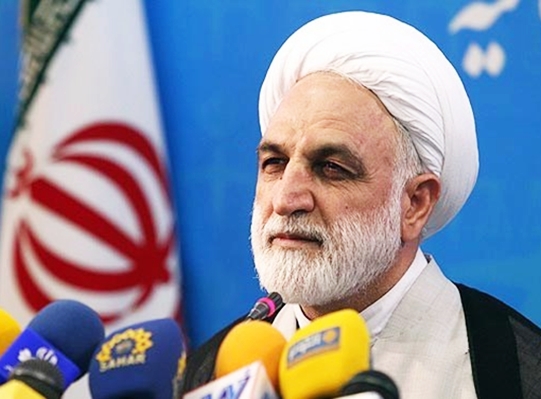
1- Judiciary Chief: US Human Rights Claims against Iran Worthless

2- Take a Tour of Amazon during Nowruz Holidays for Just 800m Rials [nearly $21,000]!


A Look at Iranian Newspaper Front Pages on March 7


Kayhan:

1- Trump’s Strategy in Yemen Revealed: Helping Al-Qaeda under Cover of Terror Fight!

2- US Starts Plan to Move Embassy to al-Quds [Jerusalem]

A Look at Iranian Newspaper Front Pages on March 7


Resalat:

1- IRGC General Rezaei: Giving Time to US Is Statesmen’s Biggest Mistake

2- Judiciary Chief: Fighting Economic Corruption Key to Resistance Economy

A Look at Iranian Newspaper Front Pages on March 7


Setareh Sobh:

1- Danger of Trumpism Close to France


A Look at Iranian Newspaper Front Pages on March 7


Shahrvand:

1- Failed Experience of Managing the City: Civil managers and experts criticize the ways in which Iranian cities are being managed


A Look at Iranian Newspaper Front Pages on March 7


Shargh:

1- Leader’s Suggestion to Dissuade Enemy from Aggression: Don’t Show Weakness

2- What Can President Say When Municipality Sells the Rules: Minister


A Look at Iranian Newspaper Front Pages on March 7


Sobh-e Now:

1- Leader: Iranian Nation Would Have Died If It Wasn’t for Sacred Defence [Iraqi imposed war]


A Look at Iranian Newspaper Front Pages on March 7


Vaghaye Ettefaghieh:

1- Tel Aviv Trying to Damage Tehran-Moscow Ties


A Look at Iranian Newspaper Front Pages on March 7


Vatan-e Emrooz:

1- Leader: Showing Weakness to Enemy Caused Exacerbation of Economic Pressures

A Look at Iranian Newspaper Front Pages on March 7


Resilient Economy Requires Int’l Cooperation: Iran’s FM

zarif

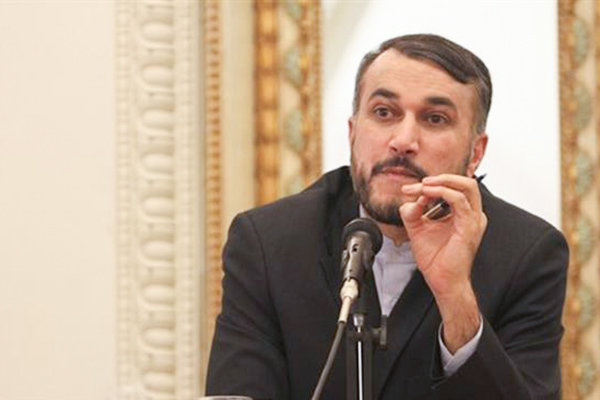
“Indian Ocean Rim Association (IORA) provides us with a unique opportunity and robust framework to further strengthen our economic ties,” Iran’s top diplomat said in an address to the 1st Summit of the Indian Ocean Rim Association on Tuesday in Jakarta, Indonesia.

Here is the full text of his remarks:


In the name of God, the Compassionate, the Merciful


Mr. Chairman; Distinguished Heads of State and Government;

Mr. Secretary General; Excellencies; Ladies and Gentlemen;

Allow me at the outset to express my gratitude to the Government and people of Indonesia for the generous hospitality and excellent arrangements for the “First Leaders’ Summit of the Indian Ocean Rim Association” commemorating the 20th anniversary of IORA establishment, and to convey to you the warmest greetings and good wishes of President Rouhani.

During the last two decades, IORA has evolved from a visionary idea to a multi-dimensional engagement framework for cooperation. As envisaged in the IORA Charter, this regional engagement framework is in place to promote the sustained economic growth and sustainable development of the countries and the region, focusing mainly on 6 priority areas and 2 cross-cutting issues. The “IORA Action Plan 2017-2021” as well as the “Jakarta Concord” underline their continued relevance and priority and chart our way forward.

Since the establishment of IORA, the prevailing “development paradigm” of the 1990s, mainly shaped by the outcomes of the UN major conferences, has evolved in the contexts of millennium development goals, post-2020 development agenda and Sustainable Development Goals. In the last two years, a number of UN-sponsored processes culminated in new global arrangements developed by the Paris Agreement on climate change, Addis Ababa Action Agenda on financing for development, and Sendai Framework on disaster risk reduction. It is important that IORA sketches its programs and projects in a way that not only meet the needs and aspirations of the Member States, but also contribute to the implementation of these global priorities.

The theme of this Summit highlights a great opportunity for cooperation and progress. Iran has much to offer in terms of enhanced maritime connectivity through multi-modal connection of IORA region with other regional and global markets. The Iranian port of Chabahar is strategically located to provide connectivity between the Indian Ocean and the Persian Gulf, West Asia, Central Asia, the caucuses, and Europe, as a safe and short route connecting east-to-west and north-to-south. The First IORA Meeting of the Free Zone Authorities, held in Chabahar in May 2006, concluded with consensus on establishing a mechanism for cooperation and introducing the relevant national focal points, which will contribute to the development and expansion of connectivity, trade and investment in the region and beyond.

I would also like to emphasize the importance of the maritime safety and security as one of the priority areas identified in IORA basic documents. As maritime supply chain and shipping continue to afford nearly 80% of world trade, it is important that IORA in its implementing frameworks gives special attention to improving the safety and security as well as to preventing maritime pollution. The surge in piracy incidents since 2008 in Western Indian Ocean waters still interrupts maritime commercial flows and disturbs fisheries in the region. Iran is actively involved in fighting against piracy in the international waterways and we believe concerted national, regional and international measures are imperative to eliminate this menace.

Our region is also increasingly plagued by extremist violence and terrorism. We therefore fully support the initiative of our Indonesian hosts to adopt a Declaration on Countering Violent Extremism Leading to Terrorism. This declaration furthers the objectives of President Rouhani’s initiative, “World against Violence and Extremism” which was unanimously endorsed by the United Nations General Assembly in 2013.

Mr. Chairman,

Globalization has created both challenges and opportunities. A resilient and sustainable economy requires cooperation at all sub-regional, regional and international levels. IORA provides us with a unique opportunity and robust framework to further strengthen our economic ties. The comprehensive and time-bound Action Plan developed to achieve the objectives of IORA would require our political will and collective action. I wish to assure you of Iran’s unreserved commitment in this endeavour.

I thank you for your attention.

SAIPA Unveils Iran’s Cheapest Car with Auto Transmission

Qucik car Iran's Saipa

Several high profile officials were present at a ceremony held in Tehran to unveil ‘Quick’, the cheapest Iranian car with automatic transmission.

Parliament Speaker Ali Larijani was among the officials attending the ceremony, according to a report by ICANA.

The car previously developed under the codename ‘Project 212’ will be launched in the next few months, local auto blog Persian Khodro reported Monday.

The cars exterior design is reminiscent of China’s Brilliance model while also seemingly merged with the existing Tiba hatchback design, Financial Tribune reported.

The model has a 1.5 liter engine, automatic gearbox and four cylinders. The company has claimed it will comply with Euro4 emission standards.

SAIPA recently signed a €300 million deal with PSA Group’s Citroen brand to produce vehicles for the domestic market.

Security and Development, Two Sides of Same Coin: Iran DM

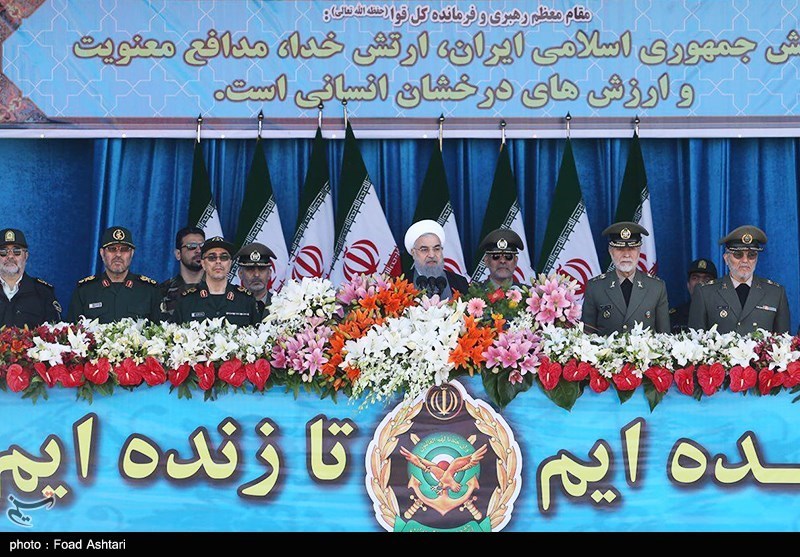
Iran Army

“Security and development are two sides of the same coin. If there is poverty and inefficiency in a society, it will move towards internal crisis and frustration,” Dehqan said, addressing a forum in Tehran on Monday.

Therefore, he added, development is a support for security in many ways, and security also paves the ground for development.

He further called on Persian Gulf Arab states to “give up the illusion” that they can ensure their security by purchasing weapons from western states.

“If today Persian Gulf littoral states want to buy security and spend lots of money to purchase equipment, they should know that this will not bring them security and it is even against their security,” Dehqan said, Financial Tribune reported.

He advised Persian Gulf countries’ rulers to think of the day when the foreigners do not supply arms and equipment to them.

Americans Allowed to Open Bank Accounts in Iran: Official

Hamid Ghanbari, a lawyer with the Central Bank of Iran’s Legal Studies Department, says the US Office of Foreign Assets Control (OFAC) has declared a few days ago that Americans can open bank accounts in Iran based on certain conditions.

One of these conditions is that they should be living inside the Islamic Republic of Iran, he added, according to a Farsi report by ISNA.

“Israeli-Arab Alliance Detrimental to Arab World”

arab-israel

ali bakhtiariIn a Farsi interview with ICANA, Ali Bakhtiar said Tel Aviv seeks to cash in on the current situation in the Muslim world to deal a blow to Islamic countries.

“The Zionist regime [of Israel] is an occupying regime in the region, and all crises and tensions in the region emanate from the strategies adopted by this wicked regime,” said Bakhtiar, who sits on the Parliament’s Judicial and Legal Commission.

The MP noted that all terrorist groups in the region, including those in Iraq and Syria, are supported by Zionists. He said the Israeli regime and its regional policies will not last long.

He underlined the alliance between Tel Aviv and some Arab states will definitely be detrimental to the Arab world.

Iran should work toward promoting relations with regional countries and settling differences, he added.

He also said Saudi officials should not get on board with the Israeli regime and Western countries as such an approach will only harm the region and undermine Islamic states.

Bakhtiar’s comments followed remarks by the Israeli minister Avigdor Lieberman who recently called for the formation of an Israeli-Arab alliance.

Trump Is Liar, Deflector: US House Minority Leader

Nancy Pelosi

“The president is the deflector in chief, anything to change the subject from where the heat is,” Pelosi told CNN on Sunday.

“I can tell you that it’s just ridiculous for the president — or President Trump to say that President Obama would ever order any wiretap of an American citizen, any president. That’s just not — we don’t do that.”

“It’s called a ‘wrap-up smear,’” she continued. “You make up something then you have the press write about it, then you say ‘everybody is writing about it.’ It’s a charge. It’s a tool of an authoritarian, to just have them talking about what you want them to be talking about. Rather than Russia, we’re talking about President Obama. And then to take it to the Congress and say, ‘Now you investigate this,’ when he’s in favor of Congress of investigating anything but what do the Russians have on Donald Trump, politically, financially or personally.”

Iran, One of Most Welcoming Countries in World: Report

Tourist

The ease with which a person can travel to another country depends on their passport. Some countries are more forthcoming in letting visitors in than others.

For instance, anyone with a passport can visit Cambodia, which offers visas or visas on arrival to all.

Travelling to Turkmenistan, on the other hand, will prove to be quite difficult for most. All passport holders need to apply for a visa before making a trip.

The Passport Index – Welcoming Countries Rank 2017 explores how welcoming each nation is, based on the number of countries they accept visa-free or with a visa on arrival.

Below is a map provided by Al Jazeera showing which countries are least and most welcoming of foreign visitors.

In this map, Iran is shown as one of the most welcoming states in the world:

visa