Tuesday, December 30, 2025
Home Blog Page 402

Trump threatens to abandon Ukraine peace talks unless deal reached ‘very shortly’

Russia Ukraine War

“Now if for some reason one of the two parties makes it very difficult, we’re just going to say: ‘You’re foolish. You’re fools. You’re horrible people’ – and we’re going to just take a pass,” Trump told reporters in Washington.

“But hopefully we won’t have to do that.”

Trump declined to give a “specific number of days” for when the US would stop trying to negotiate a truce, stressing, “But quickly. We want to get it done.”

Asked whether he was being “played” by President Vladimir Putin, Trump stated: “Nobody’s playing me, I’m trying to help.”

Trump’s comments came after the US Secretary of State, Marco Rubio said the US was ready to abandon its efforts “within days.

Speaking in Paris on Friday after meeting European and Ukrainian leaders, Rubio stated Trump was still interested in a deal. But he added that the US president had many other priorities around the world and was willing to “move on” unless there were signs of progress.

“It is not our war. We didn’t start it,” Rubio continued, adding that if a deal were not possible – with both sides still far apart – the US president was “probably at a point where he’s going to say, well, we’re done”.

Trump felt “very strongly” about this, he continued.

Rubio’s comments were the clearest signal yet that the White House is ready to walk away from its diplomatic attempts to negotiate an end to the war. It was unclear if this would also mean an end to US military assistance to Kyiv.

The Ukrainian president, Volodymyr Zelensky, said this week that deliveries had already “practically stopped”.

Last month Zelensky agreed to a US proposal for a 30-day ceasefire. The Kremlin, however, has rejected the plan. Vladimir Putin’s spokesperson, Dmitry Peskov, stated on Friday that ending the war was “not a simple topic”.

Moscow was seeking a settlement that “ensured its own interests”, he added.

In recent weeks Russia has launched a fresh military push across the 600-mile (1,000km) frontline and stepped up its air attacks on Ukrainian civilians and infrastructure. On Sunday it bombed the city of Sumy, killing 35 people and injuring 117.

Since Trump returned to the White House in January he has piled pressure on Ukraine, stopping most US military assistance and temporarily cutting off intelligence sharing. This week he falsely blamed Zelensky and Joe Biden for “starting” the war.

In contrast, Trump has refused to criticise the Russian president or to impose sanctions on or punish Moscow. Senior US officials – including the special envoy Steve Witkoff, who held talks last week with Putin in St Petersburg – have instead parroted Kremlin talking points.

According to Bloomberg, the latest US peace plan presented on Thursday to European leaders would in effect freeze the war along the existing frontline. Russia would keep the territory it occupies, while Kyiv would not be allowed to join NATO.

Talks are due to continue in London next week. US officials conceded that the proposal would be irrelevant if the Kremlin did not agree to stop the fighting, and said security guarantees were essential for Ukraine if the deal were to work, Bloomberg reported.

The US vice-president, JD Vance, speaking in Rome after a meeting with the Italian prime minister, Giorgia Meloni, said he was optimistic “the very brutal war” could be stopped.

“Even in the past 24 hours, we think we have some interesting things to report on,” he added.

Meanwhile, significant details of the minerals deal remain unclear, including whether Kyiv has agreed to a White House demand that it “pays back” the cost of earlier military assistance.

Zelensky was poised in February to sign a framework agreement over a wide-ranging economic partnership. It was derailed after his disastrous encounter with Trump and Vance in the Oval Office.

Since then negotiations have continued. Overnight, Ukraine’s first deputy prime minister, Yuliia Svyrydenko, said a memorandum had been finalised. It paved the way for the setting up of an investment fund for the reconstruction of Ukraine, she indicated.

“We are happy to announce the signing with our American partners,” she stated.

Speaking to reporters in the White House, Trump said a deal could be signed next Thursday.

The US treasury secretary, Scott Bessent, added: “We’re still working on the details.”

He added the latest version ran to 80 pages and was “substantially what we’d agree on previously”.

“That’s what we will be signing,” he continued

According to the latest draft, Ukraine acknowledges the “significant material and financial support” Kyiv has received from the US since Russia’s 2022 invasion and the desire from both countries for a “lasting peace”.

It says Ukraine’s prime minister, Denys Shmyhal, will visit Washington next week to hold final “technical talks” with Bessent. They are expected to complete discussions on a “reconstruction investment fund”, the memo adds.

The deal would need to be ratified by Ukraine’s parliament, Ukraine’s deputy minister of economy stated on Friday.

Zelensky is keen to improve relations with the Trump administration. At the same time, he has so far rejected the White House’s demand that revenue from the new joint fund is used to cover the cost of weapons deliveries provided by the Biden administration.

Trump has previously said Ukraine “owes” the US $300bn (£226bn). Zelensky has pointed out this assistance was given as a grant, not as a loan, with Republicans and Democrats approving it in Congress. Any future partnership has to be based on “parity”, and should benefit both countries, he says.

The deal may help US weapons manufacturers, who are facing a critical shortfall of key rare-earth minerals imported from China. Beijing has restricted its export in response to Trump’s escalating trade war.

Volodymyr Landa, a senior economist with the Centre for Economic Strategy thinktank in Kyiv, said the deal had gone through “multiple iterations”.

He added: “It’s hard to say what’s inside.”

Landa said he did not expect Kyiv to accept that previous “non-refundable military aid” was now “debt”. “That’s not only unfair and unrealistic, but may also negatively affect the full global financial system,” he added.

He continued: “If it suddenly turns out that countries and organisations can demand payments for aid given unconditionally in previous years, it will make recipients more cautious, and could reopen difficult issues from previous decades around the world.”

The latest negotiations came as Russia killed one person and injured about 70 in a ballistic missile strike on a residential area of the city of Kharkiv, in the north-east of Ukraine. Five of the injured were children. There were also strikes on Dnipro, Kyiv and Mykolaiv, as well as the Donetsk region.

“This is how Russia began this Good Friday – with ballistic missiles, cruise missiles, Shaheds – maiming our people and cities,” Zelensky wrote on social media.

Kharkiv’s mayor, Ihor Terekhov, said the Russians used ballistic missiles equipped with cluster munitions. “That is why the affected areas are so extensive,” he added. At least 20 blocks of flats, 30 houses and an educational institution were damaged.

On Palm Sunday Russia dropped two Iskander missiles in the city centre of Sumy. One of them hit a congress centre. The other exploded between two university buildings and next to a crowded bus and cars.
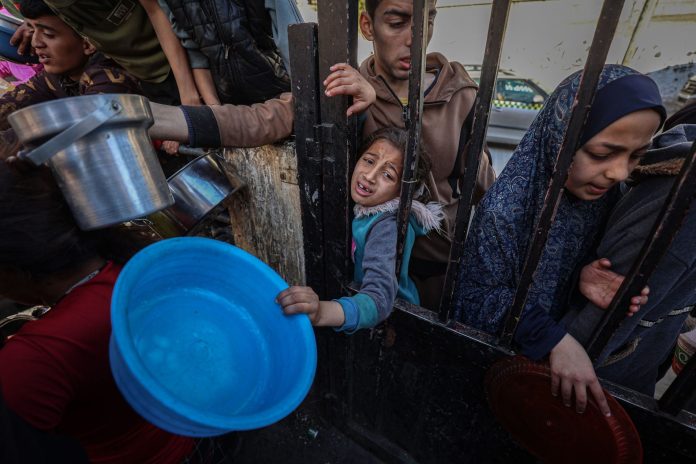
Aid groups warn Gaza Children survive on ‘less than a meal a day’

Gaza War

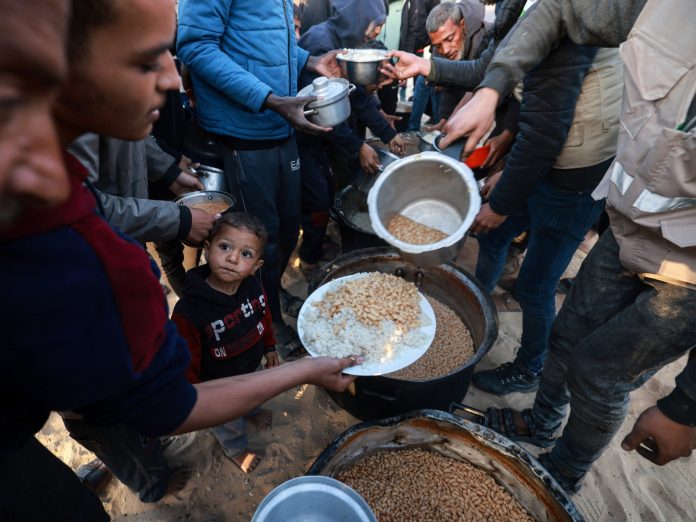
The humanitarian aid system in Gaza “is facing total collapse” due to 18 months of Israel’s military operation and the recent imposition of a full blockade last month, the joint statement announced.

An estimated 95 percent of the 43 international and Palestinian aid groups have already suspended or cut their services in Gaza, amid “widespread and indiscriminate bombing making it extremely dangerous to move around”, it added.

“Kids are eating less than a meal a day and struggling to find their next meal,” said Bushra Khalil, policy head of the aid group Oxfam. “Everyone is purely eating canned food … Malnutrition and pockets of famine are definitely occurring in Gaza.”

Amande Bazerolle, emergency coordinator in Gaza for Doctors Without Borders, stated that aid workers have been forced to watch people, many of them women and children, suffer and die while carrying “the impossible burden of providing relief with depleted supplies”.

“This is not a humanitarian failure – it is a political choice, and a deliberate assault on a people’s ability to survive, carried out with impunity,” she added.

According to Gaza’s Health Ministry, at least 60,000 children are considered malnourished in the Palestinian territory.

The aid groups said Gaza holds the record of being “the deadliest place on earth for humanitarian workers”, making it even more difficult to deliver services to children.

Since October 2023, more than 400 aid workers and 1,300 health workers have been killed in Gaza, despite the requirement under international humanitarian law for humanitarian and health workers to be protected.

“The recent killing of 15 Palestinian paramedics and rescue workers, whose bodies were found buried in a mass grave, triggered global outrage, but many violations and attacks go unreported,” it noted.

The aid groups are calling on Israel and the Palestinian armed group to guarantee the safety of their staff and to allow the safe, “unfettered access of aid into and across Gaza”, and for world leaders to oppose further aid restrictions.

Iran FM delivers Leader’s message to Putin, underlines boost in ties

Iran FM delivers Leader’s message to Putin, underlines boost in ties

Foreign Minister Seyed Abbas Araqchi, who has traveled to Moscow at the head of a diplomatic delegation, met and conferred with President Vladimir Putin on Thursday afternoon.

During the meeting, Araqchi formally presented the written message of the Supreme Leader to the President of Russia and elaborated upon the positions and viewpoints of the Islamic Republic of Iran with respect to the matters on the bilateral agenda, as well as regional and international developments.

Araqchi touched upon the significance of the conclusion of the Comprehensive Strategic Partnership Treaty between the Islamic Republic of Iran and the Russian Federation as the most prominent manifestation of bilateral cooperation.

He underscored the firm determination of the Islamic Republic of Iran to strengthen and expand bilateral relations with the Russian Federation across all domains.
Putin, in turn, conveyed his greetings and wishes to the Supreme Leader of the Islamic Revolution.

The Russian president reaffirmed the strategic nature of the Tehran-Moscow partnership, emphasizing that the strengthening of bilateral ties alongside coordination on regional and international issues serves the interests of both nations and contributes to the maintenance and consolidation of peace and stability.

The two sides also discussed regional challenges and threats, the status of negotiations regarding Ukraine, the Iranian nuclear file, and other international matters.

Terrorist ringleader killed in security operation in southeastern Iran

Terrorist ringleader killed in security operation in southeastern Iran

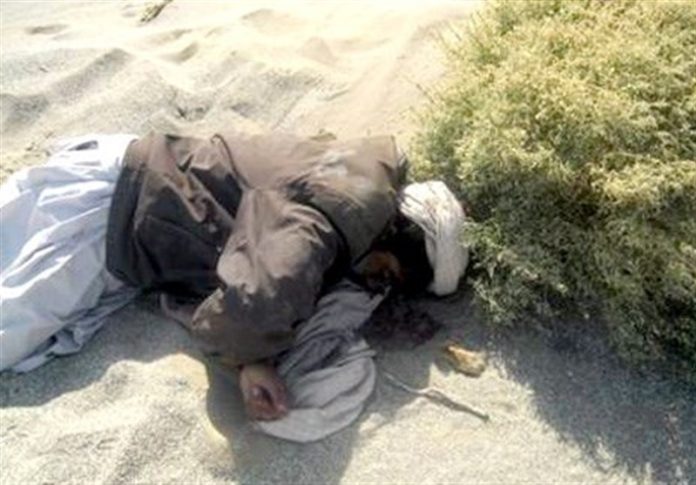
The operation, part of the ongoing “Martyrs of Security” drills, targeted militants in the Kourin district of Zahedan, the capital of Sistan-Baluchestan province.

Vali Mohammad Shahbakhsh, described as a key figure in last year’s terrorist attacks, was eliminated in the pre-dawn raid on Friday.

Forces from the Quds Operational Base, Intelligence Ministry, and law enforcement carried out the mission with local support. Authorities seized multiple weapons and ammunition caches during the operation.

One security member was martyred in the clashes, according to Tasnim News Agency.

The separatist Jaish al-Adl group, which operates from neighboring Pakistan, has been behind multiple deadly attacks against Iranian security personnel and civilians in Sistan-Baluchestan province.

Iran’s president praises Army as “nation’s strong fortress”

Iran’s president praises Army as “nation’s strong fortress”

Speaking at the event, President Pezeshkian emphasized the Army’s critical role in safeguarding Iran’s sovereignty and regional stability. “A strong and prepared Army ensures the nation’s security. Without it, peace would vanish,” he stated.

The president credited the military’s readiness for Iran’s influential regional diplomacy, asserting that the country has emerged as an “undisputed power” in the Middle East.

He praised the Army’s structural discipline, contrasting it with bureaucratic inefficiencies in other sectors.

Reflecting on post-Revolution challenges, President Pezeshkian noted that despite foreign attempts to weaken Iran’s armed forces, the Army remained resilient, sacrificing over 48,000 martyrs and 200,000 wounded during the Iran-Iraq War.

“Had it not been for the Army, enemies would have overrun our country,” he said.

Highlighting advancements in military self-sufficiency, the president celebrated Iran’s progress in domestic defense production across air, land, and sea domains.

He also lauded the Army’s peacetime contributions, including disaster response and technological transfers to civilian industries.

President Pezeshkian linked national unity to military strength, declaring that Iran’s cohesion “denies enemies even the chance to plot against us.”

Saudi Defense Minister: Cooperation with Iran cornerstone of regional security

Saudi Defense Minister: Cooperation with Iran cornerstone of regional security

On Thursday evening, during a meeting in Tehran with Ali Akbar Ahmadian, the representative of Iran’s Supreme Leader and Secretary of the Supreme National Security Council, Khalid bin Salman highlighted Saudi leaders’ determination to expand relations with Tehran at all levels. He stressed the importance of implementing bilateral agreements in social, political, and economic fields.

The Saudi Defense Minister also described the occupation and expansionist policies of the Zionist regime’s leaders as a danger to the entire region, emphasizing the Islamic world must act in a coordinated and united manner on this issue.

During the meeting, Ahmadian, Secretary of Iran’s Supreme National Security Council, noted that Iran and Saudi Arabia are two major and influential countries, stating that a “strategy of cooperation” will ensure security and progress in this sensitive region.

He also highlighted that strengthening economic ties and exchanges will solidify other aspects of bilateral relations.

Ahmadian described the Saudi Defense Minister’s visit to Tehran as an effective step toward continued cooperation, adding the level of bilateral relations has been on an upward trajectory, and that Iran is prepared to expand this cooperation in all areas, including joint investments.

Both sides condemned the aggressions of the Zionist regime and stressed the urgent need to halt the unprecedented violence against the people of Gaza.

Iran’s women’s basketball team crowned at West Asia Championship

Iran’s women’s basketball team crowned at West Asia Championship

This historic victory also secured their qualification for the FIBA Asia Cup Division B.

In the final match of the West Asia Basketball Championship (a qualifier for the FIBA Asia Cup Division B), Iran’s women’s national team triumphed over the host nation Jordan in a thrilling 88-70 victory, earning them a spot in the second tier of the Asia Cup.

With this win, Iran claimed the top position in the West Asia Championship for the first time, marking a historic achievement in the tournament.
Earlier in the competition, Iran’s team had also defeated Syria 65-55 in their first match, securing two consecutive victories to clinch the championship title.

Hamas says Israel is “weaponising” Gaza aid

Gaza War

Aid deliveries into the Palestinian territory have been halted since March 2, weeks before Israel broke a temporary ceasefire by restarting aerial bombardment on March 18 and later relaunched its ground onslaught.

Speaking on Wednesday, Israeli Defense Minister Israel Katz described the blockade as a “main pressure lever” against Hamas, saying there were no plans to ease restrictions – despite UN warnings that malnutrition is rapidly worsening in Gaza.

In response, Hamas condemned Katz’s remarks as “a public admission of committing a war crime”.

Israel is “depriving innocent civilians of basic necessities of life, including food, medicine, water and fuel, for the seventh consecutive week”, the group said in a statement posted to Telegram on Thursday.

“We renew our calls for the international community to take action to stop the starvation and blockade imposed on the Gaza Strip,” it added.

In March 2024, the United Nations’ International Court of Justice ruled Israel must ensure the delivery of essential aid – including food, water, fuel and medical supplies – into Gaza.

It come as the UN escalates warnings about deepening hunger in Gaza.

The UN’s Office for the Coordination of Humanitarian Affairs (OCHA) reported that 3,696 children were newly admitted with acute malnutrition in March – an 80 percent increase from February.

“Food consumption in Gaza has sharply deteriorated due to the blockade on the entry of humanitarian aid and other critical supplies now in its seventh week,” OCHA said.

Odeh added: “This is the official Israeli policy: No food, no water, no aid for Gaza, while Israel takes more and more of the territory’s land.”

Ayatollah Khamenei says Iran ready to share its advancements with Saudi Arabia

Prince Khalid bin Salman, brother of Crown Prince and de facto ruler Mohammed bin Salman, called on Ayatollah Khamenei in Tehran Thursday afternoon to present the message of Saudi Arabia’s King Salman.

“We believe that the relationship between the Islamic Republic of Iran and Saudi Arabia will be beneficial for both countries and the two countries can complement each other,” the Leader said.

Referring to some of Iran’s advancements, Ayatollah Khamenei said, “The Islamic Republic is ready to help Saudi Arabia in these areas.”

“It is much better for brothers in the region to cooperate and help each other than to rely on others,” he added.

Ayatollah Khamenei emphasized that the expansion of relations between the two countries has enemies.

“These hostile motives must be overcome, and we are ready for this.”

The Saudi defense minister expressed great satisfaction with the meeting which was also attended by Iran’s Chief of Staff of the Armed Forces Major General Mohammad Hossein Bagheri.

“I have come to Tehran with the agenda of expanding relations with Iran and cooperation in all fields,” Prince Khalid said.

“And we hope that the constructive talks will provide for stronger relations between Saudi Arabia and the Islamic Republic of Iran than in the past,” he added.

Report: Iran’s internet filtering costs double communications ministry budget

Mobile Internet Iran

Khorasan newspaper, citing a parliamentary survey, reported that despite the massive expenditures, the restrictions have largely failed as 81% of Iranians continue accessing blocked content through VPNs, while 78% expressed dissatisfaction with internet quality.

Key findings also show that the VPN market in Iran generates 25-30 trillion tomans ($290-350 million) yearly.

Critics argue that these restrictions fail to achieve their intended goals and impose heavy economic, ethical, and technical burdens on the country.

Ramezanali Sobhanifar, a former head of Iranian Parliament’s Communications Committee, questioned the persistence of filtering policies, urging policymakers to provide clear timelines and solutions.

“What exactly is preventing the removal of these filters?” asked Sobhanifar.

Similarly, former MP Jalal Rashidi-Koochi emphasized that lifting bans on popular platforms like Instagram and YouTube is essential, as partial measures such as unblocking WhatsApp fail to reduce VPN usage.

Presidential aide and social advisor Ali Rabiei questioned the practical benefits of filtering, criticizing the significant public expense it entails.