Saturday, December 27, 2025
Home Blog Page 3993

Iran Backs Out of UNESCO’s 2030 Education Agenda

In a Tuesday session chaired by President Hassan Rouhani, the Supreme Council of the Cultural Revolution announced that any educational grand document other than the country’s homegrown initiatives would be declared null and void.

According to the unanimous decision, the national ‘Document on Fundamental Transformation of Education’ will be the only grand initiative for educational programs in Iran.

Tuesday’s abrogation of the 2030 document followed weeks of controversy and intense debates in Iran.

Last month, Leader of the Islamic Revolution Ayatollah Seyed Ali Khamenei strongly criticized the cabinet’s adoption of the Education 2030, saying documents founded on “corrupt and devastating Western lifestyle” are unacceptable in Islamic Iran.

“This is the Islamic Republic of Iran, and in this country, Islam and the Quran are the base. It is not a place for infiltration of the flawed, devastating and corrupt Western lifestyle,” Imam Khamenei said on May 7.

“Signing that document (Education 2030) and its silent implementation is certainly not allowed, and this has been announced to the organizations in charge,” the Leader noted, adding that a “so-called international organization under the influence of big powers” has no right to make decisions for different nations with various histories, cultures and civilizations.

Ayatollah Khamenei had also called on the officials to announce explicitly that “the Islamic Republic of Iran has (its own) grand documents in the field of education, and does not need such a document.”

The Education 2030 is part of the 17 UN Sustainable Development Goals (SDGs).

Agonizing Odyssey of Iranian Transsexual: From Despair to Survival

Unlike other Islamic countries, Iran legally permits transsexuals to have gender reassignment surgery. The Iranian transsexuals are indebted this freedom to the Founder of the Islamic Republic Ayatollah Ruhollah Khomeini. Jurisprudents in Iran remained silent towards the surgery until an Iranian transsexual, Fereydoun Malekara, went to Ayatollah Khomeini’s home in Jamaran in 1964 to ask for his permission to have gender reassignment.

During the meeting, Malekara argued that psychologically he was a woman. Having consulted medical specialists, Imam issued a religious decree (Fatwa) allowing Malekara to have the reassignment surgery. With this Fatwa, Imam Khomeini provoked a wave of legal and jurisprudential discussions over the issue.

“I’m just a transsexual. I’ve no mental illness or disorder. I was born a transsexual with a body which didn’t belong to me.” These are the words of Iranian film director, Farzaneh Arastoo.

She was born as Farazaneh Arastoo in 1967. But a time came in her life when she felt there are huge differences between her and other girls. She felt her body didn’t belong to her. She finally managed to have gender reassignment after hard years of struggle and changed her name to Saman Arastoo.

Since then, he has dedicated his time and energy to help the transsexuals in Tehran and other provinces. He has also directed a theatre named ‘Be the one you are not’ with the main theme of transsexuals’ plight in society.

Though Saman’s account of a transsexual life is a personal experience, it requires an extensive exploration.

“Most reference books reduce the causes behind transsexuals’ behaviours to some chromosome and harmonic disorders particularly in earlier days of our life,” says Dr Shahriar Kohanzad, a surgeon and the author of a book on transphobia.

He rejects as baseless the reference books’ account of the transsexuals’ life, adding all humans are born with four levels of gender: Chromosome, gland, appearance and society. According to him, gender identity disorder cannot be justified only at one level.

Kohanzad warns about the sensitive personalities of the transsexuals and urges the society not to isolate them by wrong judgements.

In a Farsi interview with ISNA, Saman Arastoo has talked about his painful odyssey as a transsexual in the Iranian society. Here is the full text of the interview:

Agonizing Odyssey of Iranian Transsexual: From Despair to Survival


Q: Mr. Arastoo, when did you find out that you are different from your peers?

A: I think, at 6 or 7 I felt the differences. For example, I used to wear my father’s shoes and clothes and never paid attention to those of my mother. But I didn’t dare to talk about my feelings with others.

Meanwhile, at that age, I was not familiar with the word “transsexual.” My father was a surgeon who repeatedly told me “you are different from others.” He was tolerant towards me. I came to know my gender orientation many years later. Even after sexual reassignment surgery, I view myself as a transsexual. I think the transsexuals need, first of all, to have a self-understanding. No human is born man or woman. We are called man or woman based on our anatomy. So the category has nothing to do with our identity. We come to know the categories after the age of 5. The main point is that we are all human being regardless of our gender. But in our society the transsexuals are usually isolated. Transsexuality is not an illness. It is not an incident or disorder as well. One is born transsexual. Due to their special orientation, the transsexuals are neither completely men nor women.
Q: Were your family members aware of your special case?

A: No, because I didn’t express my feelings. I had a forced marriage back in 1991. This is the theme of my recent theatre. My marriage lasted only one day and it took me one year and a half to get divorced. I had terrible experience in my life, but sometimes such experience helped me have a better understanding of myself.

Q: How did you leave behind this painful experience?

A: By teaching children in the rural areas. Each person has its own way of salvation. I found my salvation in teaching.

Q: After marriage, how many years took it for you to have the gender reassignment surgery?

A: 17 years. During these years, I wrote my best pieces. I also worked on Bertolt Brecht plays. I taught children in the villages. I received eight rewards for best actor and I directed my best plays.


Agonizing Odyssey of Iranian Transsexual: From Despair to SurvivalQ: But it seemed you had no way out of this plight. For example, in theatres, you had to play female roles.

A: It was not important for me. I was an actor. During those days, I wore mantilla. All people around me knew that I was different. When I went to the Culture Ministry, I shook hands with men and the security guards were tolerant towards me. After my surgery, they told me that they knew I was different from other women.

Q: Please tell us about your personal experience during the surgery.

A: I had three surgeries within a month. The first surgery was for ovary.

Q: How did you feel after the surgery?

A: Great. Then I referred to another doctor for breast surgery. I didn’t pay any money. My college-day friend Mahtab Keramti paid the whole costs. But for my third surgery, I had to go to Dr Kohanzad at Pars Hospital. It is one of Tehran’s expensive hospitals which doesn’t accept insurance.

On the other hand, Welfare Organization of Iran paid only 300 dollars to me for the surgery. I couldn’t afford the remaining costs because I used to live on a low wage. So, about 40 colleagues including well-known Iranian actors and actresses helped me have the surgery.

Q: How long did your recovery period last?

A: Even Dr Kohanzad couldn’t believe that I can return to normal life after a short time, because at that time I was 42 and that was not a good age for such surgeries. Though the transsexuals don’t need to have all these anatomy surgeries, I insisted on undergoing them all.

Q: When reminding your experience, I get frightened, but you talk about them without any trace of pain in your words.

A: I went through 17 years of agonizing pain. I was alone and couldn’t discuss my sufferings even with my close friends. Loneliness was just the tip of the iceberg.

Agonizing Odyssey of Iranian Transsexual: From Despair to SurvivalQ: How about your emotional relationships? Would you please talk about them as well?

A: I had very uneasy relationships. I couldn’t trust anybody. I was always dreaming of taking the hand of a loved one. All my dreams in life have come true, except for early dreams in my 20s.  When I was young, the society was not aware enough about the transsexuals and their conditions. Today our society has deeply changed. I got married two years ago.

Q: It must be a wonderful experience. Isn’t it?

A: Yes. It’s very interesting. My wife knows me well and has accepted me as I am.

Q: What happened to your friendly relationships after the surgeries?

A: Some of my friends cut their ties, but some others stayed with me. My colleagues were very unkind to me. Some of them boycotted me, because they didn’t like to work with me any longer. They tried to isolate me, but failed.


Iranian Actor among Torch Bearers of Winter Olympics

bahram-radan

According to media reports, Radan is also a member of a larger campaign to choose several other Iranians to bear the torch.

Carrying Olympic torch by non-sports figures is not unprecedented in the Olympics history. In 2004 Athens Olympics, Hollywood star Tom Cruise carried the torch, and now, it is the turn of an artist from Iran to represent the country in a global sports arena.

This is for the first time that Samsung Mobile, as the only official sponsor of PyeongChang Winter Olympic, picks people for carrying the Olympic torch.

“It is a great opportunity that was given to Iranians to carry the Olympic torch; the honour that may occur only once in life,” said the Iranian actor, adding the torch had been carried by great men throughout history.

Olympic Torch Relay is set to pass through 17 cities and provinces of South Korea.

The relay will begin on October 26 after the flame is lit by the rays of the sun at a ceremony in ancient Olympia, Greece. The flame is set to be delivered to South Korean managers. Nearly 7,500 people during 101 days will carry the torch across five continents in its global relay, following its arrival in Incheon.

President of the Organizing Committee of PyeongChang Winter Olympics, Lee Hee-beom, said registering for carrying the torch is free for all.

The applicants can register by June 20 via www.samsung.com/iran/otr2018.

Mideast Plagued by US, Saudi-Sponsored Terrorism: Iranian General

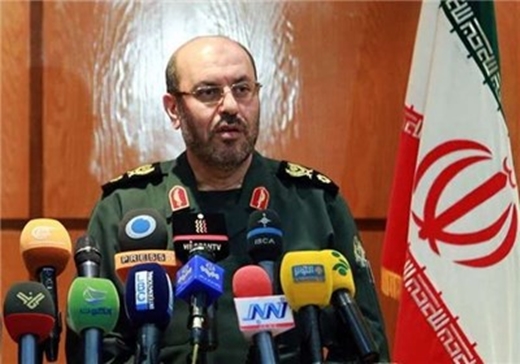
Deputy Chief of Staff of the Iranian Armed Forces Brigadier General Massoud Jazayeri

“Today, we are witnessing the destructive outcomes of state-sponsored terrorism backed by Saudi Arabia, the United States and some (other) reactionary regional countries in Iraq, Syria, Afghanistan, Yemen and elsewhere, including in some European countries,” Deputy Chief of Staff of the Iranian Armed Forces Brigadier General Massoud Jazayeri said on Tuesday.

He further referred to the recent terror attacks in Tehran, noting that the Daesh (ISIL or ISIS) Takfiri terrorist group was behind them.

Undoubtedly, he said, Riyadh and Washington direct and support such acts of terrorism against regional countries.

Brigadier General Jazayeri went on to underline that the recent terrorist attacks and other hostile moves by the enemies cannot undermine the Iranian nation’s resolve to continue on the path of upholding the truth and fighting terrorism.

Terrorists launched simultaneous attacks on Iran’s parliament building in downtown Tehran and on the mausoleum of the late founder of the Islamic Republic Imam Khomeini, south of the city, on Wednesday morning.

The Daesh terrorist group claimed responsibility for the attacks, which killed 17 people and wounded more than 40.

While condemnations of the attacks poured in from around the world, neither Saudi Arabia nor the US condemned the malicious acts of terrorism.

Snipers Injure Scores of Civilians in Saudi Arabia’s Qatif

Snipers Injure Scores of Civilians in Saudi Arabia's Qatif

At least 31 civilians have been injured by Saudi snipers in al-Awamiyah village in Saudi Arabia’s Eastern Province, which is mostly populated by Shiite Muslims.

Sometimes, the bullets were shot aimlessly, and at times, they targeted civilians in their houses.

Some of the wounded were hit only because they lived in the Shiite-populated district.

Situated in the Qatif region, al-Awamiyah village has been under siege by Saudi military since 35 days ago and the defenceless people are shot in the streets.

Many of the injured have been transferred to Qatif’s central hospital, while a number of them are reportedly in critical condition.

The Saudi snipers have been deployed on the roofs of the buildings in al-Awamiyah to target the civilians.

Prolonged Crisis Not in Interest of Mideast States: Iran FM

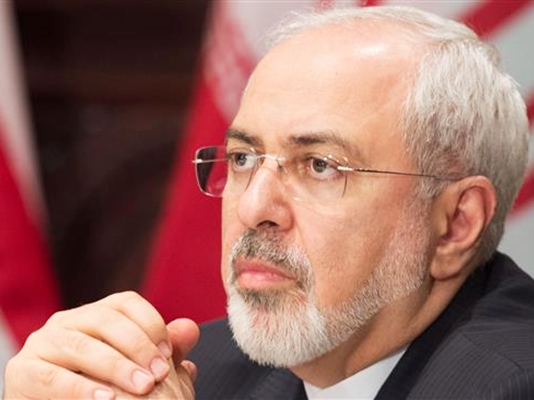
Speaking in a meeting with his Croatian Counterpart Davor Ivo Stier on the sidelines of Oslo Forum, the Iranian FM called for an end to the current diplomatic row between Saudi Arabia and Qatar over what Riyadh and its Arab allies call Doha’s support for terrorism.

During the meeting the two sides exchanged views over regional developments, mutual cooperation, and expansion of economic and banking relations as well as investment opportunities.

For his part, the Croatian foreign minister said the crisis in the Persian Gulf can lead to instability in the Balkan region.

He called on the conflicting sides in the Persian Gulf to resolve their disputes through talks.

Riyadh Asks Terrorists to Perform Operation in Iran: IRGC Chief

general-mohammad-ali-jafari

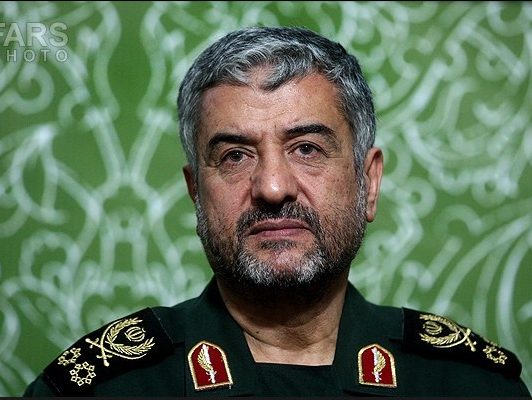
Speaking in a ceremony on Monday night, the IRGC Commander noted that unfortunately, and based on some accurate information, Saudi Arabia had supported the terrorists involved in the recent deadly attacks on Tehran.

He also added that the United States and the Israeli regime have backed these terrorists as well.

On June 7, Iran’s parliament and mausoleum of Imam Khomeini, the founder of the Islamic Revolution, came under attacks that killed 17 people and wounded 52 others. The ISIS Takfiri terrorist group claimed responsibility for the attacks.

After the incident, the IRGC released a statement saying, “This terrorist act took place a week after the meeting between the US President and head of a regional country [Saudi Arabia] which has been a constant supporter of terrorism.”

A Look at Iranian Newspaper Front Pages on June 13

The top story in Iranian newspapers today was the remarks made by the Leader of Iran’s Islamic Revolution Ayatollah Seyyed Ali Khamenei in a meeting with high-ranking officials.

Newspapers also widely covered the Iranian national football team’s qualification for 2018 FIFA World Cup Russia following a 2-0 victory over Uzbekistan in Tehran.

Iranian Foreign Minister Mohammad Javad Zarif’s visit to Oslo and his remarks against the new US sanctions also received great coverage.

The above issues, as well as many more, are highlighted in the following headlines and top stories:


Abrar:

1- Shiite, Sunni Muslims Not Different to ISIS: IRGC General

2- Rouhani Calls for Young People’s Greater Role in Building Future

3- Amano: IAEA to Continue Verification in Iran

A Look at Iranian Newspaper Front Pages on June 13 - abrar


Aftab-e Yazd:

1- Unhappy Days of Britain

  • Brexit in Deadlock after UK Election Results

2- In Nuclear Talks, Obama Worried about Iranians Getting Upset by US

A Look at Iranian Newspaper Front Pages on June 13 - aftab


Arman-e Emrooz:

1- Leader: We Shouldn’t Spoil People’s High Turnout

2- Once Again Iran, Once Again World Cup

3- Street Celebrations after Victory

4- I’ve Sent Two Written Messages to Mogherini on US Lack of Commitment

A Look at Iranian Newspaper Front Pages on June 13 - arman


Asrar:

1- Zarif: New Senate Decision Shows Americans Are Narrow-Minded

2- ISIS Elements to Cause Disasters across Iran without Iranian Fighters in Syria: MP

2- Iran’s Foreign Ministry Spokesman Warns Americans against Repeating Mistake

A Look at Iranian Newspaper Front Pages on June 13 - asrar


Ebtekar:

1- Dividing People Would Spoil Their Great Turnout in Elections: Iran Leader

2- Iran’s Football Repeats World Cup Qualification

A Look at Iranian Newspaper Front Pages on June 13 - ebtekar


Etemad:

1- People Trust Islamic Republic’s Ballot Box: Leader

2- Iran in Land of Tsars: People’s Late Night Celebration after World Cup Qualification

3- Iran to Respond to Any US Move: Zarif

4- Mogherini Underlines EU’s Commitment to JCPOA Implementation

A Look at Iranian Newspaper Front Pages on June 13 - etemad


Ettela’at:

1- National Interests Main Criteria for Making Decisions: Leader

2- Qatari Ex-PM: We Regret Cooperating with Saudis against Iran

3- Fatemiyoun Brigade, General Soleimani on Syria-Iraq Border

A Look at Iranian Newspaper Front Pages on June 13 - etelaat


Haft-e Sobh:

1- Easiest, Most Powerful Qualification for FIFA World Cup

2- Spaghetti, Yoghurt or Engineer: Which Iranian Products Are Offered in Qatar Market?

A Look at Iranian Newspaper Front Pages on June 13 - hafte sobh


Iran:

1- Hello World Cup: Iran Qualifies for World Cup without Receiving Any Goal

2- Iran Starts Exporting Wheat: 30,000 Tonnes Exported to Oman

A Look at Iranian Newspaper Front Pages on June 13 - iran


Jame Jam:

1- Historic Qualification for FIFA World Cup

2- Value of Annual Food Waste Equal to Loans Given to 380,000 Newlyweds

A Look at Iranian Newspaper Front Pages on June 13 - jamejam


Javan:

1- Leader: Iran’s Society Shouldn’t Be Divided like What We Saw in 1980

2- All Officials Should Empower IRGC, Basij, Revolutionary Elements: Leader

3- Here We Are at 2018 World Cup without Receiving Any Goal

4- Saudi Petrodollars Funding [Anti-Iran Satellite Channel] ‘Manoto’

A Look at Iranian Newspaper Front Pages on June 13 - javan


Jomhouri Eslami:

1- Caliphate in Iraq Has Collapsed: British Envoy to Baghdad

2- Official: $15 Billions of New Oil Contracts to Be Signed This Year

3- IAEA Confirms Iran’s Compliance with Nuclear Deal

A Look at Iranian Newspaper Front Pages on June 13 - jomhori


Kayhan:

1- Iran Leader: Enemy Shouldn’t Be Trusted

2- General Soleimani Says Prayers to Thank God in Syria-Iraq Border

3- Yemen Plagued by Cholera and Saudi Arabia

A Look at Iranian Newspaper Front Pages on June 13 - keyhan

Iran Not to Tolerate Saudis’ Warmongering: Leader’s Aide

Ali Akbar Velayati

Head of Strategic Research Centre of Iran’s Expediency Council, Ali Akbar Velayati, says the Saudis lack the required courage and capacity to inflict any blow to Iran, but in case of any abuse, Iran would respond accordingly.

Velayati, who is also a senior international advisor to Iran’s Leader, further noted that Saudi Arabia had been suffering from the policies of some inexperienced rulers with little knowledge of regional issues.

“The Saudis can’t provide even their own security. They waste lots of Muslims’ resources to press ahead with their short-sighted projects. They invited the US president to Riyadh and made whatever they had in power to create an anti-terror alliance. But as we saw the alliance consisted only of a small number of kingdoms, which owe a huge debt to Saudi Arabia.”

“The unprecedented diplomatic crisis between Saudi Arabia and Qatar showed that the Saudis can’t establish even a loose alliance for a couple of days,” he added.

Velayati also dismissed the latest threats by Saudi officials against Iran as empty, adding that the best response to such “foolish claims” is to remain silent.

Elsewhere in his remarks, he slammed the US Senate for advancing Iran sanctions bill and said the new sanctions had no effect on Iran because the two sides didn’t have any serious economic relations.

“Thanks to its resilient economy, Iran has practically made itself invulnerable to foreign threats,” he said.

Velayati said the Senate’s new bill was approved with the aim of supporting Israel and the backward regimes in the region.

“The US has failed to achieve its goals in Iraq and Syria,” Velayati said, adding “the recent victories of the Iraqi forces and the Popular Mobilization Units as well as Syrian army and its allied forces amount to a strategic achievement for Iran.”

He concluded the regional resistance against Israel and its allies started from Tehran and ended up in Iraq, Syria and Lebanon.

FM Zarif Writes to Mogherini on Iran Deal Implementation: Source

“Regarding your question, the HRVP (High Representative/Vice-President) received the letter from Minister Zarif related to the JCPOA implementation.  In her capacity as coordinator of the Joint Commission, the HR shared letter with all E3 + 3,” the source told Tasnim on Tuesday when asked if the Iranian minister had penned a letter to Mogherini.

The source added, “As you know, any party to the JCPOA can bring up issues related with the implementation to the attention of the coordinator which are then discussed in the joint commission. I will not comment on the details but can only reiterate that we expect all sides to fully adhere to their commitments under the deal.”

It came after the United States Senate Committee on Foreign Relations on May 25 approved a bill to impose new sanctions on Iran over its missile program.

Iran has repeatedly announced that the country’s missile program is purely defensive.

The committee voted 18-3 in favor of the measure, but the bill still requires the full Senate consideration and support by the House of Representatives and US President Donald Trump to become law.

US lawmakers, who backed the bill, said they believed that the bill would not violate terms of the 2015 nuclear deal, known as the Joint Comprehensive Plan of Action (JCPOA), reached between Iran and the Group 5+1 (Russia, China, the US, Britain, France and Germany).

However, senior Iranian officials, including the foreign minister, are concerned that the new measure can undermine the nuclear agreement.

Iran and the Group 5+1 (also known as E3+3) reached the 159-page nuclear agreement in July 2015 and implemented it in January 2016.

Since the historic deal was signed in Vienna, the IAEA has repeatedly confirmed the Islamic Republic’s compliance with its commitments under the JCPOA.