Iran became the first team from Asia, and the second team in the world, to qualify for the 2018 FIFA World Cup Russia after a 2-0 victory over Uzbekistan on Monday evening.
Following the victory on Monday night, people took the streets across the country to celebrate the early qualification.
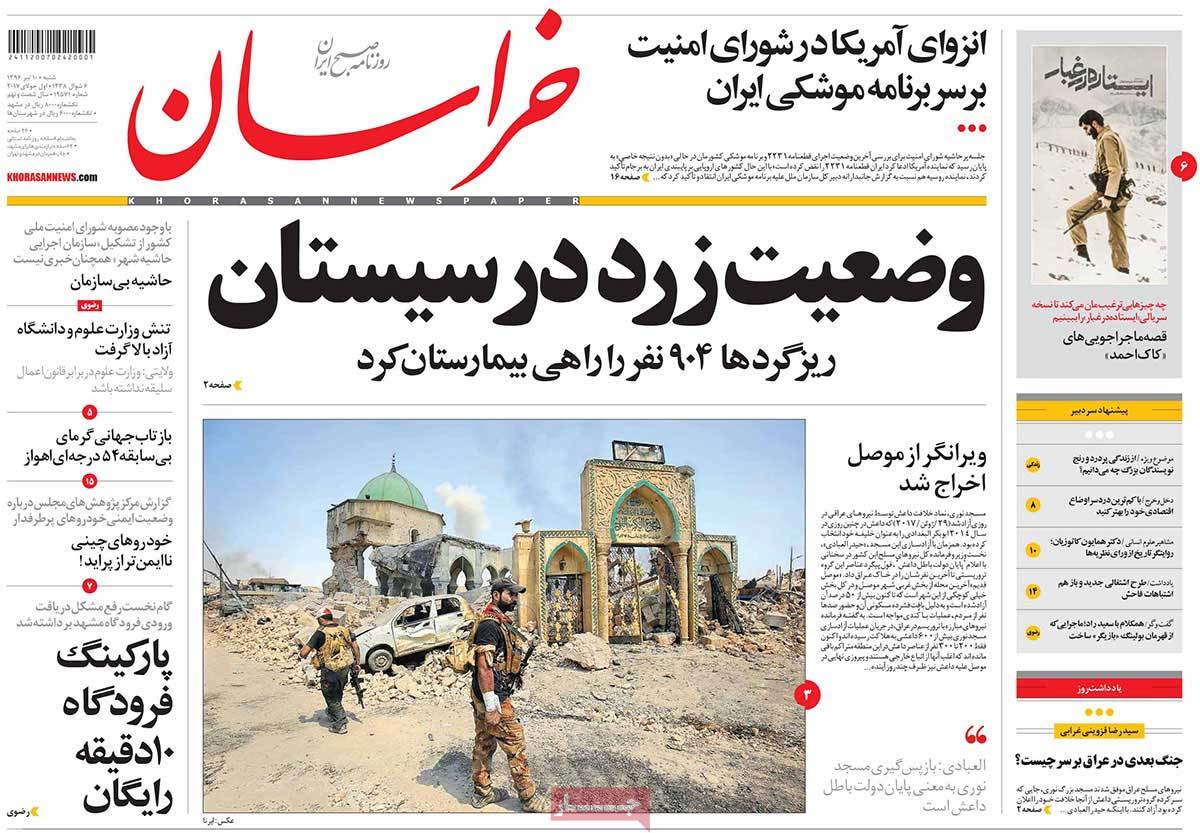
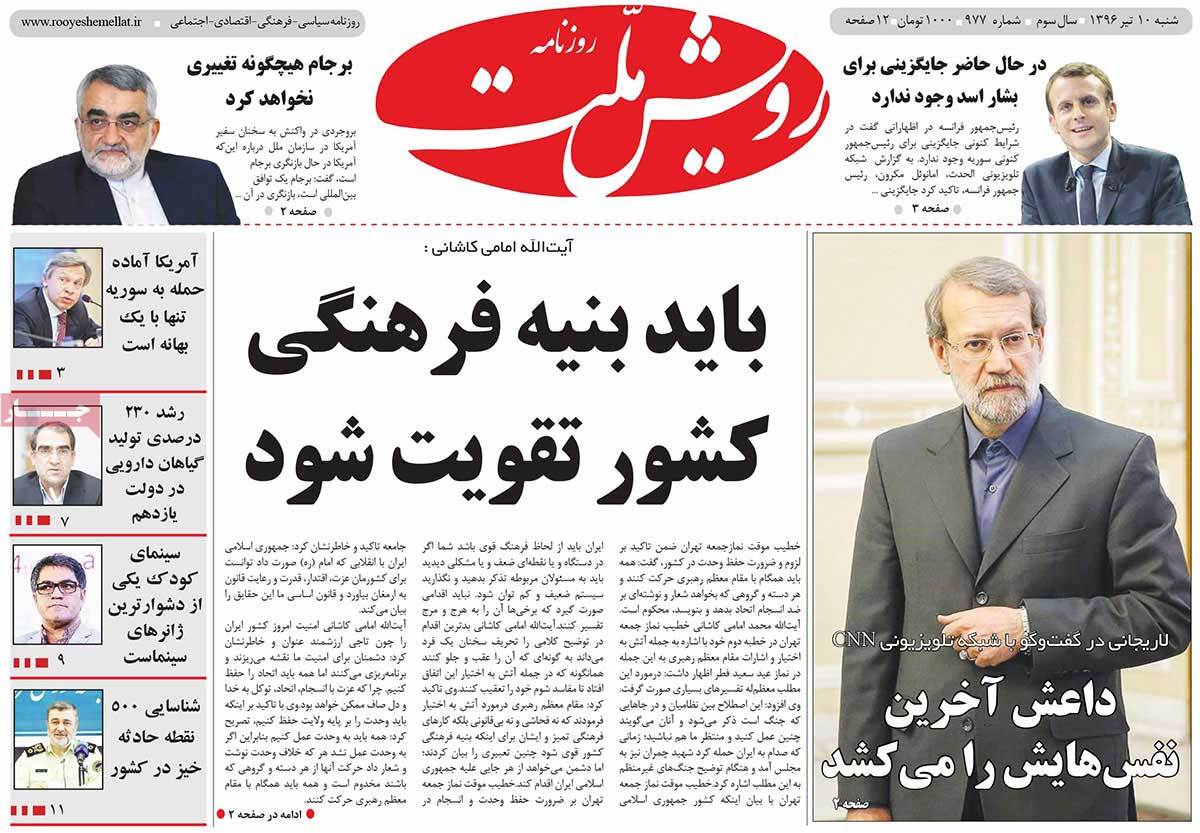
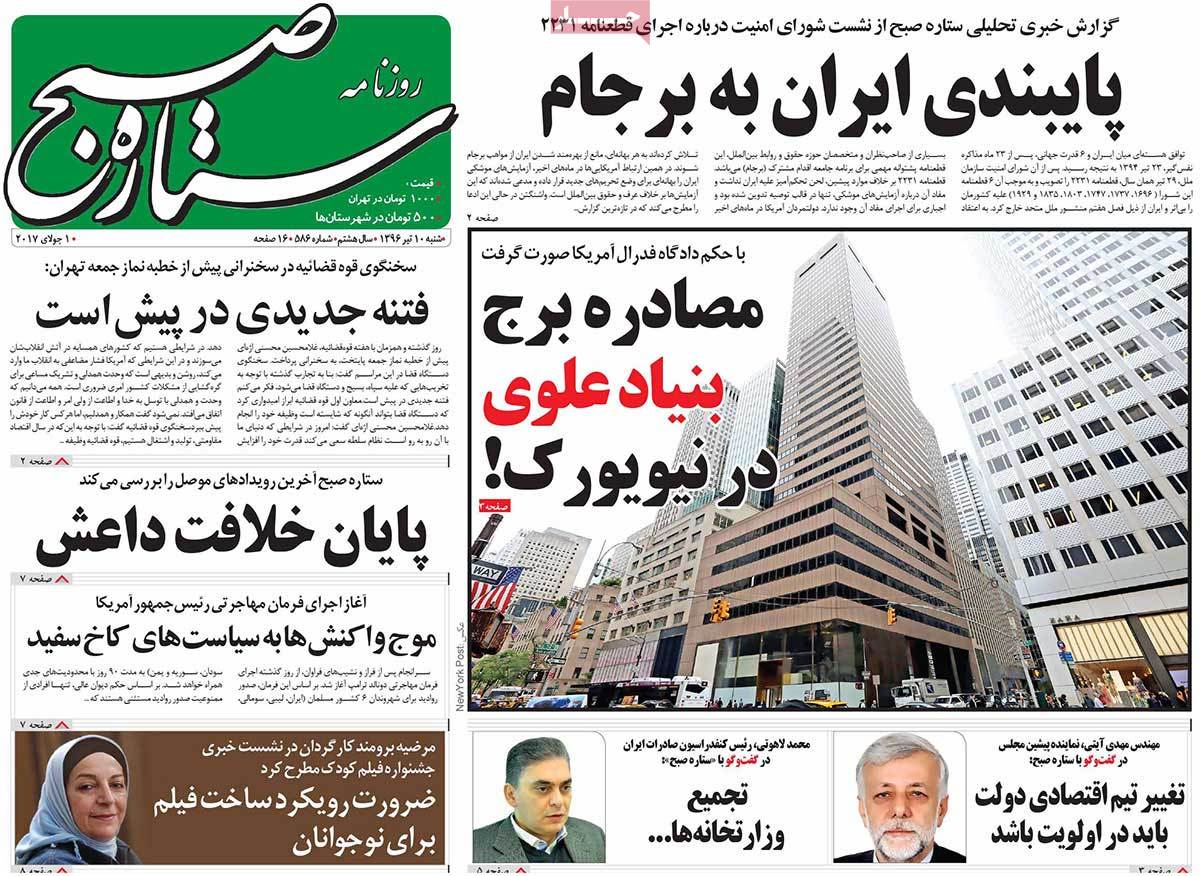
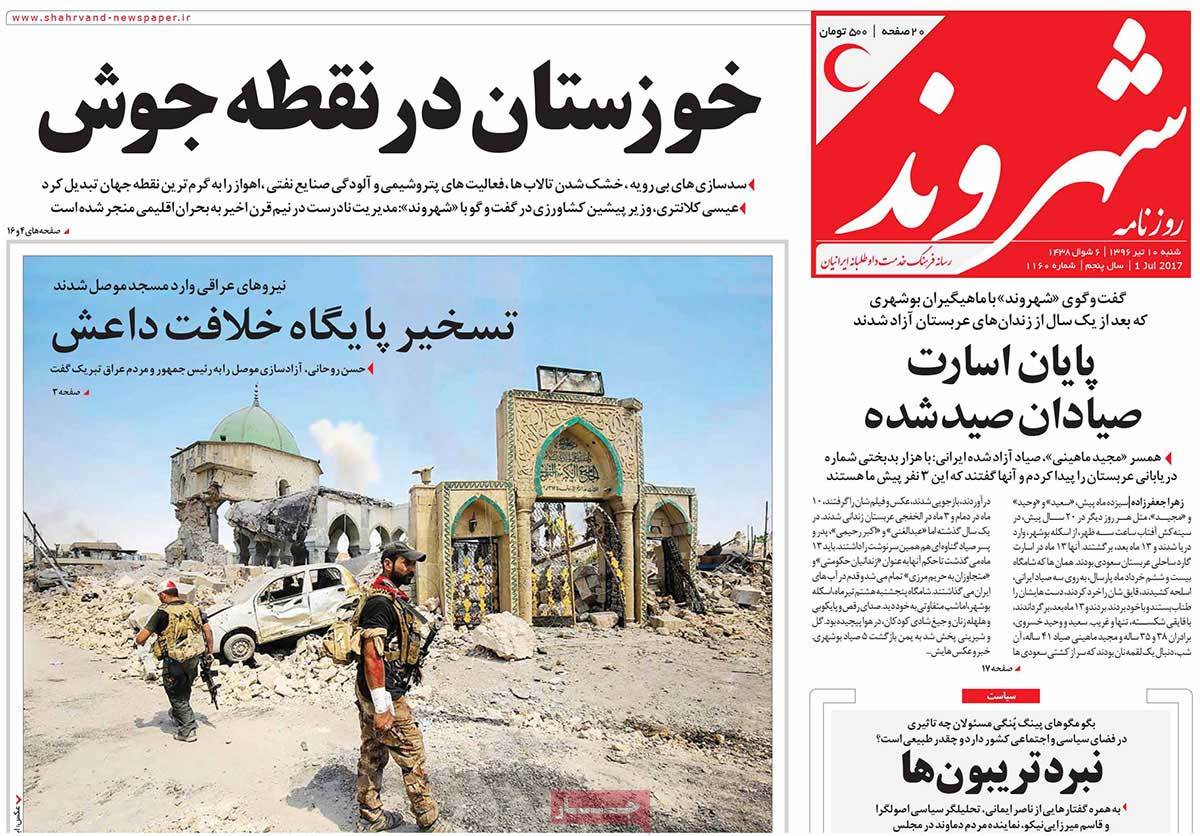
Here are photos of the street celebrations taken from various news agencies:
Iranians Take to Streets to Celebrate FIFA World Cup Qualification
Iran became the first team from Asia, and the second team in the world, to qualify for the 2018 FIFA World Cup Russia after a 2-0 victory over Uzbekistan on Monday evening.
Following the victory on Monday night, people took the streets across the country to celebrate the early qualification.
Here are photos of the street celebrations taken from various news agencies:
Should Iranians Worry about Killer Whale Spotted in Persian Gulf?
Speaking at a press conference on Sunday, Davoud Mirshekar, director of the Marine Ecosystems Office at the Department of Environment (DoE), said the presence of orcas (also known as killer whales) in the Persian Gulf is not unusual.
“This species was seen near the UAE a couple of weeks ago and then somewhere between (the Iranian islands of) Kish and Hendurabi,” the official said, according to Financial Tribune. Mirshekar noted that orcas have ventured into Iranian waters before but sightings were never reported.
“Their presence here is not strange at all. They’re here to feed,” he added.
The most widely distributed mammal, orcas have been documented foraging in shallow coastal waters.
In Iran, they are known by their less appealing name of killer whale, which sparked concerns among some people when the sightings were first reported.
“They pose no threats to humans,” Mirshekar said. “Their varied diet—from fish to seals—has garnered them the name of killer whale.”
The environment official said orcas are among the most intelligent animals on the planet, which is why they have historically had good relations with humans.
“There have only been a couple of reports of orcas attacking humans and they all happened when the animals were being held in captivity,” he said. Killer whales are commonly found swimming in the cold waters of Antarctic Peninsula, but a type known as Type B killer whales have been found to venture into the warmer waters of the tropics, such as the Persian Gulf, to help regenerate skin tissue.
They have been known to swim as far north as the states of Florida and Hawaii in the United States, so their sighting in the Persian Gulf—while infrequent—is not unusual.
Saudi Arabia’s Security as Important to Iran as Qatar’s: Zarif
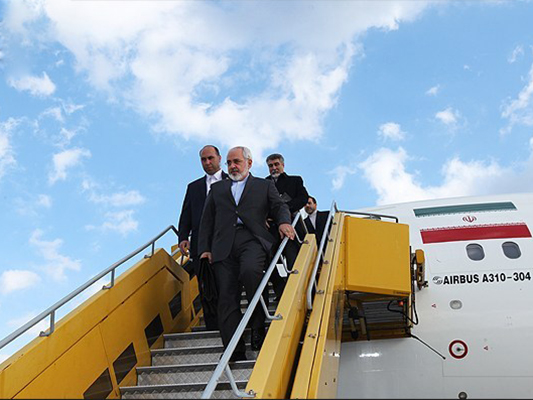
Iran’s FM Mohammad Javad Zarif addressed the opening ceremony of the Oslo Forum on Tuesday in a gathering also attended by EU Foreign Policy Chief Federica Mogherini, former US Secretary of State John Kerry, Indonesia’s Foreign Minister Retno Marsudi, and Norwegian Foreign Minister Borge Brende.
During his speech, Zarif criticized Saudi Arabia’s efforts to destabilise Iran, including its promotion of terrorist groups operating around the Iran-Pakistan border.
“We are aware, we have intelligence that Saudi Arabia is actively propping up terrorist groups operating on the eastern side of Iran in Sistan and Baluchestan [province] using the territory of one of our neighbours against its [Pakistan’s] will to launch attacks against Iran,” Zarif noted.
Only two months ago, their attack led to the murder of nine Iranian border guards, he added.
He also referred to the statements made by senior Saudi officials, including its minister of defence, who publicly stated that Riyadh will take the war into Iran. “It was a direct threat and very dangerous.”
“On the day of terrorist incidents, unfortunately my counterpart Adel al-Jubeir tweeted that Iran should be punished,” the Iranian foreign minister went on to say.
Such moves by Saudi officials are made while, according to Zarif, the Islamic Republic of Iran considers Riyadh’s security as important as that of Qatar.
The Iranian top diplomat then highlighted the need for a permanent mechanism for sustainable regional security, stressing that all countries in the Middle East need a secure neighbourhood.
What follows is highlights of what Zarif said about the need for such a mechanism in the region:
“On foreign policy it is very clear that every authority in Iran, not just recently but since 1986, has promoted the idea of regional security because Iran, by its nature, because of its geography, because of its size […], needs security in the neighbourhood.
We are a very secure country. Putting this unfortunate incident aside, Iran is the most secure country in the region because of the very clear fact that 41 million people turn out to vote.
That [the ballot box] is the opportunity that is available to Iranian people and not available to many residents of our neighbours.
So we are very secure but we need a secure environment, we need a secure neighbourhood in order to be able to enjoy that security and reduce our expenses, our costs, both human and material costs for maintaining that national security.
So we need the secure environment. We need neighbours that are secure. For us the security of Saudi Arabia is as important as the security of Qatar or the security of other neighbours.
We have been calling for the dialogue for the past close to 31 years. In 1986, at the height of Iran Iraq war when there was something called “tanker war” in the Persian Gulf. And the then Iranian foreign minister wrote a letter to the Secretary General of the United Nations calling for the need for a regional security mechanism, so that we would avoid the widening of the conflict between Iran and Iraq.”
Iran and the US used to call each other the Great Satan and Axis of Evil, but now we call ourselves brothers and sisters. Why can’t Iran and Saudi Arabia start talking in a non-zero sum approach and resolve problems? I am sure if there is a will, political will, we can do this.
“That letter became the basis for Paragraph 8 of Security Council’s Resolution 598 which ended the Iran Iraq war in 1988. But that paragraph 8 was never implemented. When we had the first aftermath, that was the Iraqi invasion of Kuwait, everybody believed that had we implemented paragraph 8 and put in place a security scheme in the region, we might have avoided that war whose costs we are still paying to this day, the rise of extremism, the rise of violence in our region all emanate from that war.
Now under these circumstances, we believe it is absolutely imperative for our region not only to resolve this particular conflict or dispute between our southern neighbours in the Persian Gulf through dialogue, but in fact establish a permanent mechanism for consultation, conversation, and conflict resolutions in our region using some variation of the Helsinki approach.
I think if it worked at the height of the cold war here in Europe, it should work. I said at another occasion, if Iran and the United States could address the nuclear issue at a time when we considered the United States what you know we considered them and they considered us, that’s what you know. I don’t want to repeat those names. But we were able to resolve one of the most difficult issues through dialogue and through a non-zero sum approach. Now between us that we call ourselves brothers and sisters [….] not axis of evil. We call ourselves brothers and sisters. Why can’t we start talking in a non-zero sum approach and resolve problems. I am sure if there is a will, political will, we can do this.”
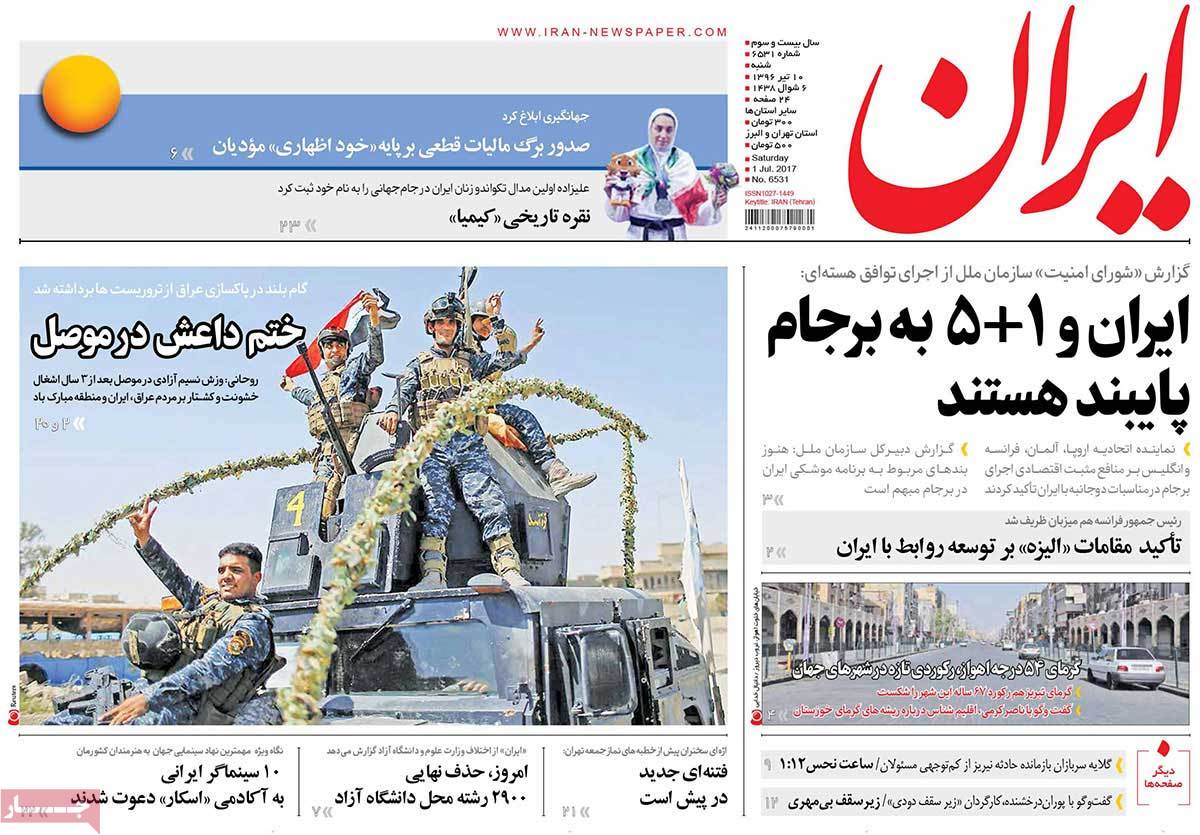
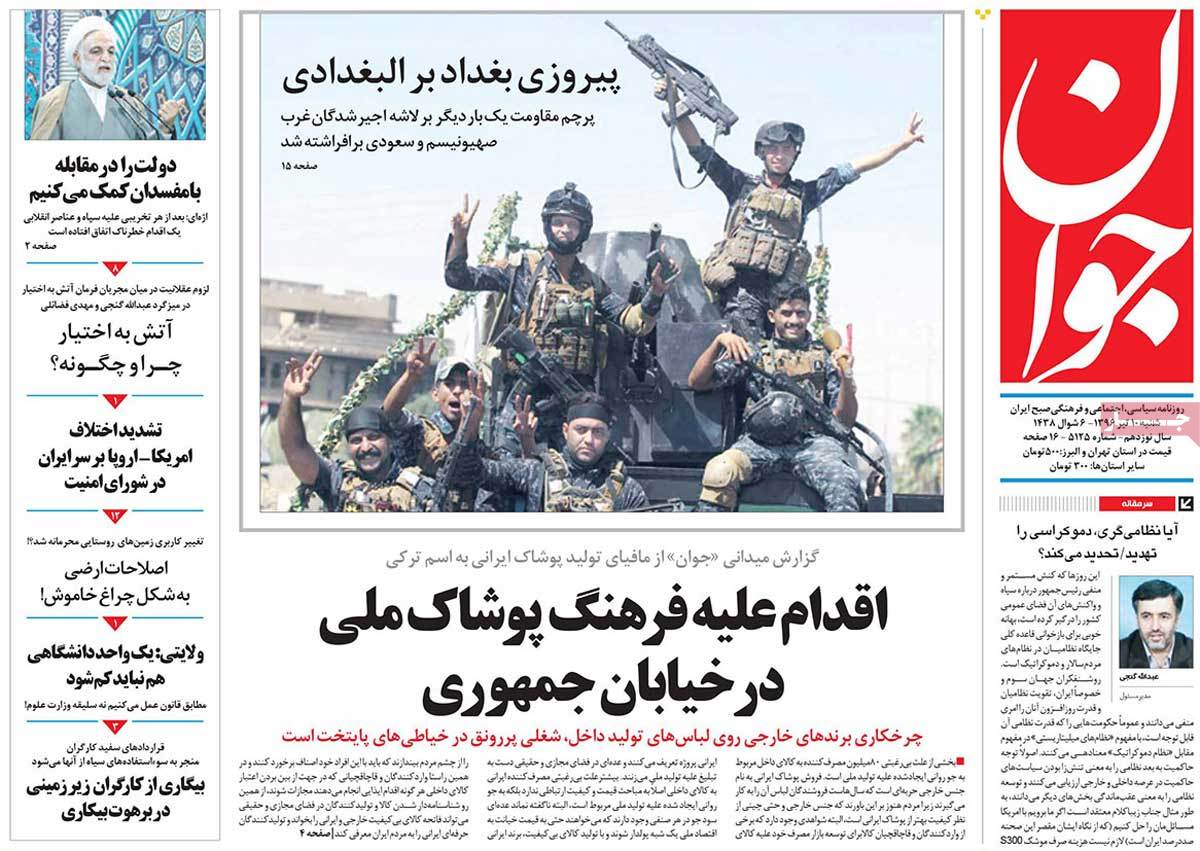
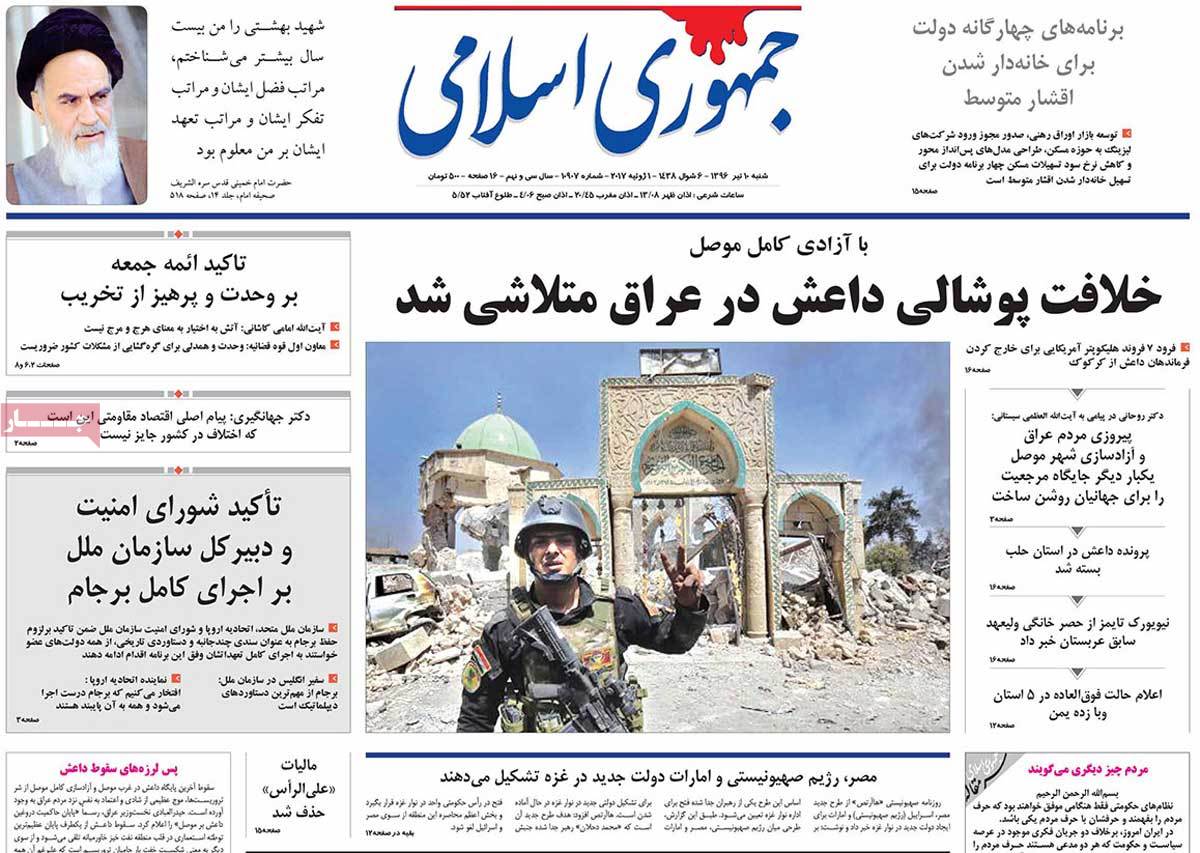
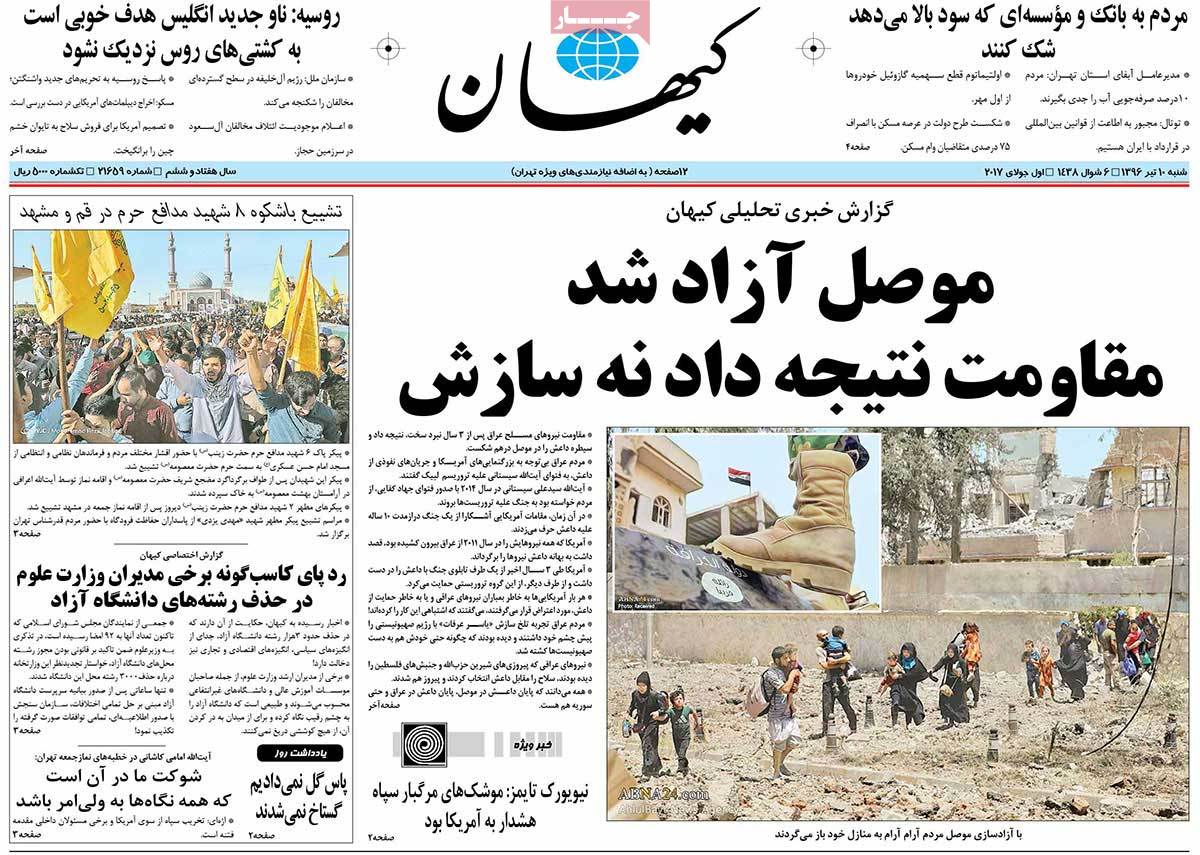
Iraqi Forces Free 500 Hostages Taken by ISIS
Media sources say Iraqi popular forces have released 500 Iraqis held captive by the ISIS terrorists in a basement in al-Jomhouri hospital in the west of the northern Iraqi city of Mosul.
Most of the prisoners have caught scabies due to the Takfiri terrorists’ deliberate negligence in providing them with the very basic living necessities and facilities.
Previously known as the seven-year itch, scabies is a contagious skin infestation transmitted by the mite Sarcoptes scabiei (also known as the itch mite).
The itch mite is a parasitic arthropod that burrows into skin and causes scabies. It looks like the tick but a lot smaller and can be seen only under a microscope.
Scabies is the most common skin diseases in the world. The most common symptoms of the disease are severe itchiness and a pimple-like rash. The itch is caused by the secretions from the parasite’s body.
Occasionally, tiny burrows may be seen in the skin. When first infected, usually two to six weeks are required before symptoms occur. If a person develops a second infection later in life, symptoms may begin within a day.
Al-Jomhouri hospital was among the medical centres seized by the ISIS. Prior to the Iraqi forces’ recapture of the hospital, the terrorists used to keep the injured in it.
Extremism Rooted in Salafism Ideology: Iran’s Zarif
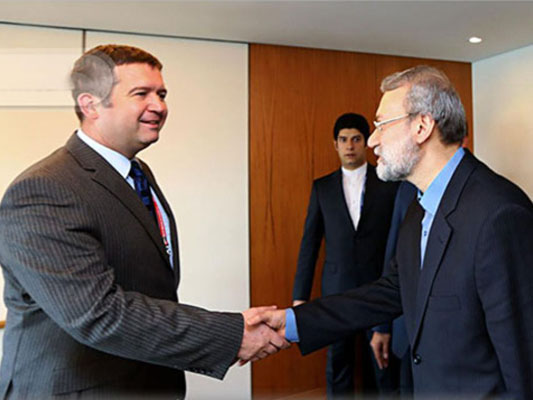
In a meeting held on the sidelines of Oslo Forum in Norway, Iranian Foreign Minister Mohammad Javad Zarif and his Slovak counterpart Miroslav Lajcak discussed a whole range of bilateral and regional issues.
During the Tuesday meeting, the top Iranian diplomat touched upon the recent political situation following Saudi Arabia and some other countries’ severance of relations with Qatar.
“Exerting pressure as well as using the military option in order to settle regional disputes has been a wrong decision,” Zarif said.
Read More:
Salafis, Yesterday and Today
“The best way to resolve differences between countries is political dialogue,” Zarif added.
He also said extremism in the region has its roots in the Salafism ideology that Wahhabis believe in.
The Slovak foreign minister, in turn, expressed condolences to his Iranian opposite number on the recent deadly terror attacks in Tehran.
Lajcak also highlighted that European countries remain committed to their obligations under the JCPOA.
He further expressed his country’s readiness to continue mutual cooperation with Iran.
Congratulations Pour in for Iran after World Cup Qualification
Iran became the first team from Asia, and the second team in the world, to qualify for the 2018 FIFA World Cup Russia after a 2-0 victory over Uzbekistan on Monday evening.
Iran’s President Hassan Rouhani in a post in his Twitter account praised the country’s national team for booking the ticket to Russia by a significant margin.
“Thank you guys,” the president noted, adding that the success made all Iranian people happy.
In an Instagram post, Foreign Minister Mohammad Javad Zarif also congratulated the nation on Team Melli’s qualification for the world cup.
FIFA also highlighted the Iranian victory, and said in its Instagram, “Iran became the second team to qualify for next year’s World Cup finals as they beat Uzbekistan 2-0 with goals from Sardar Azmoun and Mehdi Taremi.”
The AFC also congratulated the Team Melli for joining Brazil and Russia at the 2018 FIFA World Cup.
AFC President Shaikh Salman bin Ebrahim Al Khalifa hailed the Islamic Republic for sealing Asia’s first spot at the 2018 World Cup.
“On behalf of the Asian football family, I would like to congratulate the Islamic Republic of Iran for their convincing and consistent campaign throughout the qualifiers to become the first Asian team to qualify for Russia 2018.
“This achievement reflects the hard work and commitment of the Football Federation Islamic Republic of Iran to succeed at the highest international level. As envisaged in the AFC’s Vision and Mission, I hope their World Cup qualification will inspire the team to do Asia proud on the world’s biggest stage.
“As we approach the closing stages of qualification, I wish all our teams the very best of luck.”
Team Melli will be one of two teams to be heading to Russia 2018 from Group A of the third round of Asian zone qualifying. Carlos Queiroz’s side move on to 20 points at the top of the group after eight rounds of matches, eight points clear of third-place Uzbekistan, who are unable to catch the Iranians with their two remaining qualifiers in the group.
This is the fifth qualification to the global finals for Iran, having previously appeared at football’s showpiece event in 1978, 1998, 2006 and 2014. They join hosts Russia and five-time World Cup winners Brazil in securing their spot for next summer.
Iran’s Independence Is What US Can’t Tolerate: Leader
Speaking in a meeting with high-ranking Iranian officials in Tehran on Monday, the Leader said it is impossible to compromise with the US.
“A lot of problems with the US are basically unsolvable, because America’s trouble with us does not relate to issues such as the nuclear energy or human rights, but they have trouble with the essence of the Islamic Republic,” the Leader added.
The US is opposed to the principle of Iran’s independence, the Leader noted, arguing that even if Iran was being governed by a non-religious and non-revolutionary but an independent establishment, the US would again oppose it.
“Americans should know that the Islamic Republic will not abandon stances such as countering cruelty and defending Palestine, and will not abandon its attempt to restore the rights of the nation,” Ayatollah Khamenei added.
Dismissing the US allegations that Iran is destabilizing the region, the Leader said the US and its proxies are the cause of instability in the Middle East.
The US is itself terrorist, fosters terrorists, sponsors a regime like the Zionist regime [of Israel] which is the core of terrorism, and has been originally founded upon terror and cruelty, the Leader added.
Taking a swipe at the US president for accusing Iran of sponsoring terrorism during a recent visit to Saudi Arabia, Ayatollah Khamenei said “it is absolutely ridiculous” that Americans raise the issue of human rights in a meeting with “Saudi medieval and tribal rulers” and accuse the Islamic Republic, the symbol of democracy, in a place totally unfamiliar with democracy.
Such anti-Iran human rights allegations by the US officials during a trip to Saudi Arabia will remain as a “historic shame” for the US forever, the Leader added, according to a report by Tasnim.
Ayatollah Khamenei then lashed out at the US for creating and supporting ISIS terrorist group and for establishing a fake military coalition against it, saying Washington only feels uneasy about an “uncontrolled ISIS” but would counter the genuine efforts to destroy the terrorist group.
The Leader then touched on the US breach of the Joint Comprehensive Plan of Action (JCPOA), a nuclear agreement between Iran and the Group 5+1 (Russia, China, the US, Britain, France and Germany), and called on the Iranian team monitoring the implementation of the JCPOA to make sure that Iran’s conditions in the accord will be entirely fulfilled.
The enemy is brazenly countering Iran, Ayatollah Khamenei warned, urging the officials involved in the implementation of the JCPOA to remain vigilant, because the enemy would interpret any negligence as weakness and would behave more rudely.
“Tehran Attacks Aimed at Undermining Iran’s Sunni Community”
Ali Younesi, a top aide to Iranian President Hassan Rouhani, in an interview with the Iran newspaper, has touched on the different dimensions of the recent terror attacks in Tehran. Here are the highlights of his comments:
Terrorists had been trying hard to carry out attacks on a much larger scale than that of the two raids [on the Imam Khomeini mausoleum and parliament building]; of course, the attacks would have been foiled by security and intelligence forces. It’s not that the ISIS terrorist group began its operations in Iran recently; rather, the terrorists launched their efforts to strike Iranian people several years ago. Even before ISIS, international terrorist groups affiliated with the Takfiri-Wahhabi current such as Al-Qaeda, Jundallah and Furqan, were trying to carry out acts of terror in Iran. In fact, Takfiri terrorist groups were all against Iran. They either conducted major operations, or wanted to do so, but failed to. The operations that they failed to conduct would have been much more significant than the [recent] attacks they carried out.
Iran Most Successful Country in Fight against Terrorism
[He was asked how is it that terrorists have carried out large-scale operations in other regional countries, but they’ve failed to do so in Iran. In response, Younesi said] Iran is the most successful country when it comes to fighting terrorism. This has several reasons; first, the Islamic Republic of Iran is the fruit of the Islamic Revolution; second, Iran has emerged victorious in a large-scale war [Iraqi imposed war in the 1980s]; third, the Islamic Republic of Iran is the result of victory over hundreds of local terrorist groups.
The Islamic Republic of Iran has defeated terror groups, and most terrorist groups operating in the country have been eliminated and are part of history now. So, it is natural that the intelligence and security organizations of a country with such long experience are the most successful ones in countering acts of terror. When I was the intelligence minister, security organizations all around the world admitted time and again that Iran had the most powerful anti-terror apparatus, and they sought help from us. When then President Mohammad Khatami travelled to France and Germany, their intelligence and security services asked us to help ensure the security of their guest.
In the September 11 attacks, the US showed a very weak reaction. America’s security services, with so much experience and numerous facilities, were taken by surprise. The Pentagon and Twin Towers, which were very important locations, came under attack in a moment, and the United States’ grandeur collapsed in a matter of hours. In order to regain its grandeur and social security, the US imposed two wars on the Middle East nations, but failed to tackle terrorists.
The US triggered two costly and futile wars in the Middle East, but Iran succeeded in harnessing Al-Qaeda without paying any price.
After the September 11 incident, Al-Qaeda was the main target. But Iran busted dozens of Al-Qaeda terror teams and arrested their members overnight, teams comprising some of Al-Qaeda’s most notorious terrorists. More than hundreds of Al-Qaeda’s well-trained terrorists were arrested in safe houses in Tehran and most other cities across the nation in the shortest time possible. So, the US triggered two costly and futile wars, but Iran succeeded in harnessing Al-Qaeda without paying any price.
After the US pulled its troops out of Iraq, the country was practically at the mercy of terrorist groups. ISIS was a production of these secessionist terror groups, which, after the US withdrawal, gained a foothold first in Iraq and then in Syria. At that point, the terror groups picked Iran as their prime target, but earlier, when Al-Qaeda was at the height of its activities, Iran was the group’s second target.
At this point, it was Iran that put up a stiff resistance against terrorists in Iraq and Syria. Terrorists were supported by Saudi Arabia, many Western countries, and even Turkey at some points. But later on, these sponsors of terrorists realized they were making a mistake. So, they divided militants into extremist and what they called moderate terrorists. Then they began backing the so-called moderate groups. These terrorists announced via their media outlets time and again that they would attack Iran. Dozens of terror teams have also been dispatched to Iran, but have been busted by Iranian security and intelligence apparatus. As you see, Iran has been able to identify and smash terrorist groups despite the fact that terrorists have a lot of facilities, have large swaths of Iraq and Syria under their control, are present in Afghanistan, have kept threatening to act against Iran, and have done so. This shows Iran has secured effective victories against terrorists. To be more precise, Iran is fighting terrorists.
[Asked why the terror groups chose Iran as their first target, Younesi replied] After terrorists captured large swaths of Iraq and separated several parts of Syria from one another, they issued a worldwide call. They brought other terrorist groups together in those areas and formed a government. ISIL, which stands for the Islamic State of Iraq and the Levant, was a name that the terrorist group had chosen for itself. The group was also called ISIS, the Islamic State in Iraq and Syria. With reliance on its new recruits, the group formed a so-called Islamic rule in areas that it had seized in Iraq and Syria. ISIS was set to wrest control of the whole Middle East, Iraq, Syria, Saudi Arabia and other regions.
ISIS’ days are numbered in Syria and Iraq, and the terror group is suffering its final defeats at the hands of Iran, but this does not mean that Tehran attacks were their last operation.
ISIS’ days are numbered in Syria and Iraq, and the terror group is suffering its final defeats at the hands of Iran. By carrying out terrorist acts like the ones in Tehran, they want to lift their spirits. Naturally, if they are not concerned about protecting their self-styled government, they will spread across the region and mastermind more plans to carry out terrorist operations in Iran and other countries. This does not mean their activities have entered a new phase; rather, it means their days are numbered.
Of course, this does not mean that it was their last operation. But they are definitely falling apart. So far, hundreds of these terrorists have been arrested even before entering Iran or inside the country. The Islamic Revolution Guards Corps (IRGC) as well as the Iranian Intelligence Ministry had a very good performance in countering terrorists in the recent incidents in Tehran.
The terrorist attacks in Tehran were not significant from a military point of view. Some say they forced their way into the Parliament, but the terrorists only managed to get into the parliament’s administrative building, which is easy to enter. And the terrorists sprayed the sentry with bullets; this is something that any terrorist can do. What is important is that not even one single Iranian security guard was killed in the shootout with the terrorists. All those martyred were killed in the very early moments of the incident. Later, when security forces stepped in, the terrorists couldn’t do anything. They even couldn’t escape or kill our security troops. Finally, the terrorists were killed.
Iranian people dealt with the issue of the terrorist attacks very normally. Experience shows similar incidents in other parts of the world have triggered panic. But in Tehran, except for our fellow countrymen who were at the scene, other citizens showed no reaction which suggested anxiety or worry. This shows Iran is no stranger to such incidents. Several Iranian officials as well as ordinary citizens have been killed in past terrorist attacks. I ask the people not to pay attention to rumours. Dear citizens should know that the terror operations were carried out by ISIS in a bid to disrupt security and undermine public trust.
People showed sympathy and rapport in the incident. But we also witnessed some politically-motivated stances toward the incident. We should know that when it comes to terrorist acts as such, we should set aside our political tendencies and don’t speak of being a reformist or conservative or the like. Terrorists are targeting our lives and national security. Under such circumstances, people should put aside political wrangling and stay united against threats. Terrorists are enemies of the whole of Iran and the whole region.
By showing that a few Sunnis from Iran have joined ISIS, the terrorists wanted to eclipse the mass participation of Sunnis in Iran elections, and suggest that Sunni Muslims are not with Iran.
The recent elections in Iran had several specifications. They were marked by a high voter turnout. Moreover, more Sunnis and members of ethnic minorities participated in the elections than ever before. Another point was that the elections were held under full security. These three features turned the elections into a major political victory for Iran in the region. The terrorists wanted to undermine these three achievements. They wanted to create the impression that there is no security in Iran. Also, by showing that a few Sunnis from Iran have joined ISIS, they wanted to say Sunnis are not with Iran. Hence, they wanted to eclipse the mass participation of Sunnis in Iran’s elections. However, Sunni scholars and leaders in Iran were swift to condemn the terrorist acts while reiterating support for the Islamic establishment of Iran. One of the contributors to Iran’s success in countering terrorist groups is that the country has fully dealt with and removed ethnic and religious rifts. That’s why Iranian Sunnis turn out en masse in elections, contribute to efforts to safeguard national security and support the Islamic Republic of Iran.
Al Saud Dynasty’s Days Numbered: Iranian General
Brigadier General Yadollah Javani, an advisor to Iran Leader’s representative at the Islamic Revolution Guards Corps (IRGC), has, in an interview with the Basirat website, weighed in on Saudi Arabia’s hostile approach vis-à-vis Tehran. The following are highlights of his remarks.
Riyadh’s animosity toward Iran has different reasons, namely Saudi Arabia’s affiliation with the United States, its alignment with the Israeli regime, ideological contradictions and regional rivalries.
Since the triumph of Iran’s 1979 Islamic Revolution and the establishment of the Islamic Republic of Iran, Saudi Arabia has followed a hostile policy towards the Iranian nation. The Saudi regime has contributed heavily to major conspiracies against Iran over the past 38 years. As a case in point, Riyadh was one of the key backers of former Iraqi strongman Saddam Hussein during the eight-year Iraqi imposed war against Iran in the 1980s. But Saudi Arabia’s strategic failures in the region are the reason behind its intensified enmity against Iran. Riyadh’s policies and programs in Iraq, Syria, Lebanon and Yemen in recent years have failed. Saudi Arabia is deeply concerned about the trend of developments in strategic West Asia. The Al Saud family also has serious misgivings over the developments in Bahrain and Yemen. The fact that the Islamic Awakening movement was inspired by Iran and that Iran has a pivotal role in the resistance front has challenged Saudi Arabia’s influence over regional countries, and the Al Saud rulers feel more isolated day by day.
Saudi Arabia’s bellicose policies, especially its brutal aggression against Yemen, its illegal military invasion of Bahrain and turning Yemen into a large garrison, have made Al Saud rulers more isolated in the Muslim world. In order to advance its domineering and bellicose policies, Saudi Arabia has revealed its alignment with the Israeli regime and has committed war crimes in Yemen. Undoubtedly, the consequences of the crimes against defenseless Yemenis and the blood of innocent people shed in the country at the hands of Saudi forces will finally come back to haunt the Al Saud regime. The Al Saud rulers should be awaiting a fate similar to that of the former Iraqi regime, i.e. annihilation and humiliation. Such crimes are only fueling Muslim nations’ hatred of Saudi Arabia every day. Saudi Arabia is regarded as the key supporter of Takfiri terrorists. In the not-too-distant future, the world will rise up because of the crimes committed by Saudi-backed terror groups, and will inflict the worst destiny upon the Al Saud regime.
[Asked whether or not Saudi-US relations could help improve Riyadh’s image in the region, the general said] the US under Trump is pursuing the policy of pocketing Saudi Arabia’s petrodollars and foreign-exchange reserves to solve America’s domestic problems. The US is grappling with domestic problems on the one hand, and has lost its influence in the strategic West Asia region on the other. Therefore, the Al Saud dynasty’s reliance on collapsing America is like taking shelter by the side of a wall which is falling apart. The United States itself is on shaky ground in the region and has suffered strategic setbacks. So, enhancement of ties between Riyadh and Washington cannot secure lasting interests for the Al Saud rulers. The expansion of ties between the two countries will only result in the exhaustion of Saudi Arabia’s forex reserves in the near future. The US regards governments ruled by dynasties, namely Saudi Arabia, as cronies and puppets. However, Washington’s rule as a master of regional kingdoms is over, too.
[On the future of conflicts between Saudi Arabia and other regional countries as well as the Al Saud’s status in the Muslim world, the general said] The trend of developments in strategic West Asia and of developments in the Muslim world shows clearly what the future of rows between Saudi Arabia and other regional countries will be. A serious confrontation between the oppressed and oppressors is going on in the region. Regional nations have been awakened, and the resistance front in the region is becoming stronger day by day. The awakened nations in the region are becoming more and more united, making the oppressed stronger against oppressors. Hezbollah in Lebanon, popular forces in Syria, Popular Mobilization Forces in Iraq, and Ansarullah in Yemen are all symbols of organized popular forces. Given that nations are invincible and ever-powerful, the oppressors’ front in the region is set to suffer a defeat. US-led Saudi Arabia is the key pillar of the oppressors in the region. With the collapse of the oppressors’ front, everybody will be witnessing the annihilation of the Al Saud dynasty as well. Al Saud rulers are now facing major problems as the Saudi nation has been awakened. Now, the security and raison d’etre of the Al Saud dynasty has been challenged inside Saudi Arabia. If this weren’t the case, Riyadh wouldn’t have given more than half of its forex reserves to Trump. The dynasty is resorting to such moves to delay its annihilation. But the reality is that the Al Saud dynasty is spiraling down the vortex of destruction.
“Shiite, Sunni Muslims No Different to ISIS Terrorists”
Commander of the Islamic Revolution Guards Corps (IRGC) Ground Force Brigadier General Mohammad Pakpour noted that the global arrogance targets the human and material capitals of the Islamic World.
In an address to the Iranian Tribal Chiefs Seminar in the southeastern city of Zahedan, the commander stressed that ISIS and global arrogance aim to destroy the Muslim World’s material and human capital at the hands of the Muslims themselves.
General Pakpour warned against the enemies’ attempts to infiltrate into the Iranian society and the government, saying, “We are internally united and the recent terrorist attacks were not religiously or ethnically motivated.”
“In southeastern Iran, it is the people who ensure security and the enemies are seeking to target the very unity between people and officials,” he added.
The Iranian commander went on saying that the residents of the border province of Sistan and Baluchestan establish security through their unity and social cohesion.
“One of the key elements in achieving success to establish security in our southeastern provinces is the security measures adopted so far,” he said.
He called on the tribal chiefs of the region to strengthen their unity and foil enemies’ attempts to divide them.
General Pakpour concluded that the residents of Sistan and Baluchestan had good cooperation with the security forces guaranteeing the region’s security and stability.