Friday, April 10, 2026
Home Blog Page 3995

Iran Urges Muslim Nations to Jointly Produce Wealth

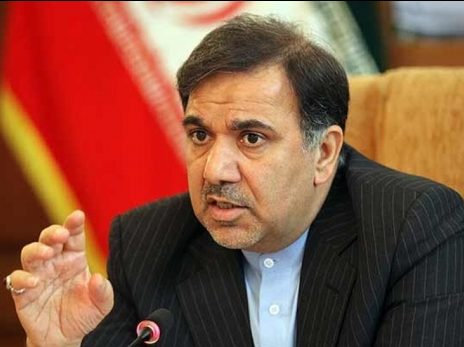
Iran’s minister of roads, housing and urban development has talked about his recent visit to Airbus plane manufacturing plants in southern France.

Abbas Akhoundi says during his visit to the final assembly lines of the Airbus Company in Toulouse on June 24, one of the managers briefed him on the operations at the facilities.

“Why did you choose Toulouse?” Akoundi asked the manager.

“The reason to choose Toulouse was that this place was out of the German bombers’ reach during the World War II. But now, France, Germany and other countries involved in the war are producing Airbus aircraft as a joint product,” answered the manger.

“I asked myself if we can imagine a day when countries within the domain of the Iranian civilization or Muslim world move to jointly produce wealth rather than remain passive and get involved in wars or bloody conflicts,” the minister wrote on his Instagram account.

“I personally think yes we can, provided that we understand the logic behind joint action,” he wrote.

His visit comes as Airbus and Iran have signed final contracts as well as memoranda of understanding on the sale of over 170 planes to the country.

While under sanctions, Iran was banned from buying new aircraft or spare parts, and often had to use undamaged parts on other airplanes to keep its faulty aircraft up and running.

Accusing Neighbours Not to Resolve Bahrain’s Domestic Woes: Iran

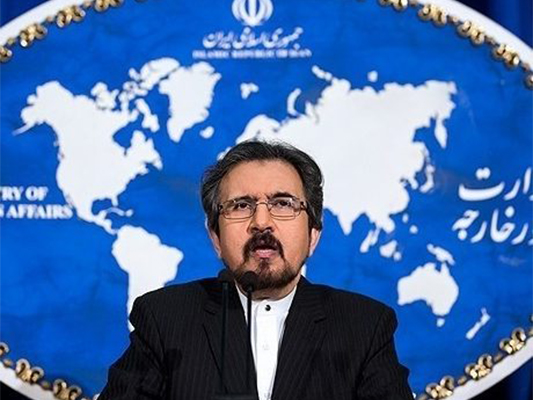
“Every now and then the Bahraini government says it has arrested a number of its nationals under the pretext of countering terrorist cells, and claims they were linked to the Islamic Republic of Iran,” Qassemi said in a statement on Friday.

“The international community is well aware that the 6-year-old domestic crisis in Bahrain is the result of the government’s security approach to the civil and peaceful protests of the majority of its people,” foreign ministry spokesman added.

Qassemi once again urged the Bahraini government to accept the repeated international calls for abandoning the ‘security approach’ to civil protests and start talks with popular opposition leaders instead of continuously pinning the blame on others and accusing neighbours, which is an outdated and ineffective policy.

His remarks came after the Bahraini regime said on Thursday that it has arrested members of a terror cell allegedly linked to Iran.

Bahrain, a close ally of the US in the Persian Gulf region, has been witnessing protests against the ruling Al Khalifa dynasty since early 2011, with Manama using heavy-handed measures in an attempt to crush the demonstrations.

Scores of Bahrainis have been killed and hundreds of others injured and arrested in the ongoing crackdown on the peaceful demonstrations.

New French Gov’t Seeking Broader Ties with Iran: FM Zarif

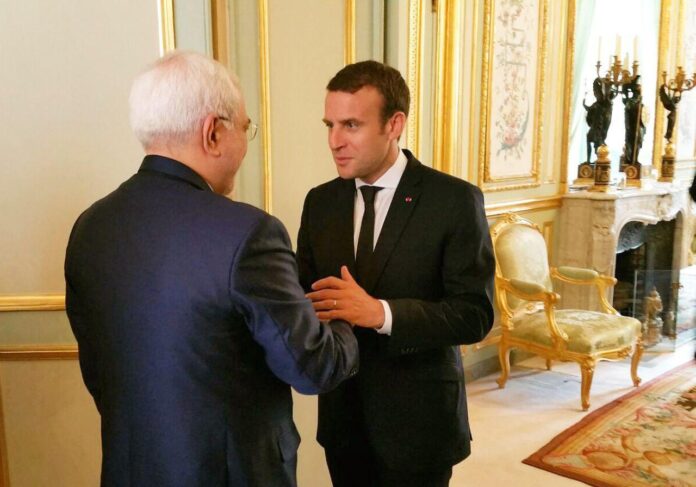
zarif-macron

During the meeting in Élysée Palace, Foreign Minister Mohammad Javad Zarif and French President Emmanuel Macron conferred on the expansion of mutual cooperation in various fields.

The two sides also exchanged views on the most important regional issues and international developments.

Zarif submitted a written message from Iranian President Hassan Rouhani to Macron, which, according to the Iranian minister, contained Rouhani’s views on Tehran-Paris cooperation and regional and international issues.

Speaking to IRIB in Paris, the Iranian foreign minister said during the ‘good’ meeting he had with Macron, the French president underlined his country’s serious resolve to boost economic cooperation with Iran.

“It is crystal clear that the new French administration is interested in further broadening ties with the Islamic Republic, and willing to have active presence in [resolution of] the regional issues,” Zarif noted, expressing Tehran’s preparedness to have close cooperation with Paris in such issues.

Despite different views between Iran and France on certain issues, there are multiple cases on which the two sides can work together, Zarif added.

Iran’s President Congratulates Iraq on Mosul Liberation

Iran Congratulates Sri Lanka on Independence Day

In separate messages to President of Iraq Fuad Masum and the country’s top Shiite cleric Grand Ayatollah Seyed Ali al-Sistani on Friday, the Iranian president hailed recapture of Mosul by the Iraqi military forces.

In the message to his Iraqi counterpart, President Rouhani described the “positive security-creating developments” in Iraq and the victories in the fierce fight against terrorism and extremism as a “result of unwavering efforts by the Iraqi people and military forces” and of the assistance provided by the neighboring countries.

He also expressed confidence that the same status of firm and mighty war against terrorism will restore peace and security to the Middle East and could rid the region’s Muslim people of “the nightmare of war and bloodshed.”

Also in his message to Ayatollah Sistani, the Iranian president said the liberation of Mosul once again reflects the premier position of religious authorities and leadership in Iraq.

“Three years ago, during the days of disappointment and chaos, it was the Hawza (Shiite Muslim seminary) and the Marja’ (religious authorities) that restored the necessary hope and resolve for the battle in the Iraqi society and caused the people and the Army to act against the aggressors,” Rouhani added.

Daesh militants made swift advances in northern and western Iraq over the summer of 2014, after capturing swaths of northern Syria.

Afterwards, a combination of concentrated attacks by the Iraqi military and the volunteer forces, who rushed to take arms after Ayatollah Sistani issued a fatwa calling for the fight against the militants, blunted the edge of Daesh offensive and forced the terrorist group withdraw from much of the areas it had occupied.

After eight months of difficult urban warfare, Iraqi military forces on Thursday captured the Mosul mosque at the heart of the northern city, which Daesh had declared its de facto capital.

Iraqi Prime Minister Haider al-Abadi said the liberation of the site of the symbolic al-Nuri Mosque in Old Mosul is “the declaration of the end of the statelet of Daesh.”

Iraqi authorities expect the long battle for Mosul to end in coming days as remaining Daesh militants are bottled up in just a handful of neighborhoods of the Old City.

Daesh stronghold in Syria’s Raqqa is also close to falling.

Iran Calls for Resolution of Venezuelan Conflict through Dialogue

Speaking on Thursday, Foreign Ministry spokesman Bahram Qassemi called on the Venezuelan government and the opposition to keep calm and act within the framework of law.

“Avoiding violence and turning to dialog in a calm atmosphere without foreign interference is the best way to resolve rifts and serve the interests of all Venezuelan people,” Qassemi said.

The Islamic Republic stresses the strong bonds of friendship between the Iranian and Venezuelan nations and governments, while condemning the recent attack on the country’s Supreme Court and the Interior Ministry, he added.

“The Islamic Republic of Iran believes that such illegal and violent acts against legal and legitimate bodies and structures not only complicate the situation in the country but toughens the process to reach an agreement and settle issues through dialogue and negotiation,” Qassemi pointed out.

Venezuela has been the scene of intense anti-government protests since early April. Clashes between security forces and demonstrators have left at least 75 people dead.

On Tuesday, a Venezuelan police helicopter strafed the Supreme Court and the Interior Ministry.

A police officer identified himself as Oscar Perez in a video posted on the social media platform Instagram, saying that he had piloted the stolen chopper to attack what he called a “criminal government.”

Venezuela’s President Nicolas Maduro denounced the incident as a terror attack, saying it could have caused dozens of deaths.

“Sooner rather than later, we are going to capture the helicopter and those behind this armed terrorist attack against the institutions of the country,” Maduro said.

Venezuelan demonstrators are demanding general elections, freedom for hundreds of jailed opposition activists and measures to alleviate the country’s economic crisis.

Maduro accuses the protesters of seeking a coup against him with the US government’s support.

Police Seize 62kg of Opium in Northeastern Iran

Two provincial teams of drug control forces have seized 62kg of opium in a residential unit and a car in Khorasan Razavi Province in northeastern Iran after armed operations.

The deputy head of Mashhad’s Islamic Revolution Prosecutor’s Office, Judge Mahdi Khodabakhshi, said while on patrol, the anti-narcotic forces of the province became suspicious of a car and ordered the driver to pull the car over.

“Upon seeing the forces, the young male driver attempted to escape. The forces began chasing him. Having learnt that the driver has ignored their warning to stop the car, they shot a few bullets in the air. At hearing the sound of the bullets the driver pulled over the car and handed himself in.”

He said after inspecting the car, the forces found 25kg of opium smartly hidden inside.

Khodabakhshi added another team of the province’s anti-drug police identified an opium distribution centre in Mashhad and, after inspecting the place, discovered 37kg of narcotics and arrested two of the city’s famous drug distributors.

Why Iran FM’s Tour of European States Matters

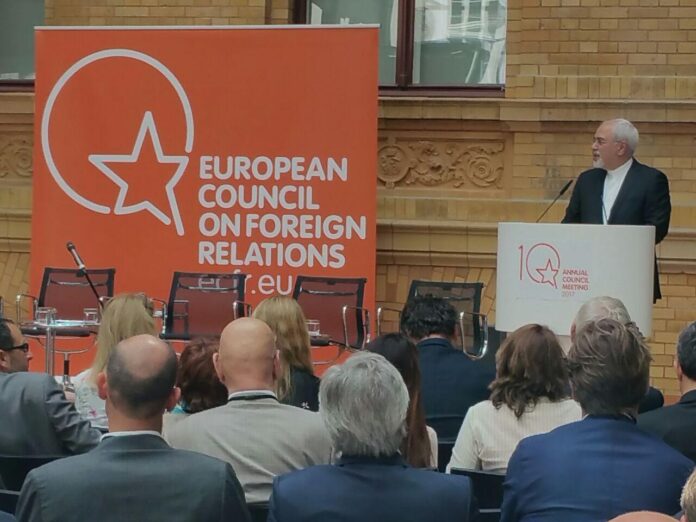
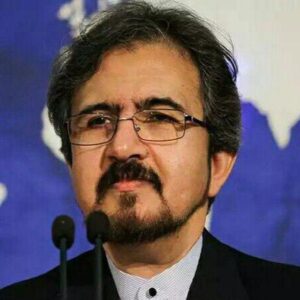
Foreign Ministry Spokesman Bahram Qassemi has elaborated on the great importance of Iranian Foreign Minister Mohammad Javad Zarif’s tour of European countries.

“As you know well, Iran has had long-time and historical ties with the three major European countries, Germany, Italy, and France,” Qassemi said in an interview with IRNA.

“The ties are multilateral and established at different levels. They are not limited to politics or necessarily to economy. The three countries rank among the top European countries by different sets of indicators.”

“Meanwhile, the countries have never had any negative record in or colonial relations with Iran,” he said, adding the Islamic Republic’s relations with Paris, Berlin, and Rome have been based on reciprocal respect as well as commitment to the principle of non-interference.

It goes without saying that Iran has established different relations with each of the major countries, the spokesman added.

“Iran has had economic, commercial and industrial relations with these countries, with the industrial and economic leaders of both sides fully aware of each other and their capacities based on a practical experience,” he noted.

Qassemi went on saying that Germany, France and Italy were among the first founding states of the European Economic Community (EEC) and the European Union (EU) years later.

“The countries made considerable efforts to make Europe independent and have had a completely European view of the world,” he added.

As Mediterranean countries, France and Italy have watched more closely the regional developments of the Middle East and North Africa due to their geographical location, proximity to the Middle East, and their historical records which made them more familiar with the region, he noted.

Qassemi referred to the Iranian foreign minister’s European tour, which took him to Berlin, Rome, and Paris, saying the regional tour comes at the current sensitive time after the diplomatic apparatus felt the necessity for reviewing the latest developments in bilateral relations in various fields including politics, economy, commerce, banking, and industry and exploring new ways for expansion of ties in line with the previous talks.

“Before the unjust sanctions imposed by the United Nations Security Council, our country’s trade volume with Germany and Italy stood at about 7 billion dollars each, and our cooperation with these countries was growing at a good level. And today, there are good capacities to once again expand our cooperation,” he said.

On the other hand, Qassemi said, the need is highly felt for attracting these countries’ investments and paving the way for the visit of the trio’s economic leaders to Iran as a prelude to promoting cooperation between the two sides.

“Given their familiarity with Iran and the region, the industrial leaders of the three countries are well aware that Iran is the most stable and secure market in the region with the highest capacities for investment.”

Qassemi went on to say that they are fully aware that the Islamic Republic’s stability and security have not been achieved in return for paying millions of dollars to the world powers.

“Therefore, given the two sides’ knowledge of each other, there is a good capacity to enhance long-term cooperation between them,” he said.

He attached great importance to Zarif’s recent visits to the European countries at this time, and said the sensitive condition of the Middle East requires the regional states to join hands in fight against terrorism.

He said terrorism threatens not only the Middle East but also the Europe, and added, “This requires us at this sensitive time to hold talks and exchange views with the three major European countries.”
Why Iran FM’s Tour of European States MattersAccording to Qassemi, there are other developments which make the Iranian foreign minister’s European tour significant. They include the latest developments in Syria, the necessity of taking steps in the promising path of finding a political solution to the Syrian crisis, the efforts made by Iran, Syria and Turkey during Astana Summits as well as the threats to these efforts.

He referred to the Europe’s interest in the implementation of the Joint Comprehensive Plan of Action as another topic of discussion between Zarif and European officials.

“On the other hand, the European Union is now facing a threatening condition created after the UK exit from the bloc. It is now facing others challenges which we have to get familiar with through talks with the major European states,” he added.

Qassemi said France is the most important leg of Zarif’s regional tour because the foreign minister is set to meet with President Emmanuel Macron who has just recently left behind a significant parliamentary election. “The visit is of great importance for the political analysts,” he said.

“Today, Europe can rely further on an independent, self-sufficient and stable Iran. The country has proved that the region’s stability and security is at the top of its agenda and is ready to establish multilateral relations with all states without any expectation to ensure regional security and stability,” he said.

Qassemi said no multi-billion-dollar deal can bring the region security and stability and added, “Security can only be ensured by relying on the collective will of regional states and making use of their people and resources.”

The spokesman also stressed that, as the US government is challenging all international norms, establishing cooperation with independent European states can contribute to the global security and make it easier to leave behind the current crisis and tough time.

“Other states should have this point in mind that such cooperation is not against any third party,” he noted.

Iranian FM, French Counterpart Meet in Paris

Zarif France

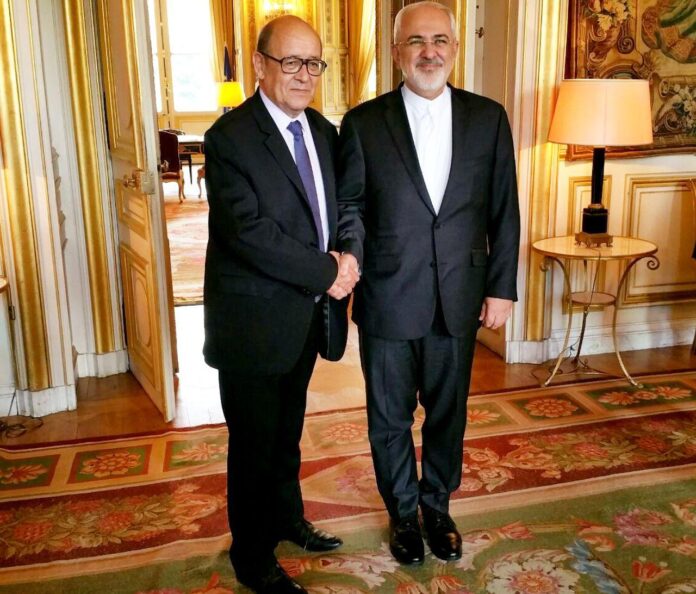
During the meeting held on Thursday night, Zarif hailed France’s role and efforts in the course of nuclear negotiations between Tehran and world powers.

“France played an important role in the achievement and successful implementation of JCPOA,” Zarif said, using the acronym for Joint Comprehensive Plan of Action, the nuclear deal between Iran and the P5+1.

The Iranian top diplomat also pointed to a recent report by the International Atomic Energy Agency (IAEA), which once again confirmed Iran’s full compliance with the nuclear deal, and stressed that the implementation of JCPOA is to the benefit of all countries.

Zarif further expressed the Islamic Republic’s willingness to develop its ties with France, particularly in the economic field.

The required capacities are available for Tehran-Paris cooperation, especially in the field of production and job creation, including the export of joint products from Iran to third countries, the Iranian foreign minister noted.

Zarif also urged that French banks play a more active role in their financial cooperation with Tehran, and certain banking restrictions are removed.

Le Drian, for his part, referred to France’s support for the nuclear deal, and stressed that different means have been used for the success of the JCPOA.

During the meeting, Zarif and Le Drian also discussed ways to deepen and promote bilateral relations, and exchanged views on latest regional issues including the developments in Syria, Iraq, and Persian Gulf littoral states.

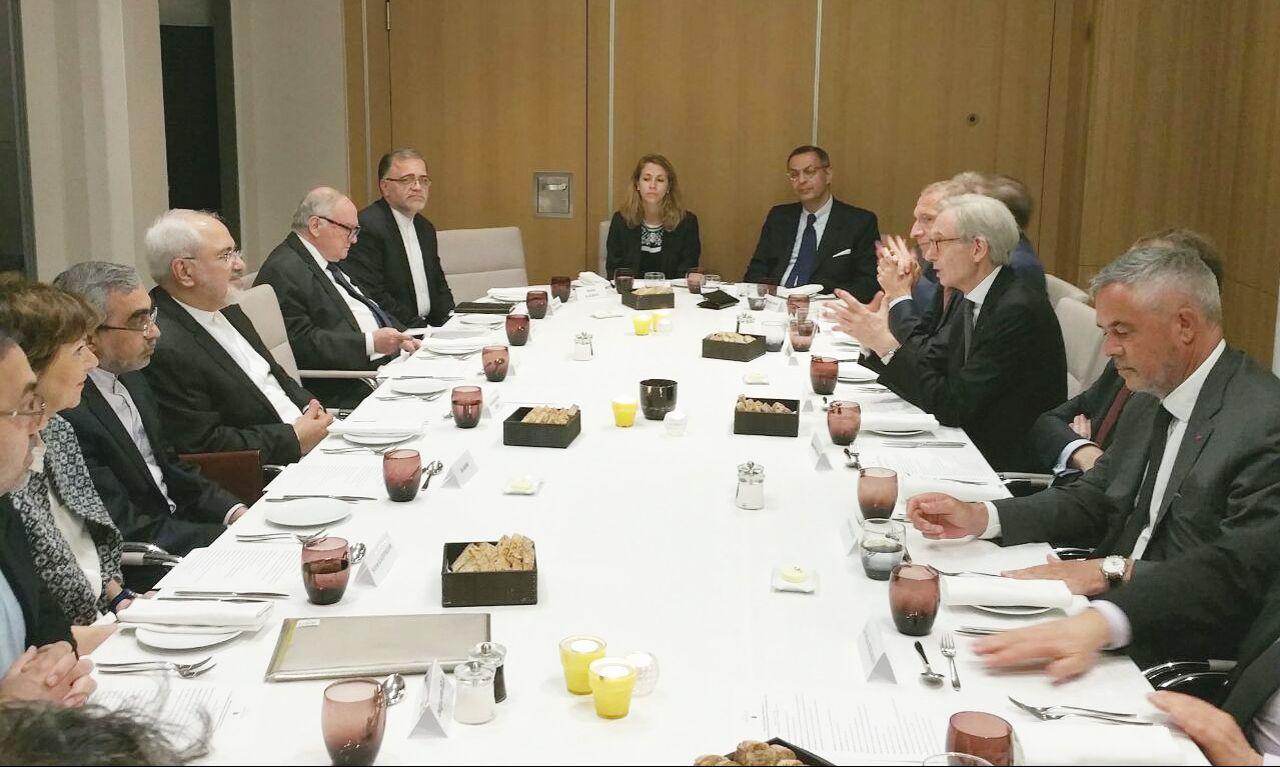
After his meeting with the French foreign minister, Zarif took part in an official dinner attended by a group of well-known French thinkers, analysts, and senior journalists.

Zarif France

Iran MP Warns of Crushing Response to Nat’l Security Threats 

Iran MP Warns of Crushing Response to Nat’l Security Threats

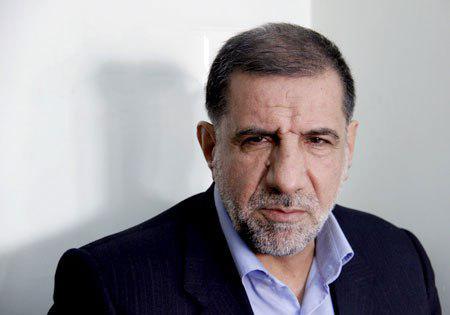
Esmaeil Kowsari, the chairman of the Parliament’s Defence Commission, said the Islamic Republic will firmly deal with any threats against its national security.

“The Islamic Republic of Iran will never start a war, but will not allow terrorists and their supporters to disrupt the security of the people and the country,” he said, according to a Farsi report by Mashregh News.

He said the firing of six missiles by the Islamic Revolution Guards Corps (IRGC) at terrorists’ headquarters 650 kilometres away was a minor response to the recent terrorist attack in Tehran.

“Terrorists made a big mistake on June 7 this year, and as we had announced before, we made them rue the day,” he said.

The MP said terrorists should know that they will receive a crushing response if they want to take any action against Iran.

He noted Iran’s missile attack on terrorists’ positions in Syria’s Deir ez-Zor was a small response by Iran, and added Takfiri terrorists will receive more deadly blows if they make the slightest move against Iran’s national security.

He said Iran’s military and deterrence power is not like that of Iraq, Syria, Afghanistan and Yemen, and added Tehran will not condone the enemy’s “folly.”

Iran Willing to Help Reconcile Two Koreas: Larijani

Larijani10

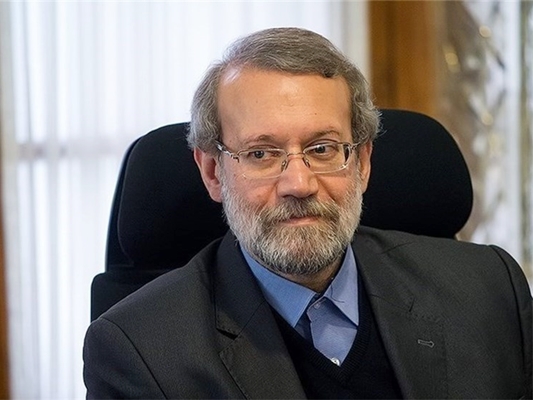
During a visit to the South Korean capital, Iranian Parliament Speaker Ali Larijani said the Islamic Republic supports dialogue between Seoul and Pyongyang, and is willing to use its ties with North Korea to help improve relations between the two Koreas.
According to South Korea’s Yonhap News Agency, addressing Seoul-based reporters, Larijani added, “We [Iran] maintain that we should use our bilateral relations [with North Korea] to resolve the problems [between North Korea and South Korea]. In case we are given this opportunity, we will use our capacities and capabilities to improve relations between the two Koreas.”
He said the military actions by the two Koreas could lead to a military confrontation between them, while the two sides should prepare the grounds for holding political dialogue.
The Iranian Parliament speaker said Iran’s foreign policy is based on working out peaceful solutions to any external problem and issue.
Commenting on his negotiations with South Korean officials, he noted, “In the talks I held with the South Korean Prime Minister [Lee Nak-yeon] and speaker of the National Assembly [Kang Chang-hee], I felt that there is diversity in [two sides’] investment activities. In some fields, the negotiations on expanding cooperation became serious.”
He expressed optimism that in the future, more opportunities would be created for boosting joint investment and employment.
Although establishing good diplomatic relations between governments is important, good results can be obtained if parliaments foster close relationship with each other, he added.
Larijani has travelled to Seoul to attend the Meeting of Speakers of Eurasian Countries’ Parliaments, which wrapped up on Wednesday (June 28).