Friday, December 26, 2025
Home Blog Page 3975

Iran to Provide Social Security for Foreign Nationals

Refugees in Iran

Foreign nationals and refugees who have a work permit and are residing inside the country will be covered by the Social Security Organisation and can benefit from pension payment, blood money coverage and disablement benefits, said the director general of foreign nationals’ affairs at Social Security Organisation Hossein Joudaki.

“Most foreign residents who have been in Iran for more than 20 years are not currently eligible for any benefits since they have not been insured all these years,” he noted, according to a report by Financial Tribune.

He regretted the fact that Iran has not been able to benefit from foreign residents– most of whom are Afghans and Iraqis– in line with national interests despite three decades of their presence in Iran.

“5,000-Year-Old Skull Reveals Iran’s Medical Advances”

5,000-Year-Old Skull Reveals Iran’s Medical Advances

The skull of a 13-year-old girl was dug out during archaeological excavations in Sistan and Baluchestan province in 1977. It was found among the remains of 13 people in a mass grave dating back to 4,800 years ago.

“5,000-Year-Old Skull Reveals Iran’s Medical Advances”According to a Farsi report by Mehr, the right part of the skull, kept at the Tehran Museum of Medical History, bears the mark of a deep triangular incision. Archaeologists’ observations as well as the research conducted by anthropologists show a surgery had been carried out on the skull to treat hydrocephalus.

After the skull was discovered and studied and some questions were answered, Seyyed Mansour Seyyed Sajjadi wrote a book titled “A Compilation of Articles on Burnt City”. The book is a compilation of papers by Hossein Sarhadi, Rouhollah Shirazi and Hossein Moradi.

5,000-Year-Old Skull Reveals Iran’s Medical Advances“Initial studies on the skull revealed it belonged to a female person, estimated to have been 18 years old with a crack on the right side of the bones of the mandible. The skull was studied again whereupon the definite age of the owner was determined to be 13, plus or minus 6 to 9 months,” reads part of the book which concerns the results of the study.

In terms of size, the skull is rather big, mostly because its central part had grown beyond the normal size on both sides. Also it was observed that the left side of the skull at the back was bigger than the right side.

However, the right part of the skull in the front was protruding compared to the left side. So, the face seems normal, but she had an extraordinarily large skull. The height, though, is normal.

The skull, on which an operation had been performed, is one of the key archaeological discoveries in the field of medical history. The skull belonged to a girl between 11 and 12 years of age. She survived at least a few months after the surgery before her death. Archaeologists have not yet found out the reason for the girl’s death. It is not clear whether she died of post-surgery infection or something else.

Of course, archaeologists have studied the other human remains found in the mass grave in Burnt City. Studies conducted on 110 skeletons have revealed that the women aged between 20 and 25 years old. Therefore, the death of a person between 13 and 14 years old in the community of Burnt City was not considered an unusual phenomenon.

It is one of the wonders of the Iranian medical history that physicians in Burnt City knew about this disease as well as its causes and treatment methods some 5,000 years ago. The skull is now on display at the Tehran Museum of Medical History.

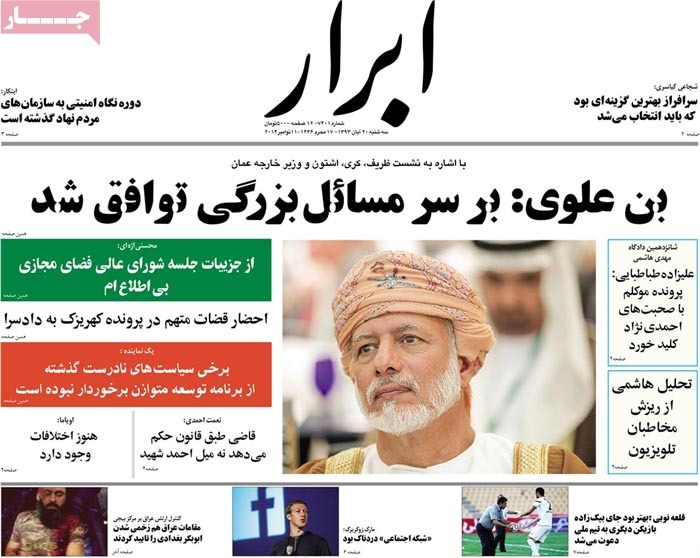
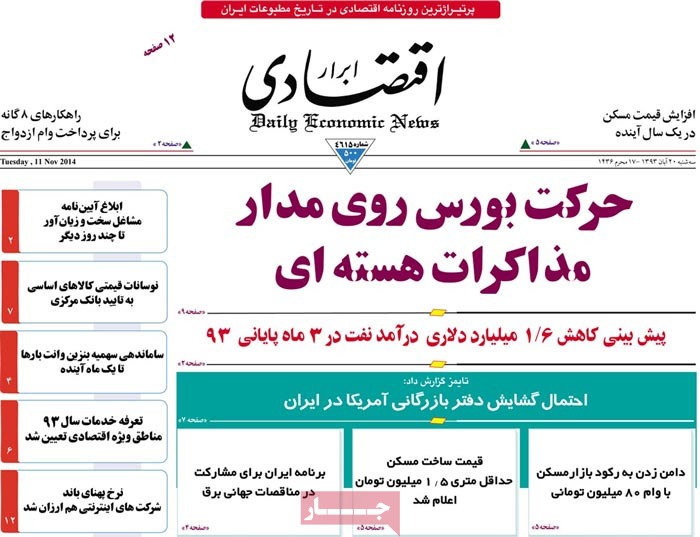
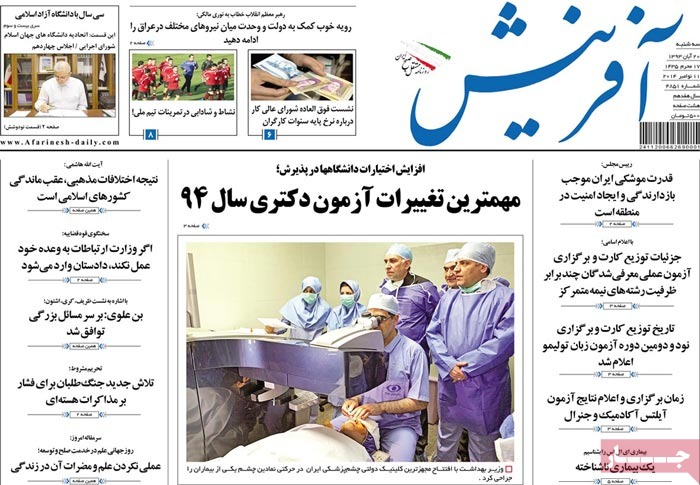
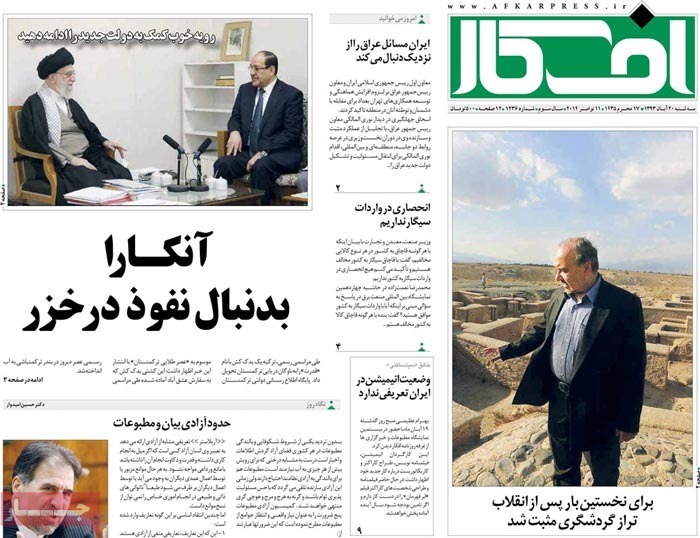
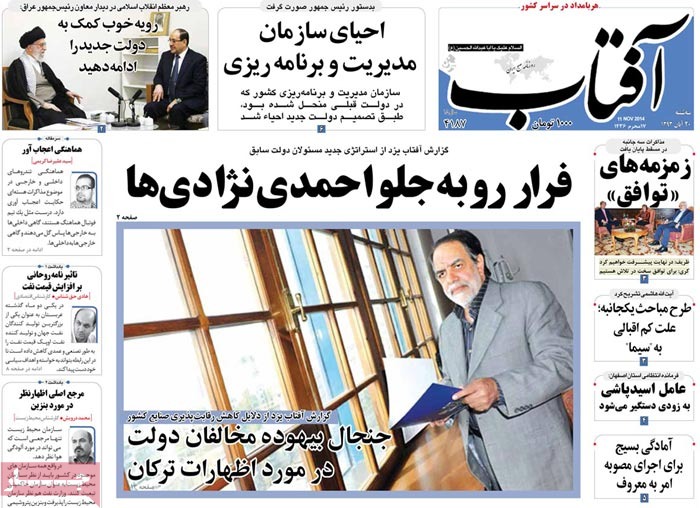
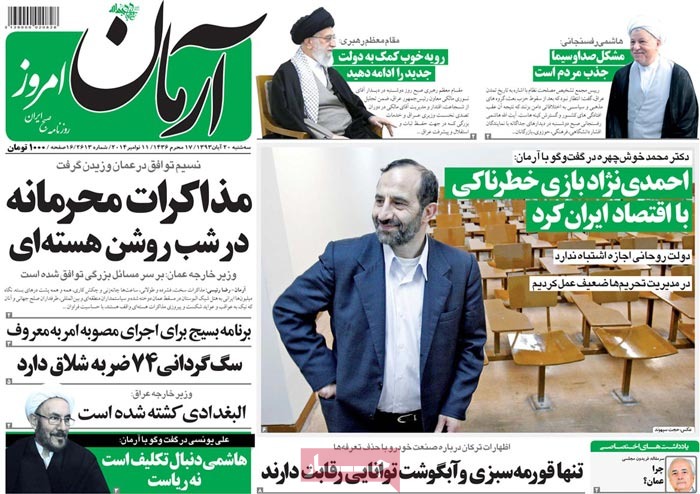
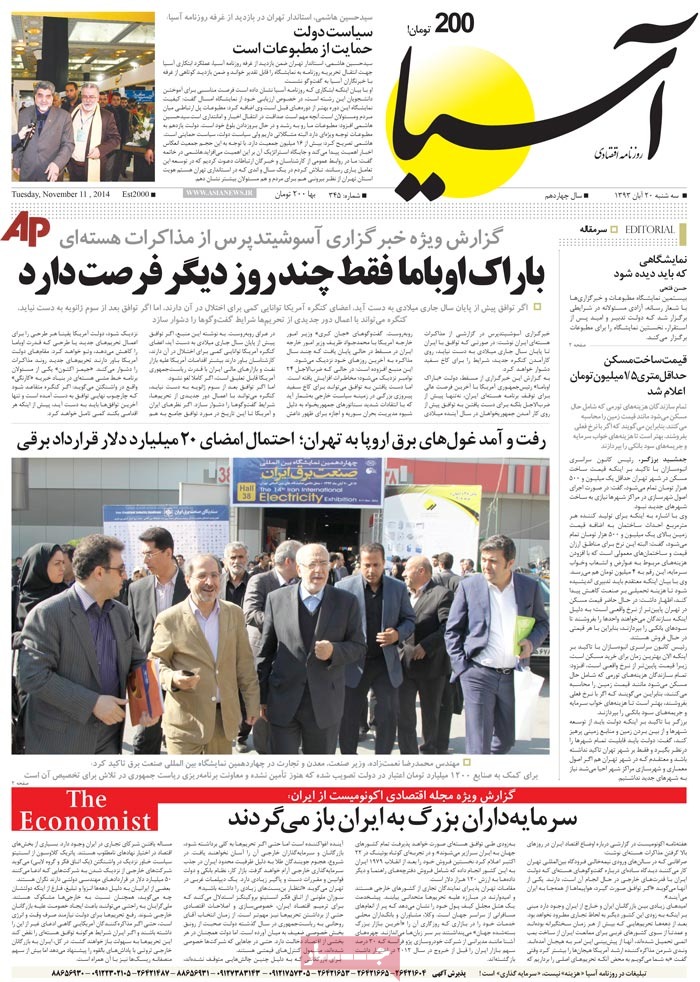
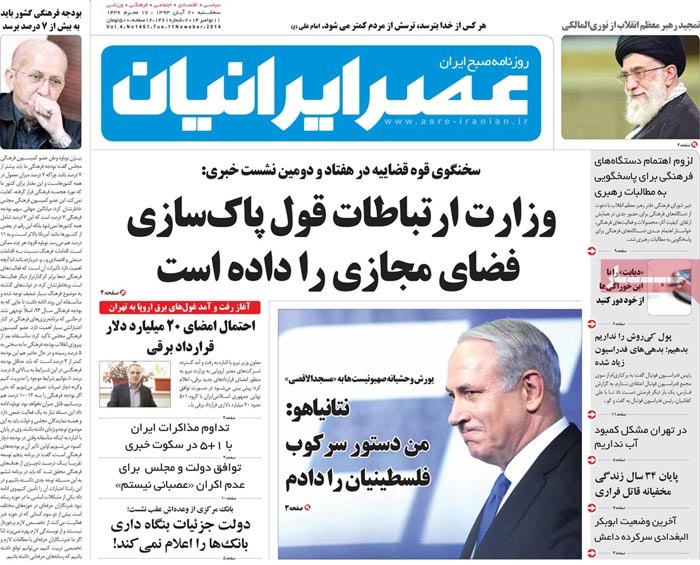
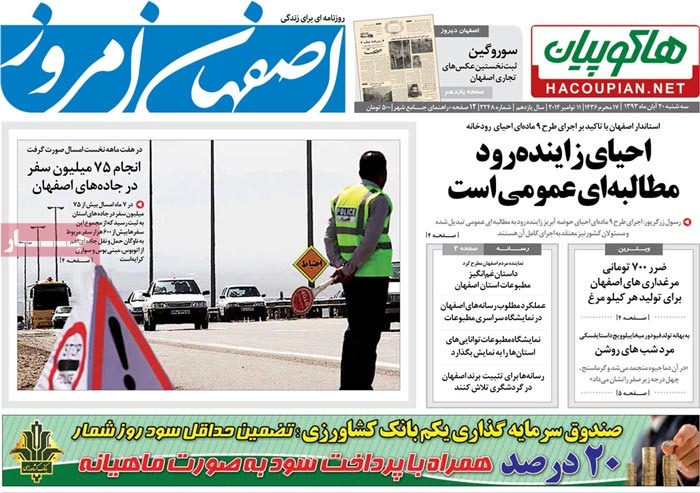
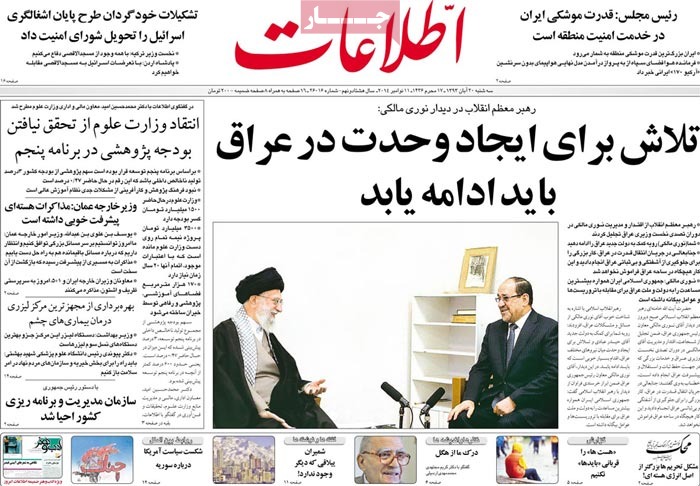
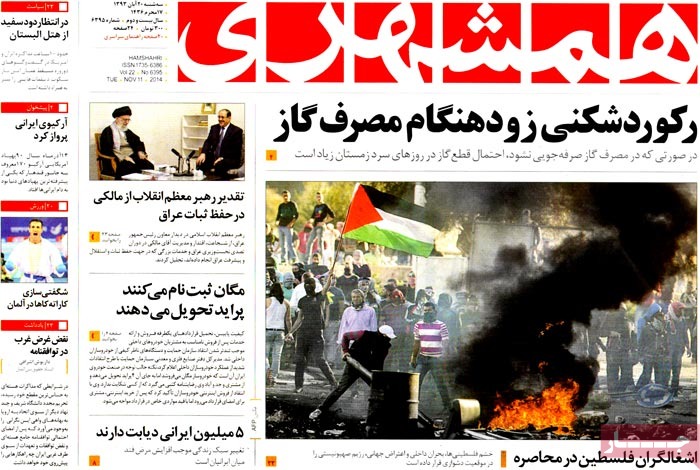
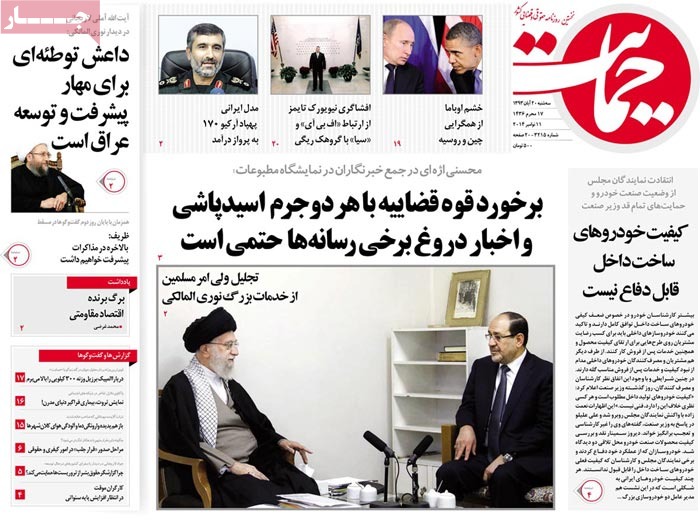
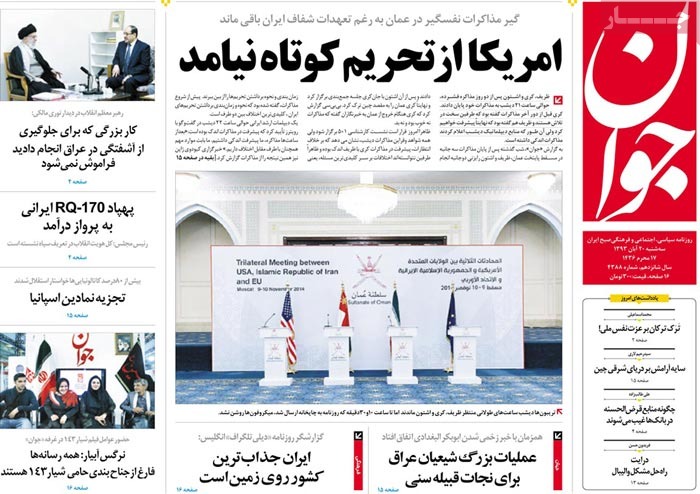
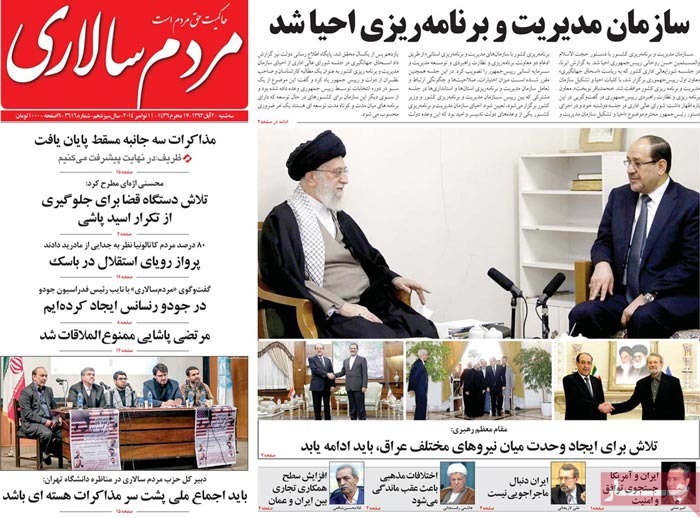
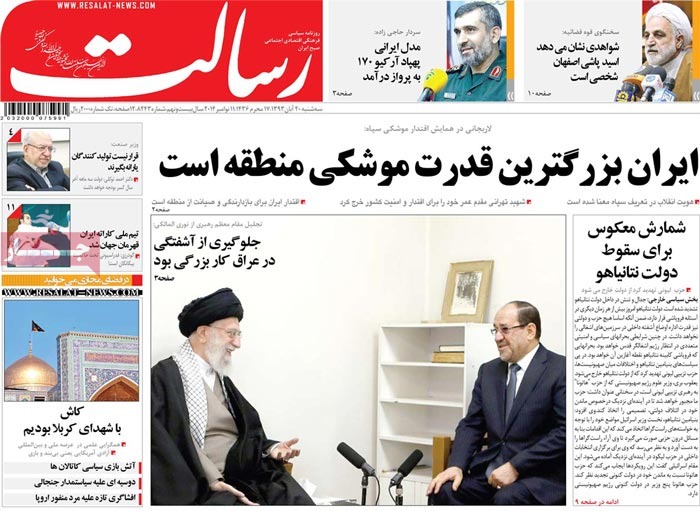
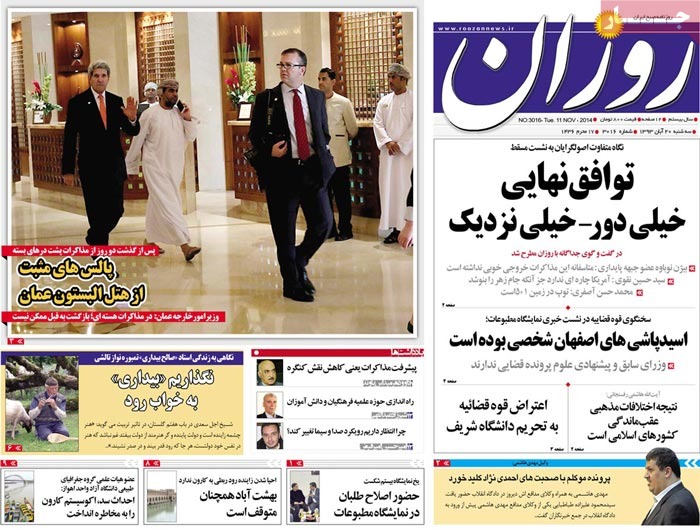
A Look at Iranian Newspaper Front Pages on April 13

The top story today was the former president Mahmoud Ahmadinejad’s unexpected move to register to run for Iran’s presidency. Most reformist and moderate newspapers covered the surprising move, but major conservative papers decided to ignore it on their front pages.

Many newspapers also covered the other unusual candidates who are applying for Iran’s presidency in the absence of rules that prevent ordinary people from running.

The meeting between the US Secretary of State and Russian Foreign Minister in Moscow and their talks on the recent US strike on Syria also received great coverage.

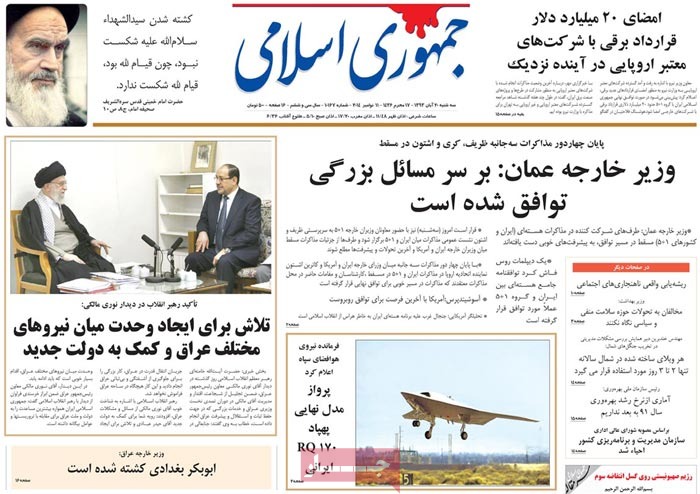
The above issues, as well as many more, are highlighted in the following headlines and top stories:


Aftab-e Yazd:

1- Ahmadinejad’s Shock: Despite Earlier Promises, Ex-President Registers for Presidency

A Look at Iranian Newspaper Front Pages on April 13


Amin:

1- Unusual Volunteers Register to Run for Iran President on Second Day


A Look at Iranian Newspaper Front Pages on April 13


Arman-e Emrooz:

1- Suspicious Sedition: Conservatives’ Reaction to Ahmadinejad’s Surprising Move

A Look at Iranian Newspaper Front Pages on April 13


Ebtekar:

1- Ahmadinejad’s Game

2- Moscow’s Dilemma: Which One to Choose, Tehran or Washington?

A Look at Iranian Newspaper Front Pages on April 13


Emtiaz:

1- Saving Lake Urmia’s Life

A Look at Iranian Newspaper Front Pages on April 13


Etemad:

1- Six Scenarios of Ahmadinejad’s Candidacy

  • Shock in Second Day: Ahmadinejad Runs for President

2- Iran’s Condition for Boeing

A Look at Iranian Newspaper Front Pages on April 13


Ettela’at:

1- G7 Calls for Immediate Cessation of Saudi Military Aggression on Yemen

2- Rouhani’s Gov’t Adds $40bn to National Development Fund Reserves

3- Biggest Projects in History of Iran’s Oil Industry to Be Unveiled Next Week

4- Iran Leader’s 10-Billion-Rial [$270,000] Aid to Quake-Hit People in Khorasan

A Look at Iranian Newspaper Front Pages on April 13


Hemayat:

1- Judiciary Spokesman: Telegram Administrators Arrested on Security, Ethical Charges

2- Prosecutor General: HQs Formed to Prevent Electoral Offenses

3- Europe Making Instrumental Use of Human Rights: Iran

A Look at Iranian Newspaper Front Pages on April 13


Iran:

1- Sharp Decrease in Contraband Goods from $25bn to $12bn

2- Lavrov: US Missile Attack on Syria Shouldn’t Be Repeated

  • Russia’s Serious Warning to Trump’s Secretary of State

3- Ahmadinejad Will Be Disqualified from Running: Conservative Analyst


A Look at Iranian Newspaper Front Pages on April 13


Javan:

1- Trump: We Have No Plan to Enter Syria War [in reaction to Russia’s threatening rhetoric]

2- Iran Army’s Ground Force to Adopt Aggressive, Rapid Reaction Approach

A Look at Iranian Newspaper Front Pages on April 13


Jomhouri Eslami:

1- Britain’s Role in Khan Shaykhun Chemical Attack

2- 287 Candidates Have So Far Registered to Run for President

3- CEO: ATR Ready to Supply Iran with Planes It Needs

4- Thousands of Britons Call on London to Apologize to Palestine

A Look at Iranian Newspaper Front Pages on April 13


Seda-ye Eslahat:

1- Ahmadinejad and His Allies Commit Political Suicide!

2- VP: I’ve Never Heard Candidates Are Disqualified Just for Being a Woman


A Look at Iranian Newspaper Front Pages on April 13


Siasat-e Rooz:

1- Aspiring for Power [Ahmadinejad’s registration]

2- No More Attack [Russia to US over Syria strike]

A Look at Iranian Newspaper Front Pages on April 13

EU Turning Blind Eye to Realities of Civil Rights in Iran: Spokesman

The Islamic Republic of Iran condemns the EU’s “double standards and political approaches” and its “abuse of human rights as a tool,” Foreign Ministry Spokesman Bahram Qassemi said on Wednesday.

He added that the EU’s extension of “unilateral, illegitimate sanctions [against Iran] under the pretext of human rights violations” was a failed, ineffective policy.

On Tuesday, the European Union extended sanctions against Iran for alleged human rights violations until April 2018.

The extended EU sanctions include a travel ban and asset freeze against 82 Iranian people and one entity as well as a ban on the bloc’s exports of certain equipment to Iran.

“Unfortunately, the EU has proved to lack a true and realistic understanding of the human rights situation in the Islamic Republic of Iran, and by adopting politically-motivated approaches it has turned a blind eye to civil rights realities in the religious, democratic establishment of Iran,” Qassemi added.

He said Iran would continue to promote and safeguard civil rights based on Islamic tenets and the country’s constitution despite the propaganda campaign against the Islamic Republic.

Iran’s Missile Tests Not Related to JCPOA, UNSC Resolution

qadr-ballistic-missile

“The Islamic Republic of Iran emphasizes that its defense missile program is in no way related to the Joint Comprehensive Plan of Action (JCPOA) and the nature and design of Iran’s ballistic missiles are such that the tests do not contravene UN Security Council’s Resolution 2231,” Iranian Foreign Ministry Spokesman Bahram Qassemi said in a statement late on Wednesday.

Resolution 2231 was adopted on July 20, 2015 to endorse the JCPOA.

Obviously, the Islamic Republic will continue to enhance its defense capacities to safeguard its national security and boost regional peace and stability regardless of how Western parties perceive the country’s defense program.

Qassemi’s remarks came in response to a recent statement by the G7 countries, which claimed that Iran’s missile tests were “inconsistent” with Resolution 2231.

The International Atomic Energy Agency (IAEA) has repeatedly confirmed Iran’s compliance with its commitments under the JCPOA, he continued, stressing the need for the commitment of all parties to implement the agreement to help guarantee the sustainability of the deal.

Tehran and the Group 5+1 (Russia, China, the US, Britain, France, and Germany) reached the deal on July 14, 2015 and started implementing it on January 16, 2016.

The comprehensive nuclear deal terminated all nuclear-related sanctions imposed on Iran.

Tehran has repeatedly stated that its military might is defensive in nature and poses no threat to other countries.

136 Foreign Publishers to Attend Tehran Int’l Book Fair

A total of 136 foreign publishers will take part in the 30th Tehran International Book Fair which is slated to be held in the Iranian capital during May 3-13, with Italy participating as the special guest.

Addressing a press conference, Davoud Mousaei, the director of the foreign publishers’ committee of the 30th Tehran International Book Fair, said so far, 136 foreign (46 Latin and 90 Arabic) publishers have formally registered to take part in the expo

According to a report by IFP, the number of foreign publishers due to take part in the upcoming edition of the expo has witnessed an increase compared to that of those who participated in the previous one, he added.

Mousaei said a total of 126,000 foreign books will be showcased at the exhibition, of which 93,000 are in Latin languages and 33,000 in Arabic.

The foreign publishers are from the US, the UK, France, the Netherlands, China, South Korea, Egypt, Lebanon, Iraq, Pakistan and Jordan, he added.

“We have decided to help Arab publishers have a more significant presence in the upcoming edition of the fair by allowing them to hold any kind of conferences they desire on the sidelines of the expo within a two-day period.”

Commenting on the international status of the Tehran International Book Fair at the same conference, Amir-Masoud Shahramnia, a member of the Board of Directors of the Iran Cultural Fairs Institute, stressed that foreign publishers have a great thirst for taking part in the show.

He said Italy will participate in the upcoming event as the special guest, adding Afghanistan, Oman and Russia were the special guests of the 27th, 28th,and 29th editions of the annual fair, respectively.

Shahramnia noted that, “[In the 27th edition] Iran covered all the costs of Afghanistan’s participation in the book show.However, Italy will meet all the expenses of its participation in the event itself. It has even sought Iranian artists’ assistance to construct and design its pavilions.”

The book fair will be held at the International Fairground of Shahr-e Aftab (Sun City) located south of Tehran.

No Surprise If Iran’s Rouhani is Killed Ahead of Election: Israel

Rouhani1

In comments made to Israel’s Yedioth Ahronoth newspaper, Lieberman appeared to allege that there are deep internal rivalries within the Iranian ruling system.

Lieberman, who is one of the most powerful political figures in Israel, was commenting on the murder of top Hamas militant Mazen Faqha near his home in Gaza on March 24. Hamas blamed his death on Israel’s spy agency, Mossad, but Lieberman said the militant group was responsible.

“We can say with certainty that it was an internal killing,” the minister said, according to Newsweek. “I wouldn’t be surprised if during the Iranian election on May 19, somebody assassinates the president of Iran, Hassan Rouhani.”

Two-Millennia-Old Underground City Unearthed in Iran

The city, located 400 km west of Tehran—provisionally dubbed the Underground City of Samen, is “under the modern city of Samen,” said Ali Khaksar, the head of the provincial office of Iran’s Cultural Heritage, Handicrafts and Tourism Organization (ICHTO).

Speaking to Khabar Online, the official said the ancient city is believed to be around 2,000 years old, built sometime in the transition years between the fall of the Achaemenid Empire (550-330 BC) and rise of the Parthian Empire (247 BC-224 AD).

Excavations began in 2005 and have continued to this day, according to Financial Tribune.

The city is made up of interlinked tunnels comprising 25 rooms (which served as houses). Some 60 complete skeletons have been dug up from nine rooms.

Here are IRNA’s photos of the mysterious underground city:

ISIS Chops Off Ears of 33 Disobedient Elements

ISIS Chops Off Ears of 33 Disobedient Elements

The terror group removed one ear from 33 soldiers caught fleeing the battle in Mosul, their last stronghold in Iraq, a source told Alsumaria News.

The men had been imprisoned before the punishment was carried out, and were told the other ear would be removed if they tried to flee a second time, Daily Mail reported.

Typically deserters from the extremist group are executed, but the source said the terrorists are having to opt for less extreme punishments because they are running out of fighters.

ISIS once controlled around 40 per cent of Iraq, but that has now been whittled down to just 7 per cent, according to joint operations commander Brigadier General Yahya Rasool.

“ISIS Seeks to Trigger Sectarian Strife in Egypt”

ISIS Seeks to Trigger Sectarian Strife in Egypt

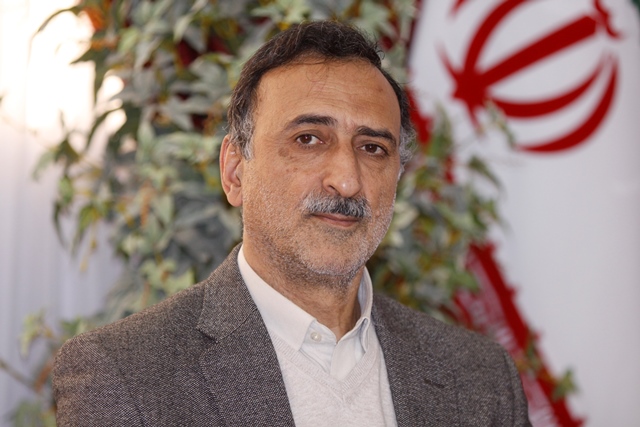
In a Farsi interview with ICANA, Iranian lawmaker Dehqan Firoozabadi touched upon the recent explosions in Egypt and expressed his views on the objectives pursued by the ISIS terror group in the country.

He said the terrorist attacks in Egypt and the killing of Copts in the country show terrorism knows no boundaries or nationalities.

“Supporters of the ISIS Takfiri terrorists are the future targets of ISIS, and should wait for the consequences of their actions,” said the MP, who is the vice-chairman of the Parliament’s National Security and Foreign Policy Commission.

The terror attacks on churches in the cities of Tanta and Alexandria have intelligence and operational complexities, he noted.

He said Egypt’s views on the Syria situation and war on terror are different from Saudi Arabia’s.

“The masterminds of the terror attacks in Egypt seek to take revenge and trigger conflicts between Copts and Muslims in order to keep Cairo from playing a role in the Middle East,” said the lawmaker.

He also referred to a statement by the Lebanese Hezbollah Resistance Movement which condemns the killing of Copts in Egypt.

“Cairo believes the issue of the Syria war should be settled through dialogue,” he said.

“If Egypt is gripped by security crises, that will increase Saudi Arabia’s maneuverability and make Cairo lose its influence in the Syria war,” added the parliamentarian.

He said insecurity in Egypt will result in an economic slowdown and increase Cairo’s dependence on Riyadh’s economic aid.