Monday, December 22, 2025
Home Blog Page 39

Iran’s security chief extends gratitude to Pakistan for support during US-Israel war

During a meeting with Pakistani Prime Minister Shehbaz Sharif, Larijani lauded Pakistan for “responsibly standing in Iran’s defense,” calling the position a reflection of the “firm and principled thinking of the Pakistani people.”

According to a statement by Pakistan’s government, Larijani and Sharif emphasized the historic and brotherly ties between Iran and Pakistan, calling for deeper cooperation in multiple fields.

Sharif praised Iran’s principled regional positions and expressed gratitude for Tehran’s solidarity with Pakistan.

It was agreed that a delegation led by Foreign Minister Mohammad Ishaq Dar would soon travel to Iran to expand cooperation, particularly in agriculture and communications.

The official, who was visiting Pakistan, said he conveyed the greetings of Leader of the Islamic Revolution Ayatollah Seyyed Ali Khamenei to the people of Pakistan.

Earlier, he held separate meetings with President Asif Ali Zardari, and National Assembly Speaker Sardar Ayaz Sadiq.

Iran raises gasoline prices

Petrol Station

A cabinet notice issued Tuesday, outlining decisions from its November 5 session, announced the free-market gasoline price will rise by 20,000 rials to 50,000 rials per liter (USD 0.044) starting December 6.

That comes as most motorists will continue to access fuel under a two-tier system, paying 15,000 rials per liter for the first 60 liters each month and 30,000 rials per liter for the next 100 liters, the notice said.

Any consumption above these quotas will be charged at the new 50,000-rial rate, it added.

The government also noted vehicles owned by state institutions, imported cars, and newly registered vehicles will no longer qualify for subsidized gasoline.

The price adjustment comes amid Iran’s efforts to curb fuel smuggling, a problem that has forced the government to spend billions of dollars on gasoline imports each year to prevent domestic shortages.

Estimates indicate more than 30 million liters of gasoline and diesel are smuggled out of the country daily.

Local media reports last week revealed that a convicted fuel smuggler had been ordered to pay a fine of 110 trillion rials (about $100 million) to compensate for losses inflicted on the government.

According to the cabinet directive, the above-quota price may be revised every three months in line with refinery pricing, which forms the basis for the new rate. The 50,000-rial price represents 10% of what the government pays refineries to purchase gasoline.

Hamas hands over remains of another Israeli captive under Gaza ceasefire agreement

A military statement said that the body was transferred to Red Cross teams in central Gaza and was on its way to Israeli forces inside the enclave.

Hamas has already released 20 Israeli captives alive and handed over the remains of 27 out of 28, most of them Israelis, since the ceasefire took effect on Oct. 10. Israel, however, claimed that one of the received bodies did not match any of its listed captives.

Phase one of the ceasefire deal includes the release of Israeli hostages in exchange for Palestinian prisoners. The plan also envisages the rebuilding of Gaza and the establishment of a new governing mechanism without Hamas.

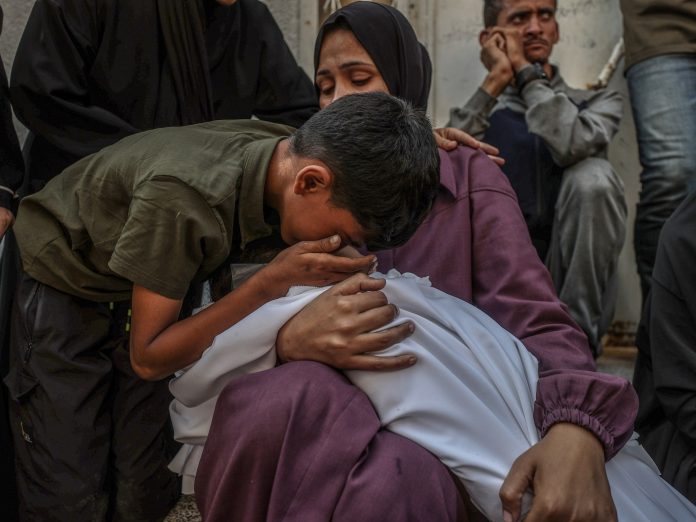
Since October 2023, the Israeli army has killed nearly 70,000 people in Gaza, mostly women and children, and injured more than 170,900 people in a two-year war that has left much of the enclave in ruins.


Israel’s war and restrictions drive Palestinian economy to record collapse: UN

The report by the UN Conference on Trade and Development (UNCTAD) said two years of Israeli military operations and longstanding curbs have pushed the occupied territory into an economic downturn now ranked among the 10 worst collapses recorded globally since 1960.

“Extensive damage to infrastructure, productive assets and public services has reversed decades of socioeconomic progress in the Occupied Palestinian Territory,” it added, referring to the Gaza Strip and the West Bank, including East Jerusalem.

The situation in Gaza constitutes “the most severe economic crisis on record”, it warned.

The publication of the findings comes as Israeli attacks on Gaza continue, despite a six-week ceasefire between Israel and the Palestinian group Hamas.

Israel’s assault began on October 7, 2023, after an attack on southern Israel by fighters from Hamas and other Palestinian groups, during which an estimated 1,200 people were killed and about 250 were taken into Gaza as captives.

In response, Israel unleashed a bombing campaign and tightened its longstanding blockade on Gaza, turning what had already been a 16-year siege into a total stranglehold. Its attacks have killed at least 69,733 people and wounded 170,863, with more than 300 killed since the start of the ceasefire last month.

According to the UNCTAD report, the Palestinian gross domestic product (GDP) had regressed to its 2010 level by the end of last year, while GDP per capita returned to the level seen in 2003, erasing 22 years of development in less than two years.

In Gaza, GDP plunged 83 percent in 2024 compared with the previous year, totalling an 87 percent drop over two years to $362m. GDP per capita plummeted to $161, placing it among the lowest in the world.

The report documented that nearly two decades of Israeli‐imposed blocks on trade, movement and access have generated near-total dependence on external aid, while Israeli attacks have damaged about 174,500 structures in Gaza, propelling the enclave into “utter ruin”.

Meanwhile, the occupied West Bank is also experiencing its most severe economic downturn on record, with movement and access restrictions and the collapse of jobs.

“Across the Occupied Palestinian Territory, the steepest economic contraction on record has wiped out decades of progress,” the report added.

The report says Israel’s withholding of fiscal revenues owed to the Palestinian Authority (PA) has significantly worsened the crisis, severely limiting the government’s ability to pay salaries, maintain services and finance reconstruction efforts.

The PA announced that Israel was withholding $4bn of tax revenues.

UNCTAD estimated that the cost of reconstruction and recovery in Gaza alone will exceed $70bn and called for a comprehensive recovery plan that is backed by coordinated international assistance, the restoration of fiscal transfers and urgent measures to ease constraints on trade, movement and investment.

“Even with substantial aid, recovery to pre-October 2023 GDP levels could take decades,” it noted.

The agency also warned that without immediate, large-scale intervention, the destruction caused by Israel’s war and systemic restrictions will trap the Palestinian economy in a long-term slump.

For any meaningful recovery, UNCTAD said, the ceasefire achieved in October must be durable.

“UNCTAD’s report calls for immediate and substantial intervention by the international community to halt the economic freefall, address the humanitarian crisis, and lay the groundwork for lasting peace and development,” it added.


Russia claims Britain planning smear campaign against Trump

According to the agency, London views the continuation of hostilities as vital to securing multi-billion-dollar weapons contracts that could help revive the struggling British economy. Undermining Trump, who is pushing to end the conflict, would dissuade Washington and protect the UK’s “blood money” profits, the SVR alleged.

“Plans have been concocted to revive former British intelligence officer [Christopher] Steele’s fake ‘dossier’, accusing the head of the White House and his family of having links to Soviet and Russian intelligence services,” the statement claimed.

That document, penned by Steele, a former MI6 officer, in 2016 and reportedly paid for by Hillary Clinton’s presidential campaign, relied on unverified rumors alleging that Trump and members of his family had compromising ties with Moscow.

Although widely used to fuel the ‘Russiagate’ narrative early in Trump’s first presidency, the dossier has since been debunked. The SVR suggested that British operatives may craft a new iteration inspired by the original template rather than attempt to reuse it directly.

Trump’s administration has drafted a proposal for ending the Ukraine conflict. However, Kiev and several European governments strongly oppose it due to its reportedly demanding major concessions from Ukraine. President Volodymyr Zelensky claimed this week that US diplomats had already removed some of the 28 provisions at his government’s request.

Moscow has kept its distance from the American initiative. President Vladimir Putin reiterated that Russia’s military position continues to strengthen and that Moscow intends to achieve its security objectives regardless of whether Kiev accepts Washington’s mediation.

Iranian director protests screening of his film at Israeli festival

In a statement posted on Instagram, Rasoulof said he learned through social media that the film was being shown at the “Nowruz Festival” in the border town of Sderot, near Gaza.

The director said that while the international distribution rights to his film have been licensed to global distributors, he rejects its inclusion in an event hosted in “a place whose politicians have targeted the people of Iran with bombs and missiles.”

“I am deeply angered by the screening of my film in such a place,” he wrote, adding that he considers the decision incompatible with his own moral and political position.

Addressing the festival’s director, Rasoulof said the film was created, “to the best of my ability, to express my hatred and disgust toward oppression and injustice.”

He urged the organizers to “show the same courage in condemning the rulers of the land you live in—whose hands are stained with the blood of so many people.”

Moscow says not received any texts from Washington over Ukraine war

Russia Ukraine War

Reports that the White House had drafted a document outlining a path towards ending Kiev’s hostilities with Russia initially came from the US media, with a Ukrainian MP and Axios later publishing what they said were the full 28 points of the roadmap.

“It was leaked on purpose to fan the media hype,” Lavrov said.

“Those who direct this hype certainly want to undermine Donald Trump’s efforts, to distort the plan according to their wishes.”

He added the diplomatic sabotage appears to be coming from European leaders backing Kiev, particularly French President Emmanuel Macron, who he argued do not have “the best intentions.”

Lavrov stated that Moscow never received any texts from Washington through official channels, but obtained it unofficially. Regardless, Russia will only discuss whatever the US eventually submits, and will do so confidentially, without resorting to “megaphone diplomacy,” the minister continued.

Macron and other Western officials have rejected any agreement that would cross what Kiev proclaimed as its red lines, such as its bid to join NATO, its ability to host foreign troops, or territorial claims.

Lavrov noted that Moscow is willing to discuss “specific wording” of a possible peace deal, but will not compromise on any of the core objectives that President Vladimir Putin outlined to Trump personally during their meeting in Alaska earlier this year. Should “the spirit of Anchorage be erased” from the proposal that the US shares with Russia, “the situation would be radically different,” he added.

Academic boycott of Israel doubles even after Gaza war ends: Report

The report, prepared by the Academic Boycott of Israel Monitoring Team, which was established by the Committee of University Presidents in Tel Aviv, said Israel’s negative image in Europe appears “so deeply entrenched that political moves alone are not enough to shift public perception.”

The report, published by the The Marker, the economic version of the Hebrew daily newspaper Haaretz, noted that the end of the Gaza war did not reduce boycott pressure.

Instead, “the opposite occurred,” with a spike in cases filed by institutions and individual academics, it added.

The team warned that the expanding forms of academic boycott could push Israeli higher education into “dangerous isolation that poses a real strategic threat to its international standing.”

In mid-September, Prime Minister Benjamin Netanyahu acknowledged for the first time that Israel had entered “a kind of isolation,” saying Israel must prepare for a more self-reliant economy.

The number of European universities imposing full academic boycotts on Israeli institutions has increased to 1,000 till November, the report noted.

It also cited new cases of European academics refusing to collaborate with Israeli colleagues and universities.

It said 2025 saw a drop in research grants awarded to Israeli scholars by the EU’s Horizon Europe fund, the main source of scientific research financing for Israel.

The decline is tied to Israeli academics being excluded from international cooperation projects seeking Horizon funding.

According to the report, 57% of boycott cases affect individual researchers, mainly through exclusion from international research groups, while 22% involve institutional boycotts between European and Israeli universities, 7% relate to boycotts imposed by professional associations, and 14% concern the suspension of international programs such as student exchanges and postdoctoral partnerships.

The report concluded that the trend will likely continue, saying the boycott movement “will accompany Israeli academia for a long time and will not ease without major regional and geopolitical changes.”

Since October 2023, the Israeli army has killed nearly 70,000 people in Gaza, mostly women and children, and injured over 170,900 during a two-year war that reduced most of the enclave to rubble.

Accused Executives Moving Capital Abroad. Can they find a Safe Haven for Corruption?

Accused Executives Moving Capital Abroad

Complainants in the case against Iran Tractor Forging Company are breaking their silence. Following a workers’ strike and widespread reports that top executives have fled the country with investors’ funds — allegedly transferring them abroad, including to the United Kingdom — anxiety is growing among small shareholders, workers, and the broader public. After sustained pressure, journalists secured a crucial interview with Mr. Mohammad Reza Al‑Ahmad, CEO of Tadbir Farda‑ye Nik, one of the key plaintiffs. Below is an edited summary of his testimony.

Allegations of Funds Misuse and Fabricated Documents

According to Al‑Ahmad, the forging company and its major shareholder, Stahls Steel Middle East, received substantial investments from Tadbir Farda‑ye Nik and other backers. These funds were ostensibly earmarked for upgrading production lines, importing new machinery, and purchasing raw materials. The promised goal: industrial growth, job creation, and fair returns for investors.

However, Al‑Ahmad says that by late 2024, red flags emerged. Documents previously provided, such as import orders, pro forma invoices, and customs release certificates, came under serious doubt. He alleges that much of this paperwork was falsified. When peaceable negotiations failed, plaintiffs filed a criminal complaint in Tabriz, triggering a judicial investigation. According to Al‑Ahmad, customs officials found that documents had been manipulated: machinery descriptions forged, values massively inflated, and many submitted papers were simply not genuine.

Missing Funds, Hidden Liabilities

Plaintiffs argue that despite transferring funds via official banking channels — with receipts to prove it — their investments are nowhere to be found in the company’s audited accounts. Instead, Al‑Ahmad says, the monies are buried under ambiguous line items like “shareholder contributions.” Whether this is due to auditor error, intentional concealment, or something more sinister remains unclear.

A Bogus Consortium Bid

Al‑Ahmad also describes a scheme in which the forging company claimed it would join a consortium to bid on a 77% stake in Iran Diesel Engine Manufacturing (IDEM), through an auction held by SAIPA. Investors were encouraged to transfer large sums into accounts controlled by the forging company, supported by what appeared to be official SAIPA documentation confirming the transaction.

However, according to Al‑Ahmad, further inquiry revealed that the forging company never actually participated in the auction, and the SAIPA confirmation letters were forgeries. He says that judicial authorities are now investigating a network of fraudulent documents.

Who’s Behind the Forgery? Ownership and Control

Public records — including Tadbir Farda‑ye Nik’s own statements — suggest a tightly controlled ownership structure. Around half of the forging company’s shares reportedly belong to Mr. Majid Bavili Tabrizi, while over 20% are held by Stahls Steel Middle East. Stahls itself, according to Al‑Ahmad, is owned by Majid Bavili Tabrizi and his two sons, Payam Bavili Tabrizi and Pedram Bavili Tabrizi. All three allegedly serve on the board of both companies.

Regulatory Response: What Has the Stock Market Regulator Done?

Al‑Ahmad says that as soon as the irregularities became evident (autumn 2024), the plaintiffs informed judicial authorities and the Securities and Exchange Organization (SEO). According to him, the SEO took action: the forging company’s stock symbol was suspended, and investigators held meetings with plaintiffs. But he argues that further decisive action is needed — and soon.

What’s Next for Workers and Small Shareholders?

The future of the Tractor Forging Company and its more than ~30,000 retail shareholders now largely depends on judicial decisions. Al‑Ahmad warns that the company’s liabilities may exceed its assets, a situation that could trigger a financial collapse.

Compounding this is the concentration of ownership: Al‑Ahmad claims over 70% of the company’s shares remain in the hands of the accused. If true, these major shareholders may lack the incentive to preserve shareholder value, especially if they’ve already extracted substantial profits.

Yet Al‑Ahmad says he remains hopeful. He reiterates that the original investment was made not just for profit, but to support job creation. He appeals to workers to understand that legal pressure may be necessary, even if painful in the short term, to recover funds for both shareholders and the national economy.

Where Did the Money Go?

Al‑Ahmad does not claim to have a full, verified map of where all the funds ended up. However, Pedram Bavili Tabrizi, one of the accused, has fled to London, UK and set up a company there. Everybody can find the companies registered in UK by searching Pedram Bavili Tabrizi. According to Al-Ahmad, Pedram Bavili Tabrizi has also admitted owning multiple high-value properties in London.

This raises questions: how does the UK accommodate investment by individuals who are under investigation for appropriation of investor funds? Al‑Ahmad argues that the British government should provide clarity while Iran’s own legal system continues its inquiry.

More than 100,000 people died in Gaza war: Report

According to calculations by a research team at the prestigious Max Planck Institute for Demographic Research based in the northeastern port city of Rostock, at least 100,000 people have apparently died or been killed in the war, which has lasted more than two years.

“We will never know the exact number of dead. We are only trying to estimate as accurately as possible what a realistic order of magnitude might be,” said Irena Chen, co-leader of the project.

Based on calculations by the researchers, between 99,997 and 125,915 people died or were killed in the fighting in the Gaza Strip during the first two years of the war. The researchers’ median estimate is 112,069 people.

The Max Planck scientists compiled data from various sources and performed a statistical projection. In addition to data from the Gaza-based Ministry of Health, they also incorporated an independent household survey and death reports from social media.

Until now, the only official source for the number of deaths was the Health Ministry of the Gaza Strip, which reported 67,173 deaths in the first two years of the war.

However, there is no evidence of statistical manipulation, according to Zeit.

On the contrary, various research teams have previously determined that the Ministry of Health tends to be conservative in its counting. It is now well-documented that more people died in the war between Israel and Hamas than the official figures indicate. Different studies consistently arrive at a high number of unreported deaths.

The Ministry of Health only counts confirmed deaths, for example, those with a death certificate from a hospital. Since many hospitals had to cease normal operations during the war, the ministry now also uses death notifications from relatives; a panel then verifies the information. Victims buried under the rubble of bombed-out buildings, for instance, are often not recorded.

The Max Planck team based their research upon previous findings and calculated detailed mortality estimates. They analyzed men and women, as well as different age groups, separately.

This approach not only produces more precise overall figures, but it also enables detailed differentiation of who died. The accuracy of death records varies by gender and age; women are counted less frequently than men. Official statistics frequently fail to include deaths among people over the age of 60.

According to the researchers’ calculations, approximately 27% of the war dead are likely to be children under the age of 15, with approximately 24% being women.

The researchers have also calculated the impact of the war on life expectancy in the Gaza Strip.

Before the war, it was 77 years for women and 74 for men. For 2024, the demographers project a figure of 46 years for women and 36 for men. This is initially only a statistical value.

It indicates that if the fighting continues indefinitely, as it has in recent years, Palestinians will only reach this average age. These figures demonstrate how dangerous life has become for the civilian population of the Gaza Strip.