Tuesday, December 30, 2025
Home Blog Page 3879

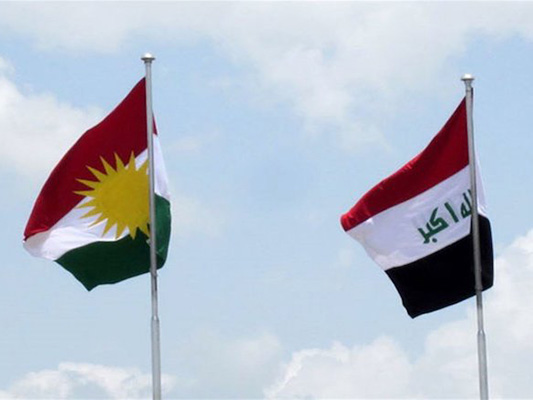
Iranian Kurdish MPs Condemn Iraqi Kurdistan’s Referendum

Kurdistan-Iraq

Kurdish lawmakers at the Iranian parliament, in a statement, condemned the Monday referendum on the independence of the Iraqi Kurdistan region.

Parts of the Farsi statement published by ICANA are as follows:

Abidance by all countries to their territorial integrity is one of the principal and generally-accepted international regulations, and it is natural that no country will allow its territorial integrity to be violated, and its territory to be seized by others or renamed.

A referendum, as a democratic tool, will be meaningful only when held among all citizens of a country, and part of a country cannot hold a plebiscite locally.

In Iraq, recently a movement backed by Israel is seeking to hold an ethnic plebiscite on the independence of part of Iraq. The Iraqi parliament has rejected that vote, and the issue has been referred to judicial officials, and the parliament, as the highest decision-making body in the country, has condemned the referendum. However, Israel is trying to cash in on the sentiments of the Kurdish people in Iraq in a bid to gain a foothold in that region and pursue its evil objectives of sowing discord, downsizing countries and disrupt stability and security in the region.

The referendum jeopardizes the interests of Iraqi Kurds as well as the stability of the countries in the region. So, the stance of us, the Kurdish legislators at the Iranian parliament, is exactly the same as the one adopted by the Iranian government (opposition to the referendum).

An ethnic, religious and regional referendum runs counter to international regulations as well as the interests of Iraqi people, especially Kurds. It is against regional stability and security. It is an illegal and illogical move, and it is condemned.

We expect relevant international institutions and Iraqi authorities as well as regional countries not to allow the move to serve the interests of Israel and trigger instability and insecurity in the region.

The Kurdish elites are also expected to prudently raise Kurdish people’s awareness of this wicked scheme and not to allow Iraqi Kurds’ interests to be compromised by those of enemies.
Myanmar Sets Strange Conditions for Iranian Coach

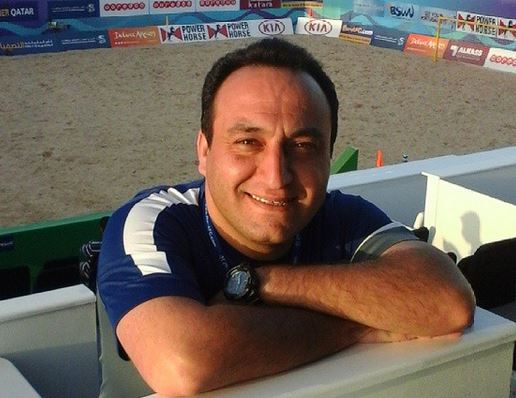
Reza Kordi

Myanmar’s Football Federation says Kordi has to meet three conditions if he wants to resign and nullify his contract with the federation.

“If the conditions are not met, we will file a complaint with FIFA against Kordi,” the federation announced.

The first condition says Kordi must rewrite his resignation letter saying his decision to resign has nothing to do with the massacre of Muslims in Myanmar.

According to the second condition, Kordi needs to do an interview saying that the massacre of Muslims in Myanmar is a tribal conflict and the government of Myanmar has no role in the massacre.

And the third condition goes on saying Kordi should renounce his demands mentioned in the contract.

“I only accept the third condition. They first asked me to return to Myanmar but I sent an email saying I want my contract nullified. Based on the latest talks we had together, they set their conditions but I refused to accept them. Now, they have threatened they will sue me at FIFA,” Kordi said.

He went on saying the Football Federation of Myanmar is outraged with the extensive media coverage of his resignation in protest against Muslims massacre. “Some sources say even during a cabinet meeting, my case has been raised and discussed,” he noted.

Iran, Armenia to Expand Ties in Film Industry

The agreement was signed by the Head of Iran’s Farabi Cinema Foundation, Ali Reza Tabesh, and Head of Armenia’s National Cinema Center, Shushanik Mirzakhanian, for a renewable three-year term with the aim of exchanging technical facilities and launching joint cinema projects.

Based on the agreement signed in Yerevan, Iran and Armenia are set to expand their cultural cooperation particularly in the field of cinema within cultural and historical commonalities between the two countries, a Farsi report by Nasim Online said.

In addition to providing an appropriate ground for launching cinema projects, the agreement is also set to serve as a platform to establish long-time relations between Farabi Foundation and Armenia’s National Cinema Center in conducting research, holding festivals, exchanging technological facilities, distributing and screening Iranian and Armenian films, and training human resources.

During the meeting between Tabesh and Mirzakhanian, the two sides exchanged views on a number of issues.

Screening of movies in Iran and Armenia, exchanging screenplays for movie productions, developing plans for increasing joint productions, expanding bilateral cooperation in holding children’s film festivals, inviting special guests especially children and teenagers as jury members of children’s film festivals, establishing close cooperation in mainstream festivals and film markets of the two countries  through suggesting appropriate films to each other, and  introducing technical equipment companies were among the key topics discussed by the two sides.

They also conferred on offering post-production and laboratory services to Armenians working in Iran, distributing the two sides’ movies through home video, internet and in-flights, remaining committed to observe all legal rights of movies and other cultural goods from both sides and establishing technical cooperation in new cinematic equipment.

In a separate meeting, Tabesh and Mirzakhanian sat for talks to explore ways to promote ties between Iranian and Armenian cinema professionals. The two sides also agreed to set up a number of committees to follow up the issues.

Tabesh visited Yerevan at the invitation of the country’s National Cinema Center.

On Monday, he held talks with Armenia’s Culture Minister, Armen Amirian. The meeting was also attended by Iran’s ambassador to Armenia, Kamal Sajjadi.

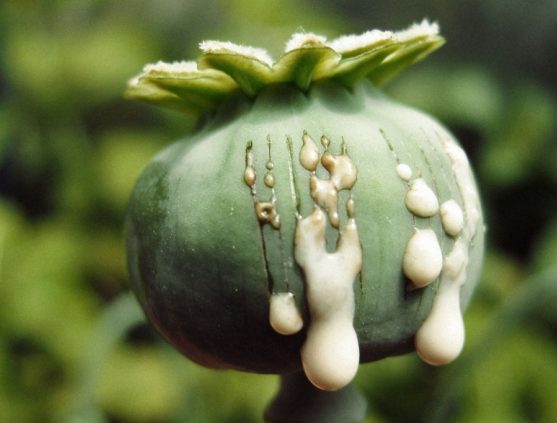
Fighting Drugs Needs Int’l Cooperation, Global Consensus: Iran

Fighting Drugs Needs Int’l Cooperation, Global Consensus: Iran

Iranian parliamentarian Shakour Pourhossein has, in a Farsi interview with ICANA, said, “Fighting illicit drugs requires regional and international cooperation as well as a global consensus.”

He said the war on drugs by the international community has been a failure and this comes as different countries have lost many of their youths to drug addiction over the years.

Pourhossein, who sits on the parliament’s Social Commission, said the average rate of drug addiction in the Iranian labourers’ community reportedly stands at 21 to 22 percent, and such figure is worrying.

“This (addiction) exists not only in Iran, but in other countries. Of course, the reasons behind workers’ drug addiction should be studied, so that its consequences will not grip workers and the country,” said the MP.
He said the government should be serious and have a steely resolve to prevent drugs from being smuggled into the country and should have a stronger supervision on that.

He underlined the need to make use of skilled manpower and state-of-the-art equipment plus perseverance to fight drugs.


Narcotics Smuggled into Iran via Mafia

He further criticized the smuggling of narcotics into the country by special drugs rings.

He noted that illicit drugs are getting into the country through mafia and special drugs rings.

“Entry and exit points in the country should be controlled and a stronger monitoring system should be put in place in order to identify the [drugs] rings. Of course, a comprehensive plan, specialized workforce ad enough budget are also needed to be able to seriously take steps in this path,” he added.

The lawmaker noted that with the allocation of enough funding and time, narco-trafficking rings can easily be identified.

He said Iran has not achieved success in fighting narcotics, either.

“Unfortunately, in this domain (war on drugs) more attention is paid to [dealing with] drug pushers rather than the mafia and special drugs rings, which puts the mafia in a safety margin. This comes as eradication of narcotics in the country needs the domestic mafia and special drugs rings to be identified and seriously dealt with,” he said.

“Of course, there have been secret hands and rake-offs in the smuggling of narcotics into any country, and Iran is no exception. In fact, drug trafficking is a lucrative business in which it won’t be easy to identify secret hands without enough budget and specialized manpower.”

He said all Iranian institutions should join hands to fight narcotics.

Wedding Ceremony of Iranian Acid Victim Goes Viral

Wedding Ceremony of Iranian Acid Victim Goes Viral

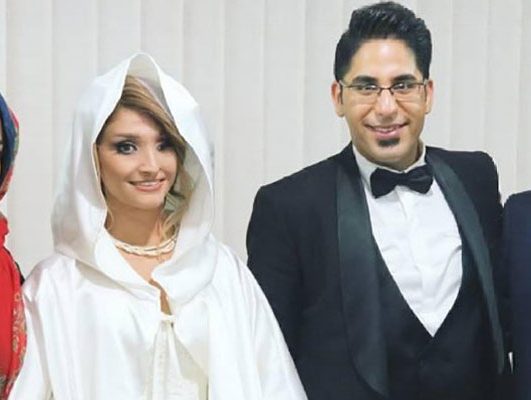
Marzieh Ebrahimi, a young Iranian girl who fell victim to an acid attack years ago, has tied the knot. Her marriage has turned into the most high-profile one in the country, not because she is a celebrity or an artist, but because she is the victim of an acid attack.

Back in 2014, Marzieh had an appointment with a dentist and was stuck in traffic in the central Iranian province of Isfahan. She rolled down her car’s window only to see a huge volume of pure acid splashed on her face.

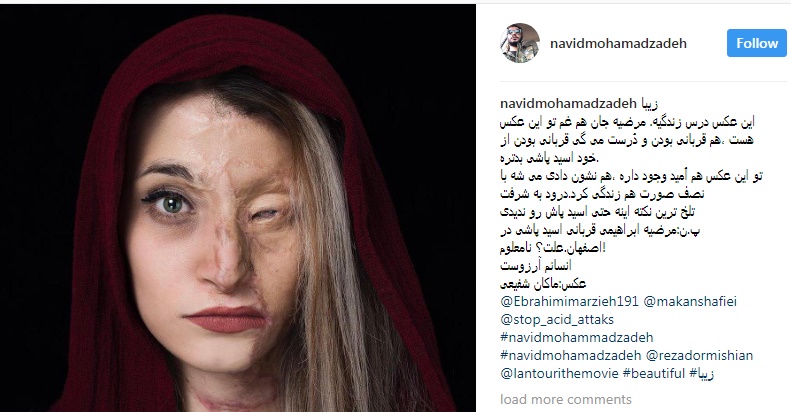
Unfortunately, she lost part of her face and the cornea of an eye in the acid attack. Marzieh had not been heard from for a long time. However, the news of her marriage made headlines in media, particularly in social media.

The news was so impressive that Navid Mohammadzadeh, a renowned Iranian actor who plays the role of an acid-attacker in one of his movies (Lantoori), has posted on his Instagram page about that.

Wedding Ceremony of Iranian Acid Victim Goes ViralThe man who married Marzieh did so without paying attention to her appearance. This beautiful and impressive development can send important messages to young couples.
 

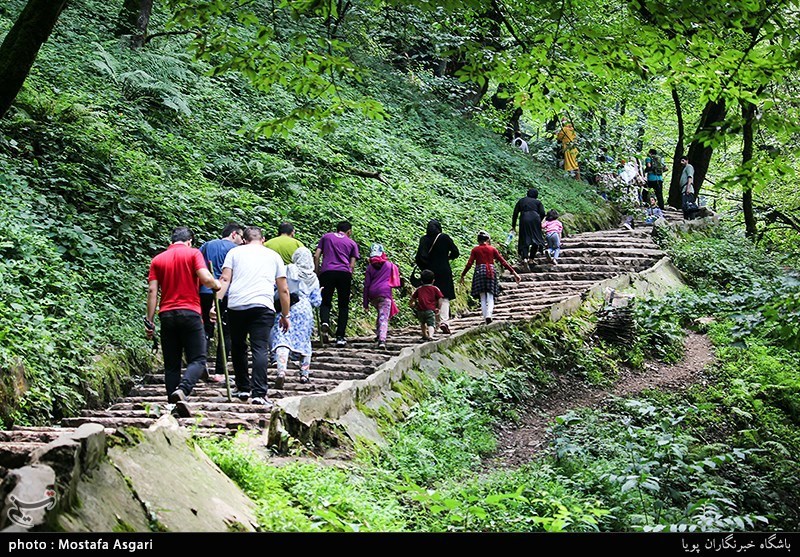
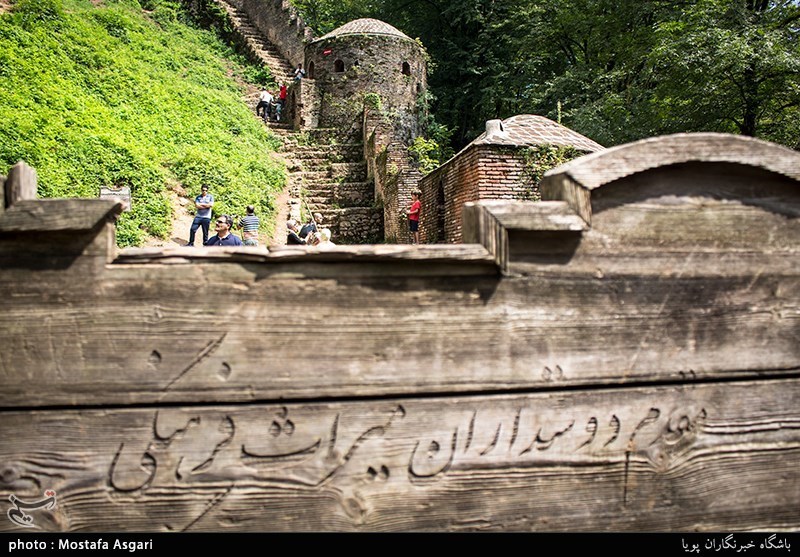
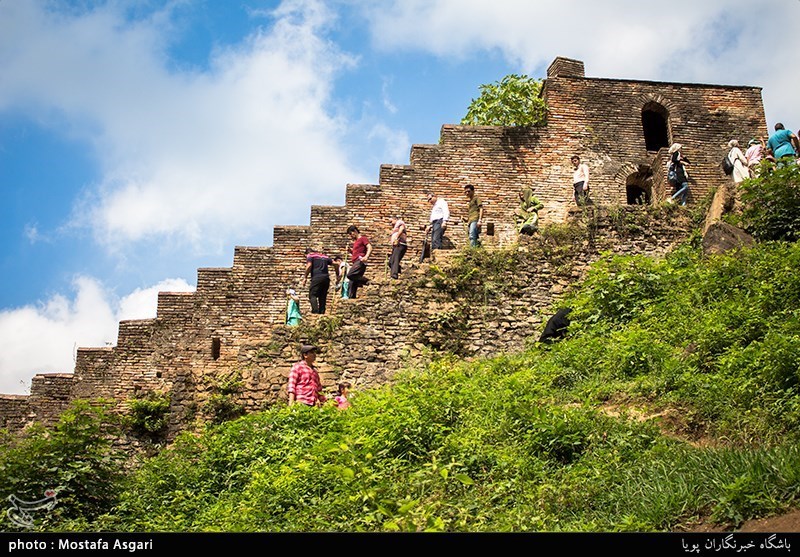
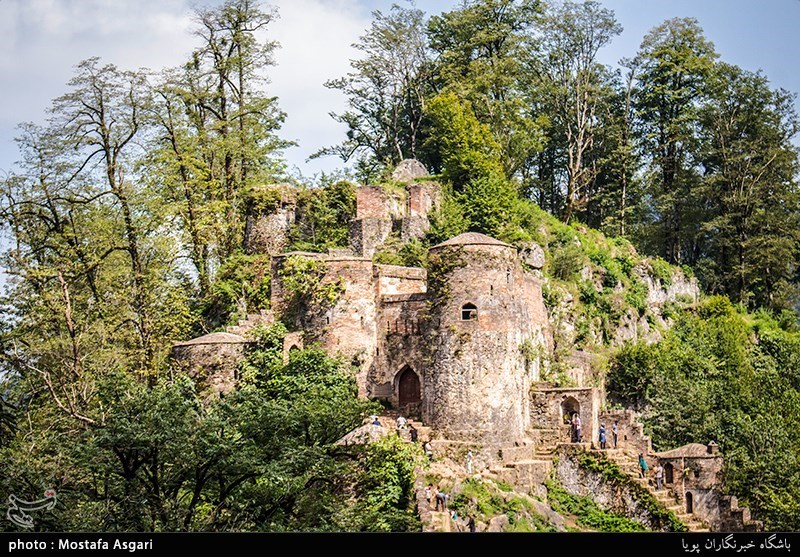
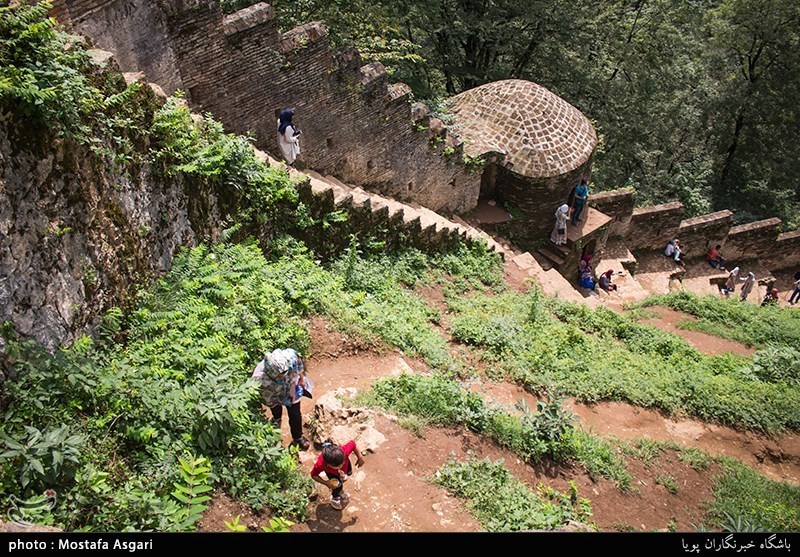
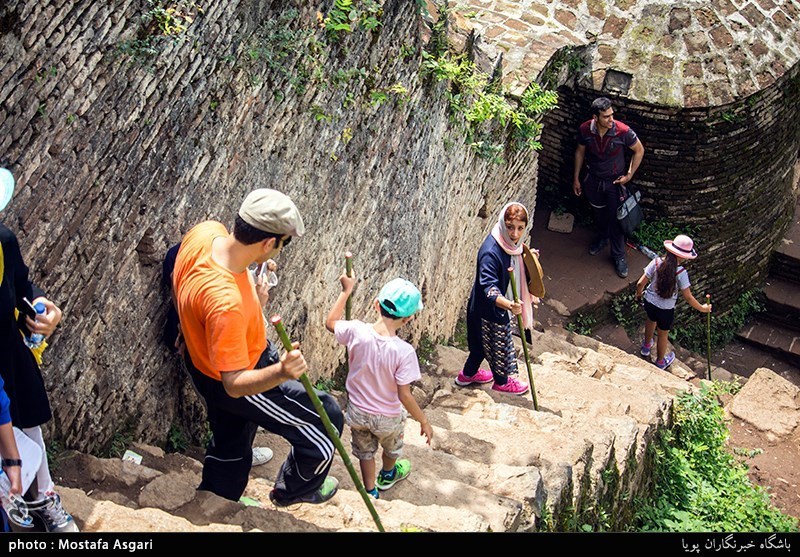
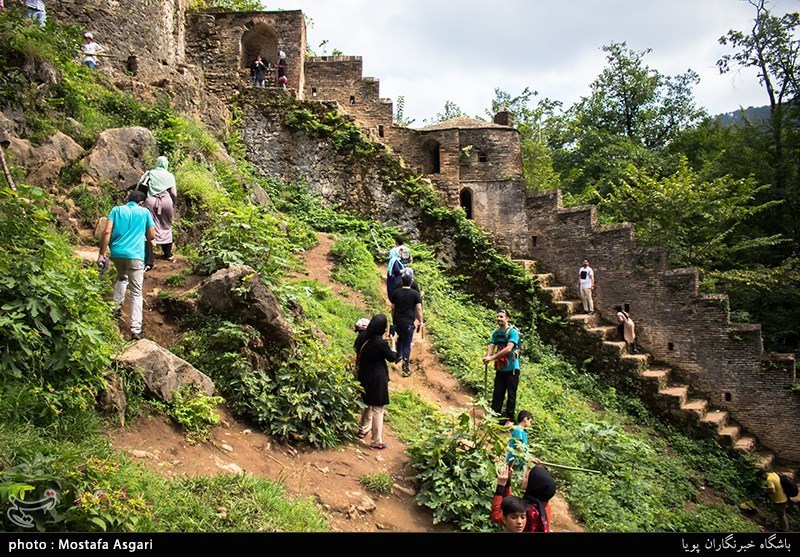
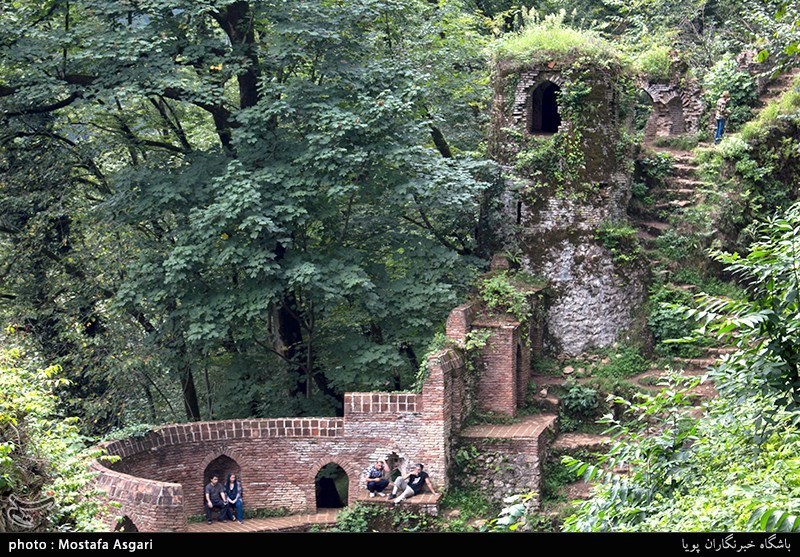
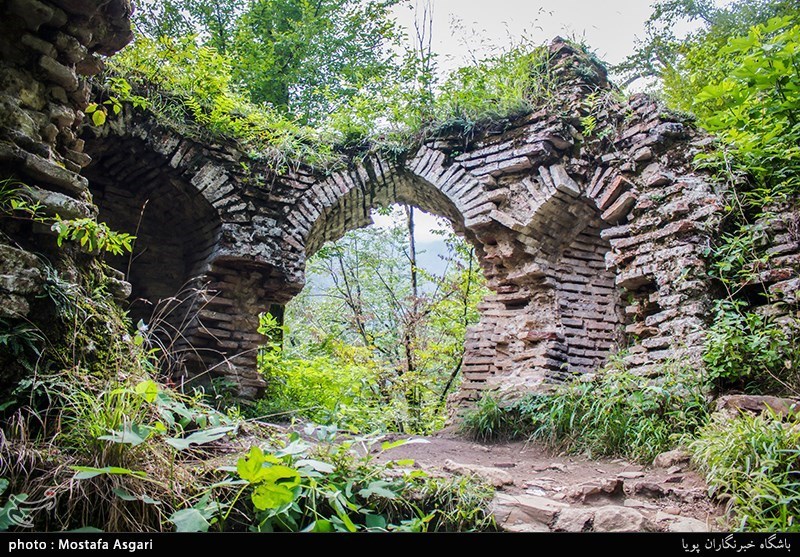
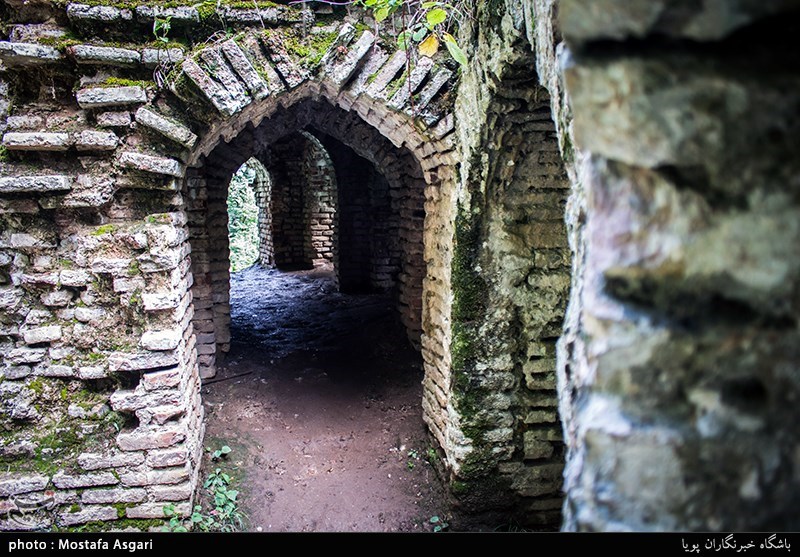
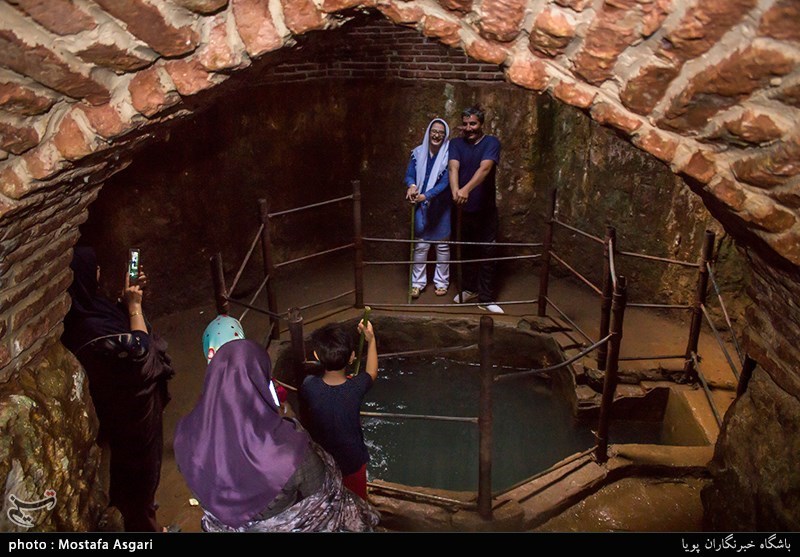
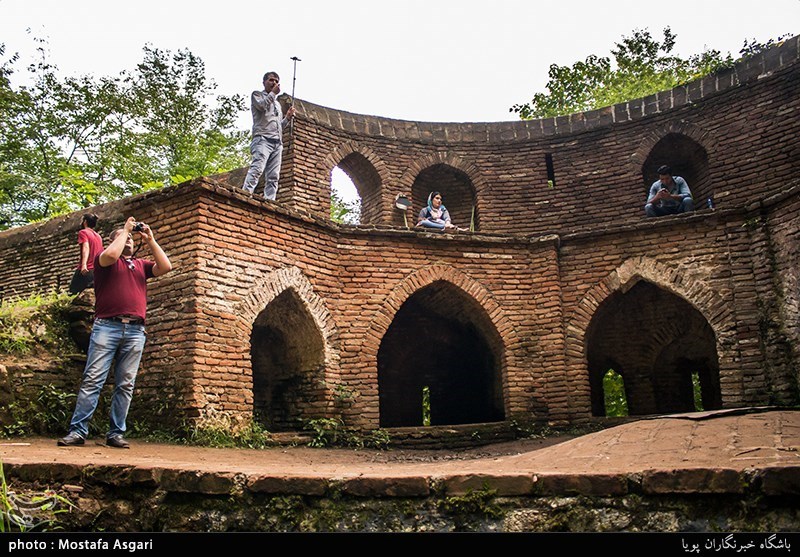
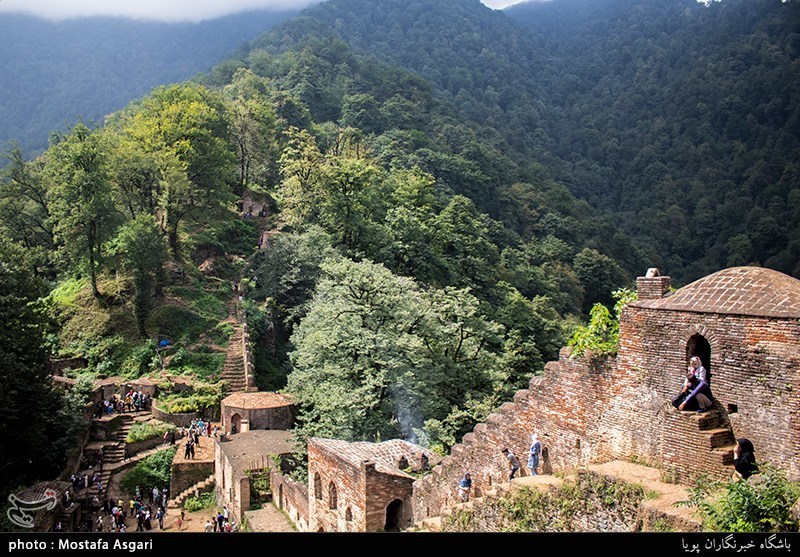
Iran’s Beauties in Photos: Enchanting Rudkhan Castle

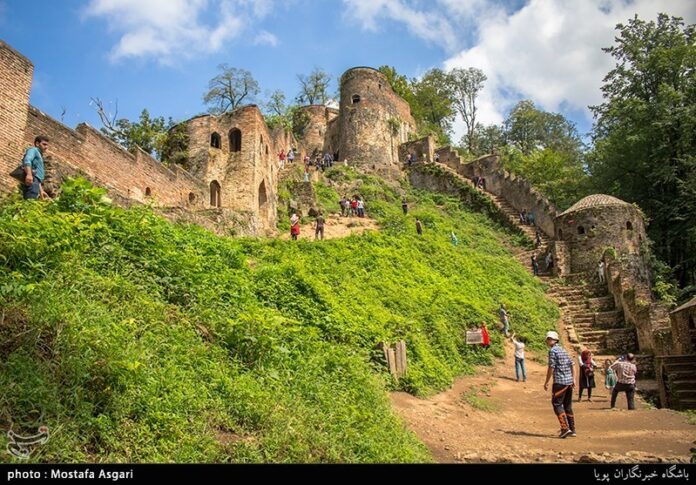
Iran’s Beauties in Photos: Enchanting Rudkhan Castle14

Located 25 km southwest of the city of Fuman, Gilan province, Rudkhan Castle used to be a military complex constructed during the Sassanid era (224-651 AD), and later rebuilt during the Seljuq era.

Here are Tasnim’s photos of the castle and its surrounding nature:

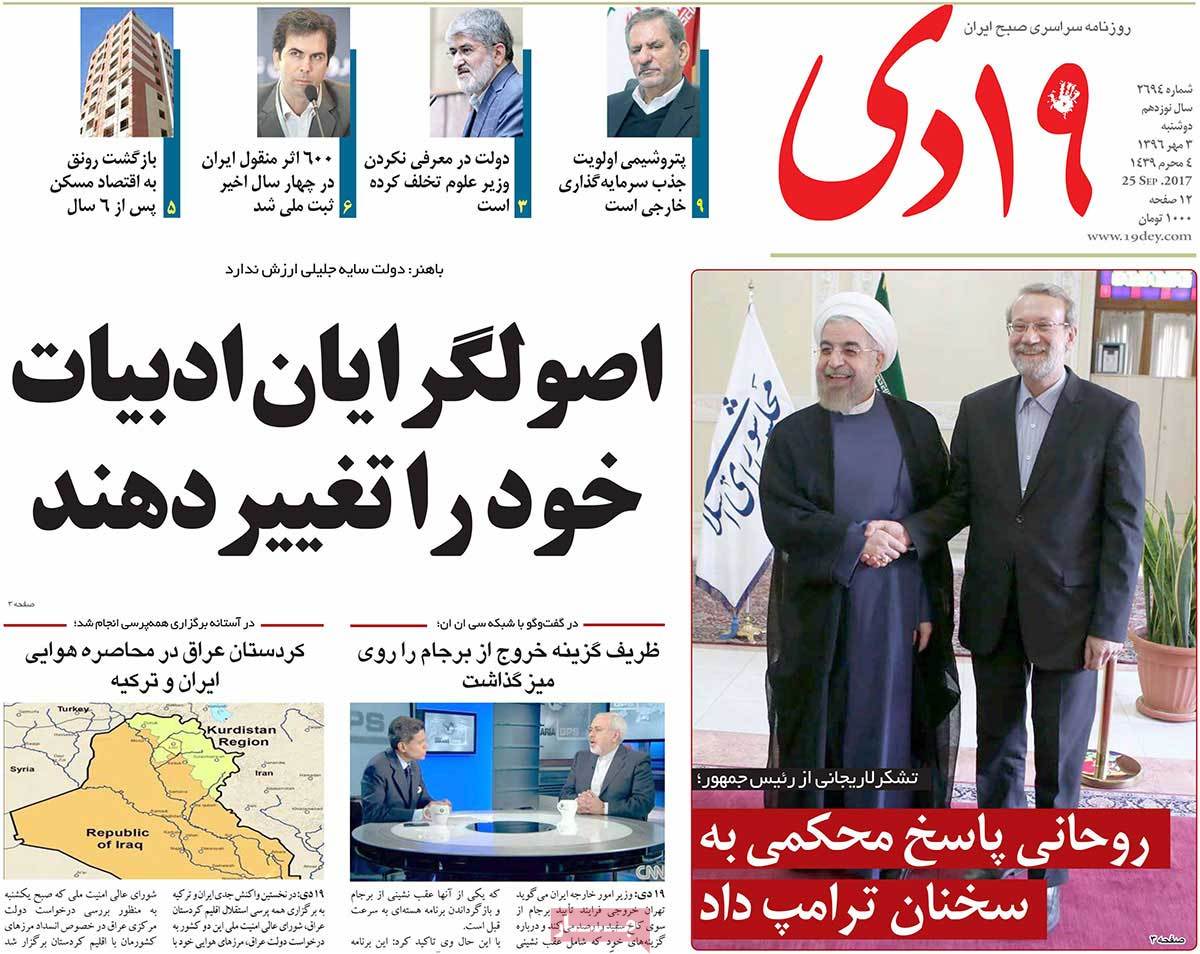
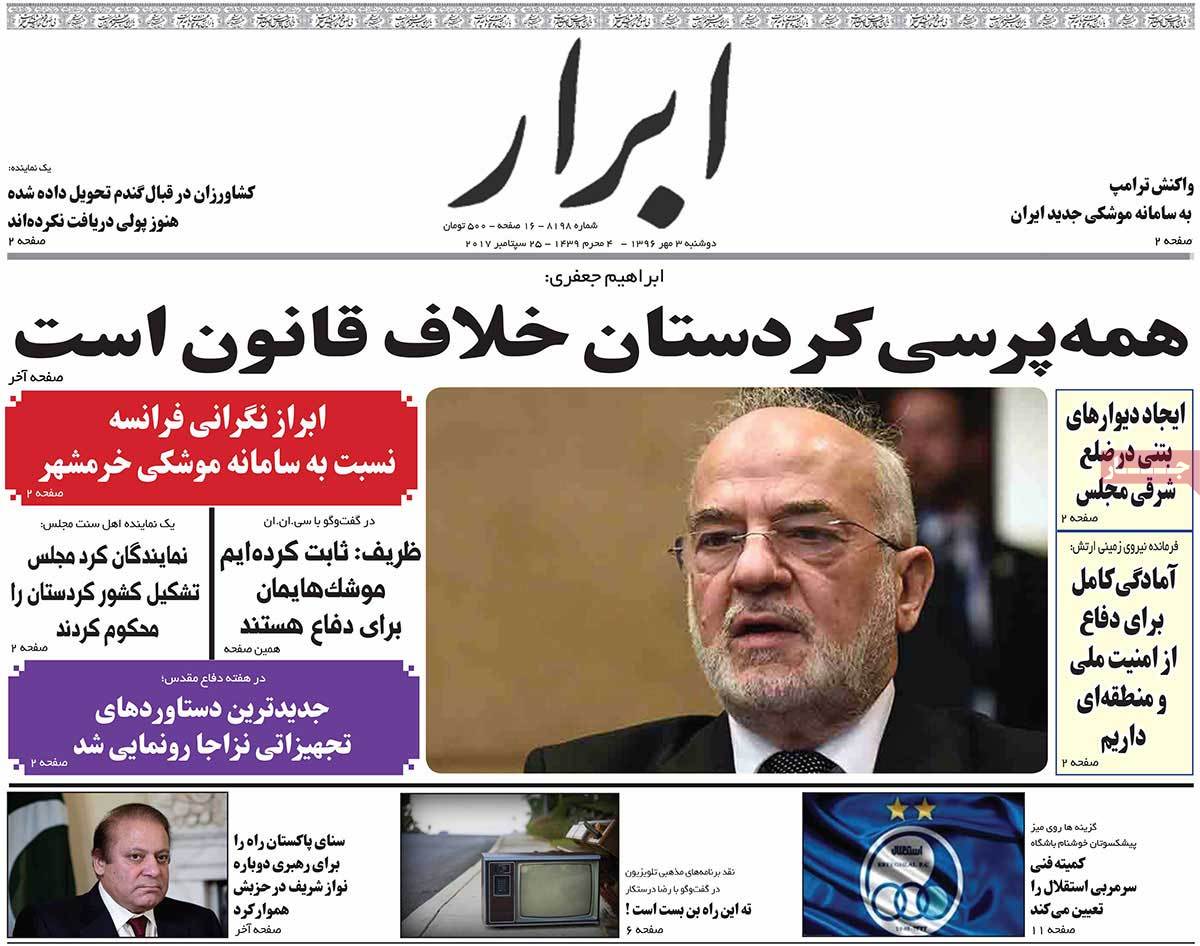
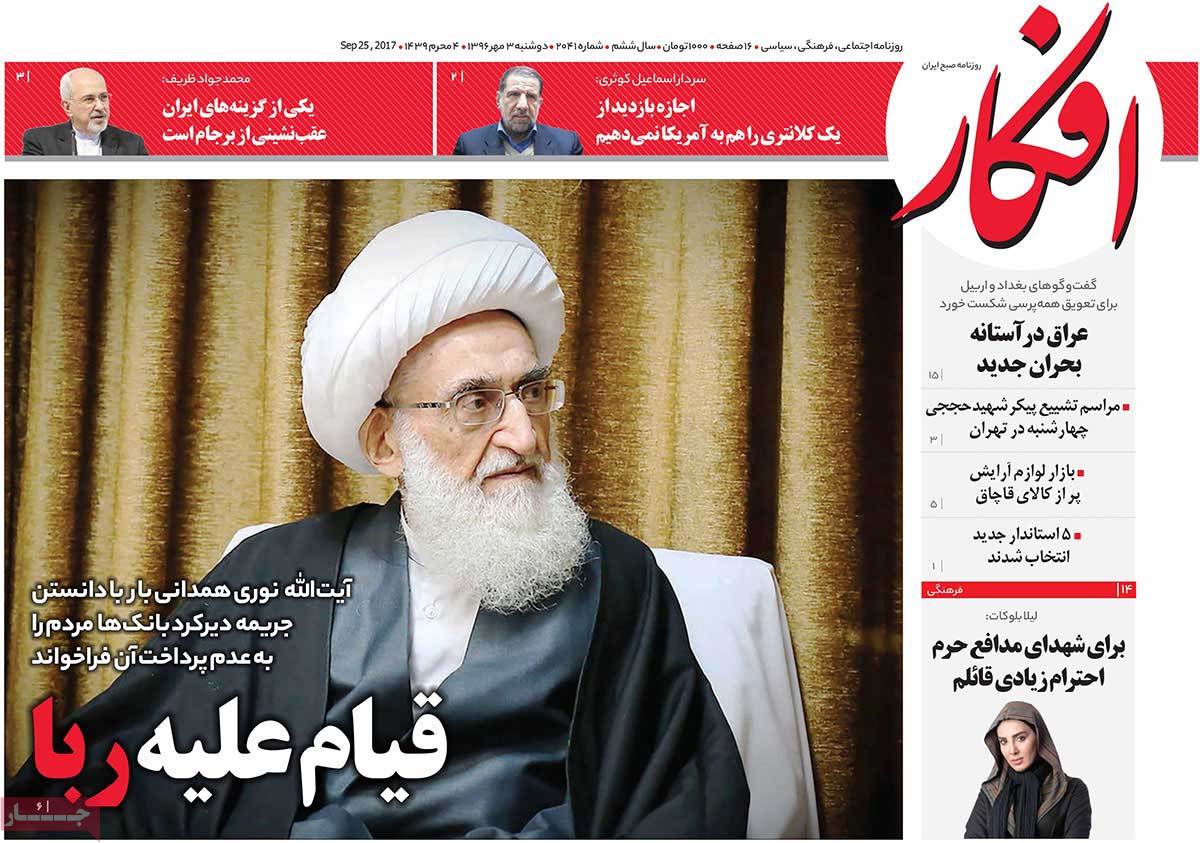
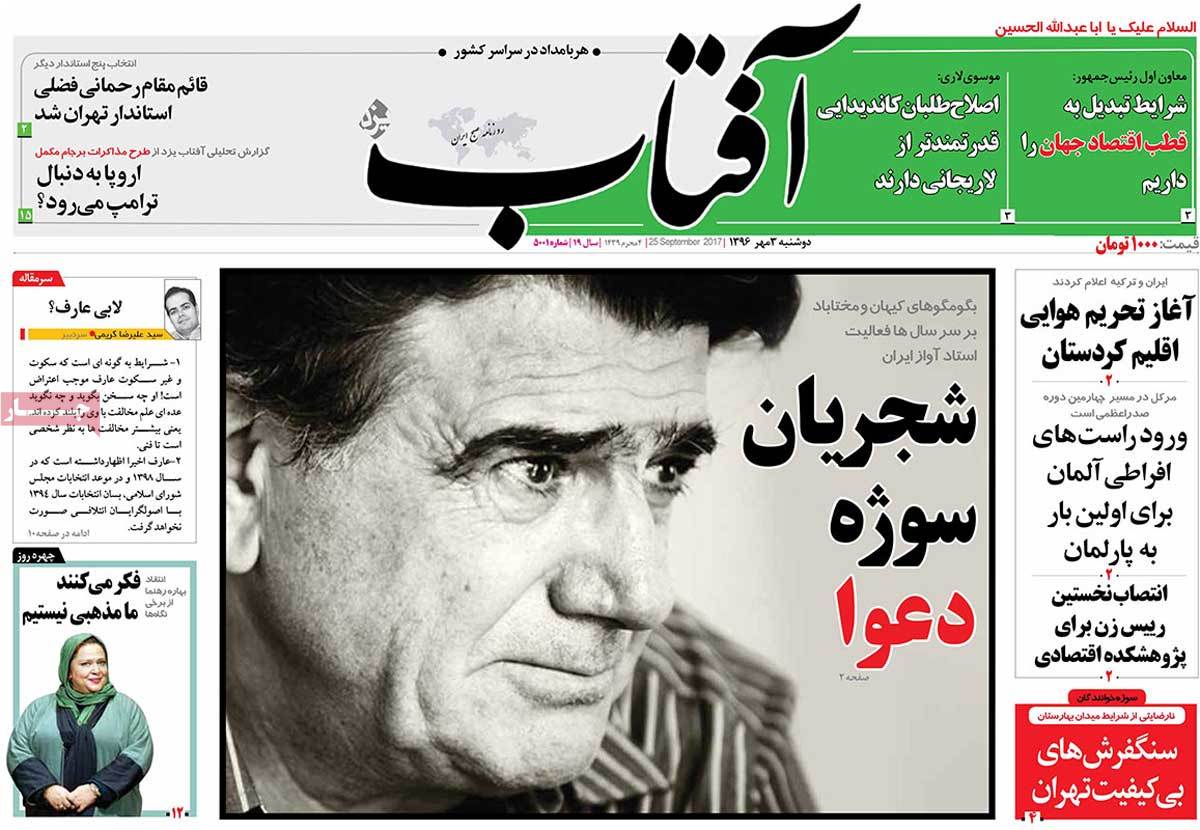
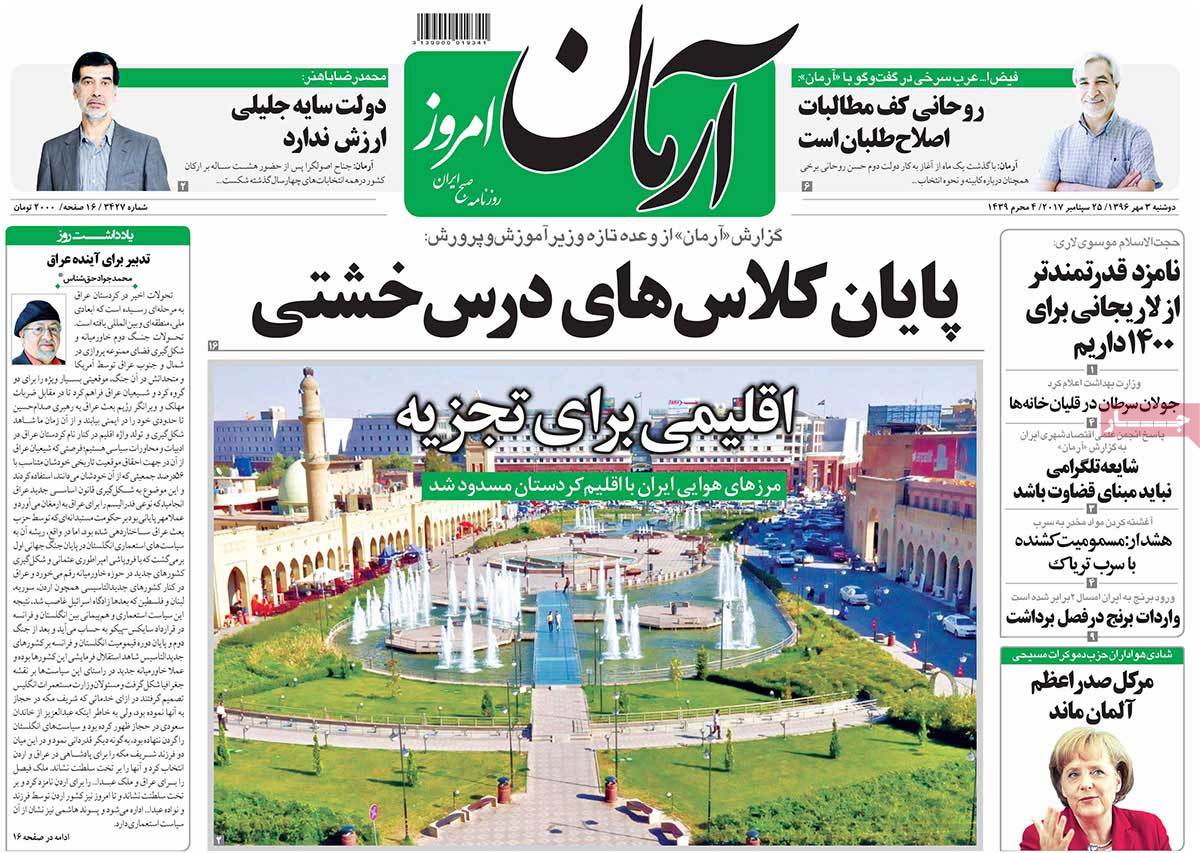
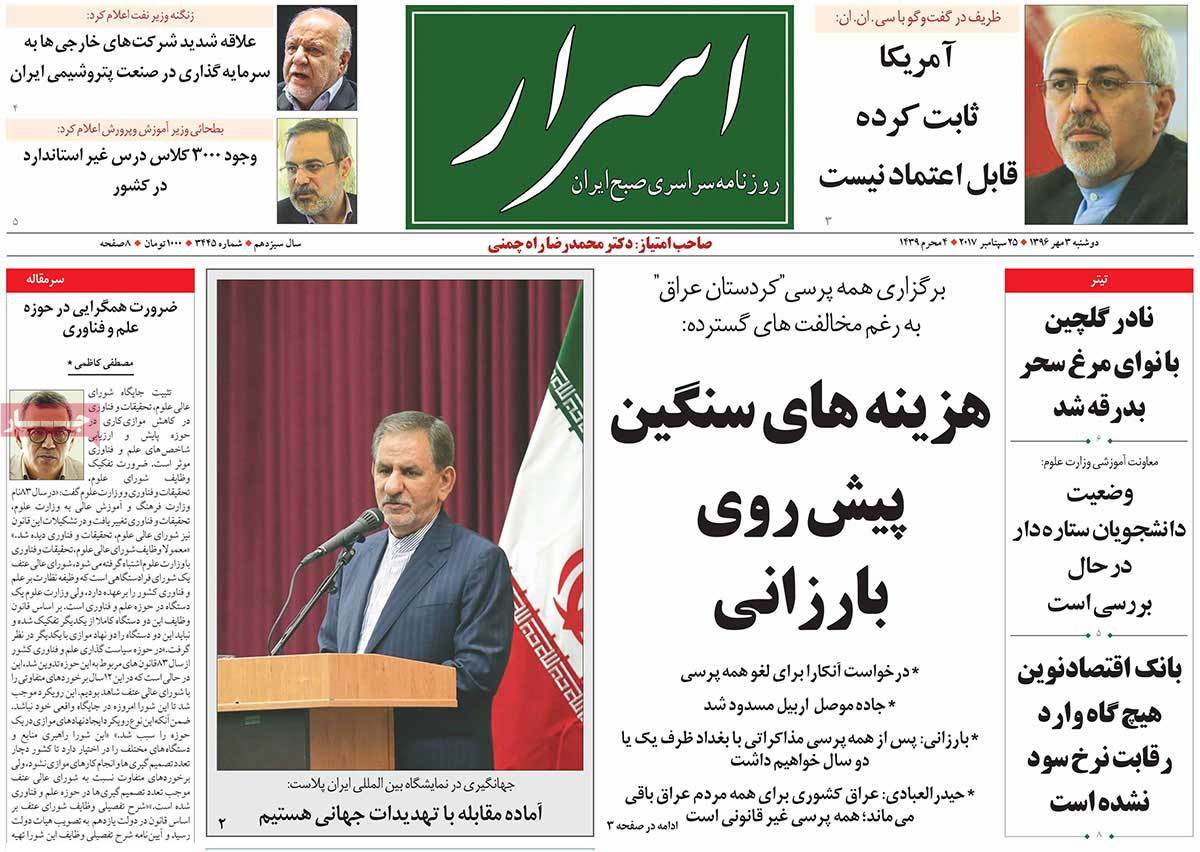
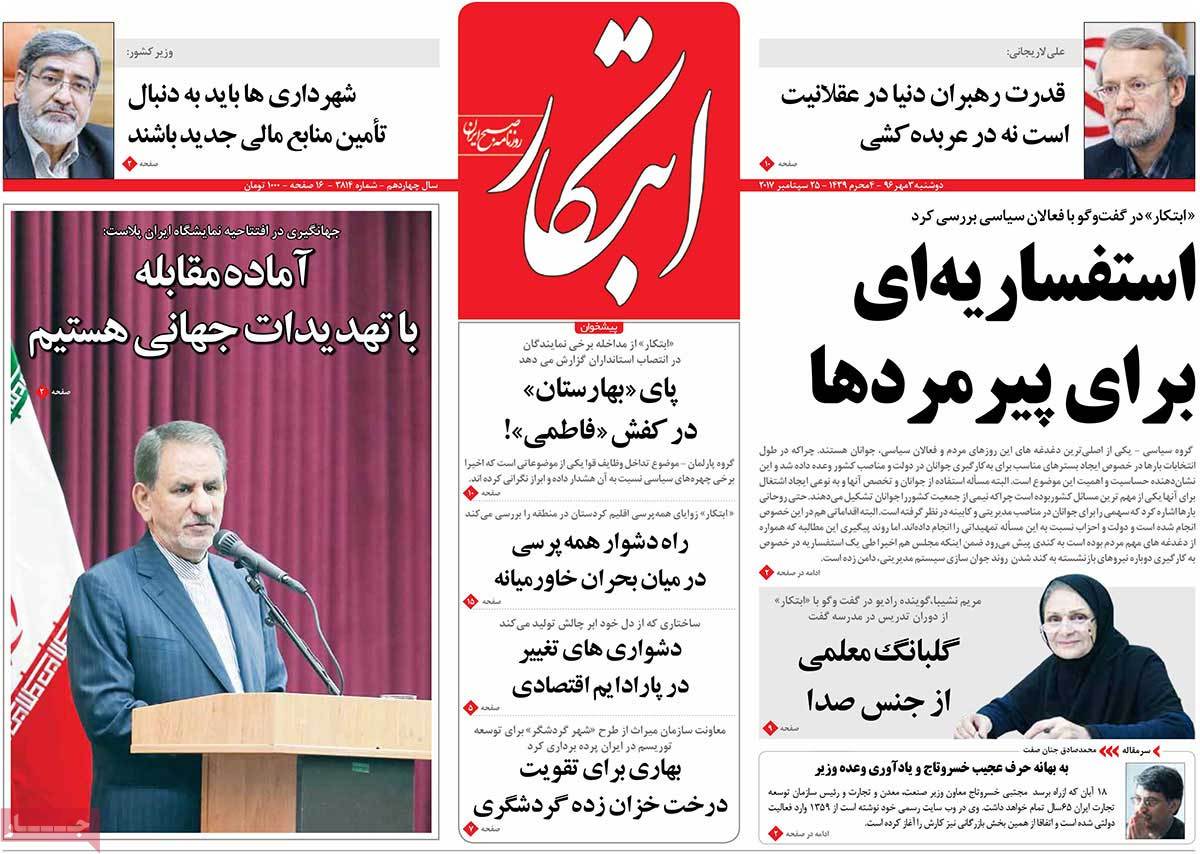
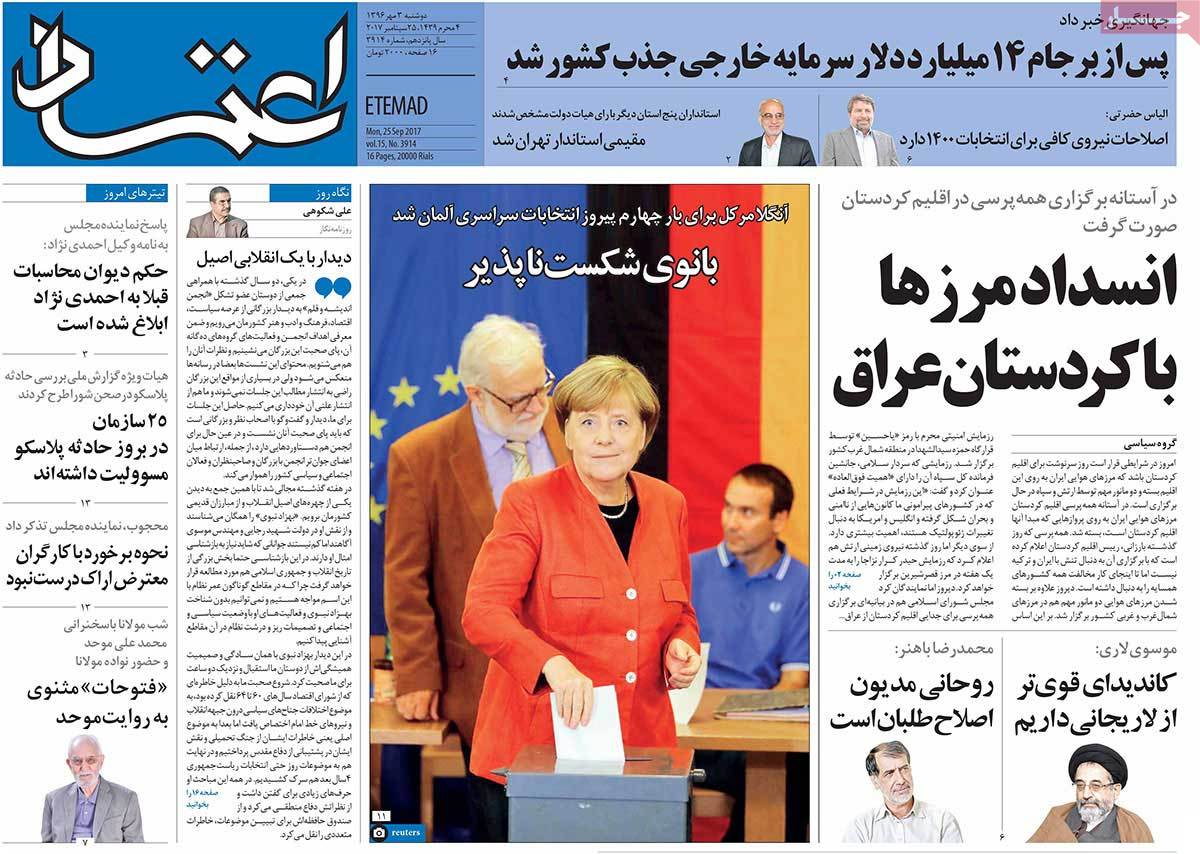
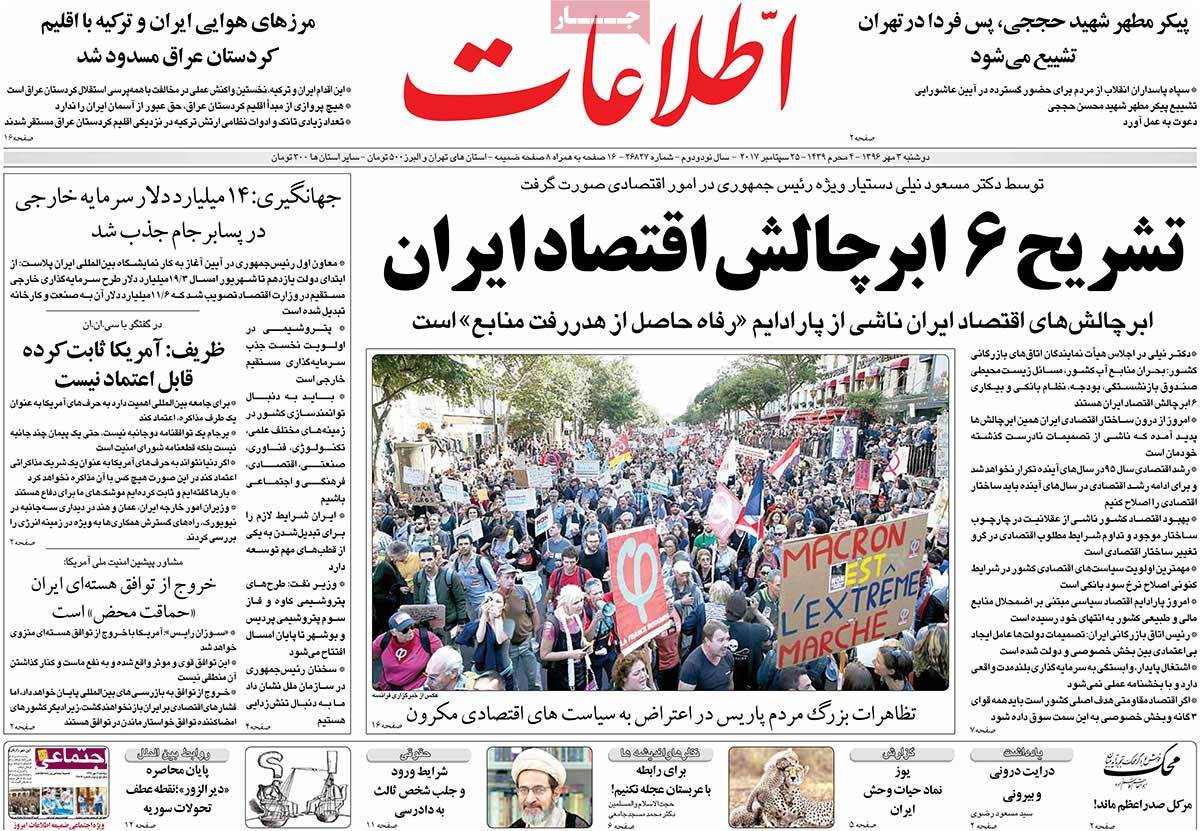
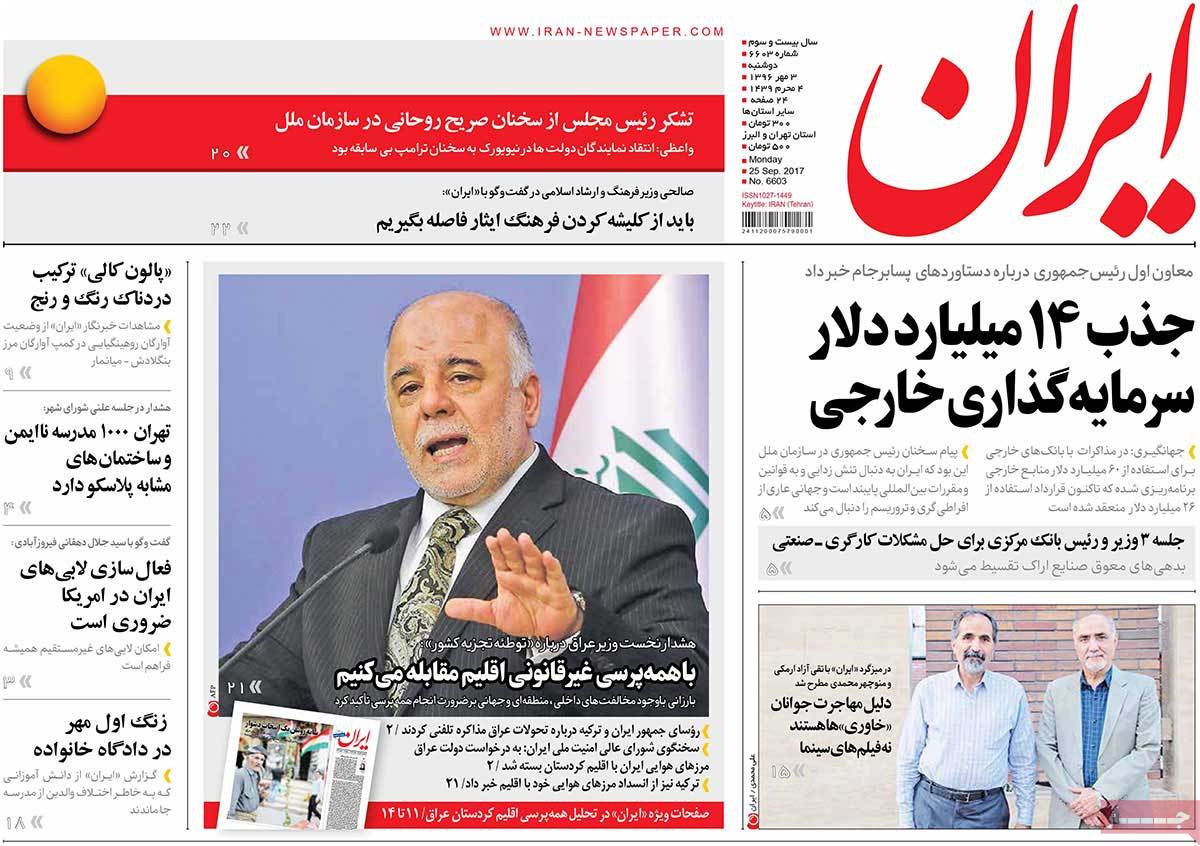
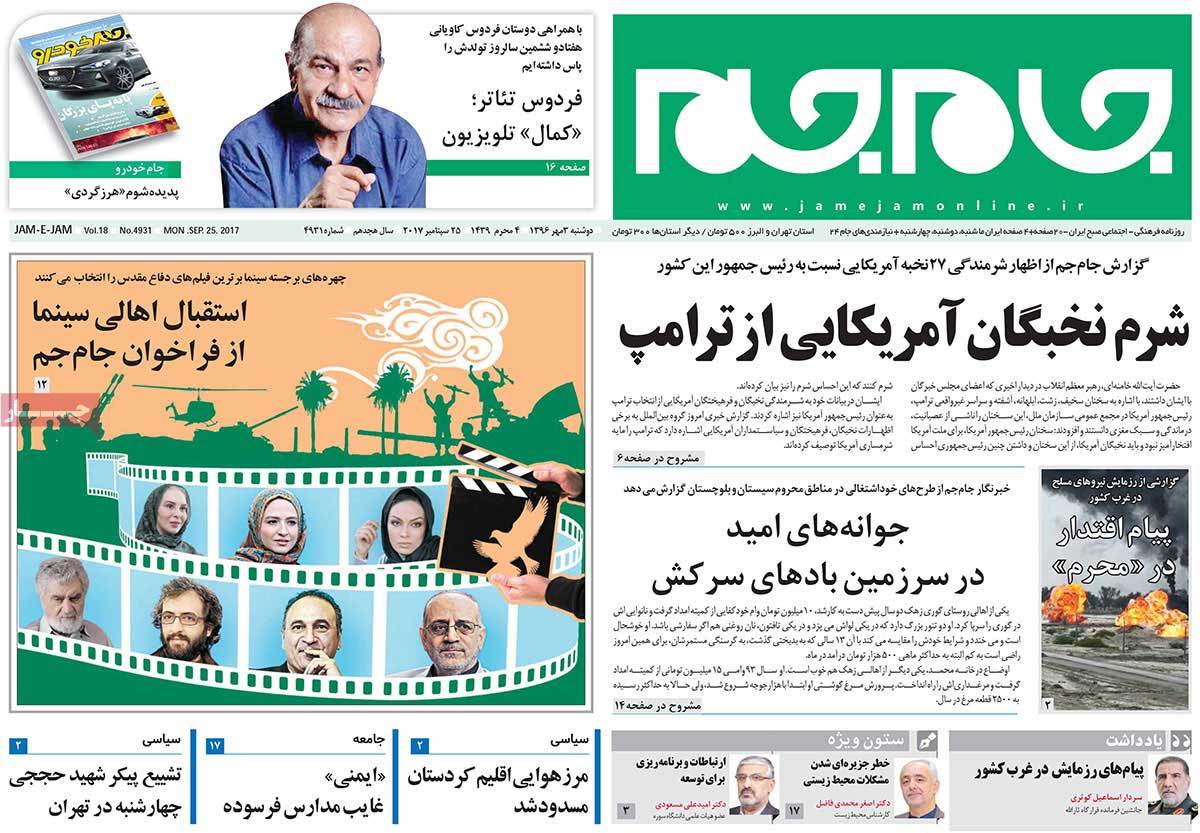
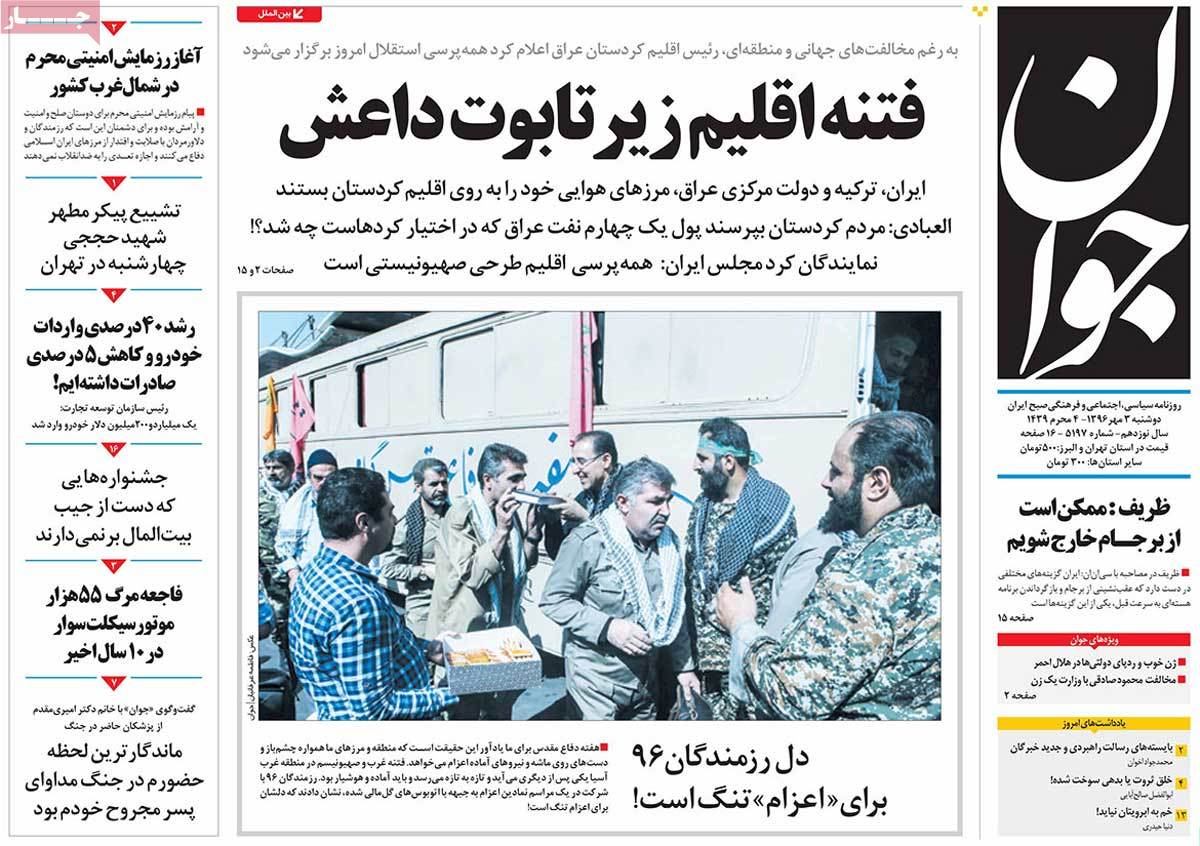
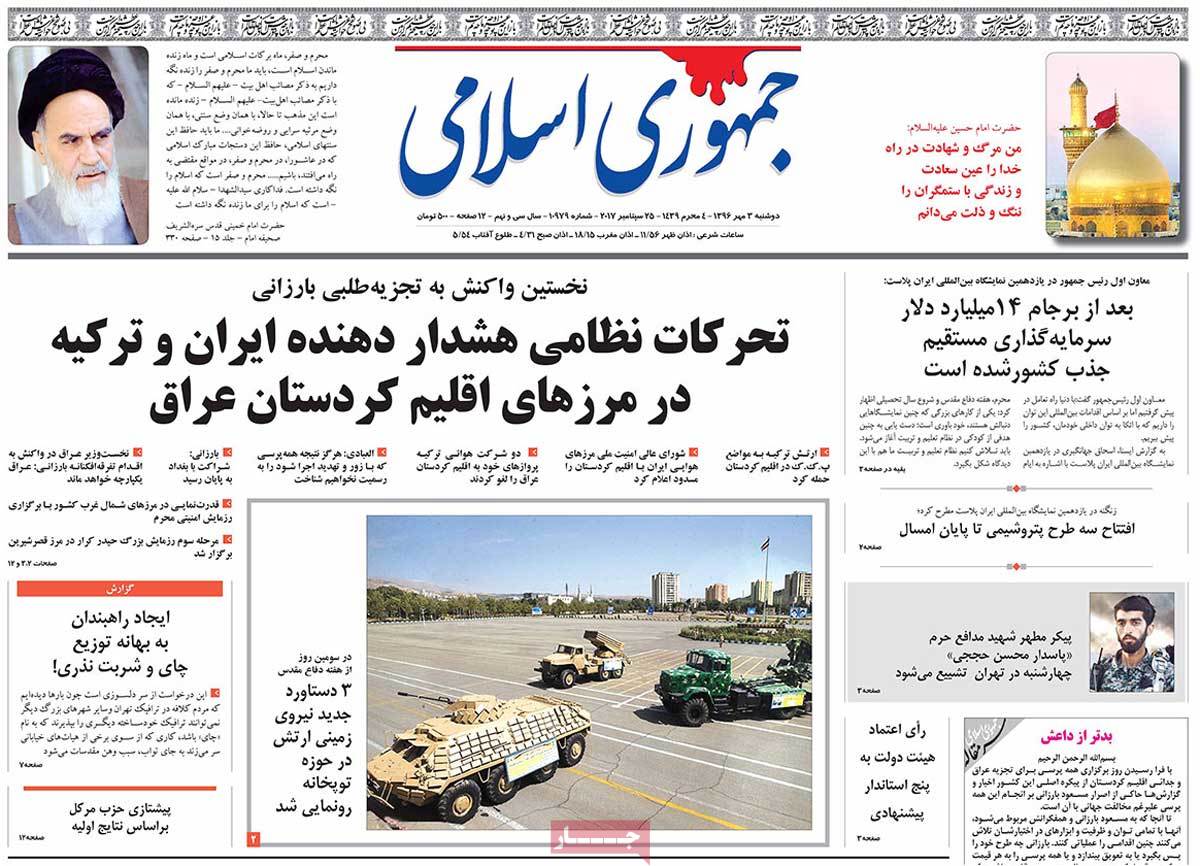
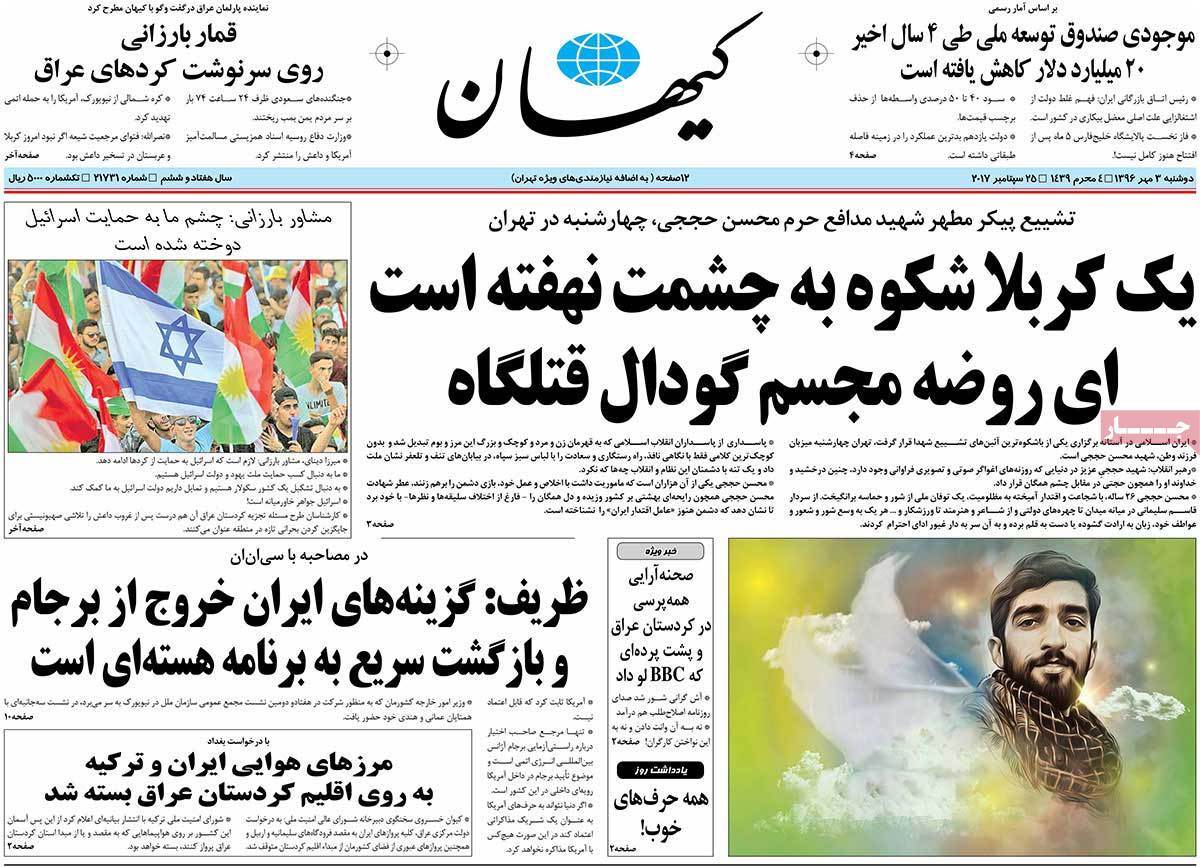
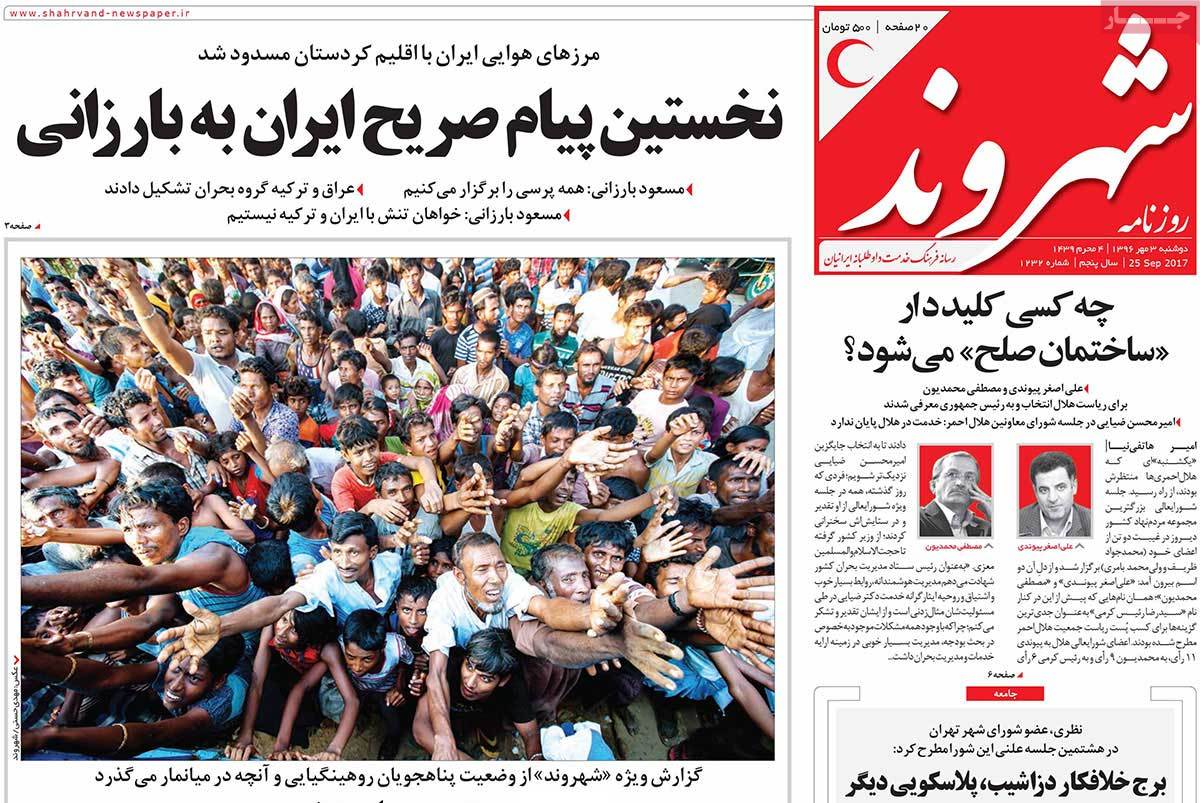
A Look at Iranian Newspaper Front Pages on September 25

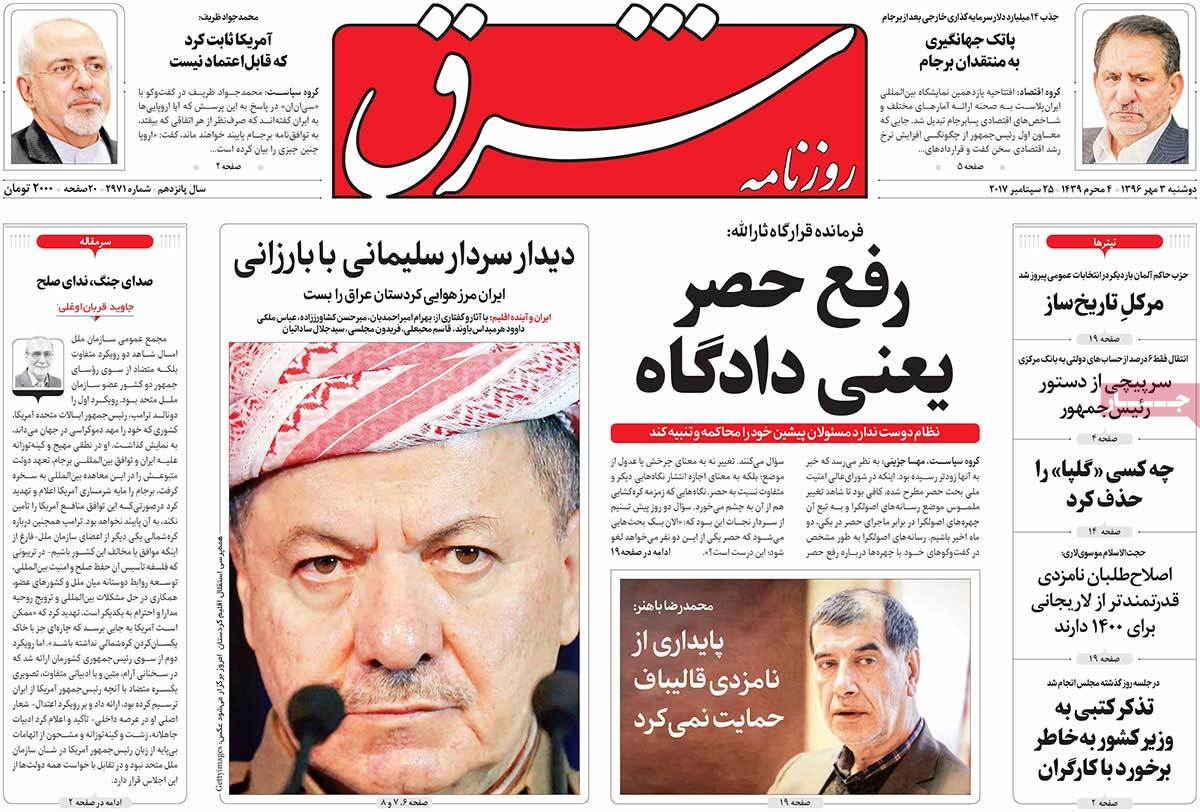
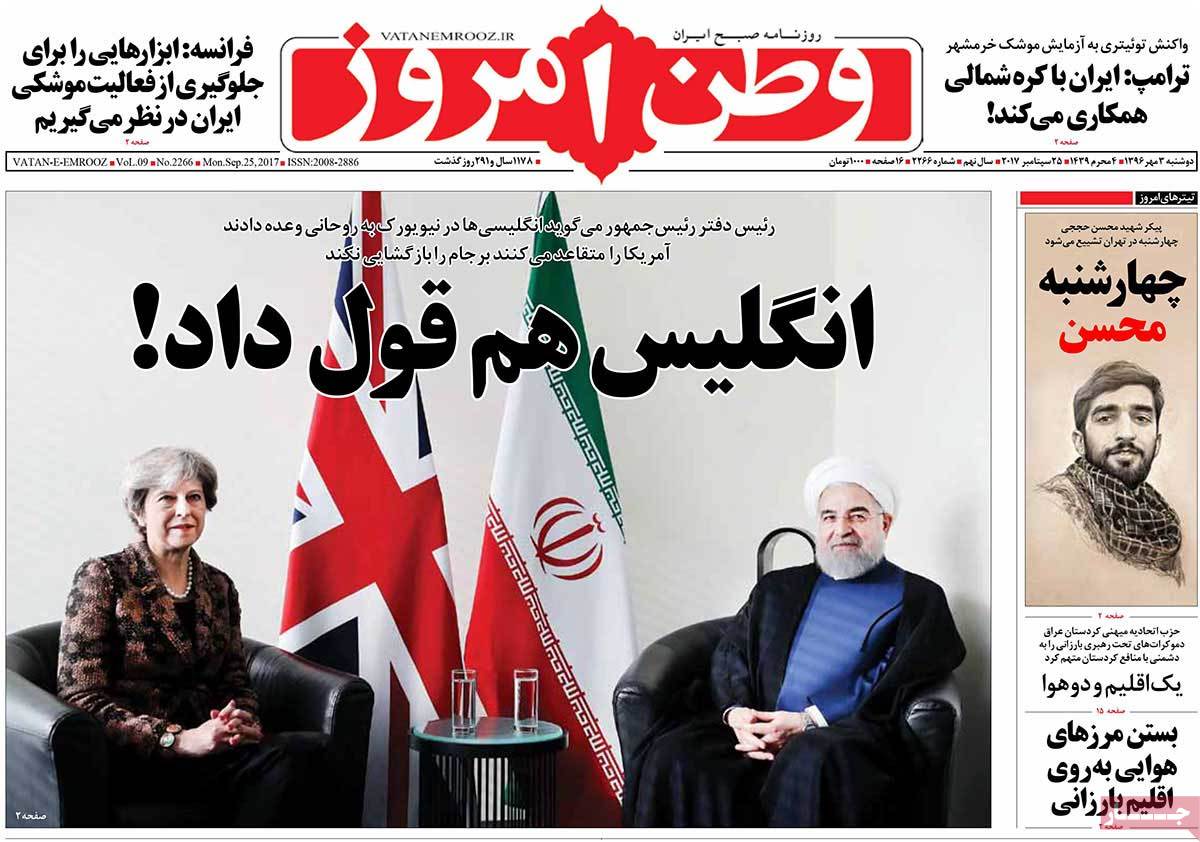
The top story in all Iranian newspapers today was the Monday referendum on the Iraqi Kurdistan’s independence. The referendum is being held despite international and regional opposition and warnings by its neighbours. Newspapers widely covered the move by Iran and Turkey to close their airspaces to the Iraqi Kurdistan at Baghdad’s request.
The remarks made by Iranian Foreign Minister Mohammad Javad Zarif in an interview with CNN about the nuclear deal between Tehran and world powers also received great coverage.

Meanwhile, reformist papers covered the speculations about incumbent Parliament Speaker Ali Larijani’s possible bid for presidency in 2021 as a reformist candidate, and quoted reformist figures as saying they have better options for the next presidential votes. The speculations were raised after Larijani, in a ceremony, sat next to reformist leader Seyyed Mohammad Khatami and had informal talks with him.

The above issues, as well as many more, are highlighted in the following headlines and top stories:


19 Dey:

1- Larijani Thanks Rouhani for His ‘Decisive’ Response to Trump

A Look at Iranian Newspaper Front Pages on September 25


Abrar:

1- Iraqi FM: Kurdish Referendum Illegal

2- Zarif to CNN: We Proved Our Missiles Are for Defence

3- Sunni Iranian MP: Parliament’s Kurd MPs Condemn Formation of Kurdish State

A Look at Iranian Newspaper Front Pages on September 25


Afkar:

1- Rise against Usury: Senior Cleric Urges People to Refrain from Paying Late Payment Penalty

2- IRGC General: We Won’t Allow US to Visit Even a Small Police Station

A Look at Iranian Newspaper Front Pages on September 25


Aftab-e Yazd:

1- Iran, Turkey Start Aerial Siege of Kurdistan Region

2- German Far-Rightists Enter Parliament for First Time

3- Rouhani’s First VP: Iran Has Potential to Become World’s Economic Hub

A Look at Iranian Newspaper Front Pages on September 25


Arman-e Emrooz:

1- A Region for Secession: Iran Closes Airspace to Iraqi Kurdistan

2- Merkel Remains German Chancellor: Fans Are Happy


A Look at Iranian Newspaper Front Pages on September 25


Asrar:

1- Oil Minister: Foreign Companies Very Interested in Making Investment in Iran’s Petchem Industry

2- Zarif to CNN: US Proved It’s Not Trustworthy


A Look at Iranian Newspaper Front Pages on September 25


Ebtekar:

1- First VP: Iran Ready to Counter Global Threats

2- Larijani: Power of World Leaders Lies in Rationality, Not Shouting

3- Complicated Path of Referendum amid Mideast Crisis


A Look at Iranian Newspaper Front Pages on September 25


Etemad:

1- The Invincible Lady: Merkel Wins Forth Term in German Elections

2- MP: Reformism Has Enough Options for 2021 Election

A Look at Iranian Newspaper Front Pages on September 25


Ettela’at:

1- Economist Explains 6 Super-Challenges of Iran’s Economy

2- Huge Demonstration in Paris in Protest at Macron’s Economic Policies

A Look at Iranian Newspaper Front Pages on September 25


Iran:

1- Painful Combination of Colour, Pain: A Report on Rohingya Refugees in Bangladesh

2- It’s Necessary to Activate Iran’s Lobby Groups in US: Analyst

A Look at Iranian Newspaper Front Pages on September 25


Jame Jam:

1- American Elites Ashamed of Trump: 27 US Elites Embarrassed about US President

A Look at Iranian Newspaper Front Pages on September 25


Javan:

1- Kurdistan Region’s Sedition under Coffin of ISIS

  • Despite Regional, Int’l Opposition, KRG to Hold Independence Referendum

A Look at Iranian Newspaper Front Pages on September 25


Jomhouri Eslami:

1- First Reaction to Barzani’s Secessionism: Iran, Turkey’s Military Warnings in Kurdish Borders


A Look at Iranian Newspaper Front Pages on September 25


Kayhan:

1- Zarif: Iran’s Options Include Withdrawing from JCPOA, Rapidly Returning to Nuclear Program

2- Barzani’s Aide: We’ve Pinned Our Hopes on Israel’s Support

3- Barzani Gambling with Destiny of Iraqi Kurds


A Look at Iranian Newspaper Front Pages on September 25


Shahrvand:

1- Iran’s First Clear Message to Barzani: Aerial Borders with Kurdistan Blocked


A Look at Iranian Newspaper Front Pages on September 25


Shargh:

1- General Soleimani Meets Barzani

  • Barzani Confirms He Has Met IRGC Quds Force Commander in Recent Days

2- Merkel Makes History

3- Reformists Have Candidates More Powerful than Larijani for 2021 Election: Politician


A Look at Iranian Newspaper Front Pages on September 25


Vatan-e Emrooz:

1- Britain Once Again Makes a Promise!

  • Britons Have Promised Rouhani to Convince US Not to Scrap Nuclear Deal: Chief of Staff

A Look at Iranian Newspaper Front Pages on September 25


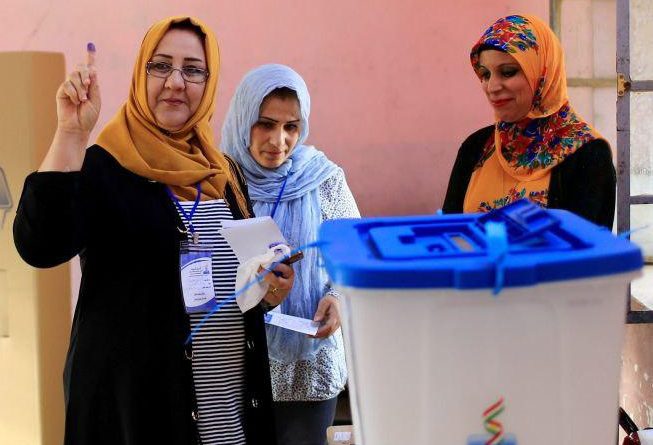
Kurdish Referendum: Voting Begins despite Regional Warnings

Kurdish Referendum: Voting Begins despite Regional Warnings

The referendum has begun as the Iraqi government asked the autonomous Kurdish region to hand over control of its international border posts, its international airports and called on foreign countries to stop importing Kurdish crude oil.

On the eve of the controversial independence referendum, Iraqi Prime Minister Haider al-Abadi said his government will take “necessary measures” to preserve national unity.

“To take a unilateral decision affecting the unity of Iraq and its security, and the security of the region, with a referendum on separation is unconstitutional and against civil peace,” al-Abadi said on Sunday.

“We will take the necessary measures to preserve the unity of the country,” he said, without specifying what action his government might take. “We won’t engage with the referendum or its results.”

Abadi had warned earlier of military intervention if the referendum led to violence.

He also said the poll remains “unconstitutional”, reiterating that Baghdad “will not recognize its outcome”.

“We will never forsake our Kurdish citizens, their security and welfare. We reject the sectarian, racist state,” Abadi said, alluding to the independent state sought by the Kurds.

He said leaderships had the duty of “protecting civilians from surrounding dangers rather than endangering them and implicating them in useless conflicts,” in an obvious repetition of his earlier warning that the vote could spark a civil war.

Abadi also accused Kurdistan government of corruption as for its handling of oil production at areas under its control. Oil revenue sharing had been a central issue of dispute between Baghdad and Erbil.

Barzani, meanwhile, said in a concurrent press conference that Kurdistan was going ahead with the referendum, adding that “partnership with Iraq is over”.

“It was Baghdad that had declined to accept us,” Barzani said, adding that his government had sought to resolve issues of dispute with Baghdad through the international community.

He, however, said Erbil would engage in “open negotiations” with Baghdad after the referendum, adding that security cooperation would continue regarding the war against Islamic State militants.

“We will not allow a war to break out among Arabs, Kurds and Turkmen,” Barzani stated.

Kurdistan predicts 900,000 to vote in the poll rejected by the United States, the European Union, the United Nations and regional powers Turkey and Iran.

The Turkish Foreign Ministry said it did not recognize the referendum and would view its outcome regarding a future Kurdistan as null and void, adding that the Iraqi Kurdish government was threatening the peace and stability of Iraq and the whole region.

Iran also warned the Kurdistan Regional Government (KRG) against holding the referendum, and said it would stop its cooperation and close its borders with the autonomous region.

Iran and Turkey both closed their airspace to the Iraqi Kurdistan on Sunday at the request of Baghdad.

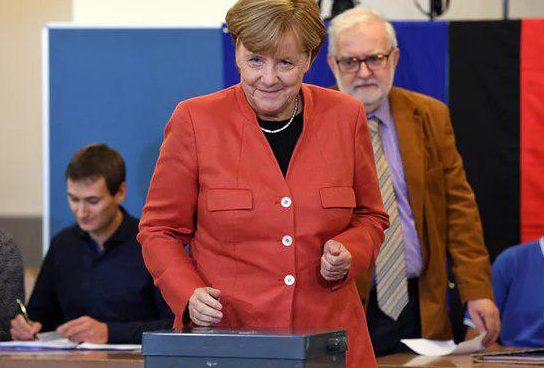
Merkel Wins 4th Term as Far-Right Surges in German Elections

Angela Merkel

Merkel’s party won the majority of votes and became the largest party in the Bundestag with an estimated 218 seats. However, the Party’s score, sharply down on the 41% of the vote it collected in the previous 2013 elections, was widely seen as disappointing and is likely to leave Merkel diminished on the domestic political stage.

Merkel’s main rivals (and outgoing coalition partners), Martin Schulz’s Social Democrat SPD, crashed to just over 20% and a projected 138 seats. Within an hour of the first exit poll, Schulz confirmed statements by other senior party figures that the SPD would not renew its “grand coalition” with the CDU but head into opposition.

The far-right, anti-immigration AfD made a historic breakthrough, winning 13.5% of the vote and a projected 87 seats and becoming the first overtly nationalist party to sit in the Bundestag in 60 years. The party’s performance marks a major shift in Germany’s postwar politics that is likely to produce a very different tone and dynamic inside the Bundestag.

The SPD’s decision to become the official parliamentary opposition leaves the only feasible coalition for Merkel a three-party tie up between the CDU/CSU, the pro-business FDP party who scored 10%, and the Greens, who won 9%: the so-called black-yellow-green Jamaica coalition, which has worked at state level but never been tried in federal government. This could prove tricky to negotiate, The Guardian reported.

Merkel said in her post-election speech that the CDU had hoped for a better result but had faced – referring to the 2015 migrant crisis – an “extraordinary challenge” and had still managed to remain Germany’s largest party. She pledged to listen to AfD voters and win back those she could with “good politics”.

The AfD promised “constructive opposition” in parliament but the Greens have already complained that “Nazis have returned to parliament”.

Trump Following Footsteps of Goebbels: Iran’s Larijani

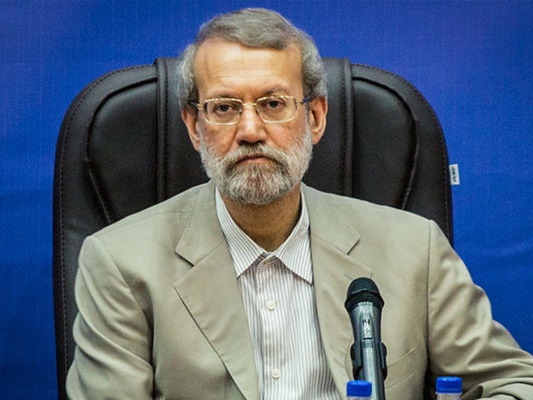
“It seems Trump is following the footsteps of Goebbels when it comes to lying,” Larijani said on Sunday, referring to Joseph Goebbels, the German politician and Reich Minister of Nazi Propaganda who was notorious for his big lies.

“Trump speaks of Yemen crisis but closes his eyes to the fact that it is the US which is providing Saudi Arabia with deadly weapons to target the oppressed nation of Yemen,” he noted, according to a Farsi report by ICANA.

Larijani further referred to Trump’s repetition of his baseless statements about the Joint Comprehensive Plan of Action (JCPOA), saying, “This is a source of shame that the US president keeps uttering such baseless statements.”

The Iranian parliament speaker called JCPOA an international treaty adopted by the United Nation’s Security Council. “The US has been wriggling out of its commitments under the nuclear deal. But this was the Iranian nation who had been dealing with the negative approach with constructive behaviour.”

“We warn the US that it may reach an irreversible point,” he added.

Larijani said Trump has received a due response by the Iranian president in the UN. “We also saw how isolated the US and the Zionist regime were when most of the world’s states voiced their support for the JCPOA.”

Larijani also said Trump spoke in the UN in the language of disco-owners. “His absurd tone as the US president reveals the declining trend of the US status in the world,” he added.

He also raised this question that ‘wasn’t it better for Trump to make a logical stance towards Myanmar massacre instead of levelling baseless accusations against Iran with a foolish and aggressive language?’

”It seems Trump, because of his low-level mentality, has not yet realized the fact that the world has changed. Today the nations have waken up and come to this conclusion that the Islamic Republic of Iran has achieved its goals drawing on the nation’s hard efforts and despite the East and West’s conspiracies.”

The parliament speaker said the Iranian nation has managed to turn itself from a puppet of the US in the region into a proud nation with freedom-seeking causes.

“All states have observed and realized this change in the Iranian nation. So we are witnessing a political vigilance among the Islamic nations which will not be reversed with some leaders’ hollow statements like those of Trump,” he added.

He referred to some parts of Trump’s anti-Iran rhetoric and said the US is seeking to establish its own puppet government in Iran. “But, I tell Mr. Trump that the Iranian nation has been living with satisfaction over the past four decades under a government which overthrew your puppet government and replaced it with a democratic one.”

Larijani said Trump is lagging behind world developments for at least half a century and added just recently more than 70 percent of Iranians went to the polls and elected their next president. “I’m wondering why the US president has not yet seen the huge turnout of Iranian people,” he noted.

He also pointed to the US election saying Trump came to office with Electoral College instead of public votes. “Now the main question is which system is closer to the real democratic values, the Iranian system or that of the US,” he asked.

The Iranian official also said it seems the US officials are suffering from mental inversion. “As the US former secretary of state confessed, the US created ISIS to press ahead with its plans in the region. But it was Iran who rushed to defend the innocent people of Iraq and Syria who came under brutal attacks of ISIS.”