Saturday, December 27, 2025
Home Blog Page 3810

Iran, Uzbekistan Agree on Roadmap for Mutual Cooperation

Iran, Uzbekistan Agree on Roadmap for Mutual Cooperation

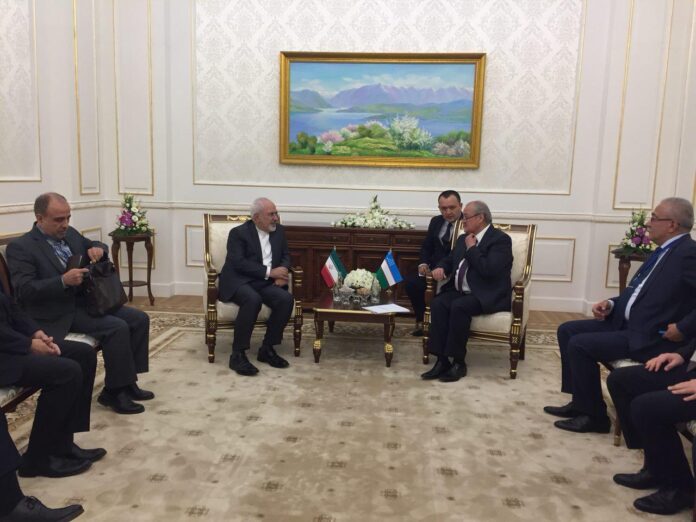
In the Friday meeting held in Samarkand, the two sides discussed the development of bilateral and regional cooperation.

Zarif and Kamilov also exchanged views on the new chapter in the two countries’ relations, especially after the Astana Talks.

Easing of customs restrictions next to banking, commercial and transit cooperation as well as collaboration in the fields of science and technology, beside the tripartite cooperation in the sphere of rail transport were among the other issues discussed.

The two sides further reached a general agreement on a roadmap for bilateral cooperation in various fields, in particular economic ties.

The need for joint cooperation in combating the threat of extremist groups was one of the other topics discussed during this meeting.

“Non-Interference in Saudi Domestic Developments in Iran’s Interests”

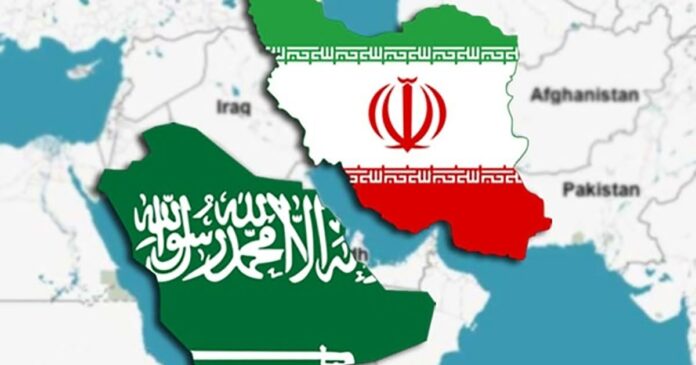
Political analyst Nosratollah Tajik has, in a Farsi article published by Mostaqel newspaper, weighed in on the political and social rifts in Saudi Arabia and how Iran should deal with the country at this juncture. The full text of the opinion piece follows:

We have numerous challenges in the foreign policy arena, one of which is Saudi Arabia. The problems between Saudi Arabia and Iran should be ironed out with patience, forbearance and resolve by using a well-planned strategy and a different diplomacy and seizing opportunities. In other words, traditional methods won’t work when it comes to Saudi Arabia. The reason is that Saudi Arabia has several fault lines within its political, social and ruling systems such as the generation gap and the succession crisis as well as the failure of Riyadh’s policies in recent five years. Accordingly, the country is passing through a new transition period, and if any or some of these fault lines become active, it will have a great impact on the country both in the domestic and foreign arenas and can heavily affect Saudi Arabia’s society, politics and ruling system. From an international perspective, Saudi Arabia, due to its huge financial potential, has been able to influence US and Europe’s policies vis-a-vis the Middle East.

As for the generation gap, it is noteworthy that Saudi Arabia’s new generation represented by Mohammed bin Salman is a non-ideological one with a rather secular mindset. This generation views Riyadh’s problems with Tehran in a geopolitical context and regards Iran as a threat. But at the same time, this generation favours interaction with Iran and needs to create an atmosphere to make it happen. So, the new generation has a new behavioral pattern to be able to achieve Saudi Arabia’s foreign policy objectives through new methods. If all the problems that Saudi Arabia is facing are seen as an opportunity for engagement or the creation of a new atmosphere in the region, then maybe Riyadh’s new behavioral pattern is, in its generality and not in its details, not detrimental to our foreign policy, which also depends on what course of action we will take. We, for our part, can adopt operational measures against them in a pragmatic way and through an accurate and appropriate analysis. Reducing or maintaining the current level of tension with Saudi Arabia will help achieve our foreign policy objectives. The region has a complex situation, and we should take the initiative through easing domestic and regional tensions before any future developments unfold.

In the equation involving Iran and Saudi Arabia, a third parameter called Trump has also come into play unlike in the Obama era. This means the involvement of an element without any plans with unspecified objectives that only cares about his immediate and financial interests in the region. This has created problems for Iran’s diplomacy apparatus. As a result, ongoing developments should be closely monitored and incorporated into equations. In fact, although during Trump’s tenure, our dealing with the US will be difficult and somehow impossible, we should not get disappointed at and turn a blind eye to the events playing out in the region. We should also be careful about the formation of new blocs in the world. The Trump administration is facing a crisis at home and may not last the full four-year term. At the same time, it may try to create a crisis in the Middle East with the focus on Iran to deflect public attention from America’s domestic problems.

Therefore, when it comes to our regional policies and securing our national interests, we should preferably pursue a method that will cause the least possible confrontation between Iran and the United States. By using different methods and engaging with influential powers and offering new behavioral patterns, we will not only be able to cushion Trump’s rhetoric, but we will also be able to show that the ideology and some of the policies of Saudi Araba both at home and abroad are unpleasant and detrimental to the whole world. The Islamic Republic of Iran ought to move toward the zero-tension policy. In other words, Iran should ease tensions over its regional policies in order to be able to put into effect its political expansion model, and at the same time contain growing tensions in the region. Anyway, we are neighbours in a sensitive region. It is right that goodneighbourliness should rule relations between neighbours, which is something logical and a sine qua non, but it is not per se adequate. So, non-interference in the ongoing developments in Saudi Arabia will be to our benefit, so that the Saudi society will be able to pass through its transition period. Amen to that.

Riyadh Brazenly Meddling in Lebanon’s Internal Affairs: Iranian Cleric

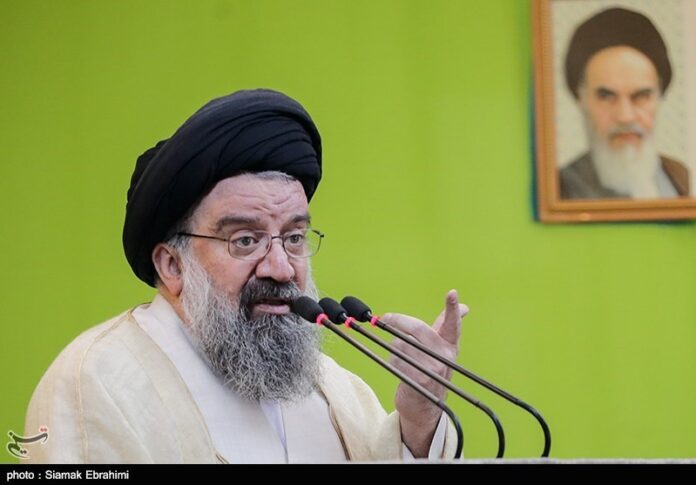
Ayatollah Ahmad Khatami

Tehran’s Interim Friday Prayer Leader Ayatollah Ahmad Khatami blasted Saudi Arabia for interfering in Lebanon’s internal affairs.

“Riyadh summoned the prime minister of another country (Lebanon’s Saad Hariri); there is no submission more humiliating than this in the arena of politics,” he added.

He added Saudi Arabia will see the result of its actions.

“Saudi Arabia will receive such a slap in the face that it will not be able to stand back on its feet,” he stressed.

He then underscored that Iran is so powerful that Saudi Arabia cannot confront it.

“This immature kid in Saudi Arabia keeps threatening Iran and Hezbollah and saying they will confront us; shame on you; [former Iraqi dictator] Saddam Hussein was stronger than you; he  locked horns with the Iranian nation, and this nation made him sorry; you’re no match for us,” he added.

Ayatollah Khatami then highlighted the strong unity among, and religiosity of Iranian people.

He underscored that religion is embedded in Tehran as manifested in congregational religious ceremonies and processions.

“Of course, some problems exist, but they should not be blown out of proportion,” the top cleric said.

Era of Unilateral Security Has Come to End: Iran’s Zarif

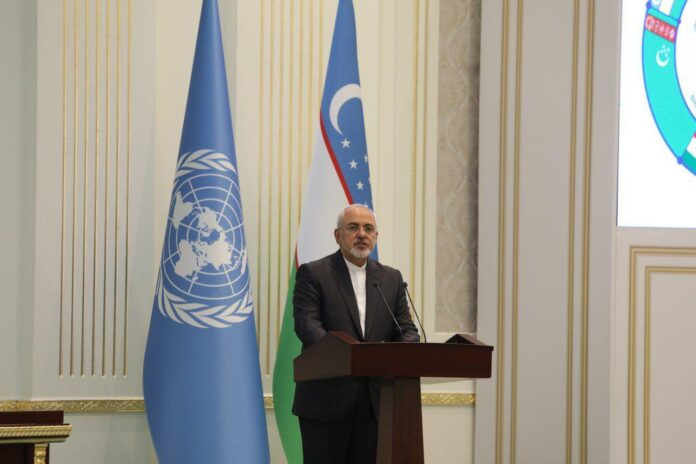
Speaking at an international security conference in Uzbekistan’s Samarkand, Zarif stated after the events in Iraq, Syria, Yemen and Afghanistan, trans-regional meddlesome powers and the countries that seek to create insecurity by putting the security of others at stake to achieve their fabricated security have well learned that the era of unilateral security has come to an end.

“Security in the present-day interconnected world is not limited to military dimensions, and is a multifaceted, intertwined and comprehensive issue,” underlined Iran’s foreign minister.

The Iranian top diplomat went on to say that “today, you cannot buy security with hundreds of billions of dollars and ship it to the county. Commercialization of security is a new topic added by some international and trans-regional powers to political terms, and unfortunately they have good clients in this dollar-for-security deal.”

“Today, security is an integrated and correlative issue in which security of one depends on the security of the other.”

Zarif also underpinned that nowadays, in order to achieve security, all must rely on “people” as the most important element of a country’s security to attain an endogenous security, and then achieve a sustainable and collective security through a constructive engagement with neighbours.

He noted that the strategy of the Islamic Republic of Iran is based on the development and boosting of cooperation in various fields, making efforts to establish and maintain peace and stability in the region, as well as convergence and cooperation with regional institutions and international organizations.

“We have always been considering the security and stability of our neighbours and neighbouring regions as our own security and stability. Contributing to the resolution of disputes and tensions, bilateral security collaborations to counter the common threats of Takfiri terrorism, extremism, drug trafficking and illegal immigration are the most important manifestations of the active and effective participation of the Islamic Republic of Iran in boosting and strengthening stability and security in the Central Asian region,” he told the International Conference on Security and Sustainable Development in Central Asia.

Zarif also underlined that effective confrontation with extremism and Takfiri terrorism, which poses a serious threat to the security and stability of the region in West Asia, Central Asia, the Caucasus, the Indian subcontinent, and even the regions in North Africa and Southeast Asia, needs the all-inclusive and multilateral cooperation, interaction, synergy, and consultation of regional countries.

“Establishing a Nuclear-Weapon-Free Zone in Central Asia is a move that shows a good understanding of security. The Islamic Republic of Iran is not only religiously opposed to the development, production, and use of such weapons, but also seriously believes that these weapons per se undermine stability and security, and must be eliminated from the world. Since 1974, when Iran proposed a Nuclear-Weapon-Free and WMD-Free Zone for the Middle East, the country has pursued the issue, but to no avail because of the aggressive and hegemonic policies of the Zionist regime of Israel in acquiring nuclear weapons, and the US support for Tel Aviv. By clinching the nuclear deal and fulfilling all our commitments under the Joint Comprehensive Plan of Action (JCPOA), we have in action proved our compliance with the principle of non-proliferation and nuclear disarmament,” added Iran’s foreign minister.

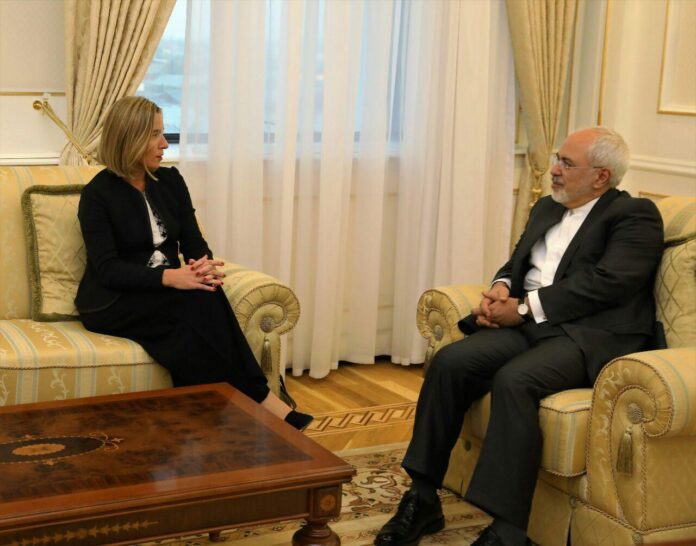
EU’s Mogherini, Iran’s Zarif Meet in Uzbekistan

EU’s Mogherini, Iran’s Zarif Meet in Uzbekistan

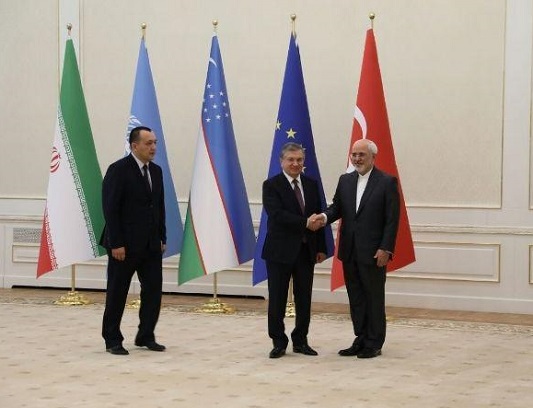
In this meeting, which was held on Friday on the sidelines of the International Conference on Security and Sustainable Development in Central Asia, Zarif and Mogherini discussed the latest issues of mutual interest.

Earlier, Mogherini said in the United States that it is very important to maintain the nuclear deal as it is because re-negotiating the accord is not possible.

Her remarks came after her meeting with US officials.

Iran’s Ex-FM Receives Japanese Emperor’s Highest Accolade

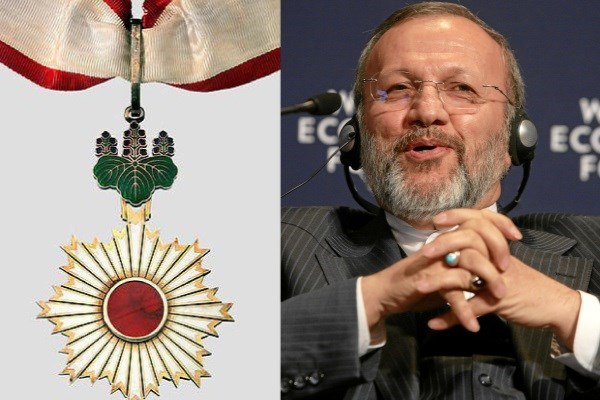
Iran’s former foreign minister Manouchehr Mottaki has received the Grand Cordon of the Order of the Rising Sun, the highest accolade of Japan’s emperor.

He received it from the Japanese emperor and prime minister in a special ceremony on Tuesday, according to a Farsi report by ISNA.

As Iran’s ex-ambassador to Tokyo and former foreign minister, Mottaki played a pivotal role in boosting friendship and enhancing relations between Iran and Japan, wrote the Japanese Embassy in Tehran on its Persian-language website.

When Mottaki was serving as Iran’s ambassador to Japan from 1995-1999, he contributed to promotion of Tehran-Tokyo ties on different fronts.

One of Mottaki’s legacies is Iranian Cultural Week celebrated by the Iranian embassy in Japan.

When he was Iran’s foreign minister from 2005 and 2010, Mottaki visited Japan three times and made utmost efforts to further boost mutual ties.

Mottaki travelled to Tokyo at the official invitation of Japanese Premier Shinzo Abe to attended the ceremony where he received the accolade.

Lebanon Country of Democracy, Elections, Not Allegiance: Minister

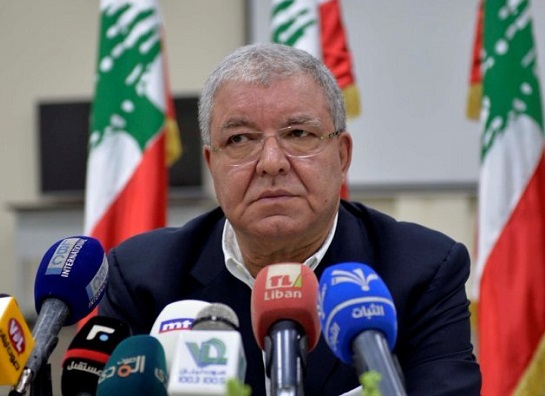
Nohad Machnouk says Lebanon’s democratic system is based on elections, not on a simple pledge of allegiance.

“The Lebanese are not a herd of sheep or a plot of land whose ownership can be transferred from one person to another,” added Machnouk.

He went on to say that Lebanon’s policies are developed through elections, not by allegiance, underlining that anyone who thinks otherwise, has ignored the political nature of Lebanon who knows nothing about the country’s democratic system.

According to a Farsi report by Fars News Agency, Lebanon’s al-AKhbar has reported that the new Saudi ambassador to Beirut has talked to the family of former Prime Minister Rafic Hariri, including his wife and daughter, asking them to appoint Saad’s elder brother Bahaa Hariri as the head of Future Movement.

He has also asked Hariri family to go to Riyadh as soon as possible and swear allegiance to Bahaa along with Saad Hariri. Furthermore, Saad Hariri has agreed to this in exchange for his freedom, living in Europe and withdrawal from political activity.

The report says based on orders received from Saudis, Saad must return to Beirut, formally submit his resignation to President Michel Aoun, return immediately to Riyadh and swear allegiance to his older brother.

Iran FM, Uzbek President Discuss Promotion of Ties

During the Friday meeting in the Uzbek city of Samarkand, the two sides conferred on ways to expand bilateral relations, especially economic and scientific collaborations.

Cooperation in the fields of energy, transit, quadrilateral corridor, the establishment of a trilateral group to focus on rail transport partnerships between Iran, Uzbekistan and Afghanistan, and fight against terrorism were among the other key issues discussed in this meeting.

The two sides also welcomed holding a meeting of the joint economic commission in December.

Zarif is in the historical city of Samarkand to attend the International Conference on Security and Sustainable Development in Central Asia.

Iran’s Gondishapur University Inscribed as World Heritage Site

Head of Gondishapur, Mohammad Reza Assari, said the university was registered on November 3 in the UNESCO’s list of world heritage.

In a Farsi interview with ISNA, Assari also said the idea to register Gondishapur University in the UNESCO’s world heritage list was raised first three years ago while the arrangements to hold Gondishapur Congress were being made.

Assari went on saying the registration was made with the aim of reintroducing the long history of the Academy of Gondishapur. “We shared our historical evidence with the UNESCO office in Iran.”

The head of the university said the office confirmed the authenticity of the evidence and the board of the directors is now waiting for the final registration of the university by the world body.

Elsewhere in his interview, Assari added the university was established in 271. “We are happy that the treasure which we had closed our eyes on is now recognized internationally as a historical and ancient site. Today, we can say that Iran is hosting the most ancient higher education centre in the world.”

Assari stressed the Gondishapur University in Dezful has been recognized as the first university in the world. “So far the UNESCO has confirmed our evidence on the history of the university.”

According to Assari, right now many foreign tourists travel to Dezful to visit the world’s oldest university. “In his book on the history of Gondishapur University, Mahmoud Mahfuz from Turkey quotes a line inscribed on the gate of the educational centre saying science and knowledge stand higher compared with sward and force.”

The world’s oldest university was built by Shapour I of Sassanid dynasty in a namesake city which stood near the existing city of Dezful. It included a medical school and was a centrefor training scientists for centuries to come. Iranian, Greek, Indian and Roman scientists conducted studies and scientific research there.

Iranian Writers Invited to Visit Italy

Simon de Conza, the head of the Italian Writers’ Association,has referred to the enthusiasms of Italian writers to establish close contacts with their Iranian counterparts and said ”since last year and particularly after Paris Book Fair, we began to make close contacts with Iranian writers but unfortunately the level of our contacts remains low.”

In an interview with the Mehr News Agency, he went on to say “during the past years, we found out that there are many things about Iran and its literature which we don’t know yet. So, we thought it is necessary to raise the level of our cultural relations because it is now too low.”

Conza also added that Italian writers are interested in the presence of more Iranian writers in Turin Book Fair. “So, we hope with better arrangements, we could witness their further presence in our cultural and literary events.”

During the interview, he added most Iranian and Italian writers and publishers don’t know yet that there are many commonalities between their works. “We are now trying to discover the commonalities. To this end, we need to hold more talks and establish closer relations with each other.”

He called for closer relations between writers from around the world and said “we are seeking a new way to provide the Iranian and Italian writers with appropriate mechanisms to translate and publish their works in other languages and countries.”

Conza stated the Italian association is planning to invite two foreign writers to Italy each month. “We will accommodate and provide them with good facilities so that they would write new pieces or complete their unfinished projects.”

“We will also link them with some Italian publishers to have their works published. We are very interested in having the Iranian writers in our country as well and strengthen the relations between Iranian and Italian publishers.”