Saturday, May 2, 2026
Home Blog Page 379

Saudi Arabia says fully supports US-Iran negotiations

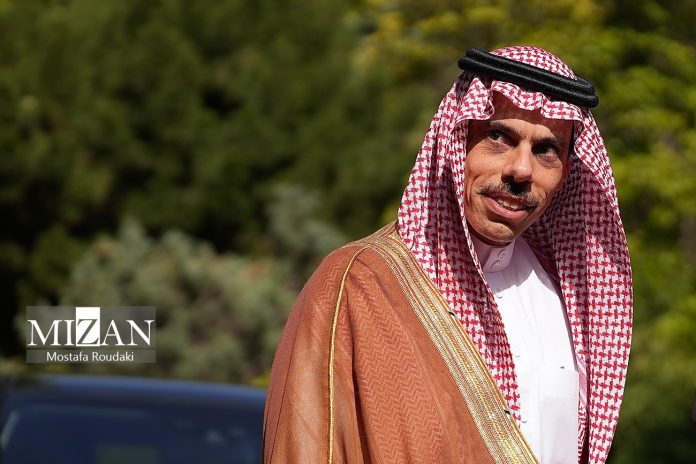
Faisal bin Farhan Al-Saud

Positive outcomes from the US-Iran nuclear talks would remove a burden of risk in the region, but that would not minimize current challenges as the Gaza war remains ongoing, bin Farhan said.

“If, for instance, the US and Iran can successfully conclude their nuclear negotiations, that will remove a huge burden of risk in our region, and will open up significant avenues for even greater cooperation, greater regional integration, greater region cooperation, trade, investment,” in very significant ways, Prince Faisal stated, adding that Kingdom “fully supports” the current nuclear negotiations between US and Iran.

“Obviously, that doesn’t minimize the challenges. We still have the war in Gaza going on, where the people of Gaza continue to suffer incredible hardship,” Prince Faisal said, speaking to the press at after the conclusion of PGCC-US Summit in Riyadh at the end of US President Donald Trump’s visit to Riyadh.

He added that the current US administration has presented that it is able and willing to take courageous decisions.

“And that can potentially help, first of all, to bring forward a ceasefire in Gaza and potentially also open up pathways to resolving the broader issues of Palestine and possibly even moving towards, one hopes, a Palestinian state. Beyond that, then, you know, really having a breakthrough in our region.”

“We need to reach a ceasefire in Gaza as soon as possible,” he added, saying it would be difficult to supply aid to the besieged enclave without a ceasefire.

The minister emphasized that the Saudi partnership with the US in defense and security has spanned for decades, and that it will continue to be strengthened.

Additionally, the diplomat stated there will be many investment opportunities in Syria after the US lifts sanctions, a day after a US announcement it would lift all sanctions on the country at the request of Saudi Arabia’s Crown Prince Mohammed bin Salman.

Prince Faisal added that there will be a breakthrough in the Kingdom’s support to Syria after the lifting of US sanctions.
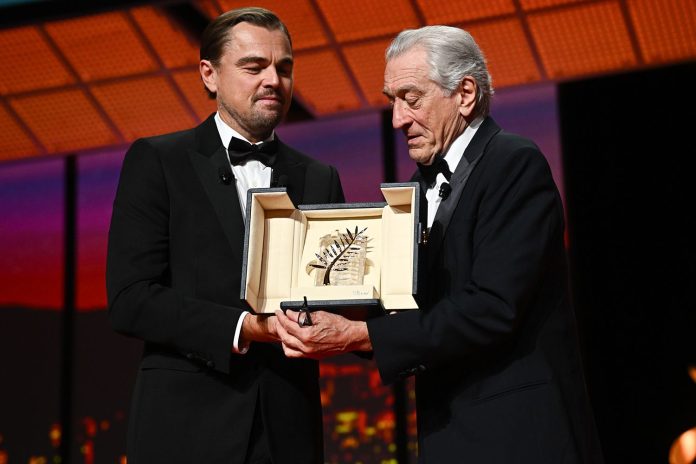
Robert De Niro slams Trump as ‘philistine president’ and enemy of arts at Cannes Film Festival

The legendary actor was on hand to accept the fest’s honorary Palme d’Or, which was presented to him by his “This Boy’s Life” and “Killers of the Flower Moon” collaborator Leonardo DiCaprio. After giving DiCaprio a kiss on the cheek, De Niro launched into an impassioned speech about the threat U.S. democracy is currently under.

“In my country, we’re fighting like hell for the democracy we once took for granted. And that affects all of us here because the arts are democratic,” De Niro said.

“Art is inclusive. It brings people together, like tonight. Art looks for truth, art embraces diversity and that’s why art is a threat — that’s why we are a threat — to autocrats and fascists,” he added.

De Niro then turned to Trump’s proposed 100% tariff on all films produced outside of the U.S., which was announced just over a week before the festival.

“Let that sink in for a minute,” he said, adding, “You can’t put a price on creativity, but apparently you can put a tariff on it.”

He continued, “Of course, this is unacceptable. All these attacks are unacceptable, and this isn’t just an American problem. It’s a global one. And like a film, we can’t just all sit back and watch. We have to act now. Without violence, but with great passion and determination. It’s time for everyone who cares about liberty to organize, to protest, and when there are elections, of course to vote. Tonight, and for the next 11 days, we show our strength and commitment by celebrating art in this glorious festival.”

De Niro — who has won two Oscars over the course of his six-decade career — is best known for his 10 collaborations with director Martin Scorsese, including “Mean Streets” (1973), “Taxi Driver” (1976), “Raging Bull” (1980), “Goodfellas” (1990), “The Irishman” (2019) and 2023’s “Killers of the Flower Moon.” He’s no stranger to Cannes, having first attended with “Mean Streets” followed by Sergio Leone’s 1984 crime film “Once Upon a Time in America,” Barry Levinson’s satirical comedy “What Just Happened” in 2008 and serving as president of the competition jury in 2011. De Niro was most recently on the Croisette for “Killers of the Flower Moon,” which received a nine-minute standing ovation.

The 78th edition of the Cannes Film Festival runs from May 13 to 24.

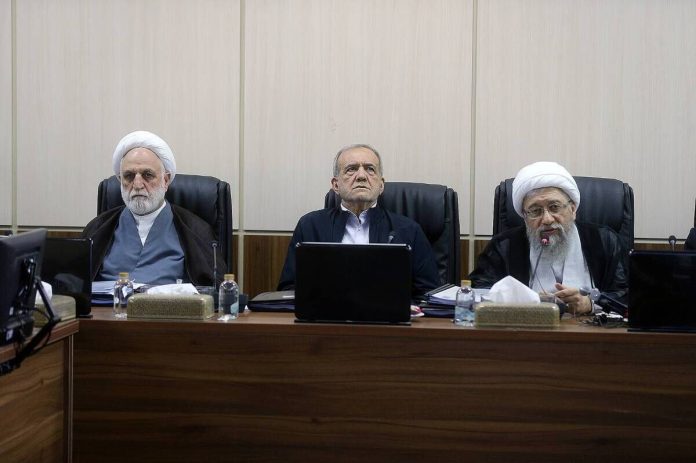
Iran’s Expediency Council approves Palermo Convention accession with conditions

The decision came after extensive discussions at three plenary sessions and five meetings in a joint commission.

Expediency Council Spokesman Seyed Mohsen Dehnavi confirmed the development through his personal X account. He said Iran’s Guardian Council had already approved the bill prior to this decision.

He also stressed that Iran’s acceptance of the Palermo Convention will be in accordance with its Constitution and national laws.

The decision was further confirmed by head of the Financial Intelligence Center and Secretary of the Supreme Council for the Prevention and Fight Against Money Laundering and Terrorism Financing, Hadi Khani.

Khani said after months of expert discussions, the Palermo Convention was officially approved during a session on Wednesday afternoon.

The Palermo Convention is a UN treaty aimed at combating transnational organized crime, including money laundering and the financing of terrorism. Iran’s move to consider this convention is directly linked to its ongoing discussions with the Financial Action Task Force (FATF), an intergovernmental organization established to develop policies aimed at combating money laundering and terrorist financing worldwide.

The conditions Iran has attached to the decision reflect its insistence on maintaining sovereignty over its legal and financial systems, the official added.

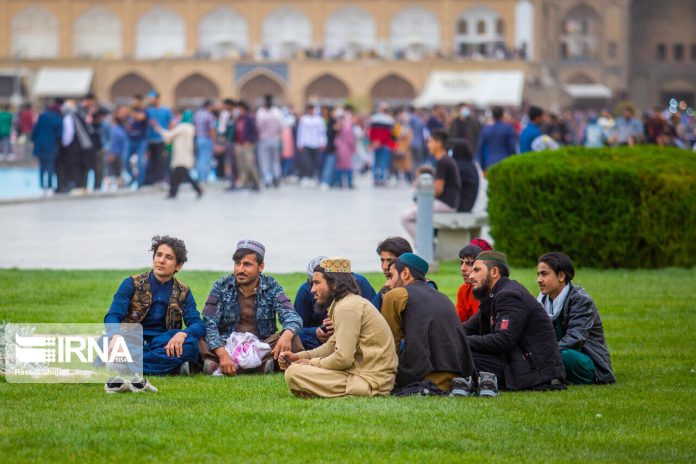
Governor: Nearly half of Iran’s undocumented Afghan migrants reside in Tehran Province

Fakhari stressed the need for a systematic and lawful approach to the presence of the illegal Afghan migrants in the capital region.

“These individuals must be identified in accordance with the law and repatriated respectfully to their home country,” he said.

The governor’s remarks reflect increasing national and local attention on migration management, particularly in urban centers like Tehran, where irregular migration poses social, economic, and security challenges.

Iran hosts one of the largest refugee populations in the world, primarily from neighboring Afghanistan.

While many reside legally under temporary protection or refugee status, a significant number remain undocumented due to a porous border and also instability inside Afghanistan, which forces people there to contemplate migrating to Iran.

Iran has frequently urged the UN to assist Tehran in dealing with the issue.

Unofficial sources say around 10 million Afghan migrants reside in Iran.

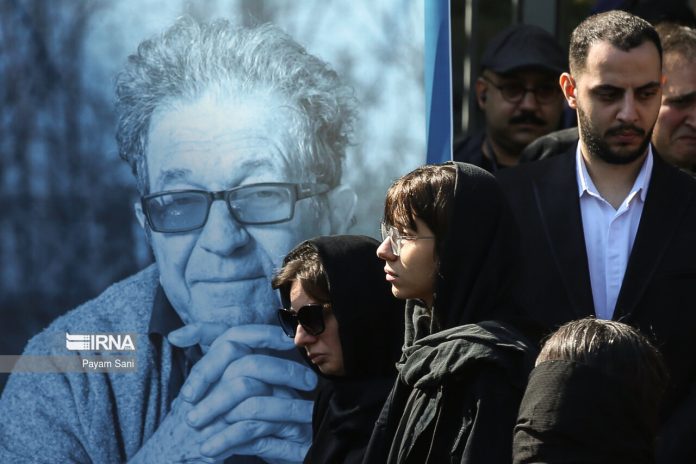
Iranian filmmaker Mehrjui’s daughter rejects retribution for parents’ killers

Dariush Mehrjui

The statement comes after Iran’s Supreme Court upheld the sentences issued for those convicted of the October 2023 double homicide.

According to Hossein Fazeli-Herkandi, head of the Alborz Province Judiciary, the principal defendant was sentenced to two counts of qisas (retributive execution) for the murders, along with 27 years in prison for additional charges, including theft. Three other defendants received a total of 77 years in prison for charges ranging from attempted murder to aiding and abetting and assault.

The Judiciary reports that the suspects were arrested within five days of the killings, and a swift investigation led to indictments within two months. Court hearings were held in January 2024, and the initial verdict was issued in February. After a brief review by the Supreme Court, the original sentences were upheld in March 2025.

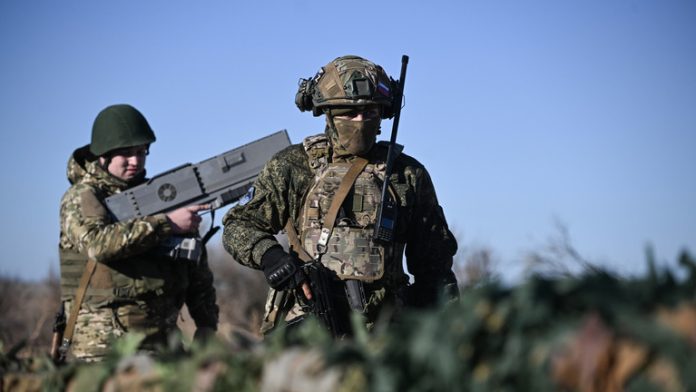
Russia likely preparing major offensive in Ukraine despite peace endeavours: FT

Russian Army

These reported preparations indicate Moscow’s efforts to escalate the war despite expected ceasefire talks this week and calls by Kyiv and its partners for an unconditional 30-day truce.

Russia has rejected ceasefire proposals unless accompanied by a halt on military aid for Ukraine and continues ground assaults along the front and long-range strikes on Ukrainian infrastructure.

Kyiv has been warning about a major Russian spring offensive aimed at seizing as much territory as possible to strengthen its position in potential negotiations. Commander-in-Chief Oleksandr Syrskyi said last month this campaign had “effectively already begun” with the intensification of Russian aggression.

President Volodymyr Zelensky is traveling to Turkey this week and has invited Russian President Vladimir Putin to discuss a ceasefire in what would be their first meeting since 2019.

U.S. President Donald Trump, who pledged to broker a peace deal between Moscow and Kyiv, voiced optimism about the potential talks and dispatched Secretary of State Marco Rubio and special envoys Steve Witkoff and Keith Kellogg to attend.

The Kremlin has not confirmed whether Putin will attend the talks himself, but the Washington Post reported that Moscow will be represented by Foreign Minister Sergey Lavrov and Putin’s foreign policy aide, Yuri Ushakov.

Andriy Yermak, Zelensky’s chief of staff, stated that if Putin does not come to Turkey, it will be “the last signal” that Russia “does not want to end the war and is not ready for any negotiations.”

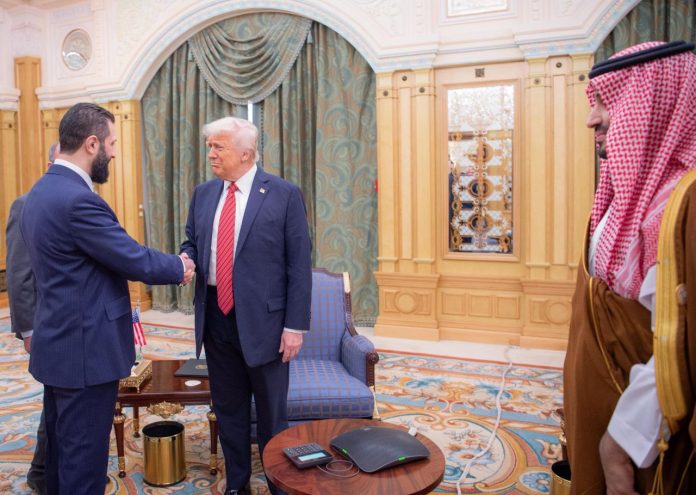
Trump meets Syrian president, calls on him to establish ties with Israel

Trump Jolani

Trump met al-Sharaa, who once pledged allegiance to al Qaeda and swept to power at the head of a group that Washington has called a terrorist organisation, before a summit between the United States and Persian Gulf Arab countries.

Photos posted on Saudi state television showed them shaking hands in the presence of Saudi Arabia’s Crown Prince Mohammed bin Salman, also known as MbS.

Turkish President Tayyip Erdogan joined Trump and MbS virtually in the meeting, Turkey’s Anadolu News Agency reported.

Trump urged Sharaa to join the United Arab Emirates, Bahrain and Morocco, which normalised relations with Israel under the U.S.-brokered Abraham Accords in 2020, the White House press secretary posted on X.

The United States also hopes Saudi Arabia will join the Abraham Accords, but discussions came to a halt after the Gaza war erupted and the kingdom insists there can be no normalisation without Palestinian statehood.

Trump stated on Tuesday Saudi Arabia would join the accords in its own time.

Despite concerns within sectors of his administration over Syria’s leaders’ former ties to al Qaeda, Trump added he would lift sanctions on Syria in a major policy shift. He also said Washington was exploring normalising relations with Syria’s government beginning with his meeting with Sharaa.

The lifting of sanctions came despite deep Israeli suspicion of Sharaa’s administration.

Israeli officials have continued to describe Sharaa as “a jihadist”, though he severed ties with al Qaeda in 2016.

The decision is a major boost for Sharaa, who has been struggling to bring the country under the control of the Damascus government after toppling former President Bashar al-Assad in December.

Removing U.S. sanctions that cut Syria off from the global financial system will clear the way for greater engagement by humanitarian organizations working in Syria, easing foreign investment and trade as the country rebuilds from a civil war.

Saudi Arabia’s Foreign Minister Prince Faisal bin Farhan Al-Saud told a press conference Riyadh will support Syria’s economic recovery and that there are many investment opportunities in the country after sanctions are lifted.

U.S. ally Israel has opposed sanctions relief for Syria and has escalated its military operations since Assad was toppled.

Israel has seized ground in the southwest of the country, warned the Syrian government against deploying forces there, and has blown up much of the Syrian military’s heavy weapons and equipment in the days after Assad fell.

The challenges facing Syria’s new government were also laid bare in March when Assad loyalists attacked government forces, prompting revenge attacks in which gunmen killed hundreds of civilians from the Alawite minority, drawing strong U.S. condemnation.

Sharaa was for years the leader of al Qaeda’s official wing in the Syrian conflict. He first joined the group in Iraq, where he spent five years in a U.S. prison. The United States removed a $10 million bounty on Sharaa’s head in December.

The Syrian foreign minister announced in a statement on Wednesday that the meeting between Trump and Sharaa included discussions about combating terrorism and cooperation in eliminating the influence of non-state actors and armed groups that threaten Syrian stability, including Daesh.

This meeting will be followed by another between the Syrian foreign minister and his U.S. counterpart Marco Rubio.

Iran says ready for negotiations with U.S. and Europe, rejects ‘deceptive’ rhetoric

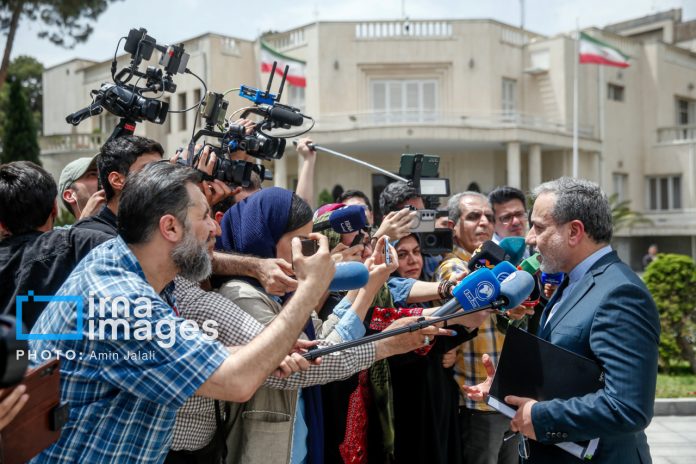
Speaking after a cabinet meeting on Wednesday, Araghchi said Iran is awaiting an official announcement from Oman regarding the time and location of the fifth round of indirect talks with Washington.
He also noted that further discussions with European counterparts are planned, with deputy-level negotiations scheduled for Friday in Istanbul.

“We are very interested in reaching a regional understanding that can enhance security and mutual understanding between Iran and its neighbors – without the interference of foreign powers,” he said.

Araghchi criticized US President Donald Trump’s recent remarks, calling them “highly deceptive.”

He said Washington remains the primary cause of Iran’s economic hardships, citing decades of sanctions and military threats.

He dismissed Trump’s characterization of Iran as a regional threat, pointing instead to US support for Israel.

“The same countries speaking of regional prosperity ignore who really causes instability,” he said.

He emphasized that maximum pressure policies have already failed and warned that mischaracterizing Iran’s role in the region is “a deliberate distortion of reality.”

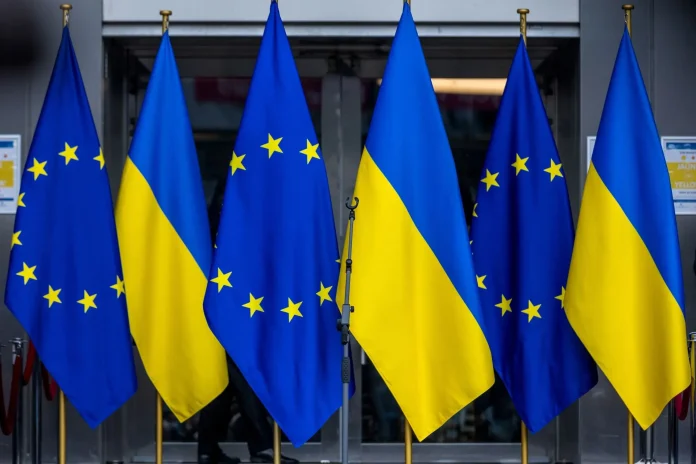
EU agrees on new sanctions package targeting Russian ‘shadow fleet’

“This is a strong signal that the EU remains united behind the people of Ukraine,” European Council President Antonio Costa wrote on X.

The measures target almost 200 ships of Russia’s shadow fleet, 30 companies involved in sanctions evasion, and 75 sanctions on entities and individuals linked to the Russian military-industrial complex, a senior EU official speaking on condition of anonymity told the Kyiv Independent.

Russia has been using the shadow fleet to avoid Western sanctions and ship out its oil above the G7-imposed price cap. European countries have also linked the fleet to espionage and sabotage operations.

The new set of steps further includes measures targeting Russia’s hybrid operations, namely establishing the legal basis for countering propaganda outlets or vessels and entities involved in the sabotage of underwater cables, airports, or servers.

“So, you can see the direction we are going. In addition to ‘traditional’ sectoral and individual sanctions, we are broadening and more actively using other sanctions to hit Russia where we see the threats or where they aim to bypass the existing sanctions,” the source added.

The EU will also sanction more than 20 entities and individuals disseminating disinformation, and 20 judges and prosecutors involved in legal cases against two Russian oppositionists, Vladimir Kara-Murza and late Alexei Navalny.

Brussels is further imposing a ban on chemicals used in missile production.

“I welcome the agreement on our 17th sanctions package against Russia,” European Commission President Ursula von der Leyen said on X, adding, “This war has to end. We will keep the pressure high on the Kremlin.”

Talks on the 17th package began shortly after the EU adopted the 16th package on Feb. 24. The last package targeted the shadow fleet, financial institutions, entities involved in the Russian military-industrial complex, and more.

President Volodymyr Zelensky and the leaders of the United Kingdom, France, Germany, and Poland have pledged to impose additional sanctions against Russia if the Kremlin does not accept their proposal for an unconditional 30-day ceasefire.

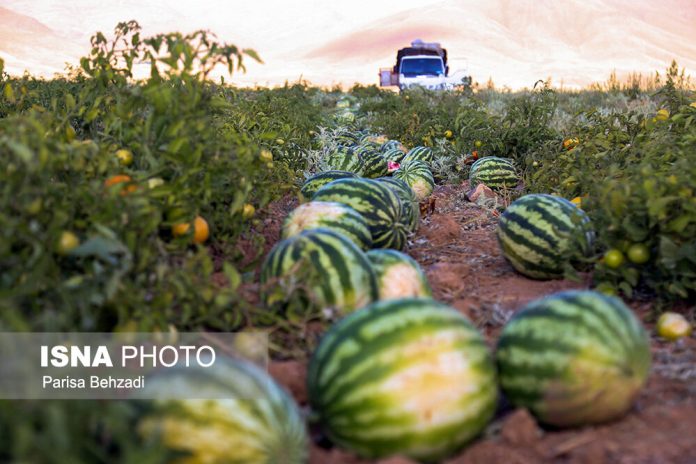
Iranian MP responds to Russian claims on watermelon safety: “A promotional stunt for Dagestan produce”

Peyman Falsafi, Deputy Chairman of the Iranian Parliament’s Agriculture Committee, said the claims – made by Russian MP Abdulkhakim Gadzhiyev – were baseless and politically motivated.

He argued that the statement served as propaganda against Iranian produce, intended to boost the profile of local Russian crops from the MP’s own constituency.

“Iran’s agricultural products, including fruits and vegetables, are regularly tested and monitored by the country’s Plant Protection Research Institute. These tests confirm that nitrate and pesticide residues remain within safe limits,” Falsafi said, citing routine scientific assessments.

He also questioned the credibility of the nitrate-detecting device used in the video shared by the Russian MP, calling for evidence-based dialogue instead of public theatrics.

Highlighting Russia’s strict import controls, Falsafi added that no agricultural products can enter the country without clearance from customs and health authorities. “If Iranian products made it to Russian markets, it means they passed all required health certifications,” he concluded.