Saturday, May 2, 2026
Home Blog Page 378

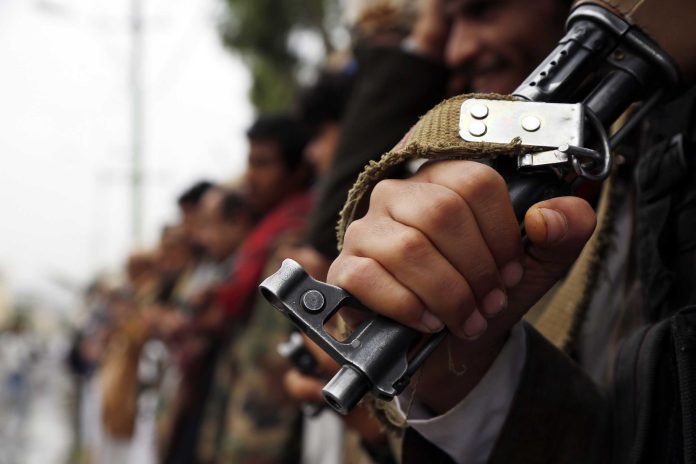
Iran rejects US accusations at UN Security Council meeting on Yemen

Yemen Houthi

In an official statement, the Iranian mission criticized Washington for deflecting attention from its own actions, stating that the US is attempting to avoid accountability for “brutal attacks on civilians and civilian infrastructure in Yemen.”

“At today’s UNSC meeting on Yemen, the US once again launched a cynical and baseless accusation against Iran, desperately trying to deflect from its own brutal attacks on civilians and civilian infrastructure in Yemen,” the statement read.

“The US must be held fully accountable for such severe violations. Blame games won’t wash away US heinous crimes,” it added.

The remarks come amid ongoing tensions over the humanitarian crisis in Yemen, where years of war have left millions in need of aid.

Tehran has repeatedly denied allegations of providing military support to Sanaa-based Yemeni forces and accuses, saying the US and its allies are exacerbating the conflict through military intervention.

U.S. close to a nuclear accord with Iran: Trump

“We’re in very serious negotiations with Iran for long-term peace,” Trump said on a tour of the Gulf, according to a shared pool report by AFP.

Fresh talks between Iranian and U.S. negotiators to resolve disputes over Tehran’s nuclear programme ended in Oman on Sunday with further negotiations planned, officials said, as Tehran publicly insisted on continuing its uranium enrichment.

Though Tehran and Washington have both announced they prefer diplomacy to resolve the decades-long nuclear dispute, they remain deeply divided on several red lines that negotiators will have to circumvent to reach a new deal and avert future military action.

Iran’s president reacted on Thursday to Trump’s comments on Tuesday calling Tehran the “most destructive force” in the Middle East and contrasting the “collapse and suffering” caused by Iranian leaders with Saudi Arabia’s “constructive vision.”

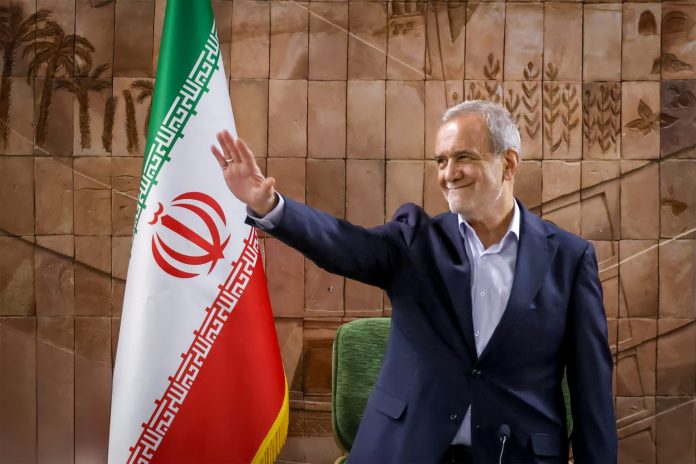
“Trump thinks he can sanction and threaten us and then talk of human rights. All the crimes and regional instability is caused by them (the United States),” Masoud Pezeshkian stressed, adding that Tehran wanted peace in contrast to U.S. warmongering.

“Saudi Arabia is a Muslim country. How can we be against them? Trump wants to put Islamic countries on one side and Iran on the other. He wants to create instability inside Iran.”

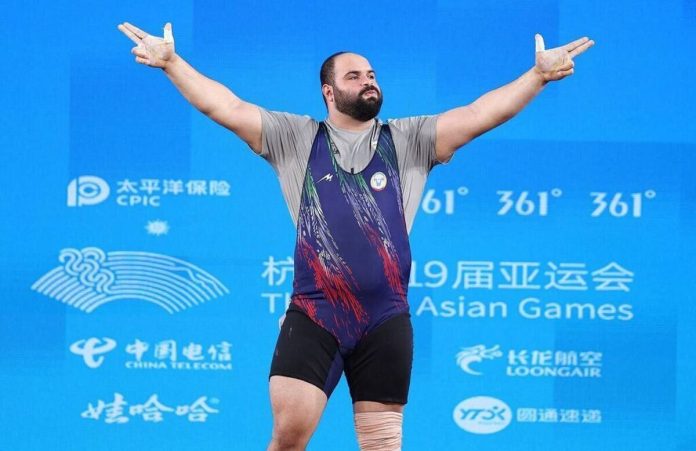
Iran’s Ayat Sharifi crowned strongest man of Asia at 2025 Asian Weightlifting Championships

Sharifi secured silver in the snatch with a lift of 195kg, following successful attempts at 185kg and 191kg. He then dominated the clean and jerk event, lifting 227kg for gold. Although he managed 235kg in his second attempt, the jury ruled it invalid, and he withdrew from his third lift. His combined total of 422kg earned him the overall gold medal.

Iran concluded the tournament with eight medals: five gold, two silver, and one bronze, placing second in the medal standings behind host nation China.

Other Iranian medalists included Ali Alipour, who claimed two golds and one silver in the 96kg category, and Alireza Moeini, who earned a gold in snatch and a bronze overall.

Sharifi’s performance capped off a strong showing for Iran, reaffirming the country’s status as a weightlifting powerhouse in the region.

Aide to Iran Leader: Tehran would forgo highly enriched uranium in nuclear agreement with Washington

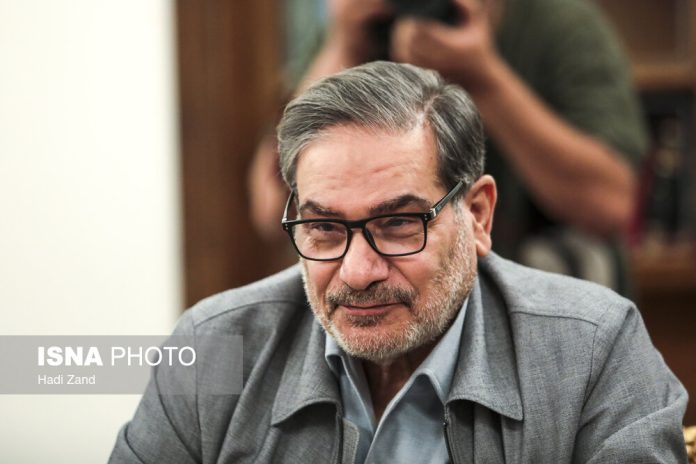
Ali Shamkhani

Ali Shamkhani, a top political, military and nuclear adviser to Iranian Supreme Leader Ayatollah Seyed Ali Khamenei, is one of the most senior Iranian officials to speak publicly about the ongoing discussions between Iran and the US.

He stated Iran would commit to never making nuclear weapons, getting rid of its stockpiles of highly enriched uranium which can be weaponized, agree to enrich uranium only to the lower levels needed for civilian use, and allow international inspectors to supervise the process, in exchange for the immediate lifting of all economic sanctions on Iran.

Asked if Iran would agree to sign an agreement today if those conditions were met, Shamkhani said, “Yes.”

His comments appear to be the clearest public statement yet on Iran’s expectations and willingness to reach a deal from the supreme leader’s inner circle.

“It’s still possible. If the Americans act as they say, for sure we can have better relations,” Shamkhani continued, adding, “it can lead to a better situation in the near future.”

Shamkhani sat down with NBC News just hours after Trump offered Iran “an olive branch” that was combined with threats of crippling economic sanctions should Iran not accept an agreement to limit its nuclear program.

Trump’s remarks were criticized by Iranian President Masoud Pezeshkian.

“He thinks he can come here, chant slogans, and scare us. For us, martyrdom is far sweeter than dying in bed,” he said Wednesday in comments broadcast live on state television, according to Reuters.

“You came to frighten us? We will not bow to any bully.”

Shamkhani also expressed frustration at Trump’s tone and continued threats.

“He talks about the olive branch, which we have not seen. It’s all barbed wire,” he added.

Trump has repeatedly said Iran cannot be allowed to develop a nuclear weapon.

While Iran has always denied that it is seeking to do so, the International Atomic Energy Agency, the U.N.’s nuclear watchdog, says that it has enriched enough uranium close to weapons-grade quality to make six nuclear bombs.

The U.S. and Iran have been holding talks over Tehran’s nuclear program for weeks, with Trump’s Middle East envoy, Steve Witkoff, calling the last round in Muscat, the capital of Oman, “encouraging.”

Iranian Foreign Minister Abbas Araghchi, meanwhile, called the negotiations “difficult but useful.”

“Enrichment is an issue that Iran will not give up, and there is no room for compromise on it,” he said, adding, “However, its dimensions, levels or amounts might change for a period to allow confidence-building.”

In Wednesday’s interview, Shamkhani expressed concern that Israeli Prime Minister Benjamin Netanyahu, often known by the nickname Bibi, could try to derail the process through backchannel lobbying in Washington.

“If the Americans remove the Bibi effect, they can easily sign the deal,” Shamkhani stated.

There are signs, however, that Trump may be distancing himself from Netanyahu. NBC News previously reported that, according to two U.S. officials, two Middle Eastern diplomats and two other people with knowledge of the tensions, the two leaders are increasingly at odds over a strategy for tackling challenges in the region, including Iran.

While Netanyahu has supported military action against Iran’s nuclear facilities, Trump has begun to see an opportunity to remove the threat of Iran acquiring a nuclear weapon by making a deal with the government, the sources stated.

Pezeshkian strongly condemns Trump’s anti-Iran rhetoric

During his first provincial visit to Kermanshah Province on Wednesday, the President highlighted the decades of pressure faced by the Iranian nation.

He noted that for 47 years, adversaries have attempted to undermine the Islamic Republic of Iran and its people, yet they have neither succeeded nor will they succeed, as the threats confronting Iran cannot weaken the nation’s resolve.

In a meeting with local elites, intellectuals, and cultural figures, Pezeshkian emphasized that regardless of the intentions of other parties regarding peace, the Iranian nation will rise to develop the country.

He criticized the U.S. President’s comments, said that Trump made remarks that reveal his profound misunderstanding of the Iranian people, because he fails to recognize the Iranians’ honor, bravery, patience, and sacrifices.

President Pezeshkian categorically rejected the claim that Iran is a source of insecurity, questioning that how can they label Iran as a threat when they have caused the deaths of 60,000 women and children in Gaza through bombings and have deprived this defenseless population of essential resources like water and medicine?

He challenged propagandas against Iran, noting that the problem of this country has its roots in policies which impose sanctions and economic terrorism, or advocate for war and destruction.

Regarding the assassinations of Iranian scientists, Pezeshkian remarked, Iranians did not perpetrate these attacks; those who now accuse Iran are the same individuals who targeted Iranian scholars within their own borders.

On international conspiracies against Iran, he said that the primary aim of adversaries is to sow division within Iran.

He added that the U.S. and its allies have pooled their resources to undermine this nation, yet they fail to grasp that Iran is the land of brave people and cannot be defeated.

Iran reaffirms commitment to talks despite US contradictions

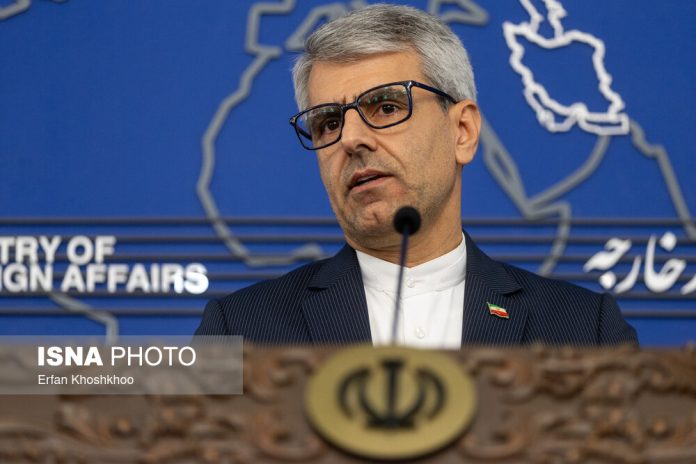
Esmael baghaei

Speaking to Al-Araby Al-Jadeed on Wednesday, Baqaei criticized recent US statements and actions as “contradictory,” citing ongoing sanctions alongside calls for dialogue.
He said such behavior reflects neither seriousness nor goodwill from Washington.

Baqaei noted that no time or venue has been set for the fifth round of indirect talks and warned that the US’s dual approach – pressure and negotiation – complicates progress.

Responding to remarks made by US President Donald Trump at a Saudi-US investment summit on Tuesday in Riyadh, Baqaei accused American officials of trying to incite regional division with “baseless claims” about Iran’s role in instability.

He reaffirmed Iran’s key conditions for any agreement are preserving its peaceful nuclear achievements and securing the full removal of unjust sanctions.

He stressed that Iran remains committed to the Nuclear Non-Proliferation Treaty (NPT) and will not compromise on its red lines.

Putin, Trump to skip Ukraine’s peace negotiations in Istanbul

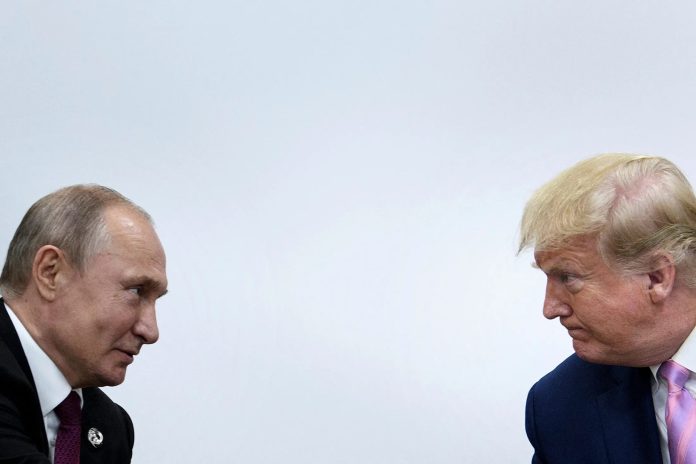
Putin Trump

Putin on Sunday proposed direct negotiations with Ukraine in Istanbul on Thursday “without any preconditions”. Late on Wednesday, the Kremlin said the delegation would include presidential adviser Vladimir Medinsky and Deputy Defence Minister Alexander Fomin – but Putin’s name was not on the list.

After the Kremlin’s delegation announcement, a U.S. official said Trump, who is on a three-nation tour of the Middle East, would not attend. The U.S. leader had said earlier that he was considering the option to participate.

While Putin had never confirmed he would attend in person, the absence of the Russian and U.S. presidents lowers the expectations for a major breakthrough in the war that Russia started in February 2022.

Ukrainian President Volodymyr Zelensky had challenged Putin to attend the talks “if he’s not afraid,” in an apparent contest to show Trump who wants peace more, Ukraine or Russia.

While the Kyiv leader was on his way to Turkey late on Wednesday, a Ukrainian official said, he had said he would take part in the talks only if Putin attended.

In his nightly video address on Wednesday Zelensky said that Ukraine would decide on its steps for peace talks in Turkey once there was clarity on Putin’s participation.

“The answers to all questions about this war – why it started, why it continues – all these answers are in Moscow,” Zelensky said.

“How the war will end depends on the world.”

Trump wants the two sides to sign up to a 30-day ceasefire to pause Europe’s biggest land war since World War Two.

Zelensky backs an immediate 30-day ceasefire, but Putin has said he first wants to start talks at which the details of such a ceasefire could be discussed.

Trump, who is growing increasingly frustrated with both Russia and Ukraine as he tries to push them towards a peace settlement, said he was “always considering” secondary sanctions against Moscow if he thought it was blocking the process.

U.S. officials have spoken about possible financial sanctions as well as potential secondary sanctions on buyers of Russian oil.

The U.S. delegation to Turkey included Secretary of State Marco Rubio and senior envoys Steve Witkoff and Keith Kellogg.

Ukrainian Foreign Minister Andrii Sybiha said early on Thursday he had met with Rubio to share Zelensky’s peace vision and “coordinate positions during this critical week.”

Medinsky and Fomin, part of the Russian delegation, took part in the last set of negotiations between the two sides in the first weeks of the war. Other senior military and intelligence officials were also part of the Thursday delegation.

Direct talks between negotiators from Ukraine and Russia last took place in Istanbul in March 2022, a month after Putin sent tens of thousands of troops into Ukraine in what he calls a “special military operation” to root out neo-Nazis.

Ukraine and its allies say the invasion was an unprovoked, imperial-style land grab.

Iran condemns Trump’s “divisive, offensive” remarks aimed at sowing discord

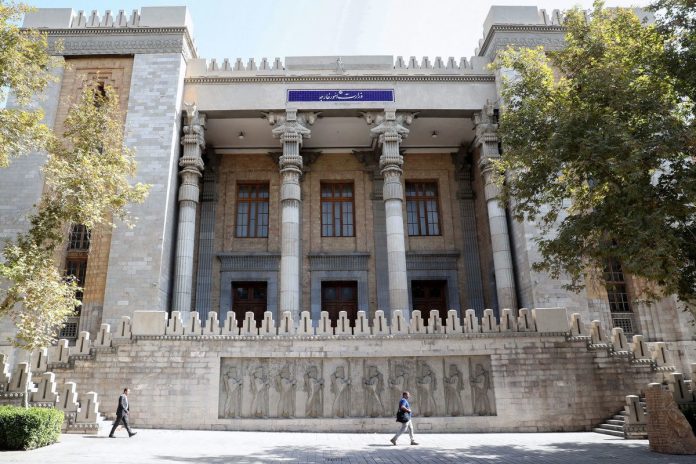
Iranian Foreign Ministry

In a statement issued Wednesday night, the ministry said that Donald Trump shamelessly blames Iran for destructive acts at a time when the Zionist regime — acting as a U.S. proxy — is committing the most horrific acts of colonial genocide in the occupied Palestinian territories.

Calling the allegations a “distortion of truth,” the statement says U.S. policymakers are seeking to divert attention from Israel’s genocide in Gaza and its other atrocities in Lebanon, Syria, and Yemen, while also working to shield the Zionist regime from accountability for its crimes against the nations of the region.

It reads: “The deceptive and insulting remarks of the U.S. President will by no means undermine the national solidarity of Iranians, both inside and outside the country. Such comments can never alter the reality that successive U.S. administrations, over the past seven decades, have spared no evil in their efforts to hinder Iran’s progress and development.”

The Foreign Ministry also highlighted the United States’ imposition of the most severe sanctions and economic and financial pressures, flagrantly violate the human rights of every Iranian citizen.

The statement further said that while Trump delivers “divisive and deceptive” remarks, “Palestinian women and children in Gaza and the West Bank are being torn to pieces with American-supplied weapons, and the project of genocide against the Palestinian people continues with unprecedented intensity — backed by direct political, financial, and military support from the United States.”

It concludes by warning that the divisive statements are intended to sow discord between Iran and its Arab neighbors and to obscure the direct role of the U.S. in the crimes committed by the Zionist regime.

Trump says he hopes diplomacy with Iran will bring agreement

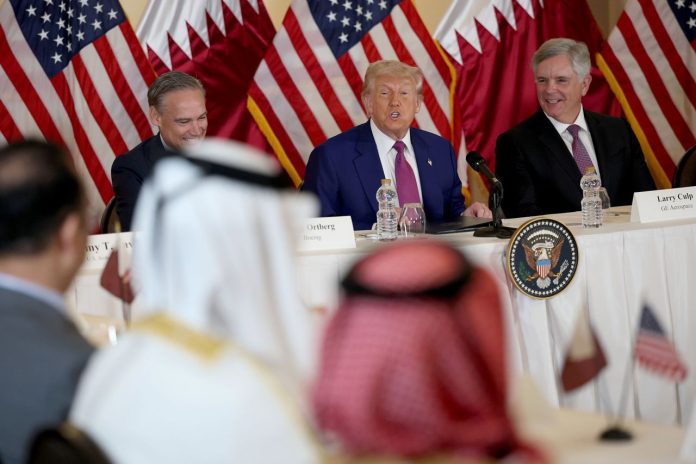
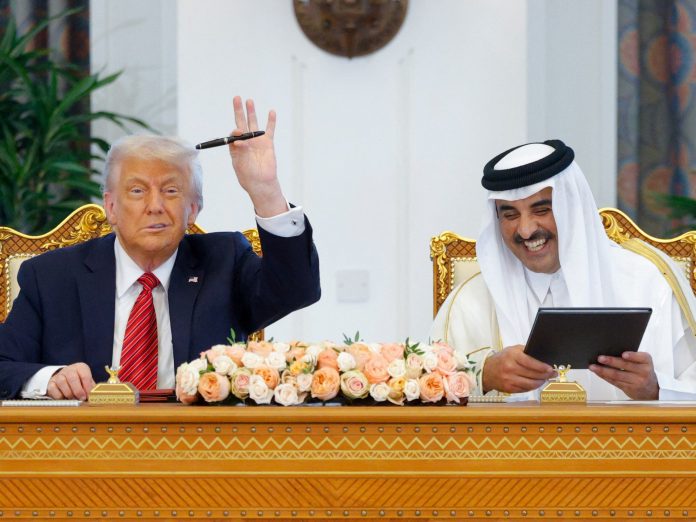
Trump, on his first visit to West Asia since returning to the White House, said on Wednesday that he spoke about Iran with the leader of Qatar, which maintains relations with both longtime adversaries.

“It’s been really an interesting situation. I have a feeling it’s going to work out,” Trump said of Iran after talks with the emir, Sheikh Tamim bin Hamad Al Thani.

“I want to make a deal with Iran. I want to do something, if it’s possible,” Trump told a summit of Persian Gulf Arab leaders in Riyadh earlier Wednesday.

However, he vowed rigorous enforcement of sanctions against Iran.

“I’m strongly urging all nations to join us in fully and totally enforcing the sanctions” imposed on Iran by the United States, he added.

The Trump administration in recent weeks has imposed sanctions on a series of entities and individuals it claims assist Iran’s oil industry and nuclear program.

Iran has held four rounds of indirect talks with the Trump administration on a replacement for the 2015 deal, which have been generally described as positive by the two sides.

In 2018, Trump walked out of a landmark agreement between Iran and several other countries that gave it sanctions relief in return for confidence-building restrictions on its nuclear activities.

He slapped sweeping sanctions on Iran, including secondary measures against any country that buys Iranian oil.

Iran now wants guarantees that the US will remove all the sanctions and won’t again unilaterally derail the new deal.

Trump, in a speech Tuesday in Riyadh, also said he favored diplomacy but leveled various accusations against Iran, including that it destabilizes the region.

Iranian Foreign Minister Abbas Araghchi stated on Friday that he had listened to the remarks and “unfortunately, a very deceptive view has been put forward.”

Kremlin says Russian delegation will be waiting for Ukrainians in Turkey

Kremlin

On Sunday, Russian President Vladimir Putin offered to resume direct negotiations between Moscow and Kiev to find a lasting settlement to the conflict between the two countries. After his proposal was supported by US President Donald Trump, Ukraine’s Vladimir Zelensky, who had previously ruled out any talks with Moscow, also expressed his readiness.

Kiev earlier stated that the only official Zelensky would talk to is Putin. The Russian president has so far made no indication that he is planning to travel to Istanbul.

When asked by journalists on Wednesday if the talks in Türkiye were still on the cards, Peskov replied by saying: “Indeed, the Russian delegation will be waiting for the Ukrainian delegation in Istanbul on Thursday, May 15, that is – tomorrow.”

“I can confirm once again that everything that the president said in his statement on May 11… remains relevant,” he stressed.

Peskov declined to reveal the lineup of the Russian delegation that will travel to Istanbul. It will be announced “when we receive instructions from the president. So far, there have been no such instructions,” he explained.

On Tuesday, Russian Deputy Foreign Minister Sergey Ryabkov said that, during potential talks, Moscow wants to discuss “a sustainable settlement of the situation, first of all, by addressing the very roots of this conflict, resolving issues related to the denazification of the Kiev regime, ensuring recognition of the realities that have developed recently, including the entry of new territories into Russia.”

Ryabkov refrained from making any forecasts on the outcome of discussions, but stressed that Moscow is committed to negotiating “seriously and responsibly.”