Friday, December 26, 2025
Home Blog Page 3783

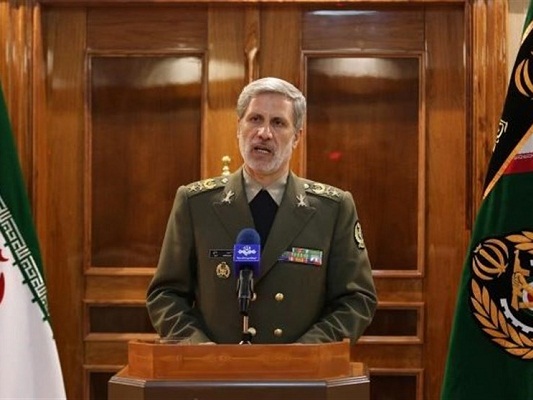
Sunni Cleric Praises Army Services after Iran Earthquake

Kermanshah Quake

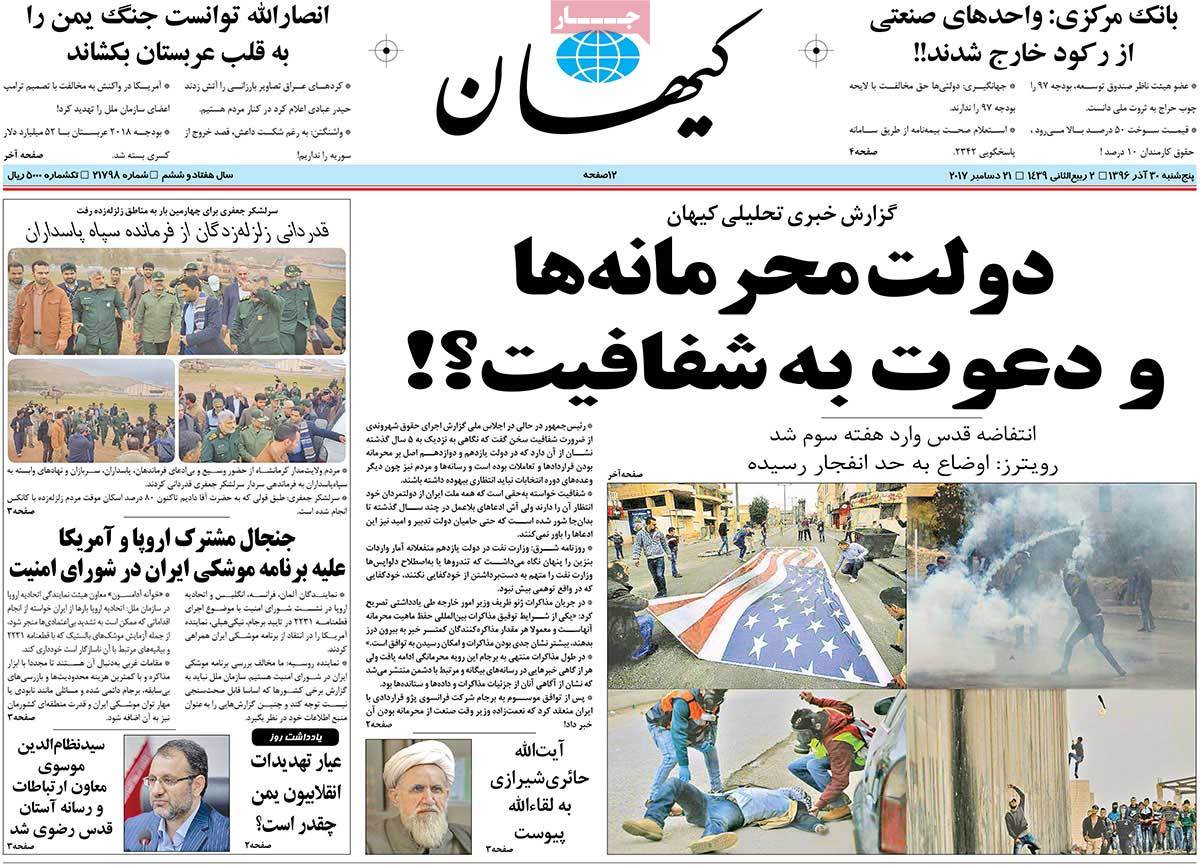
Following the effective presence of the army in the earthquake-stricken areas of Kermanshah province, Mawlawi Mohammadi, the Sunni leader of Friday Prayers of Kermanshah, sent a letter to Army Chief-Commander Major General Abdolrahim Mousavi to appreciate the services of his forces in helping people in Kermanshah province after the deadly quake.

According to a Farsi report by ISNA, in this letter Mawlawi Mohammadi said the nation and the whole world saw the genuine sacrifice of the commanders, officers, and the soldiers of the army which was the manifestation of unity and solidarity.

He further added that the efforts made by high-ranking officials and commanders of the army who did not hesitate a moment must be appreciated.

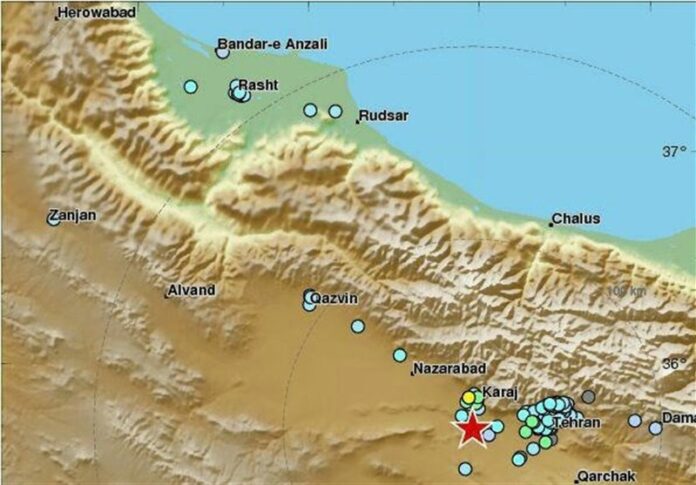
Back on November 12, a magnitude 7.3 earthquake hit villages and towns in Iran’s western Kermanshah province along the mountainous border with Iraq, killing 530 people and injuring thousands of others.

Criss-crossed by several major fault lines, Iran is one of the most earthquake-prone countries in the world. In 2003, a magnitude 6.6 quake in Kerman province killed 31,000 people and flattened the ancient city of Bam.

Saudi, UAE Say Won’t Play ACL Matches in Iran or Qatar

Although the AFC rejected a game in a neutral venue, Saudi Arabia and the United Arab Emirates are still opposed to the issue, ISNA said in a Farsi report.

“There are reasons that our athletes will not go to Iran. FIFA has passed such a law, and no Saudi athlete will travel to Iran. Until the conditions become normal, we will continue to play on neutral ground. Our relations with Iran has been cut because of an attack on the embassy, and we will not play in Iran until the ties return to normality,” said Adel Ezzat, the head of Saudi Arabian Football Federation.

Saudi Arabia’s Al-Riyadh daily wrote that the UAE also has a position like Saudi Arabia, and that the country will not let its teams play in either Iran or Qatar.

The Asian Football Confederation said on Tuesday that matches between clubs from Saudi Arabia, the United Arab Emirates and Qatar will continue to be played on a home-and-away basis in next year’s Asian Champions League despite an ongoing diplomatic dispute between the Persian Gulf states.

The AFC’s executive committee decided to maintain the current format of its flagship club event in the face of a ban imposed on travel in and out of Qatar by a Saudi Arabia-led coalition that is backed by the United Arab Emirates. Clubs from the three nations regularly play each other in the Asian Champions League, although this year’s competition was not affected by the standoff as Qatari teams had been eliminated before the action was taken in early June.

The Asian Champions League already sees games featuring clubs from Saudi Arabia and Iran played in neutral venues due to a diplomatic disagreement between those countries. Qatar, along with Oman and the United Arab Emirates, hosted some of those games this season.

Iran State Broadcaster Uses Female Commentator for First Time

Maedeh Alaghmand

The local radio station of Iran’s Golestan Province used a female sports announcer during the Asian Kabaddi Championships. Maedeh Alaghmand gave live commentaries of six matches which took about 10 hours.

Earlier, Iran’s radio had used female sportscasters to give short comments on some competitions, but it was the first time that a woman gave a running commentary of a full match.

The Asian Kabaddi Championship 2017 was held in Gorgan, the capital of Iran’s northern Golestan province, 24-26 November, featuring a total of 10 teams from India, Iran, Japan, South Korea, Pakistan, Thailand, Iraq, Sri Lanka and Turkmenistan in the men’s and women’s sections.

The Indian men’s and women’s teams were both crowned the champions of Asia after beating Pakistan and South Korea, respectively.

Kabaddi is a contact team sport that originated in Tamilnadu, India. It is the national sport of Bangladesh. It is also popular in South Asia.

Enhanced Iran-SCO Ties to Help Boost Global Security: First VP

“The Islamic Republic of Iran is ready to improve its cooperation with member states of the Shanghai Cooperation Organization to play a more active role in promoting regional and international peace, stability, security and development,” Jahangiri said in an address to a SCO meeting in the Russian city of Sochi on Friday.

He also expressed Iran’s readiness to help promote the SCO status in line with the country’s goal to establish a world free of violence and extremism and make more serious efforts to help the organization thwart new threats and challenges in political, economic and cultural sectors.

He said Daesh Takfiri terrorists suffered a heavy defeat in Syria and Iraq thanks to resistance of regional nations and cooperation among Tehran, Damascus, Baghdad and Moscow.

However, Jahangiri warned of the terrorist group’s possible plot to change its geopolitical goal and drag the crisis into other regions, particularly Central Asia and the Caucasus, and stressed the importance of remaining vigilant in the face of such threats.

The Iranian vice president urged the SCO to make use of the member states’ capacities to draw up new initiatives to promote the welfare and security of regional nations.

He said cultural, political and economic measures are needed to fight terrorism and violence and added that eliminating poverty and injustice and reaching sustainable development are the main purposes of the campaign against terrorism and extremism.

Jahangiri called for identifying and destroying the financial and spiritual sources of extremist and Takfiri ideologies.

He pointed to positive cooperation between Iran and Russia to help solve the Syrian crisis and fight terrorism and extremism in the Middle East and said it can be used by the SCO as a valuable experience.

Iran and Russia have been assisting the Syrian military in its counter-terrorism operations. The Iranian military advisory support and Russian aerial backup have proved instrumental in Syria’s efforts to recapture militant-held areas and end the Daesh terror group’s territorial rule in the country.

Iran Drawn with Portugal, Spain in 2018 FIFA World Cup

Iranian football players will open their competition at the international men’s football tournament against Morocco at Saint Petersburg Stadium on June 15 next year.

The Iranian squad will take on the Spanish at the Kazan Arena on June 20.

Carlos Queiroz’s men will face Portugal at Mordovia Arena in Saransk on June 25 in their last group stage match.

Russia and Saudi Arabia will participate in the opening match in Moscow.

The hosts have Uruguay, Egypt, and Saudi Arabia for company in Group A.

France, Peru, Denmark, and Australia are together in Group C.

Argentina, Croatia, Iceland, and Nigeria comprise the Group D.

Brazil, Switzerland, Costa Rica, and Serbia make up Group E.

Group F also includes Germany, Mexico, Sweden, and South Korea.

Group G contains Belgium, England, Tunisia, and Panama.

Poland, Columbia, Senegal, and Japan complete the draw in Group H.

FIFA World Cup 2018 final draw

Iran, Pakistan Discuss Banking, Energy Ties

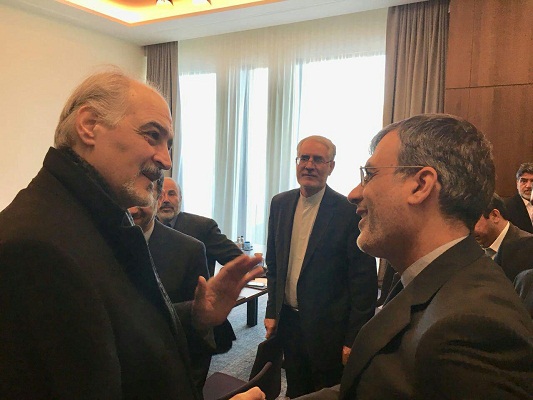
During the Friday talks, the two sides discussed bilateral relations, especially banking and energy cooperation.

Earlier in the day, the Iranian top diplomat also met his Azeri counterpart Elmar Mammadyarov and discussed bilateral relations and regional issues with him.

Zarif held the meetings on the sidelines of the Heart of Asia Conference, the new round of which was held in Baku.

Since its inception in 2011, the Heart of Asia-Istanbul Process has been a regional venue for high level political consultation among countries from the three geographically interconnected regions of the Caspian and Central Asia, the Middle East, and South Asia all connected through Afghanistan – the Heart of Asia.

The process brings together 14 countries as participating states to work for regional cooperation in some of the least integrated regions of the world. Seventeen countries from outside the region and twelve regional and international organizations are supporting the agenda of Heart of Asia-Istanbul Process.

The Heart of Asia – Istanbul Process was established to provide a platform to discuss regional issues, particularly encouraging security, political, and economic cooperation among Afghanistan and its neighbours.

The region-led dialogue was launched in November 2011 to expand practical coordination between Afghanistan and its neighbours and regional partners in facing common threats, including counterterrorism, counter-narcotics, poverty, and extremism.


Defeat of ISIS Proof of Iran’s Regional Power: Cleric

Ayatollah Mohammad Ali Movahedi Kermani

Addressing Friday prayers worshippers in Tehran, Ayatollah Mohammad Ali Movahedi Kermani said the defeat of ISIS proved the “power of Islam, Iran and Hezbollah” to the US.

He also highlighted the role of Iraqi religious authorities in mobilizing efforts in the fight against ISIS.

The cleric further cautioned against the enemy’s future plots.

The recapture of the Syria town of Al-Bukamal from ISIS on November 19 marked an end to the terrorist group’s caliphate it had declared in 2014.

Leader of the Islamic Revolution Ayatollah Seyed Ali Khamenei has said the elimination of ISIS Takfiris was a service to all humanity and a blow to the creators and supporters of the terrorist group, including the US.

ISIS militants had made swift advances in northern and western Iraq over the summer of 2014, after capturing large areas of Syria.

Iran and the Lebanese Hezbollah movement stood by Syria in the war against ISIS.

Iran FM, Azerbaijan President Meet in Baku

zarif

During the Friday meeting held in the Azerbaijani capital, Zarif and Aliyev conferred on bilateral relations between Tehran and Baku, and the tripartite cooperation between Iran, Turkey and Azerbaijan.

They also discussed joint fight against terrorism and extremism, railways, cooperation on Afghanistan, and the Astana talks on Syria.

The meeting was held on the sidelines of the international Heart of Asia Conference.

Zarif on Friday joined top foreign officials in Baku for the Heart of Asia Conference, which includes 14 participating and 17 supporting countries, as well as 12 international and regional organizations, such as the United Nations, the North Atlantic Treaty Organization (NATO), the Economic Cooperation Organization (ECO) and the Organization of Islamic Cooperation (OIC).

Speaking to reporters in Azerbaijan’s capital of Baku on Friday, Mohammad Javad Zarif said he has attended the Heart of Asia Conference as part of joint efforts to help ensure security and economic development in Afghanistan.

Iran maintains that any initiative for peace, stability and progress in Afghanistan and the battle against terrorism and narcotics in the country should be overseen by the Kabul government, he added.

Warning against the growing threat of the ISIS terrorist group in Afghanistan, Zarif expressed the hope that close international cooperation would help the Afghan government go through the current critical stage.

Iran’s Mannequin Robot among World’s Top 8 Contributions

An official from Sharif University says RoMa managed to be among the last eight final designs during the Conference that was held in the city of Tsukuba last week with the participation of 22 countries.

Acocrding to a Farsi report by ISNA, Ali Meqdari said that RoMa is the first robotic mannequin in Iran, which is designed and built by the professors and students of Sharif University.

“Attractive and different design, kinetic capabilities, movements of the neck, shoulders and elbows in the most similar way to humans, 360-degree body rotation, motion control, programming by Android app, ability to schedule different body movements at specific intervals, AI capabilities, customer identification, interaction with the client, and the ability to broadcast audio messages (welcoming and giving information about the clothes) are among the main features of RoMa,” said Meqdari.

Ali Meqdari, Minoo Alemi, Ehsan Safari, Ahmad Zibafar, Leila Farian, Ali Qorban Daeipour, Amin Reza Soltani and Alireza Taheri are members of Sharif University team who have managed to build this robot.


“Unprecedented Anti-Iran Tendencies Gain Momentum in White House”

trump

Here is the full text of his Farsi article published in the Shargh daily newspaper on Wednesday, November 29:

There have been a few unprecedented changes in the American decision-making system that have a direct or indirect impact on Iran-related decisions in Washington:

  1. Over the past few decades, in no US administration as much as the current one, so many high-ranking military officials have occupied key positions. General Mattis is the Pentagon Chief, General McMaster is US National Security Advisor and John Kelley is the White House Chief of Staff. In the past, these three key posts have often been occupied by non-military persons. General Alexander Haig was the White House Chief of Staff more than 40 years ago at the time of President Nixon. After that, non-military persons were always at the post. Joel Rayburn is a senior military officer at the US National Security Council. After Iran’s revolution, all these generals have had command posts in Iraq, Afghanistan, and Lebanon, and generally shared bitter experience regarding Iran. Two or three years ago during Obama administration, Colonel Joel Rayburn was isolated and engaged in academic work at Brown University. For the first time, I saw him at a seminar in which he was describing his experience in Iraq for the audience and was promoting Iranophobia. I had an answer for him and it turned to a one-on-one debate. Suddenly, with a quivering voice, he said, “Mr Mousavian! What do you know about the crisis in Iraq? I have been involved in the operation. My companions have been killed in front of my eye by the elements supported by your Quds Force, and I’ve seen them dying… .” I told him that my brother and three of my cousins were also martyred in Iraq war, a war that the United States was supporting Saddam. I told him that “your claims regarding the Quds Force has not been proved, but the Americans have confessed about my claim on the US support for Iraq’s aggression against Iran.” The chair of the session stopped the debate, and said “we must admit that the hostility of the United States and Iran has had many victims on both sides.” However, that angry colonel is responsible for Iran, Iraq, Syria and Lebanon issues at the NSC today, and his role in policies made against Iran is even greater than that of US State Department diplomats.
  2. The US State Department and its senior diplomats have been marginalized and isolated in an unprecedented way. Therefore, experienced diplomats have a “minimal” role and influence in the current US decision-making system.
  3. The combination of Trump’s daughter, Ivanka, and her husband, Jared Kushner, at the White House, and their key role in making decisions with no political and diplomatic experience, is an unprecedented phenomenon that has angered the generals at the White House and the Pentagon as well as the US diplomats, causing friction in the American decision-making system. It is also important to note that Kushner is from a famous Zionist American family, with whom Netanyahu has had a close family relationships since his studies in the US. For Netanyahu, Kushner is the shortest, fastest and most efficient way of influencing the White House decisions. Kushner’s special ties with Saudi Crown Prince Mohammed bin Salman were also organized in this way.
  4. The three developments mentioned have led to a strange confusion regarding the national security of America and the critical process of decision-making for foreign policies. This situation has created a golden opportunity for lobbies. Over the past few decades, Tel Aviv’s lobby in Washington has always had extraordinary influence over US decisions, but ultimately, Tel Aviv has followed Washington’s decisions. But the developments in the Trump administration have changed everything. This is an important point that may be difficult for many to accept.
  5. The Saudis and the other Arab allies of the United States have had an active and influential lobby in Washington for many years. However, in the past, the main objective of this lobby was to maintain a balance regarding Washington’s policies on the Arabs-Tel Aviv relationship, and boosting anti-Iranian policies was the secondary objective of the Arabs lobby. With the onset of the Iranian nuclear crisis, these two lobbies came together. During the Obama administration and with the change of US policies on Iran, the lobbies of Zionists and Takfiri Arabs united, but failed to change Obama’s policy on Iran. However, during the Trump administration and with taking this opportunity, the unified Tel Aviv-Riyadh-Abu Dhabi lobby has fully succeeded in imposing its demands on the decision-making system in Washington against Iran, and they are not facing serious obstacles. Two, three weeks ago, a group of former senior US Democrat and Republican officials travelled to Tel Aviv; people who held positions like Vice President, Secretary of Defence, Secretary of State, National Security Advisor and Ambassador in previous cabinets. They had extensive discussions with their former Israeli counterparts about Iran and the region. The whole efforts of the American team was to convince the other side about the policy of “carrot and stick” on Iran. But those in Tel Aviv have insisted on the policy of a “carrot-free stick” against Iran. This type of meeting between politicians on the two sides is not unprecedented, but what surprised the US side was the presence of Director General of the Saudi General Intelligence Directorate Turki al-Faisal at the meeting in Tel Aviv. Israelis had invited him to present the views of the Saudi Crown Prince in an extremely hostile speech against Iran, and to make it clear to Americans that Washington’s Arab allies are now on Tel Aviv’s side.
  6. In the past, the United States was carrying out military operations directly to the countries of the region, such as Afghanistan and Iraq. But Washington’s new strategy is that the military strike be carried out by its allies with the US supports. The US money must not be spent on wars. No American’s blood must be spilt and the multiplied costs of the supports have to be paid. We see this in the war against Yemen. Tel Aviv also tries not to enter the conflict directly. Therefore, Riyadh and its Arab allies must assume responsibility for any military action to benefit from US and Zionist supports. Meanwhile, the cost of these supports must be paid. So, the Muslim countries should pay for every war which is waged.
  7. Trump is an unprecedented phenomenon in the history of US presidents. A totally unpredictable person whose decision-making almost overwhelmingly confused both US parties. Senate Foreign Relations Committee Chairman Bob Corker said that Trump policies could put America at risk of pushing for World War III. Trump’s popularity rating is at the lowest level throughout the 70-years of presidential race. Senior Republican figures have come to this conclusion that Trump will lead them to their historic defeat in the upcoming US congressional elections and also the presidential elections. At the same time, it is important to note that until now, the majority of Trump’s decisions on domestic and foreign policy have been controversial, with the exception of the sanctions imposed on Iran! In such situation, the propaganda war, lobbying, and public diplomacy stirred up Washington’s anti-Iran policies and accelerated the process of decision-making against Iran in an unbelievable way. These seven developments besides what I described in my article entitled “The need to pay attention to the threat of the triangle,” in Donya-ye Eqtesad daily on November 8, have a special meaning. Hope the Islamic Republic’s decision-makers could manage the situation prudently.