Thursday, December 25, 2025
Home Blog Page 3782

Iran Condemns Terrorist Attack on Peshawar University

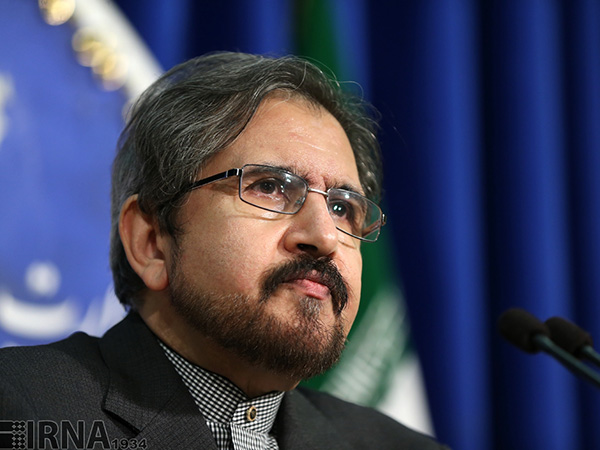
In a Saturday statement, the spokesman expressed sympathy with the Pakistani government, nation and the families of the victims of Peshawar terrorist attack and said, “Terrorist groups never hesitate even for a moment to resort to any heinous measure to first express themselves and then to achieve their nasty goals.”

“To this end, the terrorists pay respect neither to sacred places like mosques and other religious centres nor to the scientific centres,” he said.

Qassemi said to reach their dirty goals and intensions the terrorist groups are even ready to kill innocent people including women and children in the public and religious centres and students in universities and their hostels.

“Amid such situation, the only key to nations’ success and victory is remaining vigilant and preserving their unity against the measures and policies of any terrorist groups and their sponsors,” Qassemi added.

He also said in parallel with the serious fight underway against the terrorist groups, the students and researchers can launch cultural projects and play a key role, as the promoters of public awareness across the world, in unveiling the deep roots as well as sponsors and producers of the dangerous and anti-human phenomenon of terrorism.

At least nine people were killed and more than 30 others injured after terrorists attacked the student hostel inside the Directorate of Agriculture Extension on University Road, Peshawar, early Friday morning. The security forces later managed to kill all the terrorists after a gunfight which lasted over an hour.

Yemen’s Ansarullah Leader Calls for Dialogue amid Rift with Saleh Loyalists

Speaking in a televised address on Saturday, Houthi said there had to be negotiations between the two sides to close the rift.

The forces loyal to the former president have been in an alliance with the Houthi Ansarullah fighters against a Saudi Arabian-led invasion. Their supporters have, however, become engaged in an armed conflict in the capital, Sana’a, over the past few days amid a strain in relations between the two sides.

Houthi called on all Yemeni groups to work on maintaining peace and stability in the country, and urged Saleh to be wise and consider the national interests of Yemen.

He demanded that Yemeni parties focus on the Saudi aggression, noting that division among Yemeni factions only served the interests of the Saudi-led coalition, which has been bombing Yemen for more than two years killing over 12,0000 people.

Iran’s Tabriz Selected as Silk Road Centre of Tourism Studies

Tabriz

Head of Tourism Department at Tabriz Cultural Heritage, Handicrafts and Tourism Organization, Farshad Rostami, said, “In a meeting of JICA, Tabriz was selected as a centre of tourism and cultural heritage studies along the Silk Road.”

During the meeting, the spokesperson of JICA referred to the studies conducted by the agency, saying among the cities of Ahvaz, Shiraz, Isfahan, Yazd and Tabriz which are located along the two corridors of Ancient Civilization and the Silk Road, JICA has selected the city of Tabriz as a tourism and cultural heritage studies centre, a Farsi report by the Mehr News Agency quoted Rostami as saying.

“Given the presence of globally registered ancient sites in its neighbouring provinces, Tabriz and its tourist sites will be studied as part of a larger tourism project by JICA in the region.”

He also referred to the huge tourist capacities of Tabriz 2018 international event, saying the event can pave the way for attracting further tourists to the region.

For his part, Akira Ohara, a senior fellow researcher at JICA, congratulated the Iranian officials on the selection of Tabriz as the centre of tourism studies along the Silk Road, and added since long time ago, Tabriz has been viewed as a channel connecting Europe and East Asia.

“Meanwhile, the country enjoys a great capacity for the development of its historical and cultural tourism section.”

Ohara referred to the tourist attractions of Tabriz like Kandovan village as well as its eco-tourism capacities as the main criteria taken into account by JICA members.

He called for the participation of public associations in the implementation of the tourism plans in the city and added raising public awareness about the tourism capacities of Tabriz is highly important.

Ohara said holding some training courses for the people as well as launching some fundamental and infrastructural projects to further develop the tourist capacities of the city can significantly contribute to the projects to attract further tourists to the city.

The Japanese researcher also said establishing direct flight to Tabriz from around the world will connect the city to an international network of tourist destinations. He then said ground and rail connections to the network are also important.

A team from JICA is set to visit Tabriz’s historical as well as cultural and natural sites in the coming days. The visit follows their earlier visit to the city last month aimed at evaluation the tourism capacities of Tabriz.

The Iranian city of Tabriz in East Azarbaijan Province has been selected by the Organization of Islamic Cooperation (OIC) as the 2018 capital of Islamic Tourism, and the entire Iran is now getting prepared to host the highest number of tourists through the project Tabriz 2018.

Tabriz hosts a number of famed religious sites, including Grand Mosque and Tabriz Citadel, as well as a UNESCO World Heritage Site in Tabriz Bazaar. It has been declared a World Craft City by the World Craft Council, which, along with Isfahan, makes it one of Iran’s only two cities to boast the title.

Iran, India FMs Discuss Bilateral Ties in Tehran

During the Saturday talks, Zarif hailed the “good” and “growing” ties between Tehran and New Delhi.

He further pointed to the opening of Shahid Beheshti Port of Chabahar in southeastern Iran, and said it reinforces Iran-India mutual and regional cooperation.

“It also shows the importance of the port in the development of the region and the routes that connect Central Asian states to other countries in the world through the Sea of Oman and the Indian Ocean,” he added.

Swaraj, for her part, underlined the significance of ties with the Islamic Republic, and the need for expansion and deepening of bilateral relations.

The two sides also exchanged views on regional issues.

Chabahar is the closest and best access point of Iran to the Indian Ocean and Iran has devised serious plans to turn it into a transit hub for immediate access to markets in the northern part of the Indian Ocean and Central Asia.

The Chabahar Agreement, a trilateral deal between Iran, India, and Afghanistan, is a regional transport network initiative of the trio governments.

It aims to create a reliable transport corridor for the smooth transport and transit of goods and services through Chabahar Port between the Islamic Republic of Afghanistan, Republic of India, and Islamic Republic of Iran.

The agreement was signed by the three countries’ high ranking officials in Tehran in May 2016.

During the past month, two ships with major wheat cargos for Afghanistan have arrived in the port which is gradually emerging as a key transit point in a corridor that bypasses Pakistan.

The ships – one of them carrying a cargo 110,000 tonnes of wheat in 655 containers and another one 15,000 tonnes of wheat – arrived earlier this month in Chabahar Port from India’s western port of Kandla.

“US, UAE, Saudi Arabia Forming Alliance against Iran”

Seyyed Hossein Mousavian

Mousavian, a senior researcher at Princeton University, has, in an article published on the website of the Persian-language Donya-ye Eqtesad daily, weighed in on the danger posed to the Middle East region by an alliance of Saudi Arabia, the United Arab Emirates (UAE) and the Israeli regime. The full text of the opinion piece follows.

It has been months that the lobbyists from Riyadh, Tel Aviv and Abu Dhabi are urging the White House to cut off the tail of the region’s snake (the Lebanese Hezbollah movement) before cutting off Iran’s head. There are signs that a triangle comprising Washington, Tel Aviv and Riyadh is taking shape to counter Iran in the region, including efforts to deal a blow to the Iran nuclear deal (known as the Joint Comprehensive Plan of Action, the JCPOA), adoption of tougher bills in the US Congress to slap sanctions on Hezbollah and the Islamic Revolution Guards Corps (IRGC), commemorating the killing of 241 US Marines in Beirut 34 years ago and accusing Iran and Hezbollah of involvement in the incident, inviting Haider Al-Abadi to Saudi Arabia to revive Riyadh-Baghdad ties while promising to give assistance to Iraq and make huge investments in the country along with ratcheting up the pressure on the Popular Mobilization Units in Iraq, US President Donald Trump’s accusing Iran of having provided Yemen with the missile it fired at Riyadh [in retaliation for the Saudi aggression on Yemen], the resignation of Lebanese Prime Minister Saad Hariri under the pretext that Iran and Hezbollah are meddling in running Lebanon’s affairs, and worst of all, the CIA’s publication of forged documents suggesting Iran has links with al-Qaeda.

After the 9/11 terrorist attacks in New York, Congress allowed the US government to go into war against individuals and countries directly or indirectly involved in the attacks. The green light was used by Washington to launch military operations in countries such as Iraq, Afghanistan, etc.

In order for the US president to be able to attack a country without the Congress’ all-clear, he must prove that the country in question was somehow linked to the 9/11 attacks and the terrorists involved. Accordingly, the Central Intelligence Agency (CIA) released forged documents suggesting Iran was linked to al-Qaeda or its affiliated groups.

Washington’s excuse to attack Iraq was based on similar forged documents. Then US President George W. Bush gave the green light to attack Iraq based on the same documents. Later on, it came to light that all the documents had been forged as no weapons of mass destruction were found in Iraq. Now, there are serious discussions going on in the US Congress to extend the go-ahead to wage war against entities involved in the 9/11 attacks. The Tel Aviv-Riyadh-Abu Dhabi lobby in Washington is seeking to use the go-ahead against Iran. US lawmakers are engaged in intense talks as many of them are not confident that Trump will extend the all-clear. In the meantime, the anti-Iran triangle is trying to urge Trump to use the approval against Iran or its regional allies before it expires.

A few days ago, after my speech at a meeting at a Washington hotel about Washington’s breaches of promises, a renowned and well-informed expert from an American think tank told me that Congress was unlikely to repeal the Iran nuclear deal despite pressure from the Israeli lobby unless developments unfold in the coming weeks that might change Congress’ equations. He said the White House was reviewing a scenario to pull out of the JCPOA without reinstating the sanctions lifted due to the agreement. They believe that under such circumstances, Europe will have to align itself with US policies and actions against Iran in the region because with the US withdrawal from the JCPOA, Europe will realize that the US knows now restrictions to impose new nuclear sanctions on Iran.

Since Trump came to power, despite some optimism in Iran, I have kept drawing attention to the danger posed by the abovementioned alliance in order to torpedo the JCPOA and trigger a regional faceoff with Iran. Tel Aviv is the winner in the current situation in the Arab world. Powerful Arab countries have either lost their leverage, or have plunged into a local crisis, or have come under Tel Aviv’s influence. It seems a new scenario has been engineered against Iran, a scenario the details of which they are preparing. What was mentioned at the beginning of this article was part of their actions to piece together the scenario, and other parts of the scenario are likely to come to light in the coming months.

Among the complicated and pre-planned scenarios is some of Trump’s behaviour and positions in recent months. As a case in point, Trump’s proposal to meet Iranian authorities was a calculated move. Trump proposed to sit down with President Hassan Rouhani because he was sure that Iran would not accept his suggestion. Trump involved France as a mediator in order to tell the Europeans that, “I was ready for talks with Iran. It was the Iranians who rejected the offer,” and so, Iran does not favour negotiations. So, the White House’s move was aimed at stripping Europe of its ammunition regarding Iran and paving the way for sparking a standoff with Iran.
Another key point is that Trump’s approval ratings are on the decline, and two-thirds of the American public have a low opinion of him. “Confrontation with Iran” is an issue which can secure a consensus and popular support within the US more easily than other issues. That makes it all the more necessary for Iranian officials to take the threat seriously and adopt measures for deterrence and countering the threat.

“Arabs Ready for Useful Talks If Iran Changes Its Behaviour”

Arab countries

“If Iran changes its behaviour, Arabs are ready for useful dialogue,” Aboul Gheit said Thursday during his speech at the international Med Dialogues conference in Rome.

In order to achieve stability in the area, he said, “I think that it is necessary to find common ground among Arab countries on security.”

“Coming to an agreement on issues like Israel, Palestine, Iran and nuclear power “would be a base on which to work”, he said, adding that “the entire Arab region revolves around the issue of security”.

In the Middle East and North Africa, “regional interventions have been responsible for many things that later happened”, and “there is an atmosphere that makes us think of a world war or as if we were back in the Cold War”, he added.

There are “several points on which there is no agreement on security among Arab states.”

Referring to the issue of terrorism, he said that the ISIS “is about to be defeated in Iraq and Syria, but this does not mean that it will disappear today or after 10 years”, since despite the military victories, “it is probable that it will return to cities to sow destruction.”

Queiroz Happy with Iran’s FIFA World Cup Draw

Team Melli has been pitted against Spain, Portugal and Morocco in Group B of the 2018 World Cup.

Queiroz has some emotional ties to World Cup group opponents.

He is from Portugal and he lived in Spain while coaching Real Madrid in the 2003-04 season.

“It’s a tough group for us, but for me being with Portugal and Spain is very special and very emotional because Portugal is my place and Spain is a very special place for me also as a coach in my career, so I could not choose better,” Queiroz said.

“It will be a very tough competition for us, it would have been no matter what group we were in, but when you are with Spain, a World Cup winner, and Portugal, European champions, it couldn’t be better for me,” he added.

Iran has never gotten past the group stage in four World Cup appearances, and Queiroz isn’t predicting any miracles this time.

“When the game finishes I want my players to leave with their heads up,” Queiroz concluded.

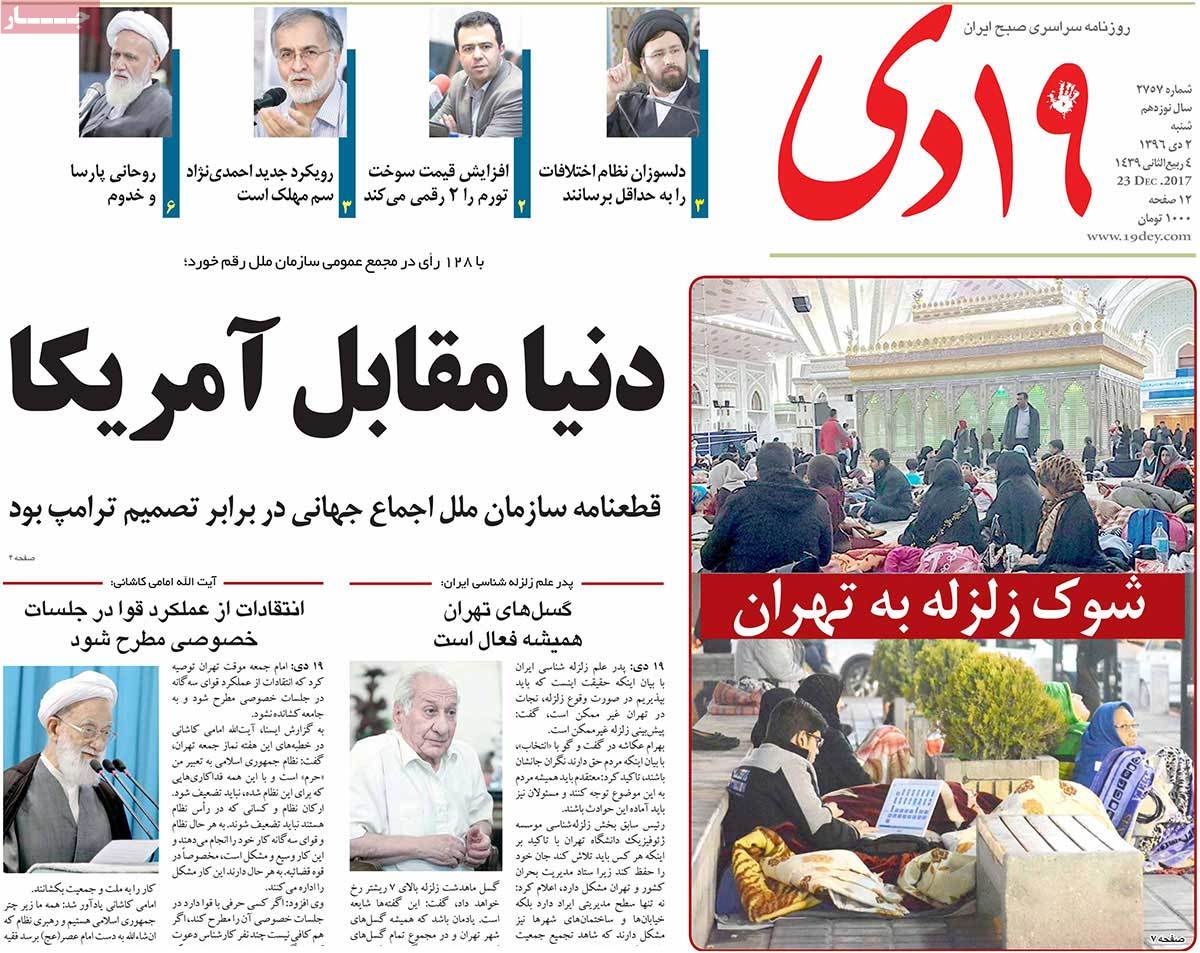
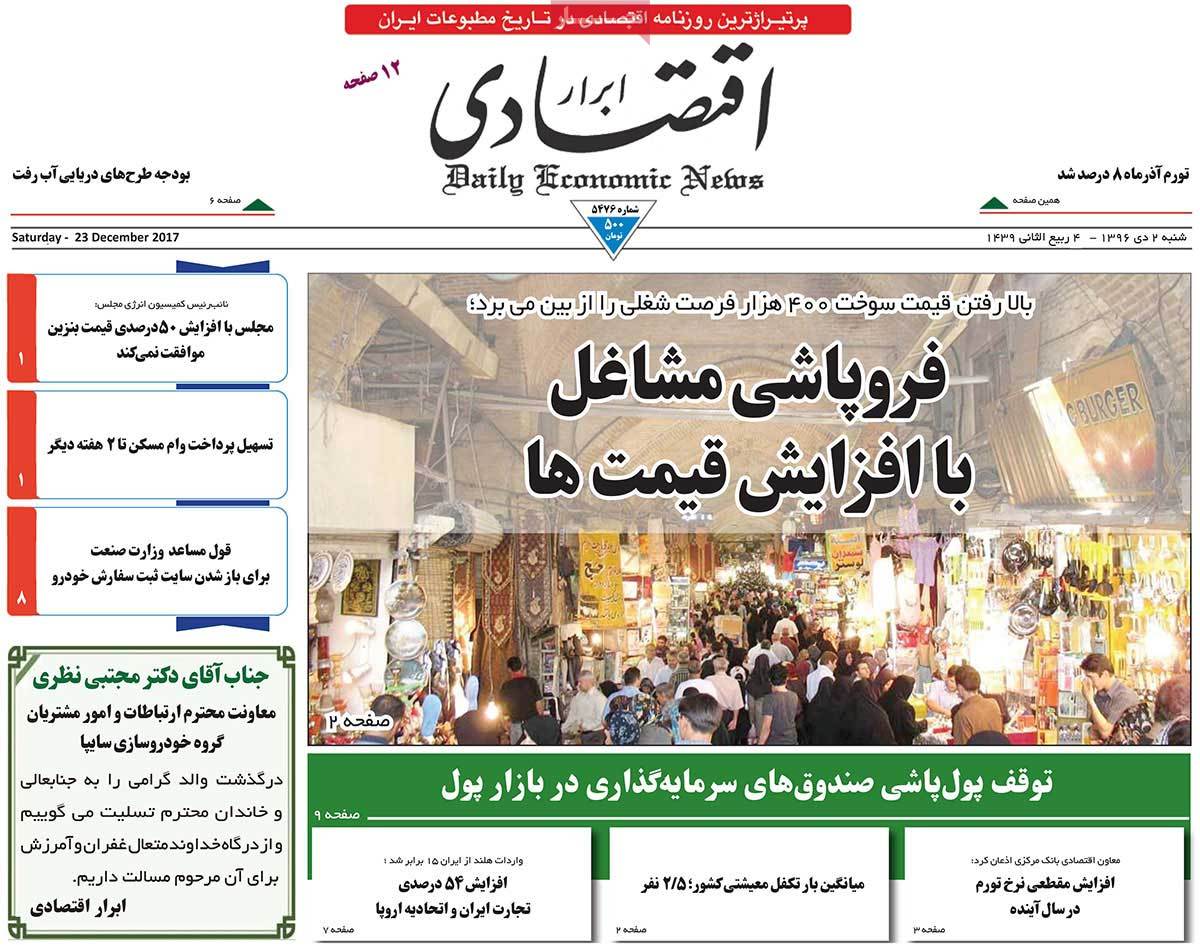
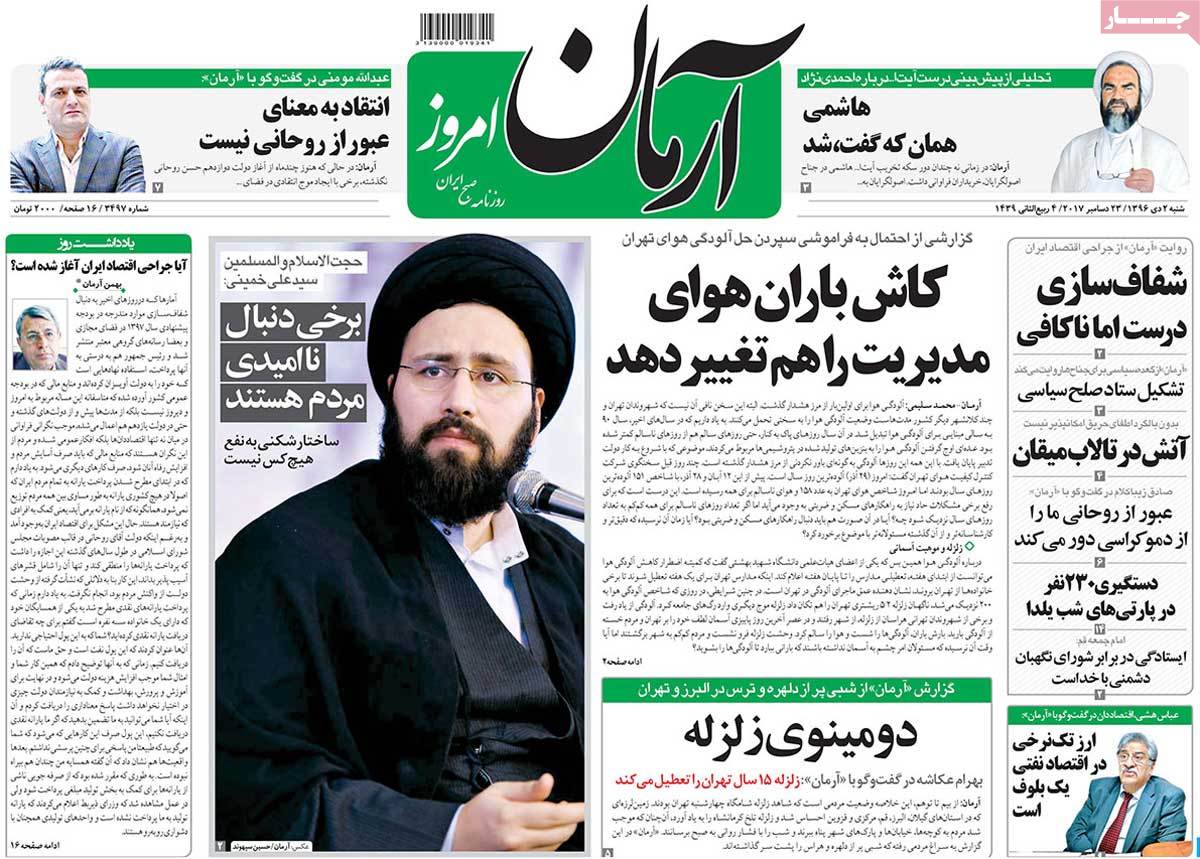
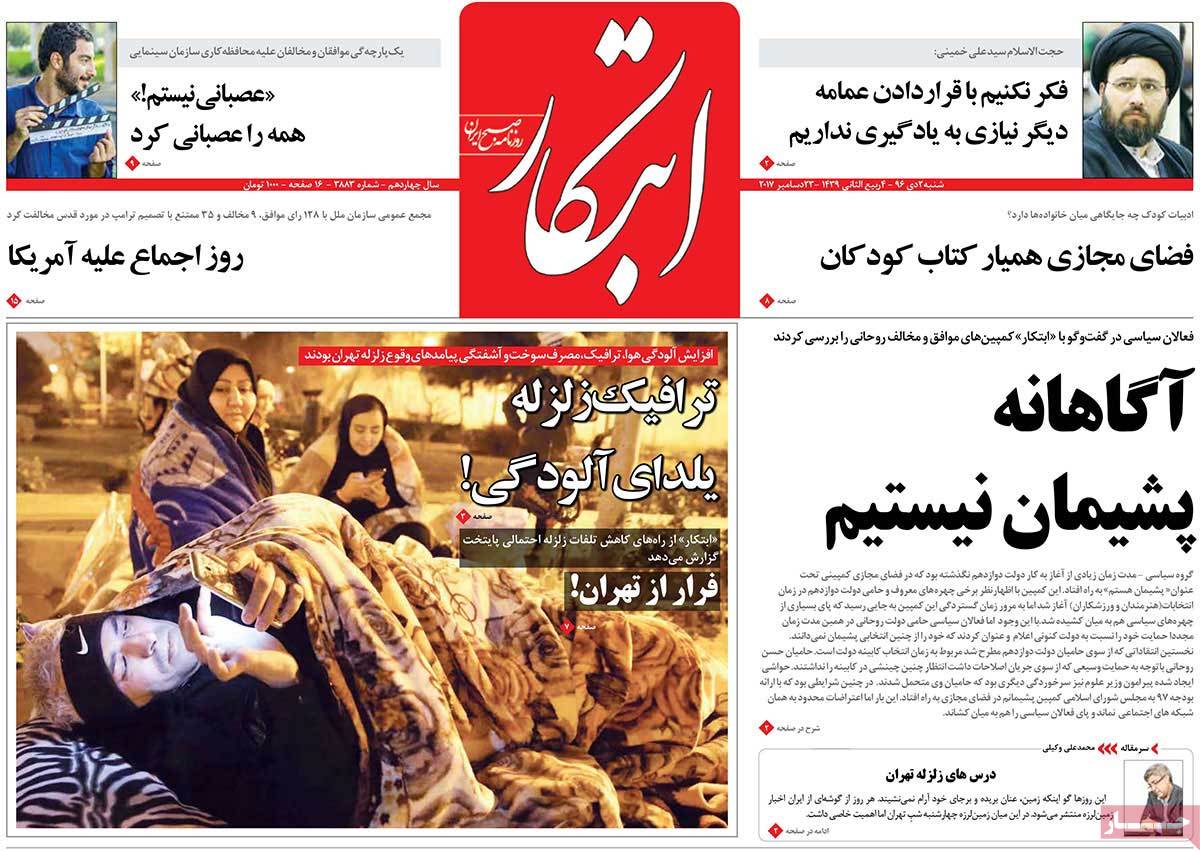
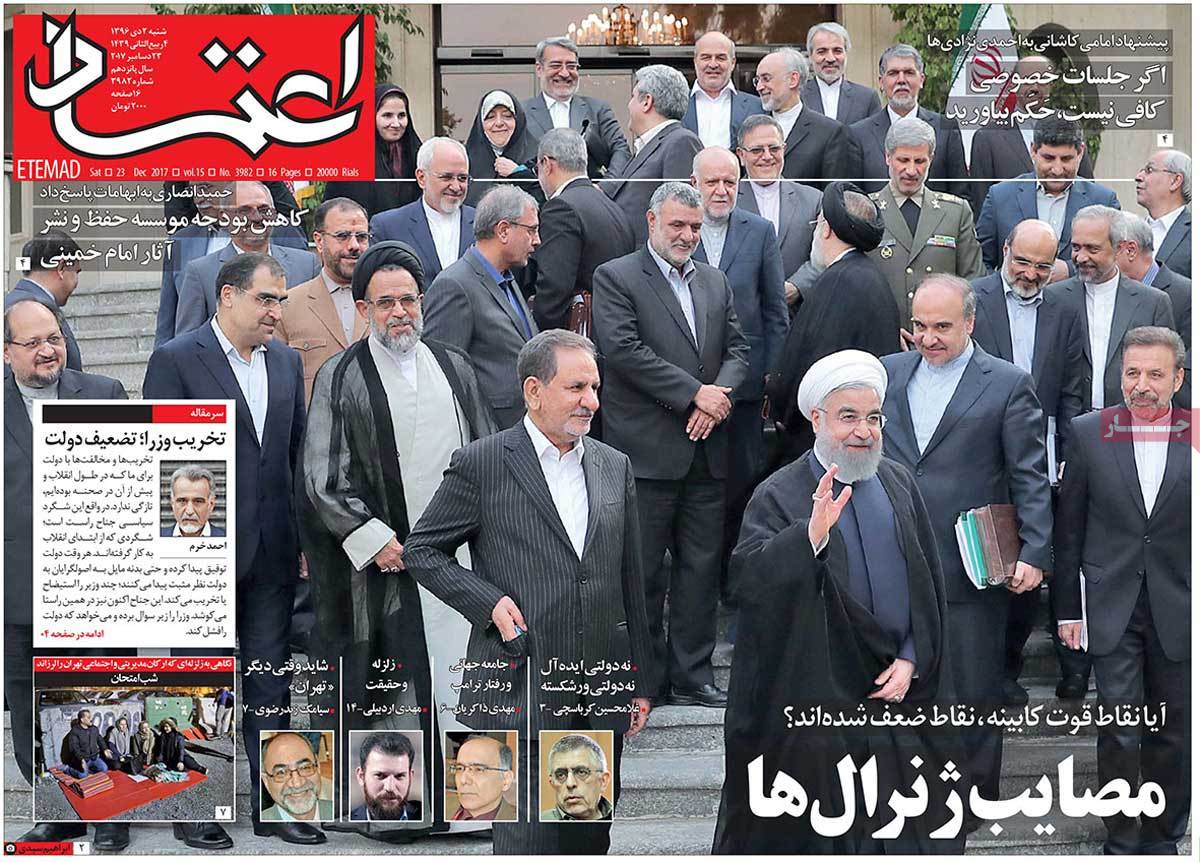
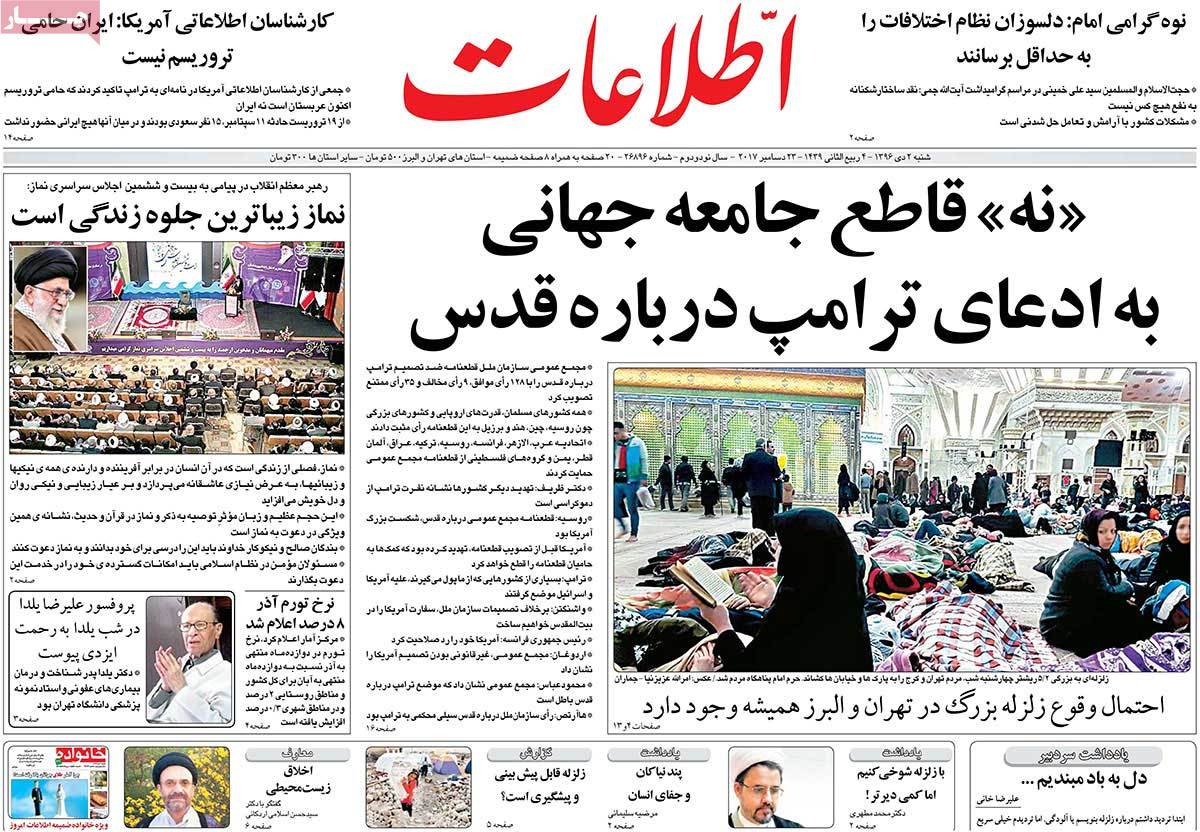
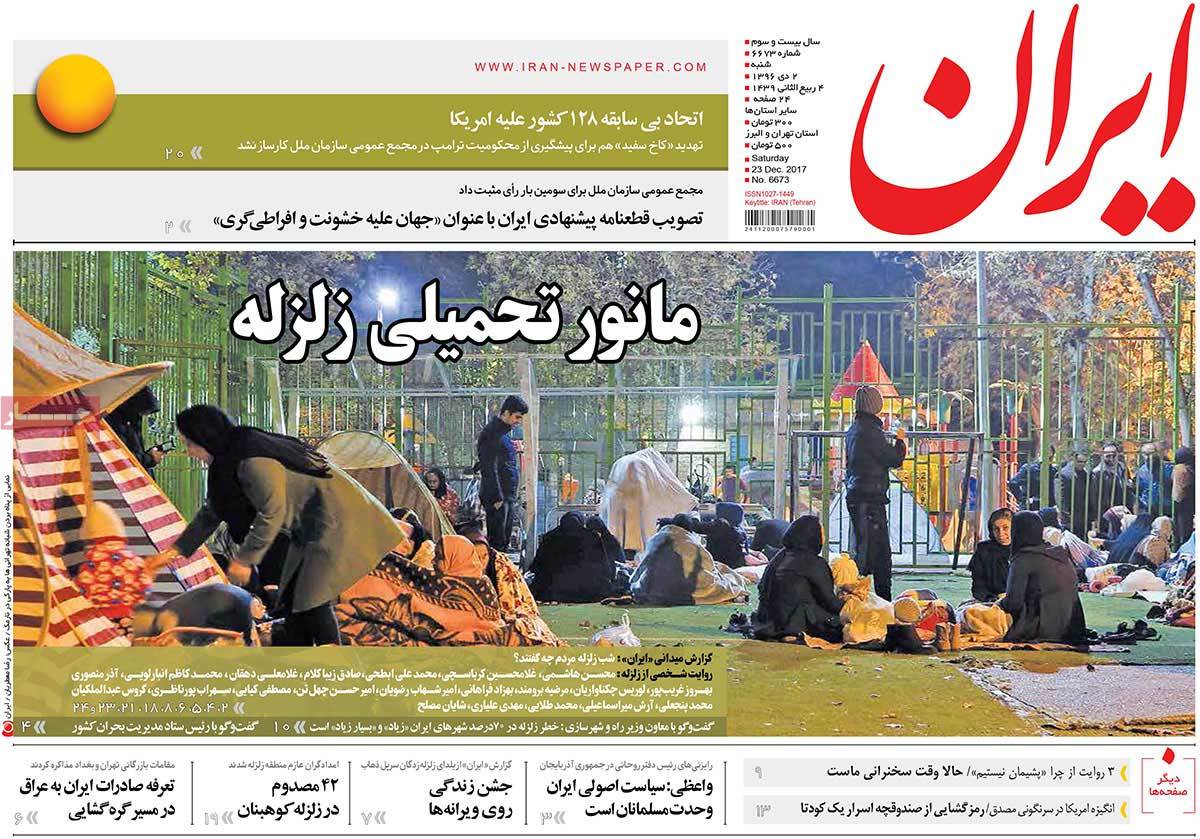
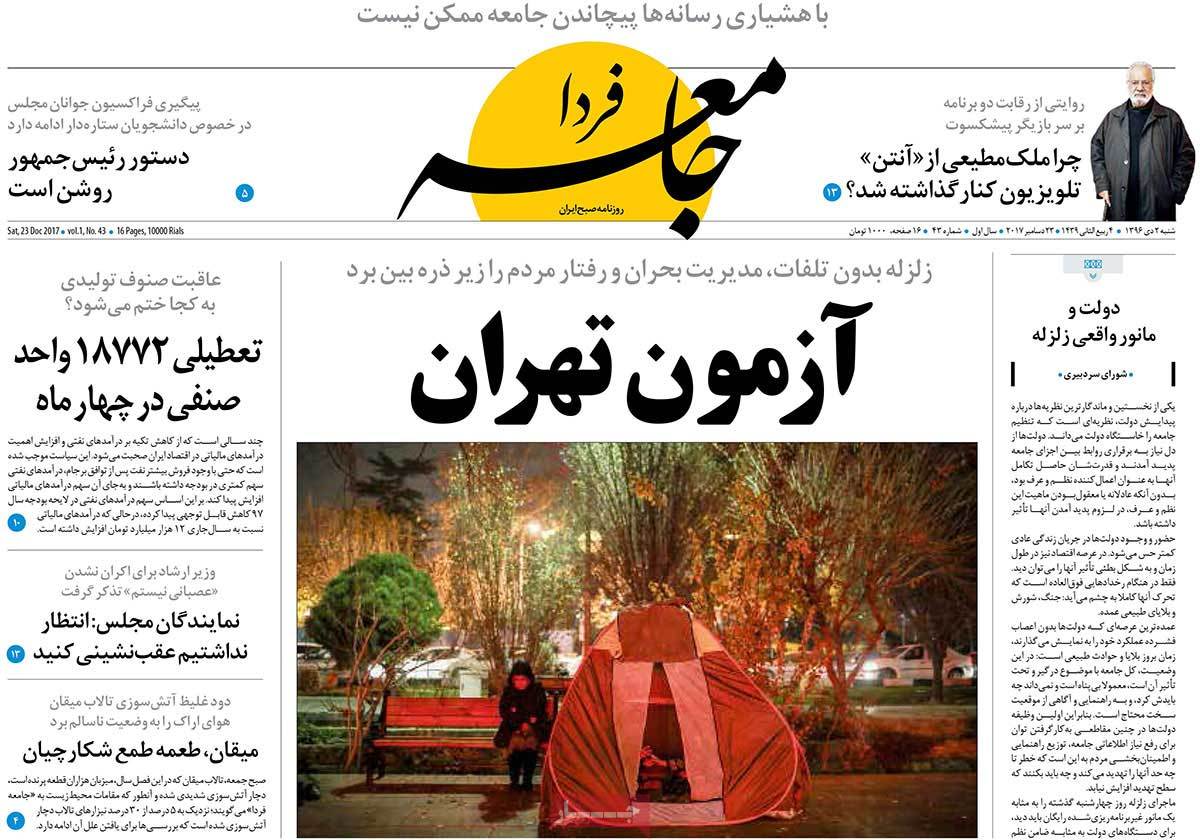
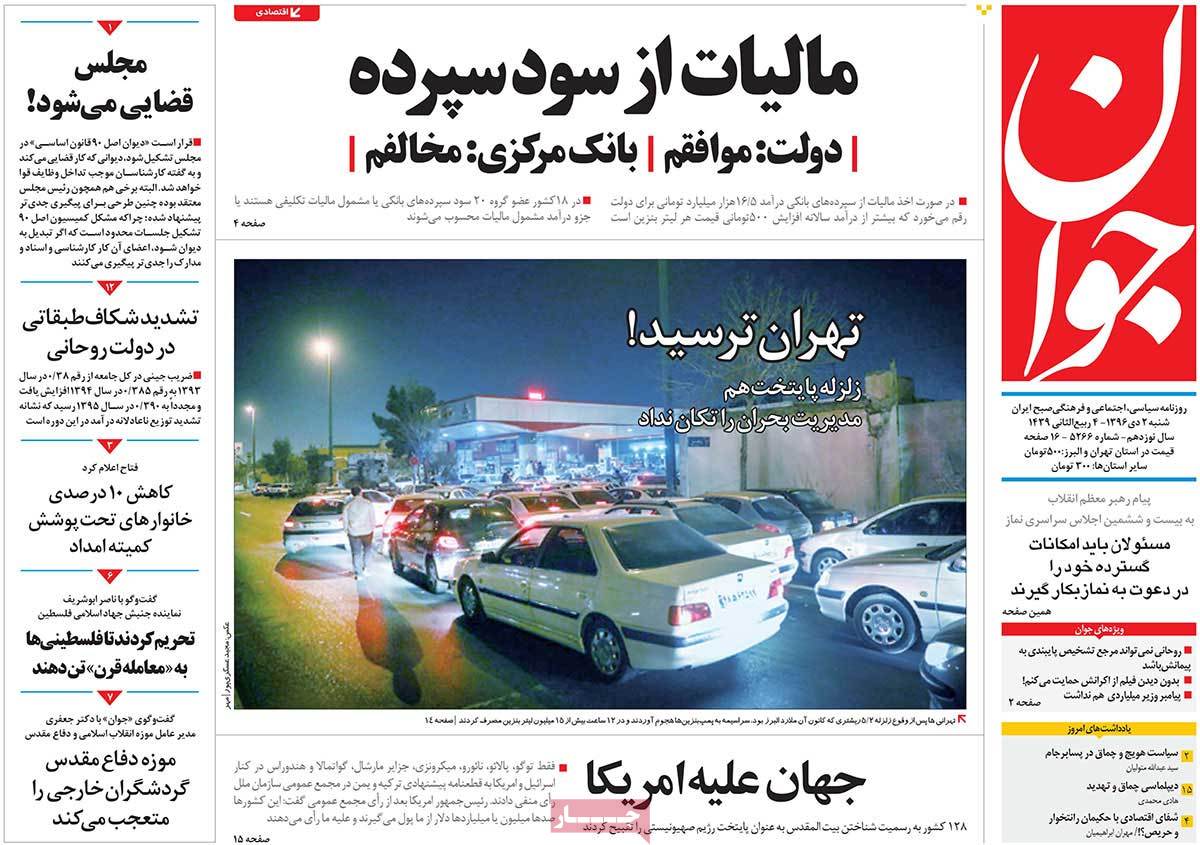
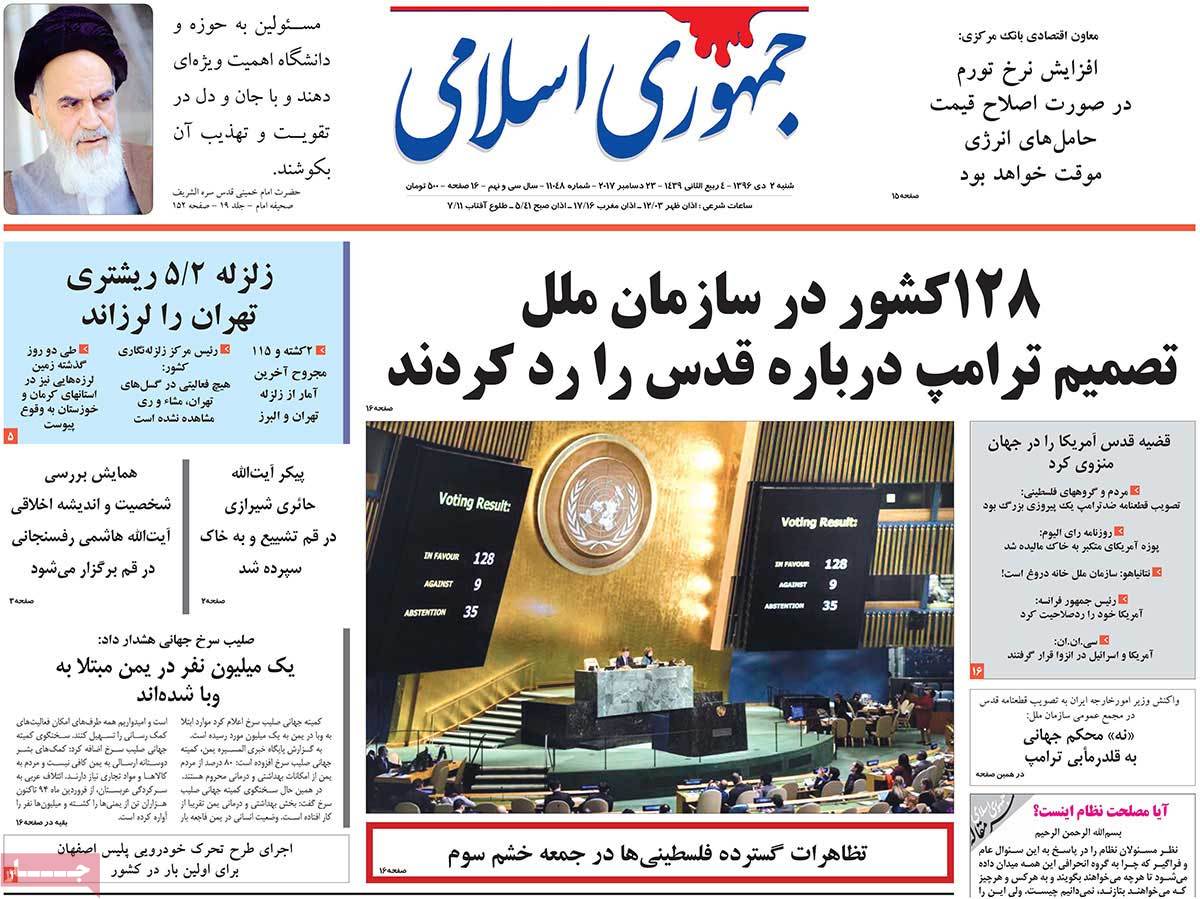
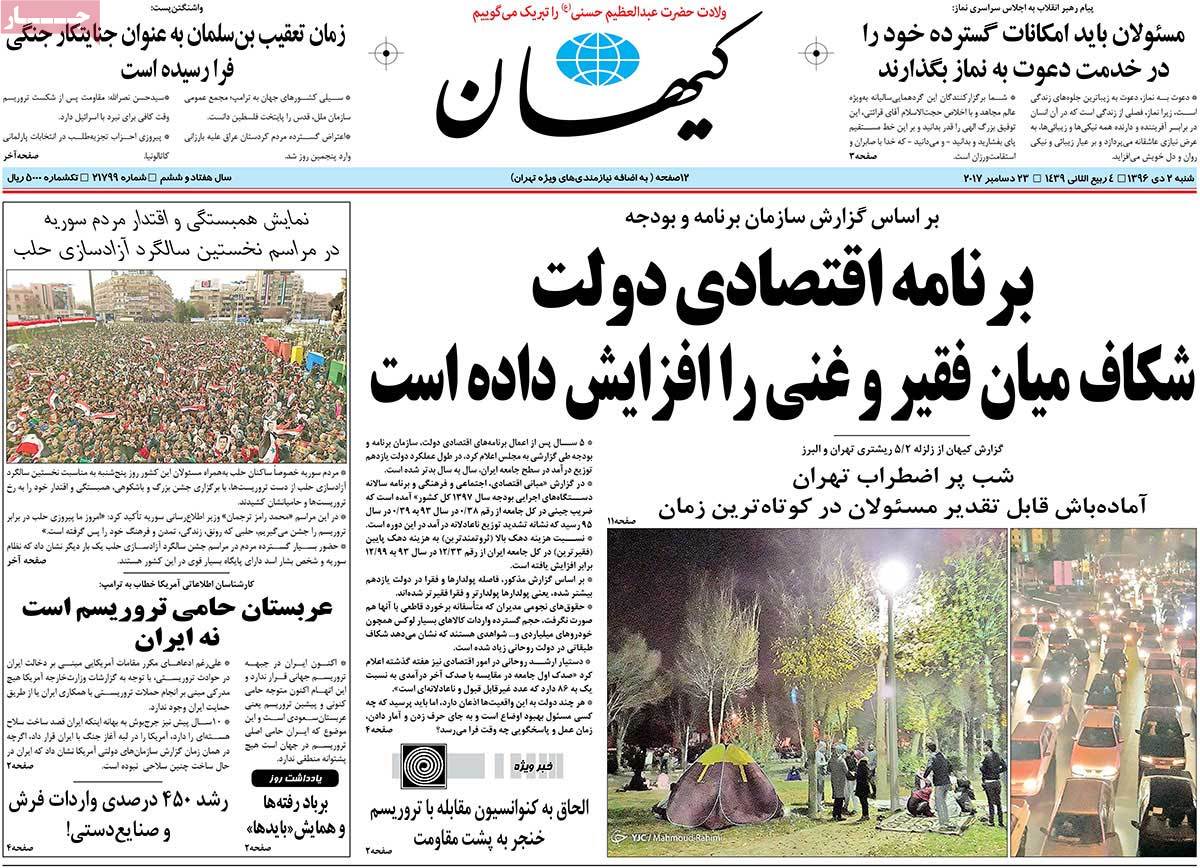
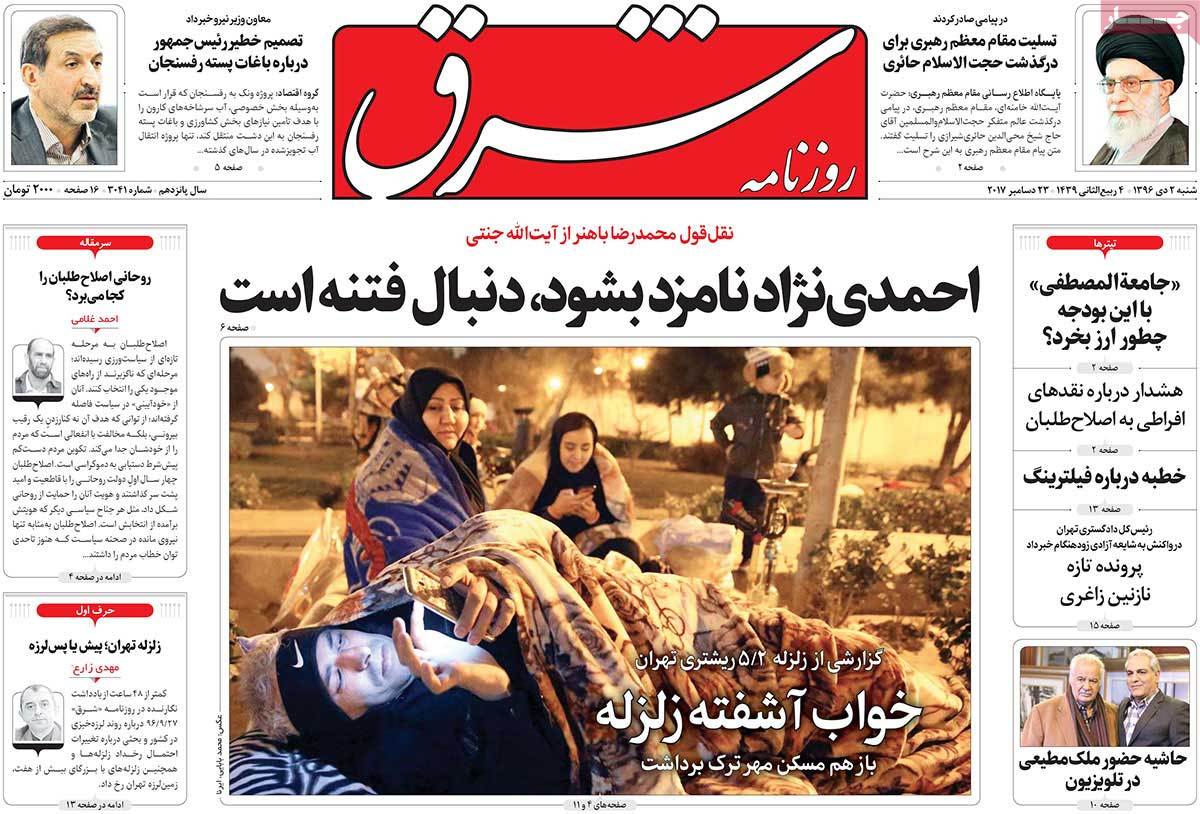
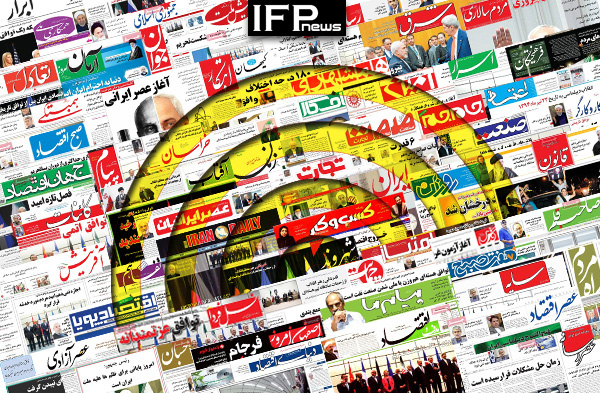
A Look at Iranian Newspaper Front Pages on December 2

The top story today was the FIFA World Cup 2018 draws, in which Iran was drawn with Morocco and European powerhouses Portugal and Spain.

The remarks by EU Foreign Policy Chief Federica Mogherini about the Iran nuclear deal and her strong support for its implementation also received great coverage.

Among other top stories were the 6.1-magnitude earthquake that hit Iran’s southeastern province of Kerman, and the comments made by Iran’s First Vice-President Es’haq Jahangiri in the Shanghai Cooperation Organization (SCO) summit in Sochi.

The above issues, as well as many more, are highlighted in the following headlines and top stories:


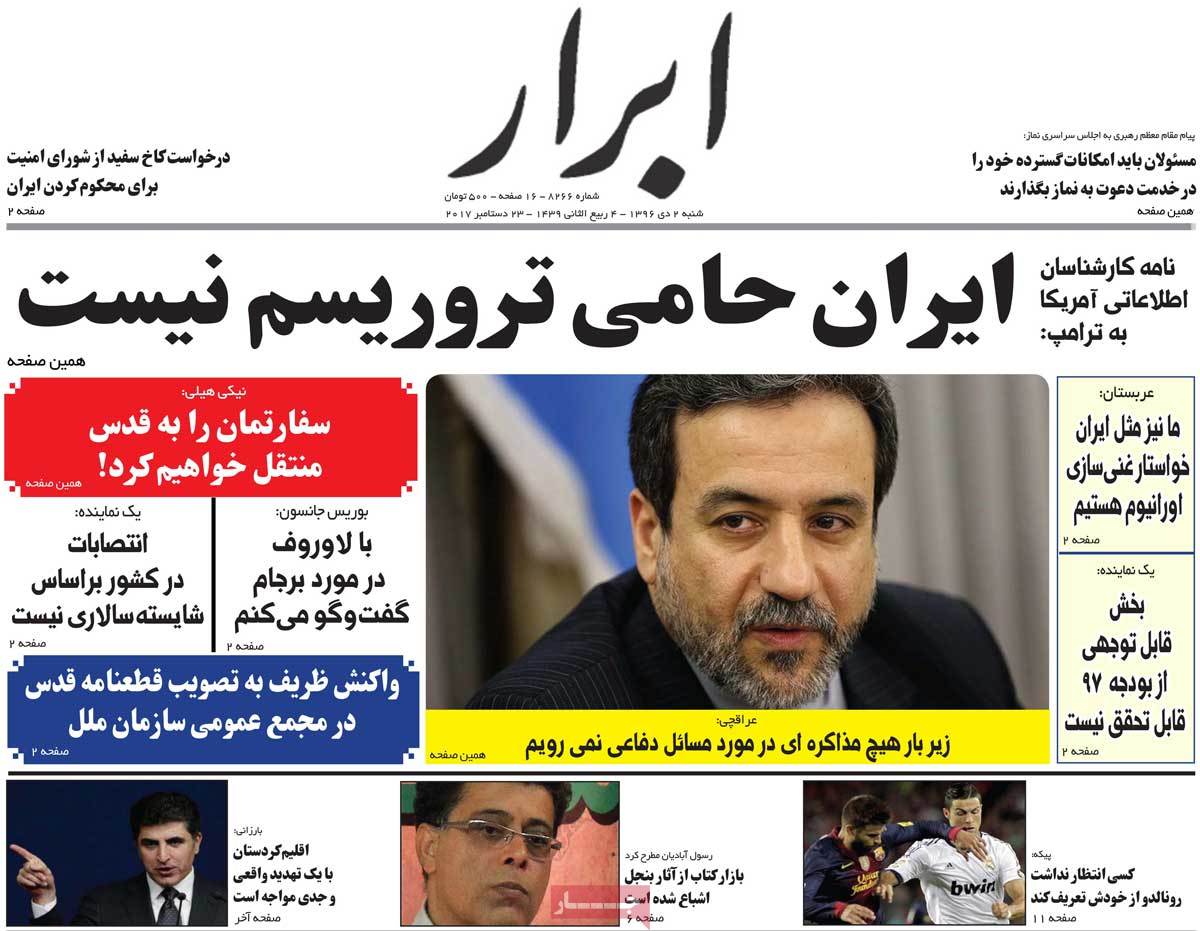
Abrar:

1- Iran Top Officer: All Terrorist Attacks in Arba’een Thwarted

2- Arab League Sec-Gen: We’re Ready for Cooperation If Iran Changes Behaviours

3- British PM Stresses Support for Iran Nuclear Deal

A Look at Iranian Newspaper Front Pages on December 2


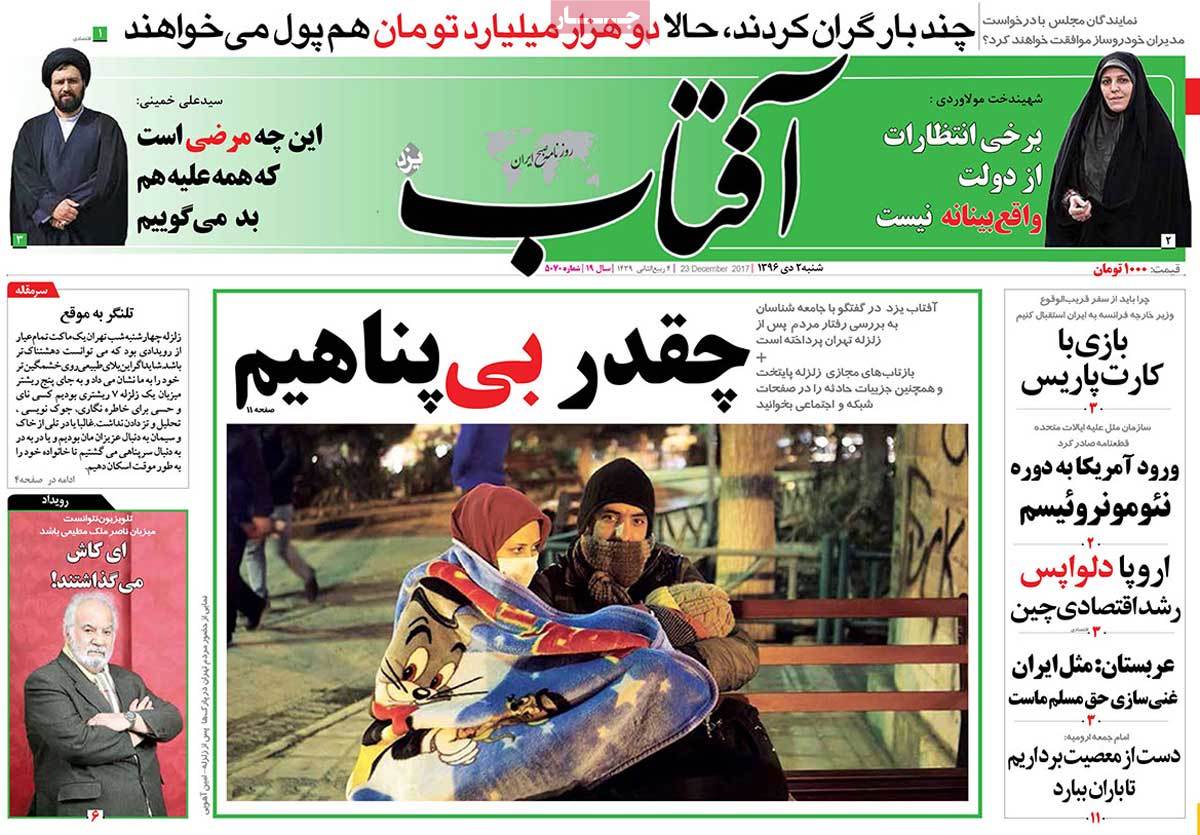
Aftab-e Yazd:

1- Early Death? Difficult World Cup Draw for Iran Football Team

2- Corpse Bride: World Media Cover Strange Face of Iranian Girl after 50 Surgeries

3- Zarif: Europe Has Been Decisive in Declaring Its JCPOA Stances

A Look at Iranian Newspaper Front Pages on December 2


Asrar:

1- Iran First VP: JCPOA Creates New Opportunity for Regional Cooperation

2- Oil Minister: US Sanctions Not Important to Iran

A Look at Iranian Newspaper Front Pages on December 2


Bahar:

1- Zarif in Rome: JCPOA Best Possible Deal for All Parties

2- Iran First VP: Sanctions Not Completely Removed

A Look at Iranian Newspaper Front Pages on December 2


Ettela’at:

1- Iran First VP: Project to Create New Middle East Has Failed

2- European Parliament Votes against Selling Weapons to Saudi Arabia

A Look at Iranian Newspaper Front Pages on December 2


Hambastegi:

1- Zarif: Europe Should Give Practical Guarantee on JCPOA

2- Queiroz: Iran Has a Wonderful, Committed Team

3- Polish Diplomat: Teaching Polish Language in Iran Very Important to Us

A Look at Iranian Newspaper Front Pages on December 2


Iran:

1- Iran Leader: Humanities Rooted in Religion

2- Difficult Campaign of Iranian Cheetahs

  • Queiroz: We’ll Fight for Happiness, Honour of Iranians in Every Match

3- Mogherini Strongly Supports Iran Nuclear Deal

  • We Told Trump JCPOA Implementation Is Security Priority for EU

A Look at Iranian Newspaper Front Pages on December 2


Jame’eh Farda:

1- EU: Respect Iran Nuclear Deal

  • Mogherini: Not Even a Single Paragraph of JCPOA Renegotiable
  • Europe to Stand against Pressures of US, Saudi Arabia, Israel

A Look at Iranian Newspaper Front Pages on December 2


Javan:

1- Fear and Excitement in Iran Group: No Luck for Iranians

  • Iran Drawn with Portugal, Spain, Morocco in FIFA World Cup 2018

A Look at Iranian Newspaper Front Pages on December 2


Jomhouri Eslami:

1- 6.1-Magnitude Quake, This Time in Kerman: Houses Collapse in Villages

2- OPEC Member States Agree on Extension of Oil Freeze

3- Iran-Europe 9-Month Trade Value Stands at $14.8 Billion

A Look at Iranian Newspaper Front Pages on December 2


Kayhan:

1- Trump after Signing Multi-Billion-Dollar Deal

  • Bahrainis Are Wonderful, They Bought Weapons from Us

2- Reformists Advise Jahangiri to Resign If He Wants to Become Next President

  • Rouhani’s Administration Had Weak Performance

A Look at Iranian Newspaper Front Pages on December 2


Payam-e Zaman:

1- No Fatalities in Kerman Earthquake

  • Serious Damage to Historic Structure of Kerman

2- One in Every 10 Deaths in Iran Caused by Air Pollution

A Look at Iranian Newspaper Front Pages on December 2


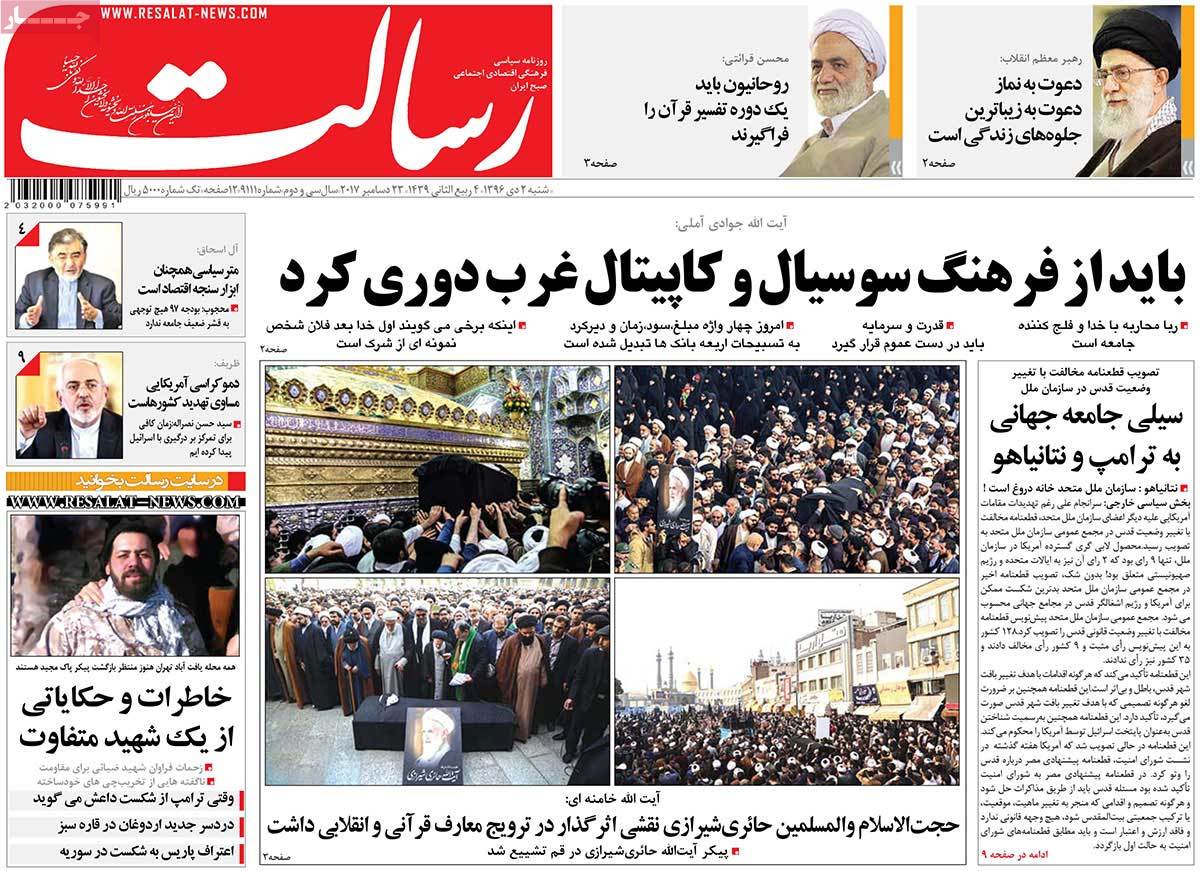
Resalat:

1- 5,000 Elite Orphans Supported by Imam Khomeini Relief Foundation

A Look at Iranian Newspaper Front Pages on December 2


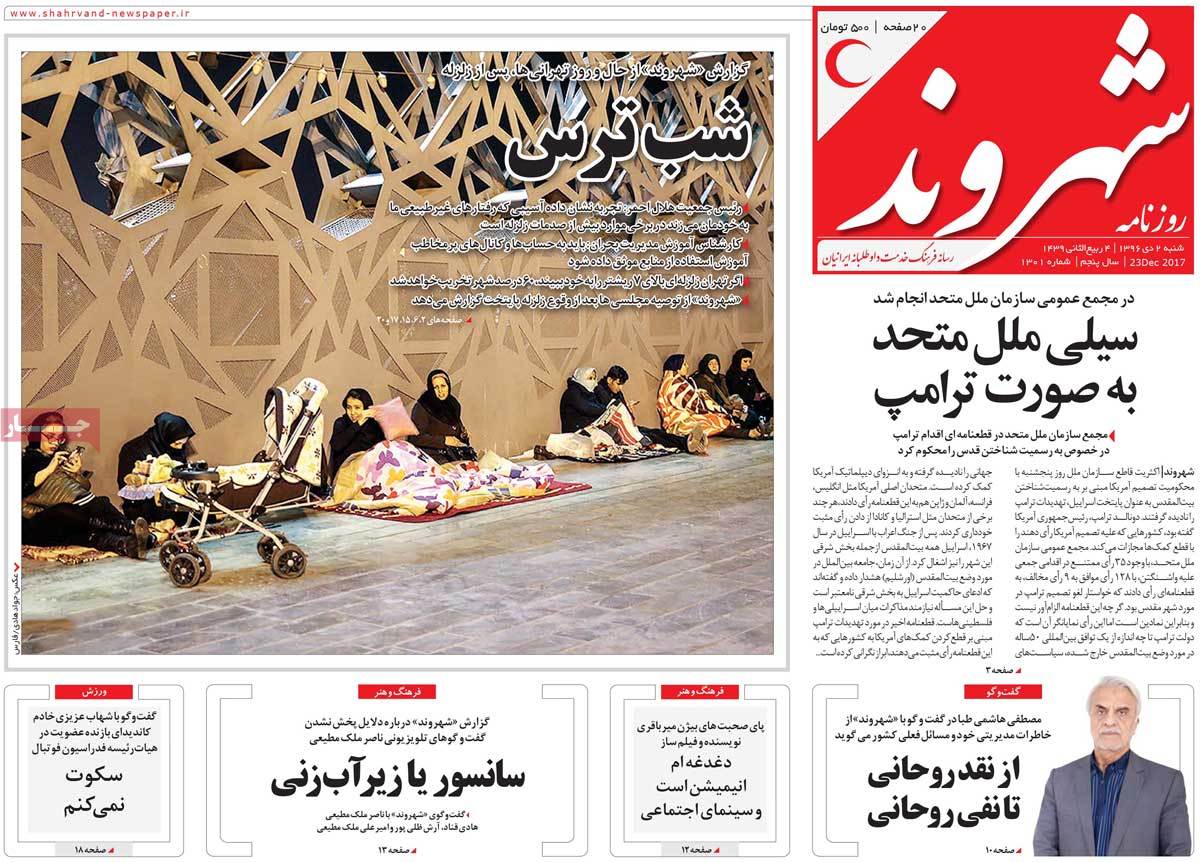
Shahrvand:

1- 30 Years of Regret

  • Stories of Those Affected by Infected Bloods 3 Decades Ago
  • Survivors Deprived of Marriage, Having Babies, Having a Job Due to HIV, Hepatitis

2- Red Cross Official after Visiting Quake-Hit Areas: Iran Red Crescent Didn’t Leave Anyone Behind

A Look at Iranian Newspaper Front Pages on December 2


Yemenis Shocked by Pro-Israel Fatwa of Saudi Mufti: Houthi Leader

Saudi Muftis

Abdul-Malik Badreddin Al Houthi said while many religious leaders in the Islamic world have forbidden violating the sanctity of Al-Aqsa Mosque by the Zionists, the Saudi Mufti has issued a new fatwa giving the Zionists a green-light to kill the Muslims.

“How on earth did the Saudi Mufti issue a Fatwa and ban the killing of the Zionists in the occupied lands but at the same time, religiously legalize the killing of Muslims in Yemen,” he was quoted as saying by ISNA in a Farsi report.

Earlier, the grand Mufti of Saudi Arabia, Abdul Aziz Al-Sheikh, said that fighting against Israel was inappropriate and said the Palestinian resistance movement of Hamas was a terror organization. He made the remark in reply to a question regarding July’s anger across the Israeli-occupied West Bank when Israel shut Al-Aqsa Mosque, following a deadly shootout.

Israeli Communications Minister Ayoub Kara praised Abdul Aziz al-Sheikh’s comments, offering the Mufti an invitation to visit Israel. “We congratulate Abdul Aziz al-Sheikh, the Grand Mufti of Saudi Arabia, as well as the head of Ulema for his fatwa forbidding the fight against the Jews and killing of them,” Kara tweeted.

Last year, the mufti had asked followers as well as businesses to make financial donations to the kingdom’s ongoing war on Yemen.

The grand mufti is known for issuing highly controversial fatwas. In June 2016, the Mufti exempted all troops waging war on Yemen from observing the religious obligation of fasting during Ramadan.

Elsewhere in his remarks, the Yemeni leader also called for strengthening the internal unity in Yemen and said the Yemenis need to avoid any tension threatening their unity.

“The Yemenis must stop taking their internal dispute to the media because the representations of such disputes will threaten our internal unity on the one hand and delight our enemies on the other.”

He then directly addressed the US and its regional allies particularly Saudi Arabia saying Yemen is a nation which will never give up its love for the holy prophet of Islam even if it gets involved in war with the entire world and loses its members.

“Those who think they can enslave us should know that they will end up in total failure in this project.”

Abdul-Malik also called the prophet of Islam and his family members a role-model for the Yemenis and added the nation is inspired by their faith, resistance and will.

“Our main principle is freedom. We will not sit back an inch in our fight for freedom. We believe that we will lose our religion if we stop seeking freedom.”

He pointed it out that the world needs to know that the Yemenis are living on this basic principle and those who are going to enslave them will be defeated.

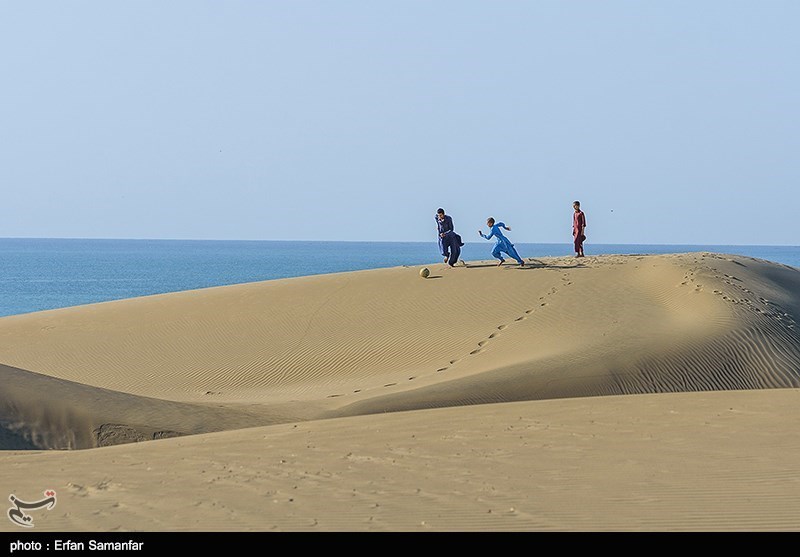
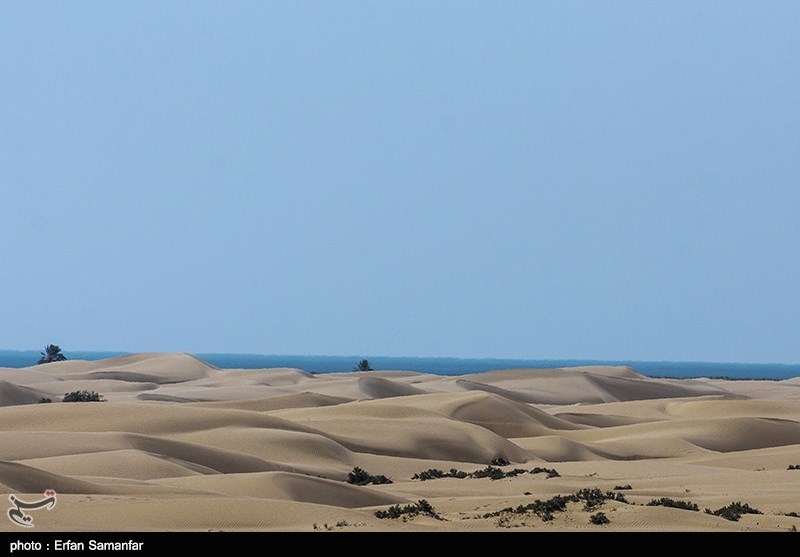
Caracal; A Golden Desert in Heart of Iran

The desert is located near the city of Bafq in Iran’s central Yazd Province. The name of this desert is derived from the Caracal wild cat living in the area. These cats have always attracted the attention of local people for their high intelligence and ability to be tamed. These cats have also been popular for hunting after being technically trained. Desert cats and other wildlife animals can be found in the heart of this golden desert.

Caracal; A Golden Desert in Heart of IranThe Caracal is one of the eight species of existing cats in the country which is also called the desert’s black-ear.

Caracals could only be found in Africa and Asia. In Kazakhstan, which is the northernmost place one can find Caracals, the population of this carnivore is limited due to the hard winters. In India, which is the easternmost habitat of the animal, it is introduced as a rare species. This cat is easily tamed.

Caracal; A Golden Desert in Heart of IranThese days, tour managers have a special focus on the desert of Caracal, and organize tours of the desert to give the chance to tourists to watch these beautiful cats. These tours have also been warmly welcomed by tourists.

Riding a camel, safari, motorcycle riding on golden sands, walking through palm trees, and staying in a traditional residence are all one can expect from a trip to the desert.

We recommend that the tourists, who prefer to enjoy the silence of the desert, should have a trip to this desert. You can walk comfortably along this untouched desert.