Thursday, December 25, 2025
Home Blog Page 3650

Iran Resolved to Boost Business Ties with Developing Countries

Qassemi said the Iranian top diplomat started his regional tour on Sunday by departing for the Senegalese capital of Dakar. Zarif will later travel to Brazil, Uruguay, and Namibia.
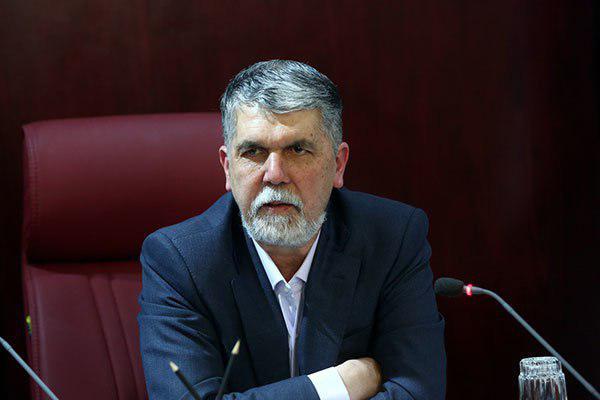
As in previous regional and bilateral visits, a number of businesspeople, merchants, entrepreneurs, bankers, and industrialists are accompanying Zarif, Qassemi noted, adding that the quality and quantity of the economic delegation has been improved in this particular visit.

Speaking in a Farsi interview with ISNA, he went on to say that several representatives of the country’s economic sector operating in various fields as well as entrepreneurs are among the delegation accompanying the Iranian top diplomat.

“This trip, as a continuation of the foreign minister’s previous trips, is being made with the aim of increasing the diversity of Iran’s foreign policy and relations with other states,” he said.

The Islamic Republic has always tried to improve its interaction with different countries in the world as much as they are prepared to do so, Qassemi noted.

During this trip, efforts will be made to use economic diplomacy in a bid to strike a balance in Iran’s commercial and business cooperation with other countries, he added.

“We are trying to promote the Islamic Republic’s economic ties with developing countries along with our political ties,” Qassemi said, adding that an economic department has been established at the Iranian Foreign Ministry in order to serve the same purpose.

He pointed to Senegal as the first leg of Zarif’s regional tour, and said, “During this trip, Zarif will hold talks with the Senegalese foreign minister, president, and the president of its national assembly.”

Attending a meeting of Iran-Senegal Joint Economic Commission is among the most important parts of Zarif’s trip, Qassemi said.

The Iranian foreign minister and the Senegalese trade minister will address the meeting, which is to be attended by businesspeople and merchants of the two countries’ public and private sectors, he added.

In such meetings, good opportunities are provided for representatives of public and private sectors to hold talks with their counterparts and make efforts to expand the two countries’ interactions in various economic, industrial, trade, and banking fields, Qassemi went on to say.

The spokesman further referred to Brazil as the second leg of Zarif’s tour, and described the Latin American country as one of the important economies in the world which has had long-standing relations with Iran in this field.

“Brazil is currently a member of the BRICS and enjoys great economic and business capabilities and capacities,” he noted.

A joint economic meeting will be held in Brazil as well, he said, adding that the Iranian delegation will try to make the best use of the limited time it has in Brazil to promote interaction between the two countries’ merchants and economic sectors.

“During the visit, documents will be signed in legal, judicial, commercial, educational, and cultural fields between the two countries,” he noted.

“One of the agreements to be signed during the visit is a document on Iran-Brazil economic cooperation which will be signed by the head of Iran’s Chamber of Commerce and his Brazilian counterpart after negotiations between the two countries’ economic representatives,” Qassemi underlined.

Another document of cooperation is to be signed between the Iranian Foreign Ministry’s School of International Relations and Brazil’s diplomatic academy, he noted.

While in Brasília, Qassemi said, the Iranian top diplomat will hold separate meetings with Brazilian president, parliament speaker, and foreign minister to discuss bilateral relations, international and regional developments.

At the end of their one-day visit, Mr Zarif and his entourage will leave Brazil for Uruguay, where he is going to meet with the president, the senate president, the chamber president, and the vice-president of the Latin American state, he added.

A meeting of Iran-Uruguay Joint Economic Commission will also be held and attended by the two countries’ foreign ministers, Qassemi said.

Meeting with members of Iran-Uruguay Parliamentary Friendship Group is also on the agenda of Zarif’s trip to Montevideo, he added.

“After leaving Uruguay, Zarif and the delegation accompanying him will visit Namibia, where Zarif is expected to meet his counterpart,” he noted.

Qassemi finally noted that the Iranian foreign minister is making the visits at the official invitations of his counterparts, and that the tour will continue until Friday.

Enemies’ Pressures Result of Their Fear of Iran’s Growing Power: Leader

In a Sunday meeting with a group of senior commanders of the Iranian Armed Forces, Ayatollah Khamenei stressed that the reason for the unprecedented hostility against the Islamic establishment is its growing power.

The Leader downplayed the efforts made by the Islamic Republic’s enemies to curb its power, and stressed that despite all the conspiracies the power of the Islamic establishment will increase day by day.

Ayatollah Khamenei also noted that power, security, dignity and having adequate capability in time of need are the main goals of the Iranian Armed Forces.

All the activities conducted by these forces must be aimed at achieving their predetermined goals, he added.

At the beginning of this meeting, Major General Mohammad Baqeri, the Chief of Staff of the Armed Forces of the Islamic Republic of Iran, reported on the accomplishments and activities of the armed forces in the past year and said “In the new year, we are committed to increasing efforts and moves to achieve the our goals.”

Iran Strongly Condemns Use of Chemicals by Any Party

“The Islamic Republic of Iran, as one of the victims of chemical weapons, strongly condemns the use of such weapons by any party and anywhere in the world based on its principled policies and religious and moral teachings,” Qassemi said in a Sunday statement.

Referring to the alleged use of chemical weapons by the Syrian army in Douma, Qassemi stated that such claims do not fit the facts on the ground.

The Syrian government has had a good cooperation with the United Nations on chemical matters, Qassemi said, adding that the international community, after Syria’s accession to the Chemical Weapons Convention, destroyed all the chemical weapons production and manufacturing facilities of the Arab country.

“The Syrian army’s use of chemicals does not seem logical since it has the upper hand in its war against armed terrorists,” stressed Qassemi.

“Such allegations by the US and some other Western countries reveal a new plot against the Syrian government and people. This is an excuse for military action against Syrians and will definitely add to the complexity of the situation in this country and region.”

“Such claims would also make the terrorist more resolute in committing crimes, which will not contribute to peace, stability and security in the region and in the world,” he added.

Reports say dozens of Syrians choked to death after a suspected chemical attack struck the suburb of Douma, east of Damascus on Saturday.

Western governments were quick to blame President Bashar al-Assad’s government for the assault. US President Donald Trump on Sunday accused Syria, Iran, Russia saying that there would be a “big price to pay” for the chemical attack.

“Many dead, including women and children, in mindless chemical attack in Syria. Area of atrocity is in lockdown and encircled by Syrian Army, making it completely inaccessible to outside world. President Putin, Russia and Iran are responsible for backing Animal Assad. Big price to pay,” Trump wrote on Twitter.

The Syrian state denied government forces had launched any chemical attack and Russia called the reports bogus.

The Russian Foreign Ministry warned against any military action on the basis of “invented and fabricated excuses”, saying this could lead to severe consequences.

A joint statement by medical organizations said 49 people had died in the attack late on Saturday in the town of Douma. Others put the toll even higher.

Nowruz Travels in Iran Increase by 20%: VP

Nowruz Travels in Iran Increase by 20%: VPHe said an overall number of 74 million travellers/nights has been registered during Nowruz holidays which shows a 20 percent growth compared with the previous year.

“Some 770,000 people at 19 governmental organizations were on alert during Nowruz holidays to offer services to Nowruz passengers and make the New Year holidays’ travels safer and happier,” he was quoted as saying in a Farsi report by IRNA.

132 million visits were made to historical sites, cultural centres and museums across the country, he said, adding that the recent Nowruz holidays showed that tourism has made its way into the list of household expenditure in Iran.

Nowruz Travels in Iran Increase by 20%: VP“On average, each tourist has visited seven natural and historical sites across Iran during the holidays,” he noted, adding there was a 50 percent decrease in the number of complaints during Nowruz holidays.

“To reduce the number of car crashes, we had established at least 550 guest houses between the cities as part of a plan to decrease the number of accidents caused by drowsy driving,” he added.

Iran’s vice president referred to the launch of a smart system for monitoring travel services during Nowruz holiday and added the system was very helpful.

“6 million people visited the system within just one month which significantly helped the even distribution of tourists across the country.”

Nowruz Travels in Iran Increase by 20%: VP


Mazandaran, Gilan, Bushehr Most Visited Provinces

Moonesan said Mazanradan province in northern Iran ranked first in attracting the highest number of Nowruz tourists during the New Year holiday.

“Gilan [in the north] and Bushehr [in the south] provinces ranked second and third respectively in terms of attracting Nowruz tourists,” he added.

According to Moonesan, other provinces like Chaharmahal and Bakhtiari [in the west] experienced a 206-percent growth in terms of attracting new tourists. “Hamadan province with a 128-percent growth and Kerman with 79-percent are the next provinces.”

He said serious efforts are underway to lead tourists to less-known provinces across the country.

The vice-president said 716 temporary centres were established to perform entertaining programs on the occasion of Nowruz which compared with the previous year shows a 72-percent increase.

Nowruz Travels in Iran Increase by 20%: VP

He then referred to the plans to support Iranian-made goods during Nowruz and added at least 624 markets were established to showcase Iranian handicrafts.

“During Nowruz holidays, we also witnessed a 27.5-percent in ground travel and a 7.2-percent in air travels,” he said.

He finally expressed hope that with the approval of the law on winter holidays by Iran’s parliament this year, similar records would be registered in terms of attracting tourists by the southern provinces.

Iran Supports Lebanon’s Integrity, Sustainable Security

Bahram Qassemi

Qassemi on Sunday referred to an article by the Iranian daily Jomhouri Eslami published on April 4, and said the issues raised in the article are in contradiction with the positions of the Islamic Republic of Iran.

“Such issues have nothing to do with Iran’s approach in Lebanon within the past four decades, which has been based on mutual understanding,” he added in an interview with IRNA.

Qassemi added that Tehran has consistently made all efforts to maintain and strengthen unity among the tribes and political groups of Lebanon.

The Iranian spokesperson said the Islamic Republic has underlined the issue in all visits and meetings with the Lebanese officials.

“We believe that the Republic of Lebanon has turned into a model for other countries in the light of the peaceful coexistence of tribes and the followers of various religions, including Muslims and Christians,” he noted.

Qassemi further stressed that it is the responsibility of all to boost this solidarity, and the Islamic Republic of Iran has always been on the same footing.

“Respecting the sovereignty of all countries, including the friendly country of Lebanon, and showing respect for the political figures of this country is the most important principle in the foreign policy of the Islamic Republic of Iran,” he added.

The article, which was written by Sadeq Mousavi and published by Jomhouri Eslami on Wednesday, strongly criticized Iran’s approach to Lebanon within the past decades, particularly its support for Lebanese President Michel Aoun.

He believes Aoun is weakening the Lebanese Resistance Movement Hezbollah ahead of the upcoming parliamentary elections, while he was elected as the president thanks to the support of Hezbollah.

FM Zarif Leaves Tehran for Dakar

Zarif

The Iranian top diplomat is expected to hold talks with high-ranking Senegalese officials on various issues of mutual interest.

According to Foreign Ministry Spokesman Bahram Qassemi, Zarif will later leave Senegal for Brazil and Uruguay. He will finally return to Africa to visit Namibia.

“Zarif will also attend bilateral economic and trade conferences in each country and deliver speeches at some research institutes of these countries,” Qassemi said.

The spokesman said tens of businesspeople and entrepreneurs from the governmental and private companies active in various sectors will accompany Zarif in these trips.

Syrian Gov’t Says Ready to Hold Talks with Jaysh al-Islam

According to the Syrian State TV, the Assad government is prepared to hold talks with the militants in Douma near Damascus.

“Jaysh al-Islam terrorists have called for holding talks with the Syrian government,” a Farsi report by Mizan quoted Syria’s state TV as saying.

The Syrian Arab News Agency (SANA) also said the appeal by Jaysh al-Islam came after “the painful blows they received due to the decisive military operation and attacks on their positions and hotbeds in Douma.”

This comes as Russian Defence Ministry announced on Saturday the Jaysh al-Islam terrorists are preventing the civilians from leaving Douma and targeting the protesters.

Over the past days, these militants have been targeting Damascus with missiles from a region in Douma, Mizan added.

Reports say at least four Syrians including a child have been killed and more than 30 others injured in the militants’ missile attacks on Damascus.

Douma is the last terrorist bastion in Eastern Ghouta. The Syrian army, backed by the Russian air force, has almost entirely liberated Eastern Ghouta from the militants.

Iran to Host Multinational “Letter to My Child” Festival

Nowruz has been inscribed as a UNESCO Intangible Cultural Heritage by Iran, Afghanistan, Azerbaijan, India, Iraq, Kazakhstan, Kyrgyzstan, Pakistan, Tajikistan, Turkey, Turkmenistan, and Uzbekistan.

The “Letter to My Child” festival is aimed at introducing contemporary famous figures and artists of these countries in the field of intangible cultural heritage.

According to a Farsi report by IRNA, the international festival is to create more cultural, social and artistic interaction between the younger generations so as to protect intangible cultural heritage of Nowruz countries and also to reduce the cultural and social distance between the young and the older generations.

Developing the cultural and scientific potentialities of these youths through making them acquainted with contemporary artists and famous figures of their countries and motivating them to respect their intangible cultural heritage are among other goals of the festival.

It is also aimed at directing the attention of the children and youth of the Nowruz countries to the less-known part of their culture.

Iran to Host Multinational “Letter to My Child” FestivalSecretary of the festival, Reza Zamani, has told IRNA that in addition to historic monuments and collections of objects, cultural heritage includes customs, traditions, idioms and expressions.

Zamani added that oral traditions, arts, social practices, rituals, celebrations or the knowledge and skills necessary for the production of traditional crafts are considered as intangible cultural heritage.

“Since the intangible cultural heritage has been passed from one generation to another, and is continually being recreated by human communities and groups of people, in accordance with their surroundings and in interaction with their nature and history, we decided to call it Letter to My Child.

“In this way, we contribute to this transition and cultural interaction through interviews with celebrities, personalities, and cultural heritage professors in the vast field of Nowruz cultural heritage (including 12 countries),” underlined Zamani.

“In this festival, we will go to the place of residence and the city of the selected artists in one of the fields of oral traditions, performing arts, rituals, knowledge and practices related to the nature and the world and traditional craftsmanship from each of the 12 countries of Nowruz.”

en-nowruz-tajik-2412 (10)“We would conduct interviews with them about their experiences, interests, concerns and their love and aspirations for their children and the young generation,” he added.

The researcher also noted that UNESCO’s commissions in the Nowruz countries will provide the necessary assistance in introducing contemporary artists.

“These interviews will be published in a bilingual book called Letter to My Child, and Youths and Children of Nowruz Countries. Moreover, a documentary TV series called Intangible Heritage, Yesterday, Today, Tomorrow would be produced to show the statements and geography of the living place of these artists.”

Zamani went on to say that a two-person team will take part in the festival to conduct interviews and produce the documentary in the participating countries. Five letters from each country will be published in the book and the first chapter will contain interviews with artists and selected figures of Nowruz countries.

According to him, the second chapter includes letters from the fathers and mothers of the Nowruz countries to their children in preserving the intangible cultural heritage, and the third chapter will include interviews with the figures and artists of the host country (the Islamic Republic of Iran).

en-nowruz-tajik-2412 (12)

Without mentioning the time and details of the festival, Zamani added that the result of the five stages of the festival will be presented to the world at the final stage during a two-day ceremony in 2019 in Tehran.

Secretary General of the UNESCO’s National Commission, Sa’dollah Nasiri Qeydari, has told IRNA that the Commission decided to sponsor the event after being informed that the topics of the festival are in line with the UNESCO’s cultural goals.

“A memorandum of understanding was signed between the National Commission for UNESCO and the Cultural and Artistic Institute of the Nowruz Region Letters, in which the Commission’s various types of spiritual supports are explicitly mentioned.”

Nasiri Qeydari further noted that by publishing this book, children can see the ideas of their parents in a beautiful collection. Hence, this book conveys a significant part of the experiences of the previous generation in an honest style to the next generation, which is one of the objectives of the UNESCO Program on the Intangible Cultural Heritage.

Iran FM, Russian Academics Discuss Regional Issues in Tehran

Iran-Russian

During the Sunday meeting, the two sides discussed the main regional and international developments especially the role of Iran and Russia at the international system and the future of the Iran nuclear deal, among others.

The Iranian foreign minister elaborated on his views about the situation of the current international system as well as the trends and players of today’s world and the prospects of regional and international developments.

He finally responded to the questions raised by some of the Russian academics and researchers.

Earlier in February, Zarif delivered a speech at the Valdai Discussion Club’s Middle East Conference. The annual conference was attended by prominent politicians, diplomats, scholars and public figures from more than 30 countries.

The main theme of this year’s conference was “Russia in the Middle East: Playing on All Fields.”

The conference, jointly held by the Valdai Club and the Institute of Oriental Studies of the Russian Academy of Sciences, included eight sessions dedicated to various Middle East-related issues, including Russia’s diplomatic, mediatory, and political role in the region as well as its perception by other parties.

In particular, experts discussed the post-war reconstruction of Syria, the prospects of settlement of the Palestinian-Israeli conflict and the situation in Yemen, the mechanisms of providing assistance to Libya and resolving the Kurdish issue, as well as the ways to reduce tensions in Iran’s relations with its neighbours.

The Valdai Discussion Club is a Moscow-based think tank, established in 2004. It is named after Lake Valdai, which is located close to Veliky Novgorod, where the Club’s first meeting took place.

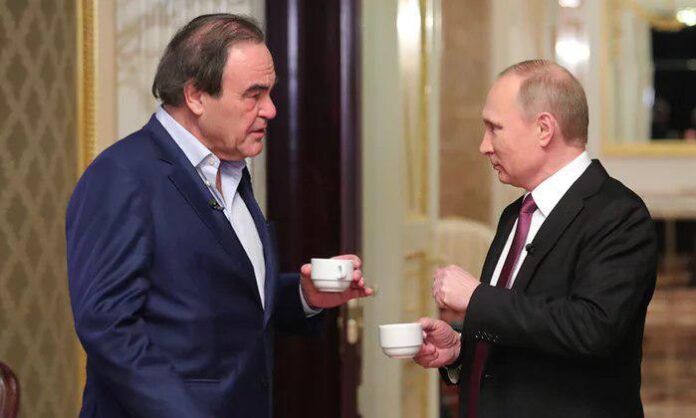
Russian President Vladimir Putin has met with the participants of the Valdai Club’s annual meetings every year since its founding.

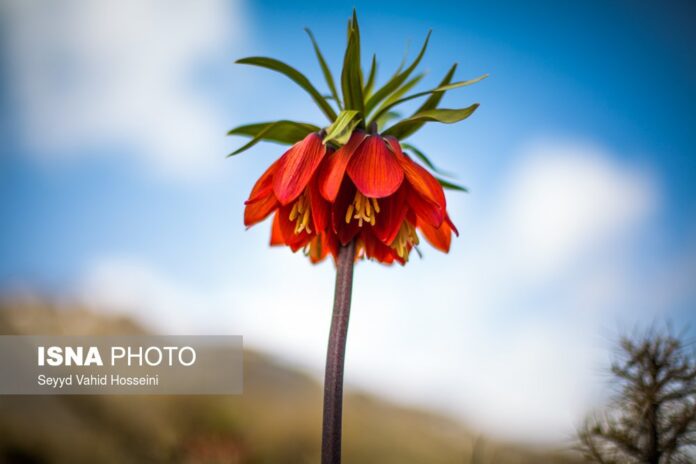
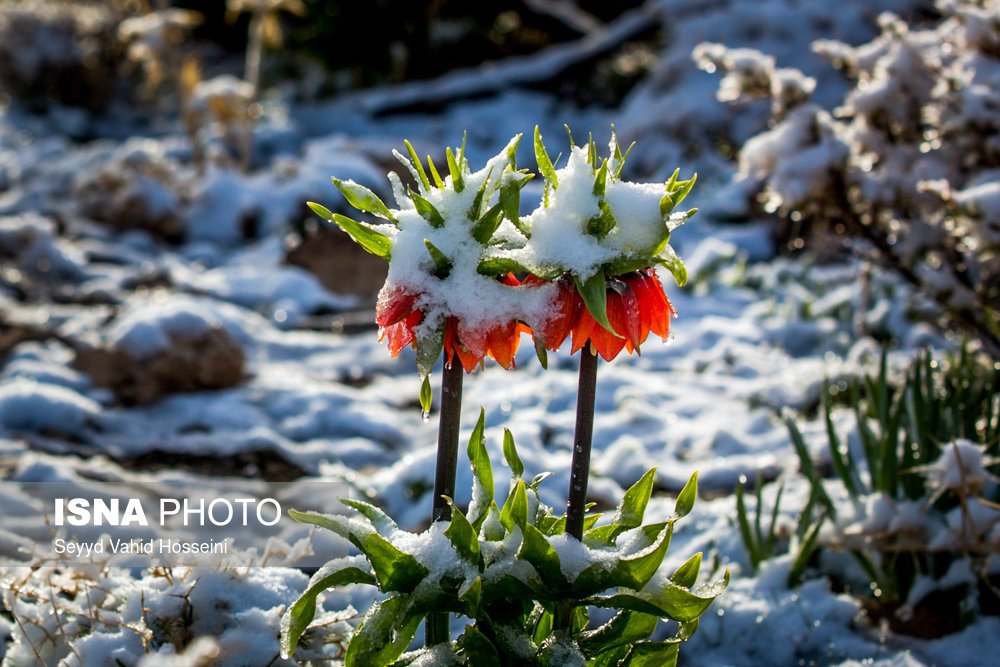
Tulips Festival Underway in Iran’s Markazi Province

The event has been held in an area of 8,000 square metres with 21 types of tulips on show. The event would be underway until April 14 at Arak Industrial Town.

Following you can find the photos of this amazing festival retrieved from IRNA: