Thursday, December 25, 2025
Home Blog Page 3643

Iran Urges France Not to Be Swayed by Bin Salman’s Claims

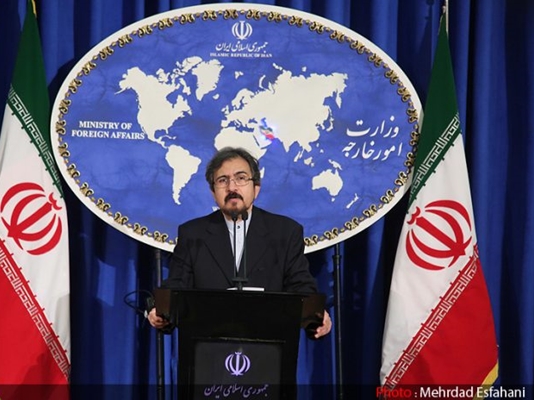
Bahram Qassemi made the comments in reaction to the anti-Iran allegations raised in a joint statement by France and Saudi Arabia which was issued at the close of Saudi Crown Prince Mohammed bin Salman’s trip to Paris.

“France, as one of the members of the P5+1 Group of nations, was not expected to be influenced by the repetitive and utterly untrue insinuations and accusations of Saudi Arabia, which has always acted against the JCPOA, and has spent huge sums of money and put his country up for sale in a bid to impede the implementation of the nuclear deal,” said Qassemi.

“Unlike the claim made in the statement, the Islamic Republic of Iran has always taken steps towards ensuring the stability and security of the regional countries and fighting terrorism and terrorist groups, and believes the only way to restore security and tranquility to West Asia is to hold dialogue among the countries in the region.”

“France should know that the opposition such as that expressed against Iran [in the statement] emanates from some countries’ anger over Iran’s triumph in the war on the terrorism bred by them,” Qassemi underscored.

The spokesman also touched upon Iran’s missile program.

“French authorities probably know that Iran’s missile program is deterrent and defensive, and is not against the security and interests of any country and is simply based on our bitter but valuable past experience in order to ensure the country’s security and prevent aggression and encroachment by any aggressor beset by wishful thinking. It is definitely a domestic issue, and no country will be allowed to interfere in that,” he said.

Qassemi rejected the allegation made in the statement that Iran is supplying some groups and countries in the region with weapons. He denied the accusation and said:

“Given the public opinion in France, French officials had better rethink their policies on selling Saudi Arabia arms which will be used in Riyadh’s aggression against Yemen and slaughtering innocent people and which have resulted in human catastrophe in today’s world.”

“French officials had better not allow their historical and cultural relationship with an ancient, age-old and noble nation like Iran to be affected by the claims and adventurism of the inexperienced, proud and bellicose Saudi crown prince, who is being prosecuted in France on charges of genocide in Yemen,” he noted.

Iran, Namibia Condemn Use of Chemicals in Syria

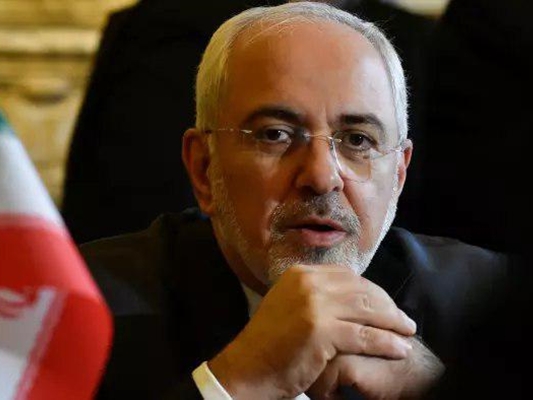
During the Thursday talks, the Iranian foreign minister highlighted the significance of Iran’s cooperation with Namibia in Southern Africa.

He then called for further enhancement of the two sides’ relations in all areas, especially in the field of banking, to facilitate the operation of Iranian and Namibian private sectors.

He also voiced the Islamic Republic of Iran’s preparedness to develop cooperation with Namibia in such fields as energy, water, construction, agriculture and new technologies.

Touching on the latest developments in the Middle East, he condemned the recent attacks by the Israeli regime on the innocent people of Palestine.

Zarif also underlined that political negotiation is the sole way out of the current crisis in Syria.

He referred to the suspected chemical attack on Syria’s Douma and added “as one of the main victims of chemical attacks in the world, the Islamic Republic of Iran has always condemned any use of chemical weapons.”

He then expressed concern about the awesome situation of people in Yemen and said fight against terror requires cooperation among all regional states.

For her part, the Namibian foreign minister welcomed any investment by Iran in agriculture and energy fields, particularly in renewable energies, in Namibia.

She also voiced her country’s support for the rights of the Palestinian people and condemned the Israeli army’s latest attacks on them.

She then vehemently slammed any use of chemical weapons in Syria and called for efforts to restore peace and stability to the country.

Namibia is Zarif’s last leg of his four-nation tour of Africa and South America which earlier took him to Senegal, Brazil and Uruguay.

He is heading a high ranking delegation including a large number of the CEOs of Iranian enterprises and companies.

Iran’s Beauties in Photos: Historic Port of Kong

At a 2006 census, its population was 14,881, in 2,908 families. Kong residents speak and write in Arabic, and many of them can also speak Persian.

The city has in the past centuries been a big manufacturer of wooden ships called dhow.

The Kong’s port has been used by businessman for exchanging goods with other regions, including Iraq’s Basra, Oman’s Muscat, India and even Africa.

Iran’s Cultural Heritage, Handcraft and Tourism Organisation (ICHTO) is making preparations to try registering the Kong Port at the UNESCO’s World Heritage List.

What follows are Mehr News Agency’s photos of the port:

Iranian Works of Art Shine at Dubai Art Fair

The 12th Dubai Art Fair was held in the United Arab Emirates (UAE) on March 21-24, 2018. The exhibit is an international art event showcasing works of art from the Middle East, Africa and South Asia. The event has displayed contemporary works of art from the region over the past few years. This year, the fair hosted 105 galleries from 47 world countries. Iran attended the exhibit with 5 galleries, namely Arya, Khak, Dastan, Mohsen and Abanbar, displaying Iranian visual arts.

Arya Eqbal, the director of the Iranian Arya Gallery, said Arya was the only gallery at the exhibition to display works of art with the theme of “lifeless nature” by eight Iranian modernist artists, including Kamalolmolk, the founder of the modernism school of art in Iran, Bahman Mohasses, Garnic DerHagopian, Farideh Lashaei, Parvaneh Etemadi, Leili Matin-Daftari, Manouchehr Yektaei, and renowned painter and poet Sohrab Sepehri.

According to a Farsi report by Honar Online, id most of the visitors were not Iranian and, interestingly enough, knew Iranian modernist artists very well, he added.

Yasaman Matinfar, the director of the Abanbar (Water Reservoir) Gallery, said the art centre showcased the works of seven artists at the Dubai event including those of Reza Abedini, Reza Aramesh, David Batchelor, Maid Fat’hizadeh, Avish Khebrehzadeh, Sanaz Mazinani, and Kamran Yousefzadeh.

She described the Dubai Art Fair as a good opportunity for displaying Iranian works of art. He further described this year’s show as very good, saying she received very good feedback from visitors.

“On the whole, the exhibition had a wide-ranging audience, and in addition to Arab countries, visitors from European countries were present at the event, as well,” said Matnifar.

“Seven Iranian galleries attended the Dubai fair last year, and 5 galleries this year, making their presence felt at the event. The more the number of the galleries and the higher the quality of their works, the stronger Iran’s presence will be, and international audience will begin to get a better picture of the events taking place in the arts sector in Iran,” she said.

Hormoz Hemmatian, the manager of the Dastan Gallery, said Iran’s art of book-making was put on show at the event. According to Hemmatian, big books the pages of which could be turned over by visitors were on display. The works of art by several artists were put on display by the gallery.

These artists included Ardeshir Mohasses, Ali Akbar Sadeqi, Fereydoun Ave, Pouya Afshar, Shahriar Ahmadi, Mohsen Ahmadvand, Mohammad-Hossein Gholamzadeh, Melody Hozhabr, Farshid Maleki, Iman Rad, Farah Osouli, Nikzad Nojoumi and Amin Montazeri.

“Iranian exhibitors were among the most important participants at the exhibition and displayed very good works,” he noted.

Ehsan Rasoulof, the director of the Mohsen Gallery, said it was the second time the gallery was taking part at the Dubai Art Fair.

“Like the previous year, the Mohsen Gallery, this year, too, displayed works of art by two young artists – Sara Abbasian and Majid Biglari – which had a common essence and were driven by the same motive,” he said.

Rasoulof said some of the works displayed by the gallery depicted violence in the human society and the life of the contemporary man.

“Our objective was to introduce artists and the gallery on the one hand, and, on the other, to create an opportunity to sell the works of talented young Iranian artists on the arts market of the Middle East. Our pavilion was received very well, resulting in the positive feedback of the organizers, critics and curators,” he said.

“The number of the Iranian galleries [attending the fair] this year was less than that of last year, but was much better quality-wise, something that all the organisers and audience acknowledged,” said Rasoulof.

“US-Made Patriot System Can’t Help Saudis Intercept Yemeni Missiles”

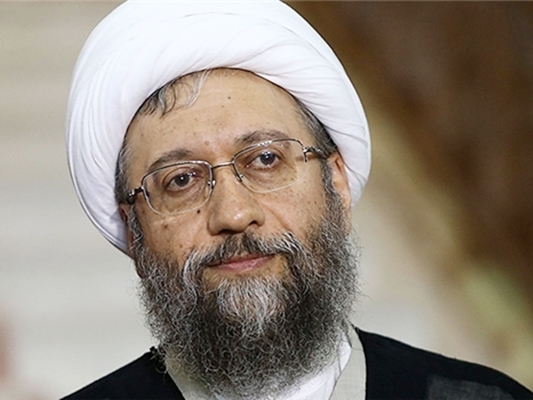
Chief of the conservative Kayhan newspaper says the US has cheated Saudi Arabia on their recent hefty arms deal.

“The Patriot missiles which Saudi Arabia has bought from the US at a costly price are not only incapable of intercepting missiles fired by Yemen’s Ansraullah fighters but also in some cases, they land in residential areas killing Saudi nationals,” he said in a Farsi Interview with Fars News Agency.

The commentator went on to say that the successful missile attack carried out by Ansarullah fighters on Saudi Defence Ministry building reveals that the Patriot missiles which the Saudis have purchased from the US at a hefty cost don’t meet Riyadh’s defence needs.

Shariatmadari underlined that the missile fired by Ansarullah fighters at King Khalid Airport had also landed successfully at the airport but the Saudi officials falsely claimed they have intercepted the missile.

“This comes as foreign correspondents including New York Times’ reporters in Saudi Arabia who witnessed the attack in person, not only confirmed that the missile successfully targeted the airport but also added that the US-made system used by Saudi Arabia exploded in the sky leaving a number of civilians dead including an Egyptian national,” he noted.

The chief of Kayhan newspaper also said the anti-missile system of Israeli regime also known as the Iron Dome which is equipped with Patriot missiles also fails to intercept successfully the missiles fired by Lebanon’s Resistance Movement at Israel.

To illustrate further the US cheating on arms deal with Saudi Arabia, Shariatmadari referred to an event in Iran’s history.

“One of the Iranian prime ministers during Qajar dynasty, Haj Mirza Aqasi, vowed to invent a war cannon capable of targeting Saint Petersburg from Tehran. In a ceremony attended by King Mohammad, the army began to try the cannon. But the cannon exploded at firing, leaving a number of army forces dead and wounded. Interestingly enough, without getting embarrassed, Haj Mirza Aqasi began to boast about his invention’s successful test,” he noted.

The commentator then added it seems US President Donald Trump “has received a hefty amount of money to sell Patriot missiles but at the end of the day, has delivered ‘Mirz Aqasi missiles to Saudi Arabia, because the missiles used by Riyadh are incapable of intercepting Yemeni missiles.”

He also described Ansarullah’s response to Saudi Crown Prince Mohammed Bin Salman’s bragging as “crushing” and said the Saudi regime claims that Ansraullah’s missile has not hit the building of Defence Ministry.

“Now the main question lingering in mind is that why the Saudis don’t show the Defence Ministry building or Aramco facility targeted by Ansarullah’s drone to reporters to prove their claim to intercept Ansarullah’s missiles?” he concluded.

“Iran Can Raze to Ground Tel Aviv, Haifa If It Has Good Pretext”

In reaction to Israeli warplanes’ latest airstrikes on an airbase in Syria’s Homs, Ali Shirazi, the representative of Leader of the Islamic Revolution in the IRGC Quds Force, urged Israel to watch its moves in the region.

“If Israel wants to live its evil life for a few days longer, it needs to stop making such foolish moves,” he was quoted as saying in a Farsi report by the IRIB News Agency.

The Leader’s representative went on to say that Iran is capable of destroying Israel completely.

“If provided with a good pretext, Iran can raze to the ground Tel Aviv and Haifa,” he noted.

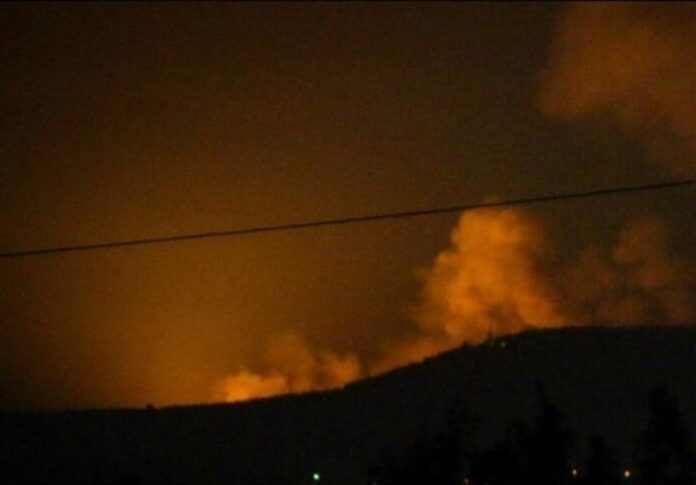
The remarks came after two Israeli F-15 warplanes carried out strikes from Lebanese air space on the T-4 air base on Sunday. The attack killed several people including at least seven Iranian military advisers.

The Russian military noted that Syrian air defence systems had shot down five of the eight missiles fired at the base.

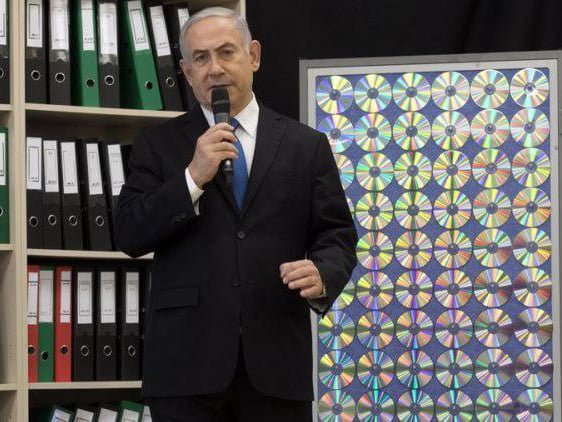
Following the attack, Israeli Prime Minister Benjamin Netanyahu said Israel will hit anyone who intends to harm it.

“Security in the present is a necessary condition for security in the future and what we have here today is a powerful expression for our future security,” Netanyahu said.

Over the past few years, the Israeli army has launched sporadic attacks against various targets on Syrian soil. Syria dismisses the assaults as attempts to boost terrorist groups who have been suffering heavy defeats on the battlefield with Syrian government forces in recent years.

The latest attack on Syria by Israel was carried out on February 20, when Israeli warplanes launched a raid on a Syrian army facility in central Syria.

On several occasions, the Syrian army has confiscated Israeli-made arms and military equipment from militants fighting pro-Damascus forces. Israel has also been providing medical treatment to the extremist militants wounded in Syria.

Earlier, Iranian Foreign Ministry Spokesman Bahram Qassemi strongly condemned the Israeli regime’s attack on the T-4 air base, saying it was a blatant violation of international law that would strengthen terrorists.

Iran’s Handicrafts in Photos: Ancient Art of Qalamkari

Its name originates in the Persian, which is derived from the words qalam (pen) and kari (craftsmanship), meaning drawing with a pen. Only natural dyes are used in Kalamkari and it involves several steps.

The art, which dates back to the Sassanid era in Iran (almost 2,500 years ago), involves a “kalam” or pen which is used for freehand drawing of the subject and filling in the colours.

Because of the interest of the courtiers and the special attention paid to this art, it came to the fore during Shah Abbas in the 16th century.

Here you can see some photos of Qalamkari retrieved from Tasnim News Agency:

Iranian Researchers Develop Language-Teaching Robot

Mina Raeisi, one of the researchers involved in the project says the plan is aimed at teaching the English language using robots.

“In this plan, the robot functions as an assistant teacher, and, accordingly, we have executed all interactive programs on it.”

The robot is an interactive one, she told the Persian-language Iranian Students’ News Agency (ISNA).

“The robot is programmed to be able to take questions and give answers. Language learners are to give answers based on the questions that the robot asks them. When the answer is given, the learner’s name will be stored in the robot and he/she will score points,” said the researcher.

She said the robots only save the positive points that learners score based on which they will be evaluated.

“Based on the scores received, the learner is allowed to play computer games. The game includes information about the learner’s language learning. The information is taught to learners through games,” the researchers said.

For a brief review of Iran’s achievements in various fields of science and technology, check the book “Science and Technology in Iran: A Brief Review

She said the results of the tests conducted showed that learners were under less stress when speaking English. Moreover, said Raeisi, learners were more active in class.

“Since the robots make traditional methods redundant, the class is livelier, and we predict that each individual should have a robot of his/her own to be able to learn the language,” said the researcher.

One of the capabilities of the robot is that it can be connected to the Internet, she said.

“In some cases, this robot does not know the answers to the questions asked; so, it can get connected to the web to search for the information it needs on Google, and finally give the information to language learners,” she noted.

She then touched upon the way that the robots interact with humans.

“The robot is programmmed in English and will not answer the questions asked in Persian. Moreover, it corrects learners. If they make an error in their speech, the robots will correct it,” she said.

The researcher said the most difficult stage in teaching a language is the “speaking” skill, and added, “This robot gives learners the courage to speak.”

Among other features of the robot is that it is capable of offering information in areas other than language teaching.

“This robot, for instance, can announce to users the weather forecast and temperatures through the Google app,” she said.

The project has been completed by Mina Raeisi, Maryam Raeisi and Hadi Salehi at Isfahan University.

A Look at Iranian Newspaper Front Pages on April 12

A Look at Iranian Newspaper Front Pages on November 18

The top story in almost all newspapers today was the ongoing debates over the possibility of a war by the US and its allies on Syria.

Several papers also covered the latest developments regarding the country’s forex market, and the recent decision by the Iranian government to control the market.

The above issues, as well as many more, are highlighted in the following headlines and top stories:


Abrar:

  • European Parliament to Discuss Ways to Implement JCPOA without US
  • Sadr Movement Spokesman: Muqtada Sadr Has Good Ties with Both Iran, Saudi Arabia
  • Rumours that Assad, His Family Have Escaped to Tehran Dismissed

A Look at Iranian Newspaper Front Pages on April 12


Afkar:

  • Ayatollah Jannati Calls for Strong Support of Iranian Products
  • Certain Executives Don’t Feel Responsible for Domestic Production

A Look at Iranian Newspaper Front Pages on April 12


Aftab-e Yazd:

  • Saudi FM: Europe Has Opposed Washington’s Idea about Iran Missile
  • Former IRGC Official: Ahmadinejad Will Soon Be Prosecuted

A Look at Iranian Newspaper Front Pages on April 12


Afarinesh:

  • Political Inflammation, Economic Distrust in Society Main Cause of Forex Rate Crisis

A Look at Iranian Newspaper Front Pages on April 12


Arman-e Emrooz:

  • Trump Intends to Wage Psychological War against Russia: Analyst

A Look at Iranian Newspaper Front Pages on April 12


Arman-e Melli:

  • Culture Minister: No Decision Made for Blocking Telegram Yet

A Look at Iranian Newspaper Front Pages on April 12


Ebtekar

  • Iranian Diplomacy in Latin America
  • Zarif Arrives in Uruguay after Meeting Brazilian Officials

A Look at Iranian Newspaper Front Pages on April 12


Emtiaz:

  • Economy Minister: Iran in Good Conditions in Terms of Forex Resources, Prospect

A Look at Iranian Newspaper Front Pages on April 12


Etemad:

  • Waiting for Another Bitter Incident: Trump Playing with Mideast in Twitter
  • Three Explosions Heard in Saudi Sky

A Look at Iranian Newspaper Front Pages on April 12


Ettela’at:

  • US Planning Attack on Syria
  • Russia: Our Reaction Rapid, Any Missile to Be Shot Down

A Look at Iranian Newspaper Front Pages on April 12


Iran:

  • 5% Increase in Workers’ Salaries Next Year

A Look at Iranian Newspaper Front Pages on April 12


Javan:

  • World Threatened with Insanity of Hawkish US President
  • Trump: Russia Be Prepared for Our Missiles Because They’re Coming!
  • 257 Dead in Crash of Algerian Military Plane

A Look at Iranian Newspaper Front Pages on April 12


Jomhouri Eslami:

  • Rouhani: Gov’t Trying to Allay Concerns of People, Producers
  • Differences with India on Farzad B Gas Field Resolved: Iran

A Look at Iranian Newspaper Front Pages on April 12


Kayhan:

  • Ansarullah Shows Off Its Power to Al Saud
  • Ansarullah’s Pinpoint-Accuracy Missile Hits Saudi Defence Ministry in Riyadh
  • Takfiri Mercenaries in Syria Defeated, Trump Starts Talking Nonsense
  • Facebook Founder Confesses to Violating Privacy of 87 Million Americans

A Look at Iranian Newspaper Front Pages on April 12


Khorasan:

  • Cold War Turning Hot
  • Escalation of War of Words between US, Russia; Deployment of Forces in Syria Coasts

A Look at Iranian Newspaper Front Pages on April 12


Resalat:

  • Ayatollah Nouri Hamadani: We Must Give Good Response to Zionist Regime
  • Silence to Embolden Zionists

A Look at Iranian Newspaper Front Pages on April 12


Rooyesh-e Mellat:

  • Qassemi: Saudi Rulers Turned to Symbols of Aggression, Crime in Mideast

A Look at Iranian Newspaper Front Pages on April 12


Sayeh:

  • Number of Cars in Tehran Five Times More than Its Capacity

A Look at Iranian Newspaper Front Pages on April 12


Shargh:

  • Central Bank Chief: US Dollars Kept in People’s Houses Might Be Declared Null and Void

A Look at Iranian Newspaper Front Pages on April 12


Vatan-e Emrooz:

  • Macron: Iran Nuclear Deal Not Enough!
  • French President Seeks to Milk King Salman’s Rich Son

A Look at Iranian Newspaper Front Pages on April 12

Iran Leader’s Aide Visits Eastern Ghouta near Syrian Capital

Ali Akbar Velayati on Wednesday visited Eastern Ghouta and secret underground tunnels used by Takfiri terrorists in the almost fully liberated region near Damascus.

He also met with military commanders there.

Velayati reaffirmed Iran’s support for Syria and the nation’s resistance against terrorists and underlined the necessity of further expansion of bilateral ties to counter the threats of the US, Israel and their regional stooges.

He also congratulated the victories of the Syrian army in Eastern Ghouta, and described as pivotal the strategic ties between Tehran and Damascus.

Earlier in the day, the adviser to Ayatollah Khamenei also met with Syria’s Foreign Minister Walid al-Muallem, during which the two sides emphasized further coordination between the two brotherly countries in order to contribute to further victories of the Syrian army in combating terrorism and confronting its provocative acts and threats by the United States and its allies in the region against Syria.

Velayati, who is in Damascus to attend a conference on Palestine, also stressed that the Islamic Republic would stand by the Syrian government and people and reaffirmed Tehran’s support for resistance against terrorism that has targeted the territorial integrity of Syria and the stability of the region. He also underlined the need for the strengthening of relations with Syria.

Muallem, for his part, briefed the Iranian official on the latest developments in Syria and praised Iran’s full support for his country.

Eastern Ghouta, which is home to nearly 400,000 people, fell to multiple militant groups in 2012, months after Syria plunged into crisis. Militants had been using the area to launch incessant rocket attacks on the capital.

Syria has been gripped by foreign-backed militancy since March 2011. The Syrian government says the Israeli regime and its Western and regional allies are aiding Takfiri terrorist groups that are wreaking havoc in the country.