Wednesday, December 31, 2025
Home Blog Page 364

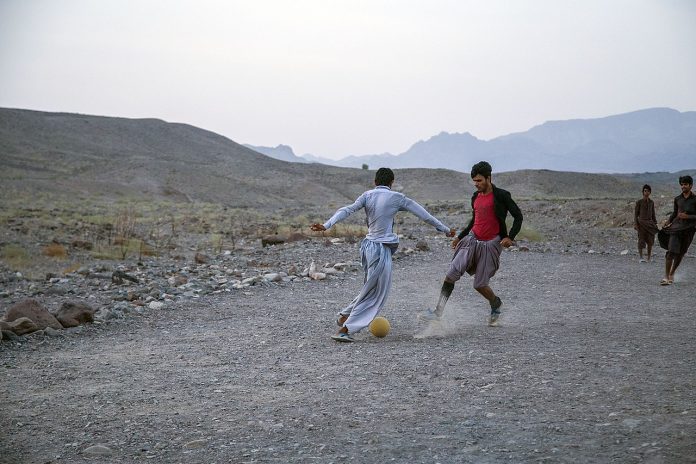
Tehran to host world’s largest street football tournament Friday

فوتبال زمین خاکی

The one-day event will kick off at 8 a.m. and run until 8 p.m., featuring thousands of amateur teams from across Tehran. So far, over 2,500 teams have registered, and organizers expect that number to grow to nearly 4,000 by the start of the tournament. Approximately 220 teams will advance to the final round.

The tournament is part of a broader initiative in Tehran aimed at promoting public sports and social cohesion.

Alongside the football event, the organizers are also planning a massive choir performance involving 24,000 teenagers, commemorating 24,000 martyrs from Tehran.

With the support of some 500 referees, the competition will be managed in stages – from regional preliminaries to the final matches at sunset. A prize pool of 1.8 billion rials (approximately $3,000) has been announced, with special awards planned.

Former IRGC commander: Diplomacy as essential as military strength for Iran’s security

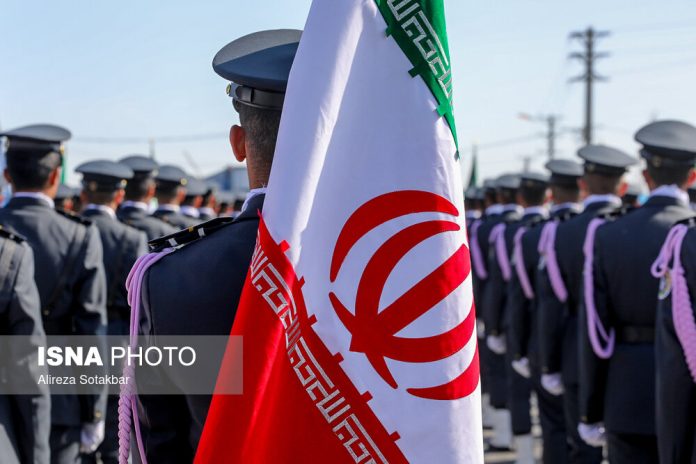
Iran National Army Day

In a recent interview with IRNA, Alaei reflected on the fourth round of indirect talks between Iran and the US, held with Oman’s mediation. He noted that the atmosphere surrounding the negotiations is significantly more strained than in previous rounds.

“The earlier rounds were more constructive, but the US has since increased its demands and shifted away from prior understandings,” Alaei said.

While highlighting Iran’s commitment to peaceful nuclear technology, Alaei criticized what he called a mischaracterization of Iran’s nuclear ambitions by US officials and reiterated that Iran’s nuclear program is aimed at civilian purposes and is under full IAEA oversight.

Alaei described the approach of US President Donald Trump as contradictory, suggesting that Trump’s tactics were “part of a broader strategy to apply pressure while maintaining leverage at the negotiating table.”

Beyond nuclear negotiations, Alaei argued that diplomacy itself is a form of national power, on par with military strength. He cited global examples of adversaries continuing dialogue during conflict and warned against isolating Iran from international diplomacy.

Alaei noted that while Iran has developed its military capabilities significantly, its economic and diplomatic power has not grown in tandem. He attributed this imbalance to international sanctions and internal policy inefficiencies.

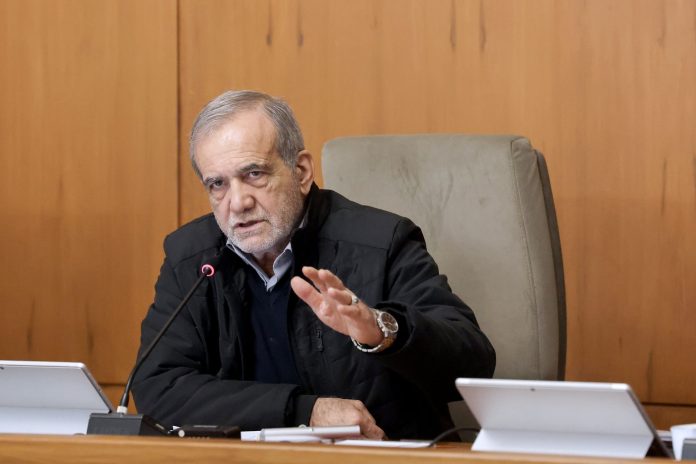
President Pezeshkian says Iran seeks agreement in negotiations with US

Masoud Pezeshkian

Speaking at a cabinet meeting on Sunday, President Pezeshkian underscored his administration’s commitment to preserving the country’s nuclear achievements.

The President stressed that any speculation about discarding Iran’s entire nuclear infrastructure is completely unacceptable.

He said that nuclear technology and the advancements made by Iranian scientists in the peaceful nuclear sector have applications in various fields, including agriculture, environmental protection, industry, and medicine, adding that therefore, the Islamic Republic will steadfastly continue its peaceful nuclear activities.

President Pezeshkian pointed out that Iran has never sought, and will never seek, nuclear weapons, stating that it opposes such arms.

In accordance with the Supreme Leader’s decree, the manufacturing of nuclear weapons is religiously forbidden, Pezeshkian said.

The President emphasized Iran’s principled policy of pursuing peaceful interactions with the world, adding that Tehran is serious about the indirect negotiations with the United States and is actively seeking an agreement.

“We engage in dialogue because we desire peace. Our country is committed to promoting stability and security in the region, and we believe that the nations in this area are like brothers, living together in harmony and tranquility. There is no need for external intervention from beyond the region to address our concerns. It is the Zionist regime that seeks to create insecurity and unrest in the area.”

Earlier on Sunday, Foreign Minister Abbas Araqchi and U.S. Special Envoy to the Middle East Steven Witkoff led their respective delegations in the talks, which lasted several hours in Muscat and were mediated by the Omani foreign minister.

The discussions focused on Iran’s nuclear program and the lifting of sanctions, key points of contention between Tehran and Washington.

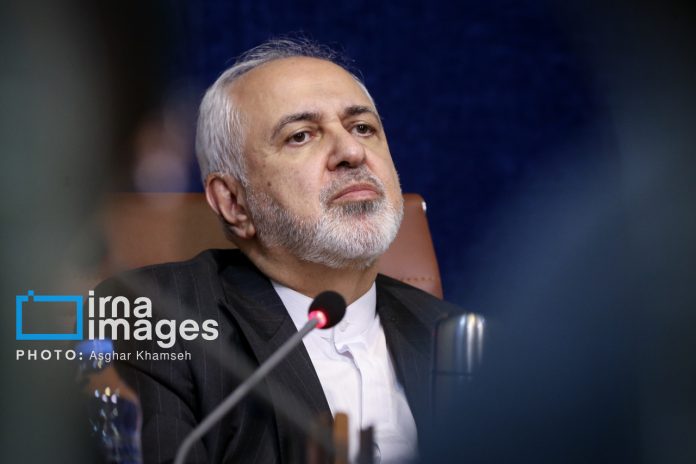
Iran former FM Zarif: Diplomacy requires patience; we must support negotiating team

Javad Zarif

Speaking at the Foreign Ministry’s booth at the Tehran International Book Fair on Sunday, Zarif praised diplomats Abbas Araghchi and Majid Takht-Ravanchi, calling them among Iran’s finest and expressing confidence in their ability to reach an “honorable agreement” if one is possible.

Zarif criticized those who constantly attack negotiations and stressed that “working for national interests requires courage, not fear of criticism.”

Reflecting on the challenges of foreign policy, Zarif argued that diplomacy often comes too late in Iran’s decision-making process and urged proactive engagement during times of strength.

He called for a shift from threat-based thinking to opportunity-focused diplomacy, especially in regional affairs.

Zarif also touched on the role of idealism and realism in policymaking, stating that true progress lies in grounding aspirations in reality.

Expressing optimism for Iran’s future, he highlighted the potential of youth, women, and cultural power as strategic assets in navigating international relations.

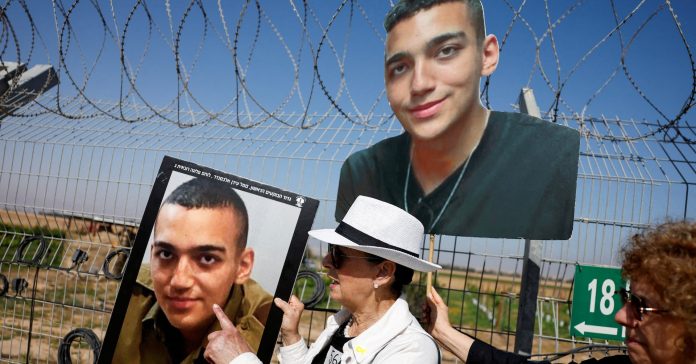
Hamas confirms it will release Israeli-American hostage Edan Alexander

The senior Hamas official did not specify a time for the release of Alexander, a 21-year-old soldier in the Israeli Army who was born and raised in New Jersey, but a source familiar with the matter told Reuters it would likely happen on Tuesday.

Freeing Alexander, believed to be the last surviving American hostage held by the Palestinian group, is part of efforts to reach a ceasefire agreement and allow humanitarian aid to enter Gaza, Hamas added.

U.S. President Donald Trump will visit the Middle East this week. His special envoy Adam Boehler said news of Alexander’s release was a positive step forward.

“We would also ask that Hamas release the bodies of four other Americans that were taken,” Boehler added.

In a post on Truth Social, Trump said he was grateful to all those involved.

“This was a step taken in good faith towards the United States and the efforts of the mediators — Qatar and Egypt — to put an end to this very brutal war and return ALL living hostages and remains to their loved ones,” Trump added.

Israel launched a military campaign in Gaza in retaliation for a Hamas attack on October 7, 2023, that killed 1,200 people, according to Israeli tallies, and saw 251 taken hostage into Gaza in the deadliest day for Israel in its history.

The campaign has killed more than 52,800 Palestinians, according to local health authorities, and has devastated the Gaza Strip, leaving its 2.3 million population depending on aid supplies that have been dwindling rapidly since Israel imposed a blockade in March.

In a joint statement, Qatar and Egypt announced Hamas’ agreement to free Alexander was an “encouraging” step towards the warring parties returning to Gaza ceasefire talks, which have stalled since March.

The two countries said they would pursue their efforts, along with the United States, to improve the conditions in Gaza, reaching out for a permanent ceasefire and end to the war.

Hamas chief Khalil al-Hayya stated that efforts to facilitate Alexander’s release have been jointly carried out by Qatar, Egypt and Turkey.

“The movement affirms its readiness to immediately start intensive negotiations and make serious efforts to reach a final agreement to end the war, exchange prisoners in an agreed-upon manner,” Hayya added.

Direct four-way talks that led to the release were held between officials from the U.S., Qatar, Egypt and Hamas, a source briefed on the negotiations told Reuters.

The U.S. had previously held discussions with Hamas on securing the release of U.S. hostages held in Gaza.

Israeli media reported on Sunday that Prime Minister Benjamin Netanyahu told a closed session of the Foreign Affairs and Defense Committee that Hamas could soon release Alexander as a goodwill gesture towards Trump.

The prime minister’s office said the U.S. told Israel that Hamas’ freeing of Alexander would lead to negotiations for the release of more hostages. Israel’s policy is that negotiations will be conducted under fire with a continued commitment to achieving all war objectives, it added in a statement.

Hamas had released 38 hostages under a ceasefire that began on January 19. In March, Israel’s military resumed its ground and aerial offensive on Gaza, abandoning the ceasefire after Hamas rejected proposals to extend the truce without ending the war.

Israeli officials say offensive will continue until the remaining 59 hostages are freed and Gaza is demilitarized. Hamas insists it will free hostages only as part of a deal to end the war and has rejected demands to lay down its arms.

Israel, which is in control of around a third of Gaza’s territory, announced in May it will expand its Gaza offensive.

A U.S. State Department spokesperson stressed that Hamas bore sole responsibility for the war as well as for the resumption of hostilities.

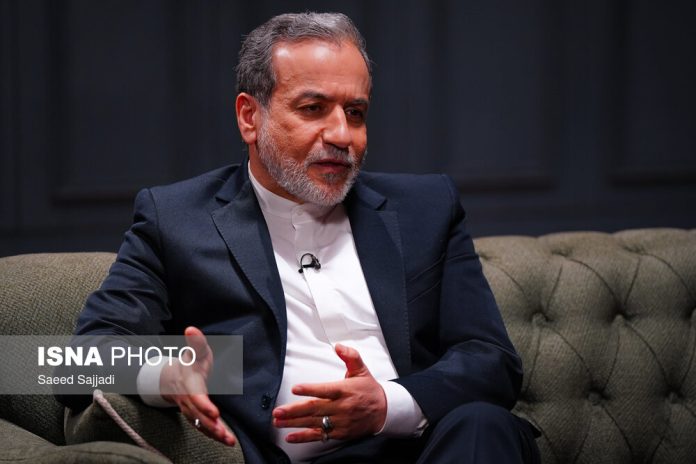
FM warns Europe against ‘strategy of confrontation’ over Iran’s nuclear program

Abbas Araghchi

Araghchi made the warning in comments published by French weekly Le Point on Sunday, after the European trio of Britain, France, and Germany (E3) threatened to activate the snapback mechanism under the 2015 nuclear deal, known as the Joint Comprehensive Plan of Action (JCPOA), last month.

“This strategy of confrontation risks provoking a global nuclear proliferation crisis that would primarily affect Europeans themselves,” Araghchi said, adding that he was ready to travel to Paris, Berlin, and London to begin a new chapter.”

The top Iranian diplomat went on to say that “the E3 must ask itself how it has reached this impasse,” stressing that instead of adjusting their strategy, they have adopted a confrontational stance.

Araghchi further noted that the so-called “snapback” mechanism, which enables UN sanctions to be reinstated in the event of Iran failing to meet its commitments, is “now being used as a diplomatic lever,” whereas it was “initially designed as a tool for settling disputes as a last resort.”

“Iran has made its position clear,” he stated, emphasizing that Iran has warned all JCPOA signatories that “abusing the ‘snapback’ mechanism will have consequences – not only the end of Europe’s role in the agreement, but also an escalation of tensions that could become irreversible.”

In late April, French Foreign Minister Jean-Noel Barrot said that France, along with Germany and Britain, “will not hesitate for a single second to reapply all the sanctions” scrapped a decade ago if European security is threatened by Iran’s nuclear activities.

Iran has already warned that invoking the so-called snapback by the E3 will be reciprocated by a firm and proportionate response.

The latest development comes as Iran and the United States held their fourth round of nuclear talks in Muscat, mediated by Oman.

Both parties have so far expressed satisfaction with the way the negotiations are moving on, commending the talks as “positive” and “moving forward.”

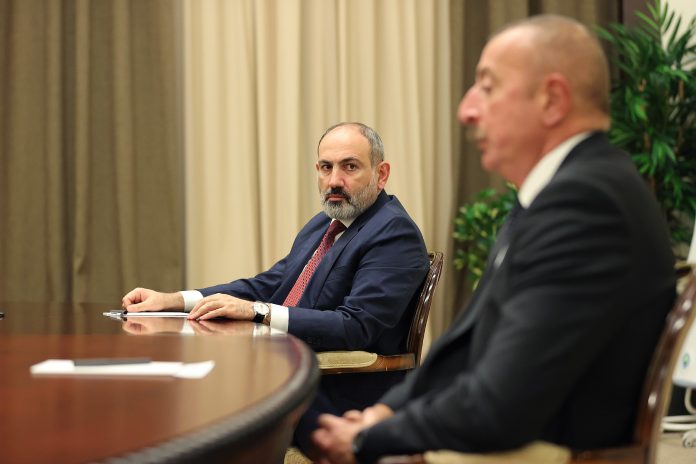
Armenia says there will be no war with Azerbaijan despite ‘provocations’

Pashinyan Aliyev

“Despite all the internal and external provocations, there will be no war between the Republic of Armenia and the Republic of Azerbaijan. There will be peace,” Pashinyan said in a statement issued by his office on Victory Day.

He stated they have the opportunity to contribute to the “peaceful and prosperous future” of the South Caucasus region, adding that a peace deal between Baku and Yerevan has been agreed upon and is awaiting signature.

“Our region has earned the right to live in peace and prosperity, and this is how it should be,” Pashinyan added.

Relations between the two former Soviet republics have been tense since 1991, when the Armenian military occupied Karabakh – a territory internationally recognized as part of Azerbaijan – and seven adjacent regions.

Azerbaijan regained most of the territory during a 44-day war in the fall of 2020, which ended after a Russian-brokered peace agreement that opened the door to normalization and demarcation talks.

In September 2023, Azerbaijan established full sovereignty in Karabakh after separatist forces in the region surrendered.

Despite reaching a consensus on a peace agreement in March, both Baku and Yerevan have yet to sign the deal and have accused each other of cross-border attacks.

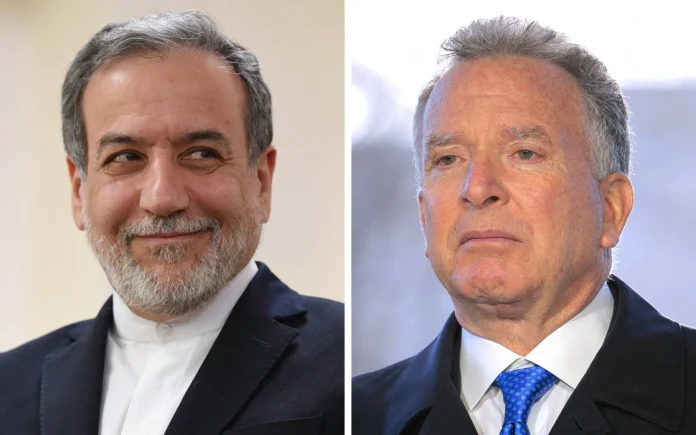
Differences narrowed at Iran-US talks: FM Araqchi

Araghchi Witkoff

Speaking to reporters after the conclusion of the fourth round of indirect talks with the US in Muscat on Sunday evening, Araqchi said the talks were held “more seriously and explicitly” than the three previous rounds.

He said the two sides have moved away from the general discussions and entered into details.

While the negotiations are becoming difficult, today’s talks were useful coupled with explicitness, the Iranian foreign minister added.

He noted that the Iranian and American negotiators have gained a better understanding of each other’s stances, as the differences have been narrowed.

The stances of the two sides have moved closer, Araqchi said.

He noted that the two countries have agreed to proceed with the talks, while the foreign minister of Oman will arrange the next round, which may occur within a week.

The foreign minister stated that Iran has reminded the US negotiators to avoid making contradictory comments and rectify their approach, stressing that contradictory statements are not useful for the talks.

If the US’ contradictory stances are repeated, Iran will have to act accordingly, he warned.

Asked about the technical issues and the enrichment of uranium inside Iran, Araqchi reaffirmed that enrichment activities must continue in Iran.

There is no way for compromise over Iran’s right to enrichment, he underlined.

Although limits might be put on the level and volume of uranium enrichment in some periods as a means of building trust, enrichment in principle is non-negotiable, he stated.

Araqchi noted that Iran has also emphasized the necessity for the removal of sanctions.

Iran and the US have held four rounds of talks since April 12, mediated by Oman, with the purpose of reaching a deal on Iran’s nuclear program and the removal of sanctions on Tehran.

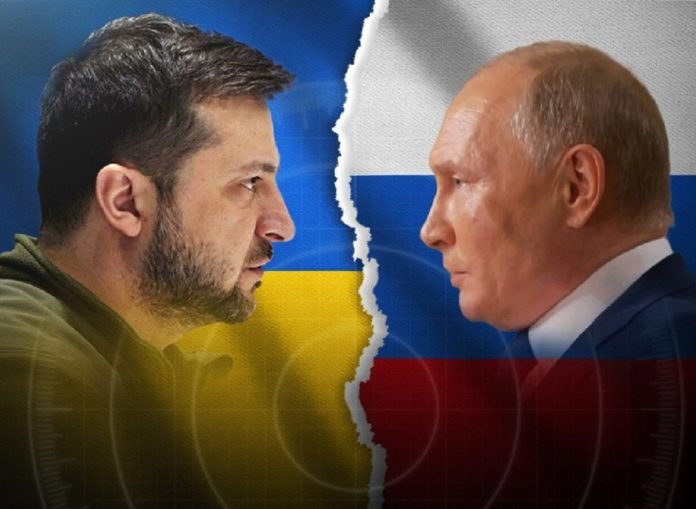
Zelensky says ready to meet Putin in Turkey on Thursday

Putin and Zelensky

“There is no point in prolonging the killings. And I will wait for Putin on Thursday in Turkey,” Zelensky said.

As Ukraine’s allies push for direct talks between Russia and Ukraine, Putin has suggested peace talks be held in the coming days.

“We expect a ceasefire from tomorrow – complete and lasting, to provide the necessary basis for diplomacy,” Zelensky added.

Earlier, U.S. President Donald Trump stated in a post to social media Ukraine and Russia should hold peace talks “immediately”.

“(Russian) President (Vladimir) Putin… doesn’t want to have a ceasefire agreement with Ukraine, but rather wants to meet on Thursday, in Turkey, to negotiate a possible end to the bloodbath. Ukraine should agree to this, immediately,” Trump said on his Truth Social account.

Europe has proposed increasing sanctions pressure on Russia in response to the Kremlin’s resistance to U.S.-brokered ceasefire efforts. Putin has rejected an immediate ceasefire and instead suggested direct peace talks be held in Istanbul beginning May 15.

“At least they will be able to determine whether or not a deal is possible, and if it is not, European leaders, and the U.S., will know where everything stands, and can proceed accordingly!” Trump added.

“I’m starting to doubt that Ukraine will make a deal with Putin, who’s too busy celebrating the Victory of World War II … Have the meeting, now!”

Trump’s support for the proposed Istanbul talks marks a departure from how other Western leaders — including some U.S. officials — have responded to Putin’s invitation. Ukraine’s European allies have stressed a ceasefire must come before negotiations.

Ukraine has already agreed to a U.S.-proposed full 30-day ceasefire, saying on March 11 that Kyiv is ready if Russia also agrees to the terms. So far, Moscow has refused.

In a historic meeting in Kyiv on May 10, Ukraine and European allies put forth a demand for a 30-day unconditional ceasefire beginning May 12. By responding with an invitation to talks and no promises to extend the ceasefire, Putin refused the call for an unconditional truce.

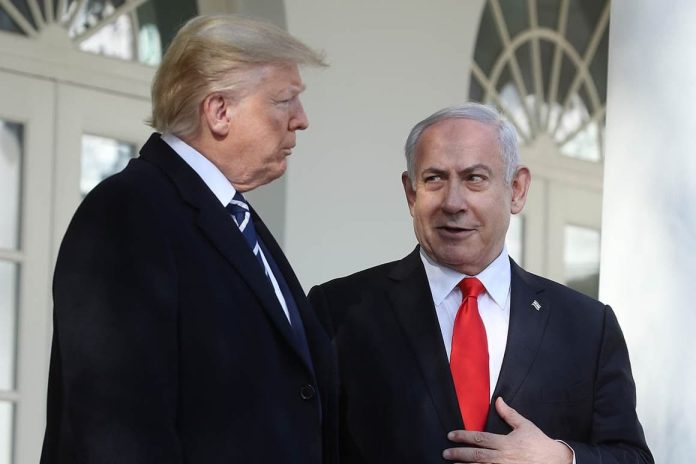
Trump-Netanyahu rift widens over potential agreement between US, Iran: NBC

Trump Netanyahu

Citing a source familiar with the situation, the American news network on Sunday published a report highlighting growing friction between US President Donald Trump and Netanyahu over Washington’s Iran policy and Israel’s war in Gaza.

Netanyahu’s concerns come as the latest round of indirect talks between Iran and the US ended in Muscat, with Tehran calling them “difficult, but useful,” and both sides agreeing to hold further negotiations.

Israel, however, is “worried about any deal” between Tehran and Washington, said NBC News, citing two US officials and West Asian diplomats.

It said that twice in just this past week alone, the US president made public comments that “rankled Netanyahu.”

Netanyahu, it added, was particularly upset when Trump said on May 7 that he had yet to decide whether Iran would be allowed to enrich uranium under a possible new deal.

“We haven’t made that decision yet,” Trump said on Wednesday when asked if Washington’s stance is that Iran can have a uranium enrichment program for civilian nuclear purposes.

According to one of the US officials, a top adviser to Netanyahu, Ron Dermer, conveyed that message to Trump’s envoy Steve Witkoff during a meeting at the White House on May 8.

Netanyahu has threatened that, with Trump’s support, Israel will strike Iran’s nuclear facilities.

When he visited the White House last month, for the second time since Trump took office, he hoped the president would pledge Washington’s air support for an Israeli attack against Iran’s nuclear facilities, according to two West Asian diplomats.

Netanyahu, they stated, was taken aback when the president instead announced he would agree to direct talks with Tehran.

The officials added that Netanyahu had privately said at the time that he thinks Trump’s negotiations with Iran are a waste of time.

For his part, Trump has also been frustrated with Netanyahu’s decision to expand the military offensive in Gaza.

Washington is currently pushing Tel Aviv and the Palestinian resistance movement Hamas to agree to a ceasefire in Gaza, which Dermer was set to discuss with Witkoff during his White House visit this week, according to the West Asian diplomats and a senior Trump administration official.

However, Trump’s approach to Iran has been the biggest point of contention with Netanyahu, according to the report.