Wednesday, December 24, 2025
Home Blog Page 3626

Iran, Belgium Urge All Parties to Remain Committed to JCPOA

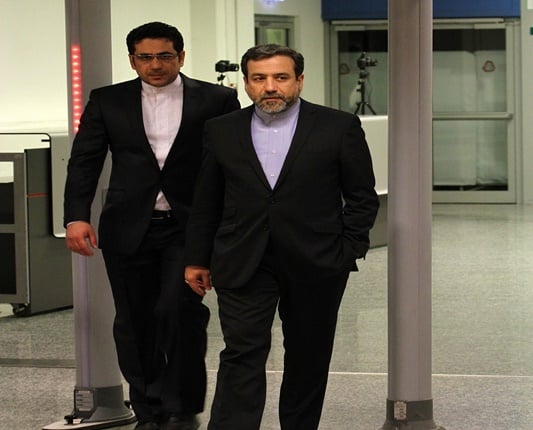
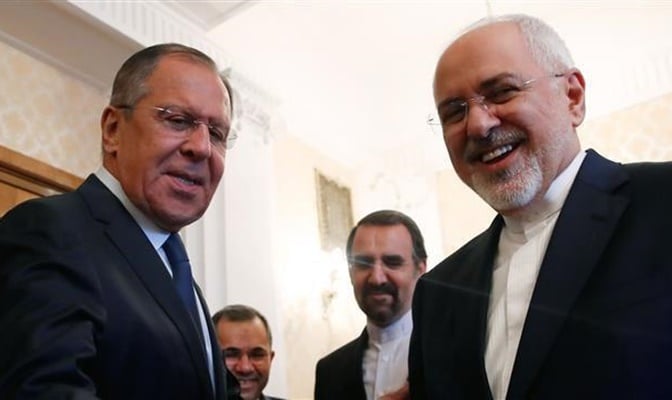
Iranian and Belgian foreign ministers meeting in New York on April 23, 2018

During the Monday talks, the two sides exchanged views on the most important issues in bilateral relations as well as the latest regional and international developments.

Zarif and Reynders underlined the significance of expanding bilateral ties, particularly in making further investments in Iran, and urged all involved sides in the Iran nuclear deal to remain committed to their pledges under the accord.

Earlier in the day, Zarif said in a post on his official Twitter account that the European signatories to the Joint Comprehensive Plan of Action (JCPOA) should convince US President Donald Trump not to pull out of the deal, because there is no “Plan B” for it.

“It’s either all or nothing. European leaders should encourage President Trump not just to stay in the nuclear deal, but more importantly to begin implementing his part of the bargain in good faith,” he noted.

Trump is a stern critic of the nuclear deal reached between Iran and the five permanent members of the UN Security Council – the United States, France, Britain, China, Russia – plus Germany in 2015.

Under the agreement, nuclear-related sanctions put in place against Iran were lifted in exchange for curbs on Tehran’s nuclear program.

“US Attacks Have No Effect on Syria’s Political Developments”

Speaking in a Farsi interview with IRNA in Damascus on Monday, Jaberi Ansari said the US, the UK, and France are considering themselves as the decision-makers in the world, and they pursue certain political goals under the pretext of human rights or other things which are by no means acceptable to any country.

Referring to attacks on Syria, he added, “The three countries attacked Syria on the pretext of the Assad government’s use of chemical weapons. It was an instrumental and political use of the issue, and the Islamic Republic was strongly and openly opposed to it.”

Jaberi Ansari emphasised that if a chemical attack has been carried out in the Eastern Ghouta, an opportunity must be provided for international chemical weapons inspectors to investigate the case.

“The position of the Islamic Republic has been repeatedly announced and Iran, as one of the main victims of chemical weapons in contemporary times, does not accept the use of such weapons by any party and under any circumstances.”

This Iranian diplomat also pointed out that Tehran hopes the conditions would be prepared for Syria to emerge out of the crisis as soon as possible in the context of the diplomatic efforts that Iran, Russia and Turkey are making within the framework of Astana Talks.

“The Islamic Republic wants to restore calm and security to all areas of Syria by maintaining its unity, territorial integrity and national sovereignty,” said Jaberi Ansari.

Iran’s top negotiator in the international peace talks on Syria will hold talks with a number of senior Syrian officials on the latest regional and international developments in the country on Monday.

Such visits are held on a regular basis, and the reports on the latest developments and diplomatic efforts made by the Islamic Republic of Iran within the framework of the Astana Talks are given to Syrians.

Syrian President Bashar al-Assad and Jaberi Ansari had earlier discussed the horizons ahead of the Syria crisis, especially within the context of the Astana-Geneva talks, by reviewing the latest political and political developments.

Multiple places in Syria came under attack by US, British and French military forces on April 14 after President Donald Trump ordered a military strike against the country despite international warnings against further escalation of the situation.

The three countries used an alleged chemical attack in the Eastern Ghouta suburb of Damascus last week as a pretext for their military action. They blame the Syrian government for the attack, without offering any evidence.

Syria has strongly rejected any role in the suspected attack, which came just as the Syrian army was about to declare full victory against the militants operating in the region.

Russia said the chemical attack was staged by desperate militants to provoke further intervention in the conflict by the West.

IT, Telecoms Exhibition Opens on Iran’s Kish Island

The latest technological advances and products have been displayed at the event.

The exhibit features seminars, conferences, specialized workshops, computer game contests, launching startups, marketing techniques and demonstrations by startups, reports the Persian-language Iranian Students’ News Agency (ISNA).

In addition to displaying the latest technologies in the field of communications and IT, the exhibit aims to contribute to the cycle of science and technology, commercialize products, help exhibitors enter world markets in order to produce wealth and set the stage for launching Web-based businesses using state-of-the-art technologies, and lend support to startups.

Also present at the event is the Mobile Telecommunication Company of Iran (MCI), a major Iranian telecoms service provider and a sponsor of the exhibition.

For a brief review of Iran’s achievements in various fields of science and technology, check the book “Science and Technology in Iran: A Brief Review

The MCI has put on show it latest developments and achievements in different fields, including altering energy (water, electricity, natural gas) networks to be smart, smart management of the transportation system, the “smart city,” an organizational data umbrella, exclusive and shared data packages, a safe mobile phone network, and sales systems.

The exhibition will run until September 26, 2018.

Armenian PM Resigns Six Days after Taking Office

Sargsyan’s resignation was declared in a statement released by his office on Monday, April 23.

The resignation came after negotiations between Sargsyan and opposition leader Nikol Pashinyan collapsed, leaving the country in a state of limbo, as widespread protests against the former president’s appointment as premier entered the 11th day.

The Armenian premier met with opposition leader Pashinyan for televised dialogue in the capital, Yerevan, on Sunday, but walked out a few minutes after the meeting started.

The premier said the opposition “did not learn the lesson of March 1,” referring to a protest rally after his re-election in 2008 when 10 people were killed in clashes with police.

Pashinyan said in response, “No one has dared and will dare speak to us in the language of threats. I am telling you: you have no understanding of the situation in the country. The situation is different to the one you knew 15-20 days ago.”

There is an ongoing campaign of “civil disobedience” meant to show public opposition to what is perceived as Sargsyan’s efforts to cling on to power in a new parliamentary system of government. The former military officer ruled Armenia under a presidential system for 10 years.

The peak of the protests was last Tuesday, when some 40,000 people demonstrated in the capital after the parliament elected Sargsyan as the new prime minister. Under controversial amendments to the constitution passed in 2015, governing powers will be transferred from the presidency to the premier.

Armenia’s new president, Armen Sarkissian, was sworn in on April 9 but he has much less power under the new governance system, where the presidency is largely a ceremonial position.

27 Provinces in Iran Spending Their Driest Year Ever

In a Farsi report, Pupils Association News Agency (PANA) has described Iran as a country with a dry or semi-dry climate where the annual average of rainfall stands at 250mm, which is one-third of that of the global average.

The annual average has decreased drastically over the past years leading to a reduction in underwater resources and drying of the wetlands and rivers across the country. All these have put Iran into a number of environmental troubles like dust storms.

The latest reports reveal that this year’s average rainfall has reduced by 51 percent compared with the same period in the previous year.

The average rainfall at the beginning of the current water year – beginning from autumn and lasting until April 15 each year – has declined to 99.8mm, which shows a 51-percent decrease compared with the similar period last year.

If we compare this year’s average with the average rainfall of the last 49 years ago, the figure hits minus 49 percent.

On the other hand, major water resources in the country including the draining basin in the eastern borders of the country from Razavi and South Khorasan to Sistan and Baluchestan provinces are going through a serious water crisis, facing a 69 percent decrease in their annual rainfall average.

Sistan and Baluchestan province with a 22mm average rainfall is ranked as the driest provinces of the region. Other provinces experiencing their driest years are Kerman, Hormozgan, Isfahan, Fars, Markazi, Bushehr and Yazd.

Though forecasts by Iran Meteorological Organization say some regions particularly the western and northwestern cities of Iran are going to experience a relatively heavy rainfall, the shadow of water crisis is still hovering over Iran’s head.

Parviz Rezazadeh, an advisor to Iran Meteorological Organization, says though the rainfall during the first two months of the new Iranian calendar year is always heavy, reaching a monthly average of 20 to 25 mm, it is unlikely to compensate the low rainfall in the autumn and winter seasons.

He underlined that if no appropriate measure is made to save water this year, Iran will definitely face a serious water shortage.

For his part, Shahrokh Fateh, Chairman of the Drought and Crisis Management Department at Iran Meteorological Organization, says at present most regions of the country are struggling with drought and this means that by the end of this year, a large swath of Iran will face water shortage at various levels in long and short terms.

“Based on the short-term Standardized Precipitation Evapotranspiration Index (SPEI), drought has already engulfed large swaths of Iran with Khuzestan, Ilam, Bushehr, Kohgiluyeh and Boyer-Ahmad, Fars, Sistan and Baluchestan, South Khorasan, Razavi Khorasan, Isfahan, Markazi and Zanjan provinces struggling with extreme drought,” he said.

Fateh added today nearly 99 percent of the whole country is facing short-term drought including a 7-percent mild drought, 31-percent average drought, 42-percent extreme drought and 19-percent worst drought.

Iran’s average water reserves stand below the normal level. So, without prudent management in areas like agriculture, industry and environment, the country will suffer serious damages in economic terms.

According to the data released by the Iranian Vice-Presidency for Science and Technology, the Iranian government has put special emphasis on the development of technologies in water treatment, drought management, soil conservation, and environment preservation, while promoting investments in these areas.

Among the country’s macro strategies in this field are providing access to new technologies for comprehensive management of watersheds and aquifers; providing access to the most advanced techniques for wastewater treatment including wastewater recycling and refining, as well as reducing the pollutants in water, soil and air; and providing access to the technologies required for conservation, restoration, development and sustainable use of water, soil and air resources.

Mummy Found in Southern Tehran May Belong to Former Shah!

During the implementation of a construction plan in the western part of the holy shrine of Abdol Azim Hassani in Shahr-e Rey, a mummified body was found in the same place as the ruined tomb of Reza Shah was located on Monday morning.

Hassan Khalil Abadi, Chairman of the Cultural Heritage Committee of Tehran City Council, has confirmed the discovery of mummified body in the shrine. He has told ISNA in a Persian interview that after the discovery of the body, it was buried again and the authorities of shrine are waiting for cultural heritage experts’ comments on the issue.

Although Khalil Abadi says the body has been reburied, local sources say it was transferred outside the shrine.

Authorities say they do not know what exactly has happened during the construction process. They say the digging process has been stopped, and it is not clear if is the country’s Security Council, National Security representatives, intelligence agents, or Basij members have ordered the halt of operations.

Reza Shah died in exile in Johannesburg in 1944. It was said that his body was brought to Iran four years later and buried in a large tomb in Shahr-e-Rey.

Sadeq Khalkhali, the religious ruler of the early revolution, in May 1980, flattened the tomb located in the shrine.

After that, Reza Shah’s body was not found and it was rumoured that his son Mohammad Reza had taken out his father’s body secretly when he left Iran in 1979.

Mummy Found in Southern Tehran May Belong to Former Shah!
A photo of the mummy found in southern Tehran (right) compared with a photo of Reza Shah Pahlavi’s dead body (left)

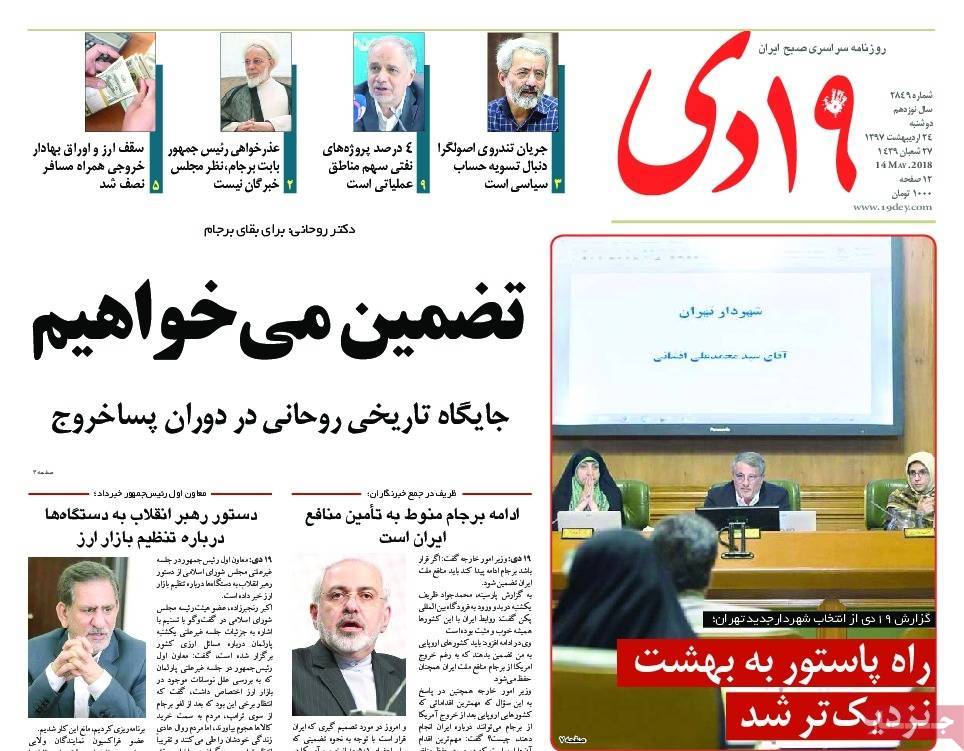
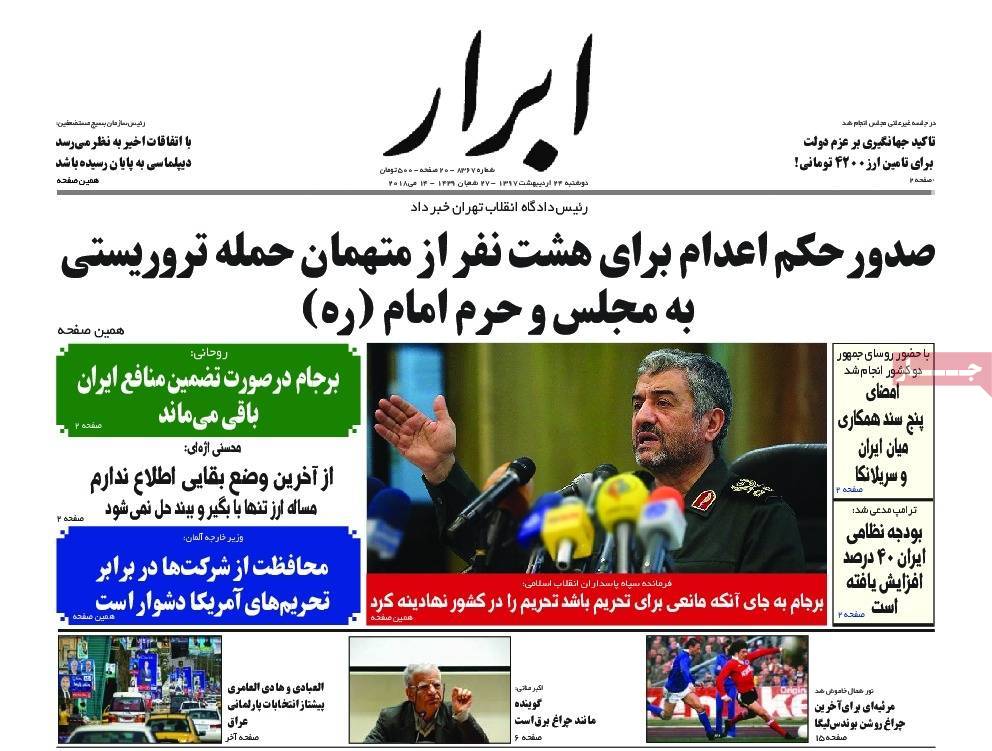
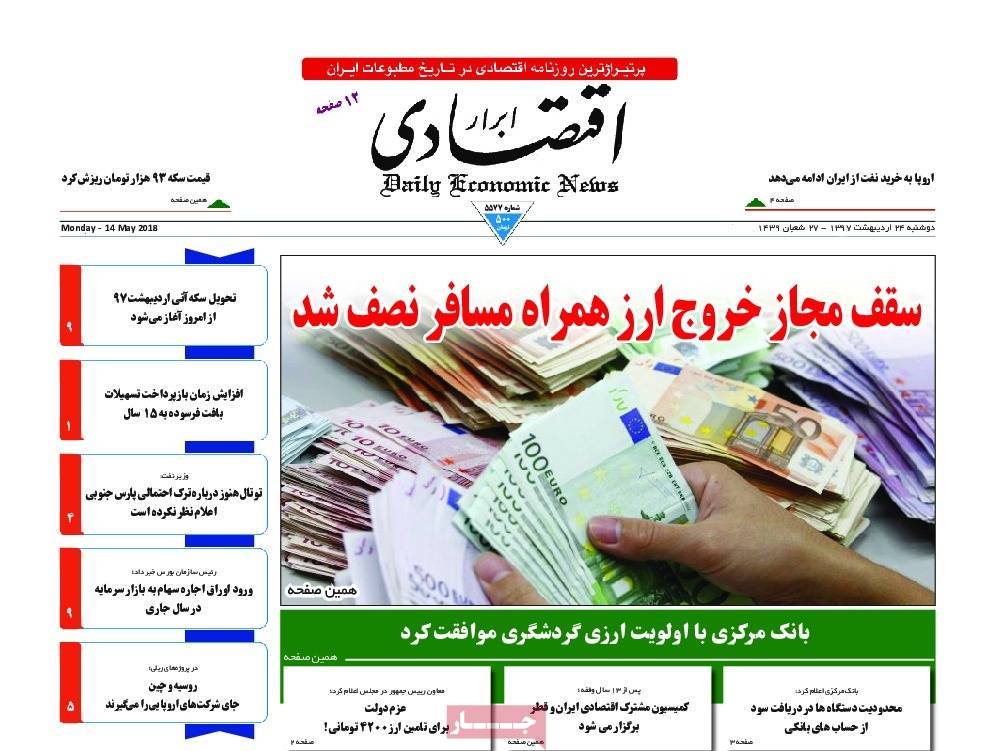
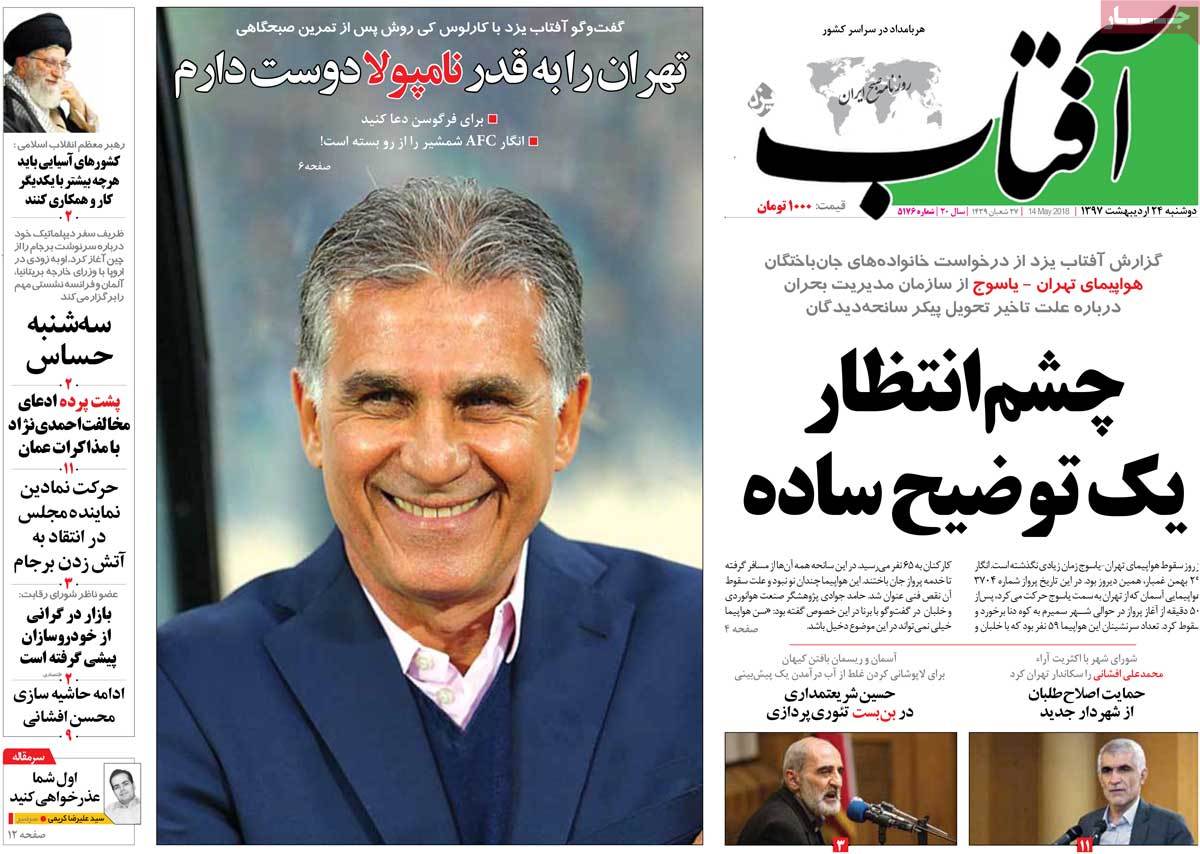
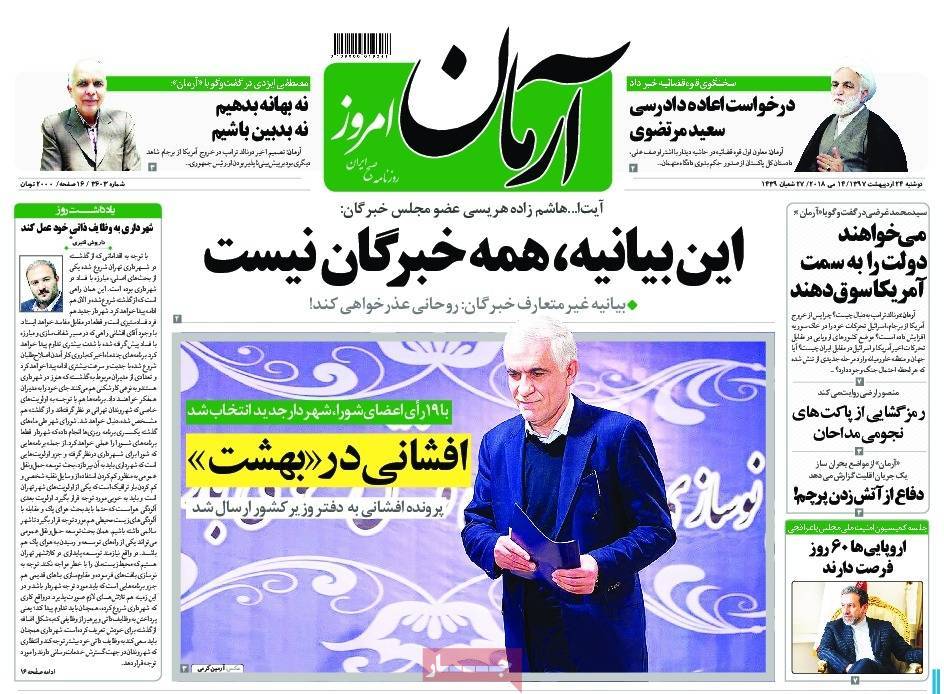
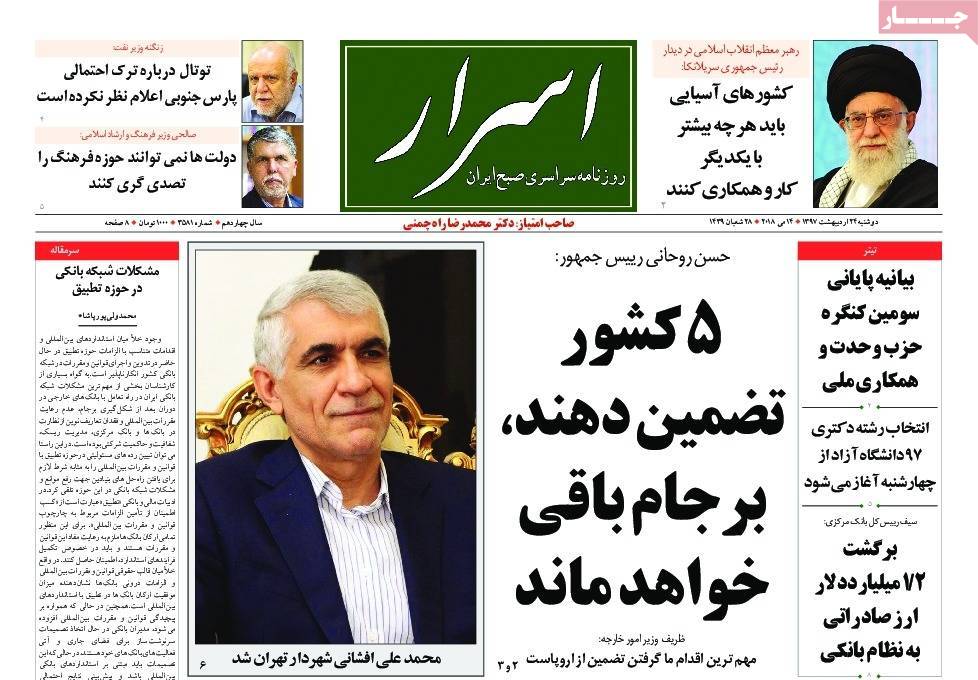
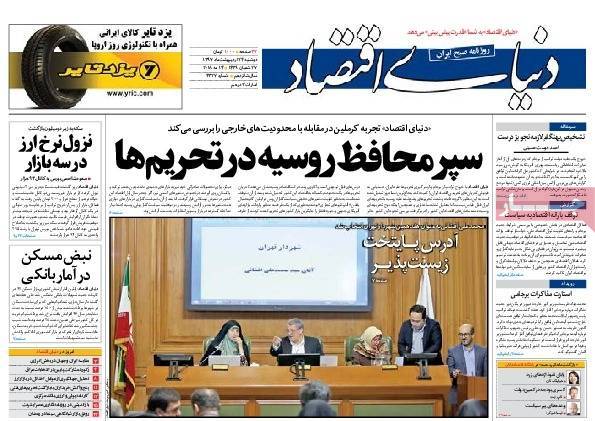
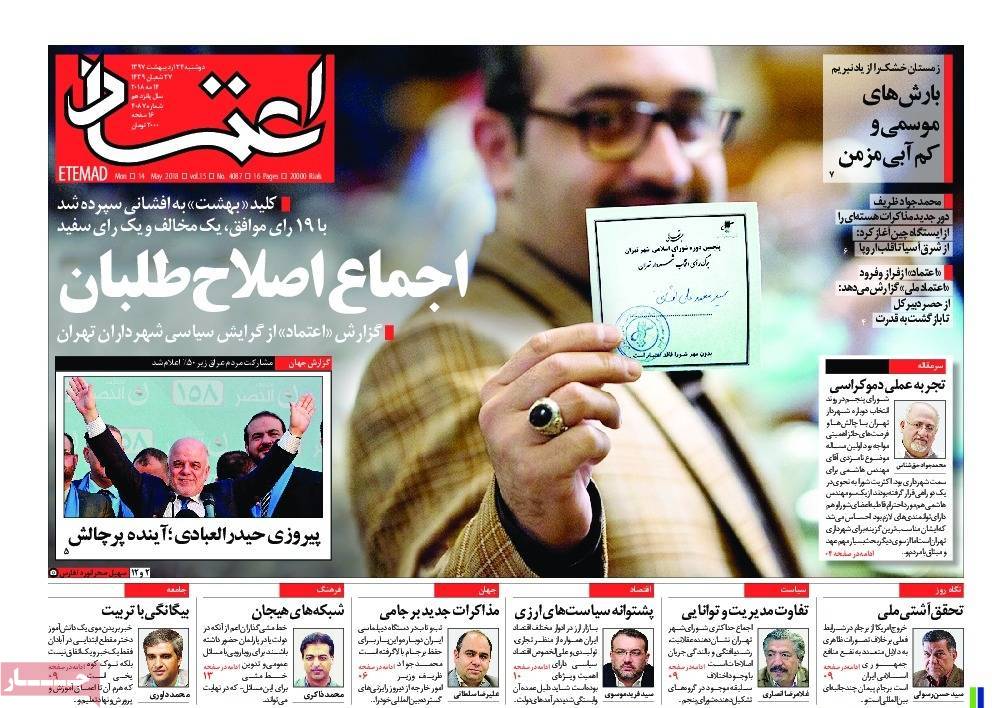
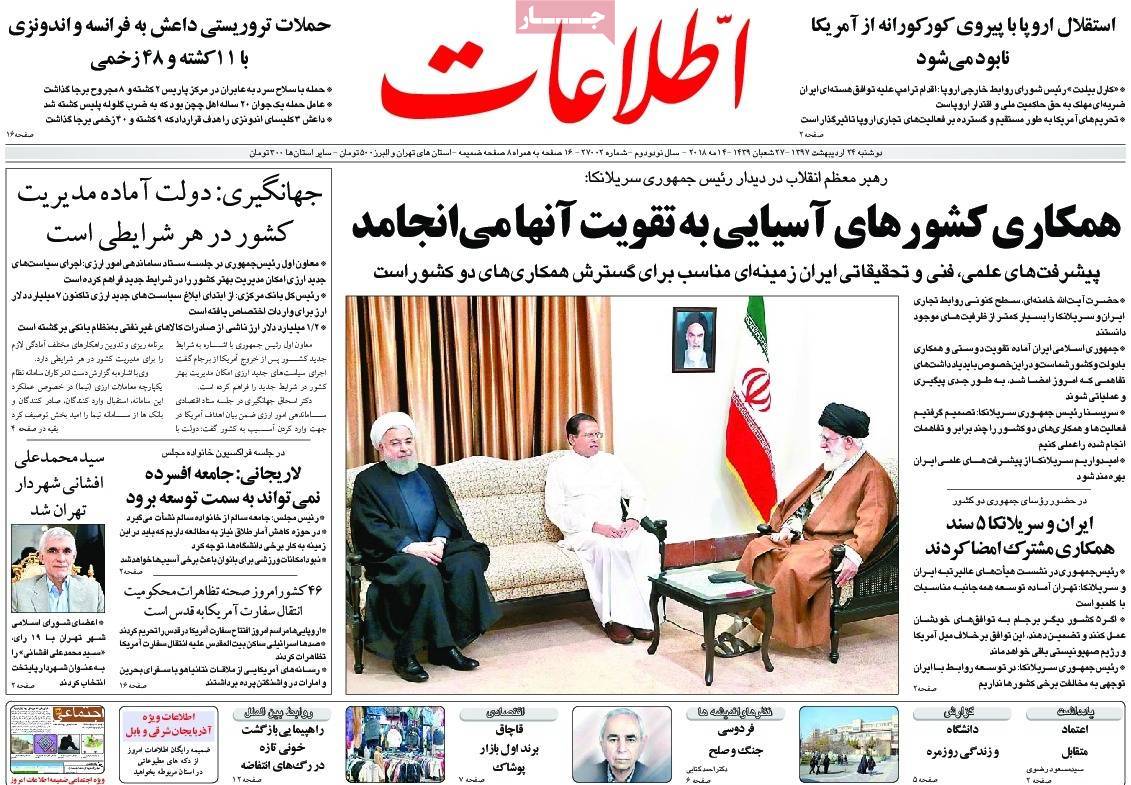
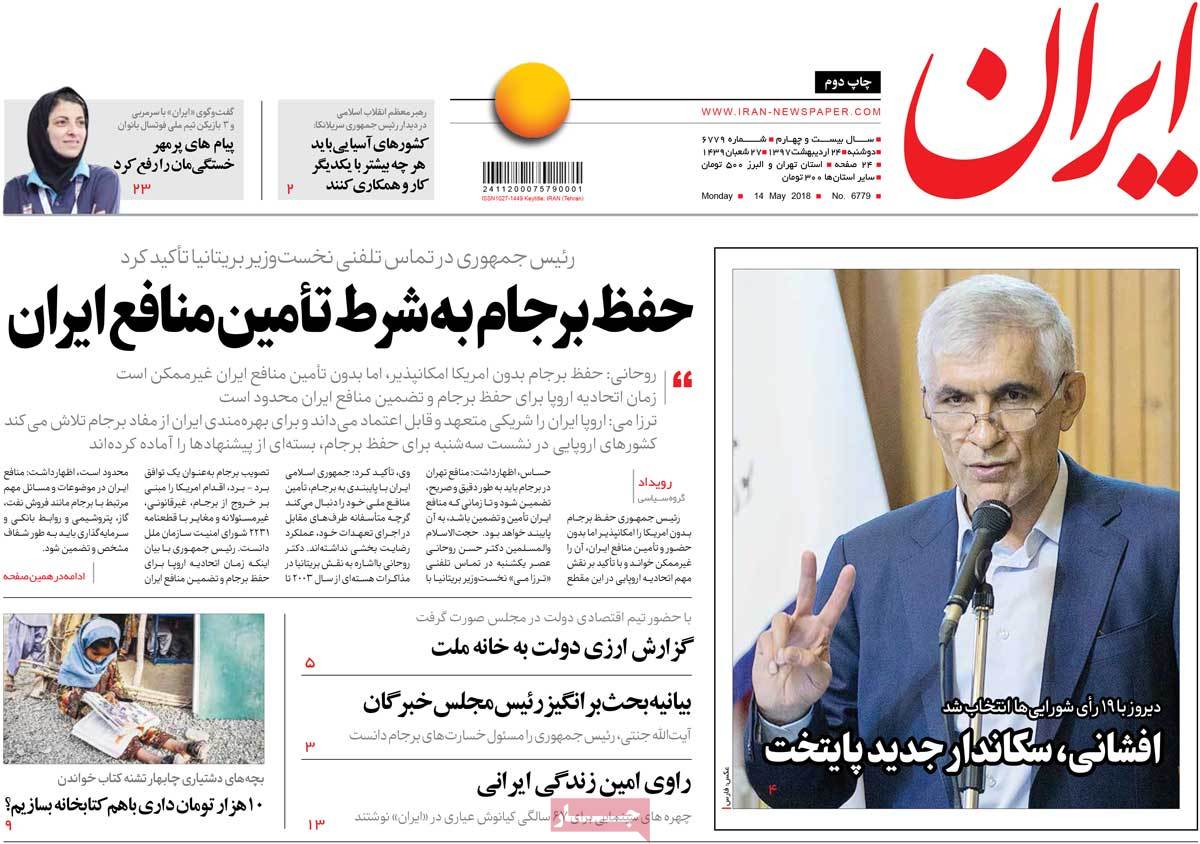
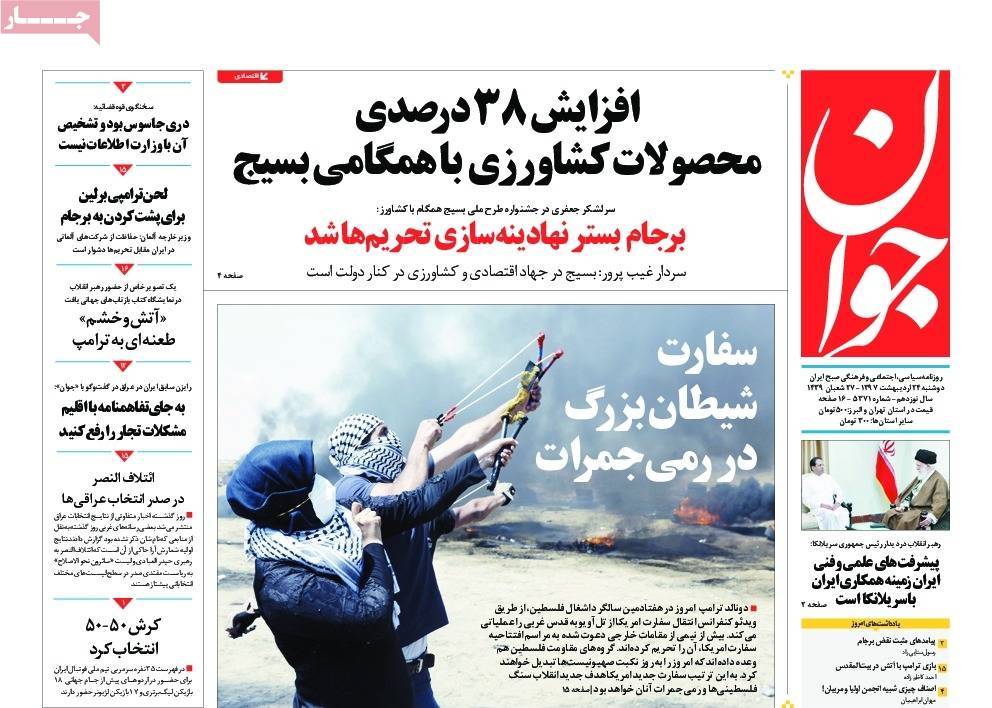
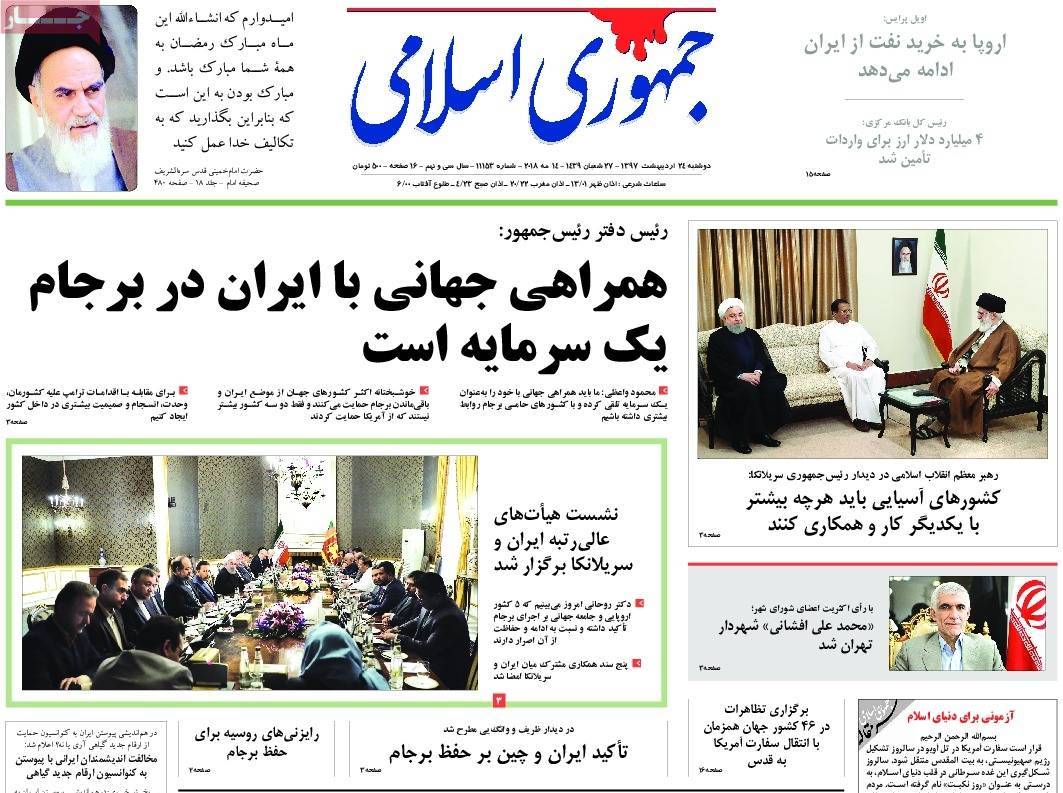
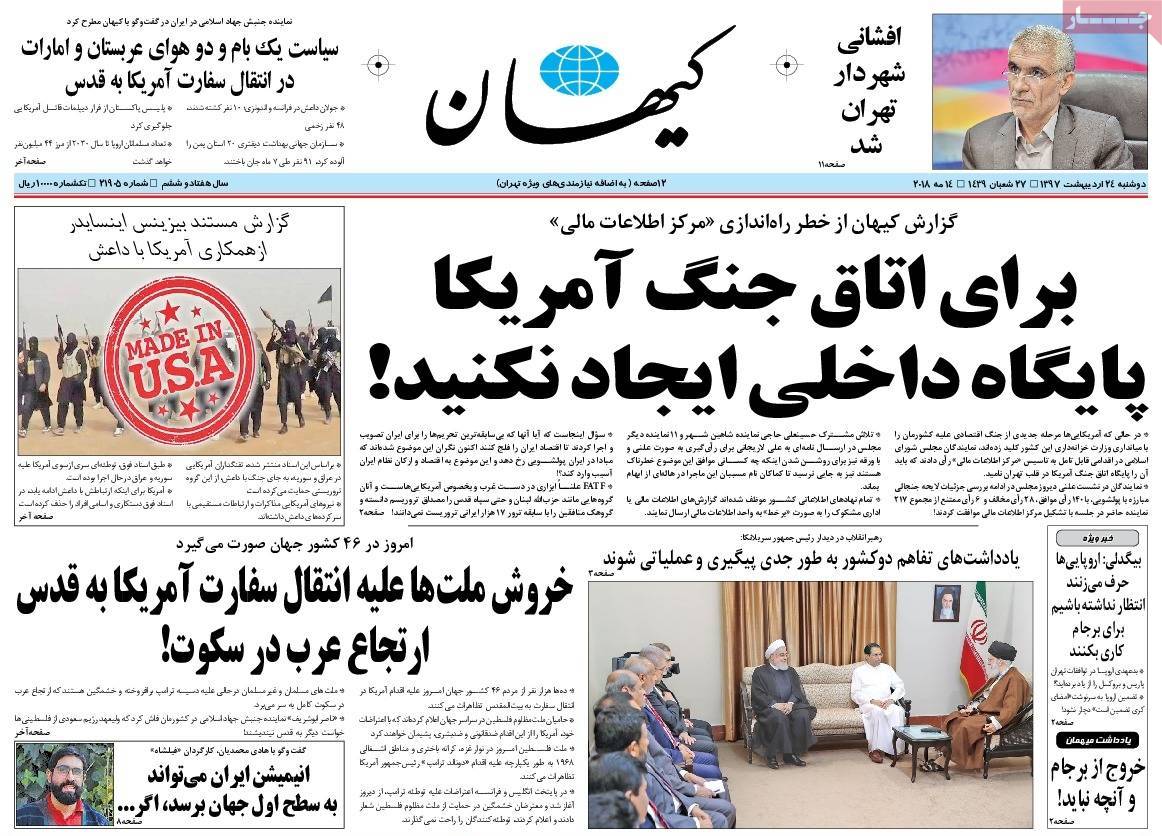
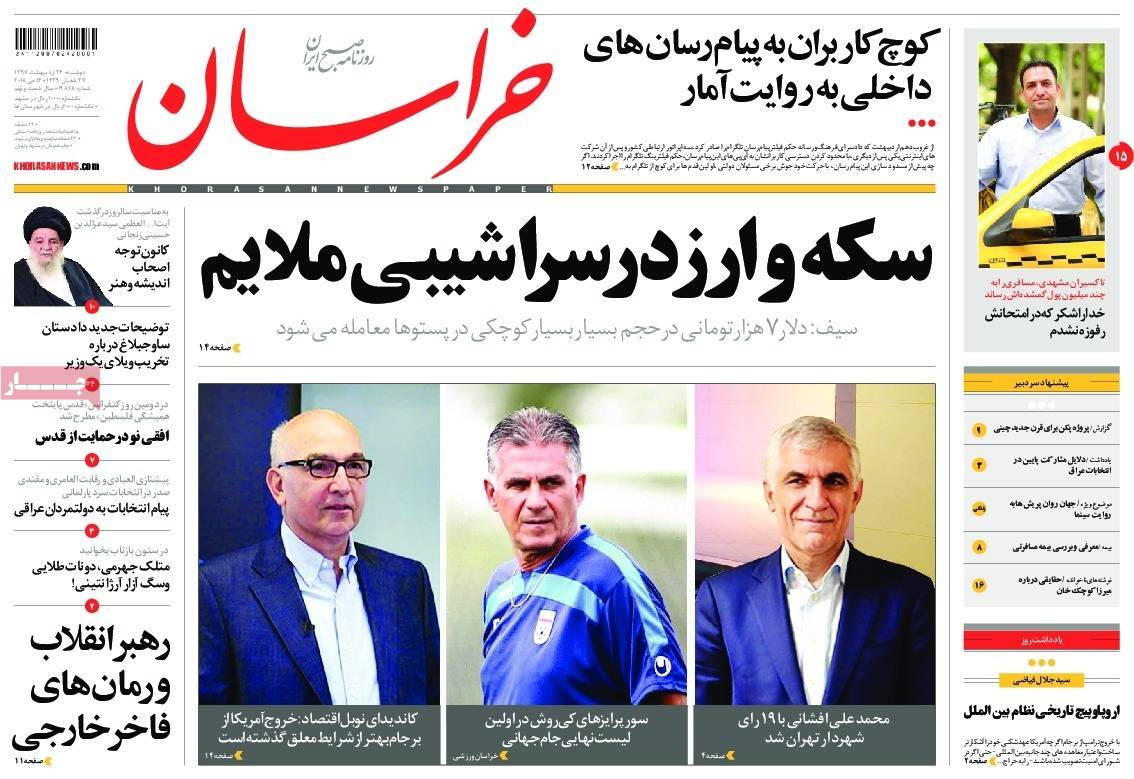
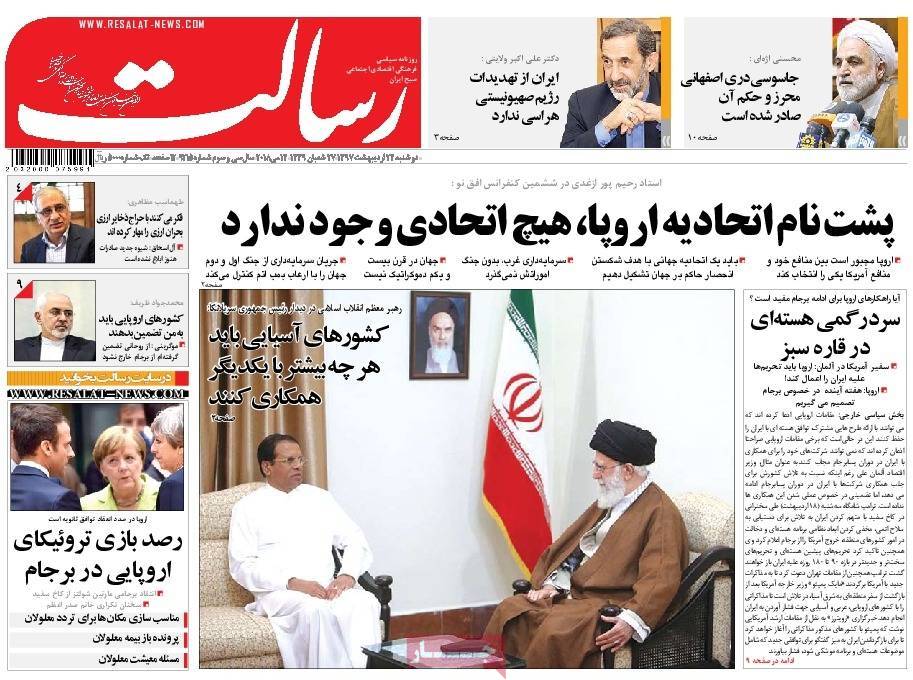
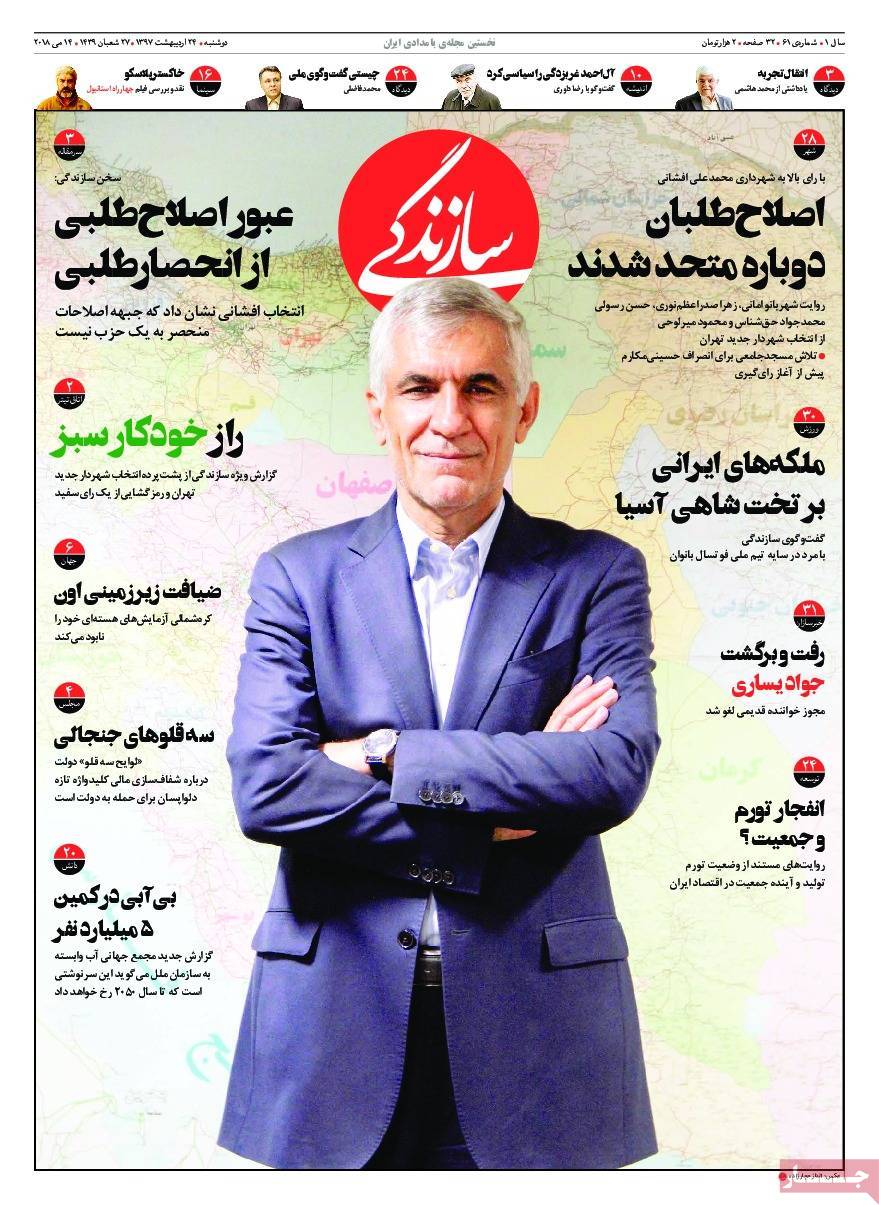
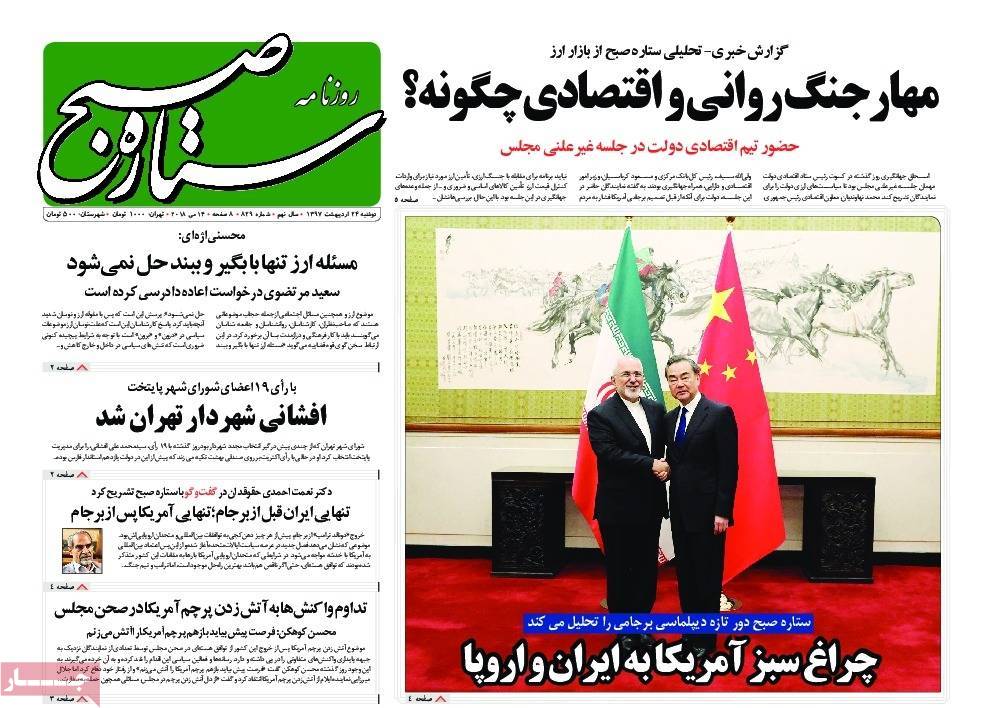
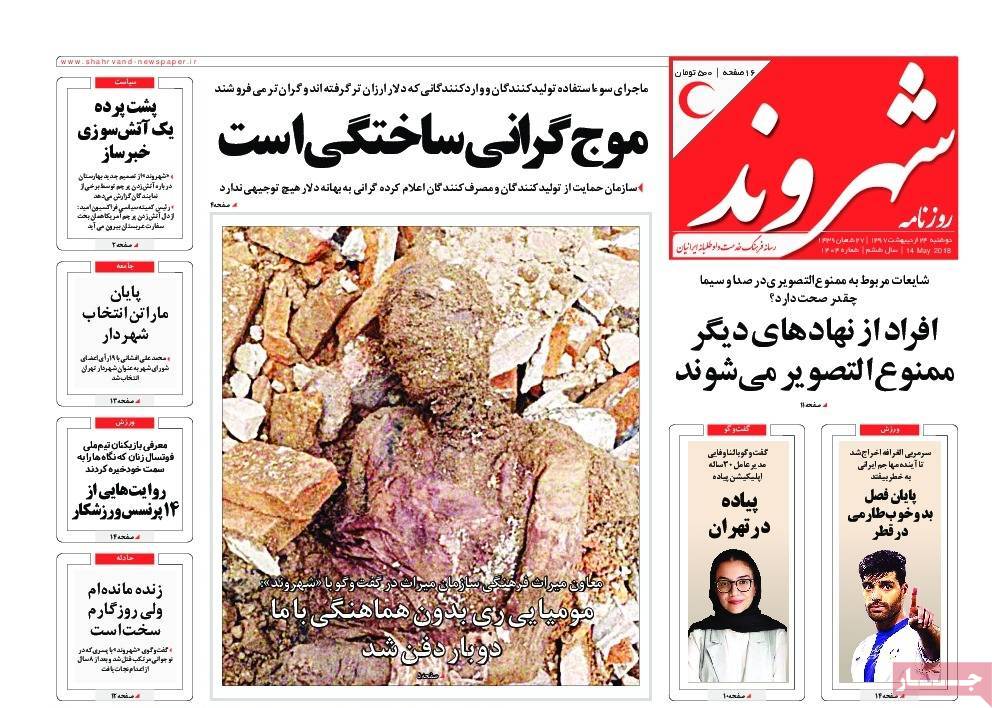
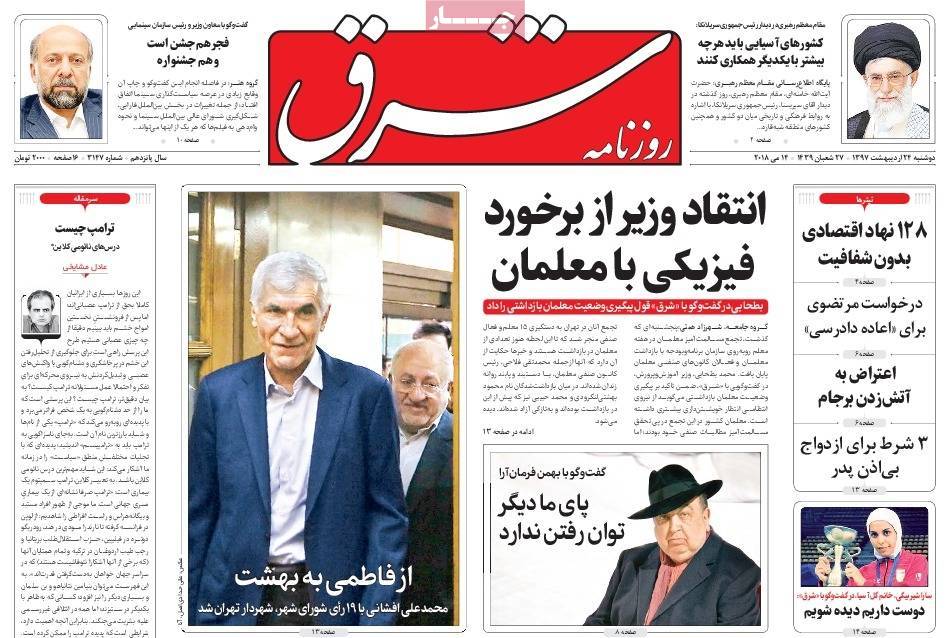
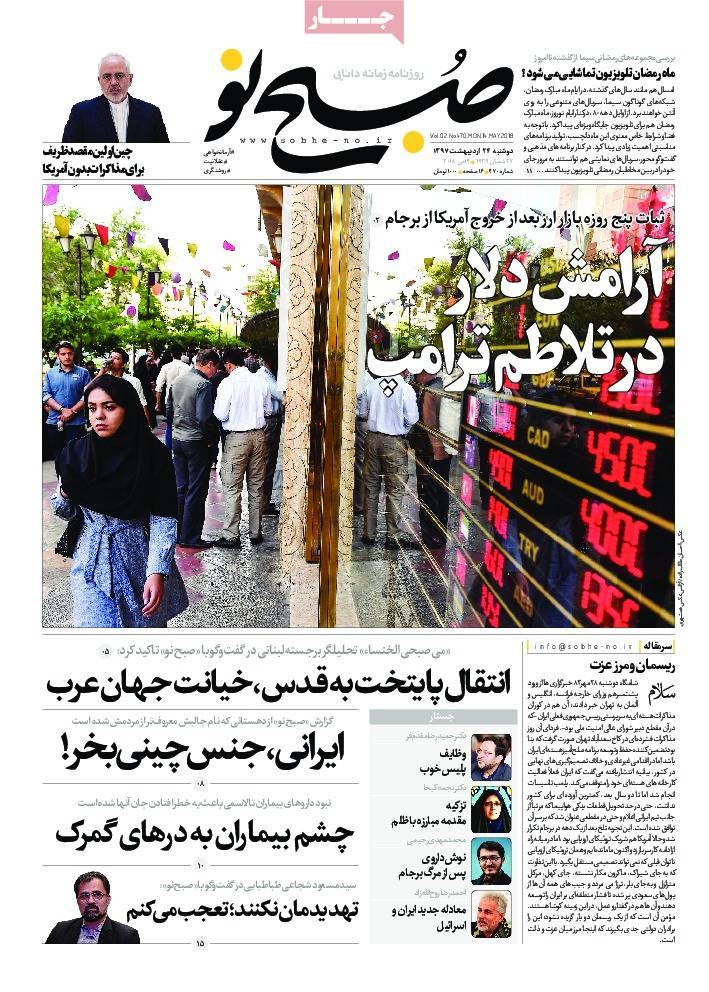
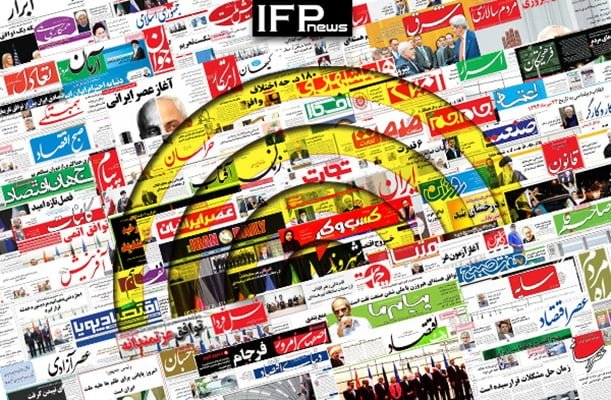
A Look at Iranian Newspaper Front Pages on April 23

A Look at Iranian Newspaper Front Pages on November 19

All papers today covered the remarks made by the Leader of Iran’s Islamic Revolution Ayatollah Seyyed Ali Khamenei in a meeting with a group of army commanders in Tehran. During the meeting, the Leader highlighted the significance of further unity among the Iranian Armed Forces, including the IRGC and the Army.

Also a top story was a meeting between Iranian President Hassan Rouhani, Parliament Speaker Ali Larijani, and Judiciary Chief Ayatollah Sadeq Amoli Larijani to discuss the country’s major problems.

Iranian Foreign Minister Mohammad Javad Zarif’s remarks about the Iran nuclear deal also received great coverage. In a number of interviews held in New York, Zarif elaborated on Tehran’s reaction to Washington’s possible withdrawal from the JCPOA.

The arrest of Saeid Mortazavi, the former prosecutor of Tehran convicted of complicity in the death of a prison in Kahrizak Detention Centre back in 2009, was also a top story today. Mortazavi was arrested in Sorkhroud, a city in Mazandaran province, and was transferred to Tehran to serve his two-year term in Evin Prison.

The above issues, as well as many more, are highlighted in the following headlines and top stories:

 19 Dey:

  • Qom Is Not Vatican
  • Ayatollah Makarem Shirazi: Qom Belongs to Muslim World

A Look at Iranian Newspaper Front Pages on April 23


Abrar:

  • Parliament Gives First Yellow Card to Economy Minister
  • Rouhani: People Have Right to Use Various Social Media
  • Zarif: Washington Must Change Its Approach

A Look at Iranian Newspaper Front Pages on April 23


Aftab-e Yazd:

  • Rouhani’s Practical Measure to Boost Transparency
  • Based on Rouhani’s Order, Iranian Treasury Publishes All Payments in Past Month
  • Zarif to CBS: World Shouldn’t Expect Us to Remain Committed to a Broken Deal
  • Toy Coup in Riyadh!
  • Shooting in Front of Saudi King’s Palace Followed by Speculations about Coup

A Look at Iranian Newspaper Front Pages on April 23


Arman-e Emrooz:

  • Telegram Survives Filtering
  • Rouhani: Government to Protect Cyberspace
  • US and Dream of Disarming North Korea [Editorial]

A Look at Iranian Newspaper Front Pages on April 23


Asrar:

  • Iran Leader: Tomorrow’s Army Must Be Stronger, Better than Today

A Look at Iranian Newspaper Front Pages on April 23


Donya-ye Eqtesad:

  • Zarif: All Options on the Table
  • Iran’s Reaction to US Possible Withdrawal from JCPOA
A Look at Iranian Newspaper Front Pages on April 23


Ebtekar:

  • Iran Leader Praises Army Chief’s Stances in Support of IRGC
  • Empathy Best Way to Resolve Iran’s Problems

A Look at Iranian Newspaper Front Pages on April 23


Etemad:

  • End of Mortazavi
  • Latest Situation of Tehran’s Former Prosecutor

A Look at Iranian Newspaper Front Pages on April 23


Ettela’at:

  • North Korean Leader: I Don’t Want to Be Second Saddam, Gaddafi
  • Gov’t Spokesman: Rouhani Counts on IRGC for Resolution of Problems

A Look at Iranian Newspaper Front Pages on April 23


Farhikhtegan:

  • Opposition against Populist
  • Bin Salman’s Populist, Adventurist Moves Strengthen Saudi Opposition

A Look at Iranian Newspaper Front Pages on April 23


Iran:

  • Eight Key Decisions by Heads of Trio Branches of Iranian Establishment
  • Parliament Hosts Meeting of Gov’t, Parliament, Judiciary

A Look at Iranian Newspaper Front Pages on April 23


Javan:

  • Warning against EU-US Collusion on Iran Nuclear Deal
  • Zarif: We Won’t Remain in Unilateral JCPOA
  • Iran FM: Europe Must Make US Remain Committed to JCPOA
  • We Have Enough Forex Reserves; People Shouldn’t Be Worried
  • Saudis’ Ambiguous Account of Shooting in Royal Palace

A Look at Iranian Newspaper Front Pages on April 23


Jomhouri Eslami:

  • Rouhani: Consultation, Coordination among All State Bodies Can Resolve Problems
  • Red Cross: Repercussions of Yemen War More Lethal than the War Itself

A Look at Iranian Newspaper Front Pages on April 23


Kayhan:

  • Bloody Blast in Kabul: Takfiris Massacre Shiites

A Look at Iranian Newspaper Front Pages on April 23


Mardom Salari:

  • Iran FM to CBS: Don’t Mistake Iran with Regional Dictators

A Look at Iranian Newspaper Front Pages on April 23


Payam-e Zaman:

  • Intelligence Minister: People Main Elements behind Iran’s Security

A Look at Iranian Newspaper Front Pages on April 23


Resalat:

  • Parliament Speaker: All Branches of Power in Iran Have Similar Views on Sensitive Issues
  • Iran’s Options to Counter US Are Ready: Zarif

A Look at Iranian Newspaper Front Pages on April 23


Roozan:

  • Incurable Pain of Syria in Body of Middle East
  • A Report on Continued, More Complicated Crisis in Syria

A Look at Iranian Newspaper Front Pages on April 23


Sazandegi:

  • Mortazavi Arrested in Villa in Northern Iran, Sent to Prison

A Look at Iranian Newspaper Front Pages on April 23


Shahrvand:

  • What Are They Going to Wear?!
  • Iranian Female Weightlifters to Compete in Int’l Competition after 70 Years

A Look at Iranian Newspaper Front Pages on April 23


Shargh:

  • First VP Holds Meeting with Ministers over Forex Issue

A Look at Iranian Newspaper Front Pages on April 23


Sobh-e Now:

  • Saudi Arabia’s Fake Power
  • Uproar in Saudi Palace
  • Telegram CEO Reveals His Anti-Iran Approach by Supporting the Film “300”

A Look at Iranian Newspaper Front Pages on April 23

Iran Assumes Presidency of Indian Ocean Naval Symposium

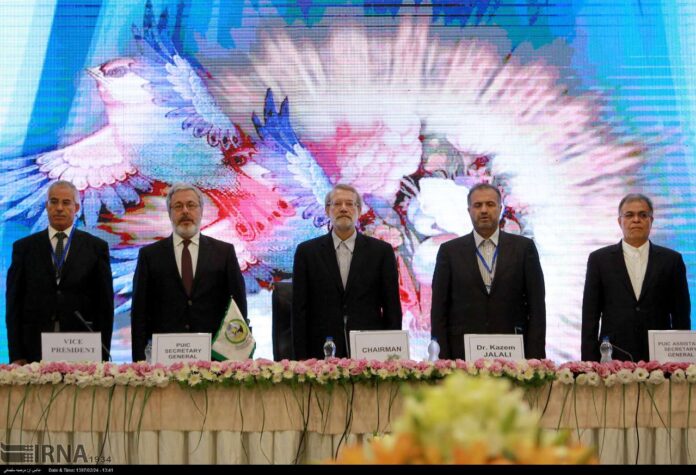
The naval symposium began on Monday morning with an opening speech by Chief of Staff of the Iranian Armed Forces Major General Mohammad Hossein Baqeri.

Senior military officials and navy commanders from 35 countries are present in the international event.

During the two-day conference, Iran officially assumes presidency of the symposium for two years.

The IONS is a voluntary initiative that seeks to increase maritime co-operation among navies of the littoral states of the Indian Ocean Region by providing an open and inclusive forum for discussion of regionally relevant maritime issues.

There are 32 Navies of the IONS – 23 members and 9 observers.

Iran Condemns Recent Saudi Attacks on Civilians in Yemen

In a Monday statement, Qassemi expressed sympathy with the families of the victims of the violent and inhumane attack, which resulted in the deaths and injuries of dozens of innocent Yemeni citizens, including women and children.

The escalated bombardment of residential areas proves the desperation and inability of the invaders in achieving their goals, he noted.

The spokesman also lashed out at some Western countries for their “irresponsible” supply of weapons to Saudi Arabia.

“Attacks on residential areas and civilian targets and blocking the Yemeni people’s access to international relief agencies and institutions are violations of humanitarian principles and rules.”

Qassemi further called on the United Nations and the countries that can play a role in the resolution of Yemeni crisis to increase their efforts to immediately stop the attacks and to take measures to protect civilians, especially women and children.

A wedding ceremony in Yemen was targeted by Saudi airstrikes as the kingdom continues with its relentless war on the impoverished country.

Reports say as many as 20 people lost their lives and 40 others sustained injuries during the airstrike in Hajjah Province.

The Saudi jets also carried out raids on ambulances transporting the casualties to local hospitals.

Iran to Build Passenger Vessels to Boost Marine Tourism

The Marine Industries Organization of the Ministry of Defence and Logistics of the Iranian Armed Forces is tasked with running the project, says Rear Admiral Amir Rastegari, the head of the organization.

The admiral said the Anzali Free Zone in northern Iran is making good progress, describing the developments there as very favourable.

“The development of marine tourism will increase job opportunities and boost business in Gilan province,” he told the CEO of the Anzali Free Zone.

Vice-Admiral Rastgari, who is also the deputy defence chief, said it has been years that the Marine Industries Organization has been pursuing policies in line with economic resilience with a look to domestically-produced products.

“The Marine Industries Organization is fully prepared to forge closer cooperation with the Anzali Free Zone in a bid to develop marine tourism,” he said, a Farsi report by Mashregh News said.

He noted one of the key advantages of the Anzali Free Zone is its proximity with the marine industries of the port of Anzali.

“As an active industry, the Martyr Tamjidi Marine Industries of Anzali Port is prepared to repair and render services to different types of vessels and meet their maintenance needs.”

He said discussions have been conducted with different government institutions running marine projects in order to produce goods domestically, create jobs and produce wealth.

“In order to realize the motto of the year, this year efforts are being made to support Iranian-made goods by producing more domestically-made vessels,” said the deputy defense chief.

He said the Marine Industries Organization is pursuing the policy of developing all-out relations with the Anzali Free Zone,” he underlined,

“The development of different types of vessels in line with the development of tourism in the Caspian Sea has been put on the agenda of the Marine Industries Organization.”

He said a memorandum of understanding has been signed between the two sides on the construction of marine vessels in the Anzali Free Zone.

“Efforts are being made to make it possible for local and foreign tourists visiting the Caspian Sea to make the most of the potentialities of the sea by using Iranian vessels.”

He said vessels are to be built using clean energy in order to promote tourism in lagoons.

“Since last year, production of vessels using clean energy without using fossil fuels has been on the agenda of the Marine Industries Organization,” said the deputy defense chief.

Given the talks held with the Anzali Free Zone, said the admiral, efforts are being made to kick off the construction of vessels this year.

“The Iranian capability, potential and knowledge are able to meet all the marine needs of the country,” he noted.

“Such potentialities are realized by seasoned domestic experts, and efforts are being made to set the stage for local producers’ development.”

With a coastal line of 5,800 km (including its islands) and thanks to its access to strategic international waterways, Iran has great potentialities for expansion of its marine industries.

Maritime industry in Iran comprises a wide range of areas such as shipbuilding, offshore structures, fisheries, transportation, ports, and tourism; hence, it is considered one of the most strategic sectors of the country.

According to the data released by the Iranian Vice-Presidency for Science and Technology, Iran has in recent years experienced a significant progress in marine science advancement and improved its rank from 24 to 9 within 16 years. Iran also stands at the first place in the Middle East with other countries of the region lagging far behind it.