Monday, December 22, 2025
Home Blog Page 3606

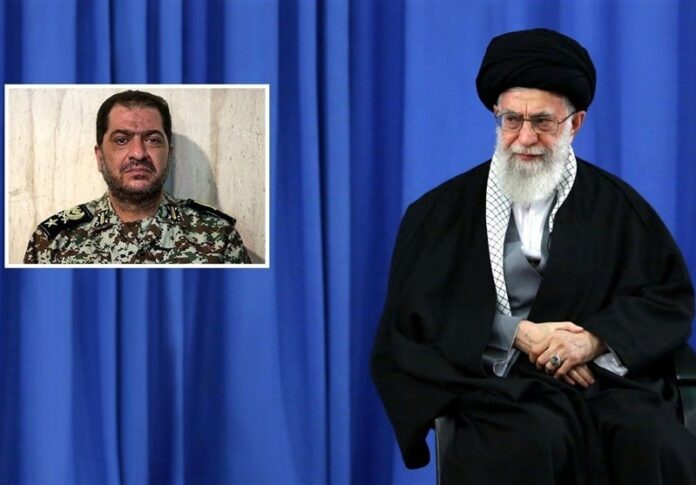
Iran to Give Crushing Response to Israel in Due time: Top General

General Baqeri said over the past few days, the enemies triggered some developments in the region against Iran without receiving an appropriate response.

“But this does not mean we will remain silent or surrender to the violence. We will give a crushing response to the enemies in due time,” he said, apparently referring to a recent Israeli airstrike on a Syrian airbase which killed several Iranian advisors.

He expressed satisfaction with the current preparedness of Iranian armed forces to defend the country’s borders.

“A review of our defence capabilities has led the enemies to this conclusion that any violence against our soil and national interests will cost them highly and they will achieve nothing but casualties and damages,” he said.

Elsewhere in his remarks, General Baqeri said every now and then some naïve politicians in some states rise to power, level accusations against and order their armies to wage a war on Iran.

“This comes as top commanders of the very violent countries like the US warn the politicians against waging any war against Iran. They advise the politicians to resort to political solutions when it comes to dealing with Iranians,” he added.

He pointed out that the US, Saudi Arabia and the Zionist regime are run by naïve politicians who raise absurd claims about Iran.

“But when it comes to taking practical steps, the same politicians come to this sense that Iran’s defence capability and power is inviolable,” he added.

General Baqeri concluded that the Islamic Republic will not sit idle if the enemies violate its national interests.

Iran Hails Lebanon Elections as Victory for Entire Lebanese Nation

In a Monday statement, the spokesman described the election as an epic achievement, saying it is a great victory for all Lebanese people from different tribes and political movements.

Iran maintains that holding a peaceful election amid the current chaotic situation of the region is by itself a great democratic achievement for all the people of Lebanon, he added.

Lebanese people went to the poll stations on Sunday to vote in their parliamentary elections after nine years. The elections had been delayed three times since 2008 due to the unrest in the region and conflicts among political parties on election laws.

Unofficial results show the resistance Movement Hezbollah and its allies have managed to gain more than half of the votes. That’s almost 67 out of 128 parliamentary seats.
The Future Movement of Prime Minister Sa’ad al-Hariri did well in its strongholds of Sidon and Tripoli, but finally lost one-third of its seats in the Parliament.
The rival Christian faction known as the Lebanese Forces also doubled the number of its seats to 15.

The voter turnout was 49.2 percent.

Iran Calls for Promotion of Business Ties with Georgia

Iran Calls for Closer Business Ties with Georgia

In a Monday meeting with Dimitry Kumsishvili, the Georgian Deputy Prime Minister and Minister of Economy and Sustainable Development, Zarif elaborated on the Islamic Republic’s great economic capacities and called for further development of business relations between the two countries.

For his part, the Georgian official voiced his satisfaction with visiting Iran and described the relations between Tehran and Tbilisi as friendly and developing.

He said there are many development projects in Georgia in which Iranian companies are participating.

Kumsishvilli added Georgian government warmly welcomes the presence of Iranian companies in the country.

During the talks held in Tehran, the two sides also explored ways to establish a regional transit corridor and further develop reciprocal relations in transit, banking, energy and tourism areas.

They also exchanged views on ways to remove the obstacles in the way of expansion of bilateral cooperation.

Iran Calls for Promotion of Business Ties with Georgia

Those Arming Saudis Are Supporting Terrorism: Nobel Peace Laureate

Nobel Peace

“Yemen is being terrorized by the UAE and Saudi Arabia directly by killing thousands of civilians and imposing a blockade on its people and indirectly by supporting, financing and establishing armed terrorist groups,” Karman said in a post in her Facebook account on Sunday.

“Countries involved in providing these two countries with weapons are accordingly involved in supporting terrorism and providing its groups with weapons,” she added, stressing that she will disclose all these facts in her later lecture in Oxford University.

Yemen’s defenceless people have been under massive attacks by the Saudi-led coalition for more than three years but Riyadh has reached none of its objectives in Yemen so far.

Since March 2015, Saudi Arabia and some of its Arab allies have been carrying out deadly airstrikes against the Houthi Ansarullah movement in an attempt to restore power to fugitive former president Abd Rabbuh Mansour Hadi, a close ally of Riyadh.

Over 14,000 Yemenis, including thousands of women and children, have lost their lives in the deadly military campaign.

Iraqi Quarter in Tehran Heating Up with Election Fervour

Not many Tehran residents may know that a “Little Iraq” is located in southeast Tehran. Over the past four decades, the Dowlatabad neighbourhood has been home to Iraqi citizens (mainly Shiites) who fled the tyranny and atrocities of former Iraqi strongman Saddam Hussein’s regime and took refuge in Iran. Political circumstances have kept them from returning to their homeland for a long time, but have not been able to affect their customs as well as cultural and social traditions. Henceforth, you will feel you are walking in a Baghdad street once you enter the Dowlatabad neighbourhood.

Arabic statements on walls, signs outside shops, the style the prayer sites are decorated, clothes and even the Arabic conversations among people, all remind you that you are going away from the Iranian cultural and social aura and entering a new ambience. In addition to these features, maybe the unique communication among citizens is another striking feature of an Arab society, which is pretty obvious in Dowlatabad: Crowded restaurants, chairs and tables on pavements for people to sit next to each other and catch up on what’s going on in their daily lives, mosques and prayer sites packed with worshippers during prayer times, and, of course, hookahs, which are almost everywhere in this neighbourhood!

Many Arab residents in this neighbourhood regard themselves as Iranian-born. Some of them have even left Dowlatabad over the past years and moved to more central neighbourhoods in the capital. Still, it seems Dowlatabad remains the best place for Iraqis in Tehran to live because it is no different from Arab neighbourhoods in Baghdad or Najaf.

But if you go for a walk in Dowlatabad these days, it is not only the usual Arab elements that draw your attention, but you will notice an election campaign going on, a campaign depicting the most important political Shiite currents in Iraq in the lead-up to key parliamentary elections slated to be held on May 12. Photos and banners of candidates, including Nouri al-Maliki, Hanan al-Fatlawi, Haider al-Abadi, Hadi Al-Ameri, etc. The election ambience in Dowlatabad show the residents of the “Little Iraq” in Tehran are seriously following up on their political developments.

Although, so far, many Iraqi opinion polls suggest a relative lead for the al-Nasr (victory) alliance led by Haider al-Abadi, there is a different atmosphere in Dowlatabad where supporters of Nouri al-Maliki, who leads the ruling State of Law coalition, are in the majority. What is noteworthy in Dowlatabad is that most of Abadi supporters are the younger generation of the Iraqi community there, which could be a big success for Iraq’s incumbent prime minister.

The Iraqi election is around the corner, but the limited time left until then is very determining and sensitive for Iraq’s political currents and groups. Like their comrades in Iraq, Iraqi expats in Tehran’s Dowlatabad closely follow election news as they cherish the idea of a better future for their country.

What follows are Fars News Agency’s photos of the election fervour in Dowlatabad:

Iran’s Beauties in Photos: Amir Nezam Garousi Mansion

Amir Nezam Garousi Mansion, Iran

The mansion has now turned into a museum showcasing items belonging to the Qajar era. It was built during the time when Amir Nezam Garousi was an advisor to Naser al-Din Shah Qajar, the King of Persia from September 5, 1848 to May 1, 1896 when he was assassinated.

After the fall of the Qajar dynasty, the Pahlavi regime used the building as the Treasury Department.

Constructed on a plot of land measuring 3,000 sqm, the two-storey edifice has a built-up area of 1,500 sqm. The building has two inside and outside yards with gardens and ponds; which have added to the mansion’s beauty, a report by the Persian-language Hamshahri Online said.

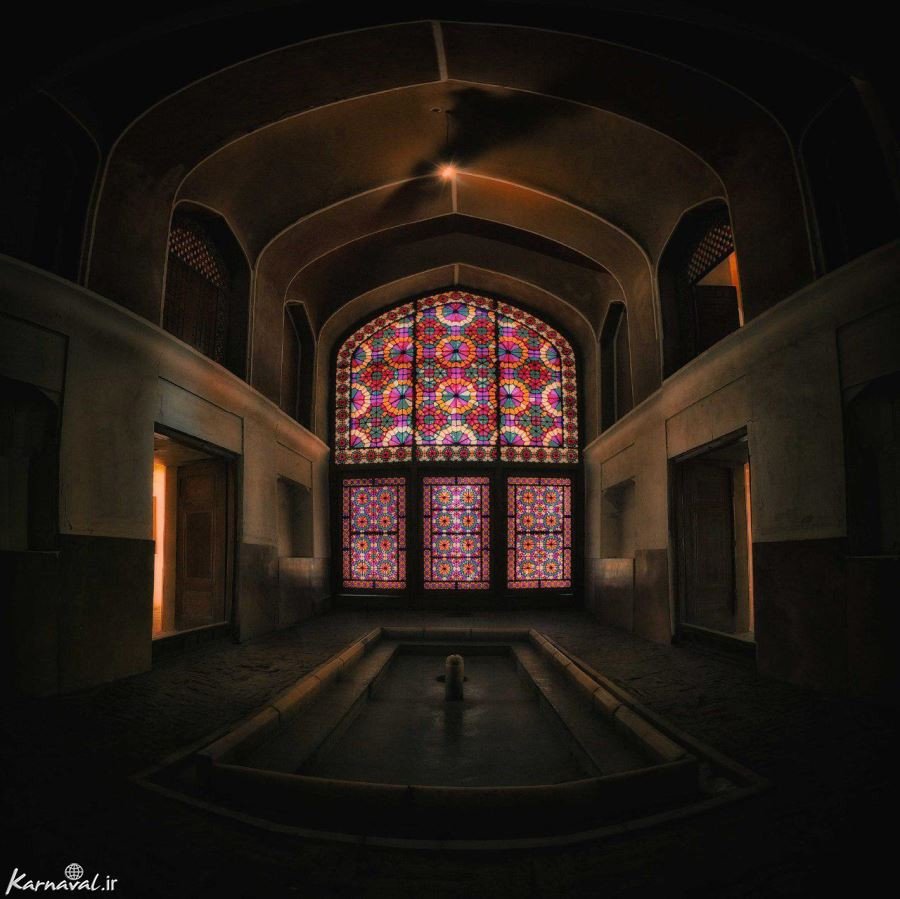
Sixteen columns with beautiful column heads support the porch of building. On the top floor, windows decorated with coloured glass as well as beautiful plaster and mirror work make the mansion all the more attractive.

The large “pond room” with exquisite architecture in the basement makes it one of the most beautiful parts of the building.

The house was purchased by the Cultural Heritage Organization in 1991. Given the serious damage the building had suffered, it was restored and reconstructed; while taking care that the mansion’s architectural and traditional features are preserved.

What follows are photos of Amir Nezam Garousi Mansion retrieved from various sources:

Richard Clayderman to Hold His First-Ever Concert in Iran

To be accompanied by a professional ensemble, Clayderman is expected to hold his first concert at the Interior Ministry’s Grand Hall on June 22 and 23, a statement released by Public Relations of the concert’s organizer said.

According to the statement, which was reported by the Persian-language Honar Online website, Clayderman will surprise his Iranian audiences by playing the patriotic Persian song “Ey Iran” with Piano.

Born in 1953, Clayderman has released numerous albums including the compositions of Paul de Senneville and Olivier Toussaint, instrumental renditions of popular music, rearrangements of movie soundtracks, ethnic music, and easy-listening arrangements of popular works of classical music.

Clayderman has recorded over 1,300 melodies and has created a new romantic style through a repertoire which combines his trademark originals with classics and pop standards.

As of 2006, his record sales number at approximately 150 million, and has 267 gold and 70 platinum albums to his credit.

He is popular in Asia and is noted by the Guinness Book of World Records as being “the most successful pianist in the world”.

Most people particularly young generation owe their interest in music to Claydermen and his music.

His concert is organized by Royal Honar Institution.

EU to Stay in Iran Deal Regardless of Trump Decision

“We are determined to save this deal because this accord safeguards against nuclear proliferation and is the right way to stop Iran getting a nuclear weapon,” French Foreign Minister Jean-Yves Le Drian told reporters in Berlin at a joint news conference after a meeting with his German counterpart Heiko Maas.

Germany doesn’t see any reason to scrap the nuclear deal reached between Iran and six powers in 2015 and would do everything possible to uphold it, Foreign Minister Heiko Maas said.

“We continue to believe that this agreement makes the world safer and without this agreement the world would be less safe,” Maas said.

“We fear a failure would result in an escalation,” Maas said.

US President Donald Trump has threatened to pull out of the Iran deal by not extending sanctions waivers when they expire on May 12, unless European signatories of the accord fix what he calls its “flaws”.

Iran Says US Withdrawal from JCPOA Not that Simple

Bahram Qassemi

Speaking at a weekly press conference on Monday, Bahram Qassemi said the JCPOA -the 2015 nuclear agreement between Iran and the Group 5+1 (Russia, China, the US, Britain, France and Germany) – has its own specifics and it is not possible to easily withdraw from it.

Though Donald Trump has always talked about a US exit from the nuclear accord since taking office, such a withdrawal would not be simple, he said.

He added that “Iran’s measure (against such a move) will be painful for the US and make them (Americans) regret it.”

Washington will have to pay a heavy price for walking away from the deal, Qassemi said, stressing that the move would add to international mistrust of the US government.

Iran will not be the first side to violate the JCPOA, the spokesman reiterated, but made it clear that Tehran would make the necessary decisions if the nuclear deal has no benefits.

The comments came a few days before the US president’s upcoming decision about Washington’s commitment to the JCPOA.

Iranian President Hassan Rouhani has warned that the US will face a “historic regret” should it decide to withdraw from the nuclear agreement.

Since the accord between Iran and the six world powers was signed in Vienna in July 2015, the International Atomic Energy Agency (IAEA) has repeatedly confirmed Iran’s compliance with its commitments.

“Both Advocates, Opponents of JCPOA Aiming to Topple Iran Gov’t”

Foad Izadi has, in an interview with the Persian-language Fars News Agency, weighed in on the circumstances surrounding the Iran nuclear deal as the world keeps waiting to see whether or not US President Donald Trump will extend the waivers on Iran sanctions on May 12, 2018. He has expressed his views on Trump’s possible withdrawal from the JCPOA and the good-cop bad-cop game that Washington is playing with the West over the nuclear deal.

He said there are some Europeans and others in the United States who advocate the JCPOA such as Dennis Rice, who is a Zionist, but would like Washington to stay in the agreement.

“This group says if the US leaves the JCPOA, there may be no better deal available,” said the analyst.

He said they are arguing that Trump should not be worried about the restrictions which, under the deal, will remain on Iran until 2020-2025.

“What Emmanuel Macron and others are saying is that we can stay in the JCPOA until 2020-2025, and after that we will pull out of it all together because withdrawal at this point in time is not justifiable,” the commentator said.

He further noted that supporters of the JCPOA believe sanctions can be slapped on Iran when it comes to the missile issue and the Middle East region, so there is no need to dismantle or leave the JCPOA.

On the other hand, the analyst said, there is a group who are in the minority and include some of Trump’s associates.

This group says they needn’t wait until 2020-2025, and that they can topple the Islamic Republic of Iran by 2019 or 2020 if they put pressure on the country, said Izadi.

“So, they say they should withdraw from the JCPOA and increase pressure, but if that does not lead to the overthrow [of the Iranian government], it will weaken the country, and hence, we can gain better concessions from Iran and bring it back to the negotiating table,” said the commentator.

“This time, we will not act as we did during the Obama administration when we specifically focused on the nuclear issue; rather, we will work on the issue of missiles and the region and will gain concessions in those domains, as well,” he said.

The analyst noted that the concessions they have gained from the JCPOA have made them interested to get more.


A regional JCPOA would mean we can give sweeping concessions in the region as we did in the JCPOA


He then criticized comments made by some officials within the Iranian government who say they want a “regional JCPOA.”

“A regional JCPOA would mean we can give sweeping concessions in the region as we did in the JCPOA,” he said.

Izadi reiterated that Trump now has to decide whether or not to leave the Iran nuclear deal and is on the horns of a dilemma.

“As for the good-cop bad-cop issue, we can say that Mr. Macron has become the good cop and calls for staying in the JCPOA. Some others, who are in the minority, call for pulling out of the agreement. However, the objective of both groups is to put pressure and sanctions on Iran, and they are only divided on one issue. The second group believes it is possible to topple the Islamic Republic of Iran’s ruling system more quickly. But the first group is of the opinion that it is not clear whether or not it would be possible to overthrow the Islamic Republic of Iran, so it is better to keep the JCPOA because there may be no better deal if we withdraw from it,” Izadi said.

As for whether or not Trump would leave the agreement, the analyst said, “Trump has not announced what decision he would make, so we cannot make any predictions for now.”

“But if he wants to pull out, there will be a hard and a soft withdrawal,” he said.

“The hard withdrawal would go like this: He will announce on May 12 that he will leave the JCPOA and accept responsibility for his action. If this happens, he won’t suspend sanctions and will try to immediately restore the US and UN’s secondary sanctions.”

“However, in the soft withdrawal on May 12, he will stop waiving sanctions, but will not accept responsibility for it and will not reinstate the sanctions all at once. He will give Europe time to put Iran under pressure [and convince Tehran] that he is serious about pulling out of the deal. He will not re-impose sanctions, but will give time to gain more concessions.”

“Another option would be for him to maintain the sanctions and give more time and stay in the JCPOA for now. We should wait and see which path he would choose and what decision he would make.”