A senior spokesman for the Iranian Armed Forces Brigadier General Abolfazl Shekarchi said, “In spite of Iran’s support for any anti-terrorist action, the Islamic Republic believes a military operation within the borders of a third country on the pretext of combating terrorism without legal permission from the legitimate government of the country is unlawful.”
The Islamic Republic of Iran has been one of the victims of terrorism over the past four decades; however, it will never support actions that violate the sovereignty of another country to face terrorist groups, underscored Shekarchi, according to Tasnim News Agency.
Turkey claimed on Tuesday that Iran has offered verbal support for its latest offensive against Kurdistan Workers Party (PKK) militants scattered across the forbidding Qandil Mountain range separating Iran from Iraq. Defence Minister Nurettin Canikli said, “Our offer to Iran was to carry out the operation together. Iran, in its remarks at least, has voiced very important support.”
His comments came a day after Turkey’s President Recep Tayyip Erdogan declared that the operation against Qandil had started with 20 Turkish fighter jets destroying 14 PKK targets in the region.
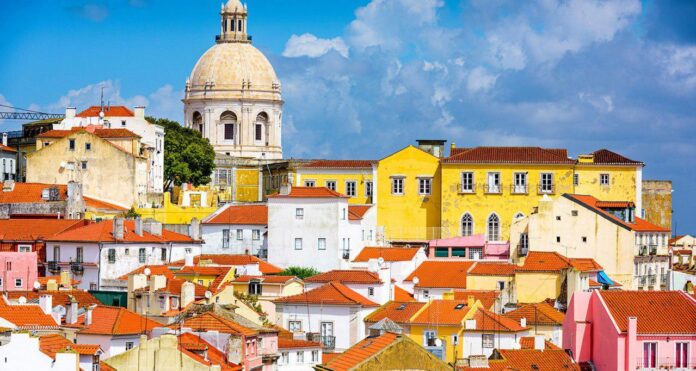
You can fall in love with Lisbon, barely coming off the plane: fresh sea air immediately swells your head. And when you find yourself in the historical centre, you will realize that you are lost permanently and irrevocably.
The beauty and originality of Lisbon is amazing. In Europe, you won’t find such a city: with ancient buildings, steep streets, yellow trams and magical fragrance of flowering oranges.
In Lisbon one is inclined to return again, and then again and again. If you don’t have a lot of money, then there’s no point to worry and postpone the acquaintance with your favourite city for later: there are many ways to visit Lisbon on the cheap, without sacrificing your own comfort.
To completely immerse yourself in the magical atmosphere of Lisbon, it’s best to walk around the city on foot, armed with a map and guidebook, because many amazing places are far from the usual tourist trails.
There is a list of the best low-budget places to visit in Lisbon.
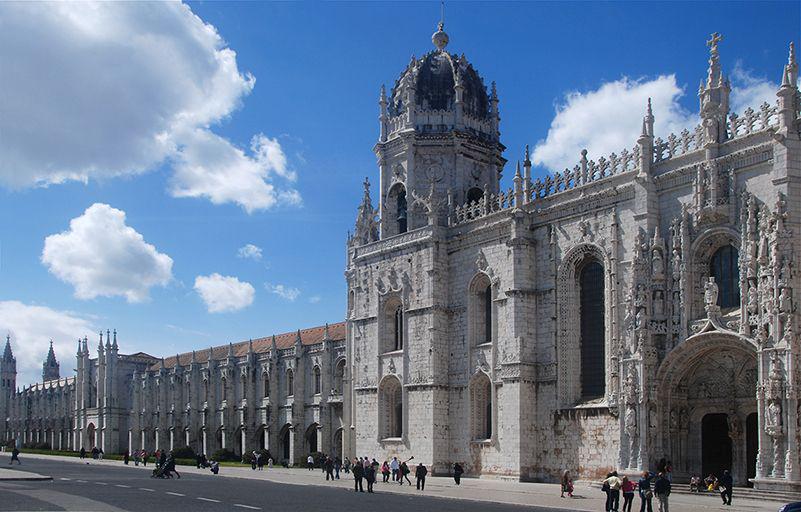
The Jerónimos Monastery
The Jerónimos Monastery
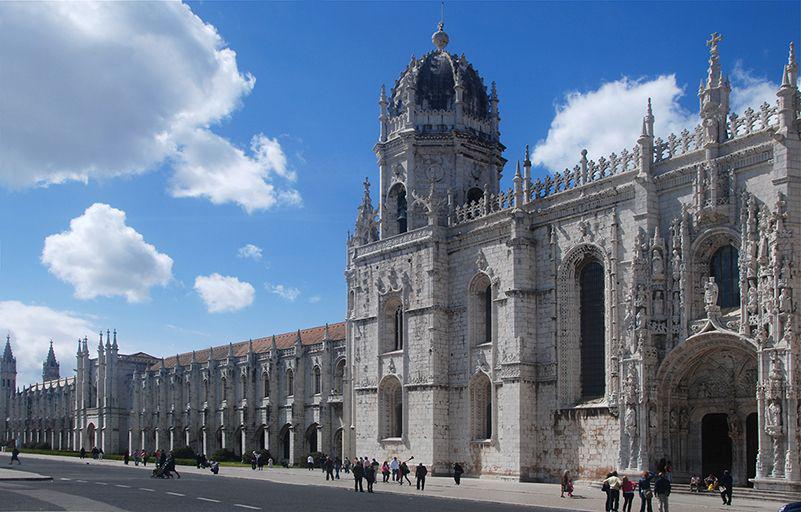
This is a tourist attraction of Lisbon, which should be mentioned first in this list. The Jerónimos Monastery is the most visited tourist attraction in Portugal. The number of visitors is steadily growing every year. In 2014, the Monastery of Jeronimos was visited by 807,845 visitors. It is under the protection of UNESCO as a monument of the World Heritage and listed in Seven Wonders of Portugal.
The Tower of Belém
The Tower of Belém
The Tower of Belém is the most recognisable sighting of Lisbon, built during the times of the Great Discoveries. Also classified as UNESCO World Heritage Site since 1983 and listed in Seven Wonders of Portugal.
Museums
In Lisbon, there are many different museums, and on the first Sunday of the month, the entrance to many of them is completely free! Art lovers should visit the museum of Galust Gulbenkian. There is one of the world’s best private collections, collected by the oil tycoon.
A collection of contemporary art is presented in the museum of Berardi (the entrance is free, in the halls there are Wi-Fi and air conditioning).
To penetrate the history of the Portuguese empire, be sure to explore the spacious rooms of the Maritime Museum, which presents a collection of ship models from the first caravels to the royal yachts.
Fashion connoisseurs should visit the free museum of fashion and design (MUDE) on Rua Augusta, where one can trace design history of the last decades.
The most visited museum in Lisbon is National Coach Museum. Previously, in this huge hall was a riding academy, where horses ran and the royal children learned the art of riding. Today, here is the world’s richest collection of horse-drawn carriages. There are coaches, tarantas, charabancs and cabs of different times from all over Europe, but the highlight of the program is the state coaches. The entrance to the museum is absolutely free.
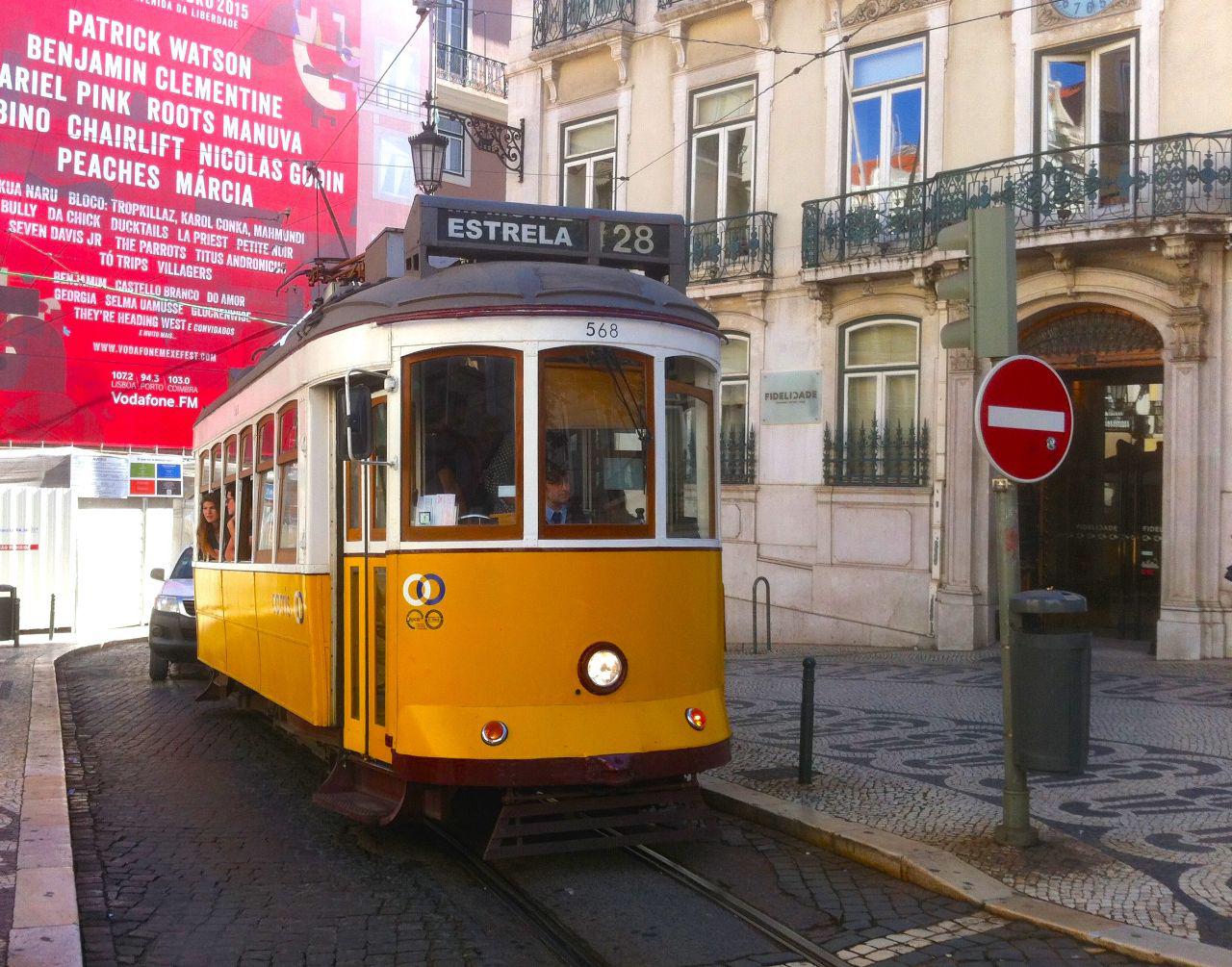
Lisbon Tram 28
The famous Lisbon Tram 28 route (28E, where E – means elétrico – tram) is rightly considered a tourist and described in every Lisbon guide. This old route is popular not only among tourists, but also among local residents, as it passes through the whole city centre and the old districts of Lisbon. This is a very fascinating attraction.
The territory of LX Factory
This is the creative centre of Lisbon in the industrial decorations of the XIX century. The territory of the former factory in the Alcantara area has now become a haven of artists, designers and musicians, and the brick walls are covered with graffiti. Here they sell books, interior items, democratic clothes, and also drink and have a snack in relaxed atmosphere.
Bordallo Pinheiro Garden
Bordallo Pinheiro Garden
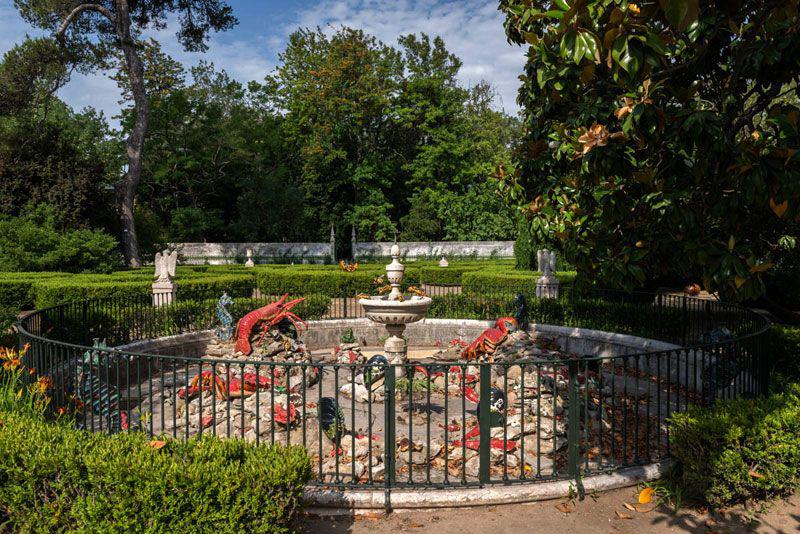
Rafael Bordallo Pinheiro is the Lisbon Antonio Gaudi. Works of the artist and ceramist with unlimited imagination are collected in the park in the north of Lisbon: giant lizards, sea creatures, and a black cat are located among bushes and fountains.
Many parks in Lisbon are free of charge. At your disposal there is a countless number of viewing points, cosy corners with the best urban views and the whole Lisbon – alive, blooming and magical at any time of the year. If you are planning to visit Lisbon with your loved one, click primedating.comto find out about the romantic places of this wonderful city.
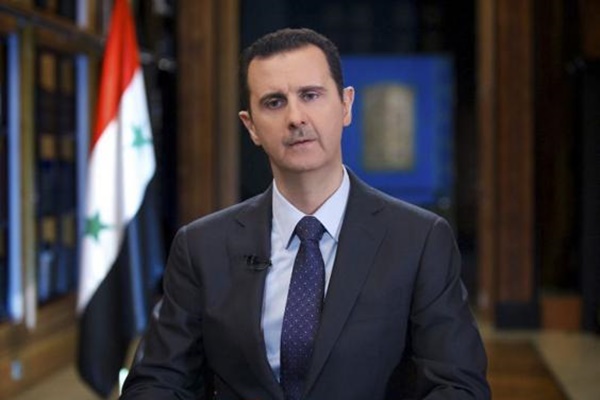
Assad says if Iran wants to establish a military base in Syria, the Arab country will have no problem with that because the relations between Tehran and Damascus are strategic.
“There are no Iranian military units in Syria and there are only Iranian advisers in the Arab country, because Syria had a long history of relations with the Islamic Republic even before the war, and the two sides have strong military relations,” pointed out.
Speaking in an interview with Al Alam News Network, he further noted that the involvement of Americans and Zionists has prevented peace in southern Syria.
Assad went on to say that the Zionist regime continuously bombs Syrian forces on the southern front to directly support the terrorists.
This is done in a way that the artillery and air force of this regime are working as the artillery and air force of the terrorists, he underlined.
The Syrian president also stressed that he will visit Iran at the earliest and nothing can prevent this trip.
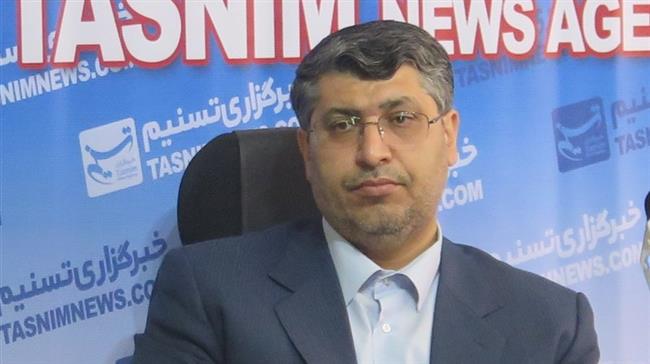
Ali Akbar Karimi said Korean and European companies which have been active in Iran’s market since the nuclear deal came into force in 2016 have already taken full advantages of the economic opportunities in the country.
In an interview with Tasnim News Agency, Karimi expressed regret that a number of these companies have decided to quit their operations in Iran following the US withdrawal from the Joint Comprehensive Plan of Action.
“Though the hasty decision by these companies to leave Iran will not hamper Iran’s economic development and growth, it will create some problems for certain economic sectors of the country. Therefore it is up to the government to adopt some appropriate measures against the decision and compensate for the upcoming economic loss,” he said.
Karimi also called on watchdog organizations in Iran to deal seriously with companies violating regulations and smuggling various models of foreign vehicles into the country.
“If the foreign car companies leave Iran without being punished, the psychological shock of their quit will inflict a heavy blow on Iran’s domestic economy,” he said.
The price of various models of vehicles has risen between 20 million and 400 million Rials over the past two weeks. This comes as a number of leading foreign car manufactures including Peugeot, Citroen, and Hyundai have announced their decision to leave Iran. Meanwhile, some other manufacturers have limited their output, and this has led to a further rise in prices.
In a statement on Thursday, the Iranian spokesman censured the attack and expressed concern about worsening humanitarian conditions in the impoverished country.
Tehran has always emphasised that there is no military solution to the Yemeni crisis, Qassemi said, adding that the aggressors must end their assaults.
“Such crimes will shatter the hopes for political endeavours and will add to the complexity of the situation,” he added.
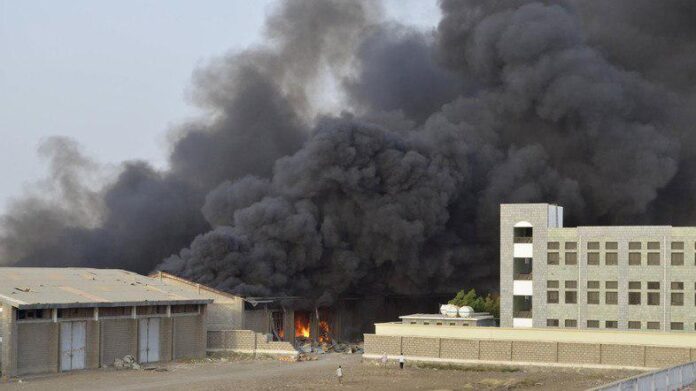
Saudi-led coalition’s warplanes and warships pounded Yemen’s Hodeidah for a second day on Thursday, to seize the country’s main port in the largest battle of a war that has created the world’s worst humanitarian crisis.
Hodeidah is the main lifeline for food aid to a country where 8.4 million people are on the verge of starvation in what potentially would be the world’s worst famine for generations.
Speaking to reporters at the end of his three-day visit to South Africa, Zarif expressed regret over the Canadian House of Commons’ vote against relations with Tehran and said the move is against the interests of Canada.
“Unfortunately, there are still some illusions and false images of Iran in Canada,” he said.
Although the government has changed in Canada and a new administration has stepped into the political fray with a new approach towards the world, the radicals are still active in the country, exerting their political pressure on the Trudeau government, he was quoted as saying in a report by Fars News Agency.
The Islamic Republic of Iran maintains that such policies are against the interests of Canada and do not make any contribution to international peace and security, he added.
“They remain silent towards crimes committed by their regional allies but blame the Islamic Republic for the very crimes made by their allies,” he said.
The Iranian foreign minister said Iran has always stood ready in the campaign against terror and the situation in the region would be totally different if Iran didn’t put in hard efforts to create peace and security.
“We hope that the Western countries don’t get overwhelmed by the political propaganda spread by the enemies against Iran, don’t contribute to such propaganda and adopt an independent policy towards Iran,” he said.
He also said it is regrettable that the Canadian government has decided to adopt such a policy towards Iran.
Liberals in Canada’s House of Commons passed a strongly-worded conservative motion condemning the Iranian government on Tuesday. The move saw Prime Minister Justin Trudeau call on the government to “abandon its current plan and immediately cease any and all negotiations or discussions” to restore diplomatic relations, and to immediately list the IRGC as a terrorist entity under Canada’s Criminal Code.
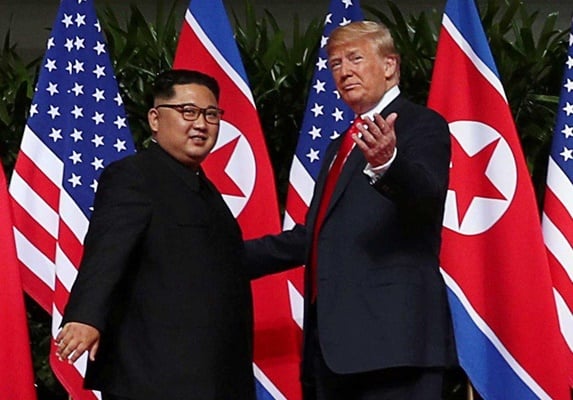
The meeting between Trump and Kim came in a situation that the verbal attacks between the two head of states could have prevented the visit. However, they finally met in Singapore on June 12. The meeting made the headlines in the world and had a lot of repercussions.
Nevertheless, there are still doubts about the future of negotiations. Trump and Kim signed a document after their visit, and it is said that North Korea has accepted nuclear disarmament, but the question is that would Trump be able to handle Kim Jong-un’s requests to prevent the failure of talks?
Khabar Online news website has conducted an interviewwith Ardeshir Sanai, a university lecturer and international affairs expert on the issue:
Q: What was the importance of meeting between Trump and Kim Jong-un? What makes this visit historic?
A: This meeting was one of the most significant events that occurred in the 21st century and could be considered as a milestone in the history of international relations. The significance of this meeting doubles when we see the two leaders are radicals. The president of the United States, who has a particular viewpoint on world affairs and foreign policy in the United States, has shown he is not willing to withdraw from his previous positions that he had in his campaigns. On the other hand, the North Korean leader, after his father’s death, has always been one of the most radical decision-makers in North Korea, both in domestic and foreign affairs, and it seemed that he would not show the slightest flexibility.
Q: Kim Jong-un has shown he does not believe so much in changes. Do you think this visit can be a start for future changes?
A: The visit will have a very significant impact on North Korea’s political fate, its regime, the issue of nuclear weapons, and the crisis on the Korean Peninsula, and it seems Trump is winning one of the greatest achievements of his presidency. On the other hand, North Korea will eventually be disarmed and possibly move towards the end of the two-Korea era and begin the process of reunification with the South.
Q: Do you think that this move can be compared with Iran’s nuclear agreement process, and is it expected to improve Iran-US relations?
A: It seems that the visit could affect the Iran-US relationship, and as we saw, Trump referred to Iran in his remarks after the historic meeting. With the withdrawal of the United States from the JCPOA and the imposition of sanctions by the due date, this meeting could lead to further US pressure on the Islamic Republic of Iran. In this way, the United States would resolve almost all the problems with the countries that George W. Bush called the “Axis of Evil”, and it remains to be seen what will happen to the Iran’s case.
Q: Do you think this meeting and agreement will be sustainable? What are the doubts about it?
A: No agreement has yet been reached, and this is the beginning for negotiations in the future. But, given North Korea’s conditions, there is no solution left for the country, and it ought to finally move towards accepting the other party’s demands after several decades. The economic conditions and the domestic situation in North Korea are so devastating that someone like Kim has been forced to come to the negotiating table to resolve problems with the United States.
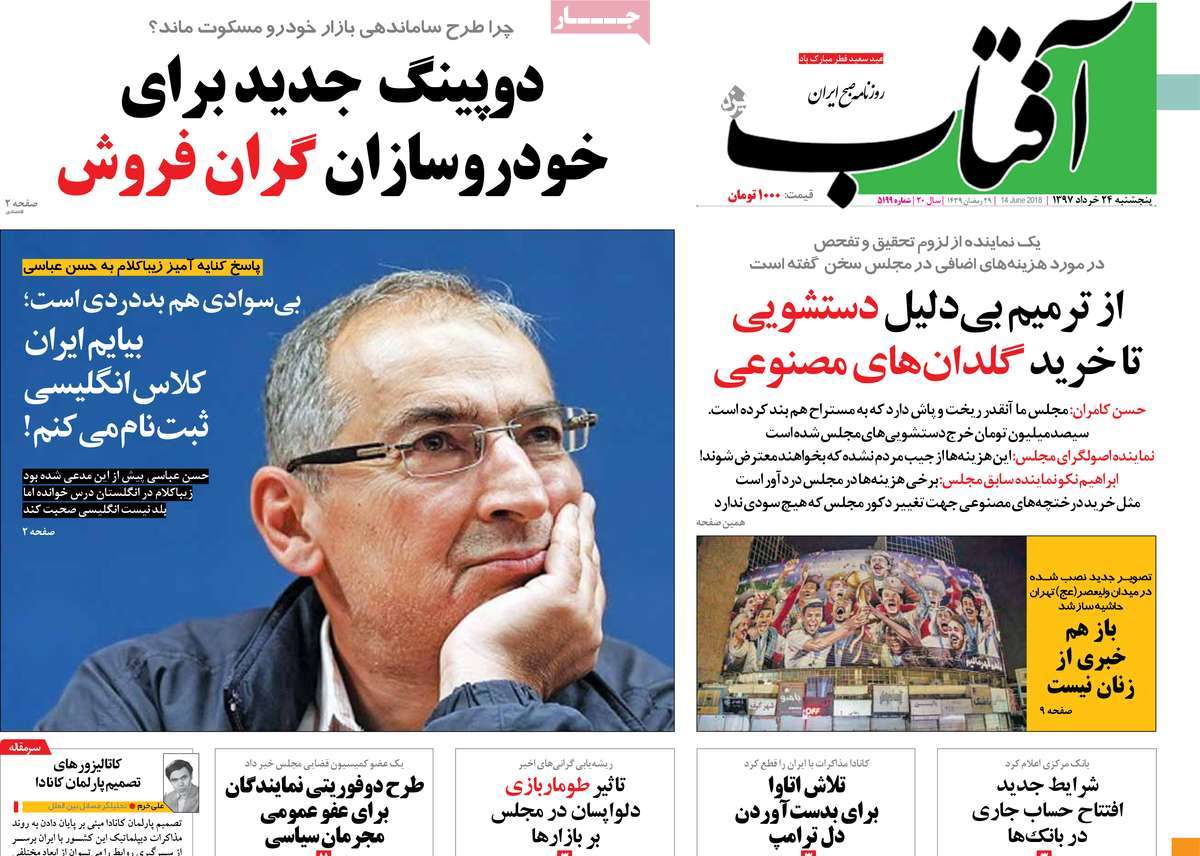
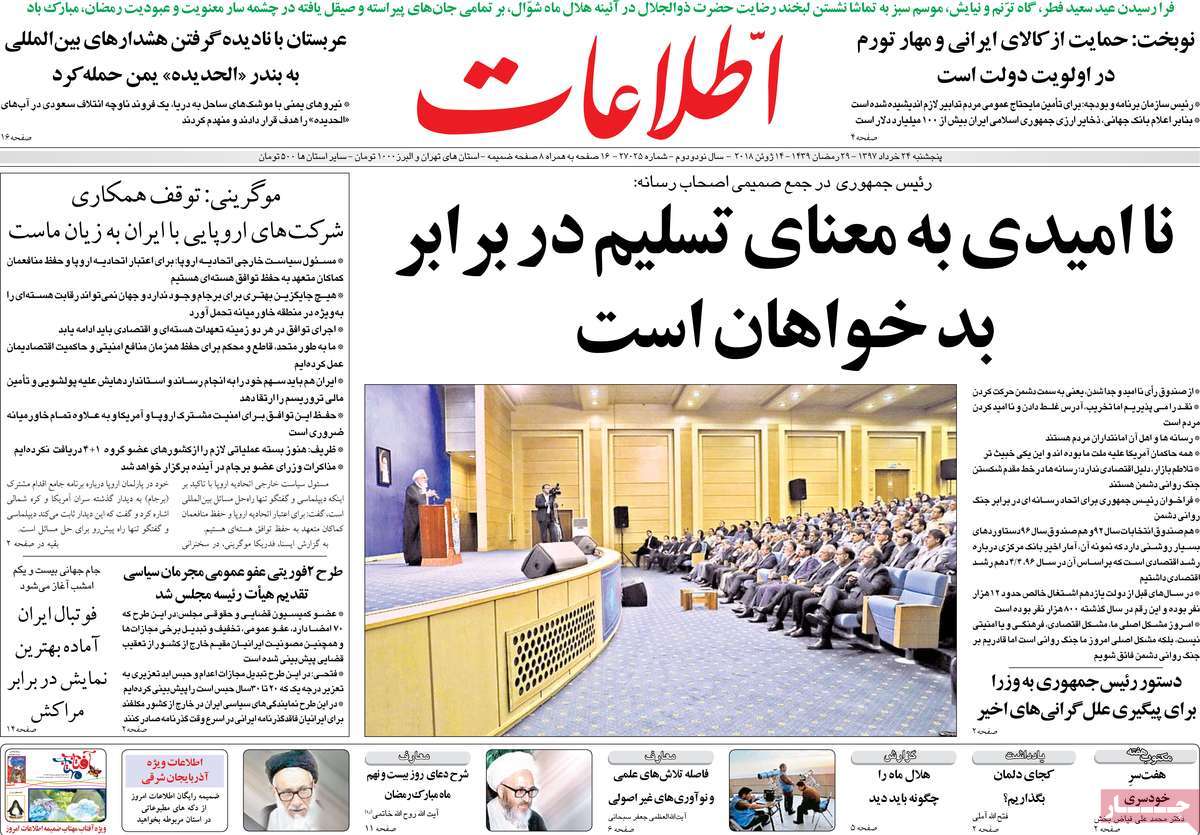
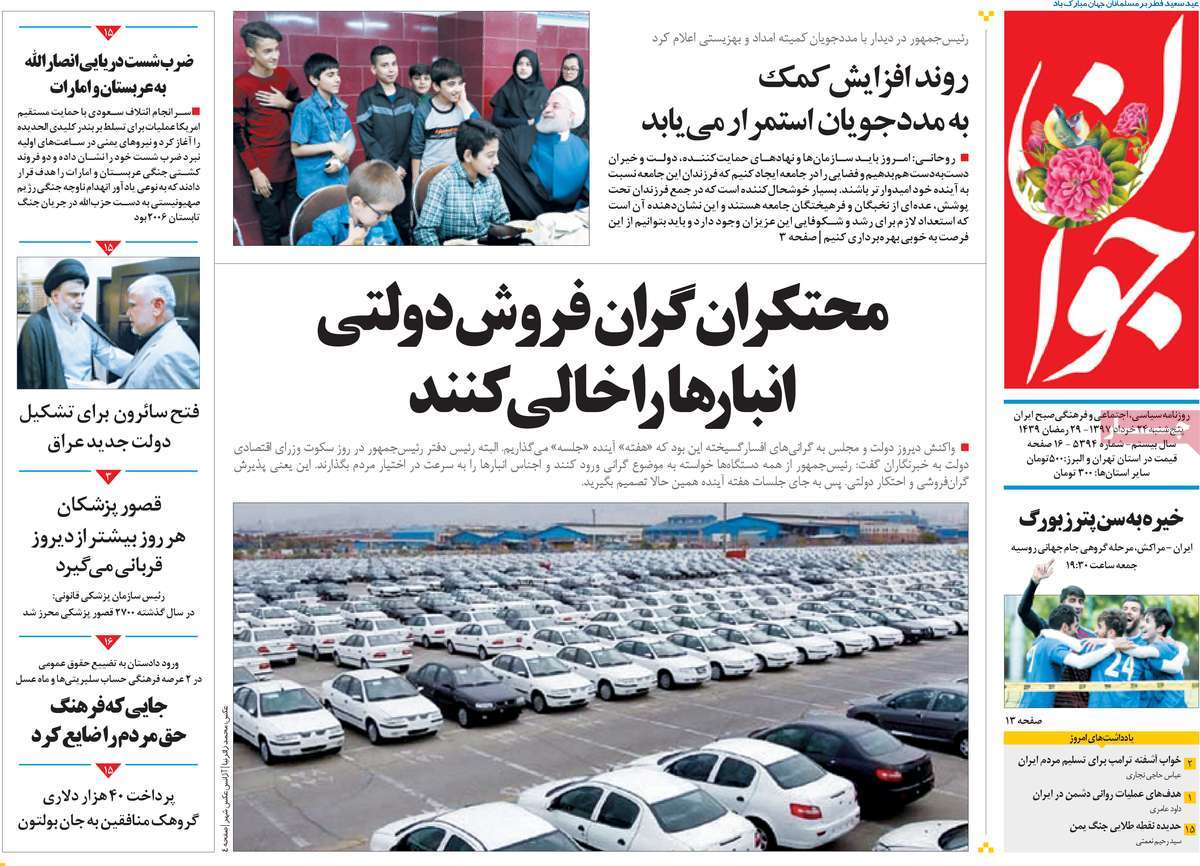
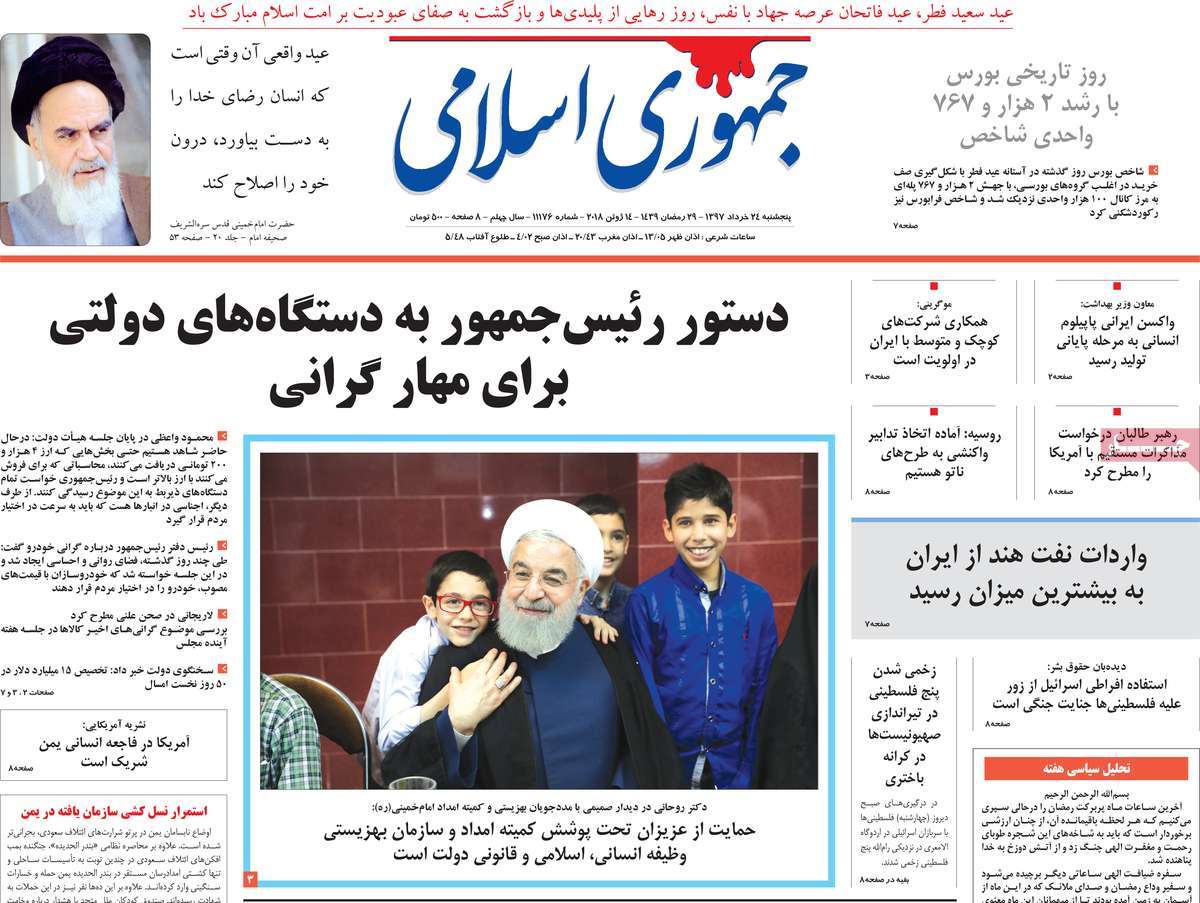
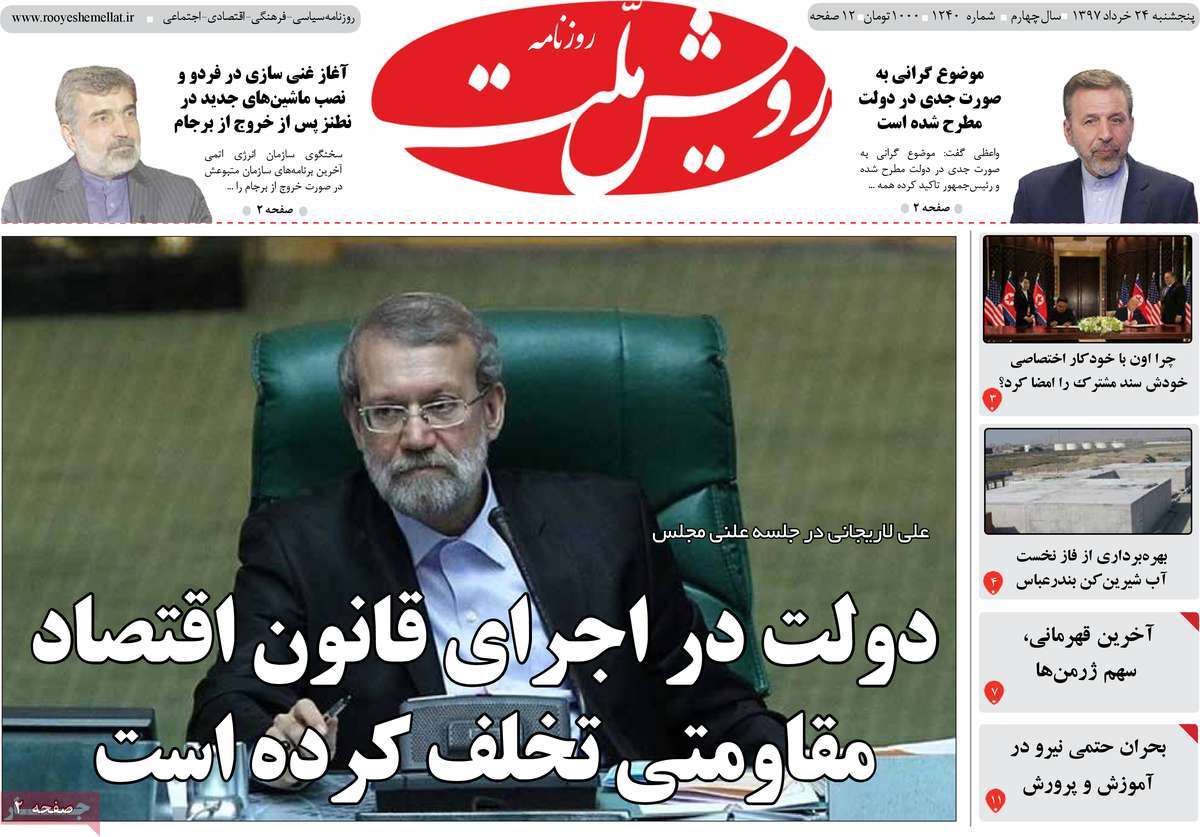
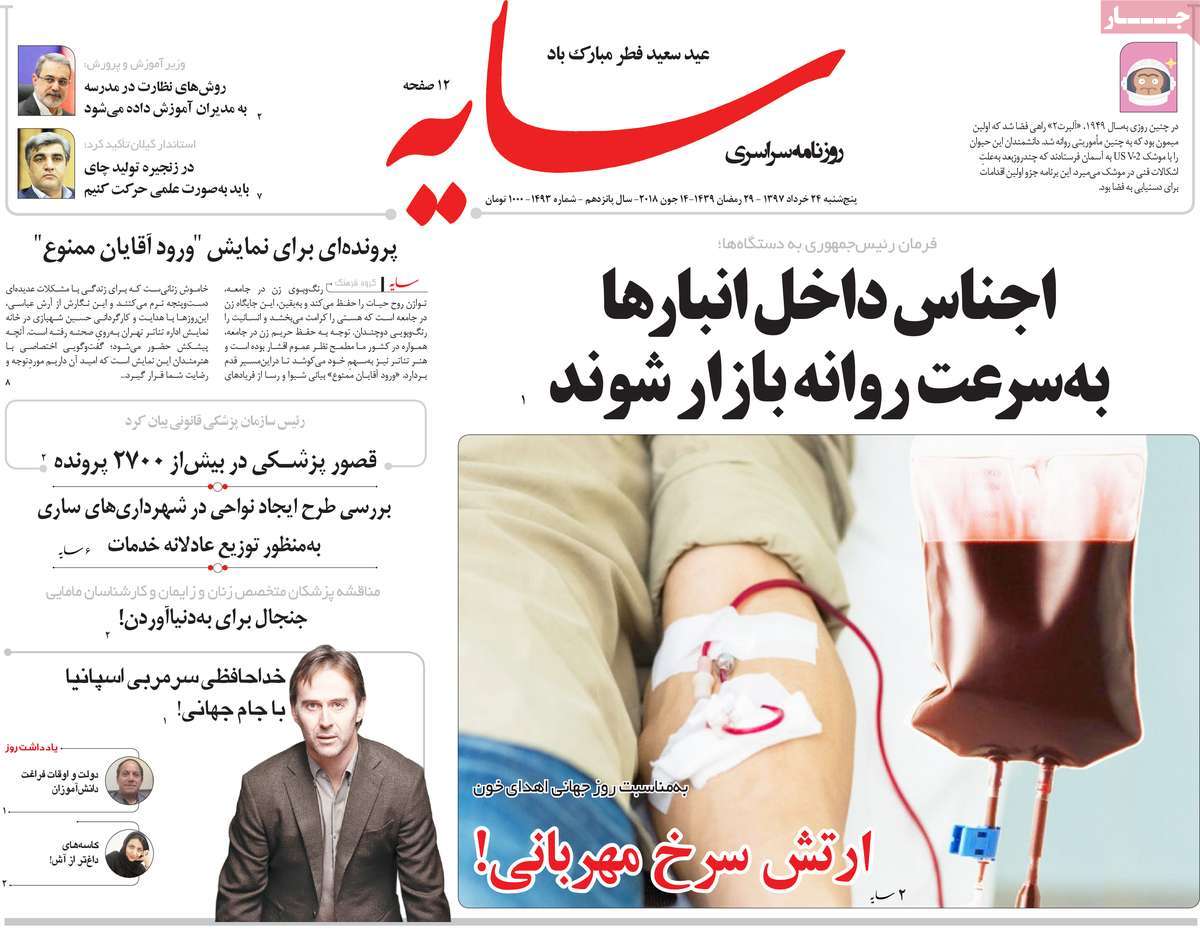
A top story today was the recent price hikes across the country and the government’s plan to control them by immediately releasing the goods stored in warehouses.
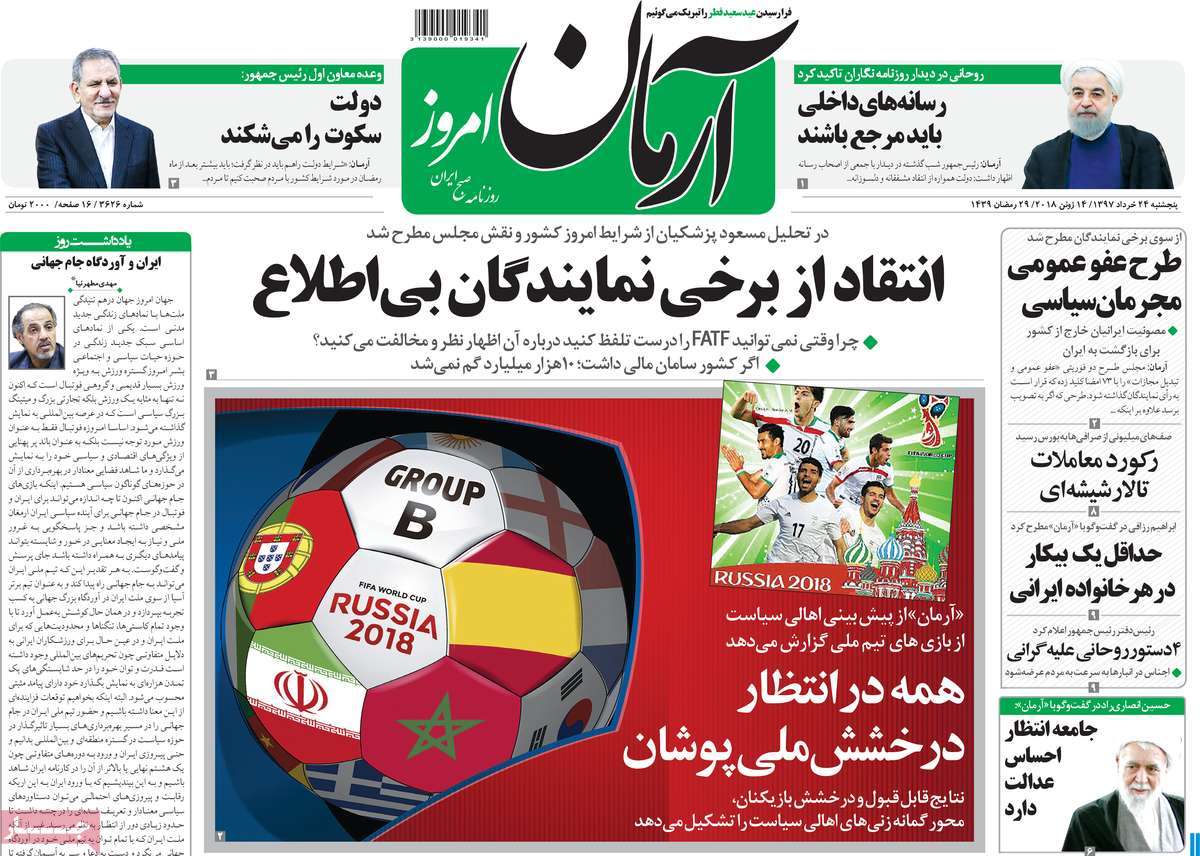
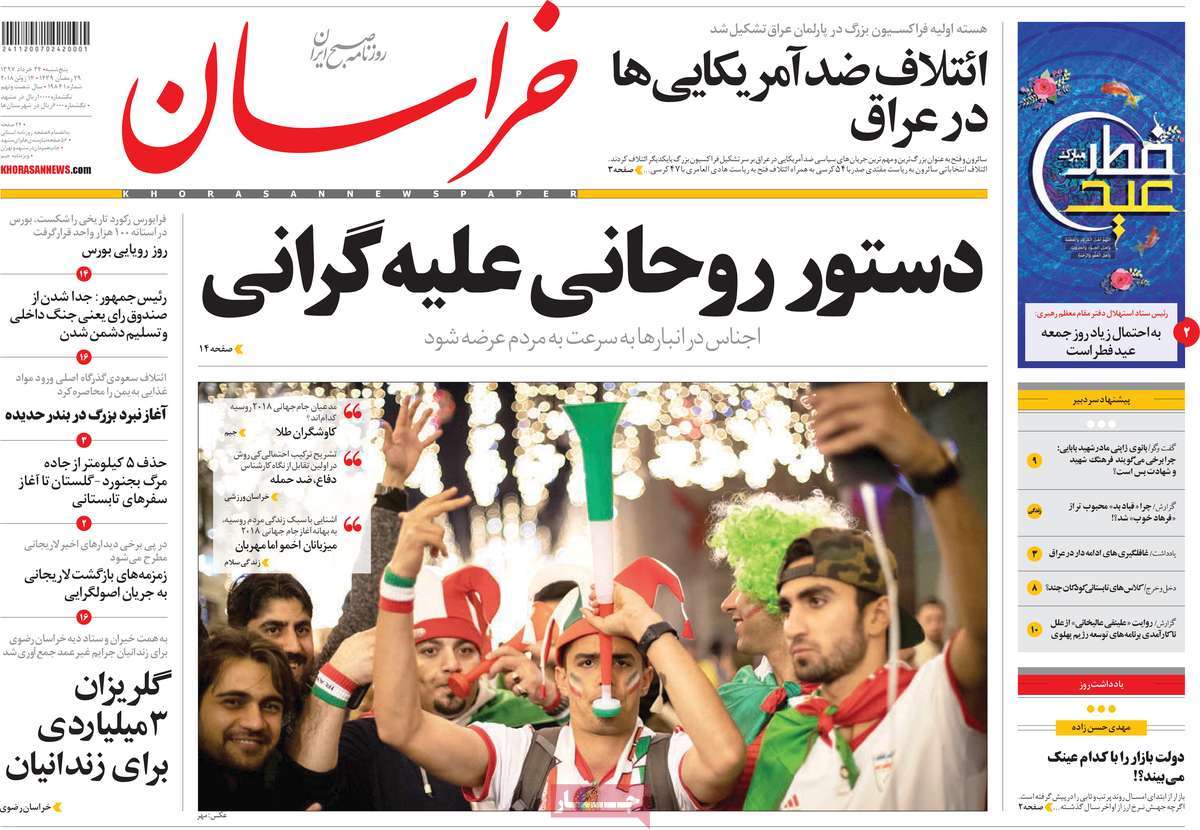
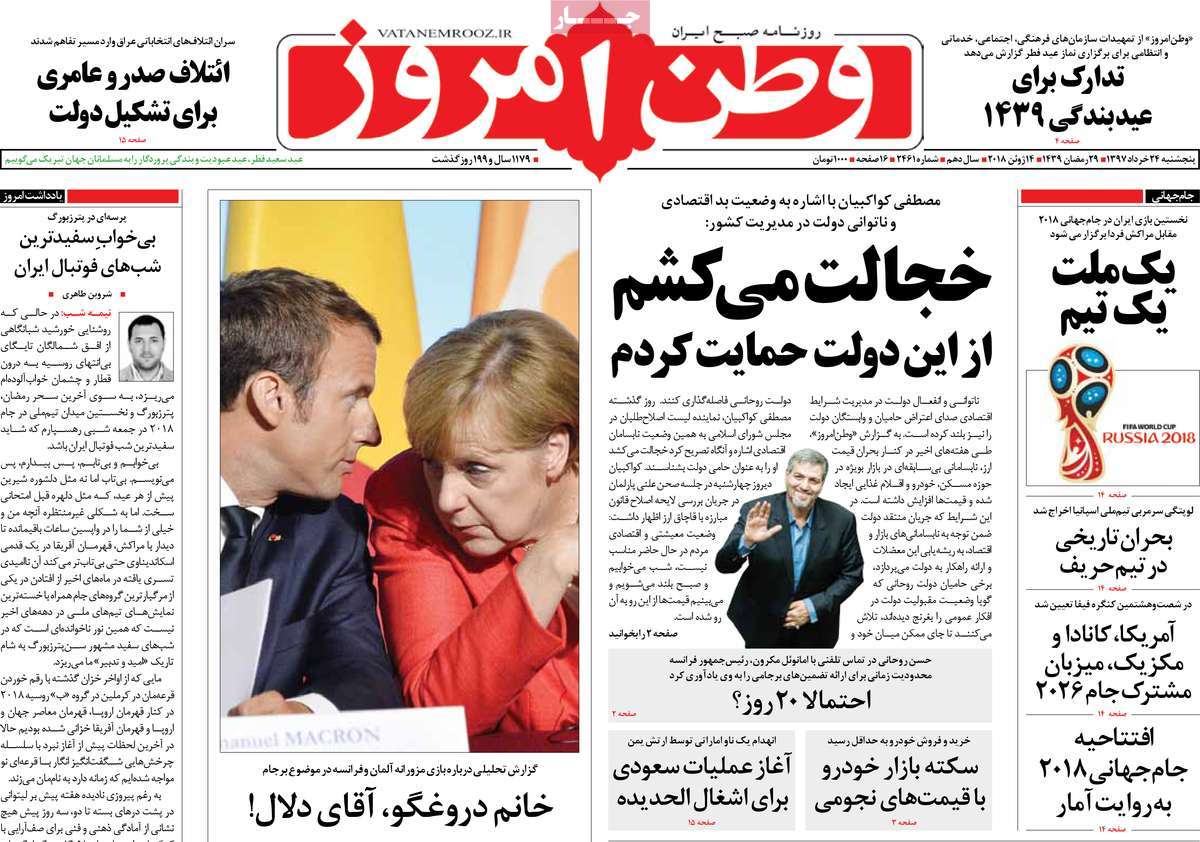
Several papers also covered the upcoming match of the Iranian national football team (Team Melli) against Morocco in the first round of the FIFA World Cup’s group stage. The match is to be held on Friday in Russia’s St. Petersburg, and everyone in Iran is eagerly waiting for it.
Remarks by President Hassan Rouhani in a meeting with a group of journalists also received great coverage.
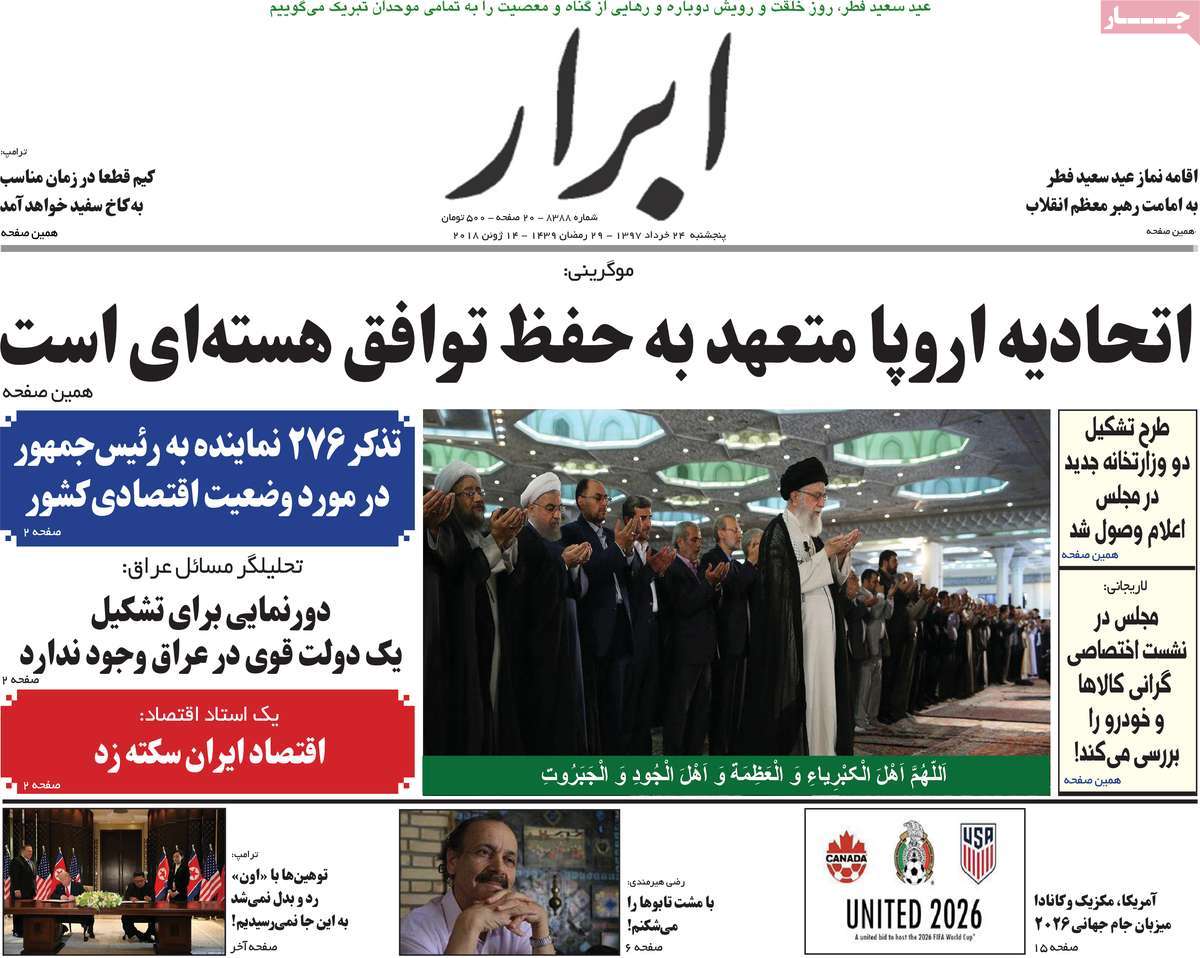
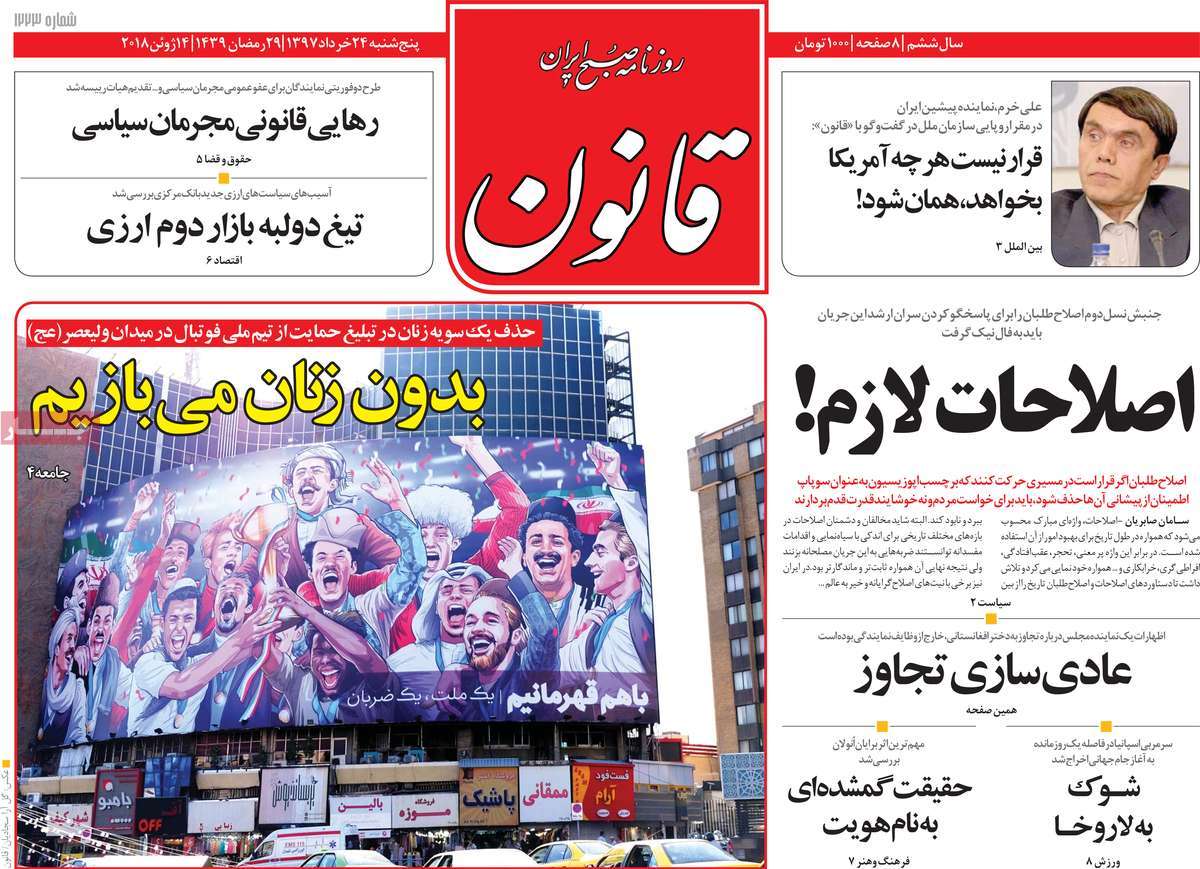
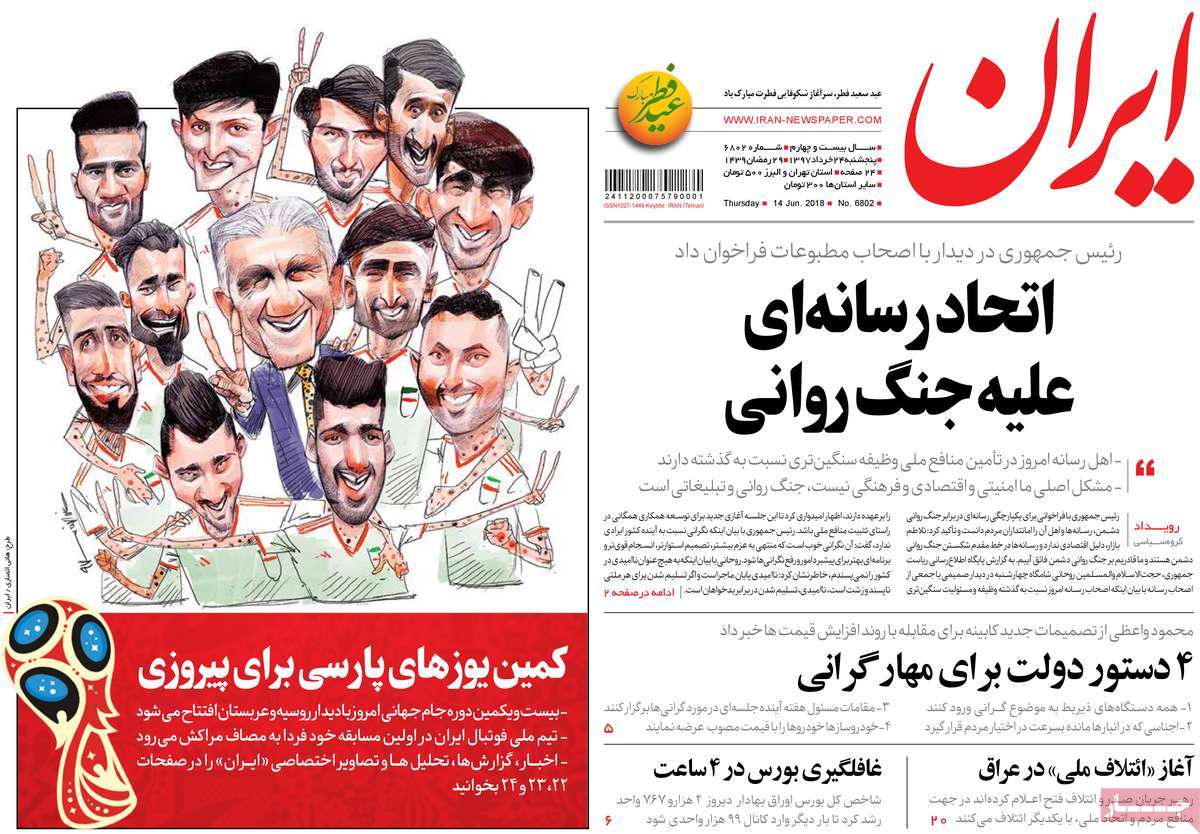
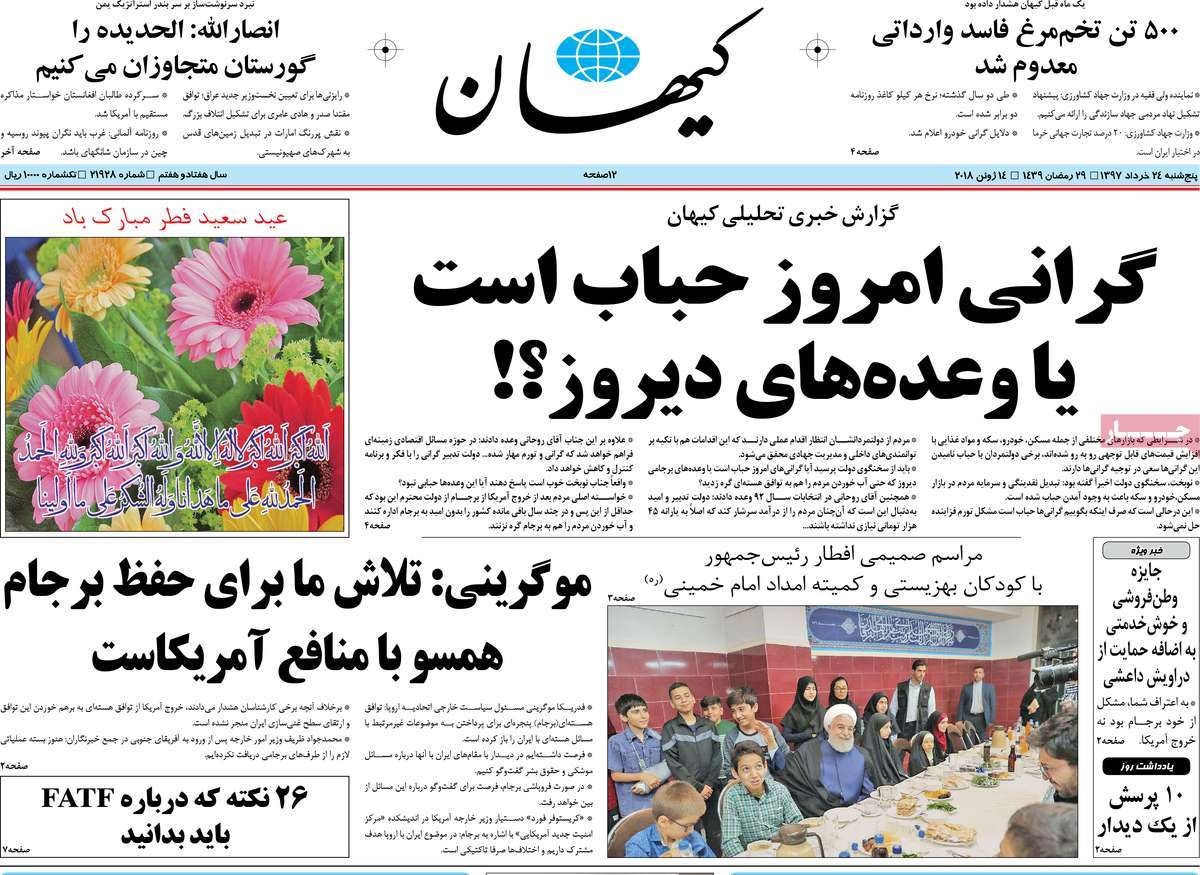
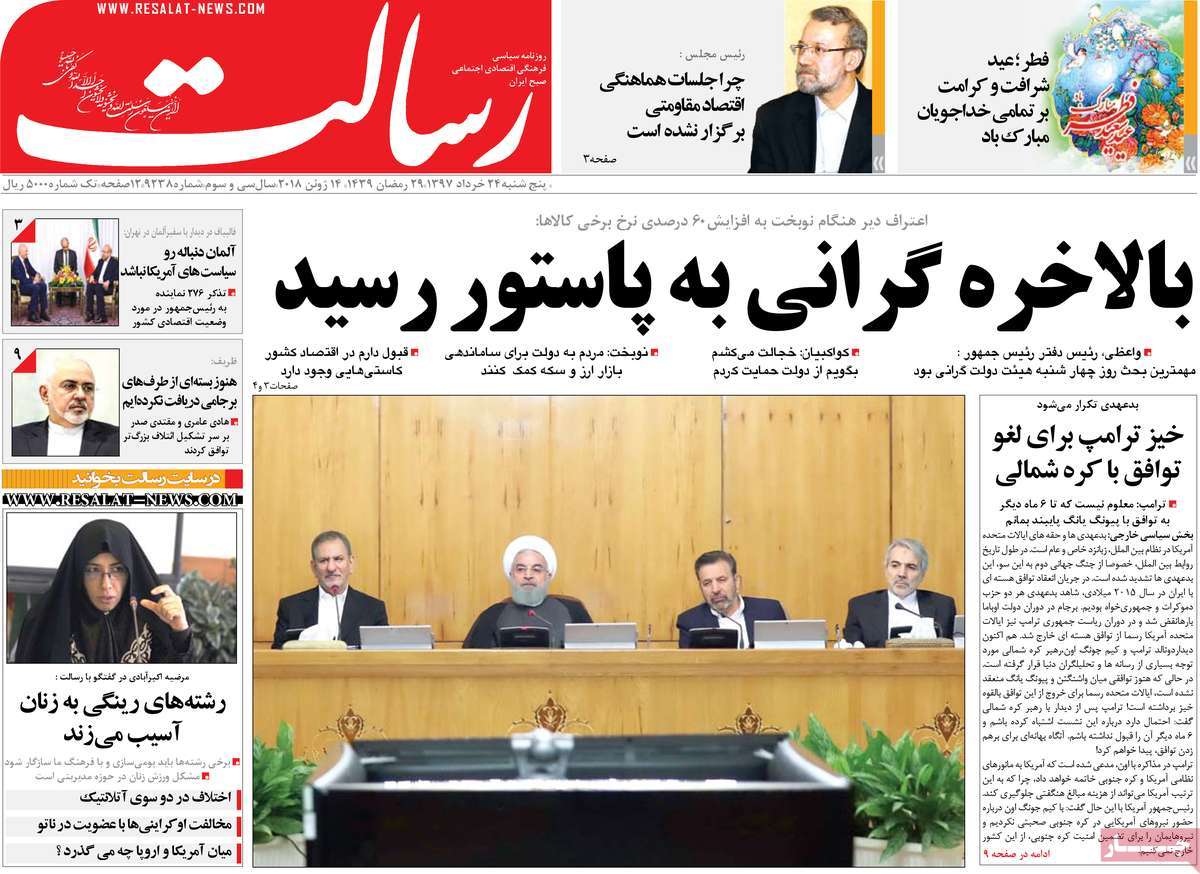
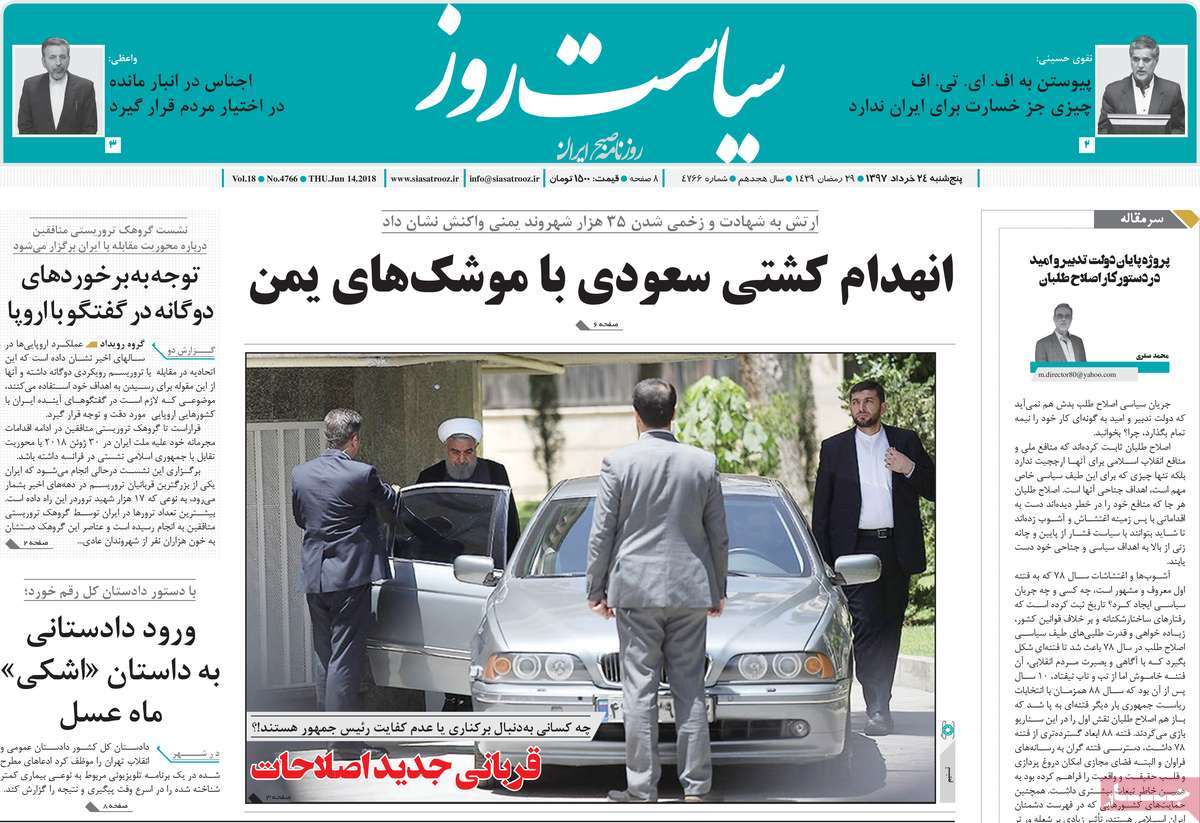
The above issues, as well as many more, are highlighted in the following headlines and top stories:
Abrar:
1- Mogherini: EU Committed to Preserving Iran Nuclear Deal
2- 276 MPs Warn President Rouhani over Iran’s Economic Conditions
3- Iraq Analyst: No Prospect for Formation of Strong Government in Iraq
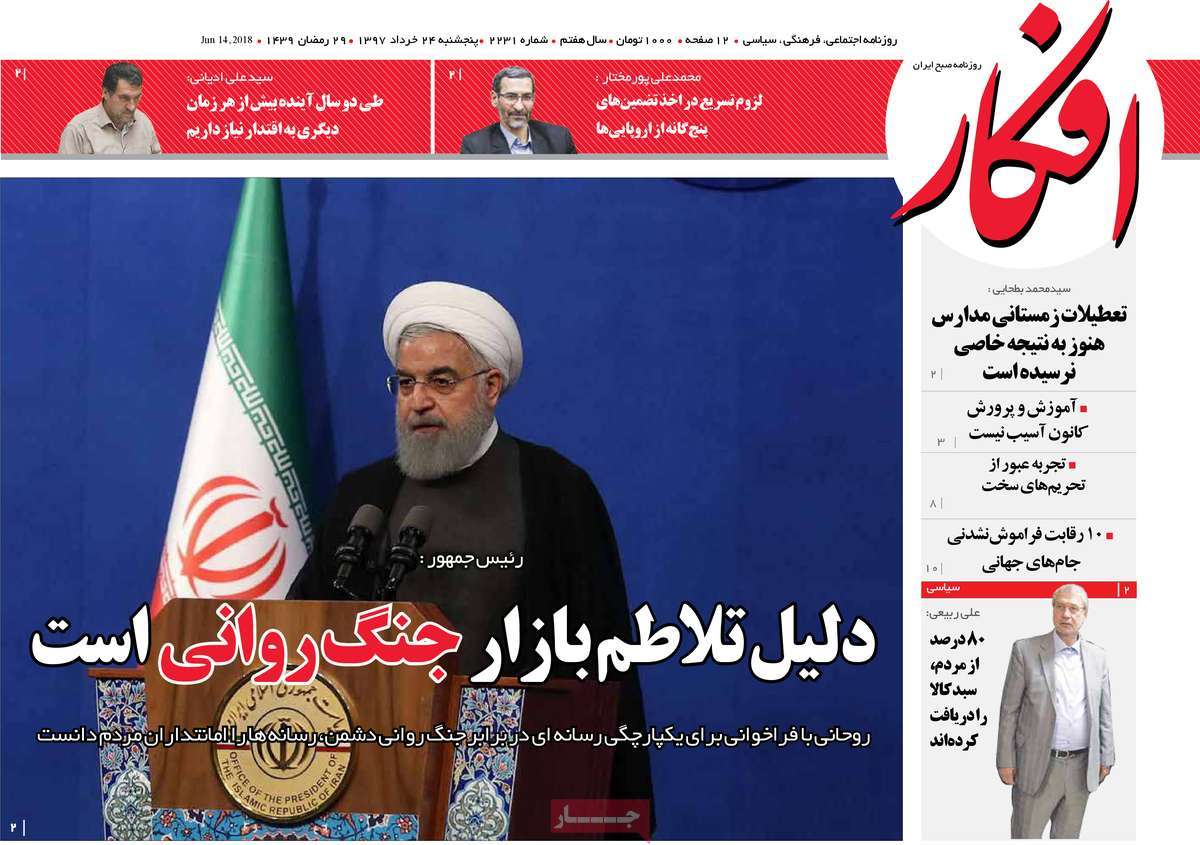
Afkar:
1- Rouhani: Psychological War Main Reason for Turbulence in Iran Market
President Calls for Unity among Media in Fight against Enemy’s Psycho-War
Aftab-e Yazd:
1- Car Market Crisis: Iranian Carmakers Selling Their Products at High Prices
Arman-e Emrooz:
1- Everyone Expecting Team Melli to Show Brilliant Performances in FIFA World Cup
Ebtekar:
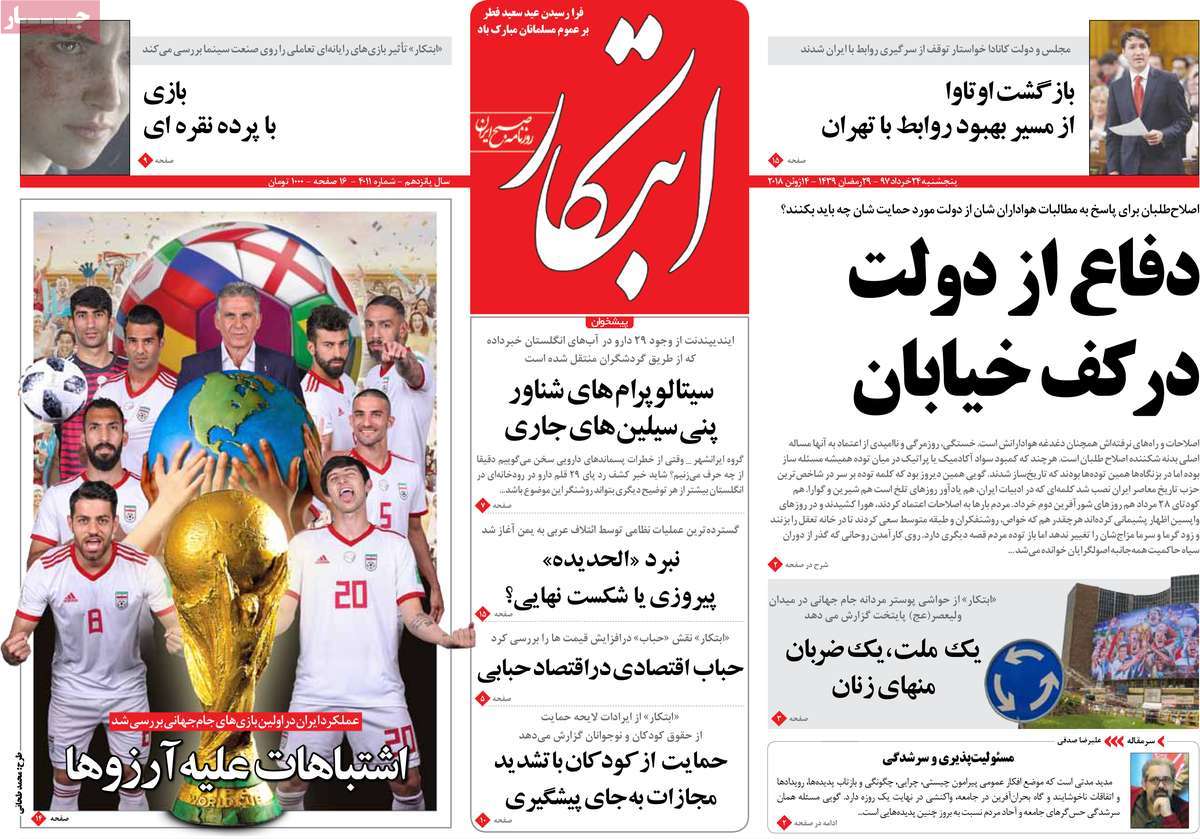
1- Ottawa Stops Negotiations with Iran over Restoration of Ties
Canadian Parliament, Gov’t Calls for Cessation of Talks on Resuming Relations
Etemad:
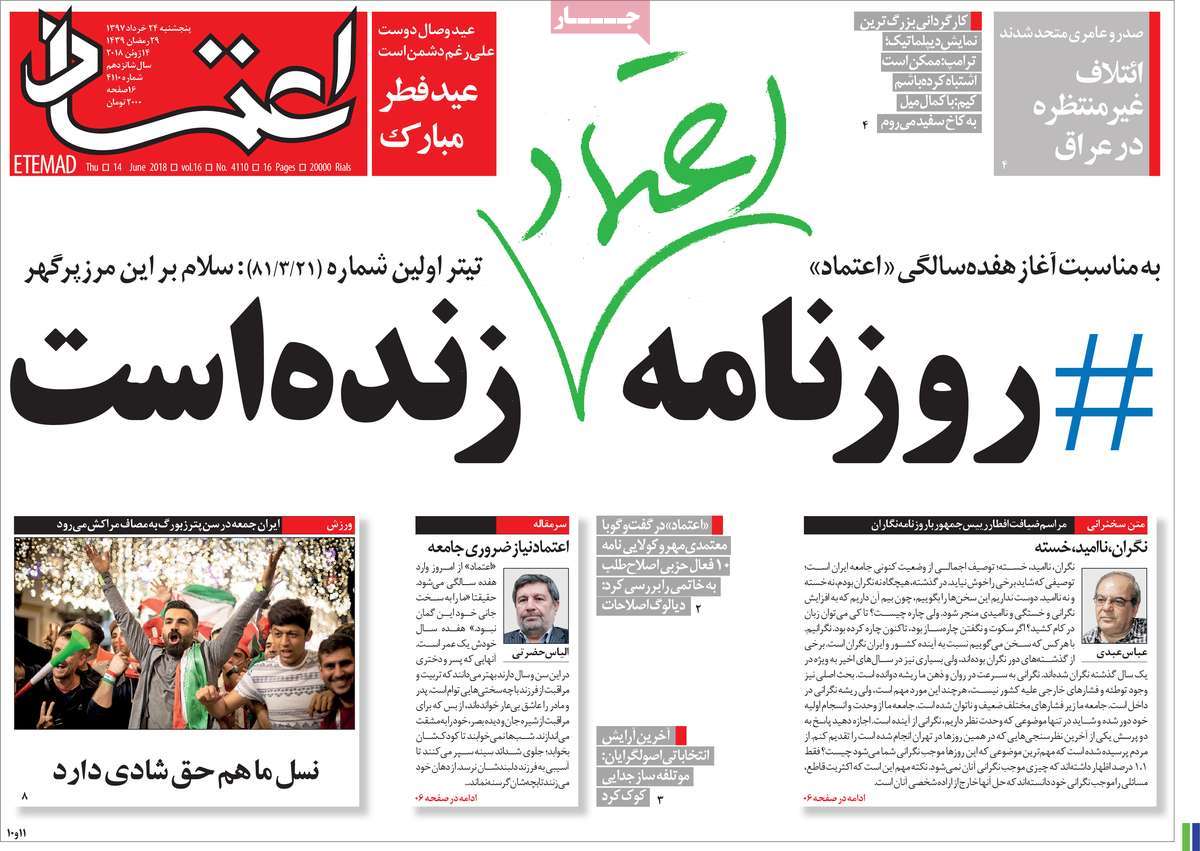
1- Unexpected Alliance in Iraq: Sadr, al-Amiri Become Allies
Ettela’at:
1- Rouhani to Journalists: Disappointment Means Submitting to Ill-Wishers
2- Saudi Arabia Attacks Yemen’s Hudaydah Port in Defiance of Int’l Warnings
Ghanoon:
1- We’ll Lose without Women
Tehran Billboard Showing Male Iranian Fans Reads ‘We’ll Be Champions Together’
2- Iranian Diplomat: International Community Not Supposed to Fulfil Whatever US Wants!
Iran:
1- Persian Cheetahs Poised for Victory
2- Government to Implement 4 Measures to Control Price Hikes
Javan:
1- Those Storing Goods in Warehouses to Sell Them at Higher Prices Must Release All of Them
2- Iran to Hold First World Cup Match against Morocco in St. Petersburg
Jomhouri Eslami:
1- India’s Import of Iran’s Crude Oil at Highest Level Ever
Kayhan:
1- 500 Tonnes of Rotten Imported Eggs Destroyed
2- Which One’s a “Bubble”: Today’s Price Hikes or Promises You Made Yesterday?
3- Mogherini: Our Efforts to Save Iran Nuclear Deal in Line with US Interests
4- Iran President Attends Friendly Iftar Ceremony with Orphans
Khorasan:
1- Coalition of Anti-American Politicians in Iraq
Resalat:
1- Government Finally Acknowledges Soaring Prices
Gov’t Spokesman’s Late Confession that Prices of Some Goods Have Increased by 60%
Rooyesh-e Mellat:
1- Beginning of Enrichment in Fordow, Installing New Machines in Natanz after JCPOA Withdrawal
2- Larijani: Gov’t Has Broken the Law in Implementing Resistance Economy Principles
Sayeh:
1- Rouhani Orders Relevant Bodies to Immediately Sell Goods Stored in Warehouses
Siasat-e Rooz:
1- Saudis’ Ship Destroyed by Yemeni Missiles
Yemeni Army Reacts to Death, Injury of 35,000 Yemeni Civilians
Vatan-e Emrooz:
1- Ms Liar, Mr Middleman! A Report on Hypocritical Roles of Germany, France on JCPOA
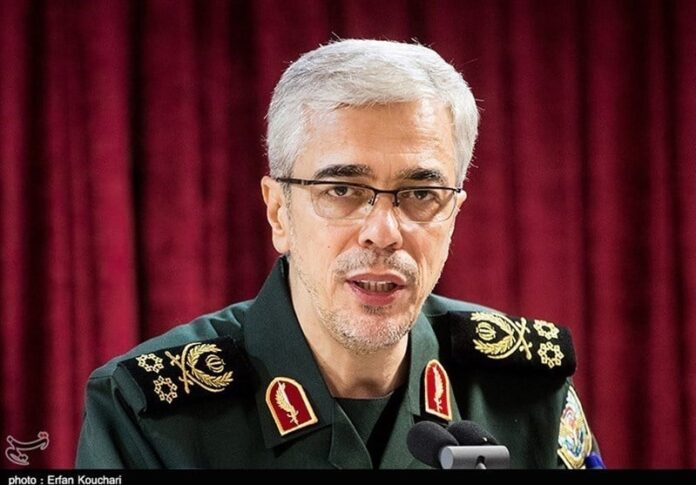
The top Iranian commander sent separate messages to the military officials of Islamic countries on Wednesday, offering warm wishes on the occasion of Eid al-Fitr, which celebrates the end of Ramadan, the holy Muslim month of fasting.
In his message, Major General Baqeri expressed the hope that increasing unity within the Islamic Ummah (society) and promotion of friendly relations among Muslim nations and armed forces would foil the plots of enemies against Islamic territories, particularly against the holy city of al-Quds (Jerusalem), and establish sustainable peace and calm in the Islamic world.
Known as the Feast of Breaking the Fast, Eid al-Fitr is an important religious holiday celebrated by Muslims all around the world.
The observance traditionally begins with the sighting of the new moon of the 10th month of the Islamic lunar calendar.
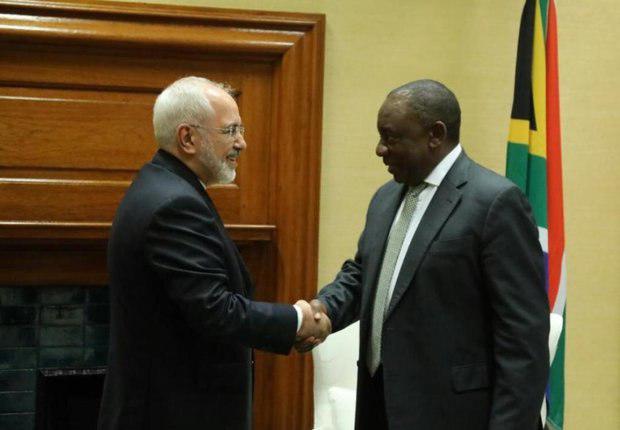
In a Wednesday meeting, Zarif and South African President Cyril Ramaphosa exchanged views on various dimensions of bilateral ties as well as key regional and international questions.
The top Iranian diplomat also held a joint meeting with five South African Cabinet ministers (foreign affairs, defence, development, transportation, trade).
During the talks, they discussed ways of expanding and boosting mutual relations.
South African Visit’s Achievement
Speaking to reporters after the end of his three-day visit to South Africa, Zarif said he held concise and constructive negotiations during his stay in Pretoria.
“We held good talks on expansion of mutual relations and agreed to assign the two sides’ expert committees to press ahead with bilateral relations,” he said.
Zarif said the Iranian delegation held an important meeting with its South African counterpart at the level of experts and discussed a number of areas including trade, transportation and banking relations.
He also described his meeting with South African President Cyril Ramaphosa on Wednesday as good and constructive and said during the talks the African president underlined the urgency for expansion of the two sides’ relations.
Zarif said the president also assigned the South African expert committees as well as related officials to conduct studies in the mentioned areas.
According to Zarif, an expert delegation from South Africa is expected to visit Iran within the next few weeks to finalise deals aimed at enhancing mutual relations.
“In overall, I felt a strong political will on the South African side to expand bilateral ties. There are appropriate grounds for enhancing relations and hopefully the goal will be achieved during the upcoming visit of South African delegation to Iran for further talks,” he said.
Zarif described South Africa as a very close ally of the Islamic Republic which has always stood by Iran’s undeniable right for use of peaceful nuclear energy.
Zarif arrived in Pretoria on Tuesday at the head of politico-economic delegation.
He last visited South Africa back in October 2017 to attend the 13th meeting of the two sides’ Joint Commission.
Iran and South Africa share historical bilateral relations. Iran supported the South African liberation movements.
The Islamic Republic severed its ties with South Africa in 1979 and banned doing any business with the African country in protest against its apartheid policies. However, in January 1994, Tehran lifted all trade and economic sanctions against South Africa and diplomatic relations were reestablished soon.


 Lisbon Tram 28