Wednesday, December 24, 2025
Home Blog Page 3582

China to Make $2bn Investment in Iranian Oil Refinery

China to Make $2bn Investment in Iranian Oil Refinery

Mazandaran Province’s Director General for Economic and Financial Affairs, Mousa Qaempisheh, said the Chinese company has already obtained the legal licence and carried out all administrative procedures to construct the refinery.

In an interview with IRNA, he said the company is seriously following up on the project which can pave the way for further foreign investments in Mazandaran province.

He went on to say that since the beginning of the current Persian year (March 20), at least three licences have been issued for establishing three power plants with a $37-million investment by German, Chinese and Austrian firms.

“The German firm is now involved in a joint project with Iran’s Electro Bonyan Company to establish a 12MW power plant in an industrial town in Mazandaran province with a $5.3-million investment,” he said.

Qaempisheh said meanwhile, two Chinese and Austrian firms have received the certificates to establish two 15MW power plants with a $32m investment.

He referred to guaranteed purchase of the power output as the main reason behind the growing interest of foreign firms in investing in power plants in Mazandaran province and said over the past year, foreign firms invested over $90m in the province which shows a 10-percent growth compared with the previous year.

According to the official, at least 27 licences have been issued for foreign projects worth $554m in the province over the past two decades. “23 of 27 projects have already been completed.”

Qaempisheh said the investments have been mainly made by Canadian, German, Austrian and Chinese firms in power plants, greenhouses and electrolysis of water.

Mazandaran province provides investors with good advantages for investment as it is close to the capital city of Tehran, attracts over 30 million tourists annually, enjoys a 338km coast line along the Caspian Sea, and hosts at least three strategic ports including Amirabad with access to railroad network and an international airport.

Iranian Villager Uses TV Sets to Build His Strange House!

As the viral photo shows, the villager has collected a number of old TV sets and used them as the main material in building the walls of his house.

Iranian Villager Uses TV Sets to Build His Strange House!

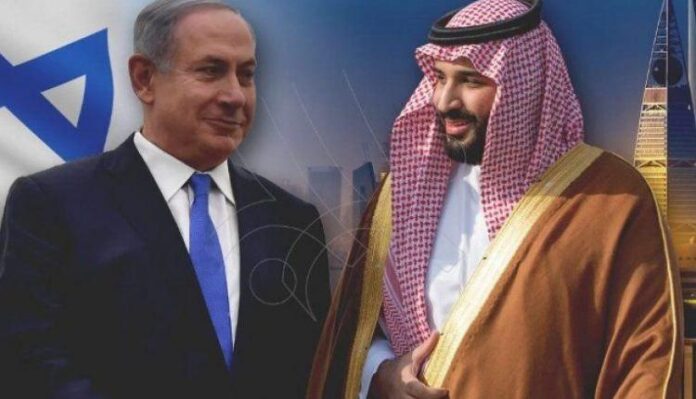
“US, Israel, Saudi Arabia, UAE Seriously Pursuing Regime Change in Iran”

Mousavian, a senior research fellow at Princeton University and a former member of Iran’s nuclear negotiating team has, in an editorial in Donya-e-Eqtesad daily, weighed in on Washington’s approach vis-à-vis Iran and plots by regional states to overthrow the Islamic Republic.

The full text of the analytical piece follows.

Following the resignation of former US Secretary of State Rex Tillerson and ex-US national security adviser Herbert McMaster, US Defence Secretary James Mattis made every effort to get incumbent Secretary of State Mike Pompeo on board with the necessity of preserving the Iran nuclear deal and keep Bolton and Pompeo from forming an alliance in the White House to stop moving on the path of confrontation with Iran, but to no avail.

Although the veteran American general is against Iran’s regional policies, he opposes a pullout from the JCPOA and waging a war against Iran. Moreover, he is not against contacts and talks between Tehran and Washington on regional issues. Therefore, and up to this point, Bolton, heading the US National Security Council, and Pompeo, heading the country’s diplomacy apparatus, have managed to isolate the Pentagon chief to pave the way for the adoption of radical policies against Iran.

Anti-Iran lobbies in Washington mainly run by the Israeli regime, Saudi Arabia and the United Arab Emirates have gained so much weight that they have even baffled American experts.

Mark Dubowitz, a radical Zionist and the CEO of the hawkish think-tank Foundation for Defence of Democracies (FDD), runs the anti-Iran lobby in Washington. His salary amounts to around $600,000 per year while the US president receives $400,000 annually. When the US Congress was reviewing the JCPOA, he attended 17 congressional hearing sessions in a span of 18 months. Major Zionist capitalists in the United States such as Sheldon Adelson, Paul Singer and Barnard Marcus, have also gone into action, allocating tens of millions of dollars to anti-Iran measures.

Saudi Arabia has signed contracts with 24 Washington companies specializing in lobbying, and spends tens of millions of dollars annually to sponsor anti-Iran propaganda. In one case, Riyadh gave $6 million to the lobbying group MSLGROUP to prepare a five-page propaganda report about what they call Iran’s interference in Yemen, and another report about claims that the Iranian government is the biggest sponsor of terrorism.

The United Arab Emirates, too, allocates even more money than Saudi Arabia in Washington to anti-Iran moves. As a case in point, bin Salman invited top American journalists to Riyadh and held one-on-one talks with every single one of them to brief them on how to file reports against Iran. This came as the journalists received a red carpet treatment, namely first-class plane tickets and staying in luxury hotels.

Compare this with the situation of Iran which does not agree to invite renowned American journalists to visit Iran, even at their own expense, to interview low or medium-ranking officials.

The anti-Iran axis focuses on two periods of time in mind:

First, the US congressional election this autumn, and second, the US presidential election in autumn 2020. They are trying to take maximum advantage of the chaotic situation in Washington before the congressional vote in order to realize their objectives against Iran. They predict that the Democrats are likely to win the election and stop radical moves against Iran. As for the US presidential ballot, they consider Trump’s presidency as a golden opportunity to achieve their objectives. Meetings are underway of joint working groups by the US, Saudi Arabia, the United Arab Emirates and Israel to channel anti-Iran moves in different political, security, economic and public opinion domains.


The Arab anti-Iran axis has pledged $83 billion to Washington annually to implement the regime change project.


The new strategy which the anti-Iran square kicked off months ago revolves around the following objectives:

  1. The dismantling of the JCPOA
  2. Imposing a series of new sweeping sanctions
  3. Officially announcing an overarching strategy against Iran. Pompeo announced the 12-point strategy with the assumption that Iran would accept none of them; and, of course, the points were not acceptable.
  4. Starting intense talks between Washington and its European allies as well as other countries which are actively conducting trade deals with Tehran. The move is aimed at pushing Iran’s oil sales to below one million barrels per day, canceling key industrial and economic agreements, and blocking Tehran’s banking and financial transactions.
  5. Destabilizing the situation inside Iran by stirring up sectarian unrest and public protests
  6. Fueling political differences among political factions, top officials and the three branches of government of Iran
  7. Creating fake conflicts and confrontation in the region in a bid to set the scene for limited military action against Iran.

An informed source told me that the Arab anti-Iran axis has pledged $83 billion to Washington annually to implement the project. All in all, the above-said square of countries’ strategy aims to paralyze the Iranian economy, create tension and unrest and instability inside Iran, and eliminate Iran’s presence and influence in the region.

Moreover, their key target in the region is to provoke a standoff in Syria, which they are going to push through via three schemes: First, shattering the Iran-Syria-Hezbollah unity; second, disrupting cooperation among Tehran, Ankara and Moscow; and third, laying the groundwork for a military standoff between Iran and US via Syria. I already warned in an interview with BBC World that Israel aims to get engaged in a military conflict with Iran in Syria to use the conflict as a pretext for the US to get involved in the military faceoff with Iran, as well. They are also determined to stop the trend of the Syrian government’s gains in fighting terrorist groups.

In its private contacts, Riyadh has assured the Americans that events in Yemen will soon take a turn in favour of the Saudi-led coalition. Saudi Arabia believes this turn of events is close at hand, and, hence, it would not be necessary to involve Iran in the process of Yemen peace talks. Hence, Washington should not care about Iran-Europe negotiations about Yemen.

The Tel Aviv-Riyadh-Abu Dhabi triangle keeps telling the White House that they wouldn’t like the US to launch a war against Iran similar to the Iraq war; rather, as they say, a limited military operation would be enough to make Iran claw back its influence and presence in the region. Nevertheless, their covert objective is to start their move with limited military action that would trigger retaliation in kind by Iran, and this would eventually bring about a full-scale military conflict between the two countries.

Without a shadow of a doubt, the Washington-Tel Aviv-Riyadh-Abu Dhabi square is pursuing their objective of “regime change” in Iran with a vengeance, and have put wide-ranging operational programs on their agenda. And their ultimate goal is to create instability and chaos in Iran, and to disintegrate the country at the end of the day.


Iran lacks a lobby in the US, Europe and other major countries. This is while the Iranian diaspora is the most important asset to counter the negative image of Iran in the world public opinion.


In order to counter such a big threat, Iran needs a consistent and stable domestic situation in the country in the first place. Fuelling internal divisions at this point in time would be deadly venom. The working groups of the four countries meeting in Washington have arrived at the conclusion that the internal situation in Iran is so fragile that it would be possible to bring people onto the streets by exerting all-out pressure and to make the ruling system desperate and topple the government. What is more surprising is that the Riyadh-Tel Aviv-Abu Dhabi triangle has given assurances to Washington that they have Iran’s internal situation under control!

Secondly, Iran lacks a public diplomacy which conforms to the current situation. Moreover, the Islamic Republic lacks a lobby in the US, Europe and other major countries. This is while the Iranian diaspora is the most important asset to counter the negative image of Iran in the world public opinion. News was announced recently that the US Congress had passed an enactment opposing Washington’s military action against Iran. But something that many people probably do not know is that a few dual-nationality Iranians residing in the US, who had a close relationship with a lawmaker, were able to monitor the activities of anti-Iran lobbies and were concerned about a possible US military attack on Iran.

And the third point is the necessity of reinforcing Iran’s official diplomacy. Iran should take maximum advantage of the current rifts between world powers and the US-Israel-Saudi Arabia-UAE square over the JCPOA. At the same time, Iran should boost talks and cooperation with regional countries such as Iraq, Turkey, Oman, Qatar and the like in order to establish a proper diplomatic shield at the regional and global stage. Our diplomacy apparatus is under the most intense attacks by the anti-Iran square. This is enough reason for the Iranian government and nation and all political factions inside the country to throw their weight behind those who are at the forefront of the country’s diplomacy front.

Persian Gardens in Photos: Pahlavanpour Garden of Yazd

This is one of the nine registered Persian gardens that were collectively registered under the name of Persian Garden in the UNESCO’s World Heritage List in 2011.

The heavenly garden was built more than 170 years ago by Ali Pahlavanpour, a well-known merchant in the Qajar era in the 19th century.

The garden includes a summerhouse, a winter quarter, janitor’s unit, a public bathroom and a kitchen.

Pahlavanpour garden has a special attraction due to its flowing water which originates from the famous aqueduct of Hassanabad.

There is also a traditional hotel inside the garden which has an eye-catching landscape.

The following are photos of the garden retrieved from various sources:

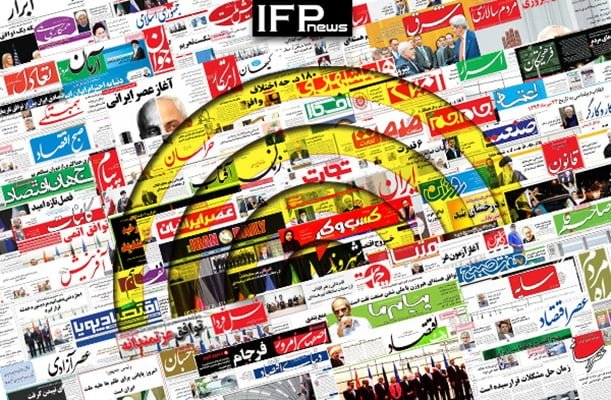
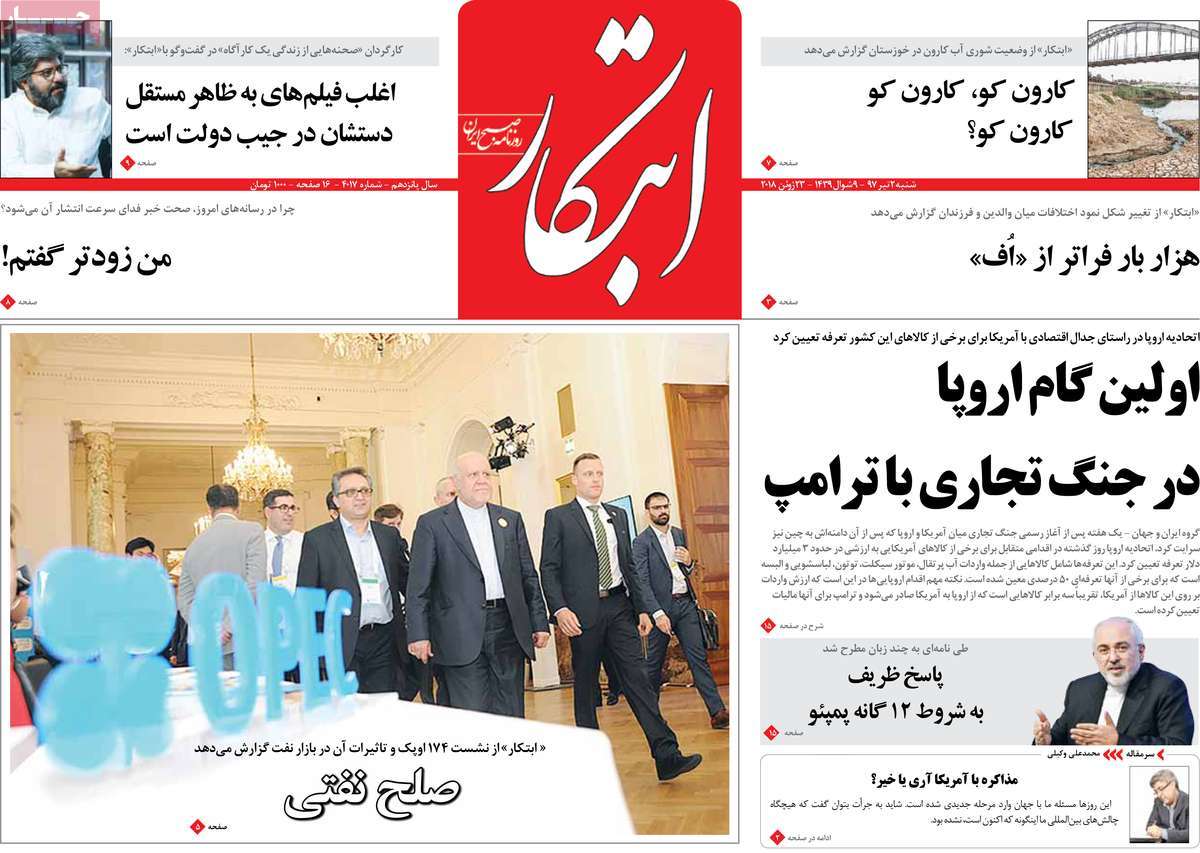
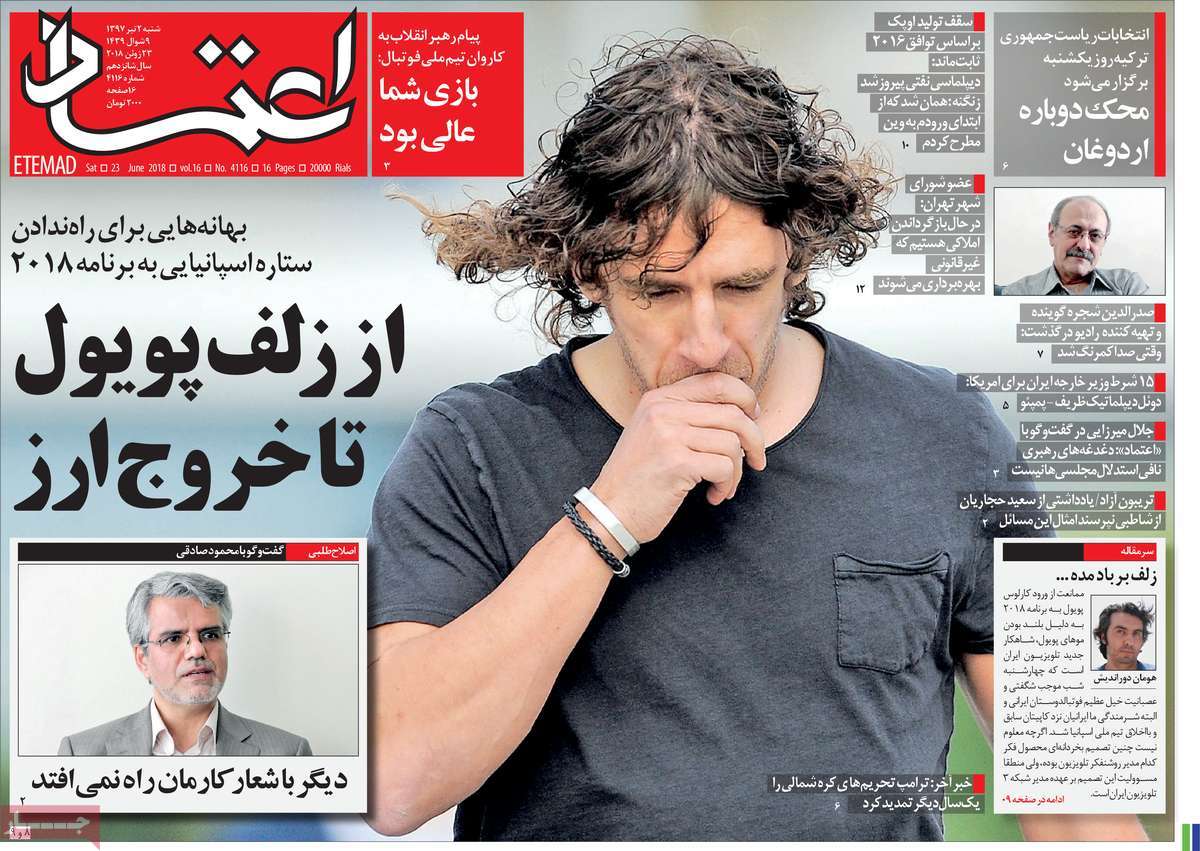
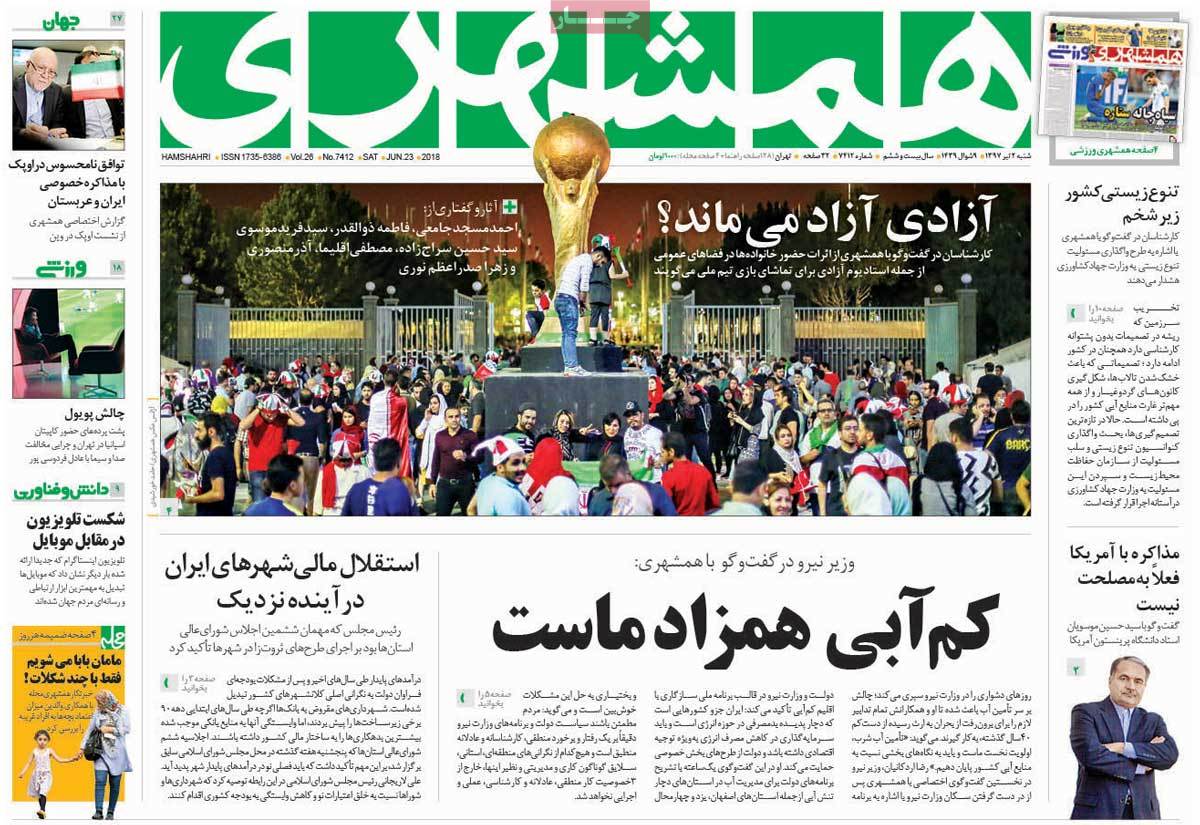
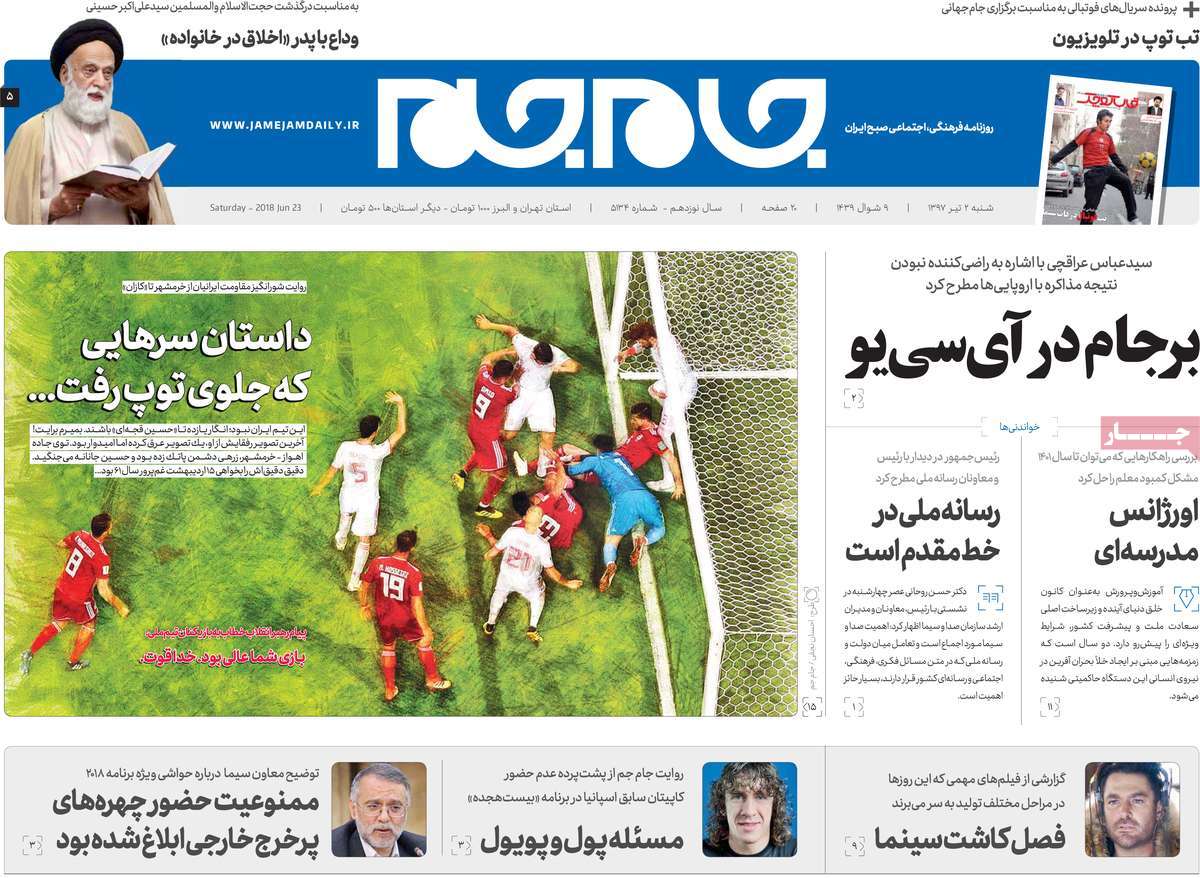
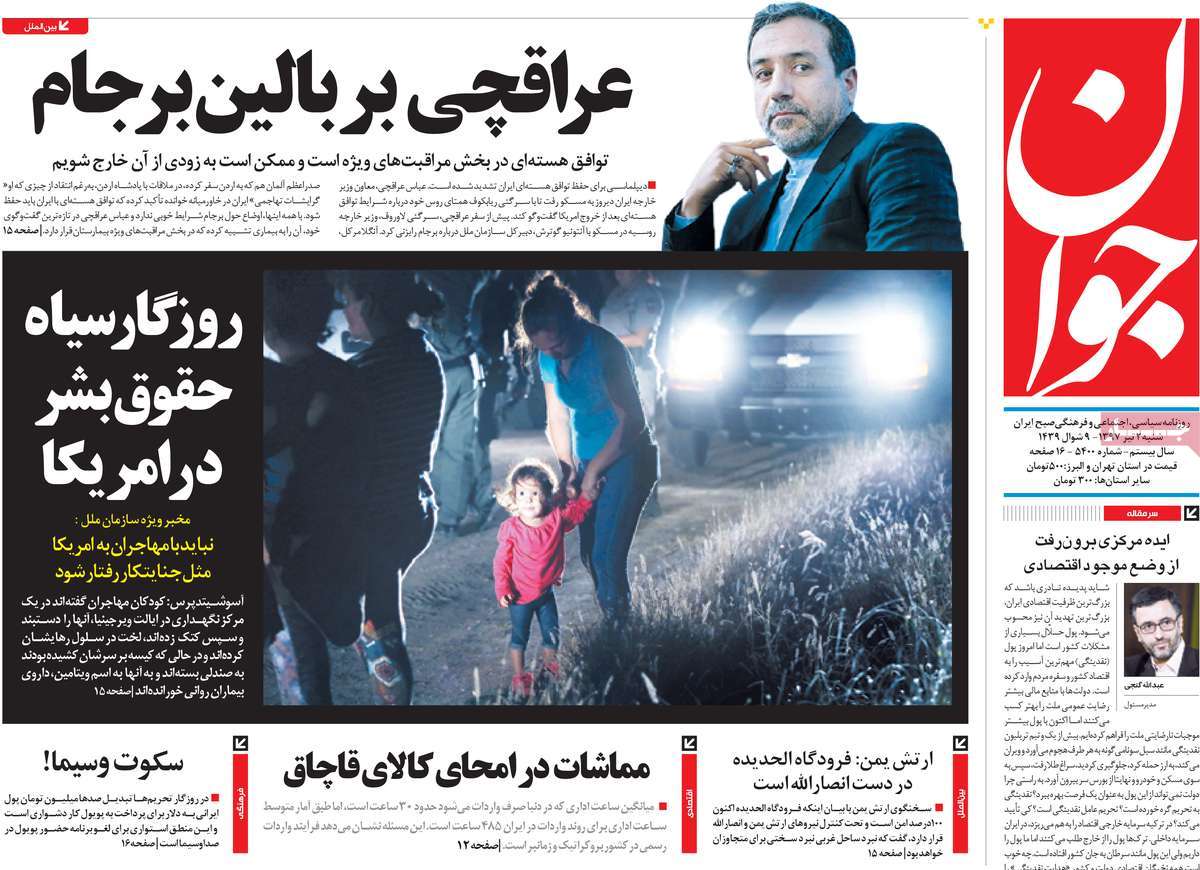
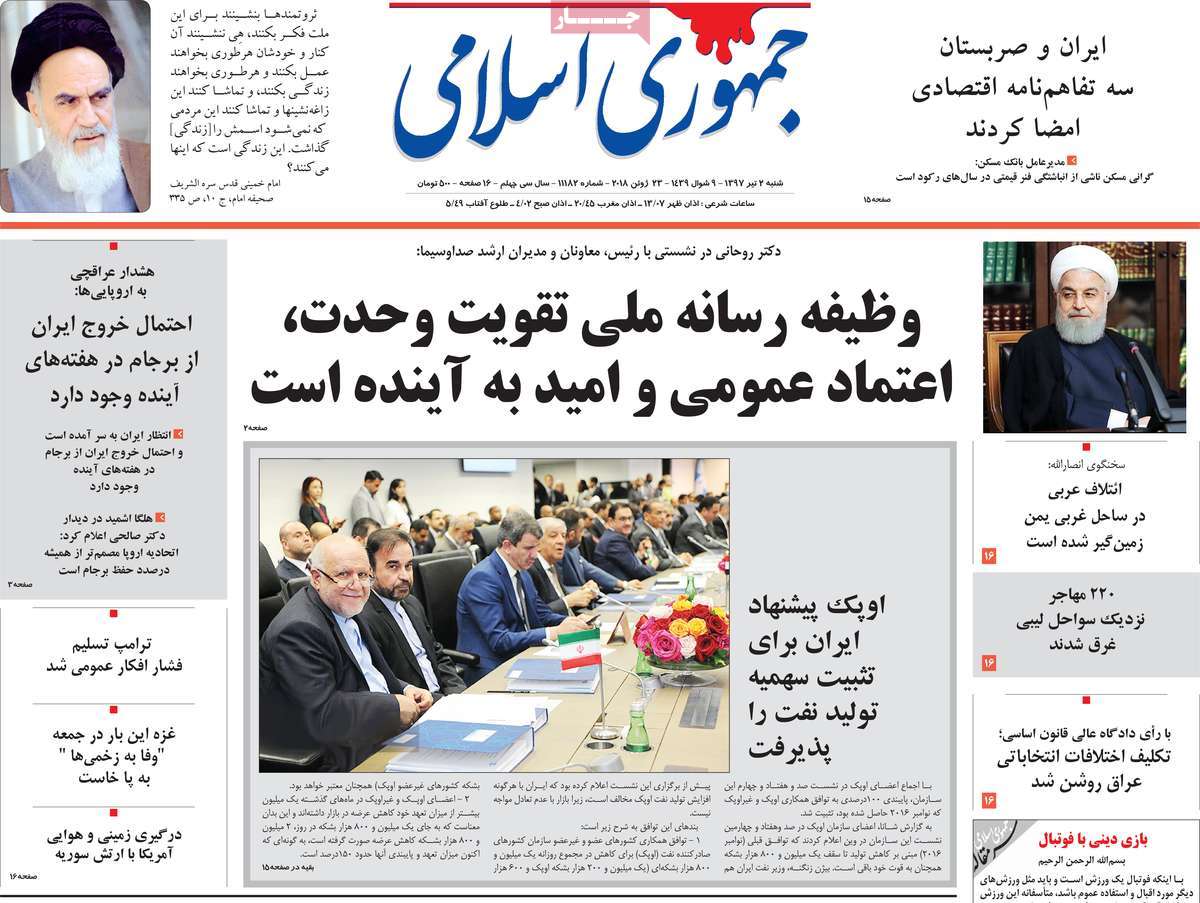
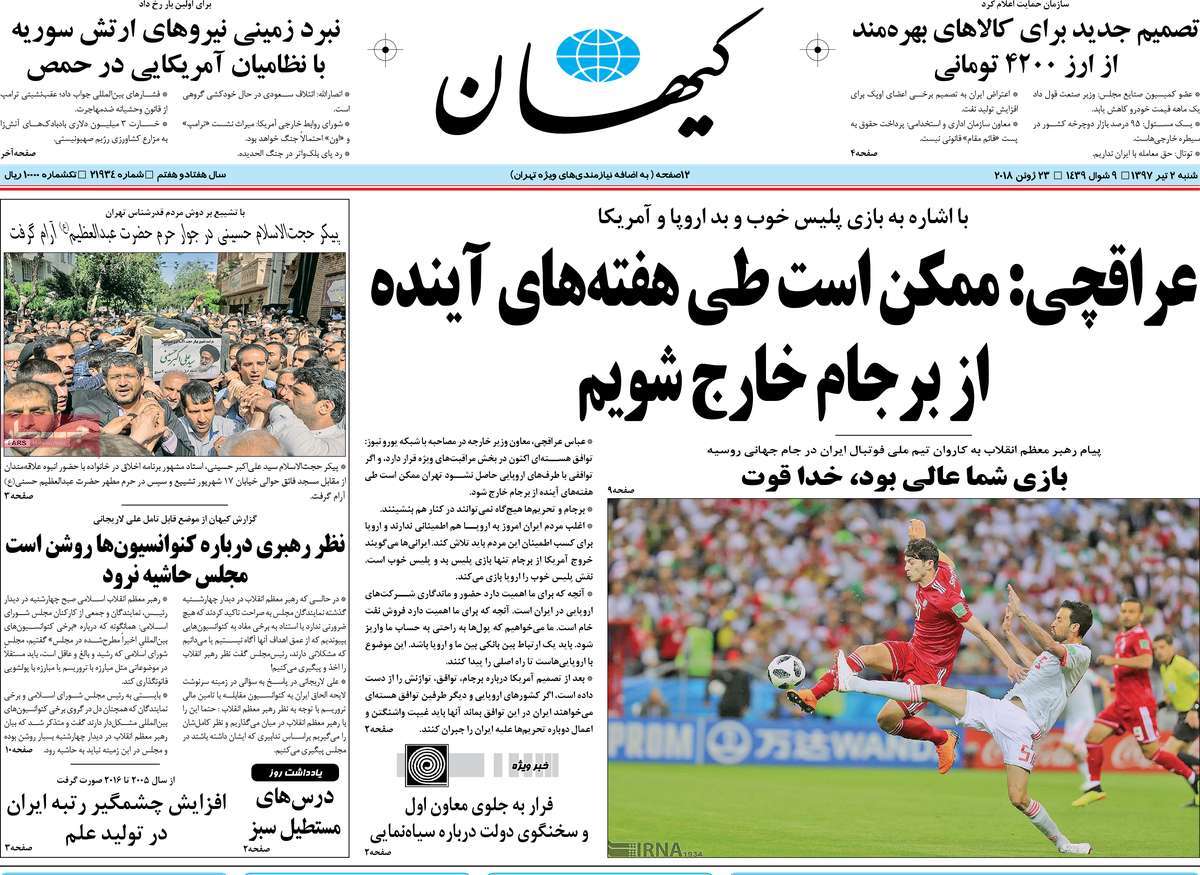
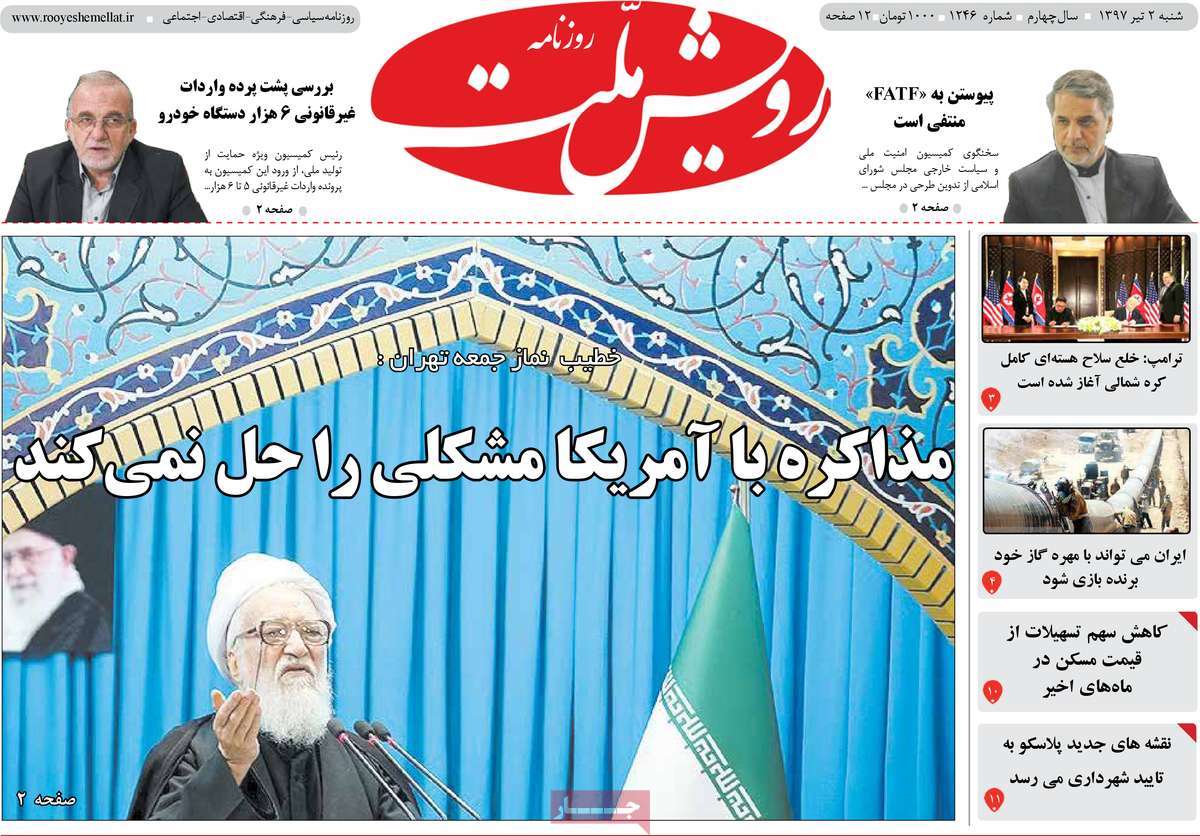
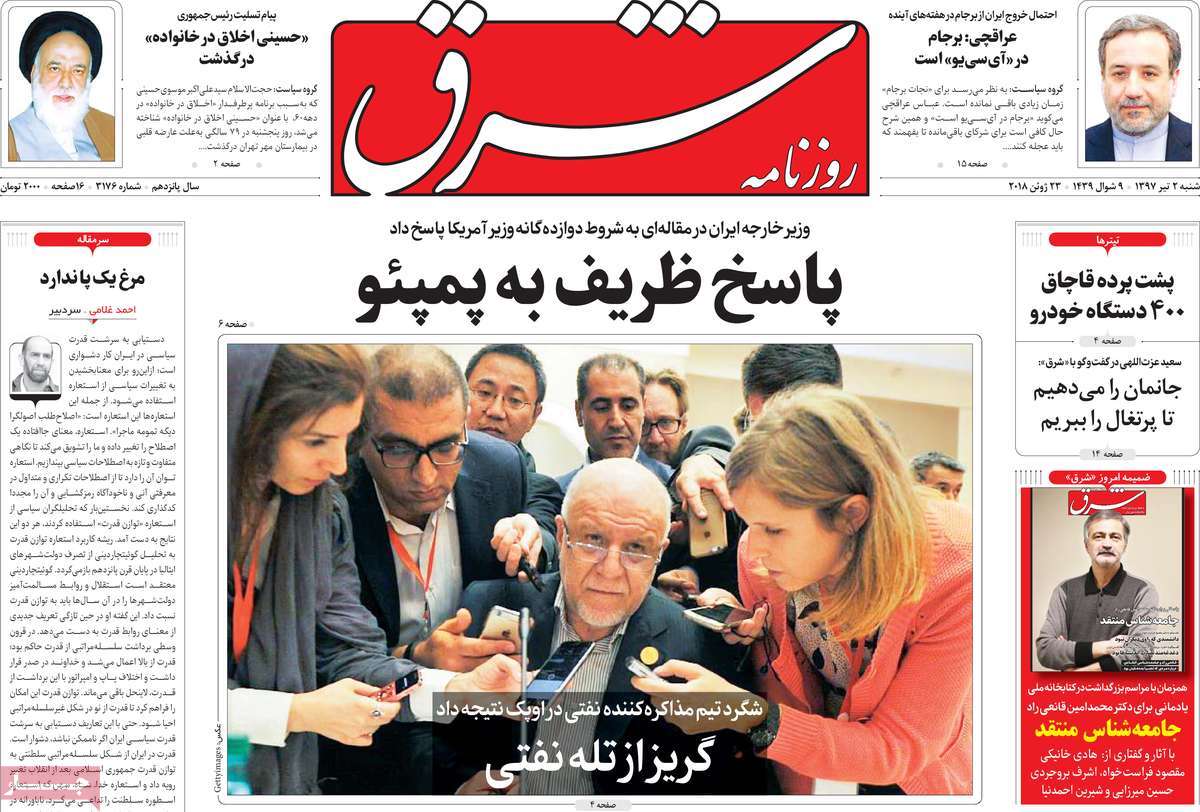
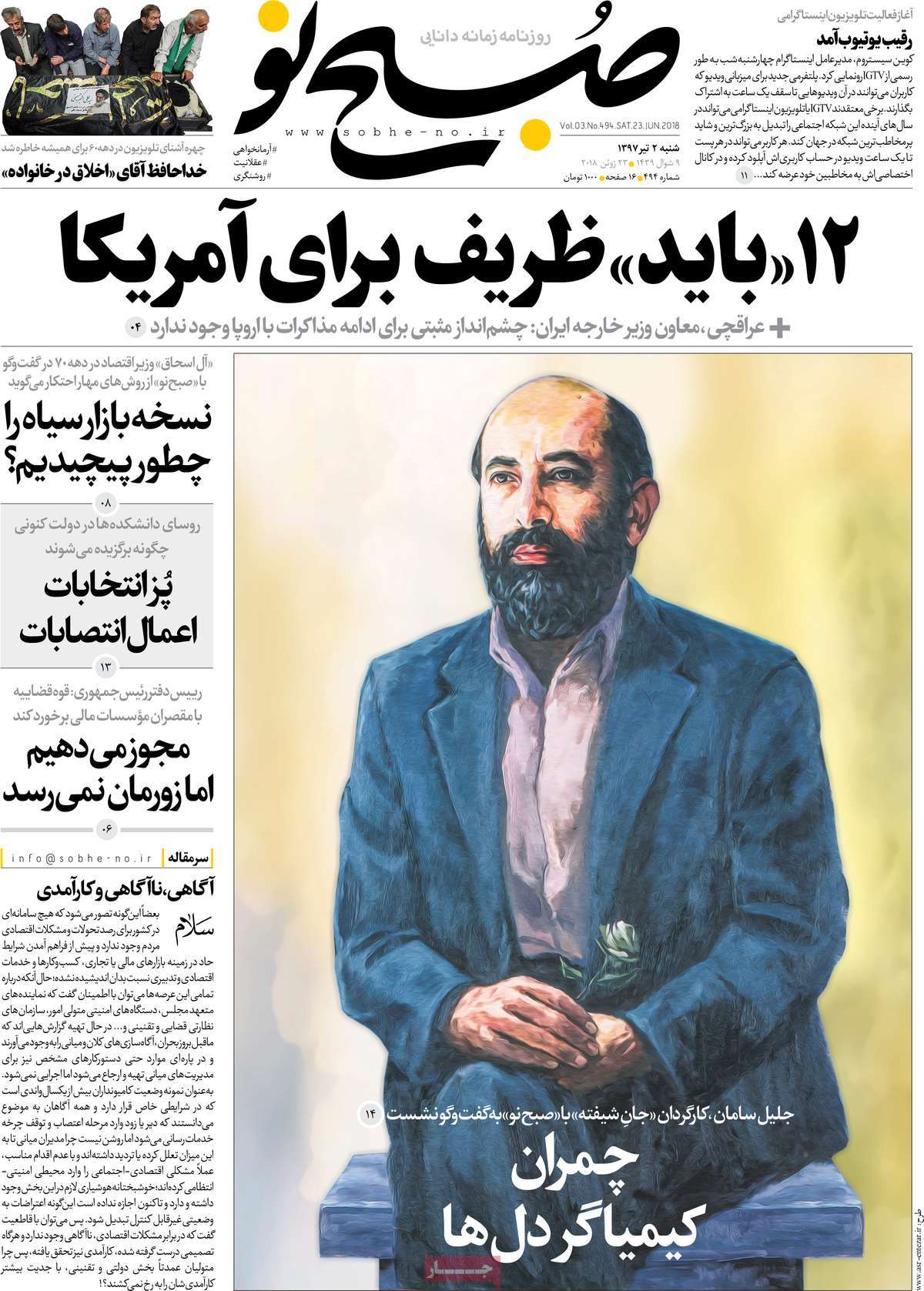
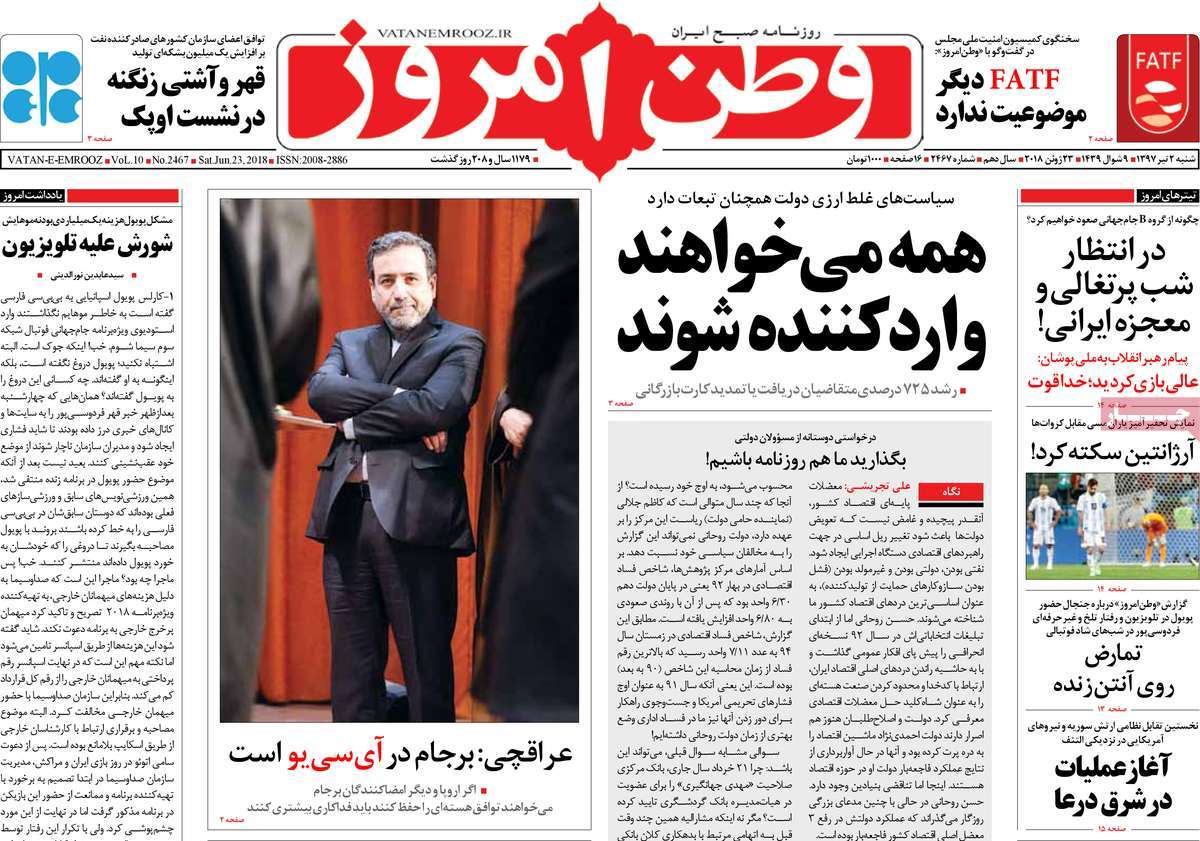
A Look at Iranian Newspaper Front Pages on May 28

A Look at Iranian Newspaper Front Pages on November 19

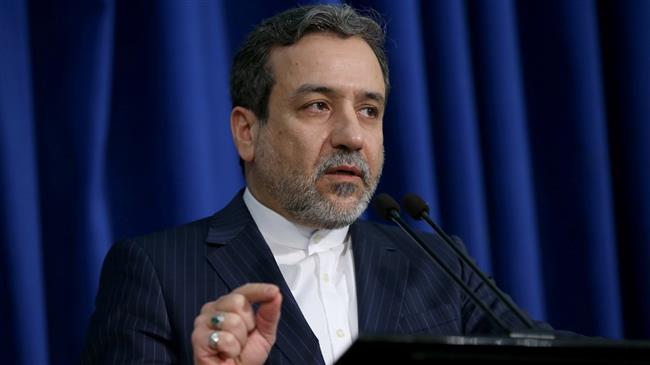
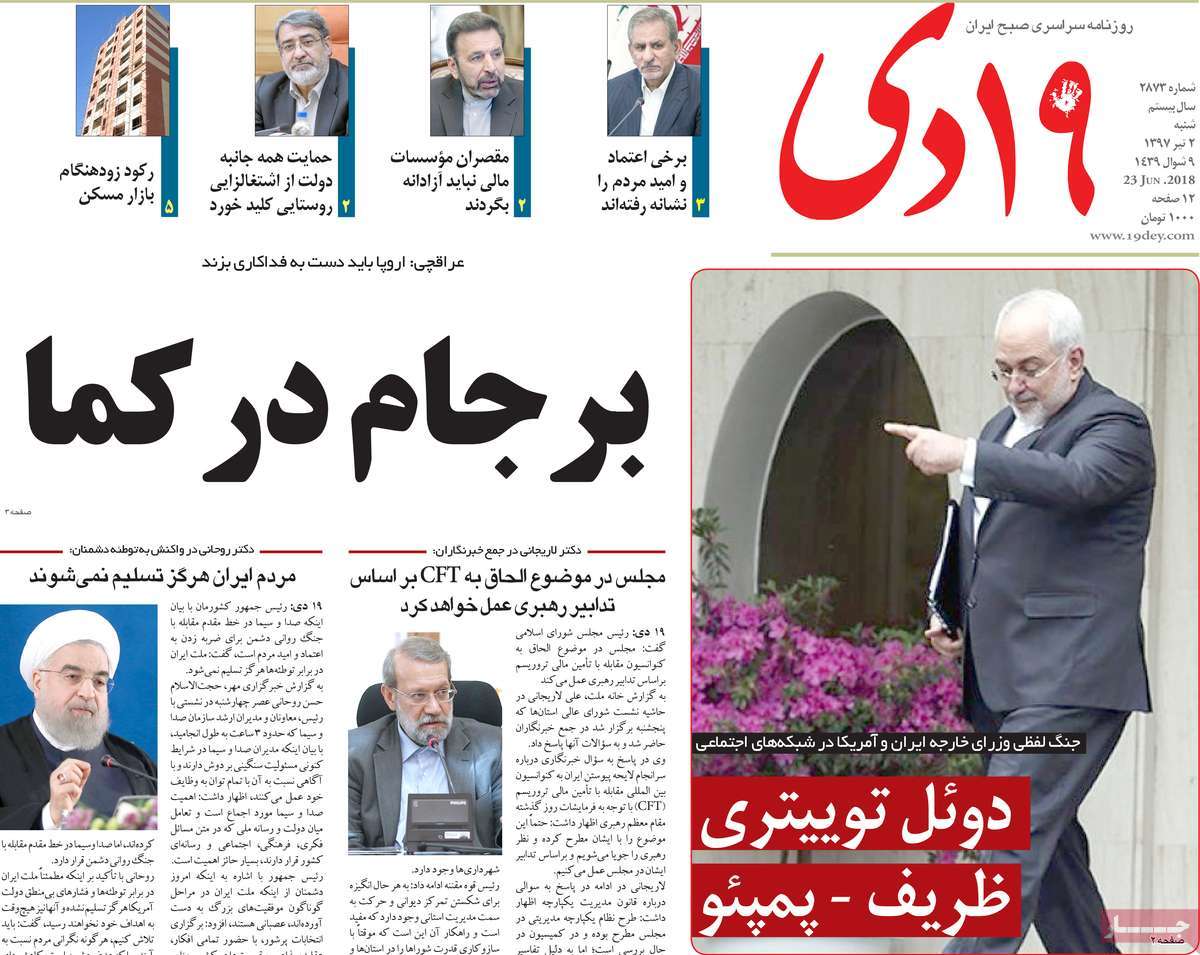
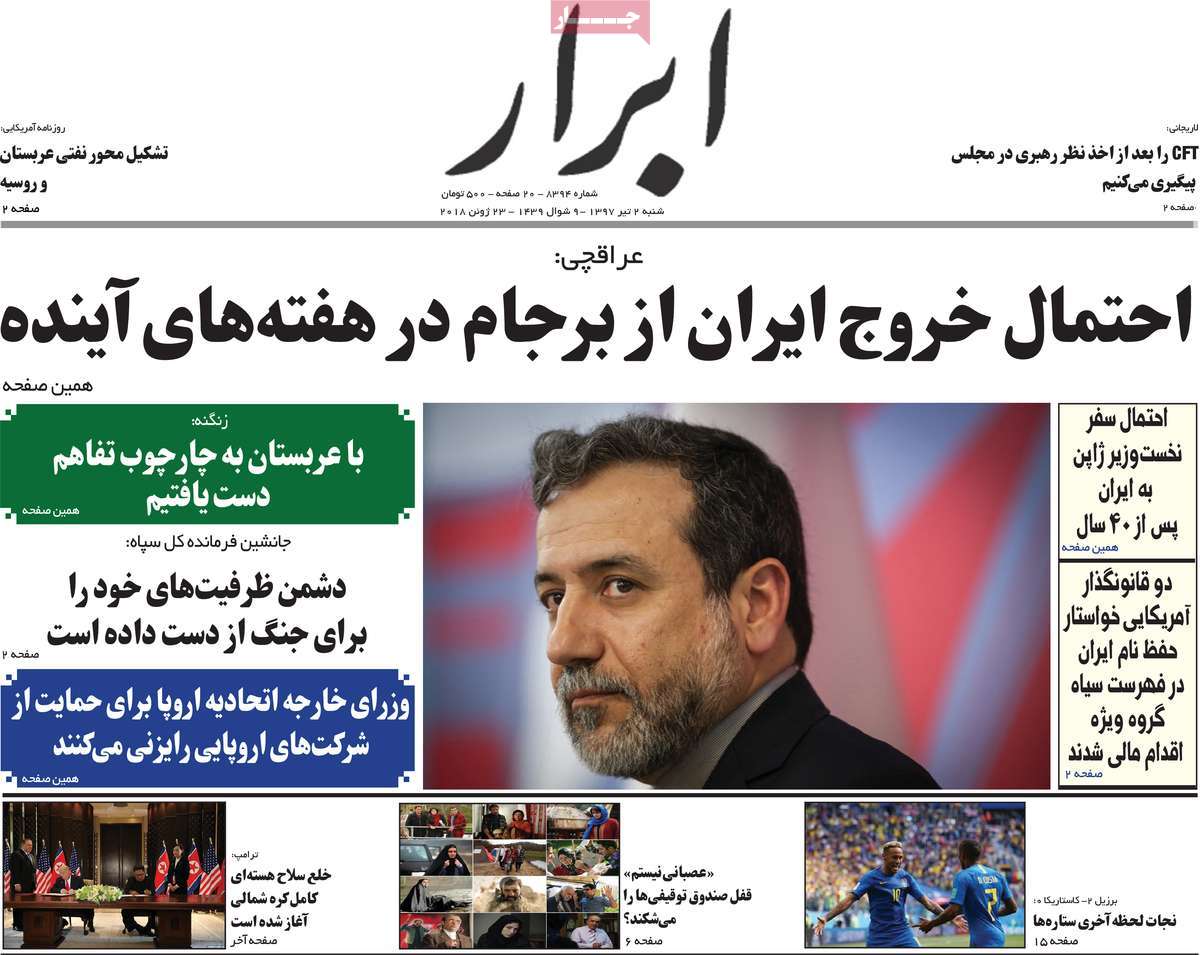
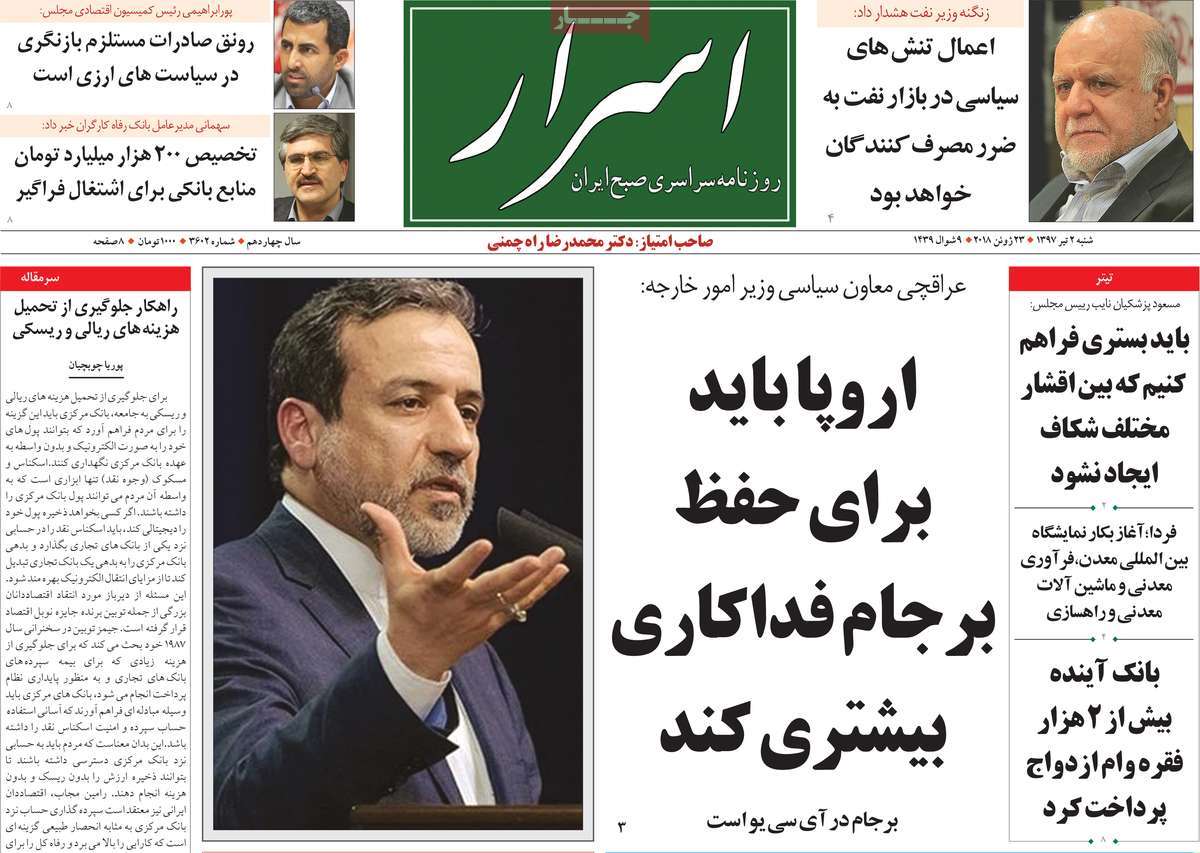
Almost all papers today highlighted the remarks made by senior Iranian negotiator and deputy foreign minister, Seyyed Abbas Araqchi, who talked about the Iran nuclear deal and the re-imposing of US sanctions on Iran.

Al Jazeera Arabic’s interview with Ali Shamkhani, the secretary of Iran’s Supreme National Security Council, was also a top story today.

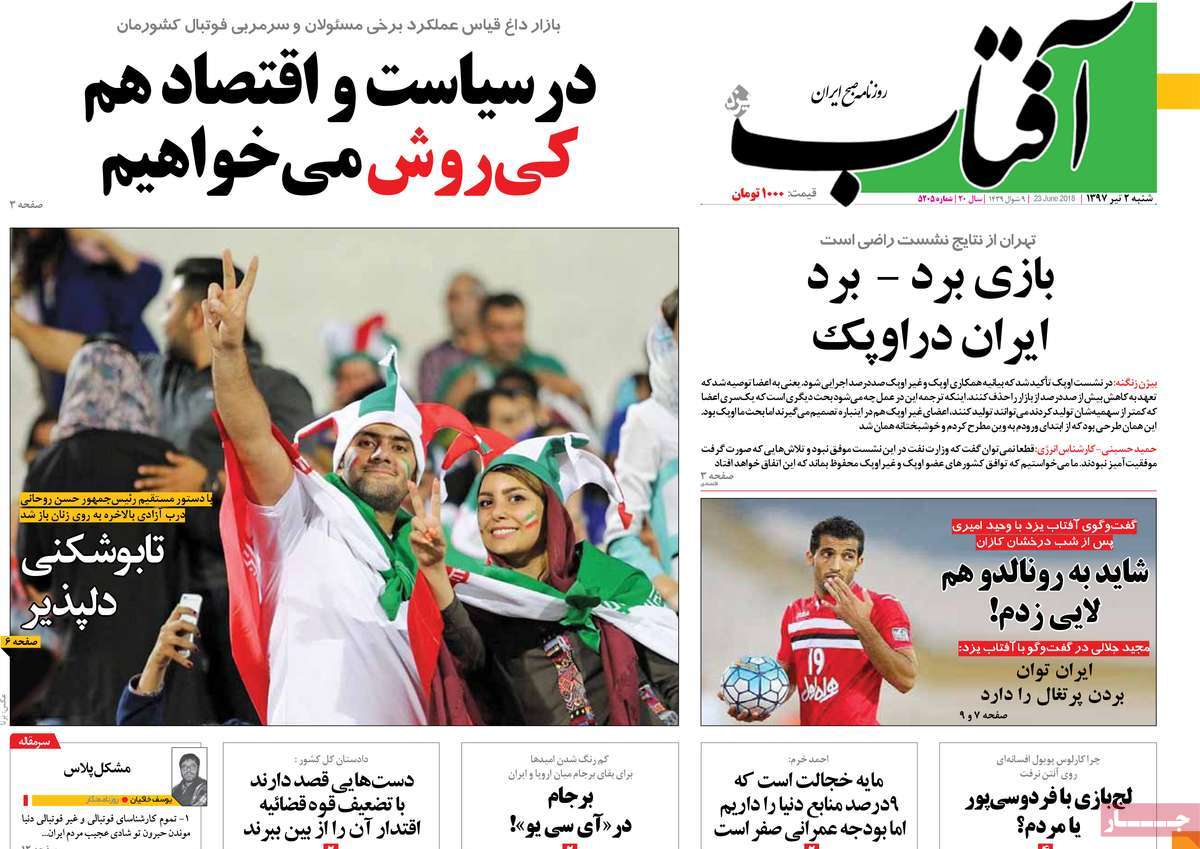
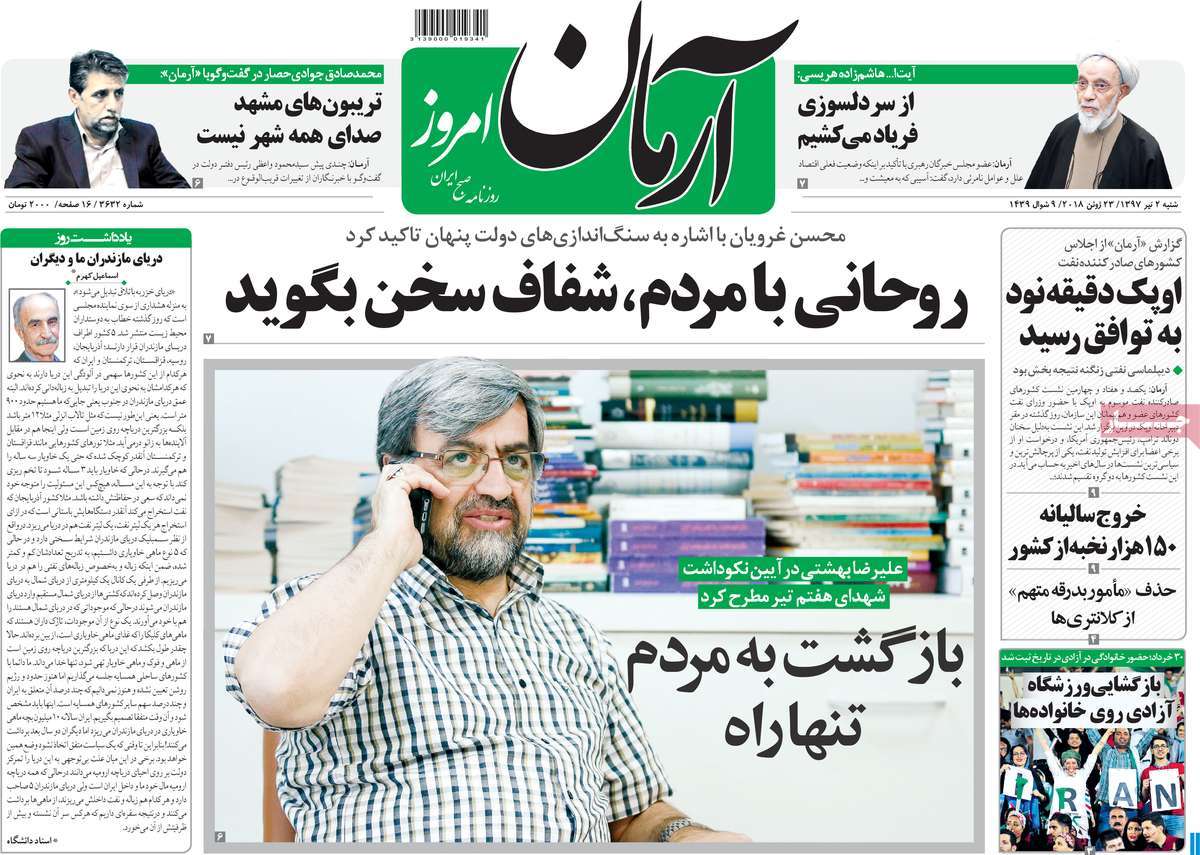
The above issues, as well as many more, are highlighted in the following headlines and top stories:


19 Dey:

1- Rouhani: It Was a Mistake that Clerics Entered into Political Factions

2- Larijani: Convergence between Gov’t, Parliament, Judiciary Can Resolve Banking Woes

A Look at Iranian Newspaper Front Pages on May 28


Abrar:

1- Judiciary Spokesman: We’ll Punish Any Movement that Seeks to Disrupt Iran’s Security

2- Poland: Europe to Follow US Policies against Iran

A Look at Iranian Newspaper Front Pages on May 28


Aftab-e Yazd:

1- Man with Huge Debts to Iran’s Banking System Escapes

2- Psychological War against Iran President: Consequences of US Sanctions against Dena Airways

A Look at Iranian Newspaper Front Pages on May 28


Arman-e Emrooz:

1- Where Do Iranians Make Their Investments?

  • A Report on Reasons, Consequences of Flow of Iranian Assets to Other Countries

2- Massive Crowds of People Attend Funeral Ceremony of Famous Actor

3- Iran Has Given Final Ultimatum to Europe: Araqchi

A Look at Iranian Newspaper Front Pages on May 28


Asrar:

1- Araqchi: Iran to Stop Negotiations Once It Feels Europeans Dragging Their Feet

2- China’s CNPC, Petropars to Replace Total

A Look at Iranian Newspaper Front Pages on May 28


Etemad:

1- Against Macron: Protests in Paris Continue against Government’s Reforms

A Look at Iranian Newspaper Front Pages on May 28


Ettela’at:

1- Zarif: We Won’t Remain in Iran Nuclear Deal If Europe Fails to Give Enough Guarantees

2- Rouhani: Engagement with World, Economic Calm, Fighting Poverty Top Priorities

3- Shamkhani: Iran Not to Give in to US Excessive Demands

A Look at Iranian Newspaper Front Pages on May 28


Iran:

1- Rouhani: Sanctions Can Be Overcome If Private Sector Takes the Lead

2- 500 Female Prisoners Waiting to Be Released

A Look at Iranian Newspaper Front Pages on May 28


Javan:

1- Iranian Economy without JCPOA, with People

  • Analysts Discuss Ways to Boost Iran’s Economy after JCPOA

2- Seoul: North Korea Doesn’t Trust America’s Words

3- Araqchi: Iran’s Decision on JCPOA Hinges on Talks in Coming Weeks

A Look at Iranian Newspaper Front Pages on May 28


Jomhouri Eslami:

1- Ansarullah: Yemenis’ New Deterrent Weapon to Be Used in Saudi-led War

A Look at Iranian Newspaper Front Pages on May 28


Kayhan:

1- A Look at Dark Record of Europe: Long List of Europe’s Violation of Commitments

A Look at Iranian Newspaper Front Pages on May 28


Khorasan:

1- GOP Senator Rand Paul Tries Pompeo in Senate

  • You Can’t Ignore Israel, Saudi Nuke Program and Tell Iran It Shouldn’t Have Missiles

A Look at Iranian Newspaper Front Pages on May 28


Resalat

1- Shamkhani: US Strategy against Iran Based on Bullying, Shouting

A Look at Iranian Newspaper Front Pages on May 28


Sepid:

1- Deputy Health Minister: 55 Billion Cigarettes Smoked in Iran

  • It’s Not Easy to Fight Such Lucrative Business

A Look at Iranian Newspaper Front Pages on May 28


Setareh Sobh

1- Parliamentary Factions Ready to Take Larijani’s Seat as Speaker

  • Hardline MP: Parliament Must Be Run by Factions, Not with Monopoly

A Look at Iranian Newspaper Front Pages on May 28


Shargh:

1- Shamkhani: We’ll Remain in Syria as Long as Damascus Wants Us

A Look at Iranian Newspaper Front Pages on May 28


Sobh-e Now:

1- Maryam Smiles at French People’s Mocking of Her

  • Controversy Sparked after French Minister Strongly Protests Muslim Student’s Hijab

A Look at Iranian Newspaper Front Pages on May 28

Iran’s Beauties in Photos: Daryasar Plain

The plain is located over 2,000 metres above the sea level and is surrounded by four mountains, with the tallest of them being Alamut.

Daryasar is in fact a connecting point between northern Iran’s forests and Alamut’s snowy environment.

The region’s golden chamomile flowers make it very attractive and spectacular in spring, prompting local people to nickname it as the tourist paradise.

What follows are Tasnim’s photos of the gorgeous plain:

Book Published in Iran on Condoleezza Rice’s Love Affair with Iranian Man

The book, which contains a short story about the former top US diplomat, is authored by Mojtaba Seidi, reports Mehr News Agency.

Book Published in Iran on Condoleezza Rice’s Love Affair with Iranian ManBased on the 2006 report, when Rice was US Secretary of State, Iranian lawmaker Shokrollah Attarzadeh accused her of mixing personal feelings with political affairs.

In his contentious remarks, the Iranian legislator stated that Rice had a failed love affair with an Iranian during her youth, and hence, she was not in good terms with any Iranian. The MP said he could prove his claim with the documents he had about that young Iranian man even if Rice denied the allegation.

Attarzadeh’s remarks raised brouhaha in media. Nevertheless, neither did Rice deny his comments, nor did he publish his alleged documents. Still, the fuss that Attarzadeh kicked up over the scenario prompted Iranian author Mojtaba Seidi to write an imaginary story to once again rekindle the controversy about Rice’s alleged love affair.

Seidi’s collection of short stories includes one titled “A Political Love Affair,” which is about an author who pens a story about Rice’s love affair, and strange events happen to him after he has his story published.

According to Seidi, the story seems to be one about politics and love, but, in fact, is related to neither politics, nor love. It is about a person who is doomed to be ignored by others even if he changes the course of history.

Before having the story published, Seidi sent a copy to Stanford University (Rice’s alma mater) and got a written permission from her for its publication.

The book has been published by the Kianafraz Publishers in 150 pages for IRR160,000 per copy.

Iran, Azerbaijan to Continue Enhancing Bilateral Ties: Rouhani

In a message to his Azeri counterpart Ilham Aliyev on Monday, Rouhani congratulated the Azeri government and nation on the Republic Day, which marks the anniversary of founding of the Democratic Republic of Azerbaijan in 1918.

The Iranian president also expressed confidence that the growing relations between the two neighbors will be strengthened under the political will and efforts of the senior officials and in light of the common bond between the two nations.

Iran and Azerbaijan have accelerated efforts in recent years to forge closer partnership in various areas.

Aliyev has paid several official visits to Tehran over the past few years.

In one of them in 2016, the two sides signed eleven memorandums of understanding and agreements to promote mutual cooperation in a range of fields.

Iran’s Top Diplomat Republishes “Message from Tehran” (+Video)

“I just received a nice clip by an independent documentary producer. Reactions of a few young Iranians from different walks of life to recent US hostile measures,” Zarif wrote in his Twitter account.

The video, titled Message from Tehran, was posted on YouTube on Friday, in reaction to the US withdrawal from the 2015 nuclear accord earlier this month.

In the footage, several Iranians protest the hardening of the US tone on Iran, saying the country is a peace-loving nation.

Almost at the end of the video, a young guy invites people from across the world to pay a visit to the country to gain a first-hand experience of Iran’s realities.

Following is the video:

Turkey May Buy Russian Su-57 If US Bars Sale of F-35 Jets

According to a report published by the Turkish-language Yeni Şafak daily newspaper on Sunday, the unit cost of the Sukhoi Su-57, which is being developed for air superiority and attack operations, is almost half the cost of the F-35.

The report added that the Russian fifth-generation fighter jet can respond to Turkey’s national needs much more than F-35 as the latter has to be fully equipped with Turkish software, munitions, radar and avionics before being operated in the Turkish Air Force.

Earlier this week, a US Senate committee passed a defense policy bill, which would effectively bar the delivery of F-35 fighter jets to the  North Atlantic Treaty Organization (NATO) partner Turkey.

The amendment to the $716 billion National Defense Authorization Act (NDAA), had been proposed by Democratic Senator from Michigan Jeanne Shaheen and Republican Senator for North Carolina Thom Tillis.

It removed Turkey from the F-35 program over its purchase of S-400 systems as well as imprisonment of Andrew Brunson, a Christian pastor from North Carolina, on spying and terrorism charges.

On April 3, Turkey’s President Recep Tayyip Erdogan and his Russian counterpart Vladimir Putin said in the Turkish capital Ankara that they had agreed to expedite the delivery of S-400 missile systems. The delivery is expected to start between late 2019 and early 2020.

Turkey’s English-language Hurriyet Daily News newspaper reported on December 29 last year that the loan deal for four S-400 surface-to-air missile batteries had been signed in Ankara.

The developments came only two days after Sergey Viktorovich Chemezov, the Chief Executive Officer of Russian state corporation Rostec, told the Kommersant daily newspaper that Russia would supply Turkey with four batteries of S-400, worth $2.5 billion each, and Moscow was expected to begin the first deliveries in March 2020.

Chemezov added that Turkey would pay 45 percent of the cost of the agreement up front, while Russia would provide loans to cover the remaining 55 percent.

The United States has reportedly warned Turkey against the consequences of its decision to buy S-400 surface-to-air missile batteries from Russia, saying Washington could slap Ankara with sanctions over such a purchase.

An American official, speaking on condition of anonymity, said Turkey’s plan to buy the Russian S-400 missile system would potentially expose Ankara to a new sanctions law recently passed by Congress, Turkish-language daily Haberturk reported.

On August 2, 2017, US President Donald Trump signed into law the Countering America’s Adversaries Through Sanctions Act (CAATSA) that imposed sanctions on Iran, Russia and North Korea.

The S-400 system, whose full name is the Triumf Mobile Multiple Anti-Aircraft Missile System (AAMS), is an advanced Russian missile system designed to detect, track, and destroy planes, drones, or missiles as far as 402 kilometers away. It has previously been sold only to China and India.

Turkey is striving to boost its air defense, particularly after Washington decided in 2015 to withdraw its Patriot surface-to-air missile system from Turkey’s border with Syria, a move that weakened Turkey’s air defense.

Before gravitating towards Russia, the Turkish military reportedly walked out of a $3.4 billion contract for a similar Chinese system. The withdrawal took place under purported pressure from Washington.

Ankara’s ties with its Western allies in NATO have been strained over a range of issues.

Erdogan has been critical of Washington for supporting Kurdish groups in Syria that he says are responsible for terror attacks inside Turkey.

The Turkish leader has also slammed American officials for rejecting his requests to hand over Fethullah Gulen, a powerful opposition figure living in the US.