Thursday, January 1, 2026
Home Blog Page 353

Iranian deputy FM: nuclear consortium idea may be discussed if Iran-U.S. talks advance

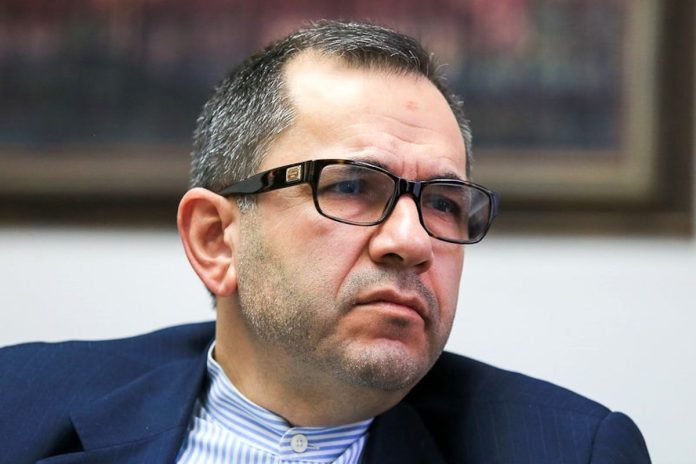
Majid Takht-e Ravanchi

In a brief interview, he noted that countries in the region are keen to see the Iran-U.S. negotiations yield tangible results.

He also addressed the contentious issue of the “snapback” mechanism in negotiations with Europe, saying, “Europeans are well aware of our position on this. If any party seeks to exploit this mechanism, Iran will not remain passive. We will take measures within the framework of the NPT.”

Takht-Ravanchi confirmed that the snapback issue was also raised during the recent meeting in Istanbul between Iran and the European Trio, the UK, Germany and France, but stressed that it was not a new subject.

On the broader diplomatic landscape, he reiterated that regional actors generally support the resolution of tensions between Tehran and Washington and that the nuclear consortium idea—if seriously pursued—might open a new path for regional cooperation on peaceful nuclear technology.

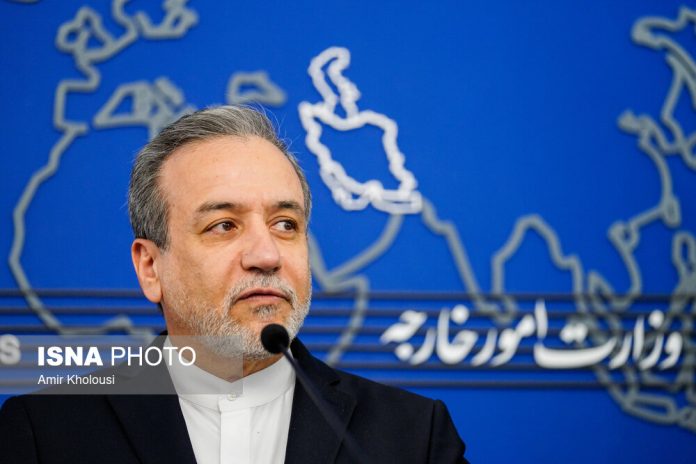
FM Araghchi: Iran has not received any written proposal from U.S.

Abbas Araghchi

When asked whether Iran had received any formal message from Oman on behalf of the United States, Araghchi replied, “We have not received any written message from Oman. However, the next round of negotiations is likely to be held soon, and its time and venue will be officially confirmed in the near future.”

Referring to the recent trilateral meeting with officials from Qatar and Oman, the foreign minister described the discussions as productive.

“We had very good talks regarding regional issues, bilateral relations, and the ongoing negotiations. We reviewed the latest developments in all these areas,” he said.

U.S. President Donald Trump has recently stated that his administration has conveyed a proposal to Iran, adding that Tehran must make a decision on it very soon.

Iran and the U.S. have so far held four rounds of Oman-mediated talks over Iran’s nuclear program.

Damascus sets deadline for ‘small armed groups’ to join Syria’s Defence Ministry

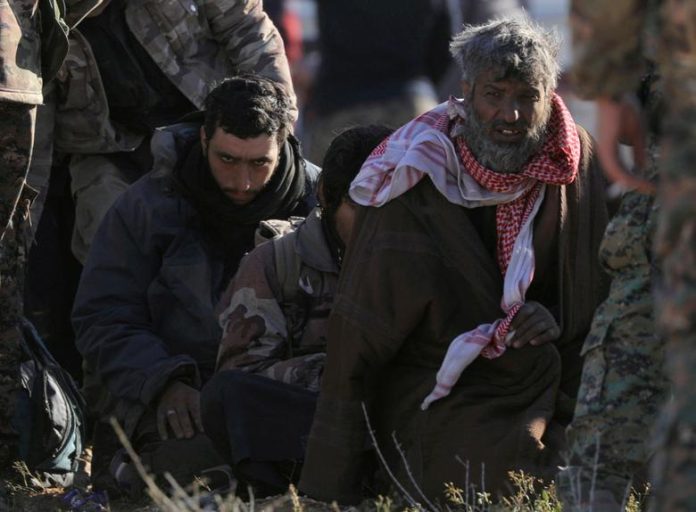
Daesh

A plethora of weapons outside government control has posed a challenge to interim President Ahmed al-Sharaa’s efforts to establish control, as groups that both back him and oppose him remain armed.

Syrian Defence Minister Murhaf Abu Qasra, in a statement late on Saturday, said “military units” had now been integrated into “a unified institutional framework”, calling this a great achievement.

“We stress the need for the remaining small military groups to join the ministry within a maximum period of 10 days from the date of this announcement, in order to complete the efforts of unification and organisation,” he added.

He did not say which factions he was talking about.

The statement did not seem aimed at the U.S.-backed Syrian Democratic Forces (SDF), a large Kurdish-led force in the northeast that signed an agreement with Sharaa earlier this year aimed at integration with state institutions.

Damascus received a big diplomatic boost last week when U.S. President Donald Trump met Sharaa and announced sanctions on Syria would be lifted. Syrian Interior Minister Anas Khattab has stated the decision would support efforts “to consolidate security and stability and promote civil peace in Syria and the region”.

Sunni Muslim Arab rebel groups which, like Sharaa’s Hayat Tahrir al-Sham, fought Assad during the war agreed in December to dissolve into the Defence Ministry.
Syria has faced several outbreaks of violence this year.

In March, Sunni militants killed hundreds of members of the Alawite minority in revenge killings prompted by what the government described as deadly attacks by Assad-loyalists on its forces in the coastal region.

More than 100 people were reported killed by fighting that erupted in late April in Druze areas near Damascus, pitting Sunni militants against Druze fighters.

Weapons, military equipment from Ukraine will flood Europe: Report

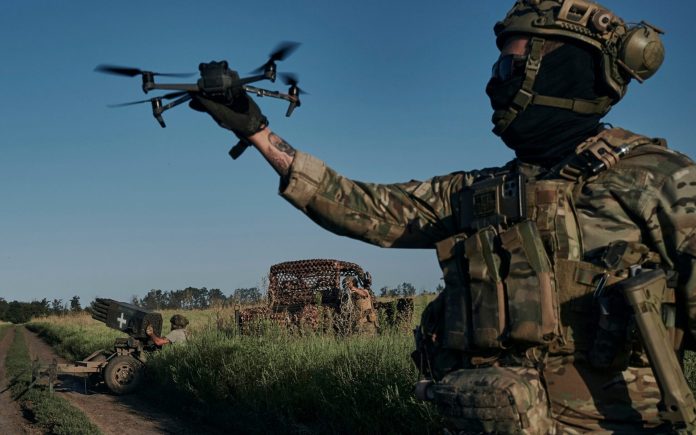
Russia Ukraine War

Western-supplied weapons and thousands of battle-hardened Ukrainian veterans are expected to fuel a wave of crime, arms trafficking, and instability across the continent – as talks between Moscow and Kiev to resolve the conflict raise hopes for a ceasefire – the document warns.

”Stockpiles of weapons, including heavy arms, are being amassed throughout Ukraine,” the report says. “Should the fighting stop, martial law in Ukraine will presumably be lifted, reducing the resources and powers of the state to police the civilian sphere – and opening up the field for organized crime to operate more freely.”

Kiev received over $363 billion (€326 billion) in NATO aid by February 2025, according to the Kiel Institute. Porous borders and weak oversight may fail to stop smuggled weapons such as rifles, grenades, and missile systems, according to the document.

Earlier this year, US journalist Tucker Carlson claimed that the Ukrainian military was selling American weapons systems “on the black market, including to drug cartels.”

Western media and officials have acknowledged that weapons sent to Kiev have ended up in criminal hands. Europol reported in April 2022 that arms were being trafficked from Ukraine into the EU for organized crime groups. Later that year, the Finnish authorities confirmed that these weapons had surfaced locally, with similar findings in Sweden, Denmark, and the Netherlands. By mid-2024, Spanish media reported gangs in southern Spain had acquired modern weapons allegedly smuggled from Ukraine.

The return of Ukrainian soldiers skilled in sabotage, drones, and cyber warfare poses a threat, with the report warning that they could become a “valuable resource” for criminal networks in Europe.

Corruption in Ukraine is a major concern, with the most recent estimate showing Ukraine will require $524 billion to repair the damage from the war. The report warns that criminals could exploit the process to launder money and gain influence.

Despite mounting concerns over arms trafficking and fraud, some EU institutions continue to push for Ukraine’s accession to the bloc. Analysts say this could further weaken border controls and oversight mechanisms.

The report warns that without a coordinated long-term strategy, Western nations risk facing the fallout of a conflict that Moscow claims they helped fuel and now struggle to control.

Russia has warned against Western weapons deliveries to Ukraine, saying they only serve to prolong the conflict and heighten regional security threats. It has also said the unchecked supply of weapons has resulted in a large number falling into the hands of organized criminal groups and extremists worldwide.

Russia tells Ukraine: Don’t listen to NATO

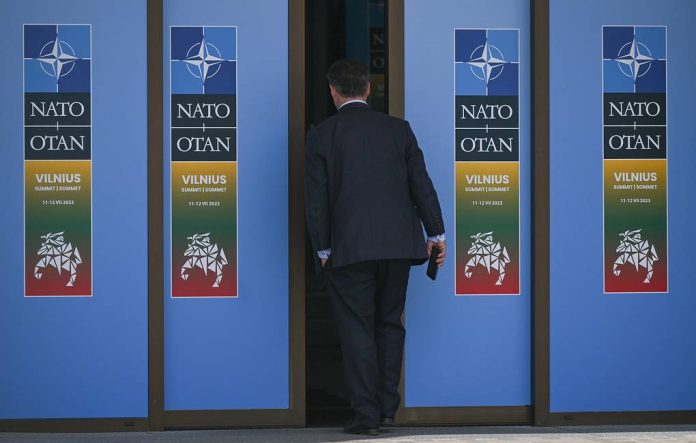
NATO

Zakharova responded to remarks by Ukrainian Foreign Minister Andrey Sibiga about the results of the Istanbul meeting, which marked the first direct negotiations between Kiev and Moscow since 2022. The talks resulted in Russia and Ukraine agreeing to a major prisoner swap. The sides also agreed to exchange lists of conditions for a potential ceasefire and discuss a follow-up meeting.

“If we put aside all the Russian nonsense, pseudo-historical statements, provocations, and so on, the bottom line is this: we managed to agree on the return of 1,000 of our people. These are 1,000 happy families. Even for this reason alone, all this made sense,” Sibiga stated.

“All ‘this,’” Zakharova said, referring to the talks, “was proposed by Russia – by its president – and implemented by a delegation authorized by the head of state, which Zelensky mocked for a day.”

She also added that, if all the insults are put aside, Sibiga essentially acknowledged that the “Russian propositions have a certain sense.”

“The main thing is that the citizens of Ukraine should not allow the ‘NATO advisers’ to lead them off the true path of settlement into the ravine of other people’s interests again,” Zakharova warned.

Russia and Ukraine held direct peace talks in Istanbul in 2022, shortly after the escalation of the conflict. While the sides initially made progress and reached a tentative agreement – which included a Ukrainian commitment to neutrality – the talks later collapsed after Kiev unilaterally abandoned them.

Moscow later claimed the talks were derailed by then-British Prime Minister Boris Johnson, who advised Kiev to continue fighting. While Johnson has denied the accusation, David Arakhamia, who led the Ukrainian delegation at the time, admitted that the ex-prime minister played an influential role in the decision to stop the negotiating process.

Since then, Russia has repeatedly accused Western governments of using Ukraine as a “battering ram” against Russia and pursuing the conflict “until the last Ukrainian.” It has noted, however, that the US began shifting its approach to the settlement under President Donald Trump.

Taliban FM promises cooperation with Iran in Helmand river, water dispute

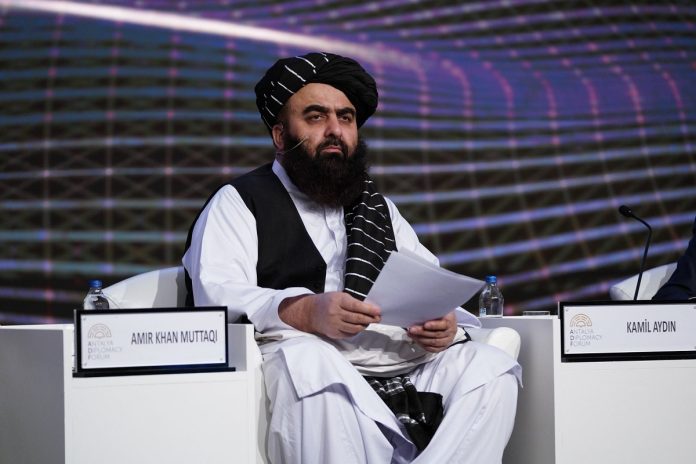
Afghanistan’s Acting Foreign Minister Amir Khan Muttaqi

“It is our Islamic obligation to help any Muslim suffering from thirst,” he declared during a panel at the Tehran Dialogue Forum on Sunday.

“The Iranian people should rest assured—we have no bad intentions, and we see it as our duty to deliver water to the thirsty.”

Responding to questions on Afghanistan’s adherence to the 1973 Helmand River Treaty, Muttaqi affirmed: “Even if the agreement didn’t exist, we would still act on our duty.”

He said the Taliban had reiterated this position during earlier talks with Iranian envoys, including during Iranian Foreign Minister Abbas Araghchi’s visit to Kabul.

Muttaqi acknowledged the severe drought impacting both sides of the border, noting that similar conditions persist in Afghanistan’s Nimruz and Helmand provinces.

His remarks come amid long-standing Iranian accusations that Kabul has restricted the flow of the Helmand River, in violation of the treaty.

The Helmand dispute has been a recurring source of tension, particularly after Afghanistan completed infrastructure projects that Tehran says limit its water share. While the Taliban has made verbal commitments to honoring the treaty, Iran has repeatedly called for concrete mechanisms such as joint technical inspections.

IRGC, Azeri Army staging military drill in Karabakh

IRGC Ground Force

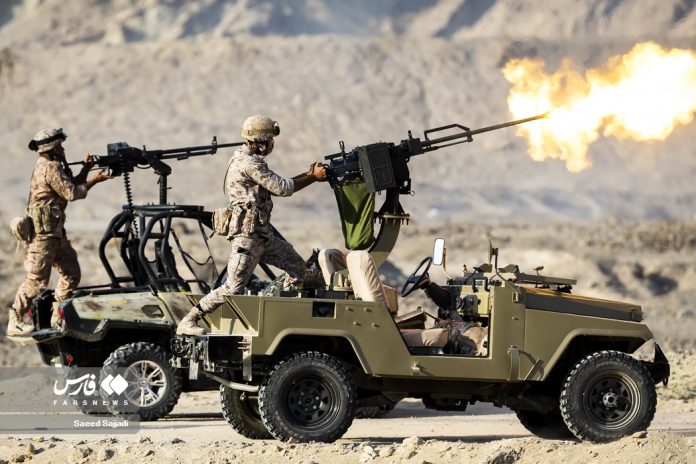
The joint exercise, codenamed ‘Aras 2025’, kicked off on Sunday in the Karabakh areas which was liberated by the Republic of Azerbaijan.

The war game, attended by the special forces of the IRGC Ground Force and the Republic of Azerbaijan’s Army, will go on until May 21.

General Vali Ma’dani, the deputy commander of the IRGC Ground Force for operations and the commander of the joint exercise, said the IRGC special forces have crossed the Bileh Savar land border crossing in Iran’s northwestern province of Ardabil to attend the drill in the Republic of Azerbaijan.

“This war game is a significant step in strengthening the security of the common border and countering the possible threats,” he added.

Iran and Azerbaijan held a similar exercise at the common border in November 2024.

An Azeri military delegation had traveled to Iran’s Ardabil Province to observe the Aras 2024 war game.

Kurdistan region president: No threat to emerge from our soil against Iran

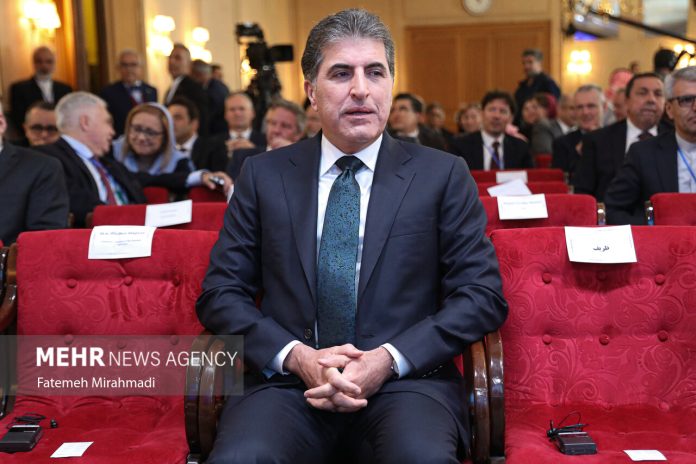
Nechirvan Barzani

Speaking at the Tehran Dialogue Forum, Barzani stated, “We will not allow any danger to emanate from the Kurdistan Region toward our neighbors, especially Iran. Our territory will not be a source of threat to Iran.”

Highlighting progress in regional security cooperation, Barzani noted that a trilateral mechanism involving Baghdad, Erbil, and Tehran has already been established to ensure coordination and de-escalation in sensitive areas.

Touching on the long-standing issue of the PKK’s presence, Barzani expressed support for the current trajectory of developments surrounding the group. “We welcome the evolving situation regarding the PKK,” he said, adding that the Kurdish issue in Turkey cannot be resolved through violence.

“The Kurdish question cannot be solved with blood. We do not interfere in the internal affairs of Turkey or any other country.”

He also emphasized Erbil’s readiness to assist in efforts to address the PKK conflict through non-military means. “We have made it clear that if any help is required from our side, we are prepared to play our role in resolving the PKK problem peacefully.”

The anti-Turkey Kurdish group PKK, which has been fighting for an autonomous region in Turkey’s southeast for decades, was disbanded recently, a move welcomed by regional countries.

Israel claims has found body of Yahya Sinwar’s brother in Gaza

Gaza War

The Israeli public broadcaster KAN alleged that the bodies of Sinwar and ten of his aides were found in an underground tunnel in Khan Younis.

Israeli media earlier reported that Sinwar and several Hamas commanders were killed in Israeli air attacks near the European Hospital in Khan Younis several days ago.

There was no immediate Hamas comment on the Israeli claim.

Yahya Sinwar, the head of Hamas in Gaza, was killed by Israeli army in southern Gaza on Oct. 16, 2024.

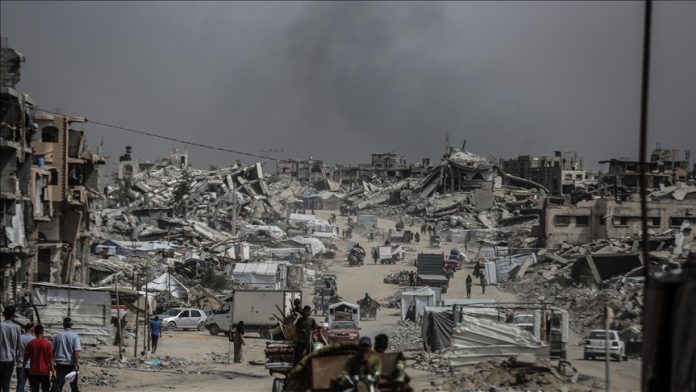
The Israeli army has pursued a brutal offensive against Gaza since Oct. 7, 2023, killing more than 53,300 Palestinians, most of them women and children.

The International Criminal Court issued arrest warrants last November for Israeli Prime Minister Benjamin Netanyahu and his former Defense Minister Yoav Gallant for war crimes and crimes against humanity in Gaza.

Israel also faces a genocide case at the International Court of Justice for its war on the enclave.

Iranian President warns of enemies’ attempts to sow division among regional countries

Masoud Pezeshkian

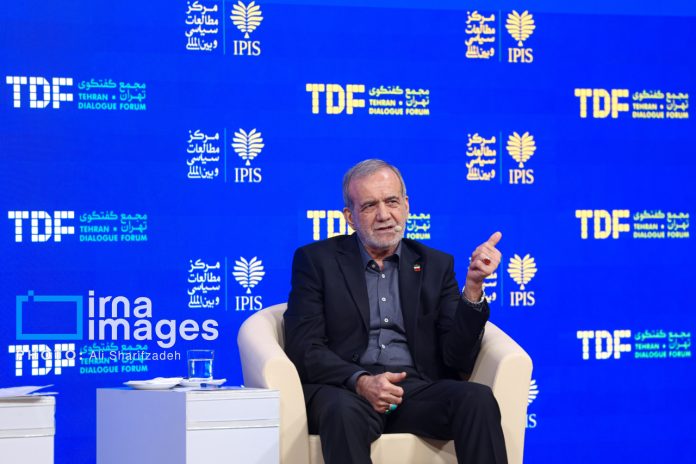
Speaking on Sunday at the Tehran Dialogue Forum, President Masoud Pezeshkian emphasized: “Iran has no quarrel with any country, but our enemies seek to sow division in the region.”

He said: “Trump comes to the region and claims Iran is a source of danger. Do we bomb homes? Do we assassinate scientists? Did we assassinate Ismail Haniyeh, the leader of Hamas, during the presidential inauguration in Tehran?”

Rejecting any warmongering, he expressed hope that the Tehran conference would lead to a shared perspective and dialogue among participants.

Pezeshkian stressed: “My message for constructive engagement and expanding relations has not been received by the West. We have no conflict with anyone; we have extended a hand of friendship, brotherhood, and harmony to all.”

Referring to the crimes of the Zionist regime in the region, particularly in Gaza and the West Bank, he added: “Israel disregards human rights, expels people from their homes, carries out daily massacres, and then speaks of humanity.”

He emphasized the role of regional cooperation in establishing security.

Regarding the indirect nuclear negotiations between Iran and the US, Pezeshkian stated:
“In the negotiations, our rights must be recognized. The peaceful use of nuclear energy is our right, and we must utilize it.”

He strongly rejected claims by the US and some of its allies that Iran is seeking to produce an atomic bomb, stressing: We have no intention of building a nuclear bomb; this is the fatwa of the Supreme Leader.