Thursday, January 1, 2026
Home Blog Page 352

Attacks on healthcare in conflict zones in 2024 reach ‘new levels of horror’: Report

Gaza War

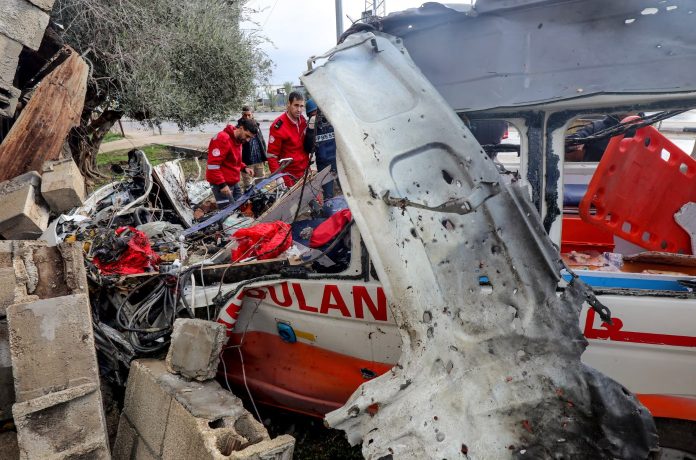
The total is 15% higher than in 2023 and includes air, missile and drone strikes on hospitals and clinics, as well as the looting and takeover of facilities and arrest and detention of health workers.

More than a third of the attacks took place in Gaza and the West Bank, but there were also hundreds recorded in Ukraine, Lebanon, Myanmar and Sudan.

Leonard Rubenstein, the chair of the Safeguarding Health in Conflict Coalition (SHCC), which authored the report, warned that the rise comes at the same time as “attempts by perpetrators to limit legal protections for healthcare and civilians in war”.

He cited sanctions imposed on international criminal court (ICC) staff by US president Donald Trump for having charged Israelis with war crimes, and a 2023 law passed by Russia’s Duma that criminalised cooperation with the ICC.

Rubenstein said: “On average, in 2024, healthcare came under attack 10 times a day across the world’s war zones. Each of these assaults brings terror, trauma, and in too many cases, injury, destruction and death.

“Attacks on healthcare undermine the ability to care for people when it is needed most, in war.”

There were 3,623 recorded incidents in 2024, including 1,111 where health facilities were damaged or destroyed, 927 where health workers were killed, 473 where health workers were arrested and 140 where health workers were kidnapped. Most of the incidents – 81% – were attributed to state actors.

More than 55% of health worker arrests in 2024 were made by the Israel Defense Forces (IDF) in Gaza, the West Bank and East Jerusalem. The SHCC points to reports of physical and sexual abuse inside detention facilities. Nearly half of the deaths were reported from Lebanon, and most were emergency medical responders killed during the IDF’s Operation Northern Arrows.

Explosive weapons are used in an increasing proportion of attacks against healthcare, the report warned, up from 36% of incidents in 2023 to 48% last year. Much of the rise was accounted for by the increased use of drones.

The figures in the report are probably an undercount, it said, due to the difficulty of collecting accurate information during conflict.

Christina Wille, director of Insecurity Insight, who led the report’s data collection, said: “There has been a complete erosion in the respect for international humanitarian law and the responsibility to protect healthcare in conflict.”

She called for a “decisive response”, adding: “Justice must be pursued and accountability enforced.”

The report calls on UN member states to “collectively reject efforts to reinterpret international humanitarian law that undermine their purpose of protecting healthcare in armed conflict” and “end impunity by encouraging investigations, data sharing, prosecutions through the ICC and empowering monitoring bodies”.

It also calls for support for declarations and treaties that would strengthen protections for civilians in armed conflicts, and a review of military doctrines and protocols to put greater emphasis on safety for healthcare.
Israel says to allow limited quantity of food into Gaza

Gaza War

Israel “will permit the entry of a basic quantity of food for the population to prevent the emergence of a hunger crisis in the Gaza Strip,” Israeli Prime Minister Benjamin Netanyahu’s office said in a statement.

It added that a famine “could jeopardize the continuation of Operation Gideon’s Chariot,” referring to a new phase of Israel’s ground offensive in northern and southern Gaza.

The decision was based on “a recommendation from the Israeli military and due to operational needs to enable expanded intensive fighting to defeat Hamas.”

Israel’s public broadcaster KAN, citing an unnamed Israeli official, reported the measure is temporary and expected to last roughly one week, pending the full establishment of aid distribution centers — mostly in southern Gaza and reportedly supervised by the Israeli military and run by American contractors.

Israel and the US are promoting two aid distribution plans, amid Israeli acknowledgment that their actual goal is to depopulate northern Gaza by turning the southern city of Rafah into the primary hub for humanitarian relief and drawing aid seekers there.

Earlier Sunday, Israel’s Yedioth Ahronoth daily newspaper cited unnamed official sources saying that Netanyahu had informed members of the security cabinet of his decision to allow humanitarian aid into Gaza.

The report added several ministers, including far-right National Security Minister Itamar Ben-Gvir, opposed the move and demanded a vote on the decision — a request that Netanyahu reportedly rejected.

The forthcoming move contradicts Netanyahu’s previous statements, where he claimed that the release of US-Israeli soldier Edan Alexander by Hamas last Monday as part of an agreement with the US was unconditional. However, Hamas announced the release was part of broader “understandings” that included aid delivery, as they had previously announced.

On Thursday, Hamas warned that failure to implement the agreements with the US regarding aid entry and a ceasefire will negatively impact “any efforts to complete negotiations on the prisoner exchange process.”

In a statement, the group emphasized its commitment to alleviating the suffering of Palestinians by ending the Israeli aggression and opening border crossings for humanitarian aid. The group added the positive step of releasing Alexander was a reflection of this.

“We expect, based on the understandings reached with the American side, and with the knowledge of the mediators, that humanitarian aid will begin entering the Gaza Strip immediately, a call will be made for a permanent ceasefire, and comprehensive negotiations will be held on all issues to achieve security and stability in the region, which is what we look forward to achieving,” the statement read.

Indirect negotiations are currently underway in the Qatari capital Doha between Hamas and Israel, aiming to end the genocide and finalize a prisoner exchange agreement.

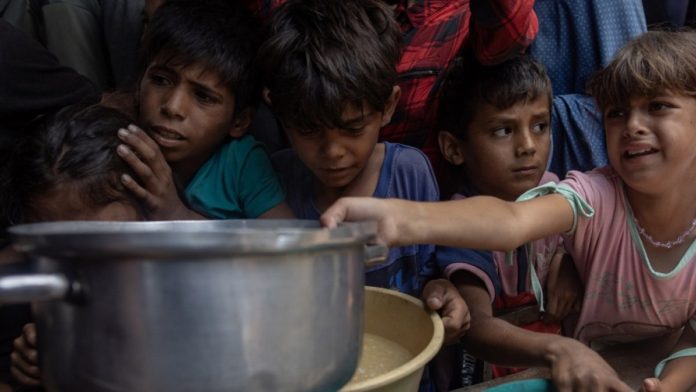
Gaza continues to face severe famine conditions, driven by a deliberate starvation policy enforced by Israel through months-long border closures and restrictions on humanitarian aid.

Israel has kept all crossings into Gaza closed to food, medical and humanitarian aid since March 2, deepening an already severe humanitarian crisis in the enclave, according to government, human rights and international reports.

Nearly 2.4 million people in the enclave live completely dependent on humanitarian aid, according to World Bank data.

The Israeli army has pursued a brutal offensive against Gaza since October 2023, killing more than 53,000 Palestinians, most of them women and children.

The International Criminal Court issued arrest warrants last November for Netanyahu and his former Defense Minister Yoav Gallant for war crimes and crimes against humanity in Gaza.

Israel also faces a genocide case at the International Court of Justice for its war on the enclave.

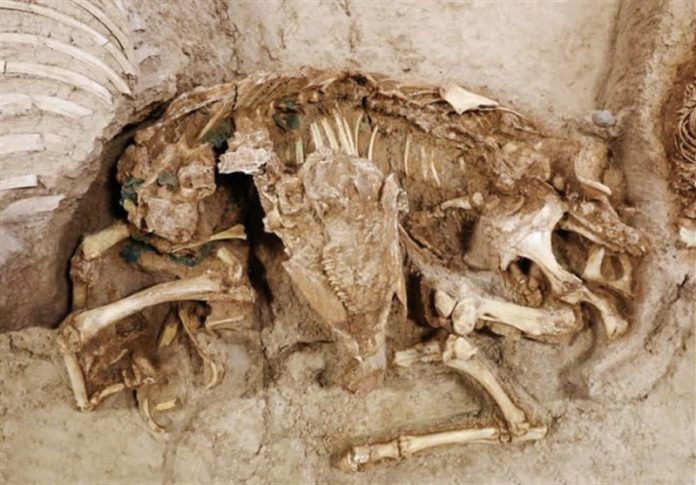
Ancient human skeletons dating back 4,000 years unearthed in northern Iran

According to Mehran Fallah, head of Babol’s Cultural Heritage, Tourism and Handicrafts Department, the find coincides with activities held in honor of International Museum Day and Iran’s National Heritage Week.

Professor Hassan Fazeli Nashli, head of the archaeological team and a faculty member at the University of Tehran, said the excavation revealed multiple historical layers at the site, including remnants from the Iron and Bronze Ages. Artifacts such as clay ovens, rooms, and plant remains were found at depths of up to three meters.

Fazeli highlighted the damage caused to the site’s upper layers by unauthorized digging and looting. He also announced plans for a wider excavation this fall and the construction of a museum in Khorshroodpey.

Among notable discoveries is what may be the oldest necklace found in Iran, crafted from fox and badger teeth, unearthed alongside a child’s remains.

Deal with US within reach if Washington shifts away from bullying approach: Iran’s president

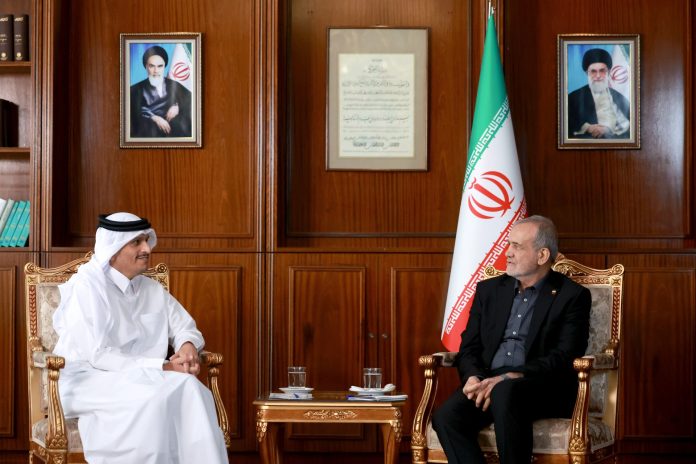
During a meeting with Qatar’s Prime Minister and Minister of Foreign Affairs, Mohammed bin Abdulrahman bin Jassim Al Thani, on the sidelines of the Tehran Dialogue Forum 2025 on Sunday, President Pezeshkian emphasized that the Islamic Republic will never yield to pressure.

The Iranian president also expressed hope that agreements between Tehran and Doha will be implemented swiftly, benefiting both nations.

He further noted that the execution of joint projects and the enhancement of bilateral cooperation would undoubtedly lead to positive developments in the region.

The Qatari official, in turn, conveyed warm greetings from Emir Tamim bin Hamad Al Thani to President Pezeshkian, expressing optimism that the president’s wise approach would foster security and stability in the region.

The prime minister affirmed Qatar’s longstanding support for Iran’s rights, rooted in their shared religious bonds. He also highlighted that, based on past experiences, pressure and coercion have proven ineffective in dealing with Iran, while dialogue and mutual understanding have been successful. The Foreign Minister wished for Iran’s success in the political arena.

Iran on the verge of falling into ‘demographic black hole’

In an interview with ISNA news agency, Dr. Mehrzad Naseri, Deputy for Health Affairs at Tehran University of Medical Sciences, emphasized the urgency of leveraging Iran’s current “demographic window,” a period marked by a high proportion of the population aged 15 to 65, to prevent long-term population decline.

Speaking during National Population Week, Naseri stressed that if this window closes without significant policy intervention, Iran could face a “demographic black hole” that would be difficult to reverse. The number of births in the past year fell by 7%, totaling fewer than 980,000.

He called for short-, medium-, and long-term strategies to reverse declining fertility, citing lifestyle changes, delayed marriages, economic pressures, and increased rates of cesarean deliveries as contributing factors.

Naseri underscored the vital role of media and public cooperation in ensuring a youthful future for Iran, warning that continued inaction may lead to irreversible aging of the population.

Over 300 staff members killed in Israeli attacks in Gaza: UNRWA chief

UNRWA

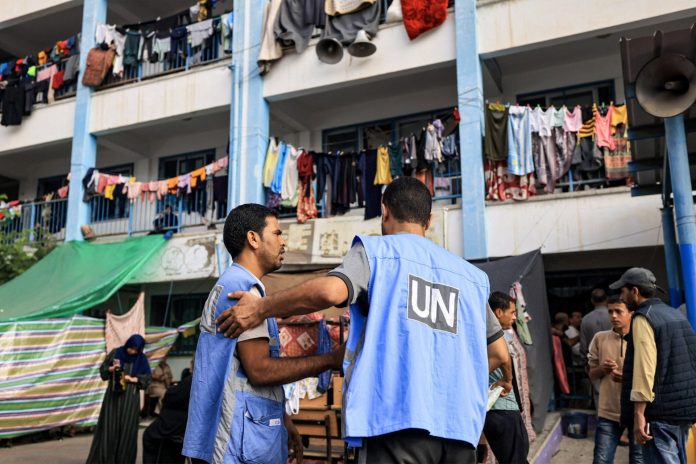
“Today, that death toll has surpassed the gruesome milestone of 300,” UNRWA Commissioner-General Philippe Lazzarini said on X.

“The vast majority of staff were killed by the Israeli Army with their children & loved ones: whole families wiped out.”

Lazzarini said most of the dead UNRWA staff were health workers and teachers.

“Several were killed in the line of duty while serving their communities,” he added.

“Nothing justifies these killings,” Lazzarini said. “Impunity will lead to more killing. Those responsible must be held accountable.”

Established in 1949, UNRWA has served as a critical lifeline for Palestinian refugees, supporting nearly 5.9 million people across Gaza, the West Bank, Jordan, Syria, and Lebanon.

Nearly 2.4 million people in Gaza live completely dependent on humanitarian aid, according to World Bank data.

Since March 2, Israel has kept Gaza crossings closed to food, medical, and humanitarian aid, deepening an already severe humanitarian crisis in the enclave, according to government, human rights, and international reports.

The Israeli army has continued its brutal offensive on the Gaza Strip since Oct. 7, 2023, killing more than 53,300 Palestinians, most of them women and children.

Last November, the International Criminal Court issued arrest warrants for Israeli Prime Minister Benjamin Netanyahu and his former Defense Minister Yoav Gallant for war crimes and crimes against humanity in Gaza.

Israel also faces a genocide case at the International Court of Justice for its war on the enclave.

Iran, Russia sign agreement on geospatial and mapping cooperation

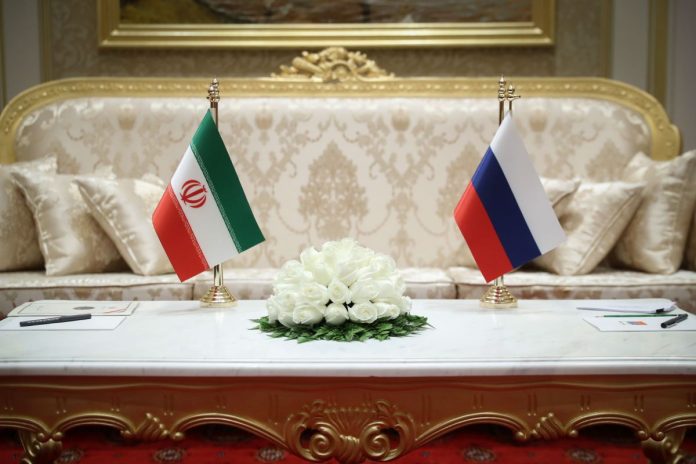
Iran and Russia Flags

The agreement was formalized between Iran’s National Cartographic Center and Russia’s Federal Service for State Registration, Cadastre, and Cartography (Rosreestr) on the sidelines of the 16th International Economic Forum “Russia – Islamic World” in Kazan, Russia.

The memorandum of understanding was signed by Eskandar Seidayi, head of Iran’s National Cartographic Center, and Tatyana Gromova, Deputy Head of Rosreestr.

The agreement aims to strengthen collaboration in mapping technologies, spatial data infrastructure development, and joint geomatics projects.

Speaking to Iranian media, Seidayi highlighted that the two countries will expand cooperation in scientific research, spatial data exchange, technical exhibitions, and joint technological forums.

He emphasized that both nations possess extensive experience in cadastral systems and geospatial data management, making them well-positioned to collaborate regionally and globally.

Gromova echoed the sentiment, noting that Iran and Russia hold advanced capabilities in mapping and geospatial technologies. She said the agreement will streamline the exchange of expertise and enhance mutual cooperation.

Tehran summons UK chargé d’affaires over ‘unlawful detention’ of Iranian nationals

Iranian Foreign Ministry

In response to the suspicious and unjustified detention of several Iranian nationals in the United Kingdom, the baseless charges brought against them, and the unfounded allegations leveled against the Government of the Islamic Republic of Iran, the UK Chargé d’Affaires in Tehran (in the absence of the ambassador) was summoned to the Ministry of Foreign Affairs on Sunday afternoon by Shahram Ghazizadeh, Director of the Third Western Europe Department of the Foreign Ministry.

During the summoning, Ghazizadeh formally conveyed the Islamic Republic of Iran’s strong protest against the aforementioned arrests and the baseless accusations directed at the Iranian government, while also requesting an explanation from the British government regarding the legal basis and justification for the arrests of Iranian nationals.

Underscoring the principled and responsible conduct of the Islamic Republic of Iran in observing local laws and regulations, Ghazizadeh stated that the detention of Iranian nationals and the attribution of charges to them in the absence of any evidence or substantiating proof—coupled with the deliberate withholding of timely notification to the Embassy of the Islamic Republic of Iran and the obstruction of consular access and assistance—constitute a flagrant violation of established norms of international law and human rights.

He called upon the British government to observe its obligations under relevant international treaties, including the Vienna Convention on Consular Relations.

The Director of the Third Western Europe Department further stressed that responsibility for the adverse consequences of such conduct—which appears politically motivated and aimed at exerting pressure on the Islamic Republic of Iran—lies with the British government.

Iran to launch major oil, petrochemical projects monthly through year-end

petrochemical factory in the southern Iranian port city of Mahshahr

The statement was made during a cabinet meeting on Sunday, chaired by President Massoud Pezeshkian.

According to the government’s official news outlet, the initiative reflects ongoing efforts to boost Iran’s energy infrastructure and production capacity amid continued sanctions and regional challenges.

Several executive regulations under the 7th Development Plan were also approved during the meeting, setting new frameworks for national development and reform in the coming years.

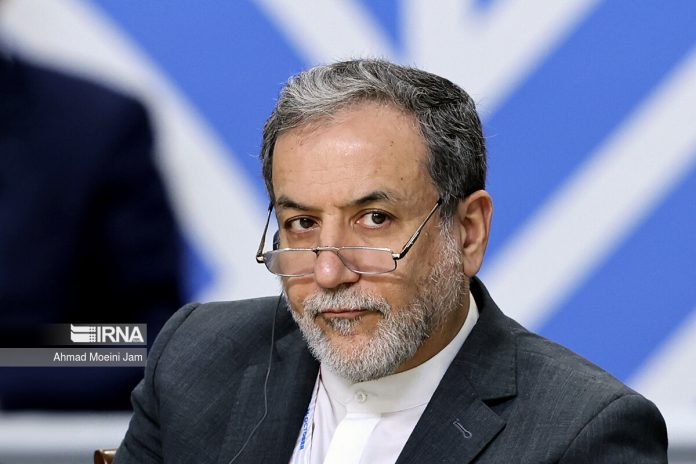
Iran asserts enrichment rights as tensions with US persist over nuclear talks

Abbas Araghchi

“Enrichment is a non-negotiable scientific achievement of the Iranian people,” Araghchi said, adding that the country has paid a heavy price, including the loss of nuclear scientists, to secure this capability.

In response to recent remarks by US envoy Steve Witkoff, who said any deal must include an agreement not to enrich uranium, Araghchi emphasized that any meaningful dialogue must begin with the recognition of this “self-evident principle.”

In similar remarks, US Secretary of State Marco Rubio said Iran must ‘walk away’ from all uranium enrichment.

Araghchi reiterated that Iran’s nuclear doctrine excludes the development of nuclear weapons, noting that even a fatwa, or religious decree, has been issued against such arms.

Meanwhile, Rafael Grossi, Director General of the International Atomic Energy Agency (IAEA), warned that failure to resolve the Iranian nuclear issue diplomatically could escalate instability in the Middle East.

Speaking to DemocraciaTV, Grossi cautioned that adding nuclear weapons to existing regional crises like the conflict in Gaza would be disastrous.

He noted that the IAEA is closely monitoring Iran’s program to ensure it remains peaceful.