Tuesday, December 23, 2025
Home Blog Page 3507

Scientists Use Weed to Produce Nanopharmaceutical for Cancer Treatment

Cellulose is the most abundant natural polymer. Due to its unique properties, it has diverse applications, especially in the field of nanotechnology, including water purification and drug delivery.

One of the main sources of cellulose is wood. Due to environmental crises and the gradual extinction of trees as non-renewable resources, researchers are now seeking an alternative source for more efficient and cheaper cellulose extraction.

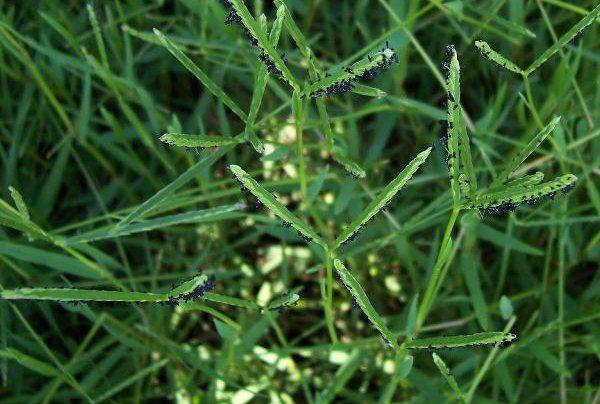
According to Mehr News Agency, researchers from Jiroft University of Kerman Province and Karaj Payam-e Noor University have been able to extract cellulose from weeds and used it to synthesize a widely-used catalyst.

In addition, the synthesized material has also been used for the production of iron oxide magnetic nanoparticles. The extraction of cellulose from such plants at an industrial scale could save 70% of trees cut.

Dr Atena Na’imi, a faculty member at Jiroft University and one of the researchers of this project, believes that weeds inflict huge losses on farmers each year.

For a brief review of Iran’s achievements in various fields of science and technology, check the book “Science and Technology in Iran: A Brief Review

“Weeds are one of the most important factors reducing the quality and quantity of agricultural products, and farmers spend a lot on controlling these plants annually,” added Na’imi.

“However, these plants can be looked at as a cellulose-rich source. We have succeeded in providing a simple and inexpensive way to extract cellulose from such plants and weeds.”

“In fact, in this research, on the one hand, we have transformed the weeds into useful plants by providing an easy, inexpensive and fast solution for the production of large cellulose, and on the other hand, we have taken steps to prevent the massive cutting of trees.”

Dr Na’imi, Dr Asghar Amiri, a faculty member at Karaj Payam-e Noor University, and Elham Tajik, a post-graduate student of Payam-e Noor University have contributed to this project. The results are published in the journal Cellulose in 2017.
Australian Envoy Advises Tourists to Visit Tehran’s Malek Museum

Ian Bigges, accompanied by his wife, visited the Malek Museum on Saturday.

During the visit, he pointed to the grandeur of the works kept in the museum and its great cultural legacy saying that “this collection is so impressive that I would advise all Australian tourists in Iran to see it.”

He also expressed surprise at the extensiveness and diversity of the historical treasures at the Malek National Museum and Library adding that “I did not think the National Museum of Malek is so big.”

“I only knew about its calligraphy works, but after visiting all the halls, I found a variety of Iranian treasures that are of high quality in terms of standards for the presentation and display of works,” ILNA quoted him as saying.

The Australian Ambassador also referred to the geographical location of the museum and difficulties to enter the building as it is close to the historic site of the National Garden and the neighbouring building of Iran’s Foreign Ministry.

“The location of the museum may affect the number of visitors, but the existence of this great treasure has always provided the opportunity to attract tourists.”

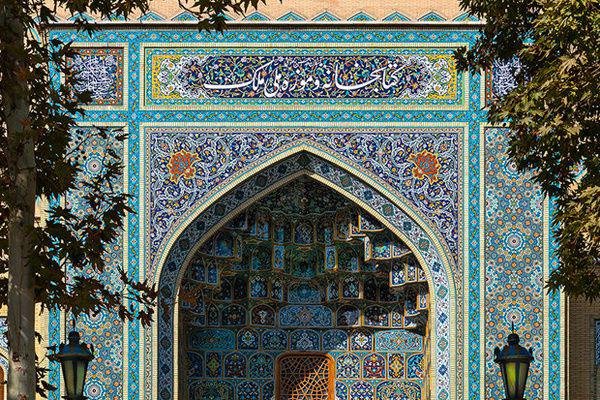
Malek National Library and Museum Institution located in Tehran is the first private museum of Iran and one of the six large libraries holding exquisite manuscripts.

It is one of the biggest libraries of precious manuscripts in Iran, built as a waqf or mortmain property by Hajj Hussein Agha Malek, a merchant and landlord of Iranian contemporary history, in 1937.

He built it in a traditional Persian architecture style. The Institution is located in the historical precinct of “Bagh-e Melli” that is considered the cultural-historical centre of Tehran.

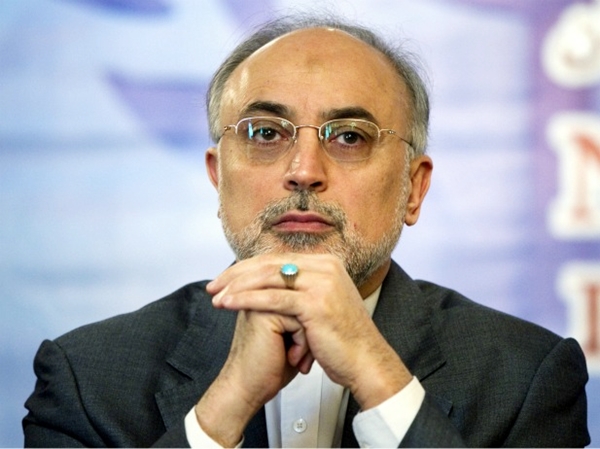
“Iran Has Prepared Infrastructure to Resume Nuclear Work If JCPOA Collapses”

Ali-Akbar Salehi, the head of the Atomic Energy Organization of Iran (AEOI), made the comment at an extraordinary press conference in Tehran where he elaborated on the organization’s upcoming plans and measures in the nuclear domain.

He said Iran has been ready for all scenarios regarding the JCPOA, including the other signatories’ failure to meet their commitments under the deal. To that end, he said, Iran has prepared vast infrastructure that would enable the country to achieve a nuclear capability higher than what it was before the nuclear deal was signed.

Elsewhere in his remarks, the AEOI chief made it clear that sanctions and the implementation of the JCPOA are mutually exclusive.

He also reiterated that Iran will live up to its obligations under the JCPOA.

“We at the AEOI have always paid due regard to this principle. Before the JCPOA was signed, we fulfilled the provisions of the Safeguards Agreement (of the International Atomic Energy Agency), and afterwards, the Additional Protocol and JCPOA commitments were added [to Tehran’s obligations],” said Salehi.

He further underscored that Iran’s nuclear activities are peaceful as instructed in a religious decree by Leader of the Islamic Revolution Ayatollah Seyyed Ali Khamenei.

“We have never deviated from this principle, and will never do so,” he said.

The Iranian nuclear chief then touched upon the AEOI’s objective of producing nuclear energy.

“Another principle is that the organization pursues two key objectives: providing nuclear power and supplying fuel to nuclear power stations,” he said.

Meanwhile, he underlined that nuclear knowhow is a dual-purpose technology.

“In the court of public opinion, nuclear technology has the capacity to be used for both peaceful and non-peaceful purposes, but the West is trying to turn this technology into a weak point for us,” he said.

Salehi underlined that the possession of nuclear technology by any country means that the country enjoys high industrial standards.

“That is why they try to create the impression that Iran does not need nuclear energy as it is an oil-rich country,” said Salehi.

He further said the infrastructure has been prepared to ramp up the uranium enrichment capacity at Natanz nuclear facility to 190,000 separate work units (SWUs) as instructed by Ayatollah Khamenei yesterday.

However, Salehi underscored that Iran’s plans and measures are all within the framework of the JCPOA.

Salehi’s comments came after the Leader on Monday ordered the Atomic Energy Organization of Iran to immediately start preparations – “for now” within the JCPOA – for increasing Iran’s uranium enrichment capacity to 190,000 SWU as of tomorrow.

Aliyev Calls for Accelerated Implementation of Iran-Azerbaijan Railway Project

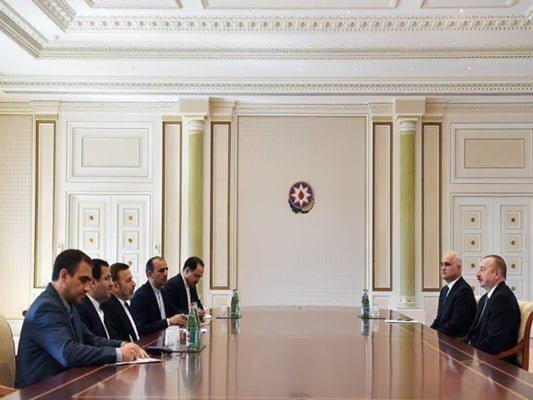
In a Monday meeting with Iranian President’s Chief of Staff Mahmoud Vaezi in Baku, Aliyev also called for the accelerated construction of the North-South Corridor.

According to Borna News, the two sides further exchanged views on a number of mutual and regional issues.

Vaezi, for his part, said the railway project must be completed as soon as possible.

He noted that the Iran-Azerbaijan bilateral relations are successfully developing in various spheres.

Vaezi added that the results of Iranian President Hassan Rouhani’s fruitful visit to Azerbaijan are obvious.

Vaezi arrived in Baku Sunday night for talks with Azerbaijani high-ranking officials.

Earlier he held talks with Azeri Prime Minister Novruz Mammadov and Economy Minister Shahin Mustafayev.

Upon his arrival in Azerbaijan, he said Iran and Azerbaijan are two neighbouring countries which are seeking to restore peace and security to the crisis-hit region.

He also said over the past five years, the presidents of Iran and Azerbaijan have met for at least five 12 times on a wide range of issues.

Vaezi described his visit to Azerbaijan as a good opportunity to brief the Azeri side on Iran’s stance towards the JCPOA following the US withdrawal from the nuclear deal back in May.

He then referred to the 12th Joint Economic Commission between Iran and Azerbaijan and said the commission provides the two sides with a good chance to further enhance their mutual relations.

“EU’s Dream of Restricting Iran’s Nuclear Program While Keeping Sanctions Won’t Come True”

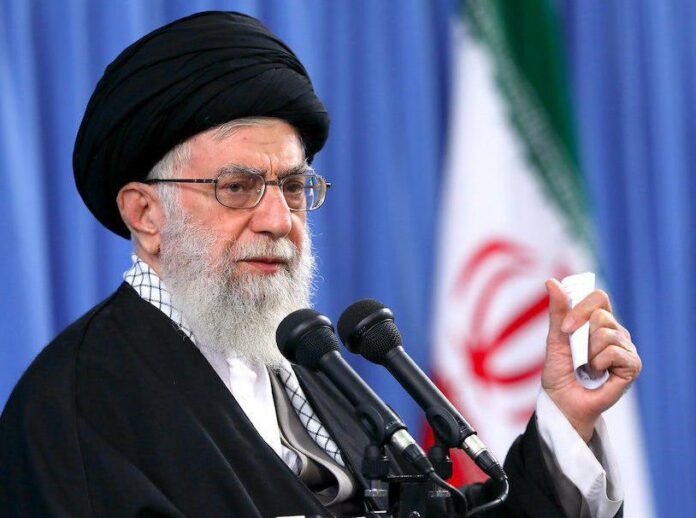
Ayatollah Seyyed Ali Khamenei

Ayatollah Khamenei said on Monday it seems some European states expect the Iranian nation to tolerate the sanctions and struggle with them and at the same time cease its nuclear activity which is a critical need for the future of the country and go ahead with the imposed restriction in this area.

“I tell the European states that their fevered dream about Iran will never come true because the Iranian nation and government will not tolerate to be both under sanction and remain restricted in atomic activities,” he added.

He made the remarks in an address to a ceremony held at the Imam Khomeini Mausoleum in southern Tehran to mark the 29th anniversary of the passing away of the founder of the Islamic Republic.

The Leader also ordered the Atomic Energy Organization of Iran to immediately start preparations – “for now” within the JCPOA – for increasing Iran’s uranium enrichment capacity to 190,000 SWU as of tomorrow.

He also urged the organization to make other related arrangements earlier ordered by Iranian president.

Earlier, Iranian President Hassan Rouhani ordered the country’s atomic agency to prepare itself for enriching uranium at “industrial levels” and warned Donald Trump that he will not be allowed to win the “psychological war” against his country.


Enemy Seeking to Mount Pressure

Elsewhere in his remarks, the leader underlined that the enemy’s main goal is exerting economic, psychological and practical pressure on the Islamic Republic.

“The three types of pressure are aimed at expanding enemy’s hegemony on Iran as it has been already expanded on some miserable and shameful states of the region,” he said.

Ayatollah Khamenei went on to say that one of the main goals that the enemy seeks through economic pressure and sanctions is not only mounting pressure on the Iranian government, but also to make the Iranian nation disillusioned with the Islamic establishment and pressuring the nation into giving in to its bullying behaviours.

He then referred to the enemy’s psychological pressure saying the pressure is mounted to turn the strengths of the Islamic Republic which are the source of authority of the country into challenges and disillusion the nation with them.

The leader cited Iran’s missile program as one of the main targets of enemy’s psychological pressure and said missile development creates security for Iran.

He said today’s generation may not remember that the capital city of Tehran was ruined by the enemy’s relentless missile attacks.

“The enemy’s missiles could reach Tehran and many other cities like Dezful, Ahvaz, and Shoosh,” he said.

“We didn’t have any defensive weapons and had nothing to do against enemy’s attacks but sitting idle and watching our country being ruined. Today, our youths have managed to turn Iran into the first missile power of the region. The enemy knows it well that if it fires one missile at Iran, it will receive ten in return.”

The Leader described missile capability as a source of security for the country and said missile program is a strength.

“Today, the enemy has focused on our missile program and unfortunately some people inside the country echo their remarks casting doubt on the benefits of the program,” he said.

Iran Strongly Condemns Kabul Blast

In a Monday statement, Qassemi said the ‘dirty hand’ of warmongering terrorists committed another crime on a day during which religious scholars from all parts of Afghanistan had come together to hold talks on peace in the country and to condemn terror and violence.

Qassemi said the crime was carried out to prevent the righteous and peace-seeking voice of Afghanistan’s religious scholars from reaching the ears of Afghans and other nations.

He described the voice of the scholars as the voice of humanity, mercy, compassion and fight against animosity, violence, terrorism and suicidal moves.

The spokesman then extended sympathy with the Afghan government, nation and families of the victims of the heinous crimes and said creating a permanent peace in Afghanistan hinges on the unity and vigilance of the Afghan government and nation from all ethnic groups and religions.

Through unity and vigilance, they can leave behind this unwanted, tense and chaotic era, he added.

“As always, the Islamic Republic of Iran will stand by the government and nation of the friendly and brotherly country of Afghanistan and will not withhold any help, support or contribution to restore peace and security in the country,” he said.

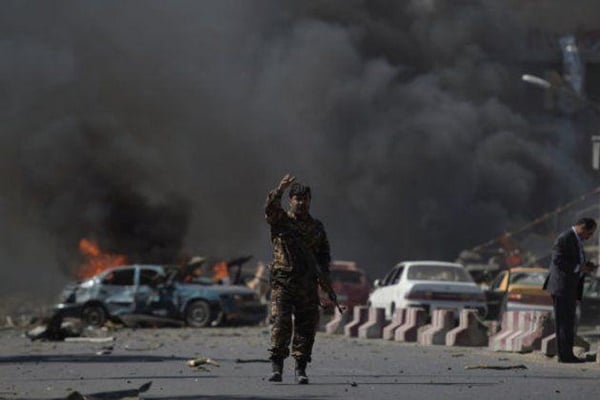
An explosion early Monday near a gathering of religious scholars in the Afghan capital left at least eight people dead.

Afghan Interior ministry said a bomber exploded a device as clerics were leaving the Loya Jirga or Grand Assembly tent in the west of Kabul. According to police sources, 17 people were also wounded.

Some 2,000 clerics from around the country had gathered in the city to denounce terrorism and call for peace.

They issued a joint Islamic directive denouncing the ongoing war and terror attacks as illegal and against religious principles.

No group has yet claimed responsibility for the attack on their meeting.

The Afghan capital has witnessed a series of deadly bombings and gun attacks often claimed by the Taliban and ISIS terrorists.

Over 400 Containers of Explosives Discovered in Northern Iraq

The Iraqi Interior Ministry announced in a statement that the emergency operations unit of police in Nineveh province seized the containers in west of Mosul.

The statement gave no further details about the amount and kind of the explosives discovered, according to Alsumaria website.

Iraqi troops launched an operation to liberate Mosul from terrorists of the ISIS terrorist group on October 17, 2016. Iraqi joint security forces managed to fully liberate east of Mosul in January, 2016.

Iraqi Prime Minister Haider al-Abadi also announced the commencement of a new operation on February 19, 2017 to liberate the west of Mosul.

Iraqi forces announced the full liberation of Mosul on July 10, 2017. Ever since, mop-up operations have been underway to spot and purge the remnants of terrorists from Mosul and other areas across the country. So far, several hideouts of ISIS terrorists have been discovered.

Iran Exporting Pasta to US despite Trump’s Sanctions

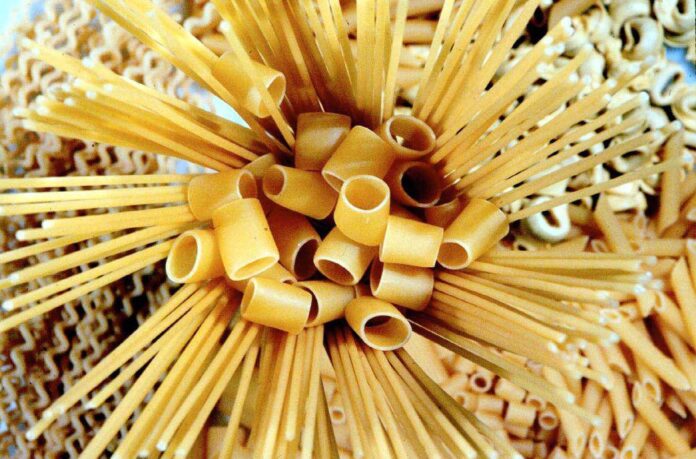
Javad Razzaqi said in addition to African, Asian, European countries and Canada, his company’s products are also exported to New York, Atlanta, Huston, Texas, Dallas, Nevada and California in the US.

He underlined that the pasta produced in his firm is currently exported directly or indirectly to over 80 countries, a report by Iran Online said.

“Trump’s withdrawal from the Iran nuclear deal doesn’t stop our pasta exports to the US,” he noted.

Razzaqi referred to the brutal sanctions imposed on Iran since the victory of the Islamic Revolution in 1979 and said the US has been seeking to turn Iran into a dependent state by destroying its infrastructures.

“But despite all these obstacles, today we have managed to export our products to the US,” he said.

He said his company tried hard to raise its production standard in terms of quality and managed to achieve the goal by gaining the latest knowledge and technologies in production and packaging.

He said the presence of various brands in the market makes it more flourishing and added a brand becomes stronger by competing with other leading brands.

“Creating new national brands in non-oil exports can definitely contribute to job creation and the country’s overall economy,” he said.

Razzaqi finally called on the government to provide exporting companies with material, spiritual and diplomatic support and said enhancing embassies’ role in economy and supporting Iranian exporters through preferred tariffs are among the spiritual contribution that the Iranian government can offer.

“Every Single American Official Plotting to Deal Blow to Iran”

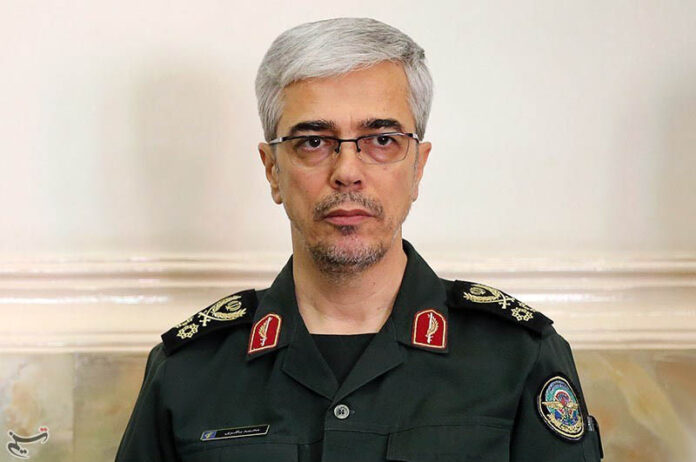
Major General Mohammad Baqeri, the chairman of the General Staff of the Iranian Armed Forces, made the comment at a meeting of top police commanders.

He lauded police for the gains they made in dealing with the recent incidents in the country.

“The front of adversaries and hypocrites has, over the past 40 years, been always trying to deal a blow to the Islamic Republic of Iran. Fortunately, the vigilance of people and the Armed Forces, especially police, has helped thwart their schemes and conspiracies and inflict ignominious defeats on them,” said the top commander.

General Baqeri noted that the animosities of hegemonic powers, especially the US, against Iran will not end.

He said it is a reality that “US statesmen and rulers of the White House are among the most extreme anti-Iran creatures that the history of this country has ever seen, so much so that every single one of American officials seeks to take vengeance and deal a blow to the Islamic Republic of Iran, and openly express their enmity,” said the senior commander.

He enumerated several instances of the United States’ age-old hostility towards Iran while stressing the necessity of reinforcing the country’s defence and security capability.

The top general said the enemies’ plots and machinations against Iran should be tackled vigilantly under the guidelines of Leader of the Islamic Revolution Ayatollah Seyyed Ali Khamenei.

The top general urged the Armed Forces to have local and foreign enemies’ activities and moves on their intelligence radar and called on the military to boost its preparedness to counter the schemes and plots of the enemy front.

Iran to Increase Exports of Knowledge-Based Products to China

That was announced by Morteza Birang, the director of the International Science and Technology Transactions Centre of the Science and Technology Department of the Presidential Office of Iran.

He made the announcement in a meeting with the head of the Iran National Pavilion and Trade Centre in China, reported ISNA.

In the meeting, Birang, the deputy vice president for international science and technology affairs, presented an outlook for the missions and activities ahead. He also expressed readiness to support the promotion of Tehran-Beijing cooperation in the domain of science and technology.

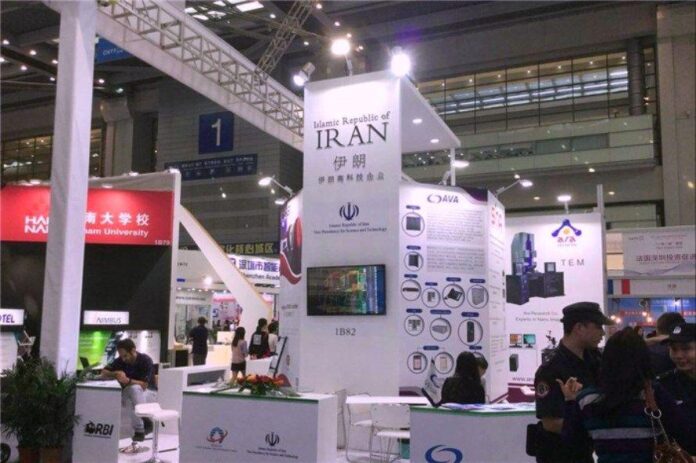
“The establishment of the Iran National Pavilion and Trade Centre in China is aimed at presenting, introducing and expanding the exports of Iranian products, especially knowledge-based ones, to China. So, the centre will back any move in line with sending and receiving trade delegations, holding trade meetings and conferences, and attending exhibitions and international events held between the two sides,” Birang noted.

He expressed hope that exports will be further promoted between the two countries.

The director of the Iran National Pavilion and Trade Centre in China, in turn, said products in seven different fields have been put on show at the pavilion, adding products in the knowledge-based domain stand out from the rest.

For a brief review of Iran’s achievements in various fields of science and technology, check the book “Science and Technology in Iran: A Brief Review

“Every two weeks, in coordination with, and with the management of the Iranian trade agent in China, joint meetings are held between Iranian and Chinese firms at the pavilion,” said the director.

According to the official, an area measuring around 2,000 square metres is being prepared at the second floor of the pavilion to be allocated to the administrative offices of Iranian companies, including knowledge-based firms.

The Iran National Pavilion and Trade Centre in China opened in the city of Shanghai in early 2018 in a ceremony attended by representatives from the Science and Technology Department of the Iranian Presidential Office, Iran’s Trade Promotion Organization, the Chambers of Commerce of Iran and China, the Iranian Consulate General in Shanghai and several Chinese state-run and investment institutions. Currently, some 100 products from 45 knowledge-based companies are on show at the pavilion.