Tuesday, December 23, 2025
Home Blog Page 3488

Iran Will Resort to “Third Option” If EU Fails to Keep JCPOA

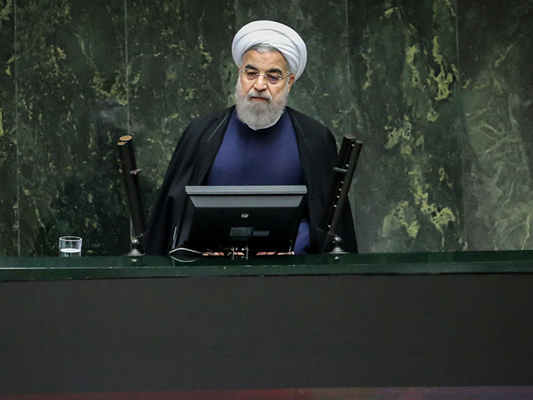
“We can remain in the deal or walk out, but there is also a third path. In case Europe fails to meet its commitments, we will announce a new method that is the third path,” he said.

Rouhani said he has told his French counterpart Emmanuel Macron in a Monday phone conversation that Tehran will resort to that third option in case the EU fails to do its commitments.

The Iranian president did not give any detail about the option, and told the lawmakers he would do so in case it plans to tread on the path.

Back in early May, the US walked out of the deal and since then is working to re-impose anti-Iran US sanctions suspended under the deal.

Washington is also pushing the world to cut trade with Iran and stop purchasing oil from the country. The EU has offered Iran a support package to compensate for the US pull-out.

Iran has announced the package is acceptable at the macro level, but talks are underway between the two sides on details of the package.


Currency Fluctuations Have No Economic Root

The president, who had been summoned to the parliament to respond to the lawmakers’ questions about the conditions of the Iranian economy, defended his government’s economic record, saying it worked hard to improve people’s livelihood.

Rouhani, who championed the nuclear pact during his first tenure in office, said the nuclear deal produced tangible benefits for the Iranian nation, allowing the government to boost economic growth.

However, he said that in the past eight months, changes in the country’s conditions worsened the economic situation.

Rouhani suggested the recent dramatic decline in the value of rial has its roots in a change in people’s perceptions, and not economic reasons.

“I believe the problem was about the people’s perception regarding the future of Iran. People’s perception was suddenly changed,” he added.

The plunge in the value of rial has soared the prices of imported consumer goods and depressed some markets in the past few months.

Earlier this month, the value of rial against the US dollar passed 100,000 in the free market, prompting the government, judiciary and the parliament to take immediate measures to stop the plunge in the value of rial.

Some believe people’s fear of the return of sanctions has pushed them to sell their reserves of national currency, leading rial to slide to record lows.


Iranian Economy Not in ‘Crisis’

Rouhani said the country’s economy is not facing a crisis, urging officials to refrain from conveying such a message to the people.

“Do not say that we are facing a crisis. We are sometimes on the edge of damage, but not in a crisis,” he said.

The president said all branches of power will join hands to overcome challenges, under the guidance of the Leader of Islamic Revolution Ayatollah Seyyed Ali Khamenei.

“We should tell the Iranian people that we won’t allow the US plots to succeed. The nation must be assured that we won’t allow a bunch of anti-Iran people in the White House to plot against us,” he said.


Rouhani Faces Impeachment Risk

Although Rouhani put up strong defence of his government’s record, lawmakers were largely unconvinced by his arguments.

An electronic voting after Rouhani’s speech showed lawmakers were not convinced by his answers to four of their five questions, namely increased smuggling, high rate of unemployment, the flagging economy and the drop in rial’s value.

The lawmakers were only relatively convinced by Rouhani’s remarks on the anti-Iran banking sanctions.

Eighty members of the Iranian parliament, who were unhappy about the government’s economic performance, tabled a motion in an open session on August 1 to question Rouhani about his administration’s economic policies and its response to the country’s economic hardships.

Rouhani’s failure in appealing to the parliament puts him in risk of impeachment, taking into account that Rouhani’s political opponents are threatening to remove the president.

Lawmakers have already impeached his labor minister Ali Rabiei and economy minister Masoud Karbasian this month.

On Monday, there were reports some lawmakers are pushing for impeachment of Minister of Roads and Urban Development Abbas Akhoundi.

Iran Developing National Blockchain Platform

Aboutaleb Najafi, who is the CEO of Informatics Services Corporation, an executive arm of the Central Bank of Iran, said the blockchain technology has applications in many industries, and by 2027, over 10 percent of GDP will be transferred using this technology.

“With the help of banks, the private sector and all other stakeholders, we want to create a blockchain platform for banking [applications],” Fars News Agency quoted him as saying.

Speaking in a conference on the blockchain technology, he said the national blockchain will decrease the cost of small financial transactions for the Iranian people and will allow for the creation of a money transfer network involving Iran and its allies.


Domestic Cryptocurrency in the Making

Najafi said the establishment of the domestic blockchain network will enable Iran to put into effect its own cryptocurrency.

“The national cryptocurrency will be backed by the Iranian rial and issued by the Central Bank of Iran. It has no limitation and its infrastructure network is private blockchain,” he said.

The cryptocurrency’s underlying blockchain technology eliminates the need for a third party and allows for instant, irrevocable and secure transactions.

The Central Bank of Iran in March banned Iranian banks from dealing in foreign cryptocurrencies, including bitcoin, over money laundering concerns, joining the growing list of nations which ban foreign cryptocurrencies, including India and Pakistan.

Dozens of countries such as China, Russia, and Singapore have already developed their own digital currencies, as they address needs of consumer anonymity and transaction efficiency.

“EU Must Be Faster, More Transparent in Saving Iran Deal”

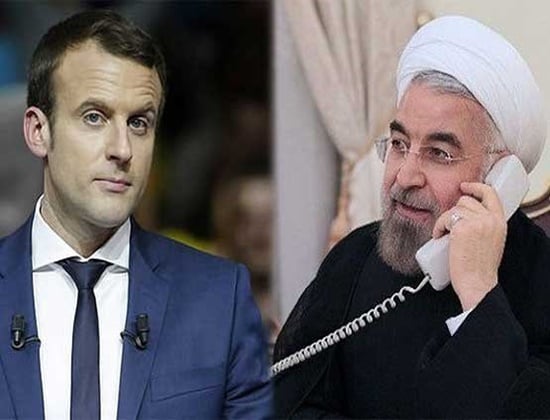
During a phone conversation with his French counterpart Emmanuel Macron on Monday, President Rouhani said Iran has already remained faithful to all its commitments under the deal, and expects other sides to speed up their plans with more transparency to save the deal.

“Iran is seeking to save the nuclear deal but if it comes to this conclusion that there would be no resolute guarantee by the European sides in financial, monetary, oil, insurance and transportation areas, we will turn to our alternative measures,” he added.

According to President Rouhani, the other sides of the JCPOA bear a heavy responsibility to save the nuclear accord following the US pullout.

In turn, Macron expressed his country’s willingness to strengthen its mutual ties with the Islamic Republic and added France will do whatever in its capacity to save the JCPOA and to this end, it would remain faithful to all its commitments.

Elaborating on the measures adopted by the European sides of the Iran nuclear deal to save the accord, Macron said the Europeans have put hard efforts into protecting the JCPOA by following certain trade and financial mechanisms.

During the phone call, the two presidents also exchanged views on a number of regional and international issues including the Syria crisis.

The upcoming meeting between the European foreign ministers as well as the EU Foreign Policy chief with Iranian foreign minister on regional issues was also discussed during the phone call.

President Rouhani and his French counterpart also underlined the need for keeping their close contacts to pursue the two countries’ joint goals.

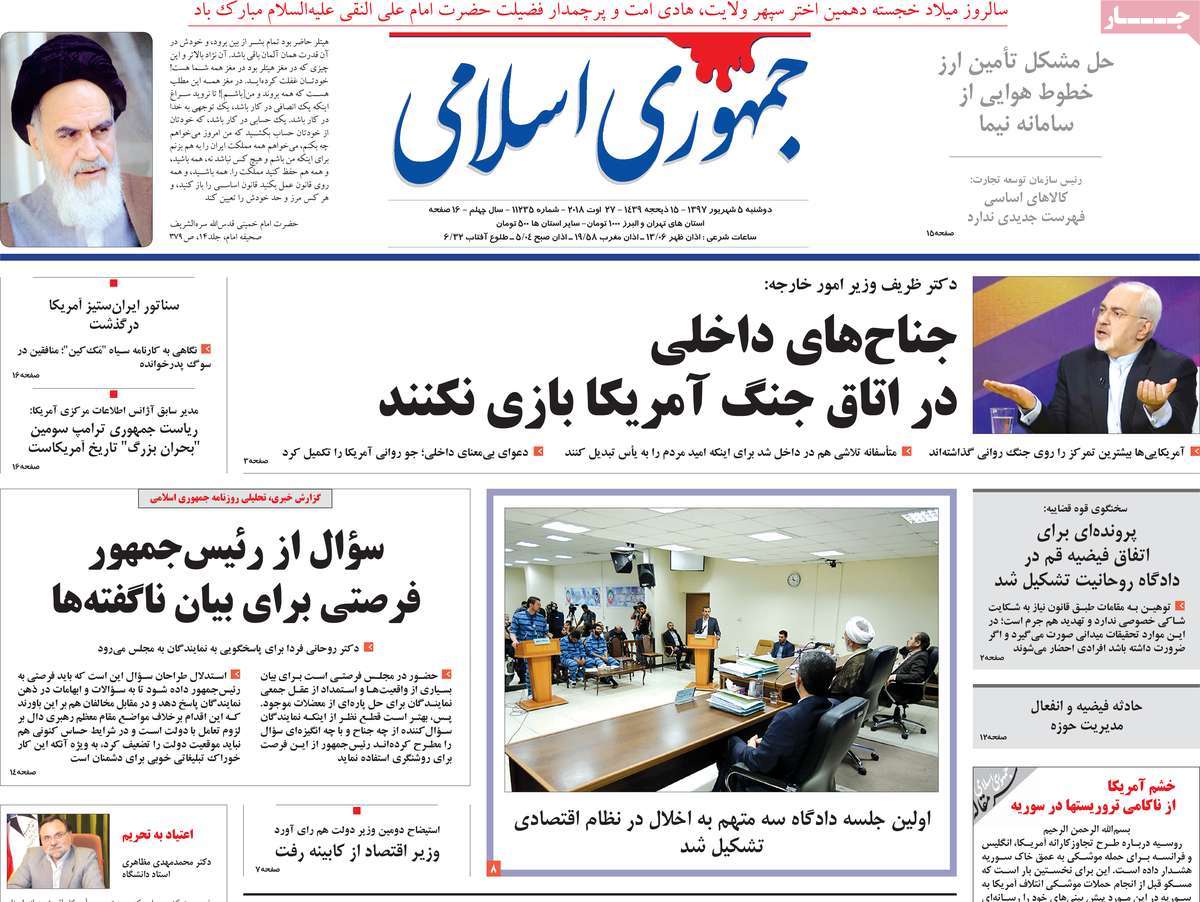
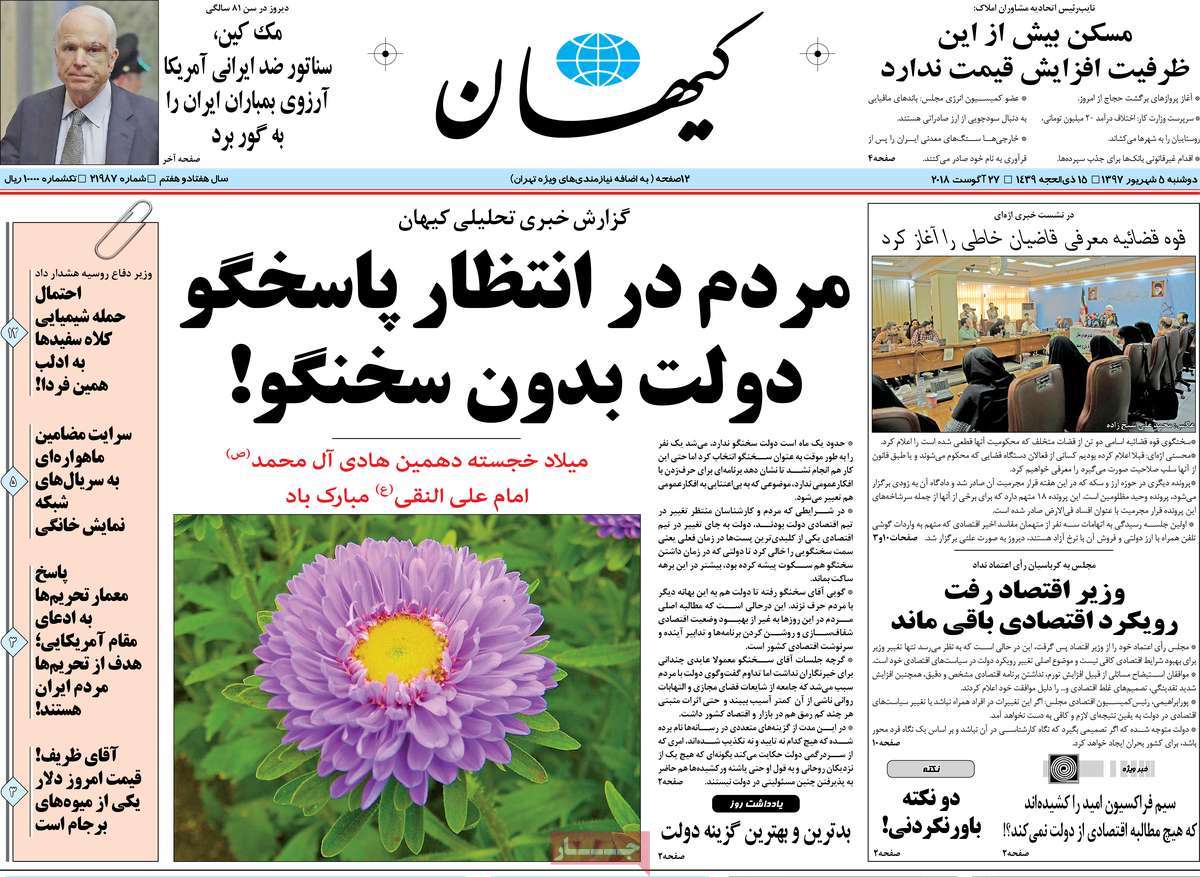
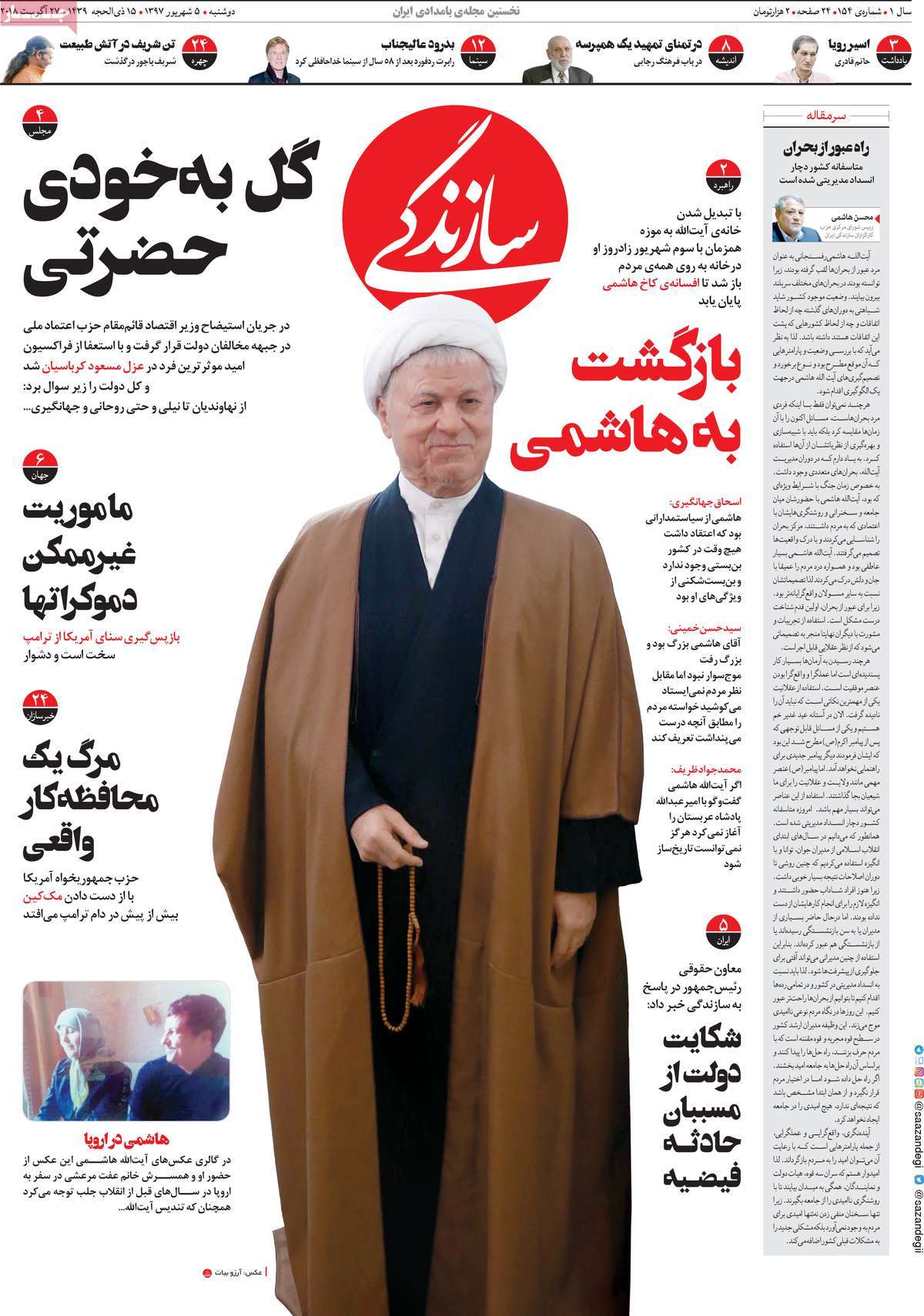
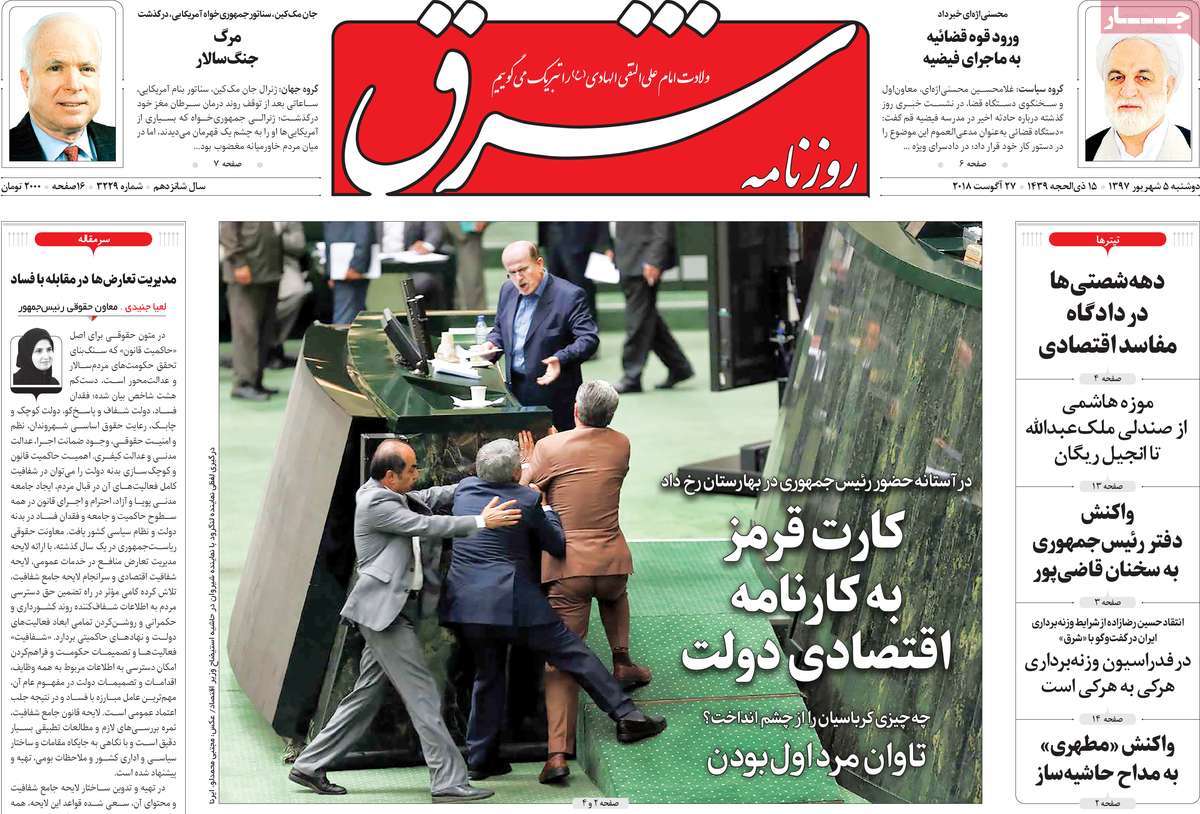
A Look at Iranian Newspaper Front Pages on August 27

A Look at Iranian Newspaper Front Pages on November 19

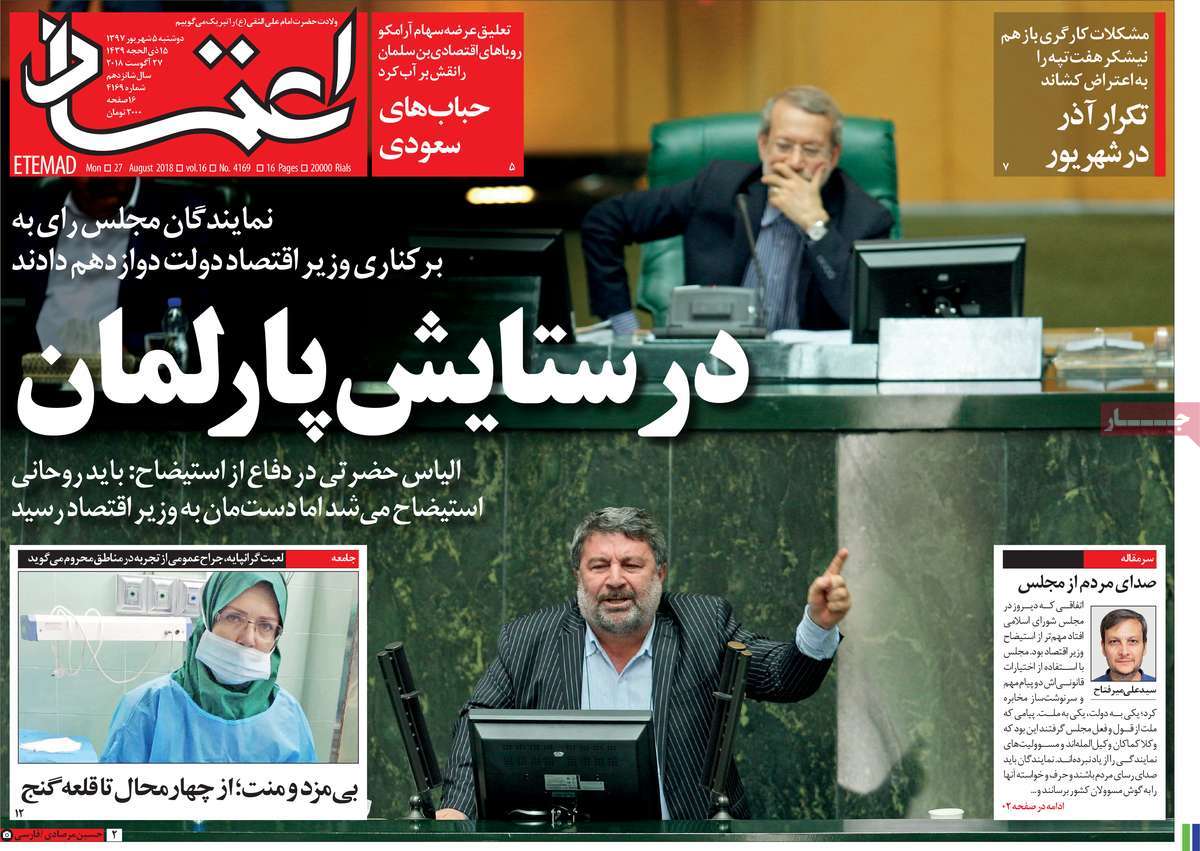
Several papers today covered the impeachment and dismissal of Economy Minister Masoud Karbasian, who failed to gain a vote of confidence from the lawmakers.

The death of US Senator John McCain at the age of 81 also received great coverage. Many papers slammed his political approaches, particularly his support for anti-Iran terrorists and call for an atomic bombardment of the country.

Also a top story was the latest earthquake in western Iran, which once again hit Kermanshah province and killed and wounded hundreds of people.

The above issues, as well as many more, are highlighted in the following headlines and top stories:


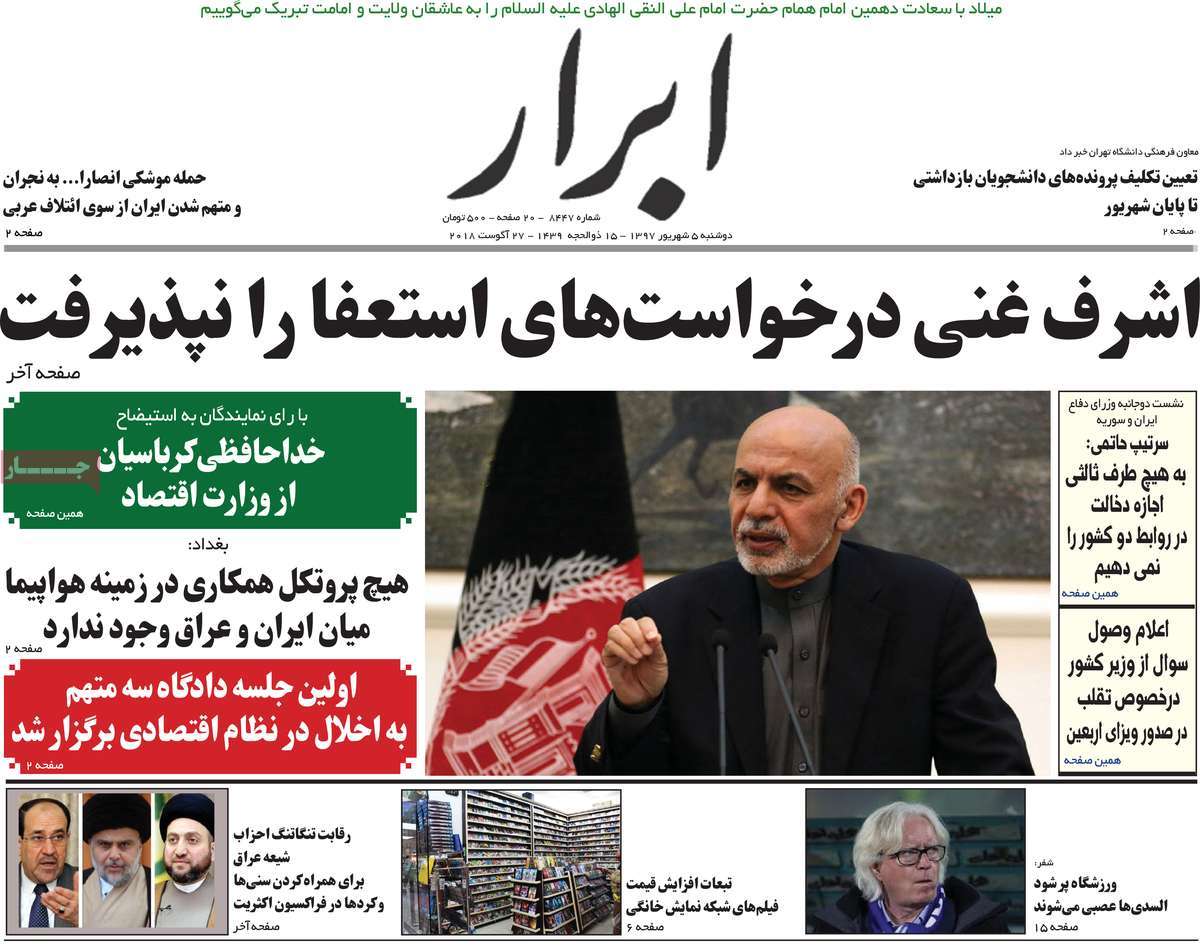
Abrar:

1- Saudi Coalition Blames Iran for Ansarullah’s Missile Attack on Najran

2- Baghdad: No Airplane Cooperation Protocol between Iran, Iraq

A Look at Iranian Newspaper Front Pages on August 27


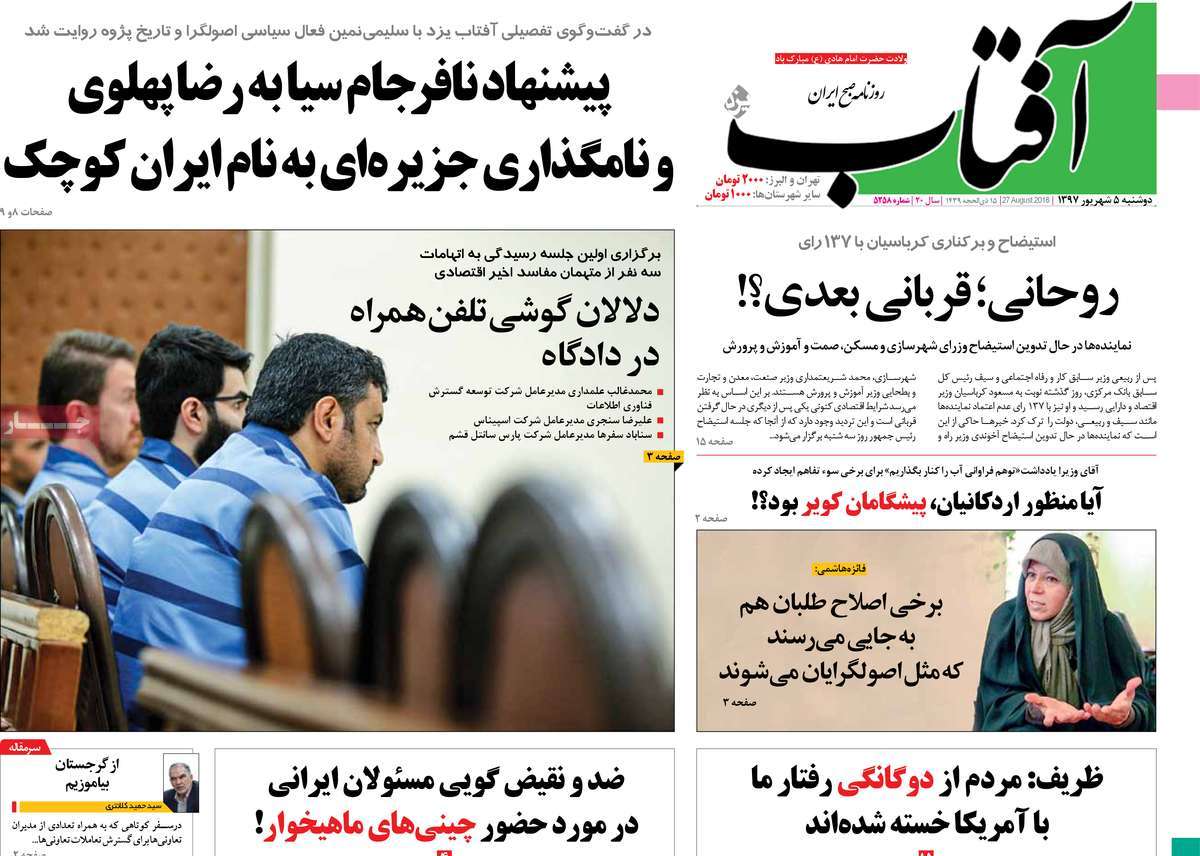
Aftab-e Yazd:

1- Major Cell Phone Dealers Appear in Court

2- Rouhani, Next Victim?! Economy Minister Sacked by Parliament

3- Zarif: People Tired of Our Double-Standard Approach to US

A Look at Iranian Newspaper Front Pages on August 27


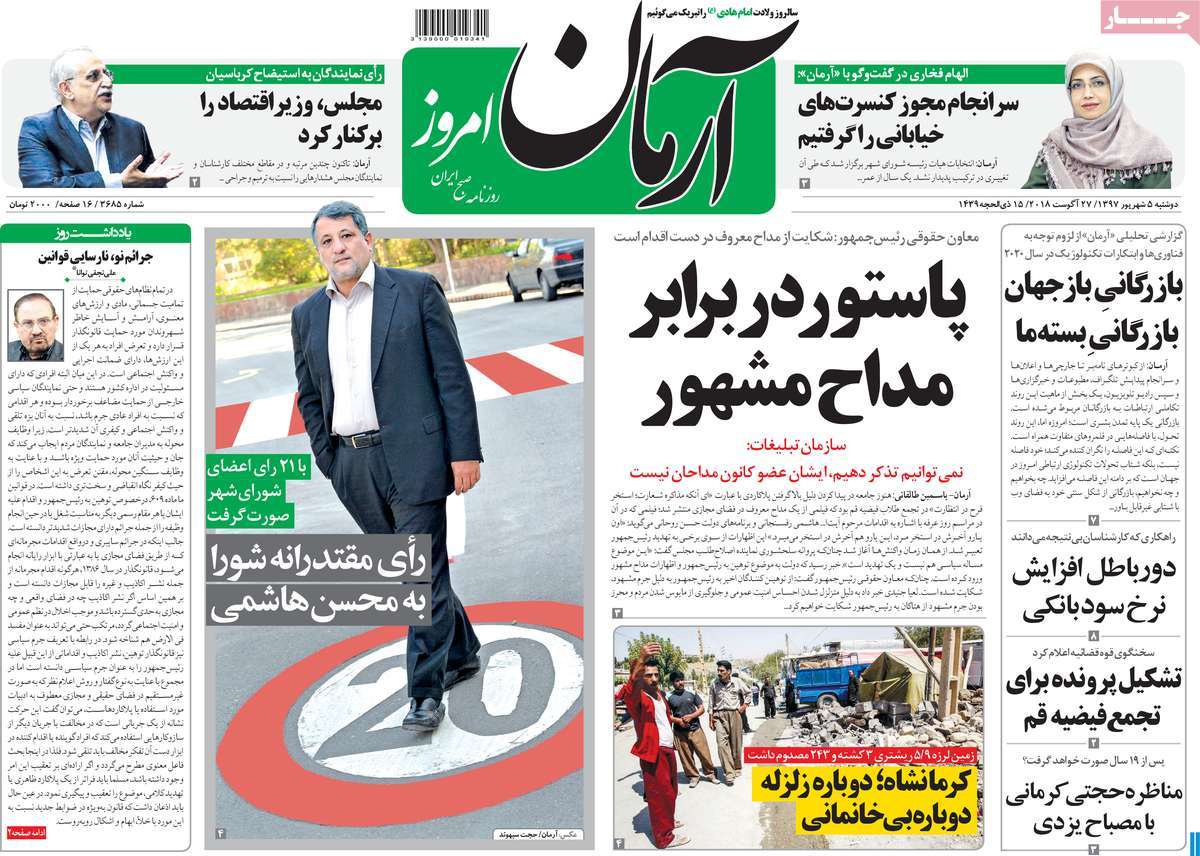
Arman-e Emrooz:

1- World’s Open Trade, Our Closed Trade

2- Another Earthquake in Kermanshah: Homelessness Again

  • 9-Magnitude Quake Leaves 3 Dead, 243 Wounded

A Look at Iranian Newspaper Front Pages on August 27


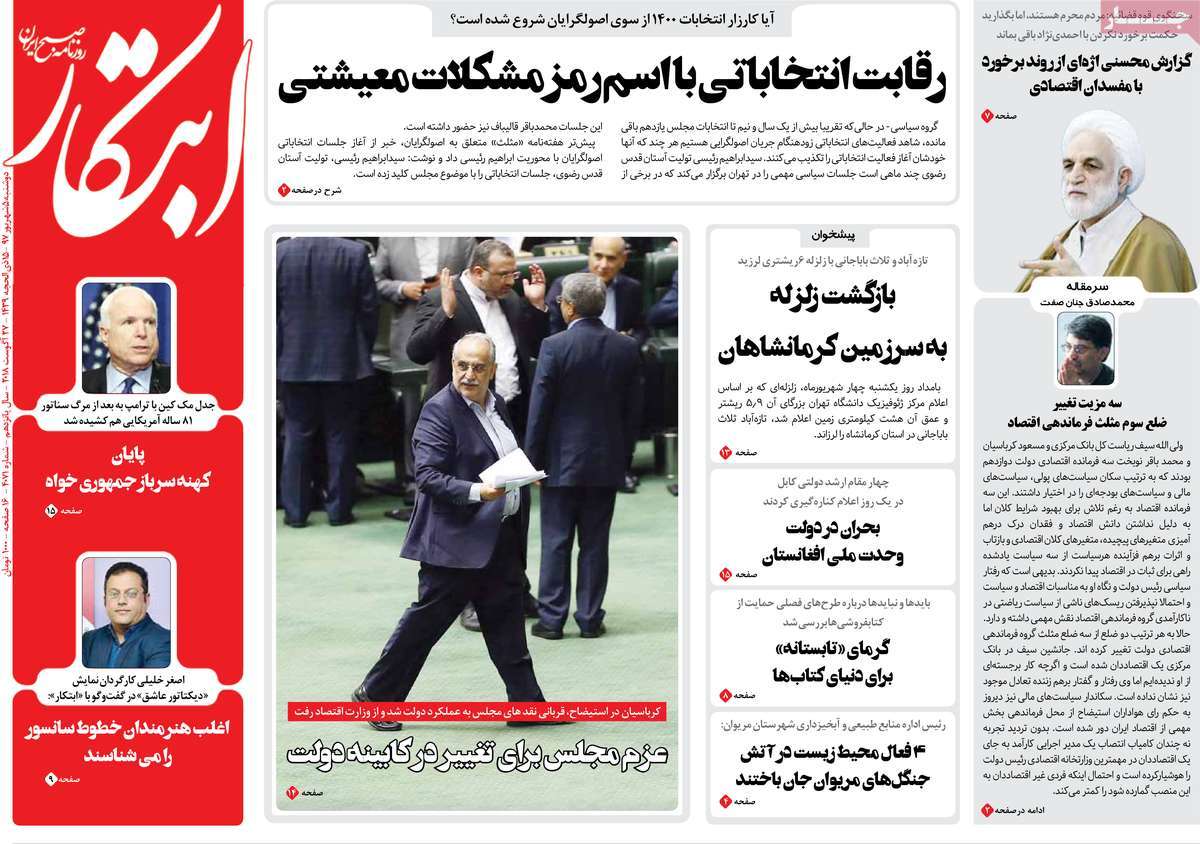
Ebtekar:

1- Parliament Resolved to Change Rouhani’s Cabinet

2- Crisis in Afghanistan’s National Unity Government

A Look at Iranian Newspaper Front Pages on August 27


Etemad:

1- In Praise of Parliament: MPs Vote for Dismissal of Economy Minister

2- Bubble of Saudis: Bin Salman’s Economic Dreams Destroyed after Aramco’s Flop

A Look at Iranian Newspaper Front Pages on August 27


Ettela’at:

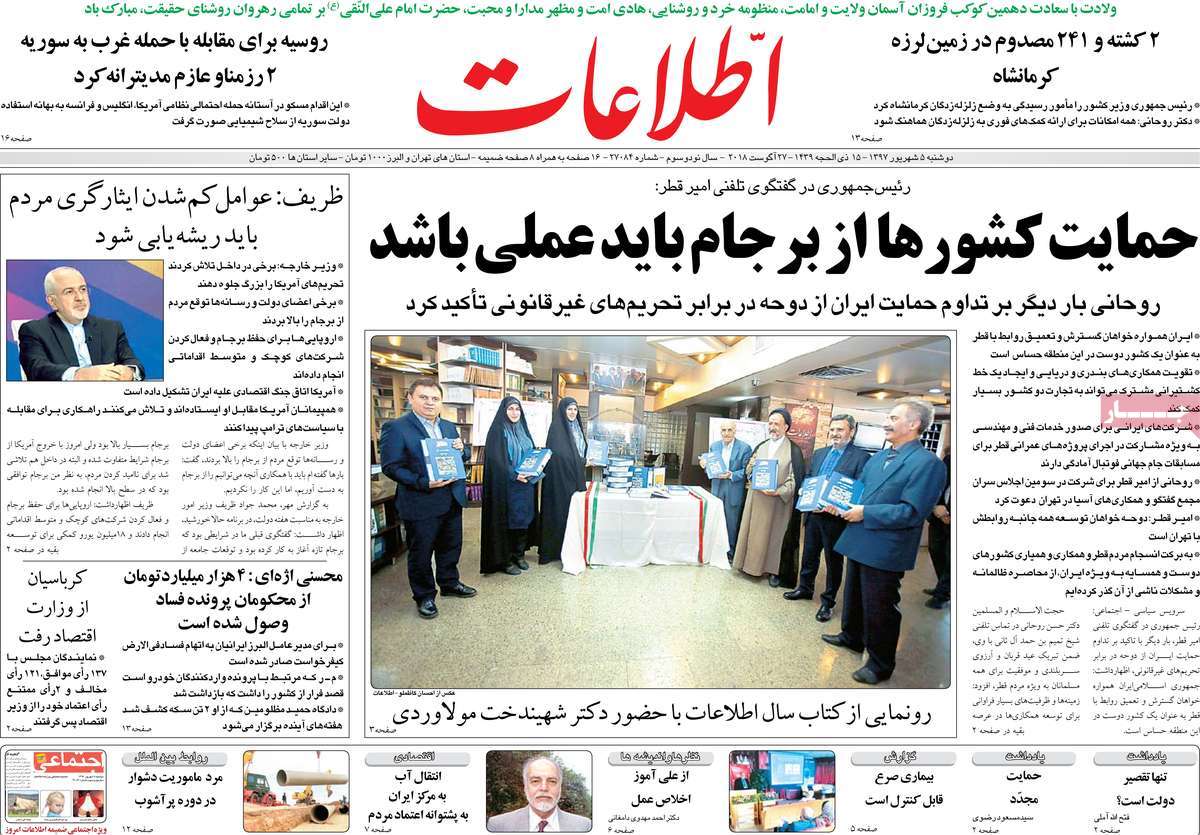
1- Rouhani to Emir of Qatar: Int’l Support for JCPOA Must Be in Practice

2- Russia Deploys Two Warships in Mediterranean Sea to Counter Western Attack on Syria

A Look at Iranian Newspaper Front Pages on August 27


Jame Jam:

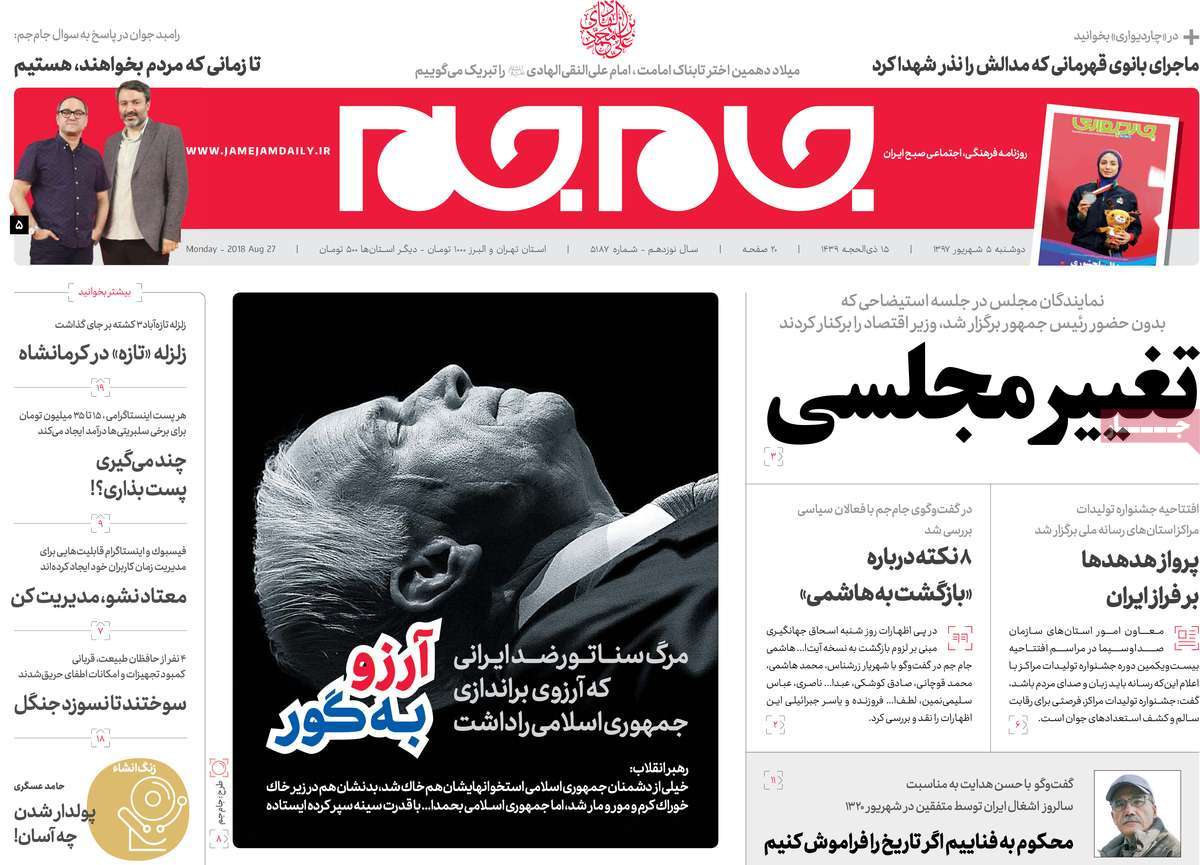
1- McCain Dies before Seeing His Anti-Iran Dreams Coming True

  • Death of Hawkish Senator Who Longed to Overthrow Islamic Republic

2- New Earthquake in Kermanshah

A Look at Iranian Newspaper Front Pages on August 27


Javan:

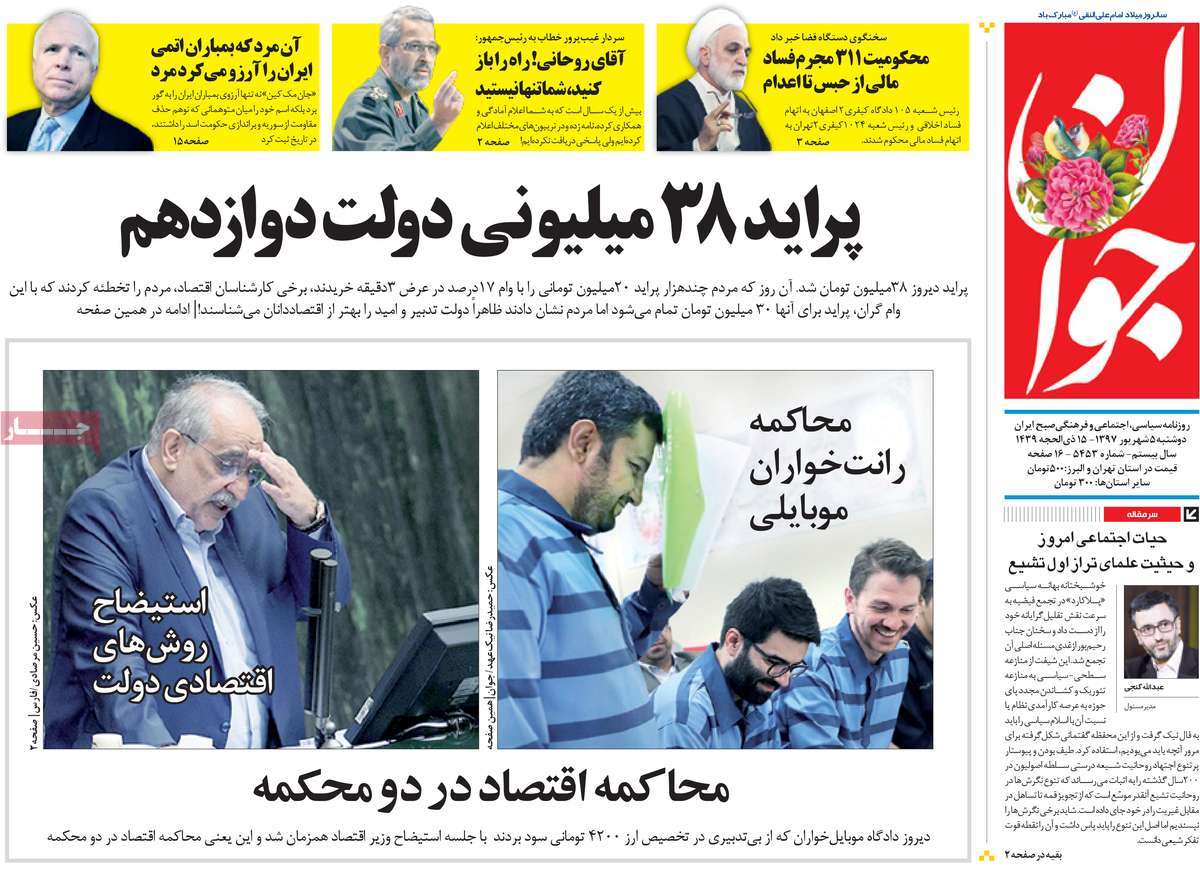
1- Judiciary Spokesman: 311 Sentenced to Prison, Death for Economic Corruption

2- Mr Rouhani! Open the Way, You’re Not Alone: Basij Chief

3- The Man Who Longed to Nuke Iran Is Dead

A Look at Iranian Newspaper Front Pages on August 27


Jomhouri Eslami:

1- Zarif: Iranian Political Parties Should Serve Interests of US’ War Chamber

2- Former CIA Chief: Trump’s Presidency Third Biggest Crisis in US History

A Look at Iranian Newspaper Front Pages on August 27


Kayhan:

1- Economy Minister Gone, Economic Approaches Still in Place

2- Russia DM Warns: White Helmets May Launch Chemical Attack on Idlib Tomorrow!

A Look at Iranian Newspaper Front Pages on August 27


Sazandegi:

1- Democrats’ Mission Impossible: Reclaiming US Senate from Trump Very Difficult

A Look at Iranian Newspaper Front Pages on August 27


Shargh:

1- Death of Warmonger: John McCain, US Rep. Senator, Dies at 81

2- Red Card Given to Rouhani Government’s Economic Performance

A Look at Iranian Newspaper Front Pages on August 27

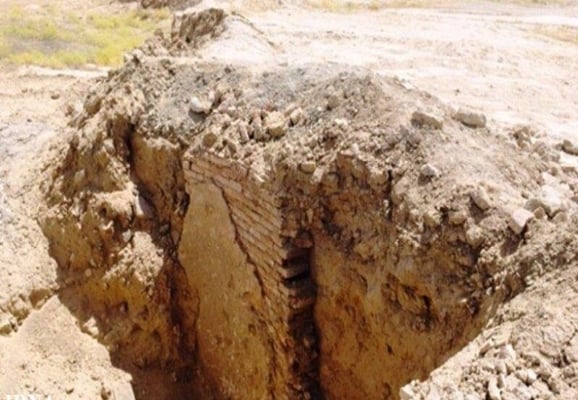
Ancient Brick Structure Found Near Tehran

Senior archaeology official Qadir Afroond says an architectural structure belonging to the early Islamic period was recently discovered at a depth of 4 metres in the course of excavating a piece of land near the Imam Ali highway belonging to the Shahr-e-Rey Chamber of Guilds.

“In the initial exploration of this region with a total area of 90 square metres, the architectural structures of the early Islamic centuries (probably the Buyid dynasty) and a broken clay dish belonging to the Seljuk period were discovered,” added Afroond, who is the Director of the Archaeology Department at the Cultural Heritage, Handicrafts and Tourism Organisation of Tehran Province.

Rey, which has been the capital of Iran for many years and is a major archaeological area of Tehran province, has a lot of historical monuments and tourist attractions. The 6,000-year-old city is considered the third religious city of Iran as it receives more than eight to 10 million pilgrims and tourists every year.

Rey is located in the central plateau of Iran. Bibi Shahr Banoo and Arad mountains as well as the 5,000-year-old Cheshmeh Ali hill are the oldest archaeological sites of Rey.

Rey was the first place in Iran that was connected to capital Tehran by a railroad in 1888 as it was the only important pilgrimage site in vicinity.

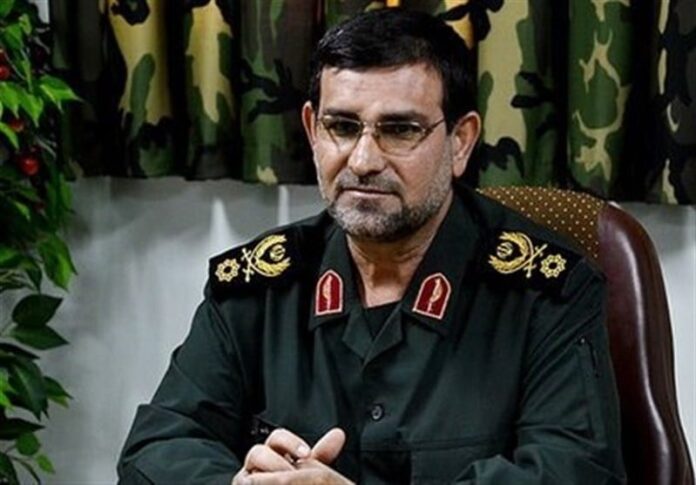
No Place for Foreign Forces in Persian Gulf: IRGC Navy

Speaking to reporters in Iran’s northeastern city of Mashhad on Monday, Rear Admiral Ali Reza Tangsiri said Iranian forces are vigilantly controlling the country’s southern waters in the Persian Gulf and the Sea of Oman.

Highlighting Iran’s intelligence dominance over the enemy and the constant monitoring of hostile forces in the Persian Gulf, the commander said, “We have a message for our Muslim neighbors, and have announced several times that we extend the hand of fraternity to you (the neighbors) and believe that the Persian Gulf is our home, so we can ensure the security of the Persian Gulf and there is no need for the presence of aliens like the US and the countries whose home is not in here.”

Rear Admiral Tangsiri also said that deployment of foreign nuclear warships to the Persian Gulf, which is an enclosed sea, could create environmental problems in the region.

Refraining from dispatching nuclear vessels to their own waters, the outsiders send them to the Persian Gulf, causing problems for Iran and the other Persian Gulf neighbors, he deplored.

Iran has never launched any attack on other countries, the commander reiterated, saying the enemies have misrepresented the reality in order to deploy forces to the region and sell their weapons.

The presence of foreign forces in the Persian Gulf disrupts security in the region, he concluded.

In remarks in 2016, Ayatollah Khamenei underlined that security of the Persian Gulf region comes within the purview of the regional countries alone, and dismissed the US claim of seeking security in the region.

“The Persian Gulf security relates to the countries of the region which have common interests, and not to the US. So, security of the Persian Gulf region should be provided by the countries of this region itself,” the Leader said.

Ayatollah Khamenei has also called for the enhancement of the Iranian naval forces’ presence in international waters and expanding the Navy’s power in balance with the merit of the Islamic Establishment.

ICJ Starts Hearing Iran’s Lawsuit against US over Illegal Sanctions

Iran last month lodged a complaint with the Hague-based tribunal, arguing that the sanctions violate the terms of a 1955 friendship treaty between the two countries.

The country opened a lawsuit Monday demanding the UN’s top court order the suspension of the renewed US sanctions.

“The United States is publicly propagating a policy intended to damage as severely as possible Iran’s economy and Iranian nationals and companies,” Iran’s lawyer Mohsen Mohebi told the court.

“This policy is nothing but naked economic aggression against my country,” he said, adding “Iran will put up the strongest resistance to the US economic strangulation, by all peaceful means.”

Tehran has called on the United Nations court to order the immediate lifting of the sanctions, and demanded compensation for damages incurred in their wake.

Sanctions had been lifted under a 2015 nuclear agreement between Iran and six other countries – the US, Germany, France, Britain, China and Russia.

President Donald Trump unilaterally pulled the US out of the deal with Iran in May and pledged to reimpose the most restrictive sanctions on the country.

Washington reinstated the first batch of sanctions in early August and will re-impose the second batch in November which will primarily be meant to undermine Tehran’s oil exports.

The United States’ lawyers will present their arguments on Tuesday. They are expected to argue that the ICJ should not have jurisdiction in the dispute.

The oral arguments, essentially a request by Iran for a provisional ruling, will last for four days, with a decision to follow within a month.

The ICJ was set up in 1946 to resolve international disputes. Its rulings are binding but on rare occasions they have been ignored by certain countries, chiefly the United States.

The US will respond formally in oral arguments on Tuesday, reportedly arguing that the United Nations court should not have jurisdiction in the dispute.

US lawyers will reportedly claim that the friendship treaty signed before the Islamic Revolution in 1979 is no longer valid and that the sanctions Washington has levied against Tehran, do not violate it anyway.

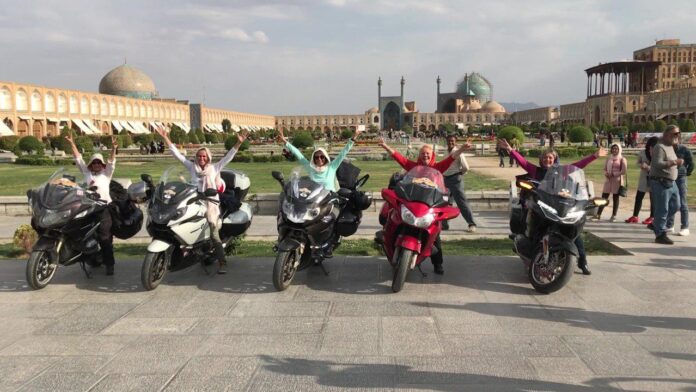
Bike-Riding French Tourists Once Again in Iran after 46 Years

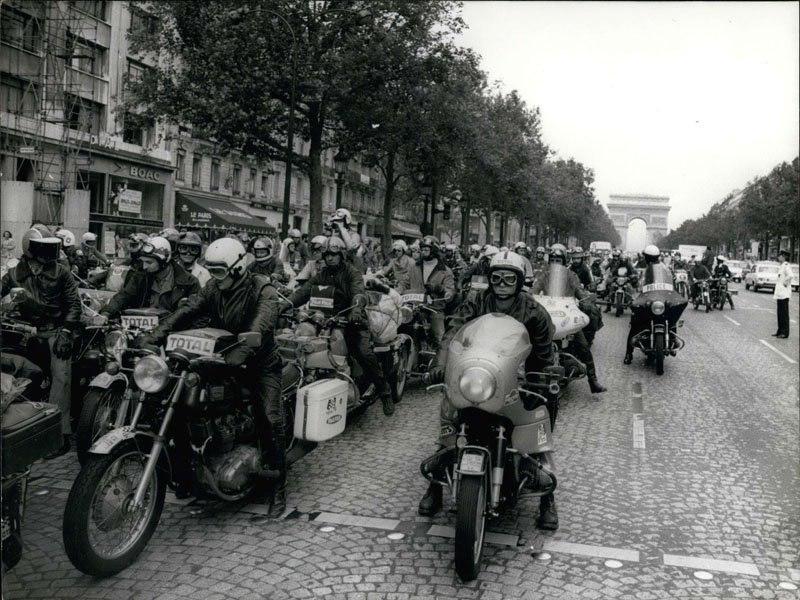
Back in 1972, a group of French tourists travelled all the way from Paris to Isfahan on motorbikes, leaving behind a pleasant memory of their trip.

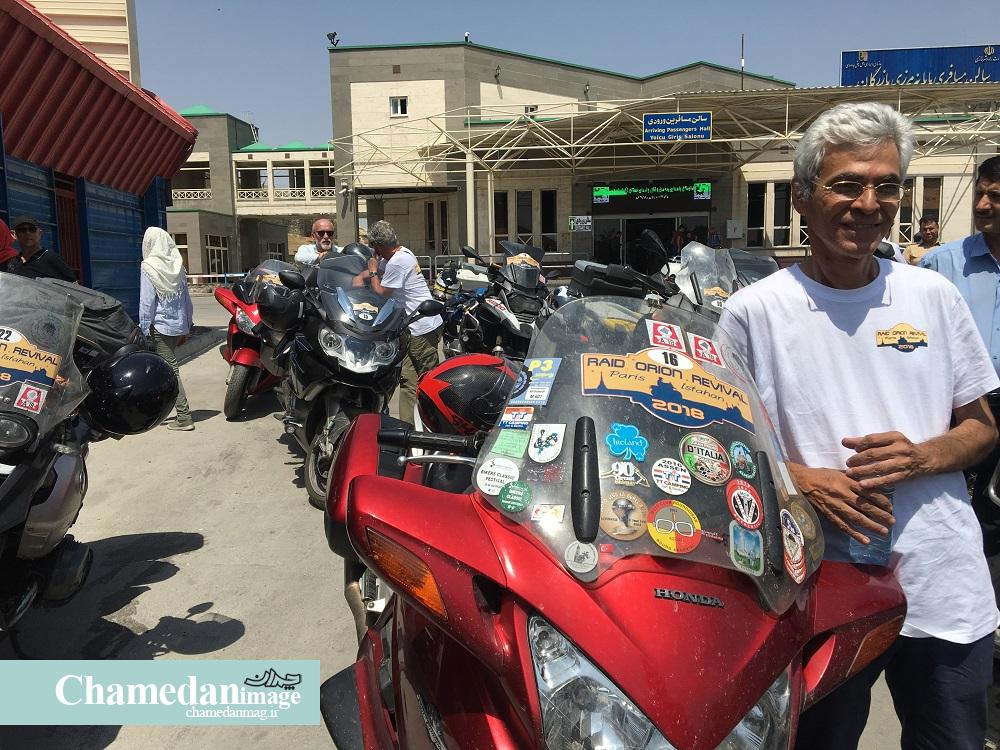
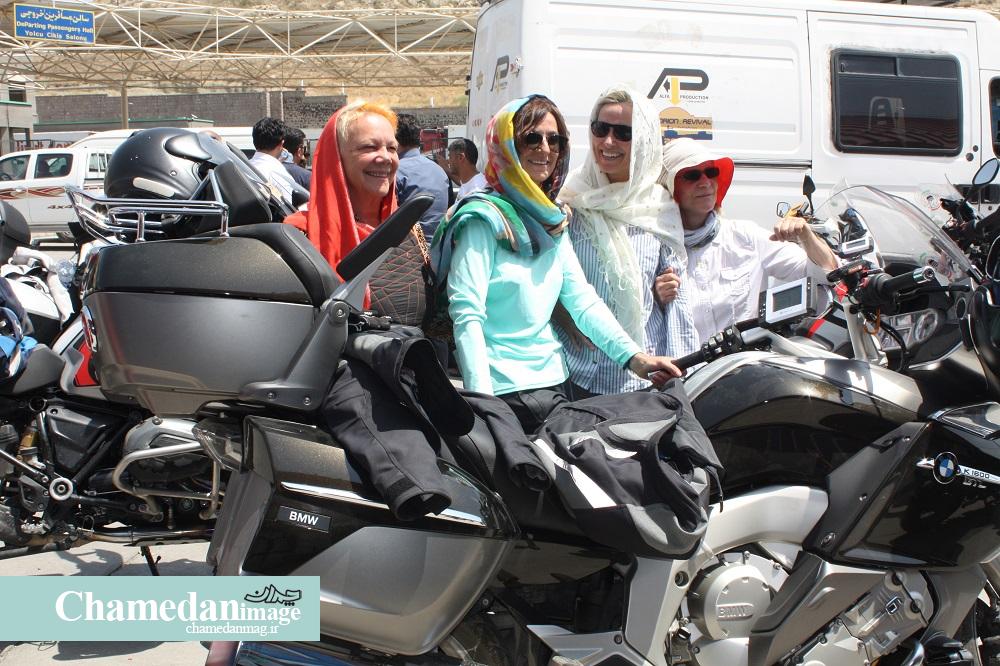
Now 46 years on, history is repeating itself. Over 30 seasoned French globetrotters have left Paris on 20 motorcycles to visit Isfahan to revive the memory of the previous group of tourists.

One of the tourists says Iran has beautiful cities and that the French tourists have embarked on their journey to visit the cities.

The Chamedan website quoted him as saying that they started from Paris and crossed Germany, Austria, Hungary, Romania, Bulgaria and Turkey to reach Iran and go to their final destination, i.e., Isfahan. He says they will also visit several other Iranian cities such as Rasht and the capital, Tehran.

“This is the first time we are coming to Iran,” says the tourist.

The tourists are experienced ones, and the flags of different countries on their motorcycles show they have already travelled to many countries.

They entered Iran on August 21 via the Bazargan border in northwestern Iran.


Iran, Syria Sign Defence Cooperation Agreement

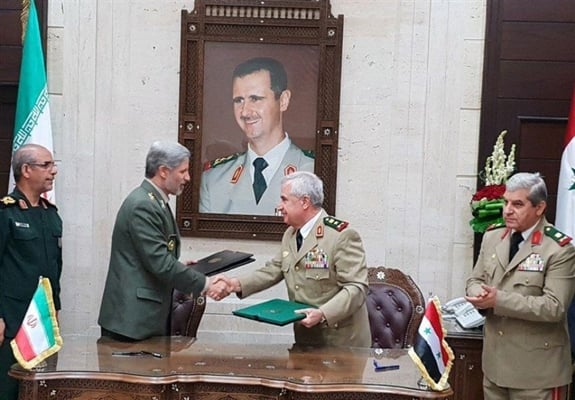
The agreement was signed in a meeting on Sunday between Iran’s Defence Minister Brigadier General Amir Hatami and his Syrian counterpart Ali Abdullah Ayyoub.

Speaking in the meeting, General Hatami said the agreement enables defence cooperation on a wide range of areas, as the reconstruction of the country is due to begin.

The Syrian defence minister, for his part, said he is pleased to see bonds of friendship between the two countries being strengthened, as Iran is a close ally of Syria and its assistance enabled Damascus to achieve big victories over terrorists.

“We will pursue our national interests in our bilateral cooperation and will not allow any country to harm our robust relationship,” he said.

Late on Sunday, Hatami held a meeting with Syrian President Bashar al-Assad, in which they explored ways of boosting Tehran-Damascus relations.

The Iranian general, heading a high-ranking delegation, had arrived at Damascus for a two-day visit on the same day.

Iran has since 2011 been assisting the Syrian army in its fight against terrorism.

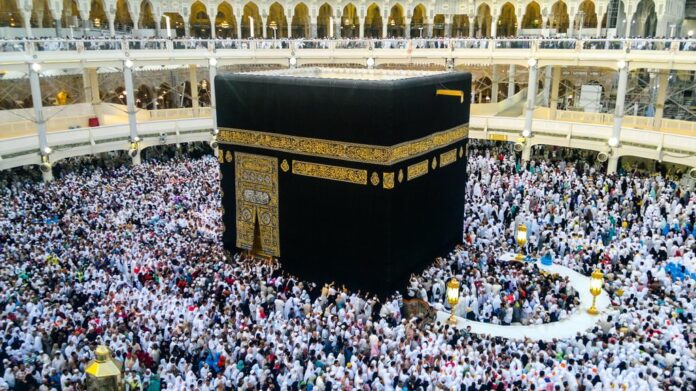
Iran Says Successful Hajj to Pave Way for Tehran-Riyadh Dialogue

Speaking in a presser in Mecca on Sunday, Seyyed Ali Qazi-Askar, the representative of the Leader of Iran’s Islamic Revolution Ayatollah Seyyed Ali Khamenei in Hajj Affairs, said Saudis have been improving the quality of their hajj services year by year, particularly in terms of transport and visas.

“This year’s hajj was one of the best ones in terms of execution and spirituality,” he said.

This month, nearly two million worshippers from across the world took part in hajj, the spiritual journey to Mecca that all able-bodied Muslims with financial means must make at least once in their lifetime.

This year, around 86,000 faithful Iranians were also in Saudi Arabia to perform the annual ritual that started last Wednesday and ended on Monday.

He expressed hope this year’s hajj could prepare the ground for improving relations between the two governments.

“Iran and Saudi Arabia are two big countries in the region, which can minimize their differences through dialogue,” he said.

“As we managed to carry out hajj plans though dialogue and interaction, the two governments can engage in talks to improve political relations,” he said.

“Now that the plot of ISIS has been foiled, we should pursue bigger goals and form regional unity with our neighbours,” Qazi-Askar said.


Iran Following Up on Mina Incident

Iranians were absent in the 2016 hajj, after Tehran and Riyadh failed to reach agreement on security arrangements following a tragic stampede during the 2015 hajj that killed thousands of pilgrims, including 464 Iranians.

Qazi-Askar, who is the head of Iran’s hajj caravan, says Tehran is still following up on the case of victims of the 2015 Mina incident. He says the two sides are waiting for the outcome of investigations by a fact-finding committee to determine if Saudis are to blame for the incident and must pay blood money.

A long period of worsening tensions, escalated by the 2015 hajj incident, led to a severance of relations by an increasingly aggressive Saudi Arabia early 2016.

Riyadh has since then opted to keep the door of dialogue closed and tensions between the two countries have remained at an all-time high.

The Iranian government went to great lengths to heal widening fissures with Saudi Arabia that has accused Iran of aspiring to dominate the Middle East and employed checkbook diplomacy to tilt regional states toward itself and against Tehran.