Friday, January 2, 2026
Home Blog Page 346

Mass Ukrainian drone attack targets Moscow, multiple airports closed

Russia Ukraine War

Moscow Mayor Sergei Sobyanin said that all the drones were flying toward the Russian capital.

Due to the drone attack, all four Moscow airports — Sheremetyevo, Vnukovo, Domodedovo and Zhukovsky — as well as airports in Tambov and Vladimir were temporarily closed.

Other Ukrainian drones were also shot down over the Oryol, Kursk, Belgorod, Tula, Kaluga, Voronezh, Lipetsk, Smolensk and Bryansk oblasts, the Russian Defense Ministry said.

Tula Oblast Governor Dmitry Milyaev stated one of the drones crashed into the roof of an apartment building in Tula. The attack also damaged other residential and non-residential buildings, he added.

Russian authorities haven’t reported any other damage or reported any casualties.

Kyiv hasn’t commented on the attack.

Ukraine regularly launches drone attacks against Russian military and industrial facilities in the rear to undermine Russia’s ability to wage its all-out war.

Moscow and surrounding regions have faced a growing number of Ukrainian drone incursions in recent weeks.

A day before on May 21, Ukrainian drones struck Russia’s Bolkhov semiconductor plant in Oryol Oblast, which produces parts for Sukhoi warplanes and Iskander and Kinzhal missiles, Ukraine’s General Staff claimed.

Iran urges WHO to address refugee health amid regional crises

WHO

In a meeting with WHO Director-General Dr. Tedros Adhanom Ghebreyesus, Zafarghandi emphasized the strain this large refugee population places on Iran’s health system and urged for increased international support.

The Iranian minister praised WHO’s efforts during the COVID-19 pandemic and commended Tedros for his clear and firm stance on the humanitarian crisis in Gaza.

He expressed deep concern over the destruction of Gaza’s healthcare infrastructure and the severe shortages of food and medicine, urging broader international support for its vulnerable population, especially children.

Tedros, in response, lauded Iran’s achievements in primary healthcare and its regional leadership in health services.

He acknowledged the significant burden Iran bears in hosting Afghan refugees and expressed WHO’s readiness to assist, despite current budget constraints.

Addressing Gaza, he stressed the organization’s continued advocacy despite limited access due to the prolonged closure of the Rafah crossing.

Removal of West sanctions on Syria ‘long overdue’ but ‘positive’ step: Iran UN envoy

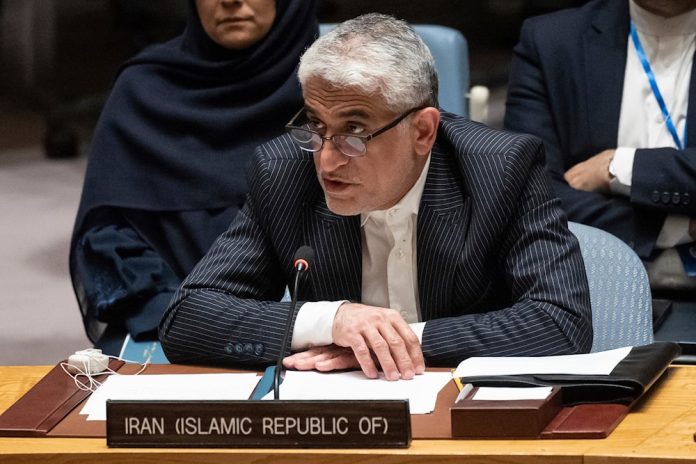
Amir Saeed Iravani

Iran’s Ambassador and Permanent Representative to the United Nations Amir Saeid Iravani made the remark before the UN Security Council session on “The situation in the Middle East: (Syria)” in New York on Wednesday.

He hailed the growing international acknowledgment that humanitarian and reconstruction aid in Syria must not be politicized, saying the suffering of the war-ravaged country’s people should not be used for political purposes.

“We call for the full and unconditional lifting of all unilateral sanctions. These illegal measures violate the UN Charter and international law,” he added.

He emphasized that any easing of sanctions must lead to real and immediate changes in the lives of more than 16 million Syrians who are currently in need of urgent help.

“It must also support the return of refugees and help rebuild Syria’s economy and infrastructure, paving the way for lasting peace and stability,” Iravani said.

On Tuesday, US President Donald Trump announced that he would lift the entirety of Washington’s sanctions against Syria after the new administration in the Arab country reportedly proposed making “peace” with the Israeli regime, the US’s closest regional ally.

The EU has also agreed to lift economic sanctions on Syria in an effort to help the war-torn country recover.

Last month, the UK also announced the partial suspension of sanctions on Syria.

The Iranian envoy reiterated Syria’s right and responsibility to maintain peace and security throughout its territory, noting that the country suffers “fragile” security given the ongoing foreign military presence and illegal occupation, especially in the northeast and south.

“The continued occupation of the Syrian Golan by Israel clearly violates international law and Security Council resolution 497 (1981),” he added.

He stressed the importance of strongly condemning Israel’s repeated attacks, including the May 2 airstrike near the presidential palace.

Israeli warplanes conducted airstrikes adjacent to the presidential palace in the Syrian capital of Damascus on May 2, amid the silence of the ruling Hay’at Tahrir al-Sham-led (HTS) administration.

Since Bashar Assad’s government collapsed in December, Syria has been hit by hundreds of Israeli airstrikes, mainly targeting military infrastructure that belonged to the former Syrian army.

“These acts threaten the region’s peace and are made possible by US support,” he said.

The diplomat once again affirmed Iran’s firm stance on the need for respecting Syria’s sovereignty and territorial integrity and withdrawing all illegal foreign forces “immediately and unconditionally.”

“It is evident that only the Israeli occupying regime stands to benefit from the fragmentation and instability in Syria,” Iravani added.

“Its persistent acts of aggression, repeated violations of international law, and continued expansion of occupation are clearly aimed at perpetuating a state of permanent instability in the country.”

Iravani emphasized the need to fight all forms of terrorism in Syria, especially the threat posed by “foreign terrorist fighters (FTFs).”

He said Iran, as a close neighbor, is deeply concerned about reports that FTFs are being relocated from Syria to other conflict areas, as the move could increase instability in the region and pose serious risks to neighboring countries.

He urged the Security Council to remain alert and respond through strong and effective measures.

US admits Russia is an aggressor, declines to label Putin war criminal

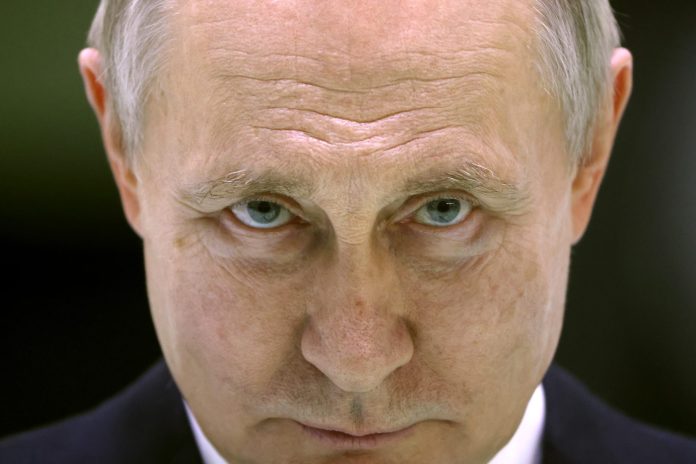
Vladimir Putin

U.S. President Donald Trump held a phone call with Putin on May 19. Trump’s positive impression of the phone call shocked Ukraine’s allies in Europe as Russia continues to refuse a ceasefire.

Democratic Representative Bill Keating asked Rubio, “Is Russia the aggressor in this Ukraine war?”

“They invaded them, yes,” Rubio stated in response.

When asked by Keating if Putin is a war criminal, Rubio admitted war crimes have been committed in Ukraine, but declined to label the Russian leader as a war criminal.

“War crimes have been committed, no doubt, and who is responsible for that, there will be a time and place for that accountability, but right now the job is to end the war,” Rubio said when questioned by the U.S. House Foreign Affairs Committee.

U.S. Treasury Secretary Scott Bessent, on May 7, agreed when asked if he considered Putin a war criminal.

When asked, “Do you consider Vladimir Putin a war criminal?” by Democratic Representative Juan Vargas, Bessent replied, saying, “Yes.”

When Vargas asked, “Would you negotiate with a war criminal?” Bessent replied, noting, “I think that’s the nature of diplomacy, one must negotiate with both sides, Sir.”

The White House has previously been critical of Ukrainian leadership, including President Volodymyr Zelensky. On May 1, Bessent suggested a reset in relations between Ukraine and the U.S. following the signing of a bilateral minerals deal on April 30.

Iran-Saudi model: Zarif calls for regional cooperation in ‘post-polar world’

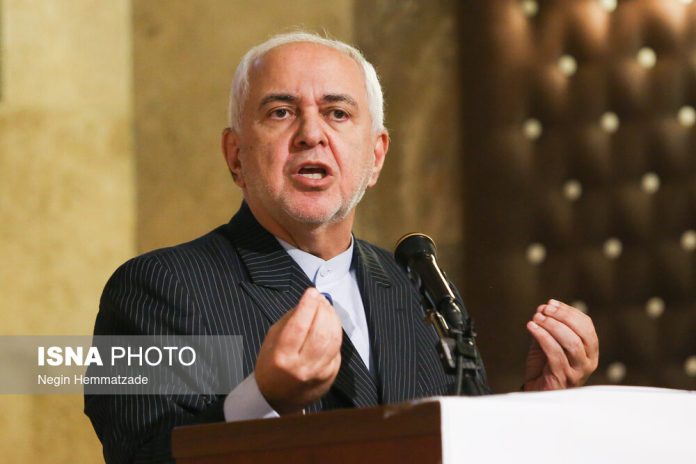
Javad Zarif

In a detailed essay published in the Tehran Dialogue Forum journal, Zarif argued that the world has entered a “post-polar” era, where traditional alliances based on Cold War logic are giving way to flexible, issue-driven partnerships.

The Iran-Saudi deal, mediated by China, is presented as a key example of how regional actors can overcome deep-seated rivalries through pragmatic diplomacy.

Zarif emphasized that the global order no longer follows a clear bipolar or unipolar structure. Instead, it is increasingly shaped by non-state actors, technological innovation, and cross-border challenges like climate change and cyber threats.

He noted that power is now dispersed among states, multinational corporations, digital platforms, and even individuals, challenging the traditional Westphalian model of state-centric international relations.

In this context, he warned that countries in West Asia –including Iran and its neighbors – must abandon outdated models rooted in confrontation and instead pursue collaborative frameworks centered on mutual interests and regional well-being.

Zarif concluded that future stability depends on embracing this post-polar reality. While state actors remain influential, they no longer hold a monopoly on power. By learning from the Iran-Saudi normalization, regional states can lead the way in forming adaptive alliances to navigate an interconnected and unpredictable world.

Iranian doctors remove 47 metal screws from man’s stomach without surgery

Iran Surgery

The procedure took place at Imam Ali Hospital in Karaj, west of Tehran, and was performed using endoscopy, a non-invasive technique.

Dr. Mohsen Rajabnia, a gastroenterology specialist and faculty member at Alborz University of Medical Sciences, led the medical team.

“In a rare and delicate operation, we were able to safely remove all 47 screws without causing any injury to the gastrointestinal or respiratory systems,” Dr. Rajabnia said in a statement.

“The entire procedure was completed in a short time, and without complications.”

The patient is currently in stable condition and is expected to be discharged soon with no lasting health issues, hospital officials confirmed.

The reasons behind the patient’s ingestion of the screws remain unclear.

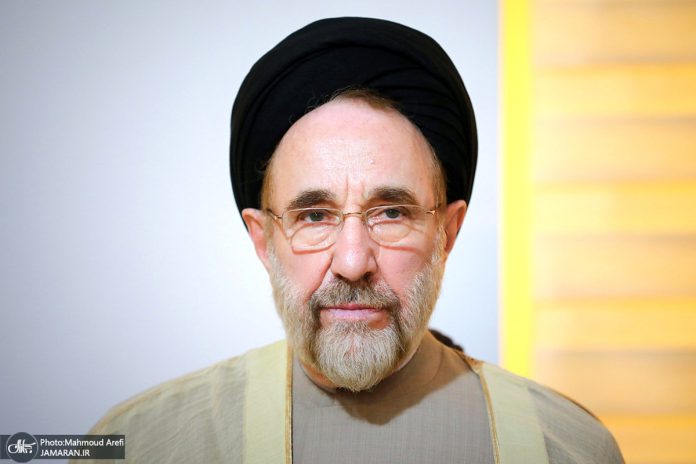
Former Iran president Khatami: Negotiation is not surrender; hope for reform must be preserved

Seyed Mohammad Khatami

“Negotiation and engagement are not signs of submission to the coercion of enemies, but actions aligned with national interests,” Khatami stated.

He noted that a significant portion of both voters and non-voters have found a glimmer of hope for reform and called for that hope to be protected, Entekhab news outlet reported.

Khatami also voiced concern about political restrictions, saying, “If house arrests and limitations are not lifted, the country’s problems will multiply.” He stressed that while opposing voices should not be silenced, it is unjust for the dominant platform to belong to those who view sanctions as a blessing.

Referring to recent political developments, Khatami warned against undermining civil order and reminded that reform is not revolution. “We must prevent the dim light of reform from being extinguished,” he said.

He urged the administration of President Pezeshkisn to remain committed to its promises, expressing hope that the president and government officials will not backtrack on their pledges to the people.

US claims ‘progress’ on ending Russia-Ukraine war

Donald Trump

On May 19, Trump held a phone call with Russian President Vladimir Putin, marking their first known conversation in two months.

“We are trying to settle Russia-Ukraine,” Trump told reporters, adding, “I spoke with President Putin for two hours the day before yesterday. I think we made a lot of progress. But that’s a bloodbath.”

Trump described the war as “a horrible thing.”

“There’s a lot of hatred, a lot of deaths,” he continued, stating, “I get satellite pictures of that field — you never saw anything like that in your life.”

The recent call between two leaders came days after largely inconclusive negotiations in Istanbul, where Russia sent a delegation of low-level officials and reiterated sweeping territorial demands, including that Ukraine accept the loss of Crimea and four other regions.

After the call, Putin reiterated Russia’s maximalist demands, denying full ceasefire agreement.

Trump has been inconsistent in his rhetoric toward the Russian leader, at times voicing frustration with the stalled peace efforts but mostly avoiding direct criticism of Putin.

Despite U.S. efforts, Putin has shown little willingness to compromise to achieve a settlement.

Trump’s approach has caused frustration and confusion among European allies, many of whom wanted him to back a joint U.S.–EU ultimatum for an unconditional ceasefire starting May 12 and tougher sanctions on Moscow. Despite Russia’s refusal, no additional U.S. sanctions have so far been imposed.

Trump has often boasted about his supposedly warm ties with the Russian leader, though the two have not met since Trump returned to office this January.

The two presidents previously held a phone call on March 18, during which Putin rejected Trump’s Kyiv-backed offer for a 30-day ceasefire but declared a pause on strikes against energy facilities, which Ukraine announced was repeatedly violated.

Trump has adopted a more critical rhetoric toward the Kremlin recently amid Moscow’s delays in peace negotiations and continued attacks on civilian areas in Ukraine.

At the same time, the new U.S. administration has also often used a scathing tone toward Ukraine, most notably during an explosive meeting between Trump and President Volodymyr Zelensky in the White House in February. The two leaders held a second meeting on the sidelines of Pope Francis’s funeral in April, which was described by both parties in more positive terms.

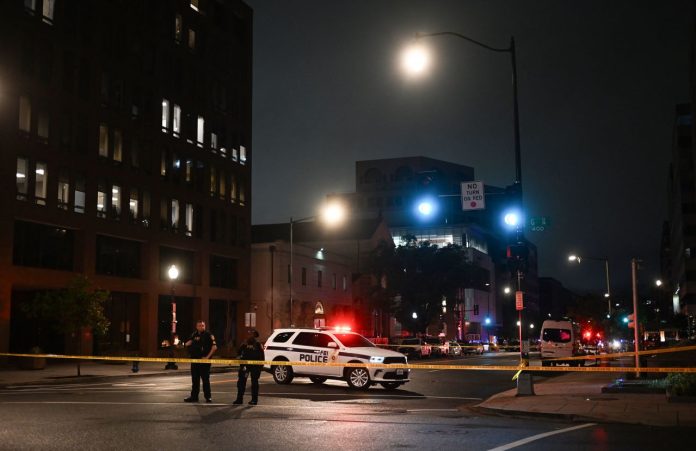
Two Israeli embassy staff in US shot dead

The shooting occurred at about 9pm on Wednesday (01:00 GMT, Thursday) near the Capital Jewish Museum in Washington, DC, according to authorities.

The Israeli Foreign Ministry named the two victims as Yaron Lischinsky and Sarah Lynn Milgrim.

Pamela A Smith, the chief of the Metropolitan Police Department, stated authorities had detained a single suspect over the shooting, identified as 30-year-old Elias Rodriguez of Chicago, Illinois.

“Prior to the shooting, the suspect was observed pacing back and forth outside of the museum. He approached a group of four people, produced a handgun and opened fire, striking both of our decedents,” Smith said at a news conference.

Smith added Rodriguez chanted, “Free, free, Palestine”, while in custody.

Smith did not elaborate on a suspected motive for the attack.

Washington, DC Mayor Muriel Bowser told reporters her administration would not tolerate “violence or hate in our city”.

“We will not tolerate any acts of terrorism, and we’re going to stand together as a community in the coming days and weeks to send a clear message that we will not tolerate anti-Semitism,” Bowser added.

The American Jewish Committee, which had hosted an event at the museum, announced it was “devastated that an unspeakable act of violence took place outside the venue”.

US President Donald Trump has also expressed condolences to the families of the victims, and stressed the killings were “based obviously on antisemitism”.

“Hatred and Radicalism have no place in the USA,” Trump said on Truth Social, adding, “Condolences to the families of the victims. So sad that such things as this can happen! God Bless You ALL!”

US Secretary of Homeland Security Kristi Noem said federal authorities were investigating the attack and would bring its “depraved perpetrator” to justice.

Israel’s Ambassador to the United Nations Danny Danon called the shooting a “depraved act of anti-Semitic terrorism”.

“Harming the Jewish community is crossing a red line,” Danon said.

Israeli Prime Minister Benjamin Netanyahu said he has instructed Israeli missions around the world to beef up security after the attack.

Israel’s Foreign Minister Gideon Sa’ar has also stated he is “very worried” about more attacks on diplomatic missions around the world following the incident.

“I have been worried for the past few months that something like this would happen and it did, and the list of fallen foreign service members has grown today,” Sa’ar said, speaking at a news conference in Jerusalem on Thursday.

He also added there have been a number of attacks and attempted attacks on Israeli missions around the world, many of which he says have not been reported.

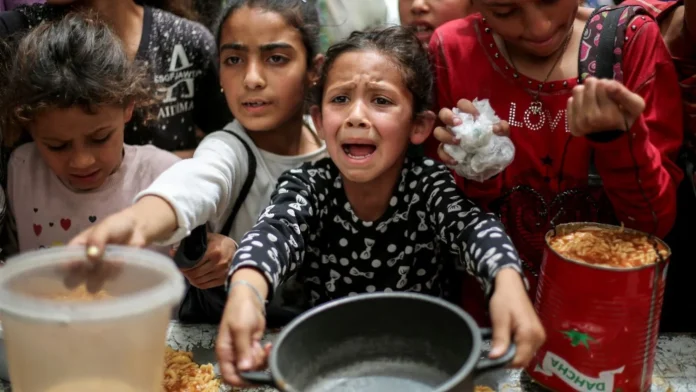
No aid has reached Gaza yet, despite Israeli claim of delivery: Report

Gaza War

Since 2 March, Israel has enforced a total blockade on Gaza, preventing any food, medical supplies, or goods from entering the besieged enclave.

On Sunday, Israel stated it would allow a “basic amount of food” into Gaza for what it described as “diplomatic reasons” aimed at easing international pressure that could force an end to the ongoing war.

The Israeli military claimed that over 90 aid lorries have entered the strip this week.

However, sources inside Gaza told Middle East Eye trucks remain stalled on the Palestinian side of the Karem Abu Salem (Kerem Shalom) crossing.

Aid organisations confirmed that no humanitarian relief has been distributed.

“No aid has entered the Gaza Strip since 2 March,” said Nahed Shuhibar, head of Gaza’s Private Transport Association, in an interview with Alaraby TV.

“Aid lorries are still stuck at the Karem Abu Salem crossing.”

Unrwa spokesperson Adnan Abu Hasna confirmed that while thousands of aid lorries are queued at the crossing, none have entered storage facilities or reached those in need inside Gaza.

UN spokesperson Stephane Dujarric said the delay is complicated by Israeli requirements, which involves offloading supplies on the Palestinian side and reloading them separately once UN access from within Gaza is secured.

Palestinians across Gaza are experiencing worsening conditions and say the promises of aid are nothing more than media illusions.

Barham Zarroub, a resident of Gaza, expressed skepticism over the reports.

“They said trucks would enter, supposedly bringing aid into the Gaza Strip. But not a single truck made it into Gaza. We didn’t see anything in the institutions, or even inside Gaza itself, that indicated any deliveries,” he told MEE.

Even if some aid were to arrive, he added, “it wouldn’t cover even 2 percent of the population” based on the number of trucks set to enter.

“That means only a few families might receive something, and many people might not get anything at all,” Zarroub said.

According to UN estimates, at least 600 lorries per day are required to begin addressing Gaza’s severe humanitarian crisis.

Dujarric said while the arrival of aid was a positive sign, it was “a drop in the ocean” compared to what is needed.

Razan Ahmad, speaking from Khan Younis market, described the situation as desperate.

“Right now, I’m in the Zahra area trying to find flour for my children, and I can’t find any,” she said.

“Honestly, everything being spread on social media and through both Hebrew and Arabic media is completely false.”

She dismissed reports of trucks entering Gaza as “malicious rumours”.

Hajj Ahmad, another Gaza resident, shared similar frustration.

“For more than two months now, we’ve had no food, no meat, no milk. We need calcium, we need protein – these are all things we’ve been deprived of,” he told MEE.

“When they said aid trucks would enter, we were thrilled. But it was all for nothing. Just look at the markets, there’s nothing, absolutely nothing.”

The Israeli war on Gaza has killed 53,655 Palestinians since 7 October 2023, including over 15,000 children, according to the Palestinian health ministry.

At least 58 people have died due to malnutrition and 242 due to a lack of food and medicine, according to the Gaza-based Government Media Office.