Friday, January 2, 2026
Home Blog Page 345

Iran Deputy Foreign Minister: US Insistence on Zero Enrichment to Lead Talks Nowhere

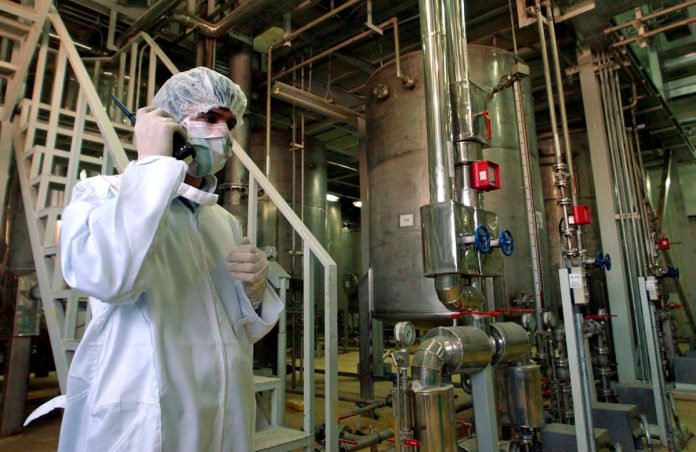
In an interview with the German magazine Der Spiegel, Takht-Ravanchi stated: “Enrichment is part of the achievements of the Iranian nation and is non-negotiable. We will retain our right to the peaceful use of nuclear energy.”

He added: “The reality we face in the negotiations is the contradictory and sometimes inconsistent positions of the Americans. Sometimes, they say one thing outside the talks and another inside them. One US official makes a statement, while another says something different.”

Takht-Ravanchi also criticized Washington’s media approach, saying: “The Americans need to clarify their stance. What matters to us is that negotiations remain in the negotiating room, not in the media. If they try to deprive us of our rights, naturally, we will not agree and will stand against them.”

He also dismissed speculations about possible restrictions, such as a 25-year limit on enrichment, stating: “We have not yet entered into the details of this matter, and these are merely general frameworks.”

Takht-Ravanchi noted: “If the American side does not raise irrelevant issues and demands and abandons threats and intimidation, there is a good chance of reaching an agreement. Iran believes in dialogue and engagement based on mutual respect. Any form of bullying and coercion is unacceptable to us.”

According to Der Spiegel, he warned that continued foreign threats, including military threats, could lead to reciprocal actions by Iran, such as expelling inspectors from the International Atomic Energy Agency (IAEA) and halting cooperation with the agency. However, Iran still seeks diplomacy.
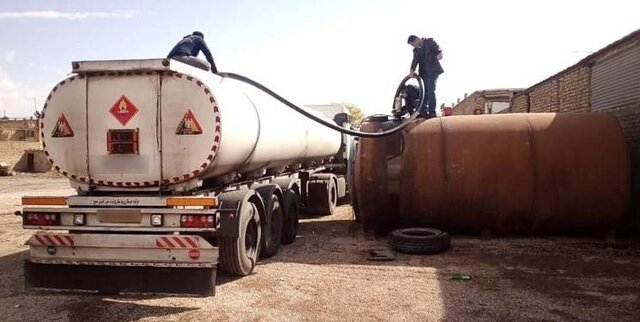
Over 21 million liters of smuggled fuel seized in southern Iran port, equal to daily output of refinery

Mojtaba Ghahremani, Chief Justice of Hormozgan, described the smuggling operation as part of a long-standing and deeply rooted network that developed over several years.

He noted that dismantling the infrastructure has required significant coordination between the judiciary and security forces.

“No less than 10,000 pickup trucks would be needed to remove the fuel reserves currently held in Kolahi,” Ghahremani said, underlining the immense scale of the operation.

He accused the fuel smuggling network of using wealth, influence, and media suppression to conceal their activities, while warning that judicial authorities have launched strong legal action against ringleaders and collaborators.

Ghahremani urged individuals still involved in the network to cease cooperation or face prosecution, noting that those who voluntarily turn in illegal fuel will be eligible for reduced penalties.

Iranian officials urge action as Afghan markets exploit carpet heritage

According to Iranian authorities, Afghan workshops are producing rugs based on Iranian designs and exporting them under the label of “Persian carpets,” capitalizing on the global reputation of Iran’s rich carpet heritage. Due to international sanctions, authentic Iranian carpets face restrictions in global markets, allowing counterfeit versions to flourish.

Abdollah Bahrami, head of the Handicrafts and Tourism Commission of Iran’s Chamber of Cooperatives, criticized the lack of enforceable standards. Although a voluntary labeling initiative began three years ago, no carpets have been officially documented due to its non-mandatory status.

Zahra Kamani, head of Iran’s National Carpet Center, emphasized the need for digital documentation and barcoding to protect the identity and origin of each rug. She stressed that traceable certification would reduce fraud and preserve the cultural integrity of Iranian designs.

Both officials urged the government to mandate labeling to curb exploitation and ensure Iranian carpets retain their global recognition and economic value.

Iran’s armed forces warn US against miscalculations amid regional tensions

The statement, commemorating the historic 1982 recapture of Khorramshahr during the Iran-Iraq War, emphasized the unity and resistance of Iranian forces. It hailed the victory as a symbol of Iran’s national strength and resistance against global powers.

Blaming the US for inciting tensions in the region, the statement accused the American president of attempting to provoke Iran’s neighboring countries and revive failed policies of “Iranophobia” to gain financial and political advantage.

“The Armed Forces of the Islamic Republic will respond decisively and powerfully to any threat or hostile action targeting the values of the Islamic Revolution,” the statement read.

It also warned that any further American “interference” in the region would have consequences similar to the US experiences in Vietnam and Afghanistan. The statement urged US leaders to reflect on Iran’s history of resilience and avoid further miscalculations.

Caspian Sea water levels dropping at alarming rate, Iran’s environment chief warns

Speaking at a regional climate conference in St. Petersburg, Ansari revealed that projections indicate the sea’s depth could decrease by up to 18 meters by 2050.

She emphasized that the combined impact of climate change and unsustainable human activity is accelerating the crisis.

“This treasured body of water, which has sustained life and culture for centuries, is now at serious risk,” Ansari said.

The crisis threatens fisheries, tourism, and endemic species such as Caspian seals and sturgeon, while also creating new dust storm hotspots and endangering vital wetlands like Anzali and Miankaleh.

Ansari proposed the creation of a regional task force, a joint monitoring system, and a review of dam construction policies. She called for a unified regional response under the Tehran Convention, which Iran hopes to strengthen by hosting its seventh ministerial summit next summer.

“Our generation will not be the last to witness the beauty and blessings of the Caspian Sea,” Ansari affirmed, urging nations to transcend political boundaries to protect this shared natural heritage.

Iran FM warns Europe against snapback revival

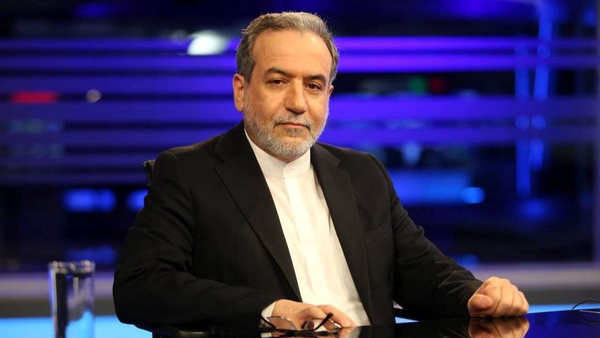
On Thursday night, Araqchi told Iran’s national television that activating snapback would undoubtedly push the non-proliferation regime into a crisis, creating a new crisis that could affect many things.

Referring to the indirect nuclear talks between Iran and the US, Araqchi said Europeans have no particular role in these negotiations.

According to Araqchi, Europeans could activate the dispute resolution mechanism in the nuclear deal (JCPOA) by October this year in a way that reinstates past UN resolutions against Iran. This has led them to believe they can insert themselves into the game using this tool, but this is not an instrument in Europe’s hands at all.

Iran’s Foreign Minister stated that the more Europe threatens to use snapback, the more it isolates itself from Iran’s nuclear issue. Europe must abandon its confrontational approach.

Arqhchi added: “If Europeans want to negotiate with a good-faith approach, we have no problem, but if they intend to use snapback as a sword hanging over our heads to pressure us into something, they will see the consequences.”

Referring to the proposal of forming an enrichment consortium with Iran’s participation, Araqchi said this plan is not bad, and Iran is ready to participate, but it is not a substitute for Iran’s domestic enrichment.

Araqchi stated: “Enrichment is not something we can compromise on, and we have made this clear many times. We tell the US as well that Iran will not give up enrichment. ‘Our enrichment cannot be shut down.’ Enrichment on Iranian soil is a fundamental principle.”

He reiterated: “Nuclear weapons have no place in Iran’s security doctrine. The argument that Iran should not enrich because it might one day pursue weapons is completely disproven by our track record—we have demonstrated our goodwill. If we had intended to build nuclear weapons, we would have done so by now. We have the capability, but not the will, because of the Supreme Leader’s fatwa prohibiting such weapons.”

Iran warns of “special measures” following reports of Israeli attack plans

Iran Nuclear Program

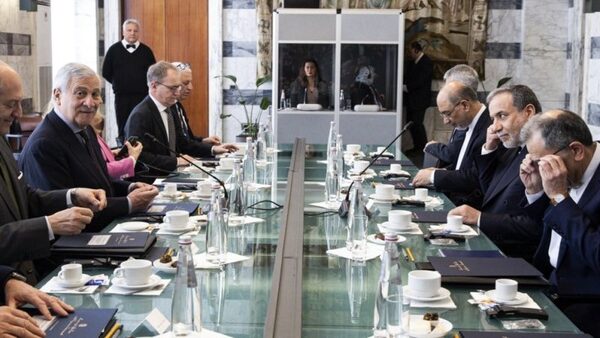
Araghchi stressed that the threats made by the rogue Israeli regime are nothing new. He noted that this must be urgently and seriously condemned by the UN Security Council and the International Atomic Energy Agency (IAEA).

Araghchi confirmed that he has sent formal letters to UN Secretary-General António Guterres and IAEA Director General Rafael Grossi, urging the international community to take “effective preventive measures” in response to the escalating threats.

He warned that failure to act would compel Iran to take “special measures” to protect its nuclear facilities and materials.

“This letter serves as a serious and preemptive warning,” Araghchi added. “The nature and scope of any potential Iranian response will depend on the quality and extent of preventive actions taken by relevant international institutions within the scope of their legal mandates.”

He also took aim at Israeli Prime Minister Benjamin Netanyahu, calling him a “wanted man” who is “desperately attempting to dictate terms to the United States” and “derail diplomacy” to distract from his arrest warrant by the International Criminal Court (ICC).

“Iran will not hesitate to deliver a firm response to any potential aggression and will place no limits on its defense of its people and national interests,” Araghchi concluded.

Ukraine to pitch harsher Russian sanctions to EU as US bans fall through: Reuters

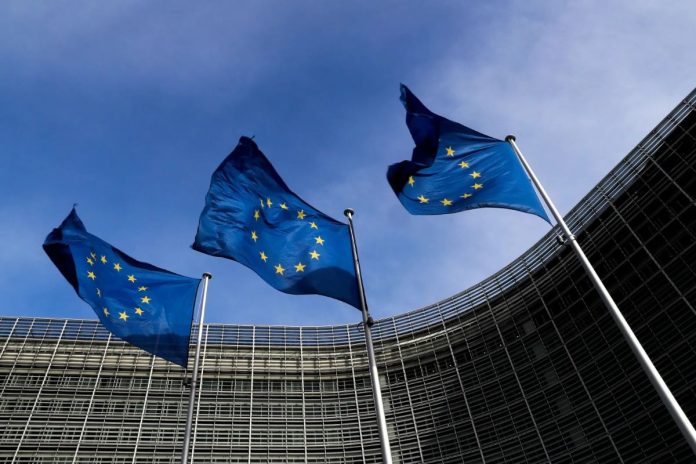
The European Union

The additional recommendations penned in the white paper come as U.S. President Donald Trump continues to refuse to adopt additional sanctions on Russia — even as Moscow continues to refuse to accept a 30-day ceasefire.

The New York Times reported on May 20, citing a White House official, that Trump refuses to impose sanctions on Russia as it may hinder future business and trade opportunities with Moscow.

Trump previously said the U.S. would join partners in imposing “further sanctions” if Russia does not agree to an unconditional ceasefire. Despite numerous threats, Trump has never followed through on imposing additional sanctions against Russia.

“Today, in practice, Washington has ceased participation in nearly all intergovernmental platforms focused on sanctions and export control,” the white paper read, according to Reuters.

“On the contrary, it should catalyse the EU to assume a leading role in this domain.”

Reuters reported that Ukraine will propose to the EU that the bloc speed up the seizure of frozen Russian assets to provide to Kyiv. The additional proposed sanctions would also target foreign companies that assist Russia through the use of technology, and “the introduction of secondary sanctions on purchasers of Russian oil”.

The proposal from Kyiv comes as EU members ponder the implementation of an 18th sanctions package against Russia.

Speaking to reporters in Brussels on May 20, Lithuanian Foreign Minister Kestutis Budrys said that harsher sanctions must be imposed as Russian President Vladimir Putin continues to reject a 30-day ceasefire proposal. Budrys further called on the EU to target Russia’s energy, liquid natural gas (LNG), oil, and nuclear fuel exports as well as financial institutions.

President Volodymyr Zelensky echoed similar points in his evening address on May 20, calling for the EU to to apply additional sanctions on “Russian oil, the tanker fleet, all their energy infrastructure that finances the war, all their banks, all financial schemes, and Russia’s military industry.”

In its pitch to the EU next week, Kyiv will also encourage the EU to make decisions on future sanctions through a majority vote, not unanimous decision.

In previous decisions, Hungary and Slovakia have attempted to block sanctions packages, citing their skepticism around support for Ukraine.

Politico reported on May 20 that the EU is shifting its focus away from providing development aid toward strategic goals like enforcing sanctions against Russia and building defense partnerships, with resources being redirected to match those priorities.

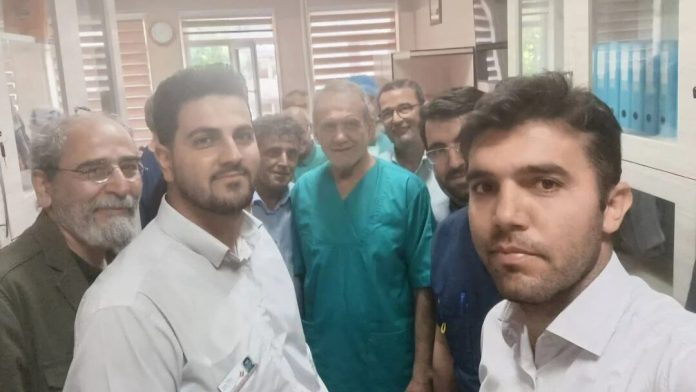
President Pezeshkian performs heart surgery during trip to Tabriz

The operation, which was both professional and deeply personal, marked Pezeshkian’s return to the operating room for the first time since assuming the presidency.

Before entering politics, President Pezeshkian had a long and distinguished career in cardiovascular surgery, and he has frequently emphasized maintaining his connection to the medical community.

US says classifying Taliban as ‘foreign terrorist organization’ under review

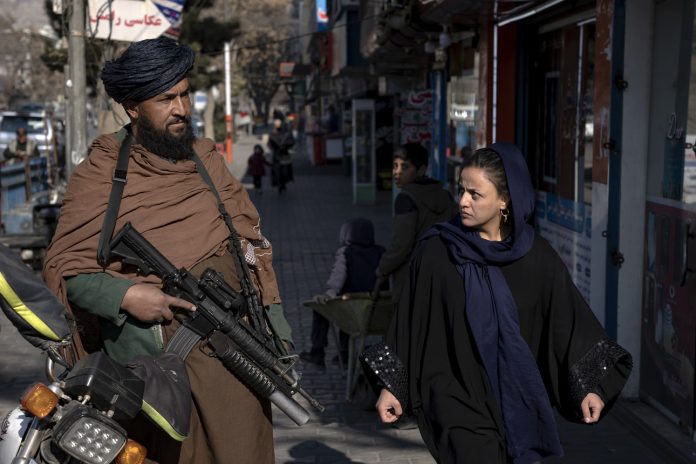
Taliban Women

Rubio told the House Foreign Affairs Committee during a hearing on Capitol Hill in Washington on Wednesday, “I believe that classification is now, once again, under review.”

The response came a day after US Defense Secretary Pete Hegseth ordered a “comprehensive review” of the United States’s chaotic military withdrawal from Afghanistan in August 2021, an evacuation operation in which 13 US service members and 150 Afghans were killed at Kabul’s airport in an ISIL (ISIS) bombing.

Hegseth stated in a memo on Tuesday that after three months of assessing the withdrawal, a comprehensive review was needed to ensure accountability for this event.

“This remains an important step toward regaining faith and trust with the American people and all those who wear the uniform, and is prudent based on the number of casualties and equipment lost during the execution of this withdrawal operation,” Hegseth wrote.

Former President Joe Biden’s administration, which oversaw the pull-out, mostly blamed the resulting chaos on a lack of planning and reductions in troops by the first Donald Trump administration, following its deal with the Taliban to accelerate the withdrawal of US forces.

Trump had signed the deal with the Taliban in Doha in February 2020 aimed at ending its 18-year war in Afghanistan, beginning with the withdrawal of about 4,000 troops “within months”.

The then-Trump administration had agreed it would withdraw from the country by May 2021 if the Taliban negotiated a peace agreement with the Afghan government and promised to prevent internationally designated terrorist groups, such as al-Qaeda and ISIL, from gaining a foothold in the country.

After assuming office in January 2021, Biden said he had to respect the agreement or risk new conflicts with the Taliban, which could have required additional troops in Afghanistan.

On the 2024 campaign trail, Trump frequently criticised Biden and his administration for the withdrawal, saying that the manner in which it was done “was the most embarrassing day in the history of our country’s life.” Trump said that the withdrawal should have been done with “dignity, with strength, with power.”

Senior US military officials, including then-Defense Secretary Lloyd Austin and the then-top US general, Mark Milley, have already appeared before lawmakers to give their testimonies regarding the withdrawal.

The war in Afghanistan from 2001-2021 was the US’s longest war, surpassing Vietnam.

It remains unclear how Hegseth’s review would differ from the many previous reviews carried out by the US military, Department of State and Trump’s fellow Republicans in the House of Representatives.

US Central Command, which oversees operations in the Middle East, has also carried out an investigation into the ISIL attack on Kabul during the last few days of the withdrawal.