Sunday, December 28, 2025
Home Blog Page 3450

Iran DM Shrugs Off Trump’s Call for Dialogue

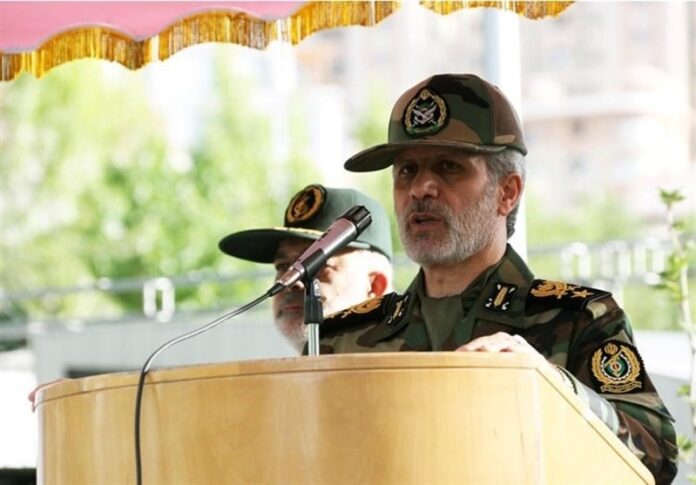
“It is clear that this time, the enemy’s all-out war with the Islamic Establishment is political, economic, cultural and psychological,” Brigadier General Hatami said in a speech in the central province of Isfahan on Wednesday.

He further highlighted Washington’s non-commitment to its international obligations, including the nuclear deal known as the Joint Comprehensive Plan of Action (JCPOA) and said, “Twelve years of negotiation finally led to the JCPOA, which was also approved by the United Nations (Security Council), faced the Great Satan’s (the US’s) historic non-commitment.”

“All should learn a lesson from their (Americans’) irresponsible behavior and realize the depth of their hostility toward the great nation of Iran,” the commander added.

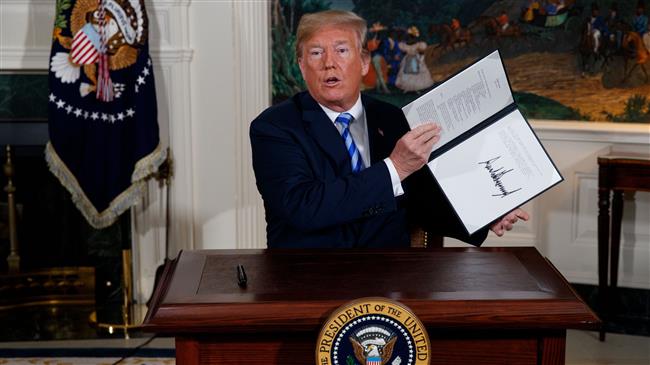
The comments came after US President Donald Trump last week voiced a willingness to meet with Iran’s leadership, without preconditions, “whenever they want.”

“I would certainly meet with Iran if they wanted to meet,” Trump said during a joint news conference at the White House alongside Italian Prime Minister Giuseppe Conte on July 30.

“I do believe that they will probably end up wanting to meet. I’m ready to meet whenever they want to,” he added.

“No preconditions,” he added. “They want to meet, I’ll meet, whenever they want.”

On May 8, Trump pulled his country out of the JCPOA, which was achieved in 2015 after years of negotiations between Iran and the Group 5+1 (Russia, China, the US, Britain, France and Germany).
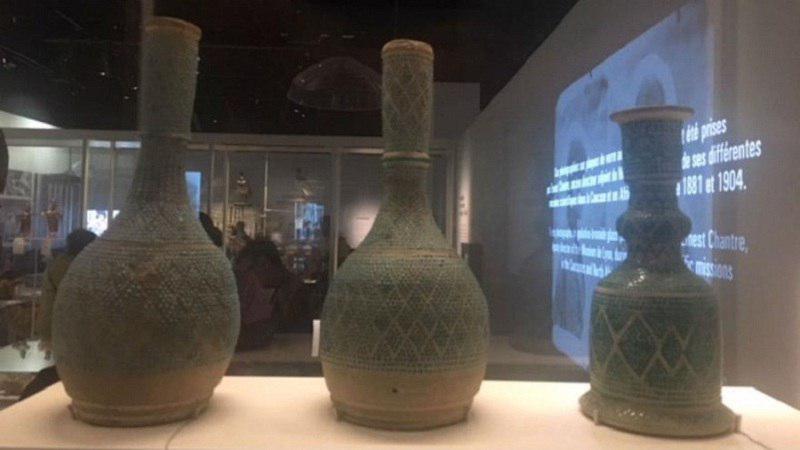
Persian King’s Hookah Showcased in France’s Lyon

The artefacts, which also include two jorums, have been transferred to France by famous physician Joseph Désiré Tholozan in 1884.

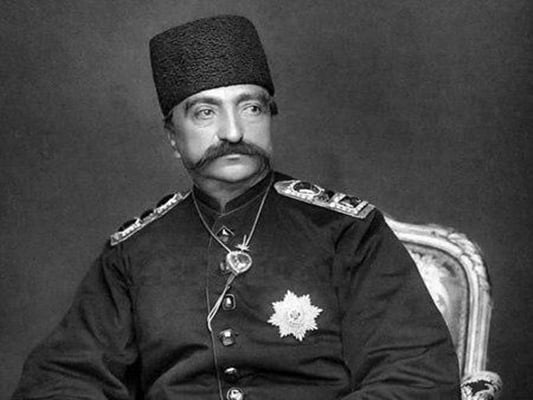
Tholozan moved into Persia in 1858 to become the personal physician of Naser al-Din Shah, the most well-known Qajar monarch, for more than 30 years, IRNA reported.

A the Commander of the Legion of Honour and elected correspondent of the Academy of Sciences and the Medical Academy, Tholozan also played an important role in Franco-Iranian diplomatic relations accompanying the Shah during his three trips to Europe.

The cause of his death in 1897 in Tehran has so far remained unclear and could be the result of poisoning ordered by Mozaffaredin Shah.

The artefacts have been stored in the museum’s treasury.

Persian King’s Hookah Showcased in France’s Lyon

Iran Parliament Adopts Motions to Support Women, Children

Under one of the proposals, the legal age for boys and girls will increase, and children under 13 will be prohibited from getting married.

The legislators will put the motion to debate after a week-long parliamentary recess, said Fatemeh Zolqadr, a member of the Parliament’s Women Caucus.

“One of the existing problems is girls and boys getting married at a very young age, who are still children but are forced to get married,” said the parliamentarian.

“Based on a motion put forward by the parliament’s Women Caucus, the [legal] age for marriage will be 18 for boys and 16 for girls, and getting married at ages between 13 and 15 will be possible only if certain conditions are met such as the blessing of the father and the discretion of the court,” the MP added.

The legislator also lashed out at families who force their children to get married.

“Today, a number of children between 9 and 13 years of age are coerced by their families into getting married, which will result in many problems for them,” the legislator underscored.

“Currently, some individuals get married at the age of 9 in the country, and we are trying to stop it with that motion,” she said.

The MP underscored that a drop in the age of marriage has led to numerous social maladies whose effects on society can be seen.

“This scourge has deprived these children of education and caused a lot of physical and mental problems for them,” the legislator said.

She said numerous expert meetings have been held on the motion so far.


Military Service for Women

In another motion aimed at promoting the equality of men and women, the legislators proposed that girls do military service, but not as soldiers.

“Girls are not supposed to take up arms; rather, their services will be used in educational, health and software domains,” said Tayyebeh Siavoshi, who sits on the Parliament’s Women Caucus.

Some MPs have also proposed that military service for girls be optional.

Many top religious figures have opposed the motion. Moreover, the plan needs to be approved by Leader of the Islamic Revolution Ayatollah Seyyed Ali Khamenei as well.


Elite Women Free to Leave Iran without Husband’s Consent

Another motion adopted by lawmakers would facilitate the process of leaving the country for elite women. Under the plan, elite women whose husbands do not allow them to exit the country will be able to do so by obtaining permission through legal channels.

“If in the first phase the relevant authority does not allow them to leave the country, they can leave the country through [permission by] the prosecutor, and if the prosecutor does not issue the permit for leaving the country, they [elite women] can refer to eligible courts to receive order [to leave the country],” said legislator Fatemeh Zolqadr.

The plan will be of great help to women who want to attend different scientific, sports and cultural events abroad.

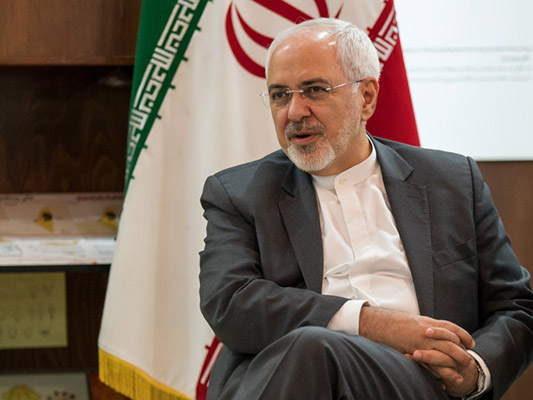
Top Iranian Diplomat Optimistic JCPOA Will Be Salvaged

“We Believe we can receive the guarantees necessary for keeping the deal in place,” he said, speaking to Iran newspaper in a talk published on Wednesday,

Zarif said the Europeans have gone to great lengths in recent months to foil the US’ pressure against Iran, asking countries around the world to boost their purchase of oil from Iran and cooperate with the Central Bank of Iran.

Despite its efforts, Zarif said, the EU has not met Iran’s expectations so far and they need to do more to compensate for the US withdrawal from the pact and make Iran sure its interests will be served if it remains in the deal.


Switzerland, Oman Ready to Mediate between Iran, US

Zarif said Tehran and Washington are in contact via mediators including and Oman, but the two countries are not currently in direct talks.

“Of course, countries send messages for mediation … including Oman. The Swiss Embassy, which is protecting the US interests in Iran, has also conveyed messages in the past 39 years and it is still doing that,” he said.

Zarif said Iran has not started talks with the US administration yet.

“As far as I know, this has not happened and I think my information is not so incomplete,” he said.


Iran Has No Problem with Talks

Zarif said Iran has no problem with starting talks with the US, but it believes such talks would not be fruitful under the current circumstances.

“We cannot be certain that the result of the talks will go into effect,” he said.

The top Iranian diplomat said the last week request by Trump for talks with Iran are a PR stunt, as the US behaviour shows they are not serious in their offer.

“If this country believes in talks, it should demonstrate its good will regarding the nuclear deal and compensate [for its mistakes],” he said.


US in Deadlock

Zarif said Iran’s smart moves as well as the US’ mistakes have put Washington in a deadlock.

“The country’s decision-makers have so far acted tactfully. The world acknowledges that our moves in the past few years have put the US in a deadlock. Except one or two countries, no state is supporting the US’ policies against Iran,” he said.

US President Donald Trump, who withdrew the US from the 2015 nuclear deal early May, re-imposed anti-Iran sanctions on the country’s automotive and metal sectors, gold trade, aviation industry and other fields on Monday.

The US is also working to push the world to cut trade with Iran and stop purchasing the country’s oil before November, when further sanctions on oil and transactions with the central bank of Iran will be restored.

Iran Rejects UK Daily’s Claim on Transfer of Missile Parts

Iran’s embassy in London has described the news as a baseless report and “biased media brouhaha.”

In a letter to Evening Standard’s editor-in-chief, the Iranian embassy urged the paper not to repeat such fake cliché news any more.

“They are aimed at promoting Iranophobia,” the letter reads.

The letter also underlines that Iran reserves the right to follow up the issue through relevant channels and use legal means to seek compensation for the damage to Iran’s image caused by the false claim.

The British daily claimed that “a suspected attempt to fly missile warhead components to Iran via Heathrow [Airport] has been thwarted by the UK Border Force.”

“At least two ‘O rings’ — which can be used to form seals in rockets — were detected during an inspection of freight being flown out from the airport,” it added.

The UK media continued levelling allegations, saying “they were supposedly being sent for use in the Iranian oil industry. But Border Force staff halted the shipment after becoming suspicious that the real intention was to use them in missiles.”

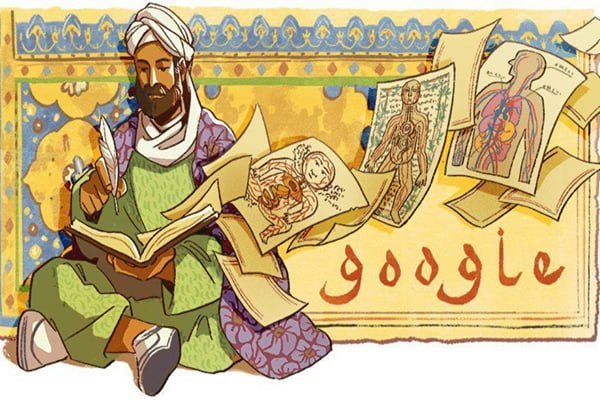
Google Changes Its Logo to Pay Homage to Persian Polymath

Iranians take pride in Avicenna, who was a medicine and philosophy heavyweight.

Currently, more than 400 titles of books authored by the eminent scientific figure are available, of which 240 titles are accessible via Google.

Historical documents show Avicenna was born in Afshaneh village near Bukhara (a city in Uzbekistan today, and one of the cities of Great Iran in the tenth century). His mother tongue was Persian, and his father was an official serving with the Samanid government. He was a child prodigy and soon managed to overtake his own teacher. Avicenna was very intelligent. He memorized the holy Quran at the age of 10. At 16, he began to study medicine. He became very famous in the field of medicine at the age of 18. Later on, he became an expert in philosophy as well.

Some describe him as “omniscient” because he was an expert in physics, chemistry, medicine, philosophy, mathematics, psychology and geography.

For a brief review of Iran’s achievements in various fields of science and technology, check the book “Science and Technology in Iran: A Brief Review

Among his famous books is “The Canon of Medicine.” It is a five-volume medical encyclopedia which was used as the standard medical textbook in the Islamic world and Europe up to the 18th century. The Canon still plays an important role in Unani medicine.

Another major book authored by Avicenna was “The Book of Healing.” The scientific and philosophical encyclopedia is divided into four parts: logic, natural sciences, mathematics and metaphysics.

Interesting enough, half of Avicenna’s works are versified. His poems appear in both Arabic and Persian.

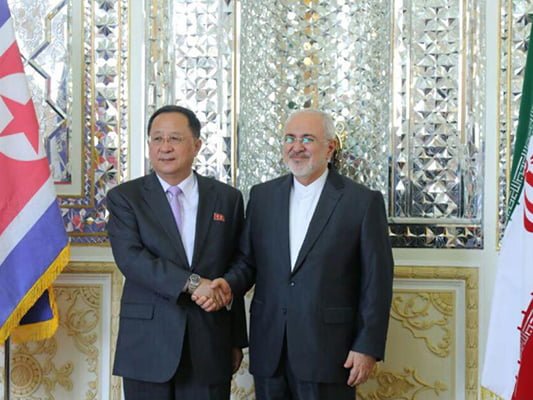
Iranian, North Korean FMs Hold Talks in Tehran

During the meeting, the two sides expressed satisfaction with the level of bilateral ties between Tehran and Pyongyang, saying they welcome further expansion of relations.

The two top diplomats also conferred on the most important regional and international developments as well as other issues of mutual interest.

An informed source had earlier told the Fars News Agency that the North Korean diplomat “will only discuss bilateral relations between Tehran and Pyongyang” during the visit.

Both Iran and North Korea are under US sanctions, and are expected to share their experiences regarding their ties and negotiations with the US, particularly the Trump administration.

Trump Warns EU over Its Move to Protect Iran against Sanctions

“The Iran sanctions have officially been cast. These are the most biting sanctions ever imposed, and in November they ratchet up to yet another level,” Trump wrote in an early morning tweet Tuesday.

“Anyone doing business with Iran will NOT be doing business with the United States. I am asking for WORLD PEACE, nothing less,” he added.

His warning was apparently addressed to the EU which put into forcea law banning companies from complying with US sanctions or court rulings and enabling them to claim compensation for potential damage.

British Minister of State for the Middle East Alistair Burt said Europe can protect its companies from new US sanctions which were reinstated on Tuesday, as the EU activated a blocking statute to insulate firms against any fallout.

“If a company fears legal action taken against it and enforcement action taken against it by an entity in response to American sanctions then that company can be protected as far as EU legislation is concerned,” Burt told BBC radio.

Under the blocking statute, EU businesses can sue the US administration in the national courts of member states.

European firms must seek a legal exemption for withdrawing from Iran due to US sanctions and those failing to do so could be penalized by their governments.

Firms, however, do not need to apply for EU authorization to leave Iran if their decision is based on business grounds, making the issue a tricky one.

“It is a commercial decision for companies whether they continue to work in Iran,” Burt said.

Many European companies withdrew from Iran after Trump pulled the US out of the 2015 nuclear deal with Tehran and set a grace period for firms to wind down their business in the country.

EU officials, however, were quoted on Monday as saying that a number of other countries had asked them for details on the blocking regulations as they also explore ways to bypass sanctions.

China, Russia and Turkey have already indicated that they would not comply with the unilateral US sanctions.

The foreign ministers of France, Germany and Britain pledged in a joint statement on Monday to work on preserving financial flows and Iran’s oil and gas exports.

The German Economy Ministry said Berlin would continue to offer export and investment guarantees for firms doing business with Iran.

Senior US administration officials, however, warned that the risks were real for companies working in Iran, raising the stakes in an unprecedented standoff between traditional allies.

That means European firms have a serious balancing act for braving US penalties in order to do business with Iran.

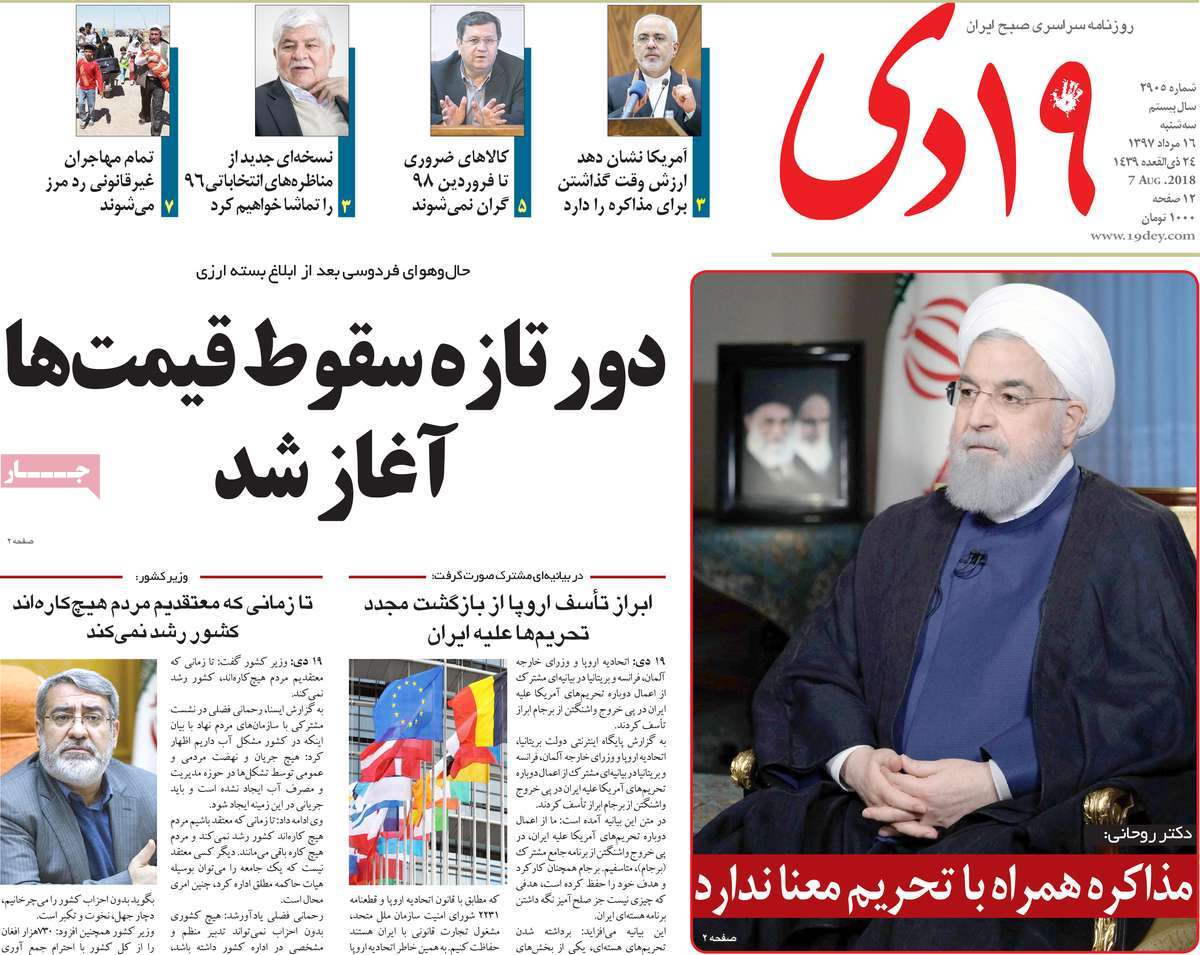
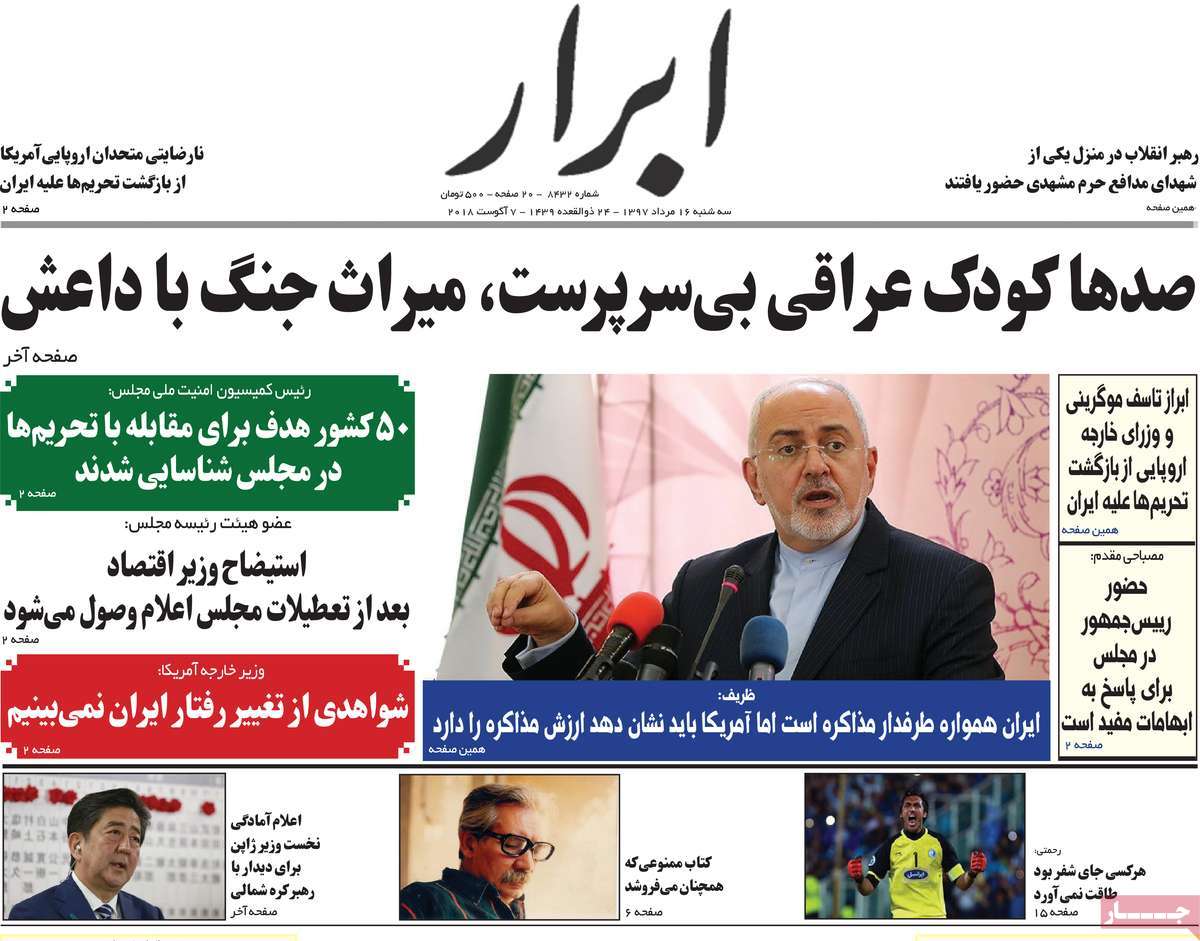
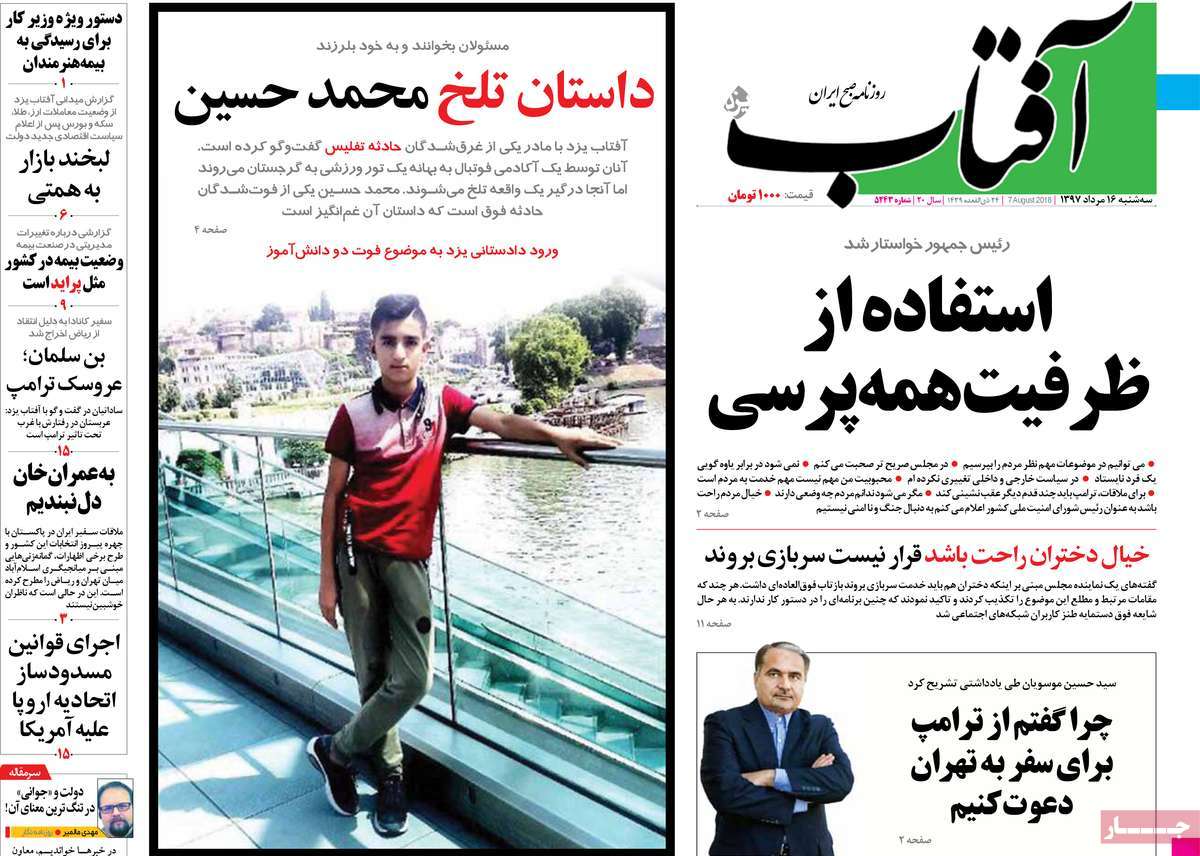
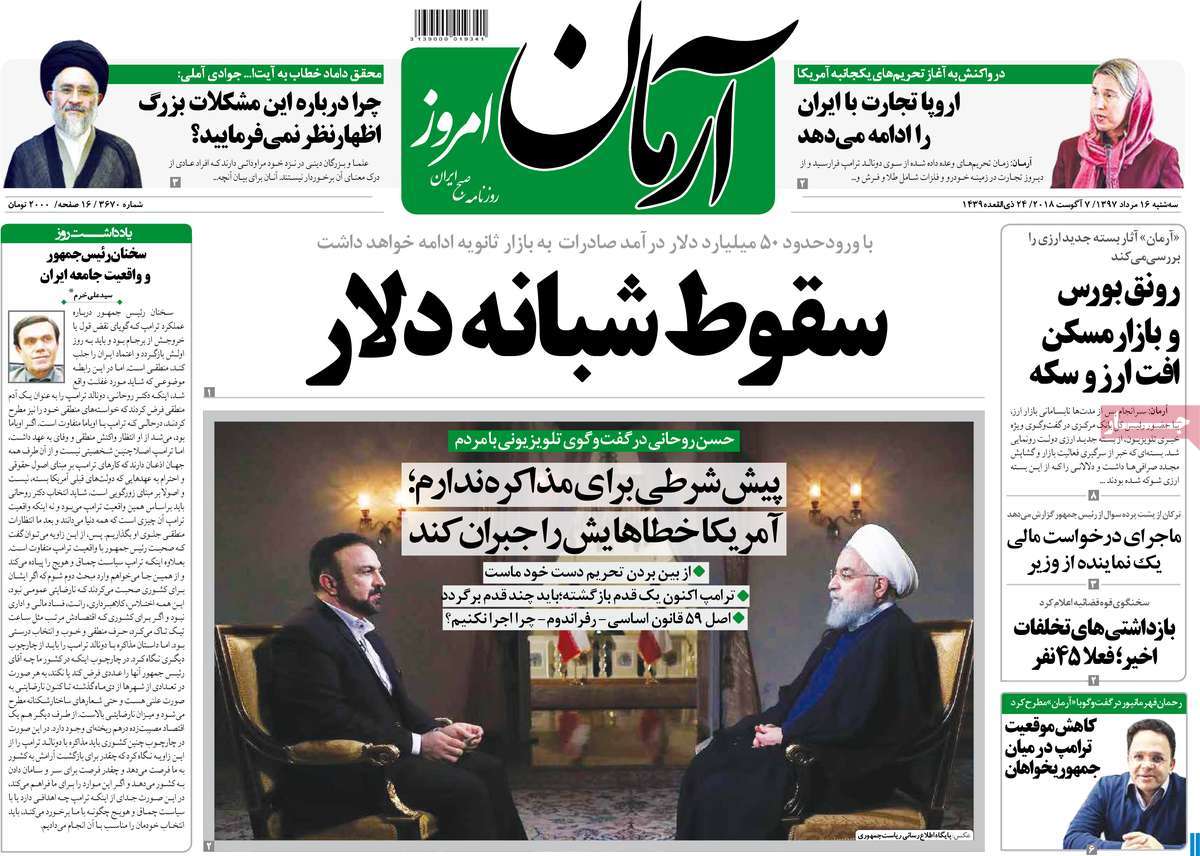
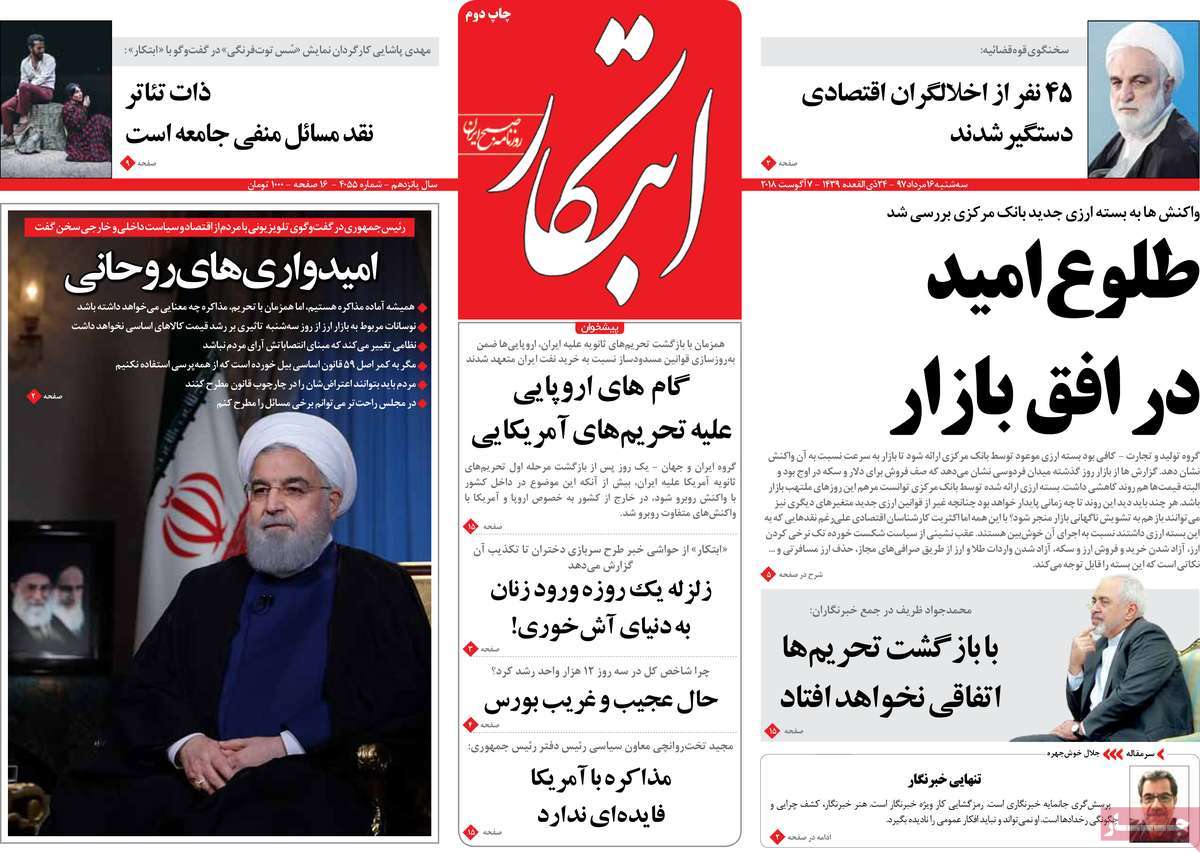
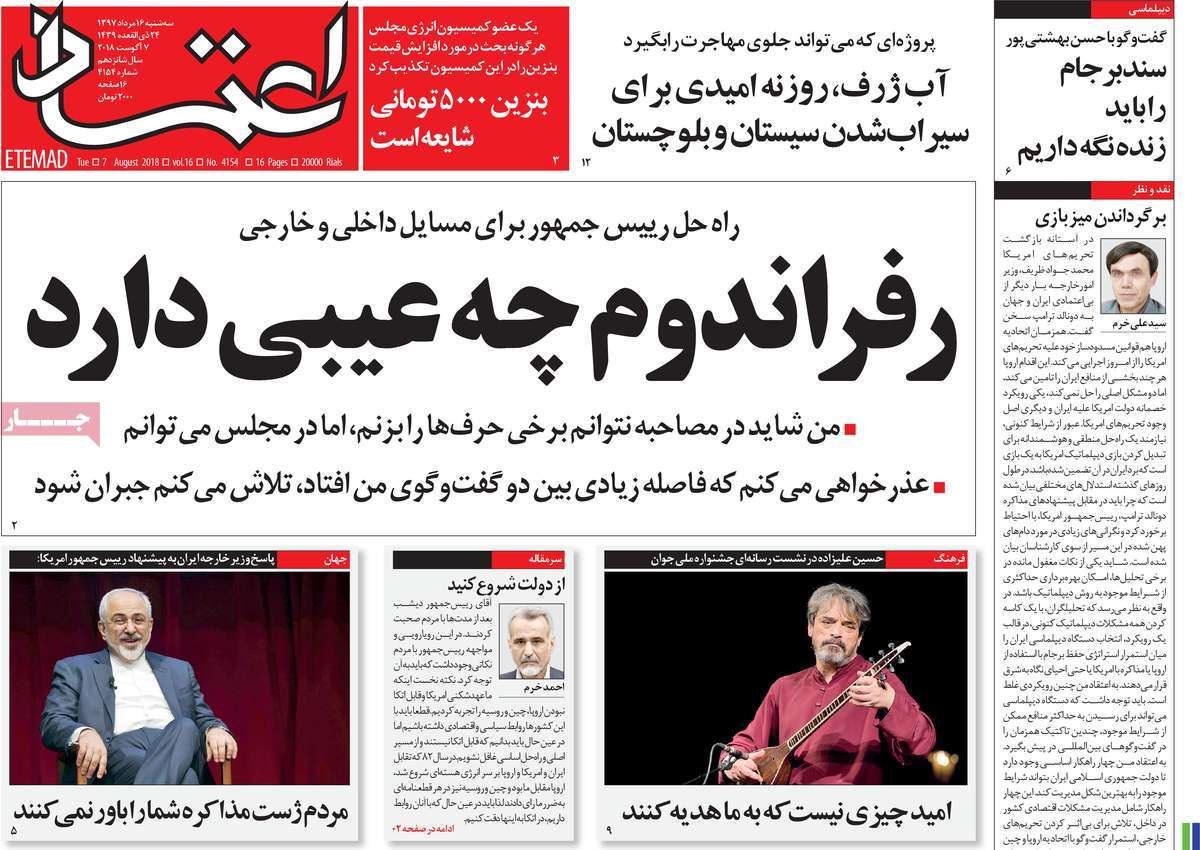
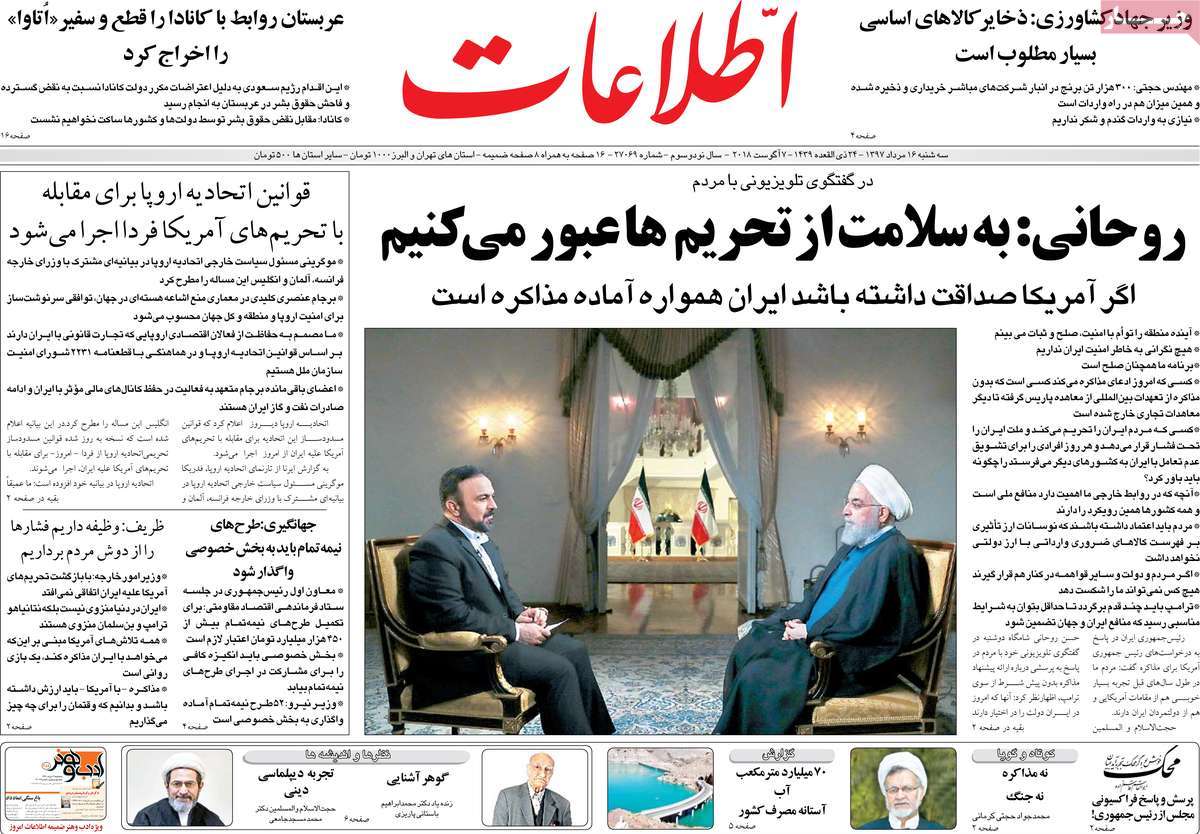
A Look at Iranian Newspaper Front Pages on August 7

A Look at Iranian Newspaper Front Pages on November 19

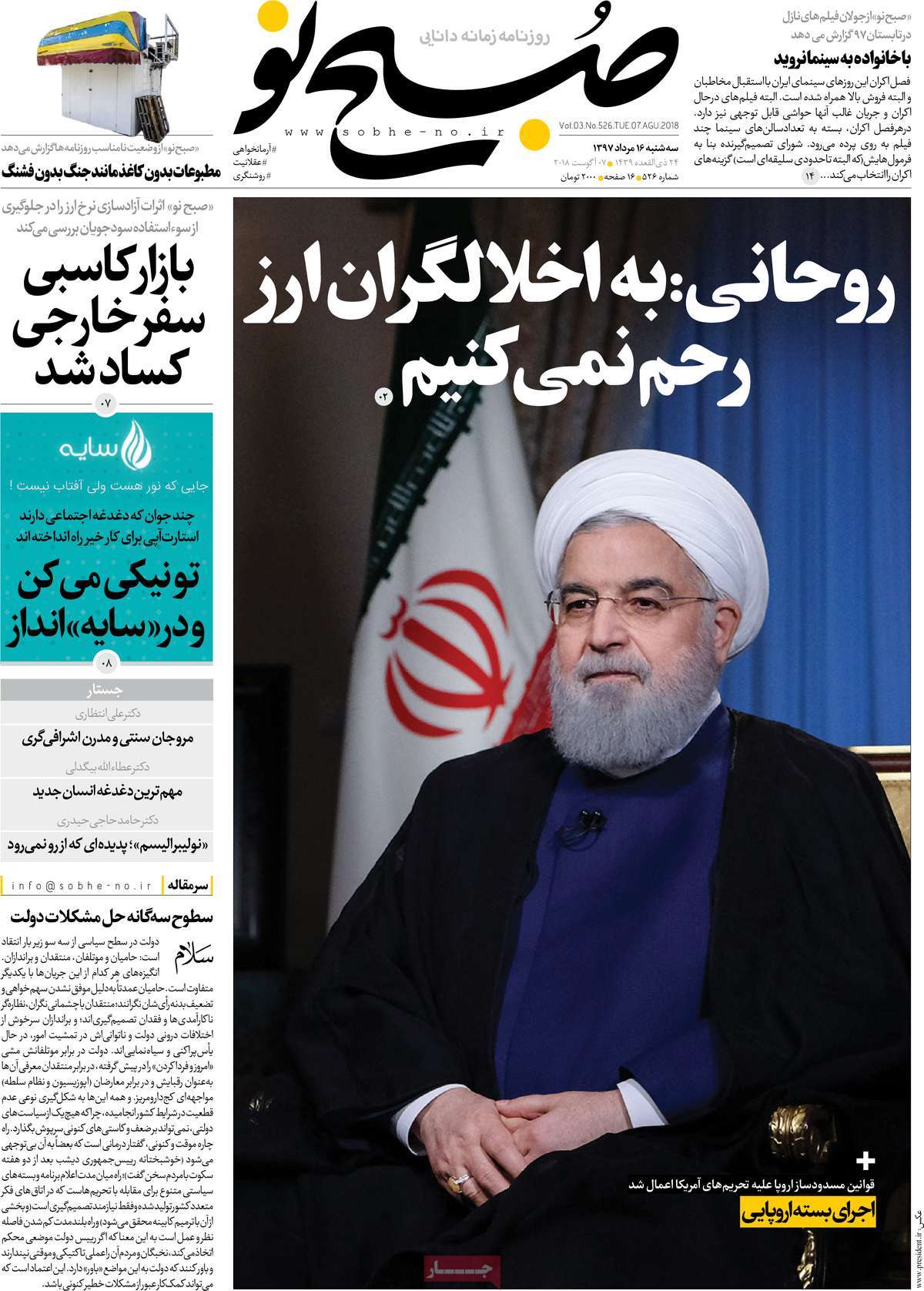
The remarks made by Iranian President Hassan Rouhani in his live interview with the state TV on Monday night were the top story in all newspapers today.

Several papers also covered the comments made by Foreign Minister Mohammad Javad Zarif about the impact of the US’ sanctions on the Islamic Republic.

The European Union’s statement against the first batch of US’ sanctions on Iran and its move to update its “Blocking Statute” to counter the bans also received great coverage.

The above issues, as well as many more, are highlighted in the following headlines and top stories:


19 Dey:

1- Rouhani: Negotiation Meaningless If Coupled with Sanctions

2- Europe Expresses Regret over Re-Imposition of Iran

A Look at Iranian Newspaper Front Pages on August 7


Abrar:

1- Zarif: Iran Always Supports Dialogue, but US Must Prove Talks Are worth the Time

A Look at Iranian Newspaper Front Pages on August 7


Aftab-e Yazd:

1- Rouhani Calls for Holding Referendum on Major Issues

2- EU Implements Blocking Laws against Trump

A Look at Iranian Newspaper Front Pages on August 7


Arman-e Emrooz:

1- Rouhani: I Have No Prerequisite for Negotiation with US

  • US Should Make Up for Their Mistakes

A Look at Iranian Newspaper Front Pages on August 7


Ebtekar:

1- Zarif: Return of Sanctions Not to Cause Anything Serious

A Look at Iranian Newspaper Front Pages on August 7


Etemad:

1- Rouhani’s Solution to Domestic, Foreign Problems: What’s Wrong with Referendum?

2- Iran FM to Trump: People Not to Believe Your Negotiation Gesture

A Look at Iranian Newspaper Front Pages on August 7


Ettela’at:

1- Rouhani: We’ll Overcome Sanctions Safe and Sound

  • Iran Always Ready for Talks If US Shows Honesty: President

2- EU Regulation to Counter US Sanctions to Be Implemented as of Tomorrow

A Look at Iranian Newspaper Front Pages on August 7


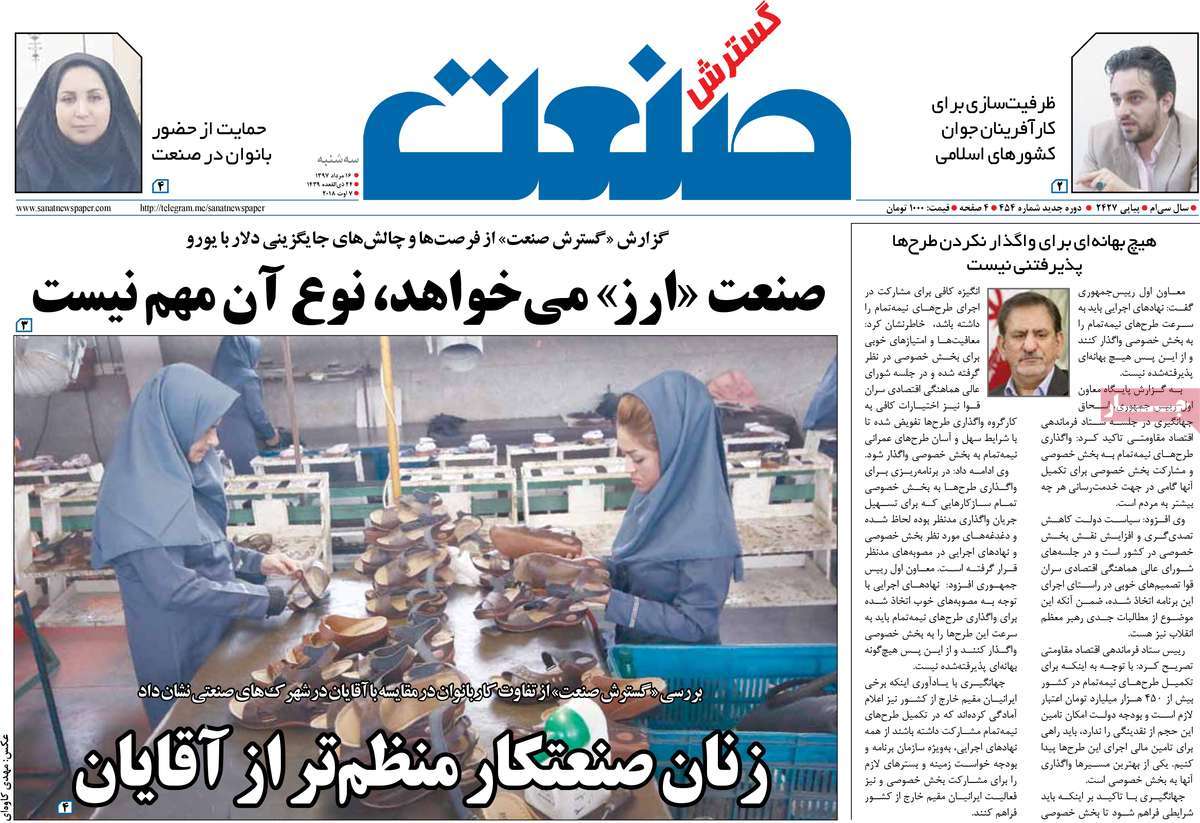
Gostaresh-e San’at:

1- Women Industrialists More Organized than Men

  • A Review of How Men, Women Work in Industrial Towns

A Look at Iranian Newspaper Front Pages on August 7


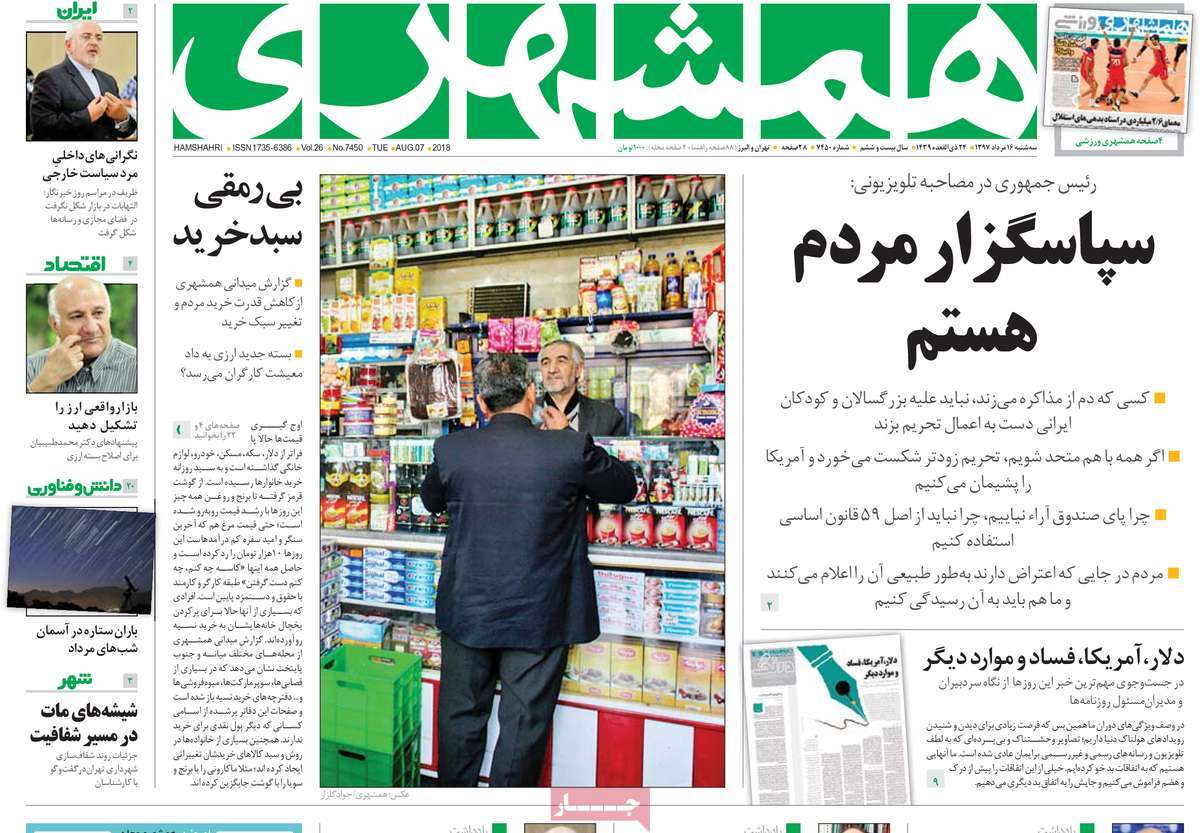
Hamshahri:

1- Rouhani: Those Who Talk of Negotiation Shouldn’t Impose Bans on Iranian Children, Adults

A Look at Iranian Newspaper Front Pages on August 7


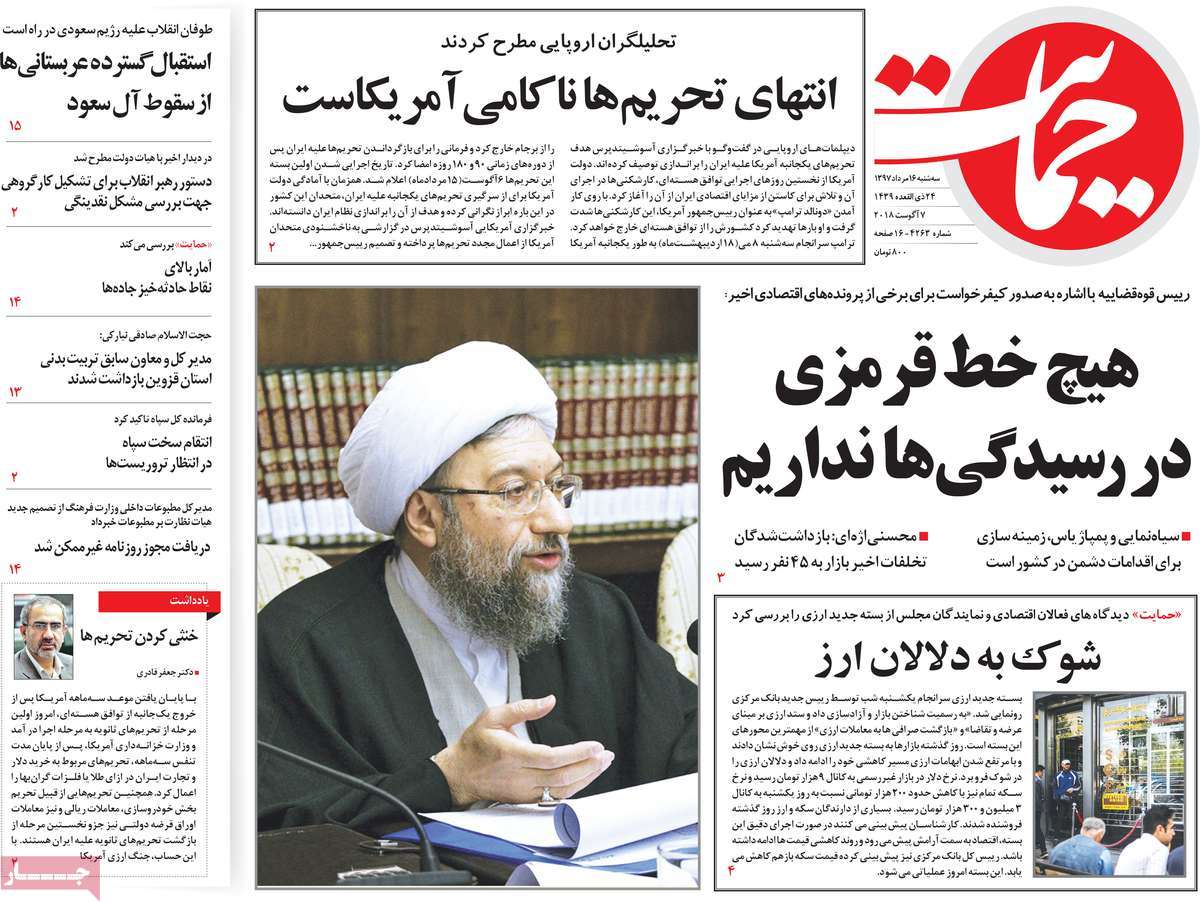
Hemayat:

1- European Analysts: Sanctions Will End Up in US’ Failure

A Look at Iranian Newspaper Front Pages on August 7


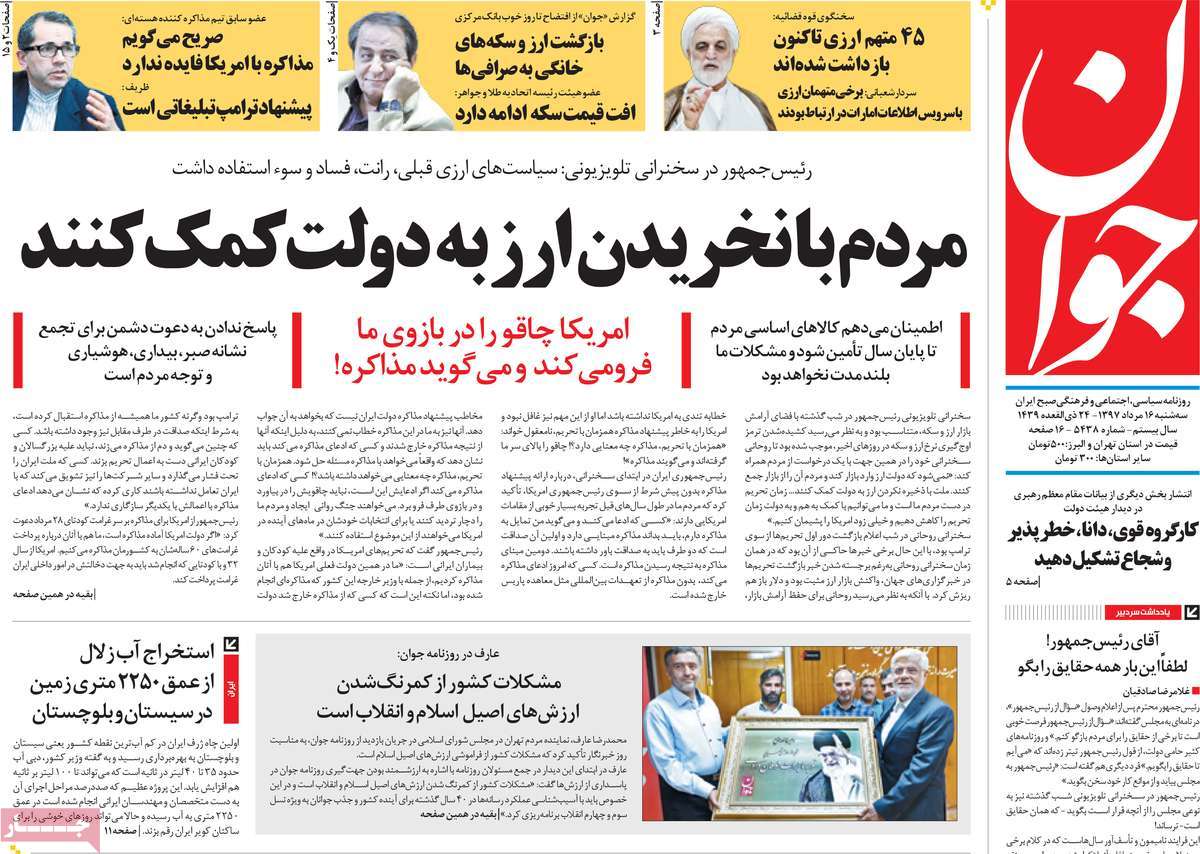
Javan:

1- Rouhani: Previous Forex Policies Paved Way for Corruption, Abuse

  • President Urges People Not to Buy Foreign Currencies to Help Gov’t

A Look at Iranian Newspaper Front Pages on August 7


Ka’enat:

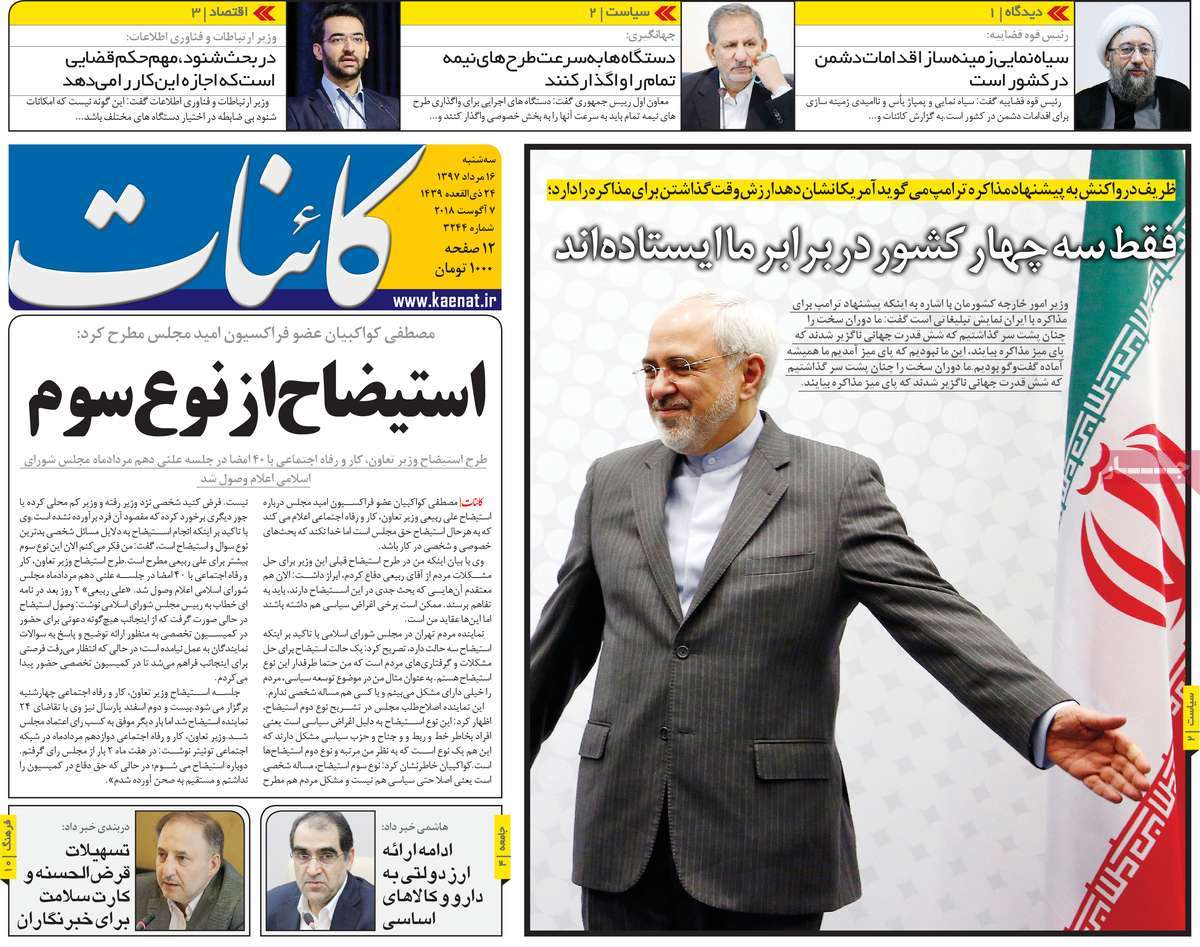
1- Zarif: Only 3 to 4 Countries Standing against Islamic Republic

A Look at Iranian Newspaper Front Pages on August 7


Kayhan:

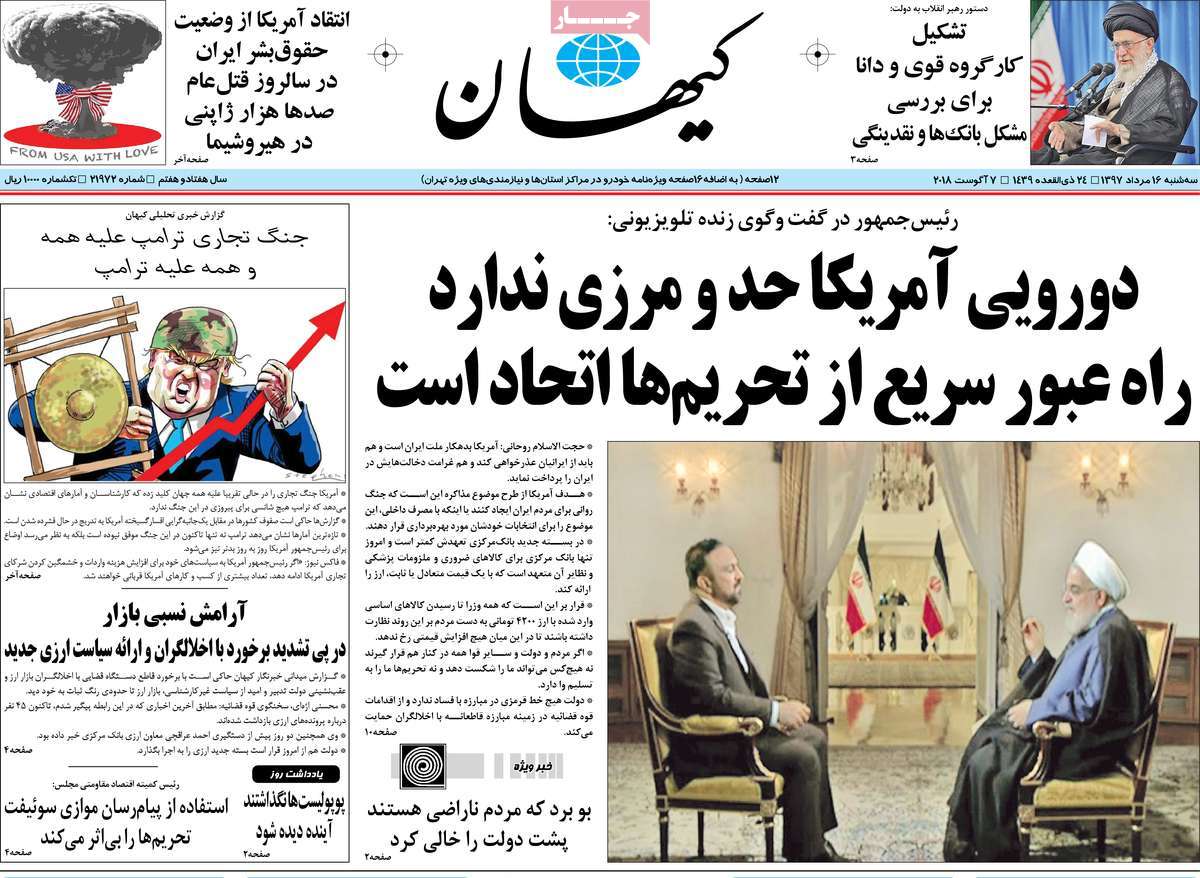
1- Rouhani: US Hypocrisy Knows No Limit

2- Trump’s Trade War against Everyone, Everyone against Trump

A Look at Iranian Newspaper Front Pages on August 7


Sazandegi:

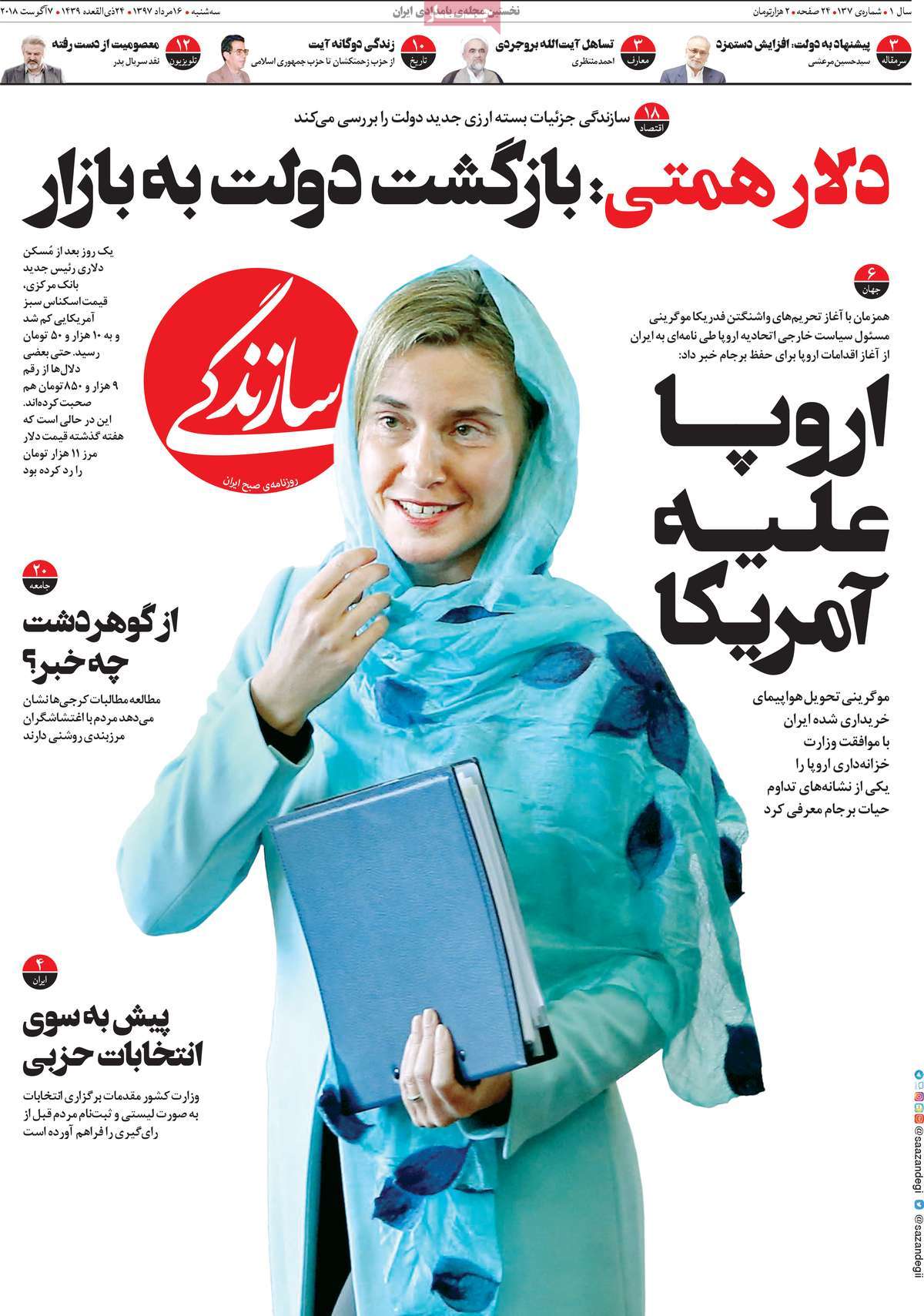
1- Europe against US

  • Mogherini Says Delivery of ATR Planes to Iran Indicates JCPOA Still Alive

A Look at Iranian Newspaper Front Pages on August 7


Shargh:

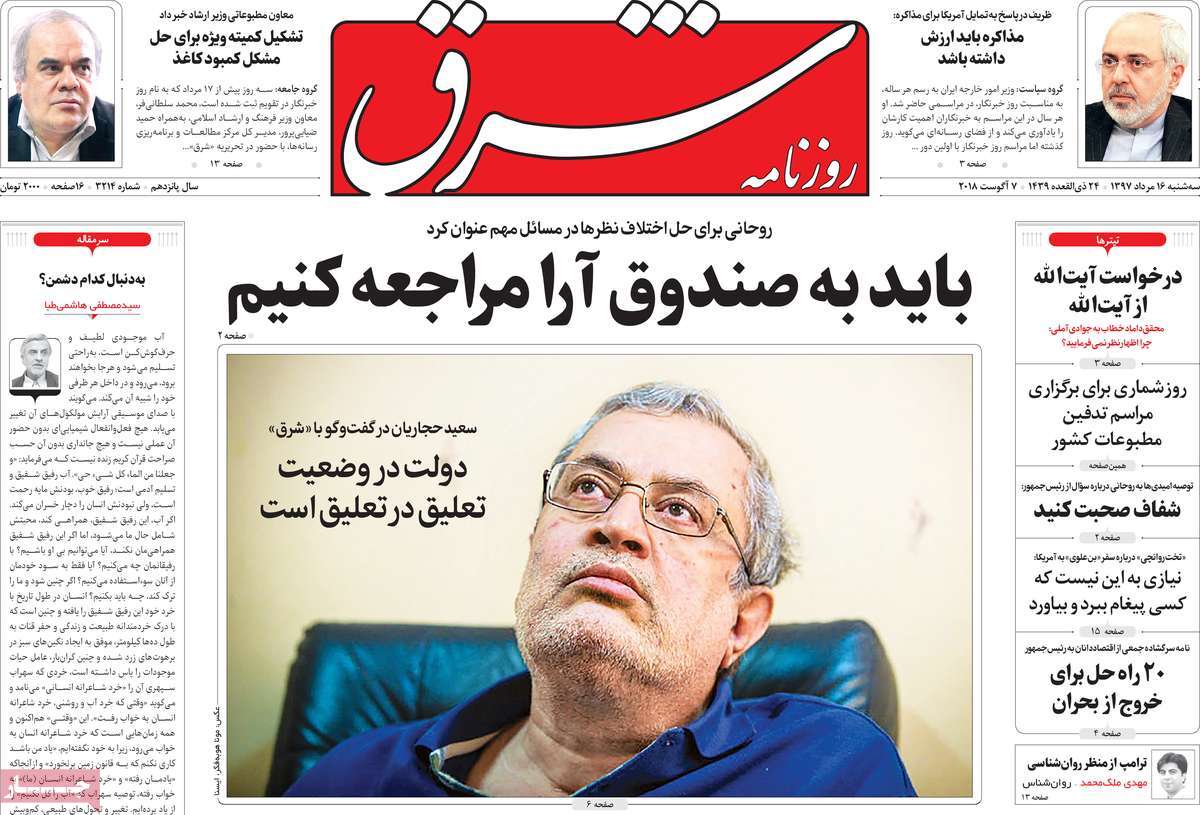
1- Zarif: Negotiation Must Be Worthwhile

A Look at Iranian Newspaper Front Pages on August 7


Sobh-e Now:

1- Rouhani: We Won’t Show Mercy towards Those Who Disrupt Economy

A Look at Iranian Newspaper Front Pages on August 7


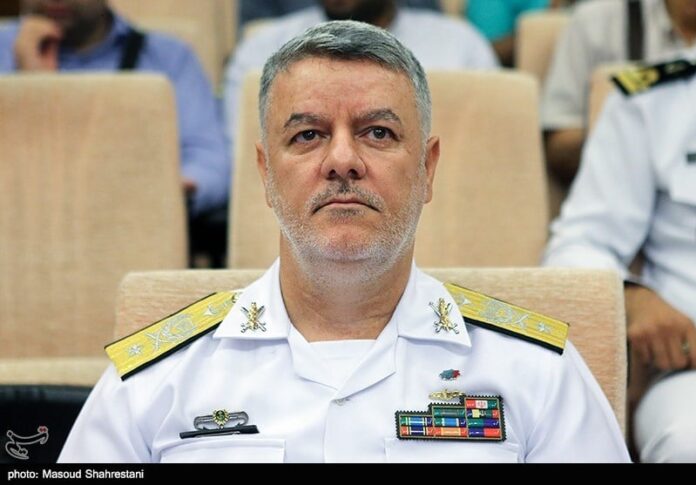
Iran Navy Chief Holds Talks with Japanese, Pakistani Military Attachés

In his meeting with the new and outgoing Pakistani military attachés in Tehran on Monday, Khanzadi praised the growing relations between Iran and Pakistan, their navies in particular, and expressed the hope that the ties would further develop and that the navies would be able to ensure security of the Indian Ocean through regional cooperation and without the interference of trans-regional states.

He further stressed the need for the two countries’ navies to exchange experiences and said Iranians regard Pakistan as a “brotherly” country.

In his separate meeting on the same day with the Japanese military attaché, Khanzadi urged using the geographic, historical, geopolitical and technological capabilities of Iran and Japan.

He also pointed to the Indian Ocean Naval Symposium (IONS) 2018 held in Tehran in April and said that he had some meetings with the Japanese military officials attending the symposium and that Iran plans to further boost ties between the navies of the two countries.

The IONS 2018, attended by high-ranking delegations from 35 countries, was held on April 23 and 24 with an opening speech by Chief of Staff of the Iranian Armed Forces Major General Mohammad Hossein Baqeri.

During the two-day meeting, Iran officially assumed presidency of the symposium for two years.

The IONS is a voluntary initiative that seeks to increase maritime co-operation among navies of the littoral states of the Indian Ocean Region by providing an open and inclusive forum for discussion of regionally relevant maritime issues.