Friday, January 2, 2026
Home Blog Page 338

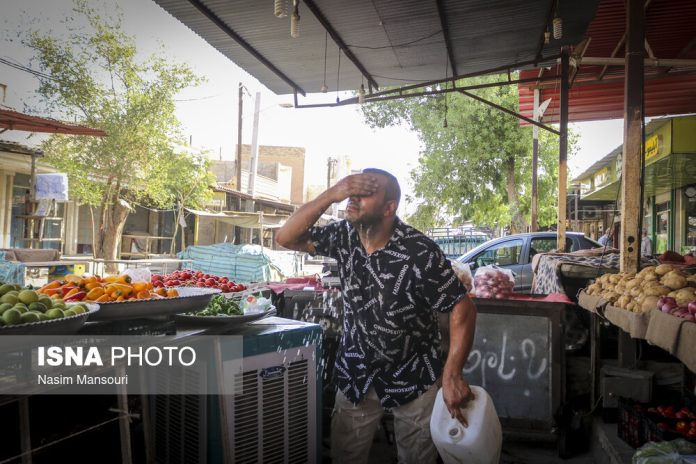
Iran faces worst water crisis in decades amid 40% drop in rainfall

Water Crisis

Firooz Ghasemzadeh, Director General of Iran’s Office of Water Information and Data, said total rainfall since the beginning of the water year (late September) has reached just 141.7 mm, far below the long-term average of 230.6 mm. This marks a 39% decline compared to the historical norm and a 40% drop from the same period last year.

Provinces in southern and central Iran, including Tehran, Sistan and Baluchestan, Hormozgan, Bushehr, Khuzestan, Yazd, and Kohgiluyeh and Boyer-Ahmad, have experienced rainfall deficits of up to 70%, placing their water reserves in an extremely critical state.

Water inflow to the nation’s dams since the beginning of the water year totals 20.23 billion cubic meters, down 42% from the previous year. Current dam storage stands at 26.9 billion cubic meters, a 23% year-on-year decline.

Ghasemzadeh urged immediate action to reform agricultural water usage and shift to more water-efficient crops. He also called for public cooperation, emphasizing that “every saved liter of water could prove vital” as the country braces for a dry summer.

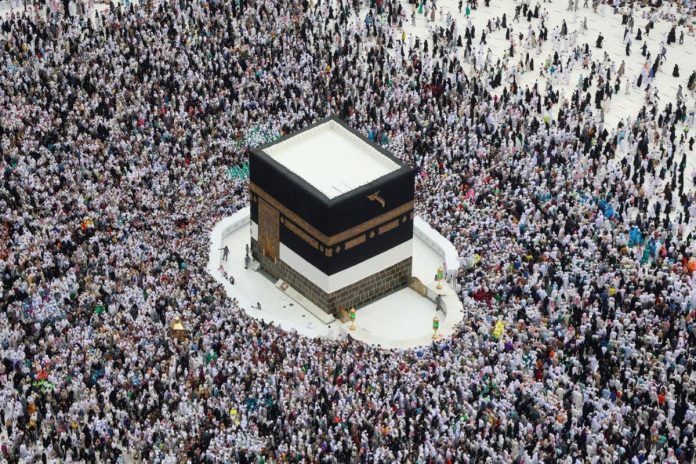
Iran’s Hajj authority urges pilgrims to avoid divisive acts following controversial remarks

Hajj

Speaking at a gathering of volunteer Hajj aides on Monday night, Alireza Bayat, head of the organization, emphasized the importance of unity among Muslims and urged Iranian pilgrims to steer clear of divisive behavior.

“We must all refrain from actions that could lead to division and fragmentation,” he said, stressing the need for full compliance with the host country’s regulations.

Bayat also expressed appreciation for Saudi Arabia’s cooperation in facilitating this year’s pilgrimage.

According to official data, over 68,000 Iranian pilgrims have so far arrived in Saudi Arabia with minimal delays, contributing to a smooth operation.

The statement comes in the wake of remarks by Ghasemian, who accused Saudi Arabia of turning Mecca and Medina into “centers of immorality.”

Iranian officials have not formally addressed Ghasemian’s claims but have reiterated the importance of religious unity and diplomatic decorum during Hajj.

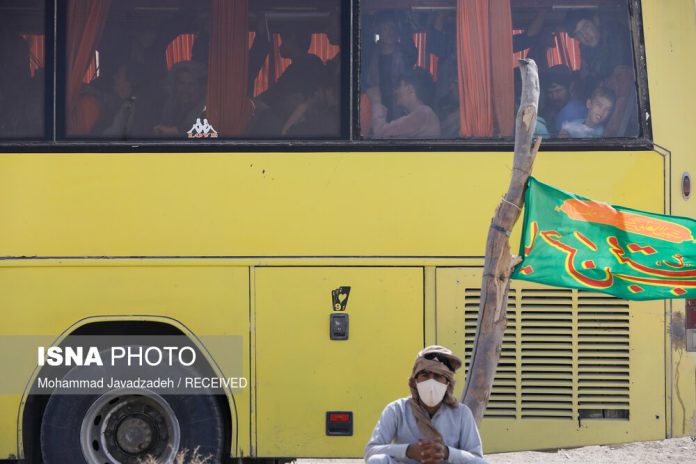
Iran steps up expulsion of undocumented Afghan migrants, ends access to key services

Afghan Refugee in Iran

Nader Yarahmadi, head of the Foreign Nationals and Immigrants Affairs Office, stated in a radio interview that the government had refrained from mass deportations so far “due to humanitarian concerns and the specific needs of migrant families.”

However, he emphasized that the voluntary departure of undocumented migrants is now being strongly encouraged.

The government has now annulled census cards issued to undocumented migrants and begun cutting off their access to public education and health systems.

“Those who remain without legal documentation will gradually be denied basic services,” Yarahmadi said, adding that only children with valid legal documents will be allowed to continue their schooling.

While acknowledging Iran’s historical hospitality towards displaced individuals, particularly due to regional conflicts, Yarahmadi said the prolonged presence of undocumented migrants has placed growing pressure on national infrastructure.

Migrants who voluntarily exit the country may be eligible for certain visa facilitation measures to re-enter legally, while those who are apprehended will lose these privileges, he said.

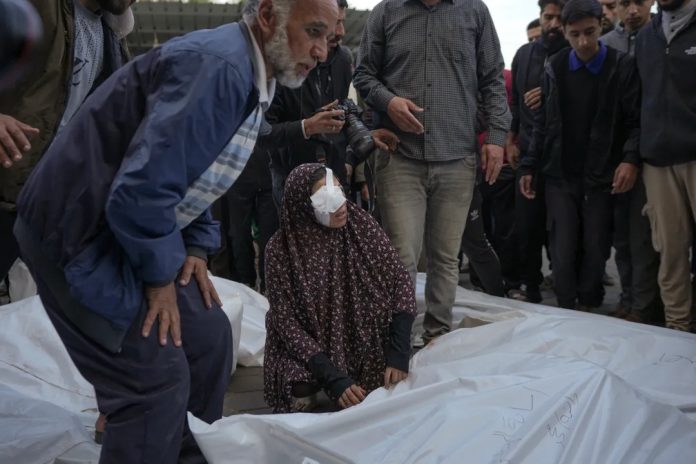
WHO warns of ‘zero-stock’ levels of essential medical supplies, equipment in Gaza amid war, blockade

Gaza War

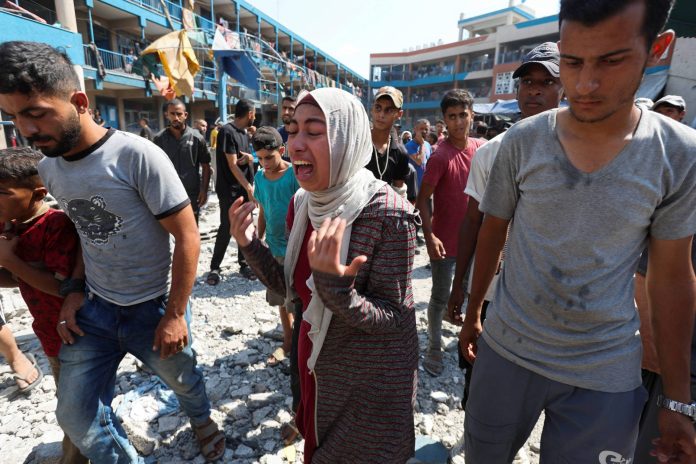
As much as “43% of essential medicines are at zero-stock levels in addition to 64% of medical supplies and 42% of vaccines,” Ahmed Zouiten, WHO’s regional emergency director for Eastern Mediterranean, told an Association of Accredited Correspondents at the United Nations (ACANU) media briefing in Geneva.

According to the WHO, patients with chronic and life-threatening conditions — including kidney failure, cancer, blood disorders, and cardiovascular disease — are among the most affected.

WHO Regional Director for the Eastern Mediterranean Hanan Balkhy confirmed the continuing blockade of life-saving materials.

“No WHO trucks have crossed into Gaza yet. Fifty-one WHO trucks in Arish and the West Bank (are) waiting for approval to enter,” she added.

Elobrating further on “zero stock” levels of essential medicines, Balkhy said: “Imagine a surgeon needing to fix a broken bone with very minimum equipment, no anesthesia, no sanitizers, no facilities to do sterilization … You need IV fluids. You need cannulas, needles, and bandages. Those are just the basic minimum. They do not exist in the quantities nor the numbers that are required.”

She also warned of the toll on patients with chronic illnesses.

“Even in conflict and war time, there are patients that have hypertension, they have diabetes, they have mental diseases that they need treatment for … all types of basic medications … they are struggling to have the basics.”

Rejecting international calls for a ceasefire, the Israeli army has pursued a brutal offensive against Gaza since October 2023, killing nearly 54,000 Palestinians, most of them women and children.

Syrian DM vows to build army with ‘national doctrine’ under unified command

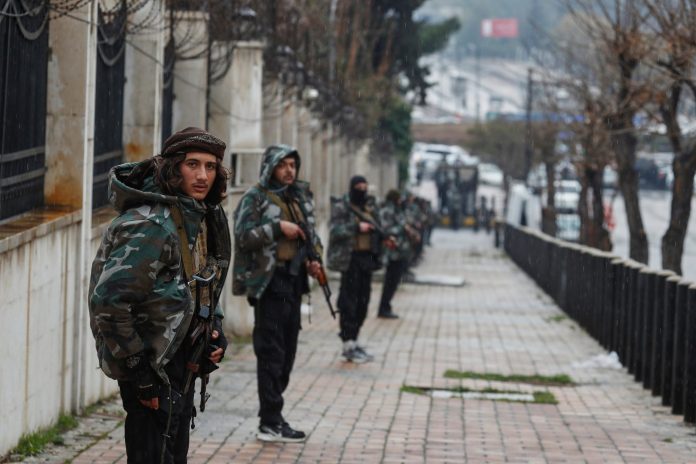
In an interview with Syria’s state-run Al-Ikhbariya television channel, Abu Qasra said that the previous Syrian army’s reputation was tarnished by crimes against citizens.

“We are working to bridge the gap between the army and the people,” he added.

The defense minister said his ministry met with approximately 130 factions to discuss the new army structure and achieved significant success in integrating them under the ministry, adding: “No group will be allowed to act outside the Defense Ministry’s authority.”

The ministry is collaborating with the Interior Ministry to pursue remnants of the former Bashar al-Assad government, confiscate weapons, restrict arms to state control, and prevent abuses against Syrians, Abu Qasra continued.

The ministry is reorganizing the armed forces, activating officers and personnel to enhance efficiency and institutional operations, he said, adding efforts are underway to restore military educational facilities to prepare for new recruits.

Speaking about defected officers from the previous regime, Abu Qasra said that they are eager to contribute to rebuilding the armed forces and serving the country, adding: “We are working to recruit them.”

The defense minister emphasized plans to “build an army with a national military doctrine that protects the Syrian people,” stating: “We want a professional volunteer army so that loyal soldiers will join it.”

On May 17, Abu Qasra announced the unification of all military units under the Defense Ministry, a move aimed at unifying the military structure within a unified institutional framework.

Assad, Syria’s leader for nearly 25 years, fled to Russia in late last year.

Ahmad al-Sharaa, who led anti-government forces to oust Assad, was declared president for a transitional period in January.

Russia reacts to West lifting limits on long-range weapons for Ukraine

Kremlin

Peskov made the remarks in response to comments by German Chancellor Friedrich Merz, who said Ukraine is no longer subject to range limitations on Western-supplied weaponry.

“If such decisions have indeed been made, they are entirely at odds with our aspirations for a political resolution and with the efforts currently being made toward a settlement,” Peskov stated.

“Quite dangerous decisions, again – if they were indeed made,” he stressed.

At the EuropaForum on Monday, Merz said “there are no longer any range restrictions” on Western-supplied weapons used by Ukraine against Russian military targets.

“There are no restrictions from the UK, France, Germany, or the US,” he added, as quoted by Euronews.

Moscow has repeatedly warned Western countries against participating in the conflict by giving Kiev targeting data from NATO satellites to carry out long-range strikes against Russia.

Russian President Vladimir Putin has also signed off on a new nuclear doctrine which expands the list of conditions that could trigger a strategic response to include scenarios where aggression by a non-nuclear state or group of states supported by a nuclear state could be viewed as a “joint attack.”

Since then, Ukrainian forces have launched numerous long-range strikes inside Russia using Western-supplied weapons. Despite the changes, the doctrine still characterizes nuclear weapons as “an extreme and forced measure” and emphasizes Russia’s aim to avoid escalation.

Russia has consistently condemned Western arms shipments to Ukraine, arguing that they fuel more bloodshed and hinder efforts toward the peace process. Earlier this month, Russia and Ukraine held their first direct talks since 2022. The sides agreed to present detailed ceasefire proposals, carry out a record 1,000-for-1,000 prisoner swap, and continue negotiations.

Russian Foreign Minister Sergey Lavrov said on Friday that Moscow is at an “advanced stage” of preparing a memorandum outlining the principles and timeline for a peace settlement with Ukraine.

Iranian judge assassinated in Shiraz; assailants flee the scene

Crime Scene

According to the Chief Justice of Fars Province, two unidentified individuals attacked Judge Bagheri with a bladed weapon while he was on his way to work. Despite efforts to save him, he succumbed to his injuries at the scene.

Security and intelligence officials, along with a special homicide prosecutor, immediately launched an investigation at the crime scene. The suspects fled and remain at large.

Judge Bagheri, 38, had more than 12 years of judicial experience.

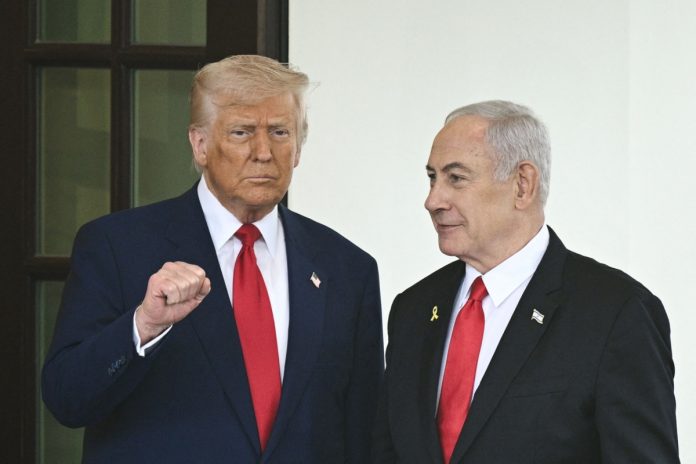
Trump wants Netanyahu to be on same page on Iran: American official

Trump Netanyahu

Noem, who concluded a visit to Israel on Monday, told Fox News that her talks with Netanyahu were “candid and direct”. Her comments come days after US and Iranian officials held their fifth round of nuclear talks in Rome.

“President Trump specifically sent me here to have a conversation with the prime minister about how those negotiations are going and how important it is that we stay united and let this process play out,” she said.

On Sunday, Trump suggested that the talks were progressing well.

“We’ve had some very, very good talks with Iran,” the US president told reporters.

“And I don’t know if I’ll be telling you anything good or bad over the next two days, but I have a feeling I might be telling you something good,” he added.

Last week, CNN reported, citing unidentified US officials, that Israel was preparing for strikes against Iran’s nuclear facilities, despite the US-led talks.

Iran has promised to respond forcefully to any Israeli attack, and accused Netanyahu of working to undermine US diplomacy.

Iranian Minister of Foreign Affairs Seyed Abbas Araghchi stated last week that the Israeli prime minister is “desperate to dictate what the US can and cannot do”.

Israel has been sceptical about the nuclear negotiations, and Netanyahu has been claiming for years that Iran is on the cusp of acquiring a nuclear bomb. Israeli officials portray Iran – which backs regional groups engaged in armed struggle against Israel – as a major threat.

On Monday, Noem said that the US understands that Netanyahu does not trust Iran.

“The message to the American people is: We have a president that wants peace, but also a president that will not tolerate nuclear Iran capability in the future. They will not be able to get a nuclear weapon, and this president will not allow it,” she added.

“But he also wants this prime minister, Benjamin Netanyahu, to be on the same page with him.”

A major sticking point in the talks has been whether Iran would be allowed to enrich its own uranium.

US officials have said they want Iran not just to scale back its nuclear programme, but also to completely stop enriching uranium – a position that Tehran has said is a nonstarter.

Enrichment is the process of altering the uranium atom to create nuclear fuel.

Iranian officials say enrichment for civilian purposes is a sovereign right that is not prohibited by the Nuclear Non-Proliferation Treaty (NPT).

Tehran denies seeking a nuclear weapon, while Israel is widely believed to have an undeclared nuclear arsenal.

During his first term, in 2018, Trump nixed the Joint Comprehensive Plan of Action (JCPOA), which had seen Iran scale back its nuclear programme in exchange for the lifting of international sanctions against its economy.

Since then, the US has been piling sanctions on Iran. Tehran has responded by escalating its nuclear programme.

On Monday, Iran ruled out temporarily suspending uranium enrichment to secure an interim deal with the US.

Iranian Foreign Ministry spokesperson Esmaeil Baqaei stressed that Iran is not buying time with the talks.

“We have entered the course of talks seriously and purposefully with the intention of reaching a fair agreement. We have proved our seriousness,” Baqaei was quoted as saying by the Tasnim news agency.

Hamas agrees to a Gaza ceasefire; US and Israel refute offer: Al Jazeera

Gaza War

Israeli officials also denied that the proposal was from the US, saying on Monday that no Israeli government could accept it, according to the Reuters news agency.

The conflicting reports came as Israeli forces kept up their relentless bombardment of starving Palestinians in Gaza, and continued to severely restrict the entry of aid into the besieged enclave.

Al-Jazeera’s sources stated Hamas and the US’s Middle East envoy, Steve Witkoff, agreed to the draft deal at a meeting in the Qatari capital, Doha. They added it includes a 60-day ceasefire, and the release of 10 living captives held in Gaza, over two stages.

US President Donald Trump would guarantee the terms of the agreement and the withdrawal of Israeli troops from Gaza. The accord would also allow for the entry of humanitarian aid, without conditions, from day one, the sources noted.

Witkoff, however, rejected the notion that Hamas had accepted his offer for a captive and truce deal, telling Reuters that what he had seen was “completely unacceptable”.

A US source close to Witkoff also told Al-Jazeera that Hamas’s claims were “inaccurate” and the deal from the Palestinian group was “disappointing”.

Al-Jazeera’s Kimberly Halkett, reporting from Washington, DC, cited the US official as saying that the proposal on the table is only a “temporary ceasefire agreement” with Israel.
“What this would do is allow for half of the living captives, as well as half of the deceased, to be returned,” she stated.

“In turn, the White House believes this would lead towards a diplomatic path of discussions that could result in a permanent ceasefire. And this is the deal that the source tells Al-Jazeera is what Hamas should take,” she added.

There was no immediate comment from Hamas.

Prime Minister Benjamin Netanyahu has issued a recorded message on social media, promising to bring back the 58 Israeli captives remaining in the blockaded territory, of whom some 20 are believed to still be alive.

“If we don’t achieve it today, we will achieve it tomorrow, and if not tomorrow, then the day after tomorrow. We are not giving up,” Netanyahu said.

“We intend to bring them all back, the living and the dead,” he added.

The Israeli leader made no mention of the proposed deal.

Al-Jazeera’s Hamdah Salhut, reporting from the Jordanian capital, Amman, said Netanyahu has long rejected Hamas’s calls for a permanent ceasefire in Gaza and pledged to continue the war until “total victory” is achieved against the Palestinian group.

“The Israeli premier has even added new red lines for what to him would bring an end of the war,” Salhut stated.

“That includes the return of the Israeli captives, the demilitarisation of Hamas [and] the exile of military and political leaders. And, also, the implementation of Trump’s plan for Gaza. This is a plan that has been widely condemned as ethnic cleansing, and the White House even walked it back several months ago,” she continued, adding, “But Netanyahu says that’s what he wants if there is to be an end of the war.”

For its part, Hamas has announced it is willing to free the remaining captives all at once in exchange for a permanent ceasefire. It has also stressed it is willing to cede control of the Gaza Strip to an interim government, as proposed in an Arab League-backed $53bln plan for the enclave’s reconstruction.

The Palestinian group, however, has refused to lay down arms or exile its leaders from Gaza, emphasizing the demand is a “red line” as long as Israel’s occupation of Palestinian territory continues.

In Gaza, Palestinians said they were desperate for any agreement to bring an end to Israel’s relentless bombardment and blockade, which has left the enclave’s entire population on the brink of famine.

“All Palestinian eyes are on Doha,” Al-Jazeera’s Hind Khoudary said from Deir el-Balah in Central Gaza.

“Since Israel resumed the war, Palestinians have been attacked in their homes, schools, makeshift tents and also in so-called safe humanitarian zones… They are also saying they are not able to even secure one meal for their families,” Khoudary added.

“Palestinians here are saying they do not have any options left, and they are trying to survive the Israeli air strikes and the mass starvation that has been imposed on them,” Khoudary continued.

Israel resumed the war on Gaza on March 18, two weeks after imposing a total blockade on the enclave.

Health authorities in Gaza say at least 3,822 Palestinians have been killed in Israel’s renewed offensive, and the confirmed overall death toll has now reached 54,000. Some 123,000 people have been wounded.

Israel eased its blockade last week, claiming it has let in some 170 aid trucks into Gaza, but humanitarian officials say they are nowhere near the amount needed to feed the enclave’s two million people after 11 weeks of a total siege.

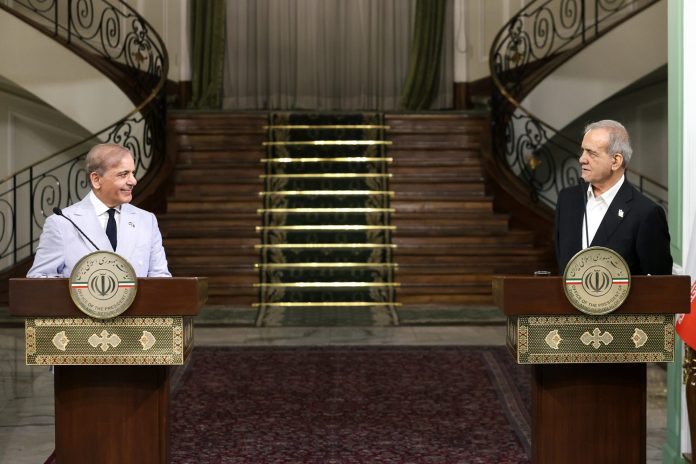
Iran-Pakistan border should be free of terrorism: Pezeshkian

Pezeshkian Sharif

“We believe that the common borders of the two countries should be free from insecurity and the presence and activities of terrorist and criminal groups,” Pezeshkian said in a joint press conference with Pakistani Prime Minister Muhammad Shehbaz Sharif in Tehran on Monday.

He stated the two countries share a stance and are resolved to promote security and fight elements behind insecurity along the borders.

Iran regards stability and peace of the Pakistani people as one of its high interests, the president noted, putting a premium on maintaining sustainable security and expanding cordial relations with the neighboring countries.

“The Islamic Republic of Iran welcomes the establishment of a ceasefire and peace between Pakistan and India. Undoubtedly, the settlement of disputes through dialogue and peaceful methods is a prerequisite for sustainable development and the establishment of security in the region and the world,” Pezeshkian added.

He said West Asia and South Asia currently need security and peace more than ever, which underlines the need for consultations and positive interaction with the neighboring countries and other international partners.

Elsewhere in the presser, Pezeshkian hailed historical relations between Tehran and Islamabad, which he said are rooted in cultural and civilizational bonds.

He added Iran and Pakistan have a common stance on issues related to the region, the Muslim world, and international developments.

Pointing to the issue of Palestine, he said that as active members of the Organization of Islamic Cooperation, Iran and Pakistan support the cause of Palestine and the defenseless people of Gaza.

They denounce the continuation of Israel’s crimes in the Gaza Strip and the support of Western countries for the regime, the Iranian president continued.

Tehran and Islamabad called on Muslim countries to fully support the oppressed people of Palestine and Gaza, he noted.

The Pakistani prime minister, for his part, said his country firmly supports Iran’s peaceful nuclear program.

Sharif commended Iran’s principled stance on support for regional peace and security, particularly regarding the recent India-Pakistan tension.

He reiterated his country’s determination to promote peace and trade and fight terrorism, saying that Pakistan would never allow anybody to misuse its territory to carry out a measure against Iran.

He voiced Islamabad’s keenness to increase trade and economic ties with Tehran to at least 10 billion dollars.

Sharif also censured the Israeli regime’s crimes against the oppressed people of Gaza and said Pakistan will stand by the Palestinian people until full liberation of their homeland.

Heading a delegation, the Pakistani prime minister arrived in Tehran on Monday at the invitation of the Iranian president. He started a four-leg regional tour on Sunday by traveling to Turkey, and also plans to visit Azerbaijan and Tajikistan.