Sunday, December 28, 2025
Home Blog Page 3374

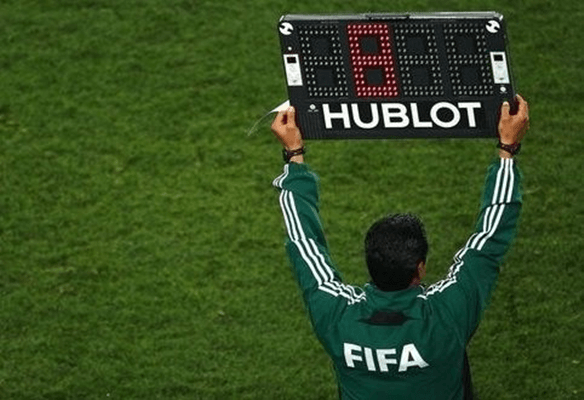
FIFA Surprised By Iranian Inventor’s VAR

The system was successfully tested on Friday in Yadegar-e Emam Stadium in the north-western city of Tabriz, supervised by the representatives of Football Federation Islamic Republic of Iran.

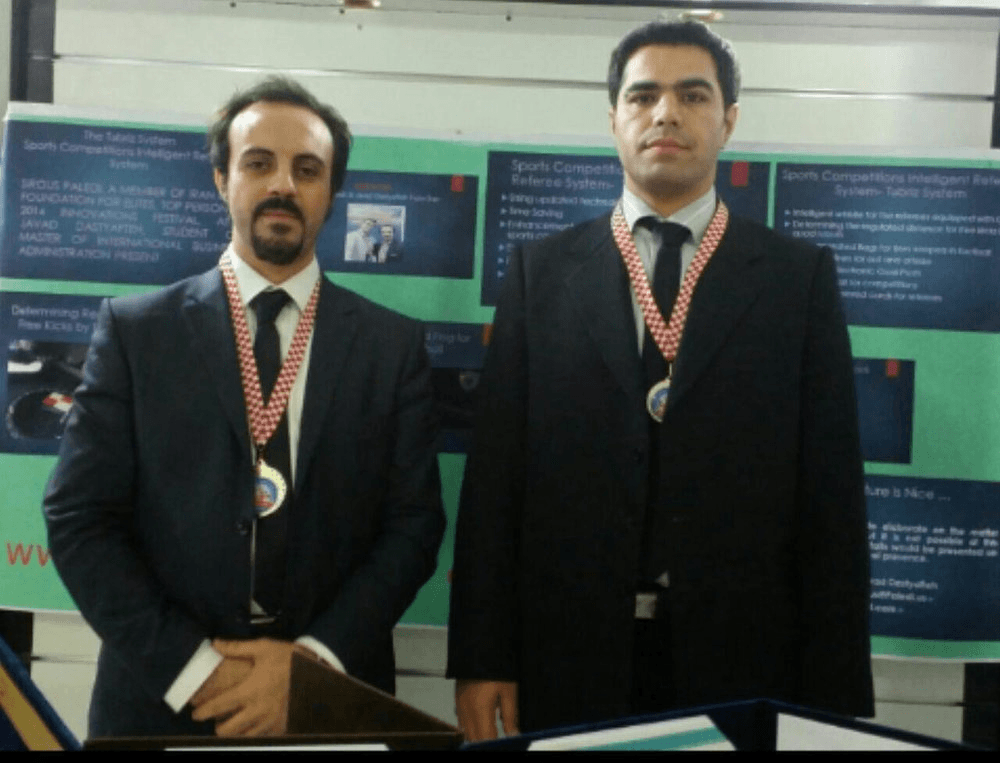
The system, named Paldi, is an advanced version of VAR invented by Sirous Paldi, a report by Khabaronline said.

The invention has been awarded some global medals in 2016 and 2017. The system could accurately spot the areas in which fouls have happened by laser.

VAR is a football assistant referee that allows for reviewing the decisions made by the head referee with the help of the recorded video footage and a headset for communication.

FIFA Surprised By Iranian Inventor’s VAR

Iranian Music Rich in Attractions, Secrets: Chinese Researcher

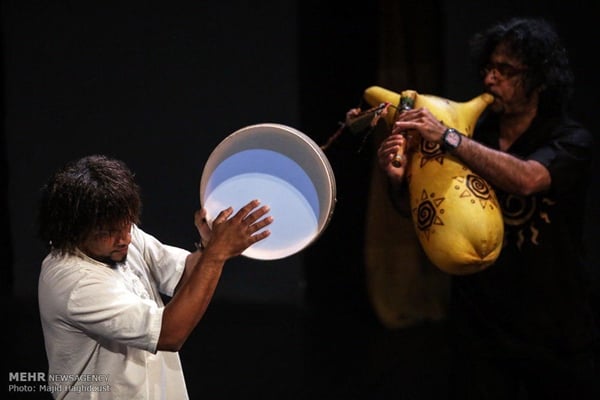
Lian music group

As the first Chinese researcher working on Iranian music, Zhao Zhuchan says she decided to study Iranian music to deal with a lack of understanding of the music among Chinese musicians.

“I decided to help Chinese musicians get familiar with Iranian music. To [get a deep understanding], I didn’t limit my studies to the European and American resources,” she was quoted as saying in an interview with IRNA.

Zhuchan said most of the literature on Iranian music have been created by researchers from other countries, adding that she has fell in love with the wonderful world of Iranian music.

“I’ve conducted extensive research on the Iranian music and realized that Iranian musicians have full command over their works,” she noted.

Elsewhere, the Chinese researcher said she began to know Iran through Beijing Book Fair, in which Iranian publishers attended as special guests.

Iranian Music Rich in Attractions, Secrets: Chinese Researcher
zhao zhuoqun

“In this fair, I got to know Lian music group. The type of music and their songs appealed to me and I decided to travel to Iran to get a deeper understanding of Iranian music,” he said.

She underlined that during her latest visit to Iran last year, she got in touch with the Iranian people and their music.

“During my stay in Iran, I found Iranians very kind, hospitable and peace-lover. I also saw Iran a secure country, [unlike] the western media who has been seeking to tarnish its image in the world,” she said.

Zhuchan recalled one of her memories during her visit to the southern city of Bushehr, saying that “the warm welcome I received from the ordinary people in Bushehr as well as my observations from across the country has convinced me to miss no opportunity to promote Iran in the world and invite all culture-lovers in the world to visit Iran closely and get more familiar with the hospitality of the Iranian nation.”

Zhuchan’s findings on Iran’s music and other cultural aspects have been published in an academic journal in China. This is the first academic research on Iranian music published in a prestigious journal.

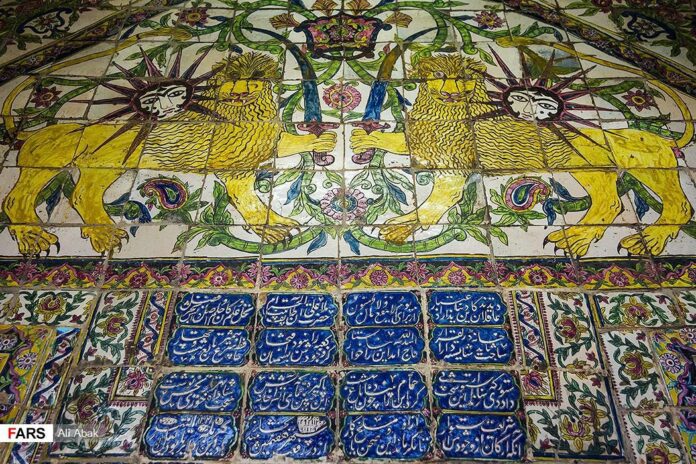
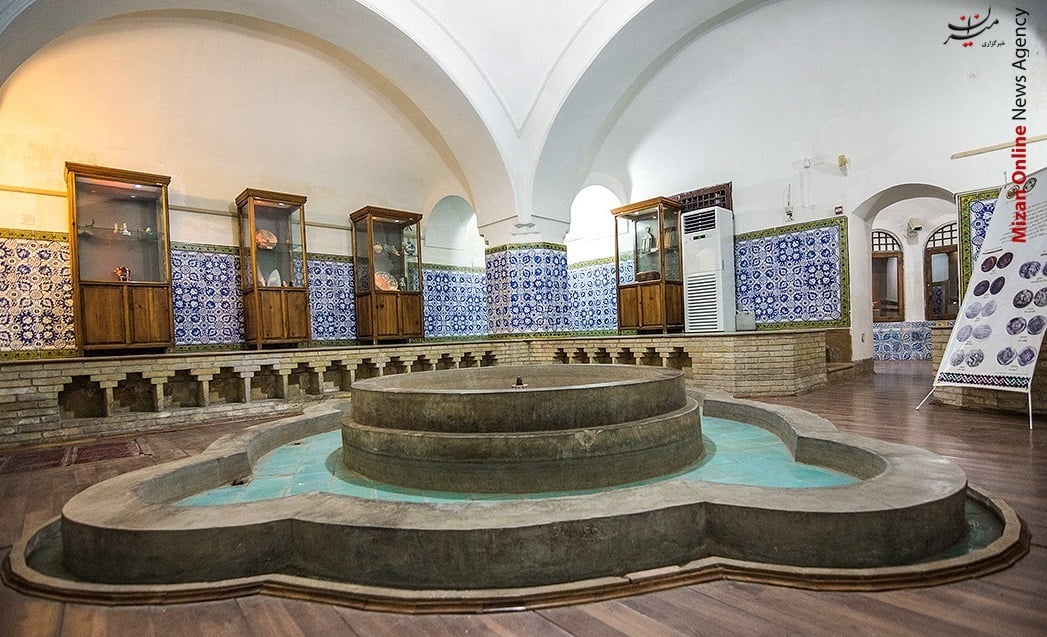
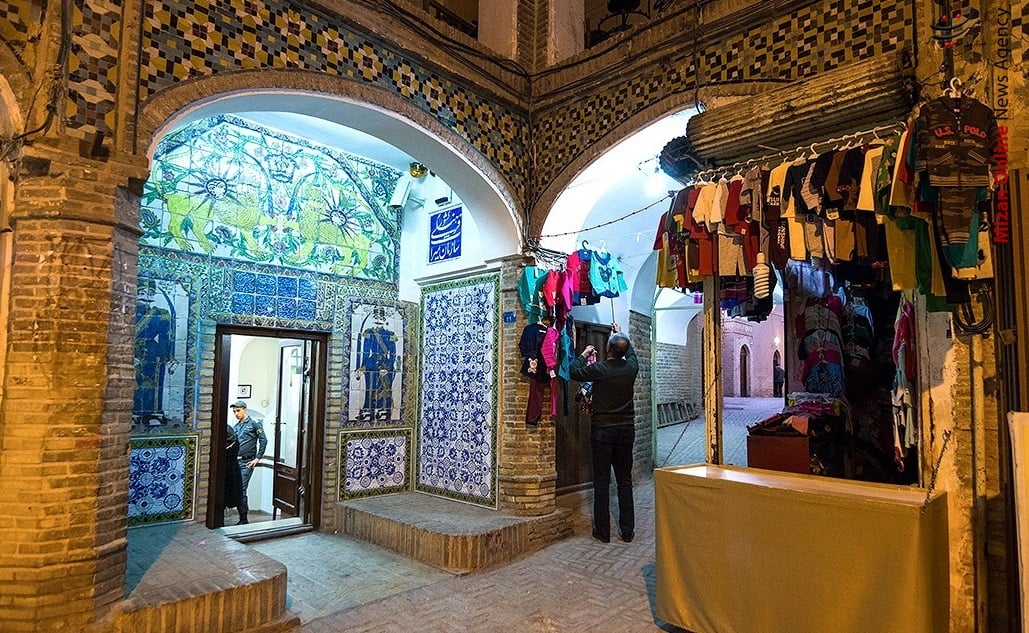
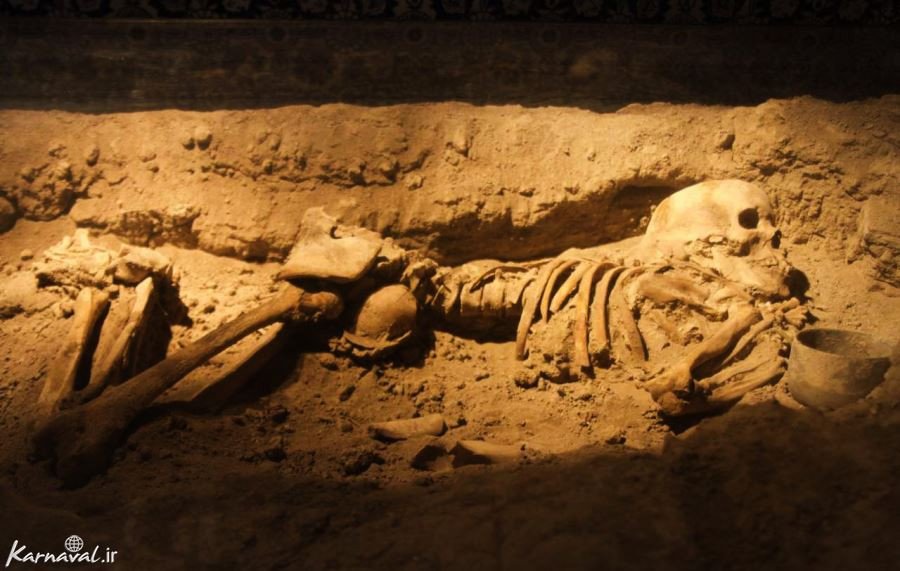
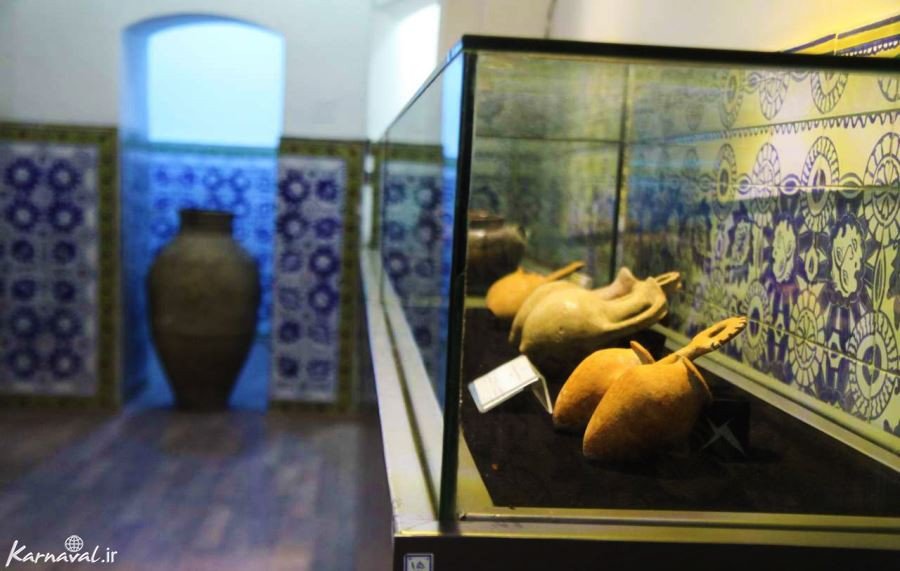
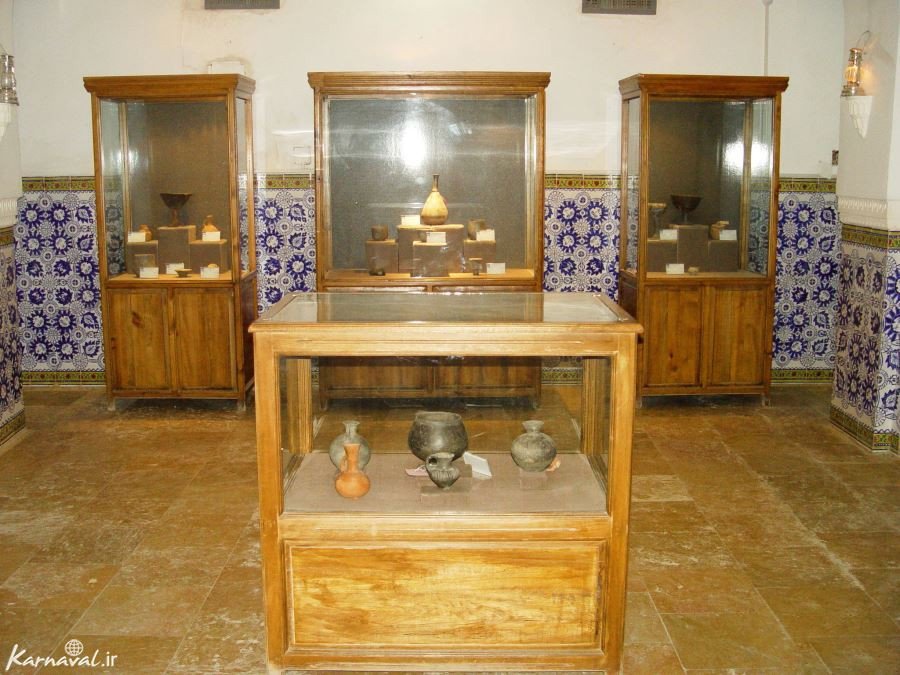
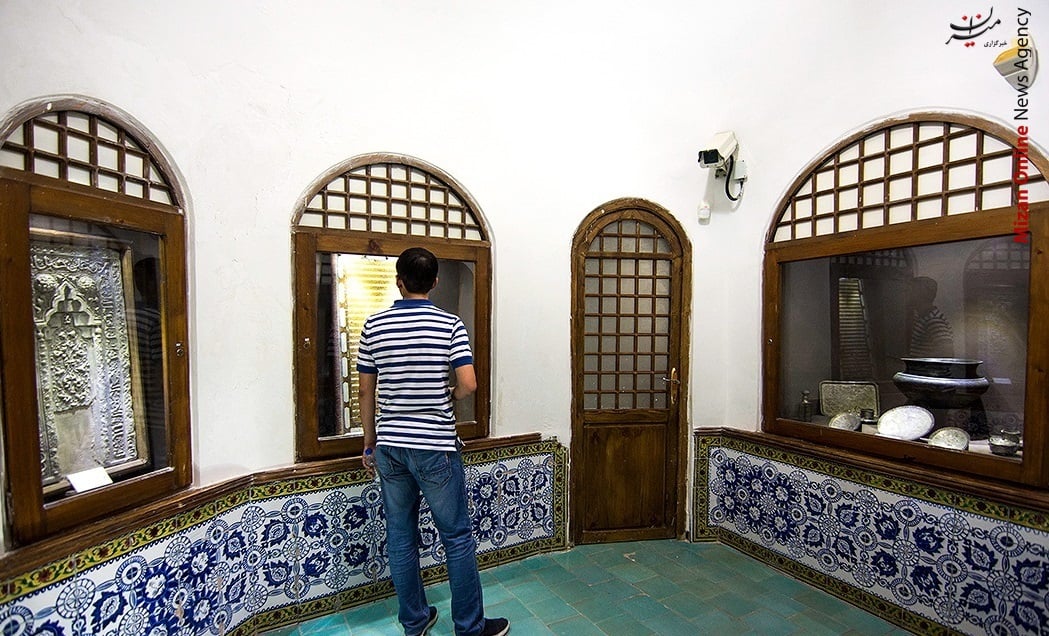
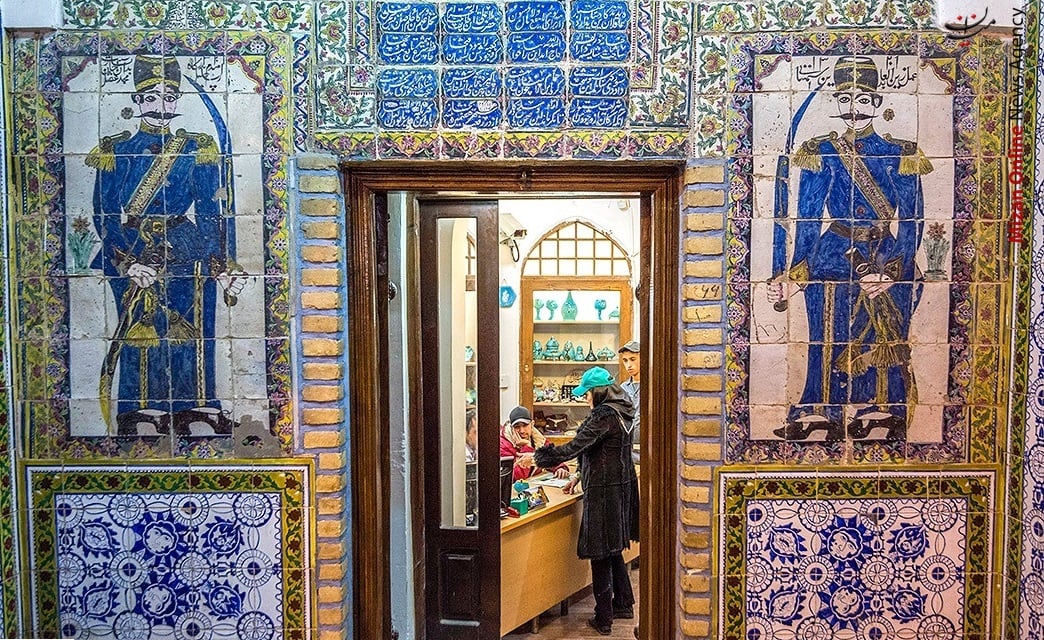
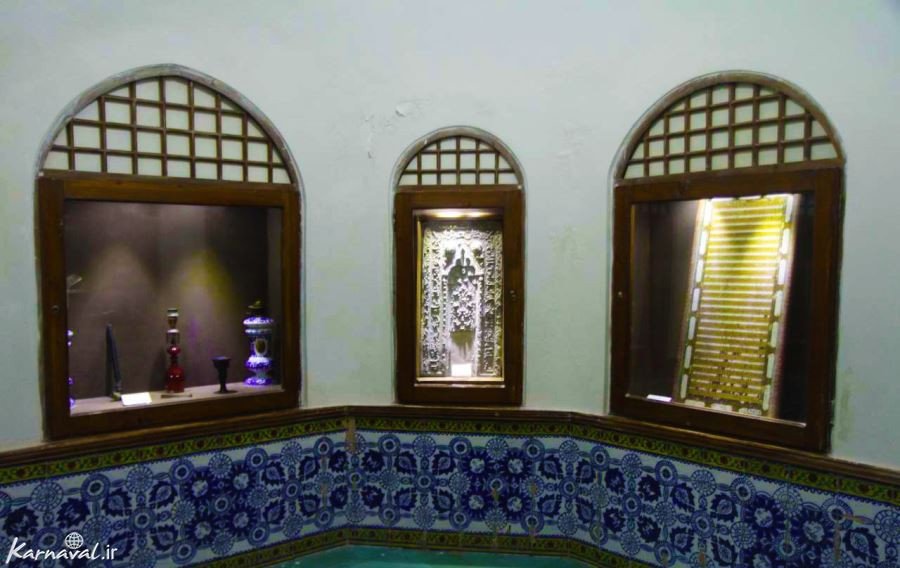
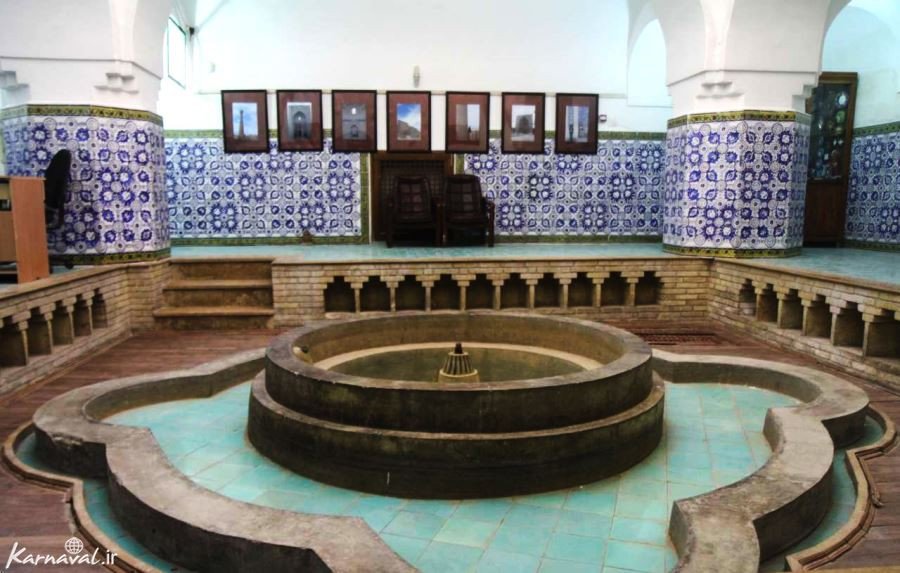
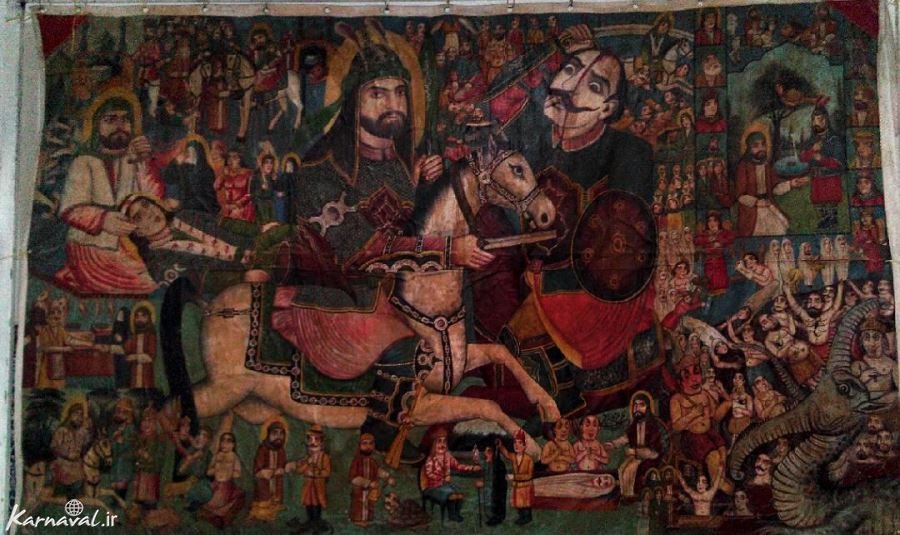
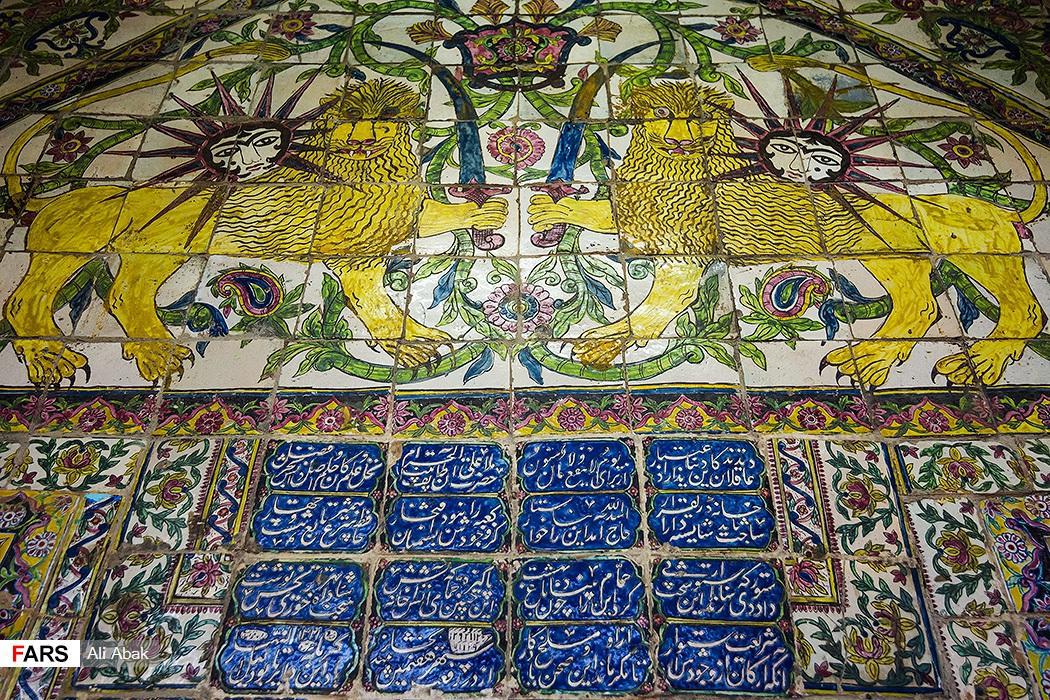
Iran’s Beauties in Photos: Pahneh Bath Museum in Semnan

Dating back to 600 years ago, the bath has been built on a 1000 square meters area. Today, the bath has turned into an ethnography museum.

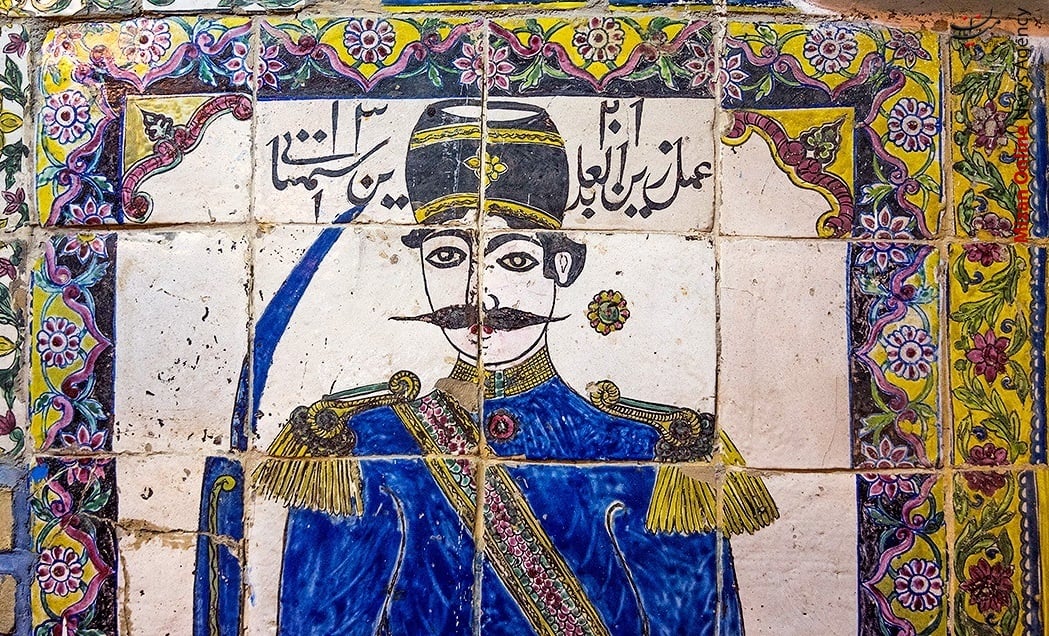
Pahneh Bath enjoys some unique tiling. Its entrance is decorated with a stone inscription made up of 8 ultramarine tiles with a Persian calligraphy of poem by Iran’s legendary poet, Hafiz.

The ancient bath includes various sections including the entrance (an area for waiting to enter the bath), the locker room and cold and hot bathtubs. Like any other bath, Pahneh Bath has two separate entrances for men and women.

Some scholars including Mohammad Hassan Khan Sani’oddoleh, a leading historian from the Qajar era, believe the inscription above the entrance of the bath has been made during the Teymourian era. The bath was active in the Safavid era. According to studies, even some Qajari kings have used the bath. Notably, Mozaffar ad-Din Shah Qajar has issued an official order to repair the bath.

Over the past century, the bath has been repaired and reconstructed several times. It was registered as Iran’s national heritage in 1976.

The bath was turned into an ethnography museum after major reconstruction efforts from 1986 to 1994.

Below, you can watch a series of photos of the historical site published by Fars News Agency:

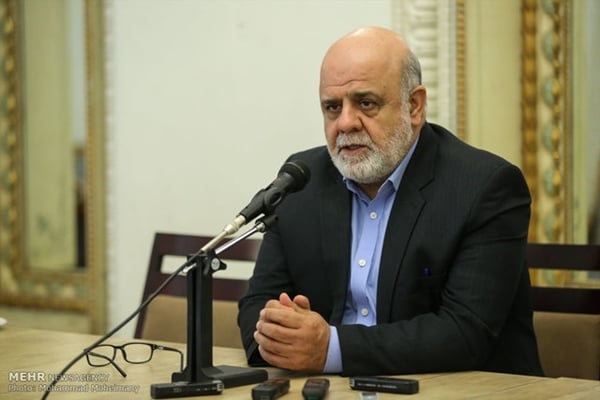
All Iranian Military Advisors Have Left Iraq: Ambassador

Iraj Masjedi underlined that all Iranian military advisors left Iraq as soon as the defeat of ISIS was announced, meaning the terror threat was over.

“All of them (Iranian military advisors) have returned to Iran,” Masjedi was quoted by Entekhab news website as saying in an address to a host of university students and media personnel in Iraq.

“Unlike the Islamic Republic of Iran, the US is maintaining its troops in the region despite the end of ISIS [rule] and it is reinforcing its bases and military garrisons and setting up new positions in some areas,” said the diplomat.

He also touched upon the reasons behind Washington’s withdrawal from Syria.

“US forces’ pullout from Syria should be evaluated within the framework of Washington’s strategic policy in the region, which is to create instability and crisis there, and that is why it obstructs any efforts that would lead to peace and tranquility,” he said.

The Iranian diplomat noted that the Americans do not want ISIS and terrorism to be rooted out in from region, but it likes to manage terrorism in order to keep the Middle East in a state of tension and crisis.

“The United States’ military presence in Syria has been too costly and destructive for Washington,” he said.

“The foreign forces [in Syria] lack any popular base, a fact that has extremely worried Americans,” the ambassador said.

“It particularly became evident for Muslims that the United States does not care about the interests of the people in the region and views the region through the eyes of the Zionist regime [of Israel],” Masjedi added.

He said the United States’ relocation of its embassy from Tel Aviv to al-Quds and Israel’s support for ISIS shed light on the hidden objectives of Washington and Tel Aviv.

“These concerns were the reason behind the pullout of US troops from Syria, and that’s why the US ordered the withdrawal of its forces from Syria,” the Iranian ambassador noted.

He then lashed out at the US military presence in the region.

“The US military presence in the region is not justifiable because the regional countries enjoy the power to protect themselves thanks to their domestic military troops, and there is no need for foreign forces,” he said.

According to the Iranian ambassador, the Americans reserve the right to interfere in regional affairs and that is why they do not even get permission from regional countries when relocating troops and establishing bases.

He said the United States’ bullying behavior reminds one of the law of the jungle.

“The Americans talk as if the world belongs to them, and this has created hatred towards them,” he said.

Elsewhere in his remarks, Masjedi underlined that the public and media should keep criticizing Washington’s policy of interfering in regional countries’ internal affairs and pressuring countries to restrict their relations with Iran.

“Those working in the media should inform the public of realities and do not allow the Zionists to take the initiative and create divisions among nations and ethnic groups under different pretexts,” he said.

In the meeting, Iraqi media personnel thanked Iran for supporting and assisting Iraq, especially in the war against ISIS terrorists. They emphasized that the Iraqi nation appreciates Iran’s efforts to establish peace and stability in the region.

They also called for the enhancement of Tehran-Baghdad scientific and economic relations and asked Iran to share with Iraq its experience in the field of development.

Arab Countries Rushing to Open Embassies in Syria: Analyst

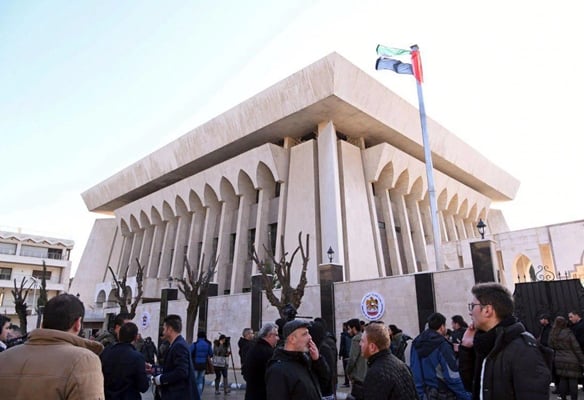
United Arab Emirates, in Damascus, Syria/ Photo:AAP

Abdel Bari Atwan said in a weekly video release that 2019 will be littered with victories.

“The year 2019 will be a year of victories, and it will be a year when US conspiracies and schemes in the region will fail, and dignity will return,” said the commentator as quoted by Fars News Agency.

According to Atwan, US President Donald Trump has confessed that the United States spent more than $7 trillion in the Middle East, but to no avail, whatsoever. The analyst said Trump swept into a US base in Iraq “like a mouse” while he was extremely terrified.

Elsewhere in his remarks, the analyst said Syria emerged victorious because it resisted. He said now Arab countries are moving swiftly to open their embassies in Damascus.

Interestingly, Arab countries justify their return to the Arab country by claiming they want to pull Syria away from Iran, says Atwan.

According to the analyst, these Arab countries offered to pay tens of billions of dollars to Syria so push the country away from Iran, but Damascus turned down the request and reiterated it would remain a close ally of Iran.

He said that “we are now at a new stage”, marked by the victory of the resistance front.

The commentator said Israel is also in a state of panic and fear, and the countries that have begun to normalize relations with Tel Aviv and have hosted Israeli sports delegations will rue the day.

“Hezbollah is the progressive power in the region now and has more than 150,000 missiles with high accuracy,” he added.

The analyst noted that Arab countries should confess to their mistakes and join the resistance front to confront Israel.

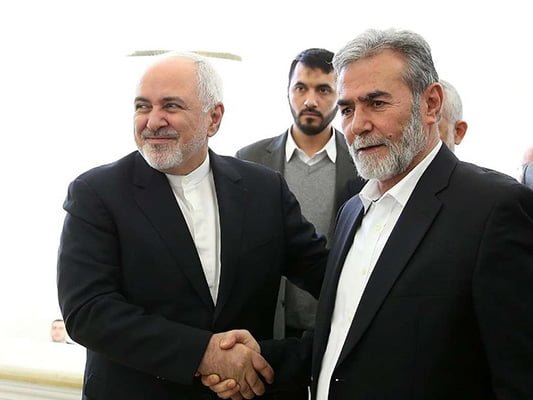
Iran’s Top Diplomat Meets PIJ Chief

In this meeting, Nakhalah described the Islamic Republic of Iran a true supporter of the Palestinian cause.

Nakhalah said the Palestinian resistance has achieved high capacity and capability against the aggressors compared to the past, adding, “The result of these capabilities were evident in the Great Marches of Return and the failure of the recent attack of the Zionist regime, which led to the announcement of early elections in the occupied territories.”

The Palestinian official pointed to efforts by some Arab and western countries to break resistance of the Palestinian people, saying the nation has become more determined to keep up walking their path until total victory.

Zarif noted that supporting Palestine is a basic principle of Iran’s foreign policy, stressing that “the Islamic Republic of Iran will always be beside the Palestinian people and support the Palestinian cause.”

In the meeting, Nakhalah also presented a report on the recent internal elections inside the movement.

Nakhala was elected as the chief of the Palestinian Islamic Jihad movement in September, replacing Ramadhan Shalah.

Shalah, who led the movement from Lebanese capital Beirut since 1995, is reportedly suffering from a serious illness.

Female-Only Carmen Opera to be Performed in Iran’s Capital

The statement was made by Shahla Milani, a soprano singer of Western classical music and Iranian folk music who heads a world music group.

The Spanish opera written by a French musician will be exclusive to women in Tehran.

Female-Only Carmen Opera to be Performed in Iran’s Capital
Shahla Milani

The opera went on the stage several times before the revolution in 1979, but it has not been performed ever since.

A world music group along with a number of stage actors are to perform it at Vahdat Auditorium Theatre in the Iranian capital.

The show is to be directed by Haydeh Zekavat (Kishipour).

“We also have male characters in this opera, but as the performance is only for women, it was not possible to use men actors and singers. So, we used women with an alto voice to play the role of men,” he said.

“We thought that it is common in Iranian theatre that male actors are dressed as women in the theatre, so it would be possible to have performers dressed as men, too,” said Milani.

Asked if the women in the group had such a range of voice to be able to handle men’s roles, she said, “Yes, it was quite possible.”

“We managed to give the role of men to women with bass voices and assign women with more treble voices to other roles,” he said.

She said opera has its own characteristics and requirements, including decoration, elaborate music, a major orchestra, a large choir, etc.

This exquisite art is quite complicated and it is highly likely that some artists are not able to perform faultlessly. However, such artists can hone their skills and improve their work in the future.

The Carmen opera depicts a story in Spain’s Seville in around 1820. It recounts the story of a gypsy’s tragic fervid love for a French soldier.

Tourism Official Invites World to Spend Christmas in Iran

Christmas celebrations in Jolfa, Isfahan

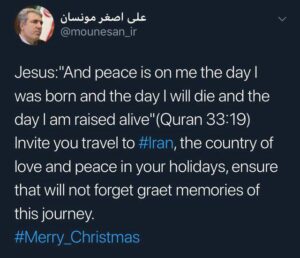
Ali Asghar Moonesan, the head of Iran’s Cultural Heritage, Handicrafts and Tourism Organization, said in a tweet on Saturday he assures people around the world they won’t forget the great memories of their Iran trip.

“[I] invite you [to] travel to Iran, the country of love and peace in your holidays. [I] ensure that [You] will not forget great memories of this journey,” he tweeted.

Millions of people across the world take overseas trips during the Christmas and New Year period, bringing a considerable boost to the tourism industry of hot destinations.

Tourism Official Invites World to Spend Christmas in IranIranian tourism officials expect a rise of overseas visitors in the coming months, as a plunge in the national currency’s value has made it extremely cheap for foreigners to visit Iran.

In October, Moonesan announced the number of tourists who visited Iran in the first six months of the current Iranian year (started March 21) rose by 51 percent compared to the same period in the past year.

Moreover, Iran has in recent months made efforts to ease the process of issuing visas to attract more foreign tourists.

Iran is home to many historical landmarks and enjoys a rich culture, but its tourism sector remains relatively underdeveloped.

Officials hope tourism could worth a lot to the Iranian economy, creating jobs and boosting economic growth in a country targeted by US sanctions.

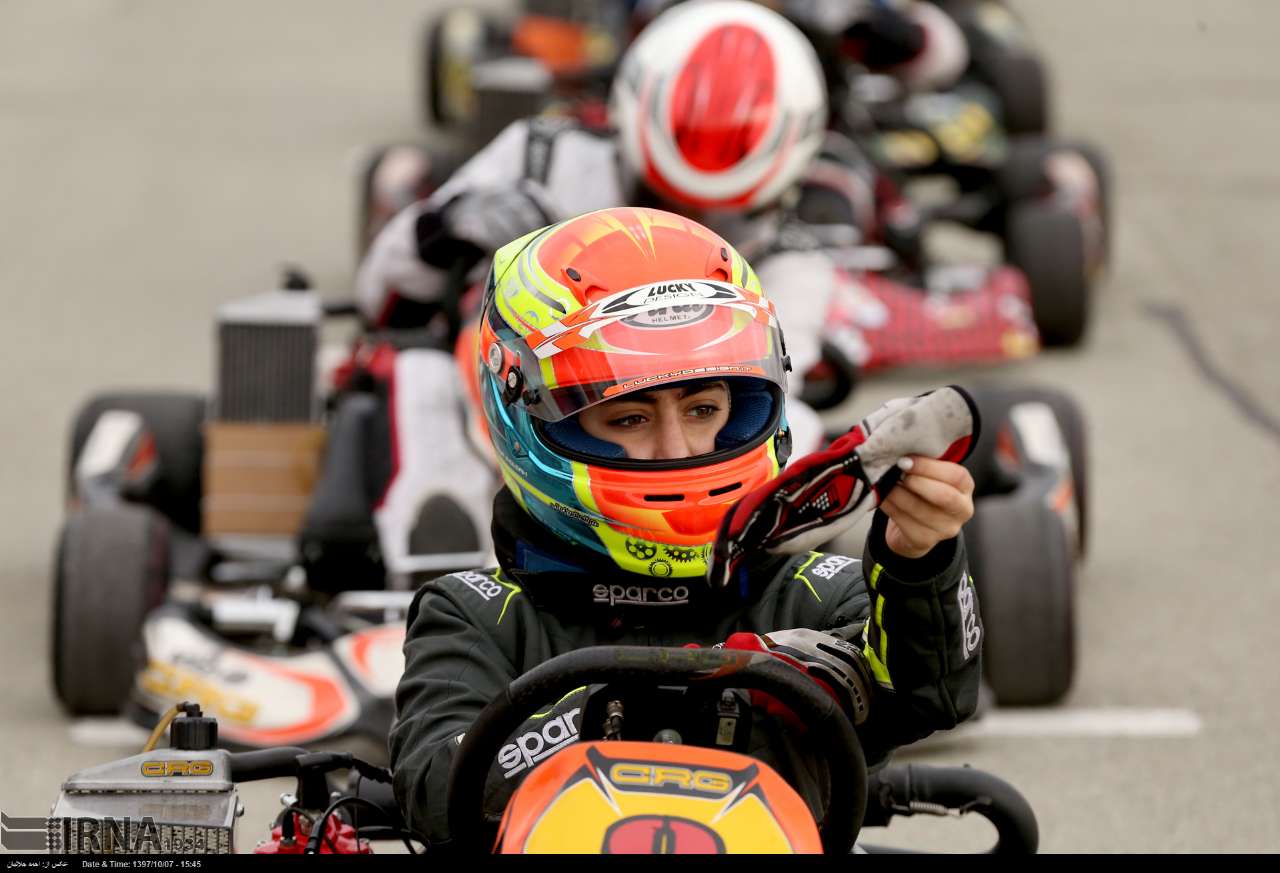
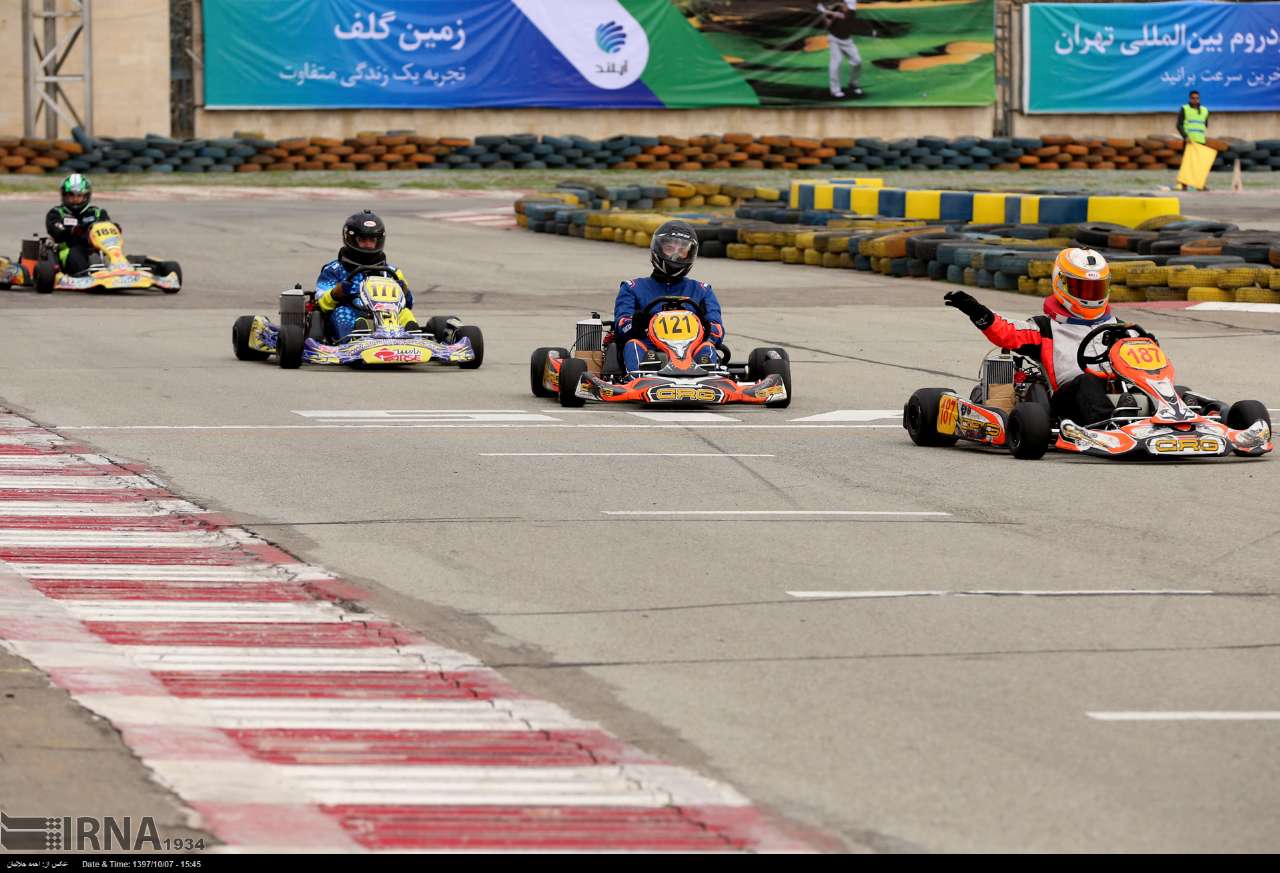
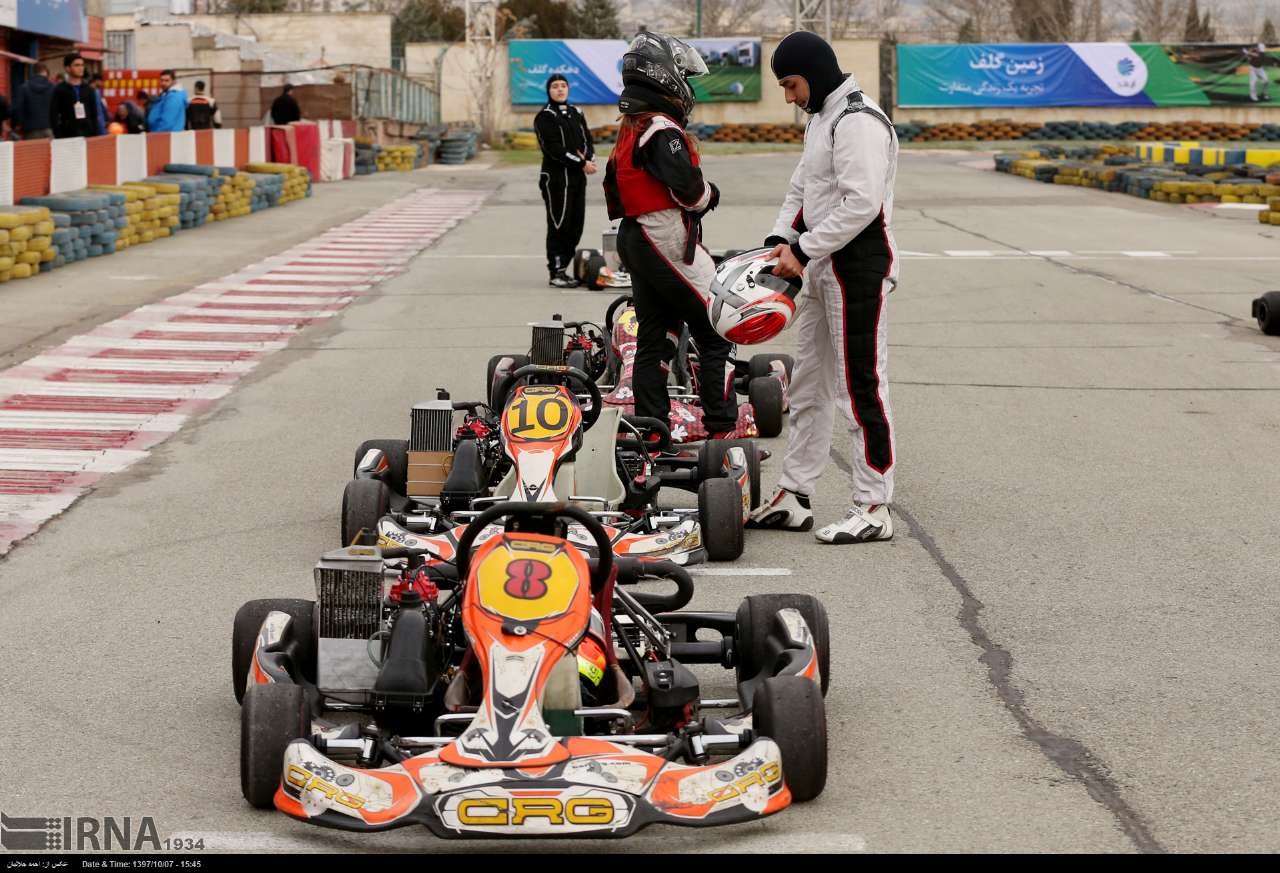
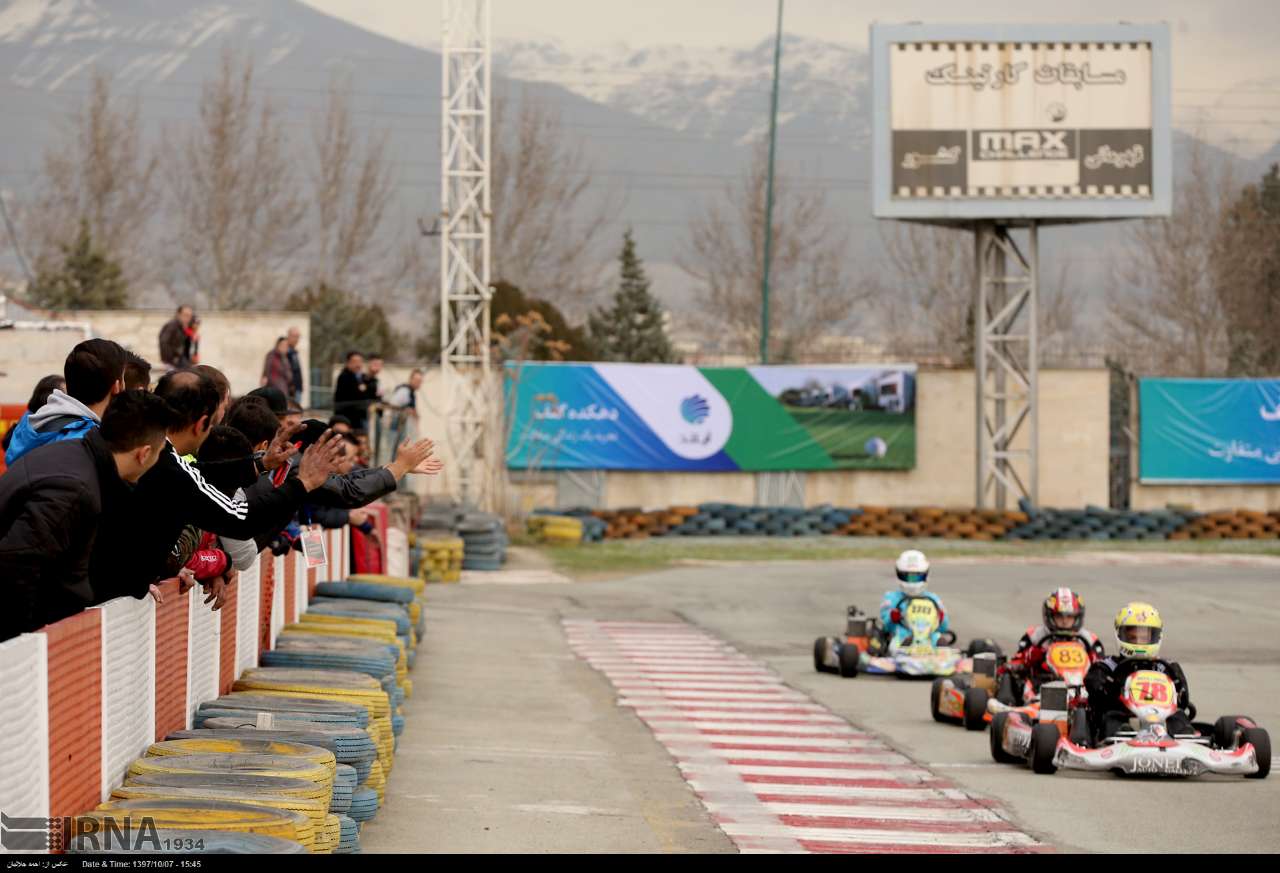
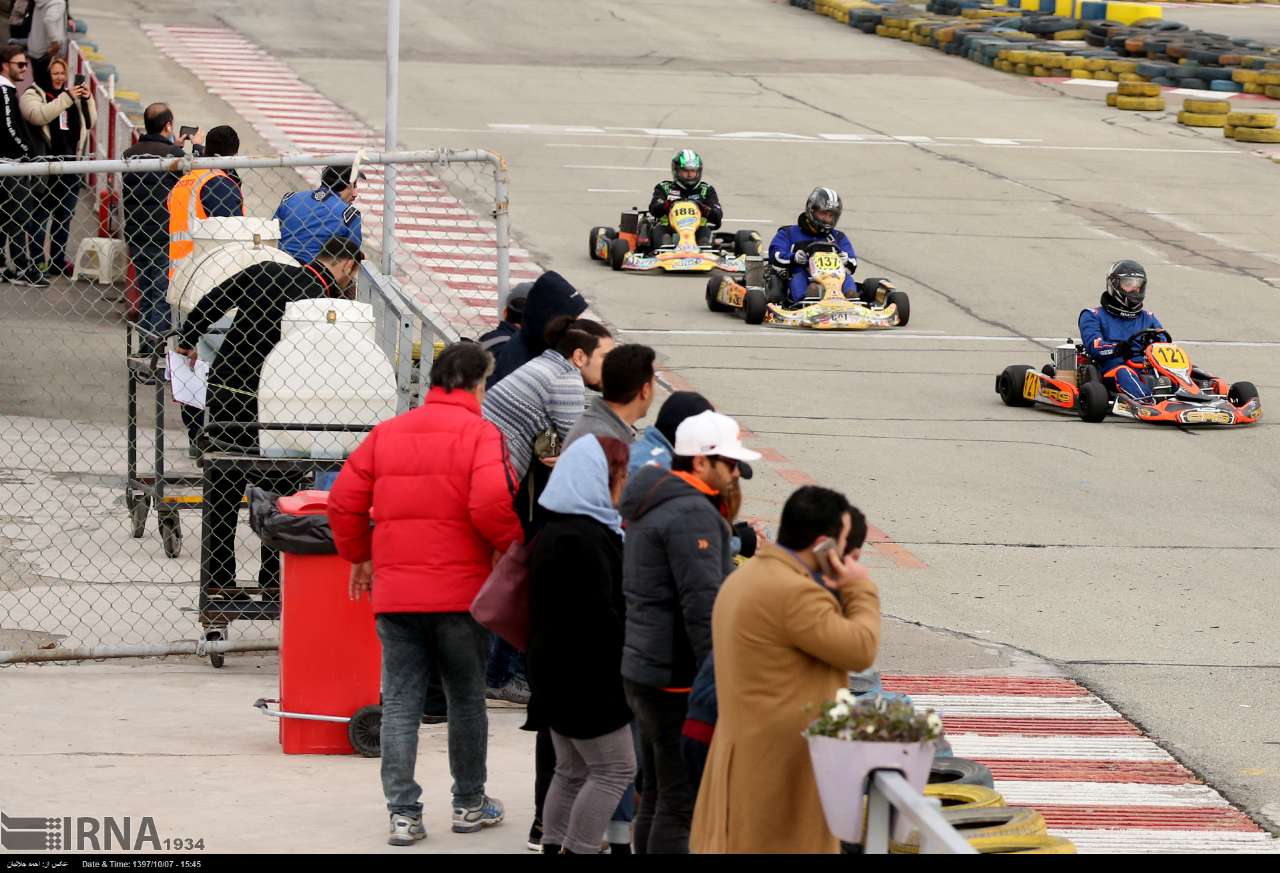
Iran’s Natl. Rotax Karting Contest Held in Tehran

The event was held on December 28 in four categories: teens, youth, manual transmission carts and adults.

The following are photos of the competitions published by IRNA:

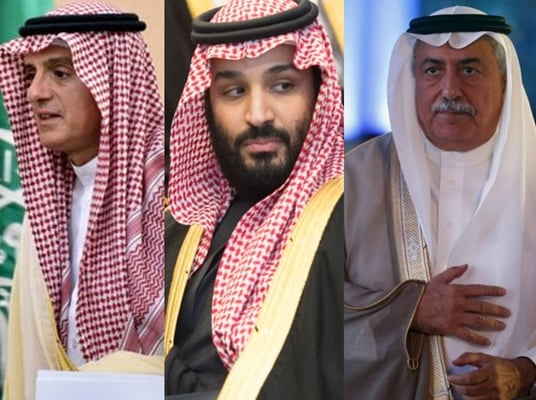
Jubeir’s Replacement Could Adopt Softer Line on Tehran: Iranian Ex-Diplomat

Qassem Mohebali, the former director general for the Middle East section at the Iranian Foreign Ministry, said in an interview with Entekhab news website that Tehran should wait and see whether a Cabinet reshuffle in Riyadh would bring about a shift in Saudi policy toward the Islamic Republic of Iran.


Bin Salman’s Power Diminishing

The former diplomat also weighed in on whether or not the changes indicate that Saudi Crown Prince Mohammed bin Salman’s position has been undermined.

“Not undermined, but early indications suggest bin Salman’s power has been weakened compared to the past,” he said.

“We should wait and see what other changes will be made and what tendencies the new officials will have. But it seems that some sort of adjustment has been made to the decision-making structure in Saudi Arabia, leading bin Salman’s power to reduce,” he added.


Riyadh May Adopt Softer Line

The ex-diplomat also expressed his views the impact of the changes on the Saudi foreign policy and whether Saudi Arabia is a country where the foreign minister can put his own policies into effect.

Mohebali said in Riyadh the king and heir to the throne are the major decision-makers.

“But the selection of that person (Assaf) is indicative of their tendency,” he added.

“As I mentioned before, the new foreign minister, who used to work in the economic sector and was less political than al-Jubair, may adopt a more moderate approach on regional issues, especially regarding Yemen, Iran and Syria,” he added.

He also touched upon the connection between Sudanese President Omar al-Bashir’s trip to Syria and the political developments in Saudi Arabia.

“It’s been quite some time that the Arab League has decided to improve its relations with Syria and bring the country back to the league. Omar al-Bashir has sent this message [to Damascus], which was naturally coordinated with Saudi Arabia,” he said.

The former diplomat said the re-opening of the United Arab Emirates’ embassy in Damascus is another signal that Saudi Arabia’s allies are making changes to their policies, too.

Mohebali said the UAE’s acceptance of the ceasefire in Yemen, Arab countries’ efforts to mend ties with Syria and the travel of a Syrian delegation to Tunisia for the Arab League meeting are other signs Saudi Arabia and its allies are changing tack.


Toughest Challenge in Saudi Foreign Policy

Mohebali then weighed in on whether the changes in Saudi policies will cause a shift in the country’s approach toward Iran.

“We should wait. This might be the most difficult issue in Saudi Arabia’s foreign policy. The new [Saudi] foreign minister’s positions should be explored, though he does not seem to be as political as [the outgoing Saudi Foreign Minister Adel] al-Jubair,” said the ex-diplomat.

“We should not rush into [judging] his stances, but he may adopt a more moderate approach compared to al-Jubair, who was fiercely opposing Iran,” Mohebali added.

He said the position of the hard-line current in the Saudi government, including al-Jubair, seems to have been weakened.

“The new foreign minister, who has served as the Saudi representative to the World Bank, has a softer political approach. But we should wait and see what changes will be made,” he noted.


Foreign Parties Disappointed With Positive Changes in Saudi Arabia

He also elaborated on the impact of the weakening of bin Salman’s power on Saudi Arabia’s foreign policy.

“Following the recent developments such as the case of Khashoggi and the defeats in Yemen, the policies followed by al-Jubair [proved weak], and bin Salman lost some power,” said the ex-diplomat.

“The Saudi foreign policy has … generally faced problems. They were not successful on Qatar, as the country has reinforced its position. The same happened in Yemen. After the Khashoggi incident, their relations with Turkey and the US are not the same as before, and they lost their status among the Europeans as well,” he said.

“So, unlike 2015 and 2016 when [people were hopeful about changes in Saudi Arabia], now it seems that foreign parties have become disappointed with the possibility of positive changes in Saudi Arabia,” said Mohebali.


Russians Cash in on Weakening Saudi-US Ties

He also elaborated on Russia expressing support for bin Salman and issuing warning to the US with regards to changes to the Saudi government’s structure.

“This is another sign that the Americans have probably been trying to bring about changes to Saudi Arabia’s power structure. The differences in Al Saud family contribute to it, too,” said the ex-diplomat.

“Anyway, following Khashoggi’s murder, US-Saudi relations are not as good as before. And it seems they are interested to make changes to the power structure in Saudi Arabia.  One of several scenarios has been to designate one of the king’s brothers as Crown Prince or choose one of Abdullah or Nayef’s children as Crown Prince. These show clandestine changes are taking place in the Saudi government,” he said.

“Russians are opportunistically try to take advantage of this atmosphere and get concessions from Saudi Arabia by drawing closer to the country at a time when Saudi Arabia has been weakened … and to replace the US now that Washington’s relations with Riyadh have been worsened,” he said.


Saudi-Iran Ties Not Warming

Mohebali also made comments about the opening of Iran’s Interests Section in Jeddah.

He said the opening of the office does not mean Tehran-Riyadh relations will be restored.

“The issue has been a subject of discussions for quite some time now. Because relations between the two countries have been cut off, the rule of thumb under such circumstances is that a third country undertakes to secure their interests in one another’s capitals,” he said.

“As for Hajj, after the Hajj season this year, the Saudis were interested to see Iranian pilgrims traveling to Saud Arabia for the minor Hajj rituals, but maybe the Iranian side was not interested,” the ex-diplomat said.


Saudi Arabia Keen to Host Iranian Pilgrims for Umrah

He said Saudi authorities want to draw a line between the issue of Hajj and political issues.

Mohebali said Riyadh’s strategy is to strengthen bonds between the people of both countries in order to burnish their image among Iranians while keeping relations between the two governments strained.

“Western governments try to improve people-to-people or non-governmental relations when they do not have good ties with a government. Saudi Arabia, too, seeks to use this policy to improve its image among Iranian people,” he noted.