Tuesday, December 30, 2025
Home Blog Page 328

Iranian Official: Bushehr Nuclear Power Plant to reconnect to national grid soon

Iran's Bushehr nuclear plant

On Sunday night, Reza Banazadeh informed reporters about the refueling and preparations at the Bushehr Nuclear Power Plant for resuming electricity production.

He stated that the plant is ready to re-enter the operational phase and will begin generating power based on the schedule and the Energy Ministry’s demand.

Banazadeh emphasized that nuclear power generation is an essential and high-priority need for the country, requiring special attention.

He highlighted the increased demand for electricity during the months of July and August, due to hot weather, and stressed the readiness of the Bushehr plant to resume production.

Banazadeh also added that the completion and operation of the 75,000-cubic-meter desalination plant at the Bushehr Nuclear Power Plant will play a significant role in supplying drinking water to the people.

Iran Athletics Federation issues apology after reported sexual misconduct arrests in South Korea

According to the Korea Daily, South Korean police arrested two athletes and their coach, all reportedly in their 30s, following a complaint by a 20-year-old Korean woman.

The incident was said to have occurred around 7 a.m. on Sunday, with local authorities responding promptly to the report.

The Iran Athletics Federation emphasized that a thorough investigation is underway and vowed to take appropriate action.

“We express our deep regret and sincere apology for this incident,” the statement read. “The matter has been under careful review since the moment we were informed.”

The federation reaffirmed its commitment to ethical conduct, stating that any behavior outside accepted moral and disciplinary standards is condemned and will be dealt with in accordance with established regulations.

Ukraine: 34% of Russian strategic missile bombers at main airfields damaged in drone operation

The agency confirmed that more details about the attack will be revealed later.

“And you thought Ukraine was easy? Ukraine is exceptional. Ukraine is unique. All the steamrollers of history have rolled over it. It has withstood every kind of trial. It is tempered by the highest degree. In today’s world, its value is beyond measure,” the SBU wrote, quoting Ukrainian poet Lina Kostenko.

They also vowed to continue to drive Russian forces out of Ukrainian territory.

“We will strike them (Russia) at sea, in the air, and on the ground. And if needed, we’ll get them from underground too,” the SBU said.

This operation targeted aircraft that is used in frequent long-range attacks on Ukrainian cities, and the plan had been in preparation for over a year and a half.

According to a Kyiv Independent SBU source, first-person-view (FPV) drones were covertly transported deep into Russian territory and hidden inside trucks before being launched against four major airfields.

The source said one of the airfields hit was the Belaya air base in Russia’s Irkutsk Oblast, more than 4,000 kilometers from Ukraine.

Olenya air base in Russia’s Murmansk Oblast, the Diaghilev airbase in Ryazan Oblast, Ivanovo airbase in Ivanovo Oblast were also targeted.

More than 40 aircraft are known to have been hit, including the A-50, Tu-95, and Tu-22 M3, according to the source.

The Tu-95 is a Soviet-era plane that made its first flight in 1952. It was originally used to carry nuclear bombs but has since evolved to launch cruise missiles.

Each aircraft can carry 16 cruise missiles – either the Kh-55/Kh-555 or the newer Kh-101 and Kh-102 air-launched cruise missiles.

Russia has escalated its attacks against Ukraine in recent weeks, amid ongoing U.S.-backed ceasefire talks and negotiations.

AEOI chief: Pre-revolution nuclear consortium proposal by US was deceptive

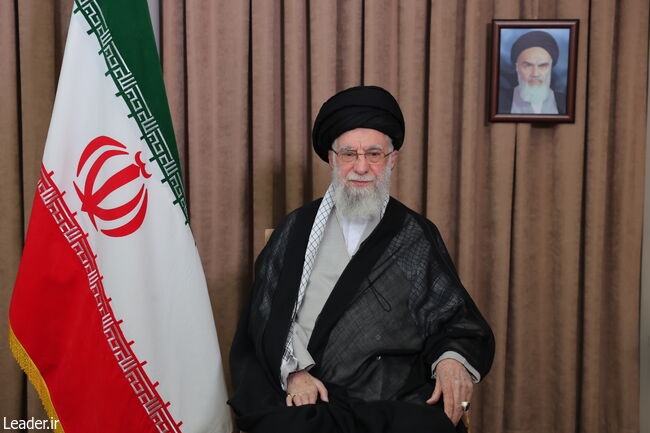
Mohammad Eslami

Speaking to Iranian media on Sunday, Eslami recalled that the US had advised Iran not to pursue an independent nuclear fuel cycle, instead offering a consortium plan.

“They took $1 billion from the Shah and formed the consortium in France. But once established, they claimed non-European countries could not be members,” he said.

A joint Iranian-French company was created to overcome this, but it yielded no advantage, and Iran’s assets were taken, he added.

The remarks come as the idea has recently been raised again to tackle the outstanding nuclear issue with Iran.

Eslami emphasized that uranium enrichment is fundamental to Iran’s nuclear industry and a red line for the country.

“No one can deny Iran the right to enrich uranium. Without enrichment, we cannot conduct our research or produce isotopes for industrial use,” he said.

He reiterated that the Foreign Ministry handles negotiations, but maintained that Iran’s nuclear advances are lawful responses to sanctions and aimed at achieving energy independence. “Iran will not return to the past,” Eslami said.

Hamas expresses readiness for new round of Gaza ceasefire negotiations with Israel

Gaza War

The announcement followed the group’s Saturday delivery of its response to a Gaza ceasefire proposal presented by US Middle East envoy Steve Witkoff. Both the envoy and the Israeli government later rejected the response outright.

“We welcome the continued Qatari and Egyptian efforts to reach an end to the war waged by the Zionist occupation against our people in the Gaza Strip,” Hamas said in a statement.

The group affirmed its willingness “to immediately begin indirect negotiations to reach an agreement on disputed points, in a way that ensures relief for our people, ends the humanitarian catastrophe, and leads to a permanent ceasefire and the complete withdrawal of (Israeli) occupation forces.”

Earlier Sunday, Egypt and Qatar said they hoped for a swift agreement on a 60-day temporary truce between Israel and Hamas that would pave the way toward a lasting ceasefire in Gaza, according to a joint statement.

“Qatar and Egypt, in coordination with the United States of America, affirm their intention to intensify efforts to overcome the obstacles facing the negotiations,” the statement added.

They also urged all parties “to exercise responsibility and support the efforts of mediators aimed at resolving the crisis in the Gaza Strip through restoring stability and calm to the region.”

On Saturday night, Witkoff criticized Hamas’ latest response to his ceasefire proposal as “totally unacceptable.”

He highlighted: “That is the only way we can close a 60-day ceasefire deal in the coming days in which half of the living hostages and half of those who are deceased will come home to their families and in which we can have at the proximity talks substantive negotiations in good faith to try to reach a permanent ceasefire.”

That same day, Hamas confirmed it had submitted its official reply to the mediators regarding Witkoff’s proposal. While it did not disclose the content, the group said its position was based on three goals: a permanent ceasefire, full Israeli withdrawal from Gaza, and unrestricted humanitarian access to the enclave.

Hamas has repeatedly stated it is prepared to release all Israeli captives in one exchange deal—on the condition that the war ends, Israeli forces fully withdraw from Gaza, and Palestinian prisoners are freed.

Israeli Prime Minister Benjamin Netanyahu continues to push for partial agreements and has introduced new conditions, including the disarmament of Palestinian resistance factions.

Critics in the Israeli opposition accuse him of prolonging the war and pushing for the reoccupation of Gaza to serve his political interests and maintain power.

Rejecting international calls for a ceasefire, Israel has pursued a devastating offensive in Gaza since October 2023, killing over 54,400 Palestinians, most of them women and children. Aid agencies have warned about the risk of famine among the enclave’s population.

Last November, the International Criminal Court issued arrest warrants for Israeli Prime Minister Benjamin Netanyahu and his former Defense Minister Yoav Gallant for war crimes and crimes against humanity in Gaza.

Israel also faces a genocide case at the International Court of Justice for its war crimes against civilians in the enclave.

Ukraine to set out roadmap for peace at Istanbul negotiations: Reuters

Russia Ukraine War
Rescuers work at the site of a building destroyed during a Russian missile strike in Pokrovsk, Ukraine on August 7.

The proposed roadmap begins with a full ceasefire of at least 30 days, to be followed by the return of all prisoners held by each side, and of Ukrainian children taken into Russian-held territory, and then a meeting between Ukrainian President Volodymyr Zelensky and Russian leader Vladimir Putin.

Under the blueprint, Moscow and Kyiv — with the participation of the United States and Europe — will work to hash out the terms on which they can agree to put a complete end to their three-year-old war, the biggest conflict in Europe since World War Two.

Ukrainian officials said earlier this week that they had sent the blueprint to the Russian side in advance of the Istanbul talks.

The framework Ukrainian terms for a peace deal as set out in the document seen by Reuters are largely the same as the terms previously put forward by Kyiv.

Those include no restrictions on Ukraine’s military strength after a peace deal is struck, no international recognition of Russian sovereignty over parts of Ukraine taken by Moscow’s forces, and reparations for Ukraine.

The document also stated that the current location of the front line will be the starting point for negotiations about territory.

Those terms diverge considerably from demands that Russia has made publicly in the past few weeks.

U.S. President Donald Trump has urged Moscow and Kyiv to work together on a deal to end their war, and Russia has proposed a second round of face-to-face talks with Ukrainian officials next week in Istanbul.

Kyiv announced earlier this week it is committed to the search for peace, but that it was waiting for a memorandum from the Russian side setting out their proposals which has not materialised.

Nevertheless, Zelensky said on Sunday that he will send a delegation of his officials to meet their Russian counterparts in Istanbul.

Russia confirms Ukraine attacked military airfields in five regions

Airfields were targeted in the Murmansk Region in the country’s north, in Ivanovo and Ryazan regions in central Russia as well as in Irkutsk Region in Siberia and Amur Region in the Far East, the ministry said. All the attacks employed first-person view (PFV) kamikaze drones, with some of them being launched from territories in close proximity to the airfields, it stated.

Some of the culprits behind the attacks have been detained, the ministry said, without revealing the number of those arrested or their identities. The Russian military also said that the “Kiev regime” was ultimately responsible for the strikes, which they described as “terrorist attacks.”

In Ivanovo, Ryazan, and Amur regions, the attacks were repelled and resulted in no damage or casualties, according to the ministry. In Murmansk and Irkutsk regions, the strikes led to some aircraft catching fire, the military said. No casualties have been reported in any of the incidents, according to the ministry’s data.

The Ukrainian media have claimed that the strikes were part of what they called a “historic” operation codenamed ‘Spiderweb.” According to the reports, the strikes had been prepared for more a year and a half and targeted Russia’s “strategic aviation.”

Channel 24 in Ukraine published a photo of the head of the country’s domestic security service (SBU), Vasily Malyuk, looking at what they said were maps of five Russian military airfields. The photo was released by the SBU itself, the media stated.

Earlier on Sunday, the first drone attack was reported in Siberia, targeting a military installation in Irkutsk Region. According to Governor Igor Kobzev, the launch site was promptly “blocked” and there was “no threat to the lives and health of civilians”.

Ukraine has significantly escalated drone strikes into Russia in recent weeks, despite ongoing diplomatic efforts to end the conflict.

Envoy: Investment opportunities in Iraq’s energy sectors open to Iranian companies

Iraq Electricity

Speaking at a joint meeting with Samad Hassan-Zadeh, President of Iran’s Chamber of Commerce, the envoy highlighted Baghdad’s efforts to increase bilateral trade and attract Iranian investors to strategic projects.

“There are 27 renewable energy opportunities across 14 provinces, two major oil and gas projects, 22 investment slots in heavy and medium industries, nine in industrial zones and free trade areas, 10 in agriculture—mostly in provinces bordering Iran—10 in healthcare, and 25 in residential housing,” he stated.

Abdullah noted that investment prospects in Iraq’s free zones and industrial parks alone could exceed $70 billion, asserting that expanded Iranian involvement would help balance trade between the two nations.

Meanwhile, Hassan-Zadeh called for streamlined banking guarantees and investment facilitation, stressing that joint production and investment ventures are among Iran’s economic priorities.

He also urged greater transparency regarding investor ownership rights and legal assurances to increase Iranian participation, particularly ahead of an upcoming investment forum where 140 Iraqi projects will be presented.

Iran govt. nominates Seyed Ali Madanizadeh as new economy minister

The nomination follows the March dismissal of former minister Abdolnasser Hemmati, who was impeached by the parliament. Rahmatollah Akrami, Iran’s treasurer-general, has since been acting as interim minister.

According to Goudarzi, the government’s nomination letter will be formally received in parliament during its upcoming session next Sunday. A specialized committee will then have one week to assess Madanizadeh’s qualifications and submit a report, after which a vote of confidence will be held.

Goudarzi also noted that the interim minister’s authority expires with the end of the legal three-month period, unless extended by the Leader.

Madanizadeh holds a PhD in Economics from the University of Chicago and has previously served as Dean of the Economics Faculty at Sharif University, advisor to the vice president for economic affairs, and a board member of a humanities research foundation.

Ukraine’s SBU claims drones hit ‘more than 40’ Russian aircraft in mass attack

Ukraine Drone

“Enemy strategic bombers are burning en masse in Russia — this is the result of a special operation by the SBU,” the source said, adding, “Right now, the Security Service of Ukraine is conducting a large-scale special operation to destroy enemy bomber aircraft in the rear of the Russian Federation.”

“SBU drones are practicing on aircraft that bomb Ukrainian cities every night. Currently, more than 40 aircraft are known to have been hit, including the A-50, Tu-95 and Tu-22 M3.”

The source stated at least one of the airfields hit was the Belaya air base in Russia’s Irkutsk Oblast.

No further details were given.

Unconfirmed reports on social media said a fire was also burning at the Olenya air base in Russia’s Murmansk Oblast.

The A-50 provides several critical functions for the ongoing war in Ukraine, such as detecting air defense systems, guided missiles, and coordinating targets for Russian fighter jets.

Russia possesses less than ten of these planes. A-50 aircraft have an estimated price tag of around $350 million.

The the Tupolev Tu-95, the Tupolev Tu-22, as well as the Tupolev Tu-160, are all Russian heavy bombers regularly used to launch missiles at Ukrainian cities.

The Tu-95 is the older of the three aircraft, a Soviet-era plane that made its first flight in 1952. It was originally used to carry nuclear bombs but has since evolved to launch cruise missiles.

Each aircraft can carry 16 cruise missiles – either the Kh-55/Kh-555 or the newer Kh-101 and Kh-102 air-launched cruise missiles.

It features turboprop propellers rather than jet engines, as during the Cold War, their increased efficiency allowed it to fly all the way to the United States without refueling.

The Tu-22 carries the Kh-22 missiles, which pose a particular problem for Ukraine. It is supersonic and travels at around 4,000 kilometers per hour. Currently, it can only be shot down with the U.S.-made Patriot air defense system and potentially the SAMP-T, a joint Italian-French system.

The Tu-160 is Russia’s more modern strategic bomber, entering service in 1987. To this day, it remains the largest operational bomber in the world.

It can carry a total of 12 Kh-55 missiles and up to 24 Kh-15s.