Tuesday, December 30, 2025
Home Blog Page 329

Israeli attack near Gaza aid delivery point kills 31

An Israeli attack near an aid distribution point run by a private U.S.-based group killed at least 31 people in Gaza on Sunday, local health authorities said, as Hamas and Israel exchanged blame over a faltering effort to secure a ceasefire.

The incident in Rafah in the south of the enclave was the latest in a series underscoring the volatile security situation that has complicated aid delivery to Gaza, following the easing of an almost three-month Israeli blockade last month.

“There are martyrs and injuries. Many injuries. It is a tragic situation in this place. I advise them that nobody goes to aid delivery points. Enough,” paramedic Abu Tareq said at Nasser Hospital in nearby Khan Younis city.

The Palestinian Red Crescent, affiliated with the international Red Cross, reported its medical teams had recovered bodies of 23 Palestinians and treated another 23 injured near an aid collection site in Rafah. The U.S.-based Gaza Humanitarian Foundation operates the aid distribution sites in Rafah.

The Red Crescent also reported that 14 more Palestinians were injured near a separate site in central Gaza. GHF also operates the aid distribution site in central Gaza.

Earlier, the Palestinian news agency WAFA and Hamas-affiliated media put the number of deaths at 30. Local health authorities said at least 31 bodies had so far arrived at Nasser Hospital.

Israel’s military said in a statement it was looking into reports that Palestinians had been shot at an aid distribution site but it was unaware of injuries caused by military fire. GHF denied anyone was killed or injured near their site in Rafah and that all of its distribution had taken place without incident.

The U.S. company accused Hamas of fabricating “fake reports”.

Residents and medics stated Israeli soldiers fired from the ground at a crane nearby that overlooks the area, and a tank opened fire at thousands of people who were en route to get aid from the site in Rafah. Reuters footage showed ambulance vehicles carrying injured people to Nasser Hospital.

The Hamas-run Gaza government media office reported Israel has turned the distribution sites into “death traps” for people seeking aid.

“We affirm to the world that what is taking place is a deliberate and malicious use of aid as a ‘weapon of war’, employed to exploit starving civilians and forcibly gather them at exposed killing zones, which are managed and monitored by the Israeli military,” it stressed.

Reda Abu Jazar said her brother was killed as he waited to collect food at an aid distribution centre in Rafah.

“Let them stop these massacres, stop this genocide. They are killing us,” she stated, as Palestinian men gathered for funeral prayers.

Arafat Siyam added that his brother had left at 11:00 p.m. the previous evening to collect food for his wife and eight children from the same distribution site in Rafah, south Gaza.

Siyam accused the Israeli military of killing his brother, stressing, “This is unfair. What they are doing is unfair,” he said.

GHF is a U.S.-based entity backed by the U.S. and Israeli governments that provides humanitarian aid in Gaza, bypassing traditional relief groups. It began work in Gaza last month and has three sites from where thousands have collected aid.

GHF has been widely criticised by the international community, with U.N. officials saying its aid plans would only foment forced relocation of Palestinians and more violence.

The group’s executive director resigned in May, citing what he said was the entity’s lack of independence and neutrality. It is not clear who is funding the company.

Israel began its offensive in Gaza in response to the Hamas-led attack on October 7, 2023, which killed 1,200 people, mostly civilians, according to Israeli tallies, and saw 251 taken as hostages into Gaza.

Israel’s campaign has devastated much of Gaza, killing over 54,000 Palestinians and destroying most buildings. Much of the population now live in shelters in makeshift camps. Gaza health officials report that most of the dead are civilians, though the number of fighters killed remains unclear.

Gas leak at Shiraz refinery in southern Iran kills three

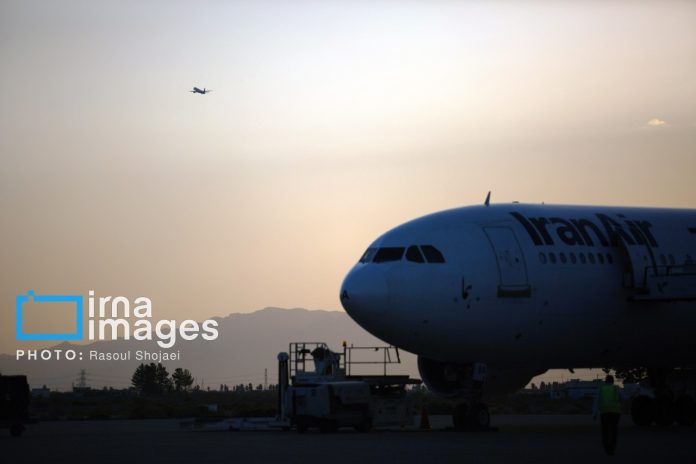
Ambulance Iran

According to Hojjatollah Rezaei, the Deputy Governor of Fars Province for Political, Security, and Social Affairs, two workers initially died at the scene, while nine others were injured and taken to hospitals in Shiraz. One of the injured later succumbed to injuries, bringing the total fatalities to three.

The cause of the incident is currently under investigation by refinery officials and technical experts.

Despite the accident, operations at the refinery continue without disruption.

The refinery processes 40,000 barrels of crude oil per day, amounting to 2 million tons annually. It receives its crude supply via a 230-kilometer, 10-inch pipeline from the Gachsaran oil fields.

Iranian FM to visit Egypt, Lebanon for high-level talks

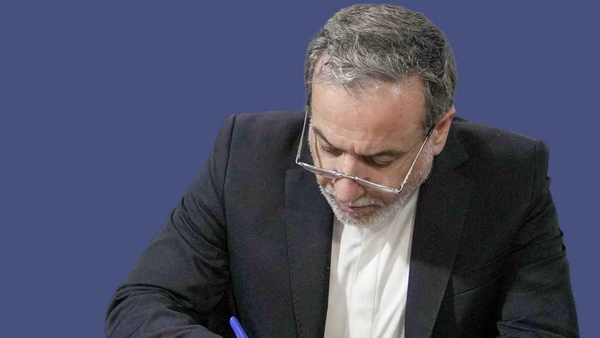
Abbas Araghchi

The trip aims to enhance bilateral ties and consult on key regional and international developments.

According to Mohammad Hossein Soltani-Fard, head of Iran’s Interests Section in Cairo, Araghchi is scheduled to meet with Egyptian President Abdel Fattah el-Sisi, Foreign Minister Badr Abdelatty, and prominent political and economic figures.

The discussions will focus on issues including the Gaza war, regional crises in Sudan and Libya, and the broader situation in the occupied Palestinian territories.

Soltani-Fard noted that bilateral relations between Iran and Egypt have been progressing steadily, with ongoing high-level diplomatic exchanges.

Talks are also underway to finalize arrangements for direct flights and mutual tourism, including religious, recreational, and medical travel.

On Palestine, Iran has supported Egypt’s stance against the forced displacement of Gazans and its role in ceasefire efforts.

Soltani-Fard emphasized that both Iran and Egypt seek a lasting ceasefire and the realization of the Palestinian people’s legitimate rights, stressing that the resistance must not be the victim of ongoing aggression.

At the end of his visit to Egypt, the top Iranian diplomat will travel to Lebanon for talks with Lebanese officials on regional and bilateral issues.

At least 7 dead after bridge collapses onto Russian train

While the exact cause of the incident remains unknown, Russian Railways said the bridge pillar collapsed due to “illegal interference with transport operations.”

The newspaper Izvestia cited a source who said the bridge may have been brought down by an explosion. However, emergency services and prosecutors have not confirmed that a blast occurred.

Multiple Telegram news channels have suggested that the collapse was likely caused by sabotage.

Bogomaz has not yet disclosed the number of victims, saying that “everything necessary is being done to provide assistance” to them.

Videos circulating in Telegram show a crushed train carriage with passengers being evacuated through shattered windows, and emergency services responding at the scene. The collapse also reportedly affected vehicles on the bridge, which fell onto the train below.

Russia’s Ministry of Emergency Situations (MChS) reported that fire and rescue units are actively working at the site of the bridge collapse.

“All necessary assistance is being provided to the victims. Additional MChS forces, emergency rescue equipment, and lighting towers for nighttime operations have been deployed to the area,” the ministry noted in an official statement.

Just days earlier, a freight train in Russia’s Belgorod Region ran over an explosive device planted under the tracks, causing a powerful blast. According to the governor Vyacheslav Gladkov, the explosion damaged the railway’s contact network but caused no casualties.

Both Bryansk Region and Belgorod Region border Ukraine and have seen numerous attacks.

Saudi FM says Riyadh will jointly fund Syria state salaries with Doha

Syria War

His statements came on Saturday during a joint press conference with his Syrian counterpart Asaad al-Shibani in Damascus.

The two Persian Gulf nations have been among the most important regional supporters of Syria’s new authorities, who ousted longtime ruler Bashar al-Assad in December after nearly 14 years of war.

Saturday’s statement did not provide details on the exact amount of the support for Syria’s public sector. However, it comes after Syrian Finance Minister Mohammed Yosr Bernieh said earlier in May that Qatar was going to provide Syria with $29m per month for an initial three months to pay civilian public sector worker salaries.

The Reuters news agency had also reported that the United States had given its blessing to the Qatari initiative, which came a few days before President Donald Trump announced that sanctions on Syria imposed during the al-Assad regime would be lifted. The European Union has since also lifted sanctions on Syria.

Further evidence of Saudi Arabian and Qatari support came in mid-May, when it was announced that the two countries had paid off Syria’s debt to the World Bank, a sum of roughly $15m.

Syria’s new government, led by interim President Ahmed al-Sharaa, has sought to rebuild the country’s diplomatic ties and convince wary Western states that he has turned his back on past ties with groups such as al-Qaeda.

The Syrian leader has repeatedly disavowed extremism and expressed support for minorities, but incidents of violence that has led to hundreds of deaths continue to cause international trepidation – even as the government and al-Sharaa denounce the killings.

Syria’s new government has also made a concerted effort to solidify ties to Persian Gulf Arab states who have begun to play a pivotal role in financing the reconstruction of Syria’s war-ravaged infrastructure and reviving its economy.

On Tuesday, the European Union announced it had adopted legal acts lifting all economic restrictive measures on Syria except those based on security grounds. It also removed 24 entities from the EU list of those subject to the freesing of funds and economic resources, including the Central Bank of Syria.

And after Saudi Arabia and Qatar cleared Syria’s debt to the World Bank, the US-based financial institution said that it would restart operations in the country following a 14-year pause.

The World Bank has begun to prepare its first project in Syria, which will focus on improving electricity access – a key pillar for revitalising essential services like healthcare, education, and water supply. It also marked the start of expanded support to stabilise Syria and boost long-term growth.

Syria’s gradual re-integration into the global economy is in large part due to Trump’s dramatic shift in Washington’s policies towards the country. After announcing the lifting of US sanctions on May 13, Trump also became the first US president in 25 years to meet with a Syrian counterpart.

The US had already removed a $10m reward for the capture of al-Sharaa, and the Syrian president has been able to travel internationally and meet world leaders, including in Saudi Arabia and France.

Still, there is a lot to be done. A February report by the United Nations Development Programme (UNDP) estimated that at current growth rates, Syria would need more than 50 years to return to the economic level it had before the war, and it called for massive investment to accelerate the process.

The UNDP study added nine out of 10 Syrians now live in poverty, one-quarter are jobless and Syria’s gross domestic product “has shrunk to less than half of its value” in 2011, the year the war began.

Iran slams IAEA report as ‘politically motivated’

IAEA

The IAEA claimed in a wide-ranging report on Saturday that Iran carried out secret nuclear activities with material not declared to the UN nuclear watchdog at three locations.

Gharibabadi stated the report focuses on disputed nuclear materials from over two decades ago “presented by Israel,” and stressed that no deviation has been found in Iran’s current nuclear activities. He reaffirmed that all nuclear materials are under IAEA safeguards and oversight.

He noted the IAEA itself acknowledges two of the four disputed sites are no longer under investigation and Iran has provided full explanations for the remaining two.

He further emphasized that enrichment to 60% is not prohibited under IAEA regulations and that there is no legal cap on enrichment levels unless the material is diverted for non-peaceful purposes.

Gharibabadi also rejected concerns over Iran’s suspension of the Additional Protocol and reassignment of inspectors from certain nationalities, asserting these actions are within Iran’s sovereign rights.

Despite the criticisms, the IAEA confirmed Iran’s continued cooperation on regular safeguards, stating no nuclear materials had been diverted for military use.

Gharibabadi asserted Iran views the report as part of a broader political pressure campaign by Western states, and in contrast with the agency’s inaction regarding Israel’s undeclared nuclear arsenal.

Iran says IAEA new report on nuclear activities politically motivated, based on Israel’s fake documents

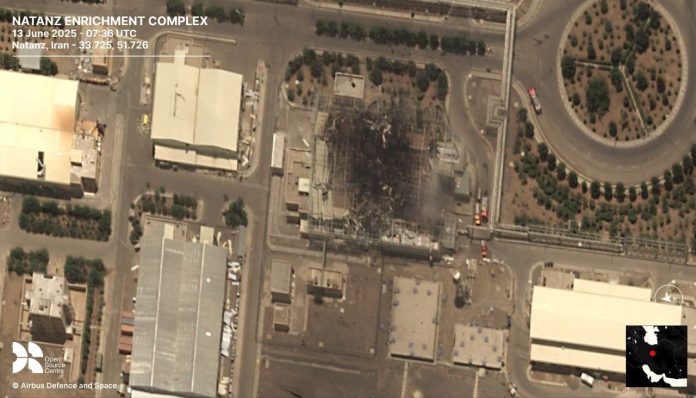
Centrifuge-parts workshop Iran Natanz

Iran stressed on Saturday that the accusation from the IAEA was “politically motivated and repeats baseless allegation”.

“The repetition of baseless allegations that cannot lend credibility to these claims, coupled with voicing too much concern in this regard, serves merely as a pretext for political propaganda against the Islamic Republic of Iran,” the statement said.

“This is while the fake Israeli regime, without being a signatory to the NPT, possesses a nuclear arsenal and simultaneously threatens the peaceful nuclear facilities of an NPT member nation. Unfortunately, despite his legal duties and repeated requests from the Islamic Republic of Iran to condemn these threats, the IAEA director general has taken no action,” it added.

Iran expressed “deep regret about the director general’s lack of impartiality and his disregard for professional conduct under political pressures in the preparation and publication of the report”.

“Unfortunately, despite such broad cooperation on part of Iran, the comprehensive report prepared, although acknowledging Iran’s cooperation, does not reflect the actual level of such cooperation,” the statement read.

“In the report, the director general, by relying extensively on forged documents provided by the Zionist regime, has reiterated previous biased and unfounded accusations. The allegations leveled in the current report are based on a few claims about undeclared activities and locations from past decades. This is while Iran has repeatedly declared that it has had no undeclared nuclear sites or activities.”

In its latest report, the IAEA claimed that Iran has sharply increased its stockpile of uranium enriched to up to 60 percent, close to the roughly 90 percent level needed for atomic weapons.

In its quarterly report, the agency said that as of May 17, Iran possesses an estimated 408.6 kilograms of uranium enriched up to 60 percent, marking an increase of 133.8 kilograms since the previous report in February.

According to the report, Iran’s total amount of enriched uranium now exceeds 45 times the limit authorized by the 2015 agreement – formally known as the Joint Comprehensive Plan of Action — and is estimated at 9,247.6 kilograms.

Gaza ceasefire proposal offers ‘no guarantees’ for end to war: Hamas

Speaking to Al Jazeera on Saturday, Basem Naim stated that Hamas had still “responded positively” to the latest proposal relayed to it by US special envoy Steve Witkoff, despite the Palestinian group saying that the proposal was different to one it had agreed upon with Witkoff a week earlier.

“One week ago, we agreed with Mr Witkoff on one proposal, and we said, ‘This is acceptable, we can consider this a negotiating paper,’” Naim said.

“He went to the other party, to the Israelis, to get their response. Instead of having a response to our proposal, he brought us a new proposal … which had nothing to do with what we agreed upon.”

In a statement released earlier on Saturday, Hamas had announced that it had submitted a response to Witkoff, and that the proposal “aims to achieve a permanent ceasefire, a comprehensive withdrawal from the Gaza Strip, and ensure the flow of aid” to Palestinians in Gaza.

Hamas added that 10 living Israeli captives would be released as part of the agreement, as well as the bodies of 18 dead Israelis, in exchange for an “agreed-upon number of Palestinian prisoners”.

Witkoff called Hamas’s response “totally unacceptable”.

“Hamas should accept the framework proposal we put forward as the basis for proximity talks, which we can begin immediately this coming week,” the envoy said in a post on social media.

“That is the only way we can close a 60-day ceasefire deal in the coming days in which half of the living hostages and half of those who are deceased will come home to their families, and in which we can have at the proximity talks substantive negotiations in good-faith to try to reach a permanent ceasefire.”

Israeli Prime Minister Benjamin Netanyahu slammed Hamas’s response, “As Witkoff said, Hamas’s response is unacceptable and sets the situation back. Israel will continue its action for the return of our hostages and the defeat of Hamas.”

Israel has now killed more than 54,000 Palestinians since October 2023, with starvation looming across Gaza after weeks of Israeli blockade, and only a small flow of aid since Israel allowed it to resume in mid-May.

With hopes for a permanent truce seemingly fading once again, the level of hunger and desperation inside Gaza grows, with Israel allowing only a trickle of humanitarian aid into the Strip after it had imposed a total blockade for more than two months. The UN warned on Friday that all of the 2.3 million population of Gaza is now at risk of famine. That came after it said in mid-May that one in every five Palestinians there is experiencing starvation.

The World Food Programme (WFP), which has enough food ready near Gaza’s borders to feed the besieged territory’s entire population for two months, renewed its call for an immediate ceasefire as the only way to get the food to starving Palestinians.

White House says US has sent Iran ‘detailed and acceptable proposal’ for a nuclear accord

White House

“President Trump has made it clear that Iran can never obtain a nuclear bomb,” Leavitt said in a statement, confirming that the US proposal has been communicated to Iran.

She declines to provide further details.

Trump noted on Friday that an Iran deal was possible in the “not-too-distant future.”

Earlier, Foreign Minister Abbas Araghchi confirmed Iran’s having received parts of a proposal from the United States as conveyed by Oman’s top diplomat, whose country is serving as the intermediary in indirect talks between Tehran and Washington.

The foreign minister did not disclose the contents of the proposal, but emphasized that Tehran’s response would be measured and consistent with its sovereign values and priorities.

“It (the portions of the proposals that have been conveyed to Iran) will be appropriately responded to in line with the principles, national interests, and rights of the people of Iran.”

Iran and the United States have been engaged in indirect Omani-facilitated talks since April in an effort to resolve outstanding issues between the two sides.

The US has, on multiple occasions, threatened military attack against Iran’s nuclear sites and also insisted on the Islamic Republic’s reducing its uranium enrichment levels to “zero.”

Tehran, though, has maintained that recognition of its nuclear rights and the lifting of the US’s illegal and unilateral sanctions were non-negotiable matters.

Death toll from US-Israeli aid mechanism in Gaza climbs to 17: Health Ministry

Gaza War

In a statement, the ministry said: “The number of aid-related martyrs has risen to 17, following the death of one person on Thursday and five more on Friday.”

The ministry added that “more than 86 people were also injured in areas designated for aid distribution.”

It further noted that five people have been documented as missing at the aid distribution center in Rafah city, in the southern part of the Strip.

The system, rolled out Tuesday under the so-called “Gaza Humanitarian Foundation,” a body supported by both Israel and the US but operating outside the United Nations’ humanitarian framework, has triggered widespread criticism.

Eyewitnesses and local officials report that Israeli forces have repeatedly opened fire on hungry civilians gathered at aid distribution points, killing and injuring many.

The Gaza-based government, Palestinian factions, and international organizations have condemned the mechanism as lacking basic humanitarian standards and endangering civilian lives.

The Israeli military has designated four aid distribution sites, three in southern Gaza and one in the central Netzarim corridor, which separates the north and south. Palestinians who visited these locations, however, report being met with bullets rather than relief.

The aid mechanism, promoted as a solution to Gaza’s famine, is being widely criticized as a tool of control and humiliation.

Observers and survivors say it not only fails to meet humanitarian standards but actively endangers lives, forcing civilians to choose between the lethal risks of approaching Israeli-controlled aid centers or enduring hunger in devastated neighborhoods.

Since March 2, Israel has kept all border crossings shut, cutting off the entry of food, medicine, fuel, and other essential supplies for Gaza’s 2.4 million residents.

Israel has pursued a devastating offensive in Gaza since October 2023, killing nearly 54,400 Palestinians, most of them women and children. Aid agencies have warned about the risk of famine among the enclave’s more than 2 million population.

Last November, the International Criminal Court issued arrest warrants for Israeli Prime Minister Benjamin Netanyahu and his former Defense Minister Yoav Gallant for war crimes and crimes against humanity in Gaza.​​​​​​​

Israel also faces a genocide case at the International Court of Justice for its war crimes against civilians in the enclave.