Tuesday, December 30, 2025
Home Blog Page 330

Death toll from US-Israeli aid mechanism in Gaza climbs to 17: Health Ministry

Gaza War

In a statement, the ministry said: “The number of aid-related martyrs has risen to 17, following the death of one person on Thursday and five more on Friday.”

The ministry added that “more than 86 people were also injured in areas designated for aid distribution.”

It further noted that five people have been documented as missing at the aid distribution center in Rafah city, in the southern part of the Strip.

The system, rolled out Tuesday under the so-called “Gaza Humanitarian Foundation,” a body supported by both Israel and the US but operating outside the United Nations’ humanitarian framework, has triggered widespread criticism.

Eyewitnesses and local officials report that Israeli forces have repeatedly opened fire on hungry civilians gathered at aid distribution points, killing and injuring many.

The Gaza-based government, Palestinian factions, and international organizations have condemned the mechanism as lacking basic humanitarian standards and endangering civilian lives.

The Israeli military has designated four aid distribution sites, three in southern Gaza and one in the central Netzarim corridor, which separates the north and south. Palestinians who visited these locations, however, report being met with bullets rather than relief.

The aid mechanism, promoted as a solution to Gaza’s famine, is being widely criticized as a tool of control and humiliation.

Observers and survivors say it not only fails to meet humanitarian standards but actively endangers lives, forcing civilians to choose between the lethal risks of approaching Israeli-controlled aid centers or enduring hunger in devastated neighborhoods.

Since March 2, Israel has kept all border crossings shut, cutting off the entry of food, medicine, fuel, and other essential supplies for Gaza’s 2.4 million residents.

Israel has pursued a devastating offensive in Gaza since October 2023, killing nearly 54,400 Palestinians, most of them women and children. Aid agencies have warned about the risk of famine among the enclave’s more than 2 million population.

Last November, the International Criminal Court issued arrest warrants for Israeli Prime Minister Benjamin Netanyahu and his former Defense Minister Yoav Gallant for war crimes and crimes against humanity in Gaza.​​​​​​​

Israel also faces a genocide case at the International Court of Justice for its war crimes against civilians in the enclave.

UNICEF: One child killed or wounded every 20 minutes in Gaza

Gaza War

Unicef said children are paying the highest price in Israel’s assault, with one child killed or injured every 20 minutes on average.

“Grave violations. Blocked aid. Starvation. Homes, schools, hospitals – destroyed. This is the destruction of childhood. Of life itself. These are children. Not numbers. No child should live through this. Not one more,” added Unicef.

The Gaza Strip is “the hungriest place on Earth”, according to the United Nations, which has warned that the Palestinian territory’s entire population is at risk of famine.

Jens Laerke, a spokesperson for the UN Office for the Coordination of Humanitarian Affairs, said the territory was “the only defined area – a country or defined territory within a country – where you have the entire population at risk of famine. One hundred per cent of the population at risk of famine,” he said on Friday.

“Gaza is the hungriest place on Earth.”

Laerke detailed the difficulties faced by the UN in delivering humanitarian aid to the Gaza Strip. Nine hundred trucks of humanitarian aid had been authorised by Israel to enter the strip since the blockade was partially lifted, but so far only 600 had been off-loaded on the Gaza side of the border, and a smaller number of shipments had then been picked up for distribution within the territory because of security considerations, he said.

Laerke said the mission to deliver aid was “in an operational straitjacket that makes it one of the most obstructed aid operations not only in the world today, but in recent history”.

Once truckloads entered Gaza, they were often “swarmed by desperate people”, he added.

Israel launched its campaign in Gaza in response to the devastating Hamas attack in southern Israel on 7 October 2023, in which 1,200 people were killed and 251 hostages taken into Gaza, according to Israeli tallies. The campaign has killed more than 54,000 Palestinians, Gaza health officials say, and left the territory in ruins.

Top Iranian MP: Uranium enrichment non-negotiable

Uranium enrichment

Azizi said no negotiations have ever been held on this core issue.

The MP stressed that any proposals seeking to undermine or eliminate Iran’s right to enrich uranium are not acceptable and not presentable. “

There has been excellent coordination between the Commission, the Foreign Ministry, and the negotiating team”, he said.

The lawmaker added that after each round of talks with the US, negotiators have briefed MPs in detail.

Azizi praised the negotiating team for adhering strictly to national interests and the red lines defined by leader of Iran’s Islamic Revolution Ayatollah Seyyed Ali Khamenei. He underscored that only proposals that fully recognize Iran’s right to enrichment will be open to negotiation or potential agreement.

Azizi underscored Parliament’s continued close monitoring of the negotiation process, saying both the legislative body and the Foreign Ministry remain fully engaged in overseeing the developments.

Iran and the US have so far held five rounds on indirect nuclear talks mediated by Oman.

Israel says to block Ramallah meeting with Arab ministers

The delegation included ministers from Jordan, Egypt, Saudi Arabia, Qatar and the United Arab Emirates, Palestinian Authority officials announced. The ministers would require Israeli consent to travel to the West Bank from Jordan.

An Israeli official said the ministers intended to take part in “a provocative meeting” to discuss promoting the establishment of a Palestinian state.

“Such a state would undoubtedly become a terrorist state in the heart of the land of Israel,” the official continued, adding, “Israel will not cooperate with such moves aimed at harming it and its security.”

A Palestinian Authority official said that the issue of whether the meeting in Ramallah would be able to go ahead was under discussion.

The move comes ahead of an international conference, co-chaired by France and Saudi Arabia, due to be held in New York on June 17-20 to discuss the issue of Palestinian statehood.

Israel has come under increasing pressure from the United Nations and European countries which favour a two-state solution to the Israeli Palestinian conflict, under which an independent Palestinian state would exist alongside Israel.

Saudi FM visits Syria for high-level negotiations

Faisal bin Farhan Al-Saud

During the visit, Prince Faisal is scheduled to meet with Syrian President Ahmad Al-Sharaa to discuss bilateral relations and regional issues.

The trip represents a significant step in the ongoing normalization of ties between Saudi Arabia and Syria after years of diplomatic estrangement.

The accompanying Saudi delegation is set to hold consultations with Syrian officials to explore potential areas of cooperation. Talks will focus on supporting Syria’s economic recovery, strengthening governmental institutions, and addressing the needs and aspirations of the Syrian population, the ministry added.

Turkeys orders detention of dozens of opposition officials in widening crackdown

Turkey Blast

Istanbul Mayor Ekrem Imamoglu, who is also President Tayyip Erdogan’s main political rival and leads him in some polls, was jailed in March pending trial over charges of corruption and aiding a terrorist group, all of which he denies.

The arrest of the mayor, from the main opposition Republican People’s Party (CHP), triggered mass protests, economic turmoil, and broad accusations of government influence over the judiciary and anti-democratic applications. The government denies this and says the judiciary is independent.

Since Imamoglu’s arrest, authorities have detained dozens of CHP members, officials from the Istanbul municipality, and other CHP-run municipalities. Access to Imamoglu’s X account was also blocked in Turkey this month.

On Saturday, the state-owned Anadolu news agency and private broadcaster NTV reported that detention warrants had been issued for 47 people in four separate graft investigations, with 28 of those being detained.

Among those detained was former CHP lawmaker Aykut Erdogdu, the mayors of several districts in Istanbul, senior staff at the Istanbul municipality or institutions tied to it, and the mayors of two districts in the southern province of Adana, according to Anadolu.

It said police also searched the buildings of the Avcilar, Buyukcekmece, Gaziosmanpasa, Seydan, and Ceyhan municipalities, whose mayors were ordered detained as part of the probe.

In response to the new wave of detentions, the CHP called an emergency meeting in Istanbul, NTV reported.

Some Western countries, rights groups and the CHP have announced repeatedly that the operations are anti-democratic and aimed at quashing the opposition’s electoral prospects. Imamoglu and his CHP have said there is no concrete evidence against him.

Opinion polls show that popular support for Imamoglu has risen since his arrest, extending his lead over Erdogan and reinforcing the view that he would be Erdogan’s main rival in the next presidential election, not due until 2028.

FM says Iranian nation cannot be deprived of their right to enrichment

Abbas Araghchi

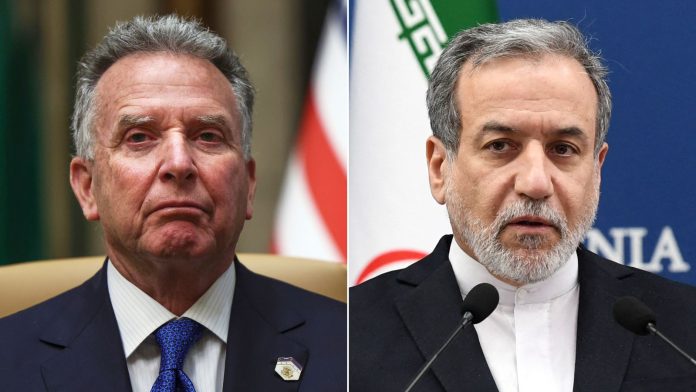
Speaking on Saturday at the holy shrine of Imam Khomeini (RA), the founder of the Islamic Republic, Araqchi stated: “Enrichment is one of the country’s essential needs. Merely because they are concerned about Iran’s nuclear program, they have no right to deprive the Iranian nation of its rights. This is unacceptable to the Iranian people.”

Referring to some countries’ claims about Iran pursuing nuclear weapons, he added: “If the issue is nuclear weapons, we reject them. We have been and remain the standard-bearers of the rejection of nuclear weapons. On this matter, we share their stance.”

Araqchi said that although the opposing parties claim to be committed to the Non-Proliferation Treaty (NPT) and the elimination of their own nuclear weapons, they have never acted on this commitment. “On the contrary, they are doing the opposite.”

In another part of his speech, he stated: “The path we are taking today after the Revolution is based on the framework established by Imam Khomeini (RA) in foreign policy. The foundation of our foreign policy is the principle of rejecting domination.”

Iran’s Foreign Minister affirmed: “We will continue on our path with strength, keeping the directives of the Supreme Leader Ayatollah Khamenei as our guiding light. We see ourselves as soldiers of Imam Khomeini (RA) and the Supreme Leader.”

Israel strikes western Syria despite recent indirect talks to calm tensions

Israeli Fighter Jet

Syrian state media reported late Friday that one person was killed and three others injured by an Israeli air strike on the coastal city of Latakia.

The SANA news agency said earlier that the Israeli military targeted three sites in the countryside of the Latakia and Tartous governorates.

The Syrian Observatory for Human Rights also reported that jets likely to be Israeli struck military sites on the outskirts of Tartous and Latakia, on the Mediterranean coast.

The Israeli strike follows Syria acknowledging indirect talks with Israel earlier this month to calm tensions.

The Israeli military claimed responsibility for the strike.

The Israeli strike came a day after US envoy to Syria Thomas Barrack’s visit to Damascus aimed at rebuilding ties under Syria’s new administration, during which he said the conflict between Israel and Syria is “solvable” and needed to start with “dialogue”.

“I’d say we need to start with just a non-aggression agreement, talk about boundaries and borders,” Barrack told journalists on Thursday.

The two sides have technically been at war since the first Arab-Israeli war in 1948. A state of heightened tension and deep enmity between Israel and Syria accelerated during the 1967 war, which also drew in Egypt and Jordan, and Israel’s subsequent occupation of the Syrian Golan Heights.

Israel has carried out frequent attacks in Syria both during the Bashar al-Assad rule and since his ouster.

Shortly before the fall of al-Assad’s government, Israel seized more Syrian territory near the border, claiming it was concerned about President Ahmed al-Sharaa’s interim administration, which it has dismissed as “jihadist”.

During a meeting between US President Donald Trump and al-Sharaa in Riyadh, Saudi Arabia, earlier in May, the US leader urged al-Sharaa to normalise relations with Israel.

While al-Sharaa has not commented on possible normalisation with Israel, he has stated his support for returning to the terms of a 1974 ceasefire agreement that created a United Nations buffer zone in the Golan Heights.

Iran reports progress in indirect talks with US, rejects ‘zero enrichment’ demands

Mohammad Eslami

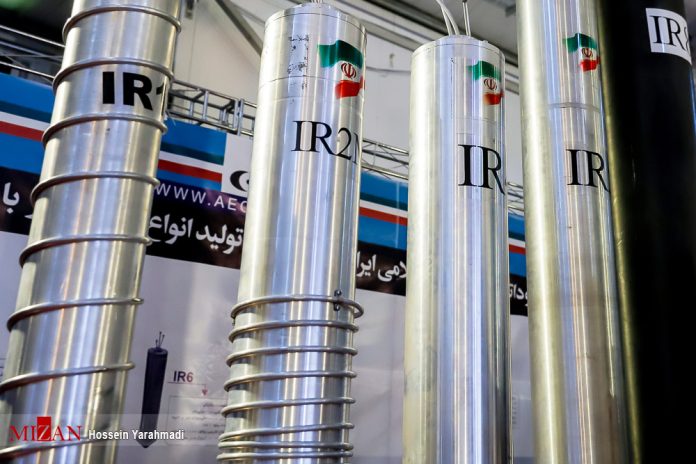
Speaking Saturday at a conference in Sari, northern Iran, Mohammad Eslami highlighted Iran’s nuclear energy achievements, noting that the Bushehr nuclear power plant generated 7.3 billion kilowatt-hours of electricity last year.

He stated that Iran aims to increase its nuclear power capacity to 3,000 megawatts by the end of the country’s Seventh Development Plan, with land secured for two new power plants in the north and south.

Eslami also revealed a 20-year strategic plan targeting 20,000 megawatts of nuclear-generated electricity.

He cited major advances in plasma therapy, laser, and quantum technologies, and emphasized the global competitiveness of Iran’s domestically produced radiopharmaceuticals.

Addressing nuclear diplomacy, Eslami confirmed that five rounds of indirect talks between Iran and the US have taken place, most recently on May 23 in Rome.

He noted that US President Donald Trump indicated that Washington is “close to reaching agreements on both Gaza and Iran,” though he reiterated that Iran must not obtain a nuclear bomb.

North Korea has sent 14k troops, 100 ballistic missiles and millions of munitions to Russia: Report

The report was released Friday by the Multilateral Sanctions Monitoring Team (MSMT), an initiative made up of 11 United Nations members, formed after Russia forced the disbandment of a previous UN panel that monitored the implementation of sanctions against North Korea.

While some of the team’s findings have been well documented – such as North Korea sending troops to fight for Russia – the report lays out the stunning scope and scale of weaponry sent from Pyongyang since Russia’s invasion of Ukraine.

That includes as many as 9 million rounds of artillery and ammunition in 2024; more than 11,000 troops last year, and another 3,000 troops in the early months of this year; rocket launchers, vehicles, self-propelled guns and other types of heavy artillery; and at least 100 ballistic missiles “which were subsequently launched into Ukraine to destroy civilian infrastructure and terrorize populated areas such as Kyiv and Zaporizhzhia,” the report found, citing participating states.

“These forms of unlawful cooperation between (North Korea) and Russia contributed to Moscow’s ability to increase its missile attacks against Ukrainian cities including targeted strikes against critical civilian infrastructure,” the report said.

In return, Russia provided North Korea with various valuable pieces of weaponry and technology, including air defense equipment, anti-aircraft missiles, electronic warfare systems and refined oil, the report said.

Moscow has also provided data feedback on Pyongyang’s ballistic missiles, helping improve its missile guidance performance, it said.

These actions “allow North Korea to fund its military programs and further develop its ballistic missiles programs, which are themselves prohibited under multiple (UN Security Council resolutions), and gain first-hand experience in modern warfare,” the report found.

It said its findings were based on MSMT participating states and cited supporting evidence from the Open Source Centre (OSC), a UK-based non-profit that uses publicly accessible information for research, and Conflict Armament Research (CAR), a UK-based research organization.

Both Russia and North Korea are violating the UN arms embargo and are transferring arms and military equipment through actors and networks that evade sanctions, the report alleged. The two countries will likely continue their military cooperation “at least for the foreseeable future,” it added.

In a joint statement, the member nations behind the MSMT – Australia, Canada, France, Germany, Italy, Japan, the Netherlands, New Zealand, South Korea, the United Kingdom and the United States – urged North Korea to “engage in meaningful diplomacy.”

Western governments have become increasingly concerned about the long-term implications of what appears to be a deepening strategic partnership between the two nations.

In recent months, the US has warned that Russia may be close to sharing advanced space and satellite technology with North Korea in exchange for continued support for the war in Ukraine.

Russian President Vladimir Putin acknowledged in April for the first time that North Korean soldiers took part in the fighting to recover Russian territory after Ukraine’s incursion into the Kursk region last year. North Korea also confirmed its troop presence there for the first time in April.

Though North Korean troops had been deployed to Kursk since at least November, they withdrew from the front lines in January after reports of mass casualties, Ukrainian officials said.

Both countries have denied that Pyongyang is supplying arms to Moscow, despite overwhelming evidence. However, as part of a landmark defense pact struck last year, they have both pledged to use all available means to provide immediate military assistance in the event the other is attacked.

Putin has warned he would provide arms to Pyongyang if the West continues arming Ukraine.

In recent weeks, Ukraine’s allies have lifted a ban on Kyiv firing long-range missiles into Russia, after days of Russia bombarding the Ukrainian capital and other regions with massive aerial attacks and as the US grows increasingly frustrated with Putin over the lack of a peace deal.