Tuesday, December 30, 2025
Home Blog Page 327

FM Araqchi: No deal with US without Iran’s right to Enrichment

Speaking at a joint press conference with his Egyptian counterpart, Badr Abdelatty, in Cairo on Monday, Araghchi stated: “It is our undeniable right, based on NPT rules, to benefit from nuclear technology. We will not give up our rights. The Iranian nation has paid a heavy price for its nuclear achievements—we have even offered martyrs on this path.”

Referring to indirect negotiations between Iran and the US, the Iranian Foreign Minister added that if the goal of the talks is to build trust that Iran is not pursuing nuclear weapons, then an agreement can be reached. However, if the aim is to deprive Iran of peaceful nuclear activities, there will be no deal.

Stressing diplomacy as the best solution to resolving issues, he stated that the Islamic Republic of Iran will continue negotiations to secure the rights of its people and will not accept sanctions imposed against the Iranian nation.

Araqchi pointed out that the Zionist regime, which possesses nuclear weapons, is threatening the region. “Unfortunately, the West has turned a blind eye to these threats while pressuring the Iranian people.”

He further noted that Iran and Egypt play a crucial role in establishing peace and security in the region, and there is strong political will from both sides to enhance cooperation. There is good trust between Iranian and Egyptian officials, and there is more determination than ever to expand bilateral relations. Efforts are being made to remove existing obstacles, and progress is expected in the coming weeks.

The Iranian Foreign Minister also thanked Egypt and Qatar for their efforts in brokering a ceasefire in Gaza, adding: “We support an immediate and lasting ceasefire in Gaza. We stand behind any ceasefire that the people of Gaza endorse.”

Three more killed, dozens wounded near aid site in Gaza

Gaza War

Israeli forces shot dead three starving Palestinians at a US-Israeli relief distribution centre in southern Gaza on Monday, raising the number of those killed whilst trying to obtain food to more than 75 people in less than six days.

Gaza’s Health Ministry reported that three Palestinians were killed and at least 35 wounded when Israeli forces opened fire near an aid distribution site in Rafah operated by the US and Israeli-backed Gaza Humanitarian Foundation (GHF).

The ministry reported that according to its own tally, at least 75 Palestinians had been killed and more than 400 wounded whilst queuing for food since the GHF launched its operations in Gaza on 27 May.

Monday’s killings came hours after Israeli forces mowed down at least 35 Palestinians at two US-Israeli food distribution points in Rafah and central Gaza.

Eyewitnesses and local officials told Middle East Eye that Israeli troops opened fire directly on civilians, with many of the fatalities receiving gunshot wounds to their head or chest.

Since 2 March, Israel has barred all supplies from entering Gaza, including food, water and medicine, in a bid to force Hamas into renegotiating the ceasefire deal agreed in January.

Since reneging on the ceasefire deal, Israeli forces have killed at least 4,000 people in attacks targeting tents, hospitals and school-turned-shelters.

According to Palestinian health and government officials, at least 54,000 Palestinians have been killed by Israeli forces since October 2023, including more than 28,000 women and girls.

The figure also includes at least 1,400 health sector professionals, 280 UN aid workers – the highest staff death toll in UN history – and at least 180 journalists, the highest number of media workers killed in conflict since the Committee to Protect Journalists (CPJ) began recording data in 1992.

In January, the medical journal the Lancet reported that fatalities were probably underreported by 41 percent.

The study estimated that 59.1 percent of those killed were women, children and people over the age of 65. It did not provide an estimate of Palestinian fighters among the dead.

That toll represented 2.9 percent of Gaza’s pre-war population, “or approximately one in 35 inhabitants”, the study said.

Israeli settler violence in West Bank ‘at highest level’: UN

Israeli settlers

The OCHA reported that Israeli settler attacks against Palestinians have reached their highest rate in at least 20 years, with settlers injuring over 220 Palestinians, averaging 44 per month.

The regime has escalated its West Bank violence since October 7, 2023, when it launched its genocide in Gaza. Since then, Israeli forces and settlers have killed about 1,000 Palestinians in the occupied territory.

Thousands of Palestinians have left their homes in Jenin and the nearby city of Tulkarm in the northern West in recent months. Palestinians fear Gaza-style clearance as Israel squeezes Jenin and other refugee camps across the occupied region,

Last July, the International Court of Justice (ICJ) declared that Israel’s long-standing occupation of Palestinian territories is illegal, demanding the evacuation of all settlements in the West Bank and East al-Quds.


Iran FM, Egypt president call for more consultations regarding Gaza

The meeting between Araghchi and Abdel Fattah el-Sisi took place on Monday morning in Cairo, where the two sides called for more consultations regarding the regional developments.

Referring to the painful situation of the oppressed people of Palestine in the Gaza Strip due to the ongoing genocide by the Zionist regime, Araghchi described as useful and constructive the consultations and cooperation between Iran and Egypt regarding the ongoing sensitive regional developments.

Araghchi also conveyed warm greetings from Iranian President Masoud Pezeshkian to his Egyptian counterpart and voiced pleasure with the increased contacts and meetings between the officials of the two countries in recent months.

The Egyptian president, for his part, conveyed his greetings to the Iranian president and underlined the need to continue close consultations and dialogue with Iran and expand bilateral relations based on mutual interests and respect.

Referring to Egypt’s efforts to stop the genocide and killings in Gaza, Sisi reaffirmed his country’s position on controlling and preventing the escalation of tensions in the region, restoring calm, and securing the interests of the Muslim Ummah.

Araghchi and Sisi further discussed the latest status of the Iran–US indirect talks during the meeting.

White House directs US agencies to ‘pause new sanctions’ against Iran: WSJ

White House

According to a report by The Wall Street Journal, a directive from White House Press Secretary Karoline Leavitt instructed US agencies to halt all new sanctions activity towards the Islamic Republic.

It said the reported hiatus had been communicated to top officials at the National Security Council (NSC), Treasury Department, and State Department, but the unusual nature of the directive — coming directly from the White House press secretary rather than the NSC or Treasury — had raised eyebrows.

It was followed by American officials’ raising questions about the future of President Donald Trump’s so-called “maximum pressure” strategy towards Tehran, which has been central to Washington’s policy.

Trump initiated the approach during his previous tenure. The method was followed up on closely and even amplified under successor Joe Biden, and then kept up with full force during Trump’s current incumbency.

As part of the attitude, the United States left a historic 2015 nuclear deal between Iran and other countries, walked back its partial removal of its sanctions on the Islamic Republic, and even began to pile up more illegal and unilateral coercive economic measures.

Trump’s current tenure has even seen him call, under the policy, for Iran to reduce its uranium enrichment levels to “zero,” even threaten to completely destroy the Islamic Republic’s nuclear sites, and warn he could start deploying a “massive maximum pressure” campaign against Tehran.

The approach has continued, although Washington has begun engaging in Omani-mediated talks with the country since April.

Ever since initiation of the approach under Trump’s former administration, Iran has refused to buckle under any component of the campaign.

It has called enrichment its integral right, and insisted that the talks have to focus solely on the nuclear issue and removal of the sanctions.

Most recently, Iran’s Foreign Ministry spokesman Esmaeil Baghaei vowed during a weekly presser that the Islamic Republic would continue enrichment as permitted under the Nuclear Non-Proliferation Treaty (NPT), to which Tehran is a signatory.

He, meanwhile, called for pressure to rather be applied towards dismantlement of the nuclear weapon arsenal of the Israeli regime — the US’s closest regional ally that has avoided scrutiny of its nuclear arms program under Washington’s aegis.

In its report, The Journal cited a source close to the White House as indicating that the campaign, which was once aimed, fruitlessly though, at crippling Iran’s economy, was now effectively at a standstill.

The daily attributed this to the NSC’s being reportedly in disarray, with over 100 staff members placed on leave, and key policy responsibilities waiting to be fully sorted out between the State Department and the Office of the Vice President.

While the White House has not explicitly confirmed the sanctions pause, deputy press secretary Anna Kelly acknowledged that any new decisions regarding sanctions would be announced by the White House or relevant agencies.

According to The Journal, no new sanctions designations have been made since May 21, and at least two more planned Treasury designations have been delayed.

The uncertainty surrounding the reported pause has, in the meantime, led to differing opinions among US officials, it said.

Some believe it is a temporary measure aimed at scrutinizing new sanctions in light of the sensitive nature of the indirect talks, while others worry that key policy players have been left out of the loop.

There is also confusion about whether the pause only applies to new sanctions or extends to enforcing existing measures, the report noted.

The paper additionally cited some officials as voicing concern about whether Washington could afford to allow a let-up in its significantly hostile approach towards Tehran at a time, when it had to go about, what they called, rather ramping up the pressure.

Iran has, nevertheless, vowed to keep up its peaceful nuclear energy activities despite the American maneuvers.

Earlier this month, President Masoud Pezeshkian asserted that the Islamic Republic was “more powerful than ever,” despite the ongoing pressure from sanctions.

He emphasized that the country had a wealth of alternatives to go for if Washington chose to rather sanction the nation further instead of properly negotiating with it.

Iran’s first seismology professor, Bahram Akasheh, dies at 89

Earthquake Iran

Born in 1936 in Masjed Soleyman, southern Iran, Akasheh was the first Iranian professor of seismology and a prominent geophysicist.

Over the course of five decades, he played a pioneering role in earthquake research, education, and raising public awareness about seismic risks in Iran, particularly warning about the vulnerability of Tehran to major earthquakes.

He was a strong advocate for relocating the capital to reduce potential casualties from future seismic events.

Dr. Akasheh began his academic career at the Institute of Geophysics, University of Tehran in 1969, becoming a full professor in 1985. He led the seismology division for many years and later headed the geophysics department at Islamic Azad University, Tehran North Branch, for 14 years.

After earning his physics degree in Tehran, he completed his PhD in seismology at the University of Frankfurt, Germany. Returning to Iran, he dedicated his life to research, teaching, and promoting scientific literacy through frequent media engagement.

His legacy lives on through generations of students and his contributions to Iran’s seismic preparedness.

US terms for nuclear agreement ‘out of touch with reality’: Iranian source to RT

Iran US Flags

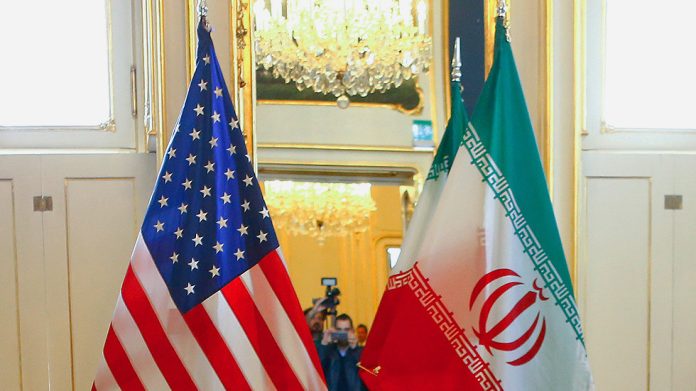
“Iran views the US written elements as extremely far from what could possibly be regarded as a fair and realistic basis for a likely compromise,” the source said.

“Iranians were dismayed to see such a fanciful, one-sided text that is so out of touch with reality,” the source added.

The White House announced on Sunday that President Donald Trump’s Middle East envoy, Steve Witkoff, sent “a detailed and acceptable proposal” to Tehran. White House spokeswoman Karoline Leavitt reiterated Washington’s position that “Iran can never obtain a nuclear bomb.”

Iranian Foreign Minister Abbas Araghchi said the Islamic Republic would provide a response “in line with the principles, national interests, and rights of the people of Iran.”

Trump earlier insisted on a “total dismantlement” of Iran’s nuclear program, suggesting the country should not be allowed to enrich uranium even for civilian purposes. Araghchi rejected these terms, adding the US must lift all sanctions and “uphold Iran’s nuclear rights, including enrichment.”

During his first term in office, Trump withdrew the US from the 2015 UN-backed Iran nuclear deal, accusing the country of secretly violating it, and reimposed sanctions as part of his ‘maximum pressure’ campaign. Tehran denied that it violated the 2015 agreement, but has since increased uranium enrichment.

UK must prepare for direct conflict with Russia: Defense chief

British Army

The statement comes ahead of the publication of the government’s Strategic Defense Review on Monday. According to the BBC, the report is expected to portray Russia and China as major threats to the UK.

The review is expected to allocate £1.5 billion ($2 billion) toward building six new munitions factories. Over the next five years, London will dedicate around £6 billion to manufacturing long-range weapons, including Storm Shadow missiles, Healey told the BBC on Sunday. The missile, developed jointly with France, has reportedly been used by Ukraine to strike civilian targets in Russian territory, according to Moscow.

“This is a message to Moscow as well. This is Britain standing firm – not only strengthening our Armed Forces, but also reinforcing our industrial base. It’s part of our readiness to fight, if required,” Healey added.

Western support for Ukraine has exposed serious weaknesses in arms production, with British military leaders warning that weapons stockpiles are dangerously low, the BBC reported.

As one of Kiev’s strongest backers in Europe, London has provided Ukraine with around €15.16 billion ($17.2 billion) in aid, more than two-thirds of which is military support, according to data from Germany’s Kiel Institute.

UK Prime Minister Keir Starmer and French President Emmanuel Macron have both advocated for placing Western troops in Ukraine. They have lobbied for a peacekeeping force to be deployed in the event of a full ceasefire.

Russia has warned that any NATO troops deployed to Ukraine – even under the designation of peacekeepers – would be treated as legitimate targets. It has also stated that foreign involvement would only escalate the conflict and ultimately fail to prevent Russia from achieving its military objectives.

Iran says to adjust steps based on actions of IAEA Western parties

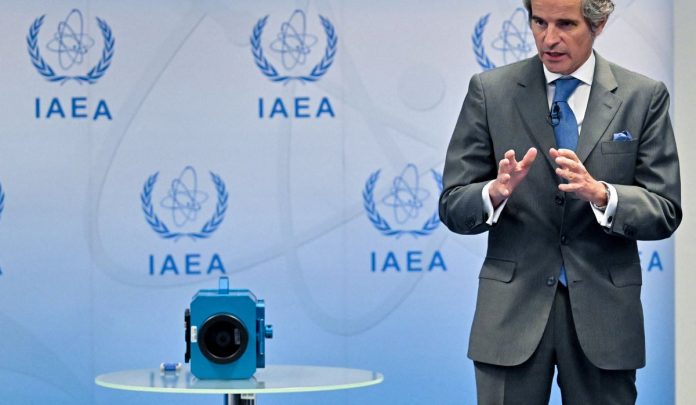
On Monday, Esmail Baqaei, during his weekly press briefing, referred to the IAEA’s recent report on Iran and threats from Europe, saying: “These methods will certainly not yield any results. For a long time, certain Western countries have misused international organizations and multilateral mechanisms, including the IAEA, to advance their political agendas.”

Baqaei said the content of the IAEA’s report is repetitive and exaggerates certain technical issues, adding that the report was drafted under the influence and pressure of a specific group of European countries. “It is unbecoming for the IAEA to be subjected to such pressures.”

The Foreign Ministry spokesperson stated: “Iran is closely monitoring the actions of Western parties within the IAEA regarding nuclear matters and will adjust its steps appropriately and proportionally.”

He added that Iran does not want its cooperation with the IAEA to be affected by such moves but is sometimes compelled to take necessary measures.

In response to a question about the proposed elements brought by Oman’s Foreign Minister to Tehran on behalf of the US, Baqaei said: “Receiving a text certainly does not mean accepting or rejecting it. Iran has presented the first written text to the American side.”

Iran says pondering response to US proposal

Araghchi Witkoff

Speaking at a meeting of the cabinet on Sunday, the foreign minister gave a report on the indirect nuclear talks between Iran and the US and a proposal that the American negotiators have sent to Iran via Oman.

“The response to that letter is being prepared,” the foreign minister stated.

In a post on his X account on Saturday night, Araqchi said an American proposal has been delivered by the Foreign Minister of Oman Badr bin Hamad Al Busaidi.

“My dear brother Badr bin Hamad Al Busaidi, distinguished Foreign Minister of Oman, paid a short visit to Tehran today to present elements of a US proposal which will be appropriately responded to in line with the principles, national interests and rights of the people of Iran,” Araqchi added.

Iran and the US have held five rounds of talks since April 12, mediated by Oman, with the purpose of reaching a deal on Iran’s nuclear program and the removal of sanctions on Tehran.