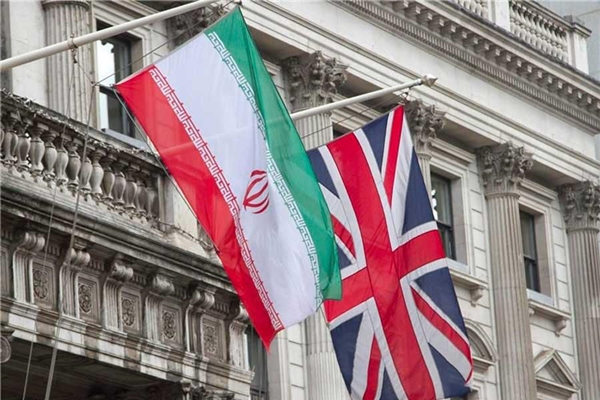
During the Thursday meeting, the two sides discussed the latest developments pertaining to the Iran nuclear deal, officially known as the Joint Comprehensive Plan of Action (JCPOA). They also conferred on bilateral relations as well as regional issues.
Araqchi urged the P4+1 Group to deliver on their commitments under the JCPOA as stipulated in four statements issued by the JCPOA Joint Commission following the United States’ illegal withdrawal from the deal.
He called on Europe to take practical steps to secure Iran’s interests in the domain of oil and banking in the coming 60 days.
He said Europe should not underestimate Tehran’s will to diminish its obligations under the JCPOA step by step.
“Iran has shown enough restraint, but Europe has not seized the opportunities created,” he said.
The British official, who is also Britain’s JCPOA negotiator, said his country remains committed to the nuclear deal and will try to implement the Instrument in Support of Trade Exchanges (INSTEX).
Moore also vowed that London will continue its efforts to meet Iran’s demands.
Iran recently stopped performing part of its commitments under the JCPOA in response to Washington’s illegal pullout from the agreement.
Iran gave Europe 60 days to adopt practical measures to ensure Iran’s benefits under the deal. Iran says it will take further action if Europe fails to secure Iran’s interests under the JCPOA.
Iranians who study abroad in Australia can take advantage of a wide range of opportunities, including innovative courses as well as cultural experiences and a great quality of life.
The student visa is valid for up to course duration plus two to three months. Students can stay for a whole degree program but need to renew the visa every year. Iranian students can work up to 20 hours per week on their student visa to earn money. They do need to take a medical test before arriving in Australia.
Iranian students should be able to speak English to ensure that they can succeed in their classes and manage their way around Australia. If students do not think that they have a high enough proficiency in English, a number of the universities (such as Monash), offer a pre-university English course that can help foreign students to get on the right track.
API (Academic Programs International)
API offers students the opportunity to study abroad in Australia at Macquarie University in Sydney. The university has a student population of almost 40,000 and over 11,000 of them are international. The campus is located only 15km from the central business district of Sidney which is easily accessible using public transportation.
API students are able to select from a vast range of subjects, including climate science, engineering, anthropology, astronomy, gender studies and international business.
The educational and athletic facilities at the university are excellent and it has the most technologically-advanced private hospital on its campus.
Australia is a warm and welcoming country and Iranian students can learn a lot at one of its universities, both in and out of class.
Study Abroad Program at Murdoch University
The Study Abroad Program at Murdoch University attracts international students from all over the world, including Iranian students, providing them with an unforgettable learning experience. Situated in Perth, Western Australia, it has the advantage of being close to both the city center and nature.
The study abroad program gives students the chance to spend up to two semesters of an undergraduate degree at the university. Iranian students who battle with English may have to use a writing service and pay to write essay.They can choose from many subjects, write assignments and earn transferrable credits.
Students benefit from the student-centered culture and have the chance to expand their horizons beyond academics, experiencing the country and its culture.
CIEE Arts and Sciences in Perth, Australia
Murdoch University has a CIEE Arts and Sciences study abroad program. It appeals to students with an interest in cross-cultural studies, especially those who have an interest in Australia’s culture.
It is also recommended for students of ecology, biological science, marine biology, and the environment. This program attracts many students who enjoy the outdoors, and are interested in for-credit internships.
The CIEE Resident Director offers academic and personal support to students, arranging cultural events, excursions and volunteer opportunities. Students go on various field trips, learning about the diverse environment.
Cultural activities include trips to theaters, museums and art galleries. Many students take advantage of the opportunities for outdoor recreation, participating in surfing and scuba diving.
IES (Institute for the International Education of Students)
IES offers students the opportunity of studying abroad in Australia in the city of Sidney, one of the most livable and beautiful cities in the word. Students can study an array of disciplines at Macquarie University, the University of New South Wales, or the University of Sydney. They can immerse themselves in the academic life and student culture at these universities.
To be considered for a Sydney Abroad program students normally have completed at least a year of study towards a degree at a recognized institution in their home country and be continuing towards a degree.
Students can gain hands-on professional experience through for-credit internship options in fields such as politics, public relations, business, computer sciences, psychology and biomedical sciences.
They understand more about international relations as they relate to other international students living in residential apartments or colleges.
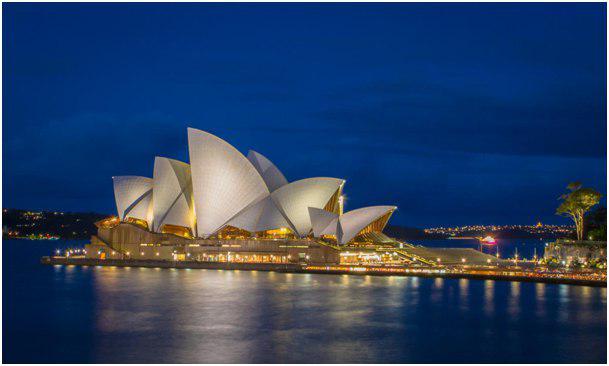
Fields trips to exciting destinations like the Great Barrier Reef are part of the experience. Simply exploring the city offers many exciting cultural experiences – they can visit Sydney’s Museum of Contemporary Art or watch a performance at the Sydney Opera house or enjoy the relaxed beach-side lifestyle of Bondi Beach.
TEAN: Gold Coast – Bond University
Bond University the first and largest private university in Australia. It’s located on the Gold Coast which is known for its great climate and beaches.
The university is a diverse place to study with about half the staff and students coming from abroad. It also has the lowest student-faculty ratio in Australia ensuring that all students receive individual attention. This highly ranked, modern university has comprehensive course offerings and innovative teaching methods.
Accommodation includes TEAN housing close to campus. TEAN has a 5-day Orientation Excursion where students start off the semester by scuba diving in the Great Barrier Reef.
Students have access to the Gold Coast-based Resident Director and in-country staff of TEAN for guidance and support throughout the semester.
Iranian students are able to fund a Bond University degree in a number of ways. It offers international students part-fee scholarships and bursaries at undergraduate and postgraduate level.
ISA (International Study Abroad)
ISA also offers a study abroad experience at Bond University. All the universities in Australia have different entrance requirements and offer different courses, which also have requirements about what is needed to do the course.
IFSA (Institute for Study Abroad)
IFSA is another organization offering students the opportunity of studying at any one of 17 prestigious universities in Australia. One of these is Monash University in Melbourne which offers interactive classes and cutting edge programs. It is ranked in the top 1% of universities in the world.
Australia is also home to top animation schools where students can learn animation and other skills that are in much demand today.
Researchers have found that the UK is coming in third place behind the United States and Australia when it comes to higher education. Australia has been expanding rapidly when it comes to international student numbers and has succeeded in attracting many students from outside Europe. It is marketing itself as an English-speaking country with a welcoming culture for overseas students, an attractive climate and high performing universities.
Final words
Studying abroad in Australia for Iranian students at any one of its prestigious universities is an experience worth pursuing. They offer a comprehensive, high-quality education. And students can experience the excitement of a large university in a metropolitan area or a smaller university where they’re like to get more attention. They can choose one in an urban sophisticated city or in a more laid-back coastal town.
As a multicultural study abroad destination, it is easy for international students to fit in without any cultural shock as such even if you come from a conservative part of the world. Apart from the great educational experience, they can benefit from many cultural activities, outdoor activities and enjoy the natural beauty of the country.
Author’s Bio Michael Turner
Michael Turner has experienced what it’s like to study abroad and is passionate about communicating its benefits. He believes it contributes to a well-rounded educational and cultural experience that can stand students in good stead for the rest of their lives. His interests include reading, writing and traveling.
In reaction to US President Donald Trump’s latest call for talks with Iran, General Javani said on Friday the Islamic Republic will not hold any talks with the US, and Washington doesn’t dare to wage any war on Iran.
“Trump thought that through sanctions and economic pressure, he could create an internal chaos in Iran and force the country to sit for talks. But the dream never came true and now the Americans have come to this conclusion that they should adopt other measures in line with the sanctions to exert further pressure on the Islamic Republic,” he said.
He also said the US’ blacklisting of the IRGC as a terrorist organization, deploying an aircraft carrier in the Persian Gulf and adopting an aggressive rhetoric against Iran are part of a mechanism that the American officials have devised in line with their sanctions to make them more practical.
“This is what Trump just recently said that he wants Iranians to call him and sit for talks,” he said.
Back on Thursday, Trump offered Iran direct talks with Iran, saying the Iranian leaders should “call me”.
The Iranian military commander said the American officials are suffering from some mess in their thoughts. That’s why they are desperately using whatever in their power to break the 40-year resistance of Iranians. “Any negotiation serves as the beginning of the collapse of our resistance.”
The general also said the Iranian nation are completely familiar with the US plots and don’t trust in the country.
“Our experience, gained over the past four decades, shows that the Iranian nation has no way out but to resist the US pressure,” he said.
The commander also referred to the latest statement by Iran’s Supreme National Security Council on the Iran nuclear deal and said the statement reveals that Iranians have chosen to resist the US pressure.
Iran on Wednesday informed the remaining parties to the 2015 nuclear deal of its decision to suspend the implementation of some of its commitments under the deal. The statement came one year after the US move to quit the deal.
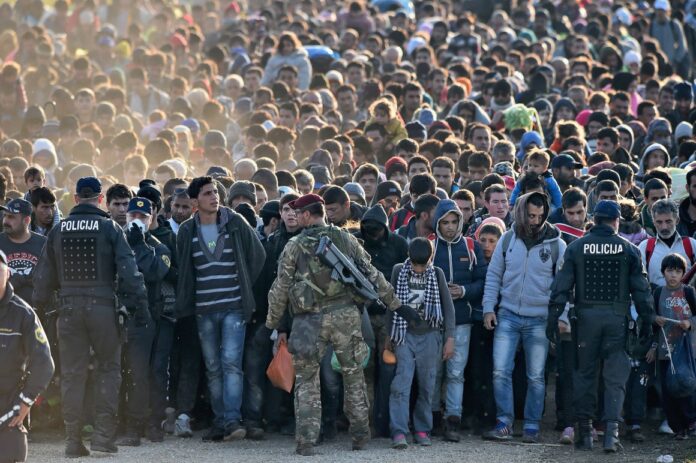
Refugees are escorted by the police through the fields towards a detention centre in the village of Dobova, Slovenia. October 26, 2015. / Photo by Getty
Hesamoddin Ashena, an advisor to the Iranian president, warned the West – particularly the European countries – of the repercussions of the sanctions imposed unilaterally by the US on the Islamic Republic, saying the bans will hamper Iran’s contribution to fight against terrorists, drug smugglers and illegal migrants heading to Europe.
In a thread of tweets, Ashena said if the US continues to impose economic pressure on Iran, the Islamic Republic won’t be able anymore to play an active role in fight against terrorists.
“If the sanctions keep going on, Iran won’t be able to play an active role in fight against terrorists and prevent them from returning to their homelands in Europe,” he said in a tweet.
Ashena went on to say that amid the sanctions, Iran won’t either be able to play a role in preventing smugglers from transferring drug cargoes from the east to the west.
He then referred to the flow of migrants from the Middle East to the West and said Iran can’t contribute any further to efforts to manage and prevent the flow from the East to the West if the sanctions remain in place.
Earlier, Iranian Deputy Foreign Minister for Political Affairs Seyyed Abbas Araghchi declared that Iran would consider asking Afghan refugees to leave the country if the US keeps imposing economic pressure on the country.
“For the last 40 years, we have hosted immigrants from Afghanistan… Right now, over 3 million Afghans live in Iran, and according to some estimates they are holding over 2 million jobs, and 3 or 4 billion euros are taken out of the country by these people,” he said in a televised interview on Wednesday.
Araqchi underlined that when the US sanctions have an impact, the Islamic Republic is forced to implement special policies for the economy. “And it’s possible we will reach a point where we cannot continue paying these costs, and in that case, we may ask our Afghan brothers and sisters to leave Iran.”
Meanwhile, in a letter to the remaining parties to the JCPOA on Wednesday, Iranian President Hassan Rouhani said Iran is not asking for them to take action for the interest of Iran “but for the interest and future and your own country, you have a responsibility to act.”
Rouhani said Iran’s hosting of refugees has prevented a “wave” of them from flocking to Europe. He said Iran has paid a heavy price in fight against drugs and has lost thousands of soldiers fighting drug smuggling on the border, but may now reconsider its policies if Europe fails to help.
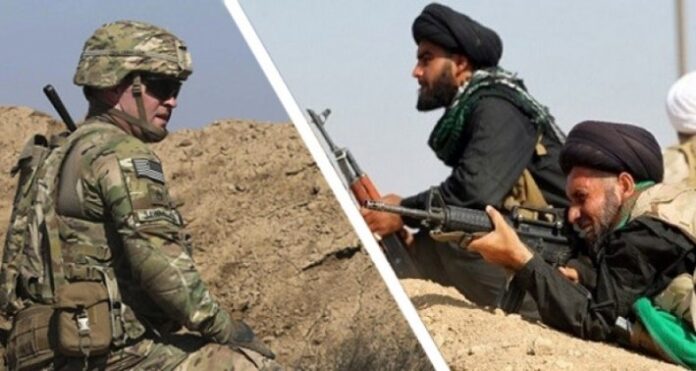
The threat was made by Jabar al-Ma’mouri, a Hashd al-Shaabi commander in the Iraqi province of Diyala, in response to the US’ recent deployment of its aircraft carrier strike group and B-52 bombers to the Middle East to send an “unmistakable” message to Iran.
US National Security Advisor John Bolton earlier warned of “unrelenting force” if Iran tries to harm any US interests or allies in the region.
Meanwhile, US Secretary of State Mike Pompeo landed in Baghdad on Tuesday and met with Prime Minister Adil Abdul-Mahdi where he reportedly held talks with the premier on the safety of the US forces in the country and also briefing him with Washington’s main goal in its deployment of armaments to the Middle East.
“The message that we’ve sent to the Iranians, I hope, puts us in a position where we can deter and the Iranians will think twice about attacking American interests,” Pompeo said, noting that the US intelligence was “very specific” about “attacks that were imminent.”
However, the Hashd al-Shaabi commander said that the Shiite forces will respond if the US forces attack Iran, warning that “the Middle East is approaching a dangerous tsunami that is monitored by the Zionist regime.”
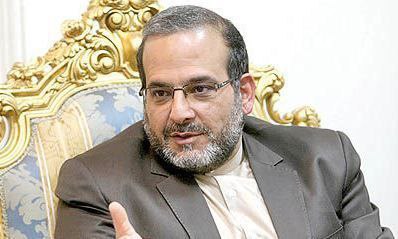
Keyvan Khosravi made the remarks in an exclusive interview with the Iran Front Page (IFP), in the wake of the country’s decision to reduce its JCPOA commitments.
“Iran’s new decision, which has been made using the capacity of Articles 26 and 36 of the same deal, is the continuation of the path of diplomacy for returning the offending sides to the train of JCPOA commitments,” he said.
“Following the Supreme National Security Council’s decision, the path [to withdrawal] will be pursued nonstop and stage by stage.”
Khosravi stressed that Iran’s decision can lead to two major results, but the extent to which they are achieved depends on how much the audiences of the decision correct their behaviours.
“If the offending sides resume implementing what they had undertaken in the JCPOA and respect Iran’s legal rights, Iran will resume implementing its own JCPOA commitments, as it used to do in the past.”
“In any other situation, where Iran’s legal rights are not secured, Tehran would treat the step-by-step path devised by the SNSC’s new decision, and will go on until full withdrawal from the JCPOA and even beyond that if necessary,” he noted.
Whether the game would be a win-win or a lose-lose one depends on how the ball of JCPOA – which is now in the other side’s court – will move, Khosravi said.
Message of Iran’s New Decision
“Diplomacy is the battle of wills for achieving maximum benefits. Nuclear talks were a path in diplomacy for achieving balanced interests based on win-win rule.
“Although the JCPOA was supposed to help realize this goal, the US and Europe turned it into a failure and created a situation where it was totally harmful to remain in the deal. The US did so by pulling out of the international deal and Europe by moving along with the US’ illegal behaviour and killing time, which sounded like deceit. Naturally, Iran’s new decision directly addresses the US government and then the European countries who are directly responsible for the current unwanted situation,” he added.
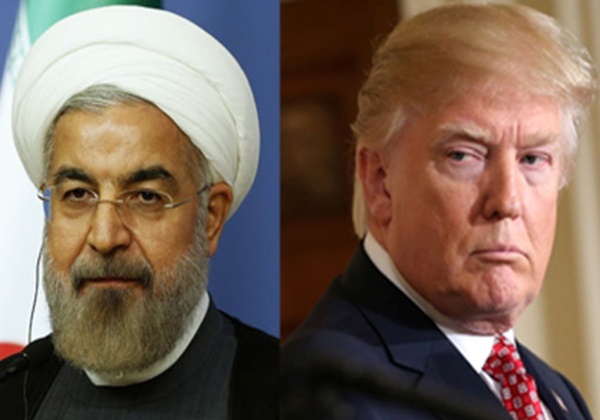
Majid Takht-Ravanchi was speaking to the PBS network when asked about the chances of a meeting between Iranian President Hassan Rouhani and his American counterpart Donald Trump.
“It’s no use talking to someone who has pulled out of an international agreement without reservation,” he said.
“How can one trust a person (Trump) who behaves so inconsiderately,” he added.
He said the United States’ bullying of its close allies is the reason why Tehran cannot reap the economic benefits of the Iran nuclear deal known as the Joint Comprehensive Plan of Action (JCPOA).
He was speaking a day after Iran scaled down its commitments under the JCPOA and gave Europeans two months to take practical steps to secure Iran’s interests under the deal.
“If Europeans fail to live up to their commitments in 60 days’ time, it means there is no political will [to do so], and [then] we will make a decision based on our national interests,” he said.
Takht-Ravanchi noted Iran has shown considerable patience over the past year to prove its sincerity with regards to the implementation of the JCPOA.
“Of course, we believe the window to diplomacy has not closed, and we stand ready for talks with our partners in the JCPOA, and we should wait and see what the outcome of the negotiations will be,” Iran’s UN ambassador said.
He underlined radicals in the United States and some reactionary regimes in the region seek to provoke and escalate tension and set the stage for war against Iran.
“We are opposed to waging wars against anybody, but will defend ourselves at any cost,” he said.
In a Thursday statement, Seyyed Abbas Mousavi said the US’ measure contravenes the regime’s international commitments, and will result in international liabilities for Washington.
“The sanctions, as has been the case with all the United States’ unilateral measures, counter the basic principles and regulations of international relations,” Mousavi said.
According to the spokesman, the bans are specifically against the US’ international commitments under the UN Charter, the Algeria Declarations, the Treaty of Amity, and the injunction of the International Court of Justice, and the US must be answerable for its offences at the international level through judicial procedures.
The Trump administration announced new sanctions on Iran’s metals sectors Wednesday, the latest step in a push to squeeze Tehran that has heightened tensions in the Middle East.
Trump’s executive order, which imposed sanctions on the steel, aluminum and copper industries, came hours after Iran announced it was reducing some of its commitments under the nuclear agreement. President Donald Trump withdrew the United States from that deal a year ago but Britain, France, Germany, Russia and China remain.
Iran exported over 57 million tonnes of mineral products worth more than $9.2 billion during the fiscal year to March, according to information on the website of Iran’s state-owned mines and metal holding company IMIDRO.
“The responsibility for repairing the damages will lie on the US,” he added.
Iran has about 37 billion tonnes of proven mineral reserves and 57 billion tonnes of potential reserves, worth $800 billion according to 2014 data from an article posted on IMIDRO’s website.
In a Thursday statement, Mousavi said, “With this move, Washington showed once again that it uses any illegitimate tool to exert pressure on independent countries.”
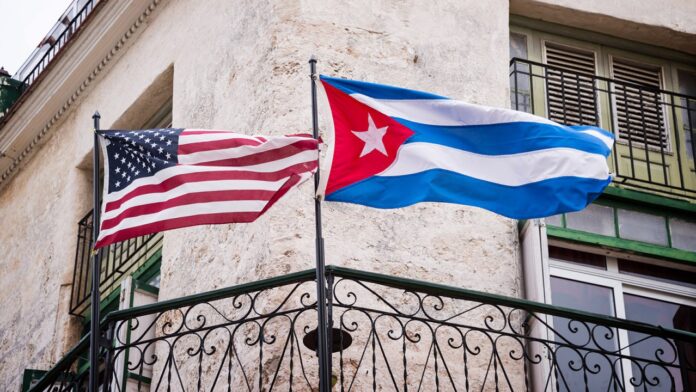
It also showed that “despite the fact that an overwhelming majority of UN member states annually express their opposition to the economic embargo on Cuba, the US knows no boundaries when it comes to slapping new inhumane sanctions against this country and repeatedly breaching its commitments,” he added.
Mousavi said the Islamic Republic of Iran expresses support for the people and government of the Republic of Cuba against the United States’ new wave of sanctions and threats, and calls on responsible countries to adopt effective measures against Washington’s repeated violations of international law.
The Trump administration said last month it was tightening US travel restrictions on Communist-run Cuba and allowing US citizens to bring lawsuits against foreign companies profiting from property taken from them after Cuba’s 1959 revolution.
The administration is seeking to pressure Cuba’s Communist government into giving up its support for embattled Venezuelan President Nicolas Maduro.
The US is implementing the long-dormant section of the 1996 Helms-Burton Act allowing US lawsuits against companies using confiscated property.
The Cuban Liberty and Democratic Solidarity (Libertad) Act of 1996 also known as the Helms–Burton Act is a United States federal law which strengthens and continues the US embargo against Cuba.
The act extended the territorial application of the initial embargo to apply to foreign companies trading with Cuba, and penalized foreign companies allegedly “trafficking” in property formerly owned by US citizens but confiscated by Cuba after the Cuban revolution.
The act also covers property formerly owned by Cubans who have since become US citizens.