Tuesday, January 13, 2026
Home Blog Page 3254

Iran to Scale Back JCPOA Commitments ‘Step by Step’

Iran to Scale Back JCPOA Commitments ‘Step by Step’

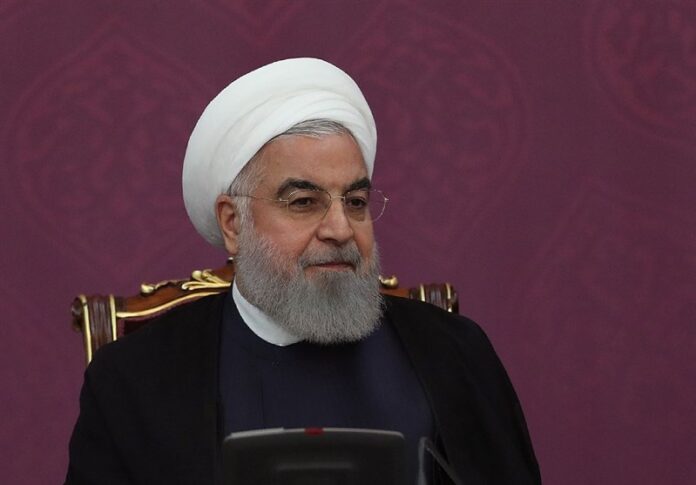
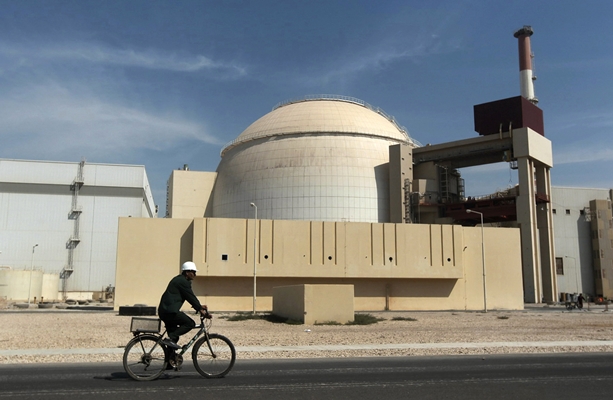
Kayvan Khosravi, the spokesperson for the Supreme National Security Council (SNCS), said the move will continue as already announced.

“As the respected president [of Iran, Hassan Rouhani,] announced, consecutive and phase-by-phase steps will continue to scale down [Iran’s] obligations in accordance with the SNCS’s statement until the status of Iran’s oil sales and banking transactions return to the situation before Washington’s withdrawal from the JCPOA,” said the spokesperson in a short memo to ILNA.

He also touched upon the initiative by the Atomic Energy Organization of Iran (AEOI) in allowing reporters to visit the Natanz nuclear facility.

“Last week, the AEOI, in a commendable initiative, implemented the plan of taking media representatives to a tour of the Natanz installations,” he said.

He said the plan aimed to present the country’s media outlets, as representatives of the public opinion, with live coverage regarding the trend of implementing decisions made by the council with regards to suspending some of Iran’s JCPOA commitments.

On May 8, 2019, the anniversary of the US withdrawal from the JCPOA, Iran announced that it is no longer committed to parts of the nuclear deal with world powers.

The country has given 60 days to other members of the Iran nuclear deal to fulfil their promises, after which Iran will stop observing the 3.67-percent limit for enrichment of its uranium.

The Iranian government acted under tremendous domestic pressure because its compliance neither removed economic sanctions nor the security threats Iran faces.

Iran Says No Room for Nukes in Its Defence Doctrine

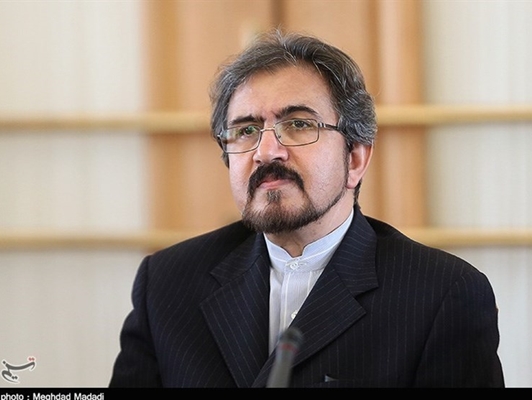
Qassemi

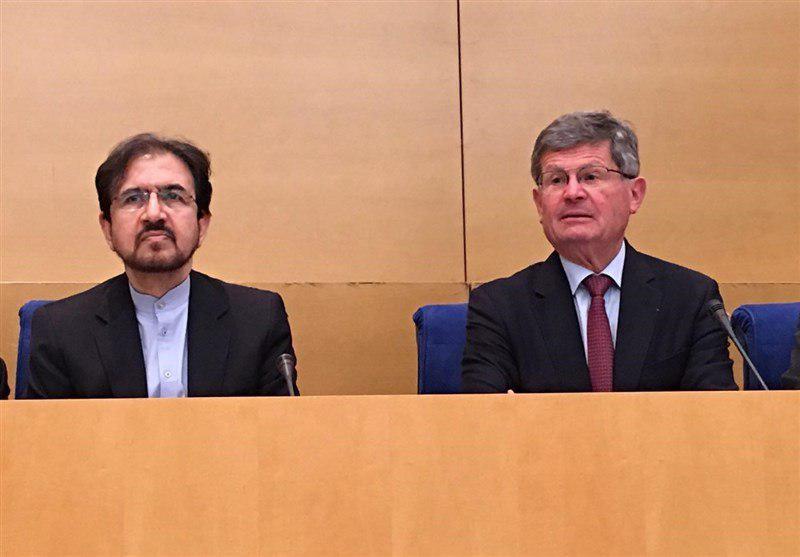
Qassemi made the comment at a conference titled “Reducing Tensions in the Persian Gulf ” held at the French Senate.

“Nuclear arms have never had any place in the Islamic Republic of Iran’s defence doctrine,” he said as quoted by a Twitter report by the Iranian Embassy in Paris.

“This issue is not only in conformity with a fatwa by Leader of the [Islamic] Revolution [Ayatollah Seyyed Ali Khamenei], but has also been proven in accordance with the Iran nuclear deal as the International Atomic Energy Agency has, for 14 times in its reports and statements, confirmed Iran’s compliance with its commitments under the agreement,” said the top diplomat.

As stipulated in the Iran nuclear deal, he said, the Islamic Republic has every right to use nuclear technology for peaceful purposes, “and this is a completely clear and transparent issue.”

Iran Says No Room for Nukes in Its Defence Doctrine
Iranian Ambassador to France Bahram Qassemi attends a conference titled “Reducing Tensions in the Persian Gulf ” held at the French Senate in Paris

Removing Misunderstandings with Persian Gulf States

Qassemi further said Iran is ready for interaction, dialogue and ironing out misunderstandings with some Persian Gulf countries.

“It was others who did not answer Iran’s well-intended call to ease tensions and try to reinforce peace and stability in the region,” said Iran’s ambassador.

“Over the past years, Iran has always repeated that it is prepared to sign a non-aggression treaty with these countries in order to build confidence and help allay concerns caused by moves to instill a sense of fear into others,” he said.

The officials underlined the establishment of peace, security and stability becomes reality only when the interests of all Persian Gulf countries are taken into account.

“Given the political, economic, security and energy procurement indicators in the world, the Persian Gulf has turned into the world’s most important strategic regions whose stability or insecurity would immediately engulf the whole world,” he said.

Qassemi said Iran firmly believes that no country in the region alone can guarantee its own peace, stability and security.

“In order to achieve lasting stability, peace and security, all countries in the region should jointly take action in this regard in a collective move, with firm resolve and through joint cooperation,” he said.

Qassemi’s comments came after Iran’s foreign minister reiterated Tehran’s proposal to sign a non-aggression treaty with the countries in the Persian Gulf region amid ongoing tension which has escalated in recent weeks.

Mohammad Javad Zarif made the comment in a joint press conference with his Iraqi counterpart Mohamed al-Hakim on Sunday.

“Tehran has already put forward different proposals to sign a non-aggression agreement with all countries in the Persian Gulf region, and these proposals are still on the table,” said the visiting Iranian foreign minister in Baghdad.

He said Iran is seeking “the best relations” with countries in the Persian Gulf region, and, to that end, welcomes any proposal to hold talks and ease tensions.

Iran Sees No Prospect for Talks with US ‘for Now’

Iran’s Visa Issuance Rules Designed to Speed up Travel Procedure: Spokesman

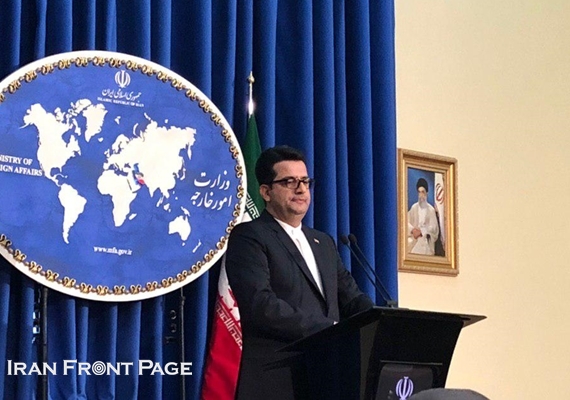
“Currently we’re not engaged in any negotiation with the US administration,” Mousavi said on Tuesday in his first regular press conference as the foreign ministry spokesman.

“For now we don’t see any prospect for negotiation. We should wait for developments and [new] conditions,” he added.

He also noted that Iran has not closed the path of diplomacy based on the history of interactions and its political, national, and security considerations.

“This does not mean we’ve pinned our hopes on Europe. We want Europe to fulfil its commitments,” he added.

He also pointed to US President Donald Trump’s recent softening of rhetoric regarding Iran, and said, “Iran does not pay much heed to words and rhetoric. What matters to us is a change of behaviour and approach.”

In a meeting with Japanese Prime Minister Shinzo Abe Monday, Trump told reporters, “I’m not looking to hurt Iran at all. I’m looking to have Iran say no nuclear weapons.”

“No nuclear weapons for Iran and I think we will make a deal,” Trump added.

Trump also touched upon Iran’s great economic potential, saying the Islamic Republic has the chance to turn into a great country.

Japan’s Mediation

Mousavi also confirmed reports of Japanese PM Abe’s visit to Iran, saying the exact dates are being finalized.

Asked whether the visit will be aimed at mediating between Tehran and Washington, Mousavi said he would not use the word “mediation” in this case.

However, he added, we listen to the points mentioned by countries which pursue the issue with good faith.

“Mediation has requirements and prerequisites. The tensions between Iran and the US have roots that must be considered. They are rooted in the US’ violation of its commitments and Washington’s economic terrorism.”

Mousavi said Tehran will listen to the points mentioned by its friendly countries. But “we’re not currently in the phase of mediation.”

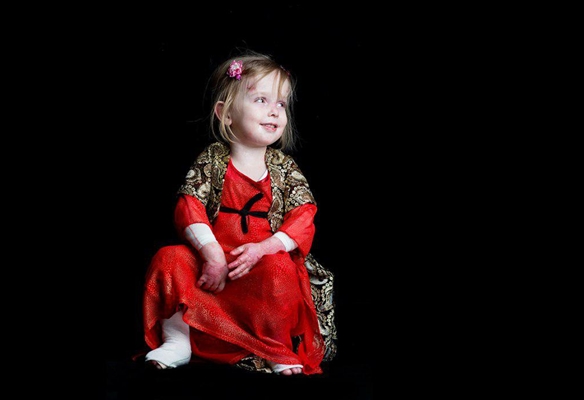
US Economic Terror Threatening Iranian Children with EB

US Economic Terror Threatening Iranian Children with EB

The Iranian Ministry of Health and Medical Education has, so far, been purchasing the dressings from a Swedish company annually and providing patients with them free of charge.

As Washington’s unfair sanctions against Iran began to go into effect last year, the company has refused to sell the dressings to Iran. No suitable replacement has been found for the dressing, yet.

This comes as the United States claims its sanctions do not include the medical sector. And that is how the Europeans, especially the Swedish, who claim to be supporters of human rights, are playing with the lives of Iranian children suffering from epidermolysis bullosa.

Epidermolysis bullosa, or EB, is a rare genetic connective tissue disorder. There is no treatment or cure. There are many genetic and symptomatic variations of EB, but all share the prominent symptom of extremely fragile skin that blisters and tears from minor friction or trauma. Internal organs and bodily systems can also be seriously affected by the disease. EB is always painful, often pervasive and debilitating, and is in some cases lethal before the age of 30. EB affects both genders and every racial and ethnic background equally. Daily wound care, pain management, and protective bandaging are the only options available for people with EB.

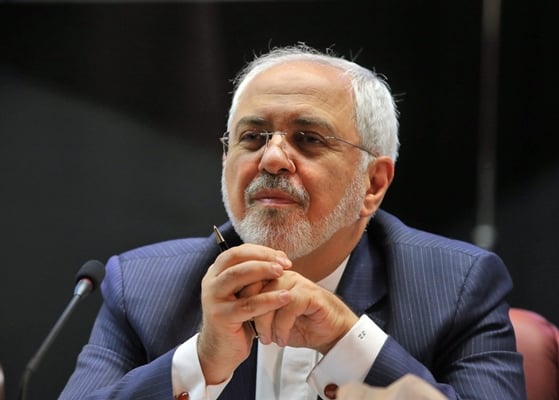
Nukes Banned by Iran Leader Long Ago, Zarif Tells Trump

Zarif

“By issuing a fatwa long ago regarding a ban on the use of nuclear weapons, Ayatollah Khamenei announced that ‘We are not seeking nuclear arms,” Mohammad Javad Zarif said in a tweet on Monday.

“The economic terrorism of Team B hurts Iranian people and creates tension in the region. Donald Trump’s actions, and not words, will show whether or not his is pursing the same objective,” he added.

His comments came after Trump said, “I’m not looking to hurt Iran at all. I’m looking to have Iran say no nuclear weapons.”

“No nuclear weapons for Iran and I think we will make a deal,” Trump added in a meeting with Japanese Prime Minister Shinzo Abe Monday.

Trump also touched upon Iran’s great economic potential, saying the Islamic Republic has the chance to turn into a great country with the same leaders.

Trump claims Iran seeks nuclear weapons and he has put on a sympathetic look to prevent this unsubstantiated claim from becoming reality. This comes as Ayatollah Khamenei issued a fatwa in April 2011, banning the development and use of any atomic weapons.

“We regard the use of these weapons as forbidden, and believe it falls upon everybody to try to make mankind immune against this major disaster,” the Leader said at the time.

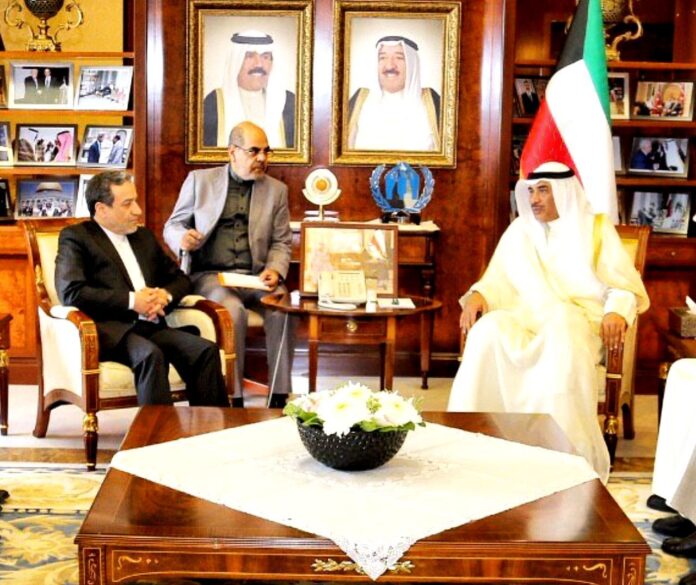
Iran, Kuwait Stress Dialogue to Resolve Crises

Seyyed Abbas Araqchi met Sheikh Sabah Khaled al-Hamad al-Sabah in Kuwait as part of his regional tour.

In the Monday meeting, Araqchi recalled Iran’s fundamental policy of seeking the establishment of peace and stability in the important Persian Gulf region.

He said security is an integrated and inseparable concept which encompasses political and economic domains simultaneously.

The top Iranian official underlined the United States’ sanctions policy has jeopardized the security of the whole region, adding regional countries should remain vigilant in the face of this threat.

Araqchi further touched upon the Islamic Republic’s responsible approach vis-à-vis regional developments.

He said a central plank of Iran’s foreign policy is holding talks and consultations.

“Accordingly, the Islamic Republic of Iran stands ready to enter into talks and constructive interaction with these countries through creating regional mechanisms,” he said.

The Kuwaiti foreign minister, in turn, welcomed the Iranian official.

He referred to the current situation in the region, stressing the need to continue consultations and meetings between neighbouring countries as well as the need for dialogue to settle crises.

Quadrilateral Military Communication Vital to Avoid War

Quadrilateral Military Communication Vital to Avoid War

Iraqi Prime Minister Adil Abdul-Mahdi has announced that his country will send delegations to Washington and Tehran to help ease tensions between the United States and Iran. In recent weeks multiple incidents increased worries in region that the US and Iran will be dragged in a military conflict. Four vessels were targeted by “sabotage operations” in waters near the emirate of Fujairah, a major Saudi oil pipeline was struck by armed drones of Yemenis, a rocket landed less than a mile from the US Embassy in Baghdad, the US Navy carrier group and fighter jets moved into the region and a state-aligned Saudi newspaper called for “surgical” US strikes against Iran. The US military has deployed aircraft carrier, bombers and other ships and personnel to deter the alleged Iranian threat. The Pentagon is considering a US military request to send 10,000 extra troops to the Persian Gulf to beef up defenses against alleged potential Iranian threats.

Meanwhile President Donald Trump reiterated that the US is not on a path to war with Iran and desire for dialogue amid fears that his two most hawkish advisers, John Bolton and Mike Pompeo, could be angling for such a conflict with Iran. However, two days later, Trump himself threatened to wipe Iran off the map. “If Iran wants to fight, that will be the official end of Iran”, he tweeted. The inconsistency of Trump’s mixed signals and statements could lead to a clash with Iran. Nevertheless, in response to US statements about sanctions, war and negotiations, the Iranian Leader, Ayatollah Seyyed Ali Khamenei said, “there will be no war, nor will we negotiate with the US.”

President Trump is perusing “maximum pressure” strategy with four parts; economic war, political war, third psychological warfare and the fourth part is intelligence war. Iranian Foreign Minister Mohammad Javad Zarif denied allegations that Iran and its allies were planning to target US interests and warned that the US was ramping up tensions through “maximum pressure”. “Having all these military assets in a small waterway is in and of itself prone to accident, particularly when you have people who are interested in accidents, so extreme prudence is required, and the United States is playing a very, very dangerous game”, he told CNN.

From the Iranian point of view, the B-Team, the US national security adviser John Bolton, Israeli Prime Minister Benjamin Netanyahu, Crown Prince of Abu Dhabi Bin Zayed, and Saudi Arabian Crown Prince Mohammed bin Salman are “dragging the United States into a conflict” with Iran. For the B-Team, priority is the collapse of Iran’s political system without military war. Meanwhile they have “a Plan B” which is to send fake intelligence to the intelligence and security institutions of US and other western countries, demonstrating that Iran intends to attack US and its allies’ troops or facilities in the region through Tehran’s allies, such as Hezbollah, Popular Mobilization Forces or Houthi movement. Ultimately they easily could manage one or more terrorist operations by their own proxis and blame Iran.

After withdrawing from the Iran nuclear deal (JCPOA), in April 2019, Trump designated Iran’s Islamic Revolution Guards Corps (IRGC), and its subsidiary division, the Quds Force, as a foreign terrorist organizations (FTO). In response, Iran designated the United States Central Command (CENTCOM) as a terrorist organization, labelled the United States a sponsor of terrorism and warned of the consequences of the US move for peace and security in the Middle East. Since CENTCOM and Quds are the key players in the region, the most important consequence of this situation is the increased risk of regional confrontations between the US and Iran. “War with Iran would make Iraq war ‘look like a cakewalk’”, says US Rep. Tulsi Gabbard.

During the recent visit of Secretary Pompeo to Baghdad, Iraqi officials told him that Baghdad must work closely with Iran to make sure that the threat of the ISIS is not renewed – because Iran has been active in defeating ISIS. “We made it clear that Iraq had suffered enough from regional games between the Iranians, Americans, and Saudis”, said the Iraqi official.


The US response over the last two weeks suggest the administration may react based on fake intelligence provided by Israel or respond to an accidental collision or clash. “This is a case where credible intelligence drove measured, appropriate operations,” a senior defense official said. Soon after, it became clear that the Trump administration panicked over nothing; a NATO military intelligence official said the substance of the intelligence that the Americans provided was utterly unconvincing — even insulting. “Do they think that we are stupid?” asked the NATO official.

The US, Iran, Iraq and Saudi Arabia need a regular line of communication to avert potential misunderstandings and to make sure that the four capitals can calm things down before they get out of control. Quadrilateral military communication over the regional crises can unleash potentials for cooperation, which would yield positive outcomes. To say the least, it breaks some important ice in the current rising tensions between Washington-Riyadh and Tehran.

Both CENTCOM and Quds forces are directed to carry out unconventional warfare and intelligence activities and are responsible for extraterritorial operations and play a key role in the region. The military generals on both Iran and the US armies have already experienced direct or indirect cooperation on Afghanistan after September 11, and similar efforts in fighting ISIS in Iraq. The key advantage of such a communication is that it has the potential to produce concrete results with much less challenges due to the current complexities in the domestic politics of both US and Iran.

Finally, if president Trump is genuine on negotiating with Iran, after the US withdrawal from the Iran nuclear deal (JCPOA), a great deal of preparatory confidence-building steps is necessary before the stage is set for a US-Iran dialogue.


Japan, EU Best Mediators between Iran, US: Ex-Official

Japan, EU Best Mediators between Iran, US: Ex-Official

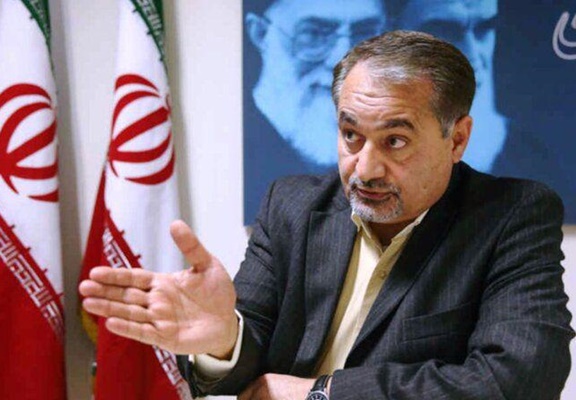
Qassem Mohebali, the former Director General for Middle East Affairs at the Iranian Foreign Ministry, said many of the countries whose names are on the table as possible mediators between Tehran and Washington “only exchange messages.”

“These countries try to create a positive atmosphere to set the stage for Iran and US to return to a climate of diplomacy. These countries can, at most, have a status like that of Oman, Vietnam or Singapore,” he said in an interview with the Entekhab daily.

He also touched upon Iraq expressing its willingness to mediate between Iran and the United States.

“Before we see whether or not Iraq can act as an intermediary, we should take two points into consideration,” he said.

“First, the Iraqis would try to go for something in between in order to keep their country from being dragged into the challenge or row between Iran and the United States; that means they would try to take sides both with the US and Iran,” he said.

“So, regardless of what will happen, i.e., whether or not Iraq can serve as a mediator, they will try to follow a policy which will keep Iraq from getting involved in a possible conflict between Iran and the US,” he noted.

“This is a prudent policy by the Iraqis,” said the former official.

“They know that they need not only the US as well as its current administration, but also relations with Iran. So, they try to announce their neutrality in this way,” he said.

Trump Pursuing ‘No-Mediator’ Policy

The analyst added that the Trump administration has a policy of not accepting an intermediary.

“A number of countries only exchange messages and only try to create a positive atmosphere to make it possible for Iran and the US to return to a climate of diplomacy. This way, as with the issue of North Korea, they will be able to host negotiations like what happened in Singapore or Vietnam or, for example, between Iran and the United States in Muscat,” he noted.

“In fact, it does not mean that the above-mentioned countries are mediators; rather, it means that they will arrange a suitable time and place for talks,” he said.

Germany’s Situation is Different

Nevertheless, he said, maybe the situation of Germany is different, but other governments can have a status like that of Oman, Vietnam or Singapore.

Lack of Tension between Iran-US in Europe’s Interest

He then touched upon which country can be the best mediator between Iran and the US.

“We should choose the best mediator based on the policies and interests of those countries,” he said.

“In the JCPOA issue, it became clear that the EU’s interests lie in that no war happens in the region,” he noted.

“Europe does not benefit from tensions, either,” Mohebali added.

“So, the EU seeks to settle the issue between Iran and the US one way or another,” he said.

“It is unlikely that the easing of tensions between Iran and the US or the removal of Iran sanctions will be in the interests of the other parties,” said the ex-official.

China, Russia Not to be Good Mediators

He then discussed whether Beijing and Russia can be good intermediaries.

“Russia and China, for instance, benefit from this situation while trying to gain concessions from the United State by using Iran as a tool,” he said.

“But they (China and Russia) will not be good mediators because they don’t want the problem between Iran and the United States to be solved,” he further said.

“The solution of the Iran-US problems will change the situation in the region and ratchet up the pressure against them (Russia and China),” he added.

Japan, EU Best Mediators

He said only Japan and the European Union can serve as suitable intermediaries between Iran and the US. He noted Japan and the EU have cordial relations with Washington and do not benefit from a possible war, and any further escalation of the row between Iran and the US would be to their detriment.

Iran Exempts Travel Agencies from VAT to Promote Tourism

Iran Exempts Travel Agencies from VAT to Promote Tourism

As of now these tours are considered as instances of service exports that bring foreign currency to the country, a report by Cultural Heritage, Handicrafts, and Tourism news (CHTN) said.

This decision was made upon a proposal by Vice President and Head of Cultural Heritage, Handcrafts and Tourism Organisation, Ali Asghar Mounesan.

In a letter, Mounesan had said, “The arrival of tourists in the country is one of the most important instances of service exports. Please find a solution to help this channel work in a situation that other channels for export of commodities are facing problems.”

Tourism in Iran is diverse, providing a range of activities from hiking and skiing in the Alborz and Zagros mountains, to beach holidays by the Persian Gulf in the south and the Caspian Sea in the north.

The Iranian government has been making concerted efforts to attract tourists to the various destinations in the country and arrivals have increased during the past few years. Kish Island alone attracts around 1 million visitors per year, the majority of whom are Iranian but the area also attracts many non-Iranian Muslims.

According to a report published by World Travel and Tourism Council in 2015 the size of Iran’s tourism industry is estimated as having the potential to create jobs for over one million people and rise by 4.1% to reach over 1,900,000 jobs in 2025.

German Companies Staying in Iran despite US Pressures

German Companies Staying in Iran despite US Pressures

Figures released by the German Chamber of Commerce and Industry indicate that German companies are still keen on being present in the Iranian market.

While in recent months the US has intensified its sanctions aimed at cutting off the cooperation of foreign companies with the Iranian market, the activity of the offices of dozens of German companies in Iran indicates that these companies are not paying attention to such sanctions.

Head of foreign trade at the German Chamber of Commerce and Industry Volker Trier says about 60 German companies are still cooperating with Iran.

He also said that the economic situation in Iran is very sensitive, and the US sanctions have affected most of the financial transactions of foreign companies with Iran.

According to official statistics, the amount of German exports to Iran during January-March this year was 339 million euros.

The most important items of German exports to Iran are machineries, mechanical appliances, laboratory and electronic installations, as well as industrial products, including optical and automotive products.

Economic relations between Germany and Iran have traditionally been close. Some 30 percent of Iran’s industrial infrastructure was produced in Germany.

In 2017, trade between Germany and Iran increased by 17 percent compared with 2016 to around 3.4 billion euros.

German exports to Iran were worth 3 billion euros, while German imports from Iran amounted to around 410 million euros. Germany was thus the largest EU exporter to Iran.