Monday, April 13, 2026
Home Blog Page 3250

War with Iran to Burn Entire Middle East: Nasrallah

The rhetoric and threats of a war against Iran have ebbed because US President Donald “Trump, his administration, and his intelligence apparatus know well that any war on Iran will not remain confined to Iran’s borders,” Sayyed Hassan Nasrallah said in a Friday televised speech broadcast live from Beirut.

“Any war on Iran would mean the whole region will be set ablaze,” he noted, warning that the US’ interests in the region will be annihilated if such a war breaks out.

“All US forces and interests in the region will be exterminated and those who conspired (with them) will pay the price; first Israel, then Al Saud,” Nasrallah added.

In early May, the Trump administration announced plans to build up Washington’s military presence in the Middle East to counter unspecified Iranian “threats,” shortly after toughening oil sanctions against the Islamic Republic.

However, after several wars of words with Iranian officials over the past few weeks, Trump has gradually softened his tone, emphasizing that his country is not at all after a military conflict with Iran.

During a visit to Japan on Monday, Trump used a more conciliatory tone, saying the US was not seeking a regime change in Iran and that the Islamic Republic “has a chance to be a great country with the same leadership.”

Deal of the century a ‘historic crime’

In his Friday remarks, Nasrallah also slammed Trump’s so-called peace plan for the Middle East, and said what the US describes as the “deal of the century” is a “void deal” and a “historic crime”.

“This deal is a loss of Palestinian, Arab and Islamic rights,” Nasrallah said.

“It is a religious, moral, national and political obligation to oppose [the peace plan], since this is a deal that is unjust and is contrary to the rights of the holy places.”

He said “the responsibility is clear; we must confront this deal, and we are capable of obstructing it.”

According to Nasrallah, the current situation shows that the plan is on its way to failure.

“The United States, Israel and other regimes in the region are working to implement the deal, alongside an axis that opposes it,” he explained. “There is a conflict between the two factions, and I hope we can prevent the historic crime that is liable to occur in our land.”

Nasrallah also highlighted the military capabilities of the resistance front against the Israeli regime, saying, “The Palestinian resistance today is hitting Tel Aviv and what is beyond it, and it is capable of hitting all the Zionist settlements.”

He said the Lebanese Hezbollah also has enough precision-guided missiles to “change the face of the region.”

“We have in Lebanon precision rockets that are able to target certain posts in Israel and that would change the face of the region,” he said, adding that the resistance movement would respond to any Israeli aggression on any resistance target in Lebanon “quickly, directly and strongly”.

Iran, Tajikistan Discuss Bilateral Issues in Tehran

Iran, Tajikistan Discuss Bilateral Issues in Tehran

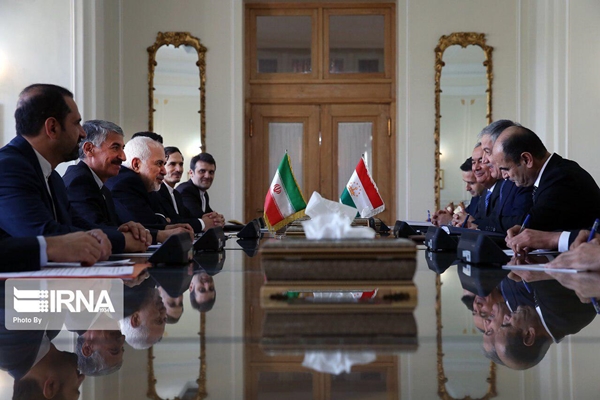
In their Saturday meeting in Tehran, Mukhriddin and Zarif touched upon the political and strategic significance of relations between the two friendly, brotherly, and neighbouring countries.

They also stressed the need to boost mutual cooperation in bilateral, regional and international domains.

High on the agenda of the talks were the enhancement of political, parliamentary and economic relations as well as cooperation between friendship groups of both countries.

The two top diplomats also conferred on promotion of cooperation in water, energy and transportation, holding political and consular consultations, expansion of bilateral and international cultural cooperation, especially within the UNESCO, and countering extremism and terrorism.

Iran was the first country to recognize Tajikistan’s independence in the early 1990s and acted as one of the mediators in talks to end its 1992-97 civil war.

However, ties between the two nations have been strained since a leader of a banned Tajik Islamist party, Islamic Renaissance Party, attended a conference in Tehran in 2015, which angered the government in Dushanbe.

The Emomali Rahmon administration accused the Islamic Renaissance Party of Tajikistan of being behind a failed coup attempt in September 2015 and later banned the party, jailing some of its leaders and activists.

In 2017, Tajikistan accused Iran of intervening in the 1990s Tajik civil war, sending assassins and saboteurs into the former Soviet republic, which worsened the situation in the country.

In a documentary broadcast by Tajikistan’s television in 2017, three Tajiks claimed that following training in Iran, they killed politicians and other prominent figures inside Tajikistan during the 1992-97 war and attacked a Russian military base there.

Tehran, however, denies the allegations.

The shuttering of several Iranian centres in the country at the request of Tajik authorities and their decision to slap travel and trade restrictions on citizens and goods from Iran in recent years contributed to the souring in relations.

Another irritant has been the fate of the assets of jailed Iranian billionaire Babak Zanjani, whose international business empire once included assets in Tajikistan.

Anti-Iran Terrorists Making Inroads into US Lobby Groups

Anti-Iran Terrorists Making Inroads into US Lobby Groups

The MKO terrorist organisation is a militant and political group that teaches suicide attacks, and in the past have committed self-immolation, and even held demonstrations in front of international bodies to disrupt Iran’s relations with other countries.

Now, such opportunities in the present situation in the region are used to create conflicts and unwanted battles between Iran, the United States and other countries of the region. They want to turn this into a battlefield to topple what they called the “Iranian regime” to secure their own interests.

Editor-in-chief of Etemad newspaper’s online website, Mojtaba Hosseini, has in a recent piece argued that the terrorist group, which Iran says has killed over 17,000 people so far, is using lobby groups inside the US administration to trigger a war against Iran.

Here is the full text of the article by Hosseini:

The conditions of the region and the constant developments, as well as the publication of controversial news by global sponsors has made the issue very complicated and strange. In order to understand what is going on in the wake of all these developments and conflicts, it is enough to evaluate and analyse the publication of the news by the media networks affiliated with world powers.

The New York Times’ news of deployment of 120,000 US troops to the region in May, which was widely covered by US, European, Arab, domestic and Persian-speaking media abroad, was among the news that were basically fake. However, this fake news was immediately published by Reuters, Voice of America and the French Radio to fan the flames of war against Iran.

The coverage of a fake news by the American, European, Arabic and Persian-language media continued until Donald Trump explicitly announced the news of the deployment of 120,000 US troops to the region was false.

The monitoring of such news and information in the current situation clearly shows that there are active elements with a specific strategy in these media who are after turning these domestic and foreign news agencies into their own news station.

The management of information and media alerts is carried out in an organised way by the United States, Israel and the neighbouring countries of the region against Iran.

This suggests that an intelligence unit opposed to regional security and the national interests of Iran and the United States, which considers itself to be a rival to the United States and the party which wants to overthrow the current ruling body of Iran, is carrying out destructive operations.

The actions of terrorist militants in sabotage operations against UAE ships and Katyusha attack near the US embassy in Baghdad were steps to wage a war between Iran, the United States and the countries of the region; a war to lead to downfall of the Islamic Republic.

The MKO terrorist organisation is the main culprit behind such actions. They are a militant and political group who teach suicide attacks, and in the past they have committed self-immolation, and even held demonstrations in front of international bodies to disrupt Iran’s relations with other countries.

At the moment, such events in the present situation in the region are used to create conflicts and unwanted battles between Iran, the United States and other countries of the region. They want to turn this region into a battlefield to topple the so-called “regime” of Iran to achieve their own interests.

If the Americans want to resolve their problems with Iran, first, it is better to resolve their problems with their international rivals without putting Iran in the middle of the story. Secondly, in order to better understand the conditions in Iran, it is necessary to close the file of such groups as the MKO. At the same time the Americans must look at them as a threat that challenge their security and intelligence.

The MKO’s sabotage, espionage, and intelligence services are not exclusive to Americans; they have done the same for states like France.

Accordingly, it’s enough for the Americans to read a little bit of history and recall how once they were the target of their number-one source of information:

  • Eavesdropping at US embassy
  • Assassination of US military personnel, such as Colonel Hawkins, Colonel Turner, Donald J. Smith, Robert R. Krongrad and William C.
  • Explosion of bombs at more than a dozen sites throughout Tehran, including the Iran-America Society, the offices of Pepsi Cola, General Motors, Pan-American Airlines, and Shell Oil Company
  • Attack on the US Embassy before the embassy takeover by revolutionary students
  • Cooperation with KGB in the case of Major General Moqqarebi

Of course, the anti-US measures of the organisation are not only these five cases. They even asked for the interrogation of US embassy personnel in 1979. However, their request was turned down by the Revolution Council. The organisation also called for extradition of the Shah, cutting off of relations with US imperialism, stopping the export of oil to the United States, and abolishing all political-economic and military agreements with the United States. It also disclosed the CIA and SAVAK spy networks in Iran, and stressed that outright anti-authoritarian and anti-imperialist policy must be mentioned in the constitution.

Americans should answer the following questions: why the MKO, which is currently playing the role of the intelligence agent of the B-Team, even after leaving Iran did not seek shelter in the US, and instead chose France as their command centre to launch campaign against the Islamic Republic?

Don’t the Americans know the MKO has initiated an uninterrupted communication with representatives of the socialist and communist parties of Europe, at the same time, to secure their political life to find a way to gain power in Iran through the world powers?

Have the US authorities forgotten that when the MKO returned to France, Masoud Rajavi and other leaders of the organisation did not withdraw from their anti-American positions and uttered swearwords against US Ambassador William Sullivan who condemned the assassination of Ayatollah Beheshti?

Have the Americans been able to understand the root cause of the total change of organisation’s approach towards Washington? Is it possible that the Americans have not understood the reality of the war between Iran and Iraq and the loss of the organisation’s assassination machine in the Mersad Operation was the main reason for Masoud Rajavi change of mind and the MKO’s anti-imperialist and anti-American slogans?

If the Americans read a little bit about Iran’s recent history, it will be well known that the MKO, based on its mission in Europe, apparently put aside its leftist approach and became a friend of the United States. The organisation’s strategy with this goal was launched and the new values of the organisation were announced by its leadership: “We as a revolutionary force benefited from the conflict between imperialism and the reactionary (Islamic Republic) to achieve power!”

The funny point was that the leadership of the organisation had already said to its members and sympathisers that the Islamic Republic should be destroyed to eliminate imperialism. But then argued that to destroy the Iranian ‘regime’ they must get help from imperialism!

Although the Americans did not immediately accept the organisation’s change of approach, but eventually some Republican senators, who had good connections with the French Social Democrats, propagated this argument that “the enemy of my enemy is my friend,” and therefore the MKO, which was on the list of US terrorist groups, was supported and used by Americans as one of its service providers. The presence of figures such as John Bolton and Rudy Giuliani at the annual MKO conferences was in line with such a policy.

The MKO, by paying money to people like Bolton and Giuliani, is making inroads in the US Congress and State Department, spreading Iranophobia by fabricating news. They are also trying to impose themselves on Americans as a powerful, efficient organisation and an alternative to the Islamic Republic.

Undoubtedly, the ruling administration of the United States, especially the White House, is subject to great deception. This great deception can be seen from the very moment that the organisation and Maryam Rajavi condemned Trump’s decision to relocate the US embassy to Jerusalem. The organisation’s opposition to Trump’s decision was in line with France’s interests, and perhaps this behaviour implies that the MKO still gets its main services from countries such as France, which, for historical reasons, still defines Palestine in its sphere of influence.

If Trump pays attention to the statements of Iran’s Leader on July 30, 2018, in which he named France and Britain as the parties receiving the organisation’s services, he will understand that the MKO terrorist organisation has provided more services for the US international rivals including French and European socialists rather than the US itself.

This may be enough to let Trump know that his foreign policy body with people like John Bolton is playing in MKO’s court.

Iranian Artworks Warmly Received at French Biennial of Fine Craft

“This was the first time Iranian artists were participating in the important Fine Craft exhibition, and this is very significant in the current state of the Islamic Republic in the face of unfair sanctions,” says Pouya Mahmoudian, the deputy head of Iran’s Cultural Heritage, Handicraft and Tourism Organisation.

“We strived to show Iran’s outstanding artistic power and beauty at this exhibition. We also held meetings with the Iranian Ambassador to France to highlight the importance of the presence of Iranian artists in this artistic event,” she noted.

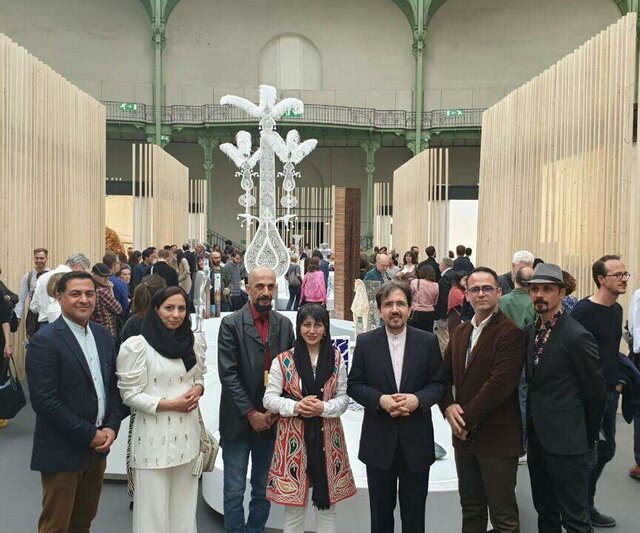
“In this exhibition, which was opened on May 22 and wrapped up earlier this week, in the presence of ambassador of the Islamic Republic of Iran to France Bahram Qassemi and Iranian cultural attaché in Paris, part of Iran’s artistic power and beauty has been featured.”

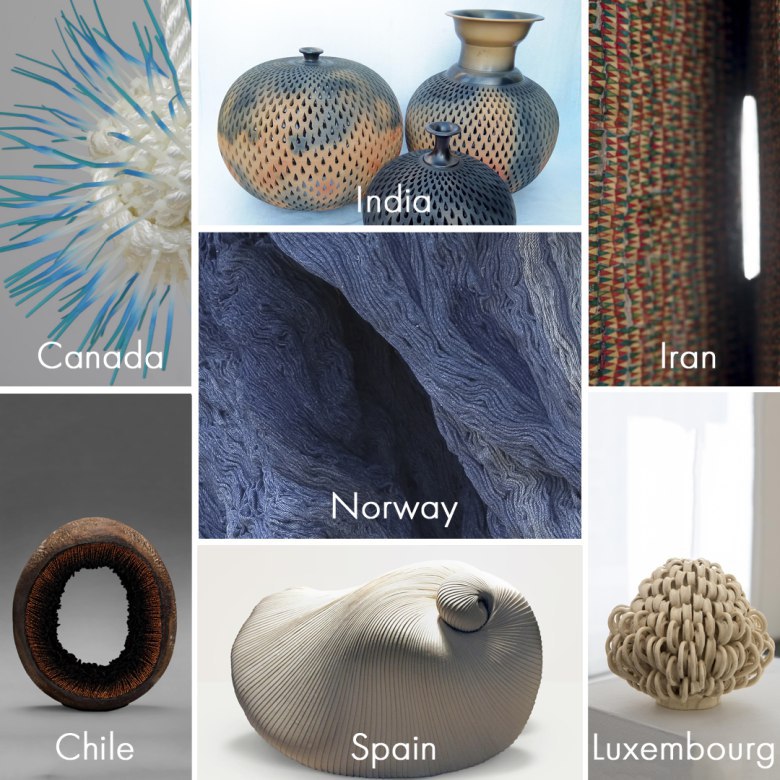
Reports say Iranian works have been warmly welcomed at the exhibition, and the organisers of this cultural event have also welcomed the presence of Iranian artists.

Iranian Artworks Warmly Received at French Biennial of Fine CraftMehdi Shirahmadi, Nima Nasiri, Mohammad Bahabadi, Mohammad Reza Khalaji, Nafiseh Khalaj, Kourosh Arish, Behzad Azhdari, Mohammad Ali Sajadi, Mohsen Tohidi and Hirbod Hemmat Azad took part at the Fine Craft Festival of France.

Mehdi Shirahmadi, Mohammad Behabadi and Mohammad Reza Khalaji are sculptors, Nima Nasiri is an enamel painter artist, and the rest of them are ceramic artists.

According to Mahmoudian, many of the fans and visitors have paid great attention to the Iranian artworks for their originality and creativity.

The Fine Craft exhibition was held in Champs-Élysées Avenue in Paris.

Iran’s Ambassador, who had a two-hour visit to this exhibition, in an interview with the artists and officials of the Iranian pavilion, praised their works, saying that the exquisite art used in these works, inspired by craftsmanship, has made it possible to display the magnificence of this new and influential art to the audience.

Iranian Artworks Warmly Received at French Biennial of Fine Craft

1st Iranian Woman Doing Horseback Combat Sports Wins Int’l Titles

Combat sports done on horseback include sports in which the horse rider should be skillful enough to be able to not only ride horses, but perform combat sports with the bow and arrow, spear and sword.

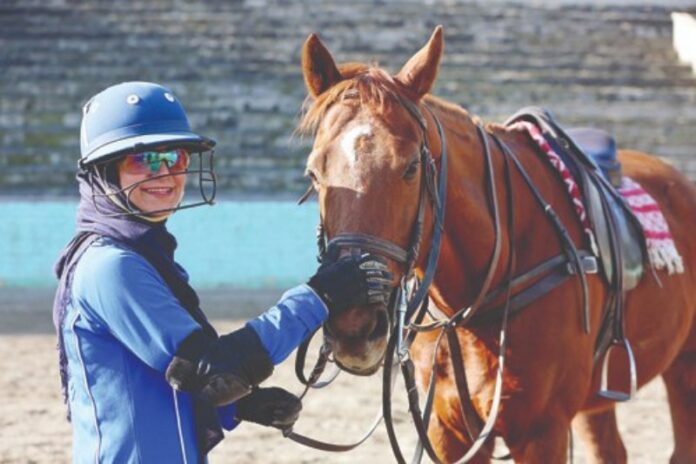
Sadeqi has been riding horses since childhood, but has been doing this sport professionally for 19 years now. She started sports with swimming at the age of 13. Later on, she tried different sports.

Finally, she chose horseback combat sports as her specialized sport.

She was offered to take up “shooting with air gun” as her sport, but she went to an equestrian club after a while.

“They told me you can win titles in this sport if you are brave. It was then when I began working with the bow and arrow as well,” she says.

She learned how to shoot with the bow and arrow very soon. She was good at horseback riding , too.

So, she soon managed to use both skills together and was able to shoot while on horseback.

In 2007, she took up combat sports on horseback professionally. Saeedeh says in this field, participants hold the bow the way Robin Hood would hold it. The traditional bow and arrow are used in two ways: on horseback and in open fields where shooters would hit targets at distances of 60, 100, 500 and 600 metres. Saeedeh became a member of the national team in this field. The national team included six men and one woman.

That woman was Saeedeh.

Saeedeh says she always longed to compete with an American woman who was very strong, and it happened in South Korea.

“I finished second in those competitions, and that American woman came in third. She would say from the beginning that Iranians are dangerous.

She said Iranians either won’t attend the contest, or if they do they definitely win a title,” she says.

Many people around the world, including the Americans, believe Iranians are skillful horse riders. They believe Iranians are good at horse riding as they have a long history of this activity.

And that is why Saeedeh managed to become world champion in 2011.

“So far, I’ve been the first Iranian woman to have won an international title in this sport,” she says.

2014 Contests in South Korea with Pregnant Horse
However, she failed to win any title in the 2014 South Korea competitions only because her horse was pregnant. Horses are generally given to contenders by the draw. She was unlucky to get that horse.

“Under the law, I was not allowed to beat a pregnant horse in order to make it go faster. Even if there were such a law, I myself wouldn’t have done that,” she says.

“Moreover, a pregnant horse is very careful, so that she wouldn’t hit anywhere. Therefore, she moved very slowly and carefully. That’s why I couldn’t win any titles in those contests,” said Saeedeh.

The International Martial Arts Federation is located in South Korea. Unlike other disciplines in which athletes have to wear special clothes, in this field, participants must wear traditional clothes in international contests in order to present a picture of their historical background and culture to other countries.

In South Korea, countries are required to attend a seminar annually and introduce themselves in ten minutes and explain to the audience about the background of his sport in their countries.

In 2014, it was Iran’s turn to introduce itself, and this responsibility was put on Saeedeh’s shoulders.

She says she is not bad at English. She says she was easily able to prove to everybody that these sports have their roots in Iran.

“It was not a difficult job at all. Looks like everybody knew and admitted that Iran is the cradle of sports such as archery on horseback, spear and sword on horseback, and polo,” she says.

Horse Riding Cure for Depression
She says she loves horses.

“In modern psychology, they use horse riding in many parts of the world to cure depression,” she says.

Horses are very similar to humans.

“There are stubborn horses which won’t change their mind. If they want to give you a hard time, you won’t be able to get a ride on them! Proud, kind or hasty horses jump up and go once you get on them. Like humans, horses feel good one day, and bad another day,” she says.

“Female horses are more cautious and obstinate; male ones are careless and not cautious. They have a community and they would like to live in groups like humans,” she says.

“It is interesting to know that horses communicate with women better. Looks like they can establish emotional bonds with women and understand them more easily,” says Saeedeh.

Valak Polo; A Native Dish of Tehran

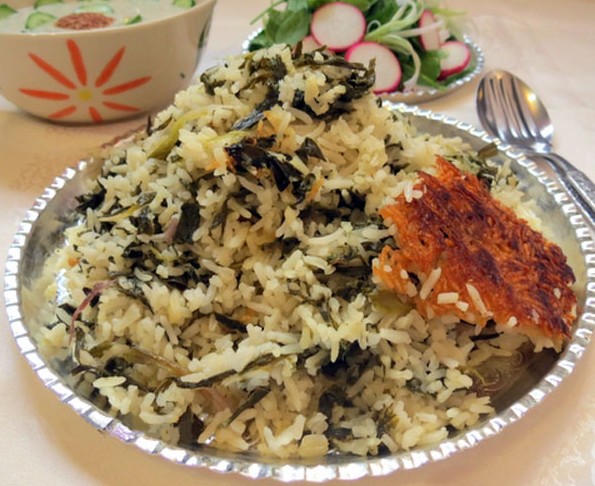
valak polo Recipe
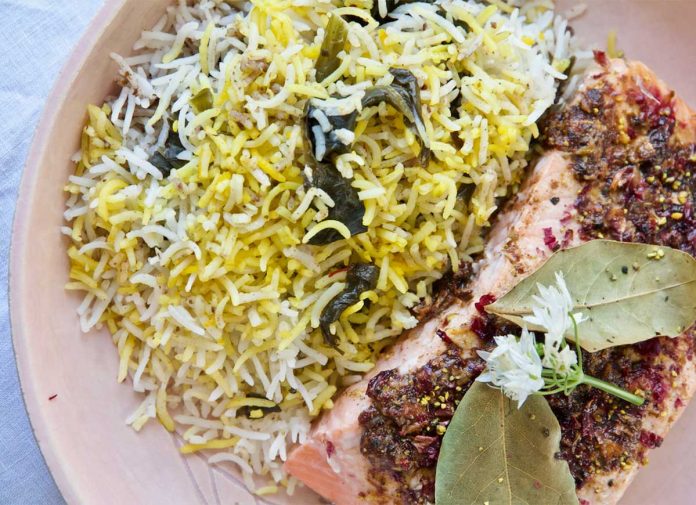
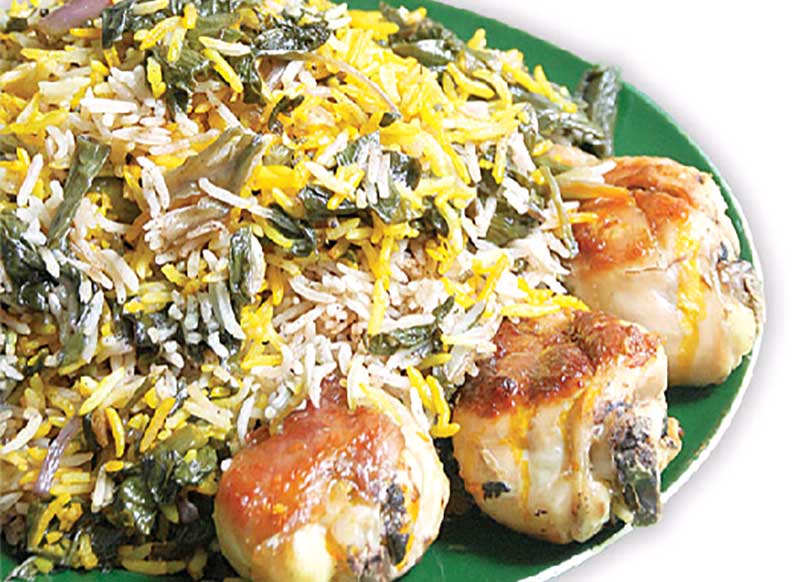
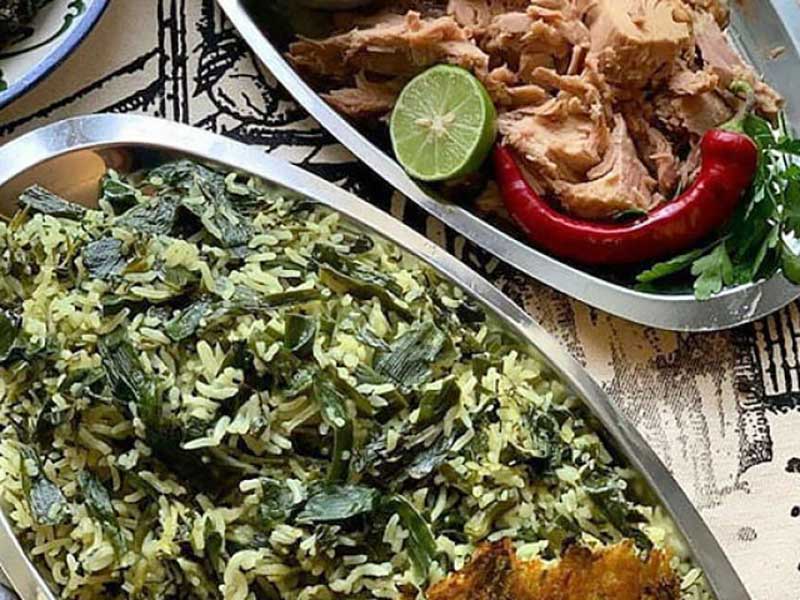
Valak Polo with Fish

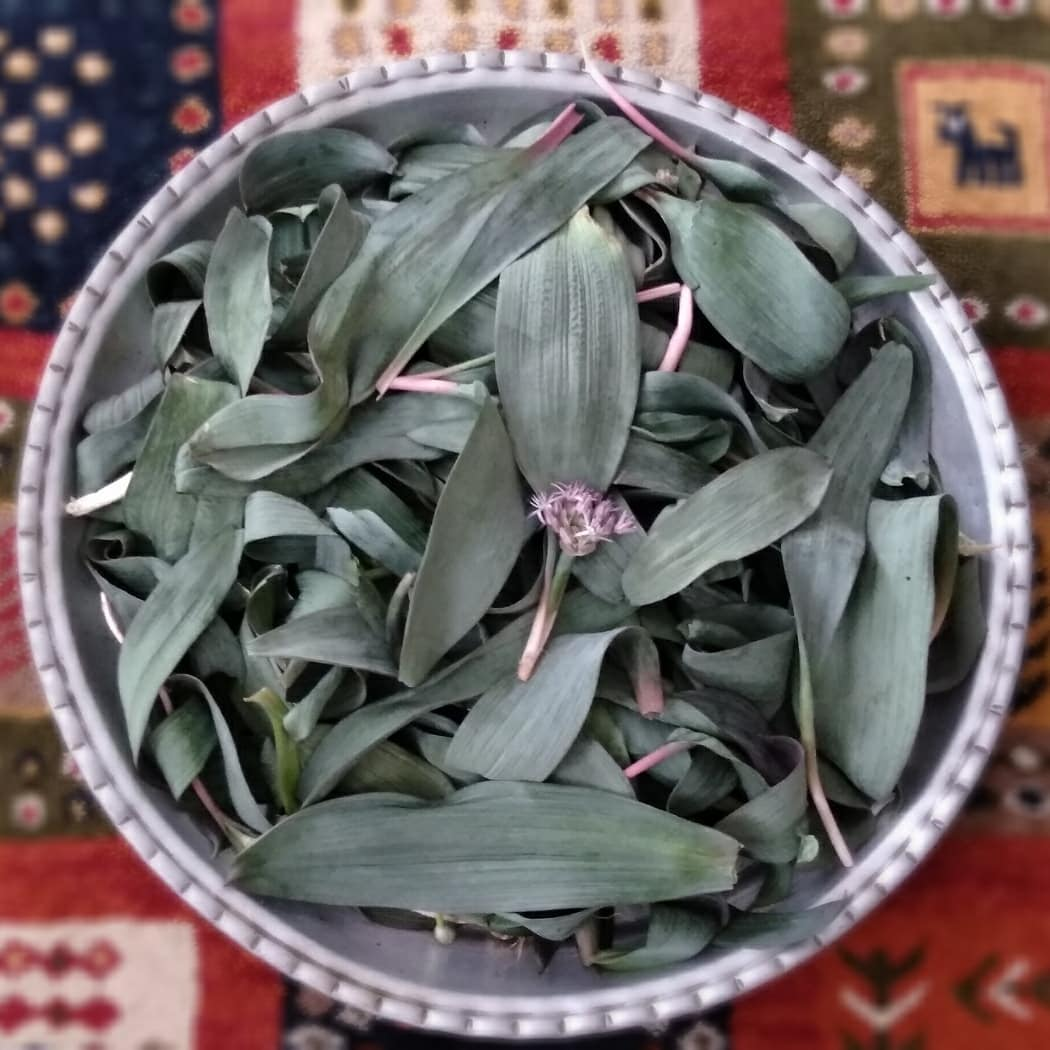
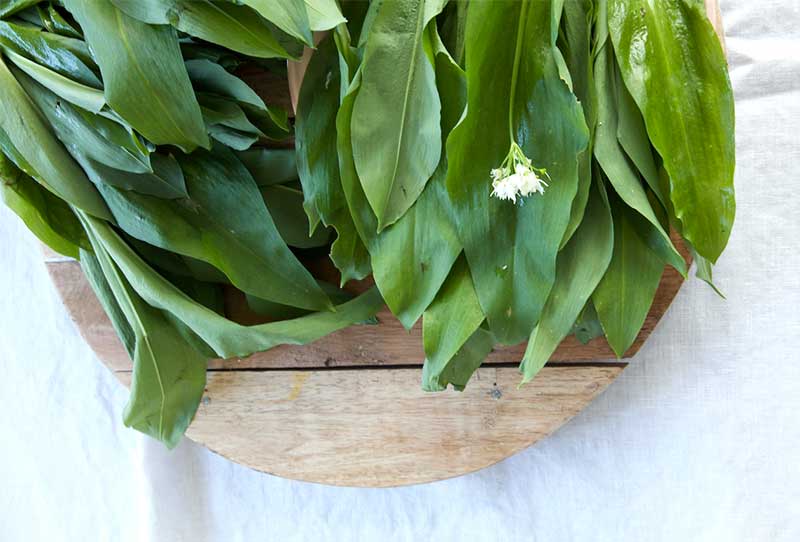
Valak or wild garlic is a wild relative of onion, native to Europe and Asia, where it grows in moist woodlands. People of Tehran use the herb to make a delicious food known as Valak polo.

It it is sweeter than the typical garlic, and has a lot of medical use.

In the ancient Tehran (Britannica), this plant was collected in spring in the Shemiranat region in the north of the current capital to prepare Polo and other dishes.

valak polo recipe

Valak is very useful for blood purification and helps remove digestive problems. It is also helpful in lowering blood pressure and relieving arteriosclerosis.

Consuming the plant reduces blood sugar and prevents hypertension in people with diabetes.

It can be taken with beef, Fish or chicken meat.

Ingredients for Valak Polo

  • Rice: Four Cups or 500 gr
  • Valak: 500 gr
  • Oil: 100 gr
  • Salt, Sumac, Saffron: As much as needed

valak polo ingredients

Valak Polo Recipe

Soak the rice with salt. Wash Valaks after cleaning and pour them into a sift to remove excess water.

As Mountain Valaks have short leaves, you can use them without chopping. Otherwise you can chop them into large pieces.

how to cook valak polo

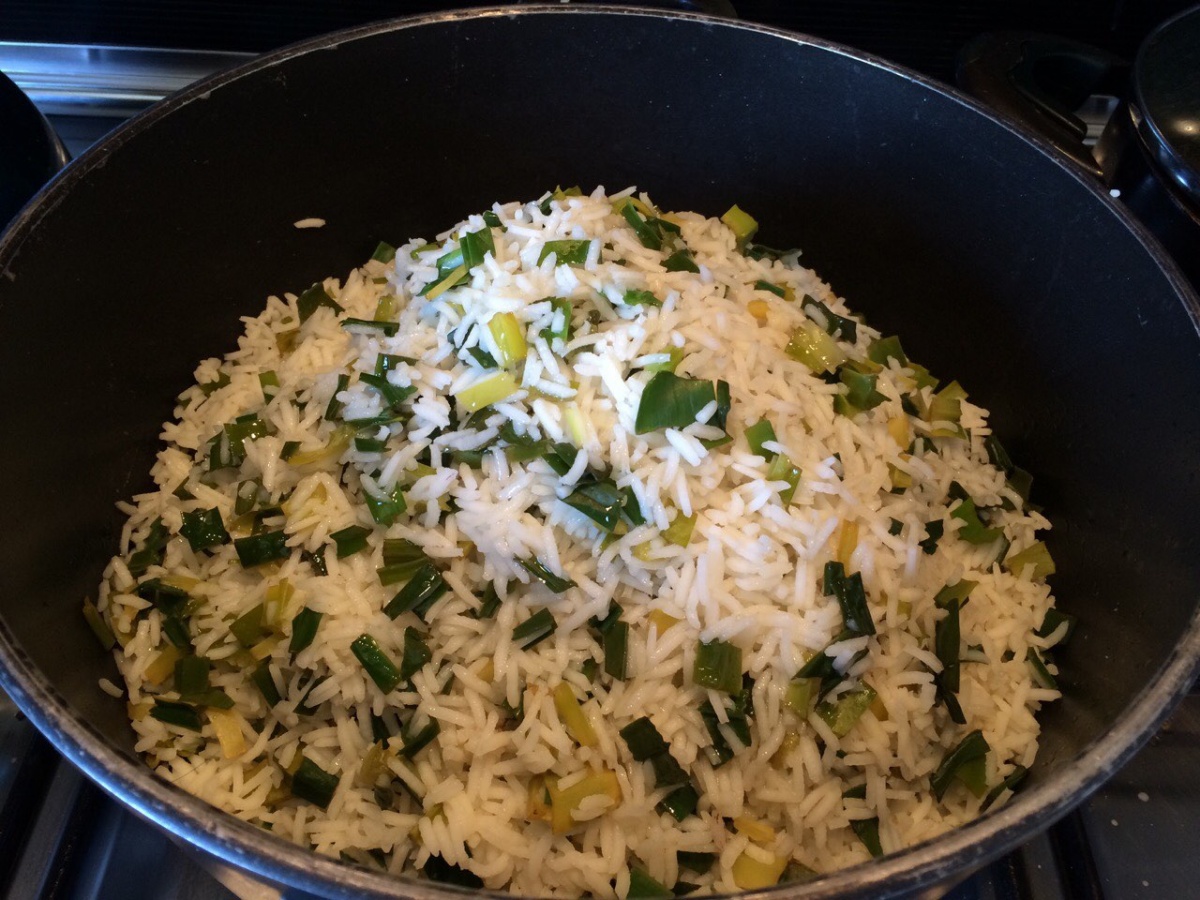
Then, prepare a container and fill half of it with water and place it on the heat. When the water boils, pour the drained rice into the water. When the rice is medium-cooked, add Valaks and let it cook more. Valak is a very delicate vegetable, and if you cook it longer, its leaves may crush.

So 2 to 3 minutes is enough. Now, rinse the rice and Valak, and add some water and oil to it and let it brew.

Some people in the past used to brew Valak Polo with Sumac and saffron. They would add Sumac and saffron at the time of transferring the mixture to the pot. It gave the Polo a good smell.

valak polo with chicken

Additional points for Valak Polo

1. If you want the rice to have a better fragrance, you can add some fresh garlic. You can also serve the food along with lamb gigot.

2. There is also another recipe for this delicious rice. You can add the valaks (ramsons) at the same time as the rice to the pot so they will be cooked together at the same time.

3. In the second recipe, you can fry the ramsons in oil instead of boiling them. Add the rice to the pot when it is dried.

Read more: Dishes Served in Iran during Nowruz: Sabzi Polo Ba Mahi

valak polo with fish

4. You need less water to cook the rice than normal because the ramsons produce some water themselves.

5. Be careful that ramsons rot quickly after being washed. You need to wash them at the time when you want to start cooking. Too much washing also makes the ramsons shrunken and withered. Do not soak them in water for long.

Valak Polo; A Native Dish of Tehran


Frequently asked questions:

What spice suits this food best?

You can add some sumac for a better taste.

What should we do if there is no fresh ramsons available?

If you want to have the lovely food throughout the year, you can dry ramsons away from sunlight. You can also freeze ramsons.

Iraq Opposes Arab Summit’s Anti-Iran Statement

A statement by the (Persian) Gulf Cooperation Council and the communiqué issued after a wider summit both underlined the rights of Saudi Arabia and the United Arab Emirates (UAE) to defend themselves against Tehran.

The statements mainly cited concerns about the recent sabotage attacks against several ships off the UAE.

Both Saudi and Emirati officials have blamed the mysterious “sabotage” attacks on Iran while Iran denies any involvement.

“The absence of a firm deterrent stance against Iranian behavior is what led to the escalation we see today,” King Salman told the two consecutive meetings late on Thursday night.

He also pointed to Iran’s ballistic missile and nuclear programs as sources of concern, and expressed concern about what he described as Iran’s threats to cripple global oil supplies by closing down the Strait of Hormuz in case the US seeks to zero out the Islamic Republic’s oil exports.

Iraq, however, which maintains close ties with neighboring Iran and has strong ties with Washington as well, objected to the communiqué, which required “non-interference in other countries” as a pre-condition for cooperation with Tehran.

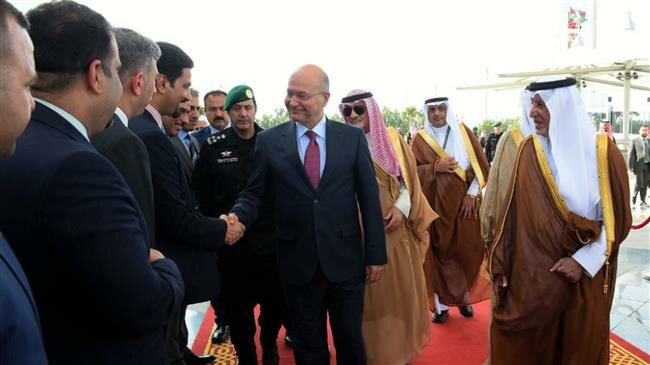
Iraqi President Barham Salih asked the gathering to support his country’s stability, arguing that rising tensions with Iran could cause war. He voiced hope that Iran’s security would not be targeted.

“We are watching before our eyes the escalation of a regional and international crisis which can turn into war that will engulf all. If the crisis is not managed well, then we will be faced with the danger of a regional and international confrontation which will bring tragedy to our countries,” Salih said.

“The Islamic Republic of Iran is a Muslim country that is a neighbor to Iraq and Arabs. It is certain that we do not wish the security of Iran to be targeted. We share a common border that is 1,400 km long and a long history and relations, and it is also certain that the security of a fellow Islamic country is in the interest of Arab and Islamic countries. The region needs stability based on a mechanism of joint security that guarantees non-interference in internal affairs and the rejection of violence and extremism,” he added.

The Mecca communiqué also said the Riyadh regime had all the rights to defend itself against retaliatory drone strikes by Yemen’s Houthi Ansarullah fighters, after a number of drones flew hundreds of kilometers into Saudi Arabia and targeted two of the kingdom’s oil pumping stations earlier this month.

The oil-rich kingdom also accused Tehran of ordering the drone strikes against its oil facilities.

Iran has vehemently denied both charges.

Trump’s Peace Plan to Turn into ‘Bankruptcy of Century’: Iran

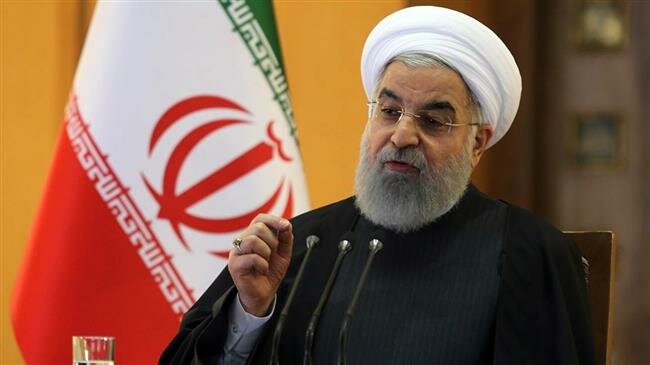
Hassan Rouhani - President of the Islamic Republic of Iran

“At a time when the Muslim world needs maximum solidarity, convergence and cooperation in the face of a common enemy, we are unfortunately witnessing some divisive measures aimed at diverting the Muslim world’s public opinion from the Palestinian issue as the main issue of the Muslim world,” Rouhani said in a Friday message to Muslim leaders attending an emergency summit in Islam’s holiest city of Mecca, Saudi Arabia.

He criticized Muslim states for refusing to show “an appropriate reaction” and remaining indifferent to the so-called “the deal of the century”, saying the “ominous plot” seeks to destroy the Palestinian cause and promote occupation and aggression against all Muslim countries.

“This plan has dangerous regional aspects and its owners are trying to destroy the absolute right of the Palestinian people to determine their own fate and establish a sustainable independent government in their own historic land with East Jerusalem al-Quds as its capital,” Rouhani said.

The Iranian president added that the US’ recognition of Jerusalem al-Quds as Israel’s capital and the relocationof Washington’s embassy from Tel Aviv to the holy city, as well as declaring Israeli sovereignty over Syria’s Golan Heights show Washington’s “overt hostility not only against the Palestinians but against the entire Muslim world.

Such measures are in blatant violation of principles of international law and all resolutions and decisions of the Organization of Islamic Cooperation (OIC) and the beginning of a dangerous trend against Muslim nations, Rouhani pointed out.

He said Muslim countries should end their disputes and use the Mecca summit to counter “the dangerous conspiracy of deal of the century” and defend Palestine.

Expressing Iran’s readiness to cooperate with Muslim countries to introduce an urgent plan to counter the “big threat against the Muslim world”, Rouhani called on all OIC member states to use the opportunity of the Mecca summit to counter the “dangerous conspiracy of ‘the deal of the century’ and defend Palestine.”

Back in July, Leader of the Islamic Revolution Ayatollah Seyyed Ali Khamenei called US President Donald Trump’s plan for the Palestinian territories a “satanic” scheme, saying it is a non-starter.

“The Americans have named their satanic policy on Palestine ‘the deal of the century’ but they should know that, by divine grace, this ‘deal of the century’ will never materialize. To the dismay of the enemies, the Palestinian issue will not be forgotten and al-Quds will remain the Palestinian capital,” Ayatollah Khamenei told a group of officials in charge of the annual Hajj pilgrimage.

He added that the US-devised plan also intends to prepare the ground for the Zionists’ dominance over the Muslim and Arab worlds while paying the price of its implementation from the pocket of regional and Muslim states.

FM Zarif Says Al-Quds Not for Sale

Zarif made the remarks in a tweet he posted in Arabic on Friday.

“Unfortunately, a few Arab rulers believe that if they follow [Israeli Prime Minister Benjamin] Netanyahu, they’ll be able to achieve their illusions,” he said.

“But Netanyahu has failed to protect Israel, despite his Iron Dome, so how can he protect THEM?” Zarif asked.

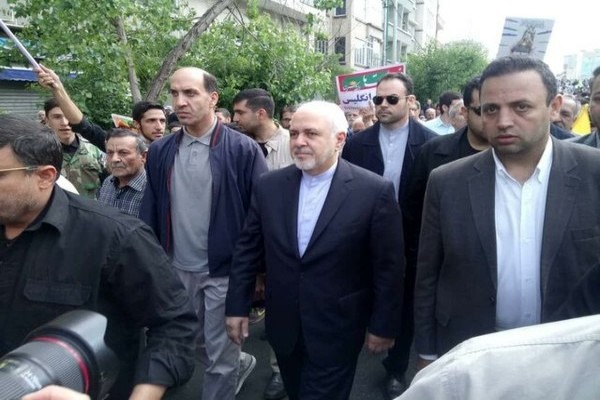
Earlier in the day, Zarif attended massive rallies held across Iran and in other parts of the world to mark the International Quds Day.

Speaking to reporters on the sidelines of the rallies, Zarif said the Holy Quds belongs to Muslims and the Palestinian nation, and “no one has the right to cede the Qibla of Muslims to Americans and the Zionist regime of Israel or make any other move that would damage the Palestinian nation’s cause.”

Zarif said the message of the rallies is that al-Quds is not for sale.

“Al-Quds is not for the US to be gifted to Israel, and Tel Aviv cannot have any claim over the city, either,” he added.

“Today Muslim people in all parts of the world have gathered to mark the Quds Day. No one is allowed to sell al-Quds on behalf of Muslims,” Zarif said.

“Those seeking the ‘deal of the century’ will end up achieving the ‘bankruptcy of the century’ and their plot is doomed to failure,” he added.

Zarif was referring to a so-called peace plan by US President Donald Trump, known as the “Deal of the Century”, which is to be revealed at an undetermined date sometime after the Israeli parliamentary elections.

Since Trump took office a trio composed of his son-in-law Jared Kushner, Jason Greenblatt, long-time confidant and chief legal officer to Trump’s business empire, and US Ambassador to Israel David Fried-man have been working on such a plan.

Kushner and Greenblatt on Thursday met Israeli Prime Minister Benjamin Netanyahu in Jerusalem al-Quds “to drum up support for an economic conference in Bahrain next month,” Reuters reported.

The Trump administration seeks to use the Bahrain meeting to unveil the “economic stage” of his so-called Deal of the Century.

The United States has kept the plan under wraps.

Leaked information, however, indicate that it features serious violations of the Palestinian’s age-old demands.

Maranjab Desert Receives Phone Coverage: Good News for Tourists

Phone Coverage in Maranjab Desert

In an Instagram post, Iran’s ICT Minister, Mohammad Javad Azari Jahromi, said upon a recent request by people from the city of Kashan in Isfahan province, the ICT ministry has provided cell phone coverage in Maranjab Desert to protect the lives of tourists visiting the desert against possible dangers.  

He then invited all Iranians and foreign tourists to pay a visit to the desert; which is one of the most beautiful tourist attractions of the country.

“Unfortunately, we hear every now and then that some tourist groups disappear in the area. Sometimes ago, a large number of people from Kashan called on the ICT Ministry to provide cell phone services in the desert to safeguard the lives of the tourists against natural dangers,” he said.

No Trace Yet of Missing French Tourist in Iran

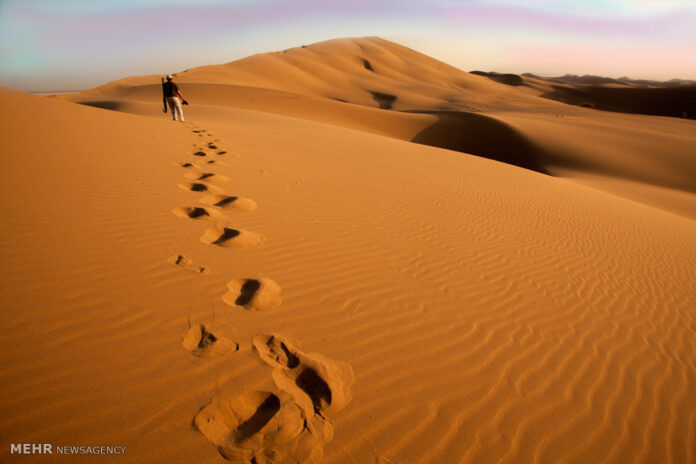
Maranjab Desert is located near the city of Aran and Bidgol in Isfahan province.

Maranjab is one of the most beautiful desert areas of Iran thanks to its long sandy hills and forests.