Thursday, April 23, 2026
Home Blog Page 3206

Iran Exporting 2.5m Worth of Goods to Iraq Every Day

Iran Welcomes Appointment of New Iraqi Prime Minister

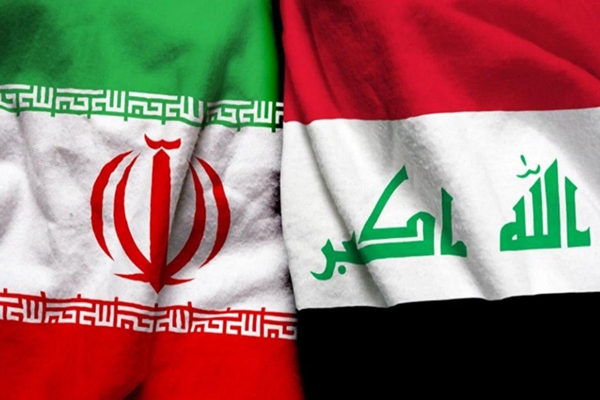
In an address to a huge gathering attended by Iranian and Iraqi economic players in Tehran, the secretary general of Iran-Iraq joint chamber of commerce said Iran has exported goods worth of $2.5 billion to Iraq over the past hundred days which shows a 20 percent growth compared with that of a similar period last year.

Hamid Hosseini referred to the growing volume of trade between Iran and Iraq and said this means Iran has exported $2.5m worth of goods to Iraq on a daily basis.

“Expansion of mutual ties between Iran and Iraq in industry and services areas is at the top of the Joint Chamber of Commerce priorities,” he said.

He went on to say that the Chamber is also preparing the ground for import of Iran’s needed goods from Iraq through establishing closer cooperation with Iran’s Central Bank.

Hosseini then referred to the $200 million credit channel for Iranian contractors in Iraq and said the Chamber expects the Iraqi government to fulfill its financial pledges to Iranian contractors so that the credit channel could remain open.

The official underlined that efforts are underway to prepare the ground for establishing two industrial towns in Arvand and Parvizkhan regions of Iran near the Iraqi border.

He then called on Iraq’s ambassador to Iran to facilitate issuing of long-term visas for Iranian tradesmen as soon as possible.

Iran Says US Can Join JCPOA Talks If It Lifts Sanctions

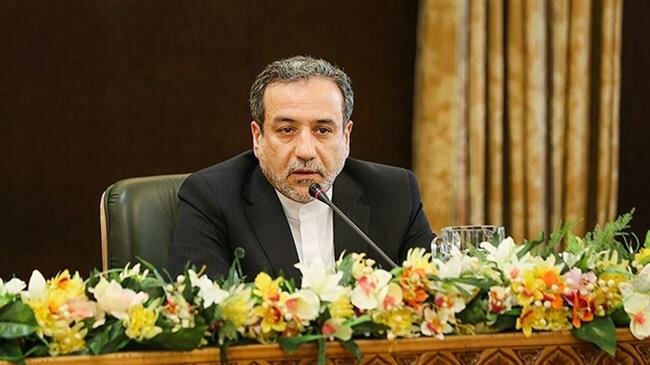
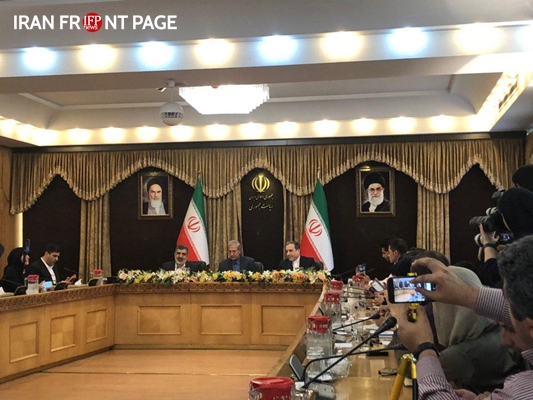
Iran’s Deputy Foreign Minister for Political Affairs Abbas Araqchi made the remark during a press conference about the deal in Tehran on Sunday.

Along with two other senior officials, Araqchi detailed Iran’s latest move in scaling back its commitments under the deal, officially known as the Joint Comprehensive Plan of Action (JCPOA), after the European signatories missed a 60-day deadline to offset the adverse impacts of the unilateral US pullout.

“The US has withdrawn from the JCPOA and cannot use any of its mechanisms, but it can attend the P4+1 meetings on the said conditions. Our first condition [for the US] is [the lifting of] oil and banking sanctions. Other sanctions would be considered as well,” Araqchi, who was a senior negotiator in the talks that led to the JCPOA, said in his Sunday remarks.

He stressed, however, that the deal would under no circumstances be renegotiated and that it should be implemented precisely as it is.

The Iran deal took some 22 months to negotiate. Iran, the US — under the then-administration of US president Barack Obama — France, China, Russia, Germany, and the United Kingdom were the original parties to the deal. Iran’s partners were collectively known as the P5+1 until US President Donald Trump unilaterally withdrew America in May 2018.

All of Iran’s other partners have stayed in the agreement and are now referred to as the P4+1. They have been regularly holding meetings with Tehran to discuss the implementation of the international pact.

Despite his withdrawal and subsequent bellicose posturing toward Iran, Trump has also said he is ready to negotiate with the Islamic Republic without preconditions.

Araqchi said there would be diplomatic visits in the coming days, including in the form of a JCPOA ministerial meeting.

“We do not want trips that serve as political shows; we want ones that get things done toward rectifying the present situation regarding the JCPOA,” he said.

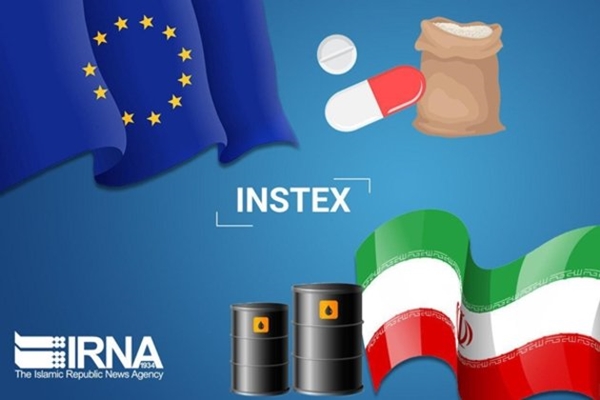
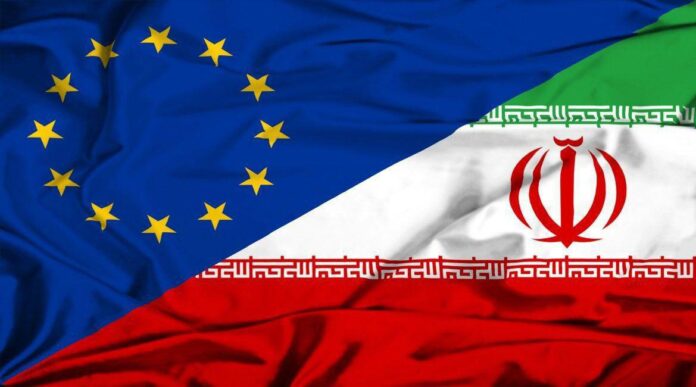
Iran Says Not Pinned Any Hope on Europe’s INSTEX

Instex

Seyyed Abbas Araqchi told a press conference on Sunday that Iranian firms and bodies must not wait for INSTEX to work and they’d better move based on resistance economy.

He further noted that the Islamic Republic has pinned no hope and reliance on any special country, but it will use every opportunity and capacity in the present situation.

“In this economic warfare launched by Donald Trump, we will try every path and our main channels are China, Russia, Turkey, India, and neighbours.”

Araqchi said Iran has new economic interactions and plenty of initiatives with all of them. “One of these routes is Europe and one of them is INSTEX.”

“We have worked very well in foreign policy and we have good partners. So many good things have been carried out in the neighbourhood, and we would not let the United States reach its goals. We will certainly make the US disappointed, and this time they will be disappointed through our economic and defence capabilities and Washington will have to back off at the end,” concluded Araqchi.

Oil Tanker Seized by UK Not Bound for Syria: Iran

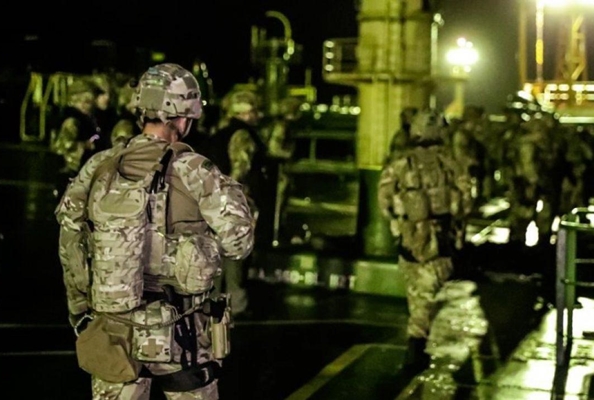
A detachment of 30 UK marines boarding the Iranian super tanker Grace 1 in the early hours after its seizure on July 4, 2019. / Photo by UK Ministry of Defence

“The oil tanker (seized in Gibraltar) was not bound for Syria. The Syrian port they mention basically is not suitable for such type of tanker to dock,” Iranian Deputy Foreign Minister Seyyed Abbas Araqchi said Sunday.

“The oil tanker carrying Iran’s oil was a supertanker with 2 million barrels of oil, and with such a huge capacity it could not cross the Suez Canal,” Araqchi added, speaking to reporters in a press conference.

“No law allows the UK government to do such a thing,” Araqchi said, protesting the UK Navy for seizing the oil tanker.

He said the country will legally pursue the issue and test any path in order to secure its interests, but it is hopeful that the problem is resolved through diplomatic channels.

Iranian supertanker Grace 1 was boarded and impounded by Gibraltar police and customs agencies, aided by a detachment of British Royal Marines, on Thursday at the US request in the Strait of Gibraltar.

Later in the day, Iran’s Foreign Ministry summoned Britain’s ambassador to the country to express its strong protest at the move.

Naqavi Hosseini, a spokesman for the Iranian Parliament’s National Security and Foreign Policy Commission, said on Saturday that the UK’s move was a “crime against humanity” and an encroachment into the Iranian nation’s assets.

“It is the right of our diplomatic apparatus to take necessary measures at international bodies in reaction to the UK move,” he noted.

“While the UK government has failed to implement its commitments under the Iran nuclear deal, it looks for legal excuses to seize a vessel” belonging to Iran, he added.

Iran Officially Starts Enriching Uranium beyond 3.67% Level

The decision was announced by Iranian Government Spokesman Ali Rabiei in a press conference also attended by Deputy Foreign Minister for Political Affairs Seyyed Abbas Araqchi and the spokesman for the Atomic Energy Organization of Iran (AEOI) Behrouz Kamalvandi.

“Today we will surpass the 3.67% limit on uranium enrichment. The purity level will be based on our need, and that will be officially realized today,” Rabiei said.

Araqchi said the second phase begins as the 60-day deadline Iran had given the other JCPOA parties is over without Iran’s demands being fulfilled.

“As we announced in the first phase, we will longer remain committed to the uranium enrichment level, and this will be announced to EU Foreign Policy Chief Federica Mogherini in a letter by Foreign Minister Mohammad Javad Zarif today,” Araqchi said.

Kamalvandi also noted that the country needs enriched uranium for its power plants, research, and propulsion, which need various levels of enrichment.

“What we’re doing today is meant to provide the enrichment level we need for the fuel of our power plants, and the level of enrichment can go up based on the orders we get,” he noted.

“The amount of our enriched uranium stockpiles is also increasing and the pace of increase is growing,” he added.

He also noted that the country “does not need the fuel of Tehran research reactor for now, but it can go to that point whenever it wants.

Iran’s announcement came after its 60-day deadline to Europe to compensate for the US’ withdrawal from the accord came to an end. Tehran says the decision has been enshrined in the nuclear deal and is in accordance with articles 26 and 36 of the nuclear deal.

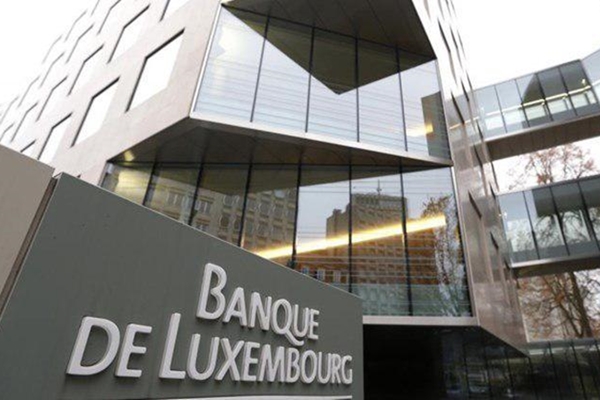
Tehran- Luxembourg Deal Prevents US from Seizing Iran Assets

When the agreement was being concluded, perhaps few people would have imagined that the deal might have any benefits for Iran, especially when the agreement was signed with a country that had no privileges in any major industry and as the situation remains unclear amid Iran sanctions.

Still, in spite of the fact that maybe no joint venture will take place within the framework of this agreement, lawyer and trade rights instructor Farshid Farahnakian has spotted a fine advantage in the provisions of the deal with regards to legal cases on Iran as well as US sanctions on the Islamic Republic.

In fact, this agreement has set the stage for dealing with the seizure of Iranian assets based on US court verdicts.

The full text of Farahnakian’s article on the deal follows, as reported by Fars News Agency:

In April 2019, a court in Luxembourg dismissed as contrary to international regulations efforts by US courts to seize 1.68 billion dollars in Iranian assets in Luxembourg as damages for the so-called “victims of Iran’s terrorism.”

The US Senate adopted a motion on June, 26 2019 demanding Iran’s assets in Luxembourg be paid as compensation to the victims of 1983 bombing at the US Marines base in Beirut.

The current article argues that the Law on Mutual Encouragement and Support for Investment by the Islamic Republic of Iran and the Grand Duke of Luxembourg approved on May 14, 2019 could, in a preemptive move, affect the enforcement of the motion at the Luxembourg court even if it becomes law.

  1. Background

The background of the documents pertaining to the subject of the case is related to part of some 3.6 billion dollars in assets bought by the Central Bank of Iran (mainly from 1999 to 2007). At that time, there was no problems purchasing them due to a lack of the “U-Turn” sanction. The U-Turn sanction began to impact Iranian banks in 2006 and enveloped all Iranian banks in 2008, which halted banking transactions.

US Federal Judge George Benjamin Daniels sentenced Iran to paying $2 billion in damages to victims of the September 11 attacks in the US and $5 billion in fines. The plaintiffs were seeking to seize the documents to use them as ammunition to push the case. Meanwhile, a lawsuit was filed in a US court with regards to the above-mentioned assets. The court of first instance upheld the plaintiffs’ request with regards to papers which were of US origin, and ordered for the documents to be seized. However, the court said it was not eligible to look into the plaintiffs’ request with regards to papers with European origin with identification numbers beginning with the prefix “XS.” The court rejected their request based on existing evidence, namely the fact that the mentioned assets were not held inside the United States.

In 2016, Iran filed a lawsuit with the International Court of Justice in protest at the US government’s illegal and illegitimate move. Iran’s petition concerns some $2 billion in assets beginning with the prefix “US” as well as other assets which are under threat, one way or another, by the US government in defiance of international regulations. The International Court of Justice was asked to announce that US actions ran counter to international law and that the US government was obliged to stop those actions and compensate for the harm and damage inflicted as a result of its past illegal moves.

After the failure of the American plaintiffs in the US court with regards to the seizure of $1.6 billion in assets with the prefix “XS,” another group of plaintiffs in the so-called “terrorist cases” filed another lawsuit at a Luxembourg court with regards to those assets. They called for the enforcement of a US court ruling in another so-called terrorism case known as “hawlish” at a Luxembourg court. Iran’s most important defence in the case included the Iranian government and Central Bank’s immunity, documents suggesting Iran was not involved in the 9/11 attacks, and the weakness of the evidence and testimony against Iran. Finally, the Luxembourg court was convinced not to rule against Iran.

  1. Revision of Law by US to File New Lawsuit

The examination of the text of the US defence budget bill for 2020 and its supplements show the Supporting Victims of Iranian Terrorism Act 2019 put forward by Senator Tom Cotton was approved on July 26, 2019 as a supplement to the bill. The bill aims to “make additional financial assets of the Government of Iran available to pay compensatory damages to the victims of terrorism sponsored by that Government.” The act calls for reforms in the Iran Threat Reduction and Syria Human Rights Act 2012 to make it possible for victims of the 1983 bombing at the US Marines base in Beirut to refer to the Clearstream Banking S.A. Company in Luxembourg to demand compensation be paid to them from the $1.68 billion dollars in Iranian assets.

Although Senator Cotton’s plan has passed the Senate, it has not been signed into law yet. In order for the plan to become law, it should be approved by the US House of Representatives and signed by the president. House Republican lawmakers Greg Pence and Ruben Gallego have recently presented a similar proposal to the House of Representatives.

The legal reasons behind these revisions could be flawed though we have no access to the information contained in the legal case. However, those reasons could include the following:

  • Provisions contained in the Supporting Victims of Iranian Terrorism Act 2019 to reform the Iran Threat Reduction and Syria Human Rights Act 2012 could be seen as a factor to remove faults which have dismissed the Americans’ lawsuit against the Central Bank of Iran at the Luxembourg court. Granting personal jurisdiction to United States District Court for the Southern District of New York known as Mother Court can be aimed at removing one of these faults.
  • Since based on the Issue Preclusion rule it is forbidden to bring a closed case to the court again, victims of the 9/11 attacks (plaintiffs who have called for closed cases to be brought to court again) cannot file a lawsuit with the Luxembourg court simply by referring to the recent revisions of the Iran Threat Reduction and Syria Human Rights Act 2012. Therefore, the law has been reformed in favour of families of victims of the 1983 bombing at the US Marines base in Beirut as new plaintiffs. Not many US legislators as well as the Luxembourg court attribute the 9/11 attacks to Iran, which might have played a role in changing the plaintiffs in the case.
  1. Conclusion of the Iran- Luxembourg Investment Agreement to Defend New US Lawsuit

The Law on Mutual Encouragement and Support for Investment by the Islamic Republic of Iran and the Grand Duke of Luxembourg which had been presented to Iranian parliament as a bill on May 24, 2017 was approved on May 14, 2019 and was added to mutual agreements for encouragement and support of Iran’s investment.

The preamble to the agreement states that the objective of the contract is to maintain the general balance of rights and obligations between investors and the government.

Whether or not the Supporting Victims of Iranian Terrorism Act 2019 is approved or not, it needs an in-depth analysis to examine how this agreement will affect the way the new US lawsuit would be dealt with at the Luxembourg court. Nevertheless, it should be noted that the purchase of bonds by the Central Bank of Iran through the Clearstream Banking S.A. Company was in accordance with the terms of the Iran-Luxembourg contract.

Conclusion

By revising the Iran Threat Reduction and Syria Human Rights Act 2012, those who presented the Supporting Victims of Iranian Terrorism Act 2019 seem to be aiming to set aside the Iranian Central Bank’s bonds of US origin with the prefix “US” for victims of the 9/11 attacks, and the bank’s bonds of European origins with the prefix “XS” for victims of the 1983 bombing of the US Marines base in Beirut.

The US court has declared its jurisdiction over bonds of American origin with the prefix “US” belonging to the Central Bank of Iran and order their seizure. Iran’s objection to the court verdict is being reviewed at the International Court of Justice.

Regarding bonds of European origin with the prefix “XS,” the cause and subject of the lawsuit may extricate the Americans from the consequences of the Issue Preclusion rule as their previous lawsuits had been rejected at the Luxembourg court. However, the provisions of the Iran- Luxembourg investment agreement should be taken into account from now on in the possible court session in Luxembourg where the Americans’ lawsuit against bonds of European origin of the Central Bank of Iran would be reviewed.

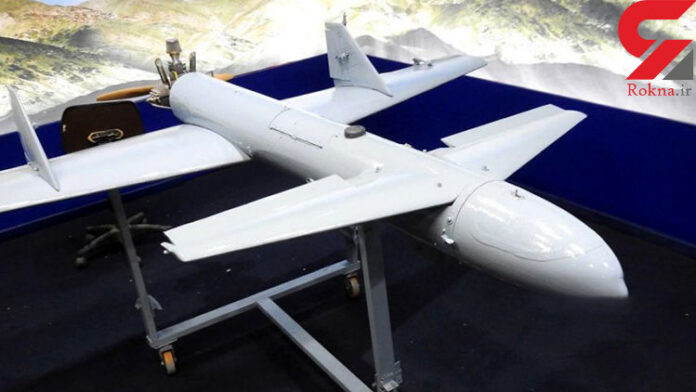
Yemeni Drones Bomb Saudi Fighter Jets at Jizan Airport

In a statement on Saturday, Yemen’s Army Spokesman Brigadier General Yahya Saree said the Yemeni Qasef-K2 pilotless aircraft have launched attacks on fighter jet hangars of Jizan airport.

Some other parts of the military airbase have been also attacked in the “precise” airstrike, he added, saying Yemen’s aerial operation has halted traffic at the Saudi airport.

The general said the drone attack was a response to the Saudi military campaign against people of Yemen.

Earlier in the week, the Yemeni forces said they launched two attacks targeting military sites at the Jizan airport and high-altitude Abha Airport.

The Houthi Ansarulla movement, which is defending Yemen in the war against the Saudi-led military coalition, has warned of “more painful operations” to come if the Saudi-led forces did not stop airstrikes on Yemeni people.

The Saudi-led coalition has been engaged in a war against Yemen since March 2015, when it began carrying out airstrikes on Yemen at the request of fugitive president Abd Rabbuh Mansur Hadi.

The US-based Armed Conflict Location and Event Data Project (ACLED), a nonprofit conflict-research organization, estimates that the Saudi-led war has claimed the lives of over 60,000 Yemenis since January 2016.

The war has also taken a heavy toll on the country’s infrastructure, destroying hospitals, schools, and factories. The UN says over 24 million Yemenis are in dire need of humanitarian aid, including 10 million suffering from extreme levels of hunger.

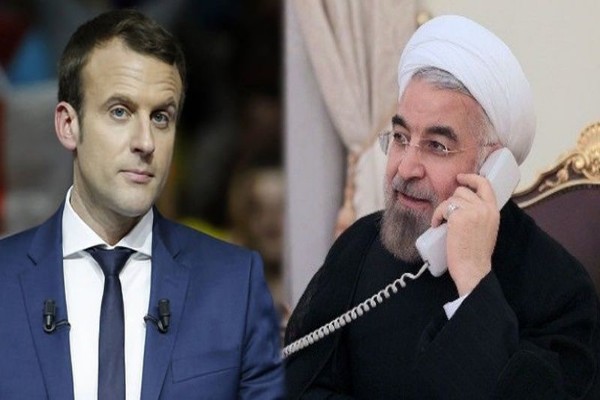
France Admits EU’s Failure to Make Up for US Sanctions on Iran

Iranian President Hassan Rouhani and his French counterpart Emmanuel Macron discussed a range of bilateral, regional and international issues in a telephone conversation on Saturday.

In their talks, Macron said France concedes that Europe’s measures to make up for the US sanctions on Iran have been unsuccessful and ineffectual, but pledged that the Europeans will do their utmost to compensate for the American pressures against Tehran.

The EU has been strongly opposed to the US withdrawal from the Joint Comprehensive Plan of Action (JCPOA) from the beginning, Macron noted, saying the EU wants the nuclear deal to be saved and has put efforts into it.

Stressing the need to control the situation and carry out new plans and measures to salvage the JCPOA, Macron warned that a collapse of the nuclear deal would be tantamount to a confession of collective failure and a deplorable incident.

The French president also called for the selection of the “second path” to save the JCPOA and contribute to de-escalation of tensions, voicing Paris’ readiness to double down on its efforts to serve Iran’s demands, namely a ceasefire in the US economic war.

For his part, President Rouhani denounced the US economic war on Iran, warning that its continuation could have far-reaching effects on the other parts of the world.

Slamming the US sanctions against the Iranian nation as an act of terrorism and an economic war, President Rouhani said, “The continuation of this economic war could result in other threats to the region and the world.”

He also reminded France of Iran’s “strategic patience” and the great efforts it has been making over the past 14 months to keep the nuclear agreement alive despite a whole host of American pressures and sanctions.

President Rouhani reiterated that Iran’s new decision to reduce certain commitments under the JCPOA has been in conformity with the deal and meant to save it.

He also called on the European Union to honor its commitments to the international treaties and the United Nations’ resolutions and also to step up efforts to save the JCPOA by taking a series of measures.

President Rouhani finally made it clear that ending the whole sanctions against Iran would open up a new opportunity for interaction between Iran and the Group 5+1 (Russia, China, the US, Britain, France and Germany).

In May 2018, US President Donald Trump pulled his country out of the JCPOA, a 159-page nuclear agreement between Iran and the Group 5+1 that came into force in January 2016.

Following the US withdrawal, Iran and the remaining parties launched talks to save the accord.

However, the EU’s failure to ensure Iran’s economic interests forced Tehran to stop honoring certain commitments on May 8, 2019.

Iran has also set a 60-day deadline for the remaining JCPOA parties to fulfill their undertakings.

Iran to Announce New Decision on Reducing Nuclear Commitments

A press conference will be held on the issue on July 7 with the participation of the country’s senior nuclear negotiator Seyyed Abbas Araqchi as well as Spokesman for Atomic Energy Organisation of Iran Behrouz Kamalvandi and Government Spokesman Ali Rabie.

Earlier, Iranian President Hassan Rouhani annopunced the country will exceed the agreed uranium enrichment level of 3.67% as of July 7.

Addressing a cabinet session on Tuesday, Rouhani said the Islamic Republic will no longer remain committed to the 3.67% uranium enrichment level set by the Joint Comprehensive Plan of Action after July 7.

Rouhani also warned that “after this date, if you don’t live up to the commitments you have made within an agreed timetable, we will also restore Arak reactor to its earlier status.”

The move comes after Tehran’s 60-day deadline to Europe to compensate for the US’ withdrawal from the accord came to an end. Tehran says the decision has been enshrined in the nuclear deal and is in accordance with articles 26 and 36 of the nuclear deal.

Iran Eyes Exporting Nano Carpets to Persian Gulf States

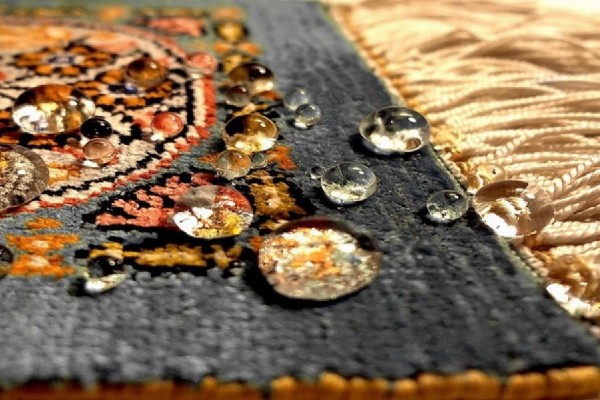
The carpet-weaving company started the mass production of its nano-products last year, and now these carpets are being sold inside the country.

Considering the attractiveness of the products, the company has a special program to export its nano-carpets. On this basis, Iranian nano-carpets were presented at Turkey’s “DEMOTEX” in 2019, ISNA reported.

In view of the innovations made in these carpets, negotiations have been conducted with distributors in the Persian Gulf states including Oman and the UAE.

Currently, nano-carpets account for 10 percent of the company’s products, and with further development the owners are trying to increase the share of nano-products.

Primary nano-materials of these carpets are supplied by domestic companies. These nano-materials were used in the warp and woof of the carpets to create antibacterial-meds-info.com properties. The company uses zinc oxide to create anti-bacterial properties on acrylic fibers.

The nano-made carpets do not cause skin and respiratory problems and are a good choice for people with allergies.

For a brief review of Iran’s achievements in various fields of science and technology, check the book “Science and Technology in Iran: A Brief Review – 2019

Also, since children are more in touch with carpet surfaces and given the weakness of their immune system, the use of such carpets reduces the risk of skin diseases and allergies.

In addition, its anti-odor properties make the carpets suitable for crowded and public places such as mosques, etc.

The nano-particles placed in the carpet fibre do not change the texture and natural sense of the carpet.

In fact, by using the nanotechnology, the properties of the carpet can be changed in such a way that its basic properties, including the comfort and softness of the carpet, are maintained, and no changes are made to the appearance of the carpet.

Moreover, with the addition of anti-radiation and anti-static materials to the carpet, the durability of the carpet is increased and the colour of the carpet stays constant for a longer time.