Monday, December 22, 2025
Home Blog Page 3191

US Sanctions Hindering Fight against Narcotics: Iran

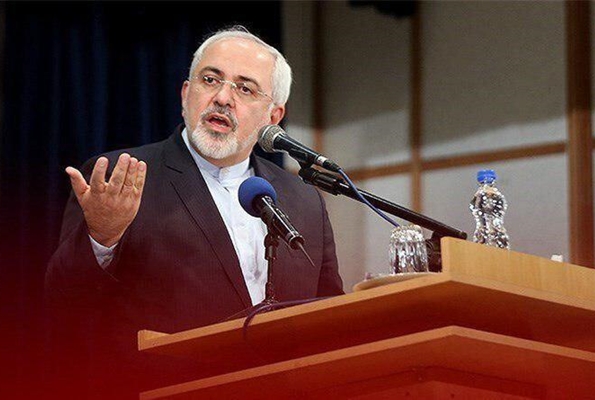
Zarif said the re-imposition of the United States’ anti-Iran sanctions, as well as Washington’s economic terrorism against Tehran are preventing the Islamic Republic from implementing international agreements in regard to the fight against narcotics.

The Iranian minister made the comments at a conference to mark the International Day against Drug Abuse and Illicit Trafficking.

He added that the Islamic Republic spends 300 million dollars annually in the war against drug trafficking.

“The Islamic Republic of Iran believes that to fight against narcotics it is necessary to avoid politicisation and unilateralism, and to pay attention to international cooperation as a necessary means to achieve the goals set forth to build a better future for all human beings and future generations.”

Zarif also underlined that the martyrdom of over 3,800 people and injury of more than 12,000 others are the costs that nobody can compensate for Iran in the world.

He emphasised that Iran’s geographical location in the vicinity of the largest traditional drug producer –Afghanistan – has made its actions vital not only at national level, but also at regional and international levels.

“Iran alone accounts for nearly 80 percent of the world’s total opium discoveries, and more than 800 tonnes have been seized last year alone.”

The General Assembly of the UN decided to observe June 26 as the International Day against Drug Abuse and Illicit Trafficking as an expression of its determination to strengthen action and cooperation to achieve the goal of an international society free of drug abuse.

Supported each year by individuals, communities and various organizations all over the world, this global observance aims to raise awareness of the major problem that illicit drugs represent to society.

Chilled Yogurt Soup, Delicate Persian Dish for Hot Days

Chilled Yogurt Soup, Delicate Persian Dish for Hot Days

Abdoogh Khiar reduces the fatigue caused by the warmth, that’s why it’s a special summer dish.

Chilled Cucumber Yogurt Soup is an ancient food with many benefits. It cools the body and creates a feeling of vitality.

Chilled Yogurt Soup, Delicate Persian Dish for Hot DaysIngredients:

Milk 1 cup

Cream ½ cup

4 to 5 sliced radishes

10 to 12 walnuts

2 to 3 tbsp. of dried vegetables (mint, parsley, tarragon, savory, basil)

4 to 5 chopped cucumbers

2 chopped scallions

Pepper and salt

1 cup of raisins

4 cups of yogurt

Chopped green vegetables including pennyrile, basil, mint, or any other fragrant vegetable

1 litre of sour yogurt drink

Directions:

Choose a suitable container to mix the ingredients. Mix the yogurt with the cucumber, and then mix the rest of the ingredients together and add to the mixture.

It’s just better to mix the scallions when serving the soup. Keep the yogurt soup one hour outside the refrigerator to make it sourer. You should use dry bread because the fresh bread in the soup removes its good taste. Chop the dried bread and scallions before you serve it.

Scientists Generate Clean Energy Using Water Molecule

Masoud Mirzaei Shahrabi, a faculty member of Ferdowsi University of Mashhad and a leading researcher in chemistry, says today the issue of the environment is very important in the world and is a challenge in the years to come.

Therefore, he said, it’s better to focus on environmental protection. “As a result, we defined a project aimed at raising the efficiency of producing H2 gas from the water molecule,” added Mirzaei.

He further mentioned that at the moment, most researchers think of increasing the efficiency of the production of H2 gas from the water molecule. Therefore, many research projects have focused on this topic.

“Nowadays, the use of fossil fuels has created a lot of environmental and even hygienic problems for human societies. In addition, one day fossil fuels will be finished, so using clean and sustainable fuels is something inevitable.”

This Iranian researcher went on to say that the use of fossil fuels has been banned in cities such as Venice, due to the presence of statues and monuments. It shows that using fossil fuels is very harmful.

For a brief review of Iran’s achievements in various fields of science and technology, check the book “Science and Technology in Iran: A Brief Review – 2019

It is sometimes said that the cost of producing H2 gas from the water molecule is high, but it must be mentioned that in order to protect the environment, there is no choice but to pay the cost of producing this gas as the fossil fuel reserves would be over one day, he added.

He highlighted that in the coming years, the production of this gas must be done more quickly because human beings need it.

“H2 as a clean gas is full of energy and can meet many human needs. In fact, due to the existence of kinetic energy in this gas, we can use it to generate heat and electricity. Of course, the molecule itself does not have the necessary properties for generating energy, but we use the kinetic energy stored in these gas molecules to obtain other energies such as thermal and electrical energy.”

In other words, he added. the water molecule is very stable, so breaking it is a very difficult task. Therefore, we need to design a catalytic converter to break this molecule and get the energy. We have been successful in doing this.

Today, the inflowing of various contaminants into water resources has become a problem, and this also has a great impact on the process of energy production from water molecules, so the higher the pollution, the lower the efficiency of the job, underlined Shahrabi.

Iran Says 2nd Phase of Scaling Back JCPOA Commitments ‘More Serious’

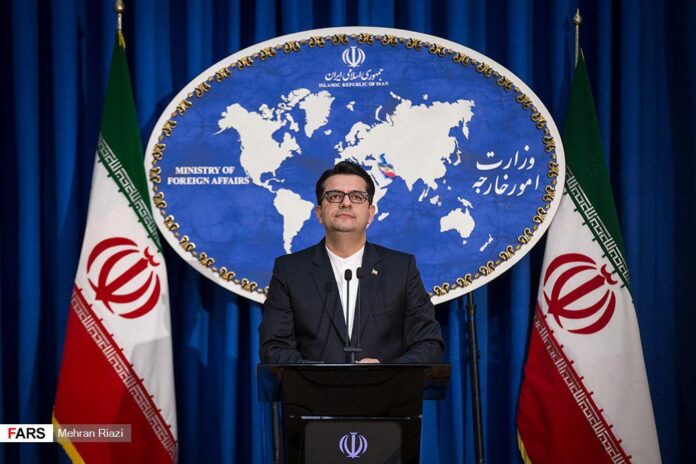
Mousavi said during his weekly presser that if INSTEX does not become operational in the next few days, Iran will not be obliged to adhere to its other obligations.

This spokesman went on to say that Iran needs to return to the level of oil revenues it earned before the withdrawal of the United States from the nuclear deal.

“Preserving the JCPOA depends on the fulfillment of the obligations of all parties, but except for limited efforts made by some parties, the remaining signatories have not done anything effective.”

Mousavi said Tehran will not wait for the Europe any longer and it is exchanging views with some friendly countries to make banking and trade mechanisms operational.

He also noted that Tehran attaches importance to Europeans’ warnings regarding Iran’s scaling down of commitments because the Islamic Republic is acting based on its rights mentioned in the nuclear deal.

He underlined that the Islamic Republic will never bow to pressures and sanctions adding that Washington’s imposition of sanctions against Iran is merely a propaganda campaign.

Elsewhere in his remarks, Mousavi highlighted that the US and its allies will fail to form a coalition against a “powerful” country like Iran.

Regarding the recent US violation of the Iranian airspace, Mousavi emphsised Tehran will file complaint against this US aggressive move.

The Iranian spokesman further dismissed Bahrain conference on the deal of the century as a “shame” stressing that Washington and its regional allies are seeking to step on Palestinians’ rights by holding Bahrain confab.

Iran Can Repeat Crushing Response to US Drone Incursion: Commander

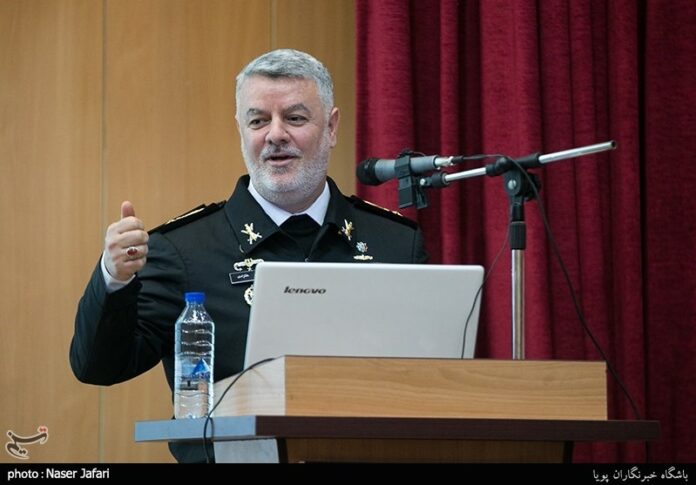
“The enemy dispatched its most sophisticated, smartest and most complicated surveillance aircraft to the banned area, and everyone saw the shooting down of the unmanned aerial vehicle (UAV),” Rear Admiral Khanzadi said in a speech in the southern province of Fars on Monday.

“We confidently say that this crushing response (to the intrusion) can be repeated …, and the enemy is aware of this,” the commander added.

Relying on the revolutionary youths of the Islamic Republic, the country has reached a point where it can powerfully stand on its own feet, establish regional security, and cut the enemy’s hands from the region, Rear Admiral Khanzadi went on to say.

The IRGC said on Thursday that a US spy drone that violated the Iranian territorial airspace in the early hours of the day was shot down by the IRGC Aerospace Force’s air defense unit near the Kooh-e-Mobarak region in the southern province of Hormozgan.

The intruding drone was reportedly shot by Iran’s homegrown air defense missile system “Khordad-3rd”.

In comments made a few hours after the incident, IRGC Commander Major General Hossein Salami said the shooting down of the US aircraft had a straightforward message that any foreign intrusion into Iran’s sovereign territories would draw a crushing response.

“The downing of the US drone had an explicit, decisive and clear message that defenders of the Islamic Iran’s borders will show decisive and knockout reactions to aggression against this territory by any alien,” he said.

“Borders are our redline, and any enemy violating these borders will not go back,” the commander underlined.

He also made it clear that Iran is not seeking war with any country but is fully prepared for any confrontation. “Today’s incident was a clear sign of such a precise message.”

The general also reminded the enemies that the only way for them to remain safe is to respect Iran’s territorial integrity, national security and vital interests.

Iran Says 33 Million Cyber Attacks Thwarted in Past Year

Azari Jahromi made the remarks in a Monday tweet, but did not reveal who was behind the attacks.

He said the country has been facing cyber terrorism since a long time ago, and that includes the Stuxnet and unilateral sanctions.

The minister’s comments come after US media reported that Washington launched a cyber-attack on Iranian weapons systems.

It was claimed the cyber-attack disabled computer systems controlling rocket and missile launchers. The reports said it was in retaliation for the shooting down of a US drone as well as attacks on oil tankers that the US has blamed on Iran. Neither Iran nor the US have rejected or confirmed the reports.

Iran has disconnected much of its infrastructure from the internet after the Stuxnet computer virus disrupted Iranian centrifuges in the late 2000s.

Europe Not Active Enough to Save JCPOA: German MP

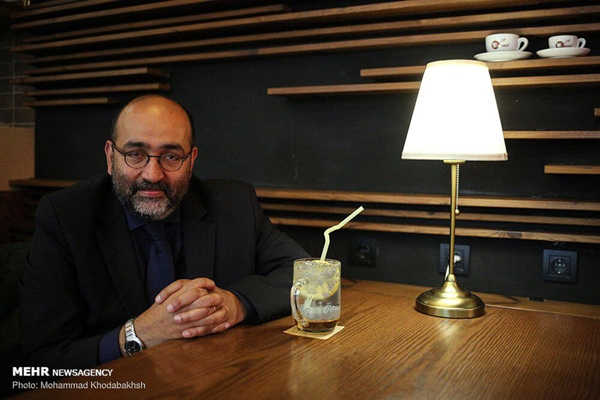
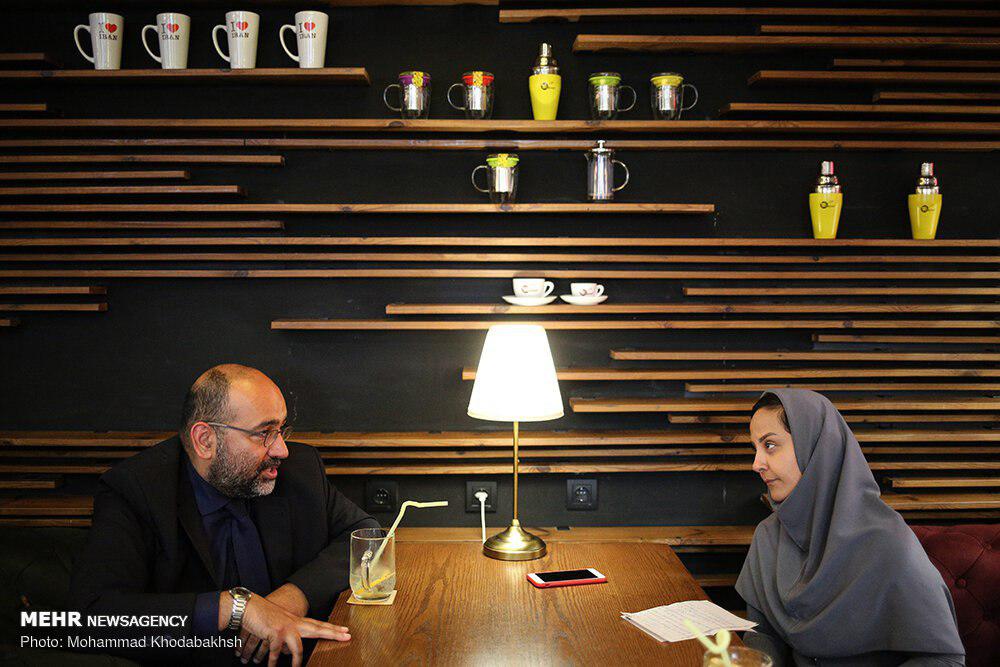
Omid Nouripour, who sits on the Foreign Relations Committee of the German Parliament, said in an interview with Mehr News Agency that the Iran nuclear deal known as the Joint Comprehensive Plan of Action (JCPOA) as well as Iran’s security should be preserved.

“I think the JCPOA is a very important agreement for the security of Europe, Iran, the Middle East and, generally speaking, international security,” said the parliamentarian, who held some consultations with Iranian officials about the JCPOA during a his recent day-long trip to Tehran.

The Iranian-born German MP also weighed in on his assessment of the meetings he held with Iranian authorities.

“The Europeans have not been active enough to preserve the JCPOA, and they have not shown enough reaction to the United States,” he said.

“Of course, it is a tough situation now, and I should say the US economic pressure is not on Iran only; so, it would be a little bit difficult to create a balanced situation under the current circumstances,” the legislator added.

He underscored the importance of preserving the JCPOA in a bid to ensure Iran’s security.

“One of the reasons behind the importance of safeguarding the JCPOA is that if the agreement is scrapped, Saudi Arabia would become more inclined to boost its nuclear activities in order to develop an atomic bomb, which will be perilous for the Middle East and Asia,” he said.

He also responded to the question that whether or not he had any special message for Iranian officials.

“The first message is that the JCPOA is very important for Europe. The second message is that we [Europeans] know that we should be more active, and, finally, the third message is that preserving the JCPOA would contribute to Iran’s security as well,” the MP said.

Mehr News Agency said evidence shows Europe is not only not serious enough to implement the Instrument in Support of Trade Exchanges (INSTEX) mechanism, but seeks to buy time. In response, the MP said:

“INSTEX can be a very strong mechanism. I hope the Europeans will become more active in the remaining days until June 27, 2019 and show they are prepared to invest in efforts to save the JCPOA,” he noted.

The German legislator said the Iranians have more expectations from Germany than they have from France and Britain when it comes to preserving the JCPOA.

“Europe has come to realize the importance of the JCPOA, and Germany, France and the UK are all interested in making every effort to preserve the agreement,” he said.

“Meanwhile, it is noteworthy that at this juncture, the US economic pressure on Iran has made the job a little difficult for China and Europe. So, the foreign ministers and economy ministers of all European countries have held discussions and meetings in that regard,” he said.

He was asked whether or not the foreign ministers of the three European countries would have a new package of proposals for Iran if they possibly travel to Iran in the future. In response, he said Europe has not been active enough, so far.

“The Europeans should know that the packages that they have presented so far have not been enough, and they need to become more active than ever. In addition to the economic issue, the issue of Iran’s security should be taken into account as well,” he said.

“Preserving the JCPOA is directly linked to Saudi Arabia’s failure to acquire nuclear weapons, and if both sides come to realize this important point, we will be witnessing better achievements,” he said.

He also commented on Europe’s failure to react to Riyadh’s nuclear activities.

“Europe’s silence in that regard was, is, and will be a big mistake. The technical reason behind it is Europe’s numerous problems with the US government. This case is one of them,” the German legislator said.

Nouripour said the JCPOA serves as an impediment to Saudi attempts to gain nuclear arms.

The German lawmaker also touched upon the recent incident in which two oil tankers were hit by explosions in the Sea of Oman.
Europe Not Active Enough to Save JCPOA: German MP“In my view, this issue should be taken out of Britain and the United States’ hands and assigned to the UN for better, further and more precise follow-up work, so that no country would be able to create hurdles for another one,” said the parliamentarian.

“The important point is that Germany will act as a European Union member with regard to this issue; meanwhile, one should bear in mind that any military action in the region would be catastrophic for everyone. So, we oppose the United States’ militarism in the region,” he said.

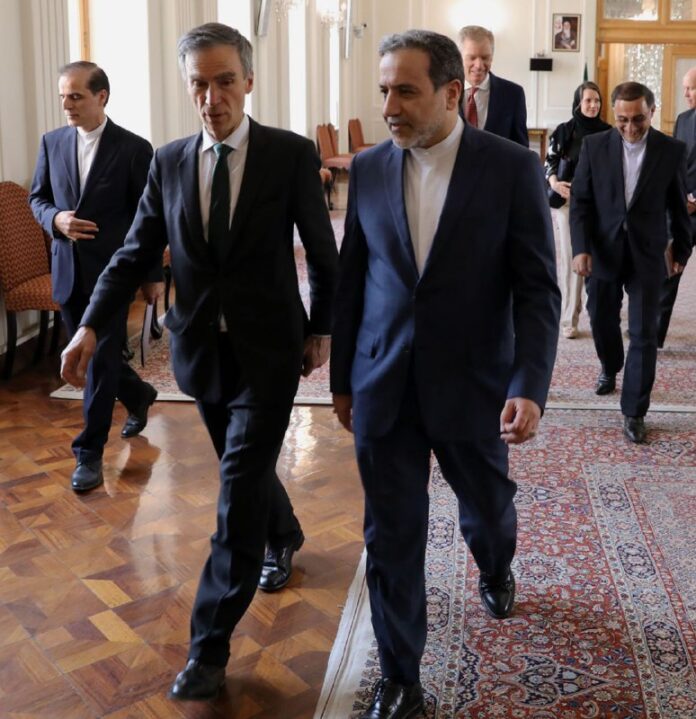
Iran Says No Reason Left for It to Honour Nuclear Deal

Less than two weeks before Iran’s 60-day deadline for balancing the nuclear deal in accordance with the Article 36 of the JCPOA, British Deputy Foreign Secretary for the Middle East Mr Andrew Murrison visited Tehran on Sunday, June 23, 2019, and held a meeting with Deputy FM Araqchi.

In the meeting, Mr Murrison reaffirmed his government’s commitment to the JCPOA, and said, “The UK is determined to bring the INSTEX financial channel into operation as soon as possible.” He also called for a continuation of Iran’s full commitment to the JCPOA.

In response, Iran’s deputy foreign minister highlighted the European countries’ procrastination and failure to honour their commitments under the JCPOA, saying, “Sadly, there is no balance between our obligations and rights under the JCPOA; therefore, there remains no more reason for Iran to continue honouring the JCPOA.”

“We are convinced that Europe’s lack of commitment to its JCPOA undertakings was not because of incapability, but lack of determination. Europe is not ready to pay any cost for preserving the JCPOA. The European companies dare not to disobey the US Treasury Department’s orders, which means Europe’s lack of sovereignty, even inside its own borders,” Araqchi added.

“The decision to scale down Iran’s commitments under the JCPOA is a national and irreversible decision, and the Islamic Republic of Iran will keep to this trend until its demands are met,” he stated.

Araqchi also criticized the UK government’s one-sided stances on the regional issues, including its baseless accusations against Iran after the attacks on oil tankers, noting, “It appears that the British government’s entanglement with the predicament of Brexit has prevented it from having a correct understanding of the global realities. Immature companionship with the US’ bully-style measures will result in nothing but an increase in the Iranians’ historical aversion to the UK policies.”

The two officials also discussed bilateral issues, including Britain’s financial debts to Iran. Pointing to the UK government’s debt to the Iranian nation unpaid for forty years, Araqchi called for an immediate settlement of the debts, stressing that the UK government’s refusal to do so would not be acceptable with any justification.

On the prisoners with dual nationality and Mrs Zaghari’s husband’s sit-in in front of the Iranian Embassy in London, Araqchi said, “The Islamic Republic of Iran’s Judiciary will not be influenced by such acts of blackmail, and those convicted of espionage must serve their terms.”

Afghanistan Producing 84% of World’s Opium: Iran

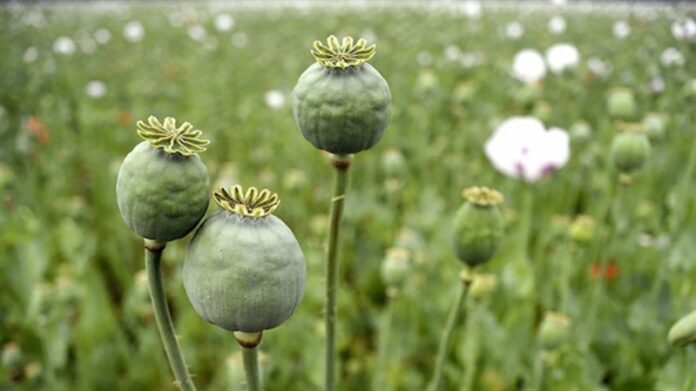
Secretary of an anti-drug council in Iran’s southeastern province of Sistan and Baluchestan said Iran’s neighbour, Afghanistan, produces more than 84 percent of the world’s opium, a thick paste from poppy used to make heroin.

A report from ISNA quoted Zandi as saying that as many as 803 synthetic drugs have been created in the world and their production has jumped by 384 percent.

Around 800 servicemen have been martyred and 2,400 others injured in the war on drugs in the province of Sistan and Baluchestan alone, he added.

Iran shares a 900-kilometer border with Afghanistan and has been used as a main conduit for smuggling Afghan drugs to narcotics kingpins in Europe.

Despite high economic and human costs, the Islamic Republic has been actively fighting drug-trafficking over the past decades.

The country has spent more than $700 million on sealing its borders and preventing the transit of narcotics destined for European, Arab and Central Asian countries.

The war on drug trade originating from Afghanistan has claimed the lives of nearly 4,000 Iranian police officers over the past four decades.

Cryptocurrency Miners in Iran Warned of Power Cut

A Comprehensive Guide for Beginners Planning to Become a Bitcoin Trader!

In comments on Sunday, the spokesperson for Tavanir, an Iranian state-run company in charge of power supply and distribution, said the country’s consumption in the previous Iranian month has risen by 7 percent compared to the corresponding period last year.

Such increase was mainly caused by the Bitcoin miners’ outsize thirst for electricity, Mostafa Rajabi Mashhadi added.

It is illegal to use the national grid for cryptocurrency mining, he added, saying the electricity users producing digital currencies, like Biotcoin, will be detected and their power will be cut off.

Every Bitcoin mining machine that is powered by the same cheap source of electricity available to houses consumes the equivalent of 24 dwellings, the spokesman added, saying the administration has not still set a tariff on the power consumption of digital currency miners.

With electricity so reasonably subsidized that many Iranian occupants buy modern air conditioners with powerful compressors, the number of digital currency miners using power in the residential areas has been growing in recent years.

Bitcoin is a cryptocurrency and a form of electronic cash which many computer geeks believe will form the future of the global economy.

In a report released this month, Iranian economic daily Financial Tribune quoted the deputy energy minister of Iran as saying that electricity bills for digital currency miners should be calculated in accordance to real prices.

Homayoun Haeri has insisted that electricity bills for cryptocurrency mining activities should be priced according to the same rates established for power exports.

The administration reportedly pays nearly $1 billion in subsidies per annum to bridge the gap in real electricity costs and what consumers are billed.