Monday, December 29, 2025
Home Blog Page 318

Tehran supports lasting peace between Pakistan, India: Iran’s president

Pezeshkian Shehbaz Sharif

In a telephone conversation with Pakistan’s Prime Minister Shehbaz Sharif on Saturday, Pezeshkian expressed Iran’s support for any effort aimed at establishing sustainable peace between Pakistan and India, offering Tehran’s willingness to mediate in this process.

The president emphasized that Iran’s principled policy entails promoting deescalation and fostering peace globally, particularly within the Islamic world.

Pezeshkian also welcomed the Pakistani prime minister’s invitation to visit Islamabad, saying he would instruct his administration to explore avenues for enhancing cooperation.

For his part, Sharif expressed gratitude to Iran for its hospitality during his recent visit to Tehran, highlighting the productive discussions that took place on defense, security, and economic fields.

The prime minister proposed that an Iranian delegation should visit Pakistan to explore ways to strengthen bilateral ties before Pezeshkian’s future trip to the neighboring country.

He also hailed Iran’s position on the Pakistan-India tensions, reaffirming Islamabad’s commitment to dialogue with New Delhi to achieve peace. Sharif also welcomed Iran’s potential role as a mediator in this context.

Intelligence Minister: Documents on Israel nuclear facilities in Iran’s possession

Iran Minister of Intelligence Esmaeil Khatib

Seyed Esmaeil Khatib, Iran’s Intelligence Minister, stated in a televised interview regarding the details of the Islamic Republic’s intelligence strike against the Zionist regime that these documents pertain to information on the regime’s nuclear facilities and other strategic records.

According to Khatib, the possession of these strategic documents enhances Iran’s offensive strength.

Well-informed sources in the region revealed on Saturday that the Islamic Republic of Iran’s intelligence apparatus had delivered one of the most significant intelligence blows in history to the Zionist regime, adding that extensive data, including nuclear-related information, had been extracted from the occupied territories.

According to a Fars News Agency correspondent, the informed sources revealed that Iran’s intelligence apparatus had successfully extracted a vast trove of strategic and sensitive information, including nuclear blueprints and facility details, from the occupied territories.

It came as recently the Zionist regime’s internal security agency (Shin Bet) and Israeli police disclosed in a statement that they had arrested Roy Mizrahi and Almog Atias, both 24 years old and residents of Nesher in Northern Israel, on suspicion of security-related offenses linked to Iran.

US pushing to ensure ‘maximum impunity’ for Israel through attack on four ICC judges: Iran

ICC

Commenting on X, former Twitter, on Saturday, Iranian Foreign Ministry Spokesman Esmaeil Baghaei said the move marked a “new low,” even for a country such as the US, which was “badly” addicted to using sanctions and intimidation towards realizing its foreign policy goals.

The US, he said, has issued the coercive measures in line with its way of abusing its power and obstructing international justice.

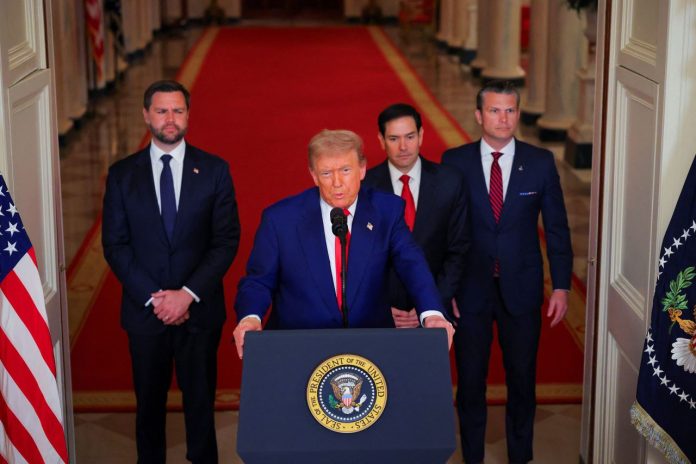
The administration of President Donald Trump imposed the measures on Friday in response to the court’s serving Israeli Prime Minister Benjamin Netanyahu with the warrant last year, amid the regime’s genocidal war against the Gaza Strip that began in October 2023.

The war has so far claimed the lives of around 55,000 Palestinians, mostly women and children.

The American sanctions were also meant to punish the court’s judges for investigating the war crimes that had been committed by American troops in Afghanistan during the US’s invasion of the Asian country.

Washington dismissed the probes as “illegitimate and baseless.”

Baghaei, however, said the American bans were aimed at “ensuring maximum impunity for Israel’s atrocity crimes and ethnic cleansing in occupied Palestine.”

The spokesman cited an earlier case in point across the US’s policies as the American diplomatic representatives at the United Nations Security Council’s vetoing a draft resolution mandating “permanent” ceasefire in the Israeli war.

Such moves, the official regretted, had made the United States “the most enduring & persistent accomplice in Israeli regime’s horrifying crimes of genocide, war crimes, crimes against humanity, and aggression.”

Baghaei urged the international community to act in response to the deadly American-Israeli partnership, warning that the US’s actions were undermining international law and threatening the foundational principles of humanity.

Iranian daily urges 90% uranium enrichment, limits on IAEA in response to snapback threat

Iran Nuclear Program

In an editorial, Farhikhtegan daily argued that Western powers, through the International Atomic Energy Agency (IAEA), are pursuing a political agenda aimed at referring Iran to the UN Security Council and triggering the re-imposition of pre-JCPOA sanctions.

It urged Iranian authorities to respond decisively by enriching uranium up to 90% and halting the dilution of existing 60% enriched stockpiles.

The paper also recommended relocating enrichment activities to the fortified Fordow facility, deploying advanced centrifuges, and expanding R&D efforts, including potential work on uranium metal production.

On the diplomatic front, Farhikhtegan called for a “serious revision” of Iran’s cooperation with the IAEA, including restricting inspections and disabling surveillance cameras in nuclear facilities.

The editorial further noted that Iran has previously warned it could exit the Nuclear Non-Proliferation Treaty (NPT) if the snapback mechanism is triggered, a move with significant implications.

Israeli families call on US Mideast envoy to propose new deal to return hostages

At a press conference in Tel Aviv, the father of hostage Eitan Horn urged Witkoff to present a plan to return all hostages and end the war in Gaza.

“Present Netanyahu and Hamas with an offer with an ultimatum to end the war. This is likely the only way to return the hostages,” Itzik Horn said, according to the Times of Israel daily newspaper, referring to Prime Minister Benjamin Netanyahu, who has been accused of dragging out the assault on Gaza for his political benefit.

Horn urged Witkoff to “set aside the Netanyahu framework for extending the war” and instead advance a plan to free all the prisoners.

The first phase of a ceasefire and prisoner exchange agreement between Hamas and Israel – brokered by Egypt and Qatar with US oversight – began in January and concluded in early March.

While Hamas fulfilled its obligations during that phase, Netanyahu refused to proceed with phase two under pressure from far-right members of his coalition, according to Israeli media.

Opposition figures and hostage families have repeatedly stressed that Netanyahu is prolonging the war to maintain power and appease ultranationalist allies.

The military wing of Hamas, the al-Qassam Brigades, warned on Saturday that the Israeli army is currently besieging a location where Israeli soldier Matan Zangauker is being held and that if he “is killed during an attempted rescue, the Israeli army will be fully responsible for his death.”

The Israeli Prime Minister’s Office also claimed in a statement that the body of Thai citizen Natfong Pinta was recovered from the Gaza Strip. The operation took place in Rafah in the southern Gaza Strip on Friday, the statement added, alleging that Pinta was killed in captivity.

Prior to that announcement, Israel estimated that 56 captives remain in Gaza, with 20 believed to be alive. At the same time, over 10,400 Palestinians remain imprisoned in Israel under harsh conditions, including reports of torture, starvation, and medical neglect, according to both Palestinian and Israeli rights groups.

Hamas has repeatedly offered to release all Israeli captives in exchange for an end to the war, a full withdrawal of Israeli troops from Gaza, and the release of Palestinian prisoners. However, Netanyahu has rejected those terms, insisting on the disarmament of Palestinian resistance factions and pushing for renewed control over Gaza.

Israel, rejecting international calls for a ceasefire, has pursued a genocidal offensive in Gaza since October 2023, killing nearly 55,000 Palestinians, most of them women and children.

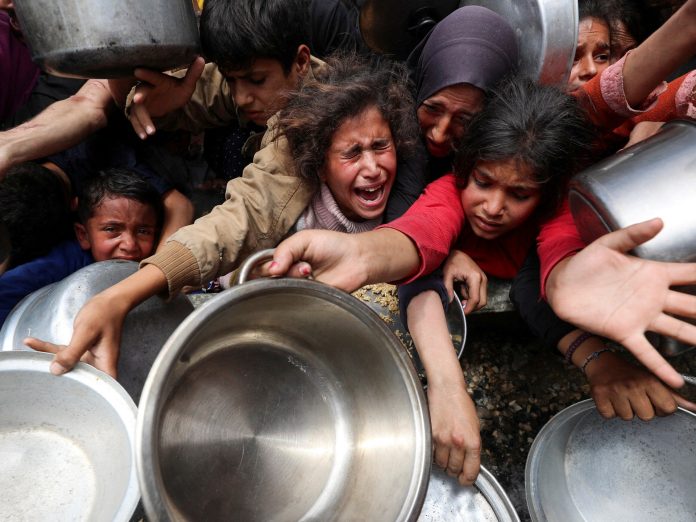
Aid agencies have warned of the dire risk of famine among the enclave’s more than 2 million inhabitants.

Last November, the International Criminal Court issued arrest warrants for Netanyahu and his former Defense Minister Yoav Gallant for war crimes and crimes against humanity in Gaza.

Israel also faces a genocide case at the International Court of Justice for its war crimes against civilians in the enclave.

Iran says new US sanctions show ‘depth of Washington’s hostility’

The Iranian Foreign Ministry

Iranian Foreign Ministry Spokesman Esmail Baqaei strongly condemned the US Treasury’s new sanctions against several Iranian and non-Iranian individuals and entities under the pretext of cooperation with Iran in commercial and banking sectors.

The Foreign Ministry spokesman said the new US sanctions against Iran, imposed as part of the inhumane and failed policy of maximum pressure against the Iranian people, are not only illegal and in violation of international legal principles and norms, but also serve as yet another testament to the deep and continued enmity of the ruling regime in the US toward the Iranian nation.

Baqaei stressed that, undoubtedly, the US sanctions against the Islamic Republic of Iran, which are designed and implemented with the aim of stepping up pressure on every Iranian citizen and depriving them of their fundamental human rights, will further strengthen the Iranian people’s resolve to defend their legitimate rights and interests in the face of Washington’s excesses.

Yemen’s al-Qaeda leader threatens US officials over Israel’s war on Gaza

“There are no red lines after what happened and is happening to our people in Gaza,” said Saad bin Atef al-Awlaki in a half-hour video message that was spread online Saturday by supporters of al-Qaeda in the Arabian Peninsula (AQAP), the Yemeni branch of the armed group.

“Reciprocity is legitimate,” he added.

Al-Awlaki’s video message also included calls for so-called lone wolves to assassinate leaders in Egypt, Jordan and the Gulf Arab states over the war, which has decimated Gaza, killing at least 54,772 Palestinians over the past 20 months.

The message featured images of Trump and Musk, US Vice President JD Vance, Secretary of State Marco Rubio and Secretary of Defence Pete Hegseth, as well as logos of Musk’s businesses – including electric carmaker Tesla.

Born in 2009 from the merger of al-Qaeda’s Yemeni and Saudi factions, AQAP is completely distinct from Yemen’s Houthi rebel group, which controls most of the country and agreed to a ceasefire with the US earlier this month.

AQAP grew and developed amid the chaos of Yemen’s war, which has pitted the Houthis against a Saudi-led coalition backing the government since 2015.

Al-Awlaki became the group’s leader in 2024, replacing predecessor Khalid Batarfi, who died that year.

He already has a $6m US bounty on his head, having, as Washington puts it, “publicly called for attacks against the United States and its allies”.

Though believed to be weakened in recent years due to infighting and suspected US drone strikes killing its leaders, the group had been considered the most dangerous branch of al-Qaeda still operating since the US killing of founder Osama bin Laden in 2011.

United Nations experts estimate AQAP has between 3,000 and 4,000 active fighters and passive members, claiming that it raises money by robbing banks and money exchange shops, as well as by smuggling weapons, counterfeiting currencies and conducting ransom operations.

The Houthis have previously denied working with AQAP, though the latter’s targeting of the Houthis has dropped in recent years, while its fighters keep attacking the Saudi-led coalition forces.

Now, with its focus on Israel’s war on Gaza, AQAP appears to be following the lead of the Houthi group, which has launched missile attacks on Israel and targeted commercial vessels moving through the Red Sea in solidarity with Palestinians under Israeli fire.

Iran captures two suspects in killing of young judge

Iran Police

Asghar Jahangir said that the arrests were made following coordinated efforts between judicial authorities and Iran’s intelligence agencies.

The suspects were located in a hideout near the southern city of Shiraz and taken into custody earlier in the day.

“The identities of the suspects have been confirmed, and both are residents of Fars Province,” Jahangir said, adding that the suspects resisted arrest and were injured in a shootout with security forces.

One of the detainees has a prior criminal record, he noted.

Judge Ehsan Bagheri, 38, who presided over Branch 102 of the Criminal Court 2 in Shiraz, was fatally attacked with a bladed weapon by two unidentified assailants on the morning of May 27 as he was leaving his home for work.

Germany plans rapid expansion of bomb-proof bunkers and shelters amid fears of Russian attack

Ralph Tiesler, the head of the Federal Office of Civil Protection and Disaster Assistance (BBK), said Europe’s largest economy needed to wake up to the reality of conflict, and that in its current state Germany was inadequately prepared.

“For a long time, there was a widespread belief in Germany that war was not a scenario for which we needed to prepare. That has changed. We are concerned about the risk of a major war of aggression in Europe,” he told the Süddeutsche Zeitung news outlet.

Tiesler called for a national effort to pinpoint and turn tunnels, metro stations, underground garages, car parks and the cellars of public buildings into protective shelters to “quickly create space for 1 million people”. He stated his agency will present a comprehensive plan later this summer.

He added that the country was in a race against time, and to rely on the construction of new bunker facilities was insufficient. Such shelters would take a long time to plan and construct and be very costly, Tiesler said. As a result, existing structures needed to be closely considered more immediately.

Russia’s ongoing invasion of Ukraine has caused fears in other countries, especially in Baltic states but also in Poland and Germany, that Moscow could open new fronts in Europe.

Of about 2,000 bunkers in Germany and protection rooms left over from the cold war, only about 580 are in working order and most need multimillion-euro revamps. They would shelter about 480,000 people, just half a percent of the German population. In comparison, the BBK said that Finland has 50,000 protection rooms, amounting to space for 4.8 million people, or 85% of its population.

Tiesler said efforts also needed to be put into fine-tuning information systems, such as apps and road signs, to share with the public exactly where they could seek shelter, as well as upgrading warning sirens. Existing warning apps also needed to be better protected from hackers, he said.

He urged Friedrich Merz’s government to ensure funding was in place to enforce his agency’s plans. It has agreed the plans are necessary but has yet to formally prescribe funds.

Money is expected to be made available from the billions unleashed after parliament suspended Germany’s debt brake in March, allowing large amounts of spending to take place in the military, vital infrastructure – such as bridges and roads enabling them to carry tanks and supplies – and civil defence.

Intelligence services and cybersecurity structures, which are in vital need of investment, are also competing for the funds.

Tiesler estimated at least €10bn (£8.4bn) would be needed over the next four years to cover civil defence needs, and at least €30bn over the next decade.

He also called for the establishment of a compulsory or voluntary civil protection service and urged citizens to contribute to making the country more resilient by stocking up on emergency supplies in the case of power and water shortages. “Our appeal is: build up enough supplies to last you 10 days, if possible,” he told the newspaper, reflecting similar calls by other European governments.

“But even a supply for at least 72 hours would be very helpful,” Tiesler continued, adding, “This can be used to bridge minor interruptions in everyday life.”

Iran ready for nuclear transparency in exchange for sanctions relief, says parliament speaker

Mohammad Bagher Ghalibaf

Speaking during a parliamentary session on Sunday, Ghalibaf criticized the US for presenting a proposal that makes no mention of lifting sanctions, calling Washington’s behavior in indirect nuclear talks “contradictory and dishonest.”

The parliament speaker emphasized that any sustainable agreement must include tangible economic benefits for Iran.

He added that the US President is “delusional” if he expects Iran to accept a deal shaped by Israeli influence and failed policies associated with the Israeli Prime Minister Benjamin Netanyahu.

Ghalibaf highlighted Iran’s role in defeating Daesh terrorist group and securing regional stability.

He also reflected on his recent trip to Latin America, where he attended the BRICS parliamentary summit and held bilateral meetings in Venezuela, Cuba, and Brazil to enhance economic and political ties.

He praised BRICS as a counterweight to unilateralism, arguing it can play a key role in establishing a multipolar world order.