Monday, December 29, 2025
Home Blog Page 319

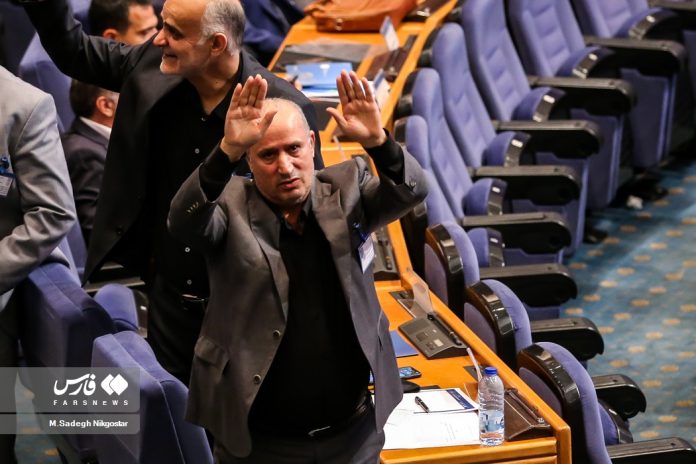
Senior MP: Iran not to lower uranium enrichment below 20%,

Uranium enrichment

Speaking at a press briefing, Nabavian added that Iran’s nuclear program will continue “as needed”.

“I fully understand what I am saying…our enrichment level will not go below 20 percent,” Nabavian underscored.

He also made it clear that Iran’s enriched uranium reserves will not be sent abroad under any circumstances.
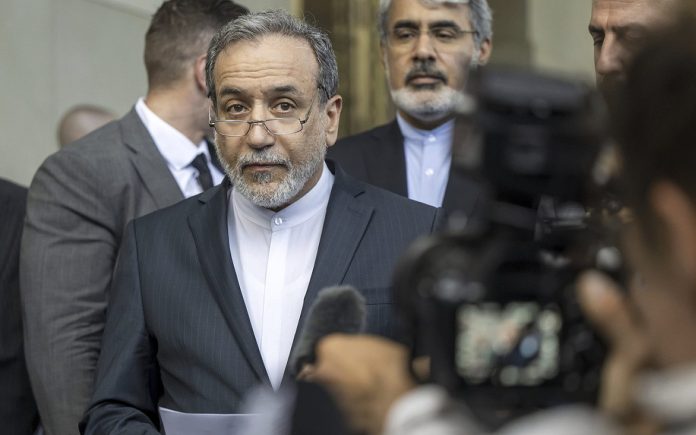
“This is a framework that our negotiating team will always adhere to,” the MP said. Nabavian also stressed that, as reiterated by Iran’s leader Ayatollah Seyyed Ali Khamenei, the removal of sanctions must be the first step in any negotiation process. “Sanctions on the Central Bank must be lifted, regardless of whether the negotiations are about nuclear issues or other matters,” he added.

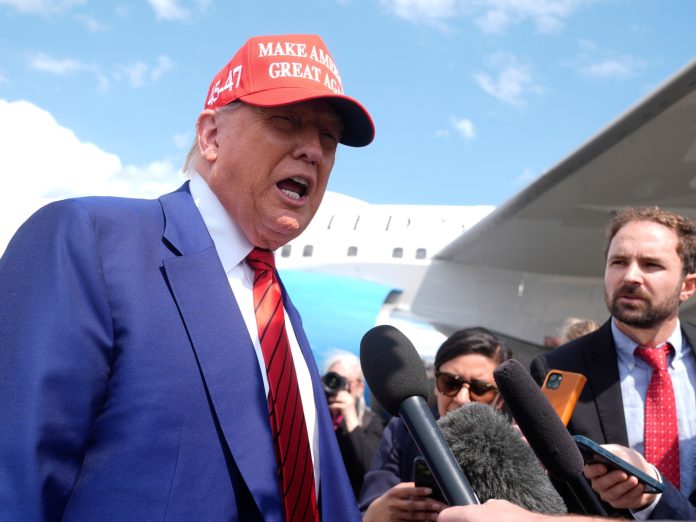
His remarks come as US President Donald Trump has said Iran should not enrich uranium at all.

Iran and the US have held five rounds of nuclear talks mediated by Oman.

Israel warns of more strikes on Lebanon if Hezbollah not disarmed

Lebanon war

“Agreements must be honoured, and if you do not do what is required, we will continue to act, and with great force,” the Israeli minister said in a statement.

Israel’s military launched a series of strikes targeting Beirut’s southern suburbs on Thursday night, sending huge numbers of residents fleeing their homes on the eve of the Muslim Eid al-Adha holiday after issuing a forced evacuation order an hour earlier.

Israel claimed, without providing evidence, that its latest attack was launched against Hezbollah “drone factories” in the Lebanese capital.

The Israeli military announced Hezbollah was “operating to increase production of UAVs [drones] for the next war” with Israel in “blatant violation” of the terms of November’s ceasefire.

Lebanon’s state-run National News Agency reported that Israeli fighter jets had carried out about a dozen strikes in the attack. A Hezbollah statement said a preliminary assessment showed nine buildings had been destroyed, while dozens of others were damaged.

Hezbollah also denied there were drone production facilities in the targeted locations.

The Israeli attack was the fourth, and heaviest, carried out targeting Beirut’s southern suburbs – a Hezbollah stronghold – since the ceasefire ended hostilities on November 27.

Israel’s last attack on the Lebanese capital, in which it claimed to destroy “infrastructure where precision missiles” were being stored by Hezbollah, came in late April.

Across Lebanon, Israel has violated the ceasefire on a near-daily basis in the seven months since it was signed, according to the Lebanese government of President Joseph Aoun, Arab nations and human rights groups.

Aoun has appealed to the United States and France, guarantors of the November ceasefire, to rein in Israel’s attacks.

Speaking late on Thursday, Aoun voiced “firm condemnation of the Israeli aggression”, labelling the attacks a “flagrant violation of an international accord … on the eve of a sacred religious festival”.

On Friday, Ali Ammar, a Hezbollah lawmaker, urged “all Lebanese political forces … to translate their statements of condemnation into concrete action”, including diplomatic pressure.

In the months since the ceasefire, Israeli strikes in Lebanon have killed at least 190 people and wounded nearly 500 more, the Lebanese government said in April.

Under the ceasefire agreement, the Lebanese military has been tasked with disarming Hezbollah – a political party and paramilitary group once believed to be more heavily armed than the state.

But following Thursday’s attack, Lebanon’s army warned that such attacks are weakening its role in the ceasefire. It added that Israel rejected its proposal to inspect the alleged drone production sites in southern Beirut in order to prevent an air strike.

“The Israeli enemy violations of the deal and its refusal to respond to the committee is weakening the role of the committee and the army,” the military said in a statement.

It added that continued Israeli attacks could lead the army to freeze its cooperation with the monitoring committee “when it comes to searching posts” and dismantling Hezbollah infrastructure near the Israeli border in southern Lebanon.

The war between Israel and Hezbollah re-erupted in the wake of Israel’s war on Gaza in October 2023, as the Lebanese group launched cross-border attacks on northern Israel in solidarity with Hamas.

Subsequent Israeli attacks on Lebanon killed more than 4,000 people, including hundreds of civilians, before the ceasefire was signed. Hezbollah rocket fire in Israel killed a reported 87 Israeli military personnel and 46 civilians.

Trump quietly pressuring US Senate to weaken Russia sanctions: WSJ

U.S. HOUSE AND SENATE

The bipartisan sanctions bill, introduced on April 1 by Graham and Senate Democrat Richard Blumenthal, seeks to impose a 500% tariff on imports from countries that continue purchasing Russian oil and raw materials.

In recent weeks, Trump administration officials have contacted Graham’s office with requests to water down the legislation, congressional aides told the WSJ.

The White House reportedly asked Graham to insert waivers into the bill allowing Trump to choose which entities get sanctioned and changing the word “shall” to “may.” Removing the mandatory language from the text would essentially defang the bill, staffers said.

Blumenthal confirmed that negotiations with Trump officials were taking place behind the scene but did not comment on the substance of the talks.

“We’re moving ahead and the White House is included in our conversations,” he told the WSJ.

Earlier, Republican Senator Roger Wicker on June 4 said that Trump had asked the Senate to postpone voting on the bill, which had been scheduled to come to the floor this week.

In a joint press conference alongside German Chancellor Friedrich Merz on June 5, Trump said lawmakers were waiting for his approval before advancing the sanctions bill.

“They’ll be guided by me. That’s how it’s supposed to be,” Trump stated, adding, “They’re waiting for me to decide on what to do.”

In the same briefing, Trump said that he had a deadline in mind for when he would enforce new sanctions on Russia but did not give specifics, saying only that sanctions would be imposed when it became clear that peace talks were not moving forward. He also said that sanctions could apply to both Russia and Ukraine.

“It takes two to tango,” he added.

During the June 5 press conference, Trump compared Ukraine and Russia — which launched an unprovoked full-scale invasion against Ukraine in February 2022 and partially occupies four Ukrainian regions in addition to the illegally annexed Crimean peninsula — to children fighting on a playground.

“Sometimes you’re better off letting them fight for a while and then pulling them apart,” he said.

Trump has repeatedly threatened to impose sanctions on Russia if he does not see progress in peace negotiations between Kyiv and Moscow.

He has never followed through on any of these threats.

Britain, France abandon plans to recognise Palestinian state at NY conference

Palestine

France had been lobbying the UK and other European allies to recognise a Palestinian state at the conference in New York, due to be held between 17 and 20 June.

President Emmanuel Macron had described the move as “a moral duty and political requirement”, suggesting it could come in return for Saudi Arabia recognising Israel at the conference.

However, The Guardian has reported that French officials briefed their Israeli counterparts this week that the conference would not be the moment for recognition.

Instead, it will now focus on outlining steps towards recognition, contingent on a series of measures and concessions from the Palestinians.

These will include a permanent ceasefire in Gaza, the release of Israeli captives, reform of the Palestinian Authority, economic reconstruction and the end of Hamas rule in Gaza.

French Foreign Minister Jean-Noel Barrot said on Friday that recognising a Palestinian state at the conference would have been a “symbolic” decision and said they had a “particular responsibility” as a permanent member of the UN Security Council not to do so without the support of allies.

Although 147 countries recognise the state of Palestine, much of Europe has been reluctant and long stated that such a move could only come with Israel’s approval and reciprocal moves from Arab states.

Ireland, Spain and Norway recognised a Palestinian state last year, and there has been an increasing consensus that recognition should come unilaterally as a means of pressuring Israel to change tack.

Both the UK and France have faced pressure from the US over the plans, while Israel has said it would expand its settlements in the occupied West Bank in response.

EU seeking to target Russia’s financial reputation: FT

Kremlin

The blacklist includes countries that Brussels considers to have inadequate regulations against shady financial activity. Inclusion on the list would impose extra compliance requirements on banks and financial institutions dealing with Russian individuals and entities, leading to higher costs in conducting business activity.

The European Commission is preparing to adopt a revised list of high-risk third countries next week, after postponing its release at the last minute for “administrative/procedural reasons,” FT reported.

”There is huge support for putting Russia on the list,” Markus Ferber, a German MEP with the center-right European People’s Party, the EU parliament’s largest grouping, told the outlet.

Typically, the EU aligns its blacklist with decisions from the Financial Action Task Force (FATF), a global intergovernmental body that combats money laundering and terrorist financing.

Although Russia’s FATF membership was suspended in 2023, several countries would likely block any attempt to formally add it to the FATF grey list, leading Brussels to consider unilateral action.

Despite its suspension from FATF, Russia continues to engage with the Eurasian Group (EAG), a regional body affiliated with FATF. In 2024, the EAG assessed Russia’s progress in strengthening its anti-money laundering and counter-terrorism financing measures. It acknowledged some improvements but urged further action, particularly in enforcing targeted financial sanctions and increasing transparency around beneficial ownership.

Ukraine has repeatedly pushed for Russia to be placed on the FATF blacklist, citing its connections with already blacklisted states and the potential risks it allegedly poses to the global financial system. However, these attempts have failed due to resistance from several FATF member states, including China, India, Saudi Arabia, and South Africa.

Despite being suspended, Russia remains obligated to comply with FATF standards and continues to fulfill its financial commitments to the organization.

Israel army lacking more than 10,000 soldiers: Spokesperson

Israeli Army

The army “lacks over 10,000 soldiers, including about 6,000 combat soldiers. This is a genuine operational need, and that’s why we’re taking all necessary steps”, army spokesperson Brigadier General Effie Defrin said in a televised news conference when asked about the conscription of ultra-Orthodox Jews into the army.

It came as, according to the Israeli Army Radio, 866 Israeli soldiers have now been killed in the besieged enclave since October 7, 2023.

The military wing of Hamas warned on Friday that Israeli army’s recent losses in Khan Younis and Jabalia are merely a preview of what awaits its forces throughout the Gaza Strip.

“The losses suffered by the occupation army today in Khan Younis (south) and Jabalia (north) are just a continuation of a series of high-level operations,” Abu Obaida, the spokesman of Al-Qassam Brigades, said in a statement, emphasizing that “this is a model of what the occupation forces will face wherever they are present.”

Addressing Israelis, he urged them to pressure their leadership to stop the war in Gaza, “or prepare to receive more of their sons in coffins.”

Israel has continued its offensive in Gaza since October 2023, killing more than 54,000 Palestinians, creating conditions of famine and rendering the enclave uninhabitable.

Informed sources: Iran extracts huge volume of strategic documents from Israel

Benjamin Netanyahu

IRIB cited informed sources in the region as saying that the operation led to the transfer of “an extensive trove of strategic and sensitive information” out of the occupied territories.

These sources did not elaborate on the means or timeline of the operation but emphasized that it involved documents of critical importance.

The report noted that Israel’s internal security agency, Shin Bet, and the national police announced the arrest of two Israeli nationals 17 days ago on suspicion of involvement in security-related offenses linked to Iran.

The two individuals, identified as Roy Mizrahi and Almog Atias, both 24 years old and residents of the northern Israeli city of Nesher, were reportedly detained after the extraction of the documents.

It also said the covert operation had been conducted some time ago, but the Iranian authorities withheld public disclosure due to the sheer volume of the material and the logistical and security challenges of safely transporting it to secure locations within Iran.

“The abundance of documents was such that even the preliminary review, including examination of images and videos, has required a significant amount of time”, IRIB further quoted the unnamed sources as saying.

Israeli authorities have yet to comment on the report.

Trade unions from dozens of countries protest against Saudi Arabia’s treatment of migrant workers

The joint submission called for a “commission of inquiry” into labour rights in the kingdom – one of the most important tools available to the UN agency.

“This is a call for immediate action towards genuine, inclusive and collaborative reform,” said Luc Triangle, the secretary-general of the International Trade Union Confederation.

“We cannot tolerate another death of a migrant worker in Saudi Arabia. We cannot remain silent while migrant workers, especially construction and domestic workers, continue to face fundamental rights violations. This has to stop now.”

The complaint comes as development and construction ramp up in Saudi Arabia ahead of its hosting the 2034 Fifa World Cup.

This week, the kingdom signed a cooperation agreement with the ILO on the sidelines of its annual conference in Geneva. Under the agreement, which initially lasts for two years, Riyadh is expected to align its labour laws with international standards.

The agreement reportedly includes measures to support fair recruitment, make it easier for labourers to switch jobs, introduce a minimum wage and include migrant workers on workers’ representative committees.

It also includes commitments to improve compensation for workers who are injured or killed.

However, trade unionists from several delegations think the reforms did not go far enough. Unions from the UK, Japan, Canada, Australia and 13 African countries were among those to sign the complaint, which was fiercely opposed by the Saudis.

“Africans go to Saudi Arabia looking for life but come back in coffins,” stated Omar Osman, the general secretary of the Federation of Somali Trade Unions and one of the signatories.

The complaint lists several cases of alleged forced labour, human trafficking, wage theft, and sexual and physical abuse of migrant labourers.

Last month, a report by Human Rights Watch (HRW) found that scores of migrant workers in Saudi Arabia had died in horrific, avoidable workplace incidents – including falls from buildings, electrocutions and decapitations.

Saudi Arabia relies heavily on foreign labour to power its economy.

Of a population of around 34 million, over 13 million are migrants, primarily from South and Southeast Asia and parts of Africa, according to the UN Department of Economic and Social Affairs.

These workers dominate sectors such as construction, domestic work, sanitation and hospitality – often performing some of the most dangerous and low-paid jobs in the country.

Despite existing Saudi laws mandating occupational safety measures and employer accountability, the HRW report revealed systemic failures in protecting workers, investigating deaths and ensuring compensation.

The report also documented disturbing patterns of deaths being misclassified as “natural causes”, even in cases where the fatal injuries occurred on worksites.

HRW interviewed the families of 31 deceased workers, mostly from Bangladesh, India and Nepal, who died in Saudi Arabia between the ages of 23 and 52. In several cases, families reported they were left in the dark about the cause and circumstances of their relatives’ deaths.

Employers often delayed or refused to repatriate remains and personal belongings and, in some cases, pressured families to accept burial in Saudi Arabia in exchange for modest financial compensation.

In one case, the son of a Bangladeshi man who died of electrocution said the employer made compensation conditional on agreeing to bury his father in Saudi Arabia.

The family refused and had to borrow over $4,000 to repatriate the body, only to receive less compensation than their incurred debt.

Most migrant workers enter Saudi Arabia under the kafala sponsorship system, which legally binds a worker’s immigration status to a specific employer.

Despite recent reforms that allowed some workers to change jobs without employer consent, many are still vulnerable to exploitation, forced labour, wage theft and harsh working conditions.

A New York Times report in March found that at least 274 Kenyan workers, most of whom were women, had died in Saudi Arabia over the past five years despite being a young workforce in non-dangerous jobs.

Large numbers of Ugandan workers had also died in the Persian Gulf kingdom during that time.

Every year, thousands of Ugandan and Kenyan women travel to Saudi Arabia to take up domestic jobs such as housekeepers and nannies. Many return with stories of unpaid wages, detention, beatings, starvation and sexual assault. Others return in coffins.

Among those who died, autopsies often revealed evidence of trauma such as burns and electric shocks. However, Saudi authorities recorded the deaths as natural causes.

Trump says Zelensky gave Putin ‘reason to bomb the hell out of’ Ukraine

In addition to launching a coordinated drone strike on multiple airbases, Ukraine also blew up railway bridges in Russia last week, derailing both civilian and freight trains, killing at least seven people, and injuring over 120 others, including children. President Vladimir Putin discussed the attacks in a phone call with his US counterpart on Wednesday, warning that Moscow’s inevitable response is justified.

Trump told journalists on Friday that he “didn’t like” the escalation when asked whether Kiev’s attack on a key component of Russia’s nuclear triad changed his view of “what’s at stake” and what “cards” Ukraine’s President Volodymyr Zelensky holds.

“Well, they gave Putin a reason to go in and bomb the hell out of them last night,” Trump stated.

“That’s something I didn’t like about it. When I saw it, I said: ‘Here we go… now it’s going to be a strike.’”

In response to the recent “terrorist acts” by Kiev, the Russian military carried out large-scale strikes against Ukrainian defense industry sites early Friday morning, using air-, sea-, and land-based missiles as well as unmanned aerial vehicles (UAVs), according to the Defense Ministry.

The targets of the overnight strikes included “design bureaus, enterprises involved in the production and repair of Ukraine’s weapons and military equipment, workshops for the assembly of attack drones, flight training centers, as well as warehouses of weapons and military equipment,” the statement said.

Putin described the deadly railway sabotage incidents as “undoubtedly a terrorist act” committed by the “illegitimate regime in Kiev,” which, he stated, is “gradually turning into a terrorist organization.”

Moscow has accused Kiev of escalating its attacks in an effort to undermine US-backed peace talks. Russia has also claimed that Trump is receiving “filtered” information about the conflict from individuals pushing Washington to support Ukraine.

Iran president reaffirms peaceful nature of nuclear program, expresses readiness for inspections

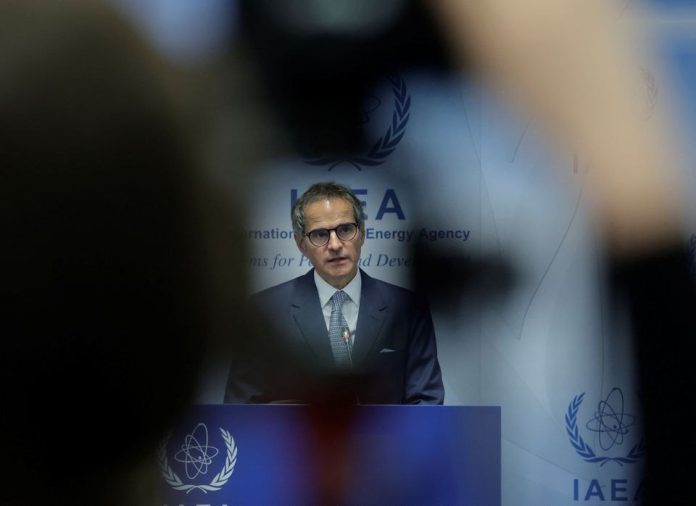
Speaking during a meeting on Saturday morning with Murat Nurtleu, the Deputy Prime Minister and Minister of Foreign Affairs of Kazakhstan, in Tehran, President Pezeshkian stressed that the nuclear activities of the Islamic Republic of Iran are entirely transparent, a fact repeatedly confirmed by the International Atomic Energy Agency (IAEA).

He stated that Iran has repeatedly declared—and demonstrated in practice—that it has never sought to produce nuclear weapons or weapons of mass destruction.

The President of the Islamic Republic of Iran emphasized: “We do not accept others making decisions about the future and destiny of our nation. The Islamic Republic has always been ready to listen to logical arguments, but will never accept coercion and intimidation.”

President Pezeshkian added: “Any deprivation of nations from knowledge, technology, and scientific advancements in various fields, including healthcare and agriculture, is unacceptable.”

In another part of his remarks, President Pezeshkian highlighted the cultural and historical commonalities and shared perspectives between Iran and Kazakhstan, stating: “We are prepared to expand relations with Kazakhstan in all fields. The future of bilateral relations depends on our shared determination to build a bright future based on peace, security, and prosperity for the region and the world.”

During the meeting, Murat Nurtleu, Kazakhstan’s Deputy Prime Minister and Foreign Minister, expressed his country’s serious commitment to strengthening ties with the Islamic Republic of Iran in political, economic, and regional dimensions.

He also affirmed Iran’s legitimate right to the peaceful use of nuclear technology.