Friday, December 26, 2025
Home Blog Page 3152

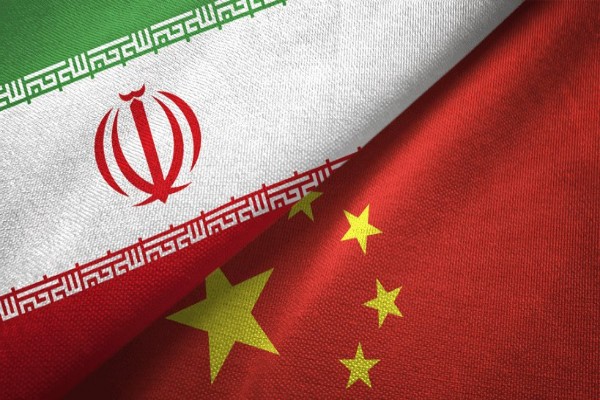
China Praises Iran’s Admirable Progress in Technology

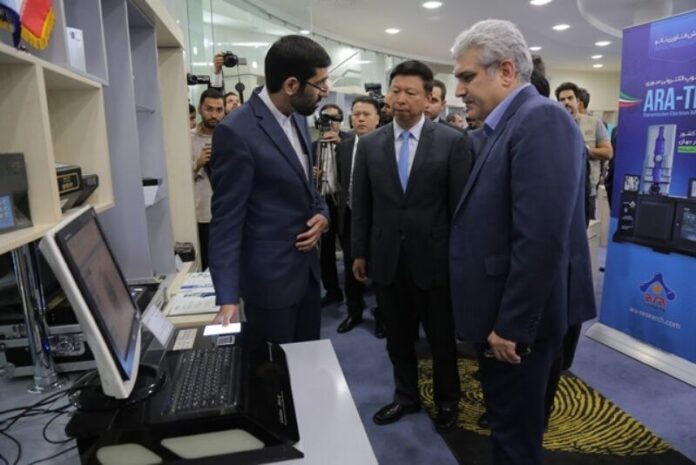
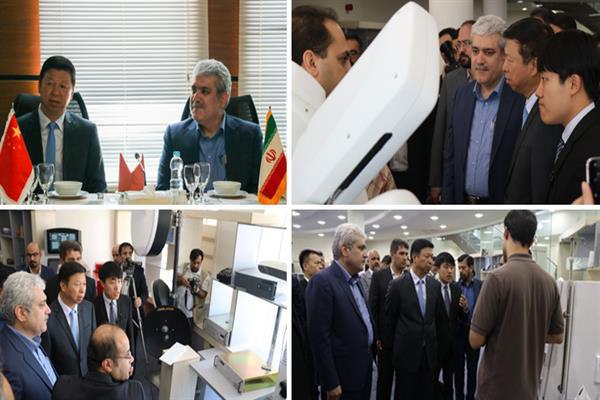
Tao made the remarks on Tuesday after holding talks with Iran’s Vice President for Science and Technology Sorena Sattari and accompanying him in a tour of Pardis Technology Park in Tehran.

“Iran and China have had good relations since a long time ago through Silk Road. Today, we are going to continue the cooperation through One Belt, One Road,” the Chinese official said.

He went on to say that despite international developments and challenges, China’s will to expand its mutual ties with Iran has not been undermined and it welcomes any expansion of ties in all areas.

“We also support Iran’s measures to protect its legal interests. The pressure by the US on Iran and china will end up in failure.”
China Praises Iran’s Admirable Progress in Technology“During my visit to Iran, I’ve come to realize that Iran exports not only oil and gas but also scientific and technological achievements,” he noted.

Tao then cited innovation as the main engine for development of China and said China maintains that innovation can play a key role in the scientific and technological development of each country.

“Iran and China enjoy untapped capacities to expand their mutual ties in various issues including technology,” he noted.

For his part, Iranian vice president said Iran and China have long-time relations and added the two sides have recently increased their cooperation in technology area.

“Today, we have 50 joint projects in this area.

Meanwhile, we have made huge progresses. At least five Iranian firms are active in China in this area. Some parts of the progresses made by innovative Iranian youths are visible in Pardis Technology Park,” he said.

For a brief review of Iran’s achievements in various fields of science and technology, check the book “Science and Technology in Iran: A Brief Review – 2019

He expressed satisfaction that Iran and China’s ties in technology area is on the rise and added unlike what many may think, Iran doesn’t solely depend on its oil and gas.

“We have lots of innovative human resources in our country who can make deep changes in our economy. The innovation youths have already begun their activities in knowledge-based firms.

Today, Iran has the largest knowledge-based firms in the region,” he said.

According to Sattari, over the past year, the number of Iranian startups and knowledge-based firms has increased significantly.

“Today, even some traditional investors have turned into the new area. We have over 40 technology parks in Iran,” he concluded.
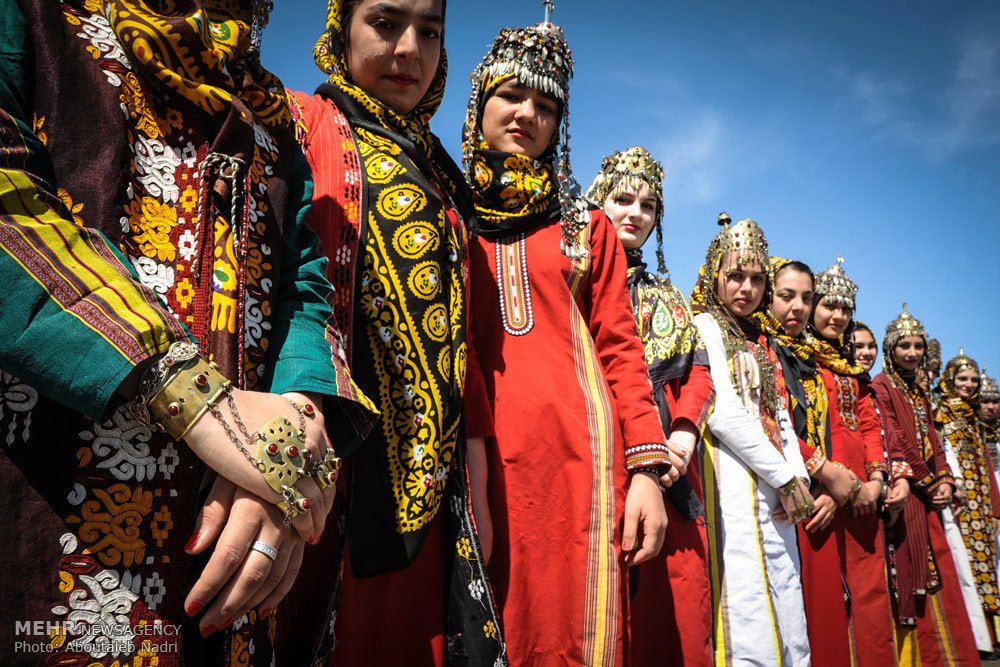
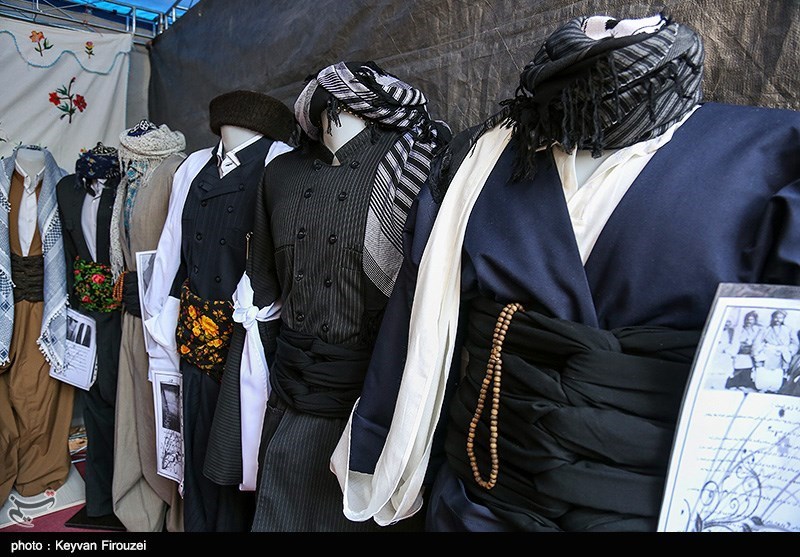
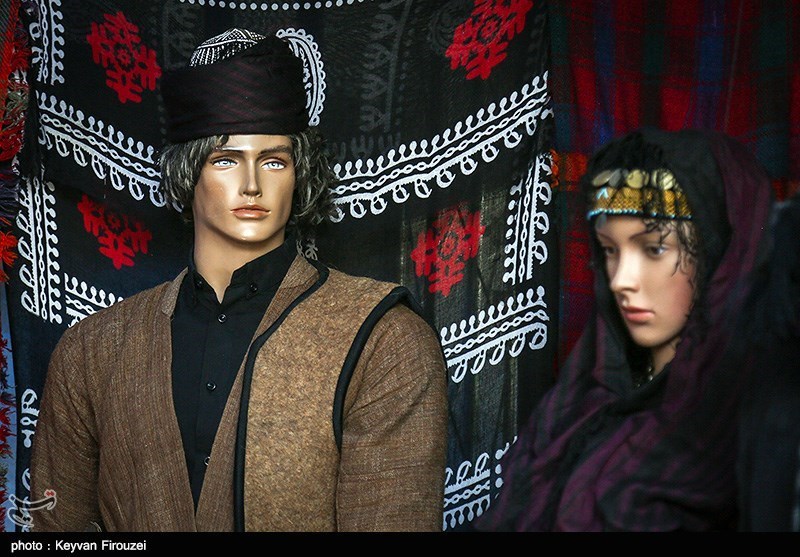
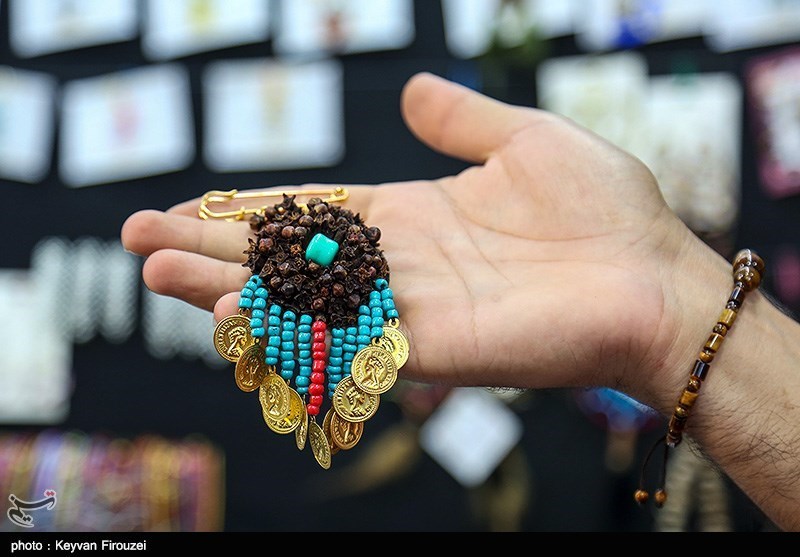
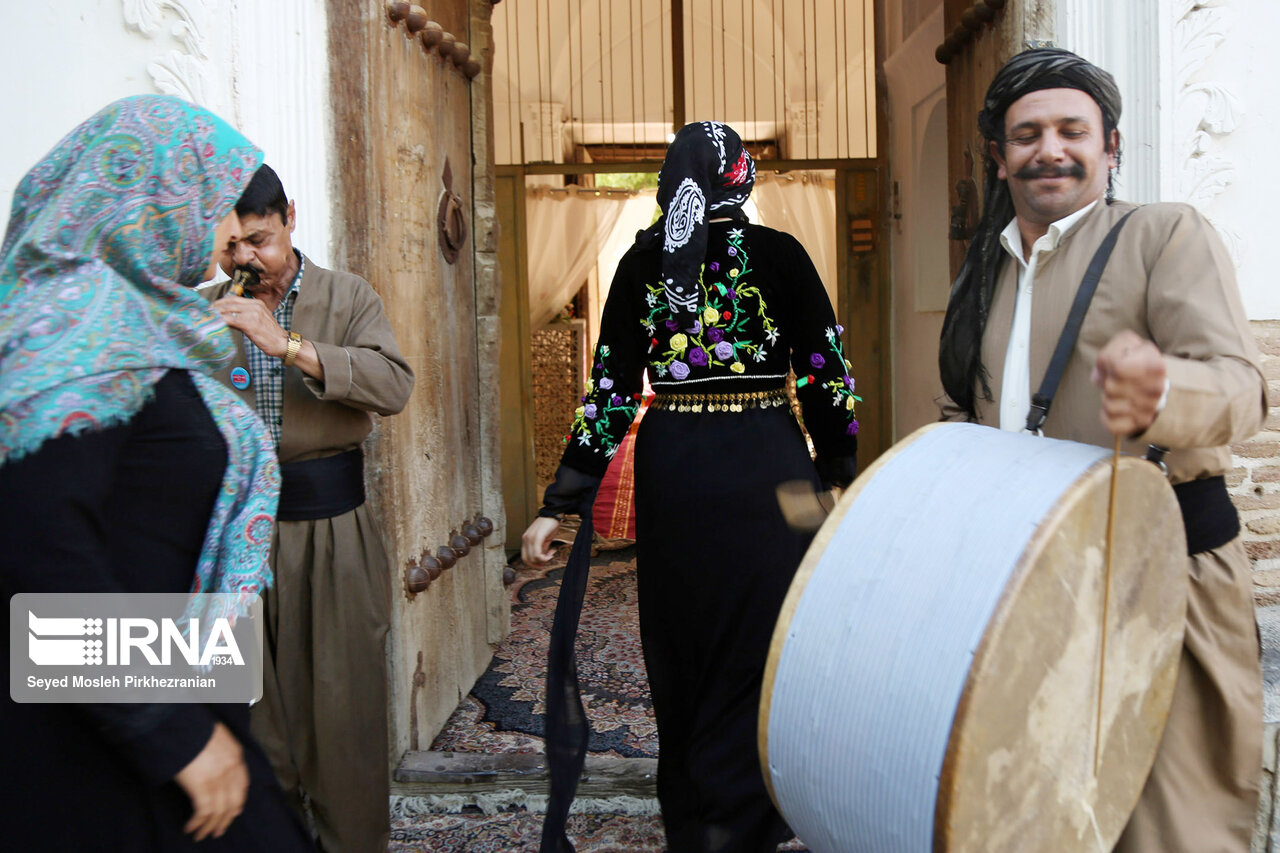
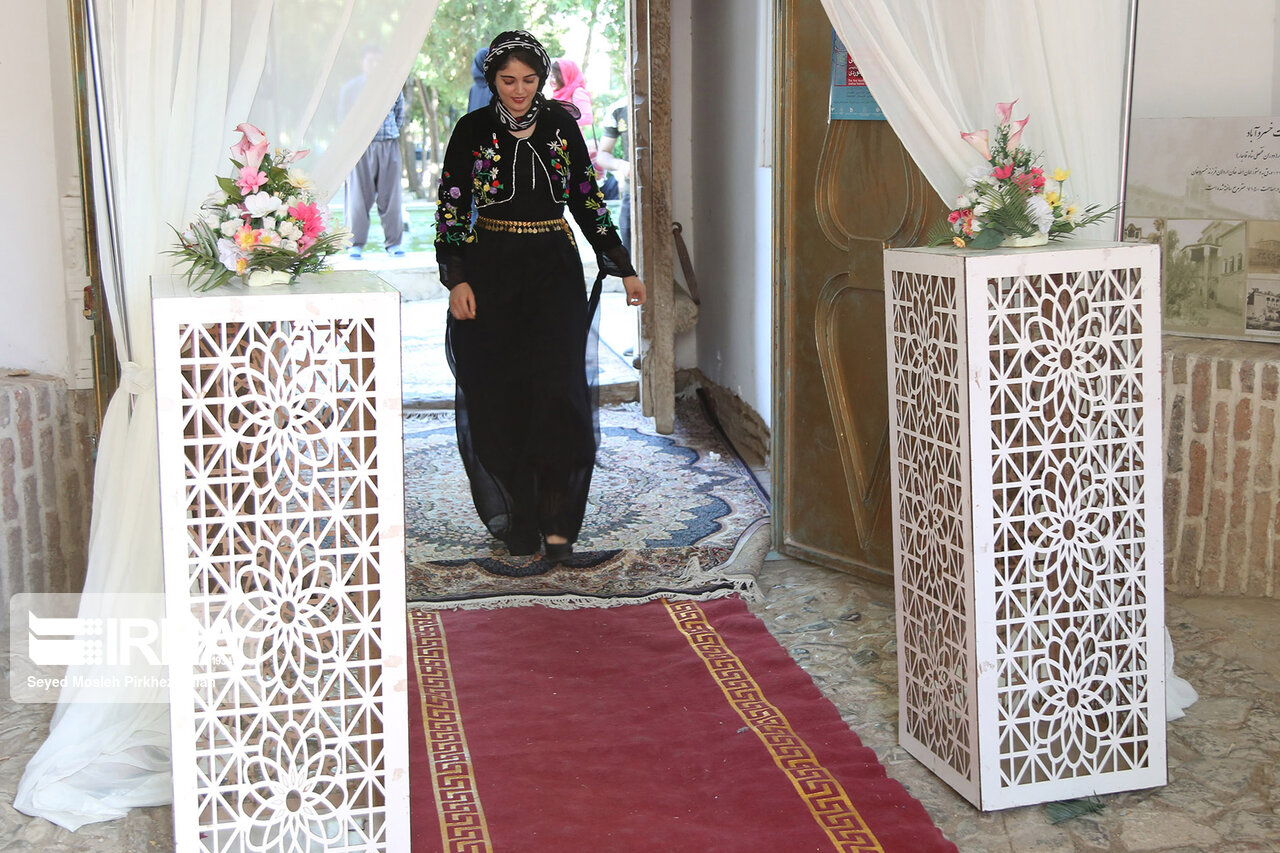
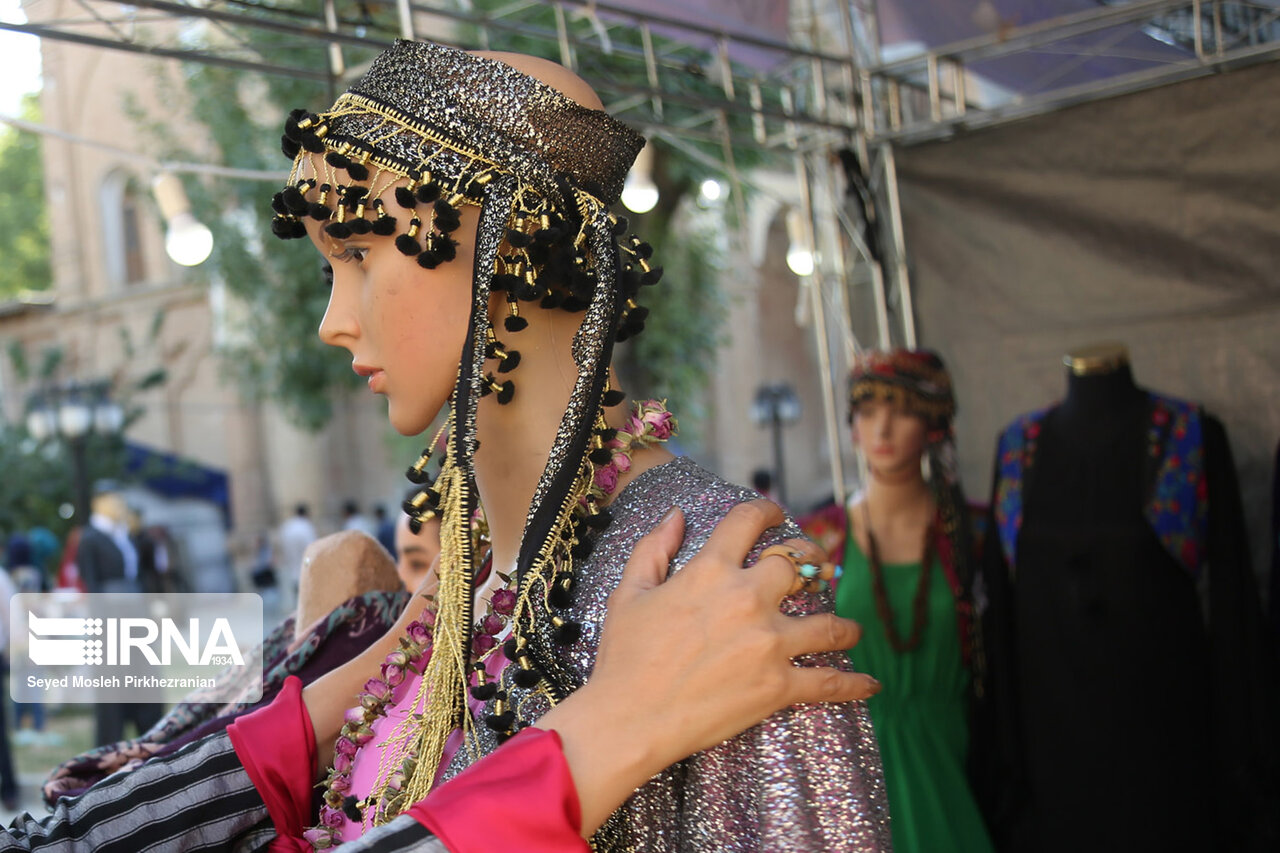
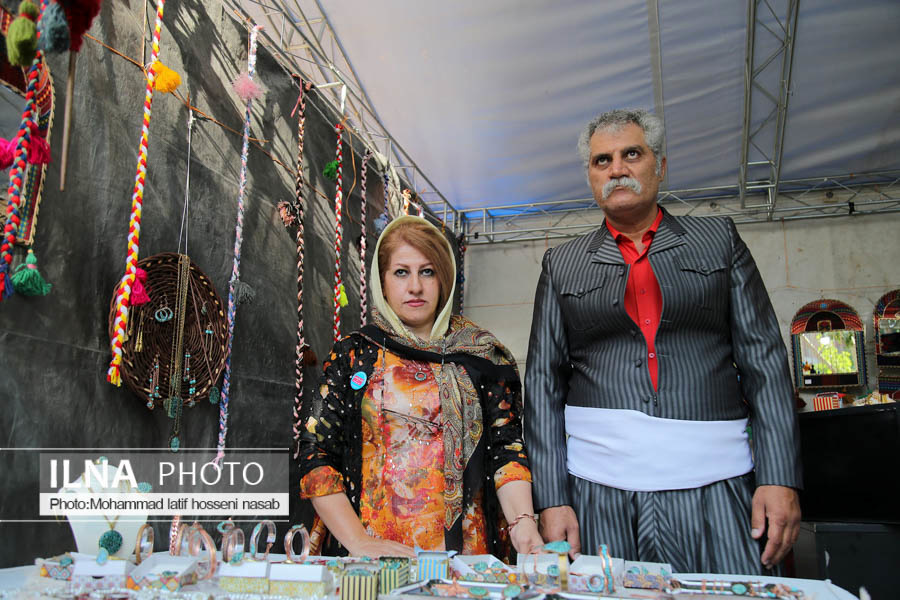
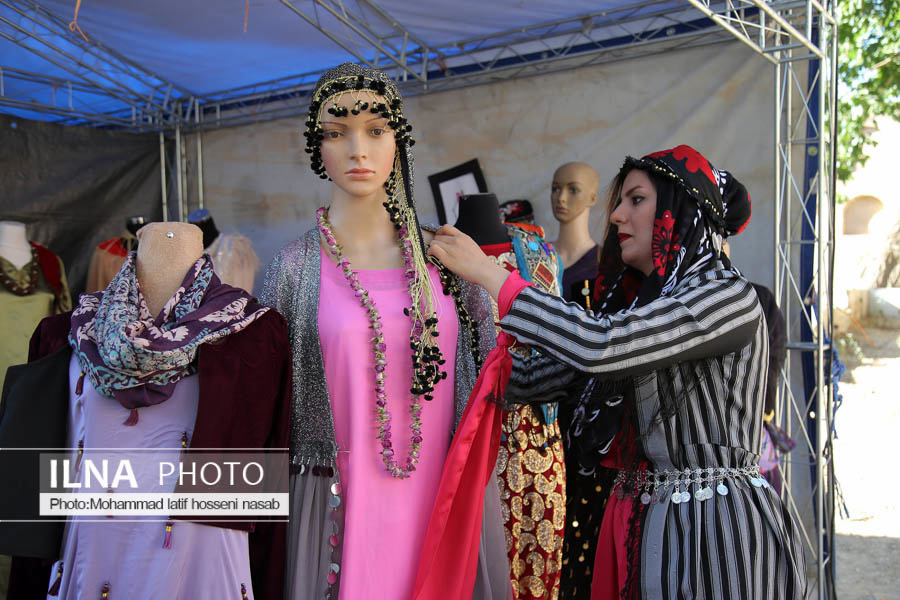
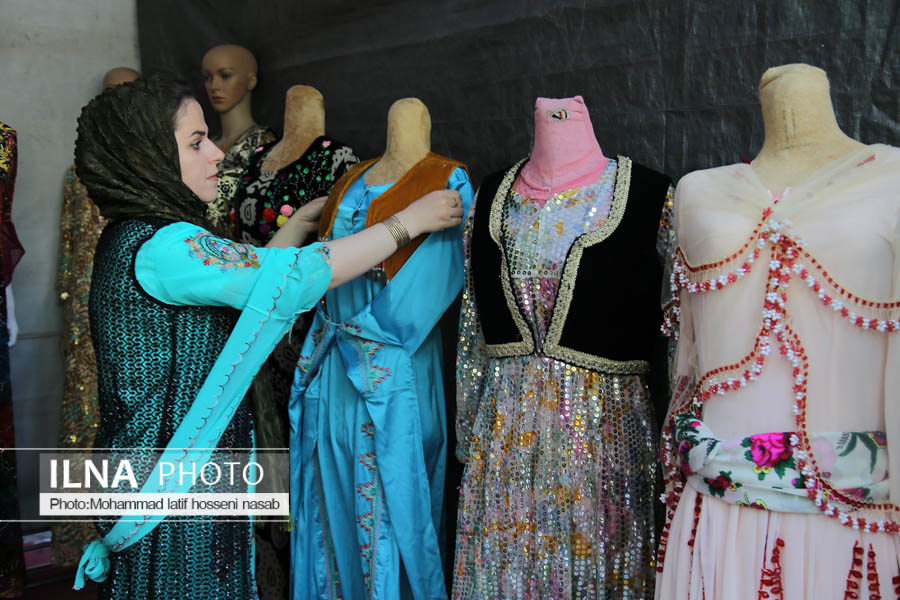
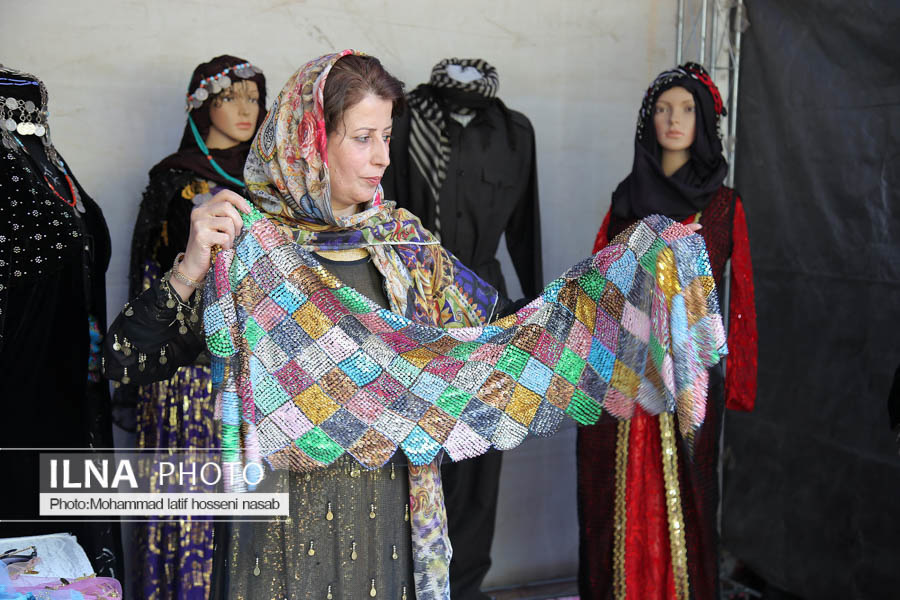
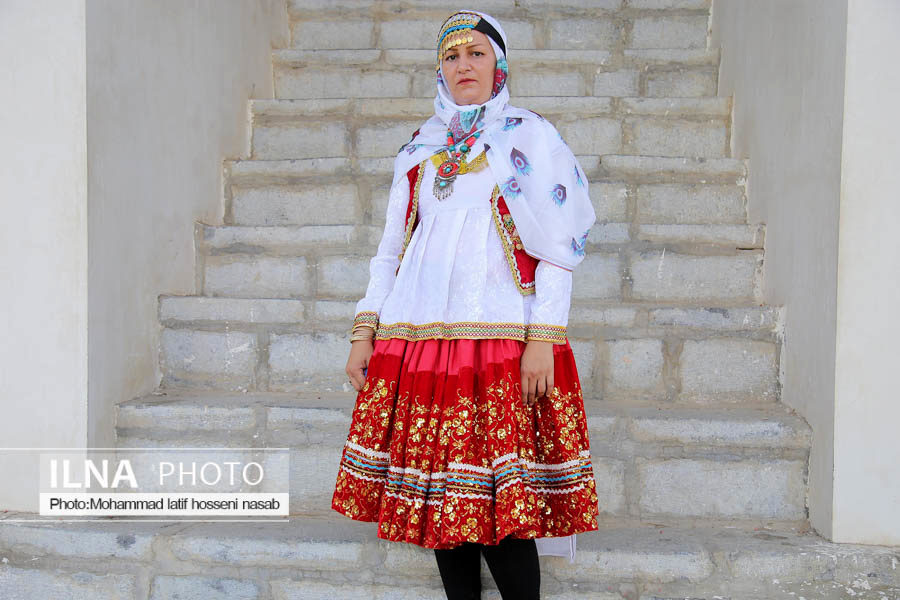
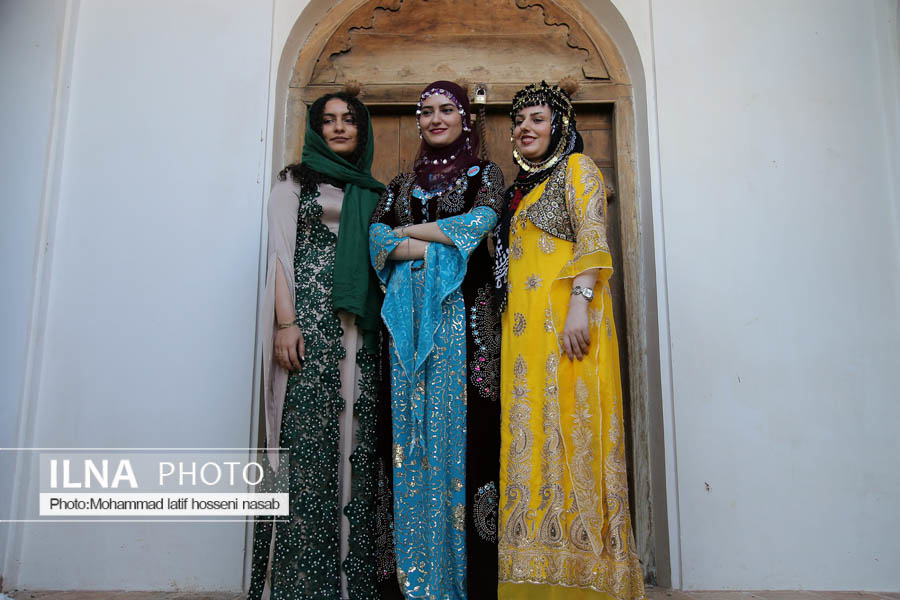
First Festival of Kurdish Fashion, Costumes Held in Iran

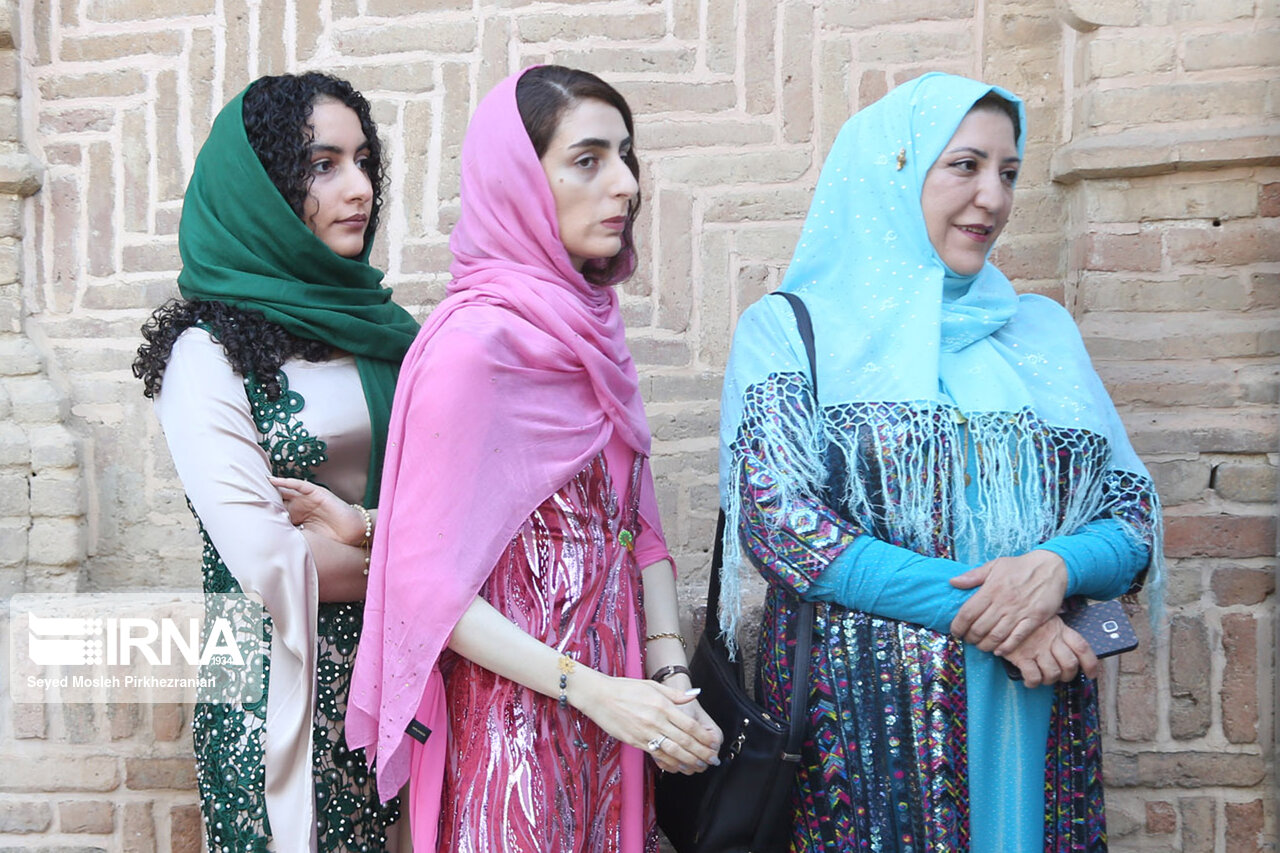
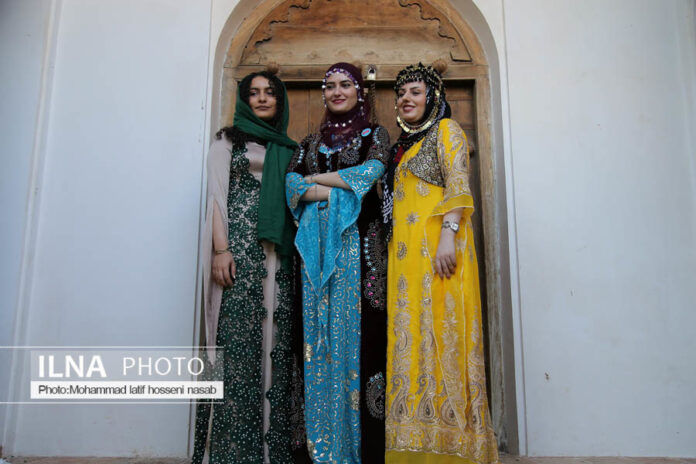
People from provinces of Ilam, West Azarbaijan, Kermanshah, Khorasan Razavi and Kurdistan participated in the event.

The Kurds of Iran are one of the most ancient peoples and tribes of the Iranian plateau that now live in large areas of this land.

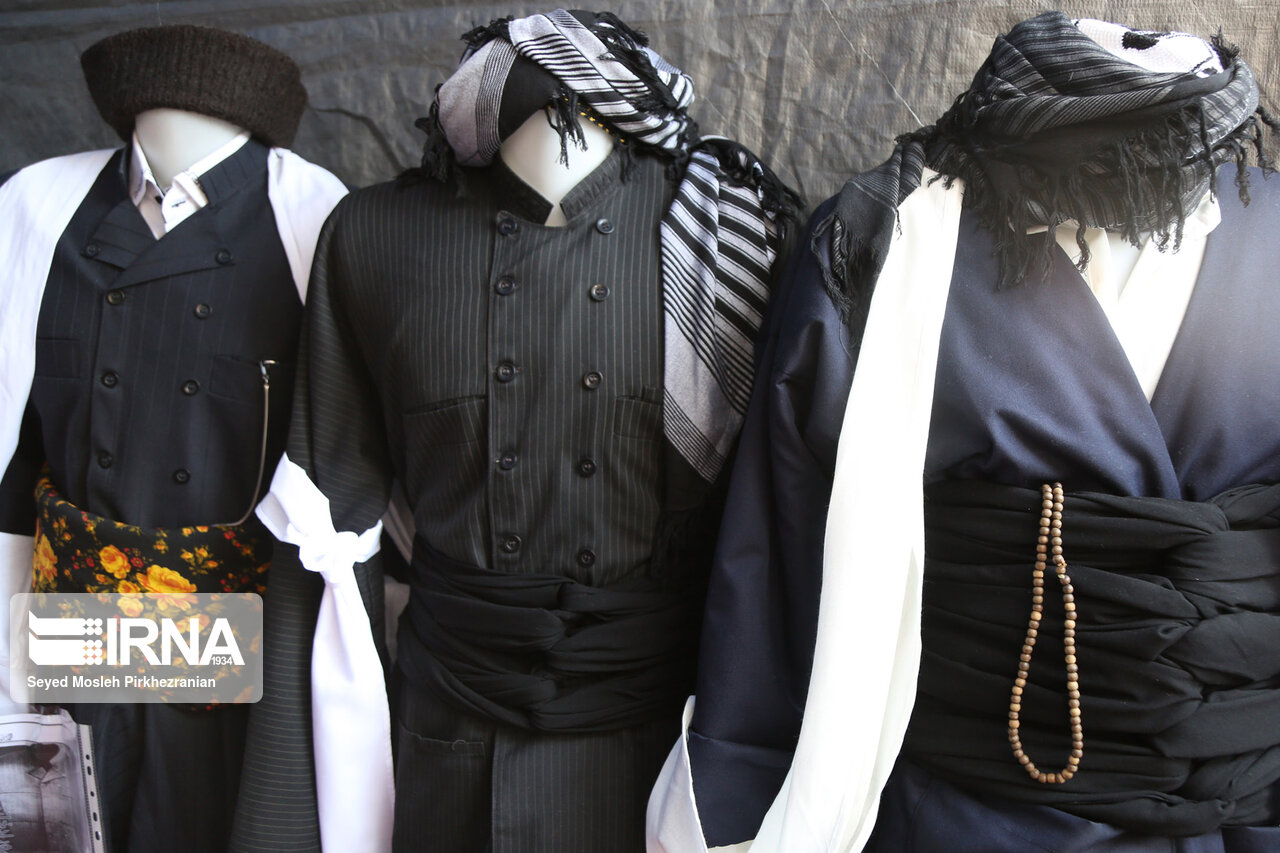
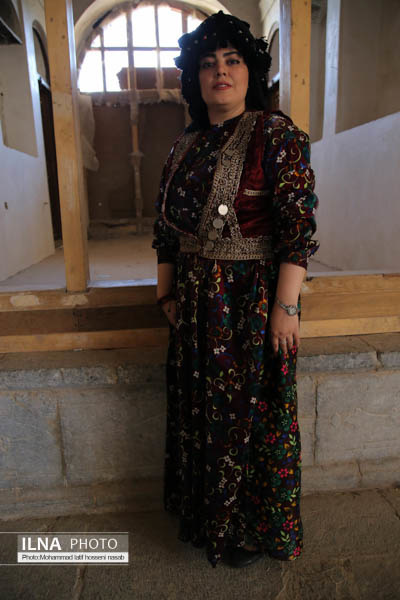
Among the customs of these people, one can still find one of the most beautiful clothing and garments of the world; colorful, high-quality garments used by the Kurdish people over the centuries, whether in Iran or Iraq.

Kurdish local costumes for men and women are made up of various parts and sometimes there are special rituals to wear them.

Apart from the obvious characteristics that are found in each of the Kurdish villages and tribes of Iran, there are general commonalities among the Kurdish local costumes.

The festival held in Sanandaj was mainly aimed at introducing these costume for the first time.

First Festival of Kurdish Fashion, Costumes Held in Iran
Culture of Hijab in Iran; From Past to Present

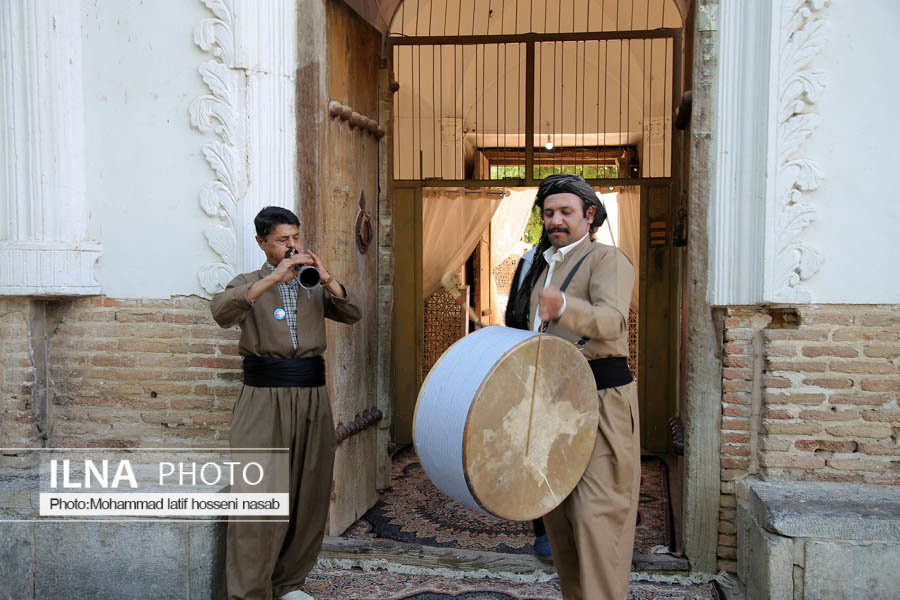
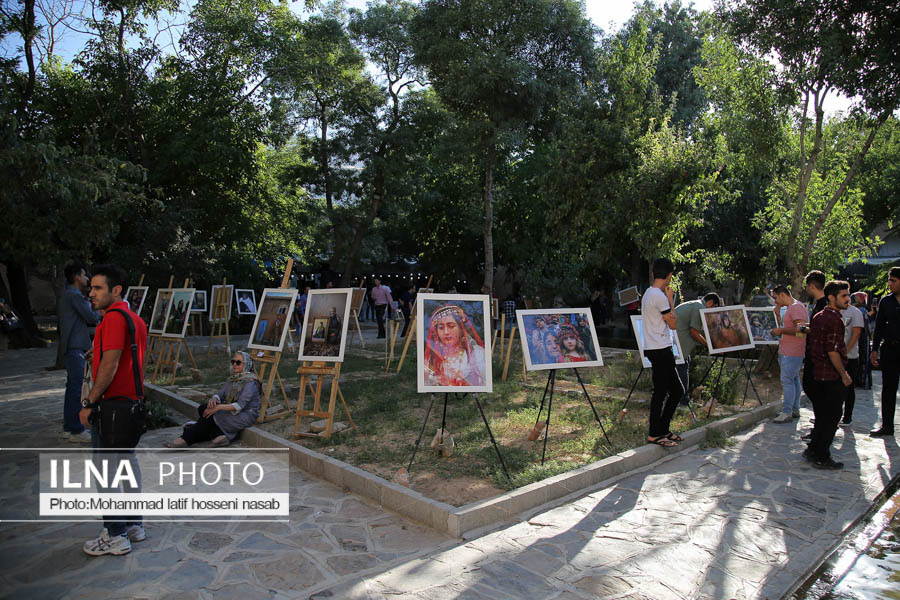
The Kurdish Fashion and Clothing Exhibition was held at Khosro Abad Mansion and Fajr Cultural and Artistic Complex in Sanandaj from July 27 to 30.

Khosrow Abad Mansion used to be the government and military headquarters of the city during the Qajar period, but was mostly a place for celebrations, ceremonies, and served as the governmental residence.

Inside the garden you can find inscriptions bearing the name of Fath-Ali Shah Qajar and Amanollah Khan.

What follows are photos of the festival retrieved from various sources:

Iran, China Slam Trump Administration’s Unilateralism

Iran, China Discuss New Plan to Support Joint Scientific Projects

During the Tuesday talks, the two sides conferred on the most pressing bilateral, regional and international issues and developments.

The talks were particularly focused on friendly ties between Tehran and Beijing in all fields, especially the meetings between the Iranian and Chinese presidents during the past few years.

They also discussed the two countries’ common strategic view of international developments, including the US’ unilateralist policy in violation of international rules and regulations, and its efforts to impose its hegemony on the world.

The Chinese diplomat earlier held talks with a number of Iranian officials including First Vice-President Es’haq Jahangiri.

In the meeting, Jahangiri called on China and other countries friendly with Iran to buy more Iranian oil amid the US’ sanctions on the Islamic Republic.

“Even though we are aware that friendly countries such as China are facing some restrictions, we expect them to be more active in buying Iranian oil,” SHANA quoted Jahangiri as telling the visiting senior Chinese diplomat.

China’s crude oil imports from Iran sank almost 60% in June from a year earlier, Chinese customs data showed on July 27, following the end of a waiver on US sanctions at the start of May.

A Look at Iranian Newspaper Front Pages on July 30

A Look at Iranian Newspaper Front Pages on November 19

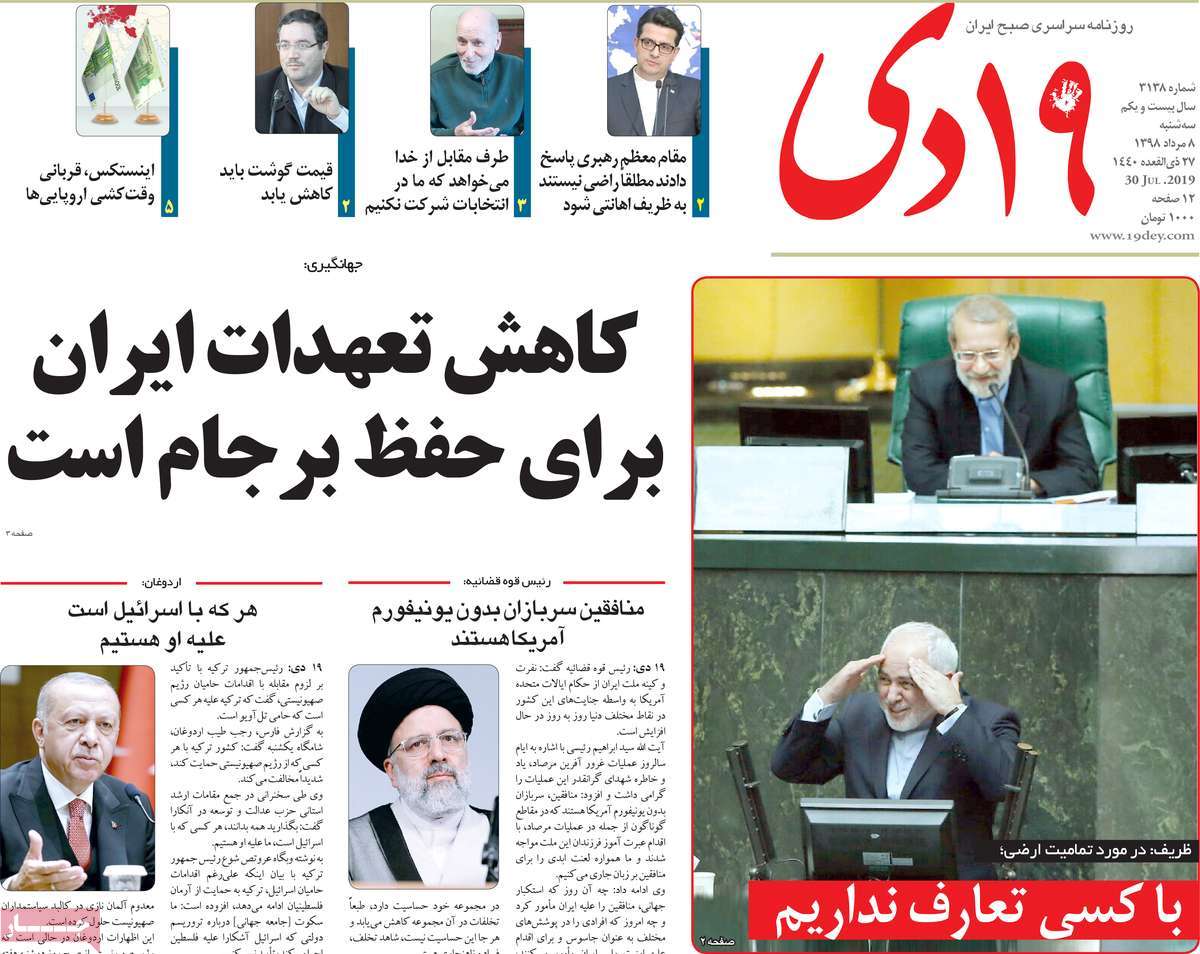
19 Dey:
1- Judiciary Chief: MKO Are US Soldiers without Uniform


A Look at Iranian Newspaper Front Pages on July 30


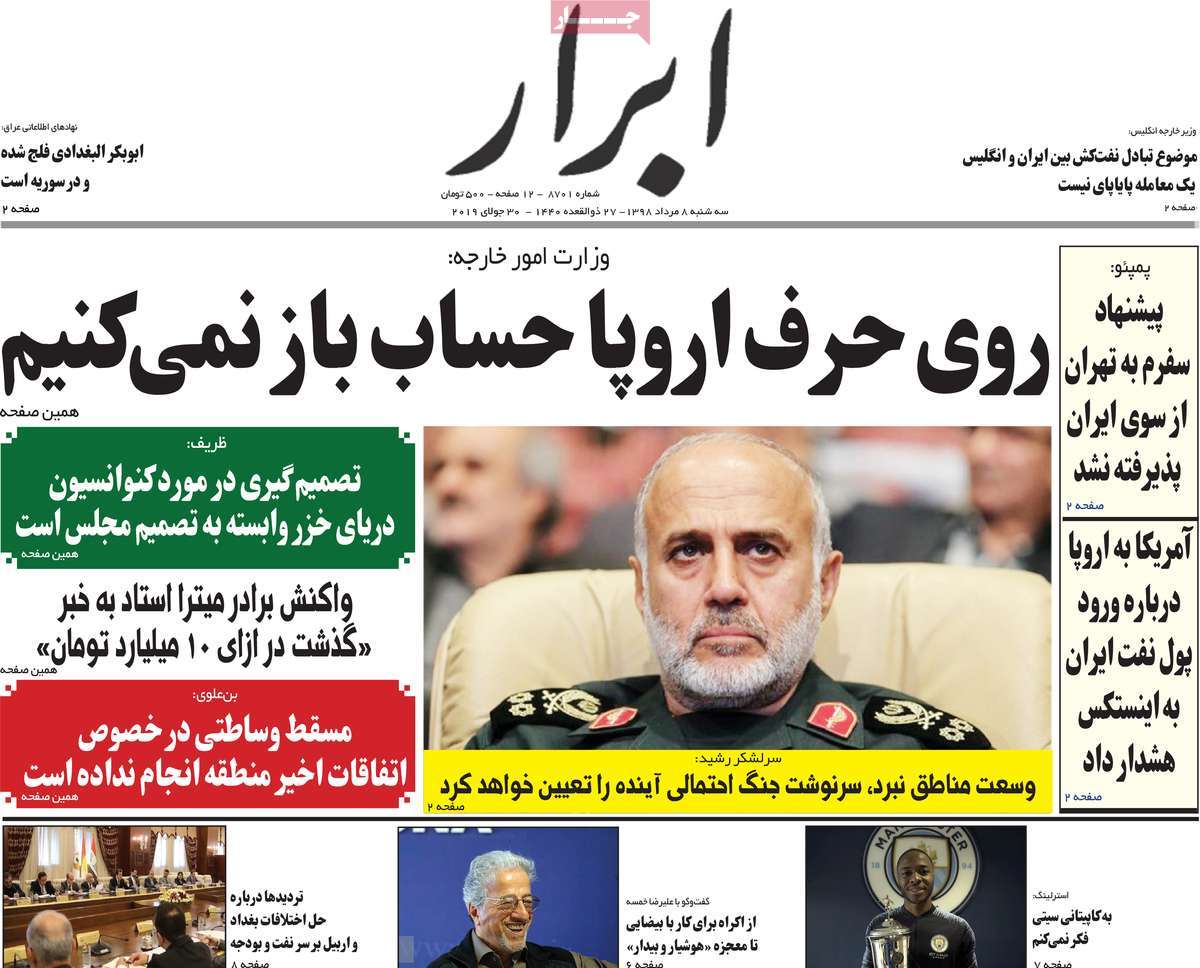
Abrar:
1- Iran Doesn’t Count on Europe’s Words: Foreign Ministry
2- Pompeo: Iran Didn’t Accept My Offer to Visit Tehran
3- US Warns Europe about Use of INSTEX to Give Iran Oil Money

A Look at Iranian Newspaper Front Pages on July 30


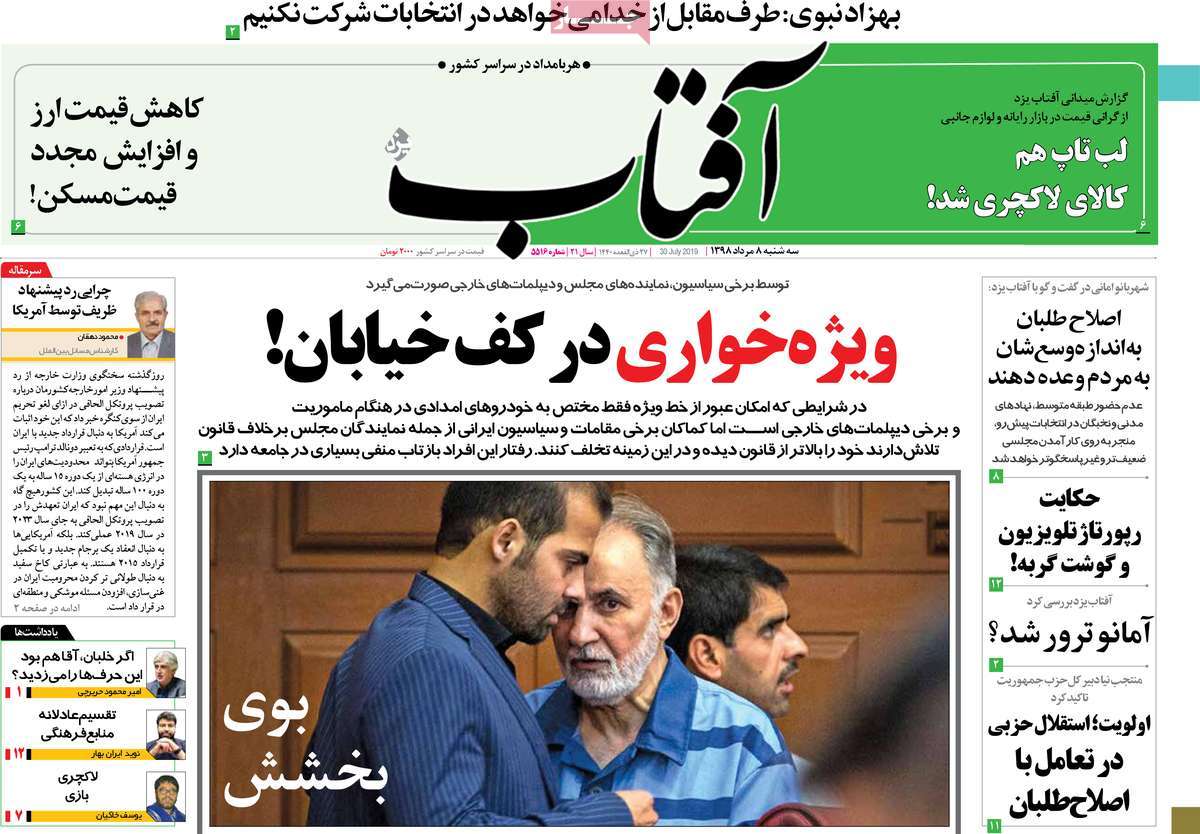
Aftab-e Yazd:
1- Why Zarif’s Offer Was Rejected by US [Editorial]
* Iran Had Offered US to Sign Additional Protocol into Law in 2019 in Return for Sanctions Removal

A Look at Iranian Newspaper Front Pages on July 30


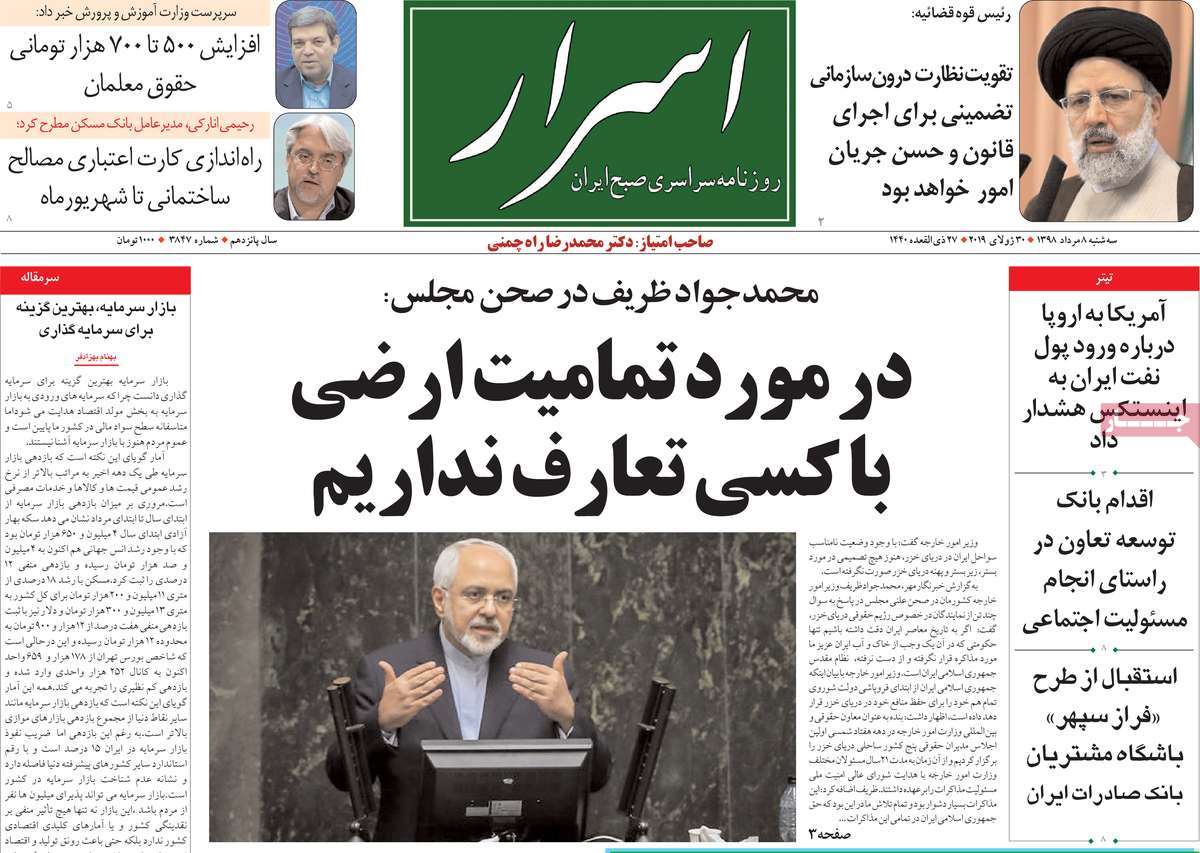
Asrar:
1- Zarif: Iran Not to Compromise with Anyone on Territorial Integrity

A Look at Iranian Newspaper Front Pages on July 30


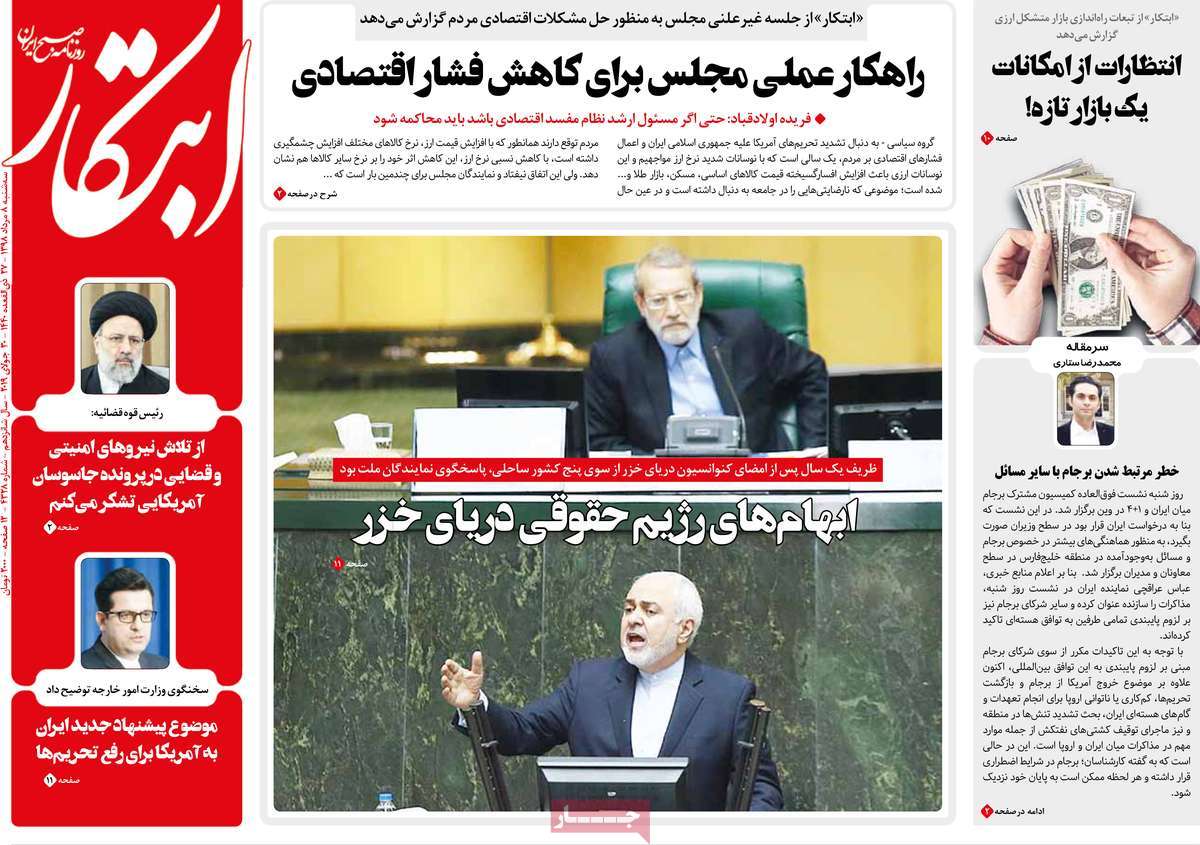
Ebtekar:
1- Ambiguities about Caspian Sea’s Legal Regime
* Zarif Responds to Lawmakers’ Questions One Year after Signing of Convention

A Look at Iranian Newspaper Front Pages on July 30


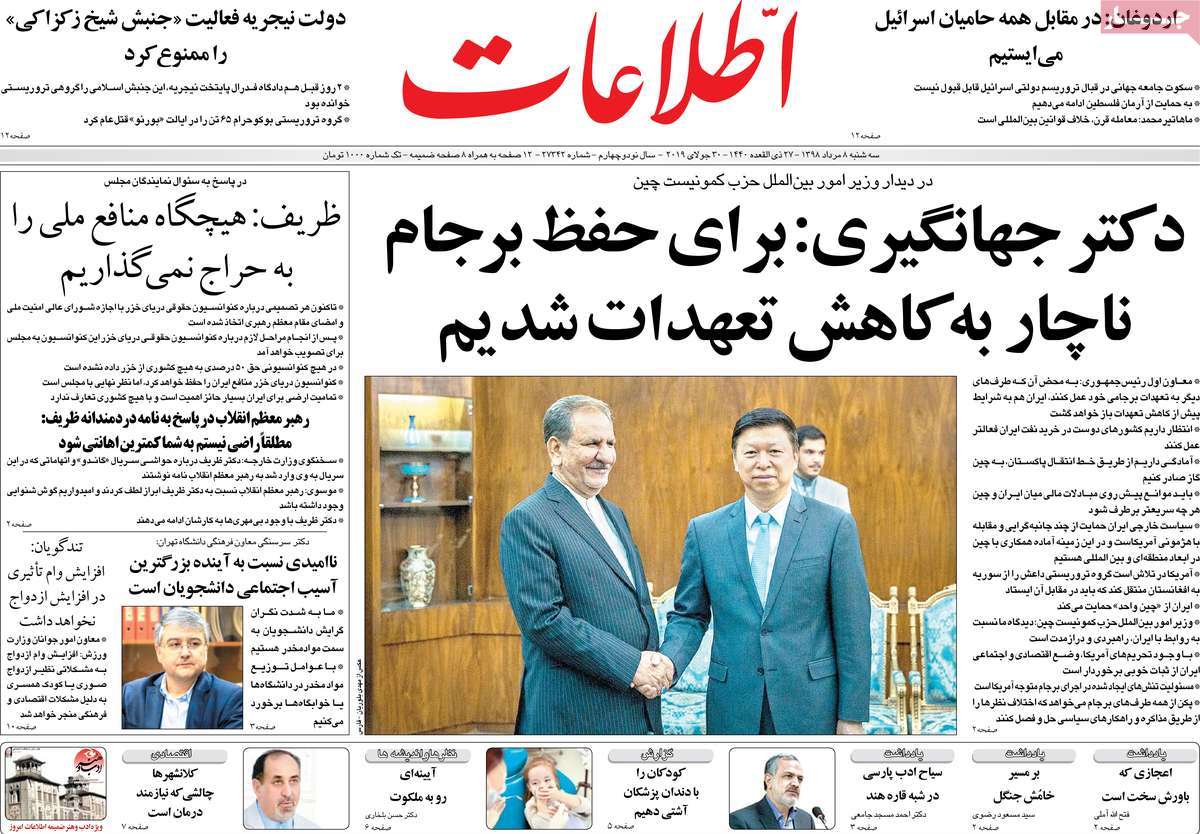
Ettela’at:
1- Iran First VP: We Had to Reduce Our Commitments to Save JCPOA
2- Zarif in Parliament: We’ll Never Put for Sale Our National Interests
3- Nigeria Bans Activity of Zakzaky Movement

A Look at Iranian Newspaper Front Pages on July 30


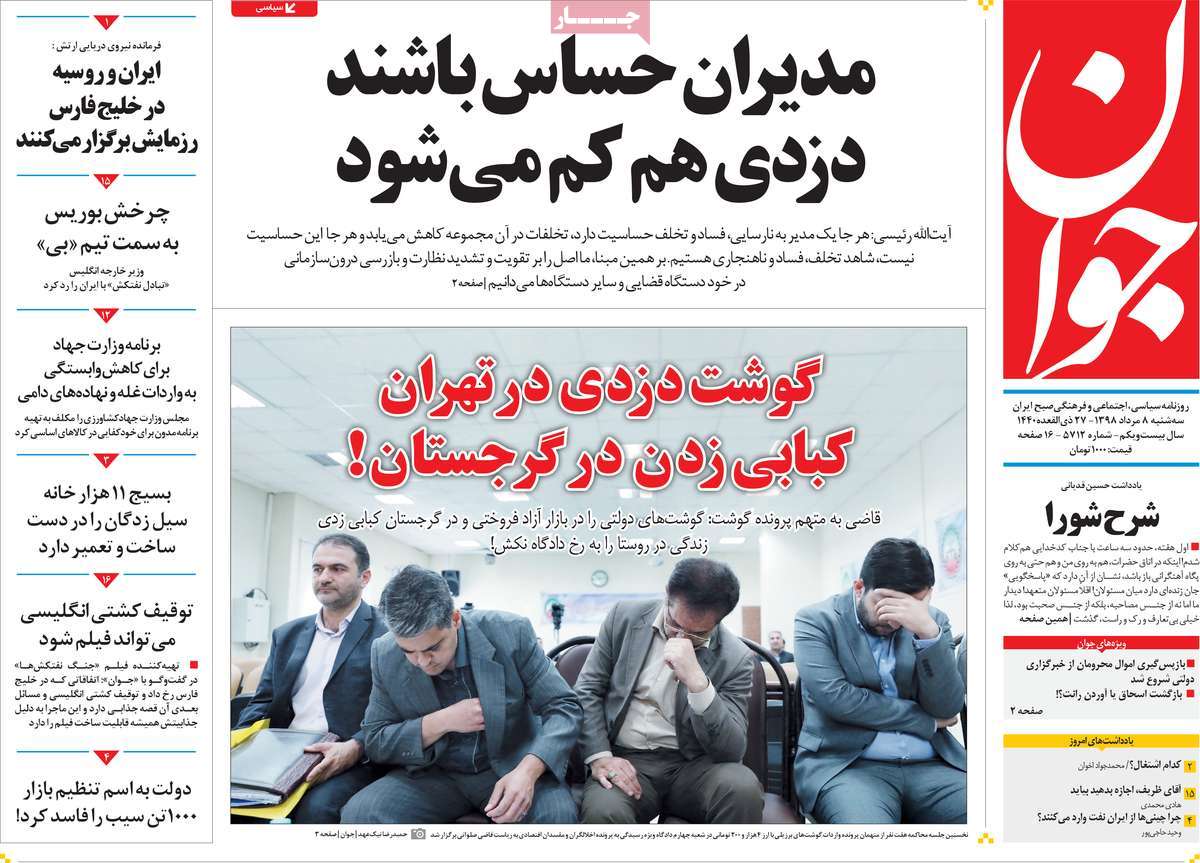
Javan:
1- Iran’s Navy Chief: Iran, Russia to Hold Joint Drills in Persian Gulf
2- Boris Turns to B-Team: UK Rejects Exchange of Oil Tankers

A Look at Iranian Newspaper Front Pages on July 30


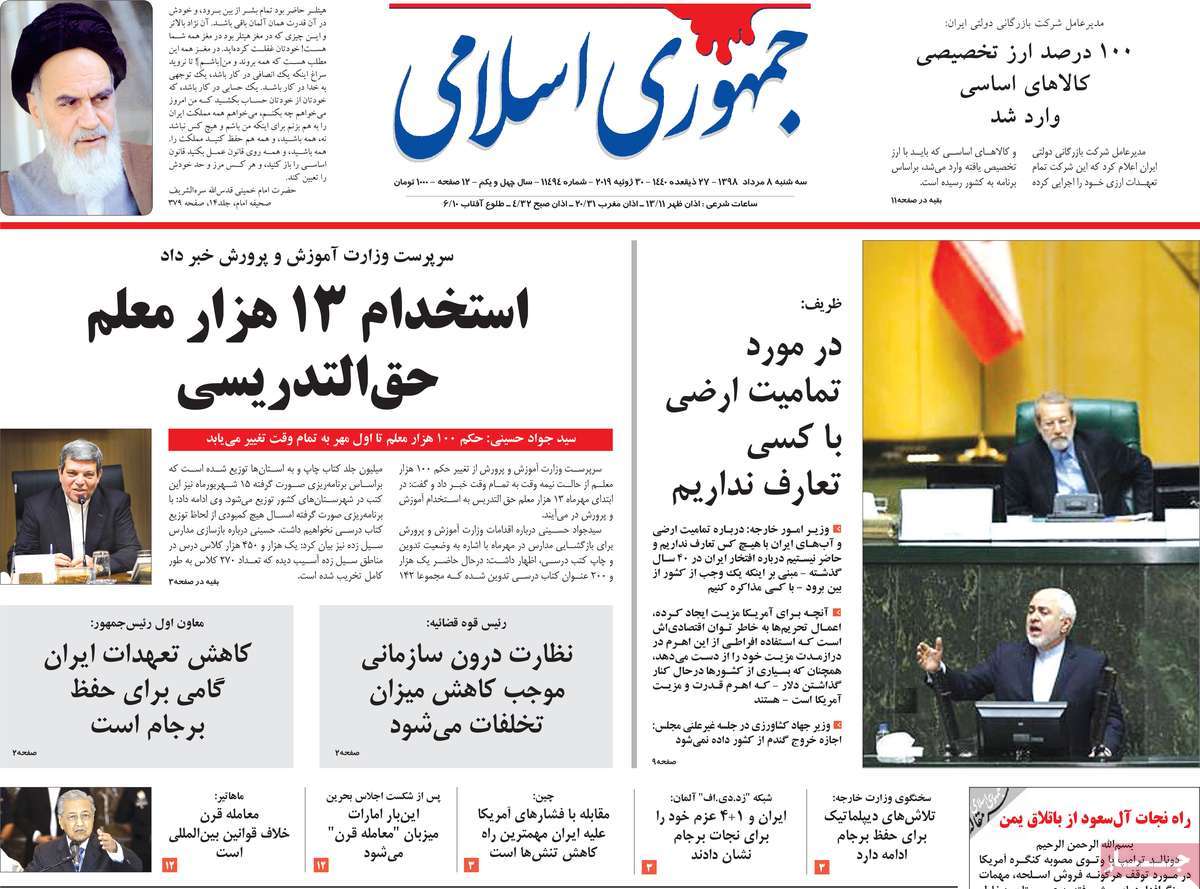
Jomhouri Eslami:
1- Diplomatic Efforts to Save JCPOA Will Continue: Spokesman
2- China: Countering US Pressures against Iran Most Important Way to Ease Tensions

A Look at Iranian Newspaper Front Pages on July 30


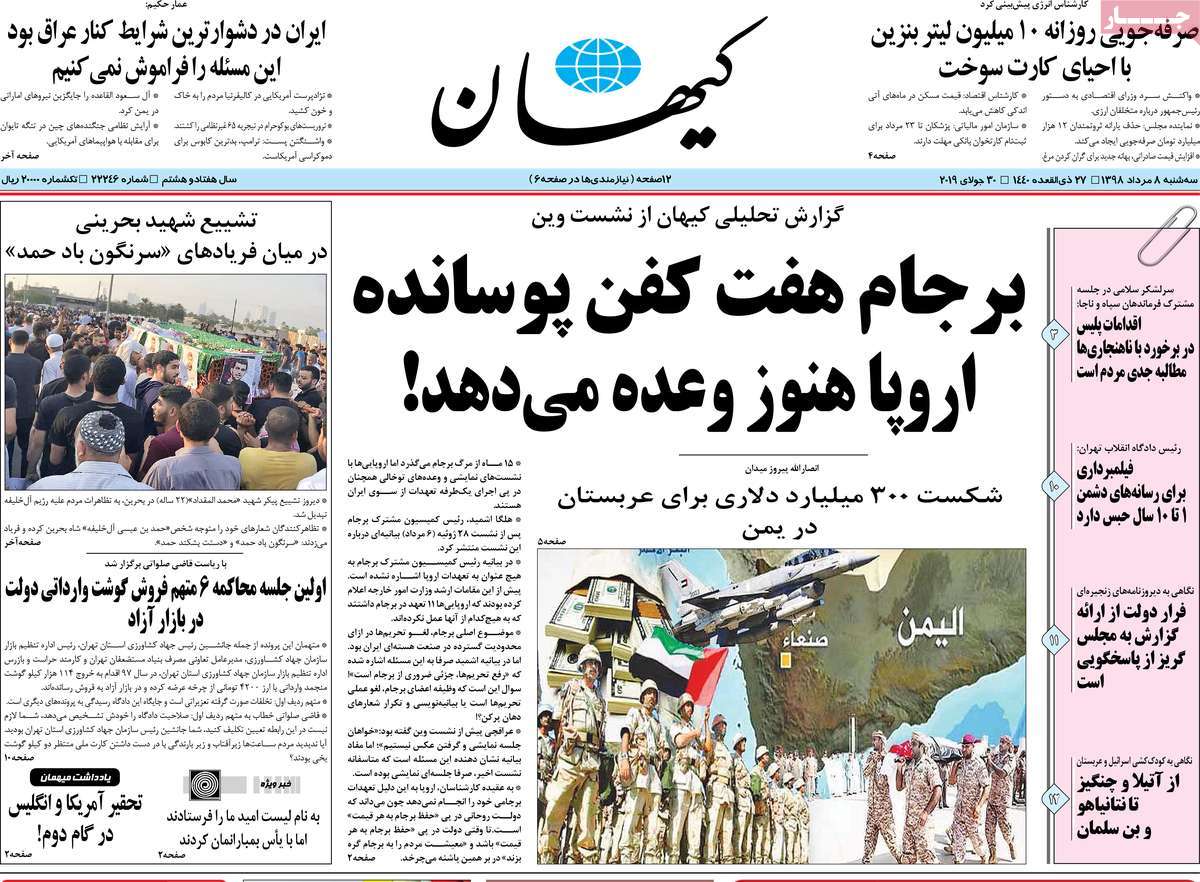
Kayhan:
1- JCPOA Is Long Dead, Europe Still Giving Promises!
2- Ammar Hakim: Iran Stood by Iraq in Hardest Conditions; We Won’t Forget It

A Look at Iranian Newspaper Front Pages on July 30


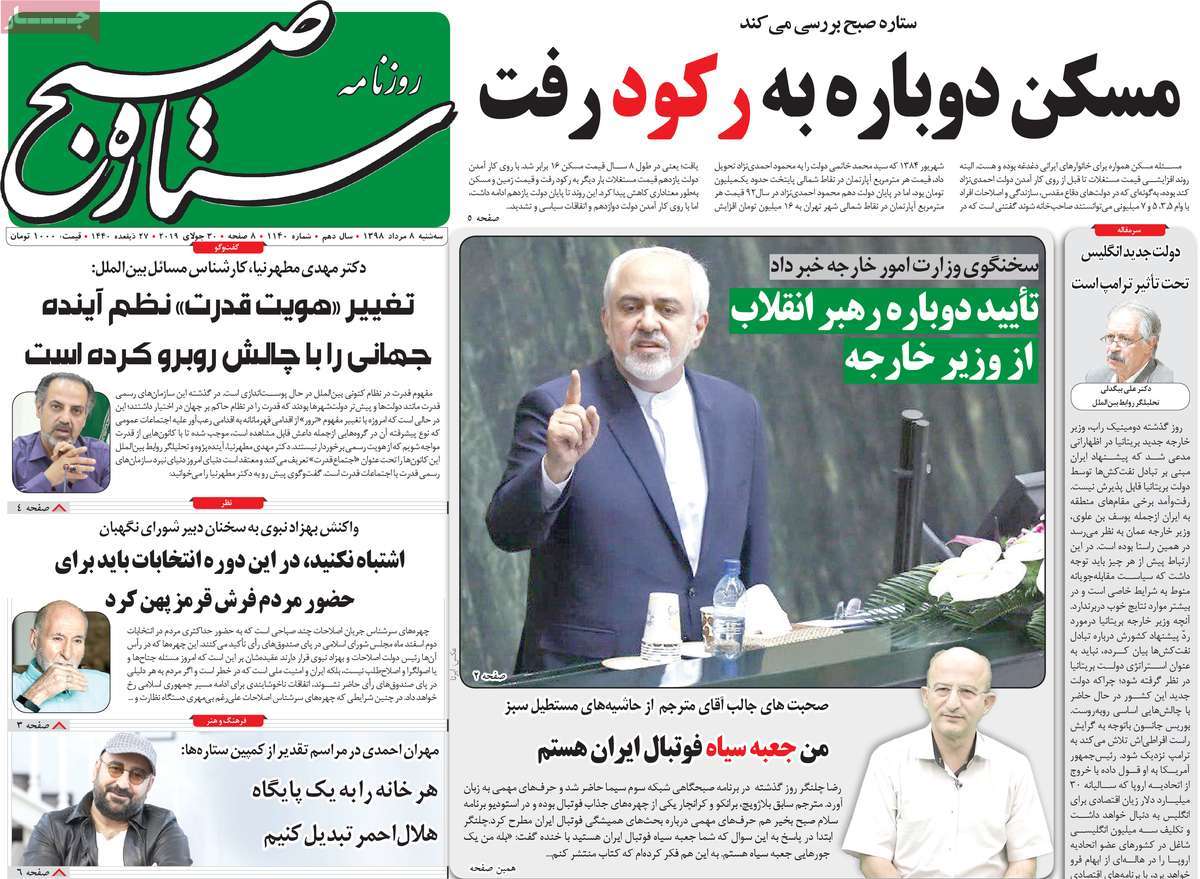
Setareh Sobh:
1- Iran Leader Once Again Endorses FM Zarif
2- UK New Government under Trump’s Influence [Editorial]

A Look at Iranian Newspaper Front Pages on July 30


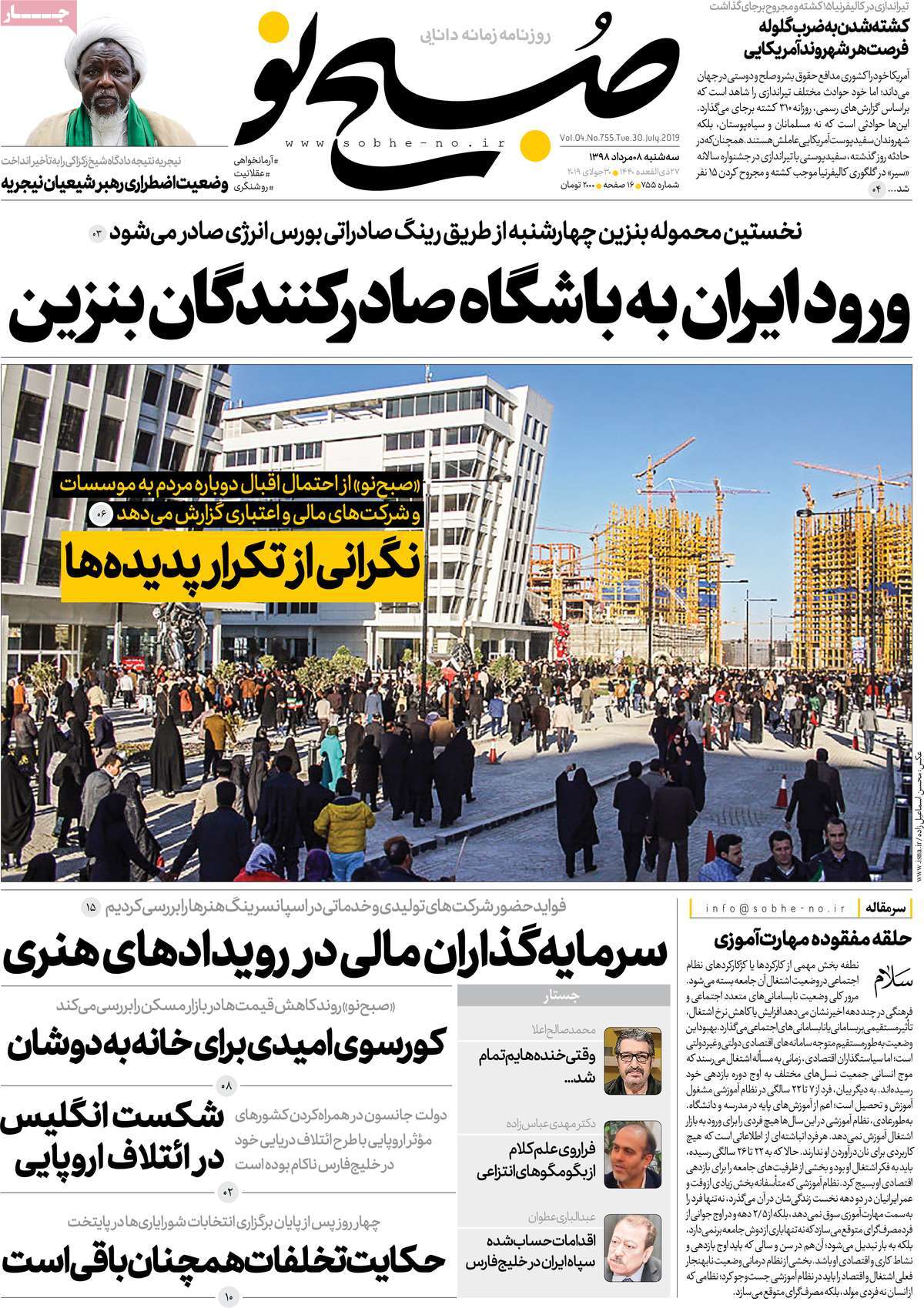
Sobh-e Now:
1- Iran Joins Club of Petroleum Exporters

A Look at Iranian Newspaper Front Pages on July 30

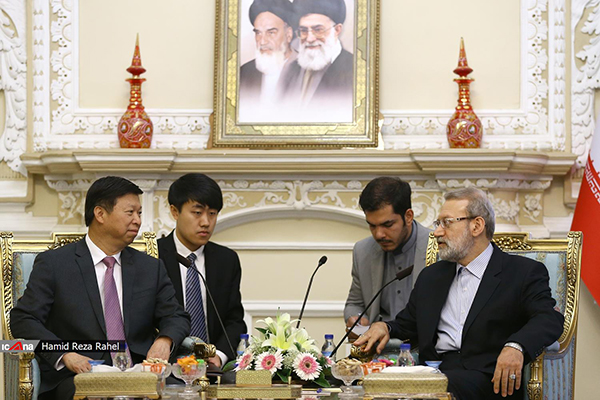
Iran Has 25-Year Plan for Ties with China: Larijani

He made the remarks on Tuesday in a meeting with the head of the International Liaison Department of the Communist Party of China, Song Tao, in Tehran.

“To turn the plan into a joint strategic document, we need to hold negotiations with the Chinese side,” Larijani said.

According to Larijani, the idea to develop a plan to expand mutual ties between Iran and China was underlined by Chinese President Xi Jinping just recently. “Now we have developed the plan and to make it a joint strategy, we need to sit for talks with the Chinese side.”

Larijani also touched on the historical civilizations of Iran and China and said during his latest visit to China, he held talks with the Chinese officials and the two sides opened a new chapter in their relations.

He then referred to the latest remarks by Tao on the US pressure on Iran and China and said the US enmity is not tactical but strategic. “So, we need to develop a strategic plan to cope with the US pressure.”

The Iranian top lawmaker then underlined that negotiations between Iran and China can thwart the US plots but to develop successful plans, the two sides need to take some practical steps.

Larijani also said Iran’s leader and government are interested in expanding mutual ties with china.

Development Doesn’t Need Western Prescriptions

For his part, the Chinese politician said today the region is facing a complicated situation and Iran and China should remain in close contacts to cope with the current crises.

Tao went on to say that China’s will to develop further relations with Iran has not changed. “Iran and China as two historical civilizations in the world have already played their key role in the development of the Asian continent.”

“Tehran and Beijing have made huge progresses and the two sides’ experiences reveal that developing countries don’t necessarily need western prescriptions to make achievements in various areas,” he said.

He then referred to the fate of the Iran nuclear deal following the US withdrawal from the nuclear accord and said China supports Iran’s efforts to preserve the JCPOA.

Tao also referred to the US pressure on Iran and China and said the two countries have already stood against the pressure. “One of my main goal during this visit is to discuss a set of coordinated measures to stand against the US hegemony.”

Baghdad’s Silence on Israeli Raids against Iraqi Soil Raises Eyebrows

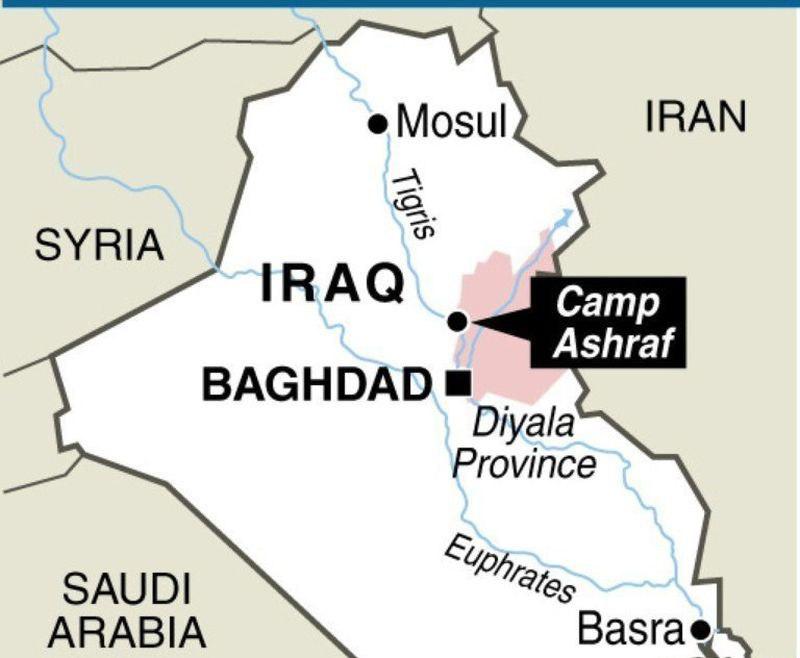
Israel conducted two air strikes on Iraqi soil within ten days of each other. One of the assaults was carried out on a Popular Mobilization Forces (PMF) base in the town of Amirli in Salahuddin province, and the other one on the Abu Montazer al-Muhammadavi base in northern Diyala province which has been under the control of the PMF for quite some time now.

The Abu Montazer al-Muhammadavi base is the former Camp Ashraf which used to be the base of the MKO terrorist grouping and has now been captured by the PMF.

The true extent of the attack on this base is not clear. Some claim at least 40 people were killed and dozens of others were wounded, among them Iranians.

Maryam Rajavi, the ringleader of the MKO, travelled to Israel last week shortly before the offensive took place. So, there is a possibility that there could be a link between her trip to Tel Aviv and the attack. It is also alleged that the two sides discussed security issues. As the MKO has the most information about the details of this region where they have lived for around 30 years, they are likely to have provided Israel with information in that regard.

Baghdad’s Silence on Israeli Raids against Iraqi Soil Raises Eyebrows

However, the attack on the PMF base could be examined from other perspectives as well. As a case in point, the development shows Israel’s sphere of animosity has got close to Iran’s borders more than ever. The Muhammadavi base is only 80 kilometres away from Iran. That means Israel, which previously did not dare attack areas with common borders with Iran, and most of whose attacks were conducted on Syrian soil and areas bordering the occupied territories, has now plucked up the courage to expand the sphere of its attacks on Iraq.

In a written message to Iraqi authorities, the US said it was not involved in the attacks. Nevertheless, Tel Aviv would not be able to carry out such an attack without Washington’s green light. First of all, why hadn’t Israel dare conduct such attack in Iraq before? Second, the United States runs military bases in Iraq and monitor’s the country’s airspace as well. So, it could have informed the Iraqi government if its airspace had been violated, but did not do so.

That begs the question why the US has given Israel such a permission? First, the US avoids any direct escalation of tensions with Iran; so, the US wouldn’t take any action against the PMF, which Washington regards as pro-Iranian. Secondly, the United States does not want to pay the price for the security of others, including Israel. Last year, US President Donald Trump said on one occasion that Washington enough state-of-the-art weapons as well as considerable financial help. He said it was time for Israel to act to ensure its security without expecting any more help from the White House. So, it can be concluded that the US has given Israel the thumbs up for the attack, and at the same time, sent a message to Baghdad saying Washington was not involved in the offensive in order to ward off a possible faceoff with Iran.

However, the annoying question is why Iraqi authorities have, so far, not straightforwardly made any comments on that? Why hasn’t the Baghdad government adopted a clear stance on that?

While Iraqi officials, inxlusing Leader of Iraq’s National Wisdom Movement Seyyed Ammar Hakim, Head of the Badr Organization Hadi Ameri, Prime Minister Adil Abdul-Mahdi and President Barham Salih have underlined the need for Iraq to distance itself from any regional tensions, and have said they will not allow Iraq to turn into a place for settling political scores by foreign powers and will not allow Iraqi soil to be used as a threat against its neighbours, then how is it that the Iraqi government has not shown any reaction in that regard? It even seems the Iraqi government wants to gobble this not-so-easy-to-swallow stuff and pretend that nothing has happened. The attack on the PMF base and possibility of Iranian military advisors being killed is not something that Iran can easily ignore, especially when these attacks were conducted close to Iranian borders and were regarded as a kind of direct threat to Iran. The Iraqi government has remained silent and implicitly allowed Israel to attack its soil. So, will Iraq accept it if Iran reciprocates? Doesn’t this mean that the Iraqi government has gone back on its word (Iraq had said it would not allow foreign powers to use Iraqi soil to launch attacks on neighbouring countries) and has set the stage for confrontation among regional powers?

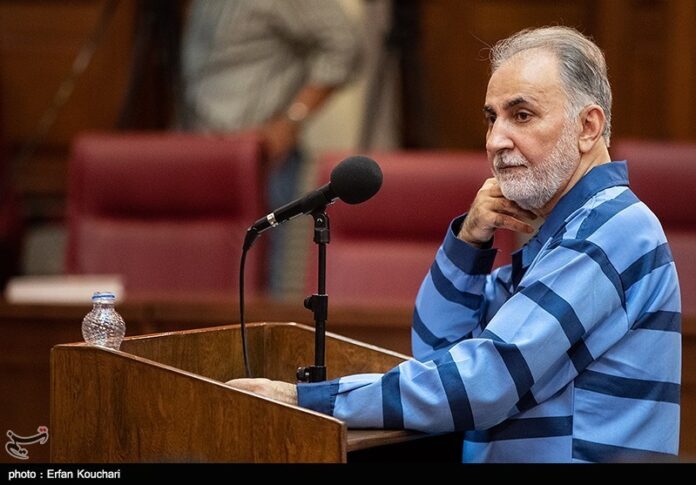
Top Iranian Politician Sentenced to Death for Killing Wife

“The verdict was today communicated to the family members and lawyers of the victim and the convict,” the spokesman told reporters in a press conference.

He said the court has arrived at the definite conclusion that a deliberate murder has happened and “issued a Qisas [retaliation in kind] verdict”, meaning capital punishment for Najafi.

Esmaeili said that the former Tehran mayor was also sentenced to two years in prison for illegally carrying a weapon.

Accused of shooting his wife Mitra Ostad at their home, Najafi appeared in a Tehran criminal court on July 13.

Ostad was murdered at her home in Tehran on May 28. Police found her body with several gunshots in her chest.

Najafi later went to the Criminal Police headquarters in person and confessed to the murder.

He had resigned from the post of Tehran’s mayor in April 2018, citing failing health for leaving the office.

A graduate of the Massachusetts Institute of Technology (MIT), 67-year-old Najafi was elected mayor of Tehran in August 2017.

Affiliated with the reformist political faction, he used to serve as the minister of education and the minister of science in various administrations.

He also took the helm at Iran’s Cultural Heritage, Handicrafts and Tourism Organization (ICHTO) during President Hassan Rouhani’s first term, but resigned after six months.

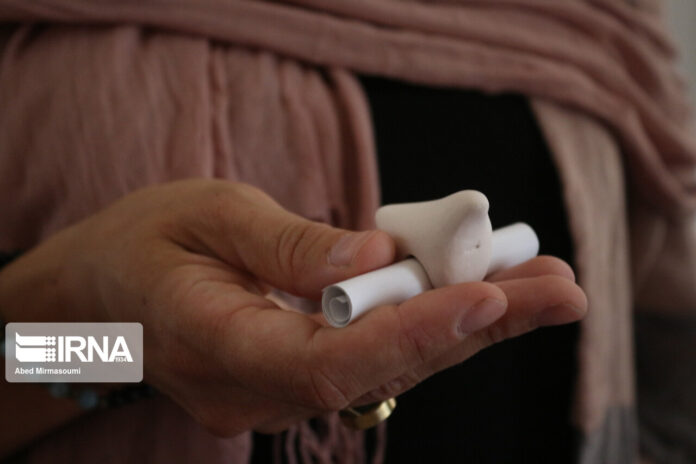
Iranian Peace Dove Figurine Returns from Austria

Austrian Ambassador to Tehran Stefan Schulz brought back the white figurine on Sunday to a traditional house in Iran’s northern city of Semnan, where the peace doves are created.

Iranian children make the white clay birds in ‘Torabi’ traditional house in Semnan, and send them to countries across the world with encouraging messages.

The “Peace Doves” initiative was inaugurated by President Hassan Rouhani in autumn 2018.

Iranian Peace Dove Figurine Returns from AustriaThe project, carried by the non-governmental organization ‘Pazh’ under the auspices of Germany’s Embassy in Iran, is aimed at introducing Iran’s culture to the world and conveying the message of peace and friendship.

Director of Pazh has told IRNA that the clay doves have arrived in various countries, including the United States of America, Italy, Germany and France.

The children, known as the “Young Friends of Iranian Handicraft”, have created more than 1,800 clay doves at the traditional house, Maryam Hallaji added.
Torabi traditional house, constructed during the Qajar dynasty more than a century ago, is known as one of the precious historical sites of Semnan that plays host to pottery workshops.

New Law Gives New Life to 1000s of Iranian Inmates on Death Row

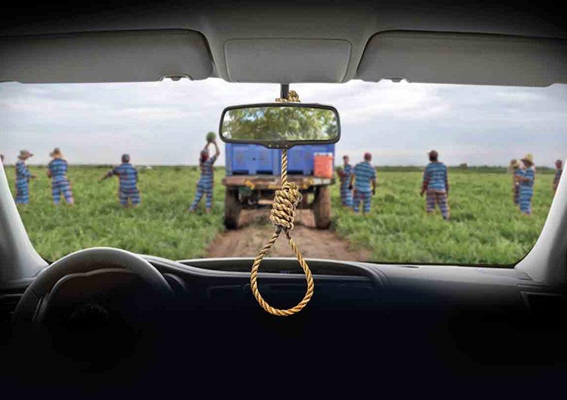
A law is being enforced in Iran based on which inmates can enjoy conditional and temporary freedom. Under the legislation, prisoners can work freely outside the jail during the day under the surveillance of the Prisons Organization, and have to return to prison at certain nights.

In fact, the new law is a privilege offered to inmates in accordance with the Executive Bylaw of the Prisons Organization to enable them to have a job and earn a living and, and serve time outside the physical environment of prisons. Inmates who would like to enjoy the freedom stipulated in this law have to meet certain conditions. They must not have any imprisonment record, need to have served at least half of their jail term, shown good behaviour in prison, and compensated for the harm and damage inflicted as a result of the crime.

Although inmates enjoying the privilege of conditional freedom have a hard life, they are so grateful because they are not in prison cells and they can spend some nights with their families.

Ahmad is one of these prisoners. He is in jail from morning until noon, and works as a construction worker in the afternoons. He has two little children. After spending 11 years behind bars, now it has been three months that he can see his family.

“When I get home, most of them are often sleeping. I work until late at night. Since I have been given conditional freedom, many of my problems in life have been settled. Swear to God, my life would have collapsed by now if I were still behind bars,” he says.
Near the Qezel-Hessar Penitentiary, there is a farm which inmates have cultivated. The crops grown there mostly include summer vegetables, roses and jasmine. Most inmates who have been offered conditional freedom are interested in working in greenhouses. They prefer to grow flowers rather than vegetables. The point is, the pleasant atmosphere in greenhouses would rejuvenate everyone.
Mohammad-Ali is another prisoner enjoying conditional freedom. He will be released next week after 22 years behind bars. However, there is no one waiting for him at home. He parents have passed away and his family see him as an offender. Mohammad-Ali has rented a house near the Qezel-Hessar Penitentiary and intends to stay in the locality of the prison forever and not to return to his homeland.

Under Article 8 of the Law on Fighting Narcotics, distributors, exporters and sellers of heroin, cocaine, and different types of psychedelic drugs such as crystal and LSD were sentenced to death if they carried more than 30 grammes of the drugs. However, the law was amended last year and the 30-gramme limit was increased to 3 kilogrammes. Moreover, those carrying 5 kilogrammes of opium would be sent to the gallows previously. Under the new law, however, those carrying 50 kg of opium would be sentenced to death. In accordance with the new law, more than 4,000 inmates on death row will no longer be executed.

UAE Coast Guard Officials in Tehran for Talks amid PG Tensions

The Emirati delegation is in Tehran to attend the sixth joint meeting of Iran-UAE coast guards.

The meeting is to focus on issues related to border collaborations between the two neighbours, the travel of Iranian and Emirati nationals between the two countries, and illegal entries.

They will also discuss ways to facilitate and expedite exchange of information between the two countries.

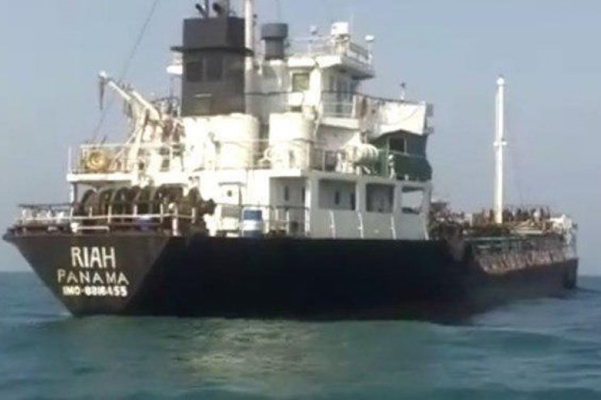
The talks will come a few weeks after Iran seized a UAE tanker operating under Panama’s flag for smuggling fuel in violation of international laws.

The oil tanker MT Riah was seized as it was smuggling one million liters of Iranian fuel in the northern part of the Strait of Hormuz.