Sunday, April 26, 2026
Home Blog Page 313

EU says may take action against Israel if conditions in Gaza do not improve

The European Union

After meeting the bloc’s foreign ministers in Brussels, Kaja Kallas said it was “very clear” that Israel had breached its human rights commitments in Gaza and the West Bank.

She added if the situation for Palestinians did not improve, the EU could discuss “further measures and come back to this in July”.

But Kallas declined to spell out details: “The concrete question is what then we [the EU] are able to agree?

“But right now, the most important thing is to improve the situation on the ground, improve the lives of people in Palestine and stop the suffering and also human toll that we see there every day.”

The foreign ministers discussed the EU’s relationship with Israel after a report by Kallas’s team found “indications” that its ally was in breach of human rights obligations over the catastrophic humanitarian situation in Gaza and settler violence in the West Bank.

A review of the EU-Israel association agreement – a trade and cooperation pact – was triggered last month by 17 member states in protest at Israel’s blockade of humanitarian aid to Gaza.

On Monday, only Spain called for outright suspension of the agreement although other strong supporters of the Palestinians – Belgium, Ireland and Sweden – stressed the need for action.

However, Germany, Greece and Italy were among the countries that voiced opposition to suspending the agreement.

The EU report is largely based on findings from UN bodies and the international court of justice.

While the overall pact can be suspended only by unanimity, parts of the relationship agreement – trade or Israel’s participation in the EU’s Horizon research programme – could be suspended by a weighted majority vote.

The association agreement, which came into force in 2000, underpins a trading relationship worth €68bn (£58bn) between the 27 EU countries and Israel. The bloc is Israel’s largest market, accounting for about a third of its exports.

Iran spox: Attack on Al Udeid not an act against Qatar

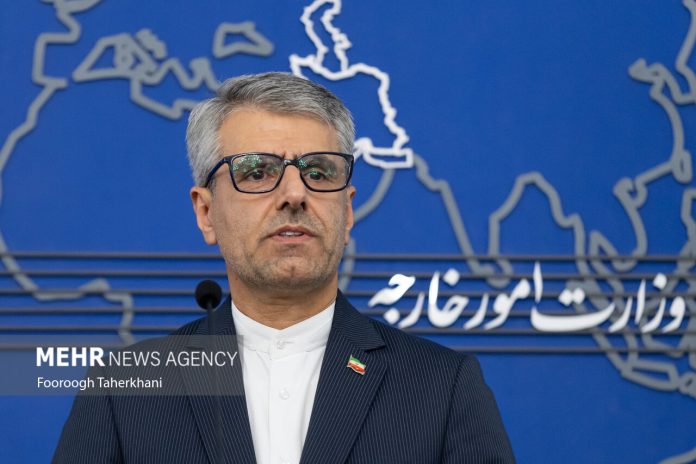
Esmael baghaei

On Wednesday, Esmail Baqaei, in response to questions from journalists regarding the emergency meeting of PGCC foreign ministers and their statement about Iran’s defensive strike on the US base at Al Udeid, said:
“The Islamic Republic of Iran’s action in targeting the American Al Udeid base was carried out under Article 51 of the United Nations Charter as an exercise of its inherent right to self-defense, in response to the United States’ act of aggression on June 21, 2025, which violated Iran’s territorial integrity and national sovereignty.”

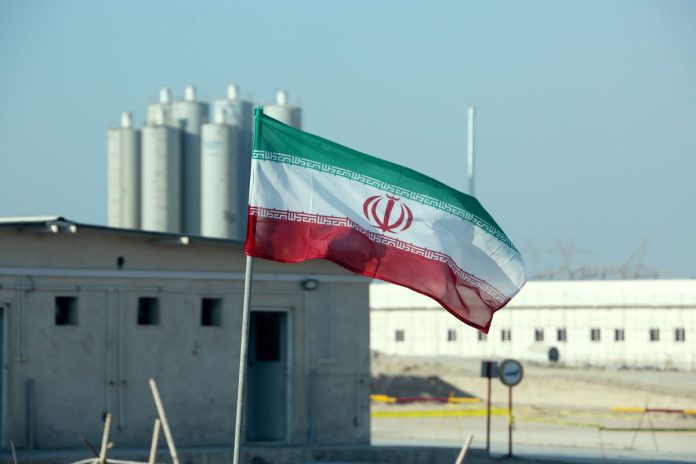
On Monday night, June 23, following the US attack on Iran’s nuclear facilities in Fordow, Natanz, and Isfahan, Iran launched a missile strike on the American base at Al Udeid in Qatar. After the attack, Baqaei reiterated that the operation was not aimed at the friendly nation of Qatar.

The Foreign Ministry spokesperson also thanked Arab and Islamic countries for expressing solidarity with Iran and for their firm stance in condemning the US and Israeli violations of Iran’s territorial integrity and sovereignty.

He emphasized that the Islamic Republic of Iran will spare no effort to strengthen understanding and cooperation among regional countries to ensure endogenous security and stability.

He further reaffirmed Iran’s commitment to maintaining and expanding a policy of good neighborliness and friendly relations with all Persian Gulf states, including Qatar.

He also expressed appreciation for the PGCC’s position on halting Israeli aggression against Iran and condemning the ongoing crimes and genocide committed by the Zionist regime in Gaza and the West Bank.

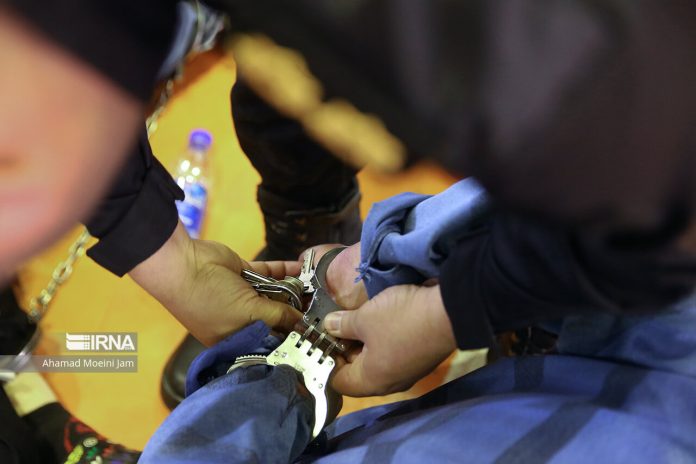
Iran detained 700 “mercenaries” working for Israel throughout 12-day war: FNA

Iran Police

“The mercenaries, who mainly operated in the framework of espionage and sabotage networks, were identified and arrested based on public reports and intelligence operations,” the report reads.

Israel’s spy agency Mossad has acknowledged the role of its undercover personnel working in Iran as part of its military operation, which began with unprecedented strikes on Iran on June 13.

Mossad provided footage of its covert agents working behind Iranian lines in the lead-up to the raids, work that included setting up a base to launch drones at targets from inside Iran.

The arrests of Israeli agents have been made across Iran, according to Fars, including in Kermanshah, Isfahan, Khuzestan, Fars, and Lorestan provinces. Authorities have not yet published details on the number of alleged Israeli spies arrested in the capital Tehran, the outlet reported.

Other Iranian news outlets have reported multiple executions of alleged Israeli agents carried out since the conflict began.

BRICS countries say attacks on Iran violated UN Charter

BRICS

“We express grave concern over the military strikes against the Islamic Republic of Iran since 13 June 2025, which constitute a violation of international law and the Charter of the United Nations,” said the statement issued by the Brazilian Foreign Ministry.

The group, where Brazil holds the rotating presidency this year, also called for making the Middle East free of nuclear weapons and other weapons of mass destruction.

BRICS expressed concern over the attacks against Iran’s nuclear installations, saying they were carried out in violation of international law and relevant resolutions of the International Atomic Energy Agency.

“BRICS remains committed to promoting international peace and security and to fostering diplomacy and peaceful dialogue as the only sustainable path toward long-term stability in the region,” the statement added.

Iran executes three Mossad spies

Iran Prison

The death sentences for these three agents of the Zionist regime—who had smuggled assassination equipment into Iran—were carried out on Wednesday morning in Urmia Prison.

Idris Ali, Azad Shojaei, and Rasoul Ahmad Rasoul were arrested and tried on charges of “waging war against God” (moharebeh) and “spreading corruption on earth” (efsad fel-arz) through collaboration with hostile foreign governments in favor of the Zionist regime.

The executions were carried out after a full criminal trial process and confirmation of the verdicts by Iran’s Supreme Court.

According to the case documents, the individuals had established contact with a key Mossad operative in one of Iran’s neighboring countries and smuggled in equipment intended for the assassination of individuals.

They reportedly brought the equipment into the country disguised as shipments of alcoholic beverages, which ultimately led to the assassination of a prominent figure.

Iran Parliament approves plan to suspend cooperation with IAEA

IAEA

Alireza Salimi, a member of the Parliament’s Presidium, announced in an interview with Fars News Agency that both the general outlines and specific provisions of the plan had been approved in the open session of Parliament.

He stated: “According to the Parliament’s resolution under this plan, IAEA inspectors are not permitted to enter the country for inspections unless the security of Iran’s nuclear facilities and its peaceful nuclear activities is guaranteed — and such permission is subject to the approval of the Supreme National Security Council.”

Salimi added: “The Parliament has stipulated penalties for individuals who allow IAEA inspectors to enter the country. The resolutions cover both safeguards-related cooperation and cooperation beyond safeguards.”

This plan was passed following the IAEA’s recent report on Iran’s nuclear program to the Agency’s Board of Governors — a report which paved the way for US and Israeli aggression against Iran and attacks on several of its nuclear facilities.

The Islamic Republic of Iran has, until now, extended the highest level of cooperation with the IAEA — even beyond its safeguards obligations.

Iran’s enriched uranium can’t be located following US military strikes: IAEA chief

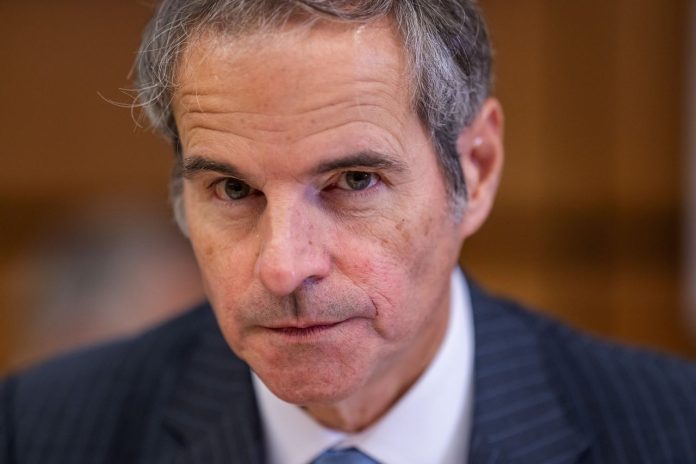
Grossi was a guest on Fox News’ “The Story with Martha MacCallum,” on Tuesday, when he was asked about the whereabouts of the enriched uranium in Iran, as well as other topics concerning the U.S. strikes on Iran’s nuclear facilities on Saturday.

The U.S. military on Saturday carried out massive strikes on three key nuclear sites in Iran, including Fordow, Natanz and Isfahan.

Grossi said Natanz was the first to be hit and sustained “very serious damage” in one of the centrifuge halls where enrichment was being carried out. Isfahan also sustained damage, he added, though nobody has been inside the halls to assess the damage.

MacCallum asked Grossi about a statement in which he previously stated he believed 900 pounds of potentially enriched uranium was taken to an ancient site near Isfahan.

“I have to be very precise, Martha…We are the IAEA, so we are not speculating here,” Grossi said, adding, “We do not have information of the whereabouts of this material.”

He told the host Iran officials told him they were taking protective measures which may or may not include moving around the material.

“So, it is quite obvious you are asking me about it, that there is a question there: Where is this?” Grossi continued.

“So, the way to asserting that is to allow the inspection activity to resume as soon as possible. And I think this would be for the benefit of all.”

The director would not argue with a statement from Vice President JD Vance in which he said if Iran has 60% enriched uranium, but not the ability to enrich it to 90%, they do not have the ability to convert the uranium into a nuclear weapon.

“I wouldn’t argue with that because 60% is not 90%,” Grossi stated, but more important is figuring out if the uranium was moved and where it is located.

“My obligation is to account for every gram of uranium that exists in Iran and in any other country,” he continued, adding that the investigation is not a discriminant approach against Iran.

Vance stated in his statement that the mission was a success if Iran cannot convert the uranium to 90% for a nuclear weapon, and Grossi agreed with that statement, at least in terms of a military approach.

But Grossi’s job is different.

“My job is to try to see where is this material, because Iran has an obligation to report and account for all the material that they have, and this is going to continue to be my work,” Grossi stressed.

A majority of Americans disapprove of US attacks on Iran: CNN poll

Americans disapprove of the strikes, 56% to 44%, according to the survey, with strong disapproval outpacing the share who strongly approve. Most distrust Trump’s decision-making on the use of force in Iran, with about 6 in 10 worried that the strikes will increase the Iranian threat to the US.

Sharp partisan divides cut through nearly every question asked in the survey: Democrats are broadly opposed to the strikes as most Republicans support them, though younger GOP supporters and Republican-leaning independents are more skeptical than others in their party.

Majorities of independents (60%) and Democrats (88%) disapprove of the decision to take military action in Iran. Republicans largely approve (82%). But just 44% of Republicans strongly approve of the airstrikes, far smaller than the group of Democrats who strongly disapprove (60%), perhaps reflecting that some in Trump’s coalition are broadly distrustful of military action abroad.

A 58% majority overall say the strikes will make Iran more of a threat to the US, with just 27% believing it will lessen the threat and the rest expecting it to do neither. Even among those who support the strikes, just 55% expect them to lessen the threat level.

And few say the US made enough of an effort at diplomacy before using military force: 32% feel the US did enough, 39% that it did not and 29% are unsure.

The poll was conducted Sunday and Monday, with nearly all of the interviews completed before Iran launched retaliatory strikes Monday against US air bases and all interviews done before Trump’s subsequent announcement of a ceasefire.

Just over half of Americans, 55%, expresses little or no trust in Trump to make the right decisions about the US use of force in Iran, with 45% saying they trust him moderately or a great deal. And most – 65% – say that he should be required to get congressional approval for any further military action, with 21% saying he should not.

Mistrust of Trump’s judgment is especially high among Democrats (88% of whom express little or no trust) and independents (62%), who also broadly say the president should be required to get congressional approval for any further military action in Iran (88% of Democrats and 67% of independents feel that way).

Republicans express more trust in the president, although that trust is also somewhat tempered: 51% say they have a great deal of trust in him to make the right decisions on the use of force with Iran, 37% a moderate amount. And the GOP divides over whether Trump ought to be required to get congressional approval for further action, with 39% saying he should be required to do so, 38% that he should not and 23% are not sure.

Americans younger than 35 are more likely than any other age group to disapprove of the military action in Iran (68% disapprove). They also express the broadest skepticism about Trump: They are the most likely of any age group to say they have no trust at all in Trump’s ability to make the right decisions about US use of force in Iran (45% feel that way) and to say he ought to be required to get congressional approval before taking further military action (73%).

That skepticism is partly driven by younger Republicans and Republican-leaning independents. Just 20% of Republican-aligned Americans younger than 45 say they strongly approve of the decision to carry out airstrikes, compared with 53% among older Republican-aligned Americans. Younger Republicans are about 20 points more likely than older adults aligned with the party to believe the strikes increase the threat to the US from Iran and are 26 points less likely to have a great deal of trust in Trump’s decision-making on the use of force in Iran.

Overall, there’s almost no public appetite for sending ground troops into Iran, with just 9% in favor, and 68% opposed, with the remaining 23% unsure. Even those who support the airstrikes against Iran oppose sending in ground troops by a more than 2-to-1 margin.

The share of Americans who offer no opinion when given the choice to do suggests that public opinion hasn’t yet fully settled in the wake of a rapidly evolving situation. While the vast majority, 8 in 10, say they’ve been following news about America’s strikes at least somewhat closely, only about one-third say they’ve followed the news very closely.

Early US intel assessment suggests attacks on Iran did not destroy nuclear sites: CNN

Iran nuclear programe

The assessment, which has not been previously reported, was produced by the Defense Intelligence Agency, the Pentagon’s intelligence arm. It is based on a battle damage assessment conducted by US Central Command in the aftermath of the US raids, one of the sources said, CNN reported.

The analysis of the damage to the sites and the impact of the strikes on Iran’s nuclear program is ongoing, and could change as more intelligence becomes available.

But the early findings are at odds with President Donald Trump’s repeated claims that the strikes “completely and totally obliterated” Iran’s nuclear enrichment facilities. Secretary of Defense Pete Hegseth also claimed on Sunday that Iran’s nuclear program “have been obliterated”.

Two of the people familiar with the assessment said Iran’s stockpile of enriched uranium was not destroyed. One of the people added the centrifuges are largely “intact”.

Another source stated that the intelligence assessed enriched uranium was moved out of the sites prior to the US attacks, noting, “So the (DIA) assessment is that the US set them back maybe a few months, tops.”

The White House acknowledged the existence of the assessment but announced they disagreed with it.

White House press secretary Karoline Leavitt told CNN in a statement, “This alleged assessment is flat-out wrong and was classified as ‘top secret’ but was still leaked to CNN by an anonymous, low-level loser in the intelligence community. The leaking of this alleged assessment is a clear attempt to demean President Trump, and discredit the brave fighter pilots who conducted a perfectly executed mission to obliterate Iran’s nuclear program. Everyone knows what happens when you drop fourteen 30,000 pound bombs perfectly on their targets: total obliteration.”

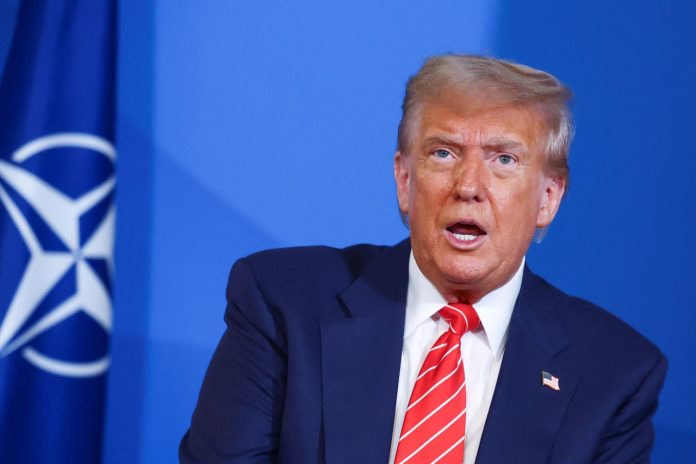
Trump, who’s in the Netherlands attending this week’s NATO summit, pushed back on CNN’s report in a Truth Social post.

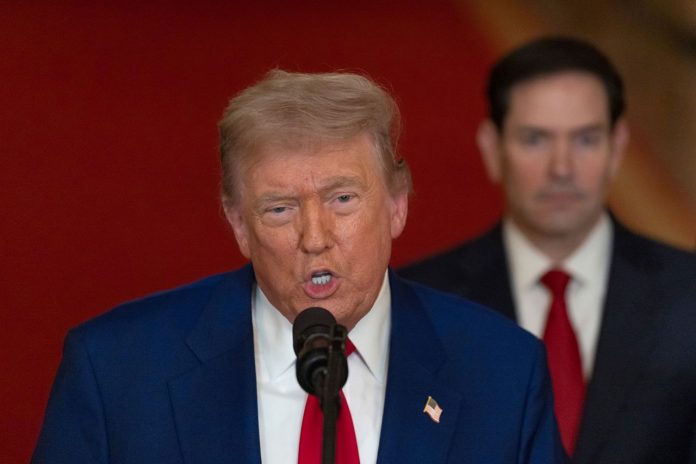
“One of the most successful military strikes in history,” Trump wrote in the all-caps post adding, “The nuclear sites in Iran are completely destroyed!”

The US military has claimed the operation went as planned and that it was an “overwhelming success”.

It is still early for the US to have a comprehensive picture of the impact of the strikes, and none of the sources described how the DIA assessment compares to the view of other agencies in the intelligence community. The US is continuing to pick up intelligence, including from within Iran as they assess the damage.

Israel had been carrying out strikes on Iranian nuclear facilities for days leading up to the US military operation but claimed to need the US’ 30,000-pound bunker buster bombs to finish the job. While US B-2 bombers dropped over a dozen of the bombs on two of the nuclear sites, the Fordow Fuel Enrichment plant and the Natanz Enrichment Complex, the bombs did not fully eliminate the sites’ centrifuges and highly enriched uranium, according to the people familiar with the assessment.

Instead, the impact to all three sites — Fordow, Natanz and Isfahan — was largely restricted to aboveground structures, which were severely damaged, the sources claimed. That includes the sites’ power infrastructure and some of the aboveground facilities.

Hegseth also told CNN, “Based on everything we have seen — and I’ve seen it all — our bombing campaign obliterated Iran’s ability to create nuclear weapons. Our massive bombs hit exactly the right spot at each target and worked perfectly. The impact of those bombs is buried under a mountain of rubble in Iran; so anyone who says the bombs were not devastating is just trying to undermine the President and the successful mission.“

On Tuesday morning, Trump repeated his belief the damage from the attacks was significant.

“I think it’s been completely demolished,” he claimed, adding, “Those pilots hit their targets. Those targets were obliterated, and the pilots should be given credit.”

Asked about the possibility of Iran rebuilding its nuclear program, Trump responded, “That place is under rock. That place is demolished.”

While Trump and Hegseth have been bullish about the success of the strikes, Chairman of the Joint Chiefs of Staff Dan Caine stated Sunday that while the damage assessment was still ongoing it would be “way too early” to comment on whether Iran still retains some nuclear capabilities.

Earlier on Tuesday, classified briefings for both the House and Senate on the operation were canceled.

As CNN has reported, there have long been questions about whether the US’ bunker-buster bombs, known as Massive Ordnance Penetrators, would be able to fully destroy Iran’s highly fortified nuclear sites that are buried deep underground — particularly at Fordow and Isfahan, Iran’s largest nuclear research complex.

Notably, the US struck Isfahan with Tomahawk missiles launched from a submarine instead of a bunker-buster bomb. That is because there was an understanding that the bomb would likely not successfully penetrate Isfahan’s lower levels, which are buried even deeper than Fordow, one of the sources stated.


Europeans oppose following Trump if he pushes Ukraine to cede territory, lift Russia sanctions: Suevey

Despite the self-imposed deadline of 100 days to end the war in Ukraine, Trump is now 155 days into his presidency and Russian attacks have only escalated.

Trump has still yet to take any concrete steps to pressure Moscow into ending its war but has floated several concessions that Ukraine could be forced to make including ceding territory, while at the same time announcing no new military aid packages for Kyiv.

The survey, conducted by the European Council on Foreign Relations, found that even in countries with pro-Russian governments like Hungary, more people opposed the idea than supported it.

Respondents in 12 countries (Denmark, Estonia, France, Germany, Hungary, Italy, Poland, Portugal, Romania, Spain, Switzerland and the U.K.) were asked about three scenarios — the U.S. pushing Ukraine to cede territory, lifting sanctions on Russia, and withdrawing all military support.

Majorities in all countries opposed their own governments following the U.S. lead except for Hungary in the case of withdrawing all military support.

Opposition was highest in Denmark, the U.K., Poland, Spain and Portugal, and lowest in Hungary, Romania and Italy.

“A benevolent interpretation is that Europeans support an autonomous European policy to support Ukraine and they don’t want to blindly follow Trump’s lead,” the report’s authors stated.

“But another reading of that data is that Europeans want Ukrainians to continue fighting on their behalf.”

The wide-ranging survey also asked about attitudes to increasing defense spending and compulsory military service.

Majorities supported increased defense spending in Poland (70%), Denmark (70%), and the U.K. (57%), with large minorities in Germany (47%), Spain (46%), and France (45%).

When asked about compulsory military service, France (62%), Germany (53%), and Poland (51%) were the strongest supporters but crucially, not in the age bracket most likely to be called up — 18 to 29-year-olds.

Europeans are also becoming increasingly despondent about the U.S. under the leadership of Trump, with large majorities in the U.K. (74%) and Germany (67%) believing the U.S. political system is “broken.”

The ECFR poll surveyed 16,440 adults last month.