Sunday, April 26, 2026
Home Blog Page 312

Iranian airspace opens to intl. flights after 12-day war

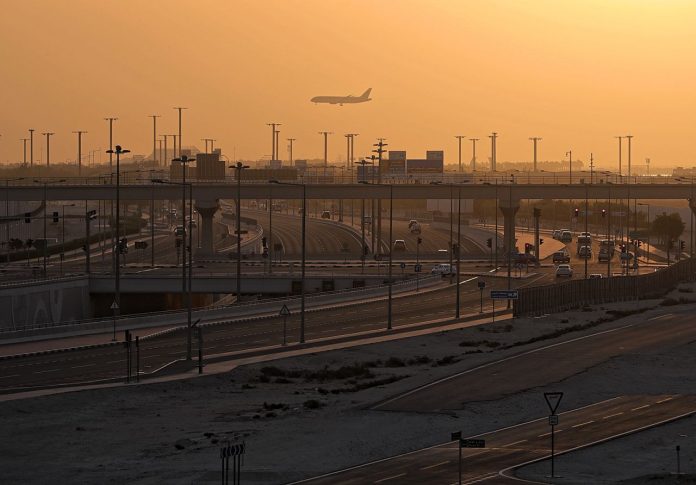
Data released by Plane Finder, an international flight tracking service, showed that flights originating from cities like Moscow, London and Dubai were passing through the Iranian airspace on Wednesday.

Airlines started to avoid the Iranian skies on June 13, when the Israeli regime launched an unprovoked aggression against the country.

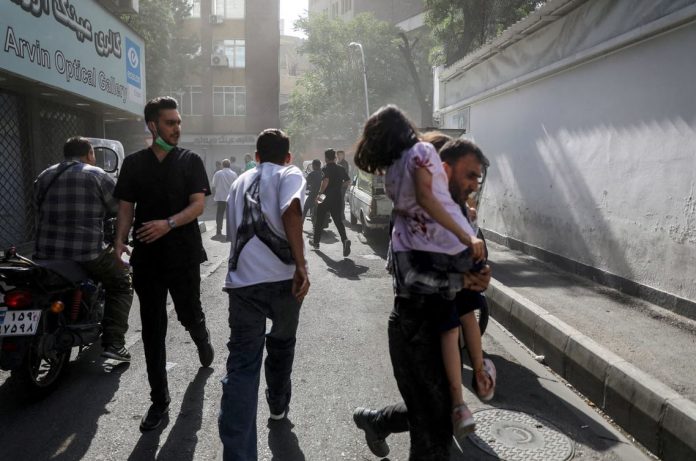
Israeli assault prompted a fierce response from the Iranian armed forces as they targeted various areas in the Israeli-occupied territories with missiles and drones, causing a major disruption to international aviation services in the entire West Asia region.

The 12-day war ended on Tuesday morning after the Israeli regime declared a unilateral ceasefire in a deal brokered by Washington. Iran also accepted the agreement.

However, Iranian authorities announced on Wednesday that a ban on domestic and international flights to and from Iranian airports would continue until Thursday afternoon local time.

A transportation ministry spokesman stated that the safety of the passengers and the security of the aviation routes were still a main priority for the Iranian government.

That came as officials in Iran’s pilgrimage authority said that Iranian nationals remaining in Saudi Arabia since early June, when they finished performing their hajj rituals, would return to the country as of Thursday morning using flights from the Saudi city of Mecca.

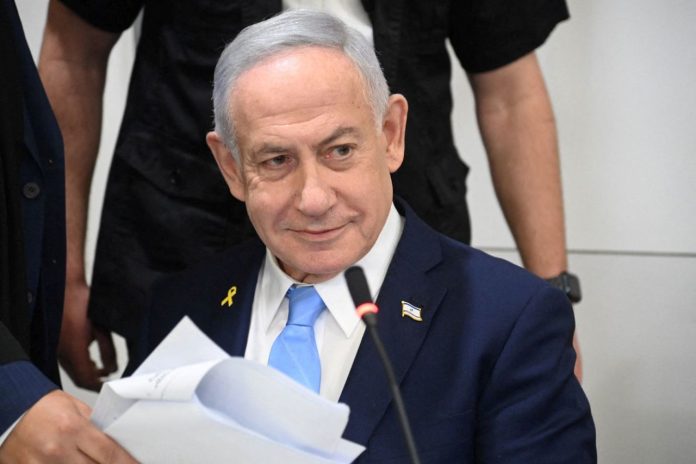
Trump calls for cancellation of Netanyahu’s corruption trial

Trump issued the call on Wednesday on behalf of his close Israeli ally, who was indicted in 2019 in Israel on charges of bribery, fraud and breach of trust.

Netanyahu’s trial began in 2020 and involves three criminal cases. He has denied the allegations and pleaded not guilty.

“Bibi Netanyahu’s trial should be CANCELLED, IMMEDIATELY, or a Pardon given to a Great Hero, who has done so much for the State (of Israel),” Trump wrote on his Truth Social platform using the Israeli leader’s nickname, adding that he had learned that Netanyahu was due to appear in court on Monday.

“Such a WITCH HUNT, for a man who has given so much, is unthinkable to me.”

Israeli media have reported that cross-examination of Netanyahu began on June 3 in a Tel Aviv court and was expected to take about a year to complete.

Israeli President Isaac Herzog has the power to pardon Netanyahu, but has been quoted by Israeli media as saying that a pardon is “not currently on the table”.

Herzog also stated that “no such request had been made”, according to the reports.

Trump also said in his post: “It was the United States of America that saved Israel, and now it is going to be the United States of America that saves Bibi Netanyahu.”

It was unclear what Trump or the US government could do to stop Netanyahu’s corruption trial.

Source: Possible use of depleted uranium in recent Israeli strikes on Iran

Initial tests conducted at the impact sites have reportedly revealed traces suggestive of uranium presence. However, the source emphasized that definitive conclusions have yet to be drawn, and further technical analysis is currently underway.

Depleted uranium is a dense byproduct of the uranium enrichment process, commonly used in armor-piercing munitions due to its high penetration capability.
When such munitions strike a target, they can release fine radioactive and toxic particles, raising significant concerns about their long-term health and environmental impacts.

International organizations have repeatedly warned against the use of depleted uranium weapons, urging global restrictions on their deployment due to potential violations of humanitarian and environmental standards.

Military experts are now examining the weapons used by Israeli forces, with more detailed findings expected once the final test results are released.

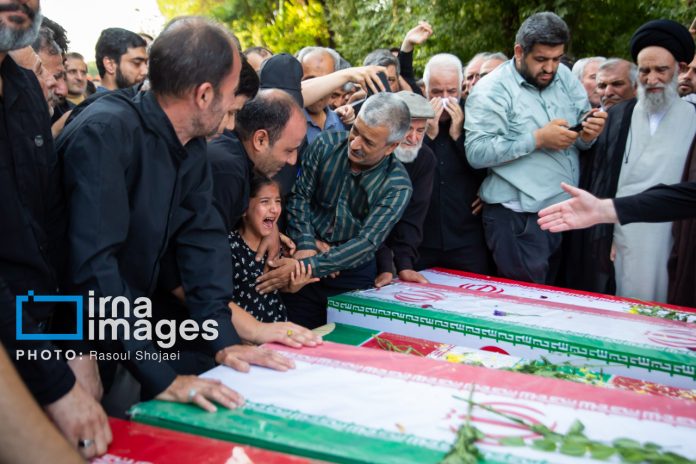
627 Killed, 4,870 Injured in Zionist regime’s attacks on Iran

The Ministry’s information center said other heavily affected provinces include Khuzestan, Lorestan, Isfahan, Markazi, East Azerbaijan, Hamedan, Zanjan, and Gilan, ranking third to tenth in terms of casualty figures.

It also noted that 86.1% of the martyrs lost their lives at the scene while 13.9% succumbed to their injuries upon hospital arrival.

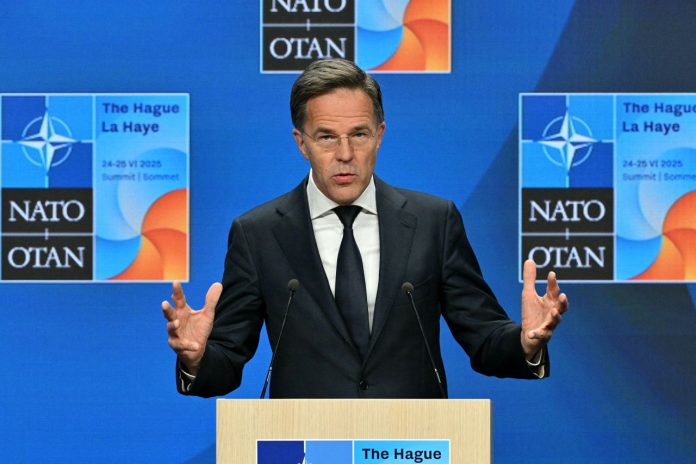
Iran condemns NATO head’s admiration for US assault

“It is disgraceful, despicable and irresponsible for NATO’s SG to congratulate a ‘truly extraordinary’ criminal act of aggression against a sovereign State,” Esmaeil Baqaei said in a post on his X account on Wednesday.

“Who endorses an injustice lacks integrity,” the spokesman said.

“Who supports a crime is regarded as complicit,” he stated.

His reaction came after the US president on Tuesday posted a screenshot of a message from Rutte in which the NATO secretary general congratulates Trump for his “truly extraordinary” action in Iran and for getting his NATO allies in Europe to “pay in a BIG way” on defense.

While the Zionist regime waged a war of aggression against Iran on June 13 and struck Iran’s military, nuclear and residential areas for 12 days, the US stepped in and conducted military attacks on three nuclear sites in Iran’s Natanz, Fordow and Isfahan on June 22.

The Islamic Revolution Guards Corps targeted the United States’ Al-Udeid airbase in Qatar with a powerful missile attack on Monday evening in retaliation for Washington’s strikes on the three Iranian nuclear sites.

US will meet with Iran “next week”: Trump

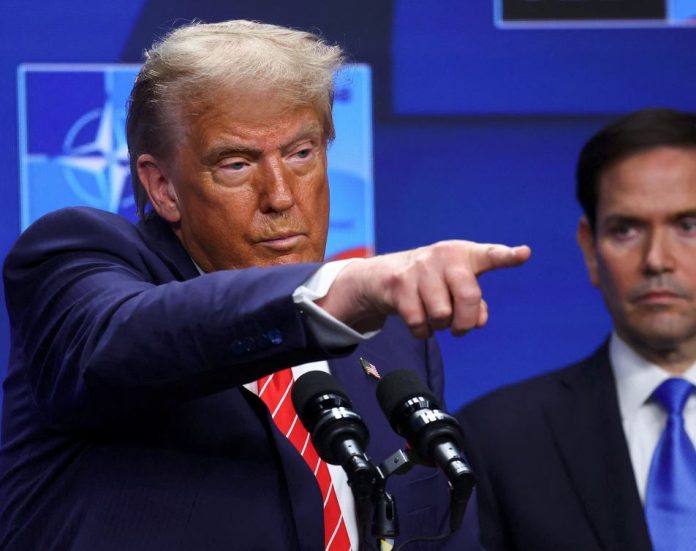
“We’re going to talk to them next week, with Iran. We may sign an agreement, I don’t know. To me, I don’t think it’s that necessary. I mean, they had a war, they fought, now they’re going back to their world. I don’t care if I have an agreement or not,” Trump said during a news conference at the end of the NATO summit in The Hague.

Trump added that his administration would be asking for the same type of commitments it sought in negotiations with Iran prior to recent heightened tensions in the Middle East.

“The only thing would be asking for is what we were asking for before,” Trump said, adding again that he does not believe such an agreement is necessary due to his insistence that the US successfully destroyed Iran’s nuclear capabilities, despite early intelligence assessments suggesting otherwise.

“We want no nuclear, but we destroyed the nuclear. In other words, it’s destroyed. I said ‘Iran will not have nuclear.’ Well, we blew it up. It’s blown up to kingdom come, and so I don’t feel very strongly about it. If we got a document, it wouldn’t be bad. We’re going to meet with them,” the president continued.

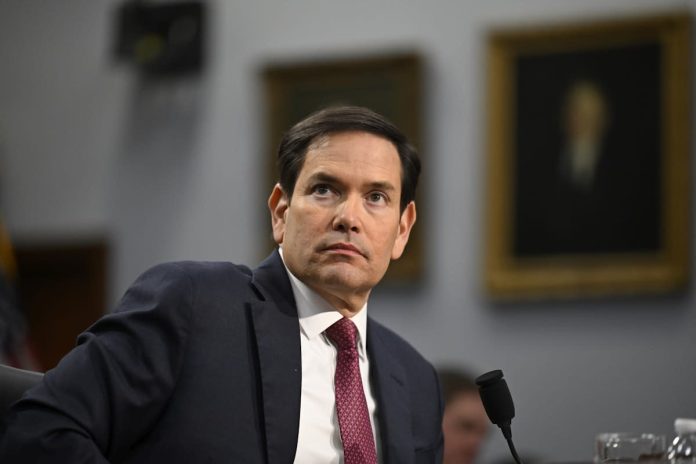
Trump told reporters he had asked Secretary of State Marco Rubio, who also serves as his national security adviser, as they were walking up to the stage if he wanted to draw up an agreement. Trump said he believed the US could get the Iranians to sign such a document.

Rubio told reporters that such a deal depends on Iran’s willingness to negotiate directly with the US, not through intermediaries.

Trump also stated Iran will need oil money to “put the country back into shape” and said he doesn’t have an issue with China purchasing their oil, signaling possible sanctions flexibility on Iran.

“Look, they just had a war. The war was fought. They fought it bravely. I’m not giving up,” Trump told reporters when asked whether allowing China to buy Iranian oil — as he said he’d like to see — would mark the end of his administration’s “maximum pressure” campaign on Iran.

“They’re in the oil business. I mean, I could stop it if I want to – sell China the oil myself. I don’t want to do that. They’re going to need money to put that country back into shape. We want to see that happen,” he said of Iran.

“If they’re going to sell oil, they’re going to sell oil. We’re not taking over the oil,” he added.

On his way to the NATO summit on Tuesday, Trump posted on Truth Social: “China can now continue to purchase Oil from Iran. Hopefully, they will be purchasing plenty from the US, also. It was my Great Honor to make this happen!”

A senior White House official clarified later Tuesday that the president’s post was not an announcement of sanctions relief.

“The president was simply calling attention to the fact that, because of his decisive actions to obliterate Iran’s nuclear facilities and broker a ceasefire between Israel and Iran, the Strait of Hormuz will not be impacted, which would have been devastating for China,” the official said, adding, “The president continues to call on China and all countries to import our state-of-the-art oil rather than import Iranian oil in violation of U.S. sanctions.”

President Pezeshkian: Iran ready to cooperate for regional peace and security

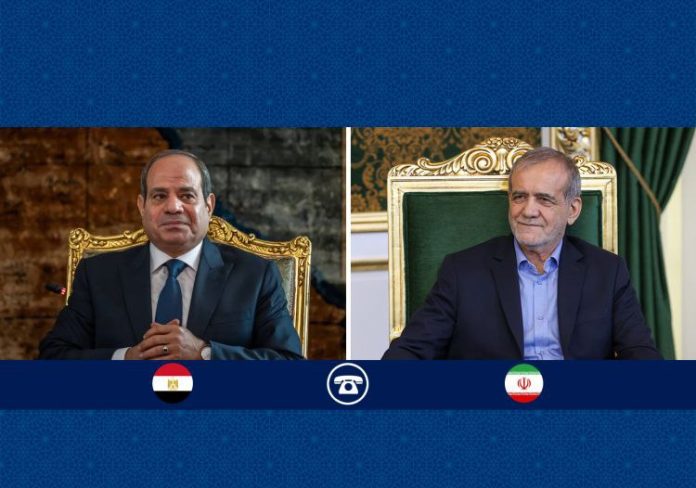
Speaking in a phone call with Egyptian President Abdel Fattah el-Sisi on Wednesday, Pezeshkian reiterated Iran’s support for the establishment of a region free of nuclear arms and other weapons of mass destruction, provided that the Israeli regime is also included, since “its track record leaves no room for trust.”

He appreciated Egypt’s diplomatic efforts and those of other Islamic and neighboring countries to restore calm to the region.

Pezeshkian then referred to the Israeli aggression against Iran, noting that in response to the US’s direct involvement in the war on Iran, the Islamic Republic had no choice but to target a US base in the neighboring and brotherly country of Qatar.

Sisi for his part welcomed the ceasefire between Iran and the Zionist regime and voiced hope for its continuation and consolidation.

He noted that the region was on the verge of widespread turmoil and thanked Iran for its constructive role in de-escalating the situation.

The two presidents also called for the establishment of Tehran-Cairo ties.

Foreign Ministry: Iran under most stringent IAEA inspection regime

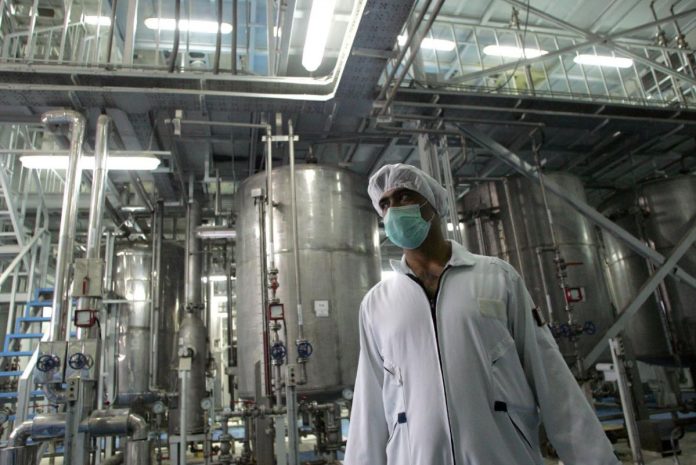
Iran Nuclear Program

“We have done everything possible to demonstrate transparency and build trust, including the implementation of several voluntary measures,” Baqaei said, in an interview with IRNA.

He noted that although Iran’s peaceful nuclear activities make up less than 3% of the world’s total, they account for over 23% of all IAEA inspections.

“This means 3% of global activity, yet 23% of inspections—proof that Iran is under the strictest verification regime.”

Referring to recent indirect talks between Iran and the US, the Foreign Ministry spokesman said five rounds of discussions were held in the past three months.

He rejected US Secretary of State Marco Rubio’s claim that Iran “played” the negotiators by delaying the talks.

Baqaei described this allegation as “misleading and manipulative”.

“From the beginning, we underlined that if the US side were serious, the talks could proceed more intensively…we were ready to remain in place and engage in negotiations continuously, because such a critical issue cannot be resolved through short sessions held a week apart”, he added.

Baqaei further noted that the US showed no real commitment to the process.

“Despite our responsible and transparent approach, the other side’s lack of seriousness exposed their duplicity… Iran’s logic prevailed so much so that they resorted to encouraging their regional proxy [the Zionist regime] to attack Iran”.

Baqaei also underscored that this act will not be forgotten.

The Foreign Ministry spokesman said the recent developments confirm Iran’s firm commitment to diplomacy and prove the opposing side remains unwilling to engage in an effort to genuinely and peacefully resolve an issue they themselves have inflated.

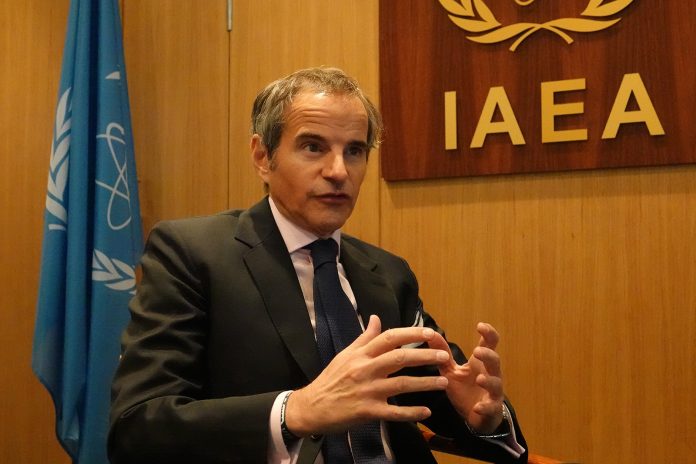
IAEA Director-General: Returning to Iranian sites is top priority

Rafael Grossi

“This is the number 1 priority,” Grossi told a news conference at an Austrian security cabinet meeting.

He is seeking his inspectors’ return to Iranian sites including the three plants where it was enriching uranium until Israel launched strikes on June 13.

Asked if Iran had informed him of the status of its stocks of enriched uranium, particularly its uranium enriched to up to 60% purity, he pointed to a letter he received from Iran on June 13, saying Iran would take “special measures” to protect its nuclear materials and equipment.

“They did not get into details as to what that meant but clearly that was the implicit meaning of that. We can imagine this material is there,” Grossi added, suggesting much of that material had survived the attacks.

There is a chance that much of Iran’s highly enriched uranium survived Israeli and US attacks because it may have been moved by Tehran soon after the first strikes, Grossi said.

He stated earlier this week that Iran had informed the IAEA on June 13 – the first day of Israeli raids – that it would take “special measures” to protect its nuclear materials and equipment.

“They did not get into details as to what that meant but clearly that was the implicit meaning of that, so we can imagine that this material is there,” Grossi stated Wednesday.

“So for that, to confirm, for the whole situation, evaluation, we need to return (IAEA inspectors to Iran’s nuclear facilities),” he added.

Crushing’ Russia with sanctions would jeopardize Ukraine peace talks: US

Speaking with Politico on the sidelines of the NATO summit in The Hague, Rubio said Trump wants to keep open a diplomatic channel with Russian President Vladimir Putin, despite growing frustration from European leaders and President Volodymyr Zelensky over Russia’s refusal to agree to a ceasefire.

“If we did what everybody here wants us to do, and that is come in and crush them with more sanctions, we probably lose our ability to talk to them about the ceasefire and then who’s talking to them?” Rubio added.

Rubio acknowledged that Russia appears committed to pursuing its objectives by force.

“Our sense of it is that the Russians are going to try to achieve on the battlefield what they’ve demanded at the negotiating table, which is certain territories, administrative lines, and the like,” he stated.

“We think it’s going to be a lot harder for them to achieve that than they think it’s going to be.”

Rubio added that Trump “will know the right time and place” for additional sanctions, but emphasized that imposing them too soon could signal that the U.S. has given up on a negotiated resolution.

Previously, Trump said he had refrained from imposing new sanctions on Russia because he believed a peace deal with Moscow might be within reach, warning he did not want to jeopardize negotiations by acting prematurely.

Speaking after two rounds of peace talks in Istanbul between Moscow and Kyiv that led to no ceasefire, Trump on June 5 declined to say when additional sanctions on Russia might be imposed, only noting there is a deadline “in (his) brain.”

“If he (Trump) does it, you’re almost admitting that this is not going to be negotiated anytime soon,” he said, adding, “We’re going to continue to engage. In the sense that if there’s an opportunity for us to make a difference and get them to the table, we’re going to take it.”

Zelensky and several European leaders are expected to ask Trump during meetings at the summit to increase economic pressure on Moscow.

It has been more than 100 days, since Ukraine agreed to a U.S.-backed complete ceasefire, while Russia continues to reject it. Moscow continues pushing maximalist demands while intensifying attacks across Ukrainian cities.