Monday, December 29, 2025
Home Blog Page 311

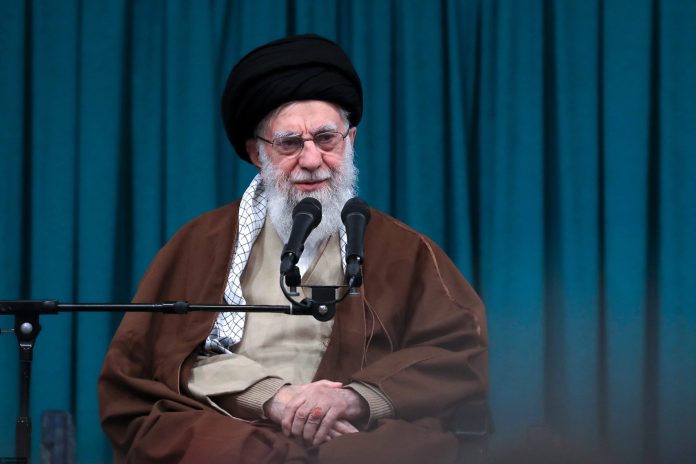
Ayatollah Khamenei urges MPs to stand united in supporting Iran

Ayatollah Khamenei delivered a speech to the members of the Iranian Parliament at a meeting in Tehran on Wednesday.

At the beginning of the meeting, the Leader extended his congratulations on the occasion of Eid al-Ghadir, describing it as a truly significant day for the entire Islamic world, rich in profound concepts that lead to a deeper understanding of Islam. He also congratulated the attendees on the birth anniversary of Imam Hadi (AS).

Ayatollah Khamenei highlighted the universally recognized legal stature of legislative bodies around the world, attributing their status to the profound significance of law itself.

“The law is a fundamental condition for the existence of social life,” he stated, adding that, from a rational perspective, laws that are established by the collective intellect and a nation’s representatives possess greater credibility and value.

The Leader drew a distinction between the legal status and the actual weight of parliaments globally asserting that their moral and practical significance varies widely, khamenei.ir reported.

“The true standing and credibility of a parliament rooted in religion, composed of virtuous and honest individuals, and committed to justice, supporting the oppressed, and standing up to bullies, is vastly different from that of a parliament made up of irresponsible individuals, whose work contributes to oppression, discrimination, social inequality, and support for criminals such as the killers of Gazans,” the Leader stated.

Congratulating Mohammad Baqer Qalibaf on his re-election as speaker of the Iranian Parliament, Ayatollah Khamenei outlined key principles for upholding the true dignity of the Iranian Parliament. He urged MPs to hold themselves accountable before both God and the law, prioritizing divine approval and the nation’s welfare while resisting conflicts of interest.

The Leader underscored the significance and influence of parliamentarians’ words, advising that speeches delivered from the parliamentary platform should inspire hope and foster reassurance. He further stressed that MPs’ statements must reflect rationality and commitment to the principles and ideals of the Islamic Revolution, serving as a testament to national resolve, strength, and determination.

Reflecting on Iran’s national character, Ayatollah Khamenei praised the unparalleled resistance and candor of the Iranian nation in confronting the empty rhetoric and impositions of major global powers. He described the enthusiastic public participation in the annual commemoration of Imam Khomeini’s demise and the 22nd of Bahman (Islamic Revolution anniversary) rallies as clear indicators of the nation’s strength and determination. “This strength must be visible in the stances of MPs, in their endorsement or rejection of laws and individuals,” he said, noting that such qualities are already present in the Parliament to a large extent.

He emphasized the necessity of a revolutionary approach in the Parliament as another essential factor for maintaining its distinguished status. “The Majlis is a Revolutionary parliament, but being Revolutionary is not merely about loud rhetoric. Be careful not to make mistakes in understanding what it means to be Revolutionary.”

Ayatollah Khamenei defined Revolutionary conduct as steadfastly pursuing the ideals of the Revolution while preventing any deviation from them, showing courage, and clearly expressing beliefs in a “correct, non-insulting, and respectful” manner, and completely excluding personal motives and political preferences from professional duties. “The world is in God’s presence and it is with this perspective that we must seek divine satisfaction. We must firmly and courageously articulate the Revolution’s stances and pursue them in our decisions,” he added.

The Leader described a unified, strong, and resolute response to irrational or accusatory remarks against the Islamic Republic as another duty of parliamentarians and a further example of Revolutionary conduct.

At the beginning of the meeting, Qalibaf highlighted the Strategic Action Law for Safeguarding National Interests and the Majlis’s support for the dignified positions of the country’s diplomatic apparatus during the Muscat negotiations.

“‘Active participation of MPs in parliamentary diplomacy,’ ‘passage of the Capital Gains Tax Law,’ ‘approval of the general framework for the National Artificial Intelligence Plan,’ ‘reform of the law on parliamentary oversight,’ and ‘implementation of smart systems for budgeting and financial oversight’ have been part of the measures undertaken by the 12th Parliament,” the speaker said.

26th Iran Health Exhibition held in Tehran

The event, which runs through Friday, showcases the latest in medical, dental, pharmaceutical, and laboratory equipment.

A total of 58 active companies from the health sector are participating, presenting their innovations, products, and services to industry professionals and the general public.

The exhibition aims to facilitate business networking, promote domestic production, and foster collaboration across healthcare fields.

More in pictures:

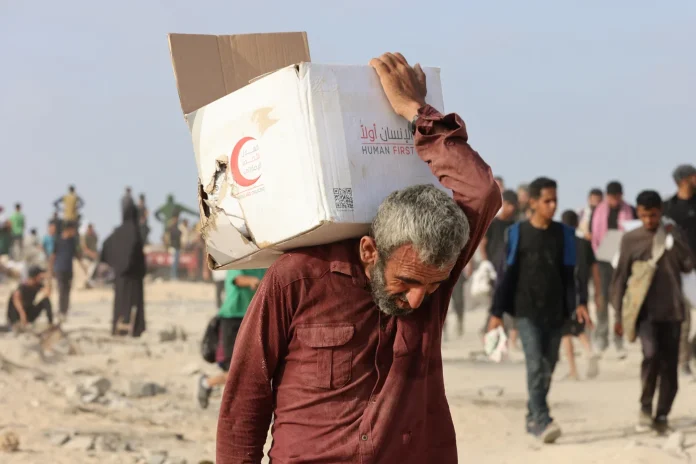
More than 2,700 Gaza children diagnosed with acute malnutrition amid Israeli siege: UN

Gaza War

“The crisis has reached unprecedented levels of despair as people continue to go hungry across Gaza,” UNRWA said in a statement.

“Over 2.700 children under 5 diagnosed with acute malnutrition in late May,” it added.

The UN agency announced that only one medical center remained partially operating in northern Gaza amid severe shortages of fuel stocks.

“Humanitarian access must be urgently restored,” UNRWA noted.

Rejecting international calls for a ceasefire, the Israeli army has pursued a brutal offensive against Gaza since October 2023, killing nearly 55,000 Palestinians, most of them women and children.

As Israel has continued to close all Gaza’s border crossings to humanitarian aid since early March, aid agencies have warned about the risk of famine among Gaza’s 2.4 million inhabitants.

Last November, the International Criminal Court issued arrest warrants for Israeli Prime Minister Benjamin Netanyahu and his former Defense Minister Yoav Gallant for war crimes and crimes against humanity in Gaza.

Israel also faces a genocide case at the International Court of Justice for its war on the enclave.

IAEA report of Tehran’s non-compliance ‘big lie’: Iran’s Nuclear head

Mohammad Eslami

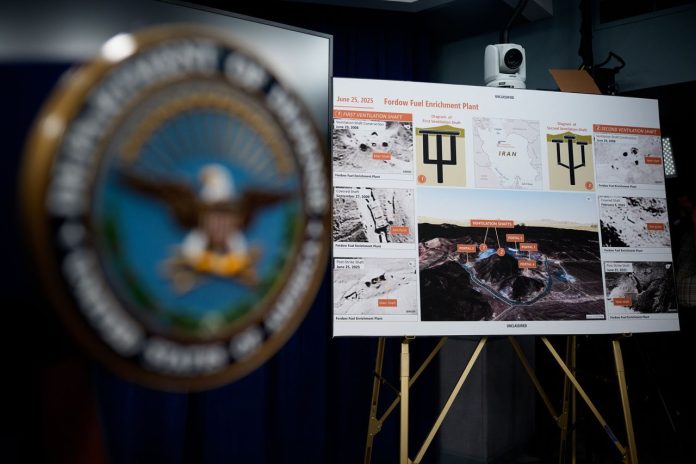
A recent report by IAEA director general Rafael Grossi on Iran’s nuclear program claimed that Tehran had failed to report its nuclear activities at three undeclared locations and raised concerns about the country’s stockpile of uranium enriched up to 60 percent purity.

“The claim that the Islamic Republic of Iran has not fulfilled its commitments under the Safeguards Agreement is a big lie,” Eslami said on Wednesday.

“There is no evidence in this regard. There is not a single report from the IAEA inspectors that indicates Iran’s opposition or obstruction in carrying out their duties,” Eslami added.

“Therefore, proceeding on this course and presenting false reports will only damage the reputation and credibility of an international institution like the agency,” he continued.

The Iranian nuclear chief further censured the provocative move by the United States and European trio of the United Kingdom, France, and Germany (E3) to draft a resolution against Iran at the IAEA Board of Governors in this next meeting, warning that a if a confrontational approach is adopted, the Islamic Republic will also take countermeasures.

“Iran has tried to dissuade these countries from this behavior and illegal approach towards the country’s nuclear issue, but the results have been limited. We have always stated that if these countries adopt a confrontational approach, Iran will also take countermeasures and will not accept any illegal and unlawful behavior,” Eslami stated.

He further emphasized that during 2023 and 2024, more than 427 inspections of Iranian facilities were conducted, which is “unprecedented” in the history of nuclear activities worldwide.

The Iranian official also noted that the IAEA’s cameras are installed at all the country’s nuclear facilities, stressing that no activity is carried out without the agency’s supervision and inspection.

In its latest report, the IAEA claimed that Iran has sharply increased its stockpile of uranium enriched to up to 60 percent.

Iran has denounced as “political” and unbalanced the report by the United Nations nuclear agency, which it said has been drafted under European pressure.

Russia doubts NATO’s Article 5, could use ‘little green men’ to test it: Germany

NATO

“There are people in Moscow who no longer believe that NATO’s Article 5 works. And they would like to test it,” Kahl said in the podcast interview.

The comments come as NATO Secretary General Mark Rutte warned that Russia could be ready to launch an attack against the alliance within five years. Such stark warnings have become increasingly common since Moscow’s full-scale invasion of Ukraine in 2022.

The chief of Germany’s Federal Intelligence Service (BND) noted that Moscow sees its war in Ukraine as “only a step on its path westward.” Citing intelligence sources, he said Russia may seek to start a lower-intensity confrontation that will test the U.S.’s willingness to fulfill its obligations under Article 5.

“They don’t need to send tanks for that,” Kahl noted.

“They just have to send ‘little green men’ to Estonia to defend the allegedly oppressed Russian minority.”

Article 5 refers to a key principle of the North Atlantic Treaty, which obliges all members to treat an attack on one member as an attack on all and provide assistance. The article has been invoked only once, following the September 11 terrorist attacks against the U.S. in 2001.

The term “little green men” was first used in reference to Russian soldiers without insignia who seized key strategic facilities in Crimea in 2014 in the opening phase of the Russian occupation of the Ukrainian peninsula.

Concerns among NATO members about a potential Russian aggression and Washington’s commitment to the alliance have grown since U.S. President Donald Trump took office in January.

The new administration has signaled plans to reduce military presence in Europe, and Trump has even directly challenged the collective defense principle by saying the U.S. would not defend NATO members who do not invest sufficiently in their military capabilities.

New German Chancellor Friedrich Merz traveled to Washington last week to meet Trump and discuss joint support for Ukraine and NATO’s future. While the talks proceeded relatively smoothly, the German chancellor failed to obtain any concrete commitments from Trump.

Multiple Ukrainian and Western officials have warned that Russia may be preparing for an open confrontation with NATO after ending its war against Kyiv. The preparations may pick up pace if Western sanctions are lifted as part of a potential peace deal, Ukrainian intelligence said.

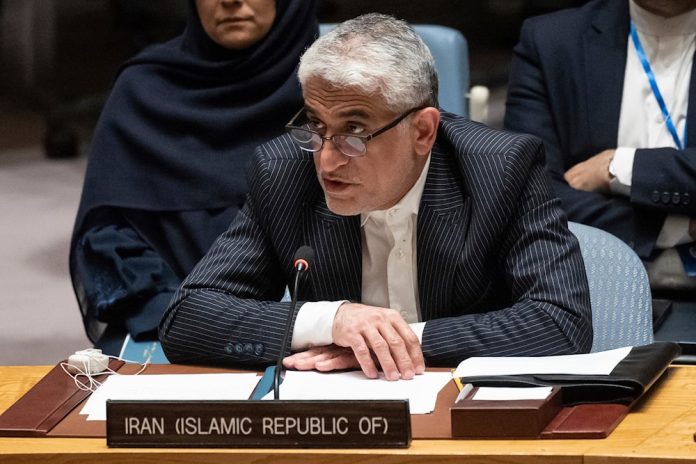
Iran vows to strike all US bases in region if attacked

US Forces in Syria

The blunt warning came during a press briefing following a cabinet meeting on Wednesday.

“If conflict is forced upon us, we will not hesitate to attack every US base in host countries,” General Nasirzadeh stated, adding that American forces would suffer “disproportionate losses.”

The minister emphasized Iran’s growing military capabilities, citing last week’s successful test of a ballistic missile carrying a two-ton warhead.

The warning specifically referenced US installations in Iraq, Syria, Bahrain, Qatar and the UAE – where the Pentagon maintains about 45,000 troops across dozens of bases.

Analysts note Iran possesses a substantial missile arsenal capable of retaliating against these facilities in case of provocation.

While expressing preference for diplomatic solutions, General Nasirzadeh ruled out any negotiations regarding Iran’s defense programs.

The remarks come amid indirect US-Iran talks, with Washington recently imposing new sanctions over Tehran.

Pentagon says US to cut military aid to Ukraine

Western Weapons Russia Ukraine War

“It is a reduction in this budget,” Hegseth told lawmakers in the U.S. House of Representatives.

“This administration takes a very different view of that conflict. We believe that a negotiated peaceful settlement is in the best interest of both parties and our nation’s interests, especially with all the competing interests around the globe.”

The Pentagon has not yet released the full documentation regarding its 2026 budget. According to Hegseth, the pending budget “provides a historic level of funding for military readiness, putting (U.S.) warfighters and their needs first.”

Hegseth did not disclose details as to the extent of the funding cuts to Ukraine.

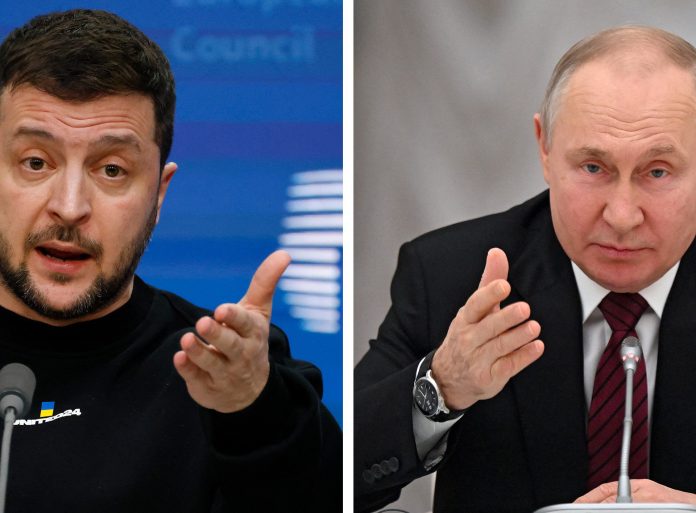
The Pentagon’s announcement follows weeks of intense Russian attacks on Ukrainian cities, including record-breaking drone strikes against Kyiv. Amid the escalating aerial assaults, President Volodymyr Zelensky has urged the U.S. to support Ukraine with critical air defense systems.

Ukraine has offered to buy these systems outright rather than requesting military aid.

Since Russia launched its full-scale invasion of Ukraine in February 2022, the U.S. has provided Kyiv with over $66 billion in defense support. But U.S. President Donald Trump halted the approval of new military aid packages to Kyiv when he began his second term in January.

Under Trump’s leadership, Washington’s policy towards Ukraine shifted dramatically. Calls to support Ukraine’s independence and sovereignty have been replaced with demands that Ukraine make a deal with Russia, and Trump has at times lashed out at Zelensky.

After the leaders’ infamous clash during an Oval Office meeting in February, the U.S. temporarily suspended all military aid to Ukraine. Hegseth, who ordered the temporary halt, also did not attend the most recent Ukraine Defense Contact Group meeting on June 4 — the first such absence by a U.S. defense chief since the beginning of the full-scale invasion.

Zelensky confirmed in a recent interview that the U.S. diverted 20,000 anti-drone missiles originally intended for Ukraine to American forces in the Middle East.

Iran says will surely respond to IAEA resolution

Esmail Baghaei

In comments in a televised interview on Tuesday night, Esmaeil Baqaei warned of Iran’s reaction to a possible adoption of a provocative resolution by the IAEA BoG against Tehran.

“In case such a resolution is passed, the appropriate reaction will be definitely given (by Iran),” he stated.

Asked about Iran’s reaction to the attempts by the European troika to trigger the so-called snapback provisions of the 2015 nuclear deal, Baqaei said one of the options that Iran may take up will be reconsideration of its membership in the Treaty on the Non-Proliferation of Nuclear Weapons (NPT).

On the indirect nuclear talks between Iran and the US, Baqaei reiterated that zero enrichment is totally unacceptable to Iran.

Baqaei stated that the Iranian negotiators are not permitted to negotiate any plan that excludes Iran’s right to enrichment.

He also added that Iran will be giving a logical, rational and balanced response to a recent proposal that the US has submitted via Oman.

Iran and the US have held five rounds of talks since April 12, mediated by Oman, with the purpose of reaching a deal on Iran’s nuclear program and the removal of sanctions on Tehran.

Armed offender executed in Iran following multiple convictions

Iran Prison

Authorities carried out the death sentence after he was found guilty of using military-grade weapons to endanger lives, instill public fear, and disrupt national security.

According to official sources, Kourkouri, also known by the alias “Mojahed,” had a long criminal history involving armed assault, public disorder, illegal possession of firearms, drug and alcohol trafficking, and property destruction.

He was also identified as a key figure in past unrest in the southern Iranian city of Izeh, where several civilians were reportedly killed or injured.

The Revolutionary Court in Ahvaz had sentenced him to death on three counts. The Supreme Court upheld the verdict after legal procedures were completed.

Judicial authorities stated the execution was in response to public demand for firm action against individuals endangering safety and order in Khuzestan Province.

Several countries sanction two Israeli far-right ministers

Canada, Australia, New Zealand and Norway joined Britain in freezing the assets and imposing travel bans on Israel’s national security minister Ben-Gvir and finance minister Smotrich, both West Bank settlers.
Signalling a rare split with its close British ally, U.S. Secretary of State Marco Rubio wrote on X that the U.S. condemned the move. He added it would not advance U.S.-led efforts to achieve a ceasefire in Gaza, end the war there and bring home hostages Palestinian Hamas fighters abducted from Israel 20 months ago.
“We reject any notion of equivalence: Hamas is a terrorist organisation… We remind our partners not to forget who the real enemy is,” Rubio stated, demanding a withdrawal of the sanctions.
British foreign minister David Lammy, in a joint statement with the foreign ministers of the other four nations, said Ben-Gvir and Smotrich had “incited extremist violence and serious abuses of Palestinian human rights. These actions are not acceptable.
“This is why we have taken action now to hold those responsible to account,” the statement added.
Two sources with direct knowledge of the matter said the sanctions included targeted financial restrictions and travel bans.
Israel’s foreign minister, Gideon Saar, stated the action by the five countries was “outrageous” and the Israeli government would hold a special meeting early next week to decide how to respond.